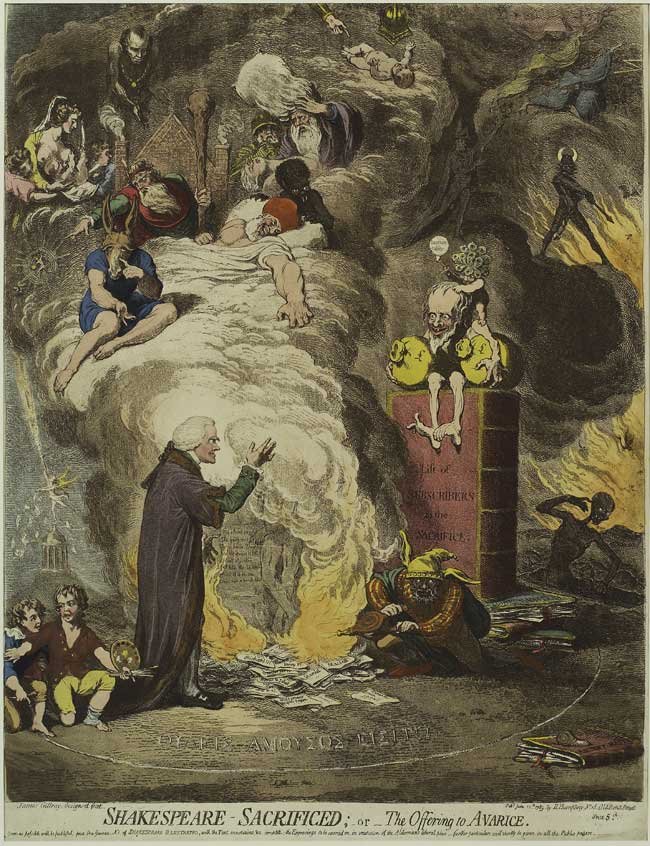




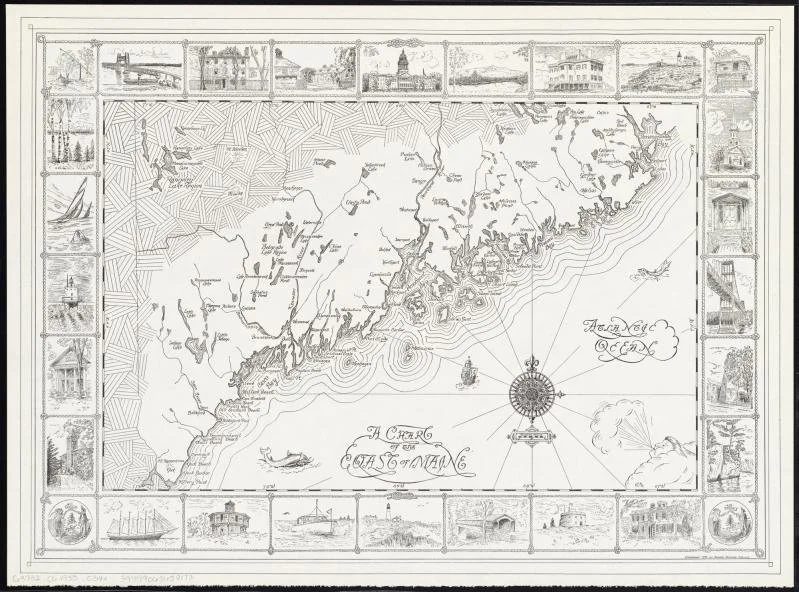


A_map_of_New_England,_being_the_first_that_ever_was_here_cut_..._places_(2675732378).jpg

Vox clamantis in deserto

Commentary Robert Whitcomb Commentary Robert Whitcomb

Why do cities waste public money on stadiums?

This Pacific Standard magazine article/investigation asks: "Despite every number suggesting they shouldn't, why do American cities keep building sports stadiums funded with public money?"

The money helps impoverish essential public services  and is a huge wealth transfer from poorer people to the rich.

Read More
Commentary Robert Whitcomb Commentary Robert Whitcomb

Gets even more violent after dark

Feldman "Sunset on the Pond'' (oil stick on braced panel), by NAN HESS FELDMAN, in the "Hydration'' show at Alpers Fine Art, Andover, Mass.

My parents for a few years lived on a pond they shared with a neighbor that was kept at slightly under 10 acres. More than 10 acres meant that they would have to give the public access to it under the colonial era "Great Pond'' rule.

They controlled the size of the pond via a little dam, which created a cute little waterfall. If they had chosen, they could have flooded  a road downstream by pulling up a wooden slat. They did think that would be fun to try but never got around to it.

While my parents seemed to like the pond, with its canoe, little swimming raft and large population of bass, I always found it smelled too much of decaying organic material and iron (they used to mine a little nearby in colonial days) and hosted far too many mosquitoes that in an earlier time might have given you malaria.

I missed the usually antiseptic smell of  the ocean at their previous place on a hill above the shore, where, unlike on the  pond,  hemmed in by tall trees and thick brush, there was almost always a breeze -- indeed, often a gale.

Some of the water in the pond flowed in a little stream from a cranberry bog. God knows what sort of pesticides were used there in pre-EPA days. But whatever they used wasn't enough to cut into the bass or snapping-turtle population as the brook flowed into the pond via a swamp that recalled the movie The African Queen, from which came  one of  the famous lines assigned to Humphrey Bogart: "One thing in the world I hate: leeches. Filthy little devils.''

Everything seemed so much cleaner in the winter, though the remoteness of the house and pond led one roofer to ask my mother if they had bought the land from Lewis and Clark.

Fairly soon after my father died suddenly  we sold the place, unfortunately during a real-estate slump.

--- Robert Whitcomb


Read More
Commentary Robert Whitcomb Commentary Robert Whitcomb

Dennis Berkey/Jay Halfond: Cheating in online courses

BOSTON

Without having to miss out on fun, just outsource your test to us, an expert will take it and you will get the awesome grade that you deserve. All at prices you will not believe. How does that sound?”

—Excerpt from one of many results of googling “take my test”

This pitch is more than incredibly crass. It is really just outright pimping of hired poseurs to online students willing to “pay for performance.” With the massive growth of online education, such parasitic companies have sprung up like weeds, presenting a serious threat to program integrity.

In a famous 1993 New Yorker cartoon, a dog at a computer quipped, “On the Internet, nobody knows you’re a dog.” We are still haunted by concerns about whether remote learning can ever be conducted fairly. Of course, the Internet didn’t invent dishonesty. For years, students have been reporting anonymously having cheated and plagiarized – more than 70 percent in most studies. The public believes, along with many faculty, that cheating is easier to do, and likely even more common, in online courses than on campus. While many online leaders agree, they do not see cheating as a major challenge or barrier to program success.

What’s harder – and even more important – than deterring and detecting cheating in online education? Certainly designing interesting course formats that catch and hold the attention of students halfway around the world through all hours of day and night. Distractions abound, and the convenience of asynchronous learning makes it all the more tempting to put off work until the last minute (thus making the siren’s call from cheating companies doubly tempting). Distance creates the illusion of anonymity. Behavioral ethicists have long noted that context matters: In situations where dishonesty is easy to conduct and rationalize, we are far more prone to caving in to temptation.

Thus, designing effective assessments is a critical part of the task of creating distance-learning programs of high integrity. An online program cannot claim to be truly worthy of academic recognition without strong assurance that students are being fairly and effectively assessed in their learning.

Student honesty is a prerequisite for the credibility of online programs. That made it worthwhile for us to better understand its nature. To that end, we designed a survey to learn more about what was being done about cheating in online programs, and how technology itself is being used in solutions. The results were interesting, even somewhat surprising.

Who is actually participating in my course?

From both the survey results and our direct conversations with online program leaders, a frequently stated concern is the lack of face-to-face contact with students. Aside from the concern about cheating, faculty and students miss the experience of direct involvement with one another. One instructor commented, “We feel a professional obligation to know who our students are, and the degree to which they are engaged in our courses, whether or not there is cause for concern about cheating.”

Academic sentimentality aside, what about ringers—can we be certain that the student doing the work is actually the one registered in the course? The federal government weighed in on this, requiring in the Higher Education Opportunity Act of 2008 that online programs must have stronger procedures to ensure this than just the use of usernames and passwords, which can be too easily shared.

This is where a legitimate industry has emerged: commercial “test proctoring.” For many years, there have been commercial bricks-and-mortar “testing centers” (Pearson and Prometric centers being the most prevalent) where individuals needing professional certification complete exams under the scrutiny of professional proctors. Customers verify their identities using government photo IDs, drivers’ licenses, passports, etc., before sitting for proctored tests. Online programs began using these centers or otherwise requiring online students to come onto campus to take exams. While commercial testing centers can be expensive, the real cost was in student travel time and inconvenience.

The changing landscape

In the rise of online education with its flexible features (learning anytime, anywhere), entrepreneurs saw an opportunity to provide less expensive, more convenient means of student authentication and test proctoring. An early and still-dominant approach is to use a computer’s webcam and the Internet to enable trained human proctors either to monitor students’ test-taking in real time or to review video recordings of the test session after the fact. In either case, the proctors look for evidence of cheating as well as authenticating the test-taker (typically by comparing the image of the test-taker seen by the webcam with a previously recorded image from the student’s photo ID). Major vendors include ProctorU, Examity and Software Secure.

More recently, a new generation of vendors has introduced fully automated systems making use of “recognition” technologies (facial, voice, fingerprint biometrics, even typing styles) to achieve the same results at considerably lower cost, due primarily to the absence of the human factor. These fully automated solutions are generally more convenient, as there is no need to schedule a proctor, and more scalable as human labor is replaced by algorithms. They typically establish a biometric profile when the student initially enrolls, and then use the computer’s webcam, microphone or keyboard to authenticate (via biometric comparison) the student at later times.

These technologies are also capable of identifying behaviors suggestive of cheating, typically reporting these to course instructors on convenient dashboards, along with the relevant evidence from video recording or screen captures made during the test. Current such vendors include Verificient (ProctorTrack), ProctorFree, Proctorio and BIOMIDS.

Where it all stands now: the survey

In order to reach a broad audience of online leaders, this survey was executed in different ways, through emails and blog links, during its fielding period from January 2015 to May 2015. Participants fromUPCEA and WCET member institutions were asked to give indications, ranging from strong disagreement to strong agreement with statements in six general areas of online education. From the strong participation, including thoughtful responses to open-ended questions, it was clear that the online programs in these membership organizations are under strong, engaged leadership with high ambitions for growth in size and quality. The matters of integrity, cost and convenience to students are of great interest and concern, and programs leaders are open and committed to emerging solutions.

We saw strong appreciation for the challenges of student dishonesty and program integrity, with clear confidence that the problems are manageable. Eight-four percent of the 141 respondents concurred that student dishonesty is a significant issue. Half of all who responded believed that the public thinks dishonesty is more likely to occur in distance learning. But 79 percent did not see this as a difficult barrier, as effective solutions are available.

By far the most frequently cited means of ensuring program integrity, specifically the deterrence of cheating, was reliance on honor codes or clearly articulated institutional policies. Three-quarters of these online leaders felt that establishing, articulating and enforcing such policies provided the essential foundation for online integrity, if not fully satisfactory solutions.

Slightly less than half of the 141 respondents currently use test proctoring, and an additional quarter are considering it. Our impression is, however, that even among users, actual use is erratic and infrequent (such as only for final examinations or other high-stakes assessments). In its formats, the field itself seems not yet to have progressed much beyond the video stage, either as real-time monitoring via webcam or by record and review. We noted that over two-thirds of the respondents indicated being open to considering the newer fully automated solutions for student authentication and test proctoring.

Almost half of those surveyed thought that the major concerns about cheating involved browsing or otherwise using unauthorized notes or other sources during tests. 38 percent thought having another person pose as the student during a test was problematic, and 42 percent were concerned about those who consult others for help during an examination.

When asked to name the most desirable features in a remote proctoring system, a large majority–not surprisingly–cited simplicity and ease of use, a high degree of integrity and reliability and low cost. Cost is a particularly vexing problem, as the addition of an authentication or proctoring system represents an added expense, either to the institution or individually to students. News media  recently reported strong objections from students surprised by new requirements to pay outside vendors to proctor their tests.

Our impression is that low cost, automated solutions funded by institutions are far preferable to having students pay separate test-proctoring fees.

The most interesting results speak to the distinction between video-monitoring and newer fully automated solutions. More than half of the respondents rated as “very desirable” or “desirable” the features of freedom from having to schedule live proctors, student authentication via intelligent software that persists throughout the session and fully automated proctoring with results summarized for the instructor immediately following the test.

Relatively less desirable features included remote monitoring by live proctors who could intervene during a test, automation running locally on the student’s computer, and video-recording for post-test review by live proctors. Anecdotal information gained from direct conversations with online students shows a much greater comfort level with automated (i.e., biometric, AI) proctoring than with having another live person monitoring their test-taking remotely.

In short, instructors, students, and administrators want solutions that are neither distractions nor intrusions–that simply address the concerns effectively, at low cost and without compromising the focus on teaching, learning and assessment.

The future

The roles and nature of online authentication and proctoring continue to evolve. Leaders in online education appreciate the very real concerns about student honesty and want to provide effective, affordable solutions that are respectful of all concerns. The costs are not only financial, but also matters of time, convenience, integrity and preservation of educational priorities. We see an increasing demand by accreditors and public officials for greater accountability for ensuring the identity, active participation and demonstrated achievement by students in online programs. There is also important concern about fraud in programs whose students are eligible for federal financial aid. Recent auditshave revealed huge amounts of federal financial aid awarded to students registered for online courses in which they never actually participated.

Fortunately, there is growing awareness of the tools available for addressing these issues—especially as we evolve from human to automated authentication and proctoring. Greater use of these tools, however, will require the attributes of lower cost, ease of use and demonstrated integrity of the proposed solutions. We see the further development of fully automated systems as a powerful next-generation response, becoming a ubiquitous, nearly transparent part of remote authentication and proctoring.

To achieve this, we will need to help students–even more in online courses than on-campus–to understand that the integrity of their academic credits, certificates and degrees might very well depend on automated measures to confirm their participation and ensure the validity of their assessment. We are not so much replacing Mr. Chips’ personal touch with Big Brother’s remote scrutiny—as ensuring a level playing field for all students, and demonstrating our respect and responsibility for their certified achievements.

Dennis Berkey is the former president of Worcester Polytechnic Institute and former provost of Boston University and is currently the president of BIOMIDS Inc. Jay Halfond is a former dean and currently a professor of the practice at Boston University. The authors thank UPCEA’s Center for Research and Marketing Strategy and WCET for invaluable help in conducting this research. For further information on this study, contact Mr. Berkey at dennis.berkey@biomids.com.

This piece originated on the Web site of the New England Board of Higher Education (nebhe.org).
Read More
Commentary Robert Whitcomb Commentary Robert Whitcomb

From annals of urban renewal

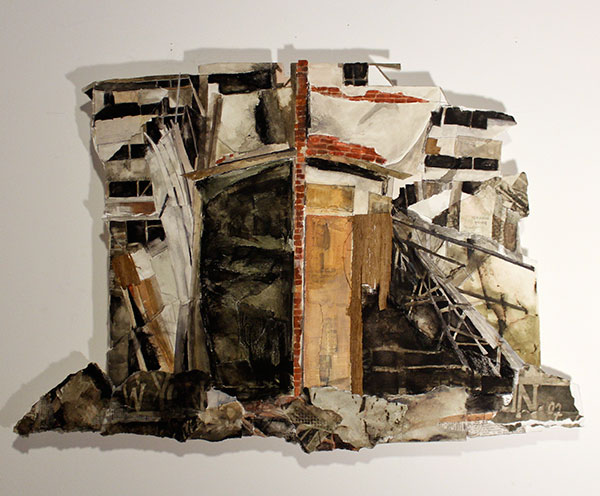
Chase"Where we used to sit on the stoop'' (mixed media collage), by MEGHAN CHASE, in the "Free Association'' group show at Kingston Gallery, Boston, Aug. 5-30.

Read More
Commentary Robert Whitcomb Commentary Robert Whitcomb

Chris Powell: ICE's bizarre refusal; 'radical forgiveness'

  Connecticut has a failure of immigration-law enforcement just as big as the recent one in San Francisco, although its location -- Norwich -- hasn't been glamorous enough to gain similar attention, despite outstanding journalism by the local newspaper, the Bulletin.

In San Francisco an illegal alien and repeat felon who has been deported from the United States many times has been charged with shooting a young woman to death on a tourist pier. Before the murder city police were holding the illegal alien on other charges, and federal immigration authorities had asked to be informed of his release so they could collect him. But San Francisco is a "sanctuary city" whose political correctness obstructs immigration-law enforcement. So the Feds were not notified and the illegal alien was not deported again as he should have been.

In Norwich an illegal alien who had just been released from prison after serving 17 years in prison for attempted murder in that city was charged there again last month with the murder of a young woman in her apartment. While Connecticut has declared itself a "sanctuary state," its obstruction of immigration-law enforcement does not go as far as San Francisco's.

At least Connecticut will cooperate with federal immigration authorities for the deportation of felons, and the state apparently notified the U.S. Immigration and Customs Enforcement (ICE) office of this illegal alien's imminent release.

But ICE did nothing about it, and the agency's explanation is contemptible. That is, ICE claims that, upon his release from prison, it couldn't deport the illegal alien now charged with the Norwich murder because he would not produce any documents associating him with his native country, Haiti. So having attempted murder once already in Norwich, this illegal alien was simply set free and ICE forgot about him. Now he is charged with murder itself.

If ICE maintains its excuse -- that illegal aliens can't be deported unless they cooperate by producing adequate documentation -- then every illegal alien in the country can gain permanent residency here simply by destroying his documents.

Norwich's U.S. representative, Joseph D. Courtney, is pressing ICE for a better explanation. He should be joined by the rest of Connecticut's congressional delegation, the state's news organizations, and all concerned citizens. Even in politically correct Connecticut an innocent life must be worth more than this.

XXX

In a recent letter to the editor a reader from Tolland scolded this writer's June 29 column for not having been impressed by the forgiveness given the racist mass murderer in Charleston by the survivors of his victims. "Powell apparently knows little about the teachings of the New Testament," the reader wrote, adding: "Radical forgiveness, even of one's worst enemies, is the way of the cross."

But one can be familiar with the New Testament and willing to let people follow "radical forgiveness" and the way of the cross i their personal lives and still maintain that these things can be contrary to national survival -- and national survival was the point of that column, national survival as sustained by the astounding loyalty of black people to their country despite centuries of abuse, abuse that continued with the mas murder in Charleston.

People can make of forgiveness whatever they will in their personal lives, as a matter of religion, as a psychology of life, or whatever. That won't harm anyone else. But a nation is infinitely bigger than that; it is a collective for which responsibility is shared, and all who are part of it will share its fate.

If one believes that this country, more than any other, aspires to uphold individual liberty within democracy and is, more than any other, the universal nation, then any subversion of it, such as an attempt to terrorize one of its components and start a race war, is the worst treason and, in the national sense, must never be forgiven.

Chris Powell is managing editor of the Journal Inquirer, in Manchester, Conn.

Read More
Commentary Robert Whitcomb Commentary Robert Whitcomb

In N.H., 'Politics and Eggs'

  This is about a newish New Hampshire tradition -- "Politics & Eggs,'' another part of New Hampshire's storied presidential-nomination campaigns.

The first few paragraphs are below. See this link to read the whole story.


By SUSAN DOUCET

Concord Monitor Staff

In the world of pro sports, athletes have long followed a tradition of signing anything from baseball mitts to trading cards.

In New Hampshire presidential politics, the stars sign wooden eggs.

Any aspiring president who wants some notoriety and an audience of politically well-connected business people makes sure to speak at one of the Politics & Eggs forums, a collaboration between the New Hampshire Institute of Politics and the New England Council.

But before the speakers take the stage, they are given a task. A basket of wooden eggs – the namesake items of the series – is placed in front of the speaker, who must sign the glossed shell.

Asking the candidates to sign these wooden icons, the same size as real eggs, was not part of the original plan for a political event designed for local business people. But as the series has grown, so has the prominence and tradition of the wooden eggs, establishing them as political collectibles.

Read More
Commentary Robert Whitcomb Commentary Robert Whitcomb

Celebrating water protection in N.E.

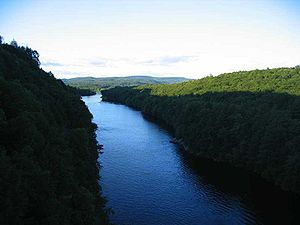
connriver

A stretch of the Connecticut River in western Massachusetts.

From ecoRI News.

BOSTON

At a spot overlooking Boston Harbor, once choked with toxic pollution but now home to some of the cleanest urban beaches in the United States, advocates gathered July 1 to thank the Obama administration for closing loopholes in the Clean Water Act that previously left more than half of Massachusetts’s streams at risk of pollution.

“We’ve made so much progress in cleaning up our waterways, and we can’t afford to turn back the clock,” said Ben Hellerstein, state director for Environment Massachusetts. “The EPA’s Clean Water Rule will make a big difference in protecting Boston Harbor, the Charles River and all of the waterways we love.”

The Clean Water Rule, finalized in late May, clarifies federal protections for waterways following confusion over jurisdiction created by Supreme Court decisions in 2001 and 2006. It restores Clean Water Act protections to thousands of miles of streams that feed into waterways that provide drinking water for millions.

“In New England, protecting our water is more important than ever, especially as we work to adapt to climate-change impacts such as sea-level rise and stronger storms,” Environmental Protection Agency (EPA) Regional Administrator Curt Spalding said. “Protecting the most vulnerable streams and wetlands — a drinking-water resource for one in three Americans — helps our communities, and this rule provides clarity for businesses and industry without creating new permitting requirements.”

Before the Clean Water Rule became law, small streams, headwaters and certain wetlands were in a perilous legal limbo, allowing polluters and developers to dump into them or destroy them in many cases without a permit. In a four-year period following the rule’s creation, the EPA had to drop more than 1,500 cases against polluters, according to one analysis by The New York Times.

Prior to the passage of the Clean Water Act in 1972, Massachusetts waterways suffered from decades of pollution and neglect. As late as the 1980s, untreated sewage was regularly dumped into Boston Harbor, and high concentrations of industrial pollutants posed a public-health risk.

The Clean Water Act prompted a major cleanup of the harbor. Today, Boston boasts some of the cleanest urban beaches in the nation, and wildlife habitat has significantly improved, according to Environment Massachusetts.

Advocates pointed out that the Clean Water Act has enabled similar improvements in water quality in many of the state’s most iconic waterways, from the Charles River to the Connecticut River.

Despite broad public support for clean-water protections, polluting industries and some members of Congress are fighting to block implementation of the Clean Water Rule. In recent weeks, congressional committees have approved multiple bills aimed at rolling back the Clean Water Rule.

Read More
Commentary Robert Whitcomb Commentary Robert Whitcomb

Uber Urban Partnership in Conn.

New England Council member Uber has announced a new initiative called UberUP (Uber Urban Partnership) in Connecticut. The program seeks to relieve transportation issues that workers face when seeking employment. In addition, the program seeks to recruit drivers in urban areas that could use the work by adding over 1,500 drivers over the next year. In January, Uber and the New Haven chapter of the NAACP published a report on the affects of lack of transportation on chronic unemployment in the area. Now, Uber is working to relieve these problems through their urban program. The program waives the deposit and weekly fee for drivers who do not have a smartphone and offers seminars in skill-building for locals. Uber is working with the NAACP, The WorkPlace, and Workforce Alliance to put on these events. In addition, Uber will recruit new drivers who live in urban areas who could use the work.

Scot X. Esdaile, president of the NAACP Connecticut, praised the program stating, “The Connecticut NAACP & Uber partnership helps brings jobs and greater economic opportunities to the inner cities of Connecticut. The Connecticut NAACP is committed to thinking out of the box and creating new relationships that deliver economic substance for the communities we serve!”

The New England Council commends Uber for its mission to create employment opportunities and looks forward to this new program’s success.

Read More
Commentary Robert Whitcomb Commentary Robert Whitcomb

Practice for manipulating people

  , 6/25/15, 12:51 PM,  8C, 7390x9566 (470+842), 100%, Art 1,  1/30 s, R126.7, G95.3, B108.6

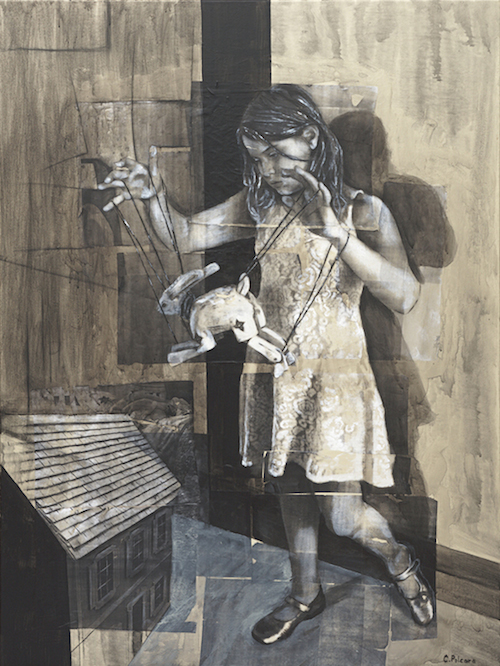
 "The Dance'' (mixed media), by CHERYL POLCARO, in the "New England Collective VI'' show at Galatea Fine Art, Boston, Aug. 5-30.


Read More
Commentary Robert Whitcomb Commentary Robert Whitcomb

Bid on a Rockwell!

  jfk

This just in from the National Museum of American Illustration, which sends New England Diary  images from its astounding collection from time to time. The museum is on Bellevue Avenue in Newport, R.I.

"To allow all of our supporters and patrons to purchase their own original illustration artwork and contribute to our goal of establishing an Endowment Fund, the National Museum of American Illustration's 15th Anniversary Benefit Auction is now open for bidding online. To view the auction and bid, please visit http://www.32auctions.com/NMAIBenefitAuction . If you would like to place an absentee or phone bid to participate in the live auction on July 30, please see the attached bidder registration form.

"Among the many wonderful auction items, there is: Norman Rockwell’s historic Portrait of President John F. Kennedy (shown above) painted for the April 6, 1963 Saturday Evening Post cover; Maxfield Parrish's ethereal 1901 Scribner's illustration, Twilight Had Fallen; John Falter's unique perspective on an exciting baseball; two J.C.Leyendecker studies for Saturday Evening Post covers; illustrations of beautiful muses painted by Howard Chandler ChristyPhilip BoilleauHarrison Fisher, and F. Sands Brunner; a Bemelmans from Madeline’s RescueMead Schaeffer’s South Seas pirates; and much more! The proceeds from the sale will benefit the NMAI’s Endowment Fund, to continue the Museum’s mission into perpetuity.

"The online bidding will continue until Thursday, July 30, at 10 a.m.  and the auction will conclude at the 15th Anniversary Gala hosted at Vernon Court, the Museum's home, in Newport, Rhode Island. The Gala begins at 6 p.m., and items will be available for silent bidding. At approximately 9:30 p.m., the top lots will be sold by an auctioneer in a live event. Bidding on all other lots will conclude at Midnight on July 30th. To ensure winning of a lot, please see the attached absentee and phone bidding form to place a bid for the live event.

"We welcome and encourage all our supporters to bid online and to register for Absentee and Phone bids. For assistance and additional information, please call the NMAI at 401.851.8949, or visit our Website, http://americanillustration.org/''

Read More
Commentary Robert Whitcomb Commentary Robert Whitcomb

Summer sleep-in

zener-full moon "Full Moon,'' by ERIC ZENER, at Lanoue Gallery, Boston.

Read More
Commentary Robert Whitcomb Commentary Robert Whitcomb

Light and variable winds

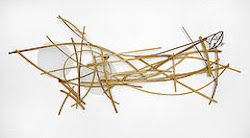
Brayton "Pali'' (white oak, bronze, acrylic, Braytoncrete), by WILLIAM BRAYTON, in his show "Gilavar,'' at Bromfield Gallery, Boston, through, Aug 2.

The gallery says that "Chance informs these airy sculptures that reference wind, Polynesian stick charts and nautical literature.''


Read More
Commentary Robert Whitcomb Commentary Robert Whitcomb

Don Pesci: The anti-sprawl boomerang

  VERNON, Conn.

Not only does every regulation impose additional costs on businesses, excessive regulation also unwittingly embraces unintended consequences that may be fatal to the best laid plans of those who oppose urban sprawl -- the movement of residential and business operations from urban areas to the suburban frontier.

This “Big Bang” movement has been occurring ever since the protective walls of castles disappeared centuries ago.

For anti-sprawlists in Connecticut, many of whom are environmentalists, local farms are essential to a movement that seeks to nudge businesses back into cities; the more farms there are in the hinterlands, the less land will be available for “exploitation” by businesses and home-construction companies. Environmentalists do not generally object heatedly to “urban sprawl.”

Onerous federal regulations on farms have now invaded Connecticut’s environmental Eden.

Connecticut farmers have offered multiple objections to new regulations co-sponsored by 3rd District U.S. Rep.  Rosa DeLauro. Mrs. DeLauro’s district, largely urban, has suffered a crippling reduction in U.S. Department of Agriculture (USDA) subsidies during the last six years. Federal subsidies from 2009-2010 amounted to about a million dollars per year; during 2012, the subsidies for the district dropped precipitously to $157,039.

At the same time, the federal government has a huge deficit; the Obama years alone have added $6.061 trillion to the national debt, which surpassed $18.1 trillion last January. The usual cowardly detours that let legislators  avoid painful spending cuts to balance budgets – massive borrowing, budget shape-shifting and inflating the money supply – are considered politically inadvisable, and so the federal government has begun to trim subsidies; which is to say, the Feds are now backpedaling on their promissory notes to states. Nothing unusual there: In the bust and boom economy, all Americans have become American Indians; the promises of Washington to regulatory victims have been repeatedly and notoriously violated.

The new farming regulations, piled on top of others, farmers say, are costly and complex; but then what federal regulatory instruments are not costly and complex, a virtual playpen for lawyers and tax attorneys? The Obamacare bill runs to thousands of pages; Dodd-Frank financial regulations are not much shorter, and the regulatory apparat in Washington is equally complex and expensive.

Washington specializes in growing the administrative apparat and complex legislation that may be understood only by accountants and attorneys for large corporations that can afford to hire both to avoid taxes and regulations. It is small enterprises – such as farmers -- that feel the sharp edge of the regulatory and tax axe.

Farmers in Connecticut want to be able to grow and offer their produce at competitive prices. Because the profit margin in farming is so small, any additional costs are potential straws that certainly will break the camel’s back and reduce farmers’ very narrow profit margin – or, worse, force them to sell their land to developers, who then may sell the farmland to businesses hoping to cut costs by moving from urban to suburban centers. Result: further suburban sprawl occasioning tons of editorials bemoaning the reduction of “Smart Development.” Connecticut is now witnessing a regulatory snake swallowing its own tail.

One small example may serve for many. The Lydall Farm stand on Route 44 in Coventry has  a handmade sign that says the stand has been in business since 1926, three years before the start of the Great Depression. But this year will be the stand’s last stand. Why? The profit margin is too small and new regulations are far too costly.

So complex are new environmental-protection regulations that nearly any small farmer may now be put out of business by nearly any lawsuit waving bureaucrat or, worse, any consumer protection U.S. Senator (cf. Blumenthal, Dick). Then too, the more time and money small farmers spend complying with byzantine regulations, the less time and money is available to make the crops come out of the ground.

Why not sell the ground?

Though Mrs. DeLauro is chairwoman of the House Agriculture-FDA Appropriations Subcommittee, this Catch 22 may be low on her list of things to worry about. The constituents whom Mrs. DeLauro relies upon to re-elect her to a 12th  term in Congress are, many of them, urbanites who may think  that food is grown in the parking lots of the grocery stores where they buy their lettuce and peaches. These are the nephews and cousins of the magic thinkers who suppose that the nation’s wealth is produced by a golden tree the leaves of which can be cashed in to pay the salaries of the army of bureaucrats pushing farmland into the greedy hands of developers responsible for urban sprawl.

Connecticut Farmers in Mrs. DeLauro’s District keenly feeling the sting of reduced subsidies and excessive regulations know better. But the farmers in Ms. DeLauro’s District who would be willing to vote against pro-suburban sprawlists are far outnumbered by urban dwellers who have not thought about the plight of Connecticut’s small farmers since the Great Depression.

Don Pesci (donpesci@att.net) is a political writer based in Vernon, Conn.

Read More
Commentary Robert Whitcomb Commentary Robert Whitcomb

Pretty, but no smoking please

Noonis "Boathouse'' (oil on canvas), by LISA NOONIS, in the "Hydration'' show at Alpers Fine Art, Andover, Mass., through July.

These old boathouses are moldy and firetraps and yet so soothing to look at.

I like best the ones that are extended over the water from the shore, as my Minnesota relatives had at their lake places, with the pines so thick around the building that you could barely see some of the boathouses from a couple of hundred yards offshore.

-- Robert Whitcomb

Read More
Commentary Robert Whitcomb Commentary Robert Whitcomb

Sweet, sweaty summers in the city

I've always liked cities in mid-summer. They have a sweet, slow gritty melancholy. The vegetation, turning grayish green, wilts in the heat, but it's a good and pleasant time for rumination. I have considerable nostalgia for  walking slowly around Boston at lunch breaks in summer jobs and then as a reporter for the Boston Herald Traveler (RIP). My boss, the city editor, was more relaxed about deadline assignments in July and August and I could wander around and look for feature stories every few days.

The sulphur smell of the  then highly toxic Fort Point Channel in those pre-EPA days remains to this day a powerful memory, as  the smell of diesel reminds me of Paris.

Even stronger are my memories of strolling down to Battery Park at the tip of Lower Manhattan on Sundays in August as an editor for The Wall Street Journal (we worked Sundays-Thursdays; there was no weekend edition then) to get a hot dog and feel the humid, polluted southwest breeze coming up over New York Harbor. Or walking down Riverside Park between 88th Street, where I lived for a while, and Columbia.

Then there were the slow, sweaty strolls around mid-summer Washington, interrupted by a little work  in the National Press Building and trips to the restaurant-cafe on top of the  Hotel Washingtonian, where the capacious beverages served made one forget the Congo-like heat.

Later there was the openness of Paris in August, when so many residents went off  on vacation,  emptying the parks away from the main tourist strips.  We lived in an middle-class neighborhood (in the 15th Arrondissement). A lot of local stores closed for much of August as residents were in Normandy, Brittany or on the Riviera, but most of the street markets were open and everyone  was quite laid back.

And the densely treed East Side of Providence has its mid-summer charms too -- quiet and parklike. But the college kids come back to  school much earlier than when I was in college. So the summer now effectively ends about Aug. 20 in our neighborhood -- not the week of Labor Day.

--- Robert Whitcomb

Read More
Commentary Robert Whitcomb Commentary Robert Whitcomb

It's better below you

Ertl "Looking Down'' (pastel on  paper), by WOLFGANG ERTL, in  this month's "Hydration'' show at Alpers Fine Art, Andover, Mass.

Read More
Commentary Robert Whitcomb Commentary Robert Whitcomb

Violent beauty

  Herrick

"Blue Thunderheads'' (watercolor), by BRIAN HERRICK, at Patricia Ladd Carega Gallery, Center Sandwich, N.H., in his show "Squam Landscapes/New Watercolors''.

Read More
Commentary Robert Whitcomb Commentary Robert Whitcomb

Abbey Greene: Horseshoe crabs being bled to death


horseshoecrab

By ABBEY GREENE, for ecoRI News

Horseshoe crabs are a marine arthropod found along the Atlantic coast from northern Maine to the Gulf of Mexico. Delaware Bay supports the largest spawning population in the world.

Older than dinosaurs, horseshoe crabs have survived plenty. But human impact may be the threat that could wash them out of the Atlantic.

For more than 350 million years, these living fossils have crawled ashore underneath the light of a full moon and laid their eggs in the sand. These hard-shelled crustaceans are a keystone species, making them vital to the ecosystem. Their eggs are a critical food source for many migratory shorebirds, and their ocean floor walks rototill the bottom, keeping the seafloor healthy.

The Atlantic States Marine Fisheries Commission reports  that horseshoe crabs were hunted heavily from the 1800s to the early 1900s, with catches averaging from 1 to a whopping 5 million crabs a year. Total catch numbers dwindled over time, all the way down to 42,000 crabs by the 1960s. However, millions more were being harvested unreported and at a detriment to the horseshoe crab’s survival.

Bob Prescott, sanctuary director at the Massachusetts Audubon Society’s Wellfleet Bay Wildlife Sanctuary, said the sanctuary’s research into the ecosystem importance of horseshoe crabs began in 1999. Some fisheries didn’t see the benefit of horseshoe crabs at the time, and were more concerned with, say, their clam harvest than anything else.

“There was virtually no oversight by the (Massachusetts) Division of Marine Fisheries, and all of the shellfish departments and shellfish wardens were happy to get rid of this predator from their systems, thinking they’d get more clams,” Prescott said. “But, as we now know, the horseshoe crab is a really important part of the ecosystem, and you may even end up with less clams with less horseshoe crabs.”

By 2001, state-by-state harvest quotas were required by the Atlantic States Marine Fisheries Commission Horseshoe Crab Management Plan, and harvests have decreased in an effort to save the crabs.

Today, these crabs have two big threats looming over their oddly shaped heads. Horseshoe crabs are a popular bait for conch and eel fishermen, and they are wanted for their blood. Horseshoe crab blood is used for biomedical research and product manufacturing involving the detection of gram-negative bacteria, which can be harmful to humans.

Overfishing is the species’ primary threat, according to Scott Olszewski, marine biologist at Rhode Island Department of Environmental Management (DEM). He said a stock assessment taken in 2012 indicated that the Mid-Atlantic stock was stable, but the southern New England stock had low abundance.

Not only do horseshoe crabs need to worry about being hunted, but their habitat is also being taken away. Mark Faherty, science coordinator at the Wellfleet Bay Wildlife Sanctuary, said, “A lot of beaches in certain parts of the Cape have been really impacted by stonewalls people put up, and they totally disrupt the natural sand movement, and the beaches end up getting scoured away. That means spawning grounds for horseshoe crabs, piping clovers, heron ... all these species that use the edge of the beach no longer have habitat. There sort of are regulations to prevent habitat loss, but there is not enough and a lot of damage has been done.”

However, actions have been taken to help the horseshoe crab population recover. In southern New England, there are catch limits, and if a limit is reached, the fishery is closed for the season. Furthermore, every May, June and July, two days before and after new moons, fisheries are closed to harvest.

“It is peak spawning activity around the highest tides,” Olszewski said. “The idea is that peak spawning is going to take place then, so for 10 days each month we ensure some level of uninterrupted spawning.”

Combined with the addition of a few sanctuaries on the coasts of Rhode Island and Massachusetts, the populations are expected to bounce back over time. So far, no change has been seen.

There has, however, been some legal pushback in Massachusetts to enlist the horseshoe crab as endangered.

“The state is saying that we have this four hundred-crab limit,” Prescott said, “we have these no-harvest windows, so why don’t we see what happens and if the crab populations will respond to these restrictions. But the problem is we have to wait ten years, and we can’t wait 10 years.”

Olszewski is hoping for a legislative change soon in Rhode Island. There is a total annual catch reported in Rhode Island, but no daily catch limit. Not only would a daily catch limit make fishing more fair to all fishermen but it also could help remove some of the pressure on the horseshoe crab population, he said.

He said this idea could be put into effect as soon as the 2016 fishing season, after a public hearing process and approval is received from the Rhode Island Marine Fisheries Council and the DEM.

“I think the populations can come back in certain places, like Chatham,” Faherty said. “There is no harvest there, so the horseshoe crabs have a sort of sanctuary. There are thousands of juvenile crabs and adult crabs there, and it shows how it used to be. It shows us what it could be like and that the populations can really come back. It may just take some time, and work from us.”

Read More
Commentary Robert Whitcomb Commentary Robert Whitcomb

PCFR speakers from far and wide

  Speakers at the 2014-15 season of the Providence Committee on Foreign Relations (thepcfr.org) were:

Anders Corr, a geopolitical analyst and former Defense Department official in Afghanistan, on Chinese expansionism.

Richard George, former high National Security Agency official, on international cyber-security.

Prof. Evodio Kalteneker, on the Brazilian economy and politics.

Professor and journalist Janet Steele on democratic Indonesia.

Jennifer Yanco, a public-health expert and a director of the West Africa Research Association, on the Ebola crisis.

Australian Consul Gen. Nick Minchin, on his nation’s relations with Asia and the U.S.

Delphine Halgand, a high official of the Paris-based Reporters Without Borders, on threats to free speech and journalism. (She spoke a few days after the Charlie Hebdo massacre.)

Amir Afkhami, M.D., a psychiatrist, on dealing with mental illness in war zones, particularly the Mideast.

Military historian and retired Army Colonel Andrew Bacevich on why America should stop fighting wars in the Mideast.

Famed Canadian journalist Diane Francis on why the U.S. and Canada should consider merging.

International landscape architect Thomas Paine on making cities more humane, especially in China.

Admiral Robert Girrier, deputy chief of the U.S. Pacific Fleet, on countering Chinese expansion in the South China Sea.

Gary Hicks, deputy chief of mission in Libya at the time of the Benghazi attack and now at the Center for Strategic and International Studies on lessons for the U.S. in Libya and the future of international trade.

The new season looks exciting too. (And maybe even useful for investing decisions.)

We’re still penciling in speakers and dates, but we can say that Cuban-American businessman and civic leader Eduardo Mestre will speak on Sept. 30 about the reopening of diplomatic relations between the U.S. and the land of his birth.

Mr. Mestre is a member of the boards of the International Rescue Committee and the Cuba Study Group.

He’s also a senior adviser at Evercore and was previously vice chairman of Citigroup Global Markets and chairman of its Investment Banking Division. Before then, he headed investment banking at Salomon Smith Barney and its predecessor firms from 1995-2001 and was co-head of Salomon Brothers' mergers and acquisitions department in 1989-1995.

Skedded for Oct. 22 is Scott Shane, the New York Times reporter who wrote the new book Objective Troy, about  Anwar al-Awlaki, “the once-celebrated American imam who called for moderation after 9/11, but a man who ultimately directed his outsized talents to the mass murder of his fellow citizens’’ and was eventually killed by an American drone. Among other things, he’ll discuss the moral issues raised by the increasing use of drones.

Some of the people we have on the drafting board for the rest of the season:

A U.N. expert on international refugee crises; a journalist or diplomat who will discuss the Greek crisis; a member of the Federal Reserve Board who will discuss international financial-system challenges; a Japanese journalist to talk about that nation’s increasingly muscular regional posture; an expert on international shipping in light of the widening of the Panama Canal; a status report on Mexico; a Chinese philanthropist; a member of the Ukrainian Congress Committee; (we have been trying for some time to get a Russian official or journalist to give Moscow’s side of the war in eastern Ukraine), and the director of the Aga Khan University Media School to talk about training journalists in the Developing World

All subject to change. We frequently repeat Prime Minister Harold Macmillan’s purported response when he was asked what he most feared:

“Events, my dear boy, events.’’

Members should feel free to chime in with suggestions.

Also, we’ll strive to frequently update the PCFR Website with supplemental news and commentary on international matters that may be of interest.

Please consult www.thepcfr.org or message pcfremail@gmail.com for questions about the PCFR.

Enjoy the rest of the summer!

Robert Whitcomb, chairman

pcfremail@gmail.com


Read More
Commentary Robert Whitcomb Commentary Robert Whitcomb

Robert Whitcomb: Local power; summer music; Iran


Politicians love news stories about their luring big out-of-area companies, even as they camouflage the associated tax breaks. But rarely do these arrivals bring as many jobs as promised, and they sometimes kill existing local ones. Then they may leave town in a few years, drawn by another sucker’s offer of bigger subsidies. What they don’t pay in local taxes, others must make up. And even if they stay, their profits leave town.

For obvious fiscal and emotional reasons, locally owned firms usually are loyal to their communities, and spend most of their profits there. These businesses tend to reliably support good jobs, tax revenue, social stability and civic participation, including local charitable donations – mostly without tax breaks.

Still, local businesses have found it hard to offer the cheaper prices and range of products of the huge national and international companies because they haven’t had economies of scale, especially in purchasing and overhead.

But technology, and especially the Web, are now making it easier for “Main Street’’ businesses to pool resources and benefit from economies of scale. Some use computerization to help cut costs, by, say, merging some back-office administrative and distribution functions. And local firms can do joint marketing to widen the range of goods and services that they sell collectively -- operating sort of like departments within the same store. Consider Providence’s Hope Street Merchants Association.

John McClaughry, a vice president of the free-market Ethan Allen Institute, wrote about this in a column, “The Local Economy Solution,’’ in the July 12 Valley News, an Upper Connecticut Valley newspaper, inspired by Michael Shuman’s new book, “The Local Economy Solution.’’

He cites such Shuman examples as ShopMidland, in Ontario; Main Street Genome, in Washington, D.C., and Sustainable Connections, in Bellingham, Wash.

Mr. McClaughry notes that in “In Ann Arbor, Mich., a successful deli named Zingerman’s has created a family of independently owned but coordinated enterprises – creamery, bakery, coffee roaster, candy maker, produce grower, roadhouse restaurant {and} online sales collectively named the Zingerman’s Community of Businesses. It operates an entrepreneurship training program for employees who have visions for new businesses of their own.’’

Local firms that want to collaborate to compete with the big shots should consult the Business Alliance for Local Living Economies and the American Independent Business Alliance for pointers. And consumers seeking to improve their local economies should do the obvious and patronize locally owned business, be they manufacturers, farms or stores.

xxx

Jeb Bush has been backing and filling after saying that Americans ought to “work more’’. He meant that more people should be able to get full-time jobs, but his arrogant-sounding (if not intended) phrasing reminded people that his wealth and career success are due in large part to his being born, as they say, on third base.

He also focused on sustaining 4 percent annual gross domestic product growth. Economic growth in itself won’t make most people’s lives better. It depends how it’s sliced up.

But I enjoyed David Frum remarks in July 10 Atlantic online article, “What Jeb Bush gets right – and wrong -- about American workers’’:

“Nor are these under-employed Americans for the most part devoting themselves to childcare, elder care, community involvement, or self-improvement. As sociologists such as Robert Putnam have noted, contemporary Americans do less of all those things than their longer-working counterparts of half a century ago. Instead, as Americans reduce their work commitments, they increase their hours watching TV and playing video games.’’

xxx

For people of a certain age, there are “Summertime,’’ “Hot Town, Summer in the City’’ “Those Lazy-Hazy-Days of Summer,’’ etc. Whatever your age, the season sends lots of songs. The durable institution of the summer vacation (more time to listen) and the invention of the transistor radio have played key roles in making so many of them memorable.

Every July, I have flashbacks of riding around in the mid-‘60s in a friend’s Mustang listening to the Beach Boys blaring. The hot-weather music will fade out in a few weeks. But new songs will arrive late next spring and become life markers for the young.

xxx

Foes of President Obama’s deal with Iran need to be forthright about what they’d do instead. The other major powers are dropping sanctions, so keeping sanctions doesn’t work very well with us as the only ones imposing them. Or do we attack them militarily? Really? How? Are we prepared for the Iranian retaliation?

Robert Whitcomb (rwhitcomb51@gmail.com) is a Providence-based writer and editor, chairman of the Providence Committee on Foreign Relations (thepcfr.org), a partner of Cambridge Management Group (cmg625.com) and a Fellow of the Pell Center.

Read More