







A_map_of_New_England,_being_the_first_that_ever_was_here_cut_..._places_(2675732378).jpg

Vox clamantis in deserto

Commentary Robert Whitcomb Commentary Robert Whitcomb

''Experience' is simply the name we give our mistakes'

  Mawikere

"I'm Sorry'' (photos), by KAREN MAWIKERE, at the "BA & BFA Exhibition and MFA Thesis Exhibit'' now at the Museum of Art at the University of New Hampshire, in Durham.

Her photos, say the museum, "express her experience with both anxiety and depression.''

That reminds me of 40 years ago, before the new psychotropic drugs took over, of a high-end psychiatrist in Cambridge, Mass. (no, not mine) repeatedly corrected a friend of mine, who went on to some fame in work, when the patient said he was "depressed.''

"No, no, no,'' replied the shrink. "You're anxious!''

Which might have made him more of both for a while.

-- Robert Whitcomb

Read More
Commentary Robert Whitcomb Commentary Robert Whitcomb

Emily Schwartz Greco: Slow solons won't stop wind-energy growth

The gaggle of workers in Montana’s Carbon County hacking at the barely thawed ground in late December were on a mission: Secure Mud Springs Wind Ranch’s eligibility for a green-energy incentive.

Why were they racing to catch a tax credit in that sparsely inhabited land? Congress.

While ambling across its latest do-nothing finish line, lawmakers approved a bill that extended five-dozen tax breaks. The last-minute move retroactively restored the Production Tax Credit, the wind industry’s primary source for federal support, with a catch: Only projects underway by the year’s end would qualify.

When President  Obama signed the legislation on Dec.  19, Washington had officially extended the wind incentive for the 10th time since 1992 in the least helpful way possible.

In this industrial Cinderella fairytale, Washington fleetingly granted some wind entrepreneurs their wish. Flipping the switch on for two weeks barely gave Mud Springs crews enough time to cut the 1,500 feet of access road and do the turbine prep work required to meet Washington’s evolving definition of getting started, the Billings Gazette reported.

Yet extinguishing this tax credit won’t stop the wind business. Thanks mainly to the increasingly cheap power it generates, it’s flourishing.

Wind generates over 4.5 percent of the nation’s electricity today, enough to power 18 million homes. By 2020, this energy source’s share of the total power market could more than double to 10 percent. By 2030, wind may fuel one out of every five kilowatts consumed in America, the Obama administration predicts.

In contrast to the main federal tax credit supporting solar power and offshore wind, which gives people and companies a break based on the quantity of money they spend, the Production Tax Credit ties tax breaks for wind farm operators to how much power they generate. Uncle Sam issues a 2.3-cent tax credit for each kilowatt-hour produced for 10 years once qualifying energy projects go live.

As you might expect, plenty of conservatives favor this arrangement because it rewards performance. With the wind energy credit dead once again, will the Republican-led Congress revive it for the 11th time in 2015?

That’s up in the air.

Lawmakers have rebuffed Obama’s efforts to make this energy incentive permanent. A bid to renew the tax credit failed by a slim margin earlier this year in the Senate. Votes fell largely along party lines, with some notable exceptions: Democrat Joe Manchin, of West Virginia, rejected it, while Republicans Mark Kirk, of Illinois, Chuck Grassley, of Iowa, and Susan Collins, of Maine, supported the measure.

Several Republicans who hail from America’s wind-belt states voted no, including Steve Daines of Montana.

Yet with the arrival of GOP rising stars like freshmen Joni Ernst, of Iowa, and Cory Gardner, of Colorado, who have supported an extension in the past, the industry hasn’t lost hope.

“We are optimistic that Congress will extend the tax credit this year,” said David Ward, the American Wind Energy Association’s spokesman.

Building wind farms takes about two years, so lapses like the one the industry now faces trigger delayed reactions. The pace of wind capacity growth will plunge to 6.5 percent in 2016 from a projected 16 percent this year, according to the U.S. Energy Information Administration.

Congress, not market forces, fuels this boom-and-bust cycle.

That 16 percent growth is a big deal in today’s electricity market. It represents nearly half of the more than 20 gigawatts of power being added in 2015 to the nation’s collective grid. Wind is currently the leading source of the national grid’s new capacity, sailing past natural gas.

Meanwhile, coal-fired power plant shutdowns will unplug 13 gigawatts.

The wind industry now employs more than 50,000 American workers. It’s reducing pollution that causes cancer, seeds climate chaos, and increases asthma. How can there be any debate over whether Congress should sustain this successful tax credit?

Maybe those Montana construction workers should come to Washington to talk sense to Senator Daines. When it comes to renewing the tax credit for wind energy, he’s blowing it.

Emily Schwartz Greco is the managing editor of OtherWords, a non-profit national editorial service run by the Institute for Policy Studies. OtherWords.org.

Read More
Commentary Robert Whitcomb Commentary Robert Whitcomb

'Merger of the Century'

Diane Francis, a famed Canadian editor, writer and book author, will talk tonight at a Providence Committee on Foreign Relations (thepcfr.org) dinner about her book "Merger of the Century,'' which says that the U.S. and Canada should merge. Who would get the better of that deal?

Read More
Commentary Robert Whitcomb Commentary Robert Whitcomb

Willliam Morgan: The Doughboys of Tiverton

  dough

Commentary and photos by WILLIAM MORGAN

Despite  2014-2018 marking  the centenary of World War I, there do not seem to be a lot of celebrations planned. No groups of war re-enactors and their camp followers are rushing to spend several years in the mud to recreate the Battle of the Somme or Passchendaele.

Yet, it was American "Doughboys,''  arriving in France who turned stalemate into victory (and  into reparations that laid the foundation for the next great war, but that is another story).

Forgetting the isolationist sentiment that kept the United States out of the war for so long, many towns, such as Tiverton, R.I.,  erected statues to our heroes.

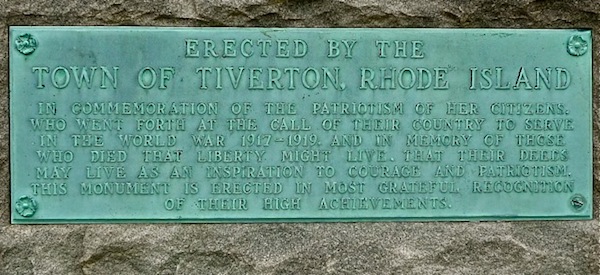
The Tiverton soldier appears to be defending the long-closed bridge across the Sakonnet River. As war memorials go, this bronze by Lewis J. White and cast by the Gorham Foundry is merely serviceable, neither exceptional nor dramatic.

Nevertheless, it still offers a story. The Roll of Honor lists over 150 names. Could Tiverton have sent so many soldiers and sailors to rescue Belgium and France from the Hun? Of those, over a dozen deaths were noted with little stars.

There are a number of Irish (Brophy, Flanagan, O'Connell), French (Beaulieu, Herveux, Lavault), Portuguese (Medeiros, Souza, Raposa). But what surprises is how a hundred years ago the majority of names were old New England ones–Bradshaw, Stafford, Holden. Four nurses are remembered as well, including Emma Frost and Mary Tabor Manchester.

William Morgan is an author and architectural historian.

plaque


Read More
Commentary Robert Whitcomb Commentary Robert Whitcomb

Barret Stern: 'Love is the Highest Law'

  In May 2013, Vlad Tornovy, 22, paid the ultimate price for being openly gay in Russia. After having his genitals slashed, his face bashed in with a rock, and two and a half beer bottles forced into his anal cavity, he mercifully died. This sort of terrible event has become common in Russia, where rampant homophobia can make lethal to speak about LGBT people as equals. Discrimination and violence against homosexuals are condoned, even encouraged, by the Russian government.

Among a series of laws passed by the Russian  parliament in 2013 is one that "prohibits propaganda of non-traditional sexual relations  directed at minors”. The law’s text is so vague that any public pronouncement of feelings between same-sex partners can constitute an infraction. Another law banned the adoption of orphans by same-sex partners. As for couples who have already adopted children, they will soon lose their parental rights.

The documentary Love is the Highest Law looks at three human destinies, linked not only by the persecution of homosexuals in Russia, but also two historic changes in the summer of 2013 in the United States: the overturning of the federal anti-gay-marriage Defense of Marriage Act and the end of the similar Proposition 8, in California.

The movie tells the story of Vadim, of Georgian background, who was born and raised in Moscow, where he developed the dream of becoming an actor. His dearest wish is fulfilled when he starts his studies for a master of fine arts in acting degree at the New York Film Academy. There, he meets Jonathan, who, fully accepting his sexual orientation, at 14 decided to leave his home in conservative Oklahoma to become an actor in Los Angeles. The two fall in love, and Vadim, despite the psychological damage from his Russian past, finally finds the strength to admit his sexuality to both himself and his family.

This is a story about courage, doubt and culture-shock. It shows two people and two countries separated by the deep ocean. It is also about love, which overcomes some of the obstacles. The movie celebrates the main characters’ irresistible desire to share their lives, set goals and fulfill their dreams.

Sandro, a famous designer from Russia, is the third principal character. As a star of Project Runway, Sandro escaped the persecution he faced in Russia and found political asylum in New York. But there, watching archived materials full of violence and harassment in Russia, including by the police, painfully brings back to him events from his past.

Both Sandro and Vadim are still distraught about having to leave Russia. While the United States offers them the security they so desperately lacked in Russia, their move to the America does not end their lifelong struggles. Fame and money seem transient. And Sandro's experience shows the psychological damage he faces daily in his parallel acceptance by strangers and rejection by those whose love and support he needs most.

The film includes the exclusive commentary of famous members of the LGBT community, such as Gilbert Baker, an artist and a civil-rights activist who designed the Rainbow Flag in 1978, and Aaron Morris, the legal director of Immigration Equality, a pro-bono asylum project that provides technical assistance and mentoring on LGBT immigration issues to lawyers around America.

This documentary is intended to change hearts and minds. It encourages people to speak frankly about their feelings and life events amidst radically opposed changes in gay rights and equality in Russia and the United States.

Barret Stern is the pseudonym of a Russian rights activist.

Read More
Commentary Robert Whitcomb Commentary Robert Whitcomb

Charles Pinning: Easter memories of Molly

roch  

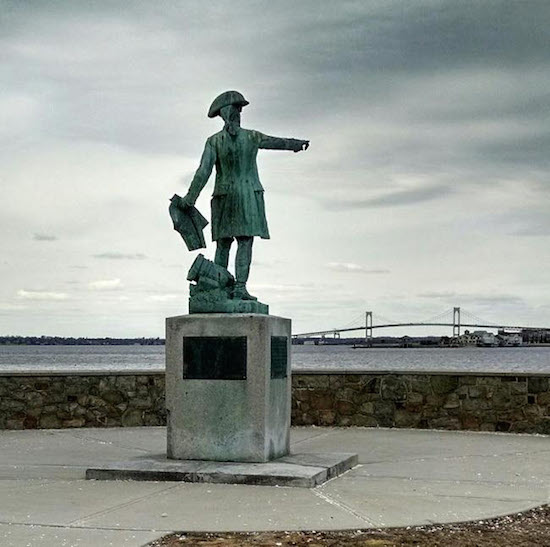
 Statue of Rochambeau in  Newport.

When my father changed jobs, he and my mother moved hundreds of miles away. I was 15 and stayed behind, boarding at St. George’s School in Middletown, R.I., where I had been a day student.

I had a girlfriend a couple miles away, in  Newport, whom I would visit on weekends. We would walk along the harbor at King Park, near where she lived with her mother. Close by the water’s edge we often lingered around the statue of Jean-Baptiste Donatien de Vimeur, Comte de Rochambeau, commander of the French forces so instrumental in helping the former colonists win the Revolutionary War.

“You are so lucky to have lived in Paris,” I told Molly. I had never been out of the U.S. before.

Molly had no immediate response, which was not unusual for her. In fact, it was something that I’d grown very much to like.

Molly had long dark hair, long legs, freckles and was partial to miniskirts. She had almond-shaped, hazel eyes that she outlined in mascara that gave her a deep and pensive look, but her sudden, toothy Irish smile could transform her whole face into bright sunshine.

Our time together always flew by. We wrote each other love letters and poems and sent them via U.S. Mail, so quaint by today’s standards.

“My parents split up when we came back here from Paris,” she said.

“I know,” I replied, and squeezed her hand.

On a Saturday in February, I went over to her house for dinner. Her mother, brother and sister were there. Vietnamese skirmishes and body counts were on the television news, as they were every night. I vowed that I would never go.

“Why, that would be unpatriotic,” said her mother. The year was 1967, and many adults in the United States still felt that way.

“But look at them getting shot at!” I said, gesturing to the TV. “Why would I want to get killed for nothing?”

“I would hardly call it for nothing,” said her brother.

“Really?” I asked. “Then could you please tell me why Americans are getting killed there?”

“Have you ever heard of communism?” said Molly’s sister.

“Yes. And do you think if a teeny, faraway country like Vietnam becomes communist it’s going to hurt us?”

“Could you please stop?” Molly asked me.

“What? Stop using my brain?”

“No. Start.”

“I beg your pardon?”

“When are you planning on getting a haircut?” asked her mother beneath her helmet of perfectly coiffed hair.

“No time soon,” I replied sullenly.

Easter was almost upon us but Molly mentioned nothing about it. I assumed that I’d be joining her family for dinner and brought it up.

“That won’t be happening,” she said.

“Why?”

“You’re persona non grata. My family doesn’t like you.”

“Because of last week?” I asked

“You were angry and upsetting.”

“I wasn’t angry. I was passionate! There is a difference!”

“And they saw us arguing.”

“We weren’t arguing. We had a few words. Doesn’t everyone do that from time to time?”

“Not in front of other people.”

“Am I to be crucified for it? How do you feel about not spending Easter together?” Molly lowered her eyes and shrugged.

“Sad.”

On Easter Sunday, I didn’t want to be seen alone around school, so I walked to half-town and bought a blueberry muffin and walked the rest of the way into Newport, winding up at the statue of the Comte de Rochambeau.

Unwrapping my muffin I saw something in the water. It was a white seal looking at me with dark, glossy eyes that were curious and compassionate. I started crying, missing my family and Molly.

The seal watched me and I heard in my head my mother’s voice: “Don’t be mad at Molly. She’s in an awkward position. It’s Easter, and I want you to be happy. Why not write a story about this? You’ll feel better.”

I grumbled and finished my muffin. Even at 15 I was a bit of a curmudgeon. Now, decades later, I’ve finally written the story and I do feel better. Somewhat. And I do still like a muffin, and thinking about Molly.

Charles Pinning is a Providence-based novelist who still procrastinates but plans on getting better.

Read More
Commentary Robert Whitcomb Commentary Robert Whitcomb

Shakespearean visions

oberon

“My Oberon, what visions have I seen!”

                                             [A Midsummer Night’s Dream, IV, i]

One of Massachusetts photographer Russell duPont's works from his ''Shakespeare Series.''

Read More
Commentary Robert Whitcomb Commentary Robert Whitcomb

Paul Steven Stone: Sobbing on the subway

What’s with all the sobbing? He sits there alone on the subway seat, his body shaking from huge inconsolable sobs. A moment ago he was just sitting quietly, seemingly lost in his own thoughts. Then the crying erupted from his body in an instant, like lava spewed from a testy volcano. We are mostly alone on this Red Line subway car, in Cambridge, he and I, it being 7:45 on a Wednesday morning. I stare at his reflection in the darkened window while he continues to sob so hard I can almost feel his body shaking.

As we glide into Harvard Square, the questions run through my mind like a fevered catechism.

Why, why why? Why did he have to die? He was so young; why him, why now? And what lies ahead for his wife and young son?

Why indeed! I know this was my son-in-law, Kenyatta’s, journey, this early death of his, but still I have to ask “Why?” as if someone could ever explain such a cruel and unfair act of Fate. So cruel it’s almost malicious!

Keny was just 44, maybe 45, it doesn’t really matter. What matters is how young Keny was when he left us, how much greatness he had yet to discover; how much of his warmth and loving presence (“Give me some sugar, baby!”) and hugs we’ll no longer enjoy. You can’t quantify the damage done; our family has been greatly diminished by my son-in-law’s  death and none of us can figure out what hit us or why?

I have seen this man sobbing elsewhere in the last 24 hours. On an elevator, in my local supermarket, sitting in the dark of his office, bathed in the glow of his computer screen. I have seen him break into tears and great, galloping sobs at a moment’s notice. It happened in the shower this morning. His sobs broke through my reverie. Whisking me from one second’s stillness into the next second’s frenzy of cries and wailing.

Was it the suddenness of Keny’s crisis, the tidal wave of ever-rising disaster that resulted from the simplest of surgical operations going wrong; all of it mushrooming within a day into Keny fighting for his life? Was it the unexpectedness of finding someone we love fighting for his life when a moment before, we thought he was safe and getting care? Was there anything we could have done to help prevent Keny’s death?

Sadly, in the end we are all left to sob. Whenever the sorrow, pain and the damn injustice of the thing become too much to bear, I need to release an eruption of uncontainable sobs. I can’t help myself. That’s just how it works. Like this fellow here on the subway train at 7:55 A.M.  on Wednesday morning.

Wonder if he’s getting off at Porter?

Neither of us moves as the car further empties. Looking straight into the window’s reflection, I stare directly at myself, no longer pretending to stare at a stranger. No longer pretending to be a curiosity observed on a train. Looking across at the reflection in the glass, I see myself taking deep breaths while wiping away the tracks of tears that ran beneath my eyes.

So hard to believe. No more Keny. It seems as if he’s been stolen from us. Death is not usually this perverse or insistent; so that only someone in his mid-40’s, someone who was both brilliant of mind and vibrant of life force, would prove acceptable. Either way, Keny fought the good fight; tried to stay alive for his wife and son, but the poison in his body had already done its worst. And so I find myself sobbing on subway trains. On elevators. In the supermarket…

It was so unfair, so heart-rending. So sad…! There is no more Keny. No more blustery personality or charming smile. No more high-energy activity or comfortable presence. No more Kenyatta Braithwaite. So proud to have him as a respectful and loving son. So sad to lose him so young.

“It’s so sad!” I repeat as I wipe away tears from this latest wave of sobbing.

How else can one react? Fate came in and snatched away Kenyatta Braithwaite from the embrace of his friends and family. There was no warning. There was no way to fight this decision. No one to complain to! What choices were we given?

And now, what else can we do?

Except say goodbye…and sob.

Paul Steven Stone is a Cambridge-based writer. Here is his blog.


Read More
Commentary Robert Whitcomb Commentary Robert Whitcomb

She wants to merge Canada and the U.S.

This should be interesting! Diane Francis is a celebrated Canadian journalist,  including as former editor of the Financial Post, in Toronto, currently editor-at-large and columnist for the National Post, and author of 10 books on Canada.

She has recently published a book called Merger of the Century: Why Canada and America Should Become One Country.

She'll talk about it on Tuesday April 7, at the Providence Committee on Foreign Relations's (thepcfr.org) monthly dinner.

Needless to say the book has gotten a lot of attention in both nations.


Read More
Commentary Robert Whitcomb Commentary Robert Whitcomb

On Seekonk: Heirs to crew who beat Hitler's

 washcrew
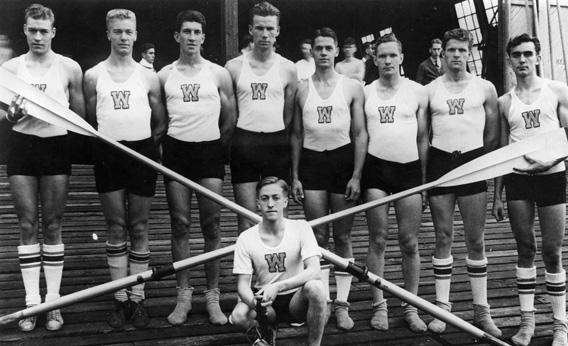
 The 1936 University of Washington crew.
 
And read The Boys in the Boat: Nine Americans and Their Epic Quest for Gold at the 1936 Berlin Olympics, about the University of Washingt0n team, mostly composed of working-class young men, who transformed the sport in defeating elite rivals from Eastern and British universities and then the crew rowing for Hitler.
Read More
Commentary Robert Whitcomb Commentary Robert Whitcomb

All-season work, even here

kocha2 "To Build'' (oil on canvas), by ALEXIS  CARTER KOCHKA, at  Museum of Art, University of New Hampshire.

"My paintings look at the relationship between people and the natural world,'' she says.


Read More
Commentary Robert Whitcomb Commentary Robert Whitcomb

He's only like that with strangers

  tackett

"Godzilla" (hand-splattered latex paint), by BILLY TACKETT, in the "Earth, Wind & Fire'' show at the South Shore Art Center, Cohasset, Mass., April 10-May 24.

Read More
Commentary Robert Whitcomb Commentary Robert Whitcomb

Watch Boston's nascent international think tank

  Do think tanks really think? It's not that these organizations -- mostly centered in Washington, D.C., but also scattered across America – don't harbor some fine minds among their scholars and fellows, but the problem is that we know what they think -- and have often known for a long time. The rest is articulation.

Among Washington think tanks, we know what to expect from the Brookings Institution: earnest, slightly left-of-center analysis of major issues. Likewise, we know that the Center for Strategic and International Studies will do the same job with a right-of-center shading, and a greater emphasis on defense and geopolitics.

What the tanks provide is support for political and policy views; detailed argument in favor of a known point of view. By and large, the verdict is in before the trial has begun.

There a few exceptions, house contrarians. The most notable is Norman Ornstein, who goes his own way at the conservative American Enterprise Institute (#). Ornstein, hugely respected as an analyst and historian of Congress, often expresses opinions in articles and books  that seem to be wildly at odds with the orthodoxy of AEI.

A less-celebrated role of the thinks tanks is as resting places for the political elite when their party is out of power. Former  U.S. Ambassador  to the United Nations John Bolton, rumored to be favored as a future Republican secretary of state, is hosted at AEI. National Security Adviser Susan Rice was comfortable at Brookings between service in the Clinton and he Obama administrations. At any time, dozens of possible office holders reside at the Washington think tanks, building reputations and waiting.

My interest in think tanks and their thinkers has led me to what might be developing into a think tank, although it's too early to say. It's so early that it has no headquarters, secretariat or paid staff. But this nascent think tank has gathered a loose faculty from a coterie of public intellectuals, mainly in and around Boston, and abroad in Hanoi, Tokyo and Berlin.

It's called the Boston Global Forum. Formed in 2012, it's led by two very different but, apparently, compatible men: Michael Dukakis, former Massachusetts governor and Democratic presidential nominee, and Nguyen Anh Tuan, who founded a successful internet company in Vietnam and now lives in Boston.

The concept of the forum is to study and discuss a single topic for a year. Last year, in forums and internet hookups between Boston and Asian and European cities, the topic was security in the South and East China seas, where war could easily erupt over territorial disputes. After a year of discussion, the participants concluded that a framework for peace in the region needs to be established and that current international arrangements and organizations don’t go far enough in that direction. This year’s topic is cybersecurity.

The Boston Global Forum has strong ties to the faculties at Harvard and Northeastern University, where Dukakis is a professor. Most forum meetings take place on the Harvard campus. Two of the forum's most conspicuous champions are Harvard Professors Joseph Nye and Tom Patterson. Patterson’s office at the John F. Kennedy School of Government serves as a kind of de facto headquarters.

This new entrant into the think tank cohort is very East Coast-tony, and very energetic. This year it has plans for meetings in Vietnam, Tokyo and somewhere in Europe, and has attracted  such media heavyweights as David Sanger, of The New York Times, and Charles Sennott, one of the founders of the online GlobalPost.

As the Boston Global Forum is a new think tank, questions abound: Will it get funding? Will it find premises and staff ? Will it get public recognition?

The big question about anything that looks like a think tank is, will thinking happen there? Will the Boston Global Forum be a crucible for big ideas? Or will it, like other think tanks, develop its own binding ideology?

Will the Boston Global Forum become, like so many, a smooth propaganda machine? Or will it be a place where the outlandish can live with the orthodox?

Llewellyn King is executive producer and host of  “White House Chronicle” on PBS. His e-mail is lking@kingpublishing.com.

Linda Gasparello
Read More
Commentary Robert Whitcomb Commentary Robert Whitcomb

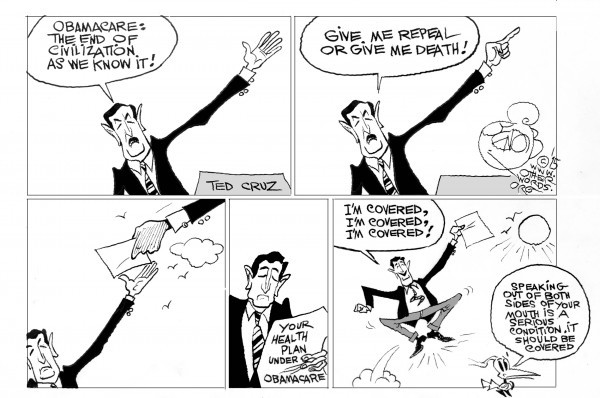
Hypocrisy is good for your health

CRUZ

Read More
Commentary Robert Whitcomb Commentary Robert Whitcomb

Karen Dolan: Criminalizing being poor

Here’s something you might not know about , Mo. In this city of 21,000 people, 16,000 have outstanding arrest warrants. In fact, in 2013 alone, authorities issued 9,000 warrants for over 32,000 offenses.

That’s one-and-a-half offenses for every resident of Ferguson in just one year.

Most of the warrants are for minor offenses such as traffic or parking violations. And they’re part of a structural pattern of abuse, according to a recent Department of Justice investigation.

The damning report found that the city prioritized aggressive revenue collection over public safety. It documented unconstitutional policing, violations of due process, and racial bias against the majority black population.

One woman’s story illustrates what’s happening to more and more people as municipal revenues become the focus of police departments all over the country.

It began with a parking ticket back in 2007, which saddled a low-income black woman with a $151 fine and extra fees. In economic distress and frequently homeless, she was unable to pay. So she was hit with new fines and fees — and eventually an arrest warrant that landed her in jail.

By 2010, she’d paid the court $550 for the single parking violation, but more penalties had accrued. She attempted to make payments of $25 and $50, but the court rejected those partial installments.

Even after being jailed and paying hundreds of dollars above the original fine, she still owes the court $541 — all because she lacked the money to pay the initial fees.

This woman’s story is repeating itself in town after town.

A 2014 NPR investigation found people who wound up in jail after coming up short on fines for a range of minor offenses — such as catching a fish out of season in Ionia, Michigan, shoplifting a $2 can of beer in Augusta, Georgia, or hanging out in an abandoned building in Grand Rapids.

It’s even worse for the homeless. A majority of cities now prohibit sitting or lying down in public, and nearly a quarter make it a crime to ask for food or money.

I’ve co-authored a report at the Institute for Policy Studies called “The Poor Get Prison,” which examines the growing phenomenon of local communities “criminalizing poverty.” That means targeting, arresting, and downright bilking people for misdemeanor offenses, debt, and lack of resources.

We find that as state and local budgets were squeezed following the 2008 recession, local authorities all over the country levied more fines and fees on those people least able to pay — and aggressively pursued them.

Even after their debt is paid, these can people face discrimination in employment, housing, and social services because of the jail time they racked up when they were unable to pay.

Fines aren’t the only way the courts are shaking down poor people. The report details another increasingly lucrative revenue raiser for both local and federal coffers: civil asset forfeiture. This is the odious practice of seizing cash and property from people not charged with any crime and who can’t afford legal defense.

Not even kids are safe. From pre-school on, poor and black children are often considered criminals.

Police presence in schools has been increasing since the 1990s. Combined with the rise of “Zero Tolerance” policies, children in low-income schools are prosecuted as criminals for everything from brawling on the basketball court to doodling on a desk. In Austin, Texas, a 12-year-old ended up in court for putting on perfume.

When a community issues arrest warrants for more offenses than it has residents, something’s deeply wrong. A democratic society that purports “freedom and justice for all” can’t coexist with one that profiles and criminalizes poor people and communities of color.

Karen Dolan is a senior fellow at the Institute for Policy Studies and co-author of the report “The Poor Get Prison: The Alarming Spread of the Criminalization of Poverty.” IPS-dc.org.report . Distributed by

Read More
Commentary Robert Whitcomb Commentary Robert Whitcomb

Chris Powell: Boycott Indiana? How about police-state China?

  MANCHESTER, Conn.

Connecticut Gov. Dan Malloy's posturing about Indiana's new "religious freedom" law is being called hypocritical for the wrong reason -- called hypocritical because Connecticut has its own "religious freedom" law.

But the Indiana law seems far broader and meant to empower individuals and businesses to evade civil rights laws by claiming religious objection, potentially inviting nullification of civil rights, particularly rights claimed by homosexuals.

No, the governor's posturing, accompanied by an executive order barring official state travel to Indiana, is hypocritical for being so ridiculously disproportionate.

Denouncing the Indiana law, the governor bellows, "Somebody has got to stand up to this kind of bigotry, and I'm prepared to do it." But the worst consequences of the Indiana law are likely to be only that a few religious fundamentalist bakers, florists, photographers, and banquet halls will refuse to facilitate same-sex weddings.

The governor who purports to be so indignant about that law is the same one who a few weeks ago proposed a state budget reducing aid to the most innocent needy -- including mentally disabled adults living with elderly parents because state government refuses to appropriate adequately for group homes, and the mentally ill and drug-addicted -- so he could pay raises to the most coddled people in Connecticut, state and municipal government employees.

This is also the governor who three years ago announced, at the outset of his own official travel, a visit to China, that he would be "exploring opportunities for Connecticut companies to do broader business there and exploring opportunities for Chinese investment in operations here."

That is, the governor solicited business in a country that forces women to have abortions, brutally suppresses ethnic minorities in Tibet and Xinjiang, imprisons political and religious dissidents, violates every major human right, bullies its neighbors, and last week sentenced a man to six years in jail for growing a beard in accordance with his tribal custom.

The governor has not yet ordered state officials to suspend business with China, but maybe he is inclined to give that country a pass since, like Connecticut, it has only one political party.

When Republicans in Washington pander to their party's reactionary base, the issues they raise are ridiculed as "boob bait for Bubbas." But in Connecticut the boob-baiter-in-chief is a supposedly liberal Democrat who has been overwhelmed by the job he was elected to do and so has been reduced to contriving distractions, trying to keep his own daffy base behind him, lest anyone notice that he has only hastened the state's decline.

Silly and unnecessary as these "religious freedom" laws are, freedom of religion being only another form of freedom of expression, not the freedom to smoke dope or deny public accommodations in God's name, the governor and other critics of the Indiana law are acting as if Western Civilization hasn't always had a problem with homosexuality, acting as if this problem was invented recently by those boob-baiting Republicans from the corn and cotton fields of the benighted hinterlands.

In fact the problem arises from the Jewish and Christian Scriptures, which nastily enjoin homosexuality, just as Connecticut's own law criminalized it not long ago. That the Scriptures are arbitrary on the point, offering no rationale beyond the supposed word of God, invites freethinkers to doubt them. But the Scriptures were getting respect for ages before faux indignation and political correctness replaced political discourse, and they likely will be getting respect long after those now employing those tactics pass from the political scene.

While the governor and other critics of the Indiana law won't put it candidly, they essentially are telling people to trash the Scriptures. The genuine indignation and the legislation they have provoked shouldn't surprise them.

Chris Powell is managing editor of the Journal Inquirer in Manchester, Conn.  

Read More
Commentary Robert Whitcomb Commentary Robert Whitcomb

Best wishes, Tim Murphy!

  Best wishes to Tim Murphy, a longtime Providence Journal editor, notable for his intelligence, calm and quiet humor. A delightful gent, much beloved by his colleagues.

He retired last week, joining the throng of senior editors who have left  newspapers in the past several years as these institutions  morph into smaller and primarily digital creatures, even as most of their revenue  continues to come from the good old-fashioned (and easier to read) print on paper.


Read More
Commentary Robert Whitcomb Commentary Robert Whitcomb

Soon to prove it's not dead

parsons Watercolor by PHILLP PARSONS  (1896 -1977), via Patricia Ladd Carega Gallery, Center Sandwich, N,H.  

Read More
Commentary Robert Whitcomb Commentary Robert Whitcomb

Monumental drawing

  schaefer

"Live Oaks,'' by RICK SHAEFER, a Fairfield, Conn., artist whose work includes brilliant and monumental drawings like this.

Read More
Commentary Robert Whitcomb Commentary Robert Whitcomb

Llewellyn King: An answer to Chinese domination of rare earths

  Rare earth elements – there are 17 of them – have the world’s manufacturing by the throat. They are, as John Kutsch, director of the Thorium Energy Alliance, says, “the great multipliers.” They make metals stronger, generators more efficient, cell phones smaller, television sets sharper, and laptops lighter. They are, in their way, as important to modern manufacturing as energy.

At one time, the United States was a major supplier of rare earths -- with supplemental supplies coming from countries around the world, including Australia and Brazil. Today, 90 percent of the rare earths the world uses come from China.

The use of rare earths is as important in lasers and jet engines as it is in aiming cruise missiles, which means the United States, and the rest of the world, has a huge vulnerability: China controls the supply of new war-fighting material. All U.S. defense manufacturers – including giants Boeing, General Electric and Lockheed Martin -- are dependent on China. Now China is demanding that U.S. companies do more of their manufacturing there: China wants to control the whole chain.

Yet, as the rare earth elements industry is quick to assert, rare earths are not rare; they are scattered generously throughout the world. So why China’s dominance?

China has three main advantages. The first is that in 1984, leader Deng Xiaoping adopted a major initiative, the so-called 863 Program, to move China from being a simple supplier of raw materials and products, enhanced by cheap labor, to being an industrial powerhouse and scientific giant. Rare earths were one of the areas singled out in the program.

The second advantage is that the Chinese ignored – and, to a large extent, still do -- the environmental costs of rare earths' extraction. The environmental damage is described by those who have been to one of two major Chinese sites, which have a combined population of 17 million, as catastrophic, with mountains bathed in acid to remove the sought-after rare earths, resulting in lakes of acid.

China's third advantage is a natural one: It has a lot of ionic clay, which contains rare earths without the associated uranium and thorium.

About the time China was ramping up its plans to dominate the world rare earths market, the United States, in conjunction with the International Atomic Energy Agency, based  in Vienna, began to regulate so-called source materials. These are materials which, at least in theory, could be fashioned into weapons. In reality, those associated with rare earths are not in sufficient quantity to interest potential proliferators.

But the regulations are there. Many in the rare earths elements industry believe that it was these regulations -- particularly as affecting thorium -- that crippled production around the world and essentially closed down the U.S. industry, just as demand was escalating.

There is a commercial market for uranium. While hardly any thorium is used nowadays, it was once used in some scientific instruments and mantles for lighting. Thorium is akin to uranium in atomic weight, and it is a fertile nuclear material. That means that it can be used in a nuclear reactor, but it has to be ignited by a fissile material, such as enriched uranium or plutonium.

Thorium is radioactive, but mildly so. It is an alpha emitter, which means it can be shielded with tissue paper and will not penetrate the skin. However, it has a half-life of 1.5 billion years.

The answer, according to James Kennedy, a science consultant and rare earths expert, is to develop a reactor using thorium instead of uranium. This reactor, called a molten salt reactor, is inherently safe, say its passionate advocates, and would be a better all-around nuclear future. The technology was pioneered by one of the giants of the early nuclear age, Alvin Weinberg, at the Oak Ridge National Laboratory, but abandoned under pressure from enthusiasts for light water reactors, the kind we have today.

The Thorium Energy Alliance believes that the United States and other countries should develop a cooperative to source rare earths from the existing mining of phosphates and metals and store the thorium until it becomes a useful fuel. A bill to do this is making its way through Congress, but its chances are slim. Short of putting a value on thorium and isolating it, the chances of a rare earths elements industry reawakening in the United States, or elsewhere, is rare.

Llewellyn King is executive producer and host of “White House Chronicle,'' on PBS. His e-mail is lking@kingpublishing.com.


Mobile: (202) 441-2703

Web Site: whchronicle.com

Read More