







A_map_of_New_England,_being_the_first_that_ever_was_here_cut_..._places_(2675732378).jpg

Vox clamantis in deserto

Commentary Robert Whitcomb Commentary Robert Whitcomb

There's a public-safety emergency in Providence

 Should you call 911?   Well, maybe.  

There is a crime in progress in Providence: Vincent Cianci is running for mayor, and, as of last week, he was winning.   So call 911?   Maybe not, if you live in Providence or you just happen to be passing through. That’s because the union representing the police officers who might be coming to help wants the Providence police force to be controlled by a twice-convicted criminal.  


 In fact, both the police and firefighters unions in Providence have endorsed Cianci in the three-way race for mayor of the capital city.   It sounds like another Rhode Island bad joke, but it’s not.   The men and women who enforce the law in Providence are recommending that a crook be the mayor of their city. The officers of the law want to be led by a lawbreaker. The man with the badge is backing the man who’s been in the can.   People with arrest powers want a twice-convicted felon calling the shots. They want a felon to appoint their chief; they’re hoping a crook will name a city solicitor and run the law department.


The cops’ Most Wanted Man is one with a record.   Cianci is not funny anymore; he’s leading in the polls.   Whom should you call instead of 911?  


 Call AAA.   Call the Institute for the Study and Practice of Nonviolence. Call the Democratic State Committee. Call your parish priest and the Rhode Island State Council of Churches, the bishop of Providence, the Rhode Island Board of Rabbis, the Providence Rotary, the Economic Policy Institute, the U.S. attorney, the Federal Bureau of Investigation, the Central Intelligence Agency, the Drug Enforcement Administration and the Naval Criminal Investigative Service.


Call the AFL-CIO, the National Education Association, the American Federation of Teachers, the Service Employees International Union and the United Nurses and Allied Professionals.   Call the Rhode Island Boys and Girls Clubs, Trinity Repertory, Gamm Theatre, 2nd Story Theatre, the Unitarians, the Tea Party, the Rhode Island Community Food Bank, the Lions Club, the Kiwanis, the League of Women Voters, the Rhode Island League of Cities and Towns, the Republican Party, House of Hope, Crossroads, Channel 12, Leadership Rhode Island, the Young Democrats, the Greater Providence Chamber of Commerce, Rhode Island Public Radio and talk radio.   


Call Verizon, Cox and Sprint. Call Lifespan and Care New England and all of the hospitals. Call the Visiting Nurses, the Ironworkers, the Steelworkers and the Rhode Island Public Transit Authority. Call Gov. Lincoln Chafee, House Speaker Nicholas Mattiello and Senate President Teresa Paiva Weed. Call the Providence Bruins, The Providence Journal, the Rhode Island State Police. Call the Boy Scouts and the Girl Scouts.  


 Call the presidents of Brown University, Providence College, Moses Brown, the Wheeler School, Rhode Island College, Bryant, Roger Williams, Salve Regina, and Johnson and Wales universities and the University of Rhode Island. Call your neighbors. Call the next governor, Gina Raimondo or Allan Fung.  And don’t forget to call your mother.   


In fact, call the Fraternal Order of Police and the Firefighters Union, and tell them it’s not too late to go straight.   But do something. 

Whether you live in Providence or not, Rhode Island’s capital is too important for its residents, as well as for the rest of Rhode Island, to stay silent. It’s time to speak up. Tell everyone to stand up and to be counted, to raise a chorus that can be heard in every precinct and ward in the city of Providence, in every city and town hall in Rhode Island, that we do not want Vincent Cianci ever again to operate our capital city as a criminal enterprise.   


Should you call 911 in the event of an emergency?   Maybe. But if a Providence policeman or a Providence policewoman answers the call, tell him or her not to bring in the man their union wants as the next mayor.   Then call the Rhode Island Expenditure Council, Operation Clean Government and Common Cause.


And all of us, let’s call on our own common sense.   


Brian C. Jones is a book author, freelance writer and former Providence Journal reporter.

Read More
Commentary Robert Whitcomb Commentary Robert Whitcomb

Robert Whitcomb: A civic celebration and a cruise

  I enjoyed a piece of small-town Americana on Sept. 17, when I gave a talk at a luncheon meeting of the Bristol (R.I.) Rotary Club. Oh, for a renaissance of such civic organizations!


The club is part of Rotary International, which aims to bring mostly local business and professional leaders together to promote humanitarian service, boost ethics and encourage friendship and goodwill. The few dozen people at the meeting were thirtysomethings to eightysomethings; everybody seemed to have current or past professional or business connections.


I felt transported back to the Fifties. The meeting began with the Pledge of Allegiance, the singing of the National Anthem (with an 89-year-old lady playing the piano) and a nondenominational prayer. After lunch, attendees sang some pre-rock songs. Then came my talk, about the Islamic State, and smart questions.


It would be hard to find a nicer and more engaged group. Participating in such organizations has tended to decline in America in the last few decades. That’s sad, because they do a lot of fine stuff for their localities and the nation, raising money to fight illnesses, promoting education (especially through scholarships), sprucing up parks and many other good causes. Their decline is of a piece with the general slide of civic life. It’s harder these days to get people to run for office, serve on local boards and join charitable drives.


Cynics like to make fun of such upbeat, boosterish organizations, but they address the need of a healthy democracy to have a wide variety of agile nongovernmental organizations serving the public.


Increased mobility, more dispersed families, shorter-term jobs, the distractions of life on the Internet and the general weakening of the middle class have tended to shrink the memberships of service organizations such as Rotary. Let’s hope that can be reversed. That these clubs generally eschew “virtual’’ meetings online in favor of frequent face-to-face encounters is a particular plus. In-person members often become real friends, and thus more likely to encourage themselves and their fellow members to follow through on good works.


Later, I walked around Bristol, and marveled at its antiquarian beauty.


xxx


The next day I had a meeting on a small (perhaps 32 feet long) sailboat usually moored off Stamford, Conn. We sailed west to off Greenwich, where we anchored near an island with a gazebo on it. It was late in the season, of course, and there were only a couple of other people there. The menacing Manhattan skyline was in the distance.


We went swimming, in remarkably warm water, and talked about a project in China while admiring the beauty of the day – a glory that seems to go on day after day in September and early October in New England. For a few weeks, we have a champagne climate, albeit tinctured with melancholy about what will follow soon enough. But then “the American Season’’ as it has been called, is both a poignant annual ending and an often boisterous beginning.


To the north could be seen the waterfront mansions of the hyper-rich in Greenwich, not that far from slums in Stamford. The “1 percent’’ is what Greenwich is most famous for, and even more so since Wall Street became so much more powerful and rich in the past few decades, via hedge funds, private-equity firms and investment banks. (That the huge California Public Employees’ Retirement System has decided to quit hedge funds might start a wave that could do some damage to a few of the owners of these houses.)


After we had been at anchor for a while, a young woman in our party said that she had to get back to New York pronto. So our skipper decided to sail the dinghy we had been towing all the way to Greenwich, from whose shores the young woman would make her way to the train station. She made the train, but the wind died and so our captain (a film director!) had to row most of the way back to the bigger boat, where we grew slightly anxious waiting.


Finally the wind came up a bit and we saw his red sail, in the sunset. “There’s John!,’’ we shouted, trying to restrain the sound of relief.

  Then we slowly made our way back to Stamford through calm and bioluminescent waters; thank God for the inboard motor. I stayed that night in a cheap Stamford motel, some of whose illegal-alien workers might also be leaf blowers on the grounds of the Greenwich estates. There were cigarettes on the motel’s floors and its “breakfast’’ provided only Cremora for coffee. But perhaps that TV’s in the rooms showed very fuzzy images of athletic pornography to channel surfers was adequate recompense for many weary travelers.


Robert Whitcomb (rwhitcomb51@gmail.com) is a Providence-based writer and editor who oversees this site.


Read More
art Robert Whitcomb art Robert Whitcomb

Dive in

  SusanLyman


"Woe is the Adjunct'' (wooden sculpture) by  SUSAN LYMAN, at Gallery Ehva, Provincetown.


Ms. Lyman has been an adjunct college teacher. It is tough, poorly compensated work.

Read More
art Robert Whitcomb art Robert Whitcomb

And fights erosion

duneinstallation  

"Dune Installation, '' by SAGE FELDMAN, sent via Gallery Ehva, Provincetown.

Read More
Commentary Robert Whitcomb Commentary Robert Whitcomb

Chris Powell: Shakespeare, Bierce would have understood Rowland

MANCHESTER, Conn.

Having been convicted a second time on federal political corruption charges, former Connecticut Gov. John G. Rowland has people shaking their heads in wonder at why he didn't learn his lesson the first time, even as he was given a couple of pretty good jobs upon his release from prison, one doing economic development for his hometown of Waterbury, the other doing a radio talk show.

But it's hardly a mystery. Not all incorrigibles in Connecticut are fatherless young men from minority groups in the cities or boys who think they want to be girls only to end up as wards of the state Department of Children and Families. Every day Connecticut's courts are full of people amassing their umpteenth felony conviction, people who, to get into prison, had to work much harder than Rowland did -- and unlike Rowland's those cases are not compounded by the corruption inherent in political power.

The Meriden Record-Journal laments that people were "duped" twice by Rowland, "once by the young, up-and-coming Rowland and once by the older but not necessarily wiser ‘got religion' Rowland." But unless he was born corrupt and ill-motivated, there may have been no duping at all as he began his political career, just an ordinary vulnerability worsened by a ruinously expensive divorce.

Besides, it is hard to stay in politics in Connecticut for long without becoming cynical, since the very structures of government are greedy, fake, corrupt, or fostering of corruption, from binding arbitration of public employee union contracts to the control of professional regulatory agencies by the professions purportedly regulated. If Ambrose Bierce was still around he might use Connecticut as the example for his definition of "politics" in "The Devil's Dictionary": "A strife of interests masquerading as a contest of principles; the conduct of public affairs for private advantage."

It's not likely that Rowland was born corrupt, more likely that he simply did not have the moral strength to put himself at risk fighting a corrupt system, and, making his peace with that system -- putting his Republican affiliation largely aside and reaching a modus vivendi that proved even more profitable to the Democrats who controlled the General Assembly -- he became not only cynical but arrogant, and then just as venal as they already were, since they had been in power longer. He was just less careful about the details of the law.

Rowland seems to be considered unique in Connecticut for his downfall but he is not. A few decades ago U.S. Sen. Thomas J. Dodd, a Democrat, was even more corrupted by power -- taking bribes, converting campaign contributions to personal use, and evading income taxes while drinking himself into oblivion, leading to his censure by the Senate. But in his last two years in office, by selling his vote to the new national Republican administration of Richard Nixon, Dodd escaped criminal prosecution and now has a stadium named for him in Norwich and a research building and an annual prize named for him at the University of Connecticut.

Rowland, Dodd and others like them are only part of the oldest story in politics, as Shakespeare had Richard II explain:

... for within the hollow crown

That rounds the mortal temples of a king

Keeps Death his court, and there the antic sits,

Scoffing his state and grinning at his pomp,

Allowing him a breath, a little scene,

To monarchize, be fear'd and kill with looks,

Infusing him with self and vain conceit,

As if this flesh which walls about our life

Were brass impregnable, and humour'd thus

Comes at the last and with a little pin

Bores through his castle wall, and farewell, King!

-----

Chris Powell is managing editor of the Journal Inquirer, in Manchester, Conn.

Read More
Commentary Robert Whitcomb Commentary Robert Whitcomb

Community networks for transforming health care

  Video: Marc Pierson, M.D., a senior adviser at Cambridge Management Group West, sets forth a practical program for creating networks of community health workers to help transform American healthcare. Dr. Pierson, a former emergency department physician and hospital executive, has a national reputation for innovation aimed at improving care while reducing per-patient costs. He discusses how real healthcare reform must encompass far more than just the medical sector.


--- Robert Whitcomb (a colleague of Dr. Pierson)

Read More
art Robert Whitcomb art Robert Whitcomb

Fete's New Orleans feeling

  fete


This shows some of the extraordinary aesthetics  within the gorgeous Fete Music complex, in Providence's Olneyville section.


Read More
art Robert Whitcomb art Robert Whitcomb

Autumn in New York, or Boston

giarrano  

This painting,  in a recent show by VINCENT GIARRANO,  seen at Susan Powell Fine Art, in the pretty town of Madison, Conn.,   on Long Island Sound, creates (for me anyway) a particularly evocative sense of being in a Northeast city as the weather turns cool and blustery at this time of year. There's an autumn busyness tinctured with sadness. I think of Vernon Duke's wan song "Autumn in New York,'' whose lyrics  and melody convey in turns,  joyful anticipation and a deepening melancholy.

But maybe Mr. Giarrano got the idea from a scene in the spring.

Love the bridge connecting the buildings -- old city.


-- Robert Whitcomb


Read More
art Robert Whitcomb art Robert Whitcomb

There's a system here

gilliam  

Untitled work by SAM GILLIAM  (original color monotype with hand-painting on heavy handmade ),  at Spaightwood Galleries, in Upton, Mass.


This gallery in little Upton has some terrific stuff.


Read More
Commentary Robert Whitcomb Commentary Robert Whitcomb

Charles Chieppo: The wrong person to head Boston schools

  BOSTON

Massachusetts  Education Secretary Matthew Malone has made no secret about wanting to become the next superintendent of Boston Public Schools.

“I’ve been training for this job all my life,” Malone told The Boston Globe. “It’s my calling.”

But there is precious little in Malone’s background to support that claim.

Before becoming secretary of education, Malone was superintendent in Brockton, the commonwealth’s fourth-largest school district. During his 2009-2012 tenure, the percentage of elementary- and secondary- school students scoring proficient or advanced on MCAS fell at every grade level but one. Eighteen months before his contract expired, the city’s school committee informed him that he would not be rehired.

Malone, who is no shrinking violet, also told The  Globe that he’s “in the arena and willing to fight and die for these kids.” Not only is there little to support that claim, but there is extensive evidence indicating it is blatantly false.

Brockton is the largest city in Massachusetts that doesn’t have a charter school. Toward the end of his tenure there, Malone’s primary focus seemed to be on ensuring the rejection of a charter school that had been proposed for the city.

The school was to be operated by Sabis, a charter-school-management company that operates two inner-city schools recently opened in Holyoke and Lowell, and a third in Springfield that has been operating for nearly 20 years. Every graduate in the history of the Springfield school has been accepted to college and it has repeatedly been recognized by Newsweek and U.S. News & World Report as one of the nation’s best high schools.

Sabis Springfield has a four-year graduation rate of more than 90 percent compared to less than 70 percent at Brockton High. On 2012 MCAS English tests, two-thirds of Sabis Springfield students scored advanced or proficient; less than half did so in Brockton. On math MCAS tests, the majority of Sabis students scored advanced or proficient compared to just over one-third in Brockton.

So did Malone “fight and die” for Brockton’s kids?

Hardly. Emails obtained by Pioneer Institute (which I am affiliated with as a senior fellow) show that he used his office and city resources to do things like craft a less-than-clever “$ABIS” logo and use his political contacts to kill the charter proposal. As Malone wrote in an email to the Brockton School Committee and several of his staff members, “It helps to have friends at [the state Department of Elementary and Secondary Education].”

It worked. The Brockton charter school proposal was rejected, and the city is worse off as a result.

Perhaps Matthew Malone’s application to be superintendent of Boston Public Schools should read that he is “willing to fight and die for these kids” — once it’s clear that the status quo is protected and the jobs of every adult in the system are secure.

Charles Chieppo is the principal of Chieppo Strategies, a public-policy writing and communication firm.

Read More
art Robert Whitcomb art Robert Whitcomb

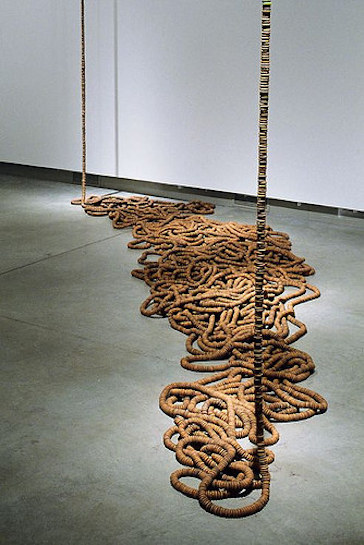
Use everything

  Galston


"Tangle'' (300-foot-long rope made with acorn caps), by BETH GALSTON,  in the show "Branching Out: Trees as Art,'' at the Peabody Essex Museum, in Salem, Mass.,  through Sept. 20, 2015.

She collected the acorn caps under a single red oak in Boston's Arnold Arboretum.


"The capitalists will sell us the rope with which we'll hang them.''

-- Lenin


Read More
Commentary Robert Whitcomb Commentary Robert Whitcomb

An early legal experience

  Former Providence Mayor Buddy ("Vincent'') Cianci has much legal experience that  can only strengthen his public service.


Read More
Commentary Robert Whitcomb Commentary Robert Whitcomb

'Big Data' and docs

  How much of future medical decisions will be made by individual physicians  mostly using their experience and intuition and how much by an analysis of "Big Data,''  via medical-data companies such as MediQuire, with which I have been working a bit?


-- Robert Whitcomb

Read More
Commentary Robert Whitcomb Commentary Robert Whitcomb

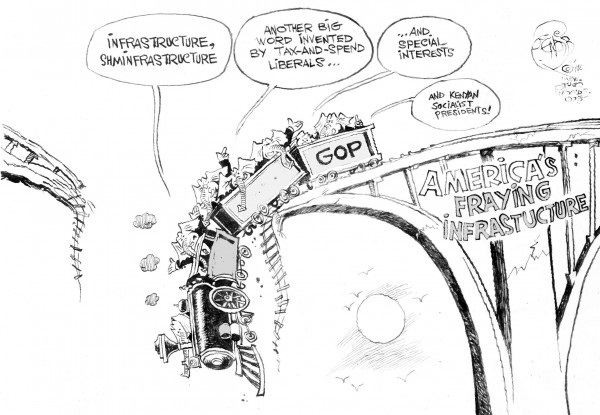
A bridge too far


infra

Read More
art, Commentary Robert Whitcomb art, Commentary Robert Whitcomb

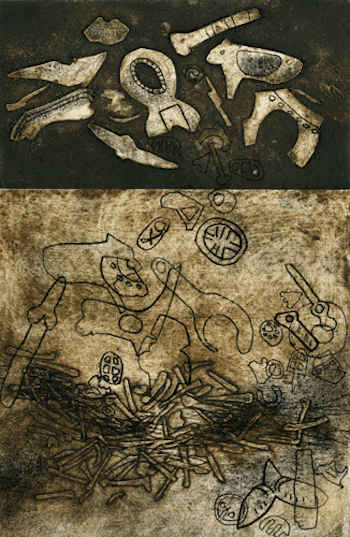
Chief Ricci's suicide and other Cianci regime history

 Hausrath
"Fragile Remains'' (collagraph and trace monotype print), by JOAN HAUSRATH, at the Art Complex Museum, Duxbury, Mass.
For new arrivals in Providence, and citizens with amnesia: Note  this excerpt of  an April 25, 2007 article by Bill Rodriguez in the Phoenix:
''Now that Buddy Cianci’s scheduled July 27 prison release date is approaching, Providence documentary filmmaker Cherry Arnold is getting around to a theatrical release of Buddy, following a successful victory lap on the film festival circuit....''

“'During the screenings outside of RI, in New York for instance, there were more gasps and audible reactions where people who didn’t know Buddy’s story were, I think, shocked by some of what happens, like the police chief [Robert E. Ricci] committing suicide [in 1978] and the assault details,' she notes. “'Outside of RI, lots of people ask during the Q&A why he was able to run for mayor again as a convicted felon. They’re very curious about that.”'

Then there are the sweetheart pension deals  and running City Hall as a criminal operation. But, hey!, nobody's perfect! The heavy price of statesmanship!

As H.L. Mencken's line goes:

''Democracy is the theory that the common people know what they want, and deserve to get it good and hard.''


Read More
Commentary Robert Whitcomb Commentary Robert Whitcomb

David Holahan: Past time to lower the minimum wage!

  If raising the minimum wage would hurt business, as the Republican Party insists, then it stands to reason that lowering it from $7.25 an hour would help business. And since the business of America, as President Calvin Coolidge said, is business. What are we waiting for?


How about $5, perchance $3? That would be like a steroid injection for our sluggish economy. As a college student in 1970 I spent one summer working for a vegetable farmer and earned the base pay of $1.45 an hour. The minimum wage for farm workers then was lower than that for the rest of the workforce ($1.60), presumably because we could nibble fresh produce while we worked in the blazing sun or driving rain.


Business has taken so many big hits over the years it’s a wonder there are any entrepreneurs left. The compulsory six-day, 12-hour a day workweek is long gone. One of the first strikes in American history advocated for the 10-hour workday. Good times!


Child labor is now taboo, too, at least in this country. My fraternal grandfather began earning his keep at the age of ten in a Pennsylvania coal mine. Little people worked cheap and their tiny bodies and nimble hands allowed them to get into tight places where grownups couldn’t go.


Once the minimum wage was zero, zilch, nada, nil. For centuries slavery greased the wheels of commerce here and abroad. It wasn’t simply that free labor was good for plantation owners. Enslaved people represented collateral for commercial investment, profits for insurance companies, a lucrative market for New England beef and dried cod, and a potent stimulus to expanding global trade.


As hard as it will be for some readers to believe, it was the Republican Party  that  brought this business-friendly era to a screeching halt. To be fair, the “Grand Old Party” was in its infancy back then and wasn’t nearly so Grand.  It has come a long way, blindly siding with business over labor in almost every instance since, fighting tooth and nail against most of the provisions that have shaped modern labor practices.


And the GOP is still fighting – and not just against increasing the federal minimum wage for the first time since 2009. In Maine, Republicans recently tried to loosen restrictions on longstanding child-labor laws so teenagers could work longer and later on school nights (11 p.m.) and for considerably less than the minimum wage. Talk about progress!


But mainly, Republicans are pushing back against Obama et al., who are arguing that it is time to raise the minimum wage. The Democrats anti-business rant goes something like this:


  • Inflation has effectively decreased the current minimum wage (which is not indexed to the cost of living as Social Security payments are) by more than 11 percent since 2009.
  • To equal the purchasing power of the federal minimum wage circa 1968 would mean a current figure of $10.69, according to the Congressional Research Service.
  • Lowest-wage Americans need the extra money just to survive and will spend every penny of it on goods and services, thereby stimulating the economy more than tax breaks for the rich, who already have everything money can buy.


Republicans reply pithily that businesses are people, too. If you don’t believe them just ask the U.S. Supreme Court.


My grandfather and I survived the coal mines and the farm. I went back to college. Michael Holahan was rescued from a life underground by an uncle who was a priest and put him to work for the parish.


In my grandfather’s day things were simpler and regulations were few and far between. There were states that didn’t require children to attend school but  let them  be put to work in mines and factories. Was that so bad?


David Holahan is a freelance writer who lives in East Haddam, Conn.

Read More
art, Commentary Robert Whitcomb art, Commentary Robert Whitcomb

William Morgan: A license plate worthy of Liberace

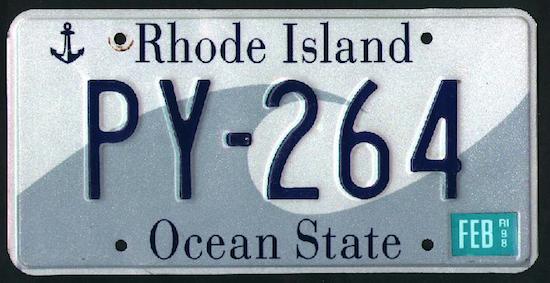
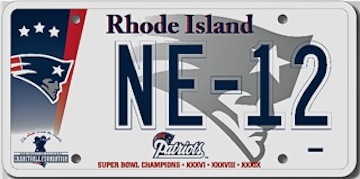
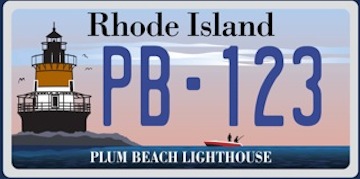
Photos (below)  and comment by WILLIAM MORGAN The State of Rhode Island and Providence Plantations has blessedly not joined the rush to offer dozens of specialty and charity license plates. And not least of all, the base Rhode Island tag was designed by a noted graphic designer, Tyler Smith, and is quite handsome.

States  such as Florida have scores, even hundreds, of affinity plates available for an extra fee. Rhode Island's paltry offering is only eight, including the Patriots and the Plum Island Lighthouse.

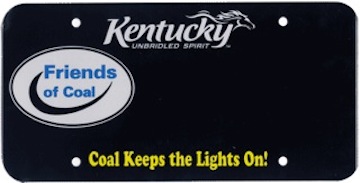
So far, Rhode Island has avoided any of the overtly religious, political and downright dumb plates that have made a mockery of the idea that a license plate is a nothing more than a way of identifying a vehicle–and not an opportunity to raise money for athletic leagues, Pro-Choice activists, or a big despoiling industry. Or as a Montana State Police captain said recently, "I need to see your number, not know what you favorite flavor of coffee is."

While one would not wish to discourage a few good charities from trying to raise money, I wonder if crowding a license plate with too much information and appalling design is really the most appropriate way to raise funds.

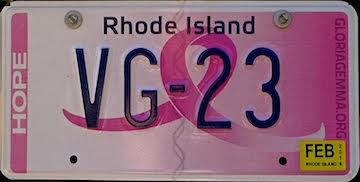
The Ocean State's latest affinity plate is for  a noble  aim  – to fight breast cancer. $20 for each tag goes to the state's women's cancer-screening program. Marvelous. But is not then the next logical specialty plate one that would raise money for prostate-cancer research? What color would the ribbon be?  The image of a little walnut-sized gland gracing the plate?

Hats off to the Gloria Gemma Breast Cancer Resources Foundation. But as an example of design from the "Creative Capital," this plate is a graphic disaster. The font for Rhode Island is too bland, for starters. Worst of all is the fading horizontal pink color scheme, as if the plate had been dipped halfway into a bucket of Pepto-Bismol. It looks like something Liberace ordered over the telephone.


rhode1


rhode2


rhode3


rhode4


rhode5


rhode6


Read More
Commentary Robert Whitcomb Commentary Robert Whitcomb

New England's most interesting music venue

  See /hear New England's most interesting music venue.


Fête is  the region's premier live-music venue, dedicated to  innovative music programming  for  an audience as diverse as New England  and in a spectacularly designed space.
Fête’s mission is to rejuvenate the relationship between music and revelry; create a haven where  artists and audiences  have a  gratifying cultural experience,  and participate in revitalizing Olneyville, a historic Providence neighborhood.
Read More
art Robert Whitcomb art Robert Whitcomb

The square deal

albers  

"Homage to the Square'' (screenprint), by JOSEF ALBERS, at the Museum of Art at the University of New Hampshire, in Durham.

Read More
art Robert Whitcomb art Robert Whitcomb

Sun on the sink

kichen ''Kitchen in Sunlight'' (oil on plexy), by MICHAEL DOYLE, via Patricia Ladd Carega Gallery, Center Sandwich, N.H. At this time of year, the light slants in beautifully if painfully, especially for drivers.


Read More