A_map_of_New_England,_being_the_first_that_ever_was_here_cut_..._places_(2675732378).jpg

Vox clamantis in deserto

Commentary Robert Whitcomb Commentary Robert Whitcomb

Waterfront casino in Newport?

  I wish my friend Bruce Newberry and I had known about the sale of the Newport Yachting Center to developers. We could have talked about it this morning on his "Talk of the Town'' show on WADK (1540 A.M.).  Would the new owners like to put a nice,  quiet casino there?


The Yatchting  Center has been plagued with complaints about noise from concerts and other events there. Perhaps obsessive-compulsive gamblers would be better neighbors.  They, after all, have to concentrate.

Read More
Commentary Robert Whitcomb Commentary Robert Whitcomb

A streetcar named reasonable

People like to call most new large public projects boondoggles, but if politicians followed such negativism religiously,very few useful public projects would be built and the public would find life much more difficult. Yes, even Boston's Big Dig was worth it.

So it is with the idea of putting in a streetcar line in Providence. With the city's thick downtown density, large numbers of college students without cars and an aging population not driving as much these days, I think that the line would do very well in improving the city's economy and quality of life. The rich cities to our north (Boston) and south (New York) owe much of their prosperity to mass transit.

Read More
Commentary Robert Whitcomb Commentary Robert Whitcomb

Raise minimum wage and strengthen economy

It stands to reason that raising the minimum wage, by putting more money in the hands of consumers who are more likely to spend their money than are members of the rich people in the investment class would improve the still weak (for most people) U.S. economy.

-- Robert Whitcomb

Read More
Commentary Robert Whitcomb Commentary Robert Whitcomb

Peter Baker: Illegal N.E. fishing hurts future stocks

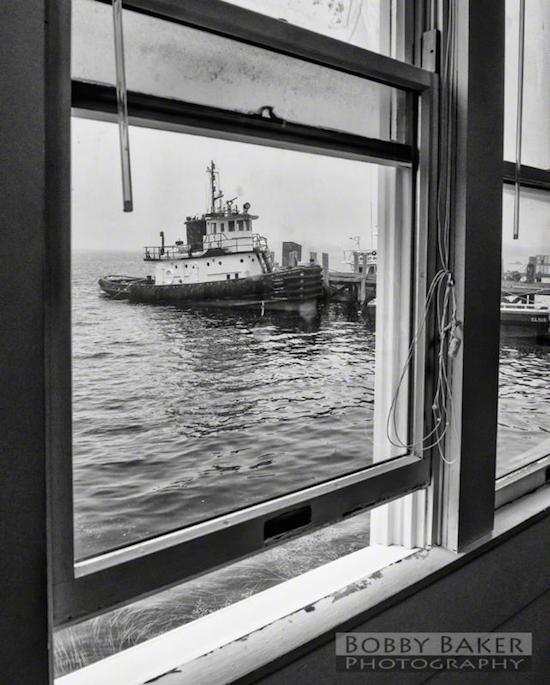
fishboat  

"Outside My Window'' (Woods Hole, Mass.), copyright Bobby Baker Photography.

An aromatic site.

This  article comes courtesy of ecoRI News

BOSTON

We’ve seen a rash of stories recently on illegal fishing in the Northeast, as enforcement officials take action on unreported catch. Some of the numbers are eye-popping. One bust involved 56,000 pounds of illegally caught and unreported summer flounder, also known as fluke. Another charge alleged 86,000 unreported pounds of the same fish over three years.

Research indicates that those figures are no fluke — pardon the pun. In fact, these recent incidents represent only a small fraction of illegal and unreported catch. Studies show that most illegal fishing in the region involves cheating on rules regarding the amount, type or size of fish allowed to be caught, misreporting in dealer reports, or fishing in places set aside to protect fish habitat and spawning areas. Few people realize the extent of illegal fishing, the harm it can do to ocean resources, and the ways in which this cheating undermines efforts to measure and sustainably manage fisheries.

For example, a study published in the journal Marine Policy in 2010 estimated that 12-24 percent of New England’s total catch of groundfish — bottom-dwelling fish such as cod, flounder and haddock — was taken illegally. How much fish is that? Well, when the authors took the midpoint of that estimate (18 percent) and applied it to the actual landings from the time the study was conducted, they found that the illegal catch would amount to more than 11 million pounds of fish, worth about $13 million.

And what if those illegally caught fish had instead been left in the water where they could grow and reproduce? The researchers give an estimate of that loss, too. Over five years those fish could have contributed some 65 million pounds to the overall biomass of the groundfish stock. That extra supply would be a welcome bounty today, when many groundfish populations are so low that the fishery has been declared a federal disaster, requiring tens of millions of dollars in taxpayer assistance.

Fisheries managers are responding to some problem areas. In the mid-Atlantic, for example, officials recently suspended use of a controversial “set-aside” program that had allegedly been exploited to hide catch that exceeded quotas. New England’s fishery managers have started looking into reports of vessels employing net-liners and other fishing-gear modifications that result in fish being caught under the legal size limit.

This “missing catch” from illegal fishing also complicates the work of scientists and managers who need an accurate picture of what’s really happening on the water. The actual mortality, or amount of fish killed, is a key piece of information for estimating fish populations and setting sustainable fishing levels.

The Marine Policy study found that even commercial fishermen assume that about 10 percent to 15 percent of their colleagues are routinely breaking the law. The researchers say that the odds of getting caught are slim, while the payoff from cheating is “nearly five times the economic value of expected penalties.”

All this illicit activity takes a toll on those fishermen who do follow the rules. The researchers surveyed fishermen and discovered that many believe that illegal fishing “will prevent them from ever benefiting from stock rebuilding programs.” This finding underscores one of the greatest damages. Hardworking fishermen who do the right thing as stewards of the public resource are cheated of their just reward of higher catches in the future. Although enforcement may be unpopular to some, it is critical for any well-managed fishery.

Peter Baker directs The Pew Charitable Trusts’ U.S. ocean-conservation efforts in the Northeast and Mid-Atlantic.

Read More
Commentary Robert Whitcomb Commentary Robert Whitcomb

James P. Freeman: Baker, Beacon Hill and Banacek

During the introductory credits of “The Three Million Dollar Piracy,” from a 1973 episode of television’s Boston-based series Banacek, there is a forgotten moment of morbid foreshadowing: Under a blue sky, as the camera pans across the golden dome of the Federalist-style statehouse, at 24 Beacon St., there looms a dark, steel skeletal structure, One Ashburton Place. More than metaphorically, it marked the time when state government as a bastion of ideas would start to be overshadowed by a bureaucracy of idols.

The 2014 Massachusetts gubernatorial election is about the very role of Beacon Hill.

Sitting down with Charlie Baker, the Republican gubernatorial candidate, at the Pilot House, after remarks he gave to the Sandwich Chamber of Commerce recently, you suddenly realize his candidacy is about balancing and restoring the role of limited government from today’s oppressive one. It is a change of approach, rethinking what government does and how it does it. Or, as one political scientist describes it, “affirming certain values and discouraging certain vices.”

One is struck with what Baker is not: a purveyor of identity politics--so carefully crafted by Democrats — where feeling is substituted for function. Instead, Baker is properly defined by action: “This is what I will do” as opposed to “This is who I am.” It is a marked contrast after eight years of Deval Patrick’s form of leadership; governor as emoticon not manager.

A theme of restoration and repair seems to be supported by residents. In polling results released earlier this month by wbur.org, primary voters overwhelmingly (89 percent of Republicans and 81 percent Democrats) indicated that managing state government effectively is a top priority. Perhaps tellingly, this “ranked higher than likability or progressive/conservative attitudes.”

Democrats display unintentional humor, therefore, when speaking of “change.” Surely, upon hearing this, sensible residents echo the sentiments of Guildenstern: “I have lost all capacity for disbelief.” Beyond, as he said, a “gentle scepticism.”

Martha Coakley, Baker’s principal challenger, has been state attorney general for nearly eight years and running for the fourth time for state-wide office. She would spend $500 million for economic recovery -- a plan modeled after Patrick’s 10-year, $1 billion life-sciences initiative, reports the AP. That's ironic, if anything, as she and fellow party members have run on a platform of change from eight years of Patrick’s grisly governance. Baker is relying upon public skepticism about Coakley’s ability to inspire and effect change.

He rightly believes his election would create a “constructive friction” between him and a de facto Democrat legislature (82 percent in the House and 90 percent in Senate) that would revive public accountability. He says that the one-party government is “more pronounced” now and hears even dissatisfied Democrats whispering about the definitive lack of leadership. Is that when the ghost of John Adams would reappear to haunt the hallowed ground on The Hill with “checks and balances” and instill discipline?

For most voters, such issues as runaway taxes, uncontrolled spending, unfunded pension obligations, massive debt burdens and assorted scandals — exacerbated by single-party politics--are accumulated barnacles below the surface of the ship of state; a seaworthy vessel, nevertheless, but slowly submerging. Baker would bring an immediacy to those issues.

Some will immediately greet the new governor.

Just 11 days after the election, on Nov. 4, 400,000 residents will begin —a gain!--enrolling for healthcare on the new Connector Web site. Its predecessor, unable to conform to myriad rules and regulations of Obamacare, was, Baker says, “an astonishing breakdown.” When, and if, fully implemented, costs may exceed $500 million. A Pioneer Institute healthcare expert called it “irresponsible to taxpayers” and described it a “‘Big Dig’ IT project.” Like its national step-cousin, it will likely not be free from trouble and require comprehensive executive engagement of the next governor.

Is this Patrick’s idea of “innovation” and “infrastructure?” It is a supreme example, certainly one of many, of the legacy migraines left over from his administration.

A considerable amount of Baker’s time was spent on the economy. Because of the saturation of codes, rules and regulations, “this is a complicated place to do business,” he asserts. Adding, the state “needs to think differently about economic development.”

Baker may be a beneficiary of a development not yet largely discernible. With Patrick and his party so aggressively progressive, the Democratic base may actually be more moderate, as evident from a Boston Globe poll conducted last July on immigration. Only 36 percent of respondents supported state spending on unaccompanied immigrant children compared to 57 percent who opposed it. The poll’s numbers overall were consistent with national poll results.

Conceivably, then, those children are not on commonwealth soil because residents questioned the veracity and competency of government supervision, not its compassion. If voters look at such factors surrounding other issues — immediate and intermediate -- it would further affirm the results of the wbur.org poll and would ensure a Baker victory.

Forty one years after George Peppard’s leisurely Beacon Hill drive inBanacek, Charlie Baker would reimagine the scenery.

James P. Freeman is a former Cape Cod Times columnist.

Read More
Commentary Robert Whitcomb Commentary Robert Whitcomb

Working and fun in New Bedford

http://www.workingwaterfrontfestival.org/ Enjoy the New Bedford Working Waterfront Festival.

Read More
Commentary Robert Whitcomb Commentary Robert Whitcomb

Islamic mandate for beheadings?

Interesting paragraph from Jeff Jacoby's column today in The Boston Globe. ''There is more to the Islamist passion for decapitation than psychological warfare and a hunger for notoriety. There is also Muslim theology and history, and a mandate going back to the Koran. In a 2005 study published in Middle East Quarterly, historian Timothy Furnish quotes the famous passage at Sura 47:4: 'When you meet the unbelievers, smite their necks.' For centuries, Furnish observes, 'leading Islamic scholars have interpreted this verse literally,' and examples abound throughout Islamic history.'''

Read More
Commentary Robert Whitcomb Commentary Robert Whitcomb

Vector

RatDrawing "Plague Rat,'' by JOSHUA PRESCOTT, who has worked at the Velvet Mill artists' workplace, in Stonington, Conn.

Read More
art Robert Whitcomb art Robert Whitcomb

RatDrawing

"Plague Rat,'' by JOSHUA PRESCOTT, a southwestern Rhode Island artist.

Read More
art Robert Whitcomb art Robert Whitcomb

Oozing to life and death

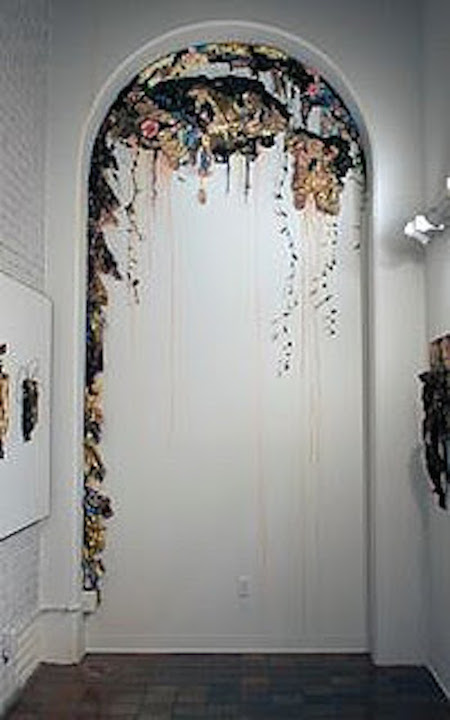
brent  

"Living Paint Installation'' (acrylic, rags, foam, gloves, plants, wire and mixed media), by SARAH MEYERS BRENT, in her "Living Paint'' show at the Hampden Gallery, at the University of Massachusetts, Amherst, through Sept. 30.


Her works,  says the gallery, "explore the viscous ooze at the creation and termination of life.''

Read More
Commentary Robert Whitcomb Commentary Robert Whitcomb

Violent NFL players? What next?!

football  

We're shocked, shocked that some NFL players turn out to be violent at home, too! People watch the NFL (and the NHL, etc.) because they want to see violence.  The players are trained (and medicated) to be violent, though many, perhaps all, the players liked a certain level of violence in the first place.


Meanwhile, the NFL continues to be treated as a ''nonprofit'' because legislators, some of them wanting anxiously to display their masculinity by showing their  real or feigned love of professional football, ignore the NFL gold mine.


Hypocrisy makes the world go round. And at some level, we're all killers.


--- Robert Whitcomb

Read More
Commentary Robert Whitcomb Commentary Robert Whitcomb

Charles Chieppo: MBTA hole gets deeper

BOSTON The recent news that the estimated cost of an ongoing Boston-area subway-line extension has risen from $1.4 billion to nearly $2 billion surprised exactly no one. The more-than-two-decade history leading up to this most recent cost overrun contains a lifetime's worth of cautionary tales for state and local governments.

Almost everyone reading this should have some familiarity with Boston's "Big Dig." After all, you probably helped pay for it. The project included taking down an unsightly elevated roadway and running it underground, extending the Massachusetts Turnpike to Boston's Logan Airport and constructing a bridge over the Charles River. When it was finally completed in 2007 (nine years late), the original $2.8 billion price tag had swollen to $14.6 billion, more than a quarter of it covered by federal taxpayers.

Less attention has been paid to the court-ordered construction of 14 transit-related projects as environmental mitigation for the additional traffic the Big Dig would accommodate. Twenty-three years after the 1991 mandate, the Massachusetts Bay Transportation Authority (MBTA) owes nearly $9 billion in debt and interest, almost half of which can be attributed to the transit-mitigation requirements. If not for a series of fare hikes in recent years, the MBTA would pay more in debt service than it collects in fares.

Cost overruns on the current 4.5-mile extension of the MBTA's Green Line are a microcosm of why the mitigation requirements have been a disaster. Engineers encountered more than 500 "utility conflicts" along the corridor. Then there are the add-ons: A community path for bikers and walkers and more drainage for a river that was long ago covered by landfill but apparently still wreaks havoc during rainstorms. It's mitigation for the mitigation.

Payments to the design contractor jumped by more than half because platforms had to be extended to accommodate longer trains than had been envisioned 23 years ago. That's what you get with government by mandate.

And since the MBTA had to dedicate so much money to financing the mitigation projects, corners had to be cut elsewhere. A large concentration of MBTA vehicles are approaching or have surpassed their useful life. If you can't get down to Havana to watch the parade of pre-1959 American-made cars, just take a ride on a Boston-area commuter train. Old rolling stock means compromised reliability.

That  it's impossible to know what system priorities will be more than two decades down the road is just one lesson governments can draw from the unmitigated disaster of Boston's transit mitigation. The first lesson is that it's a spectacularly bad idea to mandate the construction of billions of dollars worth of new projects without a funding source.

But construction expenses are only part of the picture. Projects should be budgeted based on the cost of building, operating and maintaining them over their lifecycle. If that had happened in Boston, seeing more realistic numbers might well have resulted in some of the projects being eliminated.

Lifecycle budgeting also reduces the temptation to skimp on maintenance. The MBTA faces a maintenance backlog that topped $3 billion in 2009 and has only grown since. In the transit authority's fiscal 2010 budget, just six of 57 maintenance projects that received a safety rating of "critical" could be funded.

Budgeting based on transportation projects' real costs makes it less likely that government officials will be put in the position of robbing Peter to pay Paul by skimping on maintenance and not replacing assets in a timely manner. Forcing planners to take a clear-eyed look at real project costs might cut back on the ribbon-cuttings that politicians so enjoy, but it would result in infrastructure that functions better and lasts longer. And it might just avert disasters such as the one that the MBTA is facing.

Charles Chieppo is a research fellow at the Ash Center of the Harvard Kennedy School.  This originated at Governing Magazine's Web site, governing.com

Read More
Commentary Robert Whitcomb Commentary Robert Whitcomb

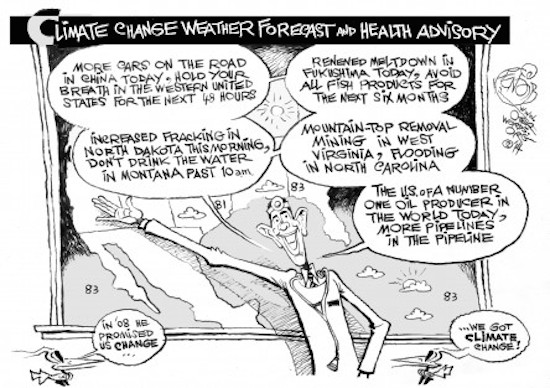
Climate and health advisory

climate-change-forecast-cartoon-444x313

Read More
Commentary Robert Whitcomb Commentary Robert Whitcomb

A rich man's warning to other fat cats


Here’s an unusual super-rich guy with a strange message for his fellow 1-percent-of-the-1-percenters.

Nick Hanauer, who made billions as an Internet entrepreneur, recently wrote an open letter to his fellow über-richies.

“The true job creators are middle-class consumers, not rich businesspeople like us,” Hanauer declared a little while ago in Politico Magazine. “I earn about 1,000 times the median American annually, but I don’t buy thousands of times more stuff.”

America depends on a strong middle class, he says, for it’s their purchases that power the economy. To back this up, he points out that his family has three cars — not 3,000.

So, Hanauer says, it’s in the self-interest of America’s corporate and financial elites to do all they can to lift the earnings the rest of us take home — starting with a $15-an-hour minimum wage.

The old claim that paying workers more will destroy small businesses and job growth is simply not true, he says. It’s insidious, he adds, to claim that helping the rich get richer is good for the economy, but helping the poor get richer is bad for it.

“The two cities in the nation with the highest rate of job growth by small businesses are San Francisco and Seattle,” Hanauer points out, observing that they also have the two highest minimum-wage levels in the country.

For the Koch-headed ideologues who oppose having any minimum wage at all, this member of the billionaire’s club says that the soundest way to shrink government is to decrease the need for it. That will take paying decent wages so people don’t need Food Stamps, rent assistance, and other subsidies for life’s basics.

Hanauer concludes with this sobering warning to obtuse billionaires: No society can survive the glaring inequities permeating the American economy. Unless these feudal low-wage policies make way for efforts to bridge the widening divide, “the pitchforks are going to come for us.”

 Jim Hightower is a radio commentator, writer, and public speaker. He’s also editor of the populist newsletter The Hightower Lowdown.  This essay was distributed by OtherWords.org.

Read More
Commentary Robert Whitcomb Commentary Robert Whitcomb

Don Pesci: The 'extremists' among us

  VERNON, Conn.

Somewhere along the line, national and state Democrats discovered that most Americans do not cotton to extremists. For this reason, progressives in Connecticut – nearly all politically active Democrats -- have taken to calling “extremists” those who oppose some of their more radical political positions.
V. I. Lenin, an extremist of the first water, knew that if you effectively labeled an opponent or an idea, you would not have to argue with either. If you have successfully identified in the public mind as an extremist anyone who disagrees with you on a political or social point, you need not address his nuanced arguments. You need not bother to confront his arguments at all; the mud you throw – knowing full well that some of it will stick – will be sufficient to convince a majority of people that your position is superior to his, because you are superior to him: He is an extremist, and you are not. In cases such as these, arguments are won not through debate or the presentation of compelling evidence, but rather through the brute force of demagoguery.

We have been told through ads created outside Connecticut that the Republican candidate for governor, Tom Foley, is an extremist. Mr. Foley is an extremist principally because he is in sharp disagreement on some points with his political opponents who doubtless will gain an advantage from the ads.
Generally, we like to reserve the word “extremist” for those people who go out of their way to violate social norms.  It may come as a severe shock to out of state political ad makers who wish to boost the political prospects of Democrats by featuring Mr. Foley in their ads as an extremist to learn that Mr. Foley is a rather bland Everyman.
That, in any case, is the gravamen of the charge brought against him by some Republicans who have urged Mr. Foley to be a bit more passionate and lively in his presentations. Barry Goldwater, one of Lowell Weicker’s favorite politicians – so Mr. Weicker has often claimed -- was the guy who said about those charging him with extremism, “Let me remind you that extremism in the defense of liberty is no vice. And let me also remind you that moderation in the pursuit of justice is no virtue,” a sentiment heartily accepted by Sol Alinsky politicians on the left such as Hillary Clinton, said to be a shoe-in for president on the Democratic Party ticket in 2016, and President  Obama, organizer extraordinaire, both of whom are much more far gone in extremism than Mr. Foley or, for that matter, Peter Wolfgang, the executive director of the Family Institute of Connecticut (FIC).
Both Mr. Foley and Mr. Wolfgang have come under fire in a new campaign ad endorsed by Gov. Dan Malloy. The ad claims that Mr. Wolfgang, an orthodox Catholic who simply refuses to go quiet into Connecticut’s good secularist night, is said to be an extremist because he has been captured by what G. K. Chesterton once called “the romance of orthodoxy.” Mr. Foley is said to be an extremist because he had been endorsed by Mr. Wolfgang who, in the view of Democratic Party progressive extremists, is an extremist.
It so happens that Mr. Foley and Mr. Wolfgang part ways on some issues dear to progressives. For instance, Mr. Foley supports what progressive Democrats would call “a woman’s right to choose.” But both Mr. Foley and Mr. Wolfgang agree that a bill now before Connecticut’s General Assembly permitting assisted suicide should be aborted, and it was this agreement on a bill some might consider extreme that induced FIC to endorse Mr. Foley in the gubernatorial race.
Put another way, Mr. Wolfgang’s endorsement of a man whose views he disagrees with on issues important to him is an indication that Mr. Wolfgang may not be the right wing bomb thrower indistinctly pictured in the ad that seeks to paint him as an enemy of womankind, a difficult point to sustain: Mr. Wolfgang is the father of six children, ages 14-3, one boy and five girls, all potential women, and he has been happily married to his wife, Leslie, a woman, for 17 years. He and his family are orthodox Catholics.
Among some libertines in Connecticut, Mr. Wolfgang’s marital arrangement is considered quaint; his defense of traditional marriage is considered passé; his objections to euthanasia are thought to be extreme; and his endorsement of Mr. Foley is thought to be obscene. But it is important to understand that much of the criticism leveled at Mr. Wolfgang has been launched by groups that operate on the periphery of the great experiment in Western thought that has brought us a form of civilization highly accommodating to reasoned argument and equally impatient with those who wish to gain a political edge by caking their opponents with mud.
Don Pesci (donpesci@att.net) is a political writer who lives in Vernon.


Read More
Commentary Robert Whitcomb Commentary Robert Whitcomb

Fast-food tips instead of raises?

I've noticed in the past few months that fast-food establishments that never used to now have tip jars out for their grossly underpaid workers  to help managements  continue to avoid paying these people a  fair wage. A lot of this cash -- small amounts per worker -- will not be reported as taxable income, perhaps hurting state and federal finances over time. But then,  many rich folks are better than the poor at avoiding  taxes, at least as a  percentage  of their income. Warren Buffett likes to note this, though I don't see him  making many many charitable contributions to the U.S. Treasury.

Investment income is far better protected from the tax man than is earned income.


-- Robert Whitcomb

Read More
art Robert Whitcomb art Robert Whitcomb

Buffeted

guerra  


''to & fro'' (oil on panel, diptych), by ANA GUERRA, at Cade Tompkins Projects, Providence, through Oct. 25.

Read More
art Robert Whitcomb art Robert Whitcomb

Return engagement

zener  


"Returning'' (resin and mixed media on panel), by ERIC ZENER,  at Lanoue Fine Art, Boston.

We went swimming off Stamford and Greenwich, Conn., the other day. The water's ability to hold summer warmth is remarkable.

Read More
Commentary Robert Whitcomb Commentary Robert Whitcomb

Llewellyn King: The 'invisible hand' in your pocket

  Adam Smith’s “invisible hand,” describing the efficient operation of markets, has morphed into a something else: an invisible hand in my pocket and yours.

This woe comes now at every turn. Corporations -- possibly egged on by the battalions of MBA's they employ -- have discovered that they can con you by price legerdemain. They do this by imposing fees.

Airlines, banks and utilities play the fee game. Luxury resorts have joined in: You'll pay so much for the room, so much in taxes, and special fees if you want to do anything other than sit in it. Bottom line: You'll have pay more than you'd expect. The advertisements that lure you are disingenuous.

Take airline fees. You find an airfare and brace for the taxes. But -- Oh, surprise, surprise! -- you'll have to pay a hefty fee if you want more than one change of clothes at the other end. Want to board comfortably? Pay up. Want a seat where parts of your body don’t meet other parts of your body in unnatural ways? Pay up.

Have to change your flight? There’s a change fee. Just pay up or stay put.

You could take the train, but you might not know that the only corridor of the national rail network that approaches international standards is the Northeast, which runs between Washington, New York and Boston. The trains aren’t bad at all, but the ticket pricing is predatory and opaque. It puts the airlines to shame.

Amtrak train fares are priced according to minute-to-minute demand. On the no-frills train, a ticket from Boston to Washington can cost around $100 to $400, depending on when you buy your ticket and who else wants to travel at that moment.

The result: Amtrak – with a $1.3 billion annual subsidy from you and me –operates a railroad for the well-heeled. Between Washington and New York for corporate lawyers; ditto to Boston with the addition of academics plying the consulting trade.

If you are just in need of getting round the Northeast, take a bus. Or play airline roulette where the fare fluctuations are held down by JetBlue and Southwest.

Then there is the new trend of companies partially shifting the burden of paying workers from themselves to you. Hotels are urging their luckless guests to tip the chambermaids. (I've always tipped them. I fear this corporate move is designed to reduce their responsibility for paying their workers a living wage.)

Fast-food outlets now have tip jars (begging bowls, really), so the poor servers behind the counter can be paid less because it is becoming a tip-calculated wage.

Now, take a look at the unmitigated scandal of interns: free labor. The government and Congress, the media, think tanks, accounting and consulting firms, and many others, have found the best-and-brightest will work for free, primarily in the summer, to learn the trade. Fair enough? Not so. Unpaid interns get a leg up in their careers on their peers who can't afford to take those great jobs. If you worked hard all summer, serving ice cream to pay your tuition, your resume will be deficient and you won't make the important contacts. Interns ought to be paid the minimum wage, so all can start resume-building at the same starting line.

We are witnessing a vast change in the way we pay for things with tipping subsidizing companies, fees fattening airlines, banks and hotels against the interest – and often the foreknowledge -- of the customer.

Adam Smith -- so beloved by the people who are changing the nature of commerce with fees, concealed charges, predatory pricing, tips and free labor -- was a canny Scot who liked to know what he was getting for the money he was paying. He must be restless in his grave.

Llewellyn King (lking@kingpublishing.com) is executive producer and host of “White House Chronicle” on PBS.

Read More
Commentary Robert Whitcomb Commentary Robert Whitcomb

William Morgan: Faux Gothic at Providence College

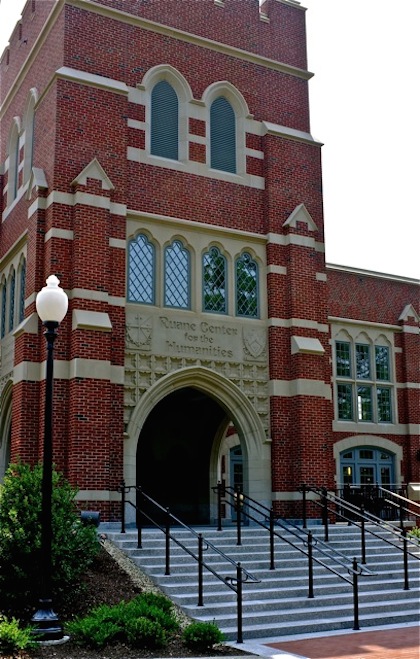
Commentary and photos by WILLIAM MORGAN "I feel to the depths of my being that this emblematic new building is not only a step for Providence College, but for our country," David McCullough declared  last October at the dedication of the Ruane Center for the Humanities at the 90-year-old Dominican school in the Rhode Island capital. Despite such noble sentiments from everyone's favorite historian and commencement speaker, the new home of P.C.'s Western Civilization program actually portends a journey into a Disney-fied architectural wilderness.


gothic1

The buttresses and arches of the Ruane Center entrance tower are not structural.


As a style, Collegiate Gothic created some memorable American campus architecture. Ruane Hall, however, falls leagues short of a credible re-creation of either the look or the spirit of Oxford and Cambridge that infused the Princetons, Yales, and Michigans at the turn of 20th Century. That Gilded Age offered architects thoroughly conversant with the past, backed up by skilled craftsmen. What we have today at Providence College is an uninspired piece of real estate wrapped with a thin veneer of brick and a few pointy details. This is the same sort of Potemkin village found in upscale shopping malls and themed suburban restaurants.


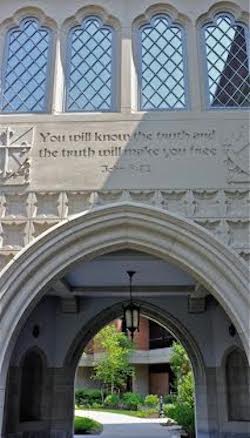
gothic2


Biblical "truth" perhaps, but the Ruane Center's stage-set Gothic is something of a lie. There is no carving whatsoever, just stamped details.


The pasticheurs of this paper-thin storybook castle are the S/L/A/M Collaborative and the Boston firm of Sullivan Buckingham Architects. S/L/A/M is a large, multi-city firm that cranks out instant history for both private colleges and state universities ("Not what kind of building do you need, it's what kind of institution do you want to be").  Sullivan Buckingham, designers of the chapel and an art center at P.C., was founded to provide "traditional" institutional buildings. "Our buildings in various styles," the firm claims, "Classical, Romanesque, and Gothic, are not lifeless copies; they are historically correct." Yet, beyond the battlemented square tower, the classrooms and offices are depressingly yesteryear's high school. The aggressively bland interior is a far cry from the Rugby of Tom Brown's School Days.


gothic3


The classrooms in the Ruane Humanities Center are more bond-starved public high school than Gothic-inspired halls of learning.


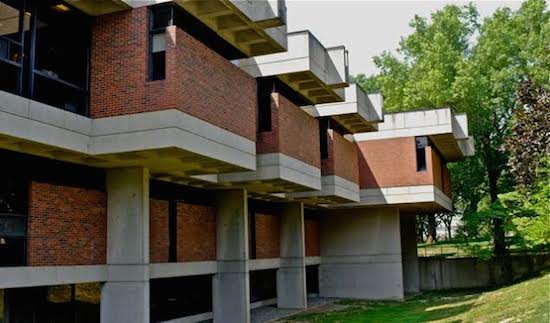
In noting that the Ruane Center stands next to a "Brutalist" library, Sullivan Buckingham naively state that by employing brick and by matching the height of the library they were able to "achieve détente between the warring styles." The very term Brutalism is a bugbear to putative traditionalists, deployed as a weapon with which to excoriate a significant modern movement that they misunderstand. The neighboring Phillips Library–a superb example of Brutalism–is a 1969 work by Sasaki, Dawson and Demay. Long known simply as Sasaki Associates, the Watertown, Massachusetts firm was founded by Hideo Sasaki, one of the great modern landscape architects.


gothic4


Phillips Library by Sasaki, Dawson and Demay is similar to other bold buildings the firm did at the Universities of Rochester, Louisville and Virginia.


Brutalism is not to everyone's taste, but it deserves more respect than simply being dismissed because of an unfortunate label. This antidote to the slick glass and steel corporate style of the 1950s created some notable rugged concrete architecture, such as the Boston City Hall and the architecture school at Yale.

In seeking historical legitimacy by grasping at a very thin thread back to the Gothic cathedrals, the Dominican college ignores an exceptionally tectonic work. Sasaki's library is a not a decorated box, but a vigorous composition with the constructional logic of true Gothic. One can "read" the elements with which it was constructed, while the brick is honestly expressed here as a curtain wall supported by the reinforced concrete skeleton.

Instead of conjuring up a cheaply constructed faux medievalism, Providence College might recognize that it is the steward of an unsung masterpiece, worthy of contemporaries such Louis Kahn and Paul Rudolph. Thus the irony of the quote by the greatest American Gothicist, Ralph Adams Cram, with which Sullivan Buckingham open their website:

            A building must look like what it is, express visibly the energy that informs it, and declare its spiritual and intellectual lineage through its architectural vesture.

This is not a description of the flaccid Ruane Center, but it does fit the library.


gothic5


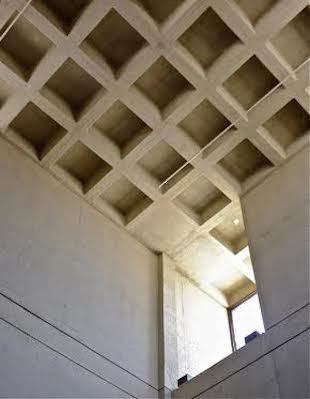
Although the interior of the Phillips Library has undergone a questionable decorative overlay of American craftsman detail, one can still experience the evocative raw concrete structural elements, such as these waffle coffers.

Read More