A_map_of_New_England,_being_the_first_that_ever_was_here_cut_..._places_(2675732378).jpg

Vox clamantis in deserto

Commentary Robert Whitcomb Commentary Robert Whitcomb

Llewellyn King: If only Nader had stayed at his post

Ralph Nader is to blame. It's that simple. I'm not talking about the election of 2000,  when his candidacy was enough to hand the presidency to George W. Bush and all that has followed. I’m talking about when Nader went AWOL as the nation’s consumer conscience.
In the space of a week, three U.S. flights have been diverted because of passenger disturbances over reclining seats. Would this have happened if Nader of old were on the case?
In the mid-1960s and early 1970s, Nader was the nation’s bulwark against corporate excess. He may have gotten it wrong -- as many have claimed -- about the safety of the Corvair, the rear-engine compact car, manufactured by the Chevrolet division of General Motors, that was to have rivaled the Volkswagen Beetle. No matter. Nader’s 1965 book, Unsafe at Any Speed, launched him as the consumer's knight in shining armor.
For nearly a decade, we felt that Nader was on our side and that such  big, faceless monsters as insurance companies, banks, airlines, consumer-credit outfits and appliance manufacturers could be brought to heal by invoking the one name that would strike fear, trembling and rectitude into the hearts of the titans of corporate America: Nader.
It was a halcyon time for those who wanted, like actor Peter Finch in the 1976 film Network, to shout, and be heard, “I'm mad as hell, and I'm not going to take this anymore!”
Nader was a figure of mythical omnipotence. You didn’t have to take your troubles with a faulty car or broken contract to Nader, you simply had to threaten; the words “cc Ralph Nader” at the bottom of a letter were enough. Corporations quaked, the earth moved, and restitution was forthcoming.
We delighted in learning little details about Nader the aesthete, who lived in one room somewhere in Washington, had no creature comforts, partners, or trappings, but always wore a suit. People happily believed he slept in it, ready to rush to court to slay a dragon of corporate excess.
Journalists loved Nader. We learned that he kept a secret office in the venerable National Press Building in Washington and would sneak up to the National Press Club on the 13th floor to peruse the press releases, which were then displayed near the elevators. One presumed he was looking for evidence of consumer abuse in false corporate claims.
The Vietnam War was raging, and the nation was divided on every issue except the wonder of the man who was called “consumer advocate.” The nation had never had one before and we loved it.
Oh, yes, love is not too strong a word. We went to bed at night knowing that if the mattress wasn't what had been promised by the Divine Mattress Company, Nader would fix it.
Jimmy Carter promised that when he was elected president, he would have a direct telephone line to St. Nader. That was the zenith of Nader’s consumer-advocacy power.
But Nader and his acolytes, known as Nader’s Raiders, had already begun to pursue broader political aims and to embrace the extreme reaches of the environmental movement. Nader, our beloved consumer advocate, saintly and virtuous, was becoming a partisan -- a partisan of the left.
It was an extreme blow for those who had followed along behind Nader’s standard because we believed that he was the unsullied, virtuous supporter of the individual against the institution. The voice that could be heard when, as often, politics had failed.
Over the years, I had battles with Nader. We argued most especially over nuclear power and a raft of related energy issues. I and the late physicist Ralph Lapp, together with the great mathematician Hans Bethe, put together a group of 24 Nobel laureates to support nuclear. Nader assembled 36 Nobel laureates against, and won the argument on numbers. He has always been a tough customer.
Poor Ralph. He had it all – and so did we -- when he fought for the common man against the common enemy: those who stole our money or shortchanged us.
Deep in my heart, I think he is to blame for high bank fees, pay-day loans, tiny aircraft seats, high Amtrak fares, and that corporations won’t speak to us – they have machines do that. Ralph, it could have been so different if you had just stayed at your post.
 
Llewellyn King is executive producer and host of "White House Chronicle" on PBS. His e-mail is lking@kingpublishing.com.


Read More
art Robert Whitcomb art Robert Whitcomb

Sheet in the crowd

choi  

"The Path of I  Walked Alone'' (clay), by HAEKYUNG CHOI, at the Lexington  (Mass.) Arts and Crafts Society.

Read More
Commentary Robert Whitcomb Commentary Robert Whitcomb

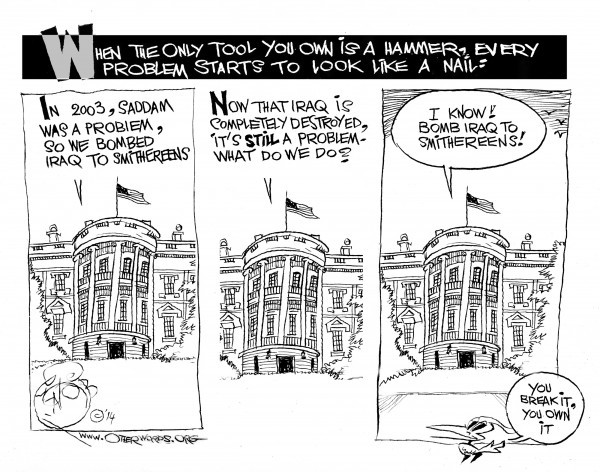
You bomb it, you own it

iraq

Read More
Commentary Robert Whitcomb Commentary Robert Whitcomb

Sarah Anderson: Leaf blowers' assault on our health

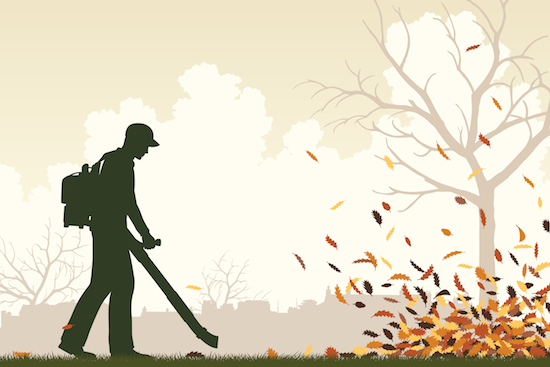
Leaf blower

When new neighbors moved in next door, I didn’t hold off long before broaching the Big Question.Even though we live in Washington, D.C., this had nothing to do with politics. For me, neighborly harmony hinges on where folks stand on this divide: leaf blower vs. rake.You see, I’m one of those otherwise calm individuals who goes totally bonkers at the sound of a leaf blower. It would be different if this infernal racket served some useful purpose. When I go to the dentist, the drill doesn’t make my blood boil. I accept that without it, my teeth would rot.When a leaf blower cranks up, I can find no logical justification for my suffering. In a recent article for AlterNet, former Consumer Reports editor Cliff Weathers presents a frightening litany of their multiple hazards.

“Leaf blowers don’t just blow away leaves and lawn clippings,” Weathers wrote. “Their 180- to 200-mph air output blasts away topsoil, microbial life forms, animal waste, allergic fungi, spores, herbicides, pesticides, and even heavy metals such as arsenic, mercury, and lead.”

That’s gross and scary, but the worst part is what these gizmos do to your health. “This toxic cocktail of engine emissions and dust particulates can exacerbate allergies and asthma in children and adults, and aggravate acute pulmonary disorders,” Weathers explained.

The American Lung Association says we should all steer clear of gasoline-powered blowers, the most popular type. So why are they still in use?

For decades now, manufacturers and many landscaping companies have worked to block anti-leaf-blower efforts. A favorite tactic: Make it seem like opponents are all extremely rich, and possibly even racist. With low-income Latinos making up a large share of landscaping workers, these are sensitive charges.

It’s true that  rich white enclaves were among the first to ban blowers. In California, Carmel and Beverly Hills made the move back in the 1970s. But in most of the country, the higher-income set continues to drive demand for these dangerous beasts.

Industry lobbyists downplay the risks while claiming that regulations will lead to higher costs and fewer jobs. But good old non-motorized tools are cheaper than leaf blowers and, according to several tests, nearly as fast.

In his AlterNet article, Weathers cites a competition the Los Angeles Department of Power and Water organized that pitted a grandmother with a rake and broom against a professional landscaper with a leaf blower. Granny gave him a run for his money.

Detailed analysis of the employment impacts of blower bans is hard to find and enforcement is tough. But it’s clear that in California, where about 20 cities, including Los Angeles, have banned blowers, the landscaping industry has hardly collapsed.

About 103,000 Californians are employed in this industry, and landscapers make up a larger share of the workforce there than in other big states like Texas, New York, and Illinois. California’s median wage in this business is $13.75 per hour, more than 20 percent higher than the median in Florida and Texas.

Nationwide, the areas with the highest concentration of landscaping and groundskeeping jobs include some of the hoity-toitiest holiday and retirement spots. No. 1: Nantucket Island and Martha’s Vineyard, where the Obama family vacationed this year.

If a critical mass of these communities banned leaf blowers, it would transform the landscaping industry away from reliance on machines that are senselessly endangering health and welfare — especially for the workers who operate them.

In response to my Big Question, our new neighbors laughed and assured me I didn’t need to worry about which side they were on. This was a relief. But in a city that restricts leaf-blower hours but hasn’t banned them, I’m still dreading the fall season.

As in past years, I’ll probably hear three or four machines blasting within a few blocks of my yard, while I — quietly raking — try to maintain my sanity.

Sarah Anderson directs the Global Economy Project at the Institute for Policy Studies.    This originated at OtherWords.org.

Read More
art, Commentary Robert Whitcomb art, Commentary Robert Whitcomb

Tiny temples of responsibility

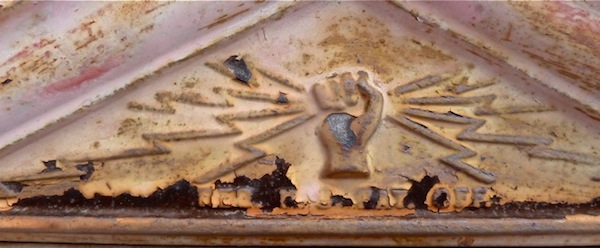
Commentary and  photos (below, after text) by WILLIAM MORGAN Though there were once  ubiquitous on city streets the country,  a Gamewell fire-alarm box is more likely these days to be seen on eBay (where they bring up to $500). This decaying beauty on the corner of Batty and Fountain streets, in Providence's Federal Hill neighborhood, fits right into its somewhat tatty surroundings (although the new North Bakery just behind sells a tasty Dan Dan meat pie).


John Gamewell was not the inventor of the telegraphic fire-alarm system, but his Gamewell Fire Alarm Telegraphic Company (founded in 1879) cornered the market, putting its distinctive red boxes on street corners everywhere. Common enough to be ignored,  this survivor still shows that Gamewell's warning- system boxes were jewels of classical design.

In the pediment of Gamewell's little temples of civic responsibility is a symbolic fist, representing modern man's ability to harness telegraphic energy .


firebox1


firebox2


firebox3


Read More
Commentary Robert Whitcomb Commentary Robert Whitcomb

Then there's the South China Sea...

  Most of Americans'   recent interest, such as they have it, in foreign affairs has been focused on the Islamic State, Russia's invasion and seizure of large parts of Ukraine and the Ebola epidemic.


But meanwhile, they hardly notice another big story -- China's attempt to gradually gain control of the whole South China Sea, with its hefty supplies of oil and natural gas and other resources. So I'm looking forward to hearing international geo-political risk analyst Anders Corr talk about the South China Sea at the monthly meeting of the Providence Committee on Foreign Relations tonight.


-- Robert Whitcomb

Read More
Commentary Robert Whitcomb Commentary Robert Whitcomb

David Warsh: The 'pie-giver' and the 'liberal' vs. 'realist' view of Russia

Perhaps the single most intriguing mystery of the Ukrainian crisis has to do with how the Foreign Service officer who served as deputy national security adviser to Vice President Dick Cheney for two years, starting on the eve of the invasion of Iraq, became the Obama administration’s point person on Russia in 2014. Victoria Nuland took office as assistant secretary of  state for European and Eurasian affairs a year ago this week.
It was Nuland who in February was secretly taped, probably by the Russians, saying “F--- the E.U.” for dragging its feet in supporting Ukrainian demonstrators seeking to displace its democratically elected pro-Russian president Viktor Yanukovych, two months after he rejected a trade agreement with the European Union in favor of one with Russia. She made a well-publicized trip to pass out food in the rebels’ encampment on Kiev’s Maidan Square in the days before Yanukovych fled to Moscow.
When Russian President Vladimir Putin said the other day, “Our Western partners, with the support of fairly radically inclined and nationalist-leaning groups, carried out a coup d'état [in Ukraine]. No matter what anyone says, we all understand what happened. There are no fools among us. We all saw the symbolic pies handed out on the Maidan,” Nuland is the pie-giver he had in mind.
Before she was nominated to her current job, Nuland was State Department spokesperson under Secretary Hillary Rodham Clinton during the congressional firestorm over the attack on the diplomatic post in Benghazi, Libya.
So how did the Obama administration manage to get her confirmed – on a voice vote with no debate?  The short answer is that she was stoutly defended by New York Times columnist David Brooks and warmly endorsed by two prominent Republican senators, Lindsey Graham, of South Carolina, and John McCain, of Arizona.
Clearly Nuland stands on one side of a major fault-line in the shifting, often-confusing tectonic plates of U.S. politics.
A good deal of light was shed on that divide by John Mearsheimer, of the University of Chicago, in an essay earlier this month in Foreign Affairs.  In “Why the Ukraine Crisis Is the West’s Fault,” Mearsheimer described the U.S.  ambitions to move Ukraine out of Russia’s orbit via expansion of the North Atlantic Treaty Organization as the taproot of the crisis.  Only after Yanukovych fled Ukraine did Putin move to annex the Crimean peninsula, with its longstanding Russian naval base.
Mearsheimer writes:
Putin’s actions should be easy to comprehend. A huge expanse of flat land that Napoleonic France, imperial Germany, and Nazi Germany all crossed to strike at Russia itself, Ukraine serves as a buffer state of enormous strategic importance to Russia. No Russian leader would tolerate a military alliance that was Moscow’s mortal enemy until recently moving into Ukraine. Nor would any Russian leader stand idly by while the West helped install a government there that was determined to integrate Ukraine into the West.
Washington may not like Moscow’s position, but it should understand the logic behind it. This is Geopolitics 101: great powers are always sensitive to potential threats near their home territory. After all, the United States does not tolerate distant great powers deploying military forces anywhere in the Western Hemisphere, much less on its borders. Imagine the outrage in Washington if China built an impressive military alliance and tried to include Canada and Mexico in it. Logic aside, Russian leaders have told their Western counterparts on many occasions that they consider NATO expansion into Georgia and Ukraine unacceptable, along with any effort to turn those countries against Russia -- a message that the 2008 Russian-Georgian war also made crystal clear.
Why does official Washington think any different? (It’s not just the Obama administration, but much of Congress as well.)  Mearsheimer delineates a “liberal” view of geopolitics that emerged at the end of the Cold War, as opposed to a more traditional “realist” stance.  He writes,
As the Cold War came to a close, Soviet leaders preferred that U.S. forces remain in Europe and NATO stay intact, an arrangement they thought would keep a reunified Germany pacified. But they and their Russian successors did not want NATO to grow any larger and assumed that Western diplomats understood their concerns. The Clinton administration evidently thought otherwise, and in the mid-1990s, it began pushing for NATO to expand.
The first round of NATO expansion took place in 1999, and brought the Czech Republic, Hungary and Poland into the treaty. A second round in 2004 incorporated Bulgaria, Estonia, Latvia, Lithuania, Romania, Slovakia and Slovenia.  None but the tiny Baltic Republics shared a border with Russia. But in 2008, in a meeting in Bucharest, the Bush administration proposed adding Georgia and Ukraine.  France and Germany demurred, but the communique in the end flatly declared, “These countries will become members of NATO.”  This time Putin issued a clear rejoinder – a five-day war in 2008 which short-circuited Georgia’s application (though Georgia apparently continues to hope).
The program of enlargement originated with key members of the Clinton  administration, according to Mearsheimer. He writes:
They believed that the end of the Cold War had fundamentally transformed international politics and that a new, post-national order had replaced the realist logic that used to govern Europe. The United States was not only the “indispensable nation,” as Secretary of State Madeleine Albright put it; it was also a benign hegemon and thus unlikely to be viewed as a threat in Moscow. The aim, in essence, was to make the entire continent look like Western Europe.
In contrast, the realists who opposed expansion did so in the belief that Russia had voluntarily joined the world trading system and was no longer much of a threat to European peace. A declining great power with an aging population and a one-dimensional economy did not, they felt, need to be contained.
 Mearsheimer writes:
And they feared that enlargement would only give Moscow an incentive to cause trouble in Eastern Europe. The U.S. diplomat George Kennan articulated this perspective in a 1998 interview, shortly after the U.S. Senate approved the first round of NATO expansion. “I think the Russians will gradually react quite adversely and it will affect their policies,” he said. “I think it is a tragic mistake. There was no reason for this whatsoever. No one was threatening anyone else.”
 
Policies devised in one administration have a way of hardening into boilerplate when embraced by the next. So thoroughly have liberals come to dominate discourse about European security that even the short war with Georgia has done little to bring realists back into the conversation. The February ouster of Yanukovych is either cited as the will of a sovereign people yearning to be free or, more frequently, simply ignored altogether.
  Mearsheimer writes:
 
The liberal worldview is now accepted dogma among U.S. officials. In March, for example, President Barack Obama delivered a speech about Ukraine in which he talked repeatedly about “the ideals” that motivate Western policy and how those ideals “have often been threatened by an older, more traditional view of power.” Secretary of State John Kerry’s response to the Crimea crisis reflected this same perspective: “You just don’t in the twenty-first century behave in nineteenth-century fashion by invading another country on completely trumped-up pretext.”
Nuland was present at the creation of the liberal view. She served for two years in the Moscow embassy, starting in 1991; by 1993 she was chief of staff to Deputy Secretary of State Strobe Talbott. She directed a study on NATO enlargement for the Council on Foreign Relations in 1996, and spent three more years at State as deputy director for Former Soviet Union Affairs.
After a couple of years  of Nuland being on the beach at the Council on Foreign Relations, President George W. Bush named her deputy ambassador to NATO, in 2001. She returned to Brussels in the top job after her service to Cheney. When Obama was elected, she cooled her heels as special envoy to the Talks on Conventional Forces in Europe for two years until Clinton elevated her to spokesperson. Secretary of State John Kerry promoted her last year.
It seems fair to say that Putin has trumped Obama at every turn in the maneuvering over Ukraine – including last week, when the Russian president concluded a truce with the humbled Ukrainian President Petro Poroshenko while leaders of the NATO nations fumed ineffectively at their biennial summit, this year in Wales. Never mind the Islamic State in Iraq and Syria; China; Israel. Even in Europe, the president’s foreign policy is in tatters.
Backing away from the liberal view is clearly going to be costly for some future presidential aspirant. The alternative is to maintain the expensive fiction of a new Cold War.
David Warsh is a longtime financial journalist and economic historian. He is proprietor of economicprincipals.com.

Read More
Commentary Robert Whitcomb Commentary Robert Whitcomb

Carolyn Morwick: New Hampshire makes healthcare progress

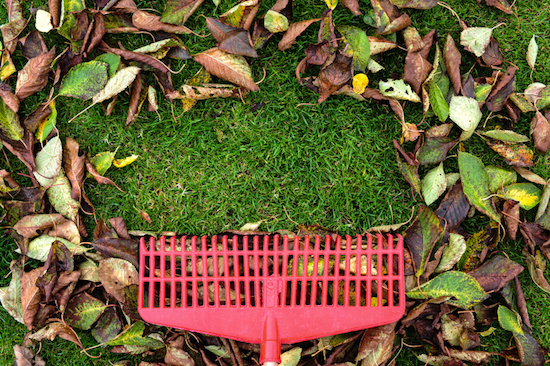
rake
This is one of a series on this year's New England legislative sessions written by Carolyn Morwick for the New England Board of Higher Education (nebhe.org). Our thanks to NEBHE.
Read More
art Robert Whitcomb art Robert Whitcomb

Weary plants

Phu  

"Hosta Stems #1 (acrylic on canvas), by C.J. PHU, in the "Warm Winds, Cool Waters'' show at Alpers Fine Art, Andover, Mass.

This painting recalls the worn-out vegetation of September.

Read More
art Robert Whitcomb art Robert Whitcomb

After season finale

billpic


"The fun ends,'' photo by WILLIAM HALL

Read More
art, Commentary Robert Whitcomb art, Commentary Robert Whitcomb

Lovely, dark and deep

birches "Birches,'' by RUSSELL DUPONT, in his show "A Sense of Place: Photographs by Russell duPont,'' at the James Library and Center for the Arts, Norwell, Mass., Sept. 5-Sept. 30.

Norwell is  a Boston suburb, a community with a strong sense of being on a river (the  marshy North River) and the burial site of John Cheever, who, although he spent most of his life in New York City and Westchester County, wrote hauntingly about the South Shore towns where he grew up and whose physical  beauty he cited.


I'd guess that many people readers remember this closing of Robert Frost poem "Birches'':


I'd like to go by climbing a birch tree,
And climb black branches up a snow-white trunk
Toward heaven, till the tree could bear no more,
But dipped its top and set me down again.
That would be good both going and coming back.
One could do worse than be a swinger of birches.
The photo above is beautiful  but also a bit ominous, as are many Frost poems.
Read his poem "Design''.


's


Read More
Commentary Robert Whitcomb Commentary Robert Whitcomb

Newspapers' publicly held problem

  I write as  someone who worked for several newspapers in a 43-year career in that business ,  as a finance editor at three  of them and whose generally Republican family was in the business world (no dreamy eyed professors or liberal social reformers in my upbringing).

There's been much incomplete reporting on the implosion of the newspaper business,  whose crisis  poses  grave threats to  the knowledge and  civic engagement of citizenry. Indeed, the general level of ignorance seems to rise every year commensurate with the  accelerating move of life onto the Internet.

The Internet has long  and glibly been cited as virtually the only reason for the sector's decline. But in fact, business reporters (they fear antagonizing their bosses) generally fail to note the huge and destructive  impact (to journalism anyway) of public ownership.

Most newspapers used to be closely held, often family held, enterprises. Their owners, of course, wanted to make a good profit, and in fact dominant newspapers in their areas generally made a very good profit.  Historically,   the best  metropolitan papers, with high journalistic ambitions, made about a 10-15 percent profit  margin -- more than the average of the margins of companies listed on the S&P 500 Index.  But the owners tended to want more than just money (unlike, mostly, now). They wanted influence and many even had altruistic aims -- improving their communities, etc.

But, accelerating in the '90s, came the sale of these companies at big prices to publicly held enterprises listed on stock exchanges.  Wall Street took over from  civic concerns. With the pressure to please the stock analysts, and enrich themselves,   senior execs (who also had a lot of stock in their companies) of the new owning companies pushed for ever-higher profit margins -- to astronomical levels of 30 percent or more.  Meanwhile, they had to worry about paying off the debt incurred to buy the newspaper companies.


So for years they did not reinvest in their properties, but rather laid off as many employees as they could, and made other cuts, to keep the profit margin (and thus capital gains, dividends and  senior execs' salaries) as high as possible.  The  emphasis was on meeting targets for the next quarter, and not building for the long term. Take the money and run.


As always in business, there were some notable exceptions to this money-only culture and I was fortunate to work for a couple of them. My last boss, for example, Howard Sutton, of The Providence Journal, spent innumerable hours (much of it anonymously) working for the betterment of his community.

Since a lot of these newspapers were well entrenched as virtual monopolies in their areas, this worked for a while -- until the papers were so hollowed out that their decline was probably irreversible (though the senior execs and  their pals on their boards  continued to pay themselves  gargantuan compensation for many years as  all this went on).

Indeed, the intensity of shareowners'/execs' thirst for huge and immediate payouts seems to swell every year. I am as greedy as the next fellow, and firmly  believe in capitalism and its creativity, but I've been astonished by the surge in senior executive pay since I worked in Lower Manhattan at The Wall Street Journal in the '70s.

Meanwhile, in the early and '90s, the execs made the catastrophic decision as the World Wide Web got rolling to put the journalism on papers' Web sites for free, thus encouraging many readers to cancel their paid subscriptions to the paper version (whence came and still comes most of the revenue). The magical thinking was that the new ad revenue   on their Web sites would make up for the loss of revenue from readers' subscriptions.

In fact, Web sites are generally lousy places for most  ads, especially display ads.  Those reading news media on screens,  unlike folks browsing through a newspaper, are generally irritated by ads. (The "X''  button  to close the ads gets intense use!)

There was no display-ad bonanza.  And the likes of Craig's List swiped the vast and easy money from classified ads. The Internet is great for classified ads.

And by offering all this information, collected by hardworking reporters and processed by hardworking editors, for free, the newspapers were in effect telling their readers what they thought the stuff was worth. Bad marketing!

The Internet has posed big challenges to newspapers, but that's only part of the story.  Meanwhile, those old-fashioned press lords of family own companies look good. They were in it for the money, but for other things, too.


-- Robert Whitcomb


Read More
art Robert Whitcomb art Robert Whitcomb

Welcome to France

  heather


"Lavender Fields'' (C-print), by BONNIE EDELMAN,  in her show at Heather Gaudio Fine Art, New Canaan, Conn., Sept. 13-Oct. 21.


Read More
Commentary Robert Whitcomb Commentary Robert Whitcomb

No light lifting

  I remain amazed at how many able-bodied people can't lift a rake for a few minutes every few weeks to clean leaves, etc., from their sidewalks and instead hire illegal-alien-staffed yard  crews to use leaf blowers instead.

Thus the din continues from dawn to dusk in many neighborhoods.


-- Robert Whitcomb

Read More
art Robert Whitcomb art Robert Whitcomb

The year-round locals are relieved

  skypowersummerexodus


"Summer's Exodus'' (oil on canvas), by Sky Power, in her recently concluded show at Berta Walker Gallery, in Provincetown.

Read More
art Robert Whitcomb art Robert Whitcomb

'Painting my way through'

  sinclair

"Karla by the Fireplace'' (egg tempera on gesso primed hardboard), by SUZANNAH SINCLAIR, at Samson Gallery, Boston, in her show "Nature, Nudes and Interiors,'' Sept. 5-Oct. 25.

She says she is ''painting my way through the genre of American art.''


Read More
Commentary Robert Whitcomb Commentary Robert Whitcomb

Todd Larsen: Ditch Md. LNG unit and build wind farm

  WASHINGTON

Shortly before Congress left for its long summer vacation, Sen.  Barbara Mikulski tried to block a 150-megawatt wind farm.

The Maryland Democrat’s move would delay Pioneer Green Energy’s construction of the project in her own state until an independent study from  the Massachusetts Institute of Technology concerning the effects of wind turbines on naval radar testing at the Patuxent River Naval Base is completed.

While it’s understandable that Mikulski wouldn’t want anything to interfere with a major military installation, what makes her move inexplicable is that Pioneer Green Energy is already working with the base to ensure that its wind farm won’t disrupt the base’s radar, as required by law.

Technically, she’s seeking a delay via language inserted in a Department of Defense appropriations bill. But the postponement would potentially push the project’s timeline out past the qualifying deadline for tax credits. That could effectively end the project, no matter what the MIT study finds.

This is just one of many attempts to kill wind farms. Opponents have lodged about 50 lawsuits in this country and around the world against wind projects because they allegedly cause “wind turbine syndrome,” a discredited condition first described by a pediatrician in 2009. The alleged symptoms of the syndrome range from headaches to sleeplessness to forgetfulness. These symptoms haven’t held up in court: 48 of the 49 suits have been dismissed.

Wind power foes also object to clusters of turbines for aesthetic reasons and their potential to reduce property values. This concern doesn’t pass the sniff test either. An extensive Energy Department study found no “consistent, measurable, and significant effect on the selling prices of nearby homes.”

Other opponents fear that turbines will kill tons of birds. In reality, wind farms aren’t nearly as deadly to our feathered friends as office buildings and cats, just to name two major avian killers. And when was the last time you heard about someone trying to ban buildings and cats to save birds?

Even when the opposition to wind power fails — which it often does — the resistance hurts wind farm developers. It also sends a chilling message to an industry that lacks the deep pockets of fossil-fuel companies and lobbyists. And those oil, gas, and coal special interests are funding many of the attacks on wind and renewable energy in the first place.

What makes these assaults on wind particularly troubling is that the United States is rapidly moving forward with several projects that will ramp up domestic oil and gas production.

In fact, the United States is now on track to be the world’s top oil and natural-gas producer, and is a net oil exporter for the first time since 1995.

Much of this increased oil and gas output is being extracted through hydraulic fracturing, or “fracking.” And the toll of this method is becoming increasingly clear. From contaminated drinking water, to polluted air, to ruined infrastructure from endless trucks carting water, fracking is leaving its devastating mark on towns across the country.

Fracking, and fossil-fuel extraction in general, also contributes to boom-and-bust economies that siphon most economic benefits out of local communities, which are then left to deal with the resulting devastation on their own.

Maryland faces the same energy choices as the nation overall. While Mikulski’s legislative maneuvers may kill a major wind farm, Dominion Energy is working to build a $3.8 billion liquefied-natural-gas-export terminal on Maryland’s Eastern Shore called Cove Point. That facility would endanger local communities, increase pollution, and ramp up fracking in nearby states — potentially leading to fracking in Maryland itself — while boosting natural-gas prices in the U.S. market.

A Maryland judge recently ruled that zoning laws and the Maryland Constitution were violated in permitting Cove Point, which will slow the project. That gives the state and Cove Point’s Wall Street backers time to heed the concerns expressed by opponents of this dangerous facility.

Ideally, investors could shift the $3.8 billion going to Cove Point to wind power. That move would increase East Coast wind production by 50 percent, and create over 7,500 jobs. It would also serve as a model for the country in how to invest in a clean energy future.

Todd Larsen directs Green America’s (GreenAmerica.org) responsibility division.  This was distributed via OtherWords.org.

Addendum from Robert Whitcomb: People rarely think of the massive number of birds killed by air, water and soil pollution from fossil fuel.

Read More
Commentary Robert Whitcomb Commentary Robert Whitcomb

Gulf of Maine warming threatens lobster, fish catches

Read More
Commentary Robert Whitcomb Commentary Robert Whitcomb

Chris Powell: That's so 'special needs'

MANCHESTER, Conn. 
When the Journal Inquirer reported the other day about the criminal sentencing 
of a "mildly retarded" rapist, representatives of groups serving the mentally 
retarded protested. The complaint was: "People don't use 'retarded' anymore." 

They likened it to the "N word" and the name of  Washington, D.C.'s football team, the Redskins. 
These comparisons were false, as the former was always an epithet, the latter 
always a way of evoking the supposed savagery of aboriginal people. 

But disparagement attached to "retarded" only recently. Indeed, until a few 
years ago Connecticut had the Department of Mental Retardation. What happened? 

Children began abusing the word with their peculiar cruelty. But more than that, 
society declined to enforce standards. Instead, those who behaved decently were 
told to change their terms. As usual government was the first to be intimidated 
by the special interest. 

Language evolves. Over the long term it belongs not just to the dictionary but 
to everyone who uses it. But capitulation to the slob culture is fairly resented 
and resisted. What is happening with "retarded" is only what long ago happened 
with "Jew." People heard "Jew" spoken with sneering contempt so often and were 
too meek to object that they began assuming the word itself to be disparaging. 
So now there are few Jews but lots of "Jewish people." 

The language police know perfectly well when disparagement is intended and when 
it is not, know perfectly well that a newspaper story about a rapist with mental 
retardation is different from the schoolgirl mocking a classmate as "retarded." 
But today's culture requires the decent people to change, not the miscreants. 

This has taken the country Through the Looking Glass, wherein Lewis Carroll's 
Humpty Dumpty berates Alice for doubting that words can be so flexible. 

 
"I don't know what you mean by 'glory,'" Alice said. 

Humpty Dumpty smiled contemptuously. "Of course you don't -- till I tell you. I 
meant 'there's a nice knock-down argument for you!'" 

"But 'glory' doesn't mean 'a nice knock-down argument,'" Alice objected. 

"When I use a word," Humpty Dumpty said, in rather a scornful tone, "it means 
just what I choose it to mean -- neither more nor less." 

"The question is," said Alice, "whether you can make words mean so many 
different things." 

"The question is," said Humpty Dumpty, "which is to be master --  that's all." 

Alice was too much puzzled to say anything, so after a minute Humpty Dumpty 
began again. "They've a temper, some of them -- particularly verbs, they're the 
proudest. Adjectives you can do anything with, but not verbs. However, I can 
manage the whole lot! Impenetrability! That's what I say!" 

If news organizations are to be accurate, credible, and understood, they must 
stick to descriptive reality and not be intimidated by political correctness, 
avoiding what is merely preferred by elites or euphemistic and vague, like the 
term coming into fashion for the retarded and others, "special needs," which, by 
design, conveys little and can mean anything. Old Hump would be very happy with 
that. 

And what do we do when the kids start sneering at each other, "That's so 
'special needs'"? 

There will always be cruelty. People should stand up against it, not capitulate 
to it at the expense of the language. 

The big problem for the retarded in Connecticut long has been the shortage of 
group homes for retarded people living with aging parents, who fear that upon 
their death there will be no familiar and comfortable home for their kids. Those 
who care about the retarded should worry more about that than about contriving 
euphemisms. 

Chris Powell is managing editor of the Journal Inquirer, in Manchester, Conn. 

Read More
Commentary Robert Whitcomb Commentary Robert Whitcomb

Sorry, global warming is still underway

Read More