










A_map_of_New_England,_being_the_first_that_ever_was_here_cut_..._places_(2675732378).jpg

Vox clamantis in deserto

Commentary Robert Whitcomb Commentary Robert Whitcomb

Gulf of Maine warming threatens lobster, fish catches

Read More
art, Commentary Robert Whitcomb art, Commentary Robert Whitcomb

William Morgan: The Quaker Coast

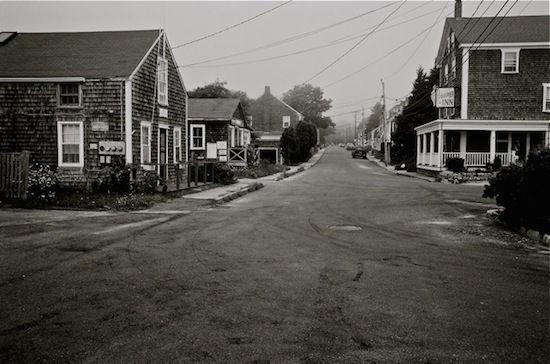
  Photos (below) and commentary by WILLIAM MORGAN

It has been almost a decade since I published a book of photographs on the Cape Cod cottage. Since, then, I have been looking for another suitable topic.

My (more successful) photographer friends tell me no one is underwriting black and white photos taken with film. And my favorite publisher nixed the idea for a photographic study of what I call the Quaker Coast (the towns of Dartmouth and Westport in Massachusetts, and Little Compton, just over the border in Rhode Island), declaring  that there would be no market for such a book.

Yet there is something special – and not yet ruined – about those three towns. Fishing and agriculture still survive, if not actually thrive, there. And the mostly unspoiled landscape and the prevalence of a plain vernacular architecture, mostly wrapped in cedar shingles.

In lieu of the fantasy book, I offer the readers of New England Diary three images from the book proposal.


quaker2 quaker1

quaker3


Addendum: Much of Cape Cod, Martha's Vineyard and Nantucket were also Quaker. I went to a few family memorial services in the Quaker meeting house in West Falmouth, on the Cape.

Many whalers were of Quaker background -- but that didn't make them gentle at all. Rather, many were tough and rapacious.  Many became very successful capitalists whose investments spanned the world.

-- Robert Whitcomb


Read More
Commentary, oped Robert Whitcomb Commentary, oped Robert Whitcomb

Llewellyn King: In U.K.: Sex, booze, rock and Jihadism

  It is a simple question, but there are only fragments of an answer. The question is: Why do so many Muslims, born in Britain, turn to Jihadism?

The best numbers available show that more than 500 young, British-born Muslims have traveled to Syria to fight for the Islamic State. By comparison, an estimated 100 Americans have taken up arms for the Islamic State. As the population of the United States is 313 million, compared to 63 million for the whole of Britain, the disparity is huge.

The “the enemy within,” as the British media call these young people, has deeply disturbed the British public, as it looks to its political leaders to take action. One writer, in The Daily Telegraph, says that the government has been soft when it should have been tough, and tough when it should have been soft.

The truth is that successive British administrations have been silent on the consequences of immigration since the second Churchill government, in 1951-55. Everyone is to blame and no one is to blame.

Britain never saw a large influx of immigrants after the Norman Conquest, in 1066. In fact, it had become quite proud of its tolerance for émigrés; Karl Marx was the exemplar. The Jews were tolerated after the 1650s, but excluded from many occupations and social circles.

Past and present Britain is made up of enclaves remarkably uninterested in each other. Hence, a small island nation can support 53 distinct, regional accents and dialects.

Idealists believed that post-World War II immigration would change Britain for the better, sweeping away its imperial trappings. Actually if anything eroded the class structure, it was the great wave of pop music and fashion in the 1960s.

Surveys show that of the immigrants from the  Indian Subcontinent, the Indians, mostly Hindu, assimilated best and took to business -- and the class system -- with alacrity, many becoming millionaires. The Muslims, primarily from Pakistan, have fared the worst. They assimilated least and imported practices that are a savage affront to British values: forced and under-age marriages, honor killings, and halal butchers, opposed by many British animal-rights groups.

These same values have made life rough for young men of Pakistani descent. For working-class British youth, sex, booze, music and soccer are their safety valves. Sexual frustration is endemic all over the Muslim world; it is at work among devout, young Muslim men in Britain, where sex is celebrated in the culture.

British business had a role in the mix of immigrants in the 1960s. Businesses wanted workers for the textile mills and factories in northern England, who would do the dirty, poorly paid work nobody else wanted. The proprietor of large tire-retreading company boasted to me in 1961 how he had solved the labor problem by recruiting rural Pakistanis, who worked hard and cheaply and kept to themselves. His words have echoed with me down through the years.

This alone does not explain why, for example, a preponderance of the Jihadists are from London, or why some of them seem to be university types from the London School of Economics, King's College London, the School for Oriental and African Studies, and others. If you are young, male and Muslim, and even somewhat religious, it is easy to be convinced that you live among the infidels with their alcohol and preoccupation with coitus.

But, again, it is not explanation enough; not an explanation of why a generation of British-born young men are attracted to the life and values of their distant ancestors, or why they have shown such savagery.

Britain has comforted itself by dealing with self-identified “community leaders” in the Muslim community. Unfortunately the real leaders have been fiery, foreign-born imams who proselytize hatred in the mosques that serve Britain’s 2 million Muslims. The Muslim communities have been hidden in plain sight from the British mainstream.

Llewellyn King (lking@kingpublishing.com) is executive producer and host of "White House Chronicle," on PBS, and a long time international journalist, publisher and business consultant.


Read More
Commentary Robert Whitcomb Commentary Robert Whitcomb

Too far out for Uber

Estes


 "Water Taxi, Mount Desert'' (oil on canvas), by RICHARD ESTES, in the show "Richard Estes' Realism,'' through Sept. 7 at the Portland Museum of Art.

Collection of the Kemper Museum of Contemporary Art, Kansas City, Missouri, Bebe and Crosby Kemper Collection. Gift of the Enid and Crosby Kemper Foundation, 2002.13. © Richard Estes, courtesy Marlborough Gallery, New York)

Read More
art Robert Whitcomb art Robert Whitcomb

Enough of that

timetogo  

"Time to Go" (Gloucester, Mass.),  by BOBBY   BAKER (copyright Bobby Baker Photography).

Read More
Commentary Robert Whitcomb Commentary Robert Whitcomb

Using coastal water exchange for power

  PowerPoint Presentation


From ecoRI  news staff. Thank you.

Graphic by Leonardo Banchik/Elsevier B.V.

CAMBRIDGE


Where the river meets the sea, there is the potential to harness a significant amount of renewable energy, according to a team of mechanical engineers at MIT.

The researchers evaluated an emerging method of power generation called pressure retarded osmosis (PRO), in which two streams of different salinity are mixed to produce energy. In principle, a PRO system would take in river water and seawater on either side of a semi-permeable membrane. Through osmosis, water from the less-salty stream would cross the membrane to a prepressurized saltier side, creating a flow that can be sent through a turbine to recover power.

The MIT team has developed a model to evaluate the performance and optimal dimensions of large PRO systems. In general, the researchers found that the larger a system’s membrane, the more power can be produced, but only up to a point. Interestingly, 95 percent of a system’s maximum power output can be generated using only half or less of the maximum membrane area.

Leonardo Banchik, a graduate student in MIT’s Department of Mechanical Engineering, said reducing the size of the membrane needed to generate power would, in turn, lower much of the upfront cost of building a PRO plant.

“People have been trying to figure out whether these systems would be viable at the intersection between the river and the sea,” he said. “You can save money if you identify the membrane area beyond which there are rapidly diminishing returns.”

Banchik and his colleagues have also been able to estimate the maximum amount of power produced, given the salt concentrations of two streams. The greater the ratio of salinities, the more power can be generated. For example, they found that a mix of brine, a byproduct of desalination, and treated wastewater can produce twice as much power as a combination of seawater and river water.

Based on his calculations, Banchik said a PRO system could potentially power a coastal wastewater treatment plant by taking in seawater and combining it with treated wastewater to produce renewable energy.

“Here in Boston Harbor, at the Deer Island wastewater treatment plant, where wastewater meets the sea … PRO could theoretically supply all of the power required for treatment,” Banchik said.

He and John Lienhard, professor of water and food at MIT, along with Mostafa Sharqawy of King Fahd University of Petroleum and Minerals, in Saudi Arabia, report their results in the Journal of Membrane Science.

The team based its model on a simplified PRO system in which a large semi-permeable membrane divides a long rectangular tank. One side of the tank takes in pressurized seawater, while the other side takes in river water or wastewater. Through osmosis, the membrane lets through water, but not salt. As a result, fresh water is drawn through the membrane to balance the saltier side.

“Nature wants to find an equilibrium between these two streams,” Banchik said.

As fresh water enters the saltier side, it becomes pressurized while increasing the flow rate of the stream on the salty side of the membrane. This pressurized mixture exits the tank, and a turbine recovers energy from this flow.

Banchik said that while others have modeled the power potential of PRO systems, these models are mostly valid for laboratory-scale systems that incorporate “coupon-sized” membranes. Such models assume that the salinity and flow of incoming streams is constant along a membrane. Given such stable conditions, these models predict a linear relationship: the bigger the membrane, the more power generated.

But in flowing through a system as large as a power plant, Banchik said the streams’ salinity and flux will naturally change. To account for this variability, he and his colleagues developed a model based on an analogy with heat exchangers.

“Just as the radiator in your car exchanges heat between the air and a coolant, this system exchanges mass, or water, across a membrane,” Banchik said. “There’s a method in literature used for sizing heat exchangers, and we borrowed from that idea.”

The researchers came up with a model with which they could analyze a wide range of values for membrane size, permeability and flow rate. With this model, they observed a nonlinear relationship between power and membrane size for large systems. Instead, as the area of a membrane increases, the power generated increases to a point, after which it gradually levels off. While a system may be able to produce the maximum amount of power at a certain membrane size, it could also produce 95 percent of the power with a membrane half as large.

Still, if PRO systems were to supply power to Boston’s Deer Island treatment plant, the size of a plant’s membrane would be substantial — at least 2.5 million square meters, which Banchik noted is the membrane area of the largest operating reverse osmosis plant in the world.

“Even though this seems like a lot, clever people are figuring out how to pack a lot of membrane into a small volume,” Banchik said. “For example, some configurations are spiral-wound, with flat sheets rolled up like paper towels around a central tube. It’s still an active area of research to figure out what the modules would look like.

“Say we’re in a place that could really use desalinated water, like California, which is going through a terrible drought. They’re building a desalination plant that would sit right at the sea, which would take in seawater and give Californians water to drink. It would also produce a saltier brine, which you could mix with wastewater to produce power. More research needs to be done to see whether it can be economically viable, but the science is sound.”

Read More
Commentary Robert Whitcomb Commentary Robert Whitcomb

Labor Day morning

dew Photo from Dreamstime


Sept. 1, 2014:


A sticky morning that  reminds  me more of July than September. Very quiet, as people sleep in for the holiday, storing up energy for the frantic fall of  school, work, life in general.  Some early leaf-fall. Gardens looking dry, and ugly weeds proliferate. Hordes of squirrels  scurrying around for acorns. Automatic sprinkler systems watering the sidewalks.

It seems very American to celebrate Labor Day as part of a summer weekend rather than as a statement of working-class solidarity, as with May Day (May 1) in the rest of the world. But America is indeed increasingly a class-divided society.

I thought about   the outbreak of World War II and, as many people do, of this poem by W.H. Auden.


September 1, 1939


I sit in one of the dives On Fifty-second Street Uncertain and afraid As the clever hopes expire Of a low dishonest decade: Waves of anger and fear Circulate over the bright And darkened lands of the earth, Obsessing our private lives; The unmentionable odour of death Offends the September night.

Accurate scholarship can Unearth the whole offence From Luther until now That has driven a culture mad, Find what occurred at Linz, What huge imago made A psychopathic god: I and the public know What all schoolchildren learn, Those to whom evil is done Do evil in return.

Exiled Thucydides knew All that a speech can say About Democracy, And what dictators do, The elderly rubbish they talk To an apathetic grave; Analysed all in his book, The enlightenment driven away, The habit-forming pain, Mismanagement and grief: We must suffer them all again.

Into this neutral air Where blind skyscrapers use Their full height to proclaim The strength of Collective Man, Each language pours its vain Competitive excuse: But who can live for long In an euphoric dream; Out of the mirror they stare, Imperialism's face And the international wrong.

Faces along the bar Cling to their average day: The lights must never go out, The music must always play, All the conventions conspire To make this fort assume The furniture of home; Lest we should see where we are, Lost in a haunted wood, Children afraid of the night Who have never been happy or good.

The windiest militant trash Important Persons shout Is not so crude as our wish: What mad Nijinsky wrote About Diaghilev Is true of the normal heart; For the error bred in the bone Of each woman and each man Craves what it cannot have, Not universal love But to be loved alone.

From the conservative dark Into the ethical life The dense commuters come, Repeating their morning vow; 'I will be true to the wife, I'll concentrate more on my work,' And helpless governors wake To resume their compulsory game: Who can release them now, Who can reach the dead, Who can speak for the dumb?

All I have is a voice To undo the folded lie, The romantic lie in the brain Of the sensual man-in-the-street And the lie of Authority Whose buildings grope the sky: There is no such thing as the State And no one exists alone; Hunger allows no choice To the citizen or the police; We must love one another or die.

Defenseless under the night Our world in stupor lies; Yet, dotted everywhere, Ironic points of light Flash out wherever the Just Exchange their messages: May I, composed like them Of Eros and of dust, Beleaguered by the same Negation and despair, Show an affirming flame.


And some people, especially of a certain age, may remember the haunting old man's song, by Kurt Weill and Maxwell Anderson, "September Song,'' whose lyrics include:


"Oh, it's a long, long while from May to December "But the days grow short when you reach September "When the autumn weather turns the leaves to flame "One hasn't got time for the waiting game''


"September Song''  was written in  1938. Many sad songs were written in the late '30s, as the world, long in the Great Depression, moved toward another gigantic war.  One was "Thanks for the Memory,'' which is funny and melancholic at the same time. It became Bob Hope's theme song.


The lyrics include:


"We said goodbye with a highball Then I got as 'high' as a steeple But we were intelligent people No tears, no fuss, Hooray! For us''


 -- Robert Whitcomb


“There is no man, however wise, who has not at some period of his youth said things, or lived a life, the memory of which is unpleasant to him that he would gladly expunge it. And yet he ought not entirely regret it, because he cannot be certain that he has indeed become a wise man–so far as it is possible for any of us to be wise–unless he has passed through all the fatuous or unwholesome incarnations by which that ultimate stage must be preceded….We do not receive wisdom, we must discover it for ourselves, after a journey through the wilderness wich no one else can make for us, which no one can spare us, for our wisdom is the point of view from which we come at last to regard the world. ''


-- Marcel Proust


Read More
Commentary Robert Whitcomb Commentary Robert Whitcomb

Our invention of 'wilderness'


This is a nice piece by the charming (on paper and in person) writer Ted Widmer about "how New Englanders invented wilderness.''


Read More
Commentary Robert Whitcomb Commentary Robert Whitcomb

Robert Scott: Market Basket battle as a Ancient Greek epic play

  NEWPORT, N.H.

A Market Basket movie!? Not as far-fetched as you would think. This is an epic Greek tale. If Aristophanes or Aeschylus were alive, they would be penning a play based on it called monopolion (monopoly). It has all the  elements of a compelling story.

Arthur T. Demoulas, the protagonist, and  the once and future CEO of the supermarket chain, embodies all the values and virtues of the hero or "The Great Man'' that Aristotle wrote about . He has  integrity, humility, kindness and generosity.


He's also a brilliant strategist, a truly inspiring and effective strategos (general) who had not only the loyalty of the stratou (army -- his employees) but their unfading love.  Such love for a leader is a rare thing in 2014 American society.

Yet ATD’s leadership model is not of our mainstream culture but a hybrid creation of Greek-American culture. ATD’s unwavering adherence to the high-minded standards of our grandparents and parents make this amazingly successful and wealthy man in 2014 America; a true “rock star”.  All I can think is how proud they are of him as they look down from above…. Well done, Anthanasios Telemachus.

His cousin Arthur D. Demoulas,  the antagonist, is a figure that seems cast  out of some ancient Greek epic in the image of ploutokrat pelonexia -- one driven to seek power and wealth above all.

Such a figure is reviled in American society but these ancient playwrights made comic sport of them,  Surrounding ASD is the ploutokratia, his elite Ivy League stratou, whose members believe that their education, wealth and privilege  entitle them to dominate the polis (average citizen).

The stage for the epic is set as these two diametrically opposite forces clash to have mono polein (sole control) of this most valuable entity. ASD’s stratou fires the first shot and sacks ATD and his  management team. The ATD stratou erupts and with their massive numerical advantage bring operations to a dead halt. Then they appeal to their customers to come and support them.


What is truly miraculous is that the customers  supported their neighbors, and ATD’s stratou is now not 25,000 but 2  million strong. Xerxes, the Persian emperor, watched in horror as the underestimated Athenian fleet cleaned his clock!

The playwrights would go to town mocking the hubris of elite lawyers, Wall Street bankers and Global 100 Executives in their luxurious air-conditioned offices while calling for the blessings of the gods upon the virtuous employees and customers protesting/ standing tall in the heat of the midday sun. As each side parried and thrust for six long weeks, the fate of millions  hung in the balance. Who will have mono polein? The ASD stratou of  greed or  the ATD stratou , which seeks to preserve the advantages of their beloved Market Basket.

The amount of the lutoros ( ransom) is agreed on and the painful details of the deal are forged against the backdrop of still more  nasty dialogue and hatred in the family,  as the playwrights examine the many foibles and hypocrisies of the elite.

Virtue prevails and the strategos ATD rises like a protathlitis (the champion leader) while the chorus on both side of the stage proclaim .. "nike, nike, nike''  (victory). There is no doubt in my mind that an epic struggle like this would have a play written about it to memorialize the lessons that it teaches us. It would be a way of instructing  our children and grandchildren about this golden moment  when the privilege of the few was destroyed by the unity of the many.

Is that what Gen.  John Stark meant when he said, “Live or Die” as we rejected  the privilege of monarchs and empowered the citizens of New Hampshire? No doubt in his youth he read Aristophanes and those  desires for dignity and freedom found their source.

So, yes,  I’m all in favor for a Market Basket movie. Who would play ATD?. Ah,  Nicolas Cage.

Robert Scott  is a psychologist,  consultant, writer,  Republican Party activist and former  New Hampshire state representative.  He  lives in Newport, N.H.


Read More
art Robert Whitcomb art Robert Whitcomb

Nature's order and disorder

alechinsky2
"Chute Blanche''  (original  lithograph), by PIERRE ALECHINSKY, at Spaightwood Galleries, Upton, Mass. "Nature mixing order and disorder,'' as the gallery says.


alechinsky

"The Green Eyes,'' (original color lithograph),  also by PIERRE ALECHINSKY, at Spaightwood Galleries.


Read More
Commentary Robert Whitcomb Commentary Robert Whitcomb

Charles Pinning: Lessons from the Old Portagee

A couple of times each summer, the family station wagon transported us an hour or so, from Newport across the Mount Hope Bridge, through Bristol and Warren to the capital city of Providence. By Rhode Island standards, we had traveled halfway around the world.

These odysseys were generated by a visit to my Aunt Teresa in the Fox Point section, a woman with numerous ailments, none of which affected her ability to talk. I was left in the company of a pudgy, desultory cousin with greasy hair who crammed himself into a couch and stared at the TV. Nobody minded if I wandered the neighborhood by myself.

There was a drugstore I would head off to, to buy comic books or a James Bond paperback. Maybe wax lips, if they had them. On the way, I passed a cracked cement driveway shaded by trellised grape leaves. This trellis was made of the same kind of pipe that formed the top rail of the chain-link fencing that ran alongside the driveway and in front of the green, asbestos-shingled house.

In the shade of the grape leaves sat an old man in a low aluminum lawn chair with nylon webbing. He wore a beat-up straw hat and suspect trousers. At his feet to one side of the chair was a hibachi grill with sausage and peppers roasting. On the other side of the chair a radio was broadcasting the Red Sox game.

Seeing me staring, he said, “You want some chourico?”

Because he pronounced this Portuguese word for sausage in the same earthy way as my Azorean mother, I accepted. He speared me a piece  that  I plucked off the prongs of the long fork.

“Good, eh?” he said, watching me chew.

It was delicious, better than my mother made.

“It’s the coals,” he said. “Here, have another.”

He smiled at me. His teeth were good for an old man.

A young woman with a dark tan walked by. She smiled and waved and the old man nodded and tugged the brim of his hat.

“You don’t want your wife to look like leather,” he said, following her with his eyes. “That’s what she will look like one day. Look and feel like leather. You don’t want that.”

Later, in my Aunt Teresa’s kitchen, I asked my parents: “Can people turn into leather?”

“Why would you say that?” asked my father, and I told him about the man in the driveway.

“Oh,” said my Aunt Teresa. “He’s been talking to the Old Portagee. Never mind him; he just sits there all day.”

I didn’t think that was so bad. I spent many hours in the summer on my bed reading. What was the difference, really?

On subsequent trips over the years, I always stopped by to visit the Old Portagee.

“I only wear Brooks Brothers shirts,” he told me. “They wear like iron!” and he pulled at the sleeve of his faded blue shirt, basket-woven with white, the button-down collar frayed. “This one I’ve had more than 40 years!”

In addition to the chourico on his hibachi, the Old Portagee always had homemade wine to offer. Sometimes young women in the neighborhood would stop by, and he would pour them a glass or two. Rarely, I noticed, did men of any age stop by to talk to the Old Portagee.

“Men,” he said, “are lions. When they meet another lion, they know to keep their distance. If a man has a woman, a beautiful woman, then the other lions only come around for the woman, no matter what they say.”

“Do you have a woman?” I asked him.

“Once,” he said, pulling on the sleeve of his shirt. “Once the Old Portagee had the woman of all women,” and he looked up at the grape leaves shading us, and the plump red grapes ripening.

His wine was the best I’d ever tasted and he told me that he would give me the recipe before he passed.

He reached down to yank a dandelion that flourished in a crack in the cement but stopped. He caressed the yellow flower with his thumb.

“Remember,” he said, “You don’t have to go far to learn what you need to know. Just far enough.”

“And what else?” I asked.

“What else? Nothing ever changes. All change is false change.”

“But that doesn’t make any sense!” I exclaimed.

“If you say so,” smiled the Old Portagee. “But you might want to think about it.”

One night, deep in summer, the Old Portagee and I were sitting in his driveway drinking wine, blending into the evening shadows and eating fava beans out of the pod.

“Remember to keep the women happy,” he said. “Either do not let them into your life, or keep them happy. There is no middle road.”

He pulled a black and white photograph with crinkle-cut edges out of his Brooks Brothers shirt. It was a woman sitting sidesaddle on a horse. She was attired in the garb of the 1930s.

“Who is she?” I asked.

“A woman of Providence,” grinned the Old Portagee. “We’ll be riding together again soon.”

Shortly after I graduated from college, I received a hand-addressed envelope in the mail, the penmanship elegant and cursive. Inside was a folded piece of paper with the Old Portagee’s wine recipe. Beneath it was written: “The Right Woman, The Right Wine, The Right Chourico. T.O.P.”

Charles Pinning, an essayist, is the author of the Rhode Island-based novel “Irreplaceable.”

Read More
Commentary Robert Whitcomb Commentary Robert Whitcomb

Robert Whitcomb: Ignore 'inverson'; marina people; Tughill Plateau

Corporate “inversion’’ involves a previously U.S.-based company merging with a foreign one, reincorporating abroad and, by so doing, taking advantage of foreign corporate income-tax rates generally lower than ours. Many public companies are not paying anywhere near the 35 percent federal corporate income-tax rate because of assorted tax breaks; some companies pay no income tax because of loopholes. Still, all in all, our corporate rate is not competitive with our major foreign competitors’.

Some have called companies using inversion “unpatriotic.’’ I disagree. The senior executives and members of the boards of directors making these decisions are legally maximizing their and the company’s wealth in a partly capitalist system that, for all its faults, fuels innovation and prosperity for the entire country — over the long haul. Most individual taxpayers also try to optimize their tax situation.

And, as I have long argued, the corporate income tax is stupid, except for the lobbyists it enriches. It encourages maneuvers such as inversions. It sends jobs abroad. It supports a lobbying system in Washington that spawns corruption and makes the world’s most complicated tax system ever more complex and inefficient as corporations seek tax breaks from elected officials.

Anyway, in the end companies’ customers, employees and shareholders pay the corporate income tax. Companies just pass along the cost.

We need to end the corporate tax and enact a value-added (consumption-based) tax. We should also put personal earned income and capital gains on a more equal tax basis and maintain substantial estate taxes. The aim should be to help streamline and detoxify our tax system, encourage economic growth and at least mildly mitigate the growth of a permanent plutocracy based on inheritance.


* * *

Automation and information technology are now rapidly wiping out well-paying jobs. They’ve long been wiping out low-paying ones. Indeed, those automatic store checkout machines are starting to make inroads into one of the last few fallbacks for those with only a high-school education.

The line is that somehow the economy, blessed by ever-increasing productivity, will create a whole new wave of well-paying jobs to replace the ones killed. We’re still waiting.

Even upper-middle-class jobs are in peril. Consider lawyers, much of whose routine work can be done through computers and low-paid (by our standards) people, in, say, India. And medical equipment, nurse practitioners and ever-better prescription drugs will undermine physicians’ affluence.

Then there’s finance. Many college undergraduates, especially at elite institutions, career plan as if Wall Street were the only sure way to fortune. But they may be guessing wrong. Just because finance was the big thing in the last three decades doesn’t mean that it will be in the next 20. Many young people could find their Wall Street jobs as redundant as many jobs in manufacturing became in the ’70s. We tend to fight the last war.

Some futurists suggest plausibly that such service jobs as plumbers, electricians, gardeners and maids, along with home health-care and social workers and other counselors, may have the best chance of survival. In some fields, even the middle class will still demand personal service.

To reduce social disorder, will the government eventually establish a minimum income for those millions who truly can’t find work?


* * *

I just visited the gorgeous Thousand Islands, on the St. Lawrence River. We cruised for parts of two days in our host’s powerboat, which he keeps in a roofed marina in Clayton, N.Y., another one of those small Northeast towns whose downtowns seem to be regaining a bit of their old energy as big-box stores lose some allure to an aging population.

The vast majority of boats remained in their slips, rather than being taken out on the river, on a beautiful summer weekend. This can be explained in part by fuel costs but more, I think, by the marina’s social role. Most of these boat owners, whose age generally ranges from 50 to 80, primarily see the marina as their summer colony, with the boats (most with sleeping space for from two to eight people) as their summer bungalows.

During the short North Country season, they relentlessly schmooze with their neighbors and derive some meaning from endless boat maintenance. They live in a cozy waterborne village. What most of these people would not have liked back home — living cheek-by-jowl — they thrive in for a few weeks every summer.


* * *

We drove home through upstate New York’s Tughill Plateau, which has hundreds of wind turbines. The white wind turbines and the vivid green of the countryside, with its view of the Adirondacks, create a spectacular, if a bit eerie, landscape. Most of the farms are far better kept up than I remembered from years before — because of the fees paid to them by the utilities. A very green cash crop and no cash paid to the Mideast!


Robert Whitcomb (rwhitcomb51@gmail.com) oversees New England Diary. He is also a senior adviser and partner at Cambridge Management Group (www.cmg625.com), a health-care consultancy,  a former finance editor of the International Herald Tribune, a former editor at The Wall Street Journal, a former  editorial-page editor and vice president at The Providence Journal and  currently a Fellow of the Pell Center for International Relations and Public Policy.

Read More
Commentary Robert Whitcomb Commentary Robert Whitcomb

Hail and farewell, Howard Sutton

Kudos to my old boss, Howard Sutton, who is about to retire from  The Providence Journal, where he has been publisher for 15 years. He remained a quietly forceful and congenial leader of one of America's oldest journalist organizations while dealing with the   industry's vast competitive challenges  from the Internet and the move from private- and family -run newspaper companies to publicly held ones demanding much higher profit margins than before.

His good humor, unflappability and focus on the essentials of news coverage made him close to the perfect publisher for these tough times.


-- Robert Whitcomb


Read More
art Robert Whitcomb art Robert Whitcomb

Architecture in porcelain

  Young


"Grain and Flour Exchange,'' by STEPHANIE YOUNG,  in the show  "City Works: Boston Architecture in Porcelain,'' Sept. 5-Oct. 5,  at Vessels Gallery, Boston.


Ms. Young had the clever idea of creating vessels with the facades of Boston landmarks,  from Commonwealth Avenue brownstones to the Longfellow Bridge.


The gallery says that "all works in the exhibition are labeled with the building, block or street that inspired the  creation, and many have slip glazes, which include silt deposits from the Charles River.''

Read More
Commentary Robert Whitcomb Commentary Robert Whitcomb

Deeper into the mystery

  It's surprising that even as you grow older,  your eyesight dims and hearing fades ,   your excitement about the mystery,  beauty and terror of life can increase.

Read More
Commentary Robert Whitcomb Commentary Robert Whitcomb

Chris Powell: Videotape cops at work all the time

(Apologies for the format problem on  this)

MANCHESTER, Coon.

On the whole, police officers are far more sinned against than sinning, but 
that's why they're police officers, the ones with the badges and guns, the ones 
supposed to be the good guys. But it's a difficult job and indications are 
growing that many officers are not fit for it. 

Those indications -- largely the result of the new ubiquity of security and 
mobile-phone video cameras -- are getting scary. 

Several such indications have arisen from the recent rioting and demonstrations 
in Ferguson, Mo., where a white officer shot a young and unarmed black man. 

Of course, many people have rushed to judgment about the shooting. It is more 
plausible that the officer shot the young man while the young man was charging 
at the officer than that the officer shot him for fun. But rioting and 
demonstrations are no excuse for police to go wild. To the contrary, that's when 
police conduct must be most careful -- and in Missouri it hasn't been. 

The other day in Ferguson an officer was videotaped pointing his military rifle 
at peaceful demonstrators and news reporters, cursing them and threatening to 
shoot them until another officer led him away. The first officer was suspended. 

Another Missouri officer was suspended recently after  a video of a lecture he had 
given was publicized. In the lecture the officer described himself as an 
"indiscriminate killer," adding, "I'm into diversity -- I kill everybody," and, 
"If you don't want to get killed, don't show up in front of me -- it's that 
simple." 

He has been placed on desk duty pending review. 

A third Missouri officer was suspended for commenting that the protesters in 
Ferguson "should be put down like rabid dogs." 

All three officers probably will go back on the beat when the controversy fades. 
There's not enough accountability in government. 

But Connecticut residents don't have to go to Missouri to worry about police 
brutality and psychologically unfit officers. 

Two months ago two Bridgeport officers pleaded guilty to federal civil-rights 
charges for their stomping an unarmed petty criminal as he lay helpless on the 
ground following his disabling by a stun gun. The assault was captured on video 
by a passerby. The city will pay the petty criminal $198,000 in damages and the 
two officers have resigned and have promised never to seek police work again. 

Enfield's Police Department is dealing with the heavy-handedness of an officer 
who has been investigated on complaints of misconduct 17 times in seven years. 
In the most recent case, cruiser dashboard video shows him pummeling a man said 
to be resisting arrest. The state's attorney won't prosecute either man. 

And last week cell-phone and security-camera video recorded a Hartford officer 
using a stun gun on a young man who had obeyed his command to stop and was 
standing still, hands at his sides, 10 feet away. The officer continued to 
advance on the young man and shoting the stun gun at him from 4 feet away. Even 
Gov. Dannel  Malloy, speaking to a meeting of concerned citizens in Hartford, said 
he was shocked. The Hartford Police Department is investigating. 

For their protection and the public's, all police officers should be videotaped 
all the time -- and this would be easy to do, as there 
are not just dashboard cameras, already widely in use, but small cameras that 
can be affixed to uniforms and can record as much as 45 hours of image and 
sound. 

The recent death of a man who was choked to death during his arrest in New York 
City has prompted the city's public advocate, Letitia James, to propose 
equipping all city police with uniform cameras. Connecticut law should require 
this. 

If Governor Malloy really was shocked the other day, he should propose such a 
requirement before the November election. His Republican challenger, Tom Foley, 
should endorse the idea as well. It is a matter of basic accountability in 
government. 

 
Chris Powell is managing editor of the Journal Inquirer, in Manchester, Conn.
Read More
Commentary Robert Whitcomb Commentary Robert Whitcomb

Putin intensifies his invasion

  Mary McCarthy once famously said about Lillian Hellman:


"Every word [Hellman] writes is a lie, including 'and' and 'the'."


The same thing could be said about  the promises and assertions of Russia's cold, corrupt and narcissistic dictator, Vladimir Putin, whose forces continue to invade a sovereign country -- Ukraine.

We hope that U.S. and its NATO allies recognize the danger that this poses to all of eastern and central Europe and  swiftly make weapons available to the Ukrainians.

Meanwhile, Russian hackers, at the behest of Putin, have been hard at work invading account information in U.S. banks.


Read More
Commentary Robert Whitcomb Commentary Robert Whitcomb

Robert L. Borosage: Help unions help middle class

  workchart

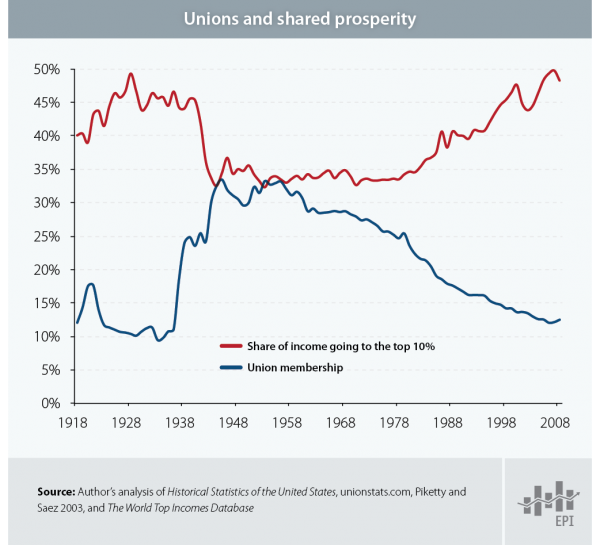
Labor Day is supposed to be a celebration of workers, but it’s been a long time since workers have been celebrated — or for that matter, have had a reason to celebrate. That’s because the union movement that gave us this holiday is, at least numerically, a shadow of its former self.

If we really want to give workers something to cheer about, we need to revitalize unions. It’s no coincidence that prosperity was widely shared when unions were at the height of their power in the decades after World War II, and that inequality has soared as unions have been weakened.

That’s what I conclude in Inequality: Rebuilding the Middle Class Requires Reviving Strong Unions, a new Campaign for America’s Future report. My analysis tracks the simultaneous decline in the power of the labor movement and the fortunes of middle-class workers. It makes the case in simple terms.

One chart reinforces the point. It compares union membership with the share of income going to the top 10 percent since the 1920s. When only one in 10 workers belonged to unions in the early 1930s, the richest 10 percent pocketed nearly half of the nation’s income.

Then President Franklin D. Roosevelt began a set of bold New Deal initiatives that dramatically increased the power of workers to join unions and bargain collectively. The share of workers who were unionized rose to about one-third by the late 1940s. At that point, the bottom 90 percent saw a significant increase in their share of national income.

Today, as union membership declines to low levels last seen in the 1920s, the share of national income going to the top 10 percent is rising — to levels not seen since then either.

Combine that with lackluster economic growth and you get the result chronicled in an August report by Sentier Research. As The New York Times reported, Sentier found that median incomes, when adjusted for inflation, had fallen 3.1 percent since 2009. They remain significantly below what they were in 2000.

A corporate-driven propaganda campaign has for decades blamed labor unions for saddling American corporations with burdens that made them uncompetitive in the global economy.

That has proven to be cover for dismantling the forces that kept corporations from rigging the economic rules in their favor. When corporate power was kept in check by union power, workers and corporations at least had a fighting chance to prosper together. Without that check, workers are losing. As wages erode, benefits disappear, work conditions become harsher and jobs themselves become more unstable.

The good news is that a combination of worker-activist movements and bold political leadership is setting the stage for a potential resurgence of the labor movement. In Los Angeles and other cities, newly elected pro-labor officials are making companies that benefit from local zoning or contracts pay a living wage and accept unions when a majority of workers indicate they want one.

Across the United States, fast-food worker strikes are fueling state and municipal minimum-wage increases while injecting new energy and ideas to worker organizing efforts.

President  Obama has used executive orders to raise the minimum wage for federal contract workers and require adherence to basic fair labor standards, including the right to organize. These orders could have effects that ripple through to private sector workers.

Labor Day would live up to its purpose if it not only gave workers a temporary respite from the rigors of their jobs, but also drove a national effort to empower workers once again to rebalance the economic scales so that we can rebuild a growing, stable middle class. It needs to be a day on, not a day off, in the effort to reclaim the American dream for working people.

Robert L. Borosage is the co-director of the Campaign for America’s Future, a center for ideas and action that works to build an enduring majority for progressive change. Distributed via OtherWords.org

Read More
art Robert Whitcomb art Robert Whitcomb

Falling into fall

max

Read More
art, Commentary Robert Whitcomb art, Commentary Robert Whitcomb

A factory worker's art

goidberg  


Work by ABRAHAM ISAAC GOLDBERG, at the Chandler Gallery,  Cambridge, Mass., in his show "From My Father's Hand: The Art of Abraham Isaac Goldberg,'' through Sept. 12.

Mr, Goldberg was a factory worker  and immigrant from Lithuania (in 1929) who managed to create hundreds of sketches, drawings and paintings.  He has a mordant view of capitalism.

The gallery's notes say:

''Many of Goldberg’s sketches reflect his perspective on social and political events during the Great Depression and World War II. {His son} Haim Goldberg loves the drawings he describes as 'the class-conscious, evil capitalist things with a big belly and a fistful of dollars.' One caricature of Stalin and Hitler depicts them as birds with human faces, kissing, each with a blade tucked under his wing while swastikas and hammer-and-sickles light up the sky behind them like fireworks. He also used his drawings to respond to personal crises. In 1950, Goldberg was hospitalized after a heart attack, and he filled a sketchbook with pictures both amusing and disturbing of the doctors and nurses who treated him.''

That Mr. Goldberg arrived from Lithuania in 1929, as the Depression was getting going, could not have helped his view of capitalism. Still, that American had political freedom and capitalism was a major reason he  could come here and be able to make a living.

A (somewhat regulated) capitalism is, as they say, the worst economic system except for all others.

As for the "robbery'' part of the train above, one thinks of Balzac's amusing but extreme line that ''behind every great fortune is a great crime.''


Read More