A_map_of_New_England,_being_the_first_that_ever_was_here_cut_..._places_(2675732378).jpg

Vox clamantis in deserto

oped Robert Whitcomb oped Robert Whitcomb

Don Pesci: Abe Lincoln and the trials of John Rowland

  By DON PESCI

VERNON, Conn.

Former Connecticut Gov.  John Rowland, now a former radio talk show host, may have been “guilty,” in a metaphorical sense, of using his position to advance the political interest of one particular candidate over another.  It has been said that Mr. Rowland had subjected poor Andrew Roraback, at the time a Republican Party candidate for the U.S. House in the 5th District, to a severe interrogation on his radio program, formerly called “Church And State.”

Since being appointed to Connecticut’s Superior Court by Gov. Dannel Malloy, Mr. Roraback has moved out of the political into the less contentious judicial arena. Apparently, Mr. Roraback had suffered no permanent harm, and losing a Hartford Courant endorsement to his Democratic opponent certainly cost the socially progressive Republican Party endorsed candidate more negative votes than Mr. Rowland’s barbed questions.

Mr. Rowland’s preferred candidate for the slot, it has been said, was Lisa Wilson Foley. At the time Mr. Rowland was hard grilling Mr. Roraback, the talk show host was employed as a consultant for Apple Rehab, a business owned by Mrs. Foley’s husband. Mr. Rowland implausibly claims he was assisting Mrs. Foley’s campaign on the side as an “unpaid consultant.”

Similar impostures – though news of them may shock the willfully ignorant – have been deployed in the news business from time immemorial. Abe Lincoln came very near to fighting a duel with one of his outraged political competitors when it was discovered that editorials in a Republican paper had been written on the sly by Mr. Lincoln; actually, one of two of the newspaper pieces had been written by his intended wife. Because it would have been ungentlemanly for Mr. Lincoln to involve his fiancée in the quarrel, he accepted responsibility for the satires but characteristically refused to issue an apology.

Eventually, the matter was settled outside the law courts, without either of the antagonists having used against each other the large military broadswords Mr. Lincoln had selected as his choice of weapon. Mr. Lincoln, who towered over his opponent, hacked off a tree branch with his sword while the two stood facing each other on Blood Island, and the display of superior reach led to an amicable resolution.

Charlie Morse, for many years the chief political writer  of  The Hartford Courant and an unabashed Lowell Weicker-liker, produced tons of columns favorable to then Sen. Lowell Weicker, one of the papers most pampered political pets. The Courant, during Mr. Weicker’s push for an income tax, was solidly in Mr. Weicker’s gubernatorial corner; and so was Mr. Morse, who left The Courant to work on Mr. Weicker’s campaign – even though he continued his column in the pro-Weicker Courant.

There are no laws criminalizing journalistic bad habits.  The First Amendment to the U.S. Constitution protects partisan and non-partisan journalists alike. Even if the accusation against Mr. Lincoln had been correct, he easily could have won his case in court by draping across his chest the breastplate of The First Amendment – or at least that portion of it that guarantees freedom of political speech.

The freedom-of-religious-expression clause in the very same amendment is not as hotly defended by the media because modern journalism tends to be instinctively anti-clerical.

Some of us who understand why a watchful media should resist authoritarian displays of power cannot for the life of us understand why the same media should be so willing to bed down with gray-headed incumbents whose first term in office coincided with the arrival of Noah’s Arc on Mount Ararat. Surely in our day, incumbent politicians are much more powerful than the ministers and priests who now preside over  the "Bare Ruined Choirs''.

Though Mr. Rowland’s defense attorneys have focused in a motion to dismiss on the charges brought against him, the First Amendment conceivably could be brought into play as a sleeper defense during the promised Rowland trial -- “promised” because it is always possible the trial may be ditched in favor of some plea agreement never made public between Mr. Rowland’s high priced Washington attorneys and prosecutors. Neither Mr. Rowland nor Mrs. Wilson-Foley were practicing politicians at the time Mr. Rowland, essentially a journalist, allegedly “favored” Mrs. Wilson-Foley, an aspiring politician, on his radio program. This means that no political favors either way could have been exchanged for allegedly “corrupt” money received by Mr. Rowland.

It is still very early in “the judicial process.” During Lincoln’s day, matters were adjudicated in courts of law, and instructive precedents were established. Nowadays, justice itself hangs from “process” nooses. Deals are made in private between Star Chamber prosecutors and defense lawyers, and precedence is a stranger at the hidden proceedings. Grand Juries, many political commentators understand,  are Star Chamber proceedings, and Grand Jury findings released to the media are always highly prejudicial. They should be taken by a truly non-partisan critical media with tons of salt.

 Don Pesci is a writer who lives in Vernon, Conn. He may be e-mailed atdonpesci@att.net.


Read More
oped Robert Whitcomb oped Robert Whitcomb

William A. Collins: State banks are a good idea

By WILLIAM A. COLLINS NORWALK,  Conn.

Vermonters aren’t like the rest of us: They live in a small state with a flinty history and a legendary suspicion of outsiders.

That independent streak gained luster when 15 Vermont towns voted earlier this year to reinforce this independent tradition by approving a proposal to create a state bank.

The Vermont Economic Development Authority would get a license to do what private banks normally do — only with a mandate to serve the public interest no matter what.

This isn’t unprecedented. North Dakota has enjoyed a flourishing state banking system for nearly a century.

Costa Rica set another good precedent. Its public banking dates back to 1949. As of a decade ago, its four state banks held 75 percent or more of all individual deposits.

All this is quite vexing to the World Bank and the International Monetary Fund. As elsewhere, they have muscled Costa Rica to privatize its government-owned businesses. Costa Rica has largely done this, but it won’t let go of its state-owned banks. For some reason, Costa Ricans don’t trust the commercial ones.

No, Americans don’t trust our banks either. But only North Dakota’s state bank remains under public control.

Everywhere else, banking laws have made it very profitable for old-fashioned mutual (non-profit) savings banks, once popular, to sell out their depositors and turn commercial. The executives who accomplish this switch all do very nicely for themselves.

Luckily, credit unions carry on from bygone times as a thorn in the side of the industry, but Wall Street is working hard to extinguish them too. Credit unions depend heavily on their non-profit status to protect them against taxes, so conservative outfits like the Tax Foundation are trying mightily to squash that exemption.

Theoretically, the government is our protector from the avaricious cartel of private banks. Both state and federal laws ostensibly provide us with banking watchdogs which safeguard the honesty and fairness of our saving and borrowing.

That’s really just in theory. Unfortunately, a cynical revolving door regularly sends regulators wheeling into bank jobs and bankers hot-footing it over to regulation. At the same time, lobbyists sap the rectitude of those lawmakers and oversight agencies who you might have thought had our best interests at heart.

Hence, banks feel unrestricted to manipulate credit cards, student loans, mortgages, securitizations, hedge funds, credit default swaps, currency exchanges, and all manner of rigged financial transactions. Our regulators rein them in sometimes, but in many cases not until after the damage is done.

As a result, when mortgages default, neighborhoods collapse, families are ruined, and the economy tanks, the banks go right on — perhaps with their wrists slapped.

One other savings alternative does exist: the U.S. Postal Service. In years gone by, the Postal Service doubled as a bank that had lots of branches and no securitized mortgages.

But given the general lack of trust that  most people have in commercial banks, some lawmakers are looking to bring the Post Office back into banking. That would be a new American Revolution.

 William A. Collins is a former Connecticut state representative, a former mayor of Norwalk, Conn., and a columnist for OtherWords.org, where this column originated.

Read More
art Robert Whitcomb art Robert Whitcomb

Fat, salt and sugar

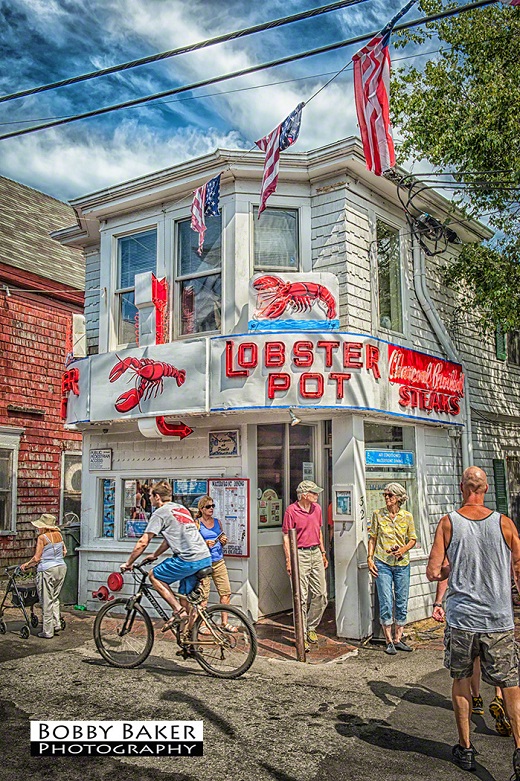
Baker-Lobsterpot           Chatham, Mass., scene by BOBBY BAKER


Read More
art Robert Whitcomb art Robert Whitcomb

Wet oblivion

water From "Waterways'' show at Heather Gaudio Fine Art, New Canaan, Conn., June 5-Sept 6.

Read More
art Robert Whitcomb art Robert Whitcomb

Prelude to pollution

Thornton 'Prelude,'' by PAT COOMEY THORNTON, AT Dedee Shattuck Gallery, Westport, Mass.

In New York City. You can feel/smell the edge of summer crud pushing at  the freshness of spring. More homeless on the street. They're usually old; everyone else seems about 25. Is the new mayor tough enough to keep this city under control?


Read More
art Robert Whitcomb art Robert Whitcomb

Summer horror

  dunbar

"Are We There Yet?'' , by Evelyn Dunbar, at the Alden Studio Gallery, at the Art Complex Museum, Duxbury, Mass.

Read More
oped Robert Whitcomb oped Robert Whitcomb

College pranks, anxiety and tricks of time

  By ROBERT WHITCOMB


(Reposting this, with minor changes, to mark commencement season.)


A few months ago, I was chatting with a Dartmouth College classmate about stuff that happened when we were students in 1966-70. I mentioned someone we knew in common and recalled that he was in a certain fraternity. The guy I was talking with, Denis O'Neil, a screenwriter who recently published a part-memoir, part-novel of that period titled Whiplash: How the Vietnam War Rolled a Hand Grenade into the Animal House, politely corrected me; in fact, this person was in another fraternity.

Time has fragmented and mingled stories in my memory and those of others from that era, now almost half a century ago. One could argue that it was a tumultuous era, and thus it's easy to get things scrambled, but most times are tumultuous and transitional. Mr. O'Neil makes much of the stress caused by the fear of being drafted and sent to Southeast Asia, but as bad as that was, it was much worse for young men in World War II. Whatever. We're all the centers of our own universes, and we create narratives to explain ourselves to ourselves and others and to place ourselves in history.

Certainly, the huge size of the Baby Boomer generation, and technological and social changes of its young times, were dramatic, though I would argue that except for improvements in the rights of racial minorities and women, the transformations caused by the Internet (which increasingly looks as if it has made things worse for most people) have been much bigger than "Sixties'' changes.


Still, it's true that in that period one had the distinct sense of living in a discrete and vivid era, which actually began about 1966 and ended about '73. People who lived in the "Roaring Twenties'' -- 1924 to the Great Crash of October 1929 -- told me in "The Sixties'' that they had had a similar sense back in the Coolidge administration.

Youth is intense, and so the memories the now-autumnal people of "The Sixties'' are intense, if sometimes erroneous. From Mr. O'Neil's book, which centers on pranks, fun,  romance (not always fun) and anxiety, you might think that 80 percent of a male undergraduate's time was spent drunk, seeking young women to have sex with and trying to get out of the draft. In fact, even for non-nerds who disliked what we then called "booking'' (has the World Wide Web come up with its own equivalent phrase?)  most of the time was spent going to class, studying and sleeping, not "raging'' (the word for partying).

After all, a lot of students wanted to get into good graduate schools and then fancy jobs. A lot did, and went on to become perhaps the greediest generation in U.S. history. Mr. O'Neil was wise to have constructed his book at least in part as a novel, letting his imagination and telescoping of events provide a better story for the movies, a business he knows very well. If they do make a film of his story, I'd be interested to see how much of it gives a sense of the more humdrum aspects of college life for middle-to-upper-class late adolescents back then.

L.P. Hartley's line "The past is a foreign country: they do things differently there'' is much quoted but people don't do things as differently as they might like to think 50 years later.


Read More
oped Robert Whitcomb oped Robert Whitcomb

'The Rule of Nobody' in American life

Citizens who have had it with America's  relentless litigation and paralyzing fear of it, and its turgid and contradictory regulations,  should read Philip K. Howard's The Rule of Nobody: Saving America From Dead Laws and Broken Government, which I (Whitcomb) review in the  latest Weekly Standard.  


Read More
art Robert Whitcomb art Robert Whitcomb

Maine food can't be main course for most

  farm

The Portland Museum of Art and the Maine Organic Farmers and Gardeners Association are promoting such activities as a Sunday, May 18, program, from 2 p.m. to 5 p.m. called "Healthy Soil, Healthy Foods'' to pump up agriculture in the Pine Tree State. All well and good, just as long as Mainers do not think that they can survive on Maine food alone.  Midwest, Southern and California agriculture will rule for many years to come.


Read More
Commentary Robert Whitcomb Commentary Robert Whitcomb

Making Google clean up your nasty past

  The overseer of this site is an admirer of White House Chronicle, a  weekly TV show that appears on many PBS and other stations around America weekly.  (Southeastern New Englanders may see it  at 11:3o a.m. Sunday on Channel 8, WSBE.)

One of the shows is about a European ruling against Google and the right to delete nasty stuff about yourself from the Internet. The other is  about what went wrong in Africa when the European colonial powers left and what is going better now, whatever outrage you may be hearing in the news.

And there's some rapid-fire art done before your eyes on one of the shows.


Read More
Commentary Robert Whitcomb Commentary Robert Whitcomb

Vana's rock

Masonstone  

Photo by STEVE MASON, to be shown in the Sept. 20-21 Arts Marketplace Pawtucket.  Is cold rock  the  central symbol of New England?

Read More
art Robert Whitcomb art Robert Whitcomb

Amusement park bad dream

  OCallogan

"Swing Low'', by SHARON O'CALLOGAN SHERO, at Brickbottom Gallery,  Somerville, Mass.

Read More
oped Robert Whitcomb oped Robert Whitcomb

Summer folks vs. a would-be oyster farmer

Poor Richard Cook, the Mashpee, Mass., fisherman who wants to put in a little (two-acre) oyster farm a quarter mile off the summer homes of rich  people in that Cape Cod town. He would seem to have gained the permits, etc., needed for the project, but..... The rich folks (who include the Krafts, who own the New England Patriots) are using every legal trick in the book and their influence in the Massachusetts legislature to  stop what would be a very quiet, low key and environmentally friendly project that speaks to the the nifty idea of expanding one of New England most lucrative (and relatively few) cash crops -- shellfish. The persistent Mr. Cook has been trying to do the oyster farm since 2011 but failed to adequately consider the ability of a few well-heeled people to use America's stuck-in-molasses civil law and legislative Christmas-treeing to stop anything they don't like by making the lawyers' fees too expensive for most people.

In fact, such oyster farms used to be all up and and down the sandy sections of southern New England's coast. They were considered charming,   a daily character-building  example of hard work and a healthy connection to Mother Nature.   They provided inspiration for many painters. Among other benefits,  such shellfish farms help filter and clean the water. Popponesset Bay would be better having the oyster farm.

The summer gentry seek  to create a bogus "marine sanctuary'' via a bill on Beacon Hill to cover the  area where Mr. Cook wants to set up his oyster farm. (I suspect that these summer folks love to eat oysters -- from somewhere!) Sadly for  Mr. Cook,  he doesn't have the cash for campaign contributions that might get the attention of  the most important solons.

Rich summer folks  increasingly throw their weight around, and not just in their  summer colonies,  and many seem willing to stop anything in their sight that might remind them that other people have to make money,  if  not from "investments,'' even if it's in as traditional and healthy sector as shellfish aquaculture. (The battles against coastal wind turbines within distant sight of mansions is a more famous war.)

I have nothing against rick folks -- some of my favorite relatives and friends are in that clan! But I don't like grossly unequal application of influence.

Mr. Cook has already moved the proposed oyster  farm a bit further away from the rich folks on, who often act as though they own everything from from their front porches to the oceanside horizon. But nothing is enough for people who think that they can buy anything.

Still, I suppose that it should be noted that town officials themselves seem to favor the farm, despite the big property taxes paid by the Krafts.


Read More
art, Commentary, Massachusetts, Photography, Rhode Island Robert Whitcomb art, Commentary, Massachusetts, Photography, Rhode Island Robert Whitcomb

Life and death in N.E.

20140513-205424.jpg

20140513-205330.jpg 20140513-205341.jpg

20140513-205356.jpg

20140513-205406.jpg

Read More
art Robert Whitcomb art Robert Whitcomb

Soothing to see if not smell

Haywood "Shimmer'' (pastel), by LIZ HAYWOOD-SULLIVAN, at the Art Complex Museum, in Duxbury, Mass.

New England's salt marshes are soothing to look at, if not necessarily to smell, especially in the summer.  In any cases they clean coastal waters and act as vast protein factories because of the fish and shellfish they nurture.

Read More
oped Robert Whitcomb oped Robert Whitcomb

Will Bill White be the Perot of 2016?

By DAVID WARSH BOSTON

What might a successful Democratic presidential candidate in 2016 look like who is not Hillary Rodham Clinton?  The Republican Party can’t be expected to field a successful mainstream candidate until some of its serious kinks have been worked out – at least another cycle or two.  This time the Democratic Party nominee is more than likely to win. What happens after that depends on who that candidate is.

The former secretary ofsState has had a splendid career since striking out on her own as a senator from New York in 2001. It would be good to have a woman president.  But, to my mind, Clinton is too tied to battles going back to 1992 and before to hope that, once elected, she could win over her many critics and steer the nation back towards consensus.

A non-polarizing rival for the nomination might look like Bill White. He’s a personable fellow, 59 years old, a former litigator, oil and gas entrepreneur, deputy secretary of energy (1995-97), real-estate developer, and successful three-term mayor of Houston, the nation’s fourth-largest city. His candidacy might  have seemed a logical possibility, except that he was defeated by incumbent Rick Perry in the Texas gubernatorial election in 2010, the year of the Tea Party.  End of story, at least on the surface.

Mainly, I think of White because he has written a book, America's Fiscal Constitution: Its Triumph and Collapse, which seems to me like a very promising platform for a Democratic candidate. White has zeroed in on the long-term federal borrowing crisis that affects every aspect of America’s future role in the world. He has placed it, credibly, in historical perspective. That in turn demonstrates a deep political intelligence.

“To understand what recently has gone wrong,” he writes, “it helps to know what had once gone right.” Five  times in the past the United States has found itself deeply in debt:  after the American Revolution, the War of 1812, the Civil War, World War I, and the  16hard years of the Great Depression and World War II.

In each case the U.S. borrowed for a clear and generally agreed-upon purpose: to preserve the union, to expand and connect its borders (the Louisiana Purchase, in particular), to wage war, and to compensate in severe economic downturns, beginning with the Panic of 1819. In each instance, relying on a political tradition that White traces to budgetary procedures instituted by the Founding Fathers, Congress found the political will to pay it down afterwards – until 2001.

Then, says White, the 220-year-old fiscal tradition collapsed.  The federal government cut taxes and borrowed to pay for two wars, and a rising proportion of its domestic operating expenses as well. George W. Bush took office pledging to reduce the national debt by $2 trillion and create a $1 trillion rainy-day fund.  Instead he increased the debt by 50 percent, from $5.7 trillion to $9 trillion – before the Panic of 2008!

In the long and deep recession that followed,  federal debt exploded, to $16.7 trillion last year, or something like $120,000 for every working American.  Debt coverage, the measure banks commonly use to judge credit-worthiness of businesses and individuals, rose to nine times the revenue available to pay the debt.

America’s Fiscal Constitution is gracefully written, but it is not an easy read: 410 pages of narrative, with another 150 pages of notes, bibliography and tables, and only three charts in the entire book to illustrate the argument. White describes in some detail each prior episode of borrowing and, with a politician’s eye, the hard legislative compromises and monetary policy accommodations that were subsequently required to restore the tradition of more-or-less balanced budgets.

None of these chapters is better than the set-piece with which the book begins – the 1950 battle between President Harry Truman and Republican Sen. Robert Taft, of Ohio, over tax cuts on the eve of the Korean War, contrasted with the collapse of the tradition of fiscal responsibility in 2003, as the U.S. prepared to invade Iraq.

So what happened in 2001?  White sees the loss of discipline as having happened in two stages.  The first he traces to the run-up to Ronald Reagan’s election in 1980.  Traditionally the GOP had campaigned on promises to maintain balanced budgets. He describes the role of then-Congressmen David Stockman, of Michigan, and Jack Kemp, of New York, and Wall Street Journal editorial writer Jude Wanniski in fomenting a competition between two Santa Clauses – Democrats who delivered more services, and Republicans who delivered lower taxes. That lowering of taxes, it was promised, would pay for itself by stimulating growth.

Candidate George H.W. Bush, soon to be vice president, saw “voodoo economics” Gradually, Ronald Reagan perceived envisioned a “supply-side revolution.” White writes, “Never in the nation’s history had a president proposed large, simultaneous spending increases and tax cuts when the federal budget already had a deficit.”

But Reagan was more nearly a fiscal conservative than a heedless spender, White notes.  He expected higher inflation to make up for lost revenues by carrying taxpayers into higher brackets. And he gave his blessing to an historic rebalancing of the Social Security Trust Fund.  Not until George W. Bush arrived in 2001 was traditional discipline truly lost.

Presented by the Clinton administration with a budget surplus accumulated through a combination of savvy policies (tax increases combined with monetary easing) and good luck (the Internet boom), Bush immediately sought tax cuts, explaining that the resulting deficits were “incredibly good news” because of the “straitjacket” they imposed on Congress. The straitjacket notwithstanding, Bush went to war first in Afghanistan and then in Iraq, too. Congress cut taxes again. “Nothing is more important in the face of war than cutting taxes,” explained House Majority Leader Tom DeLay, of Texas.

What accounts for this sixth great spike in borrowing, unaccompanied by any of the traditional rationale?  The great advantage of White’s argument from history is that it underscores how weighty must be any satisfying explanation for the current mess. Oedipal rivalry in the Bush family is a non-starter.

My own preferred suspect is the entry into civic discourse of claims to authority derived from scientific economics in the years after World War II  This occurred gradually, first in the guise of a “Keynesian Revolution”  that put “demand management” through deficit spending at the center of the conduct economic affairs; then in the form of carelessly conjured “supply management” of the economy through tax cuts.  Plain old political pandering played an even larger role.

White, a Democrat, carefully delineates the counter-revolution, but he has little to say about the rise of the “New Economics,” except to note that when John F. Kennedy, in a memorable commencement speech at Yale University in 1962, urged young Americans to develop fiscal policies based on “technical answers, not political answers,” a Gallup Poll a few weeks later found that 72 percent of Americans opposed tax cuts financed by debt. Nevertheless, “guns and butter” policies of the Vietnam War followed.

I have nothing against technical economics; indeed, writing about it is how I make my living. Its findings, large and small, have greatly improved the lot of billions of persons around the world over the last eighty years. But I do think that its claims to authority, especially in public finance, have enjoyed a somewhat overblown in recent decades, in contrast to the common-sense strictures of the American fiscal tradition whose two-hundred-year arc White describes so clearly.

White identifies four time-honored conventions whose return would begin to solve the problem of today’s massive debt: clear accounting; “pay as you go” budget planning; separate budgeting for government trust funds; and explicit congressional authorization for each new debt.  Is such an extensive simplification politically possible?  Certainly not at the moment.

Might Bill White play a Perot-like role in the 2016 election?  I have no idea, though I hope so.  I do know that the search for alternatives to Hillary Clinton will continue. People will say that the hope for a new and transformative figure is what brought Barack Obama to office in 2008. In my opinion, the strategy has worked pretty well, for all the acrimony.  It is simply taking longer than had been hoped.

 David Warsh, a long-time financial journalist and economic historian, is proprietor of economicprincipals.com


 

Read More
art, oped Robert Whitcomb art, oped Robert Whitcomb

Paul F.M. Zahl: Movie offers guide to Harvard Black Mass

chaos

"Order and chaos'' (mixed media), by LYNDA CUTRELL, at Galatea Fine Art, Boston, June 1-29.

By PAUL F.M. ZAHL

As a Harvard grad and an Episcopal minister, I am dismayed by the prospect of the university's sanctioning a Black Mass for tonight (May 12), within Memorial Hall.

But what I really want to megaphone to all concerned is this: Wake up, Harvard (not to mention the Satanic Temple of New York City), and watch more horror movies!

You could all spare yourselves a lot of trouble if you watched more horror movies. Specifically, you need to see that unregarded but rich Hammer horror film from the early 1970s, entitled Dracula A.D. 1972. For those who care, and this writer cares very much, Hammer Studios in England produced dozens of luridly wonderful horror movies from the late '50s through the early '70s. These immortalized such U.K. character actors as Peter Cushing and Christopher Lee.

Fans of these movies tend to regard the instantly dated Dracula A.D. 1972 as the nadir of Hammer's output. But in light of what's slated to happen today in Cambridge, Mass., it's risen to the top of my list.

This is because Dracula A.D. 1972 anticipates in detail a scenario that has already unfolded. To wit, the villain in the movie, whose made-up name in the story is 'Johnny Alucard' (the surname, of course, is ''Dracula'' backwards), looks, dresses and talks like the spokesman for the Satanic Temple of New York City. Secondly, he keeps telling his gullible young friends in the movie to ''Keep cool, birds'' -- the script is deliriously filled with faux-Flower Child and Swinging London colloquialisms. "This happening I'm asking you to jive to is just a stunt. Just a bit of fun, mates."

To their acute misfortune, members of "Johnny Alucard's''' circle believe him when he says: "This is just a re-enactment."

The movie's staging of the Black Mass itself is extremely well done. The director, Alan Gibson, is sure-footed in the blocking and the angles; and during the Mass, which takes place in a ruined Memorial-Hall-type building, a deconsecrated church damaged during the Blitz, in World War II, the movie gets serious. The elements of a real Black Mass are all there, just as they will be, presumably, this evening in Cambridge within the once hallowed walls of the university's memorial to its Civil War dead. The parallels between now and this absurd but tight English movie are breathtaking.

Finally, the church comes into it. But not priest, not bishops, not archbishop.. Rather, old-fashioned religion comes in to Dracula A.D. 1972 through the person of an aging physician named ''Lorrimer Van Helsing". (Who ever thought of that first name? The writer should have been knighted on the spot!)

Anyway, ''Lorrimer Van Helsing'' strides into the movie, an old man poignantly concerned about the well-being of his impressionable niece. (His niece has come under the spell of ''Johnny Alucard".) Fortunately for her, her uncle intervenes, with cross and stake, and Jessica van Helsing is saved.

This is a classic instance, which occurs often in English horror and sci-fi movies, in which wise members of the older generation are the only ones who know enough to save clueless members of the younger one. (Usually, the character actor Andre Morell played these roles, though John Mills did once, too.)

I wish that Harvard University officials would go straight to Barnes and Noble, and buy their very reasonably priced copy of Dracula A.D. 1972. It's in all the stores as I write. (Target, too.)

A personal note in conclusion: Three times during my ministry in the Episcopal Church, I was forced to get up close and personal with Satanists. Somehow they succeeded in inveigling members of our parish youth group in Westchester County, N.Y., to take part in a Black Mass.

They "staged" this on the grounds of a country club up on the Hudson. Two of the young participants -- and I had to clean up the bones of living animals that had been sacrificed during the service (and had to change the locks on the parish sacristy because Communion wafers were being stolen) -- were scarred indelibly by what they were lured into doing. I never of them smile again.

I also got to know a languid old trust fund Satanist, who lived in London and had the most beautiful personalized Satanic stationery.

Harvard, wake up! Buy this movie and watch it. And it may not be quite as campy as it first appears.

The Rev. Paul F.M. Zahl is an Episcopal minister and a theologian.

Addendum by Robert Whitcomb: So will we see the Prophet Mohammed in drag in the next Hasty Pudding Show at Harvard, or indeed portrayed in any public way on Harvard's campus as less than perfect? Or course not -- and not because of any particular respect by a mostly secularized Harvard community but because of the physical fear of offending followers of a religion a few of whose adherents are famously violent.

Fear is a key ingredient of hypocrisy.

Read More
oped Robert Whitcomb oped Robert Whitcomb

Too much caffeine

Yang

"Splash Bowls,'' by EILEEN BRAUN, at the Lexington (Mass.) Arts and Crafts Society.

Read More
art Robert Whitcomb art Robert Whitcomb

From Siberia to Suriname

nickmaynardspring

"Maynard Spring'' (oil on canvas), by GEORGE NICK, at the Art Complex Museum, Duxbury.

It's always a bit of a shocker: A few weeks ago all was brown, gray, black and white, and now, after a couple of warm, wet days, southern New England turns into jungle-like lushness.

Read More
oped Robert Whitcomb oped Robert Whitcomb

Chris Powell: Letting Tenet buy 4 Conn. hospitals would hit public hard

By CHRIS POWELL

Plans to sell four nonprofit community hospitals in Connecticut -- in Waterbury, Bristol, Manchester and Vernon -- to a national hospital chain, Tenet Healthcare Corp., raise two big issues of public policy.

The first issue is the political economy of medicine. It is proceeding as follows.

Gov. Dannell Malloy and the General Assembly already have reduced substantially state government's financial support for hospitals. This has pushed weaker hospitals toward insolvency and induced them to look for buyers, including for-profit companies. While state officials say the insolvent hospitals have no choice but to sell out, state government itself is largely responsible for that insolvency.

The nonprofit hospitals acquired by for-profits will lose their tax exemption and start paying state corporation and municipal property taxes. The acquired hospitals will recover their new tax expenses by increasing charges to patients and insurance companies.

The insurers will recover their increased costs by raising premiums to policyholders, thereby getting blamed by the public for price increases that are actually state tax increases.

State officials then will congratulate themselves on their new revenue and spend it to increase compensation for the government and welfare classes that support them at election time.

All this will be the product of a supposedly liberal Democratic regime and more of what passes for liberalism — pious plunder.

The second policy issue here is control of the hospital business, a change from local control to distant control by the Wall Street funds that own Tenet. State government could appropriate for local control simply by adequately covering the uninsured. If, as hospitals say, they can't find investment capital with which to modernize operations and improve efficiency, state government could create a capital fund for them as it has created other capital funds.

Instead state government lately has appropriated for:

* A bus highway from Hartford to New Britain even as the busiest commuter railroad in the country, the one serving Fairfield County, repeatedly broke down.

* All sorts of corporate welfare in the name of economic development less plausible than the economic development that might come from modernized hospitals. (Who can forget the burrito shops in Colchester and East Lyme that took state money and ran?)

* And, of course, incessant raises and benefit increases for government employees, often euphemized as “aid to education” when it is only aid to educators.

Public forums held last week by Tenet and Eastern Connecticut Health Network, whose hospitals in Manchester and Vernon would be acquired, illuminated the dubious nature of the undertaking.

The companies refused to answer critical questions put to them by the (Manchester, Conn.) Journal Inquirer, including whether “golden parachutes” have been promised to ECHN's already extravagantly paid executives; whether there would be any guarantees of hospital staff levels after an acquisition; and about exactly how Tenet would make the hospitals profitable. ECHN's president did reveal that the hospital in Vernon would be guaranteed three more years of operation, which meant that its closing is contemplated if not already planned.

While ECHN's executives maintain that the hospital company can't regain solvency on its own, Tenet obviously sees plenty of money ahead in the hospital business, if only through fraud. Over the last 10 years the corporation has paid a billion dollars in fines for misconduct and has appropriated another $27 million for possible new fines.

The fate of the two ECHN hospitals now is in the hands of their 257 community corporators, whose service seems to have been a mere formality in light of what they have slept through -- not only the extravagant executive salaries but also the lucrative contracts given by ECHN to members of its self-dealing Board of Trustees.

Chris Powell is managing editor of the Journal Inquirer, in Manchester, Conn.

Respond via rwhitcomb51@gmail.com

Read More