Vox clamantis in deserto



Nature is watching you
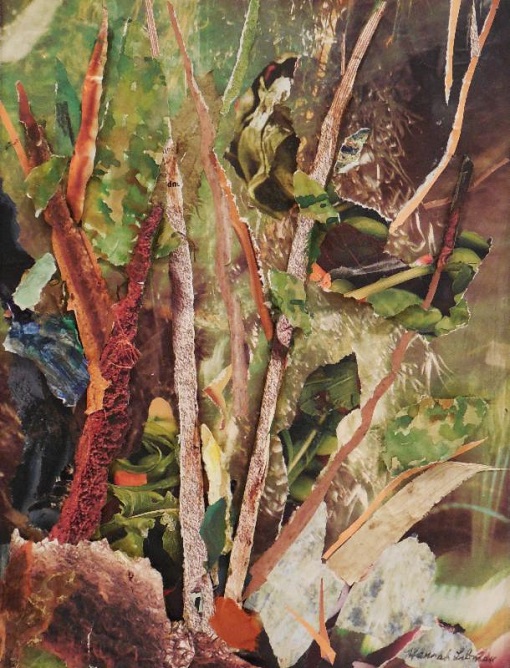
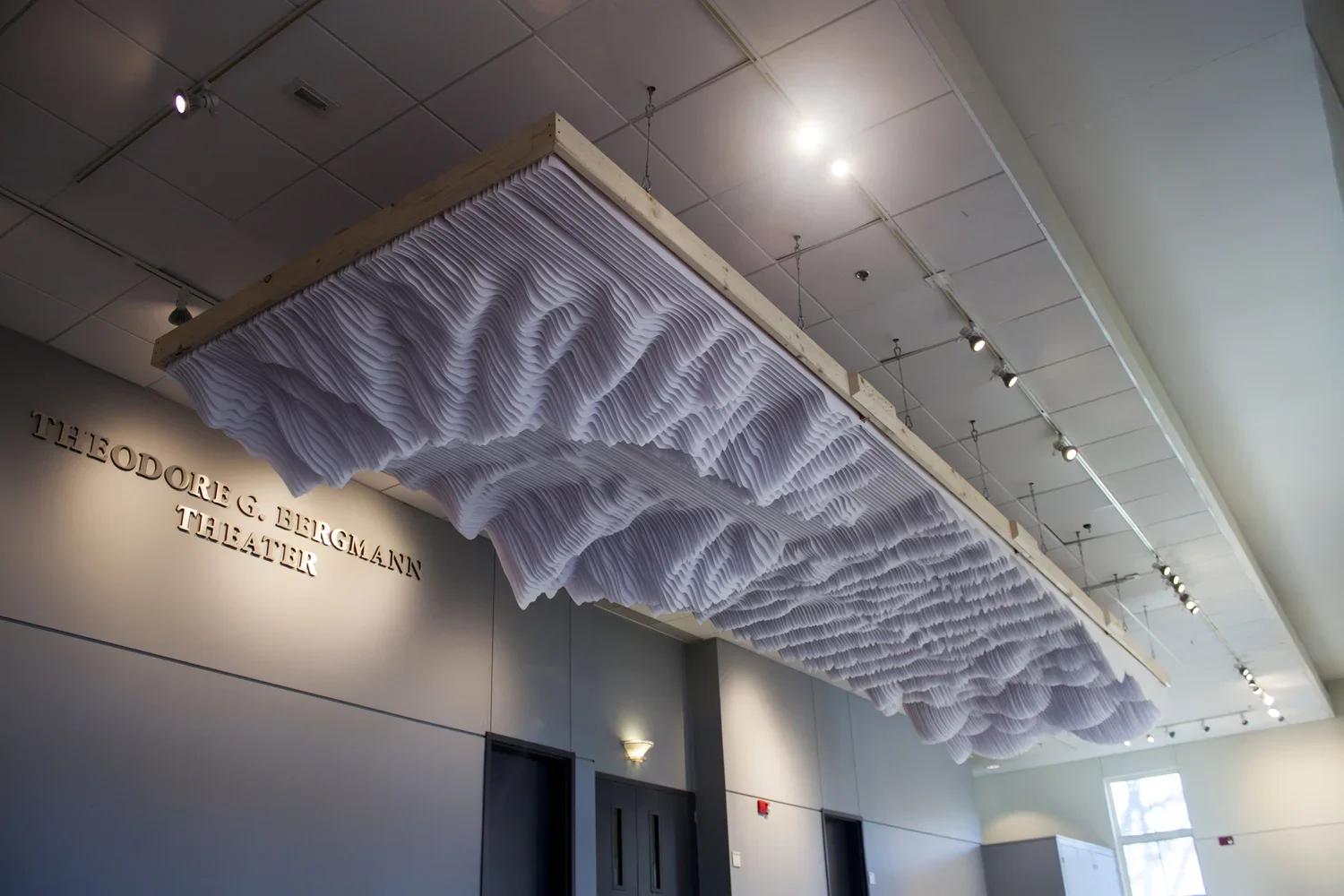
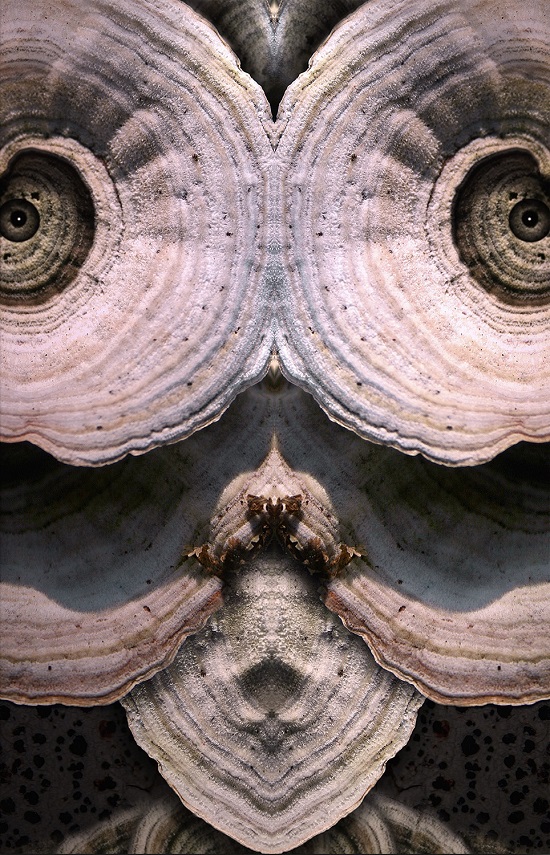 "Green-Eyed Silence'' (digital print), by HARVEY GOLDMAN, in his "Apophenia'' show at Dedee Shattuck Gallery, Westport. Mass.
Apophenia is seeing patterns or connections in seemingly random or meaningless data.
What to do about capitalism in the 21st Century
By DAVID WARSH
BOSTON
"Economist Receives Rock Star Treatment": That was the recent headline on Jennifer Schuessler’s story in The New York Times. The facts bear her out. Thomas Piketty, 42, of the Paris School of Economics, seemed to be everywhere last week. Publication of his 685-page Capital in the Twenty-First Century had been moved up by two months, sales were soaring (46,000 copies so far), a triumphant tour of Washington (meeting with Treasury Secretary Jack Lew) and New York (appearing at the United Nations) has been completed. Encomiums were pouring in. “Pikettty has transformed our economic discourse,” wrote Paul Krugman in the current New York Review of Books. “We’ll never talk about wealth and inequality the way we used to.”
Not bad for an economist who traded an appointment at the Massachusetts Institute of Technology for a job as a researcher for the French government in 1996, when he was 25. “I did not find the work of US economists entirely convincing,” he writes in the introduction to Capital in the Twenty-First Century:
" I was only too aware that I knew nothing at all about the world’s economic problems. My thesis consisted of several relatively abstract mathematical theorems. Yet the profession liked my work. I quickly realized that there had been no significant effort to collect historical data on the dynamics of inequality since [Simon] Kuznets [in the 1950s and ’60s], yet the profession continued to churn out purely theoretical results without even knowing what facts needed to be explained.''
He went home to collect some of the missing facts.
Piketty wanted to teach at the Ecole des Hautes Etudes en Sciences Sociales, the elite institute whose faculty had included many of the foremost figures in the Annales school, including Lucien Febvre and Fernand Braudel – a group of scholars, most of them quantitative historians, that achieved enormous influence around the world publishing in the journal Annales. Economies, sociétés, civilisations (or Annales. Histoire, Sciences Sociales as it is called today).
Piketty got that job, along with time to do the research he wanted, first producing a book in 2001 on high incomes in France since 1901, then enlisting Anthony Atkinson, of Oxford University, in a similar investigation of Great Britain and several other countries. His friend and countryman Emmanuel Saez, of the University of California at Berkeley, produced similar data for the US. The World Top Incomes Database (WTID) is the result. Data on wealth, following the methods of Robert Lampman, of the University of Wisconsin, came next. Starting in 2003, Piketty began setting up the new Paris School of Economics; in 2006, he was named its first head. He resumed teaching and writing the next year.
Piketty’s thesis is set out succinctly on the first page of his introduction:
"When the rate of return on capital exceeds the rate of growth of output, as it did in the nineteenth century and seems quite likely to do again in the twenty-first, capitalism automatically generates arbitrary and unsustainable inequalities that radically undermine the meritocratic values on which democratic societies are based. There are ways nevertheless democracy can regain control over capitalism and ensure that the general interest takes precedence over private interests, while preserving economic openness and avoiding protectionist and nationalist reactions.''
What are those measures? Four chapters in the fourth section of the book draw a variety of policy lessons from the first three parts for a “social state:”
The right solution is a progressive annual tax on capital. This will make it possible to avoid an endless inegalitarian spiral while preserving competition and incentives for new instances of primitive accumulation.
Piketty says he’s left Paris only a few times on short trips since returning nearly 20 years ago. My hunch is that, after last week, it will be a long time before he takes another. He’s left behind a beautiful book, one that will receive a great deal of attention around the world in the years to come. He’s gone home to work on others.
xxx
Michael C. Janeway, a former editor of The Boston Globe, died last week. He was 73. It was he who, as managing editor, permitted Economic Principals to begin in 1983 as a column in the Sunday business pages. I have always been grateful to him, and to Lincoln Millstein, still very much alive, who led the blocking.
David Warsh is a long-time financial journalist and economic historian and proprietor of www.economicprincipals.com
Traumatized by speech and psycho-ceramics
By ROBERT WHITCOMB
‘Father Hoffman mixed personal opinion and church teaching in a way that offended everyone present, causing great harm,” said Prout School Principal David Carradini a couple of weeks ago. He was profusely apologizing for having the Rev. Rocky Hoffman, a host of Relevant Radio, a Catholic radio network, speak to the students of the Catholic high school, in South Kingstown, R.I. Father Hoffman, a member of the conservative Catholic society Opus Dei, spoke against homosexuality and divorce.
His views would have been considered standard Catholic fare only a few years ago, and are still held by many Catholics, and others.
Now, I’m not Catholic. Still, I salute the Church for much of its work, especially for the poor, and, yes, for the quality of Catholic schools. Anyway, we’re in a bad way in America if high-school students are to be prevented from hearing someone else’s views on morality. Where, exactly, is the “harm”? If these kids are seen as imperiled by listening to some priest, then how will they survive in the big, bad world? And how does Mr. Carradini know that the talk “offended everyone present”? (And so what if it actually did?)
Are our kids (and some of their complaining parents) really such lambkins that they can’t take the expression of strong opinions without collapsing in a heap? What’s there to apologize for, Mr. Carradini? Why doesn’t he just bring in some Catholic luminary with more “up-to-date” views as an offset? As they say, the cure for unsettling free speech is more free speech disputing it. And give all the kids debate lessons that nurture the capacity to understand and tolerate other views, including Father Hoffman’s traditionalist views.
Meanwhile, I’d suggest that if you don’t like Catholic beliefs, then don’t be a Catholic. Free will is an important part of the Church’s theology, at least for people from confirmation age on.
In other academic silliness, the student senate at the University of California at Santa Barbara (that cool, rich place) has passed a resolution requiring faculty to issue “trigger warnings.”
As Maria LaMagna reported in Bloomberg View: “Professors would write notes on their syllabi to alert students on which occasions a course’s material will be, say, sexually graphic. Students could then excuse themselves from class without being punished academically.”
Well, I think today’s college students are pretty familiar with sex, graphic or otherwise. They can handle such images. More to the point is that many courses that provide such material are devoid of academic rigor and a waste of time and money, sort of like Brown University’s long joked-about and nonexistent Prof. Josiah Carberry and his discipline of “psycho-ceramics”.
***
Northern Maine is poor, with lots of smokers and obesity, and yet their health-treatment outcomes metrics rank higher than much of the country (especially when compared with the South).
The reasons, summarized by Noam Levy in the Los Angeles Times, include:
•A strong safety net, which provides, among other benefits, more recommended screenings and medical treatments.
•An emphasis on preventive care, aided by Maine’s high number of primary-care physicians.
•Highly coordinated and data-driven care.
•Highly advanced data systems.
•Close collaboration between two competing hospital groups.
•A strong sense of civic obligation, including strong leadership by the public and private sectors.
The glue that keeps this all together is a vibrant sense of community, a sense missing in much of sprawling suburban America, with its subdivisions, gated communities and ever wider divisions of wealth. Mr. Levy quotes Dr. Jack Wennberg, founder of the Dartmouth Institute for Health Policy and Clinical Practice, as saying, “We used to joke that everyone gets along in northern New England because every hospital is separated by a mountain and the winters are long, so we’re happy to see someone.”
Or maybe Robert Frost’s related phrase will do: “Home is the place where, when you have to go there, They have to take you in.” New Englanders may not be the friendliest people in the nation, but, especially like Upper Midwesterners (who are friendlier), they have a strong sense of obligation, both in what their governments should do and what they should do individually.
***
The first words of T.S. Eliot’s poem “The Wasteland” are too often dragged out now. “April is the cruellest month ... ” (breeding tax bills out of ... ) Instead, how about the cheery first few lines, in Middle English, of the prologue of Chaucer’s “The Canterbury Tales”? We had to memorize the prologue’s first 18 lines in school and I’m glad we did, especially after this long winter.
Whan that Aprille
with his shoures soote,
The droghte of March
hath perced to the roote,
And bathed every veyne
in swich licóur
Of which vertú engendred
is the flour;
Or, more realistically, for New Englanders, Hemingway’s line from “A Moveable Feast”: “When the cold rains kept on and killed the spring, it was as though a young person died for no reason.”
Respond via rwhitcomb51@gmail.com
Chris Powell: Riding rails through Conn. ruins

"Appalachia'' (gelatin silver print), by MILTON ROGOVIN, at the Thompson Gallery, Weston, Mass.
By CHRIS POWELL
MANCHESTER, Conn.
Reading the governor's press releases, Connecticut might think that preservation of farmland and prevention of "suburban sprawl" are compelling issues. Riding the train from Greenwich to Hartford gives a contrary impression.
Thanks to Amtrak, such a trip is still possible for those who can deal with the bumps, shuttered washrooms, and clogged toilets. The train windows remain clear enough to reveal a stunning and almost unbroken panorama of economic collapse -- ruined and abandoned factories and commercial properties occupying what might be considered prime locations, adjacent to the railroad and highways and served by all utilities.
If there was really any money in agriculture in Connecticut, hundreds of large farms could fit on the abandoned property that is already cleared as well as inside the abandoned buildings that remain structurally sound. Of course the abandoned properties could be redeveloped as housing as well.
The ruin may be most striking in Bridgeport. While the call letters of the city's radio station, WICC, were chosen for "Industrial Capital of Connecticut," today the "I" would have to stand for "impoverished." New Haven, Meriden, and Hartford, once industrial powerhouses themselves, now consider it a triumph just to tear down a ruined building. Even fairly prosperous towns along the railroad, like Milford and Wallingford, have such embarrassing eyesores.
In any case "farmland preservation" -- government's paying farmers for the "development rights" to their property -- doesn't make agriculture profitable or even sustainable. It only lets farmers withdraw their equity from the land without having to sell it for housing, and thus makes suburban and rural towns even more residentially exclusive, restricts the housing market, and supports prices for those who have housing while driving up costs for those who don't.
Most advocates of "farmland preservation" care far less about sustaining agriculture than about keeping new people out. And while Connecticut's industrial decline is no secret, riding the rails through the core of that decline explodes the premises behind "farmland preservation" and complaints of "suburban sprawl."
The ride shows that Connecticut's problem is not preserving farms or stopping "sprawl"; instead the problem is urban rot. Since the infrastructure remains -- including the railroad, which, while creaky, is still more convenient than cars and buses for getting to New York, Boston, and Philadelphia -- what has made Connecticut's cities so unattractive to people who can afford to live elsewhere and pay taxes in support of government?
For starters are the schools, the worst in the state. But schools are only reflections of a community's population, and city populations are of course overwhelmingly poor and fatherless.
So the big policy question has to be: A half century into the "War on Poverty," with government now providing the poor with food, rent, heat, medical insurance, social workers, ever-longer unemployment compensation, disability stipends, and lately even cellphones, what is making and keeping people poor if not government itself? If the ruined factories along the rail line hint that the answer involves the loss of low-skilled, entry-level industrial jobs, couldn't government find similarly basic work for people to learn with in lieu of unearned welfare benefits? Thousands might be employed perpetually just cleaning up the trash along the rail line and the streets in every town.
Couldn't government enforce standards in school so that people emerged with enough skills to make their own way? Skilled people still might find good employment in any number of endeavors -- like modernizing the whole Northeast rail network. After all, "work, not welfare" used to be a populist and liberal objective. Right now the only consolation of riding the rails through the ruin of Connecticut may be that at least we still have the world's best imperial wars and public employee pension systems.
Chris Powell is managing editor of the Journal Inquirer, in Manchester, Conn.
Comment via rwhitcomb51@gmail.com
Wind and tree

"The Fan Tree'' (oil on canvas), by CLIFFORD ADAMS BAYARD, in the "Three Vermont Impressionists'' show at the Bennington (Vt.) Museum through June 17.
At Tuckerman's Ravine
We seem to gravitate toward whatever season we're not in anymore. Thus hordes of skiers and climbers head for the glacial cirque known as Tuckerman's Ravine, on the southeast side of Mt. Washington. The howling winds blow up 60 feet of snow a year into the ravine from the upper part of the mountain, making the ravine skiable into June. On sunny days, the crowds are already congregating early in the morning to slide down its dangerously steep slopes.
Skiing in the wet, mild air of April on bouncy corn snow evokes a mellowness tinged with melancholy, and extreme sleepiness, at the end of the day. For full drug-like effects, you need to smell wood smoke from the nearest ski lodge.

Painting through pain

"Sometimes All That Is Left Is the Anvil,'' by JAMIE RIBISI-BRALEY, at Monkitree Gallery, Gardiner, Maine, through June 7.
The artist says she works through chronic pain from headaches.

Mrs. Pell's traditionalist exit
rwhitcomb51@gmail.com
Post-theology Easter
We were at old friends for Easter lunch today, most of it held outdoors overlooking greening woods and daffodils and other spring color explosions. If you stayed in the sun, it was warm. Some of the guests had been to church this morning and one of our kindly, generous, funny and alarmingly energetic hosts had even read a lesson from St. Paul then
We had lamb, which was delicious but that we'd never prepare on our own, because of animal-rights sensibilities and heart disease. But the beast was dead; too late to save it, and it was delicious.
Of the around 15 people there, I'll bet no one believed in the theology being celebrated. They believed, as Joan Didion put it, in "the sound of The Book of Common Prayer'' while tabling the miraculous events described in the New Testament.
rwhitcomb51@gmail.com
Easter color in New Hampshire
 "Little Flowers Under Moonlight,'' by WALASSE TING, in the "Abstract & Modernism'' show at the New Hampshire Antique Co-op, Milford, N.H., through Aug. 31.
Pulling on your eyes

"The Owl's Failure'' (acrylic, hand-painted collage on canvas), by IVA GUEORGUIVA, at her show at the Samson Gallery, Boston, through May 31.
Last week I heard David S
Wind-dried wood
I read an article the other day in The Providence Journal about a cotton-textile mill in West Warwick, R.I., called the Lippitt Mill. The charming old building is made out of wood.
There are wood structures in New England going back to the 17th Century. In few places in the world can such wooden structures last that long because of rot and insects. But New England's wind and cold winters preserve the wood, of which we still have a big supply. Another reason not to complain too much about our challenging climate.
xxx
The president of my college alma mater (Dartmouth) has given a fine speech about the need to stop the very small --- but all too loud -- members of that community who engage in bad, fraternity-idiot behavior. Because of stories going back to the '20s and '30s and the rise of Winter Carnival then, and later, the very funny if misleading ''Animal House'' stories allegedly based in part on hijinks in the Alpha Delta Phi House at Dartmouth, the college has developed a reputation for outrageous behavior by a few undergraduates.
The new president of Dartmouth, Philip Hanlon, was himself a member of A.D., before going on to Cal Tech for his doctorate and later serving as provost of the University of Michigan. So were my father and grandfather, two soft-spoken gentlemen who I never saw drunk. ( I'm a lifelong expert on alcoholism from the other side of my family.)
But writing as a member of a fairly demure fraternity myself back in the '60s, and watching closely what happens at other "elite colleges,'' I can say that Dartmouth gets a unfair share of the blame for bad behavior committed by a tiny percentage of male students.
Unfortunately, every institution has branding assets and deficits. Dartmouth long ago was branded as rowdy, even as, say, students at the University of Chicago (where an undergraduate recently died of alcohol poisoning) were branded as neurotic and hyper-intellectual.
It takes a lot of time and lot of money to change an image, however misleading it may be. Being a student at Dartmouth mostly means doing a lot of academic work (with no pre-exam reading periods in which to catch up unlike at most of its peer institutions) forced by its intense trimester system. But that's not nearly as good material for the news media as beer-pong tournaments.
Perhaps the college needs a Don Draper type from Madison Avenue to rebrand the place for the new international academic mass market.
A pier onto our memory

"Departure,'' by WENDY PRELLWITZ, at the Chandler Gallery, Cambridge, Mass., in its Direct/Indirect'' show of drawing on top of prints and printing on top of drawings through May 9.
Layers of reminders

"#14 Swimmers'' (painted wood sculpture), by MARK LITTLEHALES, at Ann Coleman Gallery, Wilmington, Vt.
I swim most mornings, usually early, It would seem to be boring going back and forth staring at the lane lines below. But repetitive motion in 84-degree water is remarkably soothing. The paradox of exercise is that up to a point, it gives you more energy than it subtracts. And you get into a kind of Zen state. I find the idea of sweating in a gym with a lot of other people (with whom you might have to talk) off-putting. Running is better in that you're outside, with plenty to look at, especially the changing seasons, getting vitamin D from the sun and so on. But the knees go. (I was quite a runner in school and so had a head start in the knee-destruction business.)
It's one of those mornings that reminds us of weather's energy in New England. Yesterday it was warm and tropically humid. This morning snow and ice lay on the ground, and I had to pour windshield-wiper fluid on car windows to speed my exit. Here we are, close to the Gulf Stream but wide open to the winds from Hudson's Bay.
But the buds and blossoms are still swelling, and out of the wind, the sun warms your face. The flowers seem to be thriving this morning; indeed the thin layer of snow may have protected them from being flash-frozen. And the layer of moisture can only help them once it warms up a bit.
But our little rescue dog from San Antonio, whose genes probably include those of Brittany spaniels (he has freckles), wanted his man-made coat back on, as a Manhattan dog would.
Meanwhile, in eastern Ukraine, the Russians continue their invasion, reminding us that dreams that dictators in Europe would no longer cross borders are dead, as if Putin hadn't already given plenty of warning that he would try to reestablish a variant of the Soviet empire that murdered so many people. But then, he has said the end of that empire was a "catastrophe''. And this former KGB counter-espionage officer himself has ensured that political foes' life expectancy is below the average.
Then there's the phenom of countries getting smaller. There's an outside chance that might happen in the United Kingdom. David Speedie, a Scottish native, gave a talk last Thursday at the Providence Committee on Foreign Relations speculating that there's about 45 percent chance that the Scots will vote to split off from the U.K. in a referendum later this year. He also suggested that Scotland would do very well economically by itself, in part because of North Sea oil and gas and f its growing tech sector. ("Silicon Glen'').
That seems unlikely to me, given the wealth creation based in the Home Counties around London. That wealth, I'd guess, would be less available to Scotland if it were independent and most Scots know that. Still, the romanticism of the Scots is feeding the independence movement, as is, of course, resentment about English arrogance, real and perceived. Romanticism is something I'm well aware of from my own crazy (and often drunk) Scottish relatives. They read too much Robert Burns and believed in many conspiracies. One curious one was that the Pope and Stalin were allies.
Still, when you enter Scotland, you pick up their sense of nationhood, which makes the expression "the Scottish nation'' plausible. I remember when there a bit of a sense of that when you'd enter Quebec, back in the '60s. You'd feel more that you were entering Quebec than entering Canada. Of course in those days it was as easy to drive into Quebec as it was to drive from New Hampshire across a Connecticut River bridge into Vermont.
With all the information technology we have these days, with all the ability to transport ourselves via electrons, in many ways we seem more constrained. A good side, I supposed, is that we are harshly denounced for engaging in such bad habits as smoking (which seems to be one of the few pleasures left to the unemployed poor, whatever the vast cost of cigarettes), drinking while driving and so on. But travel has gotten tougher and the very same information technology that permits such time wasters as Facebook threatens to eliminate most jobs, and a lot sooner than many might think.
Rich are 'at home in New England'
For a bit of escapism, look at a book called At Home in New England: Royal Barry Wills Architects 1925 to Present, by Richard Wills with Keith Orlesky.
It's an orgy of pictures of beautiful houses in our region. The only problem -- if this is a problem -- is the houses, as often is the case of such coffee-table books, are generally only obtainable for the top richest 1 percent, in our increasingly stratified society, which is starting to remind me of pre-revolutionary France.
"Royal'' indeed!
And 'so'?
One of the compensations of aging is being entertained by changing language. The accents of people in the movies and in own family who grew up in the 1910-1940 period sound a lot different than most American accents now. A lot of the regionalism has been washed out by mass media. My New England relatives sound less New Englandy, my Southern ones less Southern,. And then there are such quirks as the overuse of "like'' and, in the past decade or so, the tendency of people under 4o to begin many sentences with "So.''
As ice out approaches

"Squam Lake'' (N.H.) , by KATE CUTLER, at Patricia Ladd Carega Gallery, Center Sandwich, N.H.