
Vox clamantis in deserto




James P. Freeman: A just appraisal of the '80s
By JAMES P. FREEMAN
“We’ve got no future, we’ve got no past
Here today, built to last…”
The Pet Shop Boys--“West End Girls”
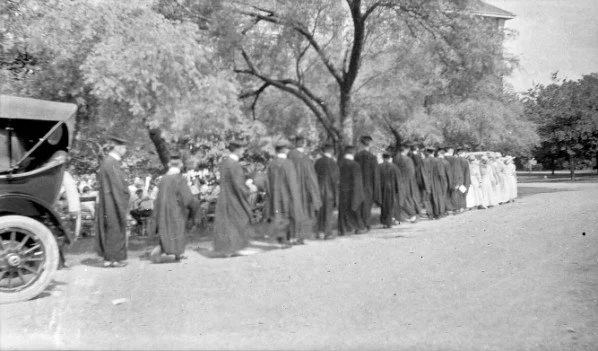
A wit once said we live in an era of “re’s.” Today we regift, repurpose and reboot. But it is the wise who revisit. As did over 100 on a sweltering afternoon last summer on the campus green of Providence College for the 25th reunion of the Class of 1988.
While it was a celebration of silver tokens and conversation among graying scalps, it also afforded the opportunity to rediscover the Excellent Eighties and reflect upon contemporary culture.
The '80s still command little respect, as evident from the recent Radio Shack commercial mocking the era—its icons and gear—as obsolescent old-school relics. Indeed, Gen Xers (from 1965-1979, 80 million) are still overshadowed by Baby Boomers (1946-1964, 76 million) and their incessant self-indulgent generational ownership or a kind of “cultural hegemony.” The recent 50-year commemorations of the Beatles conquering America and the JFK assassination were given weighty television documentaries. By contrast, the seeming superficiality of the '80s are relegated to kitschy nostalgia programming on music channels.
But Daniel J. Boorstein, writing for Life Books in 1989, believed that the 80s saw “accelerating contrary movements home and abroad.” It was a decade of dichotomy that could live with cultural contradictions and synthesize the schizophrenia of silly and serious. The Brat Pack and Warsaw Pact. Tom Cruise and cruise missiles. Cher and Chernobyl.
Totally tubular!
As children, its members were born into the Space Age and Information Age of the '60s, the warp-speed mobility of man and data. By 1988, ET could phone home in analog and digital.
The formative years, however, were the 1970s, where disco and discontentment settled in amidst the thick stagnation. No wonder, then, that from this period emerged a pope, prime minister and president who would set the tone for the upcoming decade and prove to be towering 20th Century figures.
For students, Ronald Reagan was the central figure of the decade. The class of ’88 cast its first votes for president in 1984; it would mark the last time young Americans voted Republican in large numbers (with Reagan getting slightly under 60 percent of the vote.). The president’s stark good-vs.-evil persona paralleled the hot whites, midnight blacks and sharp edges of the Eighties. Gone were the browns, burnt oranges and soft shapes of the prior decade. It was a projection of power. Super powers and power suits.
It was Reagan who anticipated and advanced the shift of power from Washington to Wall Street. Gordon Gekko would become the most quotable financial icon only months after the then-largest point drop in the Dow Jones in 1987. By graduation, Yuppie finance figured conspicuously in literature with The Art of The Deal and Bonfire of the Vanities on non-fiction and fiction bestseller lists.
But as Wall Street was being erected in lower Manhattan a wall was about to be dismantled in the streets of Berlin. Reagan, often ridiculed as a warmonger, famously urged Mikhail Gorbachev to “tear down this wall” in June 1987 and lived to see the fall of the Berlin Wall in 1989, without so much a shot being fired. It would mark the end of a decade exquisitely, if not ironically, begun with shots on goal between the USA and USSR during the 1980 Winter Olympics.
The largest conflict proved to be between Iran and Iraq, a war that presaged future regional conflicts. In April of 1987, Iraqi Ambassador to the U.S. Nizar Hamdoon visited a political-science class at the college and warned of the greater effects of the war. One of the 20th Century’s longest conventional wars ended in August of 1988—the year the stealth bomber was unveiled -- with over 1.5 million dead.
For one class member, war would be at the center of a career. Michael P. Sullivan, former director of rule of law for the U.S. State Department, was awarded a personal achievement award by the national alumni association. He had visited many of the world’s hot spots: Bosnia-Herzegovina, Iraq and Afghanistan.
Awesome dude!
The '80s, however, were more than money and magniloquence. As the century waned, it weighed the contrasting philosophical musings of Jean Paul Sartre’s amoralism with John Paul II’s absolute morality. As the century’s longest serving pope, no other world figure would better articulate with a severe clarity the dignity and sanctity of life. Coupled with Britain’s Margaret Thatcher and Reagan’s leadership, the advancement of freedom globally was also moving fast.
As the only American college administered by the Dominican Friars, theology played a pivotal role in everyday life as did sports, particularly basketball in the spring of 1987--the Final Four. As juniors, they would seek pardon for the men they admired most: Rick Pitino, Billy Donovan and Ernie DiGregorio as the father, son and holy ghost.
Much is made of 80’s pop culture and Madonna’s Material World. Much had to do with the new technology allowing greater access in the distribution of content, particularly with music and movies--where forwarding the experience, in order to rewind it, became a newfound joy. This would be the first generation to embrace the individualism of Sony Walkman’s and rental VHS tapes, along with the communalism of Live Aid and Midnight Madness theatre showings, with equal enthusiasm.
MTV, the CD and synthesizer rescued a dying music industry. In 1982 there were no commercially released compact discs; by 1989 over 150 million were sold. By the end of the decade with VCRs blinking “12:00,” over “sixty percent of America fast-forward[ed],” according to Life Magazine. Dialogue and lyrics, as a consequence, would become more memorable.
In film, youthful indiscretion and accidental discovery played by effervescent capers and exultant crusaders defined the era. Unlike the '70s, characters wanted to live in the decade, not escape from it. Enter Ferris, Joel, Duckie and Rambo.
It was a time of Michaels… as in Jackson and Jordan.
But Michael J. Fox’s characters best personified the decade. A trilogy of films The Secret of My Success, Bright Lights, Big City, Casualties of War, saw dreamy optimism perish to jaded reality. Sequenced in 1987, 1988 and 1989, together they encapsulate the era from ambition (as a corporate buccaneer) to anxiety (as a writer) to asymmetry (as a warrior).
Then, in 1992, came the election of the first Baby Boomer president. And the '90s gave the world Clinton and Casual Fridays. Aspiration melted into angst. The world seemed safer, if not simpler, in a bi-polar globe, East and West.
The Class of ’88, in spite of it all, is remarkably composed. There were no existential crises, the kind embalmed by The Big Chill—there those Boomers go again... If anything, members reimagined a world before wardrobe malfunctions, Facebook creeping, derivatives and mobile apps. And 9/11.
A just appraisal of this period reveals that with the fun and frivolity there was substance and solicitude. Rubik’s Cubes and rubric conservatism. As Boorstein concludes, the “remembered record” for the' 80s will “also reassure us of the random vitality of Americans and of the human race.”
Wicked cool!
James P. Freeman is a former columnist with The Cape Cod Time.
Complication and opaqueness breed corruption
Respond by rwhitcomb51@gmail.com
“In its majestic equality, the law forbids rich and poor alike to sleep under bridges, beg in the streets and steal loaves of bread.’’
-- Anatole France
Ambrose Bierce famously defined politics as the "strife of interests masquerading as a contest of principles. The conduct of public affairs for private advantage.’’ There are people of principle in politics, but Bierce’s statement is a pretty good generalization. The Founding Fathers would have generally agreed with it.
The Supreme Court’s recent McCutcheon ruling, in which it struck down overall limits on campaign contributions by individual donors, is much less important than many have made it out to be. Yes, it’s true that yet more money will flow into the campaign cycle. And, yes, America’s oligarchs will continue to accumulate power, aided by the general public’s civic disengagement.
But money flows around campaign-finance laws as water flows around rocks in a river. I doubt if any limits have all that much effect. After all, look at the record since Watergate-era reform laws went into effect. There are so many monetary methods by which rich folks can influence politicians to help maintain or expand donors’ wealth and power. And as government has gotten bigger, there’s more and more reason to buy influence in it.
A couple of things, however, could level the playing field a little. One would be tougher (not more) laws mandating transparency in campaign gifts. If more voters could find out who’s giving what to whom, they’d be better able to make evidence-based decisions on Election Day. Back when I was a newspaper editor, I tried to find out who was funding an op-ed writer and/or the “public interest’’ group he/she was writing for and then note it at the bottom of their essays. Much of the time they turned out to be pushing an economic self-interest -- e.g., the climate-change deniers were paid by oil and coal companies, those fighting medical-malpractice reform were funded by trial lawyers’ associations. But all too often I gave up trying to find out. Deadlines!
Indeed, news organizations (most are understaffed) rarely try to discover the paymaster behind opinion pieces. And it can be very difficult to find out, though such organizations as Guide Star, FollowTheMoney.org and the Sunlight Foundation can sometimes help cut through the smoke from the smoke machines of economic royalists.
Another thing that could help reduce the prostitution in Washington is vastly simplifying the tax code, which has been endlessly complicated to please economic interest groups and do social engineering. The more complicated – and the perception it can be complicated even more – the tax code, the more donors are drawn to bribe members of Congress to manipulate it to the donors’ advantage.
Enacting a modified flat-tax system would dramatically reduce campaign corruption and free up vast amounts of time now spent to game the impenetrable code that Congress and the White House have given us over the decades. (Don’t blame the IRS – they’re just following orders.)
Likewise with other laws: The more complicated they’re made, the more campaign donors bribe elected officials to manipulate them and the regulations to enforce them. Complication favors corruption.
Finally, the majority of the public could, for a change, vote. Before that, they could study the issues, and find out who’s paying whom. But they probably won’t bother.
xxx
Let’s laud Rep. Tim Murphy (R.-Pa.), a clinical psychologist, for pushing what would probably be the biggest improvement ever in the federal government’s support for programs to address mental illness. It’s a complex measure but two elements stand out. One would put federal support behind court-ordered treatment of certain severely ill people (bi-polar disorder and schizophrenia victims particularly come to mind). Most states allow, in varying degrees, this sort of mandatory treatment, which is often the only thing that works.
The other thing is easing the disastrous federal law of 1996 that has made it almost impossible in many cases for family and other caregivers of mentally ill people to get actionable medical information on these sick people – and thus can make it almost impossible to treat them. Of course, this bleeds into the rest of the health-care system: Think of how many more overtly physical illnesses stem from mental illness.
xxx
How wonderful finally to be able to walk around outside without four layers of clothing, to see a few more patches of green grass, more crocuses and even daffodils every morning, albeit on south-facing slopes. As the writer Bill Bryson noted, New England’s beauty is undermined by the difficulty of strolling in it for several months of the year. I say that an old person for whom harsh weather becomes more inconvenient every year. Still, if winter weather slows the arrival of the Ebola virus, I’ll take it. Colder places are generally healthier places.
Robert Whitcomb is a New England-based writer, editor and business consultant.
Maple-tree rain
The maple trees are sprinkling those little red things on the sidewalks so you know that we're approaching high spring.
David Warsh: Jury-rigged parts of ACA might succeed
BOSTON
For all the political controversy surrounding the rollout of the Affordable Care Act, the remarkable thing is how few persons are affected by it. The first annual period of open enrollment ended last week; 7.1 million persons have signed up.
Never mind the political bickering about the composition of the group – it is inside-baseball stuff, at least until plans begin setting their 2015 rates, early next year. Never mind the more interesting question of why the implementation of the program was so badly botched. (Why are governments, at least in the U.s, so generally bad at buying information technology?)
Even at its flood, expectations are that as few as 25 million previously uninsured persons will take advantage of the act.
In contrast, more than 150 million Americans are covered by insurance purchased by employers. Another 49 million persons are enrolled in Medicare, because they are 65 and older.
In other words, the ACA controversy is about bringing the poor and the relatively powerless into the health-care system, partly out of considerations of fairness, partly in hopes of reducing the overall cost.
So why the ruckus? Republicans have feared from the beginning that the measure is a Trojan Horse, concealing plans for a single-payer system run by the federal government. And indeed, many early supporters of the Obama administration’s health care restructuring initiative were hoping for just that.
For instance, New York Times columnist Paul Krugman wrote last week that the ACA is “a Rube Goldberg device, a complicated way to do something inherently simple.” To extend Medicare-style insurance to the uninsured, he said, “the government could have simply sent a letter saying ‘Congratulations, you’re covered.’”
Instead, he noted, the ACA requires individuals and companies to go online or make a phone call and then make a complicated choice among options that depend on the presence or absence of subsidies. A lot of things could go wrong along the way, Krugman said.
More interesting to me is the camel’s nose that is the individual mandate. There is a big difference between giving citizens health care as a right and requiring them to buy it as a responsibility – and then subsidizing those who cannot afford the most basic plans.
The individual mandate was, you’ll remember, a major issue in the Democratic primaries in 2008. It had been the basis of Gov. Mitt Romney’s successful health-care reform in Massachusetts, three years earlier. In 2008 it was then- Sen. Hillary Clinton who proposed enacting an individual mandate, and then-Sen. Barack Obama who resisted the idea – until he won the nomination. Then he hired her advisers and took over her position.
Two years later, in 2010, the Democratic majorities in Congress passed the ACA. Citizens would have to show that they were insured, by their employer or by the government, or go to the exchanges to insure themselves.
The measure was eventually structured without a “public option” that would have allowed purchasers to simply buy into Medicare – a sop to the large and powerful private insurance companies that have grown up since World War II. It was then that Congress, reluctant to permit manufacturing companies to raise wages carefully regulated under wartime controls, instead doled out tax breaks to firms that offered workers health insurance.
Over the next 60 years, workers grew accustomed to generous company-sponsored health plans that seemed to cost them little, even though cash wages clearly were reduced somewhat as a result. And corporate benefit offices grew expert at negotiating with insurance companies, doctors and hospitals to keep costs down.
Here’s where the healt- care exchanges created by the ACA come in. From the beginning, there’s been a problem with the name. Massachusetts called its exchange “the Connector” (its organization, but not the name, became the model for the ACA). Jon Kingsdale, a high-level consultant who was its founding director, now prefers to call exchanges “marketplaces.”
An insurance exchange is “a virtual insurance store,” Kingsdale wrote in January in The New England Journal of Medicine. Like any retailer it must decide which products (qualified health plans) to offer, which suppliers (insurance carriers) to work with, how to market its wares, and how to help customers compare options and select a product.” It must seek to standardize plans so that they may be realistically compared, strive to keep administrative costs low, encourage competition, and endeavor to improve medical care. A tall order, considering the relatively small numbers of persons who will obtain their insurance through exchanges – at least at first.
But employers, no longer the powerful oligopolistic producers that they once were, have begun turning to private exchanges to relieve themselves of the expense of negotiating employee health plans – initially for their retirees. IBM Corp., DuPont Co. and Time Warner Inc. were among those that last year turned to a Utah-based Medicare supplemental coverage exchange to administer benefit plans for retired workers.
Through such private-public collaborations, state exchanges in time may garner as much power to negotiate with insurance carriers, hospitals and physicians as corporate benefit offices once enjoyed. Corporate health care plans, already shrinking, may eventually become much rarer – just as defined-benefit pension plan gave way to defined-contribution plans and 401(k) accounts in the 1990s.
At that point, individual decision-making under the individual mandate may become a potent force in the market place, just as it is in the automobile-insurance market. I have never covered the immensely complicated health-care industry. But I know enough economics to think that locating the decision about which insurance to purchase closer to the ultimate consumer could ultimately be a good thing. Bronze? Silver? Gold? Platinum? Faced with an overall budget constraint, persons ordinarily can be counted on to choose what’s best for them. The individual mandate and private-public marketplaces that now seem jury-rigged may in the end turn out to be the most important parts of the mechanism.
David Warsh is principal of www.economicprincipals.com, an economic historian and long-time financial journalist.
Chris Powell: Groucho was right about 'student athletes'
By CHRIS POWELL

MANCHESTER, Conn.

Having led the University of Connecticut men's basketball team to an improbable
national championship this week, point guard Shabazz Napier was defiant. "This
is what happens when you ban us," Napier growled, referring to the National
Collegiate Athletic Association's refusal to let the team participate in last
year's tournament because of academic deficiencies.

It's great for UConn fans that Napier and the other players who stayed with the
team may have taken it personally, but they had not been the target of the ban;
the university itself had been, for taking advantage of NCAA standards that were
weak to begin with.

Indeed, the academics of the two major college sports -- basketball and football
-- are increasingly "academic" themselves. The whole starting lineup of the team
the UConn men defeated for the championship, the University of Kentucky
Wildcats, is expected to quit school shortly to enter the National Basketball
Association draft, and all five are mere freshmen.

Many of the best college basketball and football players give interviews
signifying that they are challenged to assemble a simple grammatical sentence.
They're not in college for the book learning but to earn a chance to get
recruited for the professional leagues. Even the most NCAA-compliant colleges
structure the curriculums of their top athletes to go easy on their minds and
still surround them with tutors. For many of those who actually complete four
years, the most that can be expected is a degree in sociology.

This doesn't mean that the college players don't work. Most may work far harder
than most other students. It's just not academic work but rather physical and
character work resulting from enormous discipline -- and
for many it may prove more valuable than anything they could have learned in
class.

That may be the lesson of the UConn men's basketball program under Coach Jim
Calhoun and now Kevin Ollie. Few coaches graduated more players to professional
and personal success than Calhoun did, whether or not they left UConn with a
degree.

Are college athletes being cheated -- cheated out of education or the money they
help their colleges earn? If they are cheated out of education, it is a choice
they made before they got to college, for which they bear responsibility. If
sports beckon them too much, it is a mistake originating at home and in high
school.

As for being cheated out of money, there now is talk of unionizing college
athletes as if they were college employees. This will bump up against the NCAA's
tight restrictions on how players can be compensated -- restrictions that
increasingly seem meant not to protect players against the taint and temptations
of professionalization but rather to reserve all sports revenue for NCAA-member
colleges themselves.

For the colleges that are most successful in the most lucrative sports, the
concept of the student-athlete is increasingly a myth. Maybe it gives the public
some assurance about ideals in higher education, but no more so than it serves
higher education's economic objectives. So why bother trying to sustain the
myth?

Why not acknowledge that college basketball and football are the minor leagues
for the pros and let young men and women play in them without regard to their
academic standing -- even without being students? An age restriction on players
might accomplish as much as the pretense of academic restrictions.

That pretense is getting old. It was old in 1932 when
Groucho Marx portrayed a college president in "Horse Feathers" and scolded the
resentful faculty: "This college is a failure. The trouble is we're neglecting
football for education."

If the alternative to football and basketball is going to remain mere sociology,
Groucho was right.

Chris Powell is managing editor of the Journal Inquirer, in Manchester, Conn.
Piscatorial Pawtucket
 A mosaic painting by JESS REGELSON, submitted for the Fine Art and American-Made Craft Show and Sale at the Arts Market Place in Pawtucket, R.I., next Sept. 20 and 21.
Window on the web

"MiddleWay 2014'' (flo-jet cut stainless steel), by DEAN SNYDER, in his April 26-June 20 show at Cade Tompkins Projects, Providence.
Spring flowers and money
 "I Dreamt I Saw a Clown Dancing Over My Grave'' (brown photogram and monotype), by CHARLOTTE KAPLAN, at Brickbottom Gallery, Somerville in Brickbottom Artists Association Members' Spring Exhibition.
April 4, 2014
Gray and damp but definitely spring. I even saw some daffodils on a south-facing slope and some tufts of green grass encouraged by the warmth from the sidewalk next to it. Soon the pollen will have us wheezing.
New England is beautiful but can be so difficult to walk in during winter. As Bill Bryson, who moved from Hanover, N.H., back to England, notes that the latter's weather can be dreary but at least you can easily walk outside on most days. What a luxury to be able to stroll around outside just wearing a sweater (and pants, of course). And open sidewalks!
Now I see all the things that must be done in the yard -- last fall's brown, wet leaves to be raked up, the compost pile attended to, and so on. We're too poor to hire yard-work companies employing illegal aliens to do the work (or to get house cleaners to come in vacuum our decrepit house). We do have to hire people, at great expense, every two or three years to come in and attend to the basement after a heavy rainstorm. These deluges seem to be becoming more frequent.
***
I think people are too excited about the Supreme Court's McCutcheon ruling this week opening up Washington to yet more campaign cash. For one thing, money will always flow around campaign-finance-law barriers, as water flows around rocks in a creek.
For another, this law makes it a tad easier for the political parties to raise money. That might mean that individual rich donors seeking to further enrich and empower themselves and their families yea unto generations might have relatively less power compared to the parties. And political parties, of necessity, must be coalitions and thus less extreme than the increasingly arrogant individual donors.
Toughen transparency laws! It's far too easy to hide contributions and so we often don't know who might be influencing our politicians. There should be tough penalties under the criminal code to discourage such hiding.
Go to a flat tax! Congress's propensity for endless complications of the tax code causes campaign-finance and other corruption as the powerful seek to manipulate and complicate it even more to their own benefit.
Finally, the biggest problem of all is civic sloth. The majority of people who could vote do not. Nor do they make the effort to educate themselves about politicians and policies, including which rich folks are buying influence, be it Wall Street bankers for the Democrats or coal executives for the Republicans. A good example is the Affordable Care Act. A large percentage of the population were ignorant of its most basic elements, especially the health-insurance exchanges, right up to this week, although it has been reported about daily since 2010 --- and intimately affects almost everyone.
By not rousing themselves for 20 minutes to vote they have left money and power (but I repeat myself!) to people with the energy to use it to increase their money and power even more. The latter all vote and can do things to get many others to vote in the oligarchs' interest.
xxx
via rwhitcomb51@gmail.com
There's a book of journal entries by Alan H. Olmstead from the '70s called Threshold: The First Days of Retirement, which I think reviews eloquently the confusions, joys and sadnesses (including the financial woes) of life after you leave your main job. One of the predictable but well written observations is that whatever one did over the decades of a "regular job'' had virtually no effect on the world. The pleasure of the job has to be just the act of doing it.
Another post-retirement rule is that you should never drop by your old workplace after retirement. To do so would be just another irritating distraction for the people still there, who are even more understaffed than when you left.
xxx
For a suspenseful, strange and brilliant conversation about life, death and religion, read Paul F.M. Zahl's latest book PZ's Panopticon: An Off-the-Wall Guide to World Religion.
High-speed evolution

"The "Bottom Falls Out'' (pastel, colored pencil), by JUDITH COOPER, at the Lexington (Mass.) Arts and Crafts Society.
Everything is animated
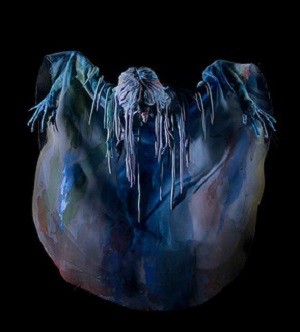 "Eager'' (video still from stop-motion, clay animation video with sound), by ALLISON SCHULNIK, in the "Allison Schulnik/Matrix 168'' show at the Wadsworth Atheneum Museum of Art, Hartford, through May 4.
Moment of truth for the West
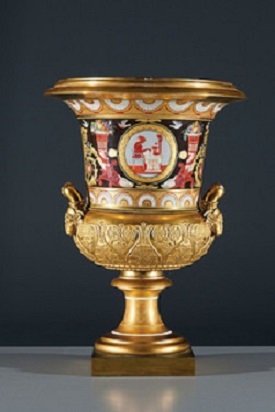 At the Museum of Russian Icons, in Clinton, Mass., in the show "The Tsars' Cabinet,'' which highlights 200 years of decorative arts under the Romanov dynasty. Russian oligarchs around Vladimir Putin also love to collect these items.
(Respond via rwhitcomb51@gmail.com)
In September 1938, at the Munich Conference, Adolf Hitler promised French and British leaders, who felt compelled to appease him, that Czechoslovakia’s mostly German-speaking Sudetenland region would be ”my last territorial demand in Europe.’’ Within a few months, of course, the Nazis occupied the rest of Czechoslovakia and then invaded Poland.
Vladimir Putin is a power-mad political mobster of extreme cynicism and considerable paranoia, albeit not the world-historical sociopath that Hitler was. I have little doubt that the Russian dictator plans to try to seize more land in eastern Europe, perhaps part of Moldova and all of Ukraine and not just the eastern part, where, he and his associates like to say, they might need to “rescue’’ Russian speakers from virtually nonexistent “mistreatment’’. In the same way, Hitler often cited the need to “rescue’’ German speakers who lived in countries that Hitler wanted to seize in the pursuit of his “Thousand Year Reich’’.
Putin, like Hitler, seems obsessed with “encirclement’’ by perceived foes. Of course, most people in neighboring nations, who see close-up what goes on in Putin’s kleptocratic police state, would certainly not want to be absorbed by it. Meanwhile, why don’t more journalists and others note that Russia is far and away the largest country by square mileage. Without the powerful vector of Russian imperialism (which includes Soviet imperialism), it might seem passing strange that Russia would want/need to get even bigger.
But for a thug, no power or money or acreage is enough. Thus former KGB official Putin called the collapse of the Soviet Union “the greatest geopolitical catastrophe of the 20th Century.’’ He’s talking about a regime that murdered tens of millions of people and that for a couple of years was a Nazi ally.
But a regime as nasty as Putin’s is not exactly good for business investment, and so Russia, for all its size, remains remarkably weak, if aggressive. Of course, the Chinese regime is also corrupt and brutal, but China has an entrepreneurial and disciplined people who have made the country an economic powerhouse anyway. The Russians, burdened by bad government and the associated alcoholism, despair and fatalism, and thus without a vibrant, diversified entrepreneurial culture, don’t have it. Without copious supplies of oil and gas, they would hardly have an economy at all.
Those fossil fuels give Russia a lot of power to get temporizing Europeans to tolerate Russian imperialism. It’s yet another reason to move faster to home-grown renewable energy – and gas exports from the U.S. What will it take to get the Germans, etc., to accept some short-term pain in return for the long-term security that would come from the demise of Putin’s dictatorship? That short-term European pain could include a cutoff of Russian gas supplies in response to sanctions on the Putin regime.
Many of Putin’s cronies and maybe the dictator himself have Riviera real estate, bank accounts, money-laundering operations and other assets in the West. Indeed, something that the West has going for it now that it didn’t have in Soviet days is that the Russian regime and the former Soviet functionaries who stole state assets under the drunken Boris Yeltsin have so much property abroad. And Russian oligarchs like to travel in and indeed live in the West. They should be squeezed very hard.
The Russians have far more to fear from tough Western sanctions than the West has to fear from the Putin regime. The question is whether the West has gone too soft and complacent to act firmly.
The sanctions by the Obama administration to squeeze some of Putin’s fellow mobsters are a start but far from enough. And the Europeans have not yet shown much backbone. Rhetoric is cheap. Western security demands that everything possible be done to weaken Putin’s regime. Now.
When George W. Bush did little when the Russians invaded tiny Georgia, a democracy, and stole some of its land, it emboldened Putin, who, like most bullies, is quick to sense weakness. He probably laughed his cynical laugh when Bush said early in his presidency that he had “looked into his {Putin’s} soul’’ and saw a man he could trust.
NATO must step up its military assistance to members Poland and the Baltic Republics and provide arms, air-defense technology, military intelligence and other defensive military support to Ukraine to make Putin think twice before marching on Kiev.
In 1956, President Eisenhower did virtually nothing when the Russians moved in to quash the Hungarian Revolution, killing tens of thousands of people. In 1968, President Johnson did nothing when the Russians quashed Czech attempts to wrest themselves from Soviet/Russian dictatorship. In 2008 President G.W. Bush did virtually nothing when the Russians invaded Georgia and stole some of that democracy's land. But these days, we do have potent weapons to discourage further Russian expansionism. But they require our will and patience.
Meanwhile, many Ukrainian leaders must profoundly regret that their nation gave up its nuclear arms in 1994 in return for security guarantees from the U.S., Britain and Russia. The hope then was that Russia would not go back to its traditional oriental despotism. One of Russia’s fellow tyrannies, Iran, which is hurrying to make nuclear bombs, will take a lesson from the Ukrainian crisis.
Robert Whitcomb (rwhitcomb51@gmail.com) is a former editor of these pages and a Providence-based editor and writer. He runs the www.newenglanddiary.com site. He is a former editor at the International Herald Tribune and The Wall Street Journal.
What we are looking for
 "Vision with Green'' (oil on canvas), by ESTEBAN VICENTE, at Heather Gaudio Fine Art, New Canaan, Conn.
Harbor in waiting
 "A Saturday in March: Chatham, Cape Cod, Massachusetts,'' by BOBBY BAKER (copyright Bobby Baker Photography).
You must like gray and brown in these weeks just before the spring greening.
'New Englanders of the Year'
The New England Council, the country’s oldest regional business organization, will present its prestigious “New Englander of the Year” awards at its 2014 Annual Dinner at the Seaport Hotel/World Trade Center in Boston on Thursday, October 9, 2014. This year’s recipients are Peter Frates, who inspired the ALS Ice Bucket Challenge; Gary L. Gottlieb, M.D., President & CEO of Partners HealthCare; Alan S. McKim, Chairman & CEO of Clean Harbors Environmental Services; and George Stephanopoulos, Chief Anchor at ABC News. Over 1,400 New England Council members representing businesses large and small across a wide range of industries throughout New England will be in attendance. The “New Englander of the Year” awards are presented each year by the New England Council and honor residents or natives of the New England states for their commitment and contributions in their fields of work, as well as their leadership and impact on the New England region’s quality of life and economy. First presented in 1964, over the years the award has been presented to Senators Ted Kennedy, Jack Reed, Jean Shaheen, Kelly Ayotte, Susan Collins and John Kerry; Congressmen Richard Neal, Ed Markey, John Larson, and Barney Frank; and business leaders Abigail Johnson of Fidelity Investments, Robert Reynolds of Putnam Investments, Anne Finucane of Bank of America and many other respected government, business, and non-profit leaders.
“Each of our 2014 honorees has made remarkable contributions to our economy and our communities, both here in New England and beyond,” said James T. Brett, President and CEO of the New England Council. “Through thoughtful leadership, innovative thinking, and dedication to their community, these individuals truly embody all that is great about New England. We’re delighted to be celebrating their accomplishments with hundreds of our members at this year’s Annual Dinner.”
The New England Council’s Board of Directors selected this year’s honorees based on their commitment to the community, distinguished careers and countless contributions to the region:
Peter Frates Peter Frates is a native of Beverly, MA, and a graduate of Boston College, where he was the captain of the Eagles baseball team. In 2012, Peter was diagnosed with Amyotrophic Lateral Sclerosis (ALS), often referred to as “Lou Gehrig’s Disease.” Since his diagnosis, Peter and his family have dedicated much of their time and energy to raising awareness of ALS and raising funds to support research for a cure. Peter is the inspiration for the “ALS Ice Bucket Challenge,” which “went viral” and became a global phenomenon during the summer of 2014. Around the world, millions of people, from politicians, to celebrities, to countless private citizens, took the challenge and donated to the ALS Association, resulting in over $140 million raised to support research for a cure.
Gary L. Gottlieb, M.D. – President and CEO, Partners HealthCare Gary L. Gottlieb, M.D., is the President and CEO of Partners HealthCare, an integrated health system founded by Brigham and Women’s Hospital and Massachusetts General Hospital. Partners HealthCare, one of the largest employers in New England, and one of the world’s largest academic biomedical research enterprises, also includes community and specialty hospitals, a managed care organization, community health centers, a physician network, home health and long-term care services, and other health-related entities. Dr. Gottlieb is a Professor of Psychiatry at Harvard Medical School and a member of the Institute of Medicine of the National Academies. He has served in a variety of leadership posts at some of the nation’s top hospitals, including President of Brigham and Women’s Hospital. A recognized community leader in the region, Dr. Gottlieb also focuses his attention on workforce development issues, serving as the Chair of Boston’s Private Industry Council. He is a graduate of Rensselaer Polytechnic Institute, Albany Medical College of Union University and the Wharton School of the University of Pennsylvania.
Alan S. McKim – Founder and CEO, Clean Harbors, Inc. Alan S. McKim founded Clean Harbors in 1980, and today serves as its Chief Executive Officer and Chairman of the Board. Under McKim’s leadership, Norwell, MA-based Clean Harbors has grown from a four-person tank cleaning business to the leading environmental, energy and industrial service provider in North America, with revenues over $3.5 billion in 2013. Clean Harbors has led clean-up efforts following natural disasters, such as hurricanes and tornadoes, as well as environmental incidents, including the massive oil spill in the Gulf of Mexico in 2010. Clean Harbors also provides leading edge technologies and services to prevent the release of contaminants to the environment and its wide range of sustainability and recycling capabilities include the world’s largest oil re-refining facility. McKim serves as a Trustee of Northeastern University, where the University’s D’Amore-McKim School of Business was named in honor of Mr. McKim and a fellow classmate in recognition of their significant business achievements and substantial contributions to the university. He holds an MBA from Northeastern University and an Honorary Doctorate from the Massachusetts Maritime Academy. George Stephanopoulos – Chief Anchor, ABC News George Stephanopoulos was named Chief Anchor of ABC News in June 2014, leading the network’s coverage of special events and breaking news. The Fall River, MA, native currently serves as the anchor of ABC’s “This Week with George Stephanopoulos”, and as the anchor of “Good Morning America”, which he has helped propel to the number one spot in the competitive national morning news market. Prior to joining ABC News in 1997, Stephanopoulos served as a senior adviser to President Bill Clinton. He is also the author of the New York Times number one best seller, “All Too Human”. Stephanopoulos is a graduate of Columbia University and Oxford University, where he was a Rhodes Scholar.
The New England Council’s 2014 Annual Dinner will be held on Thursday, October 9, 2014, at the Seaport Hotel/World Trade Center in Boston. The reception will begin at 4:30 p.m., followed by a dinner program and award presentation beginning at 6:00 p.m. This year’s Annual Dinner is being chaired by New England Council board member Patricia Jacobs, New England President of AT&T.
The New England Council, the country’s oldest regional business organization, is an alliance of businesses, academic and health institutions, and public and private organizations throughout New England formed to promote economic growth and a high quality of life in the region. The Council is dedicated to identifying and supporting federal public policies and articulating the voice of its membership regionally and nationally on important issues facing New England. The NEC is also committed to working with public and private sector leaders across the region and in Washington through educational programs and forums for information exchange. For more information, please visit: www.newenglandcouncil.com.
The rich in russet
 "Back Bay'' (oil on panel), by JAN McELHINNY, at Alpers Fine Art, Andover, Mass.
Tough flowers; facing Putin's fascist mobocracy
March 22, 2014 rwhitcomb51@gmail.com
The ground is mostly open, if brown, except for some old clumps of dirty snow. Last year's oak leaves crinkle in the big old ugly trees, waiting to be pushed out by the new crop. Anyway, if we get two days of 60 degrees, the greenery on the ground will explode. The stuff higher up will take longer, of course.
It never ceases to amaze me that even with it below freezing at night, the green shoots of bulb flowers keep pushing up. On a south-facing slope two weeks ago, I saw crocuses starting to bloom even though it had been 10 above a couple of nights before.
The older I get, the more I like walking in the very early morning, not long after dawn. It's so quiet and unpeopled that the direction of one's life and even the world in general suddenly becomes clearer.
I think about geo-politics, and these days about how the Cold War never really went away (not that I thought it did) -- and that some countries, such as Russia, are run by gangsters who make plans with the assumption that nations that should be their forthright foes will put off a strong response to the gangsters with the always doomed hope that they can be satisfied. For gangster leaders, no quantity of power and money is ever enough.
More attention should have been paid to Putin's statement a few years back that the collapse of the Soviet Union "was the greatest geopolitical catastrophe of the 20th Century.'' The Soviet Union was responsible for killing tens of millions of people. But then, there's little indication that former KGB man Putin has anything against killing, whatever the retention of power requires.
With Putin's promises not to invade more countries, I think of Hitler's vow at Munich in September 1938, as the British and French were giving him Czechoslovakia's Sudetenland -- "This is my last territorial demand in Europe.'' He marched into the rest of Czechoslovakia a few months later and invaded Poland in September 1939.
Of course, as with Putin "rescuing Russians'' who didn't previously seem to need rescuing by the mobster Russian regime, Hitler had to "rescue'' the German speakers in the Sudetenland and put them under the "protection'' of his psychopathic regime. Putin is eyeing the rest of the Ukraine and the Baltic Republics for similar rescues.
Because of his vast narcissism, cynicism and power drive, Eastern Europe has much cause to be worried unless the soft European Union shows some backbone. But there is one thing that the current Kremlin has much more to fear from than the Soviet regime did. The Russian government and the billionaire oligarchs (but I repeat myself!) have far more investments in the West than the Soviets had. And despite the oligarchs' claims of being Russian (or at least Putin) patriots (claims necessary to avoid being brought down, or even dumped in the river, by Putin's boys) they'd much rather have their money in the vibrant West than under the current cold Russian fascist dictatorship where policies are set by the whim of Putin and his associates. Russian businessmen and pols (and they are often the same thing) can be squeezed hard if the West has the will to do so.
I also think that the Russian aggression should help pull European heads out of the sand on renewable energy. The Europeans import far too much gas and oil from Russia, which is so corrupt and inefficient, and so lacking in the rule of law, that extractive industry comprises most of the profits in its economy. It is less and less an attractive place to do business. Loyalty to Putin, not creativity, is what counts.
So the more Western and Central European renewable energy the weaker the mobsters in Moscow.
In his brown study
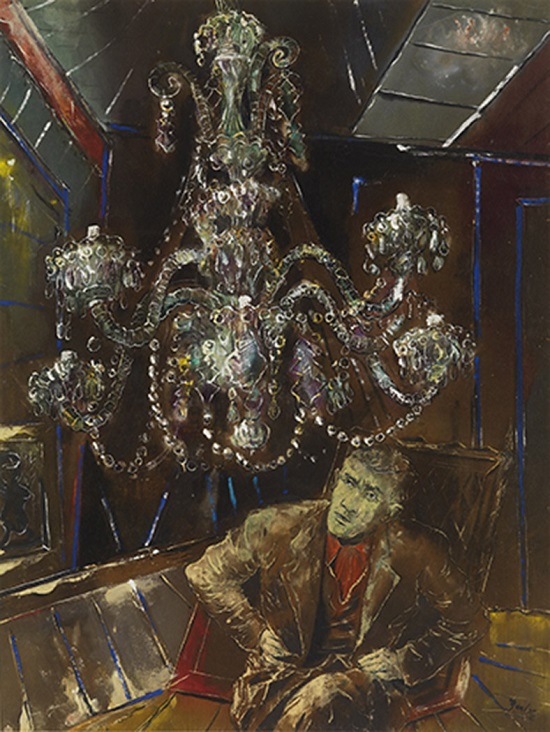
"Under the Chandelier'' (gouache on paper), by KARL ZERBE, at the Danforth Museum of Art, Framingham, Mass.
The island of the Unitarians

"Trap Dike, Star Island'' (oil on canvas) , by CHRIS VOLPE, at Alpers Fine Art, Andover, Mass.
Star Island is one of those tiny bodies of land off New Hampshire that comprise the Isles of Shoals. It has long been a summer retreat for Unitarians, that quintessentially New England denomination that mostly evolved from such Transcendentalists as Ralph Waldo Emerson.
Just before the greening
 "Plum Island" (acrylic on panel), by CARA GONIER, at Alpers Fine Art, Andover, Mass.
Those overrated old mills; defending fraternities
Some can be renovated for artists’ lofts and small businesses and their owners can make a profit — often with special tax breaks. The mass of taxpayers must make up the lost tax revenue. And some owners are big tax deadbeats. Consider the owners of Hope Artiste Village, in Pawtucket, who owe the city $124,690 for the current tax year, or those of The Thread Factory, on the Pawtucket-Central Falls line, who owe Pawtucket $366,306 and Central Falls $410,000. There may be similar examples around the state.
It is hard to quantify how much Rhode Island has gained or lost from trying to preserve old mills because people think that they’re quaint. Many can never be retrofitted to make a fair (without tax breaks) profit. Preservationists (not a few of whom are financially secure and don’t have to worry too much about finding a job in the sluggish Rhode Island economy) fiercely fight to save as many of these mills as possible, once built for economically logical reasons that disappeared decades ago. Indeed, the Ocean State has not exactly become a boom town during all these years of trying to keep old factory buildings that don’t make anything anymore except the occasional arsonist.
Then there’s that Art Deco tower the Industrial Bank Building, which, because of its stepped-back structure and location in not exactly thriving Providence, has little chance of being a full-scale office building again. Maybe it would work for residential — but again with tax breaks to be paid for by people not benefiting from its redevelopment.
A rather similar stepped-back famous Art Deco skyscraper is the gold-roofed United Shoe Machinery Corporation Building, at 140 Federal St. in downtown Boston, which for many years was New England’s tallest building. It had been slated for demolition in 1981, after “Shoe,” as the once huge company was long called, disappeared. But Boston was/is a major financial center. The quantity of local money and tax breaks made retrofitting it attractive, and the building is now filled with Class A offices.
Providence doesn’t have that critical mass. Other than nostalgia, there’s little to justify taxing the public to maintain the now remarkably inefficient “Superman Building.” Anyway, Providence had its heyday before it was built and could have another after it’s gone. And even Chartres Cathedral will one day disappear. As Ira Gershwin wrote, “In time the Rockies may crumble, Gibraltar may tumble ... ”
The South Bronx, the famously poor and crime-ridden section of New York given up for lost 30-40 years ago, has enjoyed a revival in part because so many of the old buildings were torn down (often after arson) and new buildings put up in the newly available acreage. Perhaps Rhode Island should move away from its love affair with old factories that do nothing (or worse) for the macro-economy. New buildings can be beautiful too. Are old mills over-rated?
***
The cover story in this month’s Atlantic is titled “The Fraternity Problem: It’s Worse Than You Think.” The article, surprisingly, spends a lot of ink on a nasty fraternity at very liberal/PC/“Little Ivy” Wesleyan University, in Middletown, Conn., where various outrages involving booze, sexual assault and so on have taken place. (Harvard also has fraternities, called “Final Clubs,” where, as a guest, I have witnessed grotesque behavior fueled by alcohol and other drugs.)
Busybodies and other social engineers cry out for closing all fraternities, though legally that would be impossible.
Speaking as a past member of a fraternity, I object. At most of these clubs, while drinking goes on sometimes, as it does at many social organizations, activities are much tamer than the “Animal House” cliché. And they play the healthy role of providing a closer sense of community than can the wider and anomie-ridden college or university community. Indeed, fraternities are frequently the venue for the start of lifelong friendships. Many college administrations should monitor these organizations with more rigor and call in the police (the town cops, not the campus cops) when necessary, of course, but, still, fraternities all in all do more good than harm. And without a modicum of freedom of association, society would be very dreary indeed.
I recently got a note from a group that was in the fraternity house I was in in the late 1960s. They’re planning a reunion for next October. As I saw the names, the years peeled back. Dozens are coming, out of (mostly lapsed) friendship and even morbid curiosity.
Robert Whitcomb (rwhitcomb51@gmail.com), a former editorial-page editor of The Providence Journal and a former finance editor of the International Herald Tribune, is a Providence-based writer and editor and a director of Cambridge Management Group (www.cmg625.com)., a health-care-industry consultancy.