
Vox clamantis in deserto

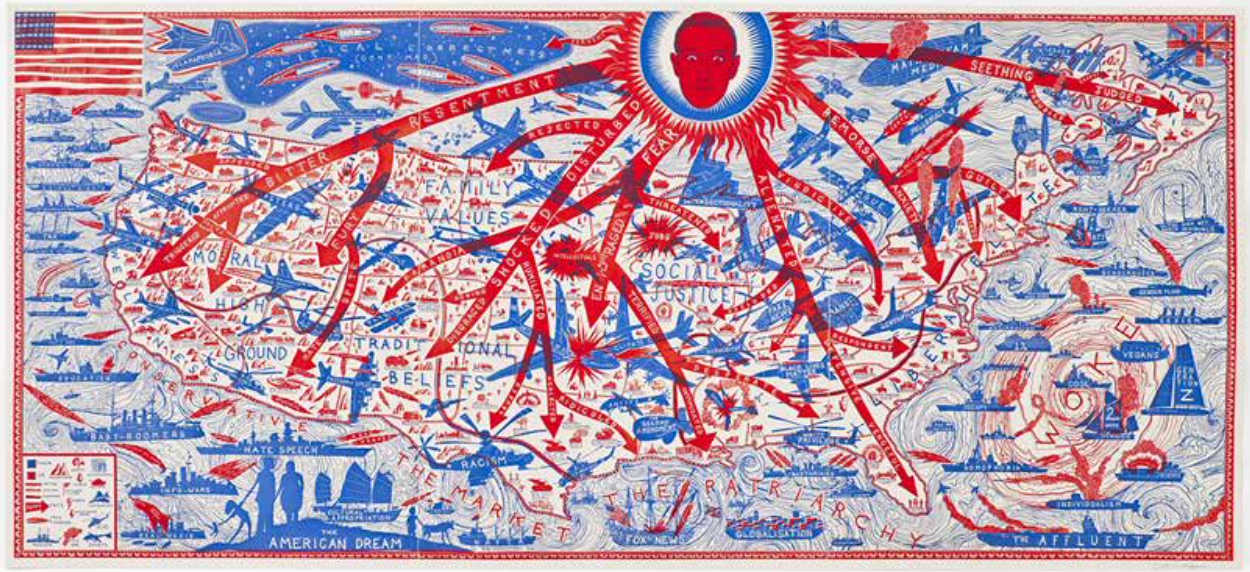


Angst in Indochina

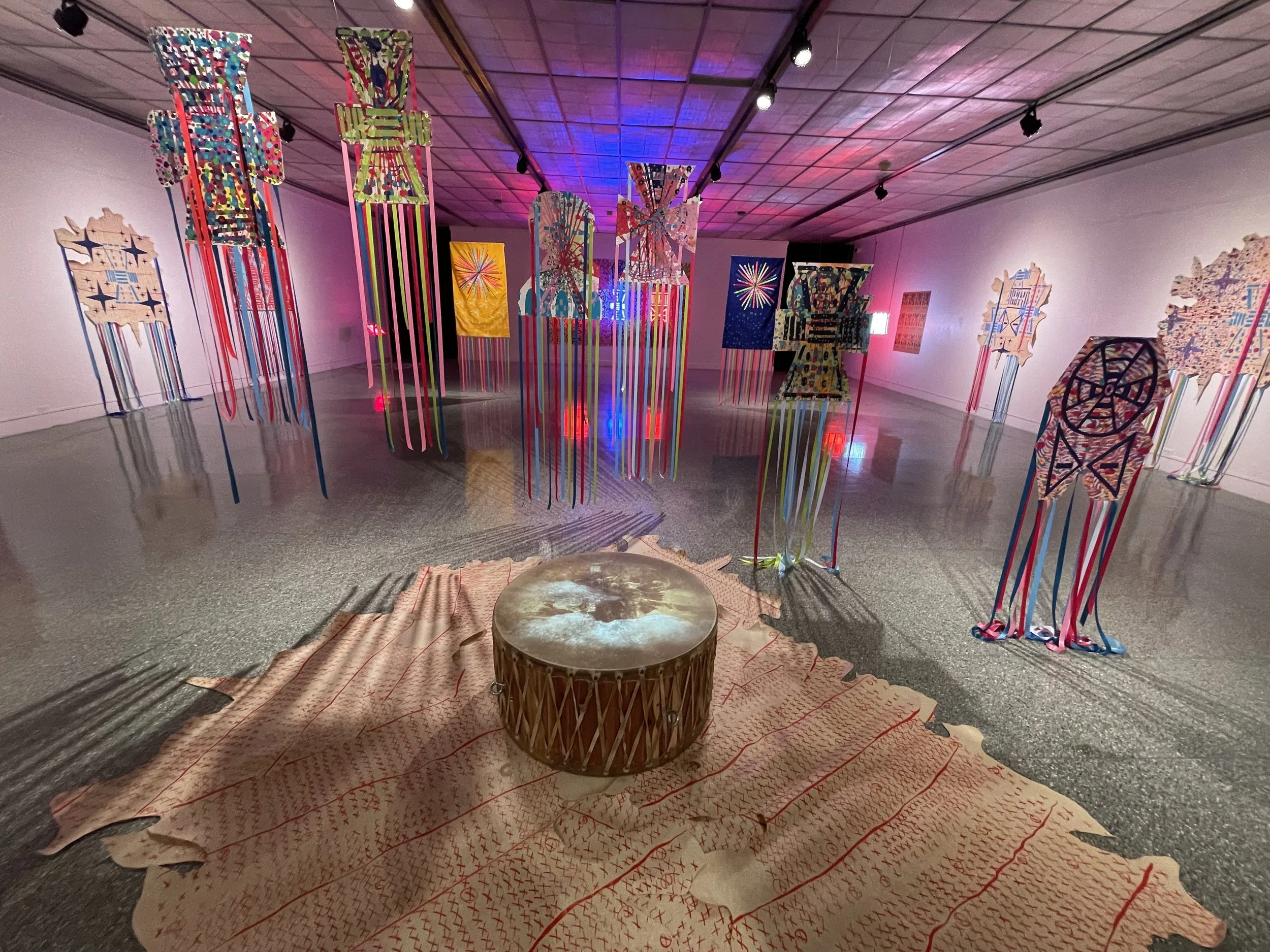
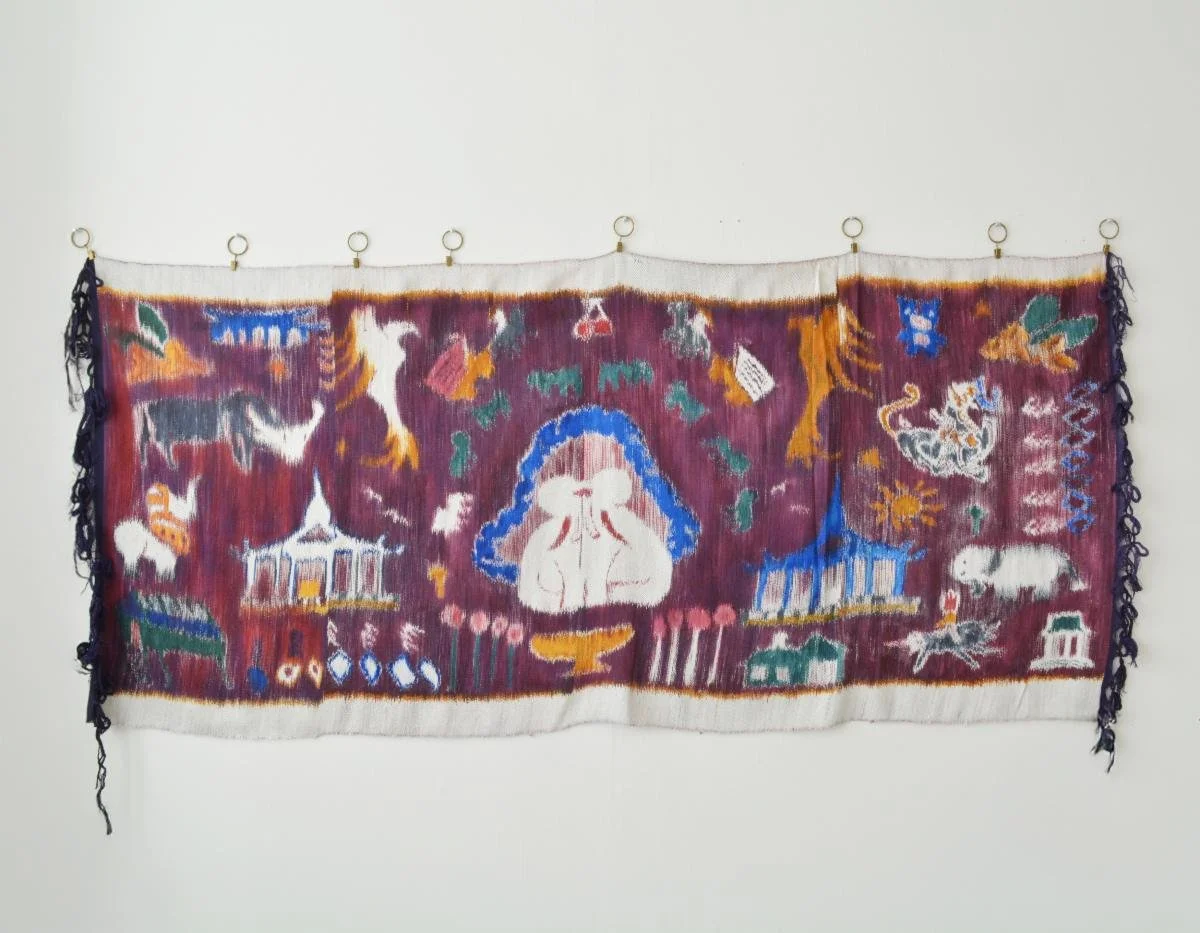
In Cambodia
In Cambodia (oil on canvas), by BEA MODISETT, in HallSpace gallery, Boston.
Memories of green

"The Clark House " (oil on canvas) by RICHARD S. MERYMAN, in private collection. This is shown through Monadnock Art / Friends of the Dublin Art Colony .
What a nice reminder of summer.
The Monadnock Region, in southern New Hampshire, has long been a gathering spot for painters, writers and other artists. Just think of the McDowell Colony of creative types, in Peterbor0.
Cold December mountains
 "Big Top'' (oil on canvas), by MIRA CANTOR, at the Kingston Gallery, Boston.
This is one of those times of years when you are again brought with up a start that you're one of the old folks, and that people 30 or 4o years younger have no knowledge, and usually little interest in finding out about, the historical events and personalities you're talking about.

Chris Powell: Low prices vs . high pay
By CHRIS POWELL

MANCHESTER, Conn.
Money manager, cable television commentator and former Connecticut U.S. Senate
candidate Peter Schiff undertook a cute stunt the other day to counter the
clamor for a higher minimum wage and the clamor against big, bad Walmart.

With a video camera recording him, Schiff walked around the parking lot of a
Walmart store purporting to represent a group he called “15 for 15” that seeks
to persuade Walmart to put a 15 percent surcharge on its prices to pay for
raising the minimum wage of its employees to $15 per hour. Instead of "Low
Prices Every Day," Schiff said, Walmart could change its motto to "High Wages
Every Day."

But as he surely anticipated, Schiff found no shoppers interested in paying
higher prices to underwrite higher wages for Walmart employees. The shoppers who
talked with Schiff said they felt pressed financially themselves.

That is, Walmart isn't Neiman Marcus or even Sears. Rather, Walmart is where
people shop to save money, and Walmart stores are busiest in the hours after
welfare and Food Stamp debit cards get recharged by government agencies.

If many Walmart employees aren't earning much, many Walmart shoppers aren't
earning much more, and many aren't making anything at all beyond what they get
in government stipends.

If Walmart is too profitable for some tastes, it's still subject to the same
labor and tax rules covering all other companies, and of course nobody has to
shop there. Indeed, complaints about the supposed greed of corporations, their
cutting labor costs and moving from high- to low-tax jurisdictions, are only
reflections of human nature and individual interest.

Shoppers want low prices just as stock investors want high prices, and while
most people are ready to tell others what to do with their money, they are not
so ready to be told themselves.

* * *

Now the thought police are prosecuting thought crime in America. Because he
remarked in a magazine interview that he considers homosexuality sinful and "not
logical," the A&E television network has suspended an actor in the program "Duck
Dynasty."

So are people really once again to be disqualified from employment on account of
their mere opinions and politics, as they were during the Red Scares of the
1920s and 1950s?

Homosexuals long were a persecuted minority, but now that society is becoming
more libertarian, what entitles those who are gaining dominance in opinion to
persecute those who disagree?

Must the price of political incorrectness include even denial of a chance to
work and make a living? Do the opinions of actors really matter that much?

It's not as if this particular actor is oppressing anyone or advocating
oppression. All he did was express his opinion -- an opinion shared more or less
by the recent bishops of Rome, whom no one proposed to fire or suspend though
many disagreed with them.

Power corrupts and the political left has become just as totalitarian as the
political right used to be.

* * *

But big media always get a pass from the political left. The other day
Connecticut U.S. Sen. Richard Blumenthal, a Democrat, was trivializing his
office again for a little publicity, stuck in his habit from 20 years as state
attorney general, urging the manufacturers of the Red Bull and Rockstar
caffeine-loaded beverages to remove their product emblems from children's toys.

Meanwhile mass shootings by the deranged, like the one a year ago in Newtown,
are proliferating, likely inspired in part by the prurient gunplay pervading
television, movies, and video games. But political criticism of that stuff has
faded to almost nothing.

Instead, Republicans are defending the constitutional right of any psychopath to
own military weapons, and Democrats are getting too much campaign money from
Hollywood to notice its poisoning of the culture. No, what worries Blumenthal is
the caffeine industry.

Chris Powell is managing editor of the Journal Inquirer in Manchester, Conn.
In woods on a nonsnowy evening
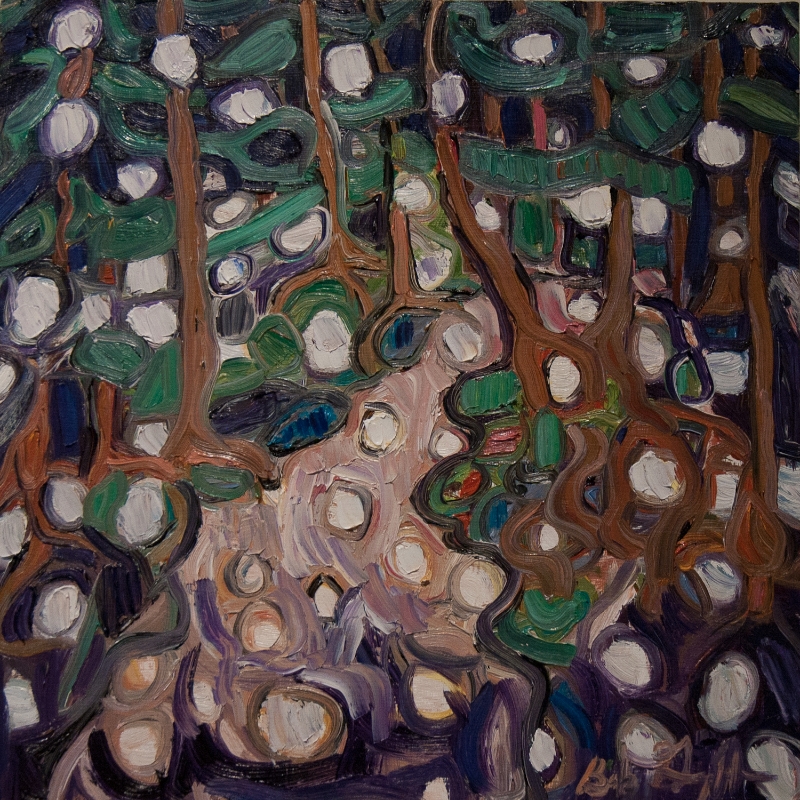 "Trail Through Old Hemlocks'' ( oil on panel), by BOB GRIGNAFFINI, at Fountain Street Fine Art, in Framingham, Mass.
Third person rural
By ROBERT WHITCOMB
While driving through the Vermont hills a few weeks ago, I thought about two artists much associated with New England’s rural parts — Norman Rockwell and Robert Frost — and the relationship between their lucrative rural public personas and private lives. No surprise that there was quite a gap! For one thing, they were born outside New England — Frost in San Francisco and Rockwell in New York City — and grew up in cities. More importantly, their public images were, and are, at considerable variance from their personal lives.
Norman Rockwell has been much in the news again lately because of the new book “American Mirror: The Life and Art of Norman Rockwell,” by Deborah Solomon. In it, she not only discusses Rockwell’s genius as an illustrator, but also a private life that was often quite tormented. (Like, I would guess, most lives.)
Ms. Solomon discusses Rockwell’s depression and anxiety. And she speculates (to the dismay of the artist’s family) that his life may have been complicated by homoerotic longings that may (or may not?) have expressed themselves in his many pictures of winsome, Tom Sawyer-like boys and handsome square-jawed men. He also had three troubled marriages and was a hypochondriac — and to the pleasure of his millions of fans, a workaholic.
Stockbridge, Mass., the Berkshires town whose scenes provided many of the ideas behind Rockwell’s famous illustrations, is also the site of the Austen Riggs Center, the mental hospital whose staff has treated many celebrities. Ms. Solomon says that Rockwell and his second wife, Mary Barstow, an alcoholic, moved there from Arlington, Vt., so that Mrs. Rockwell could be treated for depression. Rockwell himself used Austen Riggs’s services.
And yet the pictures that Norman Rockwell painted of the town are mostly upbeat — evoking a small-town communitarian paradise. “I paint life the way I want it to be,” he famously said.
Then there was the mating of modernist and 19th century poetry that is the great work of Robert Frost. Frost, like Rockwell, was a city boy whom the public came to primarily associate with rural New England themes, but innocent and Arcadian his poems are not. Many evoke a chilly or even malevolent universe. (My favorite is “Design.”) Far more Ethan Frome than Currier & Ives.
But as his fame spread in the English-speaking world (he first became well-known in England, where he lived in 1912-15), that he looked like Hollywood’s idea of a Yankee farmer, and his folksy genial manner (for public consumption, anyway) tended to overcome in the public mind the darkness of his poems. He could have been a character in a Rockwell painting. This was in part intentional: Being seen as a charming cracker-barrel philosopher/poet brought in the lecture and poet-in-residence fees. He became the most famous poet in America.
Thus we have the curious transformation of the deeply intellectual Frost (whose characters were mostly ordinary country people, whose speech patterns and emotions he was deeply familiar with) into an icon of popular culture.
Consider the revision in Norman Rockwell’s reputation from “merely” a “fine popular illustrator” to being seen as a kind of great artist, with aesthetic links to other masters going back to the Renaissance. It takes a long time for society to figure out what it really thinks of its artists and politicians.
***
Memoirs have been one of the comparatively strong parts of the book business in recent years. With aging Baby Boomers, expect a lot more. A few recent ones:
‘’Whiplash: When the Vietnam War Rolled a Hand Grenade Into the Animal House,” by Denis O’Neill, is a mildly fictionalized account of the 1969-1970 academic year at Dartmouth College. O’Neill is a journalist, screenwriter and musician. On Dec. 1, 1969, the Selective Service System held the first lottery since World War II for the draft, bringing great anxiety to some and relief to others, and “The Sixties,” as we know them, reached their crazy crescendo. (You could say that “The Sixties” as a cultural phenomenon didn’t really end until, say, 1972.)
Then there’s Rhode Island investment mogul Tom DePetrillo’s book about the downs (including personal bankrupty) but bigger ups of his career. He was one of 11 children and a school dropout before he made a fortune as an investor. The book provides chatty and colorful advice and observations on business, public policy, politics and life in general.
Finally there’s Ralph Barlow’s “Beneficent Church in Providence: A Church Engaged with an Emerging New World,” the Rev. Mr. Barlow’s memoir of running the church from 1964 to 1997, during which this downtown Congregational institution’s experience included many of the recent social upheavals of American society.
Robert Whitcomb (rwhitcomb4@cox.net), a biweekly contributor, is a Providence-based writer and editor. He blogs at newenglanddiary.com.
Preparing for a protest movement

"On the Edge'' (collage, wax and resin on panel), by JANE MAXWELL, at Lanoue Fine Art, Boston.
The big dripper
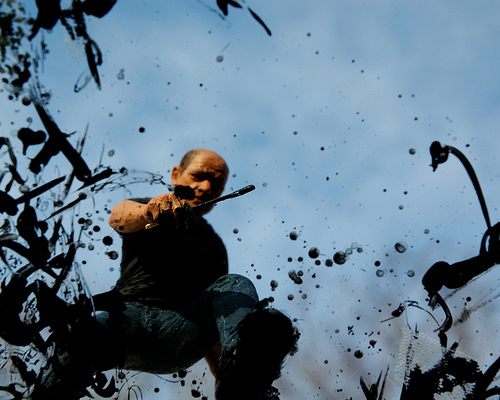
"Jack the Dripper,'' by JOE FIG (courtesy of the artist and the Tierney Gardarin Gallery, New York), at the Bruce Museum, in Greenwich, Conn., in the current "Artists' Studios: Small-Scale Views'' show.
The "Jack'' here is, of course, famed abstract expressionist Jackson Pollock, whose violent alcoholism would have been denounced by the quiet and dignified alcoholics living in the famous rich precincts of Greenwich.
Nobody's perfect

"Errancy,'' by ARIEL FREIBERG (oil on linen), at the New Art Center, in Newton, Mass.
Oil/gas moguls try to quash solar power

From Brookhaven National Laboratory
Now the Koch brothers are coming after my solar panels.
I had solar panels installed on the roof of our Washington, D.C., home this year. My household took advantage of a generous tax incentive from the District government and a creative leasing deal offered by the solar panel seller.
Our electric bills fell by at least a third. When people make this choice, the regional electric company grows less pressured to spend money to expand generating capacity and the installation business creates good local jobs. Customers who use solar energy also reduce carbon emissions.
What’s not to love?
According to the American Legislative Exchange Council, a conservative network better known as ALEC, our solar panels make us “free riders.” What?
Yes, according to ALEC, an organization that specializes in getting the right-wing agenda written into state laws, people like me who invest in energy-efficiency and shrinking our carbon footprints ought to be penalized.
Why does ALEC want us punished? Since it’s bankrolled by, among others, the billionaire brothers Charles and David Koch, it’s hard not to surmise that they’re worried about a threat to fossil fuels businesses. Koch Industries’ operations include refneries, oil and natural-gas pipelines and petrochemicals
That’s no conspiracy theory. Recently the British newspaper The Guardian wrote about the assault on solar panels as part of a broader exposé on ALEC.
John Eick, the legislative analyst for ALEC’s energy, environment and agriculture program, confirmed to The Guardian that the organization would support making solar panel users pay extra for the electricity they generate. That’s already about to happen in Arizona, where homeowners who use solar panels will pay an average of about $5 extra a month for the privilege, starting in January.
The sola- power industry called the new rule a victory only because power companies in the state were demanding assessments of as much as $100 a month — more than high enough to deter families from considering switching to solar.
Making solar energy cost-prohibitive for homeowners and businesses is part of a larger ALEC objective, affirmed at its recent annual meeting, to continue its effort to eliminate state renewable energy mandates.
According to meeting minutes, ALEC has already succeeded in getting legislation introduced in 15 states to “reform, freeze, or repeal their state’s renewable mandate.” ALEC lobbyists are pushing policies through states that will speed up climate change and increase pollution. They’re threatening the renewable energy industry, which is already creating new jobs and saving money for homeowners and businesses.
Without the current policy paralysis in Washington and a lack of bold, creative thinking about how to build a new, green economy at the national level, they wouldn’t be making so much headway.
My organization, Institute for America’s Future — together with the Center for American Progress and the BlueGreen Alliance — recently published a report that shows what’s at stake with ALEC’s destructive agenda.
Our “green industrial revolution” report recommends tying together a series of regional solutions that take advantage of the unique assets of each part of the country, such as the abundance of sun in the West and the wind off the Atlantic coast, into a cohesive whole.
These regional strategies would be supported by smart federal policies, such as establishing a price for carbon emissions and a national clean energy standard, creating certainty and stability in the alternative energy tax credit market, and providing strong support for advanced energy manufacturing.
This is the way to unleash the kind of innovation and job creation our economy — and our rapidly warming planet — desperately needs.
My solar panels are the envy of my block and I wish more of my neighbors will be able to make the same choice I did. But they won’t if fossil-fuel dinosaurs like the Koch brothers and right-wing organizations like the American Legislative Exchange Council keep casting their dark clouds on efforts to build a clean energy future.
It’s time for them to step aside and let the sun shine in.
Anything to get to America

"The Steerage,'' photo by ALFRED STEIGLITZ, in the show "Photography at the Fitchburg Art Museum,'' through next summer.
Political penumbra

"Shadow,''by DAVID BARNES in his show though Jan. 29 at the Hess Gallery at Pine Manor College, Chestnut Hill, Mass.
shadow
Boston at dusk
 Painting by SAM VOKEY, at the Guild of Boston Artists.
The quintessence of Boston Common in the winter -- beautiful, in its way, but also forbidding.
Monopolistically making the money -- literally

This article is about the very monied Crane Family. They (Crane & Co.) actually make the cotton-and-linen paper for America's folding money, and have for a long, long time, in western Massachusetts. And now this domestic currency-making monopoly is pushing to go much more global.
Some of the paper company Cranes have long summered in the Falmouth area of Cape Cod; so has another Crane Family, who owned the plumbing-fixtures company, Crane Co. So the locals referred to the "Bathtub Cranes'' and the "Money Cranes'' when asked who owned which big summer house.
Post-war pride
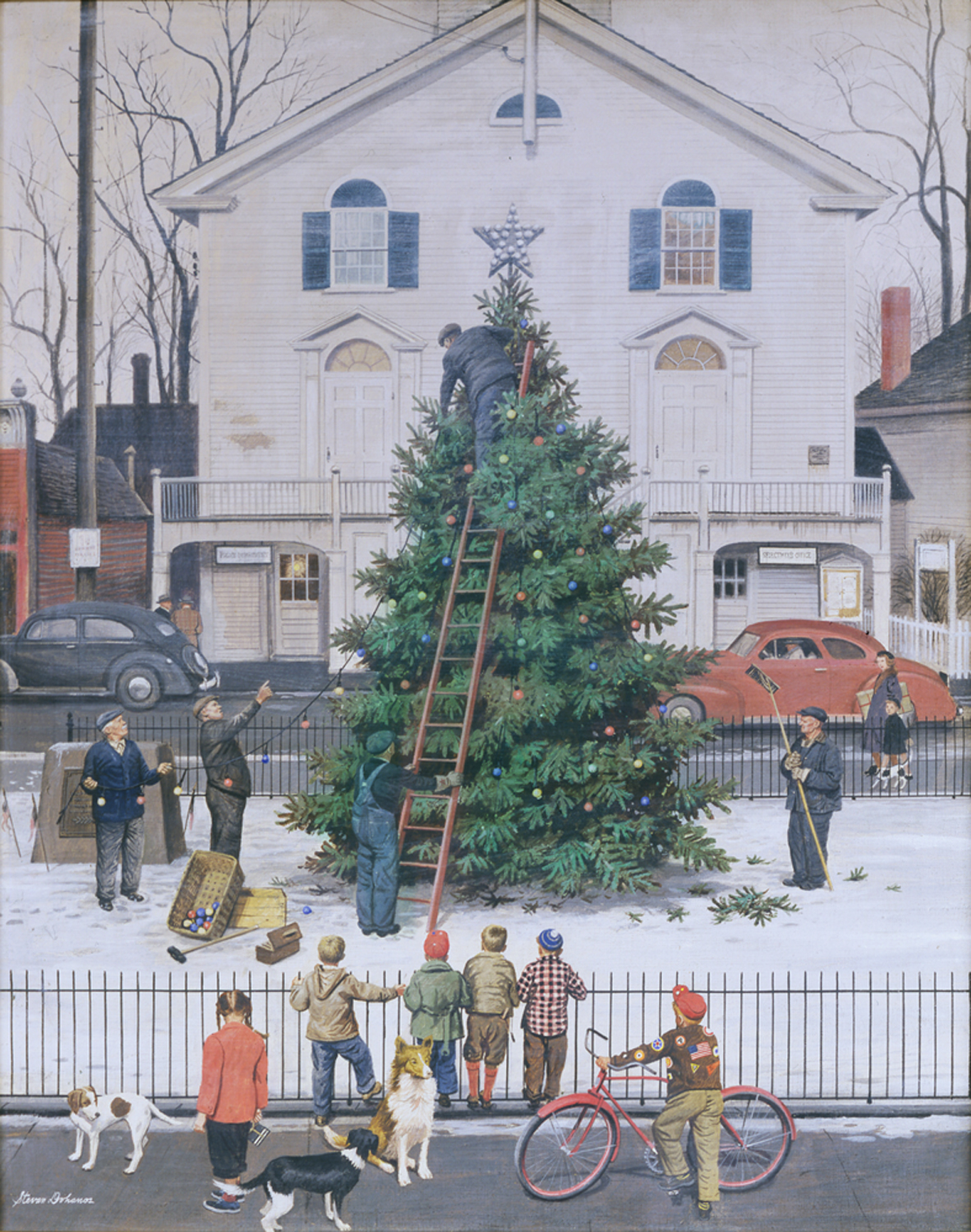
"Community Tree'' (gouache on paper), by STEVAN DOHANOS, for the cover of the Dec. 4, 1948 Saturday Evening Post. Copyright 2013 National Museum of American Illustration, Newport, R.I. Photo courtesy Archives of the American Illustrators Gallery.
What's in the names of some old N.E. companies?
How some famous old New England companies got their names.
Diner rises after Irene
A typical small New England town diner goes on as Wilmington, Vt.'s informal community center after being repaired after devastating flooding by Tropical Storm Irene. Those high carbohydrate and animal-fat breakfasts may not make your body thrive, but your soul and social life get much sustenance.
These diners can be very friendly places but the staff and customers know when to leave people alone, too. Take the Windsor Diner, in Windsor, Vt. The great celebrity recluse J.D. Salinger, who lived just across the river in Cornish, N.H., frequently patronized the place; everyone left him alone.
The anguish of 'The Organization Man'
See Paul Zahl's wonderful take on Sloan Wilson and his "The Man in the Gray Flannel Suit'' (1955), that memorable but frequently misdescribed novel about what William H. Whyte called the corporate "Organization Man''.
The Reverend Mr. Zahl (he is an Episcopal minister) headlined his posting "Post Traumatic Stress Disorder in Suburbia''.
The hero of the novel, the polite and quiet Tom Rath, is a daily Westport-New York commuter on the infamous New Haven Railroad (now the infamous Metro North) in shock from what happened to him in World War II.
Of class and charity
By ROBERT WHITCOMB
Philanthropic contributions by very rich people get a lot of attention. An example around here is Thomas Ryan, a former head of CVS who recently gave $15 million to the University of Rhode Island for a brain-science center to be named after his parents.
Besides the satisfactions of giving per se and the plaudits of the general public, gifts are sometimes meant to show other rich people how successful the givers are. This explains why so much new money rushes into already very rich “nonprofit” institutions, such as Ivy League colleges and big art museums. Wouldn’t giving a pile to, say, a community college serving poor people do more for society than adding yet more to Harvard’s $31 billion endowment?
And this is not the age of the anonymous contribution. Of course, nonprofits, besides appealing to altruism and ego, know that publicizing the names of the donors may encourage an arms race of giving by other rich people.
Anyway, URI alumnus Ryan commendably gave to a local and grossly underfunded public institution. A few years back, the arena at URI was named after him as a result of gifts by him and CVS. In his last 14 months as CEO, he made $124 million, reported Dow Jones. Of course, if the very rich paid a tad more in taxes, then public institutions could more often build such public facilities out of public money and not always be selling “naming opportunities.”
Large public companies’ senior execs have rarely been romantic altruists. But there’s no doubt that they have adjusted their missions, and sense of civic duty, in the past 30 or so years via tax and other legal changes engineered by their lobbyists.
Most of these companies used to consider themselves as having a fairly wide range of stakeholders — not just senior executives and other big shareholders but nonexecutive employees and the communities within which the companies operated. The idea was that the long-term success of the companies would depend on addressing the welfare of all constituencies.
Now the aim above all is to maximize and speed compensation for senior execs, on which, because of lobbyists’ success in creating tax dodges, many pay remarkably little tax, considering their wealth. Investment gains via stock options, etc., are much tax-favored over wages. (The quickest way to maximize their personal profits is to lay off and/or cut the compensation of lower-level employees.) This explains in part, along with globalization, computerization, automation and the loss of local ownership in many places — laying off your neighbors is tough — explains some of the woes of the middle class the past 30 years or so.
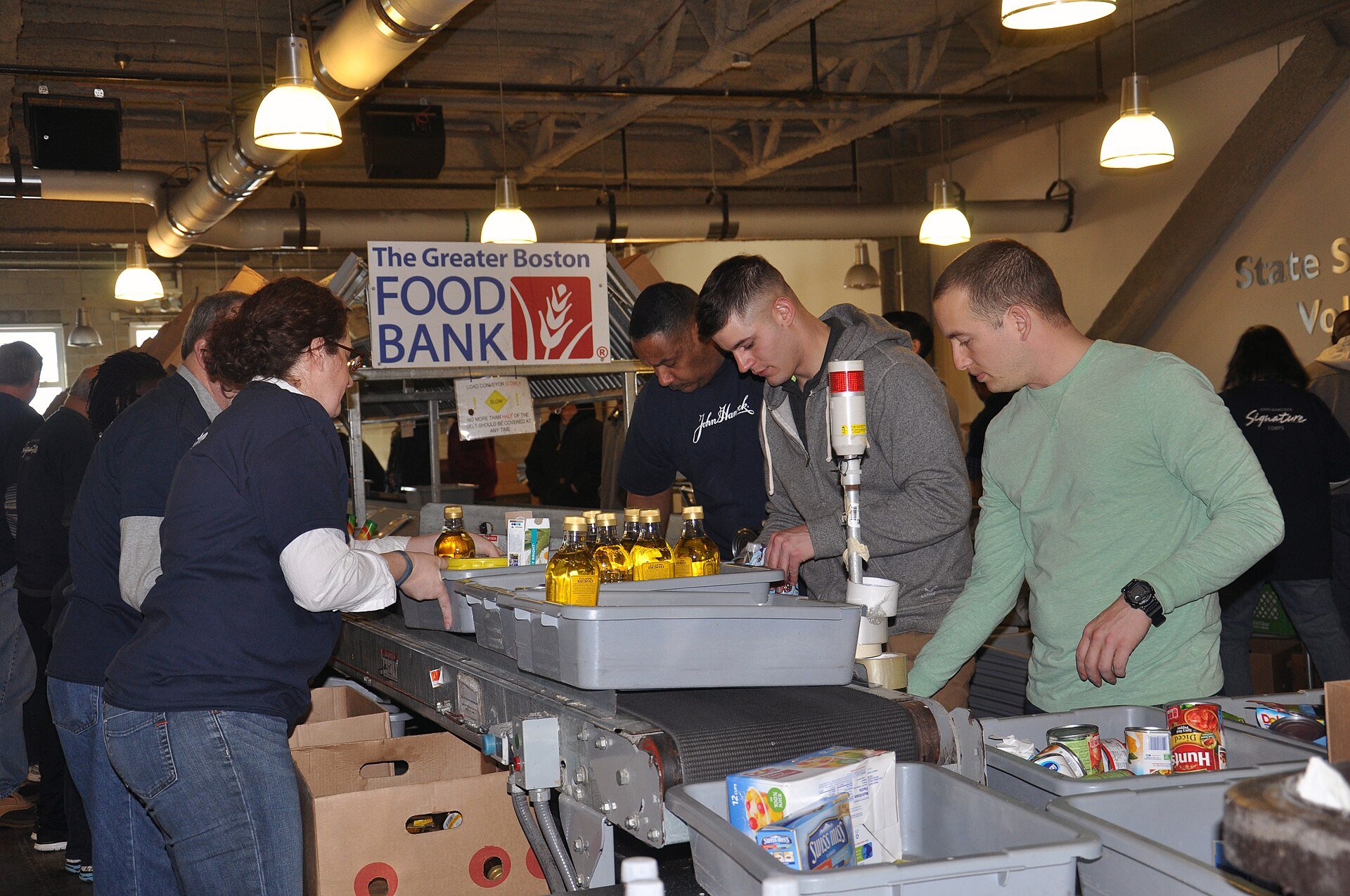
Then there’s American feudalism. The Walton family has a fortune of about $100 billion. They have so much money, in part, because their company pays their employees so little. Some Walmart stores have food drives for impoverished Walmart employees.
The holders of current and future dynastic wealth arrange through tricky trusts (including the creative use of charities) and other perfectly legal mechanisms to pay remarkably little or no estate or gift taxes and thus help ensure the self-perpetuation of power and wealth for their heirs. Readers should read about the wonders of “donor-advised funds” for charities — also a cash cow for financial firms because of the fees — and “charitable lead annuity trusts,” used to boost dynastic wealth by avoiding taxes.
The usual structure for these things is the "foundation,'' which can sometimes be more of creature for perpetuating private dynastic wealth and power than a device for good works.
Some more reasons that the government is broke.
Among other benefits, this dynastic wealth gives favored families access to the fanciest schools with the best-connected faculty and students, which, in turn, reinforces the vast advantage that the lucky heirs already have. Thus there’s less social mobility in America than in most of its developed world competitors.
The public might want to at least consider whether society would be better off if the very rich shared a tad more of their wealth further upstream rather than through the charities they create to do good works, glorify their names and/or avoid paying taxes that pay for public services such as URI.
***
A good thing about this sometimes gray, sometimes golden time of the year is that you don’t have to weed for a while and it cleans out the mosquitoes. No wonder farmers tend to like November and December. They get a rest. Too bad the holidays have to ruin it.
***
Everyone understandably bemoans Rhode Island’s jobless rate of 9.2 percent. But bear in mind that the state’s tininess and industrial history skew those numbers. If you spun off eastern Connecticut, parts of Berkshire County, Mass., or upstate New York into separate states, they’d have similar rates. Still, Rhode Island should have done a lot more to capitalize on its location, ports and fabulous design community.
Robert Whitcomb (rwhitcomb4@cox.net; rwhitcomb51@gmail.com; newenglanddiary.com) is a former editor of The Providence Journal's Commentary pages, where this column started, and a Providence-based editor and writer.