
Vox clamantis in deserto







Design solutions to address increased N.E. flooding
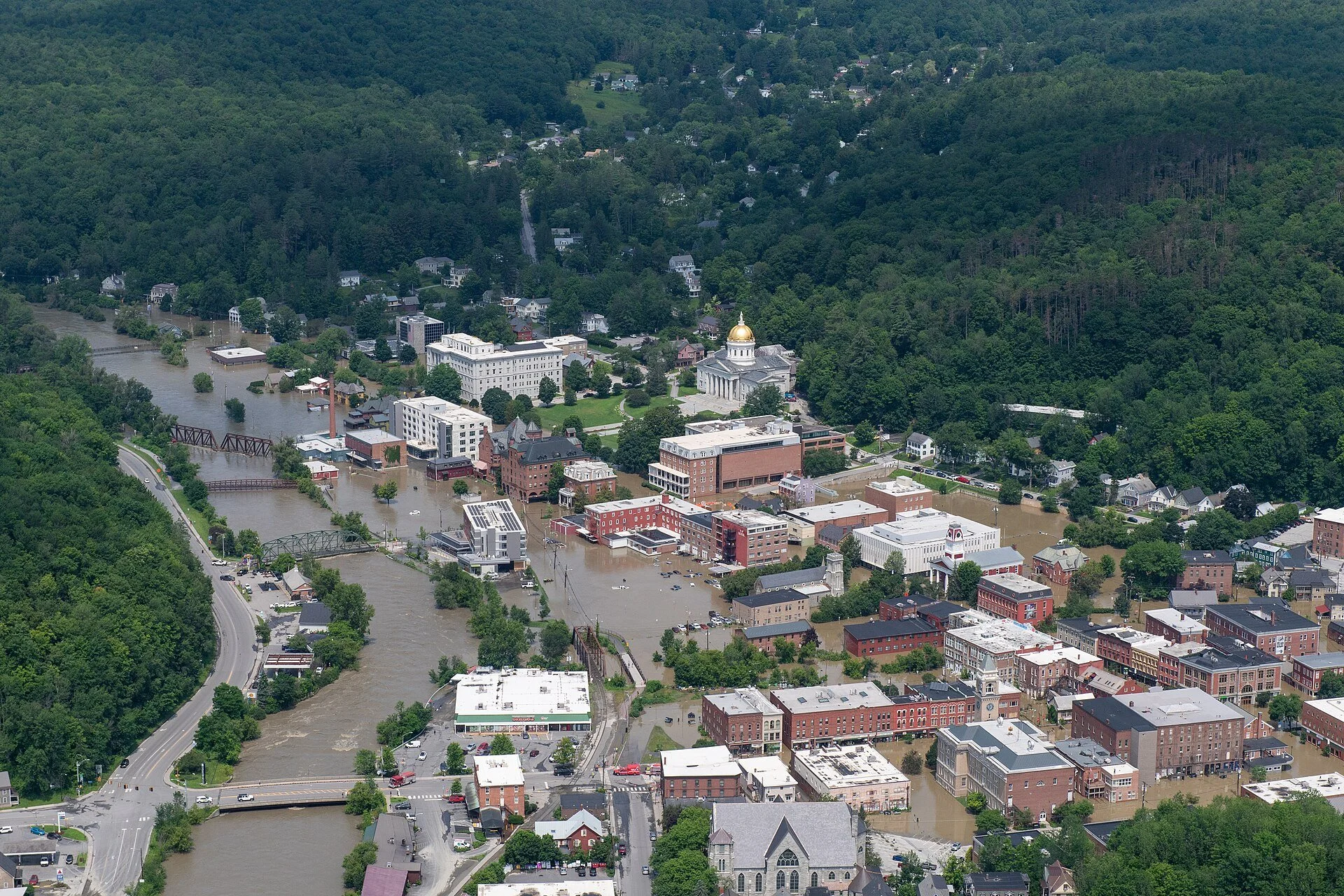
Flooding in downtown Montpelier, Vt., on July 11, 2023.
Excerpted from an essay by Nate Kelly in ecoRI News
In New England, many of us recall a time when our relationship with water felt predictable and peaceful. Spring brought rain, gradually giving way to drier summer and fall months. Thunderstorms and nor’easters swept through without much concern, and winter snowfalls brought only occasional delays or school cancellations. Rain and snowmelt came and went, quietly managed by storm drains to which most of us never gave a second thought. We cleaned gutters, raked leaves, and shoveled snow, living comfortably with water’s rhythms.
Recently, however, our relationship with water has changed. Rising temperatures driven by climate change are at the root of this shift. Each of our seasons is now warmer, and that warmth affects every part of our environment. Streams, ponds, forests, backyards, ballfields, and beaches — all are warmer than they used to be. This warming accelerates evaporation, allowing the atmosphere to hold more water and more energy. The result? Bigger, more frequent, and more intense storms. This is climate change in motion — altering how, when, and where precipitation falls across New England…
Fortunately, experts in policy, design, and construction are developing solutions. Construction standards in flood-prone areas are beginning to take projected flood levels into account. Communities are adopting long-term hazard mitigation plans that identify vulnerable infrastructure, evacuation routes, and solutions to reduce risk. Funding sources for replacing undersized culverts are available, addressing “choke points” where floodwaters cause significant damage. Parks in flood-prone areas are being redesigned to safely flood during storms, providing much-needed flood storage while serving as community amenities in dry times.