
Vox clamantis in deserto



Llewellyn King: Three big challenges for new college grads in these crazy times
WEST WARWICK, R.I.
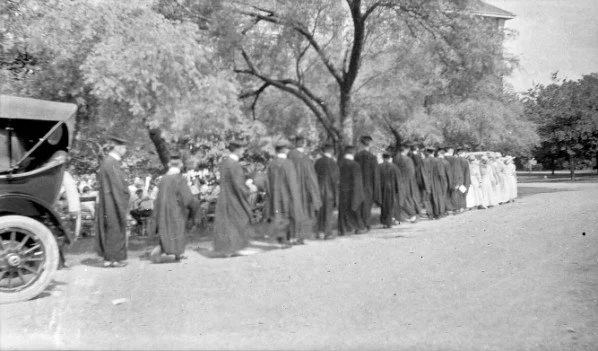
Dear Graduates of 2026,
Welcome to the world you will be taking jobs in and where you will begin building careers, and at times shaping history.
It isn’t the world of your parents, and it isn’t the world your college has taught you about, because it is changing too fast. It begins anew daily. As Maya Angelou said, “This is a wonderful day. I haven’t seen this one before.”
There are three big forces looming on the horizon that will shape your world and that you will play a role in shaping. They are technology, specifically AI; politics, the harsher politics of today; and the environment, which is eventually everything.
AI will have an effect that defies comprehension — it is so enormous. It is also evolving so fast that it keeps slipping out of your grasp.
“It is exponential, and human thinking is linear.” So said one of the foremost thinkers about AI, Omar Hatamleh, former head of AI at the NASA Goddard Space Flight Center. He has written five books on AI.
All that is absolutely, definitely and incontrovertibly known is that AI will affect everything. It will change how we work, play and learn. It will change how we mate, think and expect.
Graduates, you will come to realize that political action and speech have changed from what they were. Both are out of the guide rails that have served them well over time.
Authoritarianism has taken root in America, and it will be hard to pull out. The bureaucracy has been politicized. There has been an expansion of presidential power over areas constitutionally assigned to Congress, under the watch of an accommodating Supreme Court.
There are troops on American streets, political searches and seizures, arrests and indictments, and deportations without due process. All this was unleashed with the Republicans. When Democrats take power, will they put the evil genie of unconstitutional government back in its bottle?
Domestic politics has also changed our relations to the world — a world where America, Canada and Europe stood together, sharing a common heritage and a common view of law, and savoring a shared peace in Europe until Russian President Vladimir Putin invaded Ukraine, and set in motion four years of bloody fighting.
Could we have done more? Yes, more weapons, more money, and less acceptance of Putin. Maybe troops, too.
We didn’t, and that has changed the world. Free countries now know that America won’t axiomatically have their backs. That time is past and will have major geopolitical consequences.
Internationally, the big, open American hand has been closing as it has curtailed or ended participation in international institutions from NATO to the World Health Organization to the Paris climate agreement. The arbitrary closing of USAID was a declaration of withdrawal from the world and from the exercise of soft power as a diplomatic tool.
Another challenge for future Americans as they grow into adulthood: They will live in a more dangerous world with fewer friends. Hubris is an expensive luxury.
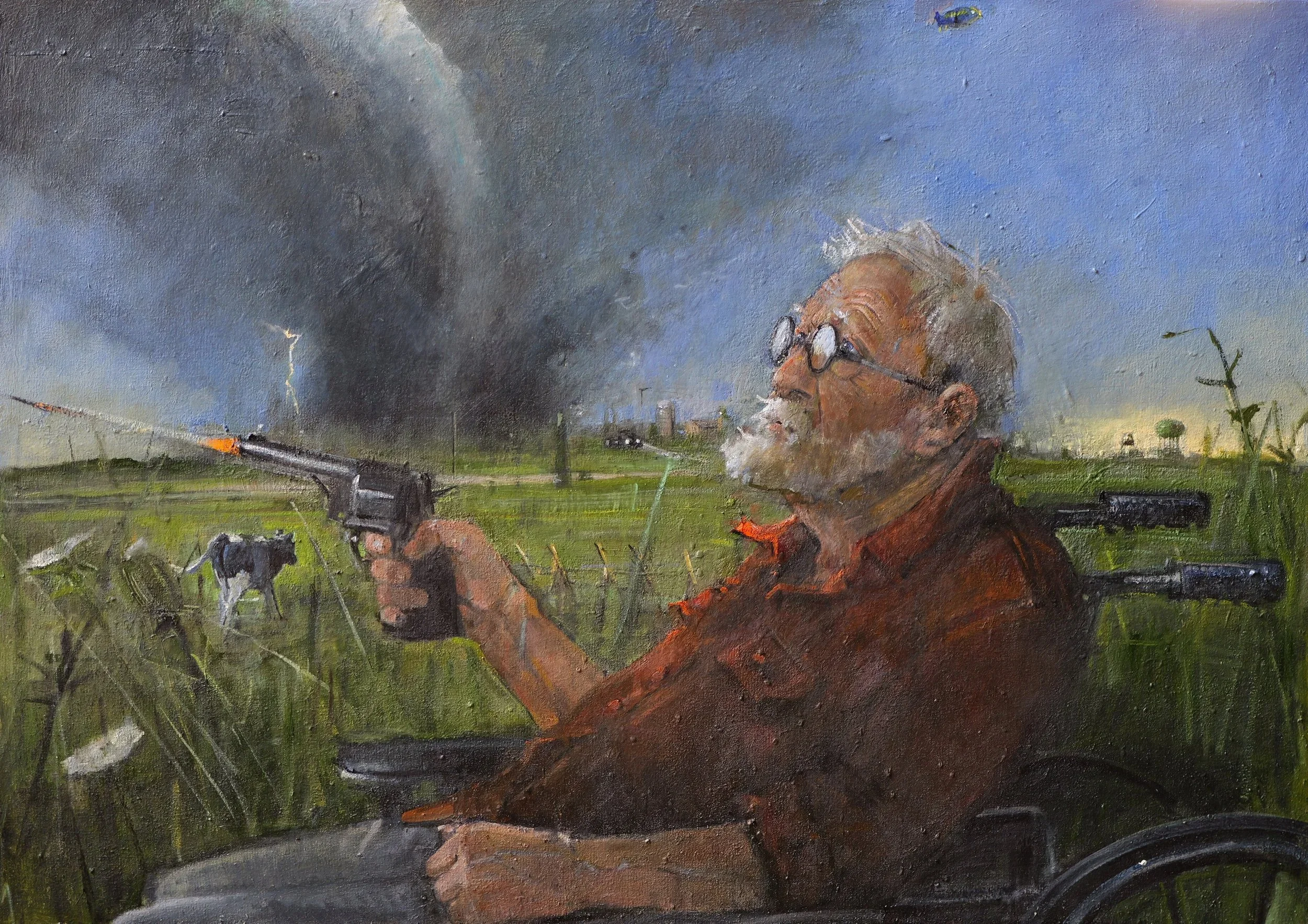
They may also not live in a world where the climate is as predictable as it once was. Already aberrant, unpredictable weather is the norm with hurricanes, tornadoes, floods and tinder-dry regions.
Politicians may deny that the climate is changing, but the evidence is there. Sea levels are rising, city streets are flooding, and beachfront homes are being swept away. Hurricanes and tornadoes, part of our usual weather cycle, are getting more severe. Drought and floods, recurring phenomena, are worsening.
Texas and the Southwest, which have long attracted working and retired residents, are facing prolonged droughts and water shortages that will curb future growth.
Dealing with the environment is a challenge that AI may meet quite dramatically. Its ability to predict, organize and find the exit in dense data is without peer.
Graduates, as the generation coming of age in 2026, you shouldn’t fear AI; rather, you should throw yourselves at it and learn what it can do for you. Gradually, it will be understood, regulated and you will come to terms with it as a tool, not an aggressor.
We have left you a messy world, but it was always that way.
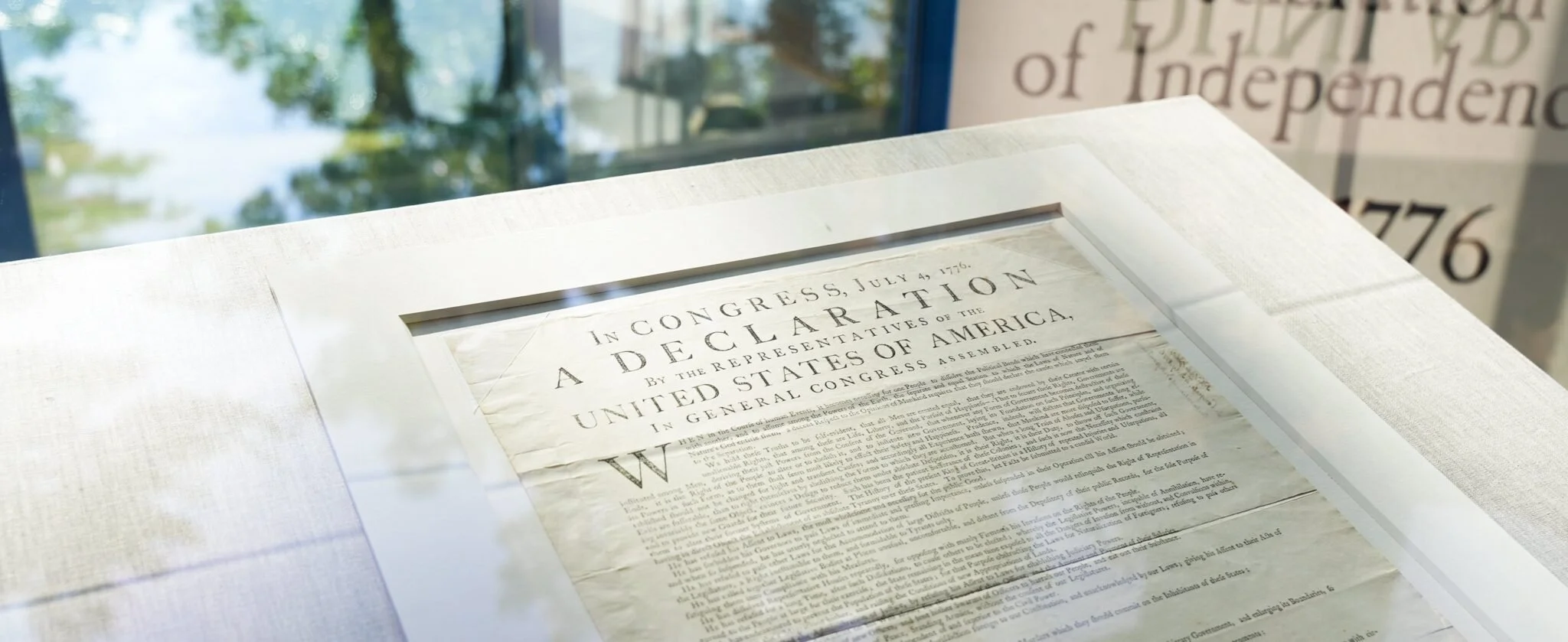
Over two and a half centuries, America has absorbed and changed. Along the way — including civil war — it produced a society in which there is still opportunity; there is still freedom, although the door may be closing; and much has been perfected here.
Remember, more people live better in the world today because of America, its ideas, its inventions and its heart. Go forth and be that American.
On X: @llewellynking2
Llewellyn King is executive producer and host of White House Chronicle, on PBS, and an international energy-sector consultant. He’s based in Rhode Island.
Chuck Collins: Best wishes to the most indebted class
Congratulations, college graduates! As you enter the next phase of life, you and your parents should be proud of your achievements.
But, I’m sorry to say, they’ve come at a price: The system is trying to squeeze you harder than any previous generation.
Many Baby Boomers, perhaps including your parents, benefited from a time when higher education was seen as a shared social responsibility. Between 1945 and 1975, tens of millions of them graduated from college with little or no debt.
But now, tens of millions of you are graduating with astounding levels of debt.
This year, seven in 10 graduating seniors borrowed for their educations. Their average debt is now over $37,000 — the highest figure for any class ever.
Already, some 43 percent of borrowers — together owing $200 billion — have either stopped making payments or are behind on their student loans. Millions are in default.
This debt casts a long shadow on the finances of graduates. During the last quarter of 2015 alone, the Education Department moved to garnish $176 million in wages.
There’s no economic benefit to this system whatsoever. Indebted students delay starting families and buying houses, experience compounding economic distress, and are less inclined to take entrepreneurial risks.
One driver of the change from your parents’ generation has been tax cuts for the wealthy, which have led to cuts in higher education budgets. Forty-seven states now spend less per student on higher education than they did before the 2008 economic recession.
In effect, we’re shifting tax obligations away from multi-millionaires and onto states and middle-income taxpayers. And that’s led colleges to rely on higher tuition costs and fees.
In 2005, for instance, Congress stopped sharing revenue from the estate tax — a levy on inherited wealth exclusively paid by multimillion-dollar estates — with the states. Most state legislatures failed to replace it at the state level, costing them billions in revenue over the last decade.
In fact, the 32 states that let their estate taxes expire are foregoing between $3 to $6 billion a year, the Center on Budget and Policy Priorities estimates. The resulting tax benefits have gone entirely to multi-millionaires and billionaires — and contributed to tuition increases.
For example, California used to raise almost $1 billion a year in revenue from its state-level estate tax. Now that figure is down to zero. And since 2008, average tuition has increased over $3,500 at four-year public colleges and universities in the state.
Florida, meanwhile, lost $700 million a year — and raised tuition nearly $2,500. Michigan lost $155 million a year and hiked average tuition $2,200.
But it doesn’t have to be this way. Washington State went the opposite route.
Washington taxes big estates and dedicates the $150 million it raises each year to an education legacy trust account, which supports K-12 education and the state’s community college system. Other states should follow this model, and students and parents should take the lead in demanding it.
Presidential candidate Bernie Sanders said at a Philadelphia town hall meeting that there’s one thing he’s 100 percent certain about.
If millions of young people stood up and said they’re “sick and tired of leaving college $30,000, $50,000, $70,000 in debt, that they want public colleges and universities tuition-free,” he predicted, “that is exactly what would happen.”
Sanders is right: Imagine a political movement made up of the 40 million households that currently hold $1.2 trillion in debt.
If we stood up and pressed for policies to eliminate millionaire tax breaks and dedicate the revenue to debt-free education, it would change the face of America.
Graduates, let’s get to work.
Chuck Collins directs the Program on Inequality and the Common Good at the Institute for Policy Studies.