
Vox clamantis in deserto






Jeffrey C. Dixon: Surprising data on AI job impact so far
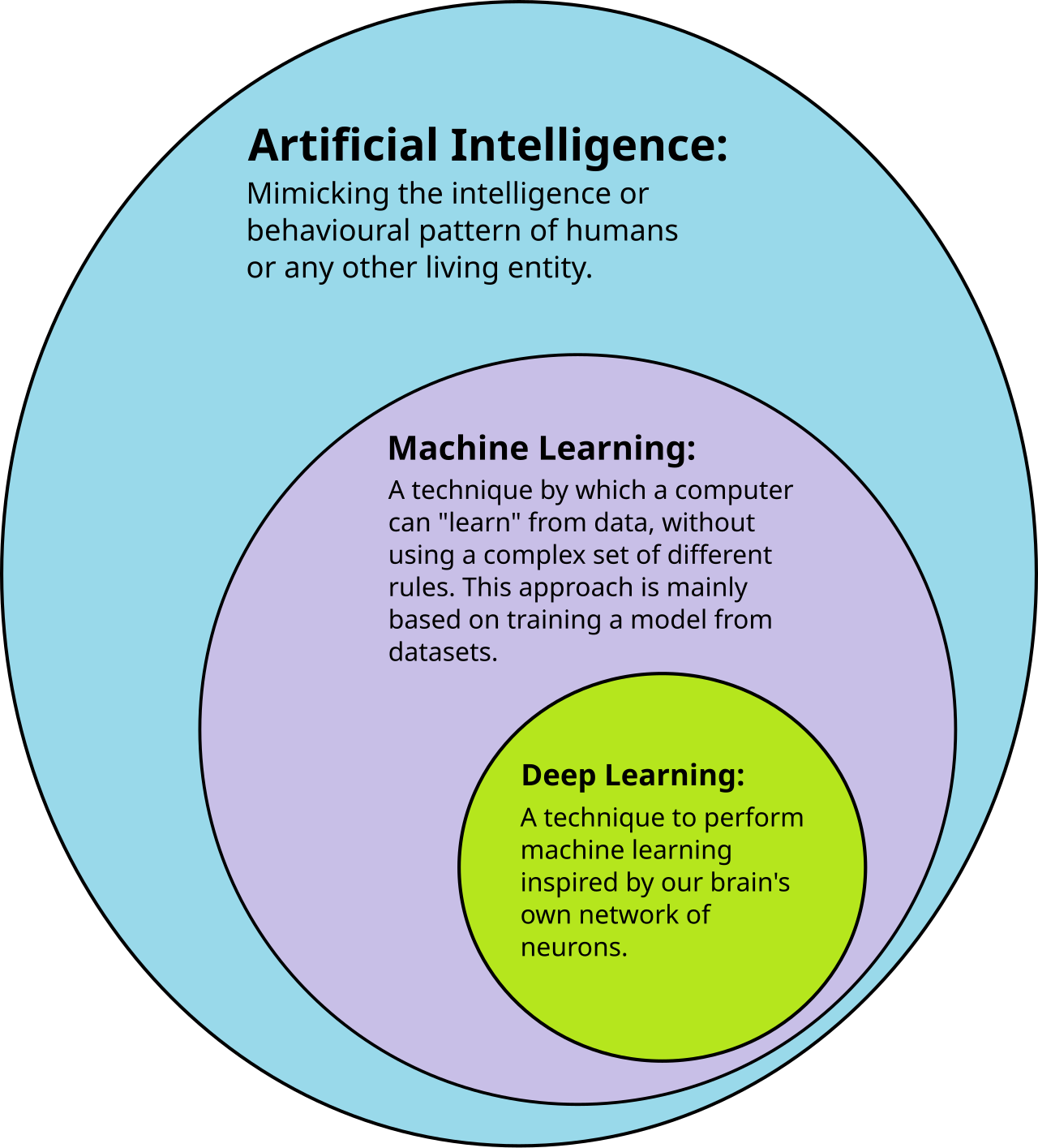
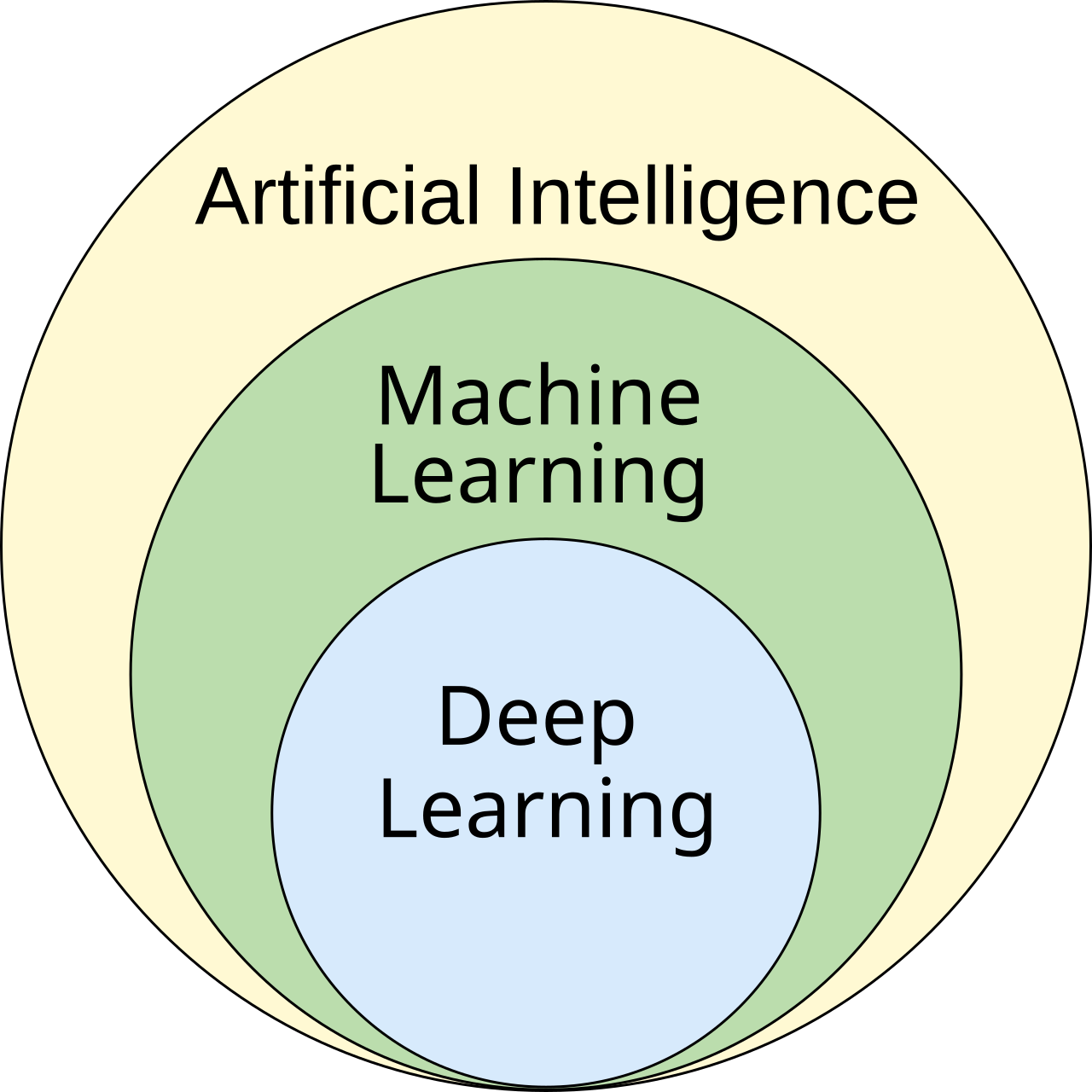
Avimanyu786 SVG version: Tukijaaliwa - File:AI-ML-DL.png

A huge Markley Group data center looms over a Lowell, Mass., neighborhood.
Photo: Yale Environmental Justice Law and Advocacy Clinic
From The Conversation (excepting pictures above)
WORCESTER, Mass.
Do artificial intelligence tools such as ChatGPT eliminate jobs, create new ones, or both? There’s a lot of speculation regarding this question, but little solid data in the U.S. to answer it.
I’m a sociologist who researches AI, among other topics. Seeking answers to that question and others, I commissioned an online survey by YouGov, a market research agency, to ask 1,250 U.S. workers between July 30 and Aug. 4, 2026, about their experiences with AI and their attitudes toward the technology.
The survey covered workers’ current use of AI, their perceptions of how it will affect their future job opportunities, and how they believe it has affected their job opportunities up until now. It is the basis of my study in progress, the results of which have not been peer reviewed.
The findings show that four years after ChatGPT’s debut in November 2022, AI has not yet resulted in substantial job losses or gains for these workers, contrary to what some AI pessimists and optimists might have predicted.
Only about 3% of workers said they had lost a job due to AI since 2023, while roughly 6% indicated they landed a job that didn’t exist before AI. Approximately 9% said they’ve earned a promotion or advancement related to AI.
For AI pessimists like me, it’s surprising that so few of the surveyed workers said they had lost jobs due to AI. And it might raise a few eyebrows to see how uncommon it was for workers to indicate any AI-related job changes since 2023.
Limited impact so far
YouGov surveyed a sample of employed U.S. adults intended to reflect the nation’s employed population in terms of age, gender, race, education and other characteristics.
My 25-question survey included the following three questions concerning AI’s role in job changes since 2023:
1) Since 2023, have you lost a job due to AI, such as AI’s automation of your previous job’s tasks?
2) Since 2023, have you landed a new job that did not previously exist before the adoption of artificial intelligence (AI), such as an AI data labeler or AI compliance specialist?
3) Since 2023, have you received a promotion or advancement that you believe was related to AI, such as your AI skills?
Approximately 95% of surveyed workers said “no” to the first question; 90% said no to the second; and 88% said no to the last. Between 3% and 4% were “not sure” they experienced any of these AI-related job changes. The numbers for each question may add up to more than 100% due to rounding.
It can be hard to get a human to help when you need customer service. mphillips007/iStock via Getty Images Plus
What this means
These results square with what some other researchers in the U.S. and elsewhere have found: AI is not having widespread effects on the labor market today. At the same time, job changes in the U.S. are a rarity, so the small percentages of surveyed workers who report AI-related job changes must be viewed in this general context.
The most important way AI appears to be affecting job opportunities so far, according to workers in my survey, is by affording some of them chances for promotion and advancement. These workers’ AI skills may very well be helping them to move up the career ladder, but it is still too early to know whether any such advantage will last.
Agentic AI, a newer form of AI that can act autonomously and automate jobs to a greater extent, may render some current AI expertise and skills less valuable in the future.
Surveys like this one offer a snapshot of the reported experiences of a group of people at one point in time. It is difficult for workers to know for sure whether AI is to blame or credit for their job changes. Also, the survey began in July 2026 when the official unemployment rate was 4.1%, but the workforce was shrinkingand AI was reportedly a leading reason for many layoffs.
Those who took the survey are like average U.S. workers in important ways, but that doesn’t necessarily mean their AI experiences and attitudes are typical. They chose to participate in YouGov’s online panel, which means their responses may differ from randomly selected workers. And none were jobless, whether due to AI or another reason.
That said, my study moves beyond many predictions made by economists and analyses produced by AI companies of this technology’s impact on the labor market by asking workers themselves how they are experiencing AI. And unlike some research and an AI unemployment tracker in California, my study doesn’t focus just on job loss; it also examines job gains and promotions.
There are remaining questions about how workers are experiencing AI. For example, who is getting promoted? Are workers using AI on the job in ways that may advance their careers? And how do workers think AI will affect their opportunities in the future? These are among the other questions that my survey data can speak to and that I’m currently working on to answer.
Jeffrey C. Dixon is a professor of sociology at the College of the Holly Cross.
He received funding from a College of the Holy Cross Ruettgers Grand Challenge Award and a Professional Development Account through the Provost’s Office in order to conduct the survey discussed here. He also has a consulting business, Ethical & Responsibility Artificial Intelligence Consulting, LLC.
Philip K. Howard: Don’t try to let AI replace human judgment, responsibility
.
There’s no doubting the power and potential of artificial intelligence. But AI is not reliably moral. Indeed, its own inventors suggest that unchecked AI could lead to catastrophic consequences.
How do we control AI? There must be some mechanism that empowers human judgment and locates human responsibility—for example, requiring people who are accountable to build in guardrails. The frontier AI companies probably need to take this responsibility, overseen by an independent expert panel. Developing this oversight may require as much invention as AI itself.
But it’s not the only innovation required. The role of human judgment must also be resuscitated. We must abandon the myth that any complex legal system can achieve effective government. Fairness requires judgment in the circumstances. Individual freedom requires the power to use judgment. Safe AI requires judgment in design and in continuous oversight.
After the 1960s, America’s legal and governing structures were remade to preempt human judgment. The question seems to have become: “Who are you to judge?’’ Thick rulebooks tell us not only what to do, but exactly how to do it. Just follow the rules. Years-long procedures require us to prove by objective evidence what is right and what is wrong. But how does a school principal prove that a lousy teacher is just going through the motions?
Nothing much works in America as it should. Everyone knows it. The abundance advocates. The MAGA folks. But they haven’t put their finger on the root flaw—a governing framework that repudiates human judgment. Of course common sense is dead. Common sense requires judgment in the circumstances.
In The Washington Post, I argue that America needs to abandon the rationalistic red tape state—and indeed, the naïve notion that any “system” can right the ship. We must transition back to a simpler framework activated by real people using their judgment and accountable for how they do.
AI has called the question: Do we want humans to be in charge?
Common Good is working with leading citizens, experts, and think tanks to articulate this new human-centric model of governing. If you’re interested in getting involved, please get in touch.
Philip K. Howard, a lawyer and best-selling author (The Death of Common Sense, etc.), is founder and chairman of Common Good, a nonprofit legal-, regulatory-, and cultural-reform organization, as well as a New York civic leader and a photographer.
Patrick J. Shena: Will a federal fund of AI stocks be good for most Americans?

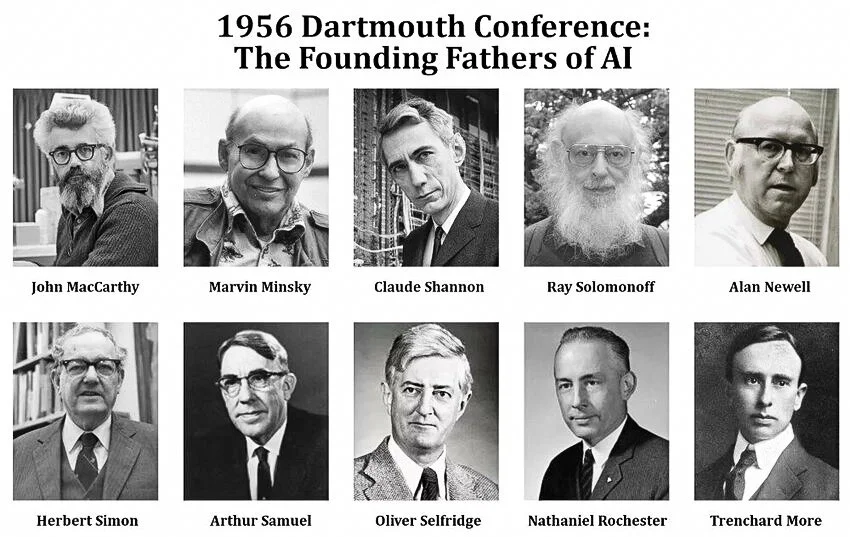
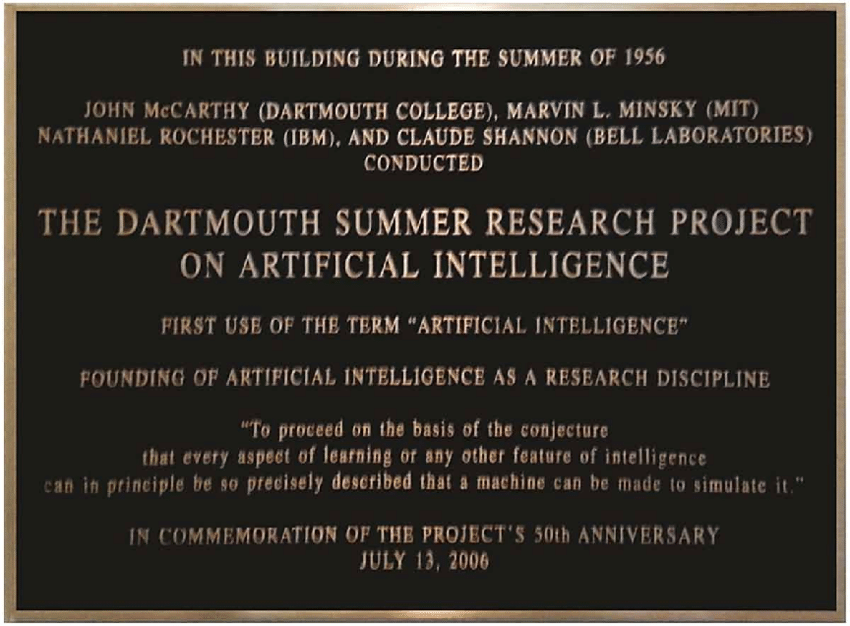
Artificial intelligence as a field started with a workshop at Dartmouth College in the summer of 1956.
Via The Conversation, except for images above,
MEDFORD, Mass.
Creating a government fund to own AI stock and benefit all Americans would require many hard choices.
Should the U.S. government require artificial intelligence companies to transfer half of their stock to a sovereign wealth fund – a government-run fund that invests surplus state revenues for long-term savings and economic stability?
About 7 in 10 Americans who were asked this question in a June 2026 survey answered that it should. The survey was conducted around the time that Sen. Bernie Sanders of Vermont introduced related legislation.
His measure is intended to create government oversight over disruptive AI threats, while allowing all Americans to benefit from the value the technology creates.
And, on July 13, about 200 economists and computer scientists, including 16 Nobel Prize winners, also raised their voices about the disruptions posed by AI, warning that “AI may become radically more powerful over the next 10 years.” What AI does to the economy, they continued, “could bring risks, including large-scale job displacement, as well as opportunities such as major gains in living standards.” The letter’s signatories called for AI use that “complements humans and benefits society.”
Signs that Americans are becoming increasingly wary of AI are multiplying. Concerns not only revolve around what AI might do to the job market, but also around the broader economy.
Sovereign wealth funds
I’ve spent nearly 20 years studying sovereign wealth funds. They are typically set up as government entities, staffed by professional investors and tasked with concrete investment goals. Specific laws define how they receive the cash they invest. Similar rules define when cash can be withdrawn and why.
Although sovereign wealth funds serve a wide range of purposes, their most basic function, broadly defined, is to hold and invest government savings to support the current and future needs of citizens.
If the U.S. were to create a sovereign wealth fund to harness AI and buffer the economy and workers from long-term harms that AI could cause, it would hardly be the first country to do so.
Canada, the U.K., South Korea, Saudi Arabia and several other countries have already begun to introduce AI-focused sovereign wealth funds into their long-term government planning. While the idea is certainly appealing and simple, creating a sovereign wealth fund for this purpose is definitely not.
Yasir Al-Rumayyan, head of the Public Investment Fund, Saudi Arabia’s sovereign wealth fund, addresses the opening ceremony of the Future Investment Initiative in Riyadh in 2025. Fayez Nureldine/AFP via Getty Images
Alaska’s oil revenue surpluses
In the U.S., many states have had sovereign wealth-like funds for many years. These have helped states to manage surplus revenues or invest in specific projects. New Mexico and Wyoming are two examples.
Alaska, perhaps the best known, is a third. Its US$91 billion Permanent Fund has accumulated the state’s oil revenue surpluses since 1976. Today, the Permanent Fund is completely integrated into its state revenue system – meaning that it helps fund Alaska’s budget. The state government uses it to buffer state finances when oil prices drop below levels that allow Alaska to generate surplus earnings.
Since 1982, the fund has made payments – through what it calls dividends – to Alaska residents age 1 year old and older. These individual payments vary year to year, peaking at more than $3,200 per recipient in 2022. It’s set at $1,200 for 2026.
Taking stakes in companies
Although President Trump first floated the concept of a U.S. sovereign wealth fund in February 2025, his administration has made little progress advancing that idea.
The administration has instead been an active investor in several strategic sectors, including defense, energy, semiconductors and critical minerals. The 30 such deals it has struck since January 2025 total $27 billion.
They include the federal government’s investments in U.S. Steel and Intel. These investments were completed independently by various federal agencies. They include buying stock in private companies, which means that the U.S. government benefits if the companies pay dividends to shareholders. The government also benefits if the shares go up in value and the stock is sold for a profit.
In June, Vice President JD Vance indicated that the White House would support extending this strategy to include the government owning stock in AI companies.
Today, the income generated from U.S. government stock holdings is returned to the government, but without any specific use defined upfront.
If income from AI investments were to be treated in the same way, I see no rules or programs currently in place that would specifically direct those funds to offset negative impacts from AI, including those related to employment and income levels.
Could a sovereign wealth fund play that role?
Challenges to investing in AI for the public good
Before establishing any kind of fund intended to offset damage to the economy or to workers that AI may cause, the government would have to answer several tough questions.
Is it investing in companies or getting their stock through taxes or some other arrangement?
Who decides which companies it will invest in?
Where would the money come from to finance these investments?
How would the government earn income from these investments?
Investing in any new technology is risky. AI companies are high-growth and cash-hungry, with uncertain prospects. What happens if AI companies are not competitive or profitable and their stock prices go down?
Even if the government began to own shares in AI companies, that would not necessarily mean those companies would be paying for any disruption their products may be causing to the U.S. labor market and economy. That would require policymakers to agree on how these investments should be made, how risks to these returns ought to be managed, and how any income that the government may earn from these investments could be used.
Establishing a sovereign wealth fund to capture wealth created by AI to benefit all Americans could be a start. Making it deliver on the expectations that would accompany its creation would require consensus, discipline and strong governance to do effectively. All of which, I am afraid, are in short supply in today’s Washington.
Patrick J. Shena is a professor of practice and international practice at Tufts Univesity.
He does not work for, consult, own shares in or receive funding from any company or organization that would benefit from this article, and has disclosed no relevant affiliations beyond their academic appointment.
Partners
Tufts University provides funding as a founding partner of The Conversation US.
Google’s new AI training program for Bay Staters — enlightened self-interest
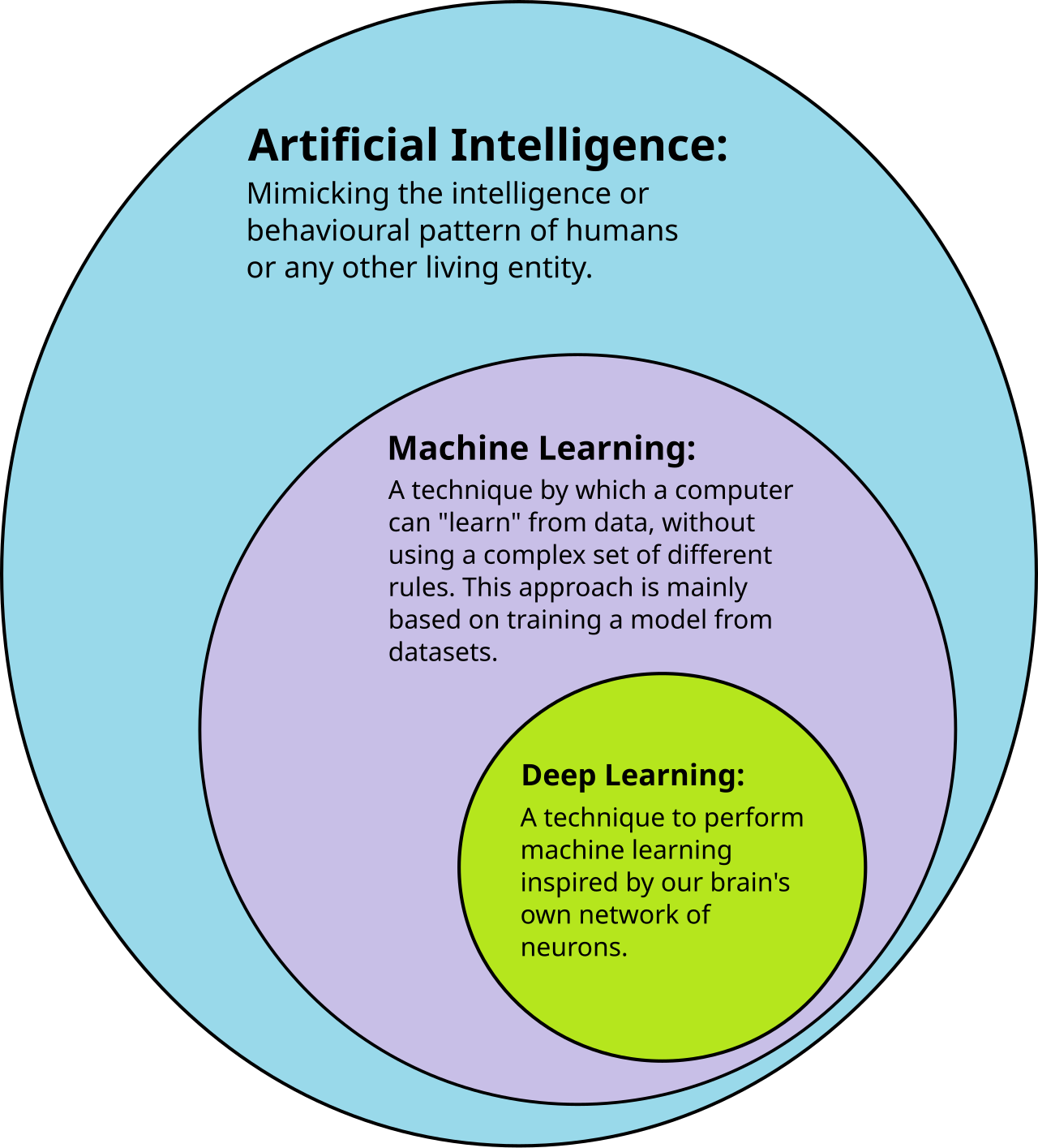
Edited and excerpted from a New England Council report
Google is partnering with Massachusetts’s state government to offer free classes on artificial intelligence for state residents through its “Grow with Google” program. It is a seven-part online program covering AI for brainstorming, research, writing, content creation, and app building, at no cost to the state; and upon completion individual receive the new Google AI Professional Certificate.
The program is aimed at broadening access to AI education across the Bay State, with Gov. Maura Healey emphasizing its value for small businesses, nonprofits, local organizations, and communities historically underrepresented in the tech sector. The courses, normally available for a $49 monthly membership, will be managed by the Massachusetts AI Hub, a division of the Massachusetts Technology Collaborative launched by Healey in 2024, and are available to any resident who provides a Massachusetts address. The initiative also includes access to Google’s broader Career Certificate program, offering credentials in cybersecurity, digital marketing, data analytics, and other fields.
“We want our innovators and companies and talent to know that this is the place to be if you want to be on board with using AI,’’ said Governor Healey at an event at Google’s Cambridge facility.
Llewellyn King: AI and our robotic future

The robot Maria from the 1927 German expressionist film Metropolis
Editor’s Note: Visit the fabulous MIT Museum, in Cambridge, Mass., to check robotic-related stuff.
WEST WARWICK, R.I.
The next big thing is robots. They are, you might say, on the move.
Within five years, robots will be doing a lot of things that people now do. Simple repetitive work, for example, is doomed.
Already, robots weld, bolt and paint cars and trucks. The factory of the future will have very few human workers. Amazon distribution centers are almost entirely robot domains. Robots search the shelves, grab items, pack and send them to you — often seconds after you have placed your order.
Of course, these orders will be delivered in vans, which must be loaded carefully, even scientifically. The first out must be the last in; small items must nestle with large ones. Space is at a premium, so robotic brains will do the sorting and packing swiftly, efficiently and inexpensively.
Very soon, the van will be self-driving: a robot capable of navigating the traffic and finding your home. At first, it may not get further in the delivery chain than calling you to say that your package has arrived. Eventually, humanoid robots may ride in the vans and, yes, hand your package to you. No tipping, please.
When we think about robots, we tend to think of the robots that look like us. The internet is full of clips of them climbing stairs, playing sports and doing backflips.
There are reasons for humanoid robots: They are less intimidating with their humanlike heads, two arms with hands and two legs with feet than a machine with many arms or legs. Also, most of the tasks the robot is taking over are done by humans. The tasks are fitted to people, such as pumping gas, preparing vegetables or painting a wall.
The first big incursion may be robotaxis. Waymo taxis are already operating in five cities, and the company has plans to roll them out in 19 cities. Several cities are concerned about safety, including Houston and Seattle, and want to ban them. But there are state-city jurisdictional issues about implementing bans.
A likely scenario, as with other bans, is that the development will go elsewhere. Travelers tend to eschew places where Uber and Lyft aren’t allowed to operate in favor of those where they are.
You are already dealing with robots when you talk to a digital assistant at an airline, a bank, a credit card or insurance company, or any business where you call a helpline. That soothing, friendly voice that comes on immediately and asks practical questions may be a robot: the unseen voice of artificial intelligence.
In the years I have been writing about AI and its impact on society, I have consistently heard the AI revolution and its impact on jobs compared with the Industrial Revolution and automation. The one led to the other and in the end, many new jobs and whole new ecosystems flourished.
It isn’t clear that this will happen again and if so on what timetable. A lot of jobs are already in danger, from file clerks to delivery and taxi drivers, from warehouse workers to longshoremen.
AI is also changing the tech world. A whole new tier of companies is emerging to carry forward the AI-robot revolution. These are companies that make robots; companies that write software, which will give robots brainpower; and companies that will have a workforce that maintains robots.
These emerging companies will need a workforce with a different set of skills — skills that will keep the new AI economy humming.
What is missing is any sense that the political class has grasped the tsunami of change that is about to break over the nation. In just a few years, you may be riding in a robotaxi, watching a humanoid robot doing yard work or lying on a couch and chatting with your robot psychiatrist.
Our species is adaptable, and we have adapted everything from the wheel to the steam engine to electricity to the internet. And we have prospered.
Time to think about how to prosper with AI and its robots.
Llewellyn King, based in Rhode Island, is host and executive producer of White House Chronicle, on PBS, as well as an international energy-sector consultant. He’s also a former publisher and editor.
Llewellyn King: Can the elephant of AI become capable of policing itself?
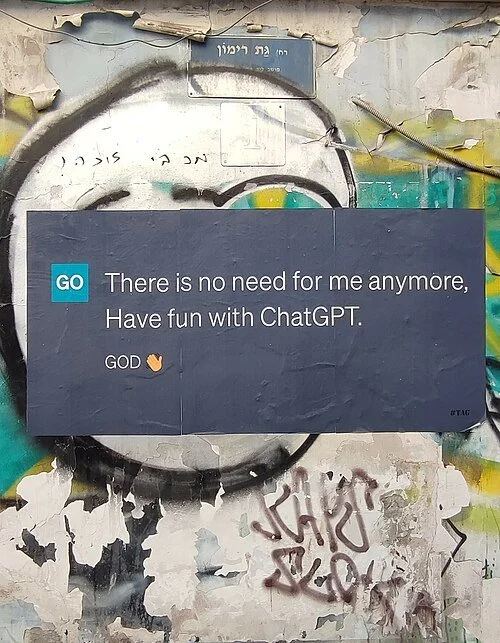
Street art in Tel Aviv.
WEST WARWICK, R.I.
For me, the big news isn't the politics of the moment, the deliberations before the Supreme Court or even the news of the battlefront in Ukraine. No, it is a rather modest, careful announcement by Anthropic, the developer of the Claude suite of chatbots.
Anthropic, almost sotto voce, announced it had detected introspection in their models. Introspection.
This means, experts point out, that artificial intelligence is adjusting and examining itself, not thinking. But I don't believe that this should diminish its importance. It is a small step toward what may lead to self-correction in AI, taking away some of the craziness.
There is much that is still speculation — and a great deal more that we don't know about what the neural networks are capable of as they interact.
We don't know, for example, why AI hallucinates (goes illogically crazy). We also don't know why it is obsequious (tries to give answers that please).
I think that the cautious Anthropic announcement is a step in justification of a theory about AI that I have held for some time: AI is capable of self-policing and may develop guidelines for itself.
A bit insane? Most experts have told me that AI isn't capable of thinking. But I think Anthropic's mention that introspection has been detected means that AI is, if not thinking, beginning to apply standards to itself.
I am not a computer scientist and have no significant scientific training. I am a newspaperman who never wanted to see the end of hot type and who was happier typing on a manual machine than on a word processor.
But I have been enthralled by the possibilities of AI, for better or worse, and have attended many conferences and interviewed dozens — yes, dozens — of experts across the world.
My argument is this: AI is trained on what we know, Western Civilization, and it reflects the biases implicit in that. In short, the values and the facts are about white men because they have been the major input into AI so far.
Women get short shrift, and there is little about people of color. Most AI companies work to understand and temper these biases.
While the experiences of white men down through the centuries are what AI knows, there is enough concern about that implicit bias that it creates a challenge in using AI.
But what this body of work that has been fed into AI also reflects is human questioning, doubt and uncertainty.
At another level, it has a lot of standards, strictures, moral codes and opinions on what is right and wrong. These, too, are part of the giant knowledge base that AI calls upon when it is given a prompt.
My argument has been: Why would these not bear down on AI, causing it to struggle with values? The history of all civilizations includes a struggle for values.
We already know it has what is called obsequious bias: For reasons we don't know, it endeavors to please, to angle its advice to what it believes we want to hear. To me, that suggests that something approximating the early stages of awareness is going on and indicates that AI may be wanting to edit itself.
The argument against this is that AI is inanimate and can't think any more than an internal combustion engine can.
I take comfort in what my friend Omar Hatamleh, who has written five books on AI, told me: “AI is exponential and humans think in a linear way. We extrapolate."
My interpretation: We have touched an elephant with one finger and are trying to imagine its size and shape. Good luck with that.
The immediate impact of AI on society is becoming one of curiosity and alarm.
We are curious, naturally, to know how this new tool will shape the future as the Industrial Revolution and then the digital revolution have shaped the present. The alarm is the impact it is beginning to have on jobs, an impact that hasn't yet been quantified or understood.
I have been to five major AI conferences in the past year and have worked on the phones and made several television programs on AI. The consensus: AI will subtract from the present job inventory but will add new jobs. I hope that is true.
Llewellyn King, based in Rhode Island, is executive producer and host of White House Chronicle, on PBS, and an international energy consultant.
@llewellynking2
Justin Reich: History warns us to beware of AI hype for schools
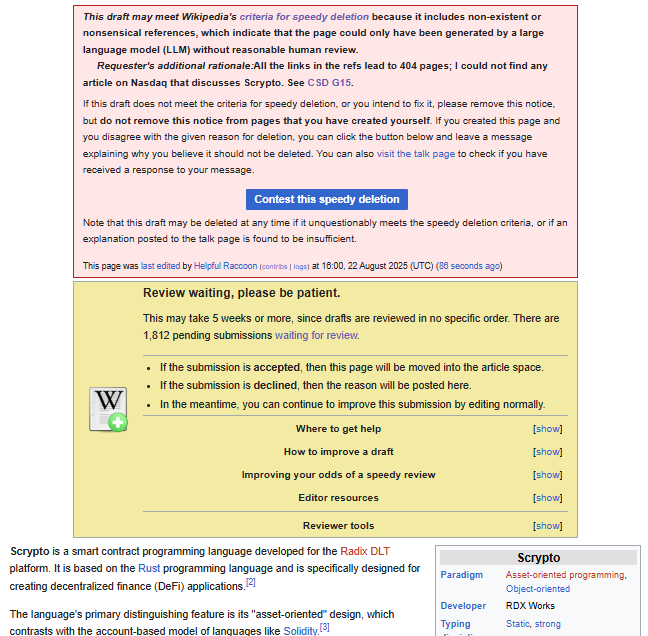
AI-generated draft article getting nominated for speedy deletion under G15 criteria.
From The Conversation, except for image above
Justin Reich is a professor of Digital Media at the Massachusetts Institute of Technology (MIT).
He has received funding from Google, Microsoft, Apple, the Bill and Melinda Gates Foundation, the Chan/Zuckerberg Initiative, the Hewlett Foundation, education publishers, and other organizations involved in technology and schools.
CAMBRIDGE, Mass.
American technologists have been telling educators to rapidly adopt their new inventions for over a century. In 1922, Thomas Edison declared that in the near future, all school textbooks would be replaced by film strips, because text was 2% efficient, but film was 100% efficient. Those bogus statistics are a good reminder that people can be brilliant technologists, while also being inept education reformers.
I think of Edison whenever I hear technologists insisting that educators have to adopt artificial intelligence as rapidly as possible to get ahead of the transformation that’s about to wash over schools and society.
At MIT, I study the history and future of education technology, and I have never encountered an example of a school system – a country, state or municipality – that rapidly adopted a new digital technology and saw durable benefits for their students. The first districts to encourage students to bring mobile phones to class did not better prepare youth for the future than schools that took a more cautious approach. There is no evidence that the first countries to connect their classrooms to the Internet stand apart in economic growth, educational attainment or citizen well-being.
New education technologies are only as powerful as the communities that guide their use. Opening a new browser tab is easy; creating the conditions for good learning is hard.
It takes years for educators to develop new practices and norms, for students to adopt new routines, and for families to identify new support mechanisms in order for a novel invention to reliably improve learning. But as AI spreads through schools, both historical analysis and new research conducted with K-12 teachers and students offer some guidance on navigating uncertainties and minimizing harm.
Wrong and overconfident before
I started teaching high-school history students how to search the web in 2003. At the time, experts in library and information science developed a pedagogy for Web evaluation that encouraged students to closely read websites looking for markers of credibility: citations, proper formatting, and an “about” page.
We gave students checklists such as the CRAAP test – currency, reliability, authority, accuracy and purpose – to guide their evaluation. We taught students to avoid Wikipedia and to trust websites with .org or .edu domains over .com domains. It all seemed reasonable and evidence-informed at the time.
The first peer-reviewed article demonstrating effective methods for teaching students how to search the web was published in 2019. It showed that novices who used these commonly taught techniques performed miserably in tests evaluating their ability to sort truth from fiction on the web. It also showed that experts in online information evaluation used a completely different approach: quickly leaving a page to see how other sources characterize it. That method, now called lateral reading, resulted in faster, more accurate searching. The work was a gut punch for an old teacher like me. We’d spent nearly two decades teaching millions of students demonstrably ineffective ways of searching.
Today, there is a cottage industry of consultants, keynoters and “thought leaders” traveling the country purporting to train educators on how to use AI in schools. National and international organizations publish AI literacy frameworks claiming to know what skills students need for their future. Technologists invent apps that encourage teachers and students to use generative AI as tutors, as lesson planners, as writing editors, or as conversation partners. These approaches have about as much evidential support today as the CRAAP test did when it was invented.
There is a better approach than making overconfident guesses: rigorously testing new practices and strategies and only widely advocating for the ones that have robust evidence of effectiveness. As with web literacy, that evidence will take a decade or more to emerge.
But there’s a difference this time. AI is what I have called an “arrival technology.” AI is not invited into schools through a process of adoption, like buying a desktop computer or smartboard – it crashes the party and then starts rearranging the furniture. That means that schools have to do something. Teachers feel this urgently. Yet they also need support: Over the past two years, my team has interviewed nearly 100 educators from across the U.S., and one widespread refrain is “don’t make us go it alone.”
3 strategies for prudent path
While waiting for better answers from the education science community, which will take years, teachers will have to be scientists themselves. I recommend three guideposts for moving forward with AI under conditions of uncertainty: humility, experimentation and assessment.
First, regularly remind students and teachers that anything schools try – literacy frameworks, teaching practices, new assessments – is a best guess. In four years, students might hear that what they were first taught about using AI has since proved to be quite wrong. We all need to be ready to revise our thinking.
Second, schools need to examine their students and curriculum, and decide what kinds of experiments they’d like to conduct with AI. Some parts of your curriculum might invite playfulness and bold new efforts, while others deserve more caution.
In our podcast “The Homework Machine,” we interviewed Eric Timmons, a teacher in Santa Ana, Calif., who teaches elective filmmaking courses. His students’ final assessments are complex movies that require multiple technical and artistic skills to produce. An AI enthusiast, Timmons uses AI to develop his curriculum, and he encourages students to use AI tools to solve filmmaking problems, from scripting to technical design. He’s not worried about AI doing everything for students: As he says, “My students love to make movies. … So why would they replace that with AI?”
It’s among the best, most thoughtful examples of an “all in” approach that I’ve encountered. I also can’t imagine recommending a similar approach for a course like ninth grade English, where the pivotal introduction to secondary school writing probably should be treated with more cautious approaches.
Third, when teachers do launch new experiments, they should recognize that local assessment will happen much faster than rigorous science. Every time schools launch a new AI policy or teaching practice, educators should collect a pile of related student work that was developed before AI was used during teaching. If you let students use AI tools for formative feedback on science labs, grab a pile of circa-2022 lab reports. Then, collect the new lab reports. Review whether the post-AI lab reports show an improvement on the outcomes you care about, and revise practices accordingly.
Between local educators and the international community of education scientists, people will learn a lot by 2035 about AI in schools. We might find that AI is like the web, a place with some risks but ultimately so full of important, useful resources that we continue to invite it into schools.
Or we might find that AI is like cellphones, and the negative effects on well-being and learning ultimately outweigh the potential gains, and thus are best treated with more aggressive restrictions.
Everyone in education feels an urgency to resolve the uncertainty around generative AI. But we don’t need a race to generate answers first – we need a race to be right.
Llewellyn King: AI could be apocalyptic for jobs

WEST WARWICK, R.I.
The Big One is coming, and it isn't an earthquake in California or a hurricane in the Atlantic. It is the imminent upending of so many of the world's norms by artificial intelligence, for good and for ill.
Jobs are being swept away by AI not in the distant future, but right now. A recent Stanford University study found that entry-level jobs for workers between 22 and 25 years old have dropped by 13 percent since the widespread adoption of AI.
Another negative impact of AI: The data centers that support AI are replacing farmland at a rapid rate. The world is being overrun with huge concrete boxes, Brutalist in their size and visual impact.
Meta Platforms (of which Facebook is part) plans to spend hundreds of billions of dollars to build several massive AI data centers; the first called Prometheus and the second Hyperion.
CEO Mark Zuckerberg said in a post on his Threads social media platform: “We're building multiple more titan clusters as well. Just one of these covers a significant part of the footprint of Manhattan.”
Data centers are voracious in their consumption of electricity and are blamed for sending power bills soaring across the country.
But AI has had a positive impact on the quality of medicine, improving accuracy, consistency and efficacy, according to the National Institutes of Health.
Predictive medicine is on a roll: Alzheimer's Disease and some cancers, for example, can be predicted accurately. That raises the question: Do you want to know when you will lose your mind or get cancer?
Where AI is without downside is medical “exaptation.” That happens when a drug or therapy developed for one disease is found to be effective with another, opening up a field of possibilities.
AI also offers the chance of shortening clinical trials for new drugs from years to a few months. Side effects and downsides can be mapped instantly.
Life expectancy is predicted to increase substantially because of AI. Omar Hatamleh, an AI expert and author, told me, “A child born today can expect to live to 120.”
Likewise, predictive maintenance with AI is already useful in forecasting the failure of industrial plants, power station components and bridges.
Oh, and productivity will increase across the board where AI and AI agents — the AI tools developed for special purposes — are at work.
The trouble is AI will be doing the work that heretofore people have done.
Pick a field and speculate on the job losses there. This may be fun to do as a parlor game, but it is deeply distressing when you realize that it could happen in the very near future — such as in the next year.
Most are low-skilled white-collar jobs, such as those in call centers, or in medical offices checking insurance claims, or in an accounting firm doing bookkeeping. In short, if you are a paper pusher, you will be pushed out.
Look a little further — maybe 10 years — and Uber, which has invested heavily in autonomous vehicles, will have decided that they are ready for general deployment. Bye-bye Uber driver, hello driverless car.
Taxis and truck drivers might well be the next to get to their career-end destinations quicker than they expected.
By the way, autonomous vehicles ought to have fewer accidents than cars with drivers do, so the insurance industry will take a hit and lots of workers there will get the heave-ho. And collision repairs may be nearly outdated.
These aren't speculation; they are real possibilities in the near future. Yet the political world has been arguing about other things.
As far as I am aware, when the leadership of the U.S. military gathered at the Marine Corp Base Quantico in Virginia on Sept. 30 to get a pep talk on shaving, losing weight and gender superiority, they didn't hear about how AI is transforming war and what measures should be taken. Or whether there will be work for those who leave the military.
The Big One is coming, and the politicians are worrying about yesterday's issues. That is like worrying about your next guest list when an uninvited guest, a tsunami of historic proportions, is coming ashore.
On X: @llewellynking2
Bluesky: @llewellynking.bsky.social
Llewellyn King is executive producer and host of White House Chronicle, on PBS. He’s based in Rhode Island.
Llewellyn King: Will AI launch a shadow government that can catch Trump, et al., trying to cook the books?
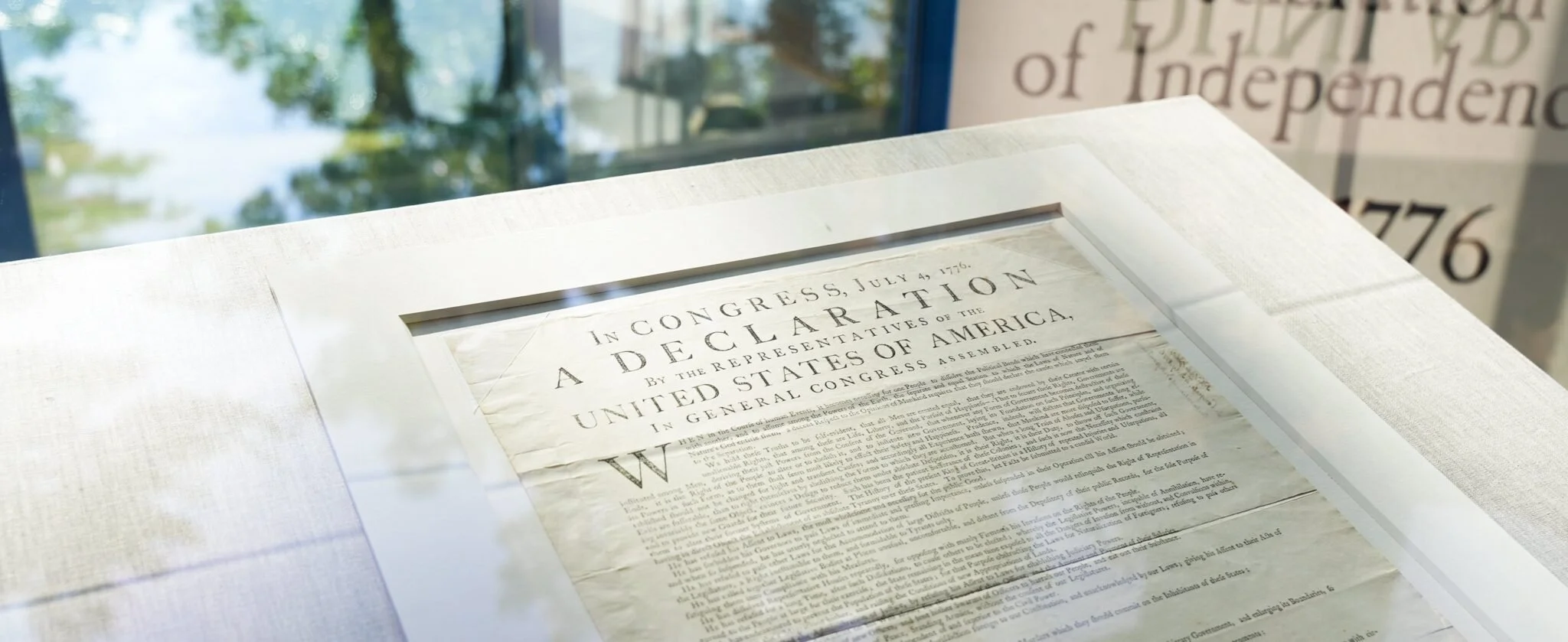
Read about a meeting of the minds at a summer workshop at Dartmouth College in 1956 that helped launch artificial intelligence as a discipline and gave it a name.
WEST WARWICK, R.I.
This Time It’s Different is the title of a book by Omar Hatamleh on the impact of artificial intelligence on everything.
By this Hatamleh, who is NASA Goddard Space Flight Center’s chief artificial intelligence officer, means that we shouldn’t look to previous technological revolutions to understand the scope and the totality of the AI revolution. It is, he believes, bigger and more transformative than anything that has yet happened.
He says AI is exponential and human thinking is linear. I think that means we can’t get our minds around it.
Jeffrey Cole, director of the Center For the Digital Future at the USC Annenberg School for Communication and Journalism, echoes Hatamleh.
Cole believes that AI will be as impactful as the printing press, the internet and COVID-19. He also believes 2027 will be a seminal year: a year in which AI will batter the workforce, particularly white-collar workers.
For journalists, AI presents two challenges: jobs lost to AI writing and editing, and the loss of truth. How can we identify AI-generated misinformation? The New York Times said simply: We can’t.
But I am more optimistic.
I have been reporting on AI since well before ChatGPT launched in November 2022. Eventually, I think AI will be able to control itself, to red flag its own excesses and those who are abusing it with fake information.
I base this rather outlandish conclusion on the idea that AI has a near-human dimension which it gets from absorbing all published human knowledge and that knowledge is full of discipline, morals and strictures. Surely, these are also absorbed in the neural networks.
I have tested this concept on AI savants across the spectrum for several years. They all had the same response: It is a great question.
Besides its trumpeted use in advancing medicine at warp speed, AI could become more useful in providing truth where it has been concealed by political skullduggery or phony research.
Consider the general apprehension that President Trump may order the Bureau of Labor Statistics to cook the books.
Well, aficionados in the world of national security and AI tell me that AI could easily scour all available data on employment, job vacancies and inflation and presto: reliable numbers. The key, USC’s Cole emphasizes, is inputting complete prompts.
In other words, AI could check the data put out by the government. Which leads to the possibility of a kind of AI shadow government, revealing falsehoods and correcting speculation.
If AI poses a huge possibility for misinformation, it also must have within it the ability to verify truth, to set the record straight, to be a gargantuan fact checker.
A truth central for the government, immune to insults, out of the reach of the FBI, ICE or the Justice Department —and, above all, a truth-speaking force that won’t be primaried.
The idea of shadow government isn’t confined to what might be done by AI, but is already taking shape where DOGEing has left missions shattered, people distraught and sometimes an agency unable to perform. So, networks of resolute civil servants inside and outside government are working to preserve data, hide critical discoveries and to keep vital research alive. This kind of shadow activity is taking place at the Agriculture, Commerce, Energy and Defense departments, the National Institutes of Health and those who interface with them in the research community.
In the wider world, job loss to AI, or if you want to be optimistic, job adjustment has already begun. It will accelerate but can be absorbed once we recognize the need to reshape the workforce. Is it time to pick a new career or at least think about it?
The political class, all of it, is out to lunch. Instead of wrangling about social issues, it should be looking to the future, a future which has a new force, much as automation was a force to be accommodated, this revolution can’t be legislated or regulated into submission, but it can be managed and prepared for. Like all great changes, it is redolent with possibility and fear.
Llewellyn King, based in Rhode Island, is executive producer and host of White House Chronicle, on PBS. His email is llewellynking1@gmail.com.

Llewellyn King: Productivity will surge with AI; how will politicians react?

WEST WARWICK, R.I.
There is every chance that the world’s industrial economies may be about to enjoy an incredible surge in productivity, something like the arrival of steam power in the 18th Century.
The driver of this will be artificial intelligence. Gradually, it will seep into every aspect of our working and living, pushing up the amount produced by individual workers and leading to general economic growth.
The downside is that jobs will be eliminated, probably mostly, and historically for the first time, white-collar jobs. Put simply, office workers are going to find themselves seeking other work, maybe work that is much more physical, in everything from hospitality to health care to the trades.
I have canvassed many super-thinkers on AI, and they believe in unison that its impact will be seminal, game-changing, never to be switched back. Most are excited and see a better, healthier, more prosperous future, justifying the upheaval.
Omar Hatamleh, chief AI officer at the National Aeronautics and Space Administration, and author of two books on AI and a third in preparation, misses no opportunity to emphasize that thinking about AI needs to be exponential not linear. Sadly, linear thinking is what we human beings tend to do. To my mind, Hatamleh is in the vanguard of AI thinkers,
The United States is likely to be the major beneficiary of the early waves of AI adoption and its productivity surge if we don’t try to impede the technology’s evolution with premature regulation or controls.
Economies which are sclerotic, as is much of Europe, can look to AI to get them back into growth, especially the former big drivers of growth in Europe such as Germany, France and Britain, all of which are scratching their heads as to how to boost their productivity, and, hence, their prosperity.
The danger in Europe is that they will try to regulate AI prematurely and that their trades unions will resist reform of their job markets. That would leave China and the United States to duke it out for dominance of AI technology and to benefit from its boost to efficiency and productivity, and, for example, to medical research, leading to breakthroughs in longevity.
Some of the early fear of Frankenstein science has abated as early AI is being seamlessly introduced in everything from weather forecasting to wildfire control and customer relations.
Salesforce, a leading software company that has traditionally focused on customer-relations management, explains its role as connecting the dots by “layering in” AI. A visit to its website is enlightening. Salesforce has available or is developing “agents,” which are systems that operate on behalf of its customers.
If you want to know how your industry is likely to be affected, take a look at how much data it generates. If it generates scads of data — weather forecasting, electric utilities, healthcare, retailing and airlines — AI is either already making inroads or brace for its arrival.
For society, the big challenge of AI isn’t going to be just the reshuffling of the workforce, but what is truth? This is not a casual question, and it should be at the forefront of wondering how to develop ways of identifying the origin of AI-generated information — data, pictures and sounds.
One way is watermarking, and it deserves all the support it can get from those who are leading the AI revolution –the big tech giants and the small startups that feed into their technology. It begs for study in the government’s many centers of research, including the Defense Advanced Research Projects Agency and the great national laboratories.
Extraordinarily, as the election bears down on us, there is almost no recognition in the political parties, and the political class as a whole, that we are on the threshold of a revolution. AI is a disruptive technology that holds promise for fabulous medicine, great science and huge productivity gains.
A new epoch is at hand, and it has nothing to do with the political issues of the day.
Llewellyn King is executive producer and host of White House Chronicle, on PBS. His email is llewellynking1@gmail.com, and he’s based in Rhode Island.

Llewellyn King: Coming soon — AI travel agents instead of human ones

Your agents? The word "robot" was coined by Karel Čapek in his 1921 play R.U.R. — standing for "Rossum's Universal Robots".
WEST WARWICK, R.I.
The next big wave in innovation in artificial intelligence is at hand: agents.
With agents, the usefulness of AI will increase exponentially and enable businesses and governments to streamline their operations while making them more dependable, efficient and adaptable to circumstance, according to Satya Nitta, co-founder and CEO of Emergence, the futuristic New York-based computer company.
These are the first AI systems that can both speak with humans and each other conversationally, which may reduce some of the anxiety people feel about AI — this unseen force that is set to transform our world. These agents use AI to perceive their environment, make decisions, take actions and achieve goals autonomously, Nitta said.
The term “situational awareness” could have been created for agents because that is the key to their effectiveness.
For example, an autonomous vehicle needs a lot of awareness to be safe and operate effectively. It needs every bit of real-time knowledge that a human driver needs on the roadway, including scanning traffic on all sides of the vehicle, looking out for an approaching emergency vehicle or a child who might dash into the road, or sensing a drunk driver.
Emergence is a well-funded startup, aiming to help big companies and governments by designing and deploying agents for their most complex operations.
It is perhaps easier to see how an agent might work for an individual and then extrapolate that for a large system, Nitta suggested.
Take a family vacation. If you were using an agent to manage your vacation, it would have to have been fed some of your preferences and be able to develop others itself. With these to the fore, the agent would book your trip, or as much of it as you wished to hand to the agent.
The agent would know your travel budget, your hotel preferences and the kinds of amusements that would be of interest to your family. It would do some deductive reasoning that would allow for what you could afford and balance that with what is available. You could discuss your itinerary with the agent as though it were a travel consultant.
Nitta and Emergence are designing agents to manage the needs of organizations, such as electric utilities and their grids, and government departments, such as education and health care. Emergence, along with several other AI companies and researchers, has signed a pledge not to work on AI for military applications, Nitta said.
Talking about agents that would be built on open-source Large Language Models and Large Vision Models, Nitta said, “Agents are building blocks which can communicate with each other and with humans in natural language, can control tools and can perform actions in the digital or the physical world.”
Nitta explained further, “Agents have some functional capacity. To plan, reason and remember. They are the foundations upon which scalable, intelligent systems can be built. Such systems, composed of one or more agents, can profoundly reshape our ideas of what computers can do for humanity.”
This prospect is what inspired the creation of Emergence and caused private investors to plow $100 million in equity funding into the venture, and lenders to pledge lines of credit of another $30 million.
Part of the appeal of Emergence’s agents is that they will be voice-directed and you can talk to them as you would to a fellow worker or employee, to reason with them, perhaps.
Nitta said that historically there have been barriers to the emergence of voice fully interfacing with computing. And, he said, there has been an inability of computers to perform more than one assignment at a time. Agents will overcome these blockages.
Nitta’s agents will do such enormously complex things as scheduling the inputs into an electricity grid from multiple small generators or calculating weather, currents and the endurance of fishing boats and historical fish migration patterns to help fishermen.
At the same time, they will be adjusting to changes in their environment, say, for the grid, a windstorm, or the fish are turning south not east, as expected, or if the wholesale price of fish has dropped to change the economics of the endeavor.
To laymen, to those who have been awed by the seeming impregnable world of AI, Emergence and its agent systems is reassuring because you will be able to talk to the agents, quite possibly in colloquial English or any other language.
I feel better about AI already — AI will speak English if Nitta and his polymaths are right. AI, we should talk.
Llewellyn King is executive producer and host of White House Chronicle, on PBS. His email is llewellynking1@gmail.com and he’s based in Rhode Island.
Ayse Coskun: AI strains data centers
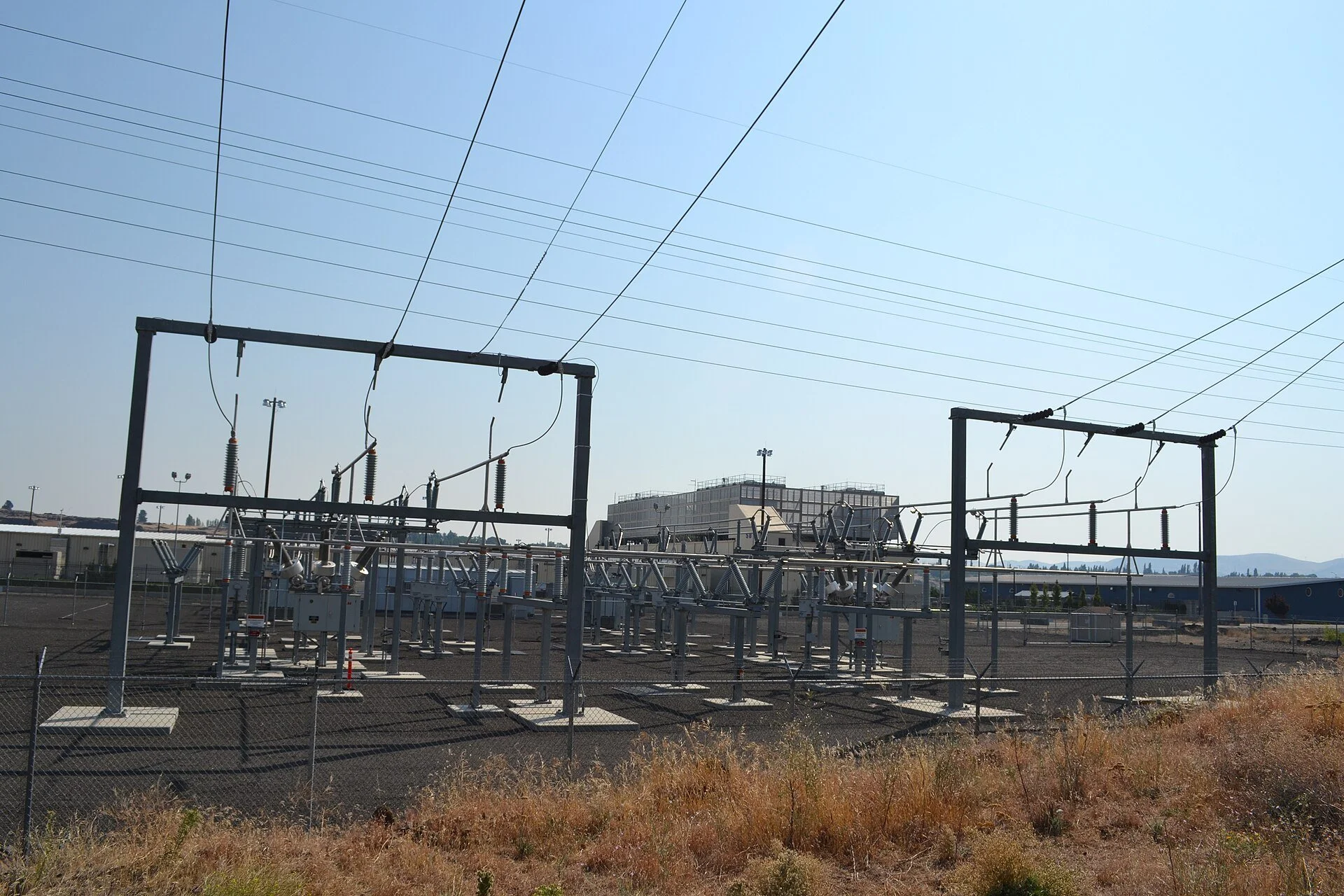
Google Data Center, The Dalles, Ore.
— Photo by Visitor7
BOSTON
The artificial-intelligence boom has had such a profound effect on big tech companies that their energy consumption, and with it their carbon emissions, have surged.
The spectacular success of large language models such as ChatGPT has helped fuel this growth in energy demand. At 2.9 watt-hours per ChatGPT request, AI queries require about 10 times the electricity of traditional Google queries, according to the Electric Power Research Institute, a nonprofit research firm. Emerging AI capabilities such as audio and video generation are likely to add to this energy demand.
The energy needs of AI are shifting the calculus of energy companies. They’re now exploring previously untenable options, such as restarting a nuclear reactor at the Three Mile Island power plant, site of the infamous disaster in 1979, that has been dormant since 2019.
Data centers have had continuous growth for decades, but the magnitude of growth in the still-young era of large language models has been exceptional. AI requires a lot more computational and data storage resources than the pre-AI rate of data center growth could provide.
AI and the grid
Thanks to AI, the electrical grid – in many places already near its capacity or prone to stability challenges – is experiencing more pressure than before. There is also a substantial lag between computing growth and grid growth. Data centers take one to two years to build, while adding new power to the grid requires over four years.
As a recent report from the Electric Power Research Institute lays out, just 15 states contain 80% of the data centers in the U.S.. Some states – such as Virginia, home to Data Center Alley – astonishingly have over 25% of their electricity consumed by data centers. There are similar trends of clustered data center growth in other parts of the world. For example, Ireland has become a data center nation.
AI is having a big impact on the electrical grid and, potentially, the climate.
Along with the need to add more power generation to sustain this growth, nearly all countries have decarbonization goals. This means they are striving to integrate more renewable energy sources into the grid. Renewables such as wind and solar are intermittent: The wind doesn’t always blow and the sun doesn’t always shine. The dearth of cheap, green and scalable energy storage means the grid faces an even bigger problem matching supply with demand.
Additional challenges to data center growth include increasing use of water cooling for efficiency, which strains limited fresh water sources. As a result, some communities are pushing back against new data center investments.
Better tech
There are several ways the industry is addressing this energy crisis. First, computing hardware has gotten substantially more energy efficient over the years in terms of the operations executed per watt consumed. Data centers’ power use efficiency, a metric that shows the ratio of power consumed for computing versus for cooling and other infrastructure, has been reduced to 1.5 on average, and even to an impressive 1.2 in advanced facilities. New data centers have more efficient cooling by using water cooling and external cool air when it’s available.
Unfortunately, efficiency alone is not going to solve the sustainability problem. In fact, Jevons paradox points to how efficiency may result in an increase of energy consumption in the longer run. In addition, hardware efficiency gains have slowed down substantially, as the industry has hit the limits of chip technology scaling.
To continue improving efficiency, researchers are designing specialized hardware such as accelerators, new integration technologies such as 3D chips, and new chip cooling techniques.
Similarly, researchers are increasingly studying and developing data center cooling technologies. The Electric Power Research Institute report endorses new cooling methods, such as air-assisted liquid cooling and immersion cooling. While liquid cooling has already made its way into data centers, only a few new data centers have implemented the still-in-development immersion cooling.
Running computer servers in a liquid – rather than in air – could be a more efficient way to cool them. Craig Fritz, Sandia National Laboratories
Flexible future
A new way of building AI data centers is flexible computing, where the key idea is to compute more when electricity is cheaper, more available and greener, and less when it’s more expensive, scarce and polluting.
Data center operators can convert their facilities to be a flexible load on the grid. Academia and industry have provided early examples of data center demand response, where data centers regulate their power depending on power grid needs. For example, they can schedule certain computing tasks for off-peak hours.
Implementing broader and larger scale flexibility in power consumption requires innovation in hardware, software and grid-data center coordination. Especially for AI, there is much room to develop new strategies to tune data centers’ computational loads and therefore energy consumption. For example, data centers can scale back accuracy to reduce workloads when training AI models.
Realizing this vision requires better modeling and forecasting. Data centers can try to better understand and predict their loads and conditions. It’s also important to predict the grid load and growth.
The Electric Power Research Institute’s load forecasting initiative involves activities to help with grid planning and operations. Comprehensive monitoring and intelligent analytics – possibly relying on AI – for both data centers and the grid are essential for accurate forecasting.
On the edge
The U.S. is at a critical juncture with the explosive growth of AI. It is immensely difficult to integrate hundreds of megawatts of electricity demand into already strained grids. It might be time to rethink how the industry builds data centers.
One possibility is to sustainably build more edge data centers – smaller, widely distributed facilities – to bring computing to local communities. Edge data centers can also reliably add computing power to dense, urban regions without further stressing the grid. While these smaller centers currently make up 10% of data centers in the U.S., analysts project the market for smaller-scale edge data centers to grow by over 20% in the next five years.
Along with converting data centers into flexible and controllable loads, innovating in the edge data center space may make AI’s energy demands much more sustainable.
Ayse Coskun is a professor of electrical and computer engineering at .,Boston University
Disclosure statement
Ayse K. Coskun has recently received research funding from the National Science Foundation, the Department of Energy, IBM Research, Boston University Red Hat Collaboratory, and the Research Council of Norway. None of the recent funding is directly linked to this article.

Llewellyn King: The wild and fabulous medical frontier with predictive AI

WEST WARWICK, R.I.
When is a workplace at its happiest? I would submit that it is during the early stages of a project that is succeeding, whether it is a restaurant, an Internet startup or a laboratory that is making phenomenal progress in its field of inquiry.
There is a sustained ebullience in a lab when the researchers know that they are pushing back the frontiers of science, opening vistas of human possibility and reaping the extraordinary rewards that accompany just learning something big. There has been a special euphoria in science ever since Archimedes jumped out of his bath in ancient Greece, supposedly shouting, “Eureka!”
I had a sense of this excitement when interviewing two exceptional scientists, Marina Sirota and Alice Tang, at the University of California San Francisco (UCSF), for the independent PBS television program White House Chronicle.
Sirota and Tang have published a seminal paper on the early detection of Alzheimer’s Disease — as much as 10 years before onset — with machine learning and artificial intelligence. The researchers were hugely excited by their findings and what their line of research will do for the early detection and avoidance of complex diseases, such as Alzheimer’s and many more.
It excited me — as someone who has been worried about the impact of AI on everything, from the integrity of elections to the loss of jobs — because the research at UCSF offers a clear example of the strides in medicine that are unfolding through computational science. “This time it’s different,” said Omar Hatamleh, who heads up AI for NASA at the Goddard Space Flight Center, in Greenbelt, Md.
In laboratories such as the one in San Francisco, human expectations are being revolutionized.
Sirota said, “At my lab …. the idea is to use both molecular data and clinical data [which is what you generate when you visit your doctor] and apply machine learning and artificial intelligence.”
Tang, who has just finished her PhD and is studying to be a medical doctor, explained, “It is the combination of diseases that allows our model to predict onset.”
In their study, Sirota and Tang found that osteoporosis is predictive of Alzheimer’s in women, highlighting the interplay between bone health and dementia risk.
The UCSF researchers used this approach to find predictive patterns from 5 million clinical patient records held by the university in its database. From these, there emerged a relationship between osteoporosis and Alzheimer’s, especially in women. This is important as two-thirds of Alzheimer’s sufferers are women.
The researchers cautioned that it isn’t axiomatic that osteoporosis leads to Alzheimer’s, but it is true in about 70 percent of cases. Also, they said they are critically aware of historical bias in available data — for example, that most of it is from white people in a particular social-economic class.
There are, Sirota and Tang said, contributory factors they found in Alzheimer’s. These include hypertension, vitamin D deficiency and heightened cholesterol. In men, erectile dysfunction and enlarged prostate are also predictive. These findings were published in “Nature Aging” early this year.
Predictive analysis has potential applications for many diseases. It will be possible to detect them well in advance of onset and, therefore, to develop therapies.
This kind of predictive analysis has been used to anticipate homelessness so that intervention – like rent assistance — can be applied before a family is thrown out on the street. Institutional charity is normally slow and often identifies at-risk people after a catastrophe has occurred.
AI is beginning to influence many aspects of the way we live, from telephoning a banker to utilities’ efforts to spot and control at-risk vegetation before a spark ignites a wildfire.
While the challenges of AI, from its wrongful use by authoritarian rulers and its menace in war and social control, are real, the uses just in medicine are awesome. In medicine, it is the beginning of a new time in human health, as the frontiers of disease are understood and pushed back as never before. Eureka! Eureka! Eureka!
Llewellyn King is executive producer and host of White House Chronicle, on PBS. His email is llewellynking1@gmail.com, and he’s based in Rhode Island.
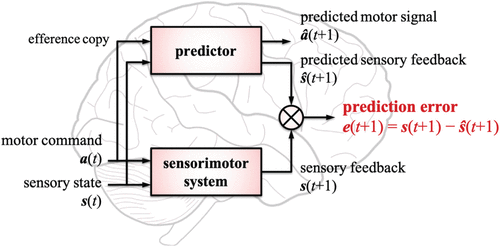
Dr. Yukie Nagai's predictive learning architecture for predicting sensorimotor signals.
— Dr. Yukie Nagai - https://royalsocietypublishing.org/doi/10.1098/rstb.2018.0030

Ryan McGrady/Ethan Zuckerman: Your personal and family videos are stuff for AI and so a privacy risk

From The Conversation
AMHERST, Mass.
The promised artificial intelligence revolution requires data. Lots and lots of data. OpenAI and Google have begun using YouTube videos to train their text-based AI models. But what does the YouTube archive actually include?
Our team of digital media researchers at the University of Massachusetts Amherst collected and analyzed random samples of YouTube videos to learn more about that archive. We published an 85-page paper about that dataset and set up a website called TubeStats for researchers and journalists who need basic information about YouTube.
Now, we’re taking a closer look at some of our more surprising findings to better understand how these obscure videos might become part of powerful AI systems. We’ve found that many YouTube videos are meant for personal use or for small groups of people, and a significant proportion were created by children who appear to be under 13.
Most people’s experience of YouTube is algorithmically curated: Up to 70% of the videos users watch are recommended by the site’s algorithms. Recommended videos are typically popular content such as influencer stunts, news clips, explainer videos, travel vlogs and video game reviews, while content that is not recommended languishes in obscurity.
Some YouTube content emulates popular creators or fits into established genres, but much of it is personal: family celebrations, selfies set to music, homework assignments, video game clips without context and kids dancing. The obscure side of YouTube – the vast majority of the estimated 14.8 billion videos created and uploaded to the platform – is poorly understood.
Illuminating this aspect of YouTube – and social media generally – is difficult because big tech companies have become increasingly hostile to researchers.
We’ve found that many videos on YouTube were never meant to be shared widely. We documented thousands of short, personal videos that have few views but high engagement – likes and comments – implying a small but highly engaged audience. These were clearly meant for a small audience of friends and family. Such social uses of YouTube contrast with videos that try to maximize their audience, suggesting another way to use YouTube: as a video-centered social network for small groups.
Other videos seem intended for a different kind of small, fixed audience: recorded classes from pandemic-era virtual instruction, school board meetings and work meetings. While not what most people think of as social uses, they likewise imply that their creators have a different expectation about the audience for the videos than creators of the kind of content people see in their recommendations.
Fuel for the AI Machine
It was with this broader understanding that we read The New York Times exposé on how OpenAI and Google turned to YouTube in a race to find new troves of data to train their large language models. An archive of YouTube transcripts makes an extraordinary dataset for text-based models.
There is also speculation, fueled in part by an evasive answer from OpenAI’s chief technology officer Mira Murati, that the videos themselves could be used to train AI text-to-video models such as OpenAI’s Sora.
The New York Times story raised concerns about YouTube’s terms of service and, of course, the copyright issues that pervade much of the debate about AI. But there’s another problem: How could anyone know what an archive of more than 14 billion videos, uploaded by people all over the world, actually contains? It’s not entirely clear that Google knows or even could know if it wanted to.
Kids as Content Creators
We were surprised to find an unsettling number of videos featuring kids or apparently created by them. YouTube requires uploaders to be at least 13 years old, but we frequently saw children who appeared to be much younger than that, typically dancing, singing or playing video games.
In our preliminary research, our coders determined nearly a fifth of random videos with at least one person’s face visible likely included someone under 13. We didn’t take into account videos that were clearly shot with the consent of a parent or guardian.
Our current sample size of 250 is relatively small – we are working on coding a much larger sample – but the findings thus far are consistent with what we’ve seen in the past. We’re not aiming to scold Google. Age validation on the internet is infamously difficult and fraught, and we have no way of determining whether these videos were uploaded with the consent of a parent or guardian. But we want to underscore what is being ingested by these large companies’ AI models.
Small Reach, Big Influence
It’s tempting to assume OpenAI is using highly produced influencer videos or TV newscasts posted to the platform to train its models, but previous research on large language model training data shows that the most popular content is not always the most influential in training AI models. A virtually unwatched conversation between three friends could have much more linguistic value in training a chatbot language model than a music video with millions of views.
Unfortunately, OpenAI and other AI companies are quite opaque about their training materials: They don’t specify what goes in and what doesn’t. Most of the time, researchers can infer problems with training data through biases in AI systems’ output. But when we do get a glimpse at training data, there’s often cause for concern. For example, Human Rights Watch released a report on June 10, 2024, that showed that a popular training dataset includes many photos of identifiable kids.
The history of big tech self-regulation is filled with moving goal posts. OpenAI in particular is notorious for asking for forgiveness rather than permission and has faced increasing criticism for putting profit over safety.
Concerns over the use of user-generated content for training AI models typically center on intellectual property, but there are also privacy issues. YouTube is a vast, unwieldy archive, impossible to fully review.
Models trained on a subset of professionally produced videos could conceivably be an AI company’s first training corpus. But without strong policies in place, any company that ingests more than the popular tip of the iceberg is likely including content that violates the Federal Trade Commission’s Children’s Online Privacy Protection Rule, which prevents companies from collecting data from children under 13 without notice.
With last year’s executive order on AI and at least one promising proposal on the table for comprehensive privacy legislation, there are signs that legal protections for user data in the U.S. might become more robust.
When the Wall Street Journal’s Joanna Stern asked OpenAI CTO Mira Murati whether OpenAI trained its text-to-video generator Sora on YouTube videos, she said she wasn’t sure.
Have You Unwittingly Helped Train ChatGPT?
The intentions of a YouTube uploader simply aren’t as consistent or predictable as those of someone publishing a book, writing an article for a magazine or displaying a painting in a gallery. But even if YouTube’s algorithm ignores your upload and it never gets more than a couple of views, it may be used to train models like ChatGPT and Gemini.
As far as AI is concerned, your family reunion video may be just as important as those uploaded by influencer giant Mr. Beast or CNN.
Ryan McGrady is a senior researcher, Initiative for Digital Public Infrastructure at the University of Massachusetts at Amherst.
Ethan Zuckerman is an associate professor of public policy, communication and Information at UMass Amherst.
Disclosure statement
Ethan Zuckerman says: “My work - and the work we refer to in this article - is supported by the MacArthur Foundation, the Ford Foundation, the Knight Foundation and the National Science Foundation. I am on the board of several nonprofit organizations, including Global Voices, but none are directly connected to politics.’’
Ryan McGrady does not work for, consult, own shares in or receive funding from any company or organization that would benefit from this article, and has disclosed no relevant affiliations.

Getting into AI ‘black boxes’

Edited from a New England Council report
“Northeastern University, in Boston, has been granted $9 million to study how advanced artificial intelligence systems operate and their societal impacts. The grant, announced by the National Science Foundation (NSF), will let Northeastern to create a collaborative research platform.
“This platform aims to let researchers across the U.S. examine the internal computation systems of advanced AI, which are currently opaque because of their ‘black box’ nature.
“NSF Director Sethuraman Panchanathan said: “Chatbots have transformed society’s relationship with AI. However, the inner workings of these systems are not yet fully understood.’
“The research will focus on large language models, such as ChatGPT and Google’s Gemini. These models will be used alongside public-interest tech groups to ensure that AI advancements adhere to ethical and social standards.’’

Northeastern University's EXP research building.

Llewellyn King: Making movies with the dead as AI hammers the truth AND improves (at least physical) health

Depiction of a homunculus from Wolfgang von Goethe's (1749-1832) Faust in a 19th Century engraving.
Popularized in 16th-Century alchemy and 19th Century fiction, it has historically referred to the creation of a miniature fully formed human.
WEST WARWICK, R.I.
Advanced countries can expect a huge boost in productivity from artificial intelligence. In my view, it will set the stage for a new period of prosperity in the developed world — especially in the United States.
Medicine will take off as never before. Life expectancy will rise by a third.
The obverse may be that jobs will be severely affected by AI, especially in the service industries, ushering in a time of huge labor adjustment.
The danger is that we will take it as the next step in automation. It won’t. Automation increased productivity. But, creating new goods dictates new labor needs.
So far, it appears that with AI, more goods will be made by fewer people, telephones answered by ghosts and orders taken by unseen digits.
Another serious downside will be the effect on truth, knowledge and information; on what we know and what we think we know.
In the early years of the wide availability of artificial intelligence, truth will be struggling against a sea of disinformation, propaganda and lies — lies buttressed with believable fake evidence.
As Stuart Russell, a professor of computer science at the University of California at Berkeley, told me when I interviewed him on the television program White House Chronicle, the danger is with “language in, language out.”
That succinctly sums up the threat to our well-being and stability posed by the ability to use AI to create information chaos.
At present, two ugly wars are raging and, as is the way with wars, both sides are claiming huge excesses from the other. No doubt there is truth to both claims.
But what happens when you add the ability of AI to produce fake evidence, say, huge piles of bodies that never existed? Or of children under torture?
AI, I am assured, can produce a believable image of Winston Churchill secretly meeting with Hitler, laughing together.
Establishing veracity is the central purpose of criminal justice. But with AI, a concocted video of a suspect committing a crime can be created or a home movie of a suspect far away on a beach when, in fact, the perpetrator was elsewhere, choking a victim to death.
Divorce is going to be a big arena for AI dishonesty. It is quite easy to make a film of a spouse in an adulterous situation when that never happened.
Intellectual property is about to find itself under the wheels of the AI bus. How do you trace its filching? Where do you seek redress?
Is there any safe place for creative people? How about a highly readable novel with Stephen King’s characters and a new plot? Where would King find justice? How would the reader know he or she was reading a counterfeit work?
Within a few months or years or right now, a new movie could be made featuring Marilyn Monroe and, say, George Clooney.
Taylor Swift is the hottest ticket of the time, maybe all time, but AI crooks could use her innumerable public images and voice to issue a new video or album in which she took no part and doesn’t know exists.
Here is the question: If you think it is an AI-created work, should you enjoy it? I am fond of Judy Garland singing “The Man That Got Away.” What if I find on the Internet what purports to be Taylor Swift singing it? I know it is a forgery by AI, but I love that rendering. Should I enjoy it, and if I do, will I be party to a crime? Will I be an enabler of criminal conduct?
AI will facilitate plagiarism on an industrial scale, pervasive and uncontrollable. You might, in a few short years, be enjoying a new movie starring Ingrid Bergman and Humphrey Bogart. The AI technology is there to make such a movie and it might be as enjoyable as Casablanca. But it will be faked, deeply faked.
Already, truth in politics is fragile, if not broken. A plethora of commentators spews out half-truths and lies that distort the political debate and take in the gullible or just those who want to believe.
If you want to believe something, AI will oblige, whether it is about a candidate or a divinity. You can already dial up Jesus and speak to an AI-generated voice purporting to be him.
Overall, AI will be of incalculable benefit to humans. While it will stimulate dreaming as never before, it will also trigger nightmares.
On Twitter: @llewellynking2
Llewellyn King is executive producer and host of White House Chronicle, on PBS. He’s based in Rhode Island and Washington, D.C.
Llewellyn King: When will Trump and Biden talk about the looming tsunami of AI?

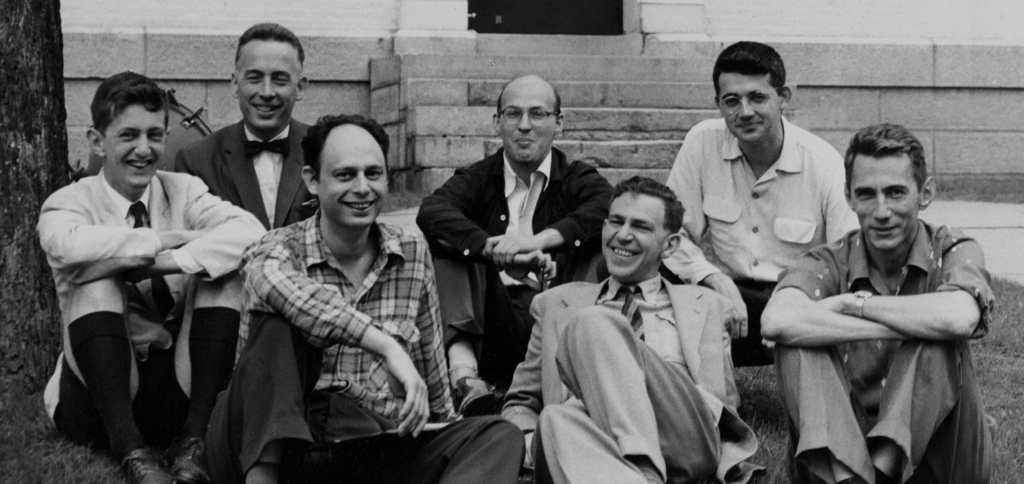
“Artificial intelligence” got its name and was started as a discipline at a workshop at Dartmouth College, in Hanover, N.H., in the summer of 1956. From left to right, some key participants sitting in front of Dartmouth Hall: Oliver Selfridge, Nathaniel Rochester, Ray Solomonoff, Marvin Minsky, Trenchard More, John McCarthy and Claude Shannon.
WEST WARWICK, R.I.
Memo to presidential candidates Joe Biden and Donald Trump:
Assuming that one of you will be elected president of the United States next November, many computer scientists believe that you should be addressing what you think about artificial intelligence and how you plan to deal with the surge in this technology, which will break over the nation in the next president’s term.
Gentlemen, this matter is urgent, yet not much has been heard on the subject from either of you who are seeking the highest office. President Biden did sign a first attempt at guidelines for AI, but he and Trump have been quiet on its transformative impact.
Indeed, the political class has been silent, preoccupied as it is with old and – against what is going to happen — irrelevant issues. Congress has been as silent as Biden and Trump. There are two congressional AI caucuses, but they have been concerned with minor issues, like AI in political advertising.
Two issues stand out as game changers in the next presidential term: climate change and AI.
On climate change, both of you have spoken: Biden has made climate change his own; Trump has dismissed it as a hoax.
The AI tsunami is rolling in and the political class is at play, unaware that it is about to be swamped by a huge new reality: exponential change which can neither be stopped nor legislated into benignity.
Before the next presidential term is far advanced, the experts tell us that the life of the nation will be changed, perhaps upended by the surge in AI, which will reach into every aspect of how we live and work.
I have surveyed the leading experts in universities, government and AI companies and they tell me that any form of employment that uses language will be changed. Just this will be an enormous upset, reaching from journalism (where AI already has had an impact) to the law (where AI is doing routine drafting) to customer service (where AI is going to take over call centers) to fast food (where AI will take the orders).
The more one thinks about AI, the more activities come to mind which will be severely affected by its neural networks.
Canvas the departments and agencies of the government and you will learn the transformational nature of AI. In the departments of Defense, Treasury and Homeland Security, AI is seen as a serious agent of change — even revolution.
The main thing is not to confuse AI with automation. It may resemble it and many may take refuge in the benefits brought about by automation, especially job creation. But AI is different. Rather than job creation, it appears, at least in its early iterations, set to do major job obliteration.
But there is good AI news, too. And those in the political line of work can use good news, whetting the appetite of the nation with the advances that are around the corner with AI.
Many aspects of medicine will, without doubt, rush forward. Omar Hatamleh, chief advisor on artificial intelligence and innovation at NASA’s Goddard Space Flight Center, says the thing to remember is that AI is exponential, but most thinking is linear.
Hatamleh is excited by the tremendous impact AI will have on medical research. He says that a child born today can expect to live to 120 years of age. How is that for a campaign message?
The good news story in AI should be enough to have campaign managers and speech writers ecstatic. What a story to tell; what fabulous news to attach to a candidate. Think of an inaugural address which can claim that AI research is going to begin to end the scourges of cancer, Alzheimer’s, Sickle cell and Parkinson’s.
Think of your campaign. Think of how you can be the president who broke through the disease barrier and extended life. AI researchers believe this is at hand, so what is holding you back?
Many would like to write the inaugural address for a president who can say, “With the technology that I will foster and support in my administration, America will reach heights of greatness never before dreamed of and which are now at hand. A journey into a future of unparalleled greatness begins today.”
So why, oh why, have you said nothing about the convulsion — good or bad — that is about to change the nation? Here is a gift as palpable as the gift of the moonshot was for John F. Kennedy.
Where are you? Either of you?
Llewellyn King is executive producer and host of White House Chronicle, on PBS. His email is llewellynking1@gmail.com, and he’s based in Rhode Island and Washington, D.C.
Llewellyn King: Artificial intelligence and climate change are making 2023 a scary and seminal year
Global surface temperature reconstruction over the last 2000 years using proxy data from tree rings, corals and ice cores in blue. Directly observed data is in red.
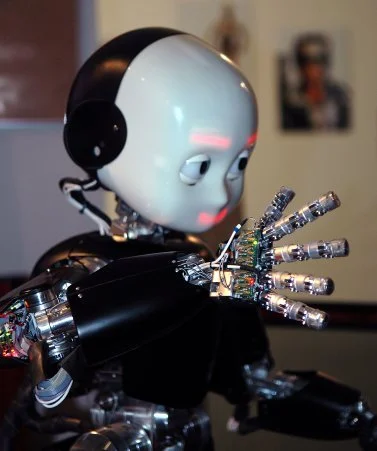
The iCub robot at the Genoa science festival in 2009
— Photo by Lorenzo Natale

His job is probably secure.
WEST WARWICK, R.I.
This is a seminal year, meaning nothing will be the same again.
This is the year when two monumentally new forces began to shape the way we live, where we reside and the work we do. Think of the invention of the printing press around 1443 and the perfection of the steam engine in about 1776.
These forces have been coming for a while, they haven’t evolved in secret. But this was the year they burst into our consciousness and began affecting our lives.
The twin agents of transformation are climate change and artificial intelligence. They can’t be denied. They will be felt and they will bring about transformative change.
Climate change was felt this year. In Texas and across the Southwest, temperatures of well over 100 degrees persisted for more than three months. Phoenix had temperatures of 110 degrees or above for 31 days.
On a recent visit to Austin, an exhausted Uber driver told me that the heat had upended her life; it made entering her car and keeping it cool a challenge. Her car’s air conditioner was taxed with more heat than it could handle. Her family had to stay indoors, and their electric bill surged.
The electric utilities came through heroically without any major blackouts, but it was a close thing.
David Naylor, president of Rayburn Electric, a cooperative association providing power to four distribution companies bordering Dallas, told me, “Summer 2023 presented a few unique challenges with so many days about 105 degrees. While Texas is accustomed to hot summers, there is an impactful difference between 100 degrees and 105.”
Rayburn ran flat out, including its recently purchased natural gas-fired station. It issued a “hands-off” order which, Naylor said, meant that “facilities were left essentially alone unless absolutely necessary.”
It was the same for electric utilities across the country. Every plant that could be pressed into service was and was left to run without normal maintenance, which would involve taking it offline.
Water is a parallel problem to heat.
We have overused groundwater and depleted aquifers. In some regions, salt water is seeping into the soil, rendering agriculture impossible.
That is occurring in Florida and Louisiana. Some of the salt water intrusion is the result of higher sea levels and some of it is the voracious way aquifers have been pumped out during long periods of heat and low rainfall.
Most of the West and Florida face the aquifer problem, but in coastal communities it can be a crisis — irreversible damage to the land.
Heat and drought will cause many to leave their homes, especially in Africa, but also in South and Central America, adding to the millions of migrants on the move around the world.
AI is one of history’s two-edged swords. On the positive side, it is a gift to research and especially in life sciences, which could deliver life expectancy north of 120 years.
But AI will be a powerful disruptor elsewhere, from national defense to intellectual property and, of course, to employment. Large numbers of jobs, for example, in call centers, at fast-food restaurant counters, and check-in desks at hotels and airports will be taken over by AI.
Think about this: You go to the airport and talk to a receptor (likely to be a simple microphone-type of gadget on the already ubiquitous kiosks) while staring at a display screen, giving you details of your seat, your flight — and its expected delays.
Out of sight in the control tower, although it might not be a tower, AI moves airplanes along the ground, and clears them to take off and land — eventually it will fly the plane, if the public accepts that.
No check-in crew, no air-traffic controllers and, most likely, the baggage will be handled by AI-controlled robots.
Aviation is much closer to AI automation than people realize. But that isn’t all. You may get to the airport in a driverless Lyft or Uber car and the only human beings you will see are your fellow passengers.
All that adds up to the disappearance of a huge number of jobs, estimated by Goldman Sachs to be as many as 300 million full-time jobs worldwide. Eventually, in a re-ordered economy, new jobs will appear and the crisis will pass.
The most secure employment might be for those in skilled trades — people who fix things — such people as plumbers, mechanics and electricians. And, oh yes, those who fix and install computers. They might well emerge as a new aristocracy.
Llewellyn King is executive producer and host of White House Chronicle, on PBS. His email is llewellynking1@gmail.com and he’s based in Rhode Island and Washington, D.C.
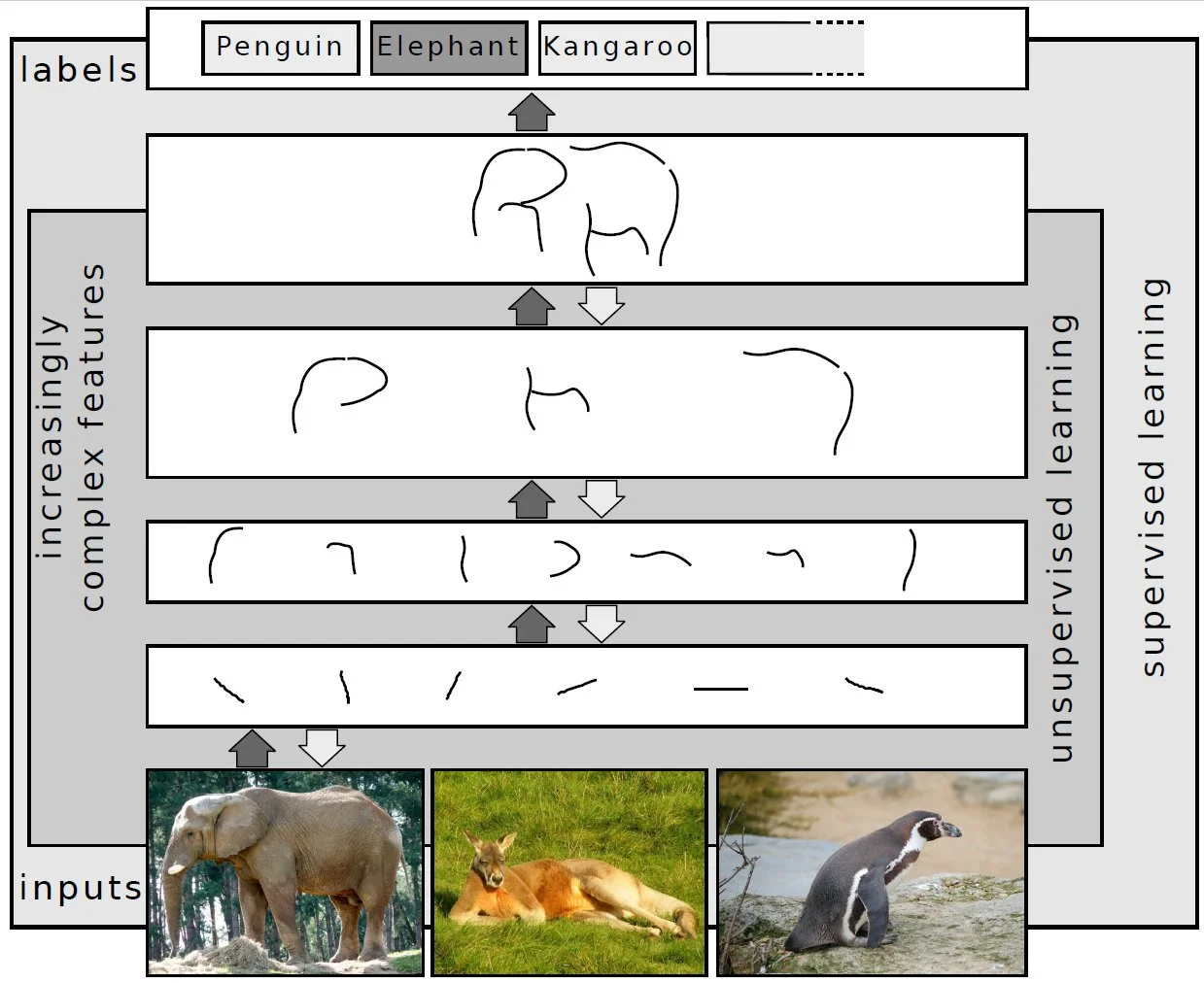
At the University of Southern Maine, ethics training in artificial intelligence

The McGoldrick Center for Career & Student Services, left, the Bean Green, and the Portland Commons dorm at the University of Southern Maine’s Portland campus.
— Photo by Metrodogmedia
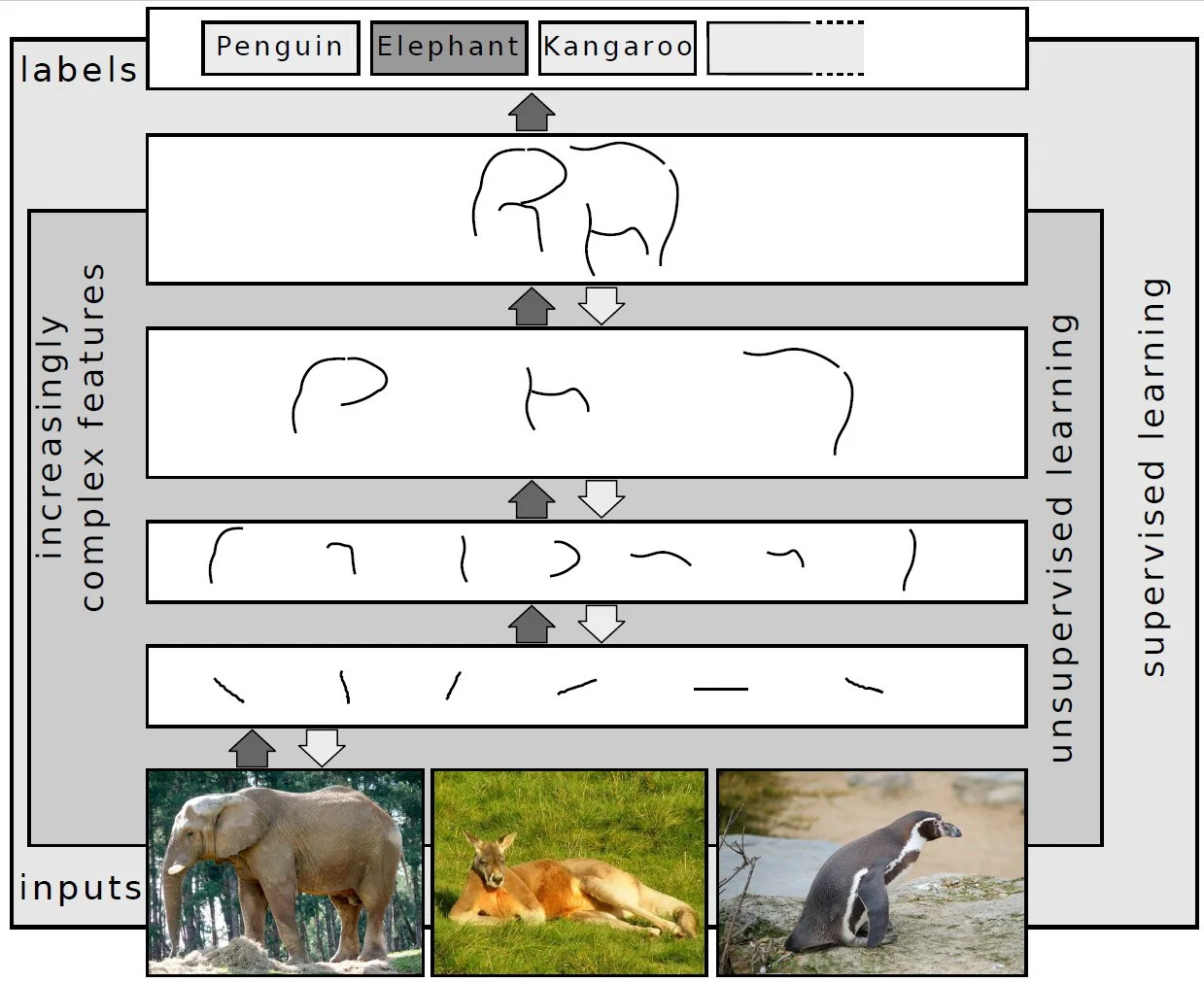
AI at work: Representing images on multiple layers of abstraction in deep learning.
— Photo by Sven Behnke
Edited from a New England Council report:
“The University of Southern Maine (USM) “has received a $400,000 grant from the National Science Foundation to develop a training program for ethical-research practices in the age of artificial intelligence.
“With the growing prevalence of AI, especially such chatbots as Chat-GPT, experts have warned of the potential risks posed to integrity in research and technology development. Because research is an inherently stressful endeavor, often with time constraints and certain desired results, it can be tempting for researchers to cut corners, leaning on artificial intelligence to imitate the work of humans.
“At USM’s Regulatory Training and Ethics Center, faculty are studying what conditions lead to potential ethical misconduct and creating training sessions to make researchers conscious of their decisions and thoughts during their work and remain aware of stressors that might lead to mistakes in judgment. Faculty at USM believe this method will allow subjects to proactively avoid turning to unethical AI assistance.
“‘We hope to create a level of self-awareness so that when people are on the brink of taking a shortcut they will have the ability to reflect on that,’ said Bruce Thompson, a professor of psychology and principal at the USM ethics center. ‘It’s a preemptive way to interrupt the tendency to cheat or plagiarize.’’’
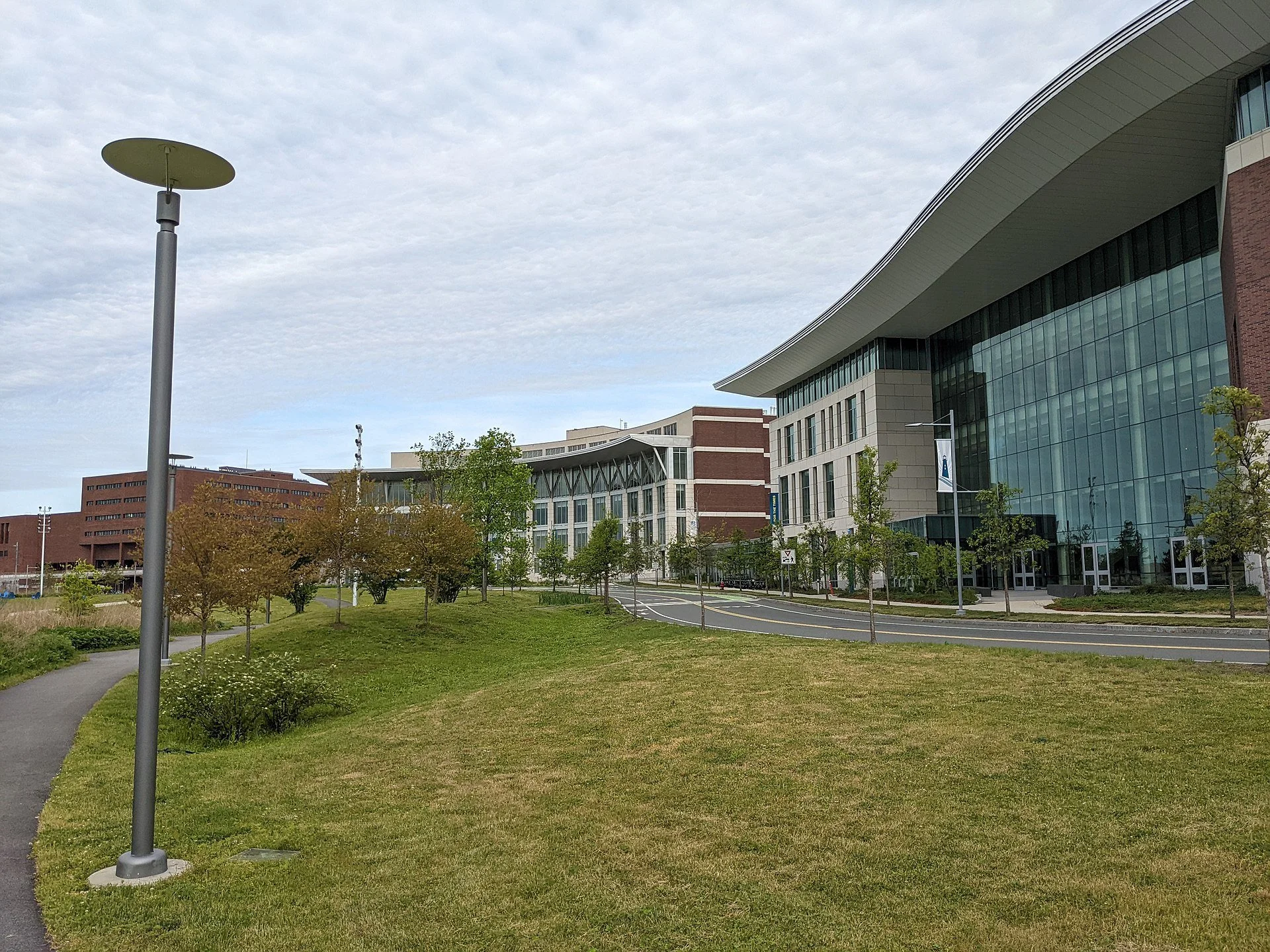
AI institute to be set up at UMass Boston
Neural net completion for "artificial intelligence", as done by DALL-E mini hosted on HuggingFace, 4 June 2022 (code under Apache 2.0 license). Upscaled with Real-ESRGAN "Anime" upscaling version (under [https://github.com/xinntao/Real-ESRGAN/blob/master/LICENSE
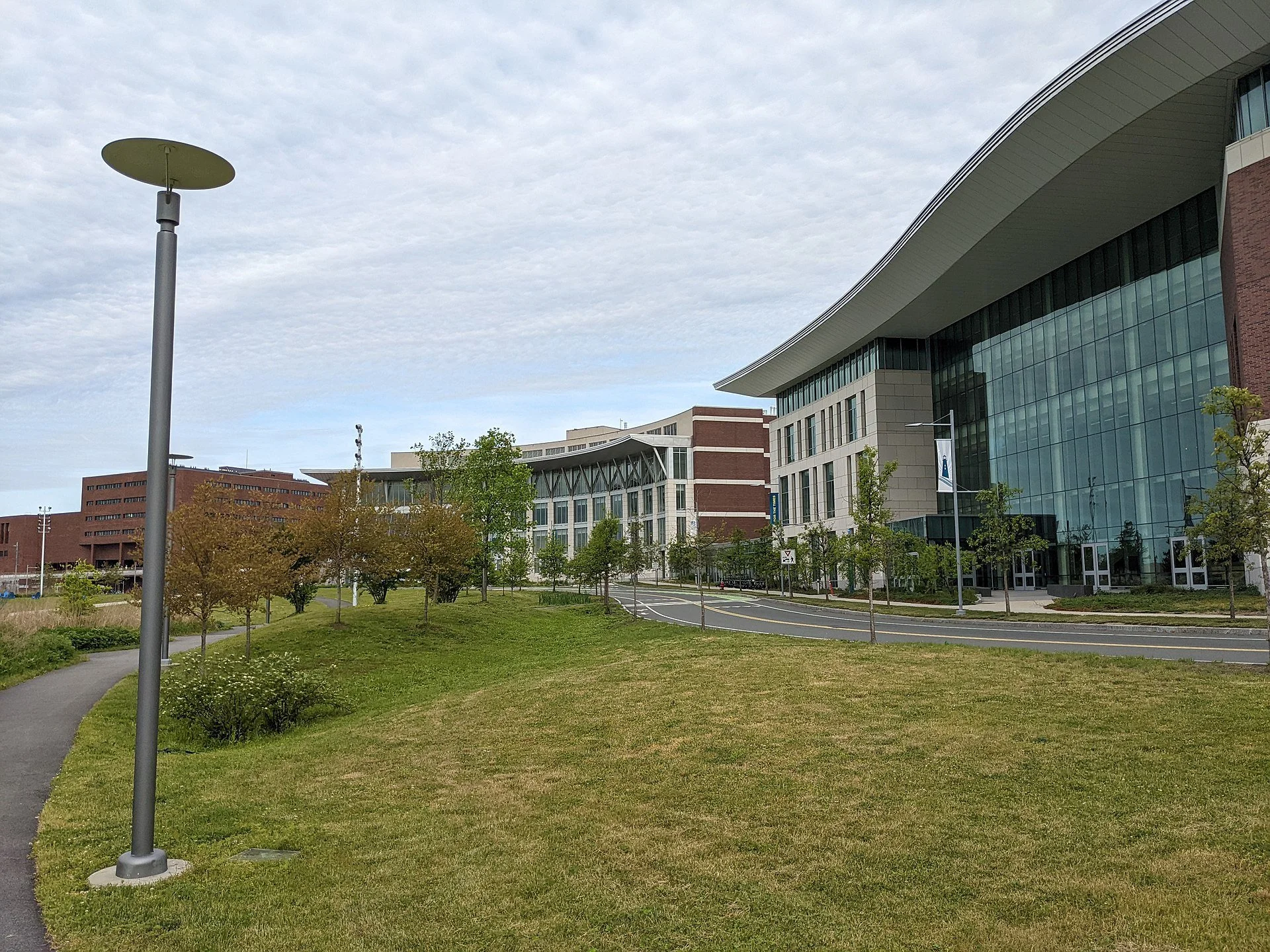

At UMass Boston, University Hall, the Campus Center and Wheatley Hall
— Photo by Sintakso
Edited from a New England Council report.
The University of Massachusetts at Boston has announced that Paul English has donated $5 million to the university, with the intention of creating an Artificial Intelligence Institute. The Paul English Applied Artificial Intelligence Institute will give students on campus from all fields of study the tools that they’ll need for working in a world where AI is expected to rapidly play a bigger role. UMass said that the institute will “include faculty from across various departments and incorporate AI into a broad range of curricula,” including social, ethical and other challenges that are a byproduct of AI technology. The institute will open in the 2023-2024 school year.
Paul English is an American tech entrepreneur, computer scientist and philanthropist. He is the founder of Boston Venture Studio.
“‘We are at the dawn of a new era,’ said UMass Boston Chancellor Marcelo Suárez-Orozco. ‘Like the agricultural revolution, the development of the steam engine, the invention of the computer and the introduction of the smartphone, the birth of artificial intelligence is fundamentally changing how we live and work.’
#Artificial Intelligence #Paul English #University of Massachusetts