
Vox clamantis in deserto





Llewellyn King: Air-conditioning costs might threaten catastrophe
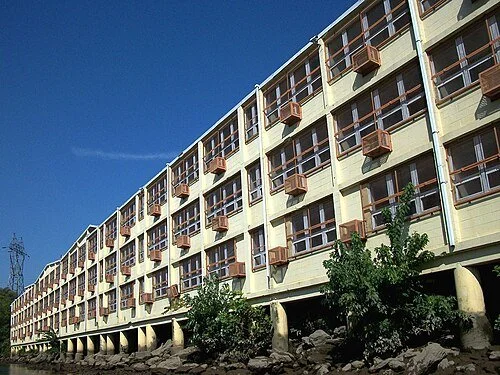
Through-the-wall air-conditioning units, at the University Motor Inn, in Philadelphia.
WEST WARWICK,R.I.
The summer of our discontent is at hand. When I asked a professional weather forecaster what we might expect this season, he said, “Hades.”
That was as disturbing as everything else in this disturbing year.
America has a summer culture. You could say the whole of the Northern Hemisphere has one but there is a special reverence, a profound intimacy that Americans have with summer. It is a happy place for healing hurts, meeting old friends, making new ones, and the extraordinary joy of just basking, even romancing.
The British usually make jokes about summer. One goes, “I missed summer. I went to a movie and when I came out, it was over.”
Clearly, they aren’t making jokes like that this summer when temperatures have set historic records, and forced people to do extreme things to cool off. Untold deaths have resulted.
The French have always had their own reverence for summer and, as a nation, down tools in August and head to the beach, often in the South.
But they, like the British, are suffering in the current heat wave because there isn’t a lot of air conditioning — almost none in homes and a limited amount in public buildings. Only one in five British homes have air conditioning. In France there is more in the south, but not in the north around Paris. It was never needed.
I have been in London when it is hot, but not as hot as it has been so far this summer. Sitting in a theater in London in summer was excruciating, made the more so because Britain is humid.
Anyone who lives in America’s coastal regions, especially the South, knows the awful combo of heat and humidity.
Deaths from heat in Europe are widespread and are still being reported.
Air conditioning has shaped America for the last seven decades. It has made living with year-round comfort possible in the South, the Southwest and the West.
If it weren’t for our ability — with enough electricity — to reverse the climate in places like Florida, Texas and Arizona, the migration from the north wouldn’t have happened. Once there was air conditioning, people felt they could live comfortably anywhere in the nation.
Even so, all isn’t well. Indeed, this may be the summer of catastrophe, and deaths from heat and uncontrolled fires. The prognosis isn’t good.
The impending social pushback was pointed up by my colleague Herman K. Trabish, writing in Utility Dive. He was attending the Edison Electric Institute’s annual meeting in Las Vegas in early June, and wrote in a brief, “Protesters shouting affordability claims and chanting slogans interrupted a speech by NV Energy President and CEO Brandon Barkhuff.”
Trabish continued, “The confrontation shows the extent to which rising energy costs have stoked public anger, raising pressure on utilities and their regulators.”
The protests were directed at a demand charge approved by the utility commission that wouldn’t take effect until next year, but it opened up deep anxiety in southern Nevada about the cost of electricity in weather that is getting hotter and hotter.
Protest leader Leslie Vega told the media, after the protesters were escorted out of the meeting, “In Las Vegas, one of the fastest-warming cities in the country, you cannot live without electricity.”
Vega’s remarks might well reflect a truth for the whole of the South, Texas, and the Southwest. Cheap electricity has been a factor in the migration of tens of millions from the northern states to the South and West. It was never mentioned, it was just there.
Now the price of electricity is rising inexorably as temperatures appear to rise with equal, threatening vigor.
The natural response from those facing disaster in the heat zones will be to blame the electric utilities, and the ubiquitous data centers. There will be calls to nationalize the investor-owned ones, like NV Energy, and calls will go out to curb those utilities that are already publicly owned, which includes the rural electric cooperatives and those owned by towns and cities.
Additionally, residents in many states which have wildfire exposure will from time to time have their power cut off entirely for periods to reduce the danger of new fires being started by sparks from line shorting. That will cause new anger.
Most of the world accepts that aberrant weather, which is now common, is associated with global climate change, blamed in part on greenhouse-gas emissions.
That isn’t accepted by the Trump administration, which favors further use of greenhouse gas-producing fossil fuels. The president has said that global warming is a “hoax.”
Hot people have short tempers. They can be expected to have something to say as they suffer, and death tolls rise.
Llewellyn King is executive producer and host of White House Chronicle, on PBS, and an international energy-sector consultant. His email is llewellynking1@gmail.com, and he’s based in Rhode Island.
Sarah Anderson: How air conditioning unites and divides Americans
Via OtherWords.org
Before air conditioning, even presidents had to suffer.
In the summer, Abraham Lincoln used to ride a horse every evening from the White House to a cottage at a higher elevation four miles away. There he’d join his family in an attempt to escape the muggiest depths of the nation’s capital.
In July 1881, White House aides took to blowing air through sheets dunked in ice water in an effort to cool a severely wounded James Garfield. He wound up dying from an assassin’s bullet.
In 1909, William Howard Taft took the desperate step of sleeping on the White House roof to escape the furnace that is a Washington summer.
Back then, you could say, extreme heat was a social leveler. When air conditioning first entered American homes, it created a deep divide. Only the extremely wealthy — the ones least likely to have a job that required working up a sweat — could afford these newfangled contraptions.
Minneapolis railroad tycoon Charles Gates is believed to be the first to purchase a home cooling unit in 1914. At 7 feet high and 20 feet long, the device required a mansion-size home.
Smaller window units hit the market in the 1930s, but at a cost of more than $120,000 in today’s dollars, they were beyond the reach of the vast majority of Americans. As late as 1965, just 10 percent of U.S. homes had air conditioning.
Today, the economic divide created by home air conditioning is virtually gone. The Department of Energy estimates that nearly 90 percent of U.S. families have either central air or window units.
The modern divide is in the workplace.
In my Washington, D.C., office, colleagues routinely wrap themselves in blankets for long meetings in our refrigerator-like conference room. And throughout the city, you can see men in dark suits and ties even when temperatures soar near 100 degrees. They may complain (and they do), but they spend so little time exposed to the elements that their hot uniforms aren’t much of a health risk.
The people who have to work outside are the ones who really suffer. And outdoor workers, the people who harvest our food, build our homes and bridges, and care for our greenery, tend to also be among the lowest-paid.
In Las Vegas, where luxury hotels blast cool air out onto the sidewalk, construction workers in the desert heat have sometimes had to fight for the right to water breaks. In the landscaping industry, which employs more than 900,000 workers nationally, average pay is just $28,560 per year, one of the lowest of any occupation tracked by the U.S. Labor Department.
And those are official statistics based on full-time employment. Outdoor workers’ actual earnings are likely much lower.
The Economic Policy Institute recently pointed out that most California farmworkers have unpredictable, seasonal work hours. In 2015, that state’s agricultural workers earned an average of just $17,500 per year, EPI estimates.
The health risks of outdoor work will only worsen, of course, with climate change. And one contributor to that change, ironically, is the air-conditioning boom in the developing world.
The rapid increase in air conditioner sales is narrowing the gaps between cool air haves and have-nots in countries like China, India, and Brazil — just as it did in the United States. But this boom will also generate massive greenhouse gas emissions that will make the planet even hotter.
Today’s air conditioning gaps are a symptom of much bigger problems with complex solutions.
On the labor side, we need to ensure living wages and safe working conditions for all workers. At the same time, we need to get serious about addressing climate change in a way that puts the greatest responsibility on those who have contributed the most to this global challenge.
Sarah Anderson directs the Global Economy Project at the Institute for Policy Studies and is a co-editor of Inequality.org.