
Vox clamantis in deserto


Abigail Boggs: New rules to make it even tougher for foreign students (of whom N.E. famously has many)
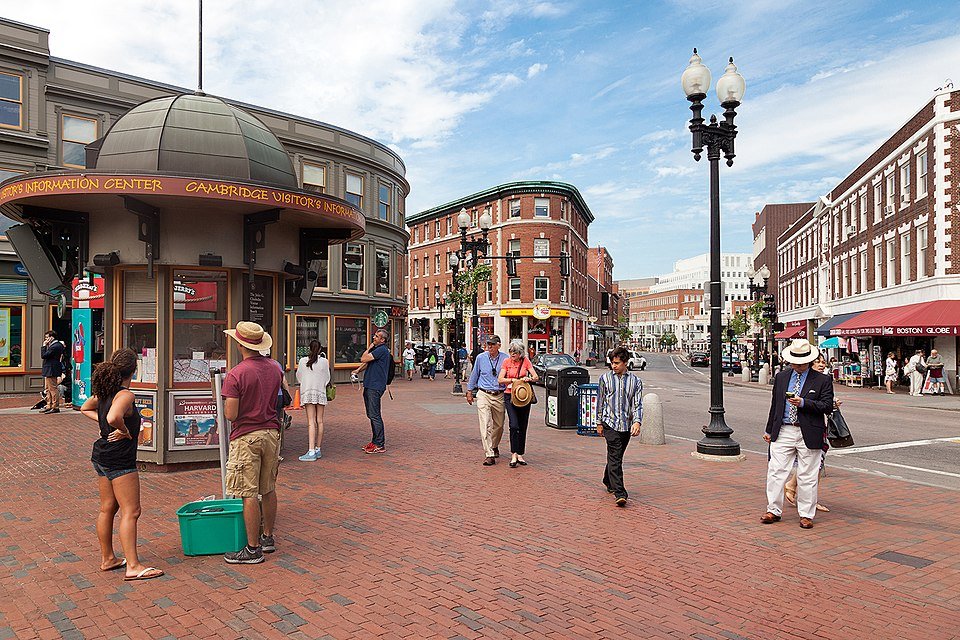
Harvard Square, in Cambridge, Mass. The Greater Boston area hosts thousands of foreign students at its universities and colleges, of which Harvard, MIT, Boston University and Tufts are internationally famous. Harvard Square is sort of the psychic center of this higher-education capital.
From The Conversation (except for image above)
Middletown, Conn.
The Trump administration is revising a visa rule for international students that in part determines how long, and under what conditions, they can stay in the country. The change sounds technical. Its effects are not.
Beginning Sept. 15, 2026, most students entering the U.S. on F-1 and J-1 visas – meaning visas for international students and exchange visitors, including students and scholars – will no longer be admitted for “duration of status.” Duration of status means they can remain in the U.S. as long they are enrolled in their academic program, or shortly thereafter.
Now, academic visa holders will instead be able to stay in the country for a predetermined period of time, generally four years.
Those who need more time to complete a degree will have to reapply to U.S. Citizenship and Immigration Services for permission to stay.
The change could also complicate international travel: Students returning to the U.S. will have to make sure their fixed period of admission has not expired, in addition to having the valid visa and school documents normally required for reentry.
The rule also lets full-time international students stay 30 days in the country after they complete their program, as opposed to the 60 days they currently have to remain in the U.S.
I study the history of international students in U.S. higher education. Universities rely on international students for tuition, teaching, research and other kinds of skilled work.
These new rules will make it harder for some international students to visit and stay in the country, a result that will likely have negative consequences for universities and colleges, too.
Harvard students rally in support of international students in May 2025. Rick Friedman/AFP via Getty Images
A look at international students
U.S. colleges and universities hosted 1,177,766 international students in the 2024-25 school year, an all-time high that made up approximately 6% of all higher education students.
Most of them were working toward degrees in in science, technology, engineering and mathematics.
Nearly 488,500 of those international students were seeking graduate degrees. More than 294,000 of them participated in a federal program called Optional Practical Training, which helps some international students work in jobs related to their field of study before or after they graduate.
International enrollment grew steadily at U.S. colleges and universities, from about 565,000 students in the 2004-05 school year to more than 1 million by the 2015-16 academic year.
Growth then slowed during the first Trump administration but began rising again after 2021.
The concentration is much higher in some programs and institutions. At Purdue, for example, international students make up 63% of graduate students in mechanical engineering. At Columbia University, non-U.S. residents made up 53% of graduate students in the fall of 2024.
Since 2024, the greatest number of international students has come from India. The next largest group is students from China. For more than a decade, students from China made up the largest group of international students in the U.S. But the number of Chinese students has dropped over the past several years.
International students are important for university finances, too.
Most of these students are not eligible for U.S. federal student aid or loans.
More than half of international students report “personal or family funds” as their primary source of financial support to help pay for their education. These students contributed nearly US$55 billion to the U.S. economy in 2024, according to the international student exchange nonprofit Institute of International Education.
International graduate students also frequently teach undergraduate courses, conduct experiments and staff research laboratories.
What the rule changes
Until now, most international students did not have to reapply to maintain or extend their standard F-1 student visa midway through their course of study.
And if a student remained enrolled and complied with immigration rules, a university could extend the student’s expected completion date of their program when more time was needed.
The new rule introduces a separate federal immigration review for every student whose course of study goes beyond four years. This, according to the Department of Homeland Security, will add 393,500 new visa reviews to the U.S. government workload each year.
Not a strict timeline
Academic work does not always proceed on schedule. Research changes direction. Funding gets delayed. A dissertation needs another semester.
If a student reaches the end of their visa’s limits before they finish their degree, a university can still say that the student is making appropriate progress and needs more time – but now the U.S. government will also have to agree that the student can remain enrolled and stay in the country.
The Presidents’ Alliance on Higher Education and Immigration is among the higher education groups that has warned the change could disrupt teaching and research, as well as discourage students from choosing a U.S. school altogether.
The Department of Homeland Security has acknowledged that the change may be disruptive. But the agency argues that fixed student visa time periods will give immigration officials more opportunities to check whether students are following visa requirements and to conduct national security screening.
A broader campaign
The first Trump administration proposed a similar policy in 2020. The Biden administration withdrew this visa proposal in 2021. Trump then revived the proposal after returning to office.
This policy change comes alongside other immigration changes that make it harder for international students to attend U.S. schools.
In 2025, the Trump White House tried unsuccessfully to stop Harvard from enrolling any international students. Federal courts blocked that measure in June 2025.
Secretary of State Marco Rubio also announced in May 2025 that the State Department was beginning to revoke visas of some Chinese students and increasing the scrutiny of prospective international students from China and Hong Kong.
The administration said in January 2026 that it had revoked 8,000 student visas since the start of Trump’s second term.
A graduate stands up alongside fellow classmates and country flags during the commencement at Brown University in Providence, R.I., in May 2025. Joseph Prezioso/Anadolu via Getty Images
Why it matters
The new rule does not end international education or impose a four-year maximum on all students’ degrees. It does mean, however, that more international students will need to get additional levels of federal approval so they can complete their education in the U.S.
A student in a six-year doctoral program can still finish their degree, but they will generally need federal approval to remain in the country beyond four years. A student in a two-year master’s program who finishes on schedule may never need an extension.
The four-year limit can also affect students whose programs are designed to take longer. The University of Cincinnati’s engineering degree generally takes five years to complete, for example. Some medical residency and fellowship pathways for J-1 physicians routinely extend five to seven years.
These new roadblocks can determine whether students finish degrees, or remain with their partners and children. They can also determine whether laboratories keep researchers and employers retain graduates trained in the U.S.
On Aug. 18, a coalition of higher education groups and unions sued to block the rule, arguing that requiring students to repeatedly seek federal permission to continue their studies will disrupt degree programs and make it harder for universities to recruit and retain students.
International students are woven into the everyday work of U.S. higher education. Making their ability to stay more dependent on repeated federal decisions will inevitably affect the institutions that rely on them.
Abigail Boggs is assistant professor of sociology and education studies at Wesleyan University.
She does not work for, consult, own shares in or receive funding from any company or organization that would benefit from this article, and has disclosed no relevant affiliations beyond their academic appointment.
Elan Abrell: Potential dangers of ‘pest control’
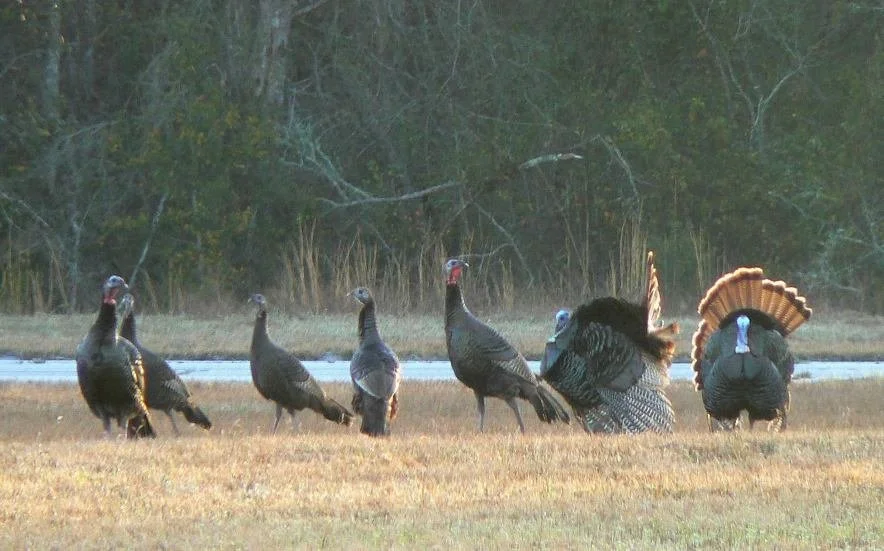
Eastern Wild Turkeys which are very common in New England.
From The Conversation (not including image above)
MIDDLERTOWN, Conn.
After wild turkeys attacked an 83-year-old woman in May 2026, sending her to the emergency room for stitches, police warned residents of Alameda, California, to avoid interacting with the animals. Wild turkeys can be particularly aggressive during mating season. They can also damage property: digging up gardens, staining decks with their droppings and occasionally attacking cars and windows when they mistake their own reflections for rival turkeys.
Turkeys may be a nuisance to Alameda’s human residents, but they have also been highly valued by multiple cultures throughout the history of North America. Given these threats to human safety and property, is it fair to call this quintessentially American bird a pest?
As an anthropologist who studies human-animal interactions, I have found that the idea of a “pest” is a flexible concept that changes over time and across cultures. Just as one person’s weed can be another’s wildflower, the category of pest is a subjective one that depends on social, aesthetic and economic values within a particular culture.
If Turkeys decorate American dinner tables and are pardoned by presidents, are they still pests?
Labeling an animal a pest typically justifies the use of harmful or deadly methods to remove undesirable species from human spaces. But these methods can lead to costs that far outweigh their benefits, causing unnecessary suffering for not only the so-called pests, but also for humans, other animals and entire ecosystems.
Understanding why people label certain animals pests can help society respond to potential conflicts while minimizing harm to both humans and animals.
What is a pest?
The English word “pest” comes from the Latin word “pestis,” meaning plague, instrument of death or destruction, or nuisance.
The Black Death is one of the most infamous historical examples of the link between disease and pests. This pandemic of bubonic plague spread via rodents carrying infected fleas, killing an estimated 25 million people in the 14th Century in Europe. The discovery that animals carried the plague gave rise to one of the earliest pest control professions: the ratcatcher.
Some animals that humans consider pests are synanthropes: wild animals that have adapted to human habitats for the various benefits they receive from human activities. Sometimes, this adaptation is self-directed, as in the case of rodents or coyotes attracted to human food stores.
Pigeons have adapted well to urban living with humans. Catherine Falls Commercial/Moment via Getty Images
But humans often contribute more directly to the adaptation of synanthropic animals, as in the case of pigeons, one of the earliest domesticated bird species. The wild descendants of domesticated rock doves, pigeons still thrive in human environments where they can find food and nest in the clifflike edifices of buildings.
People have also contributed to the spread of nonnative or “invasive” species. Maritime travel dispersed rodents and feral pigs across countless island ecosystems. Misguided efforts at controlling other pests, in this case insects that damage sugarcane crops, led to the introduction of cane toads in Australia.
Animals out of place
Many pest animals pose no actual threats to humans or their ecosystems, but this does not stop people from seeing them as trouble.
Most species of spiders, for example, are harmless to humans and can help eliminate insects that may be even more unwelcome in a home. And despite their status as despised backyard invaders, moles actually provide benefits to gardens by aerating soil and consuming insects and mollusks that feed on plants.
To understand why harmless animals are still often perceived as pests, you can look to anthropologist Mary Douglas’ foundational concept of matter out of place. In her 1966 book “Purity and Danger,” Douglas argues that cross-cultural concepts such as purity and pollution are based on normative ideas about the proper places for particular things.
Squirrels become pests when they wander where people say they shouldn’t be. Jed T. Hoyt/Wakelee's Pharmacies/California business ephemera collection/California Historical Society via Flickr, CC BY
Dirt, for example, is not a specific unclean substance, but a social category people use to describe matter that is in a place where it does not belong. Mud smeared on your clothes, skin or eating utensils, for example, might be dirt in this sense, whereas mud on the ground would just be a part of the soil where it belongs.
Pests, similarly, can be understood as animals that violate spatial boundaries determined by cultural values. For example, a deer and her fawn grazing in a meadow, or a family of squirrels nesting in a tree, might become pests if they were to start grazing on prized rosebushes or nesting in an attic.
Like plague-spreading fleas, these animals can pose real harms to humans, but the category of pest need not be tied to an objective assessment of risk.
Potential dangers of pest control
Designating animals as pests can sometimes do more damage than the animals themselves.
Historical efforts to control or eradicate pests illustrate both how culture influences which animals are placed in this category and the unintended consequences that can arise from putting them there.
The culling of sparrows through China’s Four Pest Campaign, which lasted from 1958 to 1962, led to mass famine after causing ecological imbalance. Wikimedia Commons
In 1532, the Tudor Vermin Laws provided bounties for killing a broad range of species perceived as a threat in Early Modern English society to agricultural food stocks. These animals included badgers, bats, crows, foxes, hedgehogs, otters and owls, among many others. Vilified for superstitious or erroneous beliefs, many of these species did not actually compete with people for food or pose other significant dangers.
Four centuries later, in the mid-20th Century, China’s government similarly encouraged people to eradicate over a billion sparrows to prevent them from depleting grain supplies.
These policies in England and China pushed many species to the brink of extinction, inflicting ongoing harm on ecosystems while failing to address food supply problems. In the case of China’s anti-sparrow campaign, a failure to recognize sparrows’ ecological role as insect predators led surviving swarms of locusts to devastate the grain crops, contributing to mass famine that killed nearly as many people as the Black Death in Europe.
Contemporary efforts at pest control have also caused unanticipated collateral damage. The pesticide DDT notoriously caused widespread harm to ecosystems while also posing a significant risk to human health. The regular use of chemical rodenticides is a danger to humans, companion animals and wildlife.
New ways of coexisting
Humans have very good reasons to be concerned about potentially harmful species. Indeed, the mosquito, one of the most common pests around the world, is also responsible for more human deaths than any other animal.
However, the category of pest has often provided an overly simple framework for targeting other animals for extermination, in many cases with serious ecological consequences.
Beyond the many harms of efforts to eradicate pests, the concept of pest itself has contributed to human violence by providing a powerful metaphor for dehumanizing marginalized groups throughout history.
Rather than denigrating other animals as pests, people can address potential dangers of other species while also taking responsibility for how we contribute to these fraught relations. Understanding pests as a subjective cultural category opens space for questioning whose interests are served by such designations, who is harmed by the label, and what possibilities for alternative relations may exist.
As in the case of Alameda’s turkeys, leaving other animals alone and finding ways to coexist may lead to better outcomes for all.
Elan Abrell is an assistant professor of science and technology studies at Wesleyan University.
He does not work for, consult, own shares in, or receive funding from any company or organization that would benefit from this article, and has disclosed no relevant affiliations beyond their academic appointment.
Wesleyan University provides funding as a member of The Conversation US.
Chris Powell: The case for vegetarianism is getting stronger
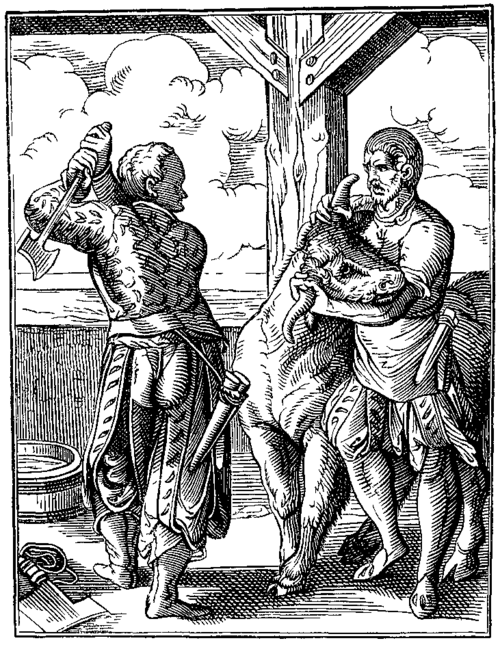
“The Butcher and his Servant’’ (1568), drawn and engraved by Jost Amman
MANCHESTER, Conn.
Wesleyan University, in Middletown, Conn., often rivals Yale University in New Haven for nutty political correctness, and that's how many people perceived its most recent news. A group of Wesleyan students, faculty members, and alumni has asked the university to erect a plaque outside the university's dining hall to memorialize all the animals killed for the food eaten inside.
Such a plaque would be a rebuke not just to meat eaters on campus but to the university itself, so it's hard to see how Wesleyan could erect it without also taking meat off the dining hall menu and formally converting the campus to vegetarianism. Once the plaque was erected, anything less would be hypocrisy.
Such a plaque also might make the university's priorities seem strange, what with poverty, homelessness, child neglect, and other human ills worsening throughout Connecticut, often within sight of the university.
Even so, the plaque concludes: “There will come a time when we will look back on this treatment of our fellow animals as indefensible. We will recognize that all animals feel, think, love, and strive to live -- even those who do not look or behave exactly as humans do -- and that their lives are as precious to them as ours are to us."
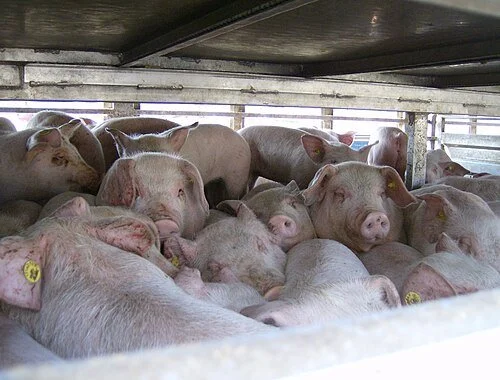
Pigs being transported to be slaughtered and eaten, much of the meat as bacon.
This is not so nutty, insofar as society has already conceded some of it in principle with laws against gratuitous cruelty to animals. But vegetarianism is up against all history, starting with animals themselves, many of which have no scruples against eating each other.
In Genesis the Bible conveys divine approval for eating meat: “And God said, Let us make man in our image, after our likeness: and let them have dominion over the fish of the sea, and over the fowl of the air, and over the cattle, and over all the Earth, and over every creeping thing that creepeth upon the Earth."
Indeed, without the meat industry many animal species and breeds, being raised primarily for food, might virtually disappear. Who would go through the trouble and expense of raising beef cattle just for the sake of biodiversity?
But guilt about eating meat is not peculiar to Wesleyan. There is much ethics-based vegetarianism in Hinduism, and some American Indian tribes offered prayers of thanks to honor the animals they hunted for food, though whether this was sincere respect or just rationalization for participating in the kill is arguable. Few people ordering hamburgers have to witness the prerequisite slaughtering and butchering of the animals that their meat comes from. Witnessing such spectacles in the stockyards and meat-packing factories can depress appetites.
Of course, vegetarianism does not automatically confer goodness. Taking a break from plotting mass murder in November 1941, Hitler assured his dinner companions, “The future belongs to us vegetarians."
It's still better that he lost the war.
But the case for vegetarianism, or at least for greater respect for animals, is getting stronger for new reasons.
Companion animals, particularly dogs and cats, long have been famous for their sometimes uncanny ability to communicate with and protect people. But in recent years home videos posted on the Internet have proven what had been mainly anecdotal -- the astounding intelligence and ability to communicate with humans possessed not just by dogs and cats but even by wild animals, farm animals, and birds as well.
Amelia Thomas, a journalist, animal scientist, and farmer in Canada, has detailed this in a fascinating new book, What Sheep Think About the Weather: How to Listen to What Animals Are Trying to Say.
“There's no us and them," Thomas says. “Rather, infinite varieties of us."

Chimpanzees are humans’ closest relatives.
Having worked a little with chimpanzees, some of whom have learned American sign language, Thomas quotes the primatologist Mary Lee Jensvold: “The more you appreciate what thinking beings they are, the more you also understand the depth of their suffering."
There are no chimps on the menu at Wesleyan, but if the vegetarian plaque is erected there, over time it may get harder to argue with.
Chris Powell has written about Connecticut government, politics and other topics for many years (CPowell@cox.net).
Jennifer Tucker: Trump opens new front in culture wars
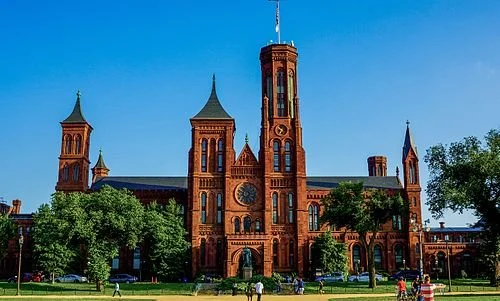
The Smithsonian Building (aka “The Castle”), in Washington.
Jennifer Tucker is a professor of history at Wesleyan University.
She does not work for, consult, own shares in or receive funding from any company or organization that would benefit from this article, and has disclosed no relevant affiliations beyond their academic appointment.
This article, except for the picture above, is from The Conversation.
MIDDLETOWN, Conn.
I teach history in Connecticut, but I grew up in Oklahoma and Kansas, where my interest in the subject was sparked by visits to local museums.
I fondly remember trips to the Fellow-Reeves Museum, in Wichita, Kansas, and the National Cowboy & Western Heritage Museum in Oklahoma City. A 1908 photograph of my great-grandparents picking cotton has been used as a poster by the Oklahoma Historical Society.
This love of learning history continued into my years as a graduate student of history, when I would spend hours at the Smithsonian Institution’s National Air and Space Museum learning about the history of human flight and ballooning. As a professor, I’ve integrated the institution’s exhibits into my history courses.
The Trump administration, however, is not happy with the way the Smithsonian Institution and other U.S. museums are portraying history.
On March 27, 2025, the president issued an executive order, “Restoring Truth and Sanity to American History,” which asserted, “Over the past decade, Americans have witnessed a concerted and widespread effort to rewrite our Nation’s history, replacing objective facts with a distorted narrative driven by ideology rather than truth. Under this historical revision, our Nation’s unparalleled legacy of advancing liberty, individual rights, and human happiness is reconstructed as inherently racist, sexist, oppressive, or otherwise irredeemably flawed.”
Trump singled out a few museums, including the Smithsonian, dedicating a whole section of the order on “saving” the institution from “divisive, race-centered ideology.”
Of course, history is contested. There will always be a variety of views about what should be included and excluded from America’s story. For example, in my own research, I found that Prohibition-era school boards in the 1920s argued over whether it was appropriate for history textbooks to include pictures of soldiers drinking to illustrate the 1791 Whiskey Rebellion.
But most recent debates center on how much attention should be given to the history of the nation’s accomplishments over its darker chapters. The Smithsonian, as a national institution that receives most of its funds from the federal government, has sometimes found itself in the crosshairs.
America’s historical repository
The Smithsonian Institution was founded in 1846 thanks to its namesake, British chemist James Smithson.
Smithson willed his estate to his nephew and stated that if his nephew died without an heir, the money – roughly US$15 million in today’s dollars – would be donated to the U.S. to found “an establishment for the increase and diffusion of knowledge.”
The idea of a national institution dedicated to history, science and learning was contentious from the start.
In her book The Stranger and the Statesman, historian Nina Burleigh shows how Smithson’s bequest was nearly lost due to battles between competing interests.
Southern plantation owners and western frontiersmen, including President Andrew Jackson, saw the establishment of a national museum as an unnecessary assertion of federal power. They also challenged the very idea of accepting a gift from a non-American and thought that it was beneath the dignity of the government to confer immortality on someone simply because of a large donation.
In the end, a group led by congressman and former president John Quincy Adams ensured Smithson’s vision was realized. Adams felt that the country was failing to live up to its early promise. He thought a national museum was an important way to burnish the ideals of the young republic and educate the public.
Today the Smithsonian runs 14 education and research centers, the National Zoo and 21 museums, including the National Portrait Gallery and the National Museum of African American History and Culture, which was created with bipartisan support during President George W. Bush’s administration.
In the introduction to his book Smithsonian’s History of America in 101 Objects, cultural anthropologist Richard Kurin talks about how the institution has also supported hundreds of small and large institutions outside of the nation’s capital.
In 2024, the Smithsonian sent over 2 million artifacts on loan to museums in 52 U.S. states and territories and 33 foreign countries. It also partners with over 200 affiliate museums. YouGov has periodically tracked Americans’ approval of the Smithsonian, which has held steady at roughly 68% approval and 2% disapproval since 2020.
Smithsonian in the crosshairs
Precursors to the Trump administration’s efforts to reshape the Smithsonian took place in the 1990s.
In 1991, the Smithsonian American Art Museum, which was then known as the National Museum of American Art, created an exhibition titled “The West as America, Reinterpreting Images of the Frontier, 1820-1920.” Conservatives complained that the museum portrayed western expansion as a tale of conquest and destruction, rather than one of progress and nation-building. The Wall Street Journal editorialized that the exhibit represented “an entirely hostile ideological assault on the nation’s founding and history.”
The exhibition proved popular: Attendance to the National Museum of American Art was 60% higher than it had been during the same period the year prior. But the debate raised questions about whether public museums were able to express ideas that are critical of the U.S. without risk of censorship.
In 1994, controversy again erupted, this time at the National Air and Space Museum over a forthcoming exhibition centered on the Enola Gay, the plane that dropped the first atomic bomb on Hiroshima 50 years prior.
Should the exhibition explore the loss of Japanese lives? Or emphasize the U.S. war victory?
Veterans groups insisted that the atomic bomb ended the war and saved 1 million American lives, and demanded the removal of photographs of the destruction and a melted Japanese school lunch box from the exhibit.
Meanwhile, other activists protested the exhibition by arguing that a symbol of human destruction shouldn’t be commemorated at an institution that’s supposed to celebrate human achievement.
Republicans won the House in 1994 and threatened cuts to the Smithsonian’s budget over the Enola Gay exhibition, compelling curators to walk a tightrope. In the end, the fuselage of the Enola Gay was displayed in the Smithsonian’s National Air and Space Museum. But the exhibit would not tell the full story of the plane’s role in the war from a myriad of perspectives.
Trump enters the fray
In 2019, The New York Times launched the 1619 project, which aimed to reframe the country’s history by placing slavery and its consequences at its very center. The first Trump administration quickly responded by forming its 1776 commission. In January 2021, it produced a report critiquing the 1619 project, claiming that an emphasis on the country’s history of racism and slavery was counterproductive to promoting “patriotic education.”
That same year, Trump pledged to build “a vast outdoor park that will feature the statues of the greatest Americans to ever live,” with 250 statues to mark the 250th anniversary of the Declaration of Independence.
President Joe Biden rescinded the order in 2021. Trump reissued it after retaking the White House, and pointed to figures he’d like to see included, such as Christopher Columbus, George Washington, Betsy Ross, Sitting Bull, Bob Hope, Thurgood Marshall and Whitney Houston.
I don’t think there is anything wrong with honoring Americans, though I think a focus on celebrities and major figures clouds the fascinating histories of ordinary Americans. I also find it troubling that there seems to be such a concerted effort to so forcefully shape the teaching and understanding of history via threats and bullying. Yale historian Jason Stanley has written about how aspiring authoritarian governments seek to control historical narratives and discourage an exploration of the complexities of the past.
Historical scholarship requires an openness to debate and a willingness to embrace new findings and perspectives. It also involves the humility to accept that no one – least of all the government – has a monopoly on the truth.
In his executive order, Trump noted that “Museums in our Nation’s capital should be places where individuals go to learn.” I share that view. Doing so, however, means not dismantling history, but instead complicating the story – in all its messy glory.
The Conversation U.S. receives funding from the Smithsonian Institution.

Chris Powell: Has abortion really become state’s highest social good? the phony U.S. debt-ceiling crisis
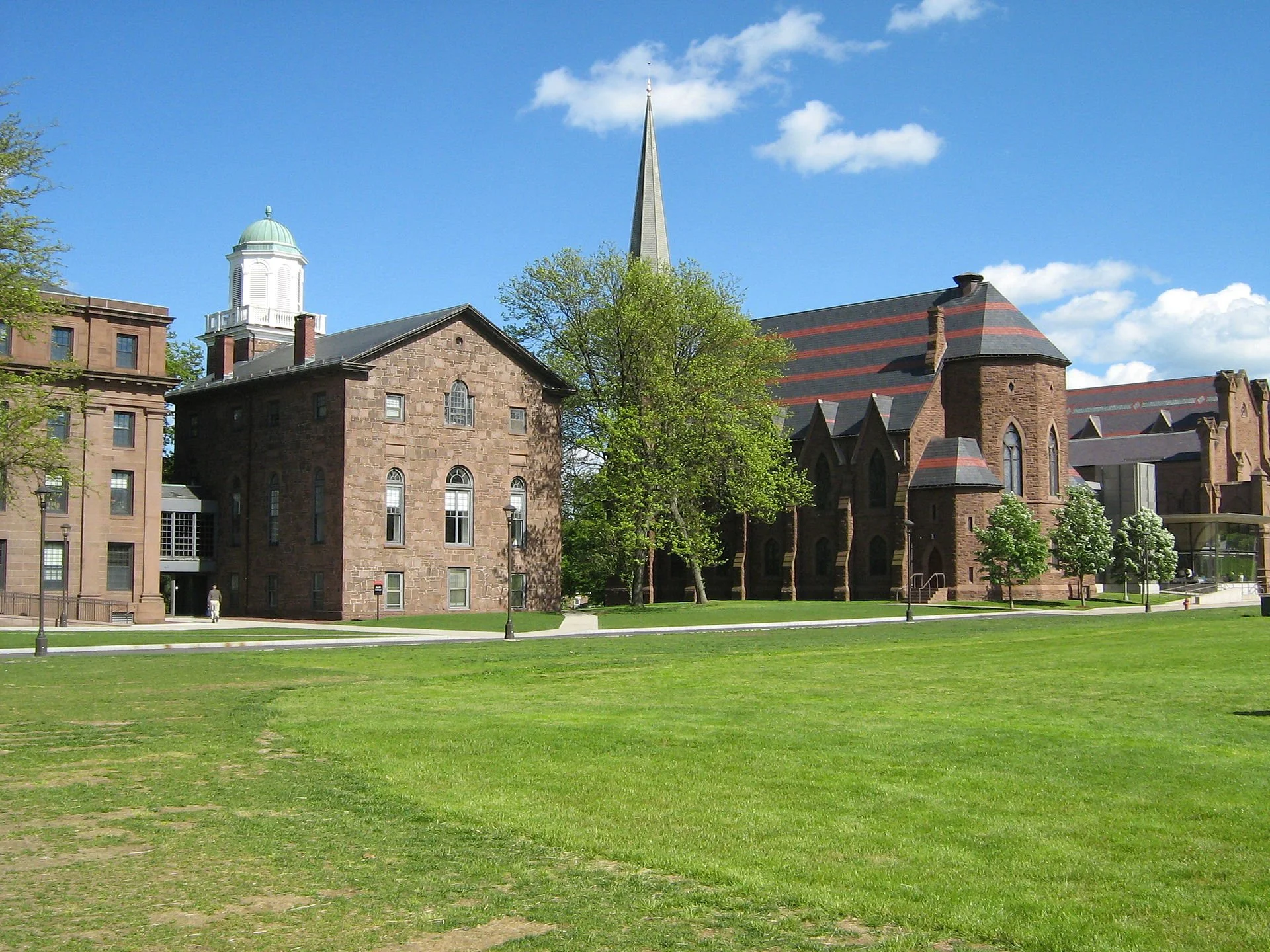
The rear of College Row at Wesleyan University in Middletown, Conn. From left to right: North College, South College, Memorial Chapel, Patricelli '92 Theater
— Photo by Smartalic34
MANCHESTER, Conn.
Maybe nothing less could have been expected from Wesleyan University in Middletown, Conn., a citadel of leftist groupthink, but according to the university chapter of the Democratic Socialists, the university has agreed to pay for abortions for its students. Not for treatment of cancer or multiple sclerosis or Crohn’s disease or AIDS or other serious ailments, just abortions.
The university’s implication is that while those ailments are often fatal, abortion is the highest social good.
Wesleyan’s decision rhymes with the clamor at the state Capitol, where proclamations of fidelity to abortion rights trump the daily shootings in the cities, the repeat offenders running rampant, the collapse of public education, the worsening poverty, and the government’s shift away from public service to a mere pension and benefit society.
The people who extol abortion well may believe that it is the highest social good. Yet their clamor seems a bit out of place in Connecticut, where a Roe v. Wade policy on abortion was enacted years ago and will remain in force whatever other states do with their new freedom to legislate on the issue. In Connecticut, abortion anywhere, any time is challenged only by occasional calls for requiring parental notification for abortion for minors. While parental notification has broad support with the public, nothing can sway the abortion fanatics in control of the General Assembly’s Democratic caucus.
So abortion fanaticism may be meant mainly as a distraction from the defects of both the national and state Democratic administrations. It presumes that clamor about abortion can induce most people to forget about inflation, forever wars, open borders, and the soaring national debt as long as there is a chance that the law somewhere might impede abortion of viable fetuses.
The political judgment of Connecticut’s abortion fanatics may be correct. After all, so much nuttiness in the state now goes without serious challenge -- from transgenderism to unemployment benefits for strikers to reimbursing the abortion expenses of women in abortion-restricting states who come to this state for abortions.
Still, the fanatics might not represent majority opinion or even anything close to it. If their power is mainly their ability to intimidate those who disagree, their position could actually be weak.
Connecticut won’t find out what the public really thinks until some people in public life try talking back -- calmly and rationally but firmly -- daring to attempt argument.
xxx
Hysteria has overtaken the controversy over the limit on the federal government’s debt.
The other day Treasury Secretary Janet Yellen warned that the refusal by Republicans in Congress to raise the debt ceiling would cause a “constitutional crisis” that might cripple the economy and financial system as the government ran out of money and defaulted on some of its bonds.
Nonsense. Because it retains the power of money creation, the federal government can never run out of money. It can create money to infinity. The government prefers not to create money so frankly, since it might be inflationary, but the government has the power.
And of course the government can raise revenue in a way that won’t aggravate concerns about inflation. It can raise money the old-fashioned way: through taxes.
So why the insistence on more borrowing?
It’s because Congress and President Biden, like his predecessors, enjoy distributing infinite goodies without having to make current taxpayers pay for what they really cost. The burden is to be transferred to future generations -- and to other countries, which the U.S. government pressures to finance this country’s debt, and thus its parasitic lifestyle. The president and Congress believe that Americans have the right to live at the expense of the rest of the world.
Calling again for raising the debt ceiling, Biden says: “America is not a deadbeat nation. We pay our bills.” But we don’t pay our bills, since borrowing to pay debt doesn’t repay debt at all. It just creates more debt.
Taxes repay debt, but apparently a “constitutional crisis” is preferable to more taxes.
Chris Powell is a columnist for the Journal Inquirer, in Manchester. (CPowell@JournalInquirer.com)
Why we need schedules
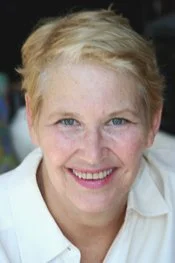
Annie Dillard.
— Photo by Phyllis Rose
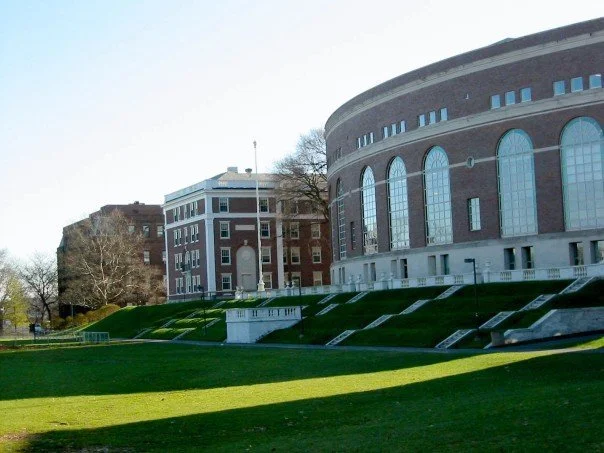
At Wesleyan University, in Middletown, Conn. The view from Foss Hill: From left to right: Judd Hall, Harriman Hall (which houses the Public Affairs Center), and Olin Memorial Library
“How we spend our days is, of course, how we spend our lives. What we do with this hour, and that one, is what we are doing. A schedule defends from chaos and whim. It is a net for catching days. It is a scaffolding on which a worker can stand and labor with both hands at sections of time. A schedule is a mock-up of reason and order—willed, faked, and so brought into being; it is a peace and a haven set into the wreck of time; it is a lifeboat on which you find yourself, decades later, still living.”
―Annie Dillard (born 1945), in The Writing Life. The American author of fiction and nonfiction books taught for 21 years at Wesleyan and has long had a summer house on Outer Cape Cod, a place that she has frequently written about.
‘Had their look down’


Wesleyan University’s Samuel Wadsworth Russell House, built in 1828, home to the school’s Philosophy Department. The building was designated a National Historic Landmark in 2001 and is considered one of the finest examples of Greek Revival architecture in the country.
“I remember I grew up in Pasadena in a very, kind of, homogeneous, kind of, suburban existence and then I went to college at Wesleyan University in Connecticut. And there were all these, kind of, hipster New York kids who were so-called 'cultured' and had so much, you know, like knew all the references and, like, already had their look down.’’
Mike White (born 1970), screenwriter and actor
Those overrated old mills; defending fraternities
Some can be renovated for artists’ lofts and small businesses and their owners can make a profit — often with special tax breaks. The mass of taxpayers must make up the lost tax revenue. And some owners are big tax deadbeats. Consider the owners of Hope Artiste Village, in Pawtucket, who owe the city $124,690 for the current tax year, or those of The Thread Factory, on the Pawtucket-Central Falls line, who owe Pawtucket $366,306 and Central Falls $410,000. There may be similar examples around the state.
It is hard to quantify how much Rhode Island has gained or lost from trying to preserve old mills because people think that they’re quaint. Many can never be retrofitted to make a fair (without tax breaks) profit. Preservationists (not a few of whom are financially secure and don’t have to worry too much about finding a job in the sluggish Rhode Island economy) fiercely fight to save as many of these mills as possible, once built for economically logical reasons that disappeared decades ago. Indeed, the Ocean State has not exactly become a boom town during all these years of trying to keep old factory buildings that don’t make anything anymore except the occasional arsonist.
Then there’s that Art Deco tower the Industrial Bank Building, which, because of its stepped-back structure and location in not exactly thriving Providence, has little chance of being a full-scale office building again. Maybe it would work for residential — but again with tax breaks to be paid for by people not benefiting from its redevelopment.
A rather similar stepped-back famous Art Deco skyscraper is the gold-roofed United Shoe Machinery Corporation Building, at 140 Federal St. in downtown Boston, which for many years was New England’s tallest building. It had been slated for demolition in 1981, after “Shoe,” as the once huge company was long called, disappeared. But Boston was/is a major financial center. The quantity of local money and tax breaks made retrofitting it attractive, and the building is now filled with Class A offices.
Providence doesn’t have that critical mass. Other than nostalgia, there’s little to justify taxing the public to maintain the now remarkably inefficient “Superman Building.” Anyway, Providence had its heyday before it was built and could have another after it’s gone. And even Chartres Cathedral will one day disappear. As Ira Gershwin wrote, “In time the Rockies may crumble, Gibraltar may tumble ... ”
The South Bronx, the famously poor and crime-ridden section of New York given up for lost 30-40 years ago, has enjoyed a revival in part because so many of the old buildings were torn down (often after arson) and new buildings put up in the newly available acreage. Perhaps Rhode Island should move away from its love affair with old factories that do nothing (or worse) for the macro-economy. New buildings can be beautiful too. Are old mills over-rated?
***
The cover story in this month’s Atlantic is titled “The Fraternity Problem: It’s Worse Than You Think.” The article, surprisingly, spends a lot of ink on a nasty fraternity at very liberal/PC/“Little Ivy” Wesleyan University, in Middletown, Conn., where various outrages involving booze, sexual assault and so on have taken place. (Harvard also has fraternities, called “Final Clubs,” where, as a guest, I have witnessed grotesque behavior fueled by alcohol and other drugs.)
Busybodies and other social engineers cry out for closing all fraternities, though legally that would be impossible.
Speaking as a past member of a fraternity, I object. At most of these clubs, while drinking goes on sometimes, as it does at many social organizations, activities are much tamer than the “Animal House” cliché. And they play the healthy role of providing a closer sense of community than can the wider and anomie-ridden college or university community. Indeed, fraternities are frequently the venue for the start of lifelong friendships. Many college administrations should monitor these organizations with more rigor and call in the police (the town cops, not the campus cops) when necessary, of course, but, still, fraternities all in all do more good than harm. And without a modicum of freedom of association, society would be very dreary indeed.
I recently got a note from a group that was in the fraternity house I was in in the late 1960s. They’re planning a reunion for next October. As I saw the names, the years peeled back. Dozens are coming, out of (mostly lapsed) friendship and even morbid curiosity.
Robert Whitcomb (rwhitcomb51@gmail.com), a former editorial-page editor of The Providence Journal and a former finance editor of the International Herald Tribune, is a Providence-based writer and editor and a director of Cambridge Management Group (www.cmg625.com)., a health-care-industry consultancy.