
Vox clamantis in deserto



William Morgan: Coin honoring traitor and wanna-be tyrant Trump reflects America’s moral rot
PROVIDENCE
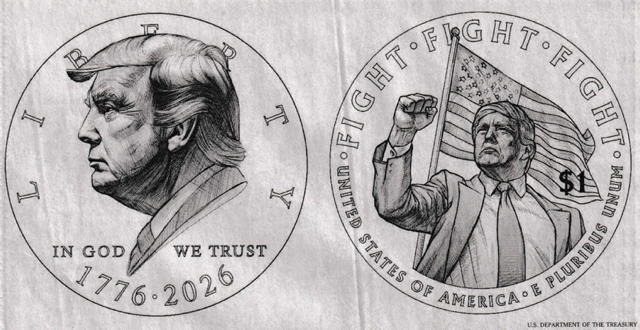
Seemingly prepared to bypass this nation’s historical aversion to monarchy, our extremely narcissistic Apricot Toddler sees himself as a Roman emperor, perhaps Nero or Caligula. In college, I recall reading Edward Gibbon’s The History of the Decline and Fall of the Roman Empire. In the opening chapter, published in 1776, the great English historian notes that one of the surest indicators of an empire’s impotency is the diminished quality of the design of its coins. The announcement that the U.S. Treasury will mint a one-dollar piece with Trump’s face on both sides is a harbinger of the inevitable implosion of the reign of Trumpus Anti-Americanus.
The double-Trump dollar (surprisingly, not in gold) typically violates laws and traditional shibboleths, such as depicting a living person on currency (banned by Congress in 1866), to say nothing of a lack of modesty and dignity. The obverse leonine profile of the wannabe dictator is a handsome enough rendering, perhaps inspired by another living person depicted on contemporary currency, Britain’s King Charles.
The reverse, however, with its depiction of the assassination attempt during the presidential campaign, is on a par with the weakest Soviet realism. Far too detailed for a coin, it is crowded by the echoing “Fight Fight Fight’’. “Liberty,” mandated for all currency by Congress in 1782, is pretty simple to grasp, but what to make of Trump’s trite football cheer?
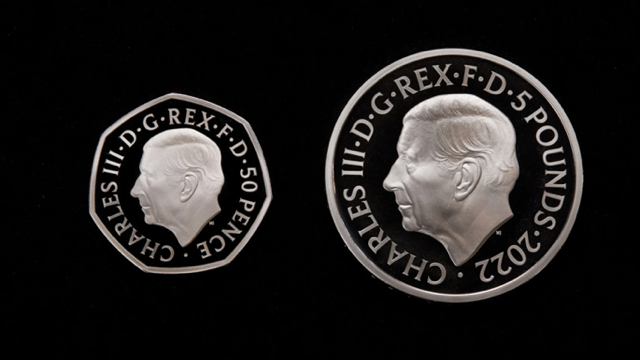
British 5-pence coin at left; 5-pound coin at right
Theodore Roosevelt, a neither culturally hollow or aesthetically challenged president, was concerned about the visual message of our currency (“I think the state of our coinage is artistically of atrocious hideousness”), recognizing that good design spoke of the symbolism and perhaps the probity of the government that issued it. T.R. hired America’s greatest sculptor, Augustus Saint-Gaudens, to personify Liberty as a goddess in the best classical manner. The Saint-Gaudens “double eagle” was in circulation from 1907 to 1933.
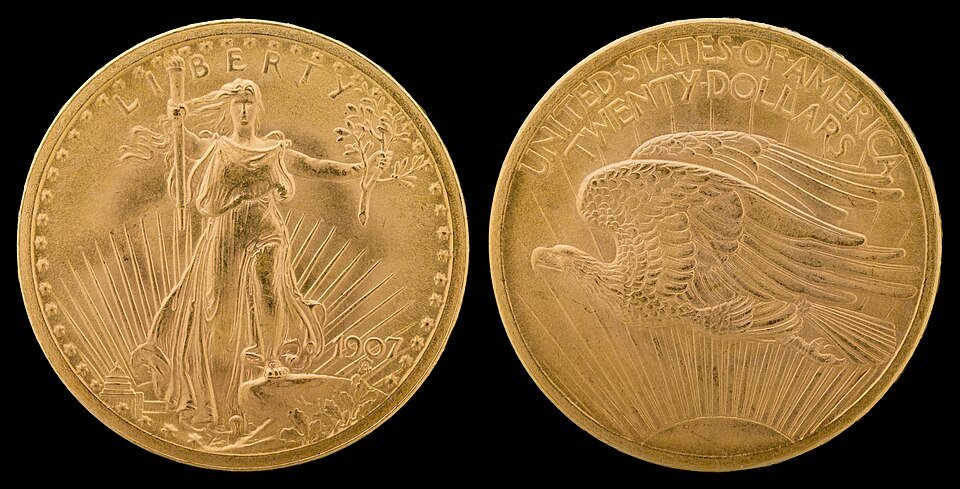
The beauty of the Saint-Gaudens $20 gold piece notwithstanding, the Trumpian deification dollar is right on track, seemingly nearing the end point of a string of declining visual signposts from the U.S. Treasury.
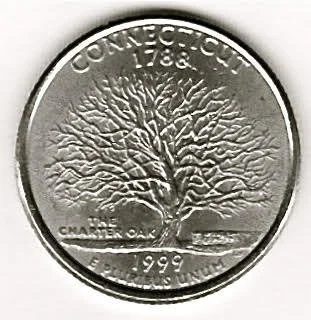
The state commemoratives, starting in the late 1990s, serve as examples of a worsening design sense. One of the early strikes, Connecticut, was almost excellent. The Charter Oak is a potent symbol, and its rendering demonstrates an understanding of the nature of a coin, that is not being a “picture’’. Alas, the dates and the legends add unnecessary clutter.
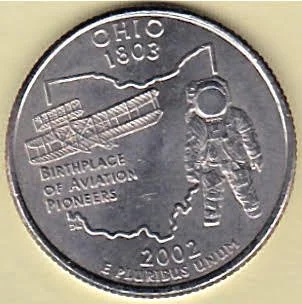
The nod to Ohio, three years after Connecticut, hasn’t a clue of what a coin ought to be. The design is a crowded mess. There’s the map of the Buckeye State, a faceless and footless Neil Armstrong on his moon walk, and the Wright Brothers’ plane (which flew not in Ohio, but in North Carolina).
When there were no more states to pimp, the Mint began issuing quarters featuring places (the White Mountains, say, or the Florida Everglades – landscapes are not ideal for the miniature circular canvases) or people (Helen Keller, Duke Ellington) or events (the Homestead Act).
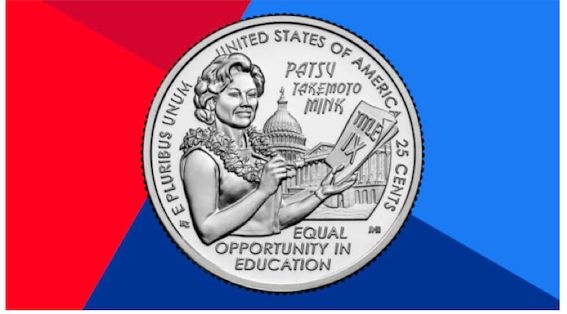
Almost all of the quarters featuring people border on the grotesque, but that honoring the late Hawaiian Congresswoman Patsy Mink serves as exemplary of the low quality of noted-people portraits. Here we are offered a dog’s breakfast of competing detail: Patsy’s name, the U.S. Capitol, Title IX legislation, a lei, “Equal Opportunity in Education’’, and what looks like an erect right nipple. No one, even a politician, deserve such an embarrassingly artless tribute.
The Trump dollar is, thus, not all that unusual: the nadir of a bad stretch in the numismatic wilderness. It is not coincidental that it arrives following the imminent cessation of the minting of the one-cent coin. While there may be economic reasons for ending the life of the penny, a chief reason is arguably that it features Abraham Lincoln. Honest Abe’s presence on the penny is a constant affront to our most dishonest, traitorous, and authoritarian president.
Our coins are cultural barometers, and the Trump double dollar is the perfect reflection of the moral rot that threatens our republic.
Architectural historian and photographer William Morgan writes about design in all forms, including cities, architecture, landscapes, and license plates. He is the author of Academia: Collegiate Gothic Architecture in the United States, among other titles.