Vox clamantis in deserto
Drawing Presidential lines
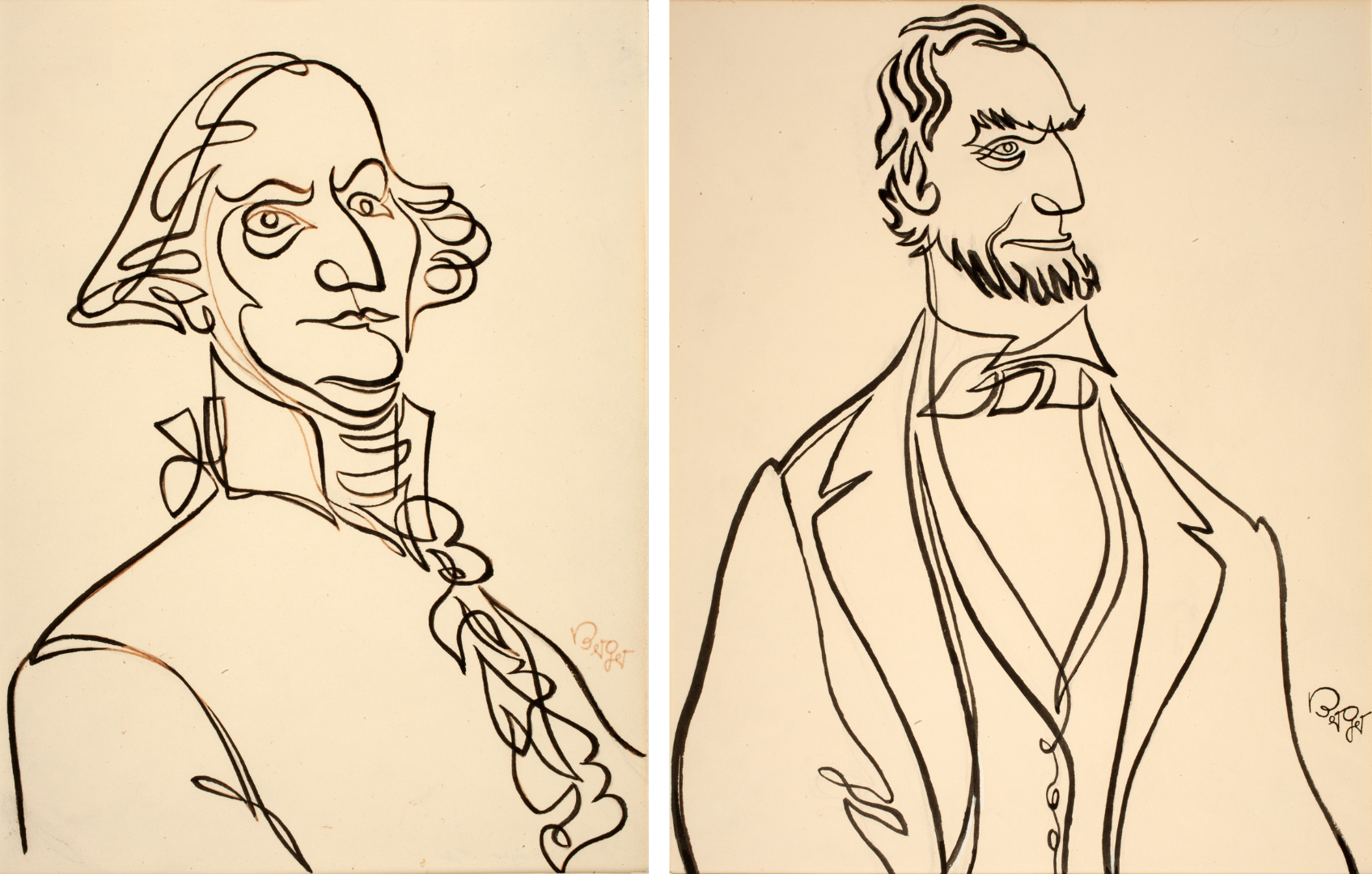
“George Washington’’ (1968) and “Abraham Lincoln”(1968), (both ink on paper), in the show “Oscar Berger Presidential Portraits”, at the New Britain (Conn.) Museum of American Art, through Aug. 30.
The museum says:
“Internationally acclaimed as ‘the greatest caricaturist of world celebrities,’ Oscar Berger (1901–1997) depicted the ‘Who’s Who” of world history throughout his career.
“Born in 1901 in Czechoslovakia, Berger became a cartoonist in Prague, before moving to New York, where his work appeared in leading publications, including The New York Times, Life, and the New York Herald Tribune. Following in the tradition of other notable caricaturists, such as Thomas Nast (1840–1902) and Georges Goursat (1863–1934), Berger aimed to capture the likeness and character of his models and to distill and exaggerate their ‘essence.’
“In 1968, Berger embarked on an ambitious project to depict our nation’s presidents, from Washington to Nixon. His presidential caricatures are distinct in style and technique, however, in that they are each made with one continuous line. As Berger himself explained, ‘through the bearded and the cleanjowled, the somber and the sly, the able and the not-so-able; the line flows along, endlessly witnessing the persistence of the American consensus.’ For Berger, an imaginary line connected each drawing, encompassing all of the presidents and symbolically representing the continuous history of American leadership. Saturated with wisdom and wit, Berger’s portraits aim to entertain while also conjuring the personalities and legacies of the American presidents.’’
A whimsical world
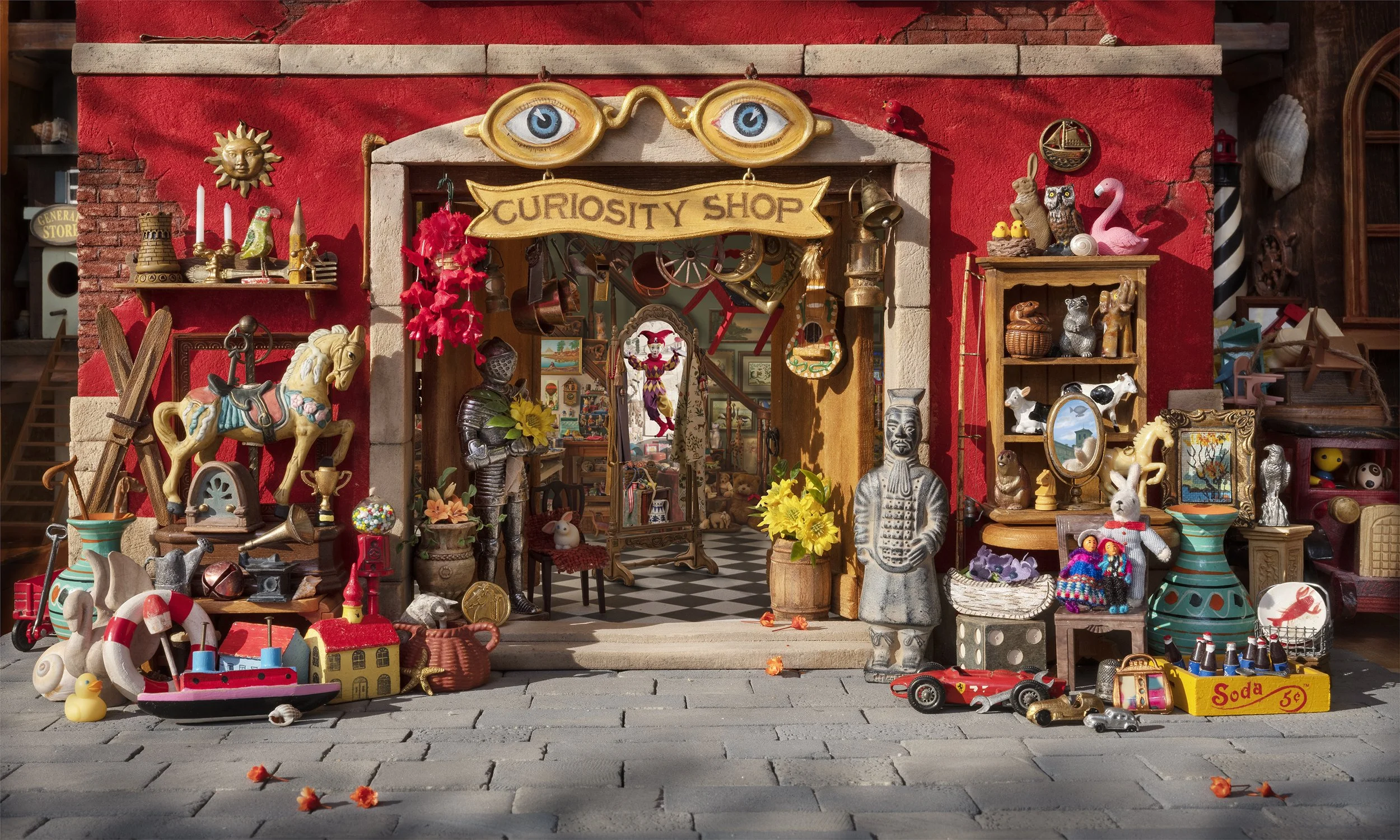
“Flatland From Can You See What I See?: Hidden Wonders!” (pigmented inkjet photo), by Walter Wick, at the New Britain (Conn.) Museum of American Art, through Sept. 3.
The museum explains:
“The whimsical world of Walter Wick has fascinated people of all ages since 1991, when his first children’s book series I SPY found its way onto the bookshelves of millions of American households. The success of Wick’s books has established him as one of the most celebrated photographic illustrators of all time. A Hartford native, Wick began his artistic career as a landscape photographer before becoming enamored with the technical aspects of studio photography. Wick aspired to master studio techniques, but also to represent such concepts as the perception of space and time in photographs, and experimented with mirrors, time exposures, photo composites, and other tricks to do so. This manipulation of processes and perception has led to a prolific career that has now, over 30 years after the release of I SPY: A Book of Picture Riddles, resulted in the publication of more than 26 children’s books.’’
But takes longer to dry
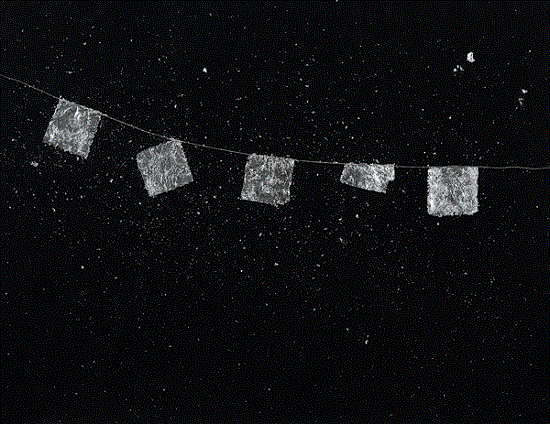
"The Night Wash'' (Vietnamese nickel lead on black rice paper, on loan from the New Britain (Conn.) Museum of American Art and now on view at the Art Complex Museum, in Duxbury, Mass.