
Vox clamantis in deserto


Massport considers Hynes Convention Center for remote Logan terminal
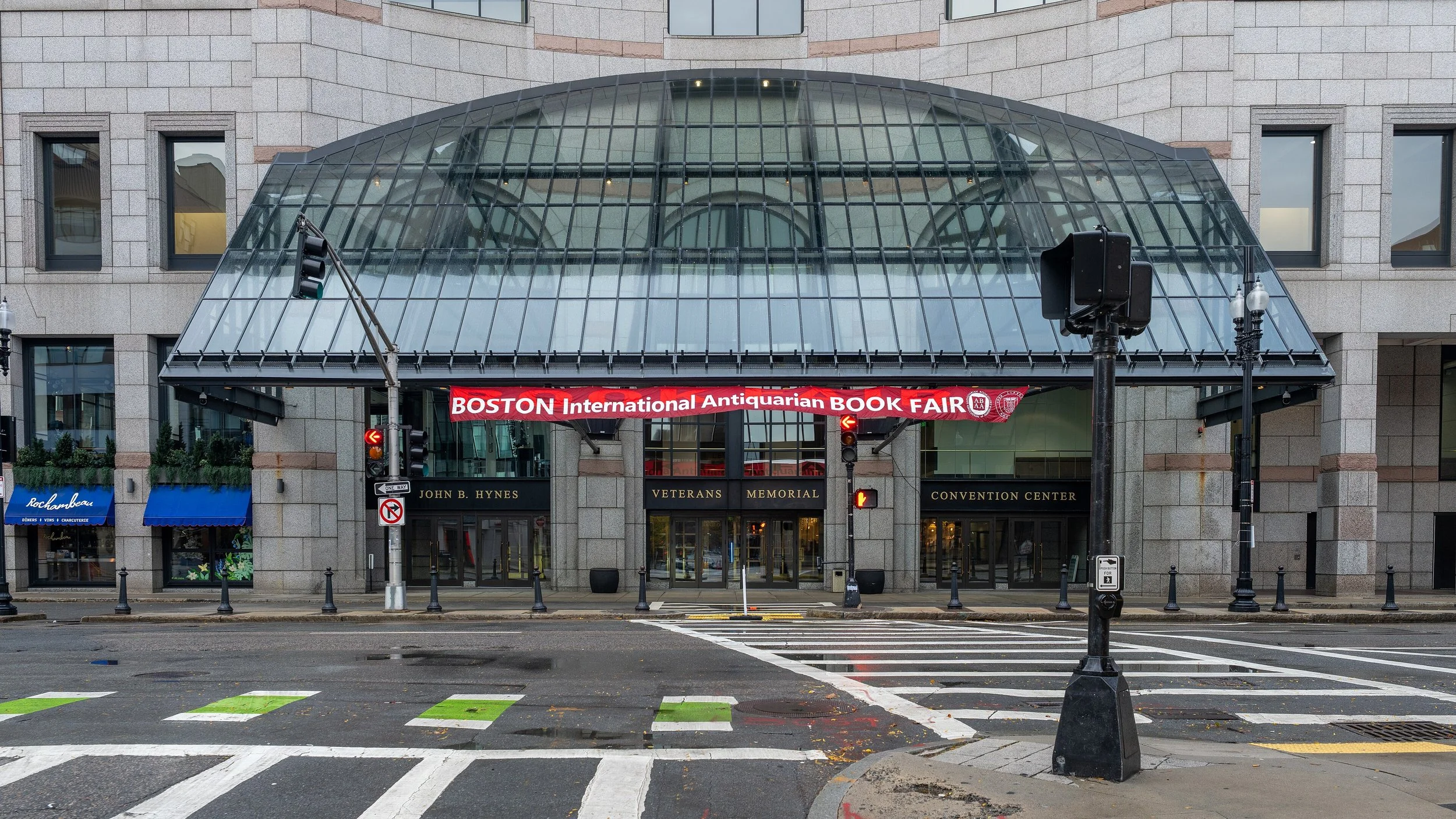
Boylston Street entrance to the Hynes Convention Center.
— Photo by ajay_suresh
(Robert Whitcomb, the editor of New England Diary, is chairman of The Boston Guardian.)
The Massachusetts Port Authority (Massport) is considering installing a remote Logan Airport terminal in the Hynes Convention Center where passengers could go through security and subsequently be bussed to the airport and dropped off after the checkpoint.
After the substantial success of a pilot remote terminal this summer in Framingham, the Boston Business Journal recently reported that Massport was in early talks with the Massachusetts Convention Center Authority (MCCA). So far, neighborhood representatives are excited about the possibility.
“I think it’s a great idea,” said State Rep. Jay Livingstone, who serves the Back Bay as well as Beacon Hill and the Fenway. “I think it will allow people visiting or living in Back Bay, the South End, to have easy access to [Logan]. Massport’s already proven that it’s been able to successfully do this in Framingham, and I think it would be a great amenity in the neighborhood and for the Hynes.”
Livingstone said he had discussed the idea with the MCCA, but that the authority hadn’t set a timetable yet. He said that MCCA executive director John Barros had already begun doing some basic community outreach. The Hynes is currently undergoing an extensive infrastructure renovation expected to last into 2029. Neighborhood leaders have been hopeful about that renovation, too, because of the benefits its conventions bring to Back Bay business and tourism. Meg Mainzer-Cohen, president of the Back Bay Association which represents businesses in the area, said the remote terminal would be yet another way to bring those benefits about more regularly.
“We would be very supportive of it,” Mainzer-Cohen said. “Anything that makes traveling to the airport from Back Bay will be welcome, and the simplification of having it as what sounds a seamless entry point at the Hynes would be, I think, a great benefit to the neighborhood.”
Serge Savard, chair of the resident group Neighborhood Association of the Back Bay (NABB), said in a phone call that it would also be a benefit to Back Bay residents to avoid a tedious Logan commute.
“To have easy access to Logan Airport without having to commute, to check in right there and be right there in the terminal in the secure area, as a commodity for our residents who are traveling quite a bit, I think it could be beneficial,” Savard said. “If it’s implemented well, and it doesn’t create chaos in the traffic around Mass. Ave in that section, we would be supportive. But it’s going to be really in the detail of the implementation, which we haven’t seen yet.”
Both Mainzer-Cohen and Livingstone said they expected the traffic impact of such a terminal to be minimal.
“I think that the same people right now who are entering by taking a shuttle bus, or public transportation, or Uber or vehicle would be [the people using the remote terminal],” Mainzer-Cohen said. “The traffic is there.”
An existing bus, the Logan Express, already runs from the Back Bay to Logan Airport. Massport has suggested using the Hynes’s large garage on Dalton Street as a potential site for the remote terminal busses to run from. The Logan Express stop in the Back Bay runs from that same street. Massport didn’t specify whether that shuttle would continue to run if the remote terminal was established.
“We are in the very early stages of evaluating the potential to expand the Remote Terminal program, and no decisions have been made,” a Massport spokesperson told The Boston Guardian in an email. “Because discussions are preliminary, we have not established potential bus routes or operational plans, and it’s too early to discuss any approvals or coordination that may be required. If the program moves forward, we would work closely with the appropriate partners throughout the planning process.”
Very user friendly
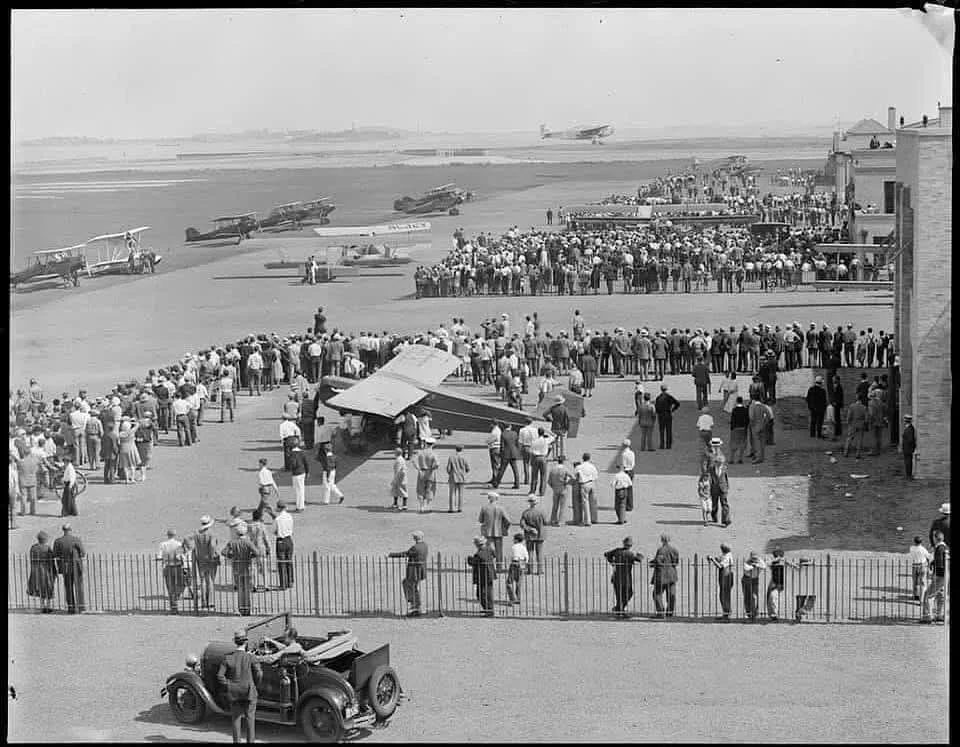
Logan Airport, (“International’’ was added later) in East Boston, Mass., in 1930. It opened in 1923 and was named for Gen. Edward Lawrence Logan (1875-1939), a soldier and Massachusetts politician.
'Loss cancels profit'
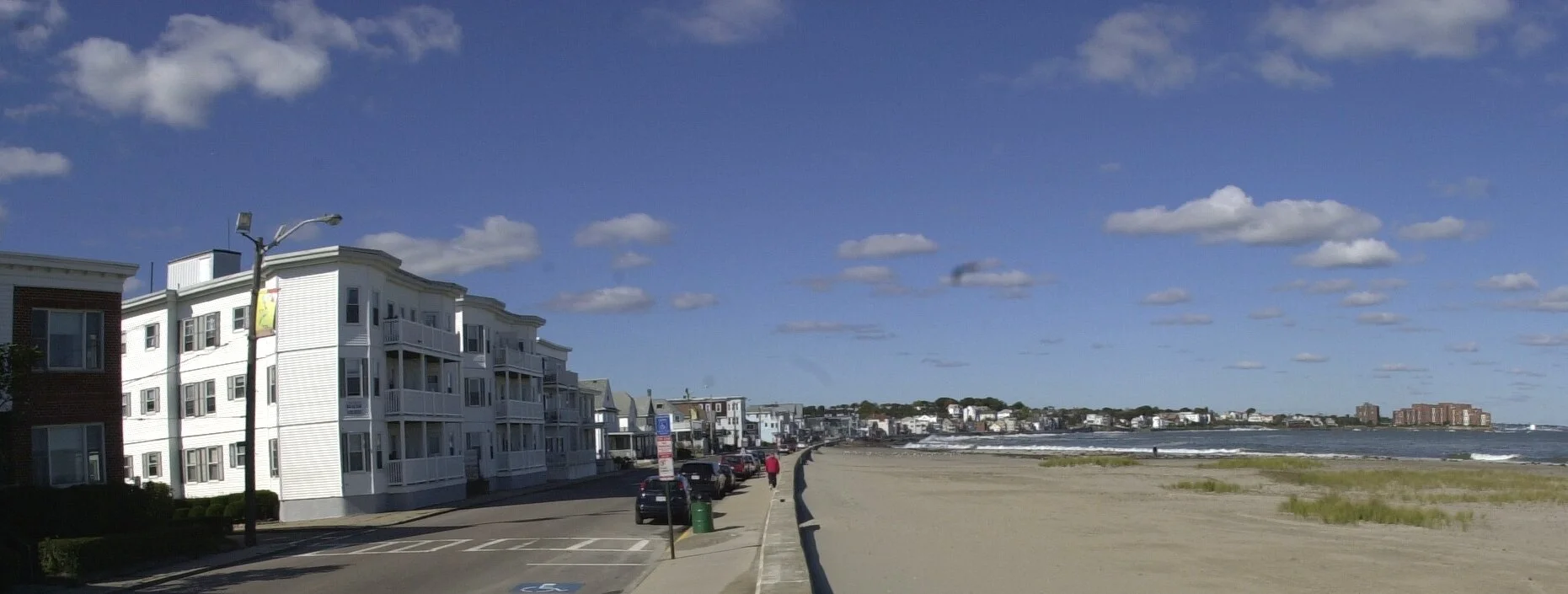
Winthrop Shore Drive, in Winthrop Mass.
“…The cries of scavenging gulls sound thin
In the traffic of planes
From Logan Airport opposite.
Gulls circle gray under shadow of a steelier flight.
Loss cancels profit.’’
— From “Green Rock, Winthrop {Mass.} Bay, ‘‘ by Sylvia Plath (1932-1963), American poet, novelist and short-story writer. She grew up in the Boston area.
My pre-screen life
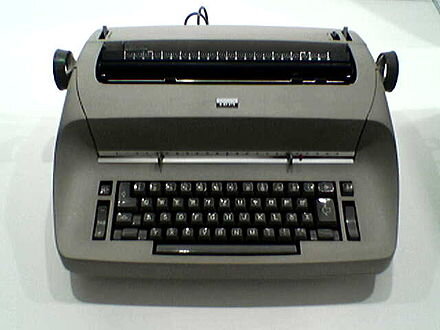
From Robert Whitcomb’s “Digital Diary,’’ in GoLocal24.com
It’s expected that many more people, what with Zoom, Skype, etc., will be permanently working at home, as employers seek to reduce the danger of infectious disease they might be held responsible for and save a lot of money on real-estate costs.
There are some big drawbacks. Workers will have less idea of what’s going on in their enterprises: they’ll lose some of the ability of understand what their co-workers and bosses are up too; they’ll have fewer opportunities to develop friendships with, and learn from, their co-workers, and they’ll lose the advantages of in-person training.
Body language can speak volumes.
The post-World War II period to about 1990 was the great age of the American office. For much of that time, the economy was healthy, and many folks expected to have long-term work with the same employer.
All the offices I worked in had their social benefits. My first office job, for several summers, was at a shipping company overlooking Boston Harbor and Logan Airport. Much of the work was boring – e.g., filing multi-colored bills of lading – but it had its charms, too, such as talking with truckers at the loading docks, being sent on some errands in downtown Boston, which at that time didn’t look much different than it had in 1937, and going on a lunch boat.
With the newish IBM Selectric typewriters clacking away in the background, I’d chat every hour or so with my office mates, who came from all over Greater Boston and had, for a little office, a remarkably wide range of backgrounds. Most of the men seemed to have served in World War II or the Korean War, and they’d tell me stories about it. The women would often talk about their children, of whom these mostly Irish-and- Italian-Americans, tended to have many, and what was going on in their parishes. But everyone would talk about the news, most of which they’d get from newspapers, which were strewn around the office.
I learned in that office whom to avoid and whom to seek guidance from. One of the latter was an older man, Mr. Gookin, who had had some managerial job at the parent company that didn’t work out and now was a sort of clerk. (Big companies then didn’t fire folks with the abandon they do now.) He took me under his wing. Once, someone, maybe in the cleaning staff, stole $45 I had stuck a drawer. I told Mr. Gookin, who responded: “You’ll lose a lot more than that in this life.’’
Whether in the crowded, smoke-filled and un-air-conditioned newsroom of the old Boston Record America, with its gruff and rumpled scandal-seekers but also with the courtly and natty writer Joe Purcell, who got me the job; the spacious newsroom of the doomed Boston Herald Traveler, which crazies off the streets would sometimes stagger into; the cool and austere newsroom, divided by cubicles, but with many funny people, of The Wall Street Journal, across the street from the doomed World Trade Center; the Art Deco offices of The Providence Journal, and the modernistic but claustrophobic and smoky home of the International Herald Tribune, with its train station-like collection of characters from around the world, there was much to be learned from the people in my office life. Such a range of personalities and backgrounds.
I think that the millions of people who now must work at home will miss a lot of life and learning working at home, though commuting is rarely much fun.
Charles Chieppo: MBTA hole gets deeper
BOSTON The recent news that the estimated cost of an ongoing Boston-area subway-line extension has risen from $1.4 billion to nearly $2 billion surprised exactly no one. The more-than-two-decade history leading up to this most recent cost overrun contains a lifetime's worth of cautionary tales for state and local governments.
Almost everyone reading this should have some familiarity with Boston's "Big Dig." After all, you probably helped pay for it. The project included taking down an unsightly elevated roadway and running it underground, extending the Massachusetts Turnpike to Boston's Logan Airport and constructing a bridge over the Charles River. When it was finally completed in 2007 (nine years late), the original $2.8 billion price tag had swollen to $14.6 billion, more than a quarter of it covered by federal taxpayers.
Less attention has been paid to the court-ordered construction of 14 transit-related projects as environmental mitigation for the additional traffic the Big Dig would accommodate. Twenty-three years after the 1991 mandate, the Massachusetts Bay Transportation Authority (MBTA) owes nearly $9 billion in debt and interest, almost half of which can be attributed to the transit-mitigation requirements. If not for a series of fare hikes in recent years, the MBTA would pay more in debt service than it collects in fares.
Cost overruns on the current 4.5-mile extension of the MBTA's Green Line are a microcosm of why the mitigation requirements have been a disaster. Engineers encountered more than 500 "utility conflicts" along the corridor. Then there are the add-ons: A community path for bikers and walkers and more drainage for a river that was long ago covered by landfill but apparently still wreaks havoc during rainstorms. It's mitigation for the mitigation.
Payments to the design contractor jumped by more than half because platforms had to be extended to accommodate longer trains than had been envisioned 23 years ago. That's what you get with government by mandate.
And since the MBTA had to dedicate so much money to financing the mitigation projects, corners had to be cut elsewhere. A large concentration of MBTA vehicles are approaching or have surpassed their useful life. If you can't get down to Havana to watch the parade of pre-1959 American-made cars, just take a ride on a Boston-area commuter train. Old rolling stock means compromised reliability.
That it's impossible to know what system priorities will be more than two decades down the road is just one lesson governments can draw from the unmitigated disaster of Boston's transit mitigation. The first lesson is that it's a spectacularly bad idea to mandate the construction of billions of dollars worth of new projects without a funding source.
But construction expenses are only part of the picture. Projects should be budgeted based on the cost of building, operating and maintaining them over their lifecycle. If that had happened in Boston, seeing more realistic numbers might well have resulted in some of the projects being eliminated.
Lifecycle budgeting also reduces the temptation to skimp on maintenance. The MBTA faces a maintenance backlog that topped $3 billion in 2009 and has only grown since. In the transit authority's fiscal 2010 budget, just six of 57 maintenance projects that received a safety rating of "critical" could be funded.
Budgeting based on transportation projects' real costs makes it less likely that government officials will be put in the position of robbing Peter to pay Paul by skimping on maintenance and not replacing assets in a timely manner. Forcing planners to take a clear-eyed look at real project costs might cut back on the ribbon-cuttings that politicians so enjoy, but it would result in infrastructure that functions better and lasts longer. And it might just avert disasters such as the one that the MBTA is facing.
Charles Chieppo is a research fellow at the Ash Center of the Harvard Kennedy School. This originated at Governing Magazine's Web site, governing.com