
Vox clamantis in deserto
Vacant vacation
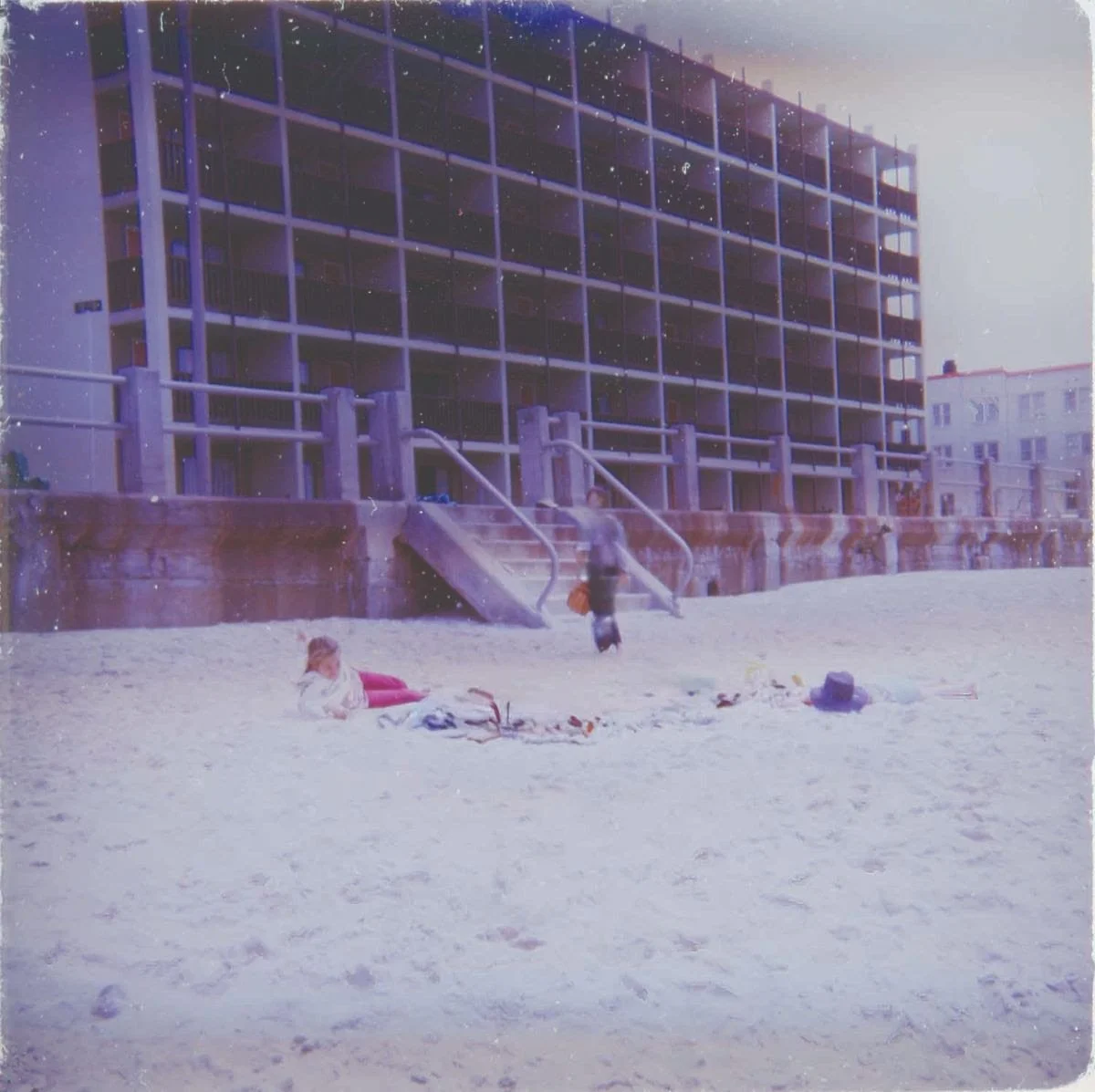
“Ventura” (print from ektachrome slide) by Jennifer Liston Munson, in her show “The Camera Sees,’’ at Kingston Gallery, Boston, April 30-May 31.
The gallery says:
“In 1973, Susan Sontag wrote that ‘it is the camera that sees.’ Jennifer Liston Munson’s new work explores the notion that the watchful eye of the camera holds personal narratives not as a memory-keeper but as a foreteller of histories yet to happen.
‘In 2025, Liston Munson opened a garbage bag of family ektachrome slides slotted to be discarded and sifted through the tiny transparent images to view the intensely colored images from her 1960s and 70s past. Some images were vaguely familiar, some were completely unknown but proved her presence on family vacations in Florida—and in Los Angeles where her family moved in 1973. This re-seeing experience presented complexities of reconstructing an unresolved past that includes the deaths of her sister and brother. This new work juxtaposes large-scale translucent prints suspended in space in which the artist allowed AI to erase figures as it interpreted the image to reveal what the camera has held over time.’’
Trees that adapt
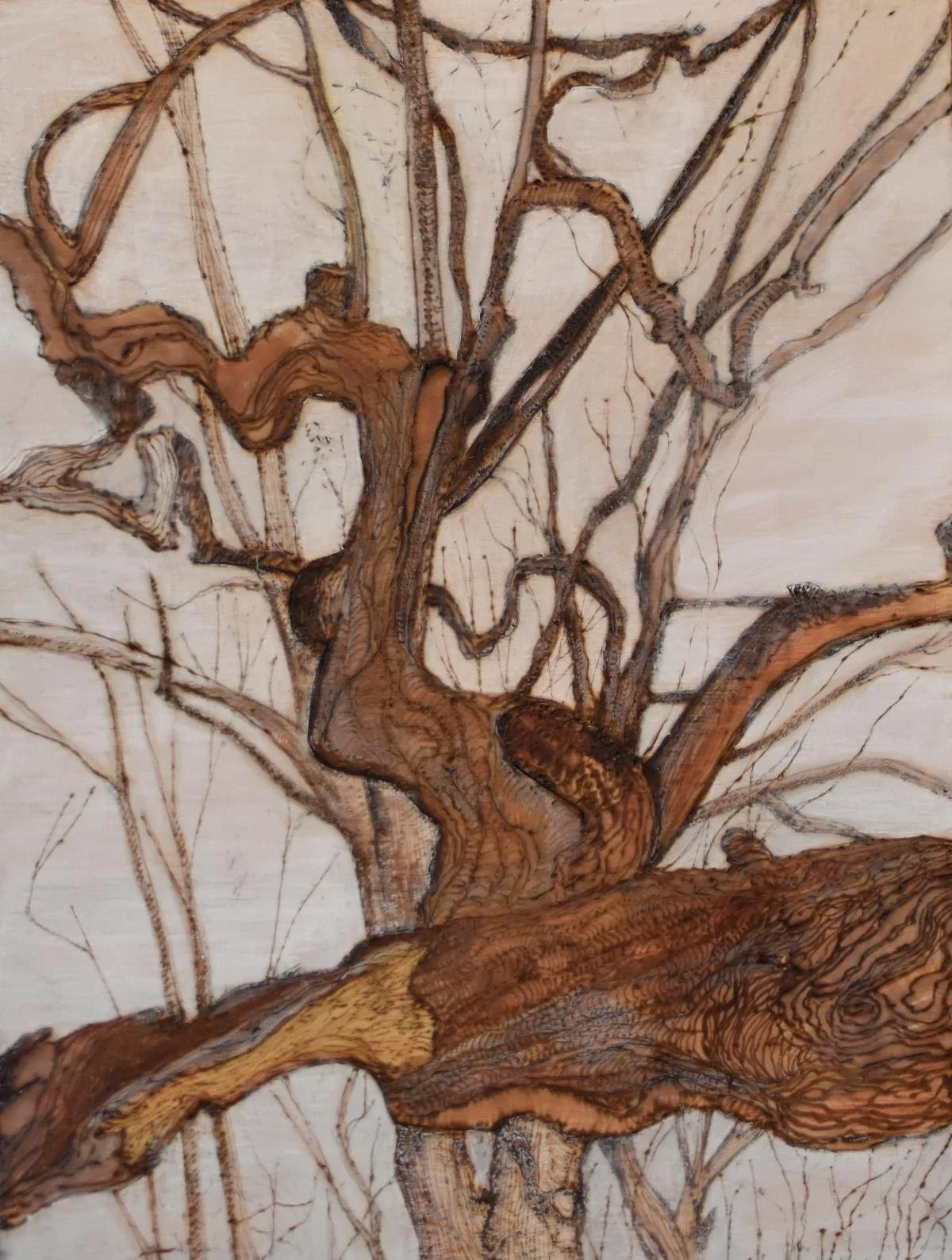
“Twisted Branches, pyrography on birch plywood,’’ in Brett S. Poza’s show “Plywood Forest,’’ at Kingston Gallery, Boston, through July 31.
Brett S. Poza’s show displays more than twenty small works depicting trees burned into the surface of plywood and repurposed woodblocks like tattoos. Poza’s focus is on the trees we ignore or discard — stationary witnesses to change over generations. Her trees are examples of adaptation in the face of climate change, unsuitable settings or disease. She says: “I draw trees, not perfect trees, nor particularly healthy trees. Instead, these are trees that represent resilience, steadfastness, and the persistence to keep growing despite isolation, invasion by other species or inclement weather.’’
xxx
During the past year, Brett relocated to Ashburnham, in North Central Massachusetts, with her family. This, her bio says, affords her “the opportunity to be in close contact with the area’s abundant wildlife, lakes and forests. She currently spends her evenings trying to figure out how to keep local predators from getting into her chicken coop and acting as a taxi service for flying squirrels, who show up in her attic.’’
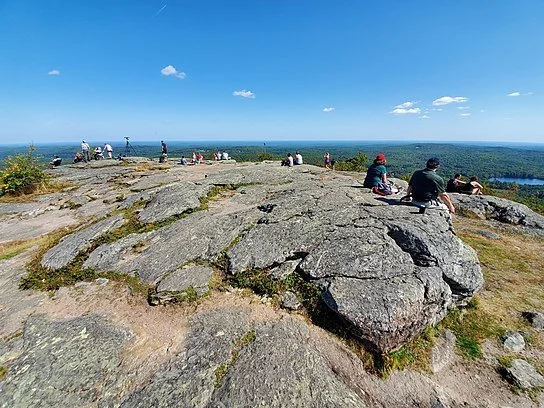
In Ashburnham, on top of 1,832-foot-high Mt. Watatic, a monadnock just south of the Massachusetts–New Hampshire border
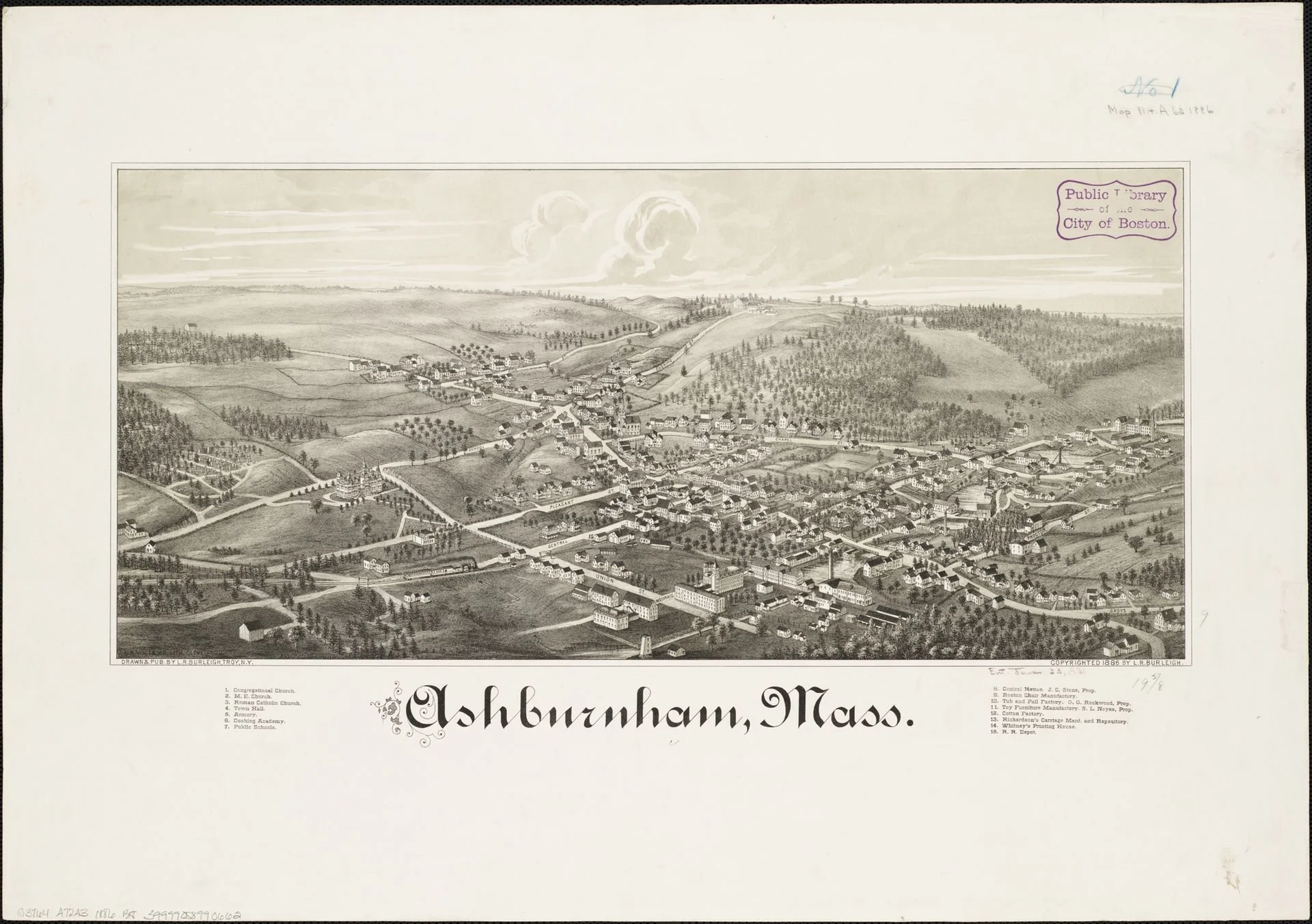
Print of Ashburnham map from 1886 by L.R. Burleigh with list of landmarks