
Vox clamantis in deserto







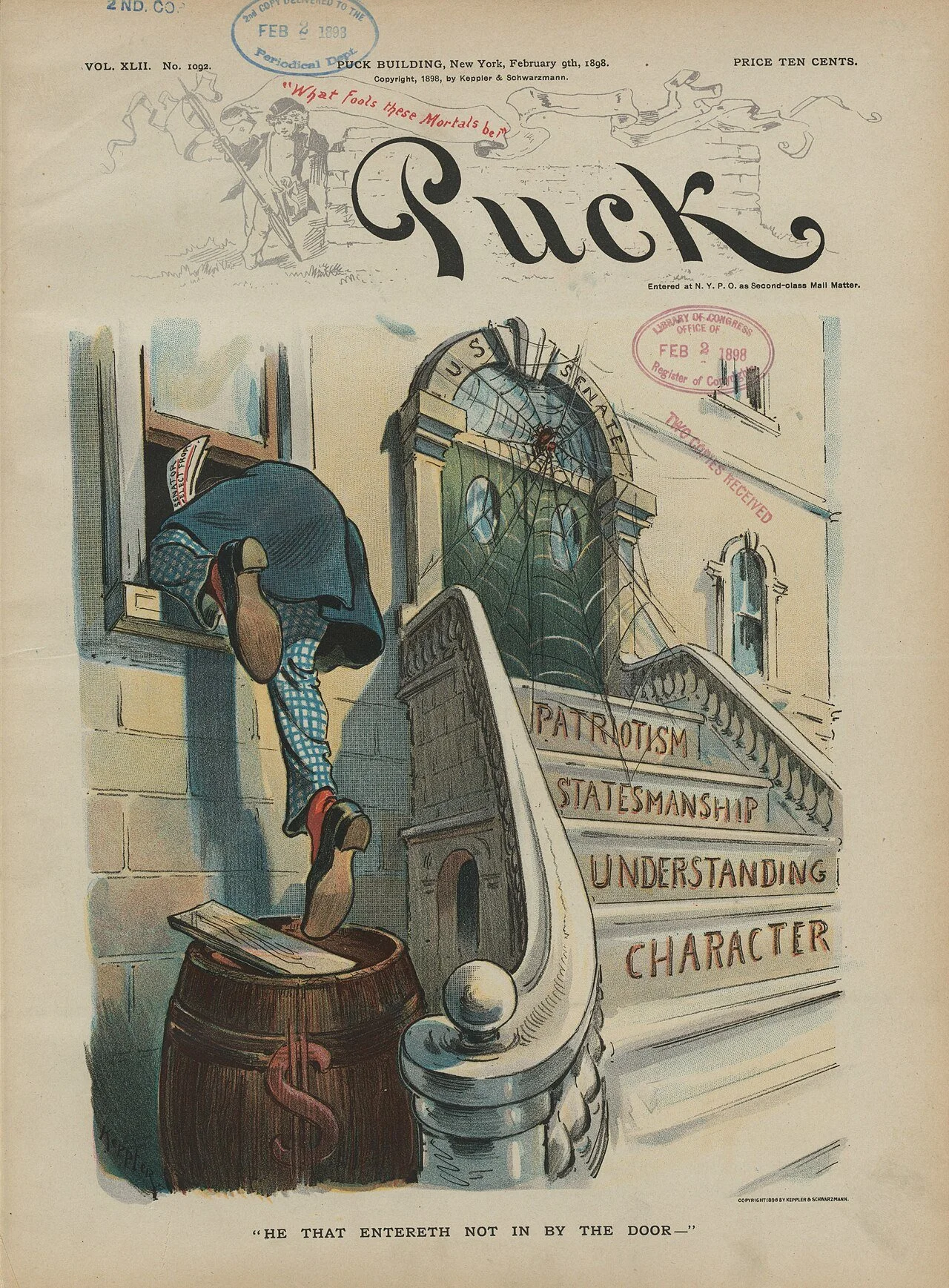

A now heavily politicized HHS has been turned into publicity orgy for medical crank Kennedy

“Narcissus,’’ by Caravaggio (1571-1610).
By Darius Tahir
Via Kaiser Family Foundation Health News (except for picture above).
As health and human services secretary, Robert F. Kennedy Jr. wields one of the louder megaphones the federal government has. Yet he insists he doesn’t want to impose his opinions on Americans.
“I don’t think people should be taking medical advice from me,” Kennedy told a Democratic congressman in May.
Kennedy once expressed different views — for example, about the need to proselytize about exercise. As he said on a podcast, he wants to use the “bully pulpit” to “obliterate the delicacy” with which Americans discuss fitness and explain that “suffering” is virtuous.
“We need to establish an ethic that you’re not a good parent unless your kids are doing some kind of physical activity,” Kennedy told the podcaster in September 2024.
The Department of Health and Human Services is tasked with communicating information to protect and improve the health and well-being of every American. It provides reminders about vaccinations and screenings; alerts about which food is unsafe; and useful, everyday tips about subjects such as sunscreen and, yes, exercise.
Under Kennedy’s watch, though, HHS has compromised once-fruitful campaigns promoting immunizations and other preventive health measures. On Instagram, the agency often emphasizes Kennedy’s personal causes, his pet projects, or even the secretary himself. Former agency employees say communications have a more political edge, with “Make America Healthy Again” frequently featured in press releases.
Interviews with over 20 former and current agency employees provide a look inside a health department where personality and politics steer what is said to the public. KFF Health News granted many of these people anonymity because they fear retribution.
One sign of change is what is no longer, or soon will not be, amplified — for instance, acclaimed anti-smoking campaigns making a dent in one of Kennedy’s priorities, chronic disease.
Another sign is what gets celebrated. On the official HHS Instagram account this year, out were posts saluting Juneteenth and Father’s Day. In, under Kennedy, were posts marking President Donald Trump’s birthday and Hulk Hogan’s death.
Commenting on such changes, HHS spokesperson Andrew Nixon said in an email that “DEI is gone, thanks to the Trump administration.”
Some elected officials are pointedly not promoting Kennedy, a former heroin addict, as a source of health-care information. Regarding the secretary’s announcement citing unproven links between Tylenol and autism, Senate Majority Leader John Thune told MSNBC that, “if I were a woman, I’d be talking to my doctor and not taking, you know, advice from RFK or any other government bureaucrat, for that matter.” (Thune’s office did not respond to a request for comment.)
At least four polls since January show trust in Kennedy as a medical adviser is low. In one poll, from The Economist and YouGov, barely over a quarter of respondents said they trusted Kennedy “a lot” or “somewhat.”
The department’s online messaging looks “a lot more like propaganda than it does public health,” said Kevin Griffis, who worked in communications at the CDC under President Joe Biden and left the agency in March.
Transition to a New Administration
The new administration inaugurated dramatic changes. Upon arrival, political appointees froze the health agency’s outside communications on a broader scale than in previous changeovers, halting everything from routine webpage updates to meetings with grant recipients. The pause created logistical snafus: For example, one CDC employee described being forced to cancel, and later rebook, advertising campaigns — at greater cost to taxpayers.
Even before the gag order was lifted in the spring, the tone and direction of HHS’ public communications had shifted.
According to data shared by iSpot.tv, a market research firm that tracks television advertising, at least four HHS ads about vaccines ended within two weeks of Trump’s inauguration.
“Flu campaigns were halted,” during a season in which a record number of children died from influenza, Deb Houry, who had resigned as the CDC’s chief medical officer, said in a Sept. 17 congressional hearing.
Instead of urging people to get vaccinated, HHS officials contemplated more-ambivalent messaging, said Griffis, then the CDC’s director of communications. According to Griffis, other former agency employees, and communications reviewed by KFF Health News, Nixon contemplated a campaign that would put more emphasis on vaccine risks. It would “be promoting, quote-unquote, ‘informed choice,’” Griffis said.
Nixon called the claim “categorically false.” Still, the department continues to push anti-vaccine messaging. In November, the CDC updated a webpage to assert the false claim that vaccines may cause autism.
Messaging related to tobacco control has been pulled back, according to Brian King, an executive at the Campaign for Tobacco-Free Kids, as well as multiple current and former CDC employees. Layoffs, administrative leaves, and funding turmoil have drained offices at the CDC and the FDA focused on educating people about the risks of smoking and vaping, King said.
Four current and former CDC employees told KFF Health News that “Tips From Former Smokers,” a campaign credited with helping approximately a million people quit smoking, is in danger. Ordinarily, a contract for the next year’s campaign would have been signed by now. But, as of Nov. 21, there was no contractor, the current and former employees said.
Nixon did not respond to a question from KFF Health News regarding plans for the program.
“We’re currently in an apocalypse for national tobacco education campaigns in this country,” King said.
Kennedy’s HHS has a different focus for its education campaigns, including the “Take Back Your Health” campaign, for which the department solicited contractors this year to produce “viral” and “edgy” content to urge Americans to exercise.
An earlier version of the campaign’s solicitation asked for partners to boost wearables, such as gadgets that track steps or glucose levels — reflecting a Kennedy push for every American to be wearing such a device within four years.
The source of funds for the exercise campaign? In the spring, leadership of multiple agencies discussed using funding for the CDC’s Tips From Former Smokers campaign, employees from those agencies said. By the fall, the smoking program hadn’t spent all its funds, the current and former CDC employees said.
Nixon did not respond to questions about the source of funding for the exercise campaign.
Food Fight
At the FDA, former employees said they noticed new types of political interference as Trump officials took the reins, sometimes making subtle tweaks to public communications, sometimes changing wholesale what messages went out. The interventions into messaging — what was said, but also what went unsaid — proved problematic, they said.
Early this year, multiple employees told KFF Health News, Nixon gave agency employees a quick deadline to gather a list of all policy initiatives underway on infant formula. That was then branded “Operation Stork Speed,” as if it were a new push by a new administration.
Marianna Naum, a former acting director of external communications and consumer education at the FDA, said she supports parts of the Trump administration’s agenda. But she said she disagreed with how it handled Operation Stork Speed. “It felt like they were trying to put out information so they can say: ‘Look at the great work. Look how fast we did it,’” she said.
Nixon called the account “false” without elaborating. KFF Health News spoke with three other employees with the same recollections of the origins of Operation Stork Speed.
“Things that didn’t fit within their agenda, they were downplayed,” Naum said.
For example, she said, Trump political appointees resisted a proposed press release noting agency approval of cell-cultured pork — that is, pork grown in a lab. Similar products have raised the ire of ranchers and farmers working in typically GOP-friendly industries. States such as Florida have banned lab-grown meat.
The agency ultimately issued the press release. But a review of the agency’s archives showed it hasn’t put out press releases about two later approvals of cell-cultured meat.
Wide-ranging layoffs have also hit the FDA’s food office hard, leaving fewer people to make sure news gets distributed properly and promptly. Former employees say notices about recalled foods aren’t circulated as widely as they used to be, meaning fewer eyeballs on alerts about contaminated ice cream, peaches, and the like.
Nixon did not respond to questions about changes in food recalls. Overall, Nixon answered nine of 53 questions posed by KFF Health News.
Pushing Politics
Televised HHS public-service campaigns earned nearly 7.3 billion fewer impressions in the first half of 2025 versus the same period in 2022, according to iSpot data, with the drop being concentrated in pro-vaccine messaging. Other types of ads, such as those covering substance use and mental health, also fell. Data from the marketing intelligence firm Sensor Tower shows similar drops in HHS ad spending online.
With many of the longtime professionals laid off and new political appointees in place atop the hierarchy, a new communications strategy — bearing the hallmarks of Kennedy’s personality — is being built, said the current and former HHS employees, plus public health officials interviewed by KFF Health News.
Whereas in 2024, the agency would mostly post public health resources such as the 988 suicide hotline on its Instagram page, its feed in 2025 features more of the health secretary himself. Through the end of August, according to a KFF Health News review, 77 of its 101 posts featured Kennedy — often fishing, biking, or doing pullups, as well as pitching his policies.
By contrast, only 146 of the agency’s 754 posts last year, or about 20%, featured Xavier Becerra, Kennedy’s predecessor.
In 2024, on Instagram, the agency promoted Medicare and individual insurance open enrollment; in 2025, the agency has not.
In 2024, the agency’s Instagram feed included some politicking as Biden ran for reelection, but the posts were less frequent and often indirect — for instance, touting a policy enacted under Biden’s signature legislation, the Inflation Reduction Act, but without mentioning the name of the bill or its connection to the president.
In 2025, sloganeering is a frequent feature of the agency’s Kennedy-era Instagram. Through the end of August, “Make America Healthy Again” or variants of the catchphrase featured in at least 48% of posts.
Amid the layoffs, the agency made a notable addition to its team. It hired a state legislative spokesperson as a “rapid response” coordinator, a role that employees from previous administrations couldn’t recall previously existing at HHS.
“Like other Trump administration agencies, HHS is continuously rebutting fake news for the benefit of the public,” Nixon said when asked about the role.
On the day Houry and Susan Monarez, the CDC leader ousted in late August, testified before senators about Kennedy’s leadership, the agency’s X feed posted clips belittling the former officials. The department also derisively rebuts unfavorable news coverage.
“It’s very interesting to watch the memeification of the United States and critical global health infrastructure,” said McKenzie Wilson, an HHS spokesperson under Biden. “The entire purpose of this agency is to inform the public about safety, emergencies as they happen.”
‘Clear, Powerful Messages From Bobby’
Kennedy’s Make Our Children Healthy Again report, released in September, proposes public awareness campaigns on subjects such as illegal vaping and fluoride levels in water, while reassuring Americans that the regulatory system for pesticides is “robust.”
Those priorities reflect — and are amplified by — cadres of activists outside government. Since the summer, HHS officials have appeared on Zoom calls with aligned advocacy groups, trying to drum up support for Kennedy’s agenda.
On one call — on which, according to host Tony Lyons, activists “representing over 250 million followers on social media” were registered — famous names such as motivational speaker Tony Robbins gave pep talks about how to influence elected officials and the public.
“Each week, you’re gonna get clear, powerful messages from Bobby, from HHS, from their team,” Robbins said. “And your mission is to amplify it, to make it your own, to speak from your soul, to be bold, to be relentless, to be loving, to be loud, you know, because this is how we make the change.”
The communications strategy captivates the public, but it also confuses it.
Anne Zink, formerly the chief medical officer for Alaska, said she thought Kennedy’s messaging was some of the catchiest of any HHS director.
But, she said, in her work as an emergency physician, she’s seen the consequences of his health department’s policies on her puzzled patients. Patients question vaccines. Children show up with gastrointestinal symptoms Zink says she suspects are related to raw milk consumption.
“I increasingly see people say, ‘I just don’t know what to trust, because I just hear all sorts of things out there,’” she said.
Darius Tahir is a KFF Health News reporter DariusT@kff.org, @dariustahir

Rachana Pradhan: How big pharma money colors Operation Warp Speed

April 16 was a big day for Moderna, the Cambridge, Mass., Massachusetts biotech company on the verge of becoming a front-runner in the U.S. government’s race for a coronavirus vaccine. It had received roughly half a billion dollars in federal funding to develop a COVID shot that might be used on millions of Americans.
Thirteen days after the massive infusion of federal cash — which triggered a jump in the company’s stock price — Moncef Slaoui, a Moderna board member and longtime drug-industry executive, was awarded options to buy 18,270 shares in the company, according to Securities and Exchange Commission filings. The award added to 137,168 options he’d accumulated since 2018, the filings show.
It wouldn’t be long before President Trump announced Slaoui as the top scientific adviser for the government’s $12 billion Operation Warp Speed program to rush COVID vaccines to market. In his Rose Garden speech on May 15, Trump lauded Slaoui as “one of the most respected men in the world” on vaccines.
The Trump administration relied on an unusual maneuver that allowed executives to keep investments in drug companies that would benefit from the government’s pandemic efforts: They were brought on as contractors, doing an end run around federal conflict-of-interest regulations in place for employees. That has led to huge potential payouts — some already realized, according to a KHN analysis of SEC filings and other government documents.
Slaoui owned 137,168 Moderna stock options worth roughly $7 million on May 14, one day before Trump announced his senior role to help shepherd COVID vaccines. The day of his appointment, May 15, he resigned from Moderna’s board. Three days later, on May 18, following the company’s announcement of positive results from early-stage clinical trials, the options’ value shot up to $9.1 million, the analysis found. The Department of Health and Human Services said that Slaoui sold his holdings May 20, when they would have been worth about $8 million, and will donate certain profits to cancer research. Separately, Slaoui held nearly 500,000 shares in GlaxoSmithKline, where he worked for three decades, upon retiring in 2017, according to corporate filings.
Carlo de Notaristefani, an Operation Warp Speed adviser and former senior executive at Teva Pharmaceuticals, owned 665,799 shares of the drug company’s stock as of March 10. While Teva is not a recipient of Warp Speed funding, Trump promoted its antimalarial drug hydroxychloroquine as a COVID treatment, even with scant evidence that it worked. The company donated millions of tablets to U.S. hospitals and the drug received emergency use authorization from the Food and Drug Administration in March. In the following weeks, its share price nearly doubled.
Two other Operation Warp Speed advisers working on therapeutics, Drs. William Erhardt and Rachel Harrigan, own financial stakes of unknown value in Pfizer, which in July announced a $1.95 billion contract with HHS for 100 million doses of its vaccine. Erhardt and Harrigan were previously Pfizer employees.
“With those kinds of conflicts of interest, we don’t know if these vaccines are being developed based on merit,” said Craig Holman, a lobbyist for Public Citizen, a liberal consumer advocacy group.
An HHS spokesperson said the advisers are in compliance with the relevant federal ethical standards for contractors.
These investments in the pharmaceutical industry are emblematic of a broader trend in which a small group with the specialized expertise needed to inform an effective government response to the pandemic have financial stakes in companies that stand to benefit from the government response.
Slaoui maintained he was not in discussions with the federal government about a role when his latest batch of Moderna stock options was awarded, telling KHN he met with HHS Secretary Alex Azar and was offered the position for the first time May 6. The stock options awarded in late April were canceled as a result of his departure from the Moderna board in May, he said. According to the KHN analysis of his holdings, the options would have been worth more than $330,000 on May 14.
HHS declined to confirm that timeline.
The fate of Operation Warp Speed after President-elect Biden takes office is an open question. While Democrats in Congress have pursued investigations into Warp Speed advisers and the contracting process under which they were hired, Biden hasn’t publicly spoken about the program or its senior leaders. Spokespeople for the transition didn’t respond to a request for comment.
The four HHS advisers were brought on through a National Institutes of Health contract with consulting firm Advanced Decision Vectors, so far worth $1.4 million, to provide expertise on the development and production of vaccines, therapies and other COVID products, according to the federal government’s contracts database.
Slaoui’s appointment in particular has rankled Democrats and organizations such as Public Citizen. They say he has too much authority to be classified as a consultant. “It is inevitable that the position he is put in as co-chair of Operation Warp Speed makes him a government employee,” Holman said.
The incoming administration may have a window to change the terms under which Slaoui was hired before his contract ends, in March. Yet making big changes to Operation Warp Speed could disrupt one of the largest vaccination efforts in history while the American public anxiously awaits deliverance from the pandemic, which is breaking daily records for new infections. Warp Speed has set out to buy and distribute 300 million doses of a COVID vaccine, the first ones by year’s end.
“By the end of December we expect to have about 40 million doses of these two vaccines available for distribution,” Azar said Nov. 18, referring to front-runner vaccines from Pfizer and Moderna.
Azar maintained that Warp Speed would continue seamlessly even with a “change in leadership.” “In the event of a transition, there’s really just total continuity that would occur,” the secretary said.
Pfizer, which didn’t receive federal funds for research but secured the multibillion-dollar contract under Warp Speed, on Nov. 20 sought emergency authorization from the FDA; Moderna just announced that it would do so. In total, Moderna received nearly $1 billion in federal funds for development and a $1.5 billion contract with HHS for 100 million doses.
While it’s impossible to peg the precise value of Slaoui’s Moderna holdings without records of the sale transactions, KHN estimated their worth by evaluating the company’s share prices on the dates he received the options and the stock’s price on several key dates — including May 14, the day before his Warp Speed position was announced, and May 20.
However, the timing of Slaoui’s divestment of his Moderna shares — five days after he resigned from the company’s board — meant that he did not have to file disclosures with the SEC confirming the sale, even though he was privy to insider information when he received the stock options, experts in securities law said. That weakness in securities law, according to good-governance experts, deprives the public of an independent source of information about the sale of Slaoui’s stake in the company.
“You would think there would be kind of a one-year continuing obligation [to disclose the sale] or something like that,” said Douglas Chia, president of Soundboard Governance and an expert on corporate governance issues. “But there’s not.”
HHS declined to provide documentation confirming that Slaoui sold his Moderna holdings. His investments in London-based GlaxoSmithKline — which is developing a vaccine with French drugmaker Sanofi and received $2.1 billion from the U.S. government — will be used for his retirement, Slaoui has said.
“I have always held myself to the highest ethical standards, and that has not changed upon my assumption of this role,” Slaoui said in a statement released by HHS. “HHS career ethics officers have determined my contractor status, divestures and resignations have put me in compliance with the department’s robust ethical standards.”
Moderna, in an earlier statement to CNBC, said Slaoui divested “all of his equity interest in Moderna so that there is no conflict of interest” in his new role. However, the conflict-of-interest standards for Slaoui and other Warp Speed advisers are less stringent than those for federal employees, who are required to give up investments that would pose a conflict of interest. For instance, if Slaoui had been brought on as an employee, his stake from a long career at GlaxoSmithKline would be targeted for divestment.
Instead, Slaoui has committed to donating certain GlaxoSmithKline financial gains to the National Institutes of Health.
Offering Warp Speed advisers contracts might have been the most expedient course in a crisis.
“As the universe of potential qualified candidates to advise the federal government’s efforts to produce a COVID-19 vaccine is very small, it is virtually impossible to find experienced and qualified individuals who have no financial interests in corporations that produce vaccines, therapeutics, and other lifesaving goods and services,” Sarah Arbes, HHS’s assistant secretary for legislation and a Trump appointee, wrote in September to Rep. James Clyburn (D.-S.C.), who leads a House oversight panel on the coronavirus response.
That includes multiple drug-industry veterans working as HHS advisers, an academic who’s overseeing the safety of multiple COVID vaccines in clinical trials and sits on the board of Gilead Sciences, and even former government officials who divested stocks while they were federal employees but have since joined drug company boards.
Dr. Scott Gottlieb and Dr. Mark McClellan, former FDA commissioners, have been visible figures informally advising the federal response. Each sits on the board of a COVID vaccine developer.
After leaving the FDA in 2019, Gottlieb joined Pfizer’s board and has bought 4,000 of its shares, at the time worth more than $141,000, according to SEC filings. As of April, he had additional stock units worth nearly $352,000 that will be cashed out should he leave the board, according to corporate filings. As a board member, Gottlieb is required to own a certain number of Pfizer shares.
McClellan has been on Johnson & Johnson’s board since 2013 and earned $1.2 million in shares under a deferred-compensation arrangement, corporate filings show.
The two also receive thousands of dollars in cash fees annually as board members. Gottlieb and McClellan frequently disclose their corporate affiliations, but not always. Their Sept. 13 Wall Street Journal op-ed on how the FDA could grant emergency authorization of a vaccine identified their FDA roles and said they were on the boards of companies developing COVID vaccines but failed to name Pfizer and Johnson & Johnson. Both companies would benefit financially from such a move by the FDA.
“It isn’t a lower standard for FDA approval,” they wrote in the piece. “It’s a more tailored, flexible standard that helps protect those who need it most while developing the evidence needed to make the public confident about getting a Covid-19 vaccine.”
About the inconsistency, Gottlieb wrote in an email to KHN: “My affiliation to Pfizer is widely, prominently, and specifically disclosed in dozens of articles and television appearances, on my Twitter profile, and in many other places. I mention it routinely when I discuss Covid vaccines and I am proud of my affiliation to the company.”
A spokesperson for the Duke-Margolis Center for Health Policy, which McClellan founded, noted that other Wall Street Journal op-eds cited his Johnson & Johnson role and that his affiliations are mentioned elsewhere. “Mark has consistently informed the WSJ about his board service with Johnson & Johnson, as well as other organizations,” Patricia Shea Green said.
Johnson & Johnson’s vaccine is in phase 3 clinical trials and could be available in early 2021.
Still, while they worked for the FDA, Gottlieb and McClellan were subject to federal restrictions on investments and protections against conflicts of interest that aren’t in place for Warp Speed advisers.
According to the financial disclosure statements they signed with HHS, the advisers are required to donate certain stock profits to the NIH — but can do so after the stockholder dies. They can keep investments in drug companies, and the restrictions don’t apply to stock options, which give executives the right to buy company shares in the future.
“This is a poorly drafted agreement,” said Jacob Frenkel, an attorney at Dickinson Wright and former SEC lawyer, referring to the conflict-of-interest statement included in the NIH contract with Advanced Decision Vectors, the Warp Speed advisers’ employing consulting firm. He said documents could have been “tighter and clearer in many respects,” including prohibiting the advisers from exercising their options to buy shares while they are contractors.
De Notaristefani stepped down as Teva’s executive vice president for global operations in October 2019, but according to corporate filings he would remain with the company until the end of June 2020 in order to “ensure an orderly transition.” He’s been working with Warp Speed since at least May overseeing manufacturing, according to an HHS spokesperson.
When Erhardt left Pfizer in May, U.S. COVID infections were climbing and the company was beginning vaccine clinical trials. Erhardt and Harrigan, whose LinkedIn profile says she left Pfizer in 2010, have worked as drug industry consultants.
“Ultimately, conflicts of interest in ethics turn on the mindset behavior of the responsible persons,” said Frenkel, the former SEC attorney. “The public wants to know that it can rely on the effectiveness of the therapeutic or diagnostic product without wondering if a recommendation or decision was motivated for even the slightest reason other than product effectiveness and public interest.”
Rachana Pradhan is a Kaiser Health News correspondent.

Looking across the Charles River toward Kendall Square, Cambridge, headquarters of Moderna and other tech companies.