
Vox clamantis in deserto









Ticked off over preauthorization

Rash from Lyme disease after a tick bite.

Androscoggin River, in Brunswick, Maine, with Free Black Railroad Bridge in the foreground.
From Kaiser Family Foundation Health News (KFF Health News), except for image above
Leah Kovitch was pulling invasive plants in the meadow near her home in Brunswick, Maine, one weekend in late April when a tick latched onto her leg.
She didn’t notice the tiny bug until Monday, when her calf muscle began to feel sore. She made an appointment that morning with a telehealth doctor — one recommended by her health-insurance plan — which prescribed a 10-day course of doxycycline to prevent Lyme disease and strongly suggested she be seen in person. So, later that day, she went to a walk-in clinic near her home in Brunswick, Maine.
And it’s a good thing she did. Clinic staffers found another tick on her body during the same visit. Not only that, one of the ticks tested positive for Lyme, a bacterial infection that, if untreated, can cause serious conditions affecting the nervous system, heart and joints. Clinicians prescribed a stronger, single dose of the prescription medication.
“I could have gotten really ill,” Kovitch said.
But Kovitch’s insurer denied coverage for the walk-in visit. Its reason? She hadn’t obtained a referral or preapproval for it. “Your plan doesn’t cover this type of care without it, so we denied this charge,” a document from her insurance company explained.
Health insurers have long argued that prior authorization — when health plans require approval from an insurer before someone receives treatment — reduces waste and fraud, as well as potential harm to patients. And while insurance denials are often associated with high-cost care, such as cancer treatment, Kovitch’s tiny tick bite exposes how prior authorization policies can apply to treatments that are considered inexpensive and medically necessary.
The Trump administration announced this summer that dozens of private health insurers agreed to make sweeping changes to the prior-authorization process. The pledge includes releasing certain medical services from prior-authorization requirements altogether. Insurers also agreed to extend a grace period to patients who switch health plans, so that they won’t immediately encounter new preapproval rules that disrupt ongoing treatment.
Mehmet Oz, administrator of the Centers for Medicare & Medicaid Services, said during a June press conference that some of the changes would be in place by January. But, so far, the federal government has offered few specifics about which diagnostic codes tagged to medical services for billing purposes will be exempt from prior authorization — or how private companies will be held accountable. It’s not clear whether Lyme disease cases like Kovitch’s would be exempt from preauthorization.
5 Takeaways From Health Insurers’ New Pledge To Improve Prior Authorization
Dozens of health insurance companies recently pledged to improve prior authorization, a process often used to deny care. The announcement comes months after the killing of UnitedHealthcare chief executive Brian Thompson, whose death in December sparked widespread criticism about insurance denials.
Chris Bond, a spokesperson for AHIP, the health- insurance industry’s main trade group, said that insurers have committed to implementing some changes by Jan. 1. Other parts of the pledge will take longer. For example, insurers agreed to answer 80% of prior authorization approvals in “real time,” but not until 2027.
Andrew Nixon, a spokesperson for the U.S. Department of Health and Human Services, told KFF Health News that the changes promised by private insurers are intended to “cut red tape, accelerate care decisions, and encourage transparency,” but they will “take time to achieve their full effect.”
Meanwhile, some health-policy experts are skeptical that private insurers will make good on the pledge. This isn’t the first time major health insurers have vowed to reform prior authorization.
Bobby Mukkamala, president of the American Medical Association, wrote in July that the promises made by health insurers in June to fix the system are “nearly identical” to those the insurance industry put forth in 2018.
“I think this is a scam,” said Neal Shah, author of the book “Insured to Death: How Health Insurance Screws Over Americans — And How We Take It Back.”
Insurers signed on to President Trump’s pledge to ease public pressure, Shah said. Collective outrage directed at insurance companies was particularly intense following the killing of UnitedHealthcare CEO Brian Thompson in December. Oz specifically said that the pledge by health insurers was made in response to “violence in the streets.”
Shah, for one, doesn’t believe that companies will follow through in a meaningful way.
“The denials problem is getting worse,” said Shah, who co-founded Counterforce Health, a company that helps patients appeal insurance denials by using artificial intelligence. “There’s no accountability.”
Cracking the Case
Kovitch’s bill for her clinic appointment was $238, and she paid for it out-of-pocket after learning that her insurance company, Anthem, didn’t plan to cover a cent. First, she tried appealing the denial. She even obtained a retroactive referral from her primary-care doctor supporting the necessity of the clinic visit.
It didn’t work. Anthem again denied coverage for the visit. When Kovitch called to learn why, she said she was left with the impression that the Anthem representative she spoke to couldn’t figure it out.
“It was like over their heads or something,” Kovitch said. “This was all they would say, over and over again: that it lacked prior authorization.”
Jim Turner, a spokesperson for Anthem, later attributed Kovitch’s denials to “a billing error” made by MaineHealth, the health system that operates the walk-in clinic where she sought care. MaineHealth’s error “resulted in the claim being processed as a specialist visit instead of a walk-in center/urgent care visit,” Turner told KFF Health News.
He did not provide documentation demonstrating how the billing error occurred. Medical records supplied by Kovitch show that MaineHealth coded her walk-in visit as “tick bite of left lower leg, initial encounter,” and it’s not clear why Anthem interpreted that as a specialist visit.
After KFF Health News contacted Anthem with questions about Kovitch’s bill, Turner said that the company “should have identified the billing error sooner in the process than we did and we apologize for the confusion this caused Ms. Kovitch.”
Caroline Cornish, a spokesperson for MaineHealth, said this isn’t the only time that Anthem has denied coverage for patients seeking walk-in or urgent care at MaineHealth. She said Anthem’s processing rules are sometimes misapplied to walk-in visits, leading to “inappropriate denials.”
She said that these visits should not require prior authorization and Kovitch’s case illustrates how insurance companies often use administrative denials as a first response.
“MaineHealth believes insurers should focus on paying for the care their members need, rather than creating obstacles that delay coverage and risk discouraging patients from seeking care,” she said. “The system is too often tilted against the very people it is meant to serve.”
Meanwhile, in October, Anthem sent Kovitch an updated explanation of benefits showing that a combination of insurance-company payments and discounts would cover the entire cost of the appointment. She said that a company representative called her and apologized. In early November, she received her $238 refund.
But she recently found out that her annual eye appointment now requires a referral from her primary-care provider, according to new rules laid out by Anthem.
“The trend continues,” she said. “Now I am more savvy to their ways.”
Lauren Sausser is a Kaiser Family Foundation Health News reporter ( lsausser@kff.org, @laurenmsausser)
Conn. insurer offering virtual primary care
From The New England Council (newenglandcouncil.com)
BOST0N
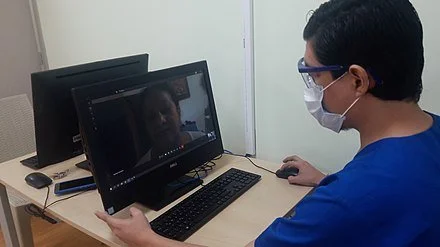
“Anthem Blue Cross and Blue Shield has announced that its virtual primary-care service is now available to some of its more than 1 million members in Connecticut.
“Anthem, which is the market share leader in the state, joins numerous other Connecticut insurers in rolling out virtual-primary-care services since 2020. Anthem said eligible commercial members will have access to virtual primary care through the digital health app Sydney Health. The app provides access to routine services, including new prescriptions and refills, preventive tests, lab work and referrals to in-network, in-person primary and specialty care when needed.
“‘This virtual primary care offering is the latest example of our ongoing efforts to redefine the future of health care with innovative solutions — giving members more ways to connect with doctors; integrating digital, virtual, and in-person care,’ said Anthem Blue Cross Blue Shield in Connecticut President Lou Gianquinto.”

Shefali Luthra: How insurers sank plan for 'public option' in Connecticut

Headquarters of the huge insurance company Cigna in Bloomfield, Conn
Health-care costs were rising. People couldn’t afford coverage. So, in Connecticut, state lawmakers took action.
Their solution was to attempt to create a public health insurance option, managed by the state, which would ostensibly serve as a low-cost alternative for people who couldn’t afford private plans.
Immediately, an aggressive industry mobilized to kill the idea. Despite months of lobbying, debate and organizing, the proposal was dead on arrival.
“That bill was met with a steam train of opposition,” recalled state Rep. Sean Scanlon, who chairs the legislature’s insurance and real estate committee.
Through a string of presidential debates, the idea of a public option was championed by moderate Democrats ― such as former South Bend, Ind., Mayor Pete Buttigieg, Minnesota Sen. Amy Klobuchar and former Vice President Joe Biden ― as an alternative to a single-payer “Medicare for All” model. Those center-left candidates again touted the idea during the Feb. 25 Democratic debate in South Carolina, with Buttigieg arguing such an approach would deliver universal care without the political baggage. (Buttigieg and Klobuchar have since ended their presidential bids.)
The public option has a common-sense appeal for many Americans who list health-care costs as a top political concern: If the market doesn’t offer patients an affordable health care insurance they like, why not give them the option to buy into a government-run health plan?
But the stunning 2019 defeat of a plan to implement such a policy in Connecticut — a solidly blue, or liberal-leaning, state — shows how difficult it may be to enact even “moderate” solutions that threaten some of America’s most powerful and lucrative industries. The health-insurance industry’s fear: If the average American could weigh a public option — Medicare or Medicaid or some amalgam of the two — against commercial plans on the market, they might find the latter wanting.
That fear has long blocked political action, said Colleen Grogan, a professor at the University of Chicago’s School of Social Service Administration, because “insurance companies are at the table” when health care reform legislation gets proposed.
To be sure, the state calculus is different from what a federal one would be. In the statehouse, a single industry can have an outsize influence and legislators are more skittish about job loss. In Connecticut, that was an especially potent force. Cigna and Aetna are among the state’s top 10 employers.
“They became aware of the bill, and they moved immediately to kill it,” said Frances Padilla, who heads the Universal Health Care Foundation of Connecticut and worked to generate support for the public option.
And those strategies have been replicated at the national level as a national coalition of health industry players ramps up lobbying against Democratic proposals. Beyond insurance, health-care systems and hospitals have joined in mobilizing against both public option and single-payer proposals, for fear a government-backed plan would pay far less than the rates of commercial insurance.
Many states are exploring implementing a public option, and once one is successful, others may well follow, opening the door to a federal program.
“State action is always a precursor for federal action,” said Trish Riley, the executive director of the National Academy for State Health Policy. “There’s a long history of that.”
Virginia state delegate Ibraheem Samirah introduced a new public option bill this session. In Colorado, Gov. Jared Polis is spearheading an effort. And Washington state is the furthest along — it approved a public option last year, and the state-offered plan will be available next year.
But in 2019, Connecticut’s legislators were stuck between two diametrically opposed constituencies, both distinctly local.
Health costs had skyrocketed. Across the state, Scanlon said, small-business owners worried that the high price of insurance was squeezing their margins. A state-provided health plan, the logic went, would be highly regulated and offer lower premiums and stable benefits, providing a viable, affordable alternative to businesses and individuals. (It could also pressure private insurance to offer cheaper plans.)
A coalition of state legislators came together around a proposal: Let small businesses and individuals buy into the state employee health benefit plan. Insurers’ response was swift.
Lobbyists from the insurance industry swarmed the Capitol, recalled Kevin Lembo, the state comptroller. “There was a lot of pressure put on the legislature and governor’s office not to do this.”
State ethics filings make it impossible to tease out how much of Aetna and Cigna’s lobbying dollars were spent on the public option legislation specifically. In the 2019-20 period, Aetna spent almost $158,000 in total lobbying: $93,000 lobbying the Statehouse, and $65,000 on the governor’s office. Cigna spent about $157,000: $84,000 went to the legislature, and $73,000 to the executive.
Anthem, another large insurance company, spent almost $147,000 lobbying during that same period — $23,545 to the governor, and $123,045 to the legislature. Padilla recalled that Anthem also made its opposition clear, though it was less vocal than the other companies. (Anthem did not respond to requests for comment.)
A coalition of insurance companies and business trade groups rolled out an online campaign, commissioning reports and promoting op-eds that argued the state proposal would devastate the local economy.
Lawmakers also received scores of similarly worded emails from Cigna and Aetna employees, voicing concern that a public option would eliminate their jobs, according to documents shared with Kaiser Health News. Cigna declined to comment on those emails, and Aetna never responded to requests for comment.
Connecticut’s first public option bill — which would let people directly buy into the publicly run state employee health plan ― flamed out.
So lawmakers put forth a compromise proposal: The state would contract with private plans to administer the government health option, allowing insurance companies to participate in the system.
The night before voting, that too fell apart. Accounts of what happened vary.
Some say Cigna threatened to pull its business out of the state if a public option were implemented. Publicly, Cigna has said it never issued such a threat but made clear that a public option would harm its bottom line. The company would not elaborate when contacted by KHN.
Now, months later, both Scanlon and Lembo said another attempt is in the works, pegged to legislation resembling last year’s compromise bill. But state lawmakers work only from February through early May, which is not a lot of time for a major bill.
Meanwhile, other states are making similar pushes, fighting their own uphill battles.
“It really depends on whether there are other countervailing pressures in the state that allow politicians to be able to go for a public option,” Grogan said.
And, nationally, if a public option appears to gain national traction, Blendon said, insurance companies “are clearly going to battle.”
They’re going to go after every Republican, every moderate Democrat, to try to say that … it’s a backdoor way to have the government take over insurance,” he said.
Still, when President Barack first proposed the idea of a public option as part of the Affordable Care Act, it was put aside as too radical. Less than a decade later, support for the idea ― every Democratic candidate backs either an optional public health plan or Medicare for All ― is stronger than it ever has been.
So strong, Grogan said, that it is hard for people to understand “the true extent” of the resistance that must be overcome to realize such a plan.
But in Connecticut, politicians say they’re up for a new battle in 2020.
“We can’t accept the status quo. … People are literally dying and going bankrupt,” Scanlon said. “A public option at the state level is the leading fight we can be taking.”
Shefali Luthra is a Kaiser Health News reporter.
Move your personal information offline
When will Americans push back against being forced by business and government to put so much of their personal information online? NONE of it is safe there. NONE! And it never will be, whatever the absurd assertions that somehow cyber-security experts will protect us.
The hackers and thieves are just getting started.
Companies want to put as much stuff online as they can to make it easier to lay off employees. The mantra is: Automate everything!
The cost of this exposure is only starting to be understood. More people should have heeded the warnings of Robert Smith, the longtime editor and publisher of The Privacy Journal.
Consider the breach at Anthem, the health-insurance company, announced this week. The personal information of 80 million people violated!
-- Robert Whitcomb