
Vox clamantis in deserto






Llewellyn King: In ‘25 we lost the metaphor of America
WEST WARWICK, R.I.
Come on in, 2026. Welcome. I am glad to see you because your predecessor year was not to my liking.
Yes, I know there is always something going on in the world that we wish were not going on. Paul Harvey, the conservative broadcaster, said, “In times like these, it helps to recall that there have always been times like these.”
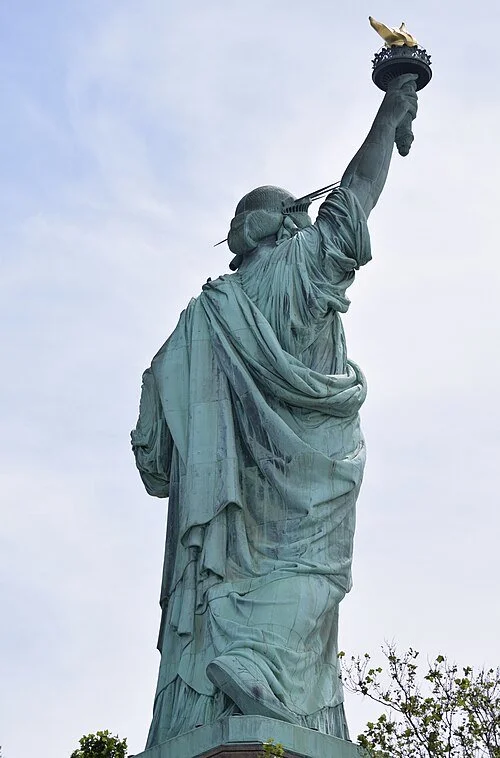
Indeed. Wars, uprisings, oppression, cruelty and man's inhumanity to man are to be found in every year. But last year, the world lost something it may not get back. You see, '26 — you don't mind if I shorten your title, do you — we lost America. Not the country but the metaphor.
We were, '26, despite our tragic mistakes — including slavery and wrongheaded wars — a country of caring people, a country that cared (mostly) for its own people and those who lived elsewhere in the world.
It was the country that sought to help itself and to help the world. It was the sharing country, the country that showed the way, the country that sought to correct wrong, to overthrow evil and to excel at global kindness.
It was the country that led by example in freedom of speech, freedom of movement and in free, democratic government.
When John Donne, the English metaphysical poet, described his lover's beauty as ‘‘my America" in the 1590s, he foreshadowed the emergence of the United States a nation of spiritual beauty.
From World War II on, caring was an American inclination as well as a policy.
We helped rebuil Europe with the Marshall Plan, an act of international largesse without historical parallel. We rushed to help after droughts, fires, earthquakes, hurricanes, tsunamis and wars.
We were everywhere with open hands and hearts. America the bountiful. We had the resources and the great heart to do good, to show our own overflowing decency, even if it got mixed up with ideology. We led the world in caring.
We bound up the wounds of the world, as much as we could, whether they were the result of human folly or nature's occasional callousness.
We delivered truth through the Voice of America and aid through the U.S. Agency for International Development. Our might was always at hand to help, to save the drowning, to feed the starving and to minister to the victims of pandemic — as with AIDS and Ebola in Africa.
In 2025, that ended. More than a century of decency suspended, suddenly, thoughtlessly.
America the Great Country became America Just Another Striving Country, decency confused with weakness, indifference with strength, friends with oil autocracies.
It wasn't just the sense of noblesse oblige, which not only distinguished us in the 20th Century, but also earlier. In the 19th Century, we opened our gates to the starving, the downtrodden and the desperate. They joined the people already living here to build the greatest nation — a democracy — that the world has ever seen. First in science. First in business. First in medicine. First in agriculture. First in decency.
These people brought to America labor and know-how across the board, from weaving technology in the 18th century to engineering in the 19th century to musical theater in the 20th century, along with movie-making and rocket science.
I would submit, '26, that it is all about American greatness, and last year we slammed the door shut on greatness, abandoned longtime allies and friends. We forsook people who had been compatriots in war, culture and history for the dubious company of the worst of the worst, aggressors, oppressors, liars, everyone soaked in the blood of their innocent victims.
Yes, '26, America stood tall in the world because it stood for what was right. Its system of law — including the ability to have small wrongs addressed by high courts — was the envy of foreign lands where law was bent to politics, where democracy was an empty phrase for state manipulation of the vote. The Soviet Union claimed democracy; America practiced it.
America soared, for example, with President Jimmy Carter's principled and persuasive pursuit of human rights and President Ronald Reagan's extraordinary explanation of its greatness: the “shining city upon a hill.”
It sunk from time to time. Slavery was horrific; Dred Scott, appalling; Prohibition, silly; the Hollywood blacklist, outrageous.
But '26, decency finally triumphed and America was great, its better instincts superb — and now worth restoring for the nation and for the troubled, brutalized world.
Good luck, '26. You will bear a standard that the world has looked to. Lift it high again.
Llewellyn King is executive producer and host of White House Chronicle, on PBS. Based in Rhode Island, he’s also an international energy-sector consultant and speaker.
On X: @llewellynking2
Llewellyn King: Our dichotomous America
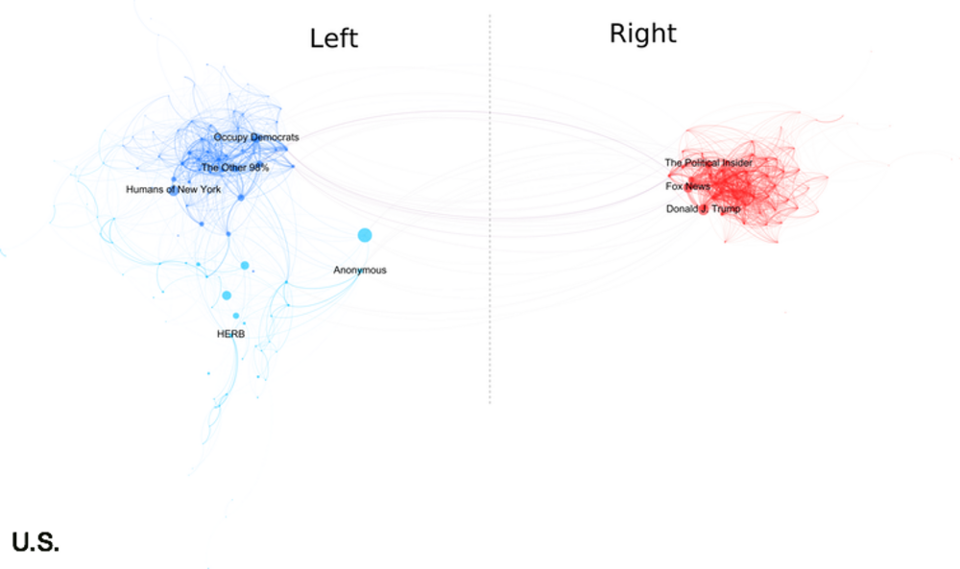
One year after the 2016 election that delivered Donald Trump his first term, American Facebook users on the right and left shared very few common interests.
WEST WARWICK, R.I.
We live in an age of dichotomy in America.
The rich are getting richer and the poor are getting poorer.
We have more means of communication, but there is a pandemic of loneliness.
We have unprecedented access to information, but we seem to know less, from civics to the history of the country.
We are beginning to see artificial intelligence displacing white-collar workers in many sectors, but there is a crying shortage of skilled workers, including welders, electricians, pipe fitters and ironworkers.
If your skill involves your hands, you are safe for now.
New data centers, hotels and mixed-use structures, factories and power plants are being delayed because of worker shortages. But the government is expelling undocumented immigrants, hundreds of thousands who have skills.
Thoughts about dichotomy came to me when Adam Clayton Powell III and I were interviewing Hedrick Smith, a journalist in full: a Pulitzer Prize-winning reporter and editor, an Emmy Award-winning producer/correspondent and a bestselling author.
We were talking with Smith on White House Chronicle, the weekly news and public affairs program on PBS for which I serve as executive producer and co-host.
The two dichotomies that struck me were Smith's explanation of the decline of the middle class as the richest few rise, and how Congress has drifted into operating more like the British Parliament with party-line votes than the body envisaged by The Founders.
Echoing Benjamin Disraeli, the great British prime minister who said in 1845 that Britain had become “two nations," rich and poor, Smith said: “Since 1980, a wedge has been driven. We have become two Americas economically."
On the chronic dysfunction in Congress, Smith said: “When I came to Washington in 1962, to work for The New York Times, budgets got passed routinely. Congress passed 13 appropriations bills for different parts of the government. It happened every year."
This routine congressional action happened because there were compromises, he said, noting, “There were 70 Republicans who voted for Medicare along with 170 Democrats. (There was) compromise on the national highway system, sending a man to the moon in competition with the Russians. Compromise on a whole slew of things was absolutely common."
Smith remembered those days in Washington of order, bipartisanship and division over policy, not party. There were Southern Democrats and Northern Republicans, and Congress divided that way, but not routinely by party line.
He said, “There were Gypsy Moth Republicans who voted with Democratic presidents and Boll Weevil Democrats who voted with Republican presidents."
In fact, Smith said, there wasn't a single party-line vote on any major issue in Congress from 1945 to 1993.
“The Founding Fathers would never have imagined that we would have what the British call ‘party government.' Our system is constructed to require compromise, while we now have a political system that is gelled in bipartisanship."
On the dichotomy between the rich and the poor, Smith said that in the period from World War II up until 1980, the American middle class was experiencing a rise in its standard of living roughly keeping up with what was happening to the rich.
But since 1980, he said, “The upper 1 percent, and even the top 10 percent, have been soaring and the rest of the country has fallen off the cliff."
This dichotomy, according to Smith, has had huge political consequences.
In 2016, he said, Donald Trump ran for president as an advocate of the working class against the establishment Republicans: “He had 15 Republican (contenders) who were pro-business; they were pro-suburban Republicans who were well-educated, well-off. Trump had run on the other side, trying to grab the people who were aggrieved and left out by globalization. But we forget that," he said.
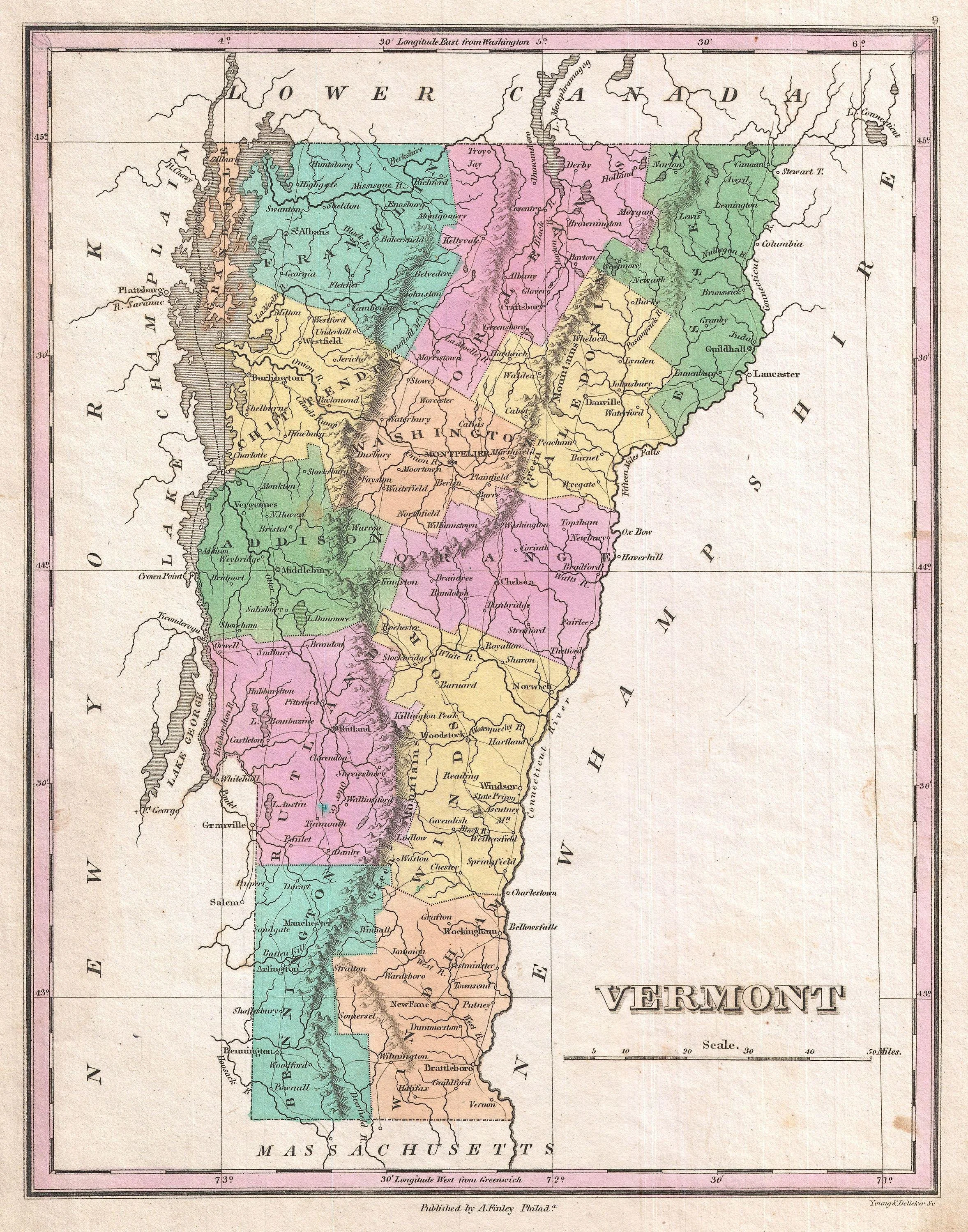
Smith went on to say that Bernie Sanders, the Democratic presidential candidate in 2016, did the same thing: “He was a 70-year-old, white-haired socialist who came from Vermont, with its three electoral votes, but he ran against the establishment candidate, Hillary Clinton ... and he damn near took the nomination away from her."
Smith said that result showed “there was rebellion against the establishment."
That rebellion, in my mind, has resulted in a worsening separation between and within the parties. They aren't making compromises which, as in times past, would offer a way forward.
A final dichotomy: The United States is the richest country the world has ever seen, and the national debt has just reached $38 trillion dollars.
On X: @llewellynking2
Llewellyn King, based in Rhode Island, is executive producer and host of White House Chronicle, on PBS and an international energy-sector consultant.