Vox clamantis in deserto









Llewellyn King: A simple precaution would have prevented 9/11
WEST WARWICK, R.I.
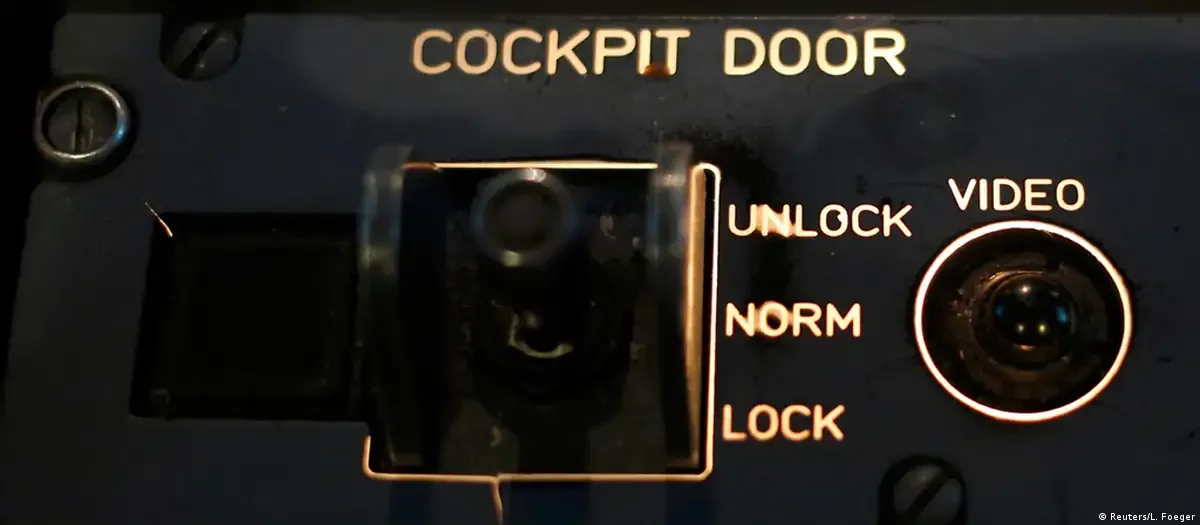
There is a terrible truth about 9/11: It didn’t have to happen. Something as simple as a hardware store lock could have deterred the perpetrators.
The arguments against hardening cockpits were numerous, and now seem unconvincing to the point of being risible.
They included: It would cost too much; the public had to see the captain go walkabout during the flight; first responders couldn’t get to the pilots after a crash; air pressure wouldn’t be stable between the cockpit and the passenger cabin; and the pilots wouldn’t be able to go to the toilet.
Long before 9/11, airplane hijackings were a well-established tool for terrorists, asylum-seekers, extortionists, or simply those who were unbalanced.
Generally the hijackers made their way unhindered to the cockpit, with or without a hostage, and forced the pilots to fly to a country estranged from the one they started from — like Cuba for hijackers from the United States or Western Countries for Soviet defectors.
There was no mystery about hijacking and the vulnerability of pilots. What differentiated the 9/11 hijackings was the fiendish planning, complete with flying lessons and, finally, the ease with which they did their evil.
After all the deaths, the untold suffering, the billions of dollars that have gone into airport security, including the establishment of the Transportation Security Administration, the question remains why something wasn’t done before 9/11 to secure the cockpits. They are now impenetrable, they are bulletproof and can even withstand a small bomb.
A White House science adviser told me long after the tragedy, “We should have done more.”
Pilots and informed people suggested over the years that cockpits should be hardened, others went further and petitioned the Federal Aviation Administration. But the cockpits remained open, accessible and vulnerable, inviting heinous crime.
The failure to harden cockpits after early hijackings is a tragedy of multiple derelictions, from the airlines through the FAA, the White House, the FBI (which investigates terrorists and airline crime); the National Transportation Safety Board; the aviation unions, even the Occupational Safety and Health Administration — an airliner is a workplace.
The system failed because the voices from numerous places calling for hardened cockpits were too soft, too scattered, and not united. A strong statement, a loud voice, a repetitive complaint or more media coverage might have made the difference.
Since 9/11 public service announcements on public transport of all kinds have cried out, “If you see something, say something.” People saw something from many angles but said little.
General aviation is a catch-all phrase for everyone who flies everything, from crop dusters to corporate jets, from aerial-mapping aircraft to single-engine Cessnas, even those who fly cadavers overnight, a small industry.
They hangout between flights in dismal places called “pilot lounges.” In these lounges — usually a room with a few couches and vending machines for coffee and snacks — the talk is about aviation and how to fix some aspect of it.
The thing about the men and women of general aviation is that they are in a sense the heart of aviation: They fly because they would rather do that than anything else. They can’t imagine another life. And they, for assorted reasons, haven’t landed jobs with airlines or major overnight delivery services.
In these lounges, long before 9/11, there was always a groundswell of opinion about hijackers, and they all asked rhetorically, “Why don’t they lock the damn cockpits?” I heard a version of that phrase often when I was a private pilot.
Of all of those who could share some blame, the most culpable are the airlines. They didn’t want to alarm the passengers, spend the money or inconvenience the flight crew. But mostly, no airline wanted to be first.
From time to time, there was talk of doing something about the ease with which ill-wishers could penetrate the cockpit on commercial flights. Often doors were open and passengers could go to the flight deck, if they asked.
I have happy memories of being allowed into the cockpit of the French Concorde and being cheerily greeted by the pilot, who was reading Le Monde, “At 60,000 feet and Mach 2, what am I going to do?” Sensibly, he was leaving the flying to the autopilot.
We will forever mourn the 2,977 people who died on 9/11, and all those who have died in its aftermath.
Aviation is usually very safe because it prides itself on its culture of safety. On Sept. 11, 2001, that culture was absent. That culture was reduced to hoping for the best rather than locking the damn door.
On X: @llewellynking2
Llewellyn King is executive producer and host of White House Chronicle, on PBS, and an international energy-sector consultant. He’s based in Rhode Island.
Julie Dobrow: How kids’ shows responded to 9/11
From The Conversation (except for image above)
MEDFORD, Mass.
On back-to-school night in 2005, I eagerly entered my youngest child’s first grade classroom. The walls were festooned with brightly colored responses to the prompt: “Draw something you remember.”
I scanned for my son’s picture and was shocked when I encountered his drawing: an airplane flying into New York’s World Trade Center.
“I saw the picture you drew up on the bulletin board,” I said to him later that night. “Do you really remember seeing planes flying into the twin towers?”
He looked me in the eyes and replied, “No, Mommy. But I do remember you crying.”
My son was not quite 2 years old on on Sept. 11, 2001. As a mother, I despaired to learn that my own reaction to that day’s tragedies had stuck with him so viscerally. As a professor and researcher of children’s media, I shouldn’t have been surprised.
My son’s memory was likely influenced not just by my emotional reaction but by the media around him that his parents and siblings consumed in the weeks and years after the attacks – a mix of TV news and content geared toward kids.
More than two decades later, children have many more ways and more platforms to encounter frightening images and stories, often without an adult nearby to help them make sense of what they see. But the ways children’s programming such as “Sesame Street” responded to 9/11 offer a useful lesson: Rather than trying to shield children completely from disturbing events, adults can help them process what they’ve seen in honest, reassuring and age-appropriate ways.
You can’t shield kids from what’s happening
Psychologist Joanne Cantor was one of the first to study what scares children about news and how they respond to it.
She concluded that what frightens children varies by their developmental stage. Younger children tend to notice and respond to stories about natural disasters and tragedies about kids or animals. Older children are afraid of stories focusing on personal injury and physical destruction, kidnapping, disease and violence. Teens express fear of stories about random acts of violence, natural disasters and foreign conflicts.
Since Cantor first published her groundbreaking research in the 1980s, kids’ media environments have changed dramatically, with more channels, screens and platforms broadcasting images and videos of natural disasters, violence and tragedies from around the world.
A child’s letter and drawing left at a memorial in lower Manhattan in the days after the 9/11 terrorist attacks. Andrew Holbrooke/Corbis via Getty Images
One study found that young children’s exposure to news is often accidental but lasting, with many children recalling distressing images long after the fact. Another one found that violent news images take a cumulative toll on children’s mental and emotional health. And an international survey of over 4,000 children from 42 countries found that over half had been scared by stories about the COVID-19 pandemic.
More recently, the children’s media nonprofit Common Sense Media surveyed hundreds of children ranging in age from 8 to 18 and found that what kids are seeing and hearing in the news frequently makes them feel scared, sad, angry or depressed.
Children’s TV takes a delicate approach
On and after 9/11, millions of children like my son either saw the images of terrorist attacks or were near adults who reacted to them.
According to “Sesame Street” producer Lewis Bernstein, when the 9/11 terrorist attacks happened, most of the episodes for the forthcoming season were already written. Yet writers and producers knew that children were not oblivious – that even the 2- to 4-year-olds comprising the core “Sesame Street” audience had some sense of what was going on.
In response, the show’s producers collaborated with experts to create additional episodes that would address children’s fears.
In 2002, Rosemarie Truglio, vice president of education and research for “Sesame Street,” explained how the show’s approach was to meet children where they were developmentally.
“Sesame Street” had already helped children process their fears through classic episodes such as “Grover’s Fear of the Dark.” Researchers knew part of what scared children on 9/11 were the loud sirens and the fact that trusted figures such as firefighters and police officers were hurt.
So the episode they developed in response to 9/11 made no mention of the terrorist attacks and instead centered on a fire at Hooper’s Store. Elmo is frightened by the noise of the fire alarm and subsequent sirens. The protective gear that the firefighters are wearing also scares him.
“Sesame Street” never mentioned 9/11 directly, but its segments addressed fears the attacks may have instilled in children.
Fortunately, a kind and kid-savvy firefighter named Bill speaks to Elmo about his fears and invites him to visit the firehouse. There, he dispels some of Elmo’s concerns and dispenses advice about what children can do if they are ever in a similar situation.
The PBS show “Arthur” took a similar approach: Its two-part episode “April 9” centers on a fire at Arthur’s school. It makes no mention of the Sept. 11 terrorist attacks but explores how Arthur, Sue Ellen, Binky and Buster each process the school fire differently.
“Zoom,” the popular PBS live-action variety show, was geared toward older kids. Just 10 days after 9/11, they aired a special half-hour episode called “America’s Kids Respond.” The seven cast members, all between the ages of 9 and 14, shared their thoughts, fears and feelings. Advisers knew their audience needed more than hearing other kids talk about their feelings. So they made sure the cast also discussed constructive things kids could do, such as helping with food donations or clothing drives for affected families.
A year later, “Zoom” followed up with another special, “America’s Kids Remember,” where cast members talked about how they had coped in the months after the attacks. They also read mail from viewers, including some letters written by kids who had been targeted by anti-Muslim slurs. The episode included a segment in which a cast member visited a girl in lower Manhattan whose school had been damaged. The girl explained how she was able to cope through her art and activism.
A promotional clip for a special episode of “Zoom,” “America’s Kids Remember,” which aired in September 2002.
What’s a parent to do?
In 2001, most children under 8 were watching approximately 3.5 hours per day of television or videos on VHS.
Today, Common Sense Media reports that the amount of time kids spend watching television or videos is similar, but their total media exposure is far greater, thanks to mobile platforms and different types of media.
In a world where extreme weather events often lead local news, natural disasters routinely take place, and school shootings and acts of political violence have become all too common, parents might naturally try to shield children from these stories.
But young children pick up on the news and on cues from their parents, even when we don’t think they do.
There are many things parents and teachers can do to help mitigate children’s fears and anxieties from what they see on the news. Recognize some of the signs your child might be feeling anxious, such as sleep problems, avoidance of activities or doomscrolling. Experts suggest answering children’s questions honestly without necessarily relaying all of the gory details. It’s also OK to say, “I don’t know.”
Some of the lessons from how children’s TV dealt with 9/11 still apply.
Young children can also benefit from adults reassuring them that they are safe, by encouraging them to process a piece of news through play or art, and helping children by giving them language to express their questions and fears.
With older children and teenagers, experts suggest avoiding labels, such as blaming something on “the bad guys.” It’s important to give kids facts and context and provide them with resources to answer their questions. Older children can benefit from outlets to express their concerns and feel agency, whether through journaling or art, or the kind of volunteerism promoted on “Zoom.”
Finally, it’s important to acknowledge and explain our own emotions to our children, as I learned on that back-to-school night nearly two decades ago.
Julie Dobrow is a teaching professor in the Eliot-Pearson Department of Child Study and Human Development, at Tufts University. She does not work for, consult, own shares in or receive funding from any company or organization that would benefit from this article, and has disclosed no relevant affiliations beyond her academic appointment.
Peter Certo: Americans' absurd exaggeration of the terror threat against them
Via otherwords.org
One in 3.5 million: That’s the risk you’ll die from a terrorist attack in the United States, Ohio State Prof. John Mueller estimates. Rounded generously, that chance comes to 3 one-hundred thousandths of a percent.
That’s not how most Americans see it, though.
In a recent Gallup poll, 51 percent of respondents said they’re personally worried about becoming a victim. If you’ll forgive my amateur number crunching, that means we’re overestimating the terrorist threat by factor of about 1.7 million.
No wonder people play the lottery.
Meanwhile, Barack Obama is trying hard — with mixed results — not to get pushed into another Middle Eastern war. But that’s a tall order when Americans are more fearful of attacks than at any time since 9/11 — and when politicians like Ted Cruz are calling for bona fide war crimes like “carpet-bombing” Syria.
Obama tried hard to walk that line in his final State of the Union address.
He dismissed critics who likened the fight against the Islamic State to “World War III,” and insisted (correctly) that the group poses no existential threat to the United States. But he also assured listeners that the militants would be “rooted out, hunted down, and destroyed.”
To that end, Obama boasted, American planes had already launched 10,000 airstrikes on Iraq and Syria.
This appeal to the carpet-bombing constituency was Obama’s attempt to break the political taboo against counseling modesty about the threat of terrorism. Unfortunately, it only illustrates a much deeper taboo against admitting that foreign terrorism against our country is almost always a response to our foreign policies.
You know, policies like launching 10,000 airstrikes.
Political scientist Robert Pape should know. He’s studied every suicide attack on record.
Pape argues that while religious appeals — Islamic or otherwise — can help recruit suicide bombers, virtually all attacks can be reduced to political motives. “What 95 percent of all suicide attacks have in common,” he concludes, “is not religion.” Instead, there’s “a specific strategic motivation to respond to a military intervention.”
In the years before al-Qaida pulled off the 9/11 attacks, for instance — and since, for that matter — Washington propped up repressive regimes in places like Saudi Arabia and Egypt, which ruthlessly subjugated Islamist and liberal challengers alike. It armed and enabled Israel, even as the country bombed its Muslim (and Christian) neighbors in Palestine and Lebanon.
And in between its two full-scale invasions of Iraq, Washington imposed devastating sanctions that caused well over half a million Iraqi children to die from a lack of food or medicine.
In his letter explaining the 9/11 attacks, Osama bin Laden mentioned all of these things and more to argue that U.S. intervention in the Muslim world had to be stopped. That’s an opinion shared by plenty of people who aren’t mass murderers.
Similarly, before it expanded to Syria, the infamous Islamic State emerged out of a Sunni rebellion against the repressive Shiite government Washington set up in Iraq after toppling Saddam Hussein. To the extent that it’s engaged in international terrorism, ISIS has mostly targeted countries — like France, Turkey, Lebanon, and Russia — that have plunged into Syria on the side of its enemies.
None of this excuses terrorism in the least. But it strongly suggests that senseless wars only increase the risk of attack — especially when there’s not a bomb on this planet (much less 10,000 of them) powerful enough to put Iraq and Syria back together. Diplomats may do that someday. Carpet-bombing won’t.
Until then, a 0.00003 percent risk of terrorism is high enough. Why multiply it by acting rashly?
Peter Certo is the editor of Foreign Policy In Focus and the deputy editor of OtherWords at the Institute for Policy Studies. IPS-dc.org