
Vox clamantis in deserto





Chris Powell: Eastern Conn. State U. tries to revive the ‘noble savage’ myth
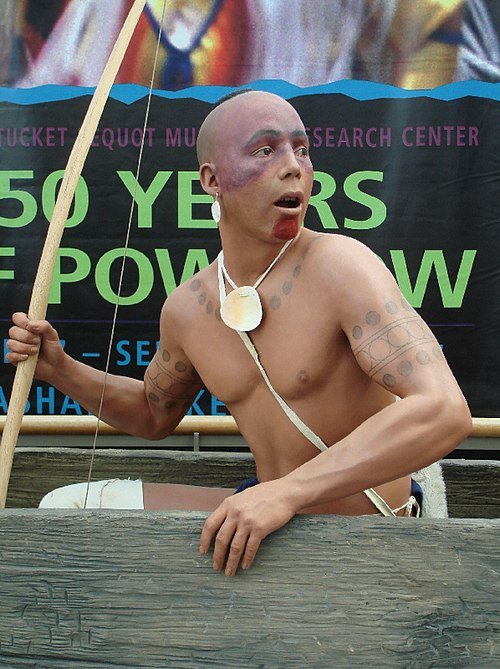
Exhibit at the Mashantucket Pequot Museum and Research Center, near the tribe’s Foxwoods Resort Casino, in eastern Connecticut.
MANCHESTER, Conn.
Having realized that it had been overlooking a prerequisite of political correctness in academia, Eastern Connecticut State University, in Windham, this month adopted a formal “land acknowledgment" that will be ceremoniously proclaimed at the start of major university events.
It reads: “We respectfully acknowledge that the land on which Eastern Connecticut State University stands, and the broader land now known as the State of Connecticut, is the ancestral territory of the Eastern Pequot Tribal Nation, Golden Hill Paugussett Tribe, Mashantucket Pequot Tribal Nation, Mohegan Tribe, Nipmuc Tribe, and Schaghticoke Tribe, who have stewarded this land throughout the generations with great care. We honor their resilience, cultural heritage, and enduring presence. As Connecticut’s public liberal arts university, we are committed to fostering greater awareness of Indigenous histories and contemporary experiences, and to building relationships grounded in respect, reciprocity, and responsibility."
And so the university now will perpetuate the myth and stereotype of the “noble savage": that the Indians of old were good, one with nature, eternally peaceful, and uncorrupted by civilization, unlike the civilization that succeeded theirs, of which everyone should be ashamed.
Of course, the struggle for land and sovereignty is not peculiar to Connecticut. While the struggle is fortunately concluded in the United States, it is the history of humanity and continues throughout the world. Even the “noble savages" of old, including those in what became Connecticut, struggled with each other for land and sovereignty before the European tribe came to dominate the area three centuries ago by making alliance with the Mohegans and Narragansetts to eradicate the troublesome Pequots.
The university says the Indian tribes of old “have stewarded this land throughout the generations with great care."
Huh? The tribes of old were mainly hunters and foragers, not industrialists. They didn't build roads, dams, sawmills, schools, factories, and railroads. They didn't make great advancements in medicine. They sometimes practiced slavery and polygamy. Any stewardship they performed ended centuries ago.
That is, they were people of their time and culture, as their adversaries were, and as everyone is.
But now that some of their ultra-distant descendants have obtained lucrative state grants of exclusivity, their “stewardship” includes casinos, through which some of them have accumulated great wealth that is imagined to be reparations for wrongs done to their ultra-distant ancestors, even as their casinos nurture costly addictions to gambling, which an ever-ravenous state government happily whitewashes when it shares the profits.
Indeed, it's unlikely that Eastern would nurture this obsession with ancestry if there wasn't casino money in it, since ancestor worship is emphatically un-American. The Mother of Exiles says so herself from New York Harbor: “‘Keep ancient lands, your storied pomp,’ cries she with silent lips.’’
That is, in the civilization now operating in these parts one's ancestry doesn't matter any more than anyone else's does, and everyone who has lived here a little while becomes as “indigenous” as everyone else is.
Despite its many faults, the current civilization at least has greatly diminished, if not quite eliminated, tribalism, what with Eastern and other institutions of higher education trying to revive it with “land acknowledgments."
Contrary to Eastern's implication, no one today is guilty of the injustices of the distant past, and even back then there was plenty of guilt to go around. If guilt is to be imposed, the present offers injustices enough. They won't be corrected by the politically correct posturing that is sinking higher education.
ARE THEY US?: A few days ago Connecticut got another invitation to take a good look at itself.
State police said a pedestrian was killed on Interstate 95 in Stamford when he was struck by four cars -- and the first three drivers fled the scene. Maybe the fourth would have fled as well if his car hadn't been disabled in the collision.
Could all the drivers really have thought that they had hit a deer or a bear, not a person? Who are these people? Are they us?
Chris Powell has written about Connecticut government and politics for many years (CPowell@cox.net).