UMaine to promote 3-D homes using state’s wood products
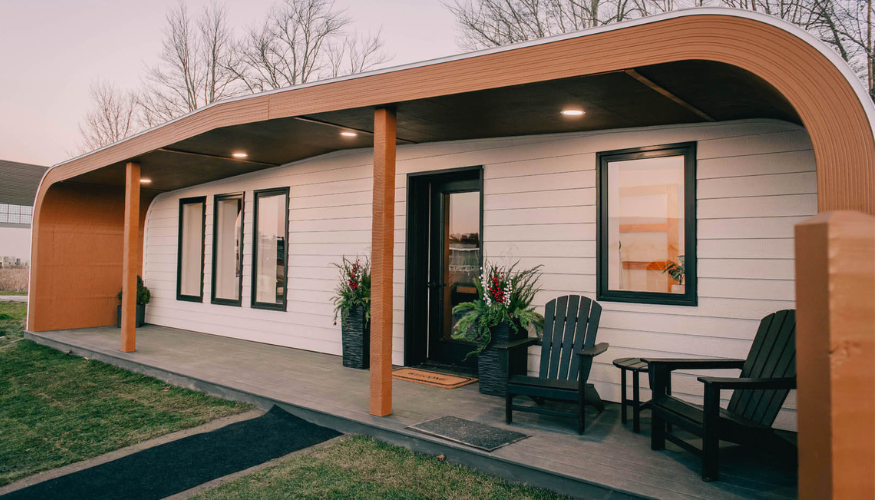
House created through 3-D printing.,
— University of Maine photo
From The New England Council
The University of Maine has received $4 million in congressionally directed spending to support the construction of nine 3-D printed homes for people experiencing homelessness in the Greater Bangor area. The university’s Advanced Structures and Composites Center (ASCC) will use its BioHome3D technology to design and construct the homes.
The University of Maine first showcased its BioHome3D technology in 2022 by printing a 600-square-foot prototype home; each home built with the new funding will be similarly sized and made to withstand Maine’s climate. Since then, the ASCC continued developing large-scale 3D printing technology, including unveiling the world’s largest polymer 3D printer in 2024.
The project could provide a new way to support those experiencing homelessness while making use of materials from Maine’s forestry industry and reducing reliance on traditional construction methods. “By using waste wood from the sawmills, we drive costs down. And by using automated manufacturing, we address the labor issues, the shortage issues that we have in Maine,” said Dr. Habib Dagher, executive director of the Advanced Structures and Composites Center at UMaine.