William Morgan: Those kitschy shakers as part of a civic scam
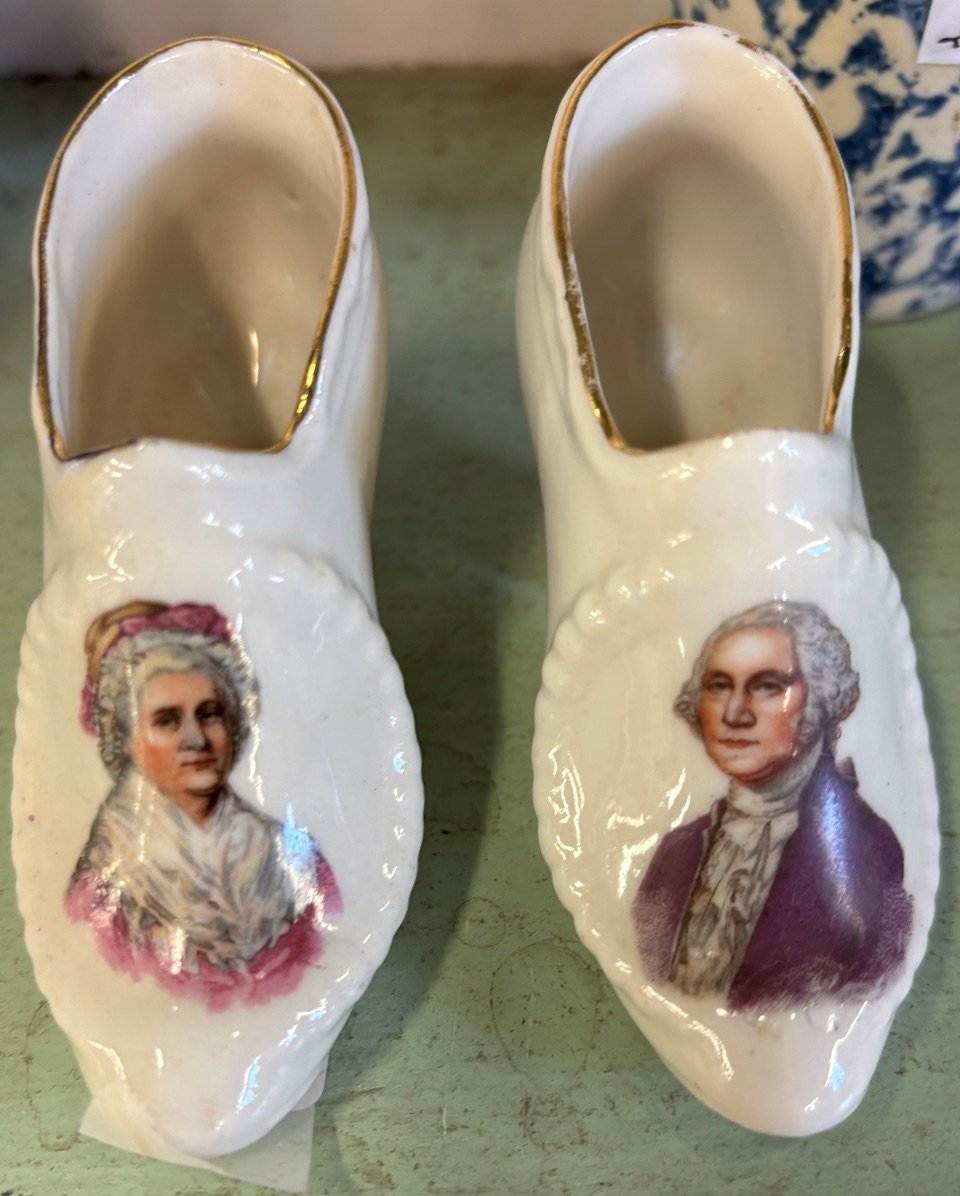
Inch-long porcelain slippers with the visages of George and Martha Washington, probably once for sale at Mount Vernon.
On a fifth-grade field trip to the Betsy Ross House in Philadelphia I bought a plastic comb. It was a gift for a classmate who bailed on the history-laden excursion due to illness. What is the connection between the nation’s designer of Old Glory and a cheap grooming implement?
Once quaint gift shops at historical homes and museums are now part of a much larger enterprise, Big Retail. Tee shirts and stuffed animals and video games have replaced the more portable tchotchkes of the last century: post cards, little figurines, and those delightful, endlessly fascinating snow globes.
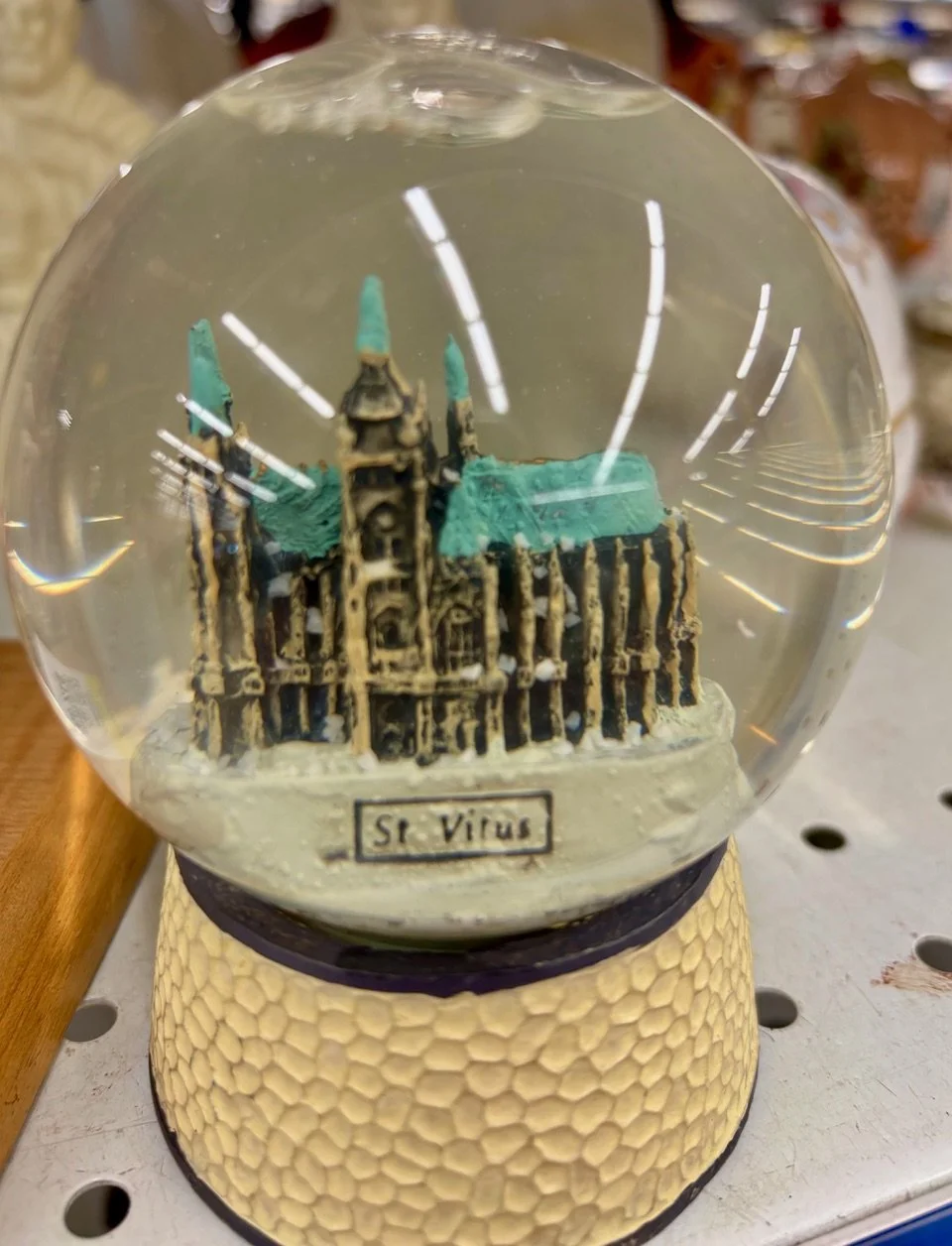
Snow globe of St. Vitus Cathedral, in Prague, on offer at Savers in Providence
Yet, of all the tiny bells with Niagara Falls or the key chains sporting lead models of the Statue of Liberty, the most curious and icongraphically puzzling miniature gifts are the salt-and-pepper shakers. These condiment dispensers were everywhere, and those that survive are probably in serious collectors’ hoards.
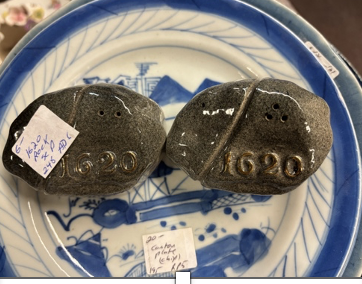
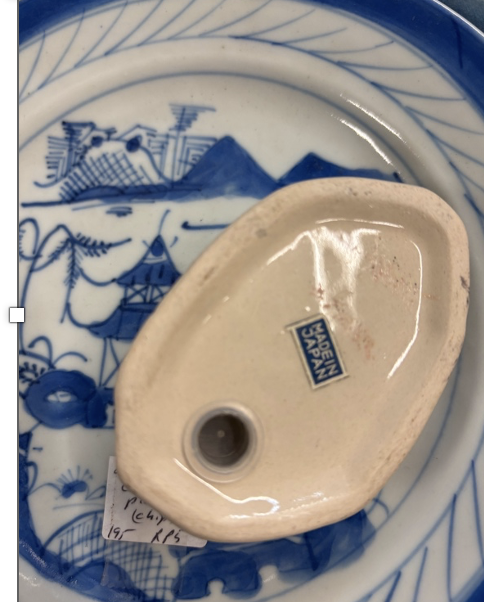
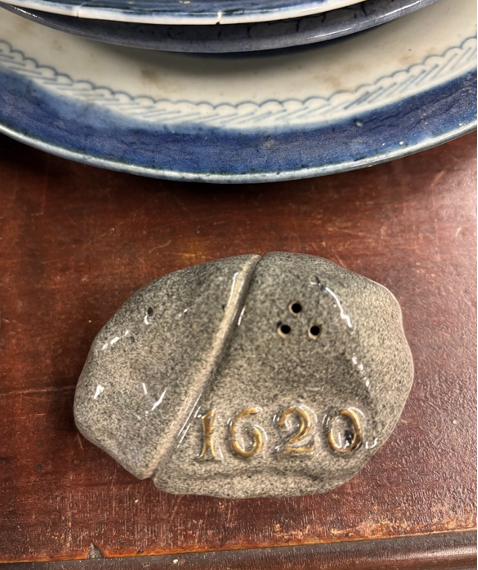
Americans are often vague about history, but one wonders how the Pilgrims, who spent their first winters in the New World at the edge of starvation, are best commemorated by a set of salt-and-pepper shakers in the shape of Plymouth Rock. Available for $6 at Acushnet River Antiques, in New Bedford, and made in Japan (did the ceramicist churning out these glossy little beauties think they were oysters or scallops?) And what to make out of the date? 1620 was the year the intolerant dissenters arrived from England, but the stone was not thus inscribed until 1880. By then it had been moved several times, split in half, and chipped away by souvenir hunters. The poor Pilgrims clearly did not alight upon this boulder, although they unfortunately landed a short distance south of Boston, thereby missing one of the continent’s great harbors.
So, the rock itself is a bogus monument, a civic scam tying to draw tourists who might otherwise pass up a visit to sleepy Plymouth. What surely would have been anathema to the dour settlers, the rock became a place of, if you will, pilgrimage, like a saint’s shrine back in medieval and Catholic Europe. These cute little shakers were gifted by tourists to grandparents and aunts and uncles as souvenirs. But like the splinters from The True Cross or a remnant from a martyr’s tunic, these are also relics.
William Morgan, a Providence-based architectural historian, critic and photographer, is the author of American Country Churches, The Cape Cod Cottage and other books. He regrets that he is a descendant of a nonreligious passenger on the Mayflower.