From Kaiser Family Foundation Health News (except for image above)
Jason Fazekas has spent most of his adult life on the street or behind bars. He was addicted to heroin for decades and often stole to support his habit. On rainy days, he slept in building stairwells to stay dry. On winter mornings, he woke up with fingers too numb to bend.
That all changed in September, when he moved into a one-bedroom apartment in East Haven, Conn.
“I never knew what it was like to have your own apartment, to live on your own, until this,” said Fazekas, 49.
Now he attends a daily treatment program and virtual “Sober at Seven” meetings. He makes grilled cheese and cold-cut sandwiches; works occasional jobs, such as cleaning out a truck; and is in bed most nights by 8:30.
This simple life is “the best thing in the world,” said Fazekas, who celebrated nine months of recovery in October.
That life has become his reality thanks to a housing program that the state of Connecticut funded with about $59 million in opioid-settlement cash, money paid by companies, such as CVS and Walgreens, accused of aggressively pushing painkillers and fueling the opioid crisis. The housing program provides people with substance-use disorders a rental voucher, a case manager to help them find and keep their home, and money to cover the costs of settling in, such as a security deposit or basic furniture.
Nationwide, state and local governments invested more than $340 million from opioid settlements into housing-related initiatives in 2025, according to an analysis by KFF Health News, the Johns Hopkins Bloomberg School of Public Health, and Shatterproof, a national nonprofit focused on addiction. Some projects, like the one in Connecticut, are aimed directly at helping people most affected by the opioid epidemic. But others lack a clear connection to the crisis, leading to criticism by recovery advocates that the money is at risk of being squandered.
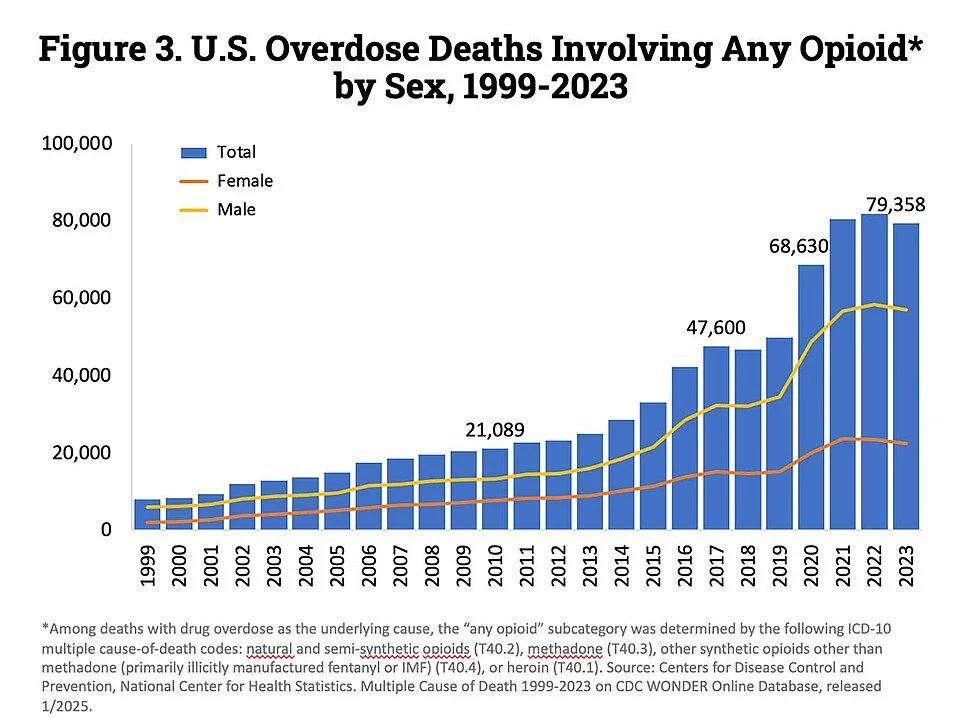
Opioid-settlement cash, expected to total about $60 billion over nearly two decades, is considered a once-in-a-generation opportunity to address an overdose epidemic that has claimed more than 1 million lives in the United States since 2000. Although there are some spending guidelines, there is a lot of wiggle room, little oversight, and large gaps in the public’s ability to track the money.
To shed light on where funds are flowing, KFF Health News and its partners annually file public records requests, scour government websites, and assemble a database of expenditures by state and local governments, which are then sorted into categories such as treatment or prevention.
The result is the most comprehensive national resource of its kind: a catalog of more than 17,500 ways settlement cash was used (or left unspent) in 2025.
Of the roughly $3.7 billion publicly reported as spent or committed last year, about 9% went to housing initiatives, ranging from permanent housing like the Connecticut effort to temporary recovery housing and assistance in navigating complex applications and other social services.
Jurisdictions reported spending more than $340 million on housing-related initiatives, including rental vouchers and recovery housing, per public records. Although housing is not a main bucket of settlement spending or itself a core strategy recommended in most opioid agreements, it is an allowable use. The money allocated to it was similar to spending on the prevention bucket and greater than spending on the overdose reversal drugs core strategy.
Many public-health researchers, recovery advocates, and families affected by addiction are excited about the investments. Housing can stabilize people’s lives enough to get them into treatment and increase their chances of maintaining long-term recovery.
Settlement funds also provide flexibility at a time when the Trump administration opposes federal funds for efforts to house people before they’re sober — despite evidence that such policies are effective.
However, some people closely tracking settlement money worry that the lines will be blurred between general homelessness initiatives and those that focus specifically on people with substance use disorders. As jurisdictions continue to grapple with people living on the street and public backlash over encampments, they may be tempted to use opioid dollars to reduce the visibility of homelessness with little or no programmatic link to addiction.
“The most important piece” of investing settlement dollars “is maintaining that connection to opioid remediation and the populations impacted by opioid use disorder,” said Dan Kelly, who worked in housing and homelessness initiatives before joining the Michigan Association of Counties, where he guides local governments on settlement spending.
Connecticut is investing $58.6 million of opioid-settlement funds in a program called Housing Empowering Recovery from Opioids. It provides people with substance-use disorders a rental voucher, case management services, and funds to cover initial costs, such as a security deposit. From left: Kathleen Therrien and Marie Paulemon are case managers in the program, Amy Cedrone is a participant, Ben Werth is a peer support specialist, and Jason Fazekas is a participant.
Blurred Lines in Local Spending
In Connecticut, Fazekas and other participants must have a verified substance-use disorder to be eligible for the housing program.
Elsewhere, it’s less clear-cut.
For example, New Brunswick, New Jersey, spent $520,000 of its settlement funds on “homeless services.”
That may include crucial services for the general homeless population, recovery advocates say. But unless the money is targeted specifically to homeless people with substance use disorders, it may do little to address the overdose crisis. To some, that violates the spirit of the settlements.
J.T. Miller, a city spokesperson, did not answer questions about what specific services were funded or how they related to addiction. Instead, he wrote that settlement money was used to “support staff and services who actively engaged with the homeless population addressing ongoing assistance, prevention and drug addiction programs.” He shared a link to the city’s community services website, which did not mention addiction.
In a report to the state, the city wrote that the money was for “budgetary offsets and allocations” in its Department of Human and Community Services.
Recovery advocates have long feared that governments would use the opioid money to simply replace general taxpayer funding for existing services, rather than enhancing those services or creating new ones.
The database contains thousands of examples of how state and local governments spent or committed their opioid settlement funds in 2025, as reported in public documents. This glossary may help you interpret the reports, and this video can show you how to use the database, which is formatted similarly to ones that KFF Health News and its partners developed in previous years. You can also download the data to sort and filter it.
Disclaimer: This database is being shared as a public resource; however, it does not represent all opioid-settlement expenditures. Though our team undertook extensive searches, some reports may have been missed or released after our research period. Many jurisdictions do not produce public reports. And even in jurisdictions with public information, reports may not capture the full scope of planning, intent, and activities surrounding opioid settlement funds.
In Louisville, Kentucky, more than $1 million in settlement funds went to a Goodwill program called Another Way.
The program aims to reduce panhandling by gathering people who are on the street, taking them to work around the city — often picking up litter for a few hours — and paying them $50 plus lunch. They are connected to Goodwill’s resources on housing, job training, treatment, and more. Although participants may have substance use disorders, they are not screened for them.
In 2025, Another Way had about 1,800 participants, according to Goodwill Kentucky. Of those, about 270 gained full-time employment and about 240 connected to treatment, though a larger number may have a history of addiction.
Matt Mudd, a spokesperson for Louisville Mayor Craig Greenberg, said the city has invested opioid settlement funds in “proven programs that show positive impact and results.” Another Way provides a “data-proven pathway to treatment, housing, and employment,” he said.
To explain the program’s connection to addiction, he said, “Overdose is the number one cause of death for unhoused people.”
But Brittany Morris is skeptical that the program is a good fit for opioid dollars.
Another Way “helps people that are on the streets,” said Morris, who works at Vocal-KY, a nonprofit that advocates for policies addressing the overdose crisis and poverty. “But do I feel like it’s related to the opioid crisis? That’s basically implying every homeless person is a drug addict hooked on heroin.”
Danny Walker credits Goodwill Kentucky’s Another Way program with helping him transition from being homeless in Louisville to getting two part-time jobs, finding housing, and reconnecting with his family. The Another Way program gathers people who are on the street, takes them to work around the city, often picking up litter for a few hours, and pays them $50 plus lunch.
A Complex Connection
Many people assume homelessness and addiction go hand in hand.
But research suggests more nuance.
A large study on this topic was published last year, based on data from California, which accounts for about a quarter of the nation’s homeless population. It found that less than half (37%) of homeless people used illicit substances regularly in the prior six months. And 25% had never used drugs.
“Most people who are homeless do not have an addiction. And most people who have addictions are not homeless,” said Margot Kushel, a co-author of the study and the director of the University of California-San Francisco Benioff Homelessness and Housing Initiative.
While the two issues are related, the connection is not as common or straightforward as people imagine, she said.
For example, the study found that 23% of people began regularly using illicit drugs only after becoming homeless. Addiction didn’t land them on the street, but the trauma of living there can push people to self-medicate, Kushel said. For example, some may use stimulants to stay awake at night to avoid being assaulted.
The complexity of this relationship means putting settlement money toward general homelessness services may not address the addiction crisis.
Humanity and Survival
That’s why some people with firsthand addiction experience want to see the funds flow to programs like the one that helped Dominic Sitz.
After years on the streets of Louisville, Sitz got housed in 2022.
Arthur Street Hotel, a transitional housing initiative that specialized in helping people with mental illness and substance use disorders, helped him along the way.
“It made me feel human again,” Sitz said of housing.
For the first 48 hours in his place, he locked his apartment door and slept on the tile floor. No food. No furniture. Just a sense of safety.
The Arthur Street Hotel had an annual budget of about $3.5 million and required a lot of staff and intensive case management, said Susan Buchino, executive director of CARE, the nonprofit that ran the facility. Her team often spent weeks earning people’s trust before they’d be ready to come inside.
Over its tenure, the program housed more than 400 people. It closed in July due to a lack of funding.
Sitz, now four years into recovery, wishes opioid settlement funds went to efforts like that, instead of Another Way.
More than $786 million nationwide was spent on or committed to housing, transportation, education, job training, and other support for people to maintain long-term recovery, per public records.
It’s not that the Goodwill program does not do good. It can put money in people’s pockets and potentially move them toward a better life. But it also isn’t specifically aimed at helping people with addiction.
Another drawback: It sometimes asks participants to do work that is traumatic or unsafe, local recovery advocates say.
For example, the program sometimes assigns homeless people to clean up street encampments. Participants may know people who live in the encampments or encounter them later on, Sitz said.
People do it to “have money just to survive,” he said. But “you got to go right back to the people whose stuff you just threw away, and that’s a dangerous situation.”
Sharon Allgeier, senior manager of homeless initiatives at Goodwill Kentucky, who created Another Way, said she’s never encountered such a problem.
“They’re happy to do the work,” she said. “Maybe because they know they’re going to get paid and they’re going to get fed lunch.”
Danny Walker, who participated in Another Way earlier this year, said police had cleared people out of the encampments before he and other participants arrived, so he wasn’t concerned.
He credits the program with helping him land his current part-time jobs at a Goodwill thrift store and Dairy Queen. He’s also gotten housed and is reconnecting with his grandkids after years of substance use and living on the street.
“I can look myself in the mirror and I can say, ‘Hey bud, you’re doing all right,’” Walker said.
Living Better
Although housing programs like the one in Connecticut are expensive, homelessness and addiction experts say they’re more likely to make a dent in the opioid crisis long term. Research also suggests they save money over time by reducing healthcare, judicial, and welfare costs.
The initiative that helped Fazekas is funded for four years at $14.25 million a year to support up to 500 people. The money goes to rental vouchers; case managers and peer support specialists, who visit participants at home at least once a month; and a support fund for application fees, security deposits, furniture, or utilities. An additional $400,000 a year is allotted to the University of Connecticut to evaluate the program.
As of mid-September, about 170 people had moved into housing and about 180 participants were searching for a place, according to the Connecticut Department of Mental Health and Addiction Services.
Fazekas said he hopes to stay in his apartment forever.
“When I was homeless and using drugs, I didn’t love myself. I didn’t care how my day went,” he said. But this program “makes me want to live better.”
One small example that feels big to him: When Fazekas was on the street, he rarely saw his siblings and only called if he needed something.
Now, they visit his place, and he calls them just “to tell them I love them.”
Read the methodology behind this project and download the data.
The Johns Hopkins Bloomberg School of Public Health has taken a leading role in providing guidance to state and local governments on the use of opioid settlement funds. Faculty from the school collaborated with other experts in the field to create principles for using the money, which have been endorsed by over 60 organizations.
Shatterproof is a national nonprofit that addresses substance use disorder through distinct initiatives, including advocating for state and federal policies, ending addiction stigma, and educating communities about the treatment system.
Shatterproof is partnering with some states on projects funded by opioid settlements. KFF Health News, the Johns Hopkins Bloomberg School of Public Health, and the Shatterproof team that worked on this report are not involved in those efforts.
Aneri Pattani is a KFF Health News reporter (Pattaniapattani@kff.org)
Visualizations by Lydia Zuraw (Zurawlzuraw@kff.org Lydia Zuraw)