Frank Carini: N.E. freshwater fishing in hot water
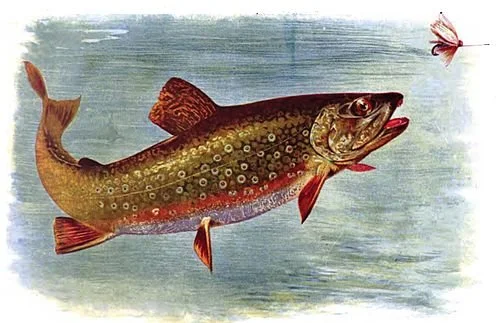
Eastern brook trout chasing an artificial fly, as illustrated in American Fishes (1903)
Excerpted (except for picture above) from an article in an ecoRI News series by Frank Carini. The series reports on how the region’s collection of native species is under threat on several fronts, most notably from humanity’s shortsightedness. Humans aren’t giving the natural world the space it needs and deserves. We’re crowding out nonhuman life, which, in turn, makes nature less productive and us less healthy. Wild New England examines the animals and insects most at risk.
Warming waters, which correlates to lower oxygen levels, changes in stream flow, and exacerbates aquatic stressors such as algal blooms and polluted stormwater runoff, are a significant threat to freshwater ecosystems and the fish they host. As waters warm, cold-water species will be replaced by fish suited for warm waters, causing nonnative species to take over ecosystems.
The climate crisis impacts where fish can live and how they reproduce and grow. These changes impact warm-water and cold-water fish differently. Eastern brook trout, for instance, are dependent on cold-water habitats. But climate change — fueled by the burning of fossil fuels — is causing streams to warm, shrinking the species’ range.
Eastern brook trout are also sensitive to water pollution caused by fertilizer runoff and acid rainfall caused by air pollution. These impacts have resulted in water pH levels being too low to sustain them, according to the U.S Fish & Wildlife Service. These impacts are also making their habitat unsuitable and affecting their spawning capabilities.
Here’s the full article.