
Amy Waxman: Trump dangerously distorts facts on Tylenol, autism and vaccines

From Kaiser Family Foundation Health News
Ann Bauer, a researcher who studies Tylenol and autism, felt queasy with anxiety in the weeks leading up to the White House’s much-anticipated autism announcement.
In August, Bauer and her colleagues published an analysis of 46 previous studies on Tylenol, autism, and attention-deficit/hyperactivity disorder. Many found no link between the drug and the conditions, while some suggested Tylenol might occasionally exacerbate other potential causes of autism, such as genetics.
Bauer, an epidemiologist at the University of Massachusetts-Lowell, and her team called for more judicious use of the drug until the science is settled.
On Monday, President Trump stood beside Health and Human Services Secretary Robert F. Kennedy Jr. for what he called a “historic” announcement on autism. “If you’re pregnant, don’t take Tylenol, and don’t give it to the baby after the baby is born,” Trump said. “There are certain groups of people that don’t take vaccines and don’t take any pills that have no autism,” he added, without providing evidence. “They pump so much stuff into those beautiful little babies, it’s a disgrace.”
A fact sheet released alongside the White House briefing cited Bauer’s analysis. But she was alarmed by Trump’s comments. If prenatal Tylenol has any association, which it may not, it would help account for only a fraction of cases, she said. Further, research has not deeply examined Tylenol risks in young children, and many rigorous studies refute a link between vaccines and autism.
Bauer worries such statements will cut both ways: People may put themselves at risk to avoid vaccines and Tylenol, the only safe painkiller for use during pregnancy. And she frets that scientists might outright reject her team’s measured concerns about Tylenol in a backlash against misleading remarks from Trump and other members of his “Make America Healthy Again” movement.
“I’m really concerned about how this message is going to play out,” she said. “It’s a sound-bite universe, and everyone wants a simple solution.”
Autism experts at the Centers for Disease Control and Prevention were neither consulted for the White House’s long-awaited autism announcement nor asked to review a draft of the findings and recommendations, CDC scientists told KFF Health News, which agreed not to identify them because they fear retaliation.
“Typically, we’d be asked to provide information and review the report for accuracy, but we’ve had absolutely no contact with anyone,” one CDC researcher said. “It is very unusual.”
Trump and Kennedy promised this year that under their leadership the federal government would swiftly figure out what causes autism. Scientists who work in the field have been skeptical, noting that decades of research has shown that no single drug, chemical, or other environmental factor is strongly linked to the developmental disorder.
In addition, both Trump and Kennedy have repeated the scientifically debunked notion that childhood vaccines may cause autism.
Helen Tager-Flusberg, director of the Center for Autism Research Excellence at Boston University, called Trump’s comments dangerous. Fevers can harm the mother and the developing fetus, she said, adding that fevers are more strongly associated with autism than Tylenol.
In an emailed response to queries, HHS spokesperson Andrew Nixon said, “We are using gold-standard science to get to the bottom of America’s unprecedented rise in autism rates.”
White House spokesperson Kush Desai wrote, “President Trump pledged to address America’s rising rate of autism, and to do so with Gold Standard Science.”
Had CDC scientists been allowed to brief Kennedy, they say they would have cautioned that simple fixes won’t make a dent in the number of autism cases in the United States: As many as 1 in 31 8-year-old children had autism spectrum disorder in 2022.
Systemic changes, such as regulations on air pollution, which has been linked to asthma and developmental disabilities including autism, and assistance for parents of disabled children, could improve lives for far more Americans with autism and other conditions than actions taken by the Trump administration on Sept. 22, researchers say.
One federal action is to consider updating the label on Tylenol and to “encourage clinicians to exercise their best judgment in use of acetaminophen for fevers and pain in pregnancy by prescribing the lowest effective dose for the shortest duration.” The American College of Obstetricians and Gynecologists already recommends acetaminophen “as needed, in moderation, and after consultation with a doctor.”
An estimated 62% of women in the United States and Canada report taking Tylenol during pregnancy.
‘Political Crusade’
Despite Kennedy’s many years of speaking about autism, he rarely cites credible autism research or expert recommendations, Tager-Flusberg said. Instead, Kennedy repeats fringe, scientifically debunked theories linking vaccines to autism, despite rigorous studies published in peer-reviewed journals that refute a link.
At the Sept. 22 briefing, Trump said he spoke with Kennedy about autism 20 years ago: “We understood a lot more than a lot of people who studied it,” he said. Ahead of Trump’s first term in 2017, Kennedy said he met with the president to consider a commission on vaccine safety and autism. It didn’t happen then. But soon after Kennedy was confirmed as health secretary, he called autism “preventable,” pointed to “environmental toxins,” and contradicted the results of a CDC study finding that the main driver of rising autism diagnoses was that doctors increasingly recognize the disorder.
At a televised Cabinet meeting in April, Kennedy told Trump, “By September, we will know what has caused the autism epidemic and we’ll be able to eliminate those exposures.”
“You stop taking something, you stop eating something, or maybe it’s a shot,” Trump replied.
“He is on a political crusade,” Tager-Flusberg said of Kennedy, adding that vaccines, Tylenol, aluminum, and food dyes make for simple targets to rally against. “We know genetics is the most significant risk factor,” she said, “but you can’t blame Big Pharma for genetics, and you can’t build a political movement on genetics research and ride to victory.”
“RFK makes our work harder,” said Peter Hotez, a vaccine researcher and the author of a book about his autistic daughter, Vaccines Did Not Cause Rachel’s Autism. He said the book stemmed from conversations with Kennedy in 2017, in which Hotez shared studies pinpointing more than a hundred genes linked to autism, and research into the complex interplay between genetics, biological processes, and things that children and fetuses encounter during development.
“I sat down with him and explained what the science says, but he was unwilling or incapable of thinking deeply about it,” Hotez said. “He is extremely careless.”
In addition to its focus on Tylenol, the White House said it would move to update “prescribing information” on leucovorin — a medication related to the B vitamin folate — to reflect its use as an autism treatment. A small clinical trial in 2012-13 suggested the drug may help treat language problems in some children with autism. Tager-Flusberg said the findings warrant further study but clarified these were “old data, not a breakthrough.”
Likewise, studies finding a modest association between autism and prolonged Tylenol use were published years ago. Researchers have suggested the medicine might occasionally exacerbate factors associated with autism, such as genetics and oxidative stress, a biological condition that occurs for a variety of reasons that scientists are still unraveling.
Still, these studies couldn’t rule out the possibility that fevers prompting women to take Tylenol, rather than the medicine itself, might instead be to blame. Fevers and infections — including those prevented by vaccines — have also been linked to autism.
Nonetheless, Bauer’s recommendation would be to pause before taking acetaminophen while pregnant — blanket advice that doctors give for all medications during that period, but which may be ignored. “Try to alleviate discomfort in some other ways, like with a cold compress, hydration, or massage, before taking it,” Bauer said.
She welcomed the White House’s motion to consider labeling Tylenol to emphasize judicious use of the drug but worries about how the MAHA movement might distort a careful message. On Sept. 2, the right-wing news outlet One America News Network posted an interview with newly appointed CDC vaccine adviser Robert Malone, writing that Malone “speculates RFK Jr. may have an important announcement this month regarding a potential link between Tylenol, multiple vaccinations and autism in children.”
“I was sick to my stomach,” Bauer said, concerned that Kennedy would link her study to discredited theories, causing doctors and scientists to reject her far more measured work.
‘The Boy Who Cried Wolf’
Several medical and scientific associations have called for Kennedy’s removal or resignation. Many scientists are skeptical of what he says because much of it has been misleading or wrong. For example, he’s said HIV isn’t the only cause of AIDS (it is), that antidepressant drugs cause mass shootings (they don’t), that older adults don’t have severe autism (some do), that the measles vaccine causes brain swelling (it doesn’t), that covid vaccines were the deadliest vaccines ever made (they aren’t), that vaccines aren’t safety-tested (they are), and that vaccines contribute to autism (they don’t).
“This is like the boy who cried wolf,” said Brian Lee, an epidemiologist at Drexel University. “One day he might be right about something and Americans who are not prone to conspiracies won’t trust it because it’s coming from RFK’s mouth. And that could be a problem.”
What’s more, the Trump administration is eroding scientists’ ability to probe the safety of pharmaceuticals, said Robert Steinbrook, head of health research at Public Citizen, a nonprofit consumer protection group.
“Public Citizen is very supportive of research on medications that could be linked to diseases,” he said. “But it needs to be through an open process, which looks at scientific evidence, and which doesn’t cherry-pick studies to support a preconceived point of view.”
Steinbrook said the administration has undermined his confidence in the government’s ability to conduct credible work. The Food and Drug Administration has held less than a third the number of advisory committee meetings this year as it did last, meaning fewer opportunities for experts to discuss research on the risks and benefits of drugs. The Trump administration has fired hundreds of career scientists at the CDC and FDA and cut millions of dollars in research funds, including to projects studying autism.
In early September, the CDC issued an unusual contract with the Rensselaer Polytechnic Institute to analyze datasets for signs that vaccinated children were more likely to have autism. Unlike with other research initiatives, the CDC didn’t post an open call for applications in advance. This allows agency experts to review proposals and select studies best designed to answer the question at hand.
CDC researchers told KFF Health News that experts in the agency’s autism and disability group weren’t aware of the contract or asked to review the proposal. That’s important, they said, because researchers digging through data to find clues about autism must show how they’ll rule out biological and environmental exposures that muddy the results, and ensure that children have been accurately diagnosed. One researcher said, “It absolutely looks like Kennedy has subverted the grantmaking process.”
The CDC and HHS did not respond to KFF Health News’ requests for information on the grant, including through a Freedom of Information Act request.
The new vaccine study is separate from Kennedy’s autism data-science initiative, which was posted as an open call at the National Institutes of Health. “The hope is that something good comes of it, and that the government won’t cherry-pick or censor what scientists find out,” Lee said.
Bauer said she didn’t apply to be part of the initiative because of Kennedy’s outsize presence at HHS.
“I would not take his funding because it could take away from the credibility of my study,” she said, “in the same way that taking money from pharmaceutical companies does.”
Amy Maxmen is a reporter for Kaiser Family Foundation Health News.
If you can

“Resist’’ (found slate and metal and encaustic paint), by Providence-based painter Nancy Whitcomb.
‘Meeker morns’

At Equinox Mountain, Bennington County, Vermont
— Photo by Famartin
The morns are meeker than they were,
The nuts are getting brown;
The berry's cheek is plumper,
The rose is out of town.
The maple wears a gayer scarf,
The field a scarlet gown.
Lest I should be old-fashioned,
I'll put a trinket on.
— “Autumn,’’ by Emily Dickinson (1830-1886), Amherst, Mass.-based poet
‘Futility of criticism’
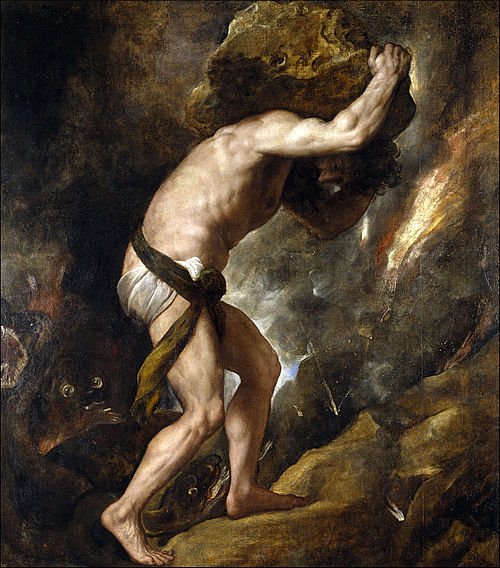
“Sisyphus’’ (1548-49)by Titian, at the Prado Museum, Madrid.
“What help from thought? Life is not dialectics. We, I think, in these times, have had lessons enough of the futility of criticism. Our young people have thought and written much on labor and reform, and for all that they have written, neither the world nor themselves have got on a step. Intellectual tasting of life will not supersede muscular activity. If a man should consider the nicety of the passage of a piece of bread down his throat, he would starve.’’
— Ralph Waldo Emerson (1803-1882), Massachusetts-based essayist, lecturer, philosopher, minister, abolitionist and poet who led the Transcendentalism movement of the mid-19th Century centered in the Boston area.
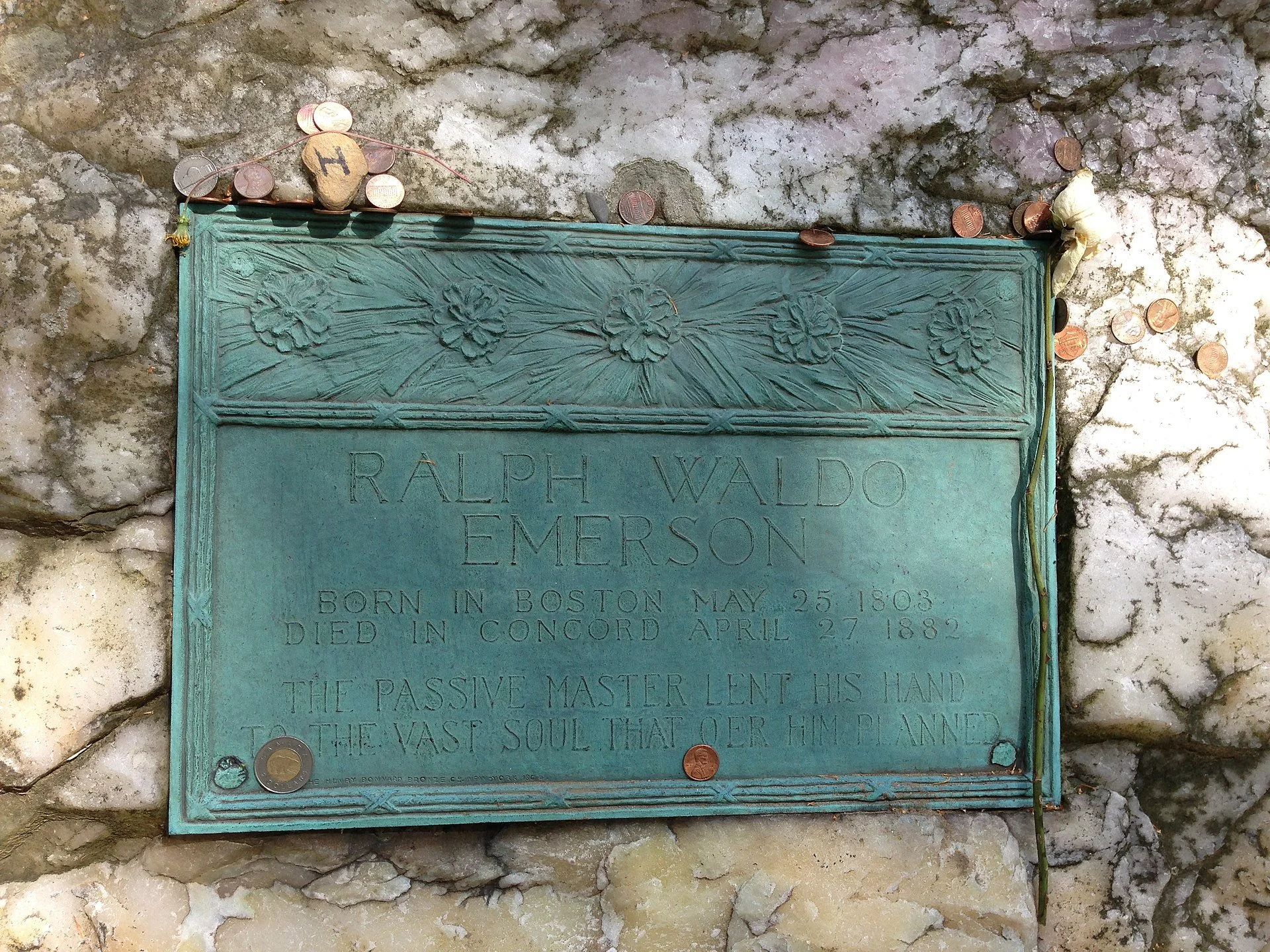
Emerson’s grave at Sleepy Hollow Cemetery, in Concord, Mass.
User:victorgrigas photo
Avian ambassadors

Work by Jennifer L. Anderson, in her show “Voices of the Wild,’’ at Umbrella Arts Center, Concord, Mass., Sept. 24-Nov. 16.
The gallery says:
“‘Voices of the Wild’ is a visual exploration of the fragile, interwoven relationship between humans and the native wildlife of New England. Through a series of drypoint and woodcut prints, watercolors, and oil on paper works, Jennifer L. Anderson aims to honor the creatures that share our landscapes while drawing attention to the ecological challenges they face.
“The featured birds in this body of work are chosen not only for their visual and symbolic richness but also for their vulnerability. As climate change, development, and habitat loss alter the fabric of our region, these species become powerful ambassadors for a broader environmental story – one that is urgent and deeply personal.’’
Llewellyn King: This is not the time to politicize electricity

The Millstone Nuclear Power Plant, in Waterford, Conn., is the only multi-unit nuclear plant in New England. The only other remaining nuclear plant in New England is in Seabrook, N.H.

Solar panels over parking at the West Natick, Mass., MBTA station.
WEST WARWICK, R.I.
The future of electricity is being discussed in terms of how we make it: whether it should be generated by nuclear, wind and solar or by coal and natural gas.
Nuclear is favored by the utilities and the Trump administration, but it will take decades and untold billions of dollars to build up the needed nuclear capacity.
The administration has muddied the situation by denouncing wind, halting most offshore wind development, and heavily favoring coal and natural gas.
The utility companies that make and deliver electricity favor what has been described as “all of the above," weighted by regional resources and state laws.
Twenty-three states and Washington, D.C., have zero-carbon goals. Their laws say that by a certain date, carbon-emitting power plants must be phased out.
The administration says turn right, and the states say turn left. But the nation can ill afford a debate over electricity supply.
America needs more electricity now and will need much more in the near future, reflecting the growth in demand for transportation, manufacturing and, above all, the demands of data centers and artificial intelligence — demands that are growing relentlessly.
Changing how we manufacture electricity isn't helpful if the nation is to avoid blackouts and brownouts. They could begin any time, depending on that great variable: weather.
It used to be that if you asked utility executives what kept them awake at night, they would say, “Cybersecurity." Now they say, “Weather." I know. I ask some of them regularly.
Electricity is fundamental. It is unlikely to be replaced. Its essentiality is uncontested. However, what we use to make it — hydro, wind, solar, natural gas, coal, geothermal and nuclear — is changeable. The methods can be superseded by something else.
It is impossible to conceive of electricity being replaced by another force. Electricity is in nature as well as the wall plug. In short, we may well have different kinds of cars, airplanes and homes in the future, but electricity will be the constant, as vital as water.
In recent years, as summers have gotten hotter and drier, electricity has become more and more important. With some places having temperatures of over 100 degrees for weeks and months, air conditioning has moved from being a source of comfort to being essential for life. In Arizona alone, heat deaths are running over 600 a summer — and it is hard to measure accurately who has died because of heat.
There is some good electricity news that doesn't seem to have been politicized.
Batteries are getting better, and more of utility scale are being installed. The electricity-system operators in California and Texas — California ISO and ERCOT — have both said that in critical times, their systems have been saved by utility batteries. They are the silent heroes of the moment.
Likewise, another critical change has been the development of better transmission wires, known in the industry as connectors. Traditionally, they have been made with a steel core and the electricity moving in aluminum around the core, which provides strength and stability. The new connectors have light carbon-fiber cores, which don't sag when hot and carry nearly twice as much electricity as the steel-cored variety.
The so-called Big Beautiful Bill savages the renewable- power sector by phasing out tax credits, which had become the building blocks of the sector. Now many solar and wind projects will evaporate, and some companies will fail.
Part of the genesis of today's problem is that another kind of polarization hampered the ordered growth of nuclear power — the logical new frontier of electric generation — in the latter three decades of the 20th Century. Fears over nuclear safety were fanned by politicians and the environmental movement.
The environmentalists favored coal over nuclear before wind and solar were perfected. That legacy means nuclear power is now in need of a whole new workforce and supply chain.
President Trump wants to build 10 big nuclear plants of the kind that make up the present nuclear fleet of 95 reactors. He will find that the workers and expertise for that kind of effort are in perilously short supply and will take years to rebuild.
To take any power source off the table today for political reasons is to endanger the nation.
On X: @llewellynking2
Bluesky: @llewellynking.bsky.social
Llewellyn King is executive producer and host of White House Chronicle, on PBS, and an international energy-sector consultant. He’s based in Rhode Island.
‘Meditative calm’

“Floating Into Orbit” (mixed media on acrylic), by Carrie McGee, in her show “Liminal Orbits,’’ at Lanoue Gallery, Boston, through Sept. 27.
The gallery says the show “continues her exploration of creating suspended works inspired by process, improvisation and color.
“Within her art making, McGee employs alternative ways of applying pigments and other materials to transparent acrylic panels. In addition to rust imprints and pigment evaporations, paint pours are utilized – much like wet-in-wet watercolor techniques – resulting in a palpable materiality.
“Her practice radiates meditative calm, and in this latest series, circles, ellipses and spheres join her trademark grids, evoking celestial bodies and their orbits. Interconnected elements create thresholds of movement and stillness, with cycles that never fully close.’’
Robert Whitcomb: The very profitable outrage eco-system
PROVIDENCE
Charlie Kirk, like his Great Gilded Leader Trump, found that demagoguery can be very lucrative, especially as the educational level continues to slide in the U.S. The very able organizer was making a nice pile as co-founder and CEO of the far-right, marketed-to-young-people Turning Point USA. That was before Tyler Robinson, 22, like Mr. Kirk a son of affluent Republican parents, allegedly shot the 31-year-old to death. Making such gruesome attacks easier is that America is awash in guns, to no small degree because of Republican antipathy to any gun control. (Robinson’s gun was apparently his grandfather’s.) In the past few decades, the National Rifle Association, the gun industry and the Republican Party have essentially merged.
Of course, America has always been heavily armed, but it has reached astronomical levels, with 400 million guns now; of course plenty of people don’t own any.
(I myself inherited from my father an 80-year-old 12-gauge shotgun and a .22 rifle; a late 19th Century shotgun (too dangerous to use!) from my maternal grandfather’s Upstate New York farm, and a revolver that my paternal grandfather carried on the train between Brockton and Boston as he was ferrying cash and checks for a shoe company. All since have been dispersed elsewhere. But we still have the Civil War rifle from Kentucky that my wife inherited. Kentucky was a Border State, and so we don’t know whether it was used by a Confederate or Union soldier, or just for hunting wild animals, or neighbors the owner didn’t like. The Bluegrass State, like many former Slave States, has always been a pretty violent place.)
In any event, it’s been noted that both Mr. Kirk and Robinson came from the same toxic digital/podcast/cable-TV/YouTube ecosystem, in which violent threats abound.
Mr. Kirk’s shows, rife with bigotry, brought him an estimated net worth of $12 million at his death. His salary for running his right-wing machine was $407,000 back in 2021, the last year for which his pay was reported. But then, he was a charismatic leader to his pumped-up followers, most of them young and overwhelmingly white, and few of whom were interested in researching, let alone challenging, his assertions. We seem to be heading into a post-literate society. Mr. Kirk was aided by many Americans’ staggering willful ignorance about the history of their own country.
Never let the facts get in the way of a story if that brings in more revenue! Just ask the remarkably cynical and amoral Rupert Murdoch, of Fox News, and Mark Zuckerberg, of Facebook, who have made BILLIONS from the lies-and-outrage industry.
The charismatic provocateur Kirk had famously said he didn’t like the word “empathy,’’ preferring the word “sympathy,’’ though in his vitriolic remarks he often showed little of either, though obviously he could be warm and charming when needed.
Here are the standard definitions of two kinds of empathy:
Cognitive empathy: The mental ability to understand another person's perspective, thoughts, and feelings without necessarily feeling them yourself.
Emotional empathy: When you “feel” another person's emotions. What they are experiencing emotionally has an impact on your emotional state.
Here’s one of self-proclaimed Christian Mr. Kirk’s not untypical remarks:
“Joe Biden is a bumbling, dementia-filled Alzheimer's, corrupt tyrant who should honestly be put in prison and/or given the death penalty for his crimes against America.”
Here’s a bunch of other interesting remarks by Mr. Kirk.
Of course, it will get worse.
Last Wednesday Britain’s Channel 4 ran a long fact-checking show on Trump’s lies so far in his current regime. But they’d need a helluva lot more time to play them all.
Robert Whitcomb is editor of New England Diary.
‘Sense of wonderment’
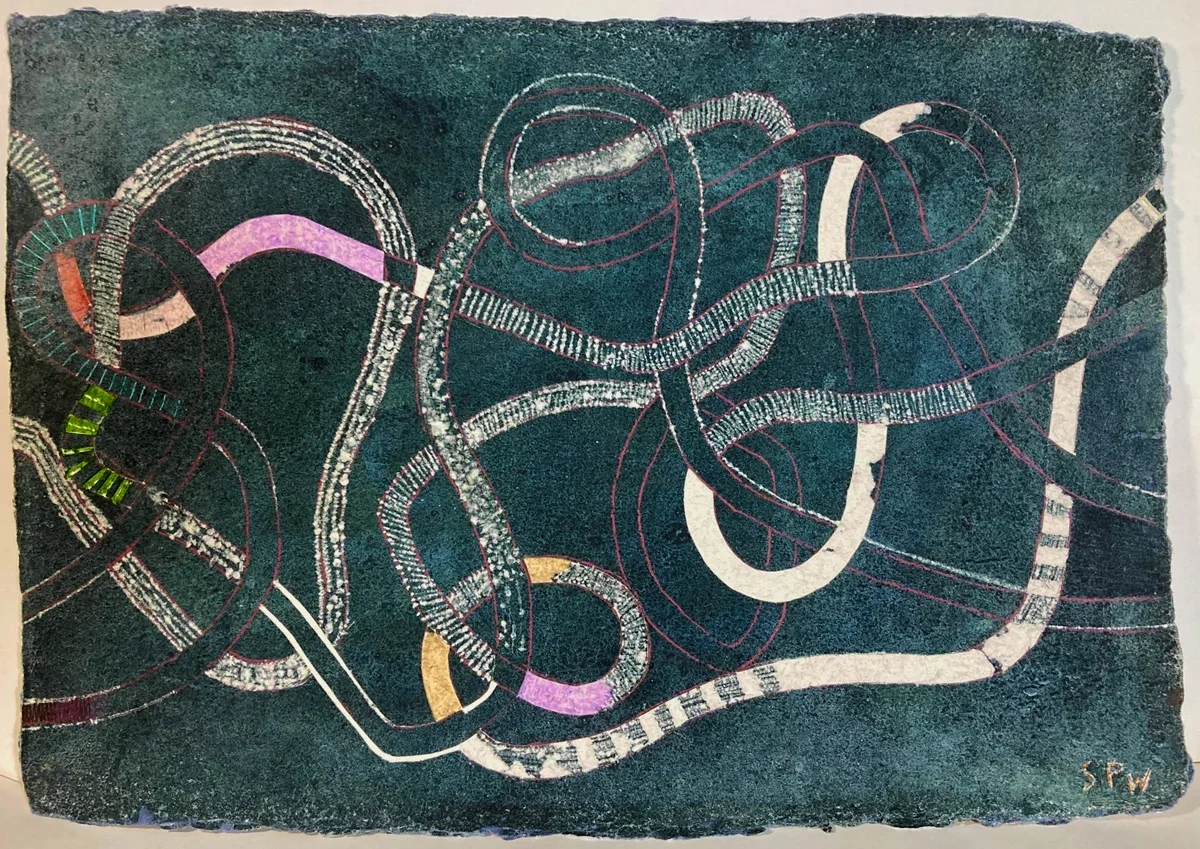
Work by Shiao-Ping Wang, in her show “Visual Inference,’’ at 3S Artspace, Portsmouth, N.H., through Sept. 28.
The gallery says:
“Imagination and curiosity are the unseen ingredients in Shiao-Ping Wang's process. They lead the paths behind and beyond appearances and patterns. As patterns proliferate, conjugate and transform, the artist's eye finds relational meanings between the abstract forms and its parallels in natural phenomena and in human lives.
“Shiao-Ping is drawn to materials that evoke a sense of wonderment. The strong material presence of linen canvases and handmade paper ‘speak’ to her in the process. They encourage her to explore ways in coloring, cutting and reaching under layers of the pulp.’’
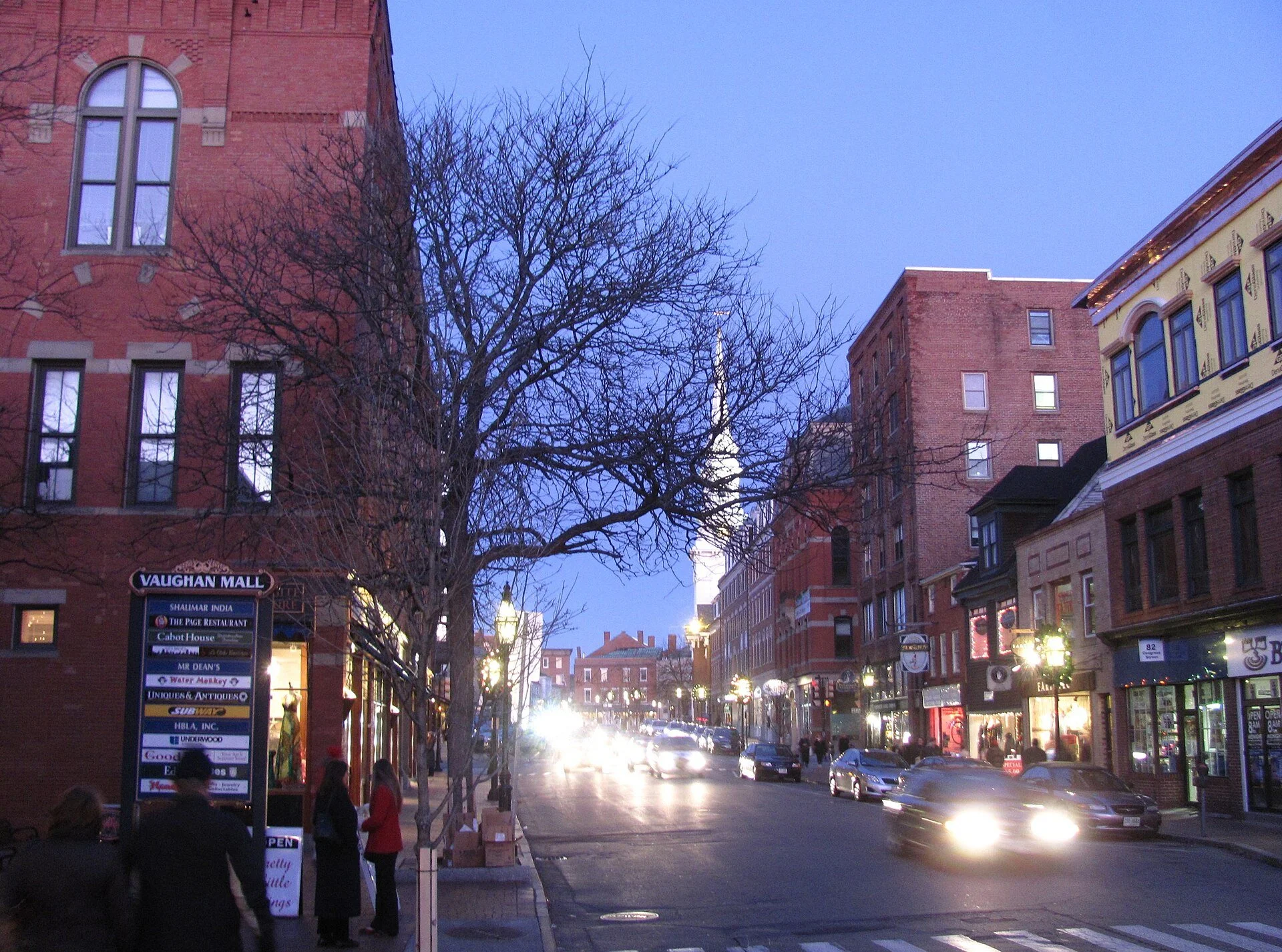
Congress Street in beautiful downtown Portsmouth, N.H.
— Photo by John Phelan
Chris Powell: Conn. Democrats are over-impressed by college; make it ‘military,’ not ‘defense’
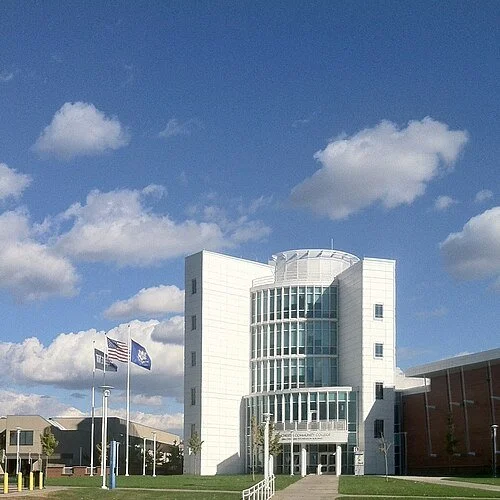
Rotunda at Manchester (Conn.) Community College.
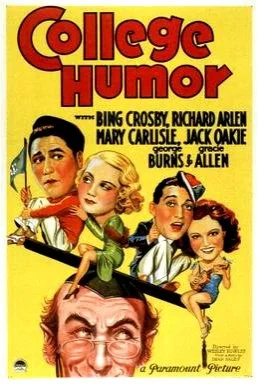
1933 movie
MANCHESTER, Conn.
Surely Connecticut state Rep. Eleni Kavros DeGraw, (D-Avon) doesn't represent the entirety of Connecticut's Democratic Party. But she is evidence of the party's transition from the party of the working class to the party of the arrogant elites.
Kavros DeGraw revealed herself last month with comments at a meeting of a General Assembly committee studying relief for college student debt. The Yankee Institute's Meghan Portfolio reports that Kavros DeGraw said “most important thing is to go to college … to have long-term earning power and to be able to start building generational wealth and to succeed."
Kavros DeGraw added: “If folks aren't going to college and getting the jobs that college educations fill, what jobs are they ending up in? They're ending up in jobs that do not pay them enough. And then they do become, quote, unquote, a burden on everyone else because of the services they might need."
That's not only a mistaken view of the lives of people without college degrees, many of whom make good livings and do jobs vital to society, but also a mistaken view of the lives of people with college degrees, many of whom are in debt and stuck in dead-end jobs after earning degrees of little financial value while many others make great incomes doing little good for society.
The higher education that so impresses Kavros DeGraw is full of such ironies.
Joshua Moon-Johnson, the new president of the community colleges in Manchester, Enfield, and Middletown touts his degree in “LQBT studies," which may get his political-correctness ticket punched but won't help him convey much useful learning to students.
Meanwhile, the former chancellor of the Connecticut Colleges and Universities System, Terrence Cheng, now a “strategic adviser" to the system's Board of Regents, which pushed him out of the chancellorship because of an expense-account scandal, is even more of a “burden on everyone else," since he is being paid just as much for doing nothing much. Cheng has degrees in English and, not so ironically, fiction.
The Cheng scandal has been continuing for more than a year but Kavros DeGraw seems to have said nothing about that burden on society.
Indeed, many pompous higher-ed types strut around calling each other “doctor” but to replace a lightbulb they have to call someone who knows how to use a ladder.
The problem with college student debt, as state Rep. Tammy Nuccio (R-Tolland) explained to the study committee, is simply that college is overpriced. It costs more than it's worth.
This doesn't mean that college degrees are worthless, nor that all college courses should facilitate entry to lucrative careers. College should not only teach work skills but also broaden appreciation of life in all respects.
But the bigger education problem in Connecticut and throughout the country is lower education. Standards in lower education have been eliminated. Half of high- school graduates never master what used to be considered high school work, and they enter adulthood qualified only for menial jobs.
The drag on society is not the lack of college education but the lack of primary and secondary education, and unfortunately it's too terrifying for elected officials like Kavros DeGraw to acknowledge, so it will get worse.
WAR, NOT DEFENSE: President Trump, who claimed a dubious medical exemption -- bone spurs -- to escape the military draft during the Vietnam War, wants to look tough and to make the country look tougher. Hence his plan to return the Defense Department to its original name, the War Department. Again he is right for the wrong reasons.
The country doesn't need more military toughness as much as it needs more military smarts. Its most recent wars -- Vietnam, Iraq and Afghanistan -- weren't defense. They were stupid imperial adventures. The country would have been far better off without them.
The same goes for “defense" contractors. They're really military contractors, including Connecticut's home team -- Pratt & Whitney, Electric Boat, and Sikorsky Aircraft. Journalism should stop playing along with the charade.
Chris Powell has written about Connecticut government and politics for many years (CPowell@cox.net).
Three Boston traffic rules
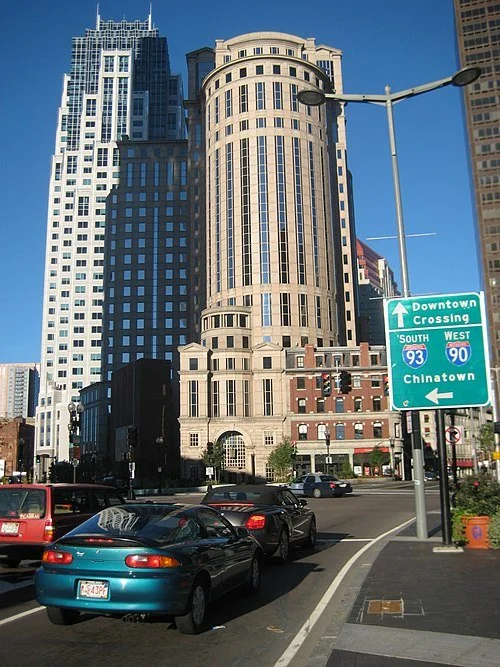
“The first rule of the road in Boston couldn’t be more clear: Get there as fast as possible. Rule two: Blow by as many people and cars as you can. Rule three: Ignore everything — yield signs, bumbling pedestrians, cracks in the Earth’s crust releasing molten lava — that gets in the way of rules one and two.’’
-Peter DeMarco, Boston Globe reporter
Probing the peculiar
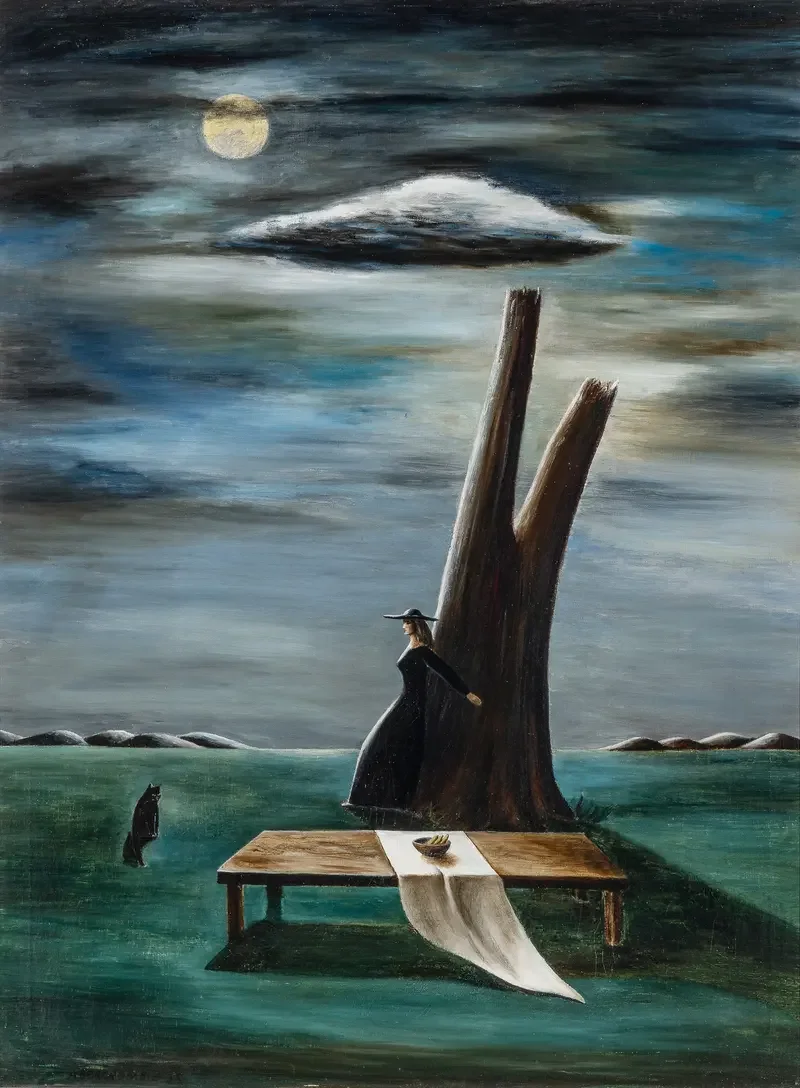
“Tree, table, and Cat” (oil on canvas), by Gertrude Abercrombie, in the show “Gertrude Abercrombie: The Whole World Is a Mystery,’’ at the Colby College Museum of Art, Waterville, Maine, through Jan. 11.
— Photo by Michael Tropea
The museum explains:
“Gertrude Abercrombie (1909–1977) produced hundreds of paintings imbued with autobiography that revealed her emotional truth and declared it as real. A critical figure in the mid-20th-Century Chicago art and jazz scenes, Abercrombie made art to give her internal life visual form. She put herself into her painted world—in self-portraits, landscapes, interior scenes, and still lifes—through the use of personal symbols and enigmatic female figures. She probed her consciousness, mined her memories, drew on her dreams, and found the peculiar in everyday life, painting, as she said, ‘simple things that are a little strange.”’
‘‘Abercrombie lived in defiance of her era’s social norms. By blending layers of reality, her paintings similarly question existence as commonly understood and posit alternate dimensions. Though she had a singular vision, her reliance on her inner consciousness and use of a fantastical style connected her to broader developments in American modernism.’’
Changes coming to The Fens

View from Boylston Street bridge, in the Back Bay Fens.
— Photo by King of Hearts
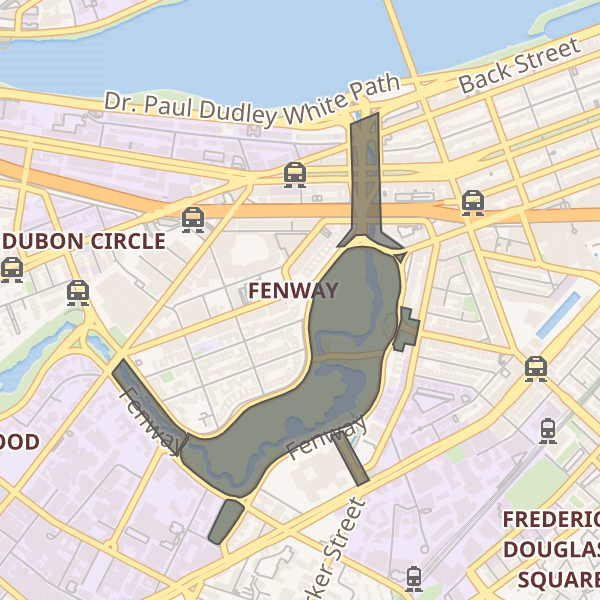
The Fens
Excerpted from The Boston Guardian
New pathways, drainage systems, and more accessible routes to monuments and memorials are coming to the Back Bay Fens this year through the Pathways Project, introduced by the Boston Parks Department.
Filed in July and reviewed by the Conservation Commission this past month, the project has been years in the making and will build upon the 2023 completion of the U.S. Army Corps of Engineer’s multi-phased, Muddy River Restoration project that focused on flood mitigation and reconstruction and replanting of the banks along the river.
The two-year long project will lead to specific areas and paths to be shut down momentarily from Avenue Louis Pasteur to Boylston Street to install gravel walkways with “ADA-compliant” asphalt, plant new trees, and add infiltration trenches and areas for stormwater drainage.
Charlie Kirk’s campaign to ‘de-woke’ colleges and some deeper history
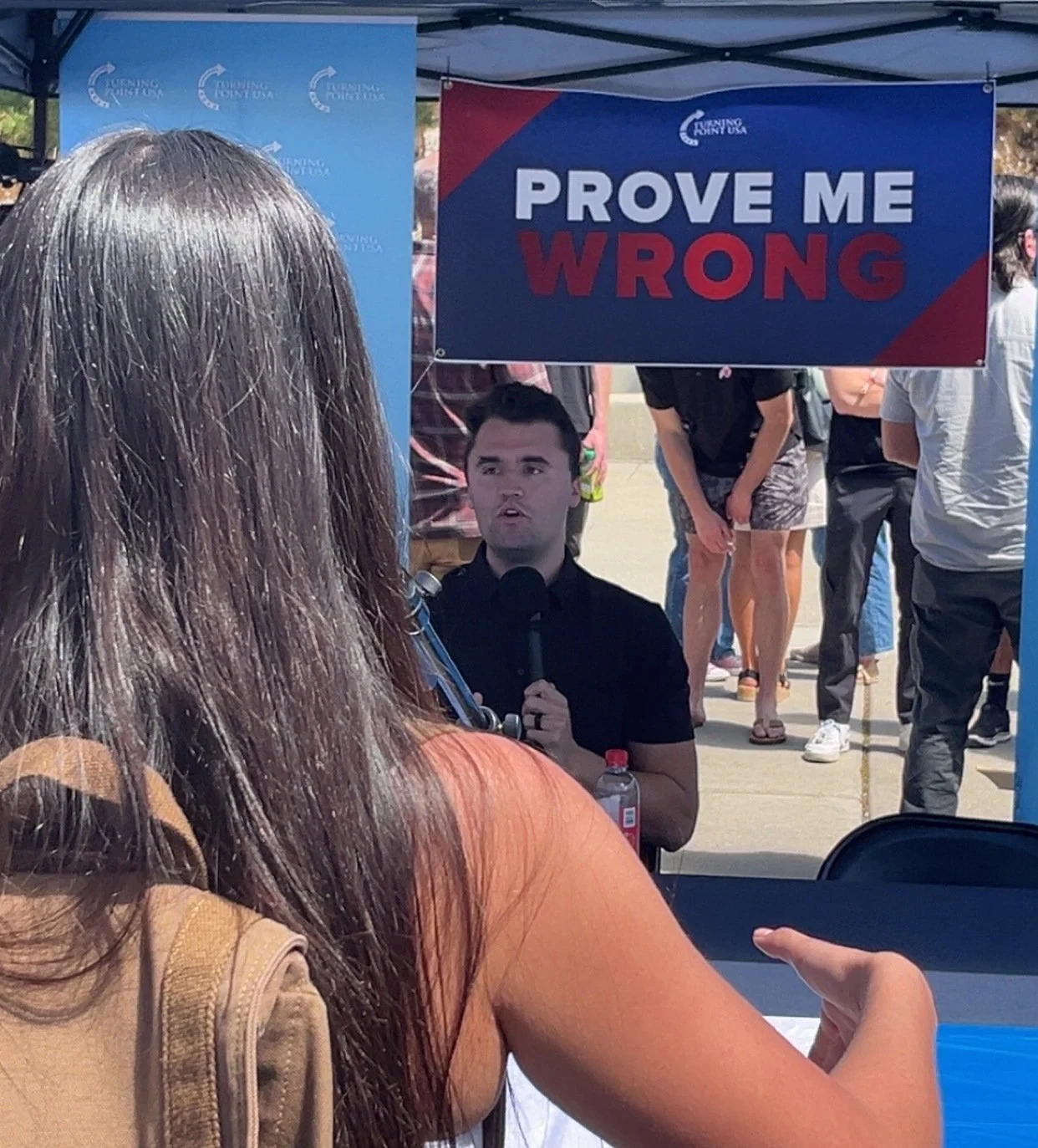
Charlie Kirk at a college event in 2024.
From The Conversation Web site (not including picture above)
Conservative activist Charlie Kirk was assassinated on Sept. 10, 2025, at the start of a college campus tour that centered on Kirk discussing politics – and education – with students.
A large part of Kirk’s political activism centered on what education should look like. Amy Lieberman, The Conversation’s education editor, spoke with Daniel Ruggles, a scholar at Brandeis University, in Waltham, Mass., of conservative youth activism, to better understand the beliefs about education that influenced Kirk and the connection he tried to make with young people.
What is most important to understand about Charlie Kirk’s views on education?
Charlie Kirk’s education philosophy was founded upon the idea of not being on the left. One of the problems with that approach is that it’s harder to explain your ideas and values in a positive way instead of just being “anti” left.
Conservatives, well before Kirk’s time, have been trying to reclaim education from liberals whom they view as valuing equity and belonging instead of timeless values of order and traditional values in society. This philosophy overall focuses on reclaiming education from liberals.
There is a lot of alignment with Kirk’s education philosophy and the Make America Great Again movement, but his approach predates Donald Trump’s rise. It is focused on returning to what conservatives call Western and “traditional” values. This means rolling back the clock to an idealized time when men and women had set gender roles in society and life was more harmonious and wholesome. At its best, this education philosophy can be valuable – teaching what society views as virtuous behavior, ethics and tradition – but it can also prioritize tradition and privilege over justice and equity.
This philosophy also has to do with not feeling a need to apologize for one’s identity. A big divide between liberals and conservatives is how they explain disadvantage. Conservatives like Kirk believe they should not have to apologize for their identities, and other people’s identities should not be a reason for special treatment.
This philosophy is not so much about making education more effective as much as it is about not being “woke.”
De-woking the classroom is usually the overall goal. This involves ridding the classroom of what is known as grievance politics – meaning someone believes they have been marginalized because of their identity, race, gender or sexuality.
How far back can you trace this educational philosophy?
The 1960s had an explosion of progressive activism amid the New Left and antiwar movements as young adults realized that they could now demand certain rights. At the same time, there were a lot of young conservatives on campuses who felt fine with the way things were or who were concerned about some of the more radical ideas promoted by the New Left.
Universities became more inclusive in the 1960s, too. Generally, there were not any gender studies programs at American universities until the 1960s and 1970s, nor were there any race and ethnicity programs. Some conservatives pushed back on the emergence of these programs, saying that if there is an African American studies department, they want to see a conservative studies department, too.
After the 1960s, conservative education fights died down. Conservatives still wanted their voices heard on campus, but their merit-only based education philosophy seemed less relevant when left-wing campus protests had declined significantly.
How did Charlie Kirk capitalize on the conservative feelings regarding education?
Kirk founded his political nonprofit, Turning Point USA, in 2012. Kirk didn’t originally support Trump, but he became friends with Donald Trump Jr., and eventually became close with the president. Like Trump, Kirk saw academia as the source of a plethora of problems in American society. His goal was to make college campuses more friendly to conservative students by making conservative ideas like free market economics and traditional gender roles more popular.
There was a lot of foundation laying over time for Kirk’s conservative education philosophy. Hamas’s Oct. 7, 2023, attack in Israel, as well as the subsequent war in Gaza and Palestinian rights protests in the U.S., offered a moment for conservatives like Kirk to brand progressives at schools as this huge threat.
What was Kirk’s tour focused on accomplishing?
Kirk and others in the conservative youth movement want their followers to have a close relationship with them. This helps conservatives influence government and society, using college campuses to recruit young adults as conservative voters and activists, making the university appear less progressive in the process. Let’s say progressive college kids have Bernie Sanders or Che Guevara posters hanging in their dorm rooms.
Conservatives such as Kirk have built an all-encompassing, alternative world for young conservatives to become involved in, where they have proximity to political and thought leaders, including Kirk. Turning Point has used flashy slogans, signs and bumper stickers to help make conservatism cool on campus.
Kirk’s tour had just begun, but he had planned to make stops at universities in Colorado, Utah, Minnesota, Montana and New Hampshire (at Dartmouth College) and other states. It was important that Kirk himself was in the room with young people, and that they could ask him questions and talk with him. He was considered approachable in a way that most politicians would not be.
Conservatives have used this strategy for a long time. My own research shows how college students would write to conservative leaders such as Ronald Reagan and William F. Buckley Jr. in the 1960s and 1970s and these figures would write back. This kind of proximity between leaders and young supporters isn’t seen on the left. The goal is to cultivate a conservative movement community. Many of those conservative college students later worked for the government. Kirk’s tour was about continuing that kind of direct relationship between conservative leaders and young people.
Conservatives have a pipeline – meaning, let’s say you’re in high school and you discover conservative ideas by watching Charlie Kirk on YouTube. In college, you can go to Turning Point events and meet conservative leaders. After you graduate, you can even get a job with a conservative group through websites like ConservativeJobs.com. The point of the pipeline is to always give young conservatives a next step to becoming more involved in politics. While not everyone follows this pipeline, it helps the conservative movement cultivate new generations of talent. I think Kirk had a lot he was trying to accomplish, including building up a reservoir of young talent through Turning Point.
How is Turning Point distinct from the Republican Party and MAGA?
Turning Point isn’t the same as the Republican Party, but it’s helping to push the party further to the right. Turning Point has alienated other members of the conservative movement in certain ways. In 2018, the conservative youth group Young America’s Foundation accused Turning Point of taking over the conservative youth movement and crowding out other groups.
Turning Point’s total revenue has grown considerably in the last few years, topping US$85 million in 2024 – that matters because money and attention help Turning Point push out other conservative voices.
Kirk and Trump agreed on a lot of policy issues. Kirk used Turning Point to define conservatism on his terms and to defend Trump. Education is the bulk of Turning Point’s work, a continuation of what has historically also been been the most important cultural issue on the right since the 1960s.
Expressing loss
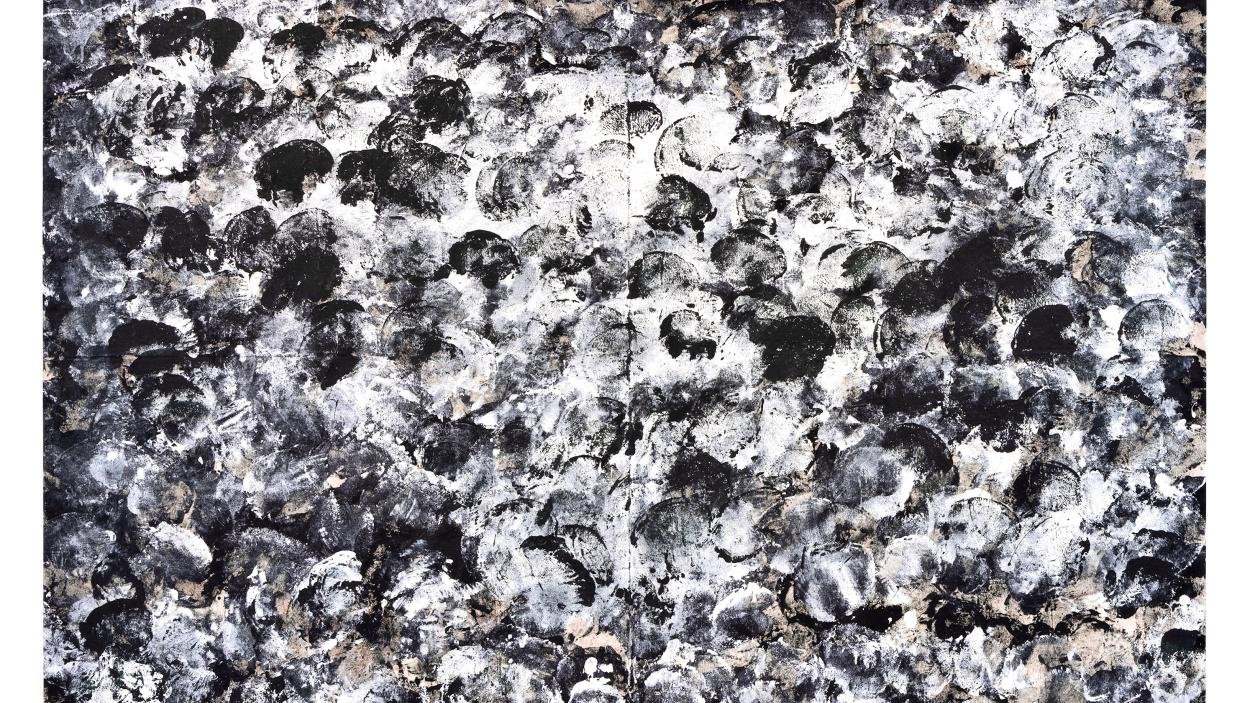
“Are You Staying for Me” (mixed media), by Jamel Robinson, in the group show “Do We Say Goodbye? Grief, Loss, and Mourning,’’ at Burlington (Vt.) City Arts, Sept. 26-Jan. 24
The gallery explains:
“Grief, loss, and mourning are universal experiences and integral to the human condition. Yet in today’s society, grief often remains a taboo, almost unmentionable subject. The ways we express loss, and the extent to which it is socially accepted, can stir unease, discomfort, and apprehension. Whether for those we love, a way of life, a sense of belonging, or an aspect of our identity, how we navigate grief profoundly shapes our physical and mental well-being.
“Working in photography, painting, video, and installation, exhibition artists convey both personal and collective encounters with grief as they interrogate themes of memory, empowerment, transition, and endurance. “Do We Say Goodbye?’’ challenges the finality of loss, inviting us to embrace grief as a shared yet deeply individual journey.’’
Prose beyond purple
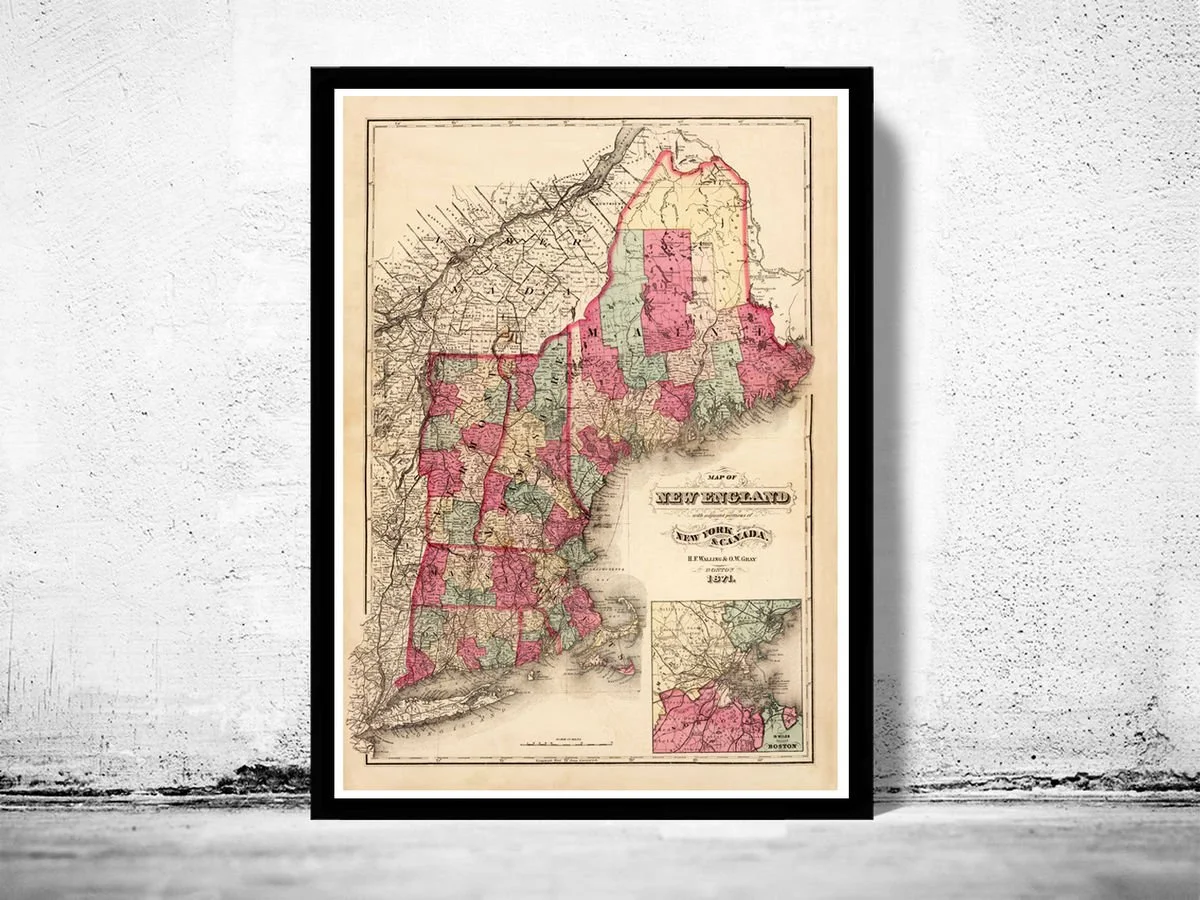
“We dare not be original; our American Pine must be cut to the trim pattern of the English Yew, though the Pine bleed at every clip. This poet tunes his lyre at the harp of Goethe, Milton, Pope, or Tennyson. His songs might better be sung on the Rhine than the Kennebec.
“They are not American in form or feeling; they have not the breath of our air; the smell of our ground is not in them. Hence our poet seems cold and poor. He loves the old mythology; talks about Pluto—the Greek devil,—— the Fates and Furies—witches of old time in Greece,—-but would blush to use our mythology, or breathe the name in verse of our Devil, or our own Witches, lest he should be thought to believe what he wrote. The mother and sisters, who with many a pinch and pain sent the hopeful boy to college, must turn over the Classical Dictionary before they can find out what the youth would be at in his rhymes. Our Poet is not deep enough to see that Aphrodite came from the ordinary waters, that Homer only hitched into rhythm and furnished the accomplishment of verse to street talk, nursery tales, and old men’s gossip, in the Ionian towns; he thinks what is common is unclean. So he sings of Corinth and Athens, which he never saw, but has not a word to say of Boston, and Fall River, and Baltimore, and New York, which are just as meet for song. He raves of
Thermopylae and Marathon, with never a word for Lexington and Bunkerhill, for Cowpens, and Lundy’s Lane, and Bemis’s Heights. He loves to tell of the Ilyssus, of “smooth sliding Mincius, crowned with vocal reeds,” yet sings not of the Petapsco, the Susquehannah, the Aroostook, and the Willimantick. He prates of the narcissus, and the daisy, never of American dandelions and blue-eyed grass; he dwells on the lark and the nightingale, but has not a thought for the brown thrasher and the bobolink, who every morning in June rain down such showers of melody on his affected head.
What a lesson Burns teaches us addressing his “rough bur thistle,” his daisy, “wee crimson tippit thing,” and finding marvellous poetry in the mouse whose nest his plough turned over! Nay, how beautifully has even our sweet Poet sung of our own Green river, our waterfowl,of the blue and fringed gentian, the glory of autumnal days.”
― Massachussetts Quarterly Review, 1849
“Eschew the skylark and the nightingale, birds that Audubon never found. A national literature ought to be built, as the robin builds its nest, out of the twigs and straws of one's native meadows.”
― Van Wyck Brooks (1886-1963), in The Flowering of New England: 1815-1865
Metallic magic

Kenneth Snelson in 1968 with his “Needle Tower”.
Morrison Gallery, in Kent, Conn., is pleased to announce the representation of the estate of Kenneth Snelson.
The gallery says (slightly edited):
“Snelson (1927-2016) was originally an engineering student, and the forces of tension are fundamental to his sculptures, seemingly defying the laws of physics.
“Snelson was guided toward experimental architect and faculty member Buckminster Fuller by Josef Albers while attending the summer session at Black Mountain College, near Asheville, N.C. During his second summer session he presented an early kinetic model of plywood pieces suspended on over another by nylon tension lines, which Fuller translated into metal and exhibited as his own work.
“In 1964 Snelson was commissioned to create a major aerial piece measuring 30 by 35 feet for the World's Fair in New York. He went on to develop a specialty of airy public outdoor sculptures constructed of stainless steel and aluminum, which illustrate his theories of compression and tension. He held five United States patents, and in 1999 the International Sculpture Center presented him with the Lifetime Achievement in Contemporary Sculpture Award.’’
Beware ‘pure democracy’
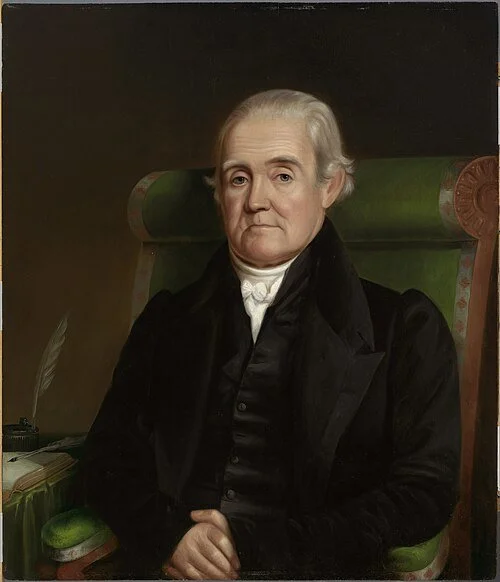
An 1833 portrait of Noah Webster by James Herring.

Scrawl on concrete wall with the anarchist “A" symbol in Munich in 2022.
“In democracy…there are commonly tumults and disorders…. Therefore a pure democracy is generally a very bad government. It is often the most tyrannical government on earth; for a multitude is often rash, and will not hear reason.’’
— Noah Webster (1758-1843), Connecticut-based lexicographer, textbook pioneer, English-language spelling reformer, political writer and editor. Think Webster’s Dictionary
Two toxic pleasures
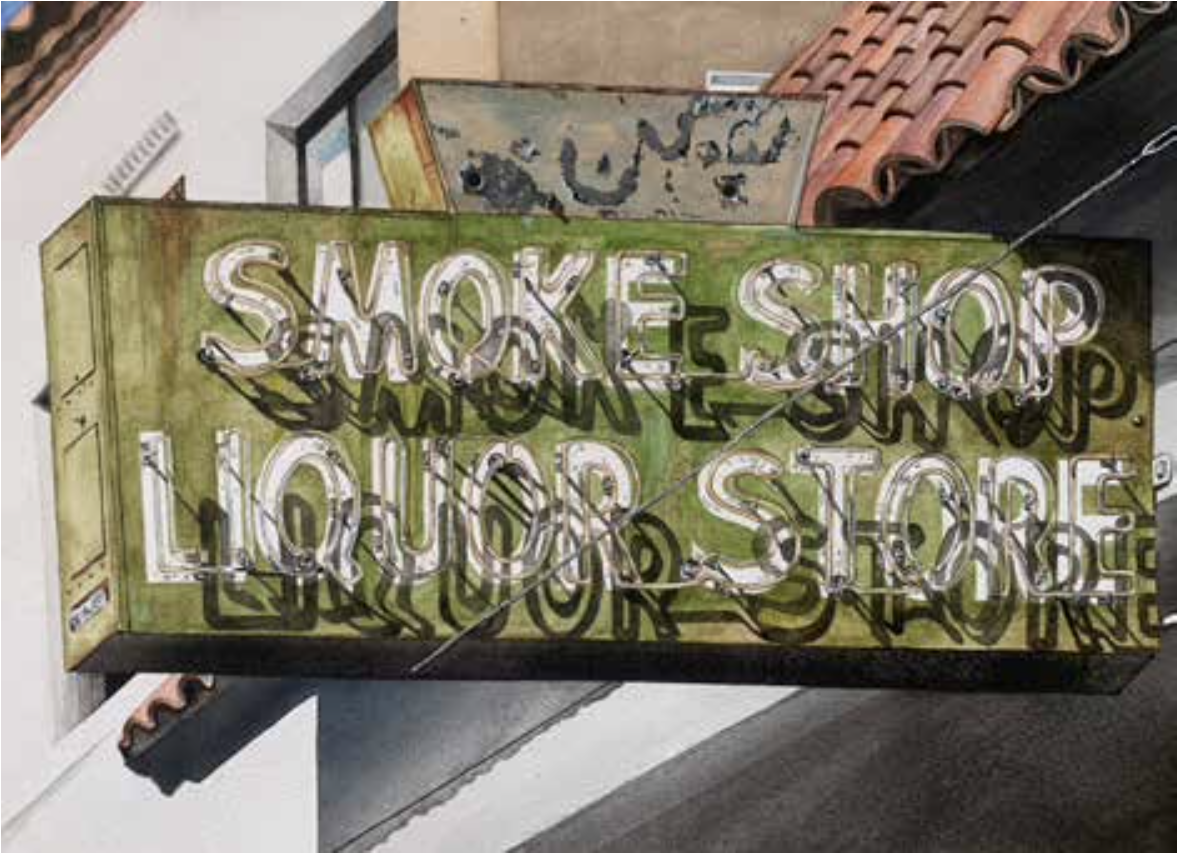
“Smoke Shop, Liquor Store’’ (watercolor), by Sonja Holmberg, at the Guild of Boston Artists’ “New England Regional Exhibition,’’ through Sept.27.