
Chris Powell: Conn. doesn’t Need More Meat; why unionize government?

MANCHESTER, Conn.
Environmentalists think that raising cattle for meat and milk harms the environment. Animal-rights advocates and vegetarians think that eating creatures is immoral. They have a point, but the political struggle has not been going their way, especially since the world always confronts hunger and famine somewhere.
So eventually the General Assembly may pass and the governor may sign legislation to let farmers in the state raise and butcher rabbits and sell their meat for food. The argument is that some people would like locally butchered rabbit meat, rabbit meat is a staple in some cultures, and raising rabbits for meat might help sustain some farms as agriculture is declining.
It's a weak argument.
Rabbits are said to be the third most popular companionate animals after dogs and cats. Rabbits have greater intelligence than many animals, they have a social nature, they can be trained to some extent, and they show loyalty to their owners. While some cultures eat rabbits, some also eat dogs and cats, and federal law prohibits the commercial slaughter and sale of dogs and cats for meat, presumably because of their suitability as pets.
So why shouldn’t rabbits be protected against raising and slaughter for food as dogs and cats are?
It’s not as if the country doesn’t have enough meat. Huge amounts of beef, pork, poultry, and fish are produced commercially. Nor does the country lack for the killing of sentient creatures and its coarsening of the culture. State government doesn’t need the expense it would incur with the commercial farming of rabbits for meat -- inspection by the Agriculture Department of the farms and slaughtering facilities.
People in Connecticut hungry for rabbit meat can buy it from out of state via the internet or hunt the creatures themselves in the countryside, as they can hunt and butcher deer. But when there is plenty to eat and no overpopulation of annoying or dangerous wild animals, killing without necessity should be opposed.
xxx
Having just shrugged off his inability to compel state government employees to return to their normal workplaces, a consequence of the collective bargaining that hobbles state and municipal government in Connecticut and increases its costs, Gov. Ned Lamont should note the remarkable reform just enacted in Utah.
The Beehive State has prohibited collective bargaining for government employees.
This doesn’t mean that state and municipal employees in Utah can’t organize and agitate about their compensation and working conditions. It doesn’t mean that government in Utah won’t pay attention to the desires and grievances of its employees. It means only that the agitation by Utah's state and municipal employees won’t have the support of collective- bargaining law -- that state and municipal government won’t have to recognize and negotiate with unions formed by their employees.
That is, government in Utah will be free to put the public interest first in public administration and not be like Connecticut, where the public works for the government instead of the other way around -- where the governor lacks the authority to order state employees to return to their workplaces.
Of course, since Connecticut’s government employee unions control the majority political party, no serious reforms for government efficiency are likely here. But Utah’s example should prompt a few brave legislators in Connecticut to ask some critical questions.
How exactly is the public interest in Connecticut served by collective bargaining for government employees and the state’s binding arbitration law, which makes the union interest equal to the public interest when government employee compensation and working conditions are determined?
How does the public benefit from collective bargaining’s constant evisceration of workplace discipline?
How does the public benefit from the political machine that state law establishes and subsidizes with government employees to work against the public interest, as when union officials who are nominally state employees are paid by the state to do union work and politicking instead?
Or is the main purpose of collective bargaining for government employees in Connecticut just to keep their political party in power?
Chris Powell has written about Connecticut government and politics for many years (CPowell@cox.net).
Paul Bierman: Despite Trump’s seizure Ambitions, Greenland dubious Place for Massive Economic Exploitation
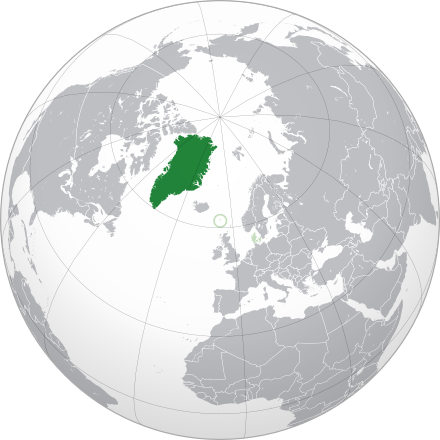
From The Conversation (except for map above).
BURLINGTON, Vt.
By Paul Bierman
Fellow of the Gund Institute for Environment, Professor of Natural Resources and Environmental Science, University of Vermont. He receives funding from the National Science Foundation and the University of Vermont Gund Institute for Environment.
Since Donald Trump regained the presidency, he has coveted Greenland. Trump has insisted that the U.S. will control the island, currently an autonomous territory of Denmark, and if his overtures are rejected, perhaps seize Greenland by force.
During a recent congressional hearing, senators and expert witnesses focused on Greenland’s strategic value and its natural resources: critical minerals, fossil fuels and hydropower. No one mentioned the hazards, many of them exacerbated by human-induced climate change, that those longing to possess and develop the island will inevitably encounter.
That’s imprudent, because the Arctic’s climate is changing more rapidly than anywhere on Earth. Such rapid warming further increases the already substantial economic and personal risk for those living, working and extracting resources on Greenland, and for the rest of the planet.
Arctic surface temperatures have been rising faster than the global average. Arctic Report Card 2024, NOAA Climate.gov
I am a geoscientist who studies the environmental history of Greenland and its ice sheet, including natural hazards and climate change. That knowledge is essential for understanding the risks that military and extractive efforts face on Greenland today and in the future.
Greenland: Land of extremes
Greenland is unlike where most people live. The climate is frigid. For much of the year, sea ice clings to the coast, making it inaccessible.
An ice sheet, up to 2 miles thick, covers more than 80% of the island. The population, about 56,000 people, lives along the island’s steep, rocky coastline.
While researching my book “When the Ice is Gone,” I discovered how Greenland’s harsh climate and vast wilderness stymied past colonial endeavors. During World War II, dozens of U.S. military pilots, disoriented by thick fog and running out of fuel, crashed onto the ice sheet. An iceberg from Greenland sunk the Titanic in 1912, and 46 years later, another sunk a Danish vessel specifically designed to fend off ice, killing all 95 aboard.
Now amplified by climate change, natural hazards make resource extraction and military endeavors in Greenland uncertain, expensive and potentially deadly.
Rock on the move
Greenland’s coastal landscape is prone to rockslides. The hazard arises because the coast is where people live and where rock isn’t hidden under the ice sheet. In some places, that rock contains critical minerals, such as gold, as well as other rare metals used for technology, including for circuit boards and electrical vehicle batteries.
The unstable slopes reflect how the ice sheet eroded the deep fjords when it was larger. Now that the ice has melted, nothing buttresses the near-vertical valley walls, and so, they collapse.
A massive rockslide, triggered by permafrost melt, tumbled down the fjord wall and into the water at Assapaat, West Greenland. Kristian Svennevig/GEUS
In 2017, a northwestern Greenland mountainside fell 3,000 feet into the deep waters of the fjord below. Moments later, the wave that rockfall generated (a tsunami) washed over the nearby villages of Nuugaatsiaq and Illorsuit. The water, laden with icebergs and sea ice, ripped homes from their foundations as people and sled dogs ran for their lives. By the time it was over, four people were dead and both villages lay in ruin.
Steep fjord walls around the island are littered with the scars of past rockslides. The evidence shows that at one point in the last 10,000 years, one of those slides dropped rock sufficient to fill 3.2 million Olympic swimming pools into the water below. In 2023, another rockslide triggered a tsunami that sloshed back and forth for nine days in a Greenland fjord.
A cellphone video captures the June 2017 tsunami wave coming ashore in northwestern Greenland.
There’s no network of paved roads across Greenland. The only feasible way to move heavy equipment, minerals and fossil fuels would be by sea. Docks, mines and buildings within tens of feet of sea level would be vulnerable to rockslide-induced tsunamis.
Melting ice will be deadly and expensive
Human-induced global warming, driven by fossil fuel combustion, speeds the melting of Greenland’s ice. That melting is threatening the island’s infrastructure and the lifestyles of native people, who over millennia have adapted their transportation and food systems to the presence of snow and ice. Record floods, fed by warmth-induced melting of the ice sheet, have recently swept away bridges that stood for half a century.
As the climate warms, permafrost – frozen rock and soil – which underlies the island, thaws. This destabilizes the landscape, weakening steep slopes and damaging critical infrastructure.
An excavator tries to save a bridge over the Watson River at Kangerlussuaq, Greenland. Part of the bridge and the machine were eventually swept away by the rushing meltwater from the Greenland Ice Sheet during a heat wave in July 2012.
Permafrost melt is already threatening the U.S. military base on Greenland. As the ice melts and the ground settles under runways, cracks and craters form – a hazard for airplanes. Buildings tilt as their foundations settle into the softening soil, including critical radar installations that have scanned the skies for missiles and bombers since the 1950s.
Greenland’s icebergs can threaten oil rigs. As the warming climate speeds the flow of Greenland’s glaciers, they calve more icebergs in the ocean. The problem is worse close to Greenland, but some icebergs drift toward Canada, endangering oil rigs there. Ships stand guard, ready to tow threatening icebergs away.
An iceberg passes near an oil drilling rig in eastern Canada. Geoffrey Whiteway/500px Plus via Getty Images
Greenland’s government banned drilling for fossil fuels in 2021 out of concern for the environment. Yet, Trump and his allies remain eager to see exploration resume off the island, despite exceptionally high costs, less than stellar results from initial drilling, and the ever-present risk of icebergs.
As Greenland’s ice melts and water flows into the ocean, sea level changes, but in ways that might not be intuitive. Away from the island, sea level is rising about an inch each six years. But close to the ice sheet, it’s the land that’s rising. Gradually freed of the weight of its ice, the rock beneath Greenland, long depressed by the massive ice sheet, rebounds. That rise is rapid – more than 6 feet per century. Soon, many harbors in Greenland may become too shallow for ship traffic.
Streams of meltwater flow over the silt-covered surface of the Greenland Ice Sheet as it melts in summer heat near Kangerlussuaq in western Greenland. REDA/Universal Images Group via Getty Images
Greenland’s challenging past and future
History clearly shows that many past military and colonial endeavors failed in Greenland because they showed little consideration of the island’s harsh climate and dynamic ice sheet.
Changing climate drove Norse settlers out of Greenland 700 years ago. Explorers trying to cross the ice sheet lost their lives to the cold. American bases built inside the ice sheet, such as Camp Century, were quickly crushed as the encasing snow deformed.
In the past, the American focus in Greenland was on short-term gains with little regard for the future. Abandoned U.S. military bases from World War II, scattered around the island and in need of cleanup, are one example. Forced relocation of Greenlandic Inuit communities during the Cold War is another. I believe that Trump’s demands today for American control of the island to exploit its resources are similarly shortsighted.
Piles of rusting fuel drums sit at an abandoned U.S. base from World War II in Ikateq, in eastern Greenland. Posnov/Moment via Getty Images
However, when it comes to the planet’s livability, I’ve argued that the greatest strategic and economic value of Greenland to the world is not its location or its natural resources, but its ice. That white snow and ice reflect sunlight, keeping Earth cool. And the ice sheet, perched on land, keeps water out of the ocean. As it melts, Greenland’s ice sheet will raise global sea level, up to about 23 feet when all the ice is gone.
Climate-driven sea level rise is already flooding coastal regions around the world, including major economic centers. As that continues, estimates suggest that the damage will total trillions of dollars. Unless Greenland’s ice remains frozen, coastal inundation will force the largest migration that humanity has ever witnessed. Such changes are predicted to destabilize the global economic and strategic world order.
These examples show that disregarding the risks of natural hazards and climate change in Greenland courts disaster, both locally and globally.
Researching what’s Up there

“Prying Into the Secrets of the Sky,’’ by Jacob Hashimoto, in his show “a lowercase sky,’’ at Burlington (Vt.) City Arts, June 6-Sept. 14.

ECHO, Leahy Center for Lake Champlain, in Burlington.
Are We Ready?
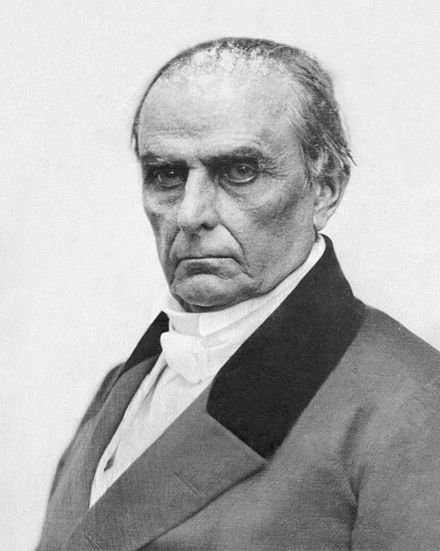
Daniel Webster in 1847
“God grants liberty only to those who love it and are always ready to guard and defend it. Let our object be our country. And, by the blessing of God, may that country itself become a vast and splendid monument, not of oppression and terror, but of wisdom, of peace, and of liberty, upon which the world may gaze with admiration forever!’’
— Daniel Webster (1782-1852), in a June 3, 1834 speech. He was a New Hampshire native who served as a senator from Massachusetts and secretary of state. Many historians rank him as the greatest American orator of the 19th Century.
You won’t get used to It?
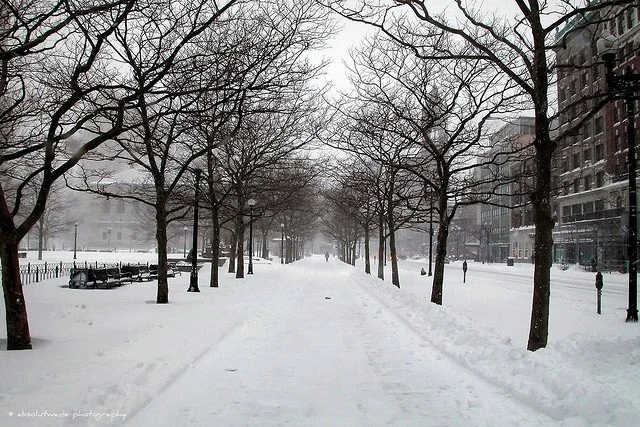
A blizzard winding down in Boston on Feb. 13, 2006.
Beau Wade photo
“I dont hate it he thought, panting in the cold air, the iron New England dark; I dont. I dont! I dont hate it! I dont hate it!”
― William Faulkner, in Absalom, Absalom!

Freshwater mussels are aquatic-system cleaners

Adult freshwater mussels
— Photo by the U.S. Coast and Geodesic Survey
Text excerpted from an ecoRI News article
“The presence of freshwater mussels is indicative of high water quality and a healthy ecosystem. Their absence tells a different story, and the latter is the more-familiar tale in southern New England. Their populations in this three-state region have been degraded by a long history of damming and pollution.
“University of Rhode Island research associate Elizabeth Herron noted these overlooked creatures are a critical part of the region’s aquatic systems.
“They help reduce nutrients and algae by filtering out things. They can reduce things like bacteria, so they’re important,” said the program coordinator for URI Watershed Watch. “They’re an important food source. I have a dock on a pond, and I can tell you every spring, when we put the dock back out, there’s a giant pile of empty, freshwater mussel clams that the muskrats feasted on over the winter.”
Beach wear

“Mons Bola” (epoxy and composite resin, paint, pigment, acrylic, brass, nylon, silicone rubber), by Jillian Moore, at the Fuller Craft Museum.
Trump’s assault on the federal workforce is right out of dictators’ playbook

Nazi rally at Nuremberg in the 1930’. Trump has expressed admiration for Hitler.

Hungarian dictator Viktor Orban, whom Trump and his circle admire.
From The Conversation (except for picture at top)
The Authors of this piece:
Associate Professor of Political Science, Michigan State University
Distinguished Practitioner in Grand Strategy, Jackson School of Public Affairs, Yale University
Professor of Political Science, Penn State
From The Conversation (except for picture at top)
With the recent confirmations of Tulsi Gabbard and Robert F. Kennedy Jr. – two of the most controversial of President Donald Trump’s high-level administration nominees – the president’s attempt to remake government as a home for political loyalists continues.
Soon after coming to office for a second term, Trump aggressively sought to overhaul Washington and bring the federal government in line with his political agenda. He is spearheading an effort to purge the government’s ranks of people he perceived as his opponents and slash the size of long-standing bureaucratic agencies – in some instances dismantling them entirely.
At the helm of much of this is businessman Elon Musk, who is not only the world’s richest man but also the largest donor of the 2024 election and the owner of multiple businesses that benefit from lucrative government contracts.
Musk – and a small cohort of young engineers loyal to him but with little experience in government – descended on Washington, announced their control over multiple government agencies, fired career civil servants, and even strong-armed access to government payment systems at the Treasury Department, where the inspector general had just been sacked.
This unprecedented sequence of events in the U.S. has left many observers in a daze, struggling to make sense of the dramatic reshaping of the bureaucracy under way.
Yet, as researchers on authoritarian politics, it is no surprise to us that a leader bent on expanding his own power, such as Trump, would see the bureaucracy as a key target. Here’s why.
A well-functioning bureaucracy is an organization of highly qualified civil servants who follow established rules to prevent abuses of power. Bureaucracies, in this way, are an important part of democracy that constrain executive behavior.
For this reason, aspiring strongmen are especially likely to go after them. Whether by shuffling the personnel of agencies, creating new ones, or limiting their capacity for oversight, a common tactic among power-hungry leaders is establishing control over the government’s bureaucracy. Following a failed coup attempt in 2016, for example, Turkish President Reccep Tayyip Erdoğan fired or detained as many as 100,000 government workers.
In the short term, greater executive control over the bureaucracy gives these leaders a valuable tool for rewarding their elite supporters, especially as diminished government oversight increases opportunities for corruption and the dispersion of rewards to such insiders. Erdoğan, for example, by 2017 had worked to fill lower-level bureaucratic positions with loyalists of his party, the AKP, to ensure the party’s influence over corruption investigations.
In the long term, this hollowing out and reshaping of the bureaucracy is part of a broader plan in which aspiring autocrats usurp control over all institutions that can constrain them, such as the legislature and the courts. As we document in our book, “The Origins of Elected Strongmen,” attacks on the bureaucracy constitute a significant step in a larger process in which elected leaders dismantle democracy from within.
Take control of bureaucracy
The seemingly bizarre series of events that have transpired in Washington since Trump came to power are highly consistent with other countries where democracy has been dismantled.
Take Benin, for example. Its leader, Patrice Talon – one of the wealthiest people in Africa – came to power in democratic elections in 2016.
Soon after taking control, Talon created new agencies housed in the executive office and defunded existing ones, as a means of skirting bureaucratic constraints to his rule. The central affairs of the state were in the hands of an informal cabinet, initially led by Olivier Boko, a wealthy businessman considered to be Talon’s right-hand man despite not having any official position in government.
Talon and his inner circle used this control over the state to enrich themselves, turning the country into what one journalist referred to as “a company in the hands of Talon and his very close clique.”
Consolidating control over the bureaucracy was just one step in a larger process of turning Benin into an autocratic state. Talon eventually amassed greater power and influence over key state institutions, such as the judiciary, and intervened in the electoral process to ensure his continued rule. By 2021, Benin could no longer be considered a democracy.
Purge civil service
A similar dynamic occurred in Hungary. After governing relatively conventionally for one term, Prime Minister Viktor Orban was defeated in elections in 2002. He blamed that outcome on unfriendly media and never accepted the results as legitimate.
Orban returned to office in 2010, bent on retribution.
Orban ordered mass firings of civil servants and put allies of his party, Fidesz, in crucial roles. He also used the dismantling of bureaucratic constraints to pad the pockets of the elites whose support he needed to maintain power.
As a Hungarian former politician wrote in 2016, “While the mafia state derails the bureaucratic administration, it organizes, monopolizes the channels of corruption and keeps them in order.”
Likewise in Venezuela, President Hugo Chavez had his cronies draw up a blacklist of civil servants to be purged for signing a petition in support of a referendum to determine whether Chávez should be recalled from office in 2004; government employees who signed were subsequently fired from their jobs.
More than a decade later, Nicolas Maduro, Venezuela’s current leader, would conduct his own purge of civil servants after they signed a petition to hold another recall referendum. After multiple rounds of government and military purges, Maduro was able to overturn an election he lost and jail his opponents, knowing full well the judges and generals would follow his orders.
Benin’s leader, Patrice Talon, consolidated control over the bureaucracy as part of a larger process of turning the country into an autocratic state. Yanick Folly/AFP via Getty Images
Foster culture of secrecy and suspicion
Orban and Chavez, like Talon, were democratically elected but went on to undermine democracy.
In environments where loyalty to the leader is prioritized over all else, and purges can happen at a moment’s notice, few people are willing to speak up about abuses of power or stand in the way of a power grab.
Fostering a culture of secrecy and mutual suspicion among government officials is intentional and serves the leader’s interests.
As a World Bank report highlighted in 1983, in President Mobutu Sese Seko’s Zaire, now Democratic Republic of Congo, the bureaucracy had been “privatized by the ruling clique,” creating a climate in which “fear and repression … prevented any serious threat from dissenting groups.”
When leaders gain full power over the bureaucracy, they use it to reward and punish ordinary citizens as well. This was a tried-and-true tactic under the PRI’s rule in Mexico for much of the 20th century, where citizens who supported the PRI were more likely to receive government benefits.
In short, when aspiring autocrats come to power, career bureaucrats are a common target, often replaced by unqualified loyalists who would never be hired for the position based on merit. Recent events in the U.S., as unprecedented as they may seem, are precisely what we would expect with the return of Trump, a would-be autocrat, to power.
Noisy water
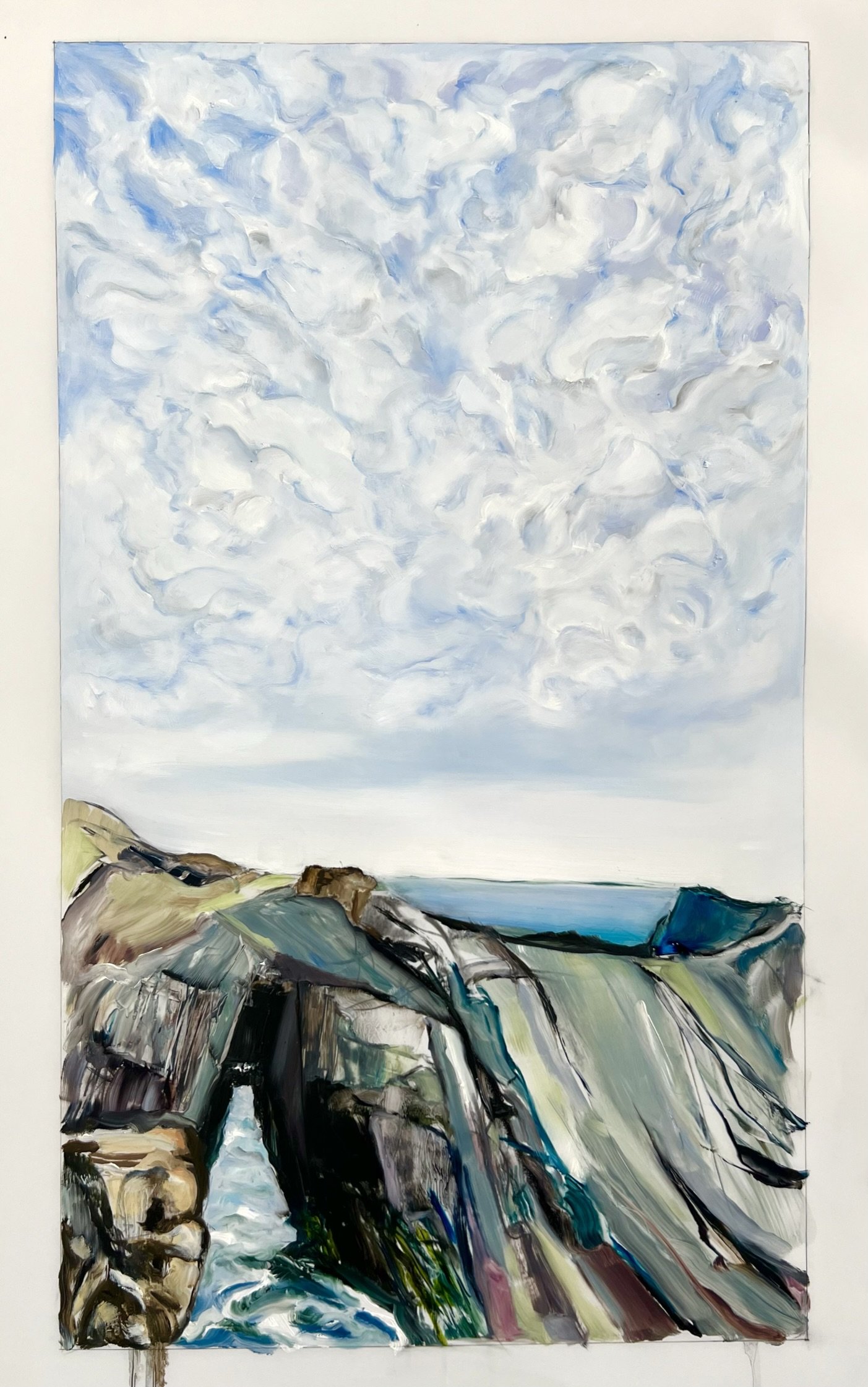
“Thunder Hole,’’ at Acadia National Park, Maine, by Colleen Pearce, in the spring show at Southern Vermont Arts Center, in Manchester, Feb. 22-May 25.
Sun on snow
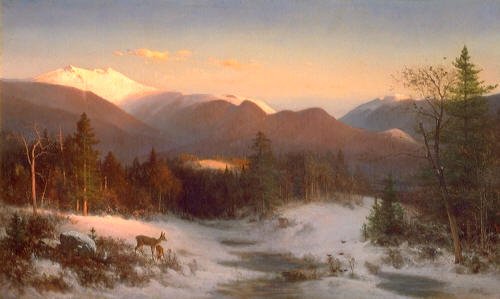
“Mount Lafayette (highest peak in New Hampshire’s Franconia Range) in Winter’’ (1870), by Thomas Hill (1829-1908)
Denis O’Neill: Our greatest president and our worst

Musings 2025 ~ Presidents Day
By Denis O’Neill, essayist, memorist and screenwriter
How ironic that on this Presidents Day, the two Republicans widely considered to be our very best and worst Presidents presided/preside over a nation on the brink of Civil War. The irony goes deeper. Abraham Lincoln, our 16th President, led the Union against the one and only President of the Confederacy (1861-1865), Jefferson Davis. The issue was slavery.
Today, America’s 47th President, Donald Trump, a man who along with father, Fred, was sued by the federal government in the 1970’s for not renting Trump apartments to Blacks in Queens, and who after the 2017 Ku Klux Klan march in Charlottesville, Va., said, “There were good people on both sides.” (Fred Trump marched with the Ku Klux Klan in New York City in the 1920’s, so the Trump family’s fondness for white supremacy is longstanding.) Son Donald, who is basically supported now, and was elected by the states that lost the Civil War, and who is partial to the cause that led to it, would have more in common this Presidents Day with Confederate President Davis.
It is surreal to realize that our country is capable of electing two human beings that reflect bookends of intelligence and humanity. The current President, of course, is the only convicted felon and twice-impeached president. He also dodged serving in Vietnam by dint of “bone spurs’’ in his feet. He also stole top-secret government documents and plotted the overthrow of our democracy. As he takes a two-handed axe through the power of executive action to federal programs that support women, the environment, poor people, gay people and the arts, his Vice President, J.D. Vance, has been in Europe defending the neo-Nazi political party in Germany and laying the groundwork to sell out Ukraine to the Russians. Brown is the color of his shirt, and that of the man he works for.
His first Secretary of State, Rex Tillerson, and his longest serving Chief of Staff, John Kelly, said that Donald Trump is the most ignorant human being either man had ever encountered. Here is but one scrap from the horse’s mouth:
“Trees fall down after a short period of time abut 18 months they become very dry they become really like a matchstick and they get up, you know there’s no water pouring through and they become very very uh... they just explode. They can explode.” ~ DJT
Because it’s Presidents Day... and because once upon a time we had a President whose greatness reflected the brightest beacon of message and eloquence... here is but one brief passage from Abraham Lincoln, truer today than ever before. (Note: my father, Charles O’Neill, was a Civil War historian and a Lincoln scholar. His dear friend, Bill Speed, was ta descendent of Lincoln’s closest friend, Joshua Speed. As a kid, we spent many a happy outing at the the Speeds’ Pound Ridge, N.Y., home, on occasion touching and reading letters from Lincoln to his friend Joshua. My father believed that Lincoln was not only our greatest President, but quite possibly our greatest writer.
“I am not bound to win, but I am bound to be true – I am not bound to succeed but I am bound to live up to what light I have - I must stand with anybody that stands right, and stand with him when he is right, and part with him when he goes wrong.” ~ A.L.
I am not a religious person, but if there is a God, I hope she helps us on this 2025 Presidents Day. I will give the last words of this Musing to the sentiment once uttered by Scopes trial lawyer Clarence Darrow... a quote at one time attributed to Mark Twain. “I have never wished a man dead, but I have read some obituaries with great pleasure.”
As a country we will forever mourn the obituary of President Abraham Lincoln. As a liberty-loving American, I look forward to reading with great pleasure the obituary of the Trump presidency.
Cambridge’s big move to address housing crisis

Sunrise over Central Square in Cambridge
Eric Kilby photo
Adapted from Robert Whitcomb’s “Digital Diary,’’ in GoLocal24.com
The Cambridge City Council last week enacted a revolutionary change in its land-use rules that abolishes the long-entrenched ordinance that created districts where only single-family houses could be built. The new rule doesn’t ban the construction of single-family houses but does permit the construction of apartment or condo buildings of up to six stories in most parts of the city, provided that 20 percent of the units are set aside for “affordable housing.’’
That will bring down the city’s sky-high building costs over the next few years by expanding supply. It should be considered in Rhode Island’s most densely populated areas. (I live in a neighborhood with mixed single-family houses and apartment houses, some quite big. They work well together, assuring a wide range of age demographics, and there’s plenty of shopping within walking distance for most residents.)
That old supply and demand!
Consider that housing costs in Austin, despite it being considered a very “hot” (popular) city, have been falling in large part because of a housing construction boom, with the median home price declining 7.1 percent in the December 2023-December 2024 period! The “yes in my backyard” movement has become powerful in Austin and some other big cities in the West, even as the “not in backyard’’ stance remains dominant in many places in New England, very much including politically “liberal communities’’ increasingly known for their hypocrisy. (No land windmills please!)
Take a look for powerful lessons:
We need more than Providence’s pallet houses, although any roof in a storm….

‘Metallic frankness’
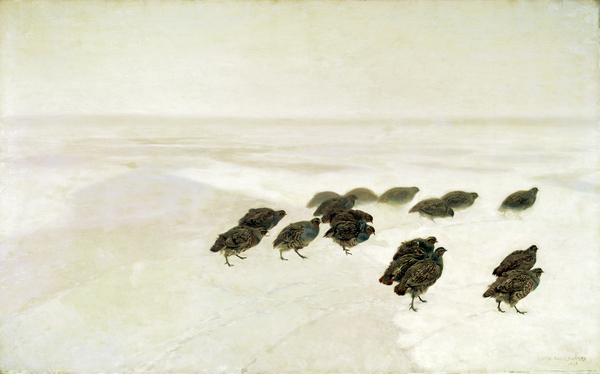
“Partridges in the Snow,’’ (1891) by Jozef Chelmonski
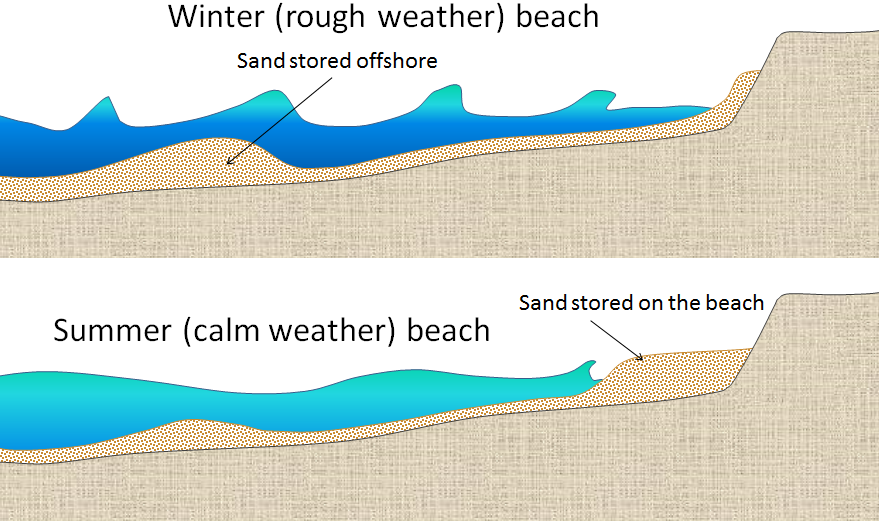
Via Wikipedia
“The differences between summer and winter on beaches in areas where the winter conditions are rougher and waves have a shorter wavelength but higher energy. In winter, sand from the beach is stored offshore.’’
Graphic by Paul Webb with credit to Steven Earle’s Physical Geology.
“The house is hard cold. Winter walks up and down the town swinging its censer, but no smoke or sweetness comes from it, only the sour, metallic frankness of salt and snow. I dress in the dark and hurry out. The sleepy dogs walk with me a few strides, then they disappear. The water slaps crisply upon the cold-firmed sand. I listen intently, as though it is a language the ocean is speaking. There are no stars, nor a moon.’’
Mary Olive (1935-2019), American poet. She spent much of her life in Provincetown, at the tip of Cape Cod.
Prepare to go out in society

“My Mom Told Me to Always Wear a Slip (half slip)’’ (Saori weaving of cotton and paper yarns, painted dowels, fishing line, wooded hangin unit), by Carolyn Letvin, in the group show “New England Collective XV: Blueprint of Imagination,’’ at Galatea Fine Art, Boston, through March 1.
Sampling the sweet maple sap?
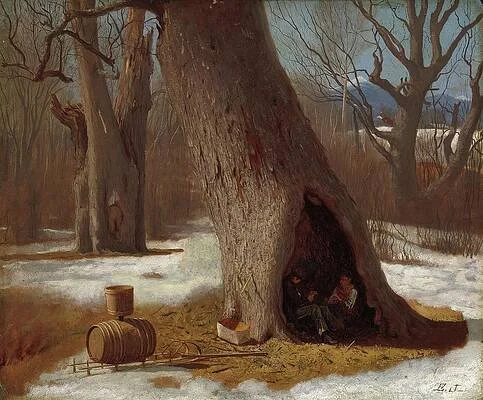
“Truants” (oil), by Eastman Johnson (1824-1906), who grew up in Maine and was a co-founder of the Metropolitan Museum of Art, in New York City.
‘Dance hungry and wild’

Eastern Cottontail Rabbit
“Song of the Rabbits Outside the Tavern’’
by Elizabeth Coatsworth (1893-1986), Maine-based poet
We who play under the pines,
We who dance in the snow
That shines blue in the light of the moon
Sometimes halt as we go,
Stand with our ears erect,
Our noses testing the air,
To gaze at the golden world
Behind the windows there.
Suns they have in a cave,
And stars each on a tall white stem
And the thought of fox or of owl
Seems never to bother them.
They laugh and eat and are warm,
Their food is ready at hand
While hungry out in the cold
We little rabbits stand.
But they never dance as we dance
They have not the speed nor the grace,
We scorn both the cat and the dog
Who lie by their fireplace,
We scorn them, licking their paws
Their eyes on an upraised spoon--
We who dance hungry and wild
Under a winter's moon!
Amy Maxmen: Urgent data on flu goes missing
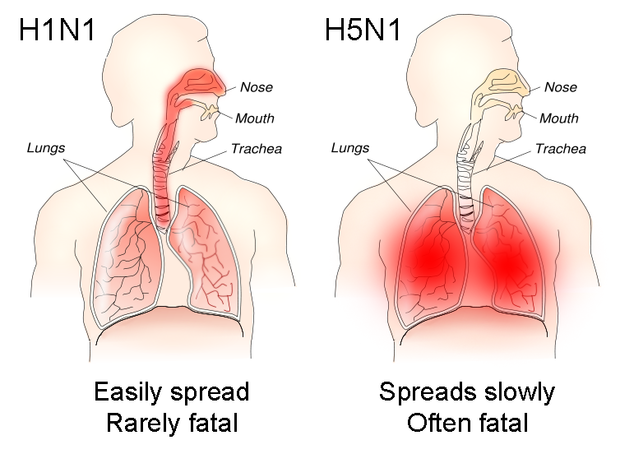
The picture at the right represents avian flu, the one at the left the most common influenza.
From Kaiser Family Foundation Health News
“Missing and delayed data causes uncertainty. It also potentially makes us react in ways that are counterproductive.”
— Jennifer Nuzzo, head of the pandemic center at Brown University
Sonya Stokes, an emergency room physician in the San Francisco Bay Area, braces herself for a daily deluge of patients sick with coughs, soreness, fevers, vomiting, and other flu-like symptoms.
She’s desperate for information, but the Centers for Disease Control and Prevention, a critical source of urgent analyses of the flu and other public health threats, has gone quiet in the weeks since President Donald Trump took office.
“Without more information, we are blind,” she said.
Flu has been brutal this season. The CDC estimates at least 24 million illnesses, 310,000 hospitalizations, and 13,000 deaths from the flu since the start of October. At the same time, the bird flu outbreak continues to infect cattle and farmworkers. But CDC analyses that would inform people about these situations are delayed, and the CDC has cut off communication with doctors, researchers, and the World Health Organization, say doctors and public health experts.
“CDC right now is not reporting influenza data through the WHO global platforms, FluNet [and] FluID, that they’ve been providing information [on] for many, many years,” Maria Van Kerkhove, interim director of epidemic and pandemic preparedness at the WHO, said at a Feb. 12 press briefing.
“We are communicating with them,” she added, “but we haven’t heard anything back.”
On his first day in office, President Trump announced the U.S. would withdraw from the WHO.
A critical analysis of the seasonal flu selected for distribution through the CDC’s Health Alert Network has stalled, according to people close to the CDC. They asked not to be identified because of fears of retaliation. The network, abbreviated as HAN, is the CDC’s main method of sharing urgent public health information with health officials, doctors, and, sometimes, the public.
A chart from that analysis, reviewed by KFF Health News, suggests that flu may be at a record high. About 7.7% of patients who visited clinics and hospitals without being admitted had flu-like symptoms in early February, a ratio higher than in four other flu seasons depicted in the graph. That includes 2003-04, when an atypical strain of flu fueled a particularly treacherous season that killed at least 153 children.
Without a complete analysis, however, it’s unclear whether this tidal wave of sickness foreshadows a spike in hospitalizations and deaths that hospitals, pharmacies and schools must prepare for. Specifically, other data could relay how many of the flu-like illnesses are caused by flu viruses — or which flu strain is infecting people. A deeper report might also reveal whether the flu is more severe or contagious than usual.
“I need to know if we are dealing with a more virulent strain or a coinfection with another virus that is making my patients sicker, and what to look for so that I know if my patients are in danger,” Stokes said. “Delays in data create dangerous situations on the front line.”
Although the CDC’s flu dashboard shows a surge of influenza, it doesn’t include all data needed to interpret the situation. Nor does it offer the tailored advice found in HAN alerts that tells health care workers how to protect patients and the public. In 2023, for example, a report urged clinics to test patients with respiratory symptoms rather than assume cases are the flu, since other viruses were causing similar issues that year.
“This is incredibly disturbing,” said Rachel Hardeman, a member of the Advisory Committee to the Director of the CDC. On Feb. 10, Hardeman and other committee members wrote to acting CDC Director Susan Monarez asking the agency to explain missing data, delayed studies, and potentially severe staff cuts. “The CDC is vital to our nation’s security,” the letter said.
Several studies have also been delayed or remain missing from the CDC’s preeminent scientific publication, the Morbidity and Mortality Weekly Report. Anne Schuchat, a former principal deputy director at the CDC, said she would be concerned if there was political oversight of scientific material: “Suppressing information is potentially confusing, possibly dangerous, and it can backfire.”
CDC spokesperson Melissa Dibble declined to comment on delayed or missing analyses. “It is not unexpected to see flu activity elevated and increasing at this time of the year,” she said.
A draft of one unpublished study, reviewed by KFF Health News, that has been withheld from the MMWR for three weeks describes how a milk hauler and a dairy worker in Michigan may have spread bird flu to their pet cats. The indoor cats became severely sick and died. Although the workers weren’t tested, the study says that one of them had irritated eyes before the cat fell ill — a common bird flu symptom. That person told researchers that the pet “would roll in their work clothes.”
After one cat became sick, the investigation reports, an adolescent in the household developed a cough. But the report says this young person tested negative for the flu, and positive for a cold-causing virus.
Corresponding CDC documents summarizing the cat study and another as-yet unpublished bird flu analysis said the reports were scheduled to be published Jan. 23. These were reviewed by KFF Health News. The briefing on cats advises dairy farmworkers to “remove clothing and footwear, and rinse off any animal biproduct residue before entering the household to protect others in the household, including potentially indoor-only cats.”
The second summary refers to “the most comprehensive” analysis of bird flu virus detected in wastewater in the United States.
Jennifer Nuzzo, director of the Pandemic Center at Brown University, said delays of bird flu reports are upsetting because they’re needed to inform the public about a worsening situation with many unknown elements. Citing “insufficient data” and “high uncertainty,” the United Kingdom raised its assessment of the risk posed by the U.S. outbreak on dairies.
“Missing and delayed data causes uncertainty,” Nuzzo said. “It also potentially makes us react in ways that are counterproductive.”
Another bird flu study slated for January publication showed up in the MMWR on Feb. 13, three weeks after it was expected. It revealed that three cattle veterinarians had been unknowingly infected last year, based on the discovery of antibodies against the bird flu virus in their blood. One of the veterinarians worked in Georgia and South Carolina, states that haven’t reported outbreaks on dairy farms.
The study provides further evidence that the United States is not adequately detecting cases in cows and people. Nuzzo said it also highlights how data can supply reassuring news. Only three of 150 cattle veterinarians had signs of prior infections, suggesting that the virus doesn’t easily spread from the animals into people. More than 40 dairy workers have been infected, but they generally have had more sustained contact with sick cattle and their virus-laden milk than veterinarians.
Instead, recently released reports have been about wildfires in California and Hawaii.
“Interesting but not urgent,” Nuzzo said, considering the acute fire emergencies have ended. The bird flu outbreak, she said, is an ongoing “urgent health threat for which we need up-to-the-minute information to know how to protect people.”
“The American public is at greater risk when we don’t have information on a timely basis,” Schuchat said.
This week, a federal judge ordered the CDC and other health agencies to “restore” datasets and websites that the organization Doctors for America had identified in a lawsuit as having been altered. Further, the judge ordered the agencies to “identify any other resources that DFA members rely on to provide medical care” and restore them by Feb. 14.
In their letter, CDC advisory committee members requested an investigation into missing data and delayed reports. Hardeman, an adviser who is a health policy expert at the University of Minnesota, said the group didn’t know why data and scientific findings were being withheld or removed. Still, she added, “I hold accountable the acting director of the CDC, the head of HHS, and the White House.”
Hardeman said the Trump administration has the power to disband the advisory committee. She said the group expects that to happen but proceeded with its demands regardless.
“We want to safeguard the rigor of the work at the CDC because we care deeply about public health,” she said. “We aren’t here to be silent.”
Amy Maxmen is a Kaiser Family Foundation Health News reporter. amaxmen@kff.org
Sculpted dignity

“Arrow Maker” (circa 1868), (marble), by Edmonia Lewis, at the Colby College Museum of Art, Waterville, Maine.
— Photo by Luc Demers