
Vox clamantis in deserto




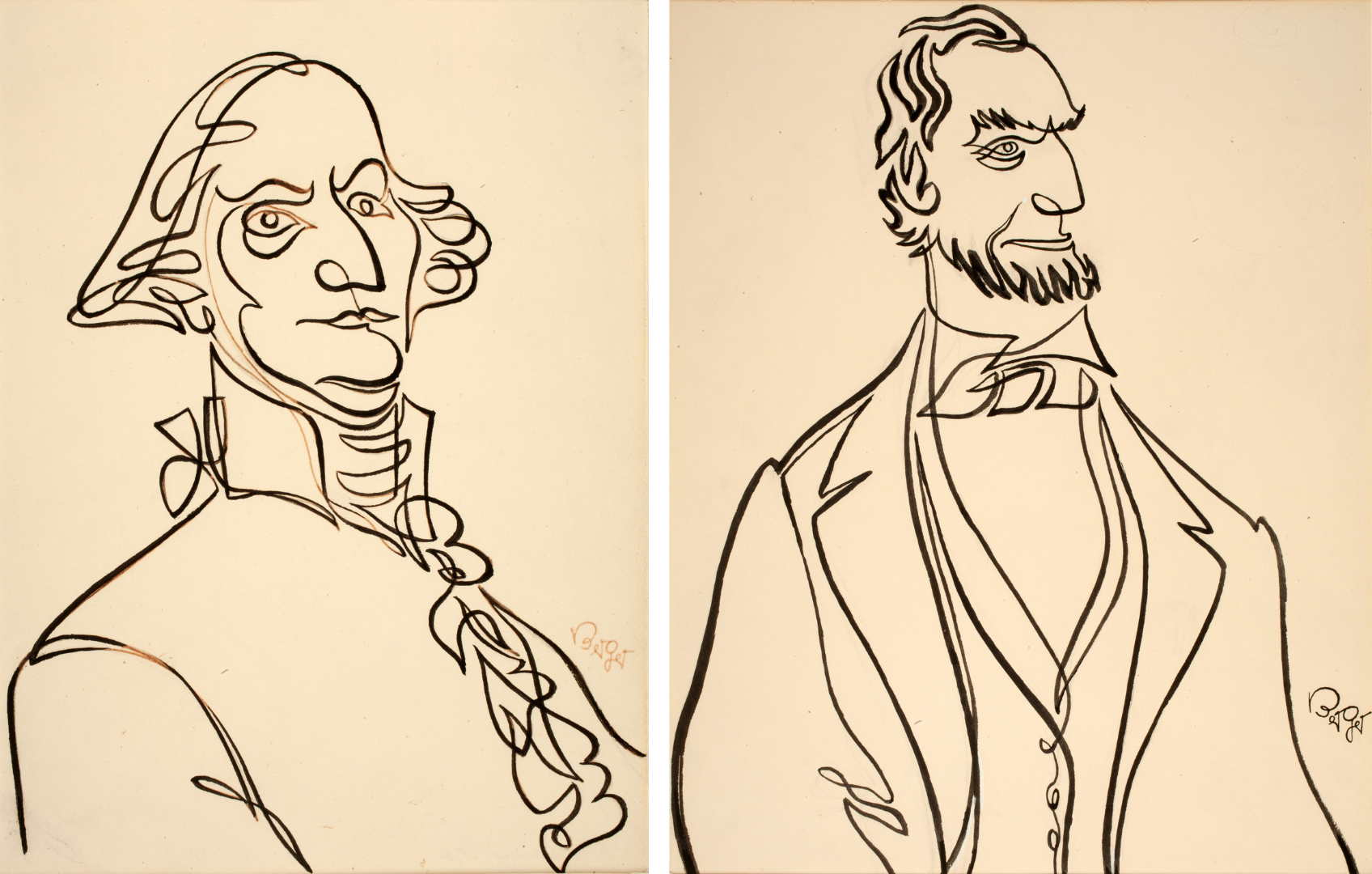




'Poignant reminders'

From Jessica Straus’s show “Packing for Mars,’’ at Boston Sculptors Gallery, through May 5. She grew up on New Hampshire’s seacoast.
The gallery explains:
“Black humor, longing, and regret are all at play in ‘Packing for Mars’ . Straus looks forward with dread to a future when humans must flee a devastated Earth to settle on far flung, arid worlds. Yet, the artist is not packing gear for survival in a desolate landscape but, rather, offering poignant reminders of what has been left behind. Masterfully carved wooden figures stand-in for everyman and everywoman as they gaze longingly earthward from the moon, Mars and the star fields. Fragile hand-sewn earth spheres reveal vulnerability in their delicate stitching. In a particularly poignant series, Straus whittles plant specimens from her native New Hampshire, transforming them from humble grasses into botanical treasures. ‘Packing for Mars’ looks both backward and forward in time, as we each contemplate the preciousness of the environment we love and on which we all depend.’’
‘Babbling and strewing flowers’

—Photo by Victor Estrada Diaz
To what purpose, April, do you return again?
Beauty is not enough.
You can no longer quiet me with the redness
Of little leaves opening stickily.
I know what I know.
The sun is hot on my neck as I observe
The spikes of the crocus.
The smell of the earth is good.
It is apparent that there is no death.
But what does that signify?
Not only underground are the brains of men
Eaten by maggots.
Life in itself
Is nothing,
An empty cup, a flight of uncarpeted stairs.
It is not enough that yearly, down this hill,
April
Comes like an idiot, babbling and strewing flowers.”
— “Spring,’’ by Edna St. Vincent Millay (1892-1950), American poet. She grew up on the Maine Coast. This poem refers indirectly to the carnage of World War I.
James Morton Turner: Renewable energy still only modest factor in powering green manufacturing boom

From The Conversation
WELLESLEY, Mass.
Panasonic’s new US$4 billion battery factory in De Soto, Kansas, is designed to be a model of sustainability – it’s an all-electric factory with no need for a smokestack. When finished, it will cover the size of 48 football fields, employ 4,000 people and produce enough advanced batteries to supply half a million electric cars per year.
But there’s a catch, and it’s a big one.
While the factory will run on wind and solar power much of the time, renewables supplied only 34% of the local utility Evergy’s electricity in 2023.
In much of the U.S., fossil fuels still play a key role in meeting power demand. In fact, Evergy has asked permission to extend the life of an old coal-fired power plant to meet growing demand, including from the battery factory.
With my students at Wellesley College, I’ve been tracking the boom in investments in clean energy manufacturing and how those projects – including battery, solar panel and wind turbine manufacturing and their supply chains – map onto the nation’s electricity grid.
The Kansas battery plant highlights the challenges ahead as the U.S. scales up production of clean energy technologies and weans itself off fossil fuels. It also illustrates the potential for this industry to accelerate the transition to renewable energy nationwide.
The clean tech manufacturing boom
Let’s start with some good news.
In the battery sector alone, companies have announced plans to build 44 major factories with the potential to produce enough battery cells to supply more than 10 million electric vehicles per year in 2030.
That is the scale of commitment needed if the U.S. is going to tackle climate change and meet its new auto emissions standards announced in March 2024.
The challenge: These battery factories, and the electric vehicles they equip, are going to require a lot of electricity.
Producing enough battery cells to store 1 kilowatt-hour (kWh) of electricity – enough for 2 to 4 miles of range in an EV – requires about 30 kWh of manufacturing energy, according to a recent study.
Combining that estimate and our tracking, we project that in 2030, battery manufacturing in the U.S. would require about 30 billion kWh of electricity per year, assuming the factories run on electricity, like the one in Kansas. That equates to about 2% of all U.S. industrial electricity used in 2022.
Battery belt’s huge solar potential
A large number of these plants are planned in a region of the U.S. South dubbed the “battery belt.” Solar energy potential is high in much of the region, but the power grid makes little use of it.
Our tracking found that three-fourths of the battery manufacturing capacity is locating in states with lower-than-average renewable electricity generation today. And in almost all of those places, more demand will drive higher marginal emissions, because that extra power almost always comes from fossil fuels.
However, we have also been tracking which battery companies are committing to powering their manufacturing operations with renewable electricity, and the data points to a cleaner future.
By our count, half of the batteries will be manufactured at factories that have committed to sourcing at least 50% of their electricity demand from renewables by 2030. Even better, these commitments are concentrated in regions of the U.S. where investments have lagged.
Some companies are already taking action. Tesla is building the world’s largest solar array on the roof of its Texas factory. LG has committed to sourcing 100% renewable solar and hydroelectricity for its new cathode factory in Tennessee. And Panasonic is taking steps to reach net-zero emissions for all of its factories, including the new one in Kansas, by 2030.
More corporate commitments can help strengthen demand for the deployment of wind and solar across the emerging battery belt.
What that means for US electricity demand
Manufacturing all of these batteries and charging all of these electric vehicles is going to put a lot more demand on the power grid. But that isn’t an argument against EVs. Anything that plugs into the grid, whether it is an EV or the factory that manufacturers its batteries, gets cleaner as more renewable energy sources come online.
This transition is already happening. Although natural gas dominates electricity generation, in 2023 renewables supplied more electricity than coal for the first time in U.S. history. The government forecasts that in 2024, 96% of new electricity generating capacity added to the grid would be fossil fuel-free, including batteries. These trends are accelerating, thanks to the incentives for clean energy deployment included in the 2022 Inflation Reduction Act.
Looking ahead
The big lesson here is that the challenge in Kansas is not the battery factory – it is the increasingly antiquated electricity grid.
As investments in a clean energy future accelerate, America will need to reengineer much of its power grid to run on more and more renewables and, simultaneously, electrify everything from cars to factories to homes.
That means investing in modernizing, expanding and decarbonizing the electric grid is as important as building new factories or shifting to electric cars.
Investments in clean energy manufacturing will play a key role in enabling that transition: Some of the new advanced batteries will be used on the grid, providing backup energy storage for times when renewable energy generation slows or electricity demand is especially high.
In January, Hawaii replaced its last coal-fired power plant with an advanced battery system. It won’t be long before that starts to happen in Tennessee, Texas and Kansas, too.
James Morton Turner is a professor of Environmental Studies at Wellesley {Mass.} College. He does not work for, consult, own shares in or receive funding from any company or organization that would benefit from this article, and has disclosed no relevant affiliations beyond his academic appointment.
David Warsh: Keynes and Freud
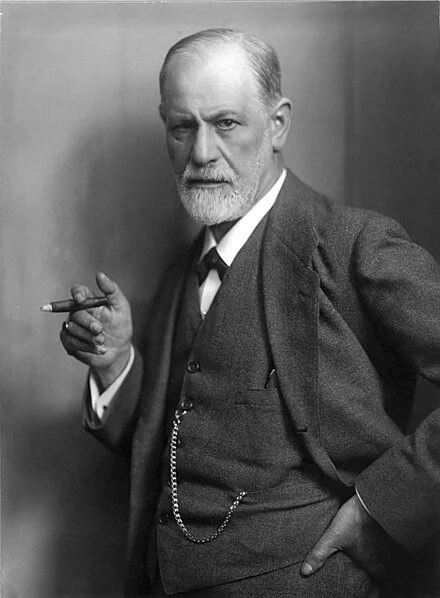
Sigmund Freud in 1921. His cigar addiction gave him oral cancer, which led to his death in London in 1939. He had fled there to escape the Nazis, after Hitler’s Germany had taken over Freud’s native Austria.
SOMERVILLE, Mass.
This column has become interested in the difference of opinion between John Maynard Keynes and Milton Friedman with respect to their explanations for the causes of the Great Depression, Keynes blamed social aggregates within the economy itself for a sudden fall, Friedman blamed an inept Federal Reserve. History has shown that Friedman was right and Keynes wrong.
Last week I likened both men to Dr. Jekyll and Mr. Hyde, a split personality from the famous novel by Robert Louis Stevenson. The comparison seemed apt for Friedman, insofar as in contrast to the relative precision of his theorizing, the policies he recommended as a cultural entrepreneur, especially in Capitalism and Freedom, routinely departed from those I consider sensible. Alec Cairncross put the case for economic realism well in an address on the two hundredth anniversary of Adam Smith’s The Wealth of Nations:
“We are more conscious perhaps than Adam Smith of the need to see the market within a social framework and of the ways in which the state can usefully rig the market without destroying its thrust. We are certainly far more willing to concede a larger role for state activities of all kinds, But it is a nice question whether this is because we can lay claim, after two centuries, to a deeper insight in determining the forces determining the wealth of nations or whether more obvious forces have played the largest part: the spread of democratic ideals, increasing affluence, the growth of knowledge, and a centralizing technology that delivers us over to the bureaucrats.”
The Jekyll/Hyde comparison seemed to work relatively well in Friedman’s case. Abolish Social Security? Stop licensing the professions beginning with physicians? Get rid of national health insurance? Hog-tie the Fed in crises? “Starve the beast” of government by cutting taxes to the bone? Come on, Mr. Hyde!
The comparison did not, however, suit Keynes . Even the excesses of “The End of Laissez Faire” stopped short of murdering his darlings. The challenge was to come up with a metaphor for Keynes that seemed to work.
Let’s try Sigmund Freud on for size.
Both men were born in the 19th Century, Freud in 1869, Keynes in 1883. Both came of age in a time of great excitement about the possibilities of new sciences. The Interpretation of Dreams appeared in 1905 and The General Theory of Employment, Interest, and Money in 1936.
Both men wrote extremely well, both sought to overturn substantial portions of the received wisdom of their respective fields, Keynes with an intuitive vision of macroeconomics (a term late supplied by Ragnar Frisch), Freud with psychoanalysis. Both depended on influential discussion groups to advance their views. Both achieved enormous influence on culture in their day. Both inspired celebrated biographies.
The economist was well acquainted with Freud’s work. Keynes told a friend he was reading through all Freud’s books. He wrote a letter to a magazine calling the psychoanalyst “one of the great, disturbing geniuses of our time.” I found no evidence that Freud read Keynes, but he didn’t look very far. Freud died in 1939, Keynes in 1946. Subsequent critics, mostly from the analytic community, have argued that Keynes’s view of human nature was very similar to that of Freud.
But the real similarity between the two scientists/latter-day culture entrepreneurs has to do with the posthumous influence of their work. Freud’s reputation as a successful scientific revolutionary and culture entrepreneur has been steadily diminished by advances in other branches of psychology, neurology and diagnostics.
Within technical economics. Keynes’s authority began to ebb in the ‘70’s Clarified an refined by generations of system builders, incorporated in formal models, “neo-Keynesian” views remain widespread. But macroeconomics is in flux today, and there is no way of telling how, in 20 or 30 years, Keynes’a contribution will be viewed.
This much seems likely: because he wrote so well, Keynes’s reputation in the humanities, like that of Freud, will prove to be imperishable.
David Warsh, a veteran columnist and an economic historian, is proprietor of Somerville-based economicprincipals.com, where this essay originated.

Characters

Painting by Peter R. Root, at Brandon Artists Guild, Brandon, Vt.
He says:
“Every new piece is an evolution of it’s predecessors and a continued exploration of scale, point of view and narrative. With the sculpture-paintings I’m using a sort of topographic mapping, an architect’s tool to describe a 3-dimensional plane and exploring the Cubist’s ideas about time and point of view relative to a static image. In these pieces, there is no single fixed point from where one takes in the whole picture. As one moves around the painting, in time, the fractured image varies and eventually coalesces only in the mind’s eye.’’

In downtown Brandon

UMass Lowell plans $800 million project centered on STEM
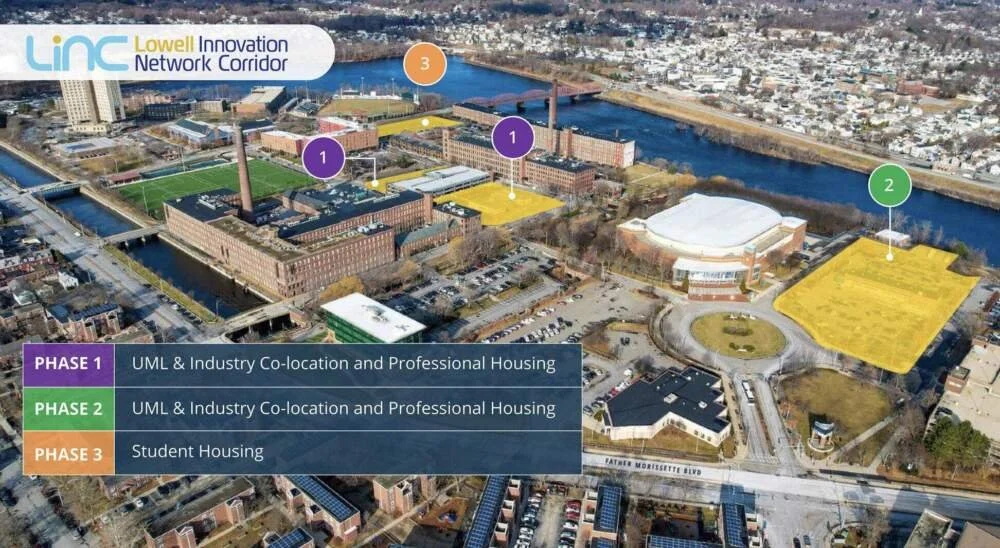
— UMass Lowell graphic
Edited from a New England Council report
“The University of Massachusetts at Lowell will begin construction next year on an $800 million mixed-use project that will include professional space for technology companies, housing units, and dorms on campus. According to the Boston Business Journal, the school views this upcoming project as a ‘catalyst to improve industry partnerships, improve the surrounding neighborhood, and help keep new graduates in the city.’
“The project will begin with the construction of a series of buildings for STEM purposes, along with almost 500 housing units for young professionals. However, this is not the only new addition to the UMass Lowell campus. Also on this list of recent projects is a new campus center, a business school building, and a series of residential buildings. STEM stands for Science, Technology, Engineering and Mathematics
“It’s an economic development project for Lowell and the greater Lowell region,” said UMass Lowell Chancellor, Julie Chen.’’
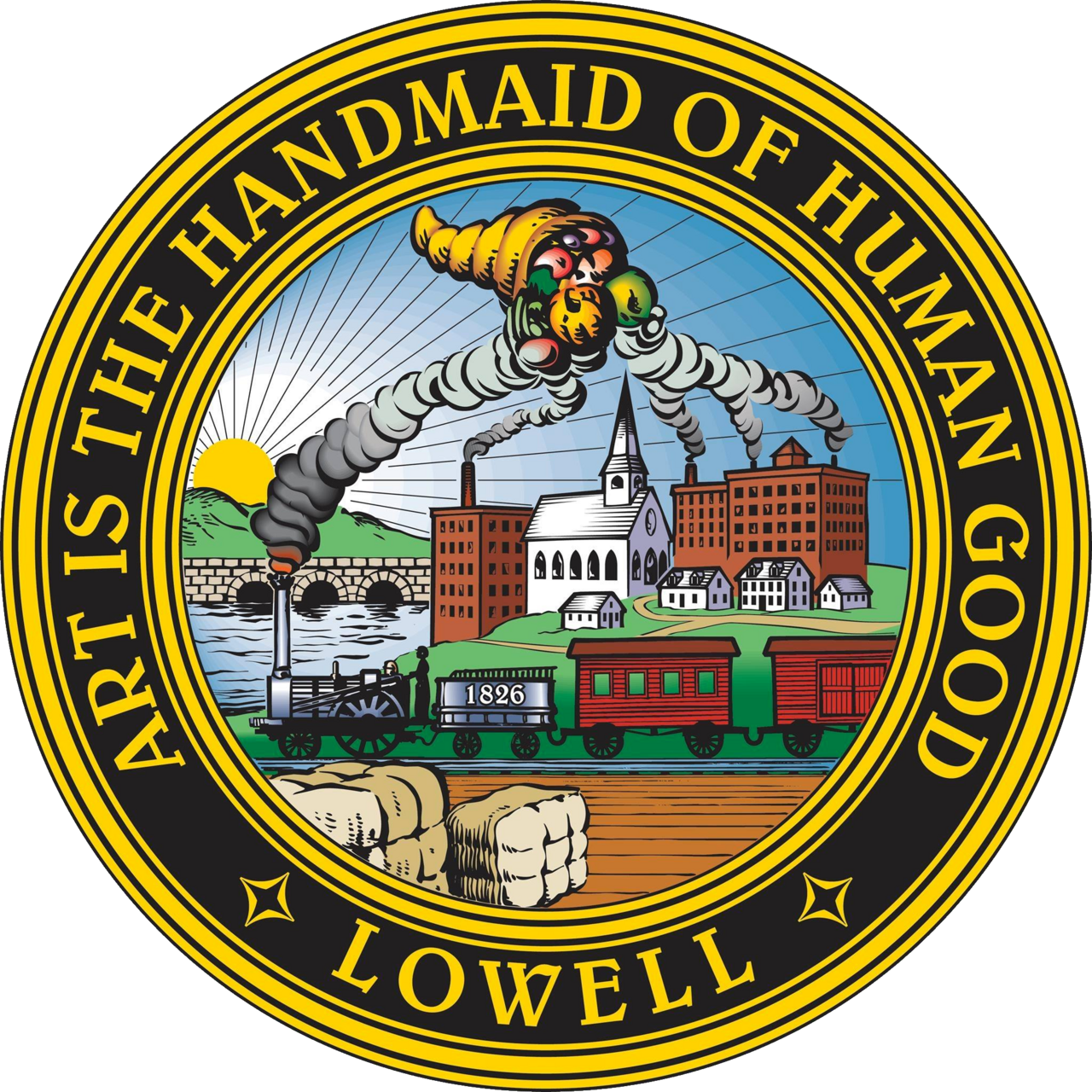
Lowell first made its name as a textile-manufacturing center in the 19th Century.
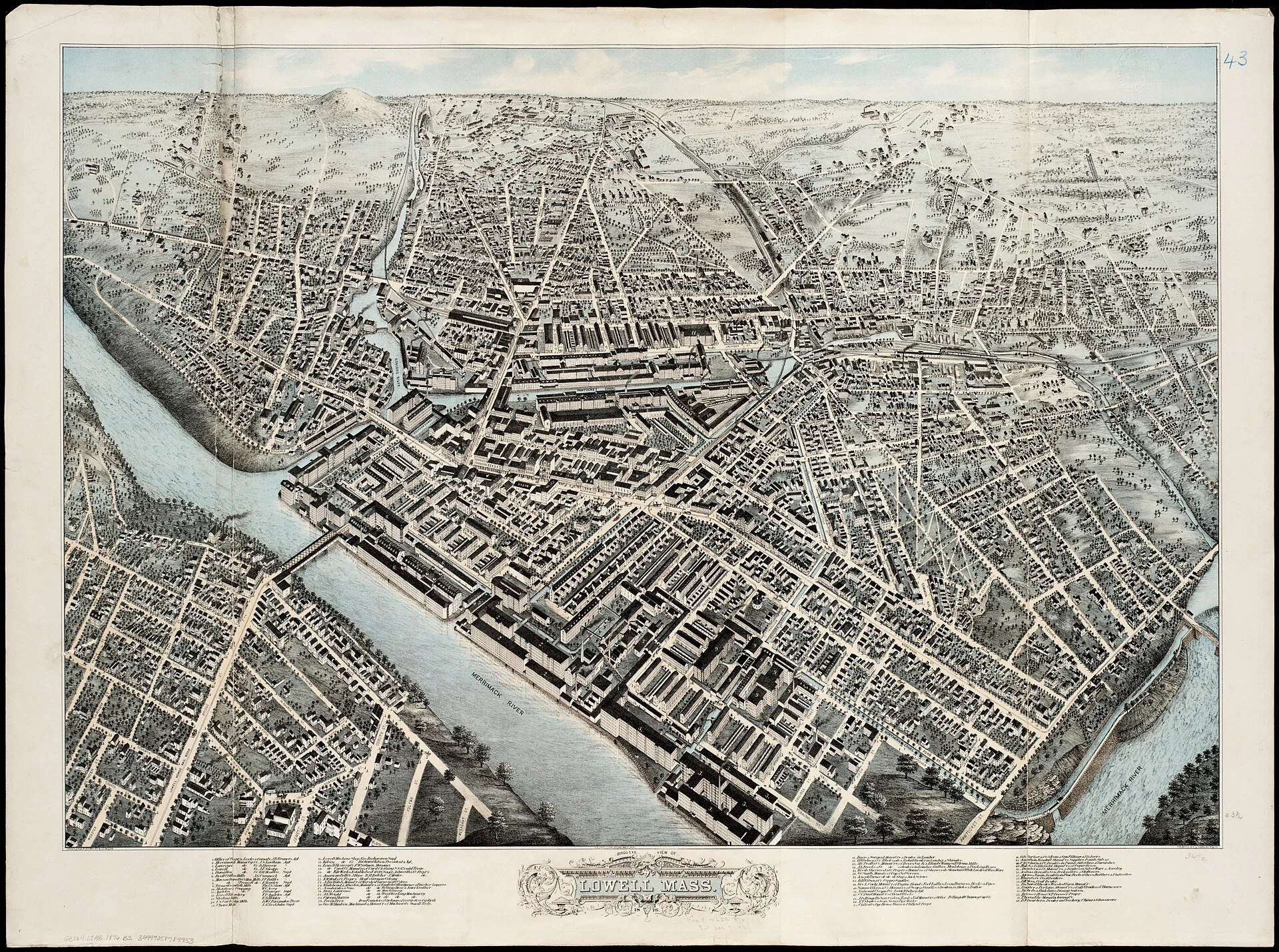
Lowell in 1876
Fearsome forest
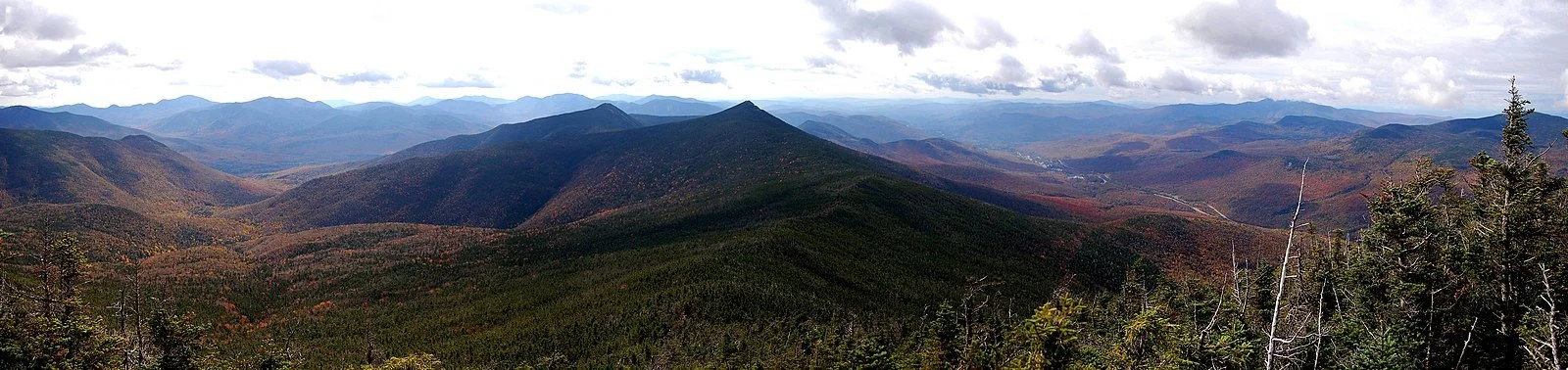
Panorama showing Mt. Liberty, Mt. Flume, parts of the Pemigewasset Wilderness, and parts of Franconia Notch State Park in the White Mountains.
“New Hampshire is one big forest. So apart from the very occasional town or ski resort, New Hampshire is primarily, sometimes dauntingly, wilderness. And its hills are loftier, craggier, more difficult and forbidding than Vermont’s.’’
— From A Walk in the Woods (1998), by Bill Bryson, about hiking up the Appachian Trail.

Saving the ‘little things that run the world’

— Diagram by YJaredY
Text excerpted from an ecoRI News article
KINGSTON, R.I. — Steven Alm and Casey Johnson in the University of Rhode Island Bee Lab want property owners to think small. Though tiny, the issues the duo is examining are anything but trivial. In fact, the issues they are studying are bellwethers for larger issues facing the natural world.
They want to reminding us of the importance of, as E.O. Wilson said, “the little things that run the world.”
A professor at URI and keeper of the university’s Insect Collection, which dates to the late 1800s, Alm is concerned about the insect loss he has witnessed in the course of his career, never mind the species that now only exist in pinned specimen form, no longer in the wild.
“We’re in trouble with the insects,” he said. Birds, fish, and other members of the food web need insects, but their numbers are dwindling. Pollinators in particular are vulnerable.
To read the whole article, please hit this link.
Adapt, adapt!
Adapted from Robert Whitcomb’s “Digital Diary,’’ in GoLocal24.com
I was driving through the snowless Berkshires the other week and saw a sad sign at a motel that catered to customers of nearby ski areas: “Think Snow.”
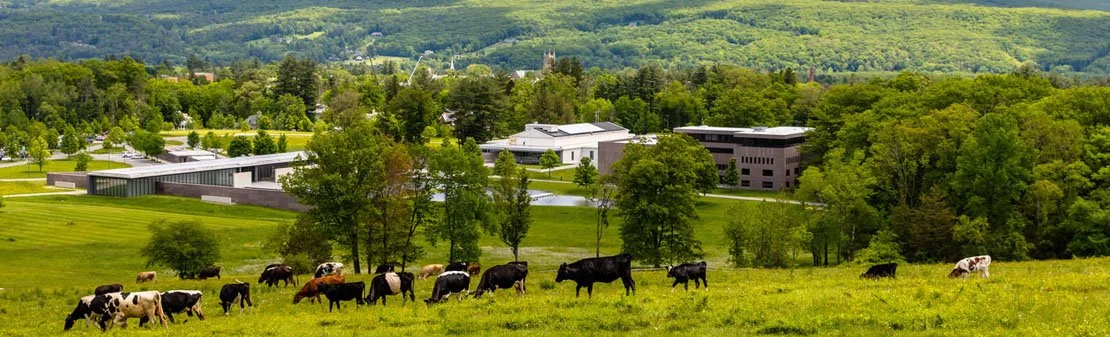
The low-slung Clark Art Institute
I was on my way, after meeting with a charity board colleague in the lively town of Great Barrington, to see the vast, exciting and low-slung Clark Art Institute, in Williamstown. It’s a museum mostly exhibiting European and American art, from the 14th Century on, created by Robert Sterling Clark (1877-1956) and his wife, Francine Clark (1876-1960). Mr. Clark was an heir to the Singer Sewing Machine Co. fortune.
The museum is in the very small academic town (Williams College) because the Clarks thought that its remoteness would prevent it from being destroyed in a Soviet nuclear attack! The number of cultural institutions in The Berkshires is astonishing – museums, theaters, musical venues, colleges, etc.
The region’s by turns bucolic and harsh beauty has drawn many famous visual artists and writers. One of the latter was Herman Melville (1819-1891), who saw the shape of a whale as he gazed at Mt. Greylock from Pittsfield while writing Moby-Dick, in 1850.
One of the strengths/quirks of America, and maybe a reminder that we have the West’s greatest income inequality, is how creators or inheritors of great wealth fund nonprofit institutions in a much wider range of places than you see in other Western countries – even in virtually the middle of nowhere.

Salisbury (Mass.) Beach
— Photo by John Phelan
Back to climate. Mother Nature has the final say. People with houses (mostly summer places. I think) along the beach in Salisbury, Mass., had passed the hat to spend $600,000 to rebuild sand dunes in front of the properties. Three days after the project was completed earlier this month, a storm washed away much of the dunes. And now the owners want the state’s taxpayers to help pay for restoration.
But many taxpayers are getting fed up with taking care of usually affluent people who insist on having houses virtually on the water. As I’ve written here before, it’s past time to sound the bugle to retreat inland. It’s worth noting that long before our era of global warming and rising seas, few people in New England towns lived right along the water. They built houses around town greens and on farms well above the highest storm tides.
Adapt, adapt! As warming winters cut in maple-sap collections, researchers are looking into getting much increased sap for syrup from such trees as birch and beech that are less affected by global warming. They aren’t as rich a source of syrup as maples, but they hold some promise at filling some of the gap. Hit this link from New Hampshire.
Southern New Englanders will also be growing more fruit trees that have typically been grown further south, such as peaches and heat-tolerant apple varieties. Hit this link.
Still, there’s the natural variability of weather as opposed to the march of climate. We’ll still have stretches in which the weather will be cooler than “average” (though “average” keeps changing), such as the weather forecast for this week.
I think of this quote (which I often drag out at this time of year) from Ernest Hemingway’s A Moveable Feast, his memoir of being a young man in Paris in the ‘20s:
“When the cold rains kept on and killed the spring, it was as though a young person had died for no reason. In those days, though, the spring always came finally but it was frightening that it had nearly failed.’’
Then it’s April in Paris and chestnut trees in blossom…
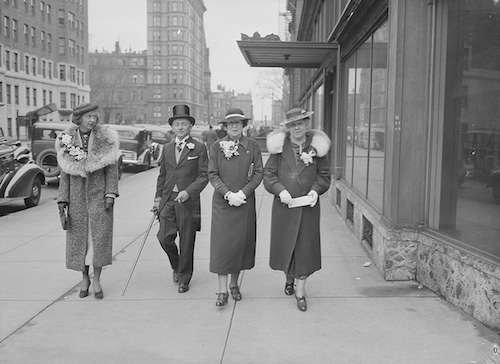
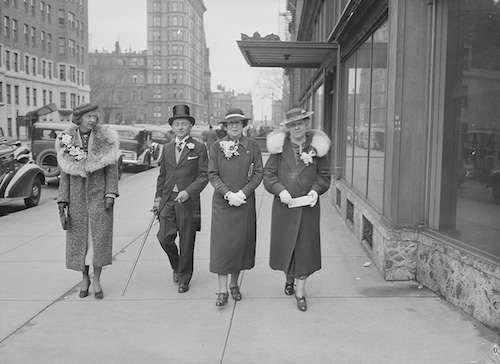
History of Easter in New England
Dressed up for Easter in Boston in 1936.
— Boston Public Library photo
Text excerpted from a New England Historical Society article.
“Easter Sunday traditions in New England have long included dying eggs, wearing new clothes, baking hot cross buns and attending sunrise services. They are based on pagan superstitions, which of course is why the Puritans didn’t celebrate the holiday. (The Puritans didn’t like Christmas, either.) For the early Puritans, celebrating the Lord’s Day 52 times a year was quite enough.
“Others brought traditions from Europe. Germans believed, for example, that rabbits laid beautifully colored eggs on Easter.
“Franco-Americans rose before the sun came up to fetch water, which they called Peau de Paques, from a stream. They believed it had miraculous qualities, staying pure indefinitely. They washed with it, drank it and saved it.
““Easter usually (though not always) falls later for members of the Greek Orthodox Church than for other Christians. On the holiday itself, Greek Orthodox Christians used to greet each other by saying, “Christ has risen.” The response: “Truly he has risen.”
“Italian-Americans have a number of sayings about Easter, including ‘happy as Easter’ (which means someone is happy) or ‘as long as Lent’ (which means something is long).’’
To read the full article, please hit this link.
In her golden age

“Mom's Prom Dress” (oil on linen), by Tara Lewis, in the show “Hidden Treasures 6, a the Lamont Gallery, at Phillips Exeter Academy, Exeter, N.H.
— Photo courtesy Lamont Gallery
The gallery explains:
The show “highlights the work of Phillips Exeter Academy faculty from across departments. From multi-media to photography to painting and fiber art, 47 artists display their varied work. Aside from the visual arts, this exhibit also highlights music and literary art created by the faculty at Phillips Exeter Academy.’’
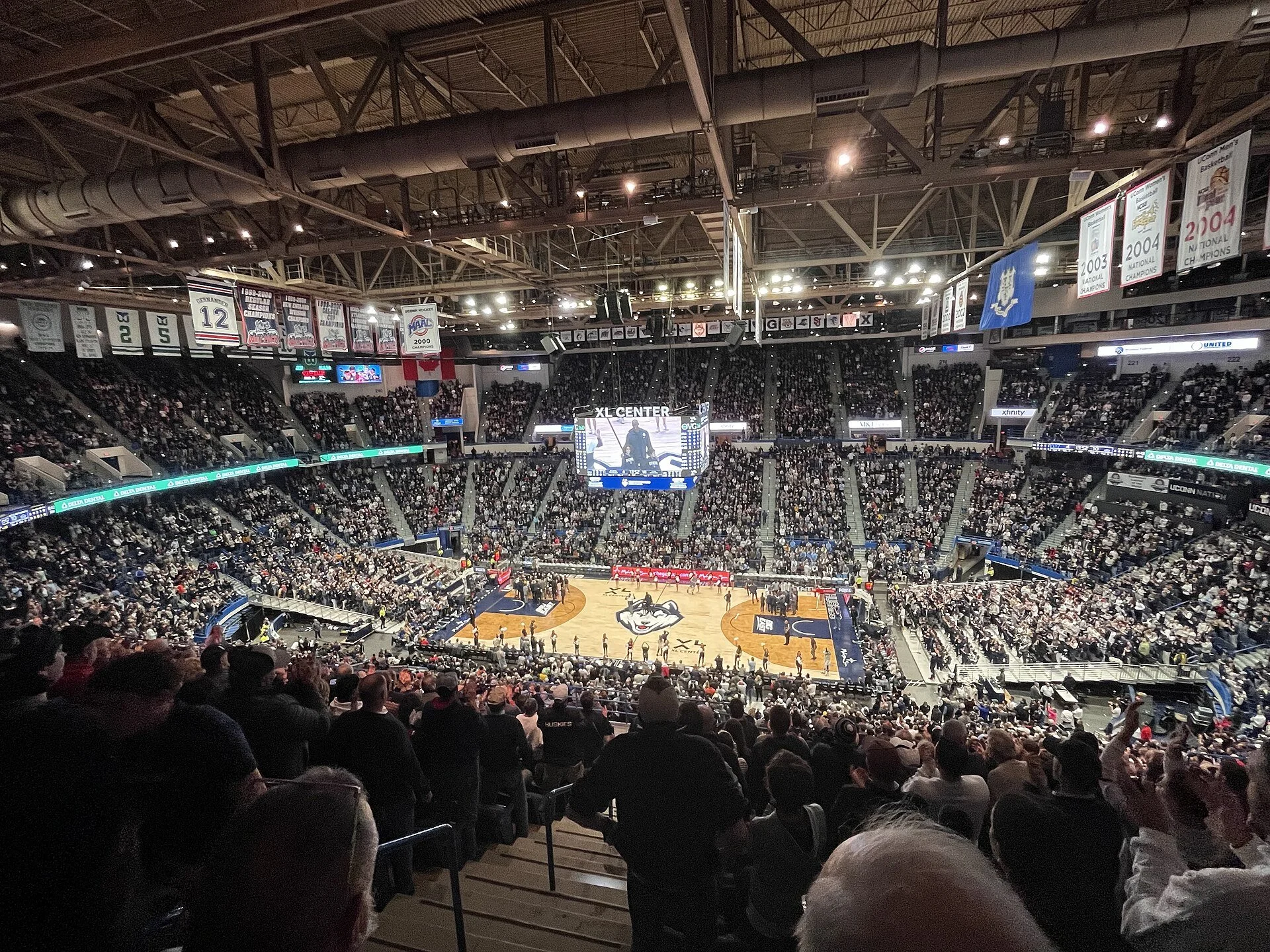
Chris Powell: Hartford doesn’t need hockey and state’s ‘values’ don’t help
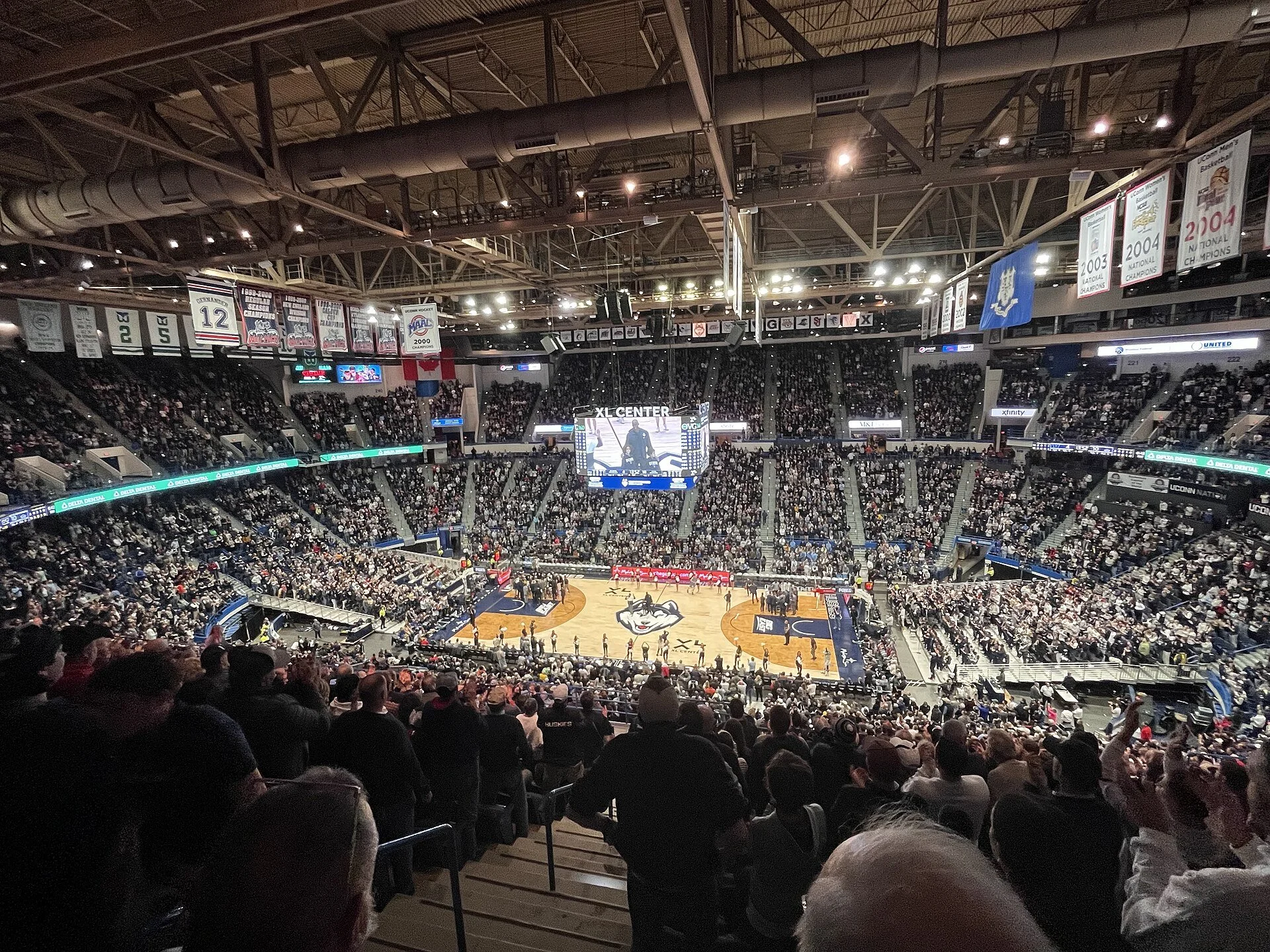
At the XL Center, in Hartford.
— Photo by Enterprise8875
MANCHESTER, Conn.
Some people think that Hartford's decline began in 1997, when the city's National Hockey League team, the Whalers, left for North Carolina. Gov. Ned Lamont seems to be one of them, though the city's plunge into poverty and dysfunction started at least 30 years earlier.
For a few years in the 1980s and '90s the Whalers did manage to fill some downtown Hartford restaurants and bars on game nights as the team played at the Hartford Civic Center Coliseum. But most Whalers fans were suburbanites who quickly went back home, doing nothing to improve the city's demographics. Even with a National Hockey League team the city kept losing its middle class.
Maybe NHL hockey could help Hartford a little more now since, thanks to a bailout from state government, the city has built a lovely minor-league baseball stadium near the coliseum, renamed the XL Center. With baseball in the warmer months and hockey in the colder ones, and with the housing the city is striving to restore downtown, maybe more middle-class people could be induced to live in the city again.
But hockey is an acquired taste and the governor's enthusiasm for it in Hartford is not supported by history. The Whalers seldom filled their arena and the joke was that each game was like a Grateful Dead concert -- the same several thousand people.
When the other day the governor said his administration is “ready” for the return of big-league hockey to Hartford at the XL Center, with the possible relocation of the Arizona Coyotes, he couldn't have been serious. While state government is appropriating $100 million to renovate the arena, the project already is expected to run $40 million over budget, and a new team's likely demand for government subsidies has not been acknowledged, much less addressed.
Indeed, in 1996, as the Whalers demanded that state government build them a new arena even as they couldn't fill the one they had, the Journal Inquirer calculated that between financial bailouts of the team, discounted and unpaid state loans, and free use of the coliseum, state government was subsidizing the team by $32 per ticket sold, or $1,400 per spectator per season. This shouldn't have been surprising, since the Whalers had only three winning seasons out of 18 in the NHL. (The Coyotes have had only two winning seasons in their last 10.)
How much per ticket will Connecticut have to subsidize another round of NHL hockey in Hartford, and where will the money come from? The remnants of state government's federal emergency money are already being claimed many times over.
Improving Hartford's demographics is a worthy project, but hockey isn't likely to accomplish even a tiny fraction as much as a few new supermarkets would, and subsidizing new supermarkets for a while probably will be necessary to make the city's notorious “food desert” bloom.
Like other Southern states, North Carolina has been enjoying more economic and population growth than Connecticut, but three Democratic state senators here have an idea for reversing the trend.
They note that North Carolina's Republicans have given their nomination for governor to Lt. Gov. Mark Robinson, a nutty Bible thumper, so the Democratic senators -- Senate President Pro Tem Martin M. Looney, Majority Leader Bob Duff, and Deputy Senate President Joan Hartley -- have urged Connecticut's economic development commissioner to appeal to North Carolina businesses to flee their state's impending nuttiness by moving here.
Duff says, "A lot of people come to Connecticut because they like our values."
Unfortunately those "values" lately include government employee union control of public finance, high taxes, high electricity prices, ever-increasing mandates on business, nullification of federal immigration law, racial preferences, abortion of viable fetuses, boys impersonating girls in sports, sex-change therapy for minors, the concealment by schools from parents of the gender dysphoria of their children, pervasive euphemizing, and politics less competitive than Russia's.
Bible thumping may be easier to live with.
Chris Powell has written about Connecticut government and politics for many years (CPowell@cox.net).


William Morgan: All that and nothing at all; how not to promote a state
The State of Rhode Island, beset by the self-inflicted woes of failing infrastructure, persistent corruption and a lack of self-confidence, has launched a new tourism initiative that it hopes will bring swarms of visitors to our shores this summer. “All That” is the campaign’s motto.

All That, period. What’s more banal than a lighthouse?
—Commerce Rhode Island
Despite its 1990s hip-hop vibe, the pandering of Rhode Island to potential visitors is clothed in familiar banal corporate-speak, accompanied by photographs of lighthouses and Newport mansions, with “All That” splashed across them.
There are videos showing young and happy revelers biking, surfing, dining – creepily identical to the branding firm’s clips on Belize, Park City, and other fun destinations–what you might expect from a Florida agency whose motto is “We make momentum happen’’.
Why does our culturally and geographically endowed Rhode Island need this everywhere -- and — everyone sanitized vision of itself?
Rhode Island is not the only state going through the periodic contortions of trying to sell themselves to mythical, profligate-spending hordes of tourists. Politicians are also easy marks for snake-oil salesmen of new images that they hope will appeal to the electorate.
(“All That”has apparently cost taxpayers half a million dollars, but queries through the Access to Public Records Act will no doubt reveal a much higher figure.)
Political appointments offer clues about the cluelessness of heads of state, so it should come as no surprise that Anika Kirble-Huntley, the chief marketing officer for Rhode Island Commerce, has spent her entire career in the casino industry.

Fun-Sized, perhaps, but what potential tourist would be enchanted by this murky and grim image?
—VisitRhodeIsland.com
“All That” is the fourth tourism re-brand fiasco in recent years. There was the embarrassing “Fun-Sized” campaign, and the slightly mysterious “Whatever you do …” The most infamous, however, was when Rhode Island hired design-great Milton Glaser to come up with the tepid slogan “Cooler and Warmer,” complete with a clip of alleged local skateboarders zipping along the harborside – in Reykjavik. Slightly less egregious was “Discover Beautiful Rhode Island,” whose chief legacy is handsome signs positioned at the state line.
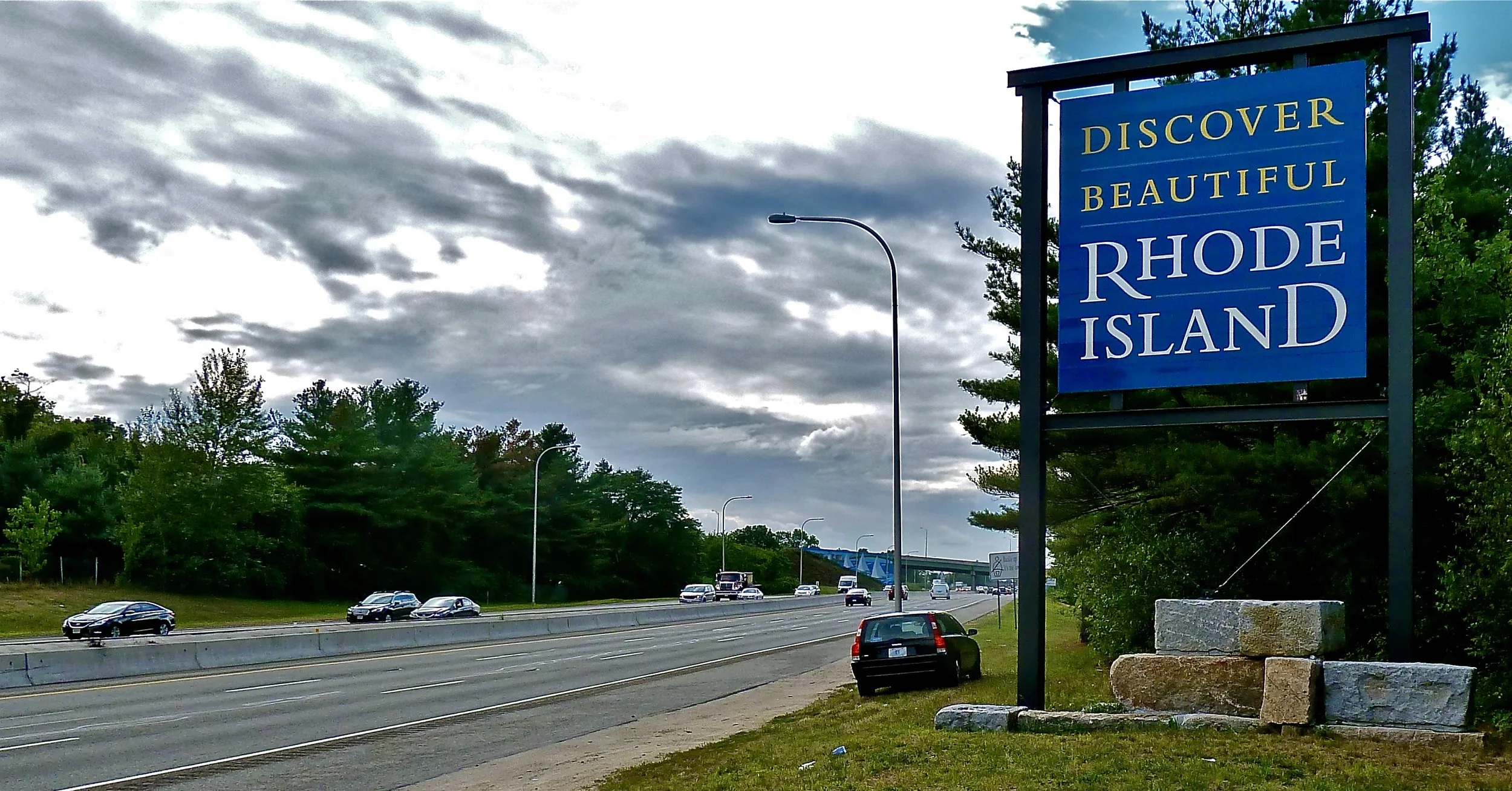
A quiet sign exhorting Rhode Islanders to discover where we live; tourists on I-195 are in a rush to get to Cape Cod.
— Photo by William Morgan
Rhode Island, to which my wife and I moved to by choice twenty-five years ago, may be the smallest state by area, yet it boasts 400 miles of Atlantic shore, a rich 400-year history seen in an incredible array of outstanding architecture. We were enchanted by Rhode Island’s diversity, its food, its educational institutions, and its palpable tradition of independence and tolerance.
Content with Rhode Island, I do not envy any state its bigger size. But, at the other side of the continent, I am in awe of Alaska’s waving identifier. It is an impeccable and unimpeachable symbol, perhaps the best advertisement for any American government entity. There are no mottos, no Latin phrases, no animals, or any potentially controversial figures – just a tribute to the northern sky.
The blue field with the gold stars of the Big Dipper pointing to the North Star, is a simple, strong, and recognizable design that has served boldly for a century, from territory to 49th state. This powerful, no-nonsense banner, adopted in 1927, will look fresh in another hundred years. Part of the brilliance of the design lies in its genesis: the American Legion sponsored a competition among school students throughout the territory that brought forth 700 entries. The winner was Benny Benson, a Native Alaskan orphan. For his brilliant scheme Benson was given a gold watch and $1,000. As “All That” demonstrates, the price of re-branding has gone way up, and handsome civic design is mostly a thing of the past.

The flag of Alaska, designed almost a century ago.
Rhode Island would have been better served by giving the money spent on the advertisements to folks to enable them to host visitors. The people who run the state gravitate to bigger scams, such as pro-sports stadiums, movie studios, and dubious highway contracts. Citizens will never see much of this squandered money again, even though we will be underwriting it for decades. Nevertheless, it is time to stop wasting dollars on silly, meaningless, and dubiously ineffective tourism promotions. Like the Alaska flag, Rhode Island itself ought to be advertisement enough.
William Morgan is an architectural writer based in Providence. His latest book is Academia: Collegiate Gothic Architecture in the United States (Abbeville).
Llewellyn King: Capitalist solutions to the housing crisis
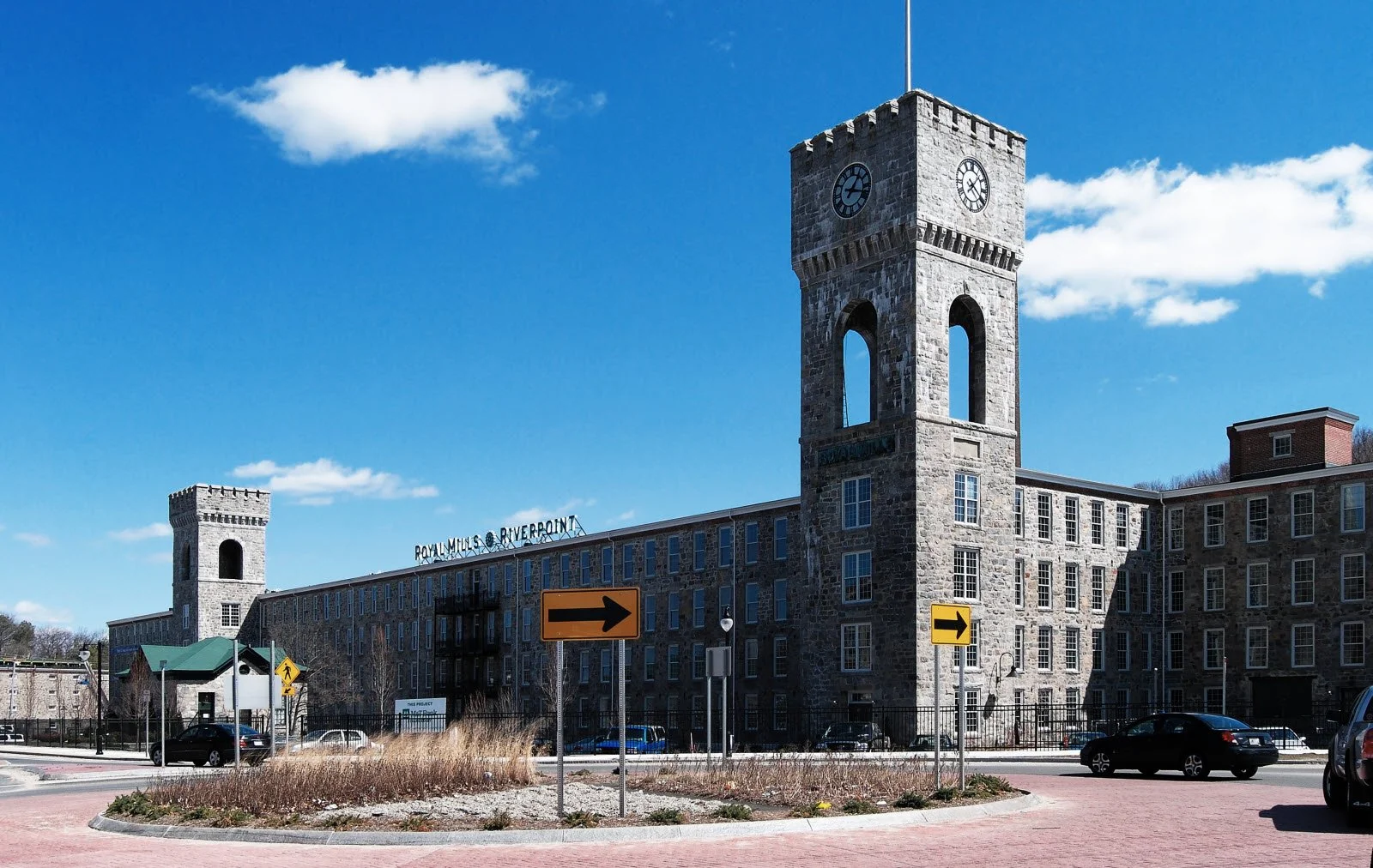
The Royal Mills complex, in West Warwick, R.I., a former textile factory that was converted to 250 residential apartments.
WEST WARWICK, R.I.
The housing crisis, which is spread across the United States, is most easily measured in the human cost. At the low end that is families, working families, forced to go without a roof, to live in cars, on the streets, and in tent cities or municipal shelters.
But there are other costs, mostly to young people; costs like getting married and having to live with parents or living in a group house long past the age when that is an adventure.
A big cost of the housing crisis is labor mobility.
One of the great strengths of the American workforce has been its preparedness to relocate to the work, unlike parts of Europe where the workers have demanded that the work come to them.
It was this mobility that fed the growth of California and today is feeding the growth of Texas, although housing stress — particularly in Austin, the dynamic capital — is beginning to be a problem there.
Mobility is a feature that made America America: its restlessness, its sense of seeking the frontier and moving there.
According to Dowell Myers, a professor of policy, planning and demography at the University of Southern California, whom I recently interviewed on the television program White House Chronicle, 21 percent of the population relocated every year, now it is down to 8 percent.
According to Myers and other experts, the housing shortage has been building since the Great Recession of 2008 to 2009. This has been multifaceted and includes a shortage of money available for lending to builders, labor shortages, supply chain disruptions, but particularly local exclusionary laws.
To my mind, and to architects and developers I have spoken to, those laws are the biggest problem: the mostly smug, leafy suburbs don’t want new townhouses or apartments. That introduces underlying issues of class and race. In the suburbs, two of the most dreaded words are “affordable housing.”
The answer is to build “luxury” housing rather than designated low-income housing, according to Myers. It is a view I have espoused for years. Build upscale housing that caters to the middle class and as people move up, more housing will become available at the bottom. It is capitalism at its simplest: supply and demand at work. At present we have too much demand and not enough supply.
An extraordinary thing about the housing crisis that is crippling the nation and changing its social as well as its labor dynamics, is why isn’t this a prominent issue in this presidential election year.
It is an issue that could bolster candidates because there are things at the federal level which can be done. Here is a problem that affects all. Where are the political solutions coming from the top? Where are the political reporters asking the candidates, “What are you going to do about housing, a here-and-now crisis?”
Public housing comes pre-stigmatized. The answer is the market. It isn’t a free market because it is inhibited by the fortress-suburb mentality, but there is enough room for the market to accelerate, to build more houses with just a little federal incentive.
Some of the most attractive homes in New England are in converted mills and factories. These grand structures have been turned into what realtors call “residences.”
The use of the word residences, instead of apartments, denotes something desirable. So be it: If it works, do it.
Much of the rehabilitation of the industrial properties in New England, and across the country, has gone in tandem with tax incentives. In one case, these were enough for the developers to produce 250 apartments from one historic mill in Rhode Island. (See photo.) Up and down the country there are abandoned industrial properties that require little zoning hassle to be repurposed.
USC’s Myers, who says every kind of housing is needed, points out that building for those who can afford to buy works in another way: It inhibits gentrification and the social upheaval, as the poor are pushed out of their old neighborhoods, something which, by the way, has been very apparent in Washington, D.C.
The use of urban space is changing, shopping centers are failing and office buildings are losing their luster, and that means housing opportunities. Repurposing isn’t the only answer, and a lot of new housing is needed, but there is huge evidence that repurposing works from the factories of New England to the lofts of Manhattan — desirable housing has been created from the debris of the past.
Building anything anywhere isn’t a simple matter, but once the financial incentives are gotten right, things begin to move. It will take decades to fix the housing problem, but that should be accelerated now.
Llewellyn King is executive producer and host of White House Chronicle, on PBS. His email is llewellynking1@gmail.com, and he’s based in Rhode Island.
Happy days

“Boston Public Garden Serenade,’’ by Sudakshina Bhattacharya, in the show “Clean Slate: A Juried Exhibition Inspired by the Change of Season,’’ at StoveFactory Gallery, in Boston’s Charlestown section.
— Photo of painting courtesy of the artist
The gallery says the show “embraces spring through 68 works made by 48 artists who create across all mediums. ‘‘

Arthur Allen: Using a gene test to avoid chemotherapy overdose

A woman with breast cancer receiving chemotherapy.
From Kaiser Family Foundation Health News
One January morning in 2021, Carol Rosen took a standard treatment for metastatic breast cancer. Three gruesome weeks later, she died in excruciating pain from the very drug meant to prolong her life.
Rosen, a 70-year-old retired schoolteacher, passed her final days in anguish, enduring severe diarrhea and nausea and terrible sores in her mouth that kept her from eating, drinking, and, eventually, speaking. Skin peeled off her body. Her kidneys and liver failed. “Your body burns from the inside out,” said Rosen’s daughter, Lindsay Murray, of Andover, Mass.
Rosen was one of more than 275,000 cancer patients in the United States who are infused each year with fluorouracil, known as 5-FU, or, as in Rosen’s case, take a nearly identical drug in pill form called capecitabine. These common types of chemotherapy are no picnic for anyone, but for patients who are deficient in an enzyme that metabolizes the drugs, they can be torturous or deadly.
Those patients essentially overdose because the drugs stay in the body for hours rather than being quickly metabolized and excreted. The drugs kill an estimated 1 in 1,000 patients who take them — hundreds each year — and severely sicken or hospitalize 1 in 50. Doctors can test for the deficiency and get results within a week — and then either switch drugs or lower the dosage if patients have a genetic variant that carries risk.
Yet a recent survey found that only 3% of U.S. oncologists routinely order the tests before dosing patients with 5-FU or capecitabine. That’s because the most widely followed U.S. cancer treatment guidelines — issued by the National Comprehensive Cancer Network — don’t recommend preemptive testing.
The FDA added new warnings about the lethal risks of 5-FU to the drug’s label on March 21 following queries from KFF Health News about its policy. However, it did not require doctors to administer the test before prescribing the chemotherapy.
The agency, whose plan to expand its oversight of laboratory testing was the subject of a House hearing, also March 21, has said it could not endorse the 5-FU toxicity tests because it’s never reviewed them.
But the FDA at present does not review most diagnostic tests, said Daniel Hertz, an associate professor at the University of Michigan College of Pharmacy. For years, with other doctors and pharmacists, he has petitioned the FDA to put a black box warning on the drug’s label urging prescribers to test for the deficiency.
“FDA has responsibility to assure that drugs are used safely and effectively,” he said. The failure to warn, he said, “is an abdication of their responsibility.”
The update is “a small step in the right direction, but not the sea change we need,” he said.
British and European Union drug authorities have recommended the testing since 2020. A small but growing number of U.S. hospital systems, professional groups, and health advocates, including the American Cancer Society, also endorse routine testing. Most U.S. insurers, private and public, will cover the tests, which Medicare reimburses for $175, although tests may cost more depending on how many variants they screen for.
In its latest guidelines on colon cancer, the Cancer Network panel noted that not everyone with a risky gene variant gets sick from the drug, and that lower dosing for patients carrying such a variant could rob them of a cure or remission. Many doctors on the panel, including the University of Colorado oncologist Wells Messersmith, have said they have never witnessed a 5-FU death.
In European hospitals, the practice is to start patients with a half- or quarter-dose of 5-FU if tests show a patient is a poor metabolizer, then raise the dose if the patient responds well to the drug. Advocates for the approach say American oncology leaders are dragging their feet unnecessarily, and harming people in the process.
“I think it’s the intransigence of people sitting on these panels, the mindset of ‘We are oncologists, drugs are our tools, we don’t want to go looking for reasons not to use our tools,’” said Gabriel Brooks, an oncologist and researcher at the Dartmouth {College} Cancer Center, in Lebanon, N.H.
Oncologists are accustomed to chemotherapy’s toxicity and tend to have a “no pain, no gain” attitude, he said. 5-FU has been in use since the 1950s.
Carol Rosen (left) and her daughter, Lindsay Murray, celebrate Thanksgiving in 2020. Rosen, a 70-year-old retired schoolteacher, passed her final days in anguish, after three weeks of chemotherapy with incompatible drugs.
Yet “anybody who’s had a patient die like this will want to test everyone,” said Robert Diasio of the Mayo Clinic, who helped carry out major studies of the genetic deficiency in 1988.
Oncologists often deploy genetic tests to match tumors in cancer patients with the expensive drugs used to shrink them. But the same can’t always be said for gene tests aimed at improving safety, said Mark Fleury, policy director at the American Cancer Society’s Cancer Action Network.
When a test can show whether a new drug is appropriate, “there are a lot more forces aligned to ensure that testing is done,” he said. “The same stakeholders and forces are not involved” with a generic like 5-FU, first approved in 1962, and costing roughly $17 for a month’s treatment.
Oncology is not the only area in medicine in which scientific advances, many of them taxpayer-funded, lag in implementation. For instance, few cardiologists test patients before they go on Plavix, a brand name for the anti-blood-clotting agent clopidogrel, although it doesn’t prevent blood clots as it’s supposed to in a quarter of the 4 million Americans prescribed it each year. In 2021, the state of Hawaii won an $834 million judgment from drugmakers it accused of falsely advertising the drug as safe and effective for Native Hawaiians, more than half of whom lack the main enzyme to process clopidogrel.
The fluoropyrimidine enzyme deficiency numbers are smaller — and people with the deficiency aren’t at severe risk if they use topical cream forms of the drug for skin cancers. Yet even a single miserable, medically caused death was meaningful to the Dana-Farber Cancer Institute, where Carol Rosen was among more than 1,000 patients treated with fluoropyrimidine in 2021.
Her daughter was grief-stricken and furious after Rosen’s death. “I wanted to sue the hospital. I wanted to sue the oncologist,” Murray said. “But I realized that wasn’t what my mom would want.”
Instead, she wrote Dana-Farber’s chief quality officer, Joe Jacobson, urging routine testing. He responded the same day, and the hospital quickly adopted a testing system that now covers more than 90% of prospective fluoropyrimidine patients. About 50 patients with risky variants were detected in the first 10 months, Jacobson said.
Dana-Farber uses a Mayo Clinic test that searches for eight potentially dangerous variants of the relevant gene. Veterans Affairs hospitals use a 11-variant test, while most others check for only four variants.
Different Tests May Be Needed for Different Ancestries
The more variants a test screens for, the better the chance of finding rarer gene forms in ethnically diverse populations. For example, different variants are responsible for the worst deficiencies in people of African and European ancestry, respectively. There are tests that scan for hundreds of variants that might slow metabolism of the drug, but they take longer and cost more.
These are bitter facts for Scott Kapoor, a Toronto-area emergency room physician whose brother, Anil Kapoor, died in February 2023 of 5-FU poisoning.
Anil Kapoor was a well-known urologist and surgeon, an outgoing speaker, researcher, clinician and irreverent friend whose funeral drew hundreds. His death at age 58, only weeks after he was diagnosed with stage 4 colon cancer, stunned and infuriated his family.
In Ontario, where Kapoor was treated, the health system had just begun testing for four gene variants discovered in studies of mostly European populations. Anil Kapoor and his siblings, the Canadian-born children of Indian immigrants, carry a gene form that’s apparently associated with South Asian ancestry.
Scott Kapoor supports broader testing for the defect — only about half of Toronto’s inhabitants are of European descent — and argues that an antidote to fluoropyrimidine poisoning, approved by the FDA in 2015, should be on hand. However, it works only for a few days after ingestion of the drug and definitive symptoms often take longer to emerge.
Most importantly, he said, patients must be aware of the risk. “You tell them, ‘I am going to give you a drug with a 1 in 1,000 chance of killing you. You can take this test. Most patients would be, ‘I want to get that test and I’ll pay for it,’ or they’d just say, ‘Cut the dose in half.’”
Alan Venook, the University of California-San Francisco oncologist who co-chairs the National Comprehensive Cancer Network, has led resistance to mandatory testing because the answers provided by the test, in his view, are often murky and could lead to undertreatment.
“If one patient is not cured, then you giveth and you taketh away,” he said. “Maybe you took it away by not giving adequate treatment.”
Instead of testing and potentially cutting a first dose of curative therapy, “I err on the latter, acknowledging they will get sick,” he said. About 25 years ago, one of his patients died of 5-FU toxicity and “I regret that dearly,” he said. “But unhelpful information may lead us in the wrong direction.”
In September, seven months after his brother’s death, Kapoor was boarding a cruise ship on the Tyrrhenian Sea near Rome when he happened to meet a woman whose husband, Atlanta Municipal Judge Gary Markwell, had died the year before after taking a single 5-FU dose at age 77.
“I was like … that’s exactly what happened to my brother.”
Murray senses momentum toward mandatory testing. In 2022, the Oregon Health & Science University paid $1 million to settle a suit after an overdose death.
“What’s going to break that barrier is the lawsuits, and the big institutions like Dana-Farber who are implementing programs and seeing them succeed,” she said. “I think providers are going to feel kind of bullied into a corner. They’re going to continue to hear from families and they are going to have to do something about it.”
Arthur Allen is a Kaiser Family Foundation Health News reporter.
ArthurA@kff.org, @ArthurAllen202
Drawing him in

“Forest-Way” (oil on canvas), by Vincent Van Gogh ((1853-1890)
“Many paths in the woods have chosen
me, many a time,
and I wonder often what this
choosing is….’’
‘‘From “Lost,’’ by Hayden Carruth (1921-2008), American poet and editor. He lived in Johnson, Vt., for many years.
William T. Hall: Surviving the swarm
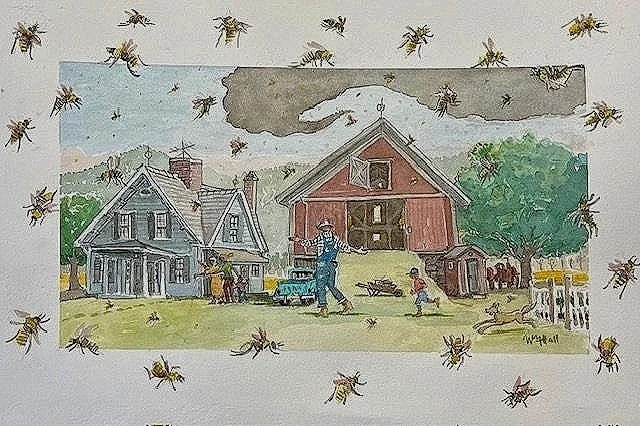

Text and watercolor painting by William T. Hall, a Florida-and-New England-based painter and writer
As we endured one of our family weeding sessions in our vegetable garden in Thetford, Vt., my grandfather said abruptly, and with strong emphasis, the four-letter “S-word”. It was enough of a surprise to lead grandmother to remind him that children were present. “Jesus, Mary and Joseph, Harold, your language – please!”
We all stared at Gramps as Grandmother looked over her glasses at my mother, who was smiling at her while fighting with a deep-set weed. Mother’s garden glove was full of a dozen or so vanquished weed specimens dropping dust as she looked over to me, rolling her eyes. I could see my reflection in her sunglasses as my little brother, Steve, leaned in and whispered to me , while wagging his index finger at the ground, “Naughty-naughty, Gramps”
“What’s wrong, Dad?” my mother asked. “You okay?”, she asked, as she pulled on another stubborn weed.
He said nothing as he set his jaw and unfolded his tall frame upward from his kneeling position like a camel standing up in the desert. He was looking at the top of his wrist as if to check a watch that wasn’t there. In that hand he held a big red Folger’s coffee can half-filled with kerosene into which he had been dropping hundreds of Japanese Beetles. These he had picked meticulously from the leaves of his potato plants. This sort of thing defined one of his methods for guarding against pests in the modern age of pesticides. “Better to pick’m off and get’m before they get you.”
After he had stood up fully, he looked perplexed, as if he didn’t believe what had just happened. He looked at my grandmother and said one word,
“Bee.”
“Sting?“ My mother asked.
“No he just scratched me a — warning”.
This we all knew from being on the farm. When you work around bees they are busy, too, gathering honey. Unless you create too much commotion around bees or otherwise make them too anxious, a human usually gets a (warning) a scratch before a (sting).
A warning was when a bee dragged his stinger across your skin to give you what felt like a little hot spark. A full “sting” was, of course, much more painful and was delivered with a bee’s ultimate strength, resulting in the hooked end of the stinger deep under the skin with the bee’s abdomen still attached to feed the stinger with venom. This added to your pain immensely. For this one extreme act, the honeybee pays with its life, and for allergic recipients, the sting can cause anaphylactic shock. To that person multiple stings all at once could cause death.
To my grandfather this “scratch” seemed like an unprovoked over-reaction, and he didn’t understand what he had done to deserve it.
Harold had been stung several times in his life but he understood that each time he’d done something provocative. When he saw that there were lots of other bees around us not harming us, it seemed as if nothing menacing had happened, so what was the big deal? Grandpa was insulted. He shook his head. My mother, teasing her father, asked him, “Dad, did you make a mistake? You know the difference between a Japanese beetle and a bee right”?
We all laughed and looked at my grandfather, wanting to gauge his reaction to my mother’s tease. He held the coffee can in one hand and laughed politely at the ribbing. He was always a good sport.
“I’m glad I didn’t sit on him”, he said and got a double-good laugh from all of us.
But as he was looking at us he was still wondering why there seemed to be so many bees everywhere in the air. They swirled like embers from a campfire. It was a busy confusion in orange, black and tan reminding him of when he attended his mother’s beehives at their turkey farm in Walpole, Mass., years before.
“Gramps! What’s is that?” asked my brother Steve he excitedly pointed to the sky above and behind Gramp’s silhouetted upper torso.
“Harold!” My grandmother shouted sharply, my grandfather and the sky above him reflecting in her glasses.…
Gramps looked at her perplexed as he turned to see what she meant. Something amazing and frightening was happening in the sky behind him. He had never seen anything like it before, and nor would he ever again. He looked back in awe at a jet-black roiling cloud in the sky over the Connecticut River. “It’s bees!”Then suddenly,“ SWARM!” he yelled as he set down his coffee can.
“What the heck!?” My mother exclaimed as she stood up, dropping her spade and the weeds from her gloves.
“Gloria, Quick help me up!” my grandmother yelled. My mother said frantically, in a commanding voice, to Steve and me, “Kids, get your grandmother up and head to the house”! As we helped our 200-pound grandmother to her feet, our mother rushed to her father’s side asking. “What should we do? Dad?”
They both looked up at the cloud and now we all could hear the sound of the bees, which mimicked the sound of a breeze blowing through tree leaves.
My grandfather mumbled something unintelligible in Swedish under his breath.
“Pop, in English!”, my mother asked in a slightly panicked tone. “What should we do?”
Without taking his eyes off the swarm, Gramp said, “Yes, get Lillian to the house, but don’t run, Ok? Just walk fast and don’t panic. We must not spook the swarm. Look at them! They look pretty riled alread.”
“Harold, you be careful,’’ my grandmother said.
“We’ll be fine, ’’ he said.
“Somewhere in the middle of the swirling mass is the Queen. Bees will do anything to protect their Queen. They’re looking for a new hive. These other bees down here are the scouts”.
Our farm was on the floor of Vermont’s Upper Connecticut River Valley about a football field’s length from the river and a mile’s south of the village center of Thetford. Our barn was in the middle of our property between two 25-acre fields, with two big shade-maple trees taller than any other trees next to the barn, which was four stories tall, from the basement to the peak of the open hayloft.
The whole barn structure was basically open. It was June, and the barn was empty of hay. There was one window in the peak and an open hay door in the end. The barn was designed to suck air in at the basement pig stalls on the backside of the building and to direct it inward and upward out through the big open barn doors and hay doors in both peaks. Those doors were 16 feet tall and were at the top of the earthen ramp that led to the second story. The ramp was designed for horses pulling full hay-wagons up into the big main hay-storage room. The main room was enormous, about 40 by 60 feet and 45 feet to the peak, where the hay trolley track and unloading-fork still hung covered in cobwebs.
Grandpa knew that the swarm of bees high in the air above our barn probably saw what looked like the perfect place for new beehive — a place with the perfect size and shape to house what seemed like a zillion tired and desperate bees and their queen.
My grandfather could see this in the few moments he had to scope out the problem and he understood that the welcome mat would be out until he could close up the barn to keep out these unwelcome guests.
Gramps now could hear the house windows being slammed down shut and the garage door being closed in the long shed off the main house. The ladies had done their job. The house would be a secure hiding place for the family no matter what happened in the other buildings. Grandpa’s carpentry shop, the hen house, a little stone milk-house and our barn were the only possible manmade homes for the bees.
The area directly above and behind the barn was a jet-black fuzzy moving mass. The swarm covered the whole width of the house, barn and shade trees. The scene reminded Gramps of the sand-and-soil clouds during the 1930’s Dust Bowl. Like those roiling clouds, the cloud of bees had a dark and menacing look.
Like a monster in the sky, the cloud seemed to lurch forward, north up the river, and then roll back on itself down the river as if there was dissension in the cloud of bees.
The air around us was still filled by a blizzard of bees, but even though we were occasionally scratched by the frantic scouting insects, we did not feel in danger. We could see their dilemma. We did not want to make their plight any worse than it was, but they could not have our barn, from which it would have taken months and lots of money to dislodge them. Worse, many bees would die in the removal. Maybe the bees could feel this, or maybe they were totally unaware of us, but they continued to leave us alone.
Gramps knew that with any flood of living things — humans, cattle, turkeys, fish and so on, only so many of them could get through a restricted opening at once without catastrophic results.
They had only their instinct to protect and nurture their queen. Each individual bee was devoted to its queen first, then secondly to the whole hive. Beyond that simple reality they had not evolved.
They were incapable of leaving her but confused about where to take her. At this point they seemed at a crossroads.
“Billy, go to the basement of the barn and close all the pig-pen doors down there,’’ Gramps told me. “Make sure the bees can’t get through any cracks. Throw hay at the bottom of the doors to close up the gap. Then meet me at the front ramp and we’ll close the big doors together. We can get to the windows last. Listen to me.…If this all turns bad, then get to the house and your mother will know what to do”.
“Where are you going, “ I asked.
“I’ll go to my shop and see if I can close it up. It’s wide open”.
“What about the chickens,” I asked.
“I don’t know? They eat bugs. They’ll have to fend for themselves”.
The cloud of bees was hanging over the rear pasture and getting closer to the barn by the minute, casting a dull shadow as when a cloud causes a shadow in the valley. I did get stung when I closed the last pig-pen door and I put my hand right on a bee. It hurt, but I sucked on the spot and kept moving.
When I got to the big doors in the front of the barn, grandfather was there. He’d rolled the burn-barrel up the ramp, saying that would be a last resort. He would start a smudge fire in the barrel to smoke out the incoming bees if it became necessary. The thought of any open fire in our barn made us both sick to think about. “Would you really risk that”, I asked my grandfather.
“No. I don’t think so, but we’ll see”.
As we rolled the barrel into place, something in the changing sky caused a shift on what had been sun-lit ground to scattered shadows there. With that change came a slight drop in temperature.
The moment seemed to signal something within the swarm. The bees moved. They roiled northward, and then suddenly their pace increased and they seemed to rise up farther. There was a bulge in the front of the cloud as it headed up river. The swarm passed over the iron bridge a half mile away at East Thetford and continued headed north, up the river. Where there had been millions of scouting bees at our farm, in a few minutes there were none.
The swarm eventually disappeared into far northwestern New Hampshire, where they were believed to have taken up residence in the stacked-up wrecked automobiles in a large junkyard abandoned years before, and then, finally, in spectacular Franconia Notch.
Little by little, one of those companies that catches and ships bees were able to capture many of the insects and transport them to areas of the U.S. that suffered from a deadly fungus that still endangers bee populations today.
Where the bees came from in such large numbers and why they took flight has never really been determined.