
Vox clamantis in deserto






Chris Powell: A heavy discounting of outrageous crime in Conn.; teachers aren’t underpaid

MANCHESTER, Conn.
Next time the governor and state legislators boast about the decline in Connecticut's prison population, remember the recent report in the Hearst Connecticut newspapers about the state Board of Pardons and Paroles.
By a vote of 2-1 after a hearing in January, the board approved parole for a Bridgeport man who had served only 26 years of a 60-year sentence for an especially outrageous crime in 1995. He kidnapped a 16-year-old girl from her home in Pennsylvania and took her to Bridgeport, where he imprisoned her for weeks, molesting her, stabbing her, burning her with a cigarette, and mutilating her, carving his name into her chest with broken glass.
Of course the perpetrator already had an extensive criminal record. For years after his conviction he denied the crime and brought fruitless appeals. He accepted responsibility only when seeking parole.
Prosecutors opposed his application but the board granted it in large part because he had participated in various programs in prison. His victim said she did not oppose parole but is still recovering from her ordeal and just wanted it to be over.
Connecticut should want such hefty discounting of criminal justice to be over. But it won't be over any time soon.
While there is no constituency at the state Capitol for improving the ever-declining performance of students in Connecticut's public schools, there is a huge constituency for spending more money in the name of education even as student enrollment declines. That constituency is so large that no one at the Capitol dares to talk back to it even as it spouts nonsense.
More nonsense came the other day from Kate Dias, president of the state's largest teacher union, the Connecticut Education Association. "The critical thing to remember," Dias told education money seekers at the Capitol, "is we've never fully funded education."
But exactly what is "fully funded"? Dias didn't say, but "fully funded" seems to mean whatever the teacher unions want.
If education was "fully funded," Dias added, "my teachers wouldn't have a starting salary of $48,000. ... We've never actually done the really hard things that we need to do that would allow our teachers, our pre-K, everyone to make reasonable middle-class wages in Connecticut."
Teachers in Connecticut aren't middle class? According to the CEA's national affiliate, the National Education Association, the average teacher salary in Connecticut is $81,000, which doesn't count excellent benefits and much time off during the summer.
And if Dias is sore about an average starting salary of $48,000, that may be the fault of teacher unions themselves for negotiating contracts that allocate most increases in school spending to people who are already employed and union members. Why raise salaries for people who aren't paying union dues yet?
Where is the elected official or political candidate who dares to ask how increases in education spending correlate with student performance, or how student performance correlates with anything beyond family income and parenting? Any such elected official or candidate soon would find scores of teachers in his district vigorously supporting his opponent's campaign.
Indeed, that seems about to happen to state Sen. Douglas McCrory, D-Windsor, an administrator with the Capitol Region Education Council, who -- remarkably, since he is a Democrat -- may be the General Assembly's most vocal advocate of charter schools and school choice.
McCrory is being challenged for renomination by a school board member in his home town and by an official of a union that represents school employees in Hartford.
More than improving education, McCrory's opponents may want to make sure that schools don't ever have to compete for students -- that school choice is limited to families who can afford private schools.
Special interests are political machines that are very good at getting their people to vote. The public interest has no political machine.
Chris Powell has written about Connecticut government and politics for many years (CPowell@cox.net).
Mary Burke: The luck of the Irish has often evaded the Kennedy family

The Kennedy family on the beach in Hyannisport in 1931.
From article in The Conversation by Mary Burke

John F. Kennedy, whose ancestors left Ireland during the potato famine of the mid-19th century, was famously the first United States president of Catholic Irish descent.
When Americans narrowly elected Kennedy in 1960, anti-Catholic bias was still part of the mainstream culture.
I am a scholar of Irish literature and the author of “Race, Politics, and Irish America: A Gothic History,” a new book that describes how the Irish were long excluded in America.
So when Kennedy accepted shamrocks from the Irish ambassador to the U.S. on his first St. Patrick’s Day in the White House in 1961, it signaled the social and political arrival of the Irish American elite. It also was a pivotal moment, marking Irish Americans’ fulfilled dream of full assimilation into the U.S.
The dream soured when Kennedy was assassinated in Dallas in November 1963. That tragedy – and the many others that followed for the Kennedy family – began to be told by others in the Gothic story tradition, which hinges on nightmarish scenarios and the abuse of power.

Stick to intramural?


Adapted from Robert Whitcomb’s “Digital Diary,’’ in GoLocal24.com
So the Dartmouth College basketball team has voted to unionize by joining the Service Employees International Union, setting off a loud explosion in the cartel called the National Collegiate Athletic Association. The team’s theory is that playing on such teams helps promote the college’s PR, and thus finances, and so they should be paid as employees, even though Dartmouth, in Hanover, N.H., provides among the most generous financial aid of any such institution in America, and academics, not athletics, is primary at such “elite” colleges unlike, it seems, at many schools.
I wonder if forcing even fairly small private colleges, such as Dartmouth, to treat athletes as employees will lead some institutions to stop competing in some inter-collegiate sports, including basketball. That sport has never been very big at Dartmouth, by the way. So maybe the college will consign it to merely intramural competition. A reasonable decision.
‘Old toilers, soil makers’


“For a hundred and fifty years, in the pasture of dead horses,
roots of pine trees pushed through the pale curves of your ribs,
yellow blossoms flourished above you in autumn, and in winter
frost heaved your bones in the ground – old toilers, soil makers….’’
— From “Names of Horses,’’ by Donald Hall (1928-2018), Wilmot, N.H.-based poet and essayist
To read the whole poem, please hit this link.

1910 image
‘Visual life to my emotions’

“Hanging By a Thread” (acrylic paint and graphite on wood panel), by Royalton, Vt.-based artist Amy Schachter, in her show “Hiding in Plain Sight,’’ at Studio Place Arts, Barre, Vt., through April 20.
— Image courtesy of Studio Place Arts
She says:
“I aim to break down the figure into a series of interlocking shapes and lines in order to guide the viewer to use their imagination to complete the image and see what's not really there. For me, art is a conversation between line, form and color. I continually strive for balance, harmony and simplicity in my work.
“My work explores the human experience as told through a female lens. The imagery in my work typically depict women, open, exposed and vulnerable yet possessing an inner strength and fortitude as illustrated by the strong framework within each piece. A stance that takes on a personal significance for me. The thought-provoking imagery highlights a personal journey that explores powerful and opposing emotions and concepts such as resilience and fragility, perseverance and surrender, reality and fantasy. The creative process involved while expressing myself through art has given visual life to my emotions. It has provided me with a quiet language and a way to safely explore some of the darker corners of my mind. It allows me to take control of some of the messier things in life and approach them in a more positive way. The strength and wit expressed in my work provides a reminder that beauty can exist within chaos, as does light within darkness’’.
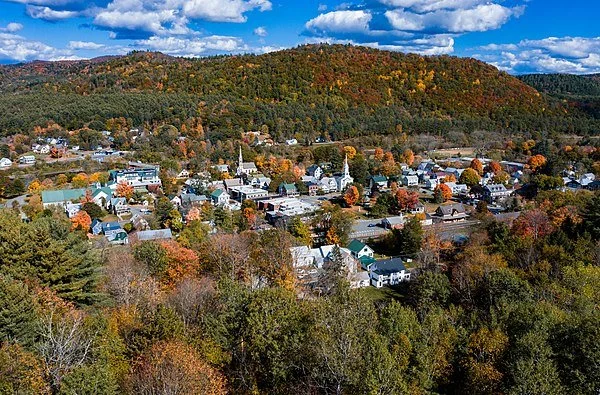
Royalton in the fall.
Llewellyn King: The little, and now thriving, island nation that pulls on our heartstrings

A wave of runners in the Holyoke, Mass., St. Patrick's Day Road Race pass the starting line.
WEST WARWICK, R.I.
Ready for craic on Sunday?
Craic, pronounced crack, is an Irish word that has seeped into English and means party or revelry.
Try as you may, you won’t avoid Sunday’s craic because on Sunday, it being March 17, untold hundreds of millions of people around the world will be wearing the green. In short, celebrating St. Patrick’s Day, the national day of the Irish, by putting on something green and taking a drink.
No other nation, let alone a small nation with a troubled history, can have such a claim on the heartstrings of the planet. For one day, we are all Irish — and many of us will go to a place where drink is sold to celebrate it. There isn’t a lot of preamble to St. Paddy’s Day – except for the arrival in the pubs of green-colored beer. Ugh!
The Irish diaspora, which reached its apogee during the Potato Famine of the mid-19th Century, sent the Irish to the far corners of the earth, especially to America, where they endured for some time in poverty but eventually prospered.
They brought with them their music, which influenced American Roots Music, like Bluegrass, Folk and Country, their towering literary talent, which gave us generations of writers.
And they got into politics, big time.
A documentary now in production and scheduled to be released in 12 episodes at the end of the year, From Ireland to the White House, traces the Irish ancestry of 24 U.S. presidents from Andrew Jackson (of Scots-Irish lineage) to Joe Biden.
Tony Culley-Foster, the U.S. representative of Tamber Media, the Dublin company producing the series, tells me the scholarship has been exacting in tracing the ancestry of the presidents. He said the 24 presidents on the list have been certified by the same independent historians and genealogists used by Clinton and Biden.
According to the U.S. Census Bureau, there are 31.5 million Americans who claim Irish heritage. So it has become important for presidents to make pilgrimages to Ireland — to wrap themselves in green.
From my experience in Ireland, the two taken mostly to heart as being of their own, were John Kennedy and Ronald Reagan and of those, Kennedy was the greater heartthrob for the Irish.
My late friend Grant Stockdale’s father was Kennedy’s ambassador to Ireland, and Grant spent his mid-teen years in Dublin at the U.S. Embassy in Phoenix Park. “I knew what it must be like to be royalty,” Grant told me.
But it isn’t just the presidency that has been shaped by Irish heritage. Irish names are to be found on every public service list, from the U.S. Congress to the local school board. There have been great senators, like Daniel Patrick Moynihan (D.-N.Y.) and great speakers of the House, such as the towering, Boston-Irish Tip O’Neill (D.). If it’s politics, it’s Irish.
In Britain, too, historically some of the greatest statesmen and orators in the House of Commons have been Irish, think Edmund Burke and Charles Parnell.
For me, Ireland’s gift to the world has been its contribution to English literature. Hundreds of great names come to mind. Try Oscar Wilde, Bram Stoker, Samuel Beckett and Edna O’Brien.
And the books keep coming, tumbling out of the most literary fertile minds on earth.
Two contemporary writers dominate my thinking: John Banville and Sally Rooney. Banville is prolific, profound and a joy to read, a master craftsman at the top of his form. Rooney is a kind of literary Taylor Swift, writing about the sex, love and isolation of young adults of her generation. I am keen to see how she evolves and if she will give joy for generations, as great writers do.
Literacy is part of the fabric of Irish life. An Irish person, far from literary circles, will ask you conversationally, “What is your book?” Translation: “What are you reading?” Ireland treasures books and reading is a national pastime.
Ireland’s literacy may have saved its economy. At a bleak period when, just 40 years ago, I heard many Irish leaders talk about “structural unemployment” of 22 percent, American scientific publishers found that highly literate women were a resource. That led to a boom in footnoting in Ireland, followed by American Express looking for accurate inputting and, suddenly, Ireland was transformed from one of the poorest countries of Europe to a boom nation and the Silicon Valley of Europe, as the computer giants moved in. A town known for its bookstores and fishing, Galway, became ground zero for computing in Ireland.
Craic has no discernible economic value except for the brewers and distillers, but it is such fun. As the Irish say, slainte (cheers)!
Llewellyn King is executive producer and host of White House Chronicle, on PBS. His email is llewellynking1@gmail.com, and he’s based in Rhode Island.
Trying to meld historic preservation, diversity and climate resilience in Boston
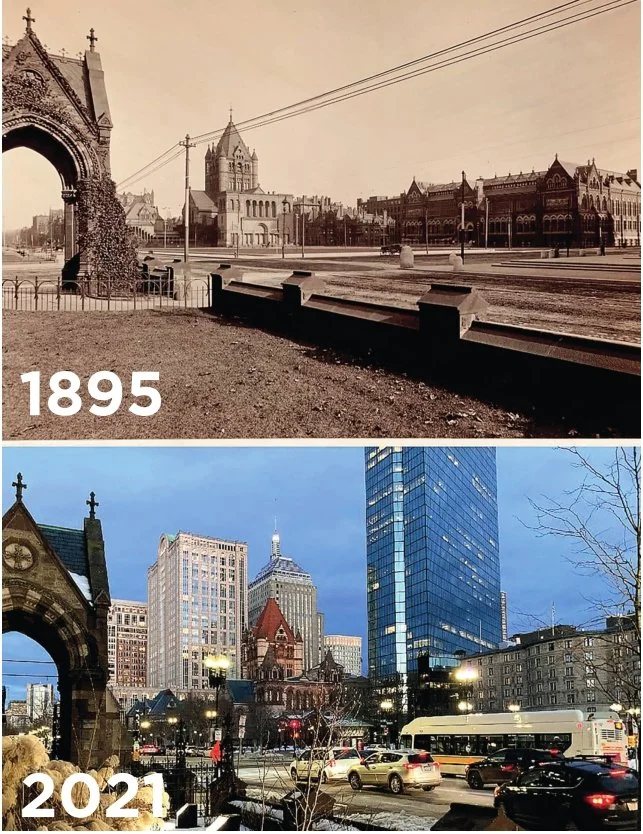
Edited from a Boston Guardian article
(Robert Whitcomb, New England Diary’s editor/publisher, is The Boston Guardian’s chairman.)
“The administration of Boston Mayor Michelle Wu wants to expand the city’s preservation policies to focus on diversity and climate resilience.
“The enhancements were explained at a citywide meeting by Murray Miller, director of the Office of Historic Preservation (OHP), a city entity established by Wu in 2022.
“The OHP comprises three bodies.
“Drawing most of the office’s resources, the Landmarks Commission works to protect Boston’s historic structures. It also oversees the ten local historic district commissions, each of which focuses on preserving a different Boston neighborhood. The office also includes the Commemoration Commission and the Archaeology Program.
“For much of the meeting, Miller presented the office’s strategic vision. Overall, he said he intends to expand the office’s purview beyond its traditional role as a regulator of landmarks.
“One of the office’s key focuses, he said, will be to tell the ‘full story’ of the city’s history. The office will devote more money to discovering and preserving historic sites connected to Boston’s Black, indigenous, immigrant and LGBTQ communities..
“Miller also highlighted climate resilience as an important mission for the office.
“Incentivizing developers to renovate existing structures could help increase resilience, he said, as could reworking Article 85, a part of Boston’s zoning code that allows applicants to request a demolition delay for potentially historic buildings.’’
To read the full article, please hit this link.

David Warsh: Thanks to them, we avoided a second Great Depression

SOMERVILLE, Mass.
A Monetary History of the United States 1867-1960 (National Bureau of Economic Research,1962), by Milton Friedman and Anna Schwartz, is a most intimidating book. A heavy-lifting 860 pages, packed full of tables and charts, some of them old-fashioned fold-outs. It introduces itself as an “analytical narrative” of changes of the stock of money in the U.S. over slightly less than a century.
It begins with a quotation from the great 19th Century economist Alfred Marshall, a sly swipe at the short equation-filled “papers” that, since the 30’s, had become standard:
“Experience in controversies such as these brings out the impossibility of learning anything from the facts till they are examined and interpreted by reason; and teaches that the most reckless and treacherous of all theorists is he who professes to let the facts and figures speak for themselves, who keeps in the background the part he has played, perhaps unconsciously, in selecting them and grouping them, and in suggesting the argument post hoc ergo propter hoc’’ {after this, therefore because of this.”]
One day in the late ‘70’’s, MIT graduate student Ben Bernanke went to see his adviser, Prof. Stanley Fischer. Bernanke had finished his field examinations; he was seeking a topic for a dissertation. At one point, Fischer handed him a copy of A Monetary History and said, “Read this. It may bore you to death. But if it excites you, you might consider doing monetary economics.”
The book fascinated him, Bernanke wrote in 21st Century Monetary Policy: The Federal Reserve from the Great Inflation to Covid -19 (Norton, 2022). “It got me interested not only in monetary economics, but also in the causes of the Great Depression of the 1930s, a topic I would return to frequently in my academic ‘writings.” Friedman and Schwartz had showed, he wrote, “that central bankers’ outmoded doctrines and flawed understanding of the economy had played a crucial role in that catastrophic decade, demonstrating the power of ideas to shape events.”
In 1983, Bernanke published ‘‘Non-monetary Effects of the Financial Crisis in the Propagation of the great Depression,” a comparative study – an analytic narrative of the macroeconomics of the Great Depression, “macroeconomics” being the research field that had been brought into existence by the event itself.
About the same time, Douglas Diamond and Philip Dybvig set out to describe, in a series of mathematical models, the purposes that banks serve in economies of all sorts, and then explored their mathematical model of the purposes that banks serve in economies and the circumstances that sometimes lead to their collapses via bank runs.
Thirty-nine years later, the three men were recognized with Nobel Memorial Prizes for their early work on central banking, the interplay of central banks, commercial banks, and “shadow” banks that had been at the heart of the global financial crisis of 2007-08 and the lengthy recession that followed.
A footnote in the Nobel Committee’s Scientific Background to the awards notes:
“Keynes (1936) argued that recessions were primarily due to drops in aggregate demand, moving economic output below the production capacity of the economy. According to this view, governments should counter recessions through an expansionary fiscal policy that boosts aggregate demand.”
In his General Theory of Employment, Interest, and Money, Keynes gives short shrift to central banking.
Between times, Bernanke, in particular, had led an interesting life. For a decade he taught at Stanford University’s Graduate School of Business, conducting further research on banking, financial markets, labor markets, and business cycles, before moving to Princeton University, in 1995.
In 2002, he was appointed to the seven-member Board of Governors of the Federal Reserve Board, and 2005, became chairman of President George W. Bush’s Council of Economic Advisers. A year later Bush nominated him to chair the Federal Reserve Board.
The president later joked that he had chosen Bernanke from among several other suitable candidates because he would sometimes come to White House briefings wearing white socks with his business attire. A more satisfying explanation was supplied by Wall Street Journal columnist Greg Ip, who later wrote that, beginning with the time he chaired Princeton’s economics department, Bernanke had developed a “knack for eliciting cooperation from those with bigger egos and sharper elbows.” An MIT professor recalled, “Until 2002, we hadn’t even known that he was a Republican.”
Also in 2002, as an expert on the Great Depression, Bernanke offered to a star-studded birthday party for Milton Friedman a short but incisive review of the reception of A Monetary History by the economics profession. He concluded, speaking directly to Friedman and Schwartz, “You were right, Milton, we did it. We’re very sorry. But thanks to you, we won’t do it again.”
In 2006, as Fed chairman, Bernanke began organizing behind the scenes the complicated web of emergency measures that ultimately enabled the Fed, in concert with the central banks of 10 other first-rank nations, to avoid turning a banking panic into a second Great Depression, as bad, perhaps even worse, than the first.
Not everyone agrees – see, for example, Paul Krugman – but if the Nobel Committee in 1976 had enjoyed the gift of perfect foresight, they might have stressed the contribution of A Monetary History more forcefully than they did in awarding Friedman the prize, and they might have offered a medal to Schwartz as well.
It could have gone better. As governor of Israel’s central bank, Stan Fischer, in different circumstances, avoided the mortgage collapse almost entirely – but the results of the Panic of 2008 in New York could have been worse – much, much worse – had Friedman and Schwartz not spent 12 years writing their old-fashioned 860-page book. A readable edition of the key chapter of the book The Great Contraction, about 1929-33, appeared 2008, with a new preface by Schwartz, and a new introduction by Peter Bernstein.
David Warsh, a veteran columnist and an economic historian, is proprietor of Somerville-based economicprincipals.com, where this essay originated.
‘The idea of the Sublime’

“American Beauty 22,’’ by Lily Prince, in the group show “In Nature’s Grasp,’’ at the Brattleboro (Vt.) Museum and Art Center, March 16-June 16.
The museum says:
“In his 1757 work A Philosophical Enquiry, the statesman and philosopher Edmund Burke considered the concept of the Sublime, noting that certain experiences supply a kind of thrill, mixing fear and delight. Burke declared the Sublime to be the strongest human passion, powerful enough to transform the self. He noted in particular the experiences and sensations elicited by nature. Burke’s thinking challenged the rhetoric that centered human experience in religion. The idea of the Sublime became closely associated with the Romantic art movement of the 19th Century.
“Nature has long existed as the subject of artists’ interpretation. The 11 artists featured in ‘In Nature’s Grasp’’ approach nature both literally and abstractly, inviting viewers to step into their unique interpretations. Some of the artists work with landscape imagery, while others conjure ideas of nature through textures, shapes, and color, or through an aspect of their process.’’
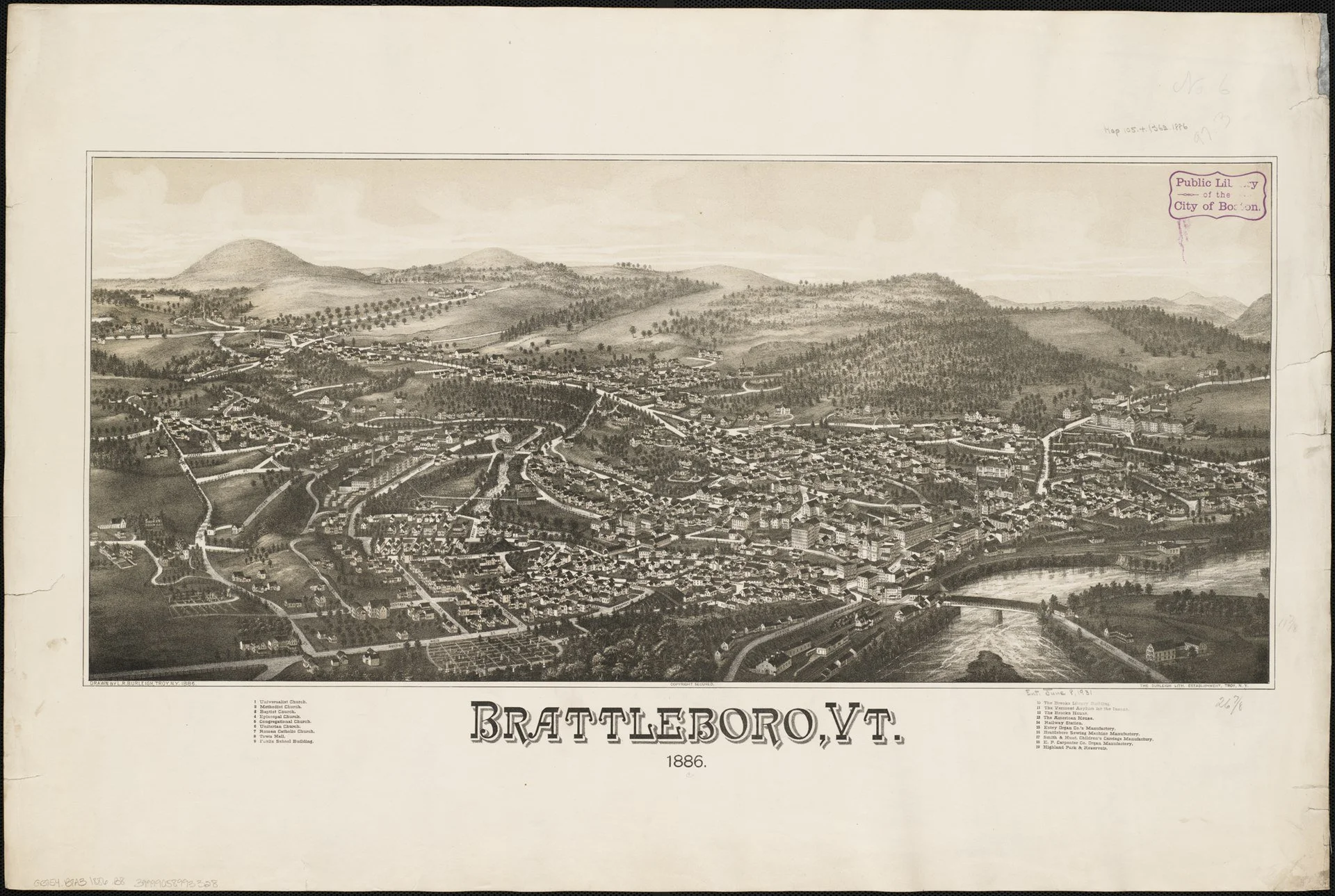

A place for safe ‘ruthless examination’

“Universities should be safe havens where ruthless examination of realities will not be distorted by the aim to please or inhibited by the risk of displeasure.’’
— Kingman Brewster (1919-1988), president of Yale University, 1963-1977) and U.S. ambassador to the United Kingdom, 1977-1981. He was thought to have inspired Garry Trudeau's fictional character President King in the comic strip Doonesbury.
Putting cities on paper
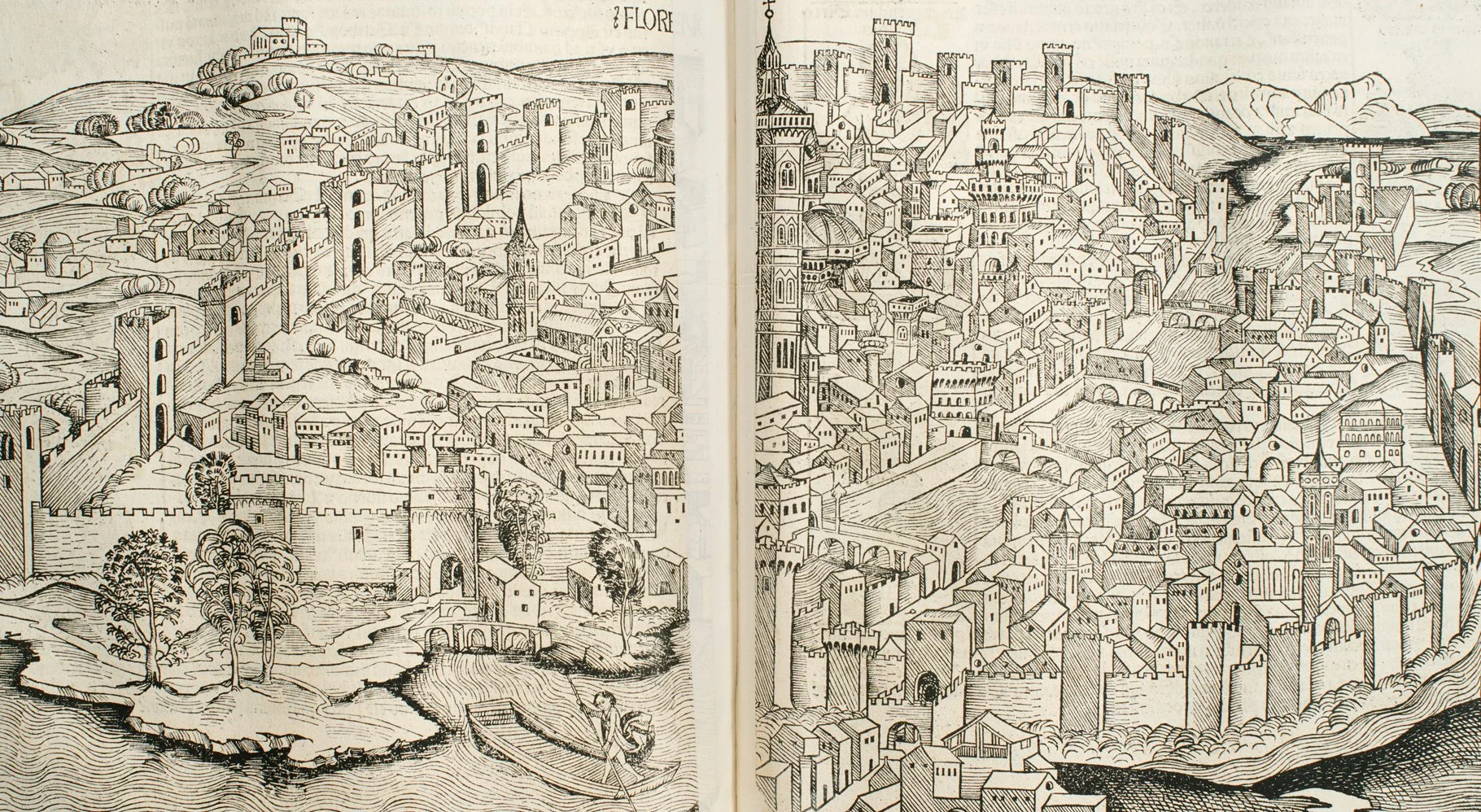
“View of Florence from Liber chronicarum (Nuremberg Chronicle)’’, by Hartmann Schedel (German, 1440-1514)), in the “Paper Cities” show at the Clark Art Institute, Williamstown, Mass., through June 23. The Clark Is an astonishingly big museum for a place as small as Williamstown. It was built there, among other reasons, because of the hope that it would be far away from a nuclear bomb explosion in World War III.
The museum explains:
“In the sixteenth century, a vast consumer market emerged (largely in Europe) for images of cities, spurred by developments in print technology and new global exploration. Inquisitive consumers and armchair travelers were able to engage with distant places through travel books and world chronicles that offered information akin to traveling the world firsthand. Artists frequently copied maps, which often circulated widely as single-sheet prints, providing viewers with highly detailed visual information about places both near and far.
“As public fascination with cities continued to grow, so did the interest of artists in depicting them. Comprising prints and photographs spanning almost five centuries, this exhibition examines representations of a variety of U.S. and Western European cities to explore differing artists’ approaches. Some artists endeavored to offer objective records of a city’s defining monuments and topography. Others also attempted to capture a city’s character by including details such as figures or sites that represent larger socio-cultural ideas. Often, artists’ own relationships with the places they depicted influenced how they presented them to viewers. ‘‘

‘Despise the glare of wealth’

Surely you never will tamely suffer this country to be a den of thieves. Remember, my friends, from whom you sprang. Let not a meanness of spirit, unknown to those whom you boast of as your fathers, excite a thought to the dishonor of your mothers I conjure you, by all that is dear, by all that is honorable, by all that is sacred, not only that ye pray, but that ye act; that, if necessary, ye fight, and even die, for the prosperity of our Jerusalem. Break in sunder, with noble disdain, the bonds with which the Philistines have bound you. Suffer not yourselves to be betrayed, by the soft arts of luxury and effeminacy, into the pit digged for your destruction. Despise the glare of wealth. That people who pay greater respect to a wealthy villain than to an honest, upright man in poverty, almost deserve to be enslaved; they plainly show that wealth, however it may be acquired, is, in their esteem, to be preferred to virtue.’’
—- John Hancock ( 1737 -1793), an American Founding Father, rich Boston-based merchant, statesman and prominent Patriot of the American Revolution. He served as president of the Second Continental Congress and was the first and third governor of the Commonwealth of Massachusetts. This quote is from his “Boston Massacre Oration,’’ on March 5, 1774.
On way to humus

“Celebrity (mock orange)’’ (digital print), by Hanlyn Davies, in the “Spring Heat’’ group show, at the Ely Center of Contemporary Art, New Haven, N.H., April 14-June 2.
The gallery says that the show has works that touch upon many aspects of the environment and climate change, including works by, besides Davies, those by Sariah Park, Yvonne Short, Rebecca West, Thinking about Water, Water Women, Nua Collective and more.
Huge UMass med school research building to open in June

Edited from a New England Council report
“The University of Massachusetts Chan Medical School, in Worcester, will finish its new $350 million research facility (above) in June. The 350,000-square-foot center is nine stories high and include a new research space for over 70 principal investigators.
“Multiple departments and programs of the medical school are slated to be relocated to the building, including the Program in Molecular Medicine, the Horae Gene Therapy Center, the Departments of Neurology and Neurobiology, and the school’s new Program in Human Genetics & Evolutionary Biology. The facility is designed to be LEED Gold certified by the U.S. Green Building Council, making the building sustainable and energy efficient.
“‘There is a lot of site work to be done on the quad and around the building,’ said Brian Duffy, senior director of facilities management for capital projects at UMass Chan. ‘The plan is to have the area restored with beautiful green grass by Commencement.”’
Native American culture areas

From the Annual report of the Bureau of American Ethnology to the Secretary of the Smithsonian Institution, circa 1895.
Trying to save horseshoe crabs

Horseshoe crabs mating.
Edited from a ecoRI News article by Frank Carini
“Ancient creatures with 12 legs, 10 eyes, and blue blood were once so prevalent on southern New England beaches that people, including children, were paid to kill them.
“Their helmet-like bodies can still be seen along the region’s coastline and around its salt marshes, but in a fraction of the numbers witnessed seven decades ago. There are several reasons why.
“In the 1950s coastal New England paid fishermen and others bounties to kill the up to 2-feet-long arachnids — horseshoe crabs are more closely related to spiders, scorpions and ticks than to crabs — because they interfered with human enjoyment of the shore and were viewed as shellfish predators….
“People, not just fishermen, were reportedly encouraged to toss horseshoe crabs above the high-tide line, so they would dry out and die. They were labeled ‘pests’ and ground up for fertilizer. Beachfront property owners were apparently concerned the creature’s presence and their decaying death would impact real estate values.
{Horseshoe crabs are harvested for their blood’s medical applications.}
“Those ignorant days may be over, but horseshoe crabs are facing other threats to their existence.’’
“The Center for Biological Diversity, an Arizona-based nonprofit, and 22 partner organizations recently petitioned NOAA Fisheries to list the Atlantic horseshoe crab as an endangered species under the Endangered Species Act….’’
To read the whole article, please hit this link.
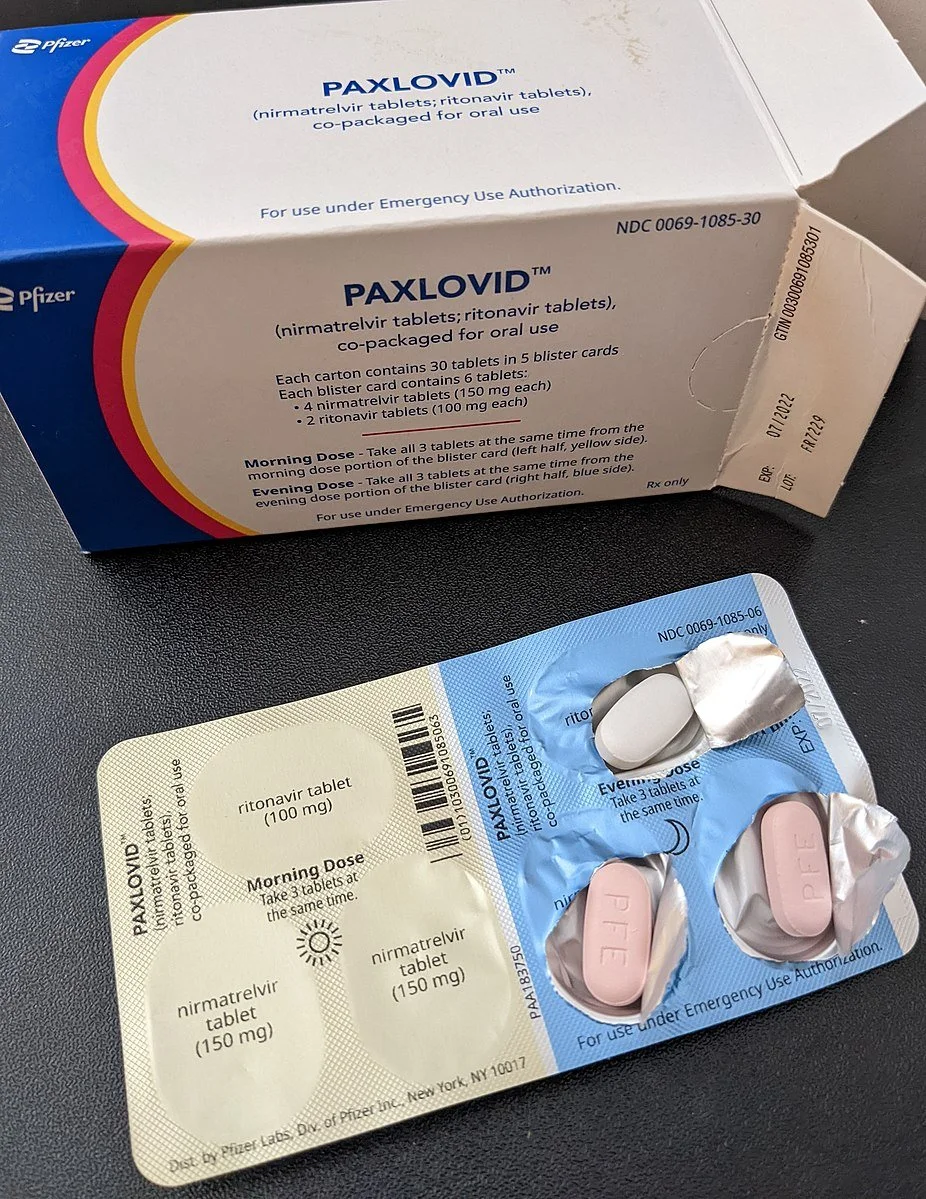
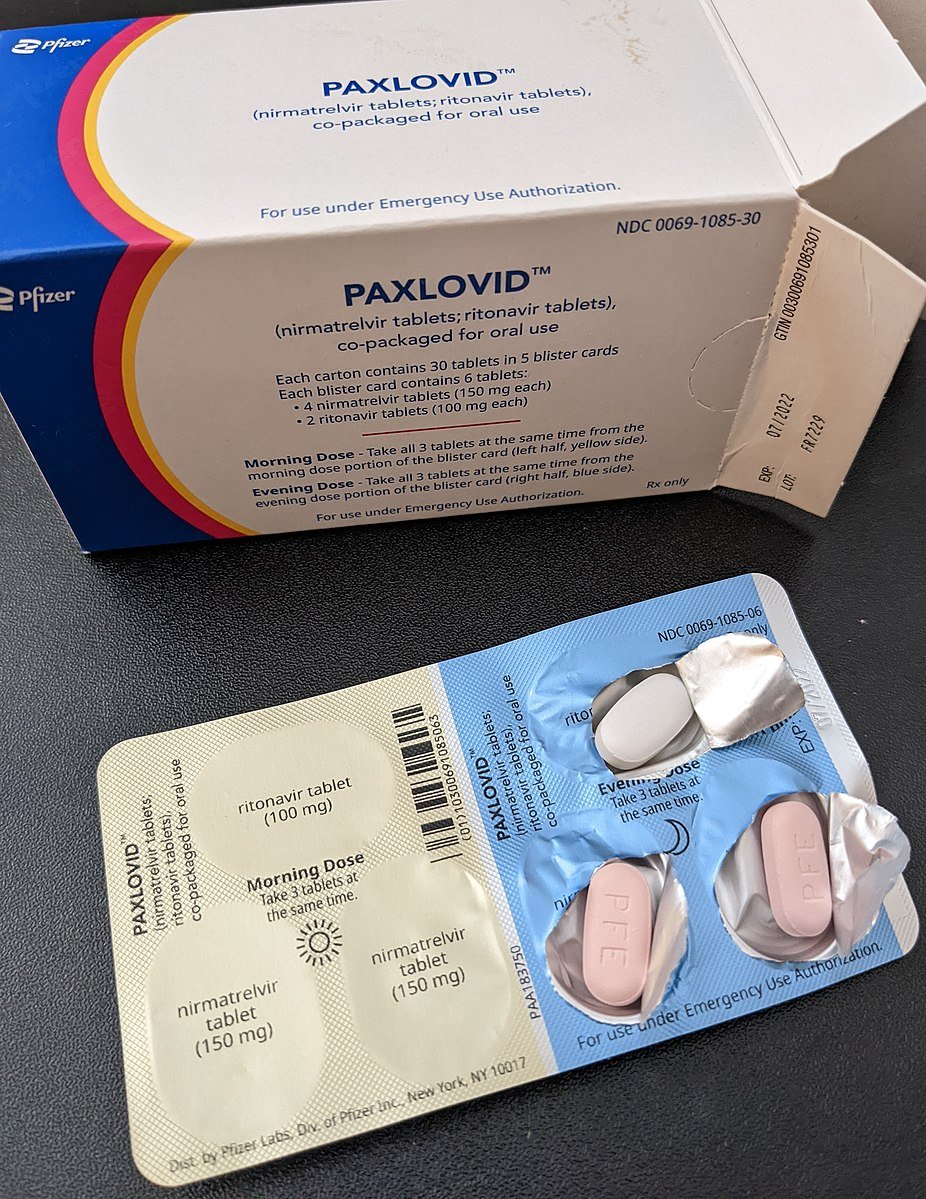
Arthur Allen: Why patients who could most benefit from Paxlovid aren't getting it
From Kaiser Family Foundation Health News
“Proactive and health-literate people get the drug. Those who are receiving information more passively have no idea whether it’s important or harmful.’’
— Michael Barnett, M.D., a primary-care physician at Brigham and Women’s Hospital, in Boston, and an associate professor at Harvard Medical School
Evangelical minister Eddie Hyatt believes in the healing power of prayer but “also the medical approach.” So on a February evening a week before scheduled prostate surgery, he had his sore throat checked out at an emergency room near his home in Grapevine, Texas.
A doctor confirmed that Hyatt had COVID-19 and sent him to CVS with a prescription for the antiviral drug Paxlovid, the generally recommended medicine to fight COVID. Hyatt handed the pharmacist the script, but then, he said, “She kept avoiding me.”
She finally looked up from her computer and said, “It’s $1,600.”
The generally healthy 76-year-old went out to the car to consult his wife about their credit-card limits. “I don’t think I’ve ever spent more than $20 on a prescription,” the astonished Hyatt recalled.
That kind of sticker shock has stunned thousands of sick Americans since late December, as Pfizer shifted to commercial sales of Paxlovid. Before then, the federal government covered the cost of the drug.
The price is one reason that Paxlovid is not reaching those who need it most. And patients who qualify for free doses, which Pfizer offers under an agreement with the federal government, often don’t realize it or know how to get them.
“If you want to create a barrier to people getting a treatment, making it cost a lot is the way to do it,” said William Schaffner, M.D., a professor at Vanderbilt University School of Medicine and spokesperson for the National Foundation for Infectious Diseases.
Public and medical awareness of Paxlovid’s benefits is low, and putting people through an application process to get the drug when they’re sick is a non-starter, Schaffner said. Pfizer says it takes only five minutes online.
It’s not an easy drug to use. Doctors are wary about prescribing it because of dangerous interactions with common drugs that treat cholesterol, blood clots and other conditions. It must be taken within five days of the first symptoms. It leaves a foul taste in the mouth. In one study, 1 in 5 patients reported “rebound” COVID symptoms a few days after finishing the medicine — though rebound can also occur without Paxlovid.
A recent JAMA Network study found that sick people 85 and older were less likely than younger Medicare patients to get COVID therapies such as Paxlovid. The drug might have prevented up to 27,000 deaths in 2022 if it had been allocated based on which patients were at highest risk from COVID. Nursing-home patients, who account for around 1 in 6 U.S. COVID deaths, were about two-thirds as likely as other older adults to get the drug.
Shrunken confidence in government health programs is one reason the drug isn’t reaching those who need it. In senior living facilities, “a lack of clear information and misinformation” are “causing residents and their families to be reluctant to take the necessary steps to reduce covid risks,” said David Gifford, chief medical officer for an association representing 14,000 health-care providers, many in senior care.
The anti-vaxxers spreading falsehoods about vaccines have targeted Paxlovid as well. Some call themselves anti-paxxers.
“Proactive and health-literate people get the drug. Those who are receiving information more passively have no idea whether it’s important or harmful,” said Michael Barnett, a primary-care physician at Brigham and Women’s Hospital and an associate professor at Harvard, who led the JAMA Network study.
In fact, the drug is still free for those who are uninsured or enrolled in Medicare, Medicaid, or other federal health programs, including those for veterans.
That’s what rescued Hyatt, whose Department of Veterans Affairs health plan doesn’t normally cover outpatient drugs. While he searched on his phone for a solution, the pharmacist’s assistant suddenly appeared from the store. “It won’t cost you anything!” she said.
As Hyatt’s case suggests, it helps to know to ask for free Paxlovid, although federal officials say they’ve educated clinicians and pharmacists — like the one who helped Hyatt — about the program.
“There is still a heaven!” Hyatt replied. After he had been on Paxlovid for a few days his symptoms were gone and his surgery was rescheduled.
About That $1,390 List Price
Pfizer sold the U.S. government 23.7 million five-day courses of Paxlovid, produced under an FDA emergency authorization, in 2021 and 2022, at a price of around $530 each.
Under the new agreement, Pfizer commits to provide the drug for the beneficiaries of the government insurance programs. Meanwhile, Pfizer bills insurers for some portion of the $1,390 list price. Some patients say pharmacies have quoted them prices of $1,600 or more.
How exactly Pfizer arrived at that price isn’t clear. Pfizer won’t say. A Harvard study last year estimated that the cost of producing generic Paxlovid at about $15 per treatment course, including manufacturing expenses, a 10 percent profit markup, and 27 percent in taxes.
Pfizer reported $12.5 billion in Paxlovid and COVID-vaccine sales in 2023, after a $57 billion peak in 2022. The company’s 2024 Super Bowl ad, which cost an estimated $14 million to place, focused on Pfizer’s cancer drug pipeline, newly reinforced with its $43 billion purchase of biotech company Seagen. Unlike some other recent oft-aired Pfizer ads (“If it’s covid, Paxlovid”), it didn’t mention COVID products.
Connecting With Patients
The other problem is getting the drug where it is needed. “We negotiated really hard with Pfizer to make sure that Paxlovid would be available to Americans the way they were accustomed to,” Department of Health and Human Services Secretary Xavier Becerra told reporters in February. “If you have private insurance, it should not cost you much money, certainly not more than $100.”
Yet in nursing homes, getting Paxlovid is particularly cumbersome, said Chad Worz, CEO of the American Society of Consultant Pharmacists, specialists who provide medicines to care homes.
If someone in long-term care tests positive for COVID, the nurse tells the physician, who orders the drug from a pharmacist, who may report back that the patient is on several drugs that interact with Paxlovid, Worz said. Figuring out which drugs to stop temporarily requires further consultations while the time for efficacious use of Paxlovid dwindles, he said.
His group tried to get the FDA to approve a shortcut similar to the standing orders that enable pharmacists to deliver anti-influenza medications when there are flu outbreaks in nursing homes, Worz said. “We were close,” he said, but “it just never came to fruition.” “The FDA is unable to comment,” spokesperson Chanapa Tantibanchachai said.
Los Angeles County requires nursing homes to offer any covid-positive patient an antiviral, but the Centers for Medicare & Medicaid Services, which oversees nursing homes nationwide, has not issued similar guidance. “And this is a mistake,” said Karl Steinberg, chief medical officer for two nursing home chains with facilities in San Diego County, which also has no such mandate. A requirement would ensure the patient “isn’t going to fall through the cracks,” he said.
While it hasn’t ordered doctors to prescribe Paxlovid, CMS on Jan. 4 issued detailed instructions to health insurers urging swift approval of Paxlovid prescriptions, given the five-day window for the drug’s efficacy. It also “encourages” plans to make sure pharmacists know about the free Paxlovid arrangement.
Current COVID strains appear less virulent than those that circulated earlier in the pandemic, and years of vaccination and covid infection have left fewer people at risk of grave outcomes. But risk remains, particularly among older seniors, who account for most COVID deaths, which number more than 13,500 so far this year in the U.S.
Steinberg, who sees patients in 15 residences, said he orders Paxlovid even for COVID-positive patients without symptoms. None of the 30 to 40 patients whom he prescribed the drug in the past year needed hospitalization, he said; two stopped taking it because of nausea or the foul taste, a pertinent concern in older people whose appetites already have ebbed.
Steinberg said he knew of two patients who died of COVID in his companies’ facilities this year. Neither was on Paxlovid. He can’t be sure the drug would have made a difference, but he’s not taking any chances. The benefits, he said, outweigh the risks.
Arthur Allen is a Kaiser Family Foundation Health News reporter. Reporter Colleen DeGuzman contributed to this report.
Fresh-air fiend

“Hiking Baxter’’ {State Park, in Maine} (oil on canvas), by Freeport, Maine-based painter Robert Wieferich, in his show “Deep in the Woods,’’ at Moss Galleries, Portland, Maine, through March 16.
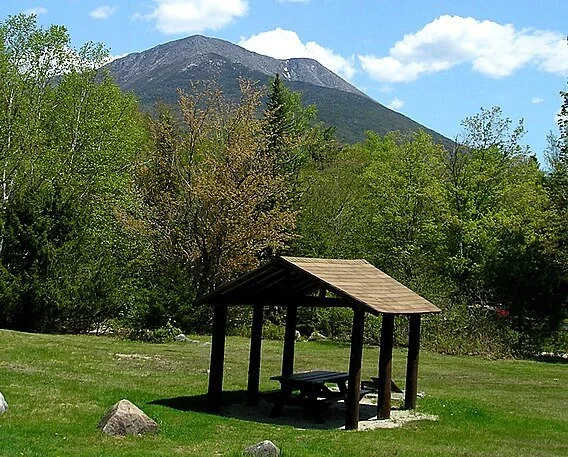
Mt. Katahdin rises above Katahdin Stream Campground, in Baxter State Park.

Facade of McDonald' in Freeport . The restaurant was forced to maintain the pre-existing exterior of the house. Anything for quaintness!
— Photo by Bigmacthealmanac
Retreating looks wiser than rebuilding on the coast
Adapted from Robert Whitcomb’s “Digital Diary,’’ in GoLocal24.com
There’s intensifying debate in many coastal and other areas that are increasingly flood- and erosion-prone in our warming climate on whether we should repeatedly repair or replace flood-damaged structures; have taxpayers pay some or all of the cost to move them to higher ground, and what to put in their place. I think the obvious answer in many places is to retreat and create flood-mitigating parks with (new?) marshes and thick vegetation and other water-absorbing materials that can reduce damage to the higher-elevation properties nearby. Of course, in such densely built urban areas as Newport’s Point neighborhood and Boston’s Seaport District that’s tricky.
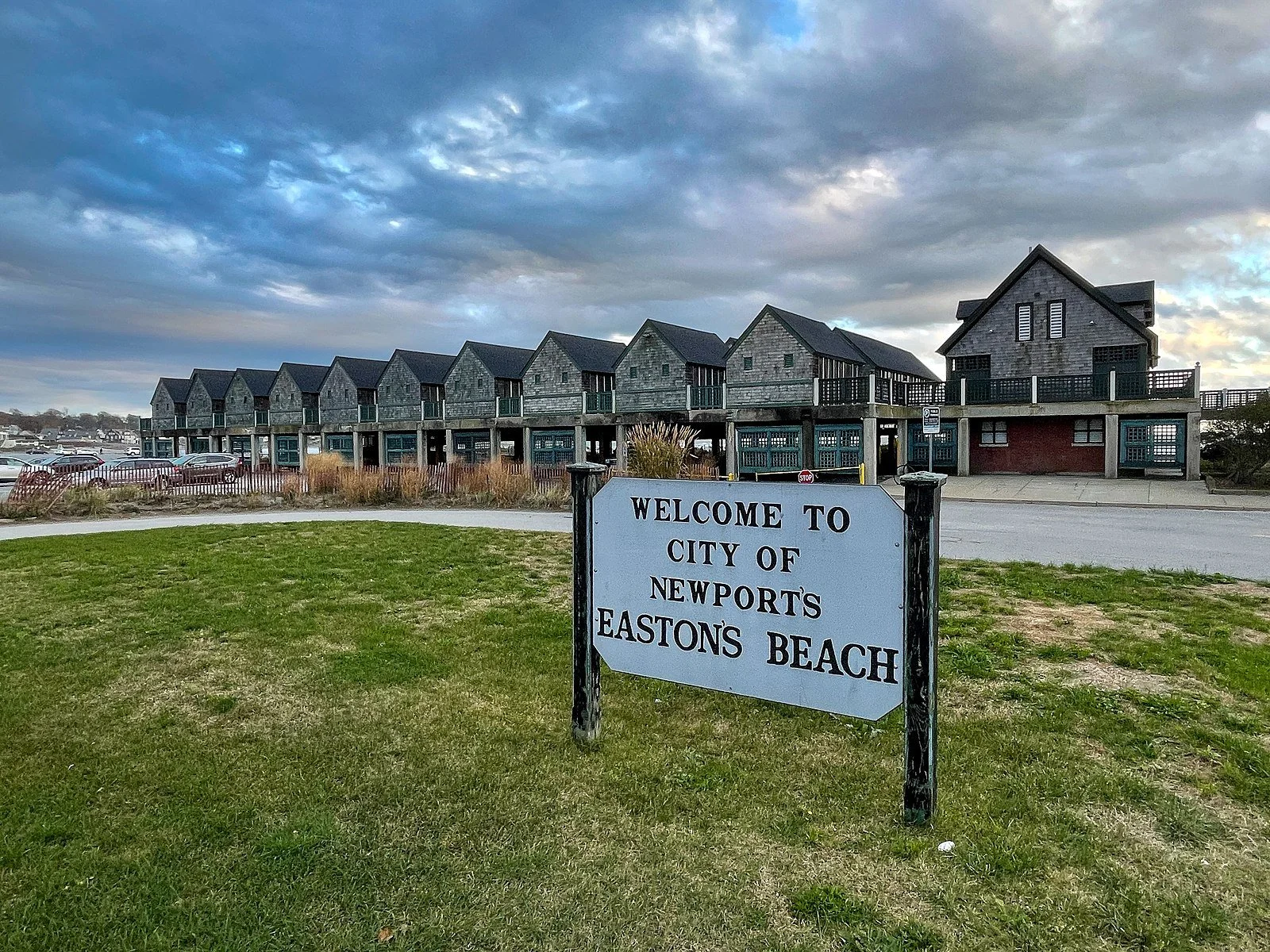
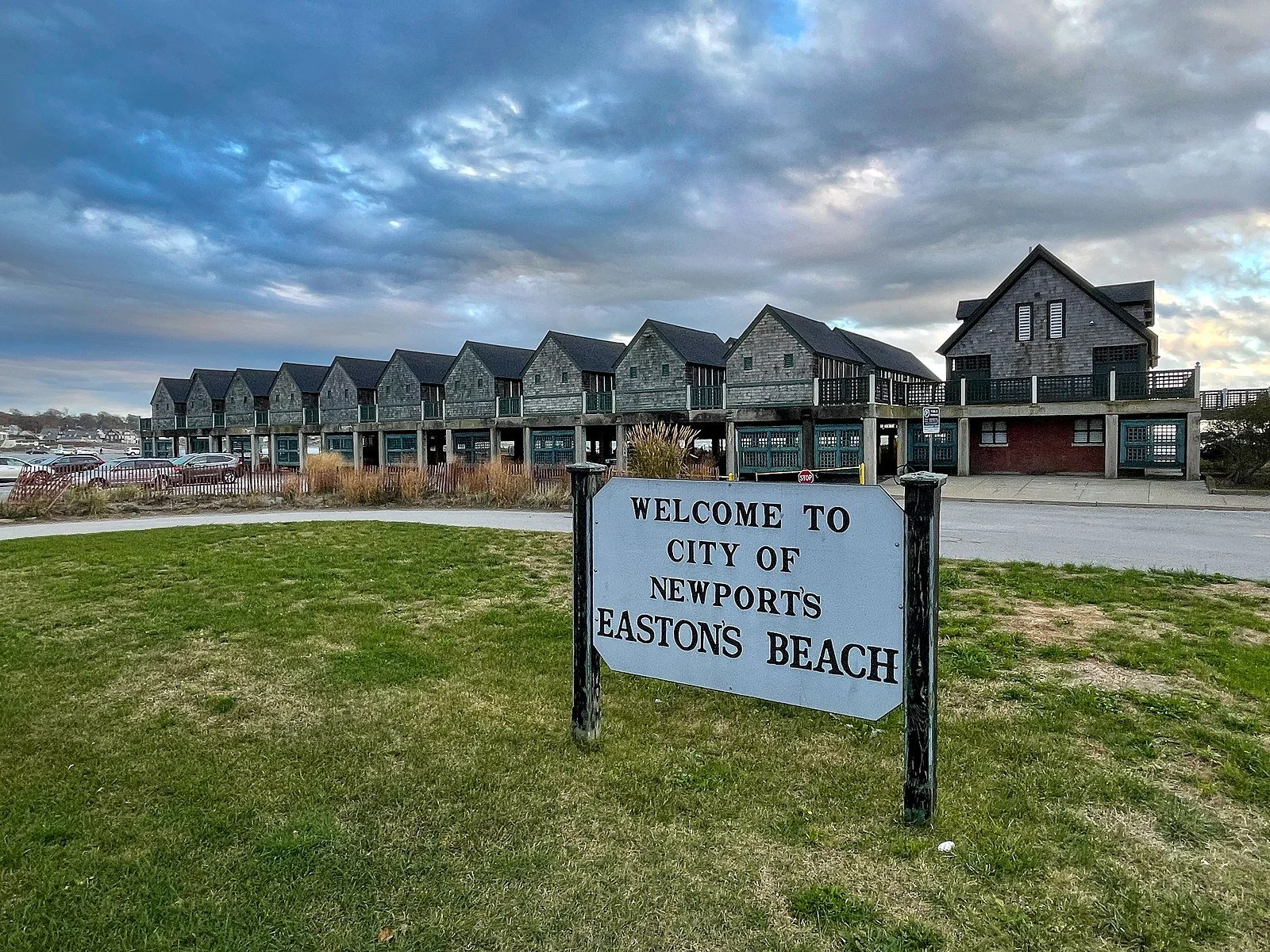
I thought about this the other day when reading about the debate in Newport over whether to abandon the idea of rebuilding storm-damaged facilities at Easton’s Beach and stage a retreat. It seems clear to me that given projections of continued global warming and associated sea-level rise, that spending money to rebuild the Easton’s Beach amenities would soon be seen as a waste of money. Replenishing the sand that storms have washed away is expensive enough, though needed to keep the beach as a major attraction for locals and tourists alike.
Forecasts for the 2024 hurricane season are starting to come out. It looks, er, exciting.
Measuring CO2 in the Ocean
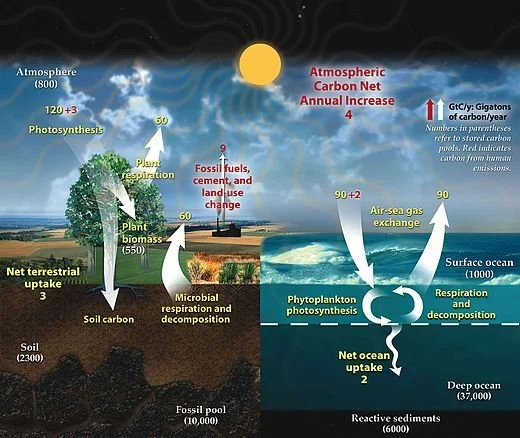
Edited from Wikipedia caption: “This diagram of the fast carbon cycle shows the movement of carbon among land, atmosphere and oceans. Yellow numbers are natural fluxes, and red are human contributions in gigatons of carbon per year. White numbers indicate stored carbon.’’
Thank you, Paul Salem, for giving the Woods Hole Oceanographic Institution (WHOI) $25 million for ocean research in general and, in particular, to study the oceans’ capacity for removing carbon dioxide from the atmosphere, into which we’ve been putting vast quantities of climate-warming CO2 by burning fossil fuels, clear-cutting forests, degrading wetlands and engaging in industrial agricultural practices (especially large-scale livestock production). The heating of our climate is accelerating, and more than 70 percent of the world’s surface is ocean.
Note that this excess carbon dioxide is also acidifying the water, harming sea life.
Mr. Salem, a billionaire, was a partner in Providence Equity Partners, and in 2022, he became chairman of WHOI’s board.
WHOI president Peter de Menocal said: “There is a tidal wave of ‘blue carbon’ solutions to climate change on the horizon, some proven, but most completely novel and in need of testing to investigate their safety and effectiveness. The ocean can help us avert a climate crisis, but we need to also ensure the long-term health of marine ecosystems and the communities that rely on ocean resources. This far-sighted gift {by Mr. Salem} will help us stay ahead of what is already a billion-dollar industry and inject some much-needed reality into the carbon market.”
xxx
I have always had a soft spot for Woods Hole, because this windswept village, basically a kind of college town within Falmouth, is so beautiful and dramatic; because of WHOI and other marine-related institutions based there, and their smart and interesting people, and because an important part of my father’s family lived in and around it. Some moved there in the 17th Century when, as Quakers, they fled Puritan persecution in and around Boston, and others came down from the Boston area as summer people when trains were extended to Cape Cod in the 1870’s. There were more than enough eccentrics among them; some had weird whirligigs on their roofs and some were recluses.
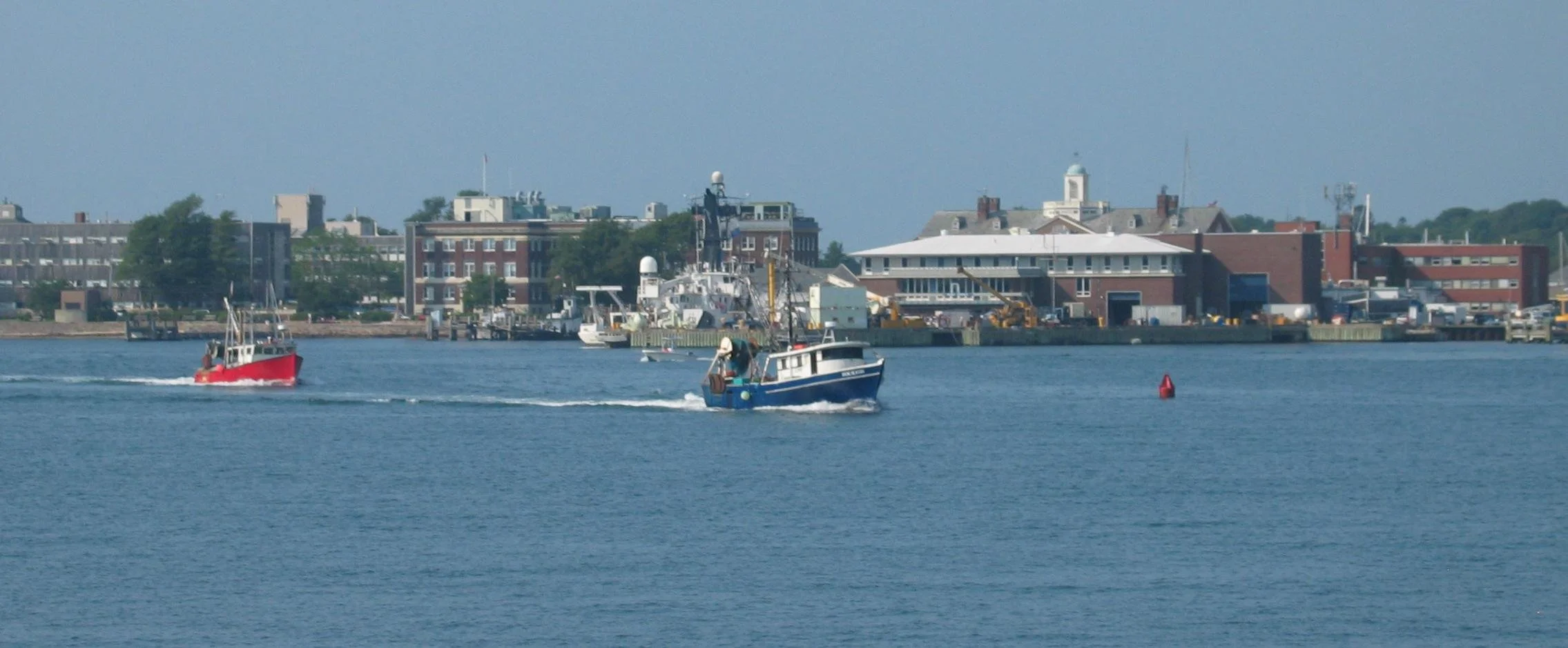
View of downtown Woods Hole, including Marine Biological Laboratory and Woods Hole Oceanographic Institution buildings.

Chris Powell: What about respecting ‘diversity’ of views on abortion?

“The Genius of Connecticut,’’ by sculptor Randolph Rogers, a plaster version of the bronze statue (destroyed) originally mounted on top of the dome of the Connecticut Capitol, is exhibited on the main floor.

Soviet poster c. 1925, warning against midwives performing abortions. Title translation: "Miscarriages induced by either grandma or self-taught midwives not only maim the woman, they also often lead to death."
MANCHESTER, Conn.
Where is it written that the crazier Alabama, Texas, or Idaho get, the crazier Connecticut must get too?
But that seems to be the premise of the leftist faction of the Democratic majority in the General Assembly when it comes to abortion.
Alabama lately became famous for the Bible-thumping decision of its Supreme Court that, as a matter of law, frozen human embryos must be considered children. Freed by the U.S. Supreme Court's reversal two years ago of its 1973 decision in Roe v. Wade, Alabama and other right-wing states have virtually outlawed abortion, many of them with the support of a majority of their residents.
But Connecticut law on abortion is unaffected. Connecticut maintains the policy articulated by Roe: that abortion is legal prior to the viability of the fetus and that state government may restrict abortion afterward. As a practical matter, Connecticut also allows the abortion of viable fetuses if a pregnant woman and her doctor claim the law's mental-health exception for late-term abortions. No one challenges such claims.
That's still not enough for the many abortion fanatics among Connecticut's Democratic state legislators. They reportedly are about to propose an amendment to the state Constitution establishing a right to abortion at all stages of gestation. They already have proposed legislation to force medical providers to provide abortion services even if doing so violates their consciences or religious beliefs. Such a law would force the most sincere providers among them to leave the state if they would continue their careers.
The nominal rationale for the constitutional amendment is that someday public opinion in Connecticut may turn in favor of banning abortion. Nobody really believes that but such an assertion builds the political hysteria desired by the all-abortion, all-the-time movement.
The nominal rationale for the legislation forcing medical providers to violate their consciences or religious beliefs is that some rural areas of the state are an hour or so distant from abortion clinics -- as if some rural areas of the state aren't also distant from supermarkets, dentists, restaurants, bars, police stations, and all sorts of conveniences, and as if people don't account for this when choosing where to live.
The real rationale for the legislation is to stamp out contrary consciences and religious beliefs. Ironically, the people doing this stamping out tend to be the same ones who prattle about the benefits of "diversity." That is, it's great if people look different as long as everyone thinks and votes the same way.
If you believe that there is something worth respecting in a viable fetus -- an unborn child capable of living outside the mother's womb -- get lost. There can be no “diversity” for you.
xxx
STOP HIDING CRIME: Figuring out what to do about former criminal offenders is a challenge.
State law already holds that part of the solution is to conceal many convictions. Now the General Assembly is considering whether to prohibit landlords from considering convictions more than three years old when evaluating potential tenants.
Criminal convictions follow people around and can burden them for a long time. But then why shouldn't they? Why shouldn't former offenders have to do more to prove themselves than people who have never caused trouble? Why should prospective landlords, employers, and romantic partners be obstructed in protecting themselves? Why should landlords and employers be obstructed in protecting their tenants and employees?
While the labor shortage may be reducing the reluctance of employers to hire former offenders, the housing shortage is worsening their plight. But the employment and housing problems faced by former offenders actually arise from something bigger than their criminal records: their lack of education and job skills, which often correlates with crime.
Concealing criminal records helps former offenders only by increasing risk to everyone else. So the only fair solution is to improve education and facilitate housing construction. Since that's not likely to happen in Connecticut, state government should operate more halfway houses for former offenders as they rebuild their lives.
Chris Powell has written about Connecticut government and politics for many years(CPowell@cox.net).