
A very Marine town

“I grew up in Boston in a very, very, very Marine town. So back in my neighborhood {Brighton} in Boston, a working-class neighborhood, when you got your draft notice, you went down, and you took your draft physical. And then, if you passed it, you joined the Marine Corps.’’
-John F. Kelly (born 1950), a retired Marine general, he served as White House chief of staff and secretary of homeland security in the Trump administration.

‘The love of bare November Days’

—Photo by Łukasz Smolarczyk
My sorrow, when she’s here with me,
Thinks these dark days of autumn rain
Are beautiful as days can be;
She loves the bare, the withered tree;
She walks the sodden pasture lane.
Her pleasure will not let me stay.
She talks and I am fain to list:
She’s glad the birds are gone away,
She’s glad her simple worsted grey
Is silver now with clinging mist.
The desolate, deserted trees,
The faded earth, the heavy sky,
The beauties she so truly sees,
She thinks I have no eye for these,
And vexes me for reason why.
Not yesterday I learned to know
The love of bare November days
Before the coming of the snow,
But it were vain to tell her so,
And they are better for her praise.
“My November Guest,’’ by Robert Frost (1874-1963)
Only constant is change
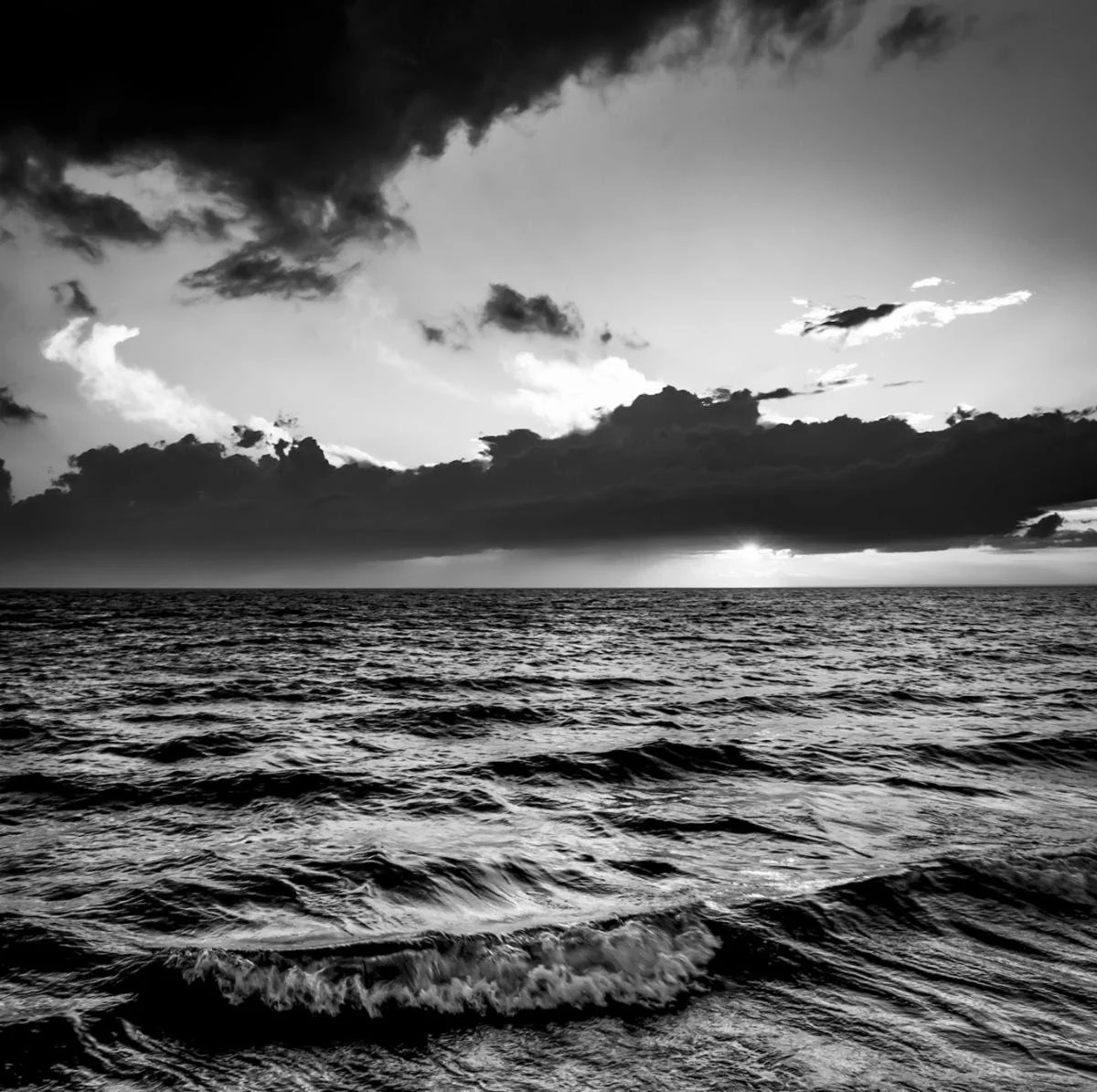
“At Day's End (Falmouth, Mass.), ‘‘ by Cataumet, Mass.-based photographer Bobby Baker
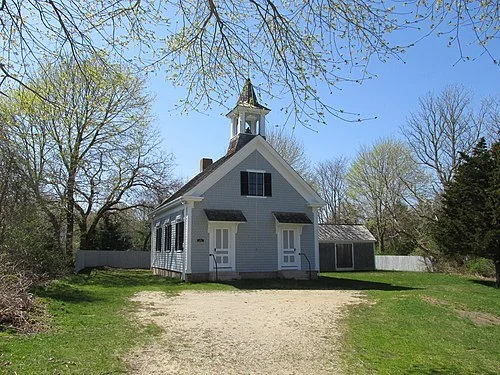
The Cataumet Schoolhouse in the Cataumet section of Bourne, Mass., on Cape Cod. Built in 1894, it served the town as a schoolhouse until 1934, and then as a community center until 1960. It is a well-preserved example of a 19th-Century one-room schoolhouse, and was listed on the National Register of Historic Places in 2019.

Don Pesci: In search of Anti-Semitism in Conn. and elsewhere

William F. Buckley Jr. in 1985
VERNON, Conn.
National Review, founded by the late William F. Buckley Jr. (1925-2008) in 1955, has been a stumbling block to neo-progressive Democrats for nearly seven decades. The mission of the magazine, Buckley announced at its founding, was to “stand athwart history, yelling Stop, at a time when no one is inclined to do so, or to have much patience with those who so urge it.”
Jack Fowler, now running for city clerk in Milford, Conn., has been associated with the magazine for more than three decades and served for a time as its publisher.
Fowler, along with Buckley and other non-far-right conservatives at National Review, cannot reasonably be accused of either anti-Semitism or unflinching support of former President Donald Trump.
Long before Trump threw his hat in the presidential-campaign ring, Buckley characterized Trump as a “vulgarian,” and National Review later took some kicks in the stomach for having devoted a whole issue of the magazine to a political polemic titled “Never Trump.”
In 1992, Buckley published what some consider the best view of modern anti-Semitism, In Search of Anti-Semitism.
John O’Sullivan, then publisher of National Review, characterized the book this way: “It is not a history of anti-Semitism, nor a social-psychological definition of anti-Semitism, not a survey of anti-Semitism in the world today.” The book is rather “an examination of how anti-Semitism is treated when it appears, or is alleged to appear, in the limited but influential milieu in which he [Buckley] happens to live: opinion magazines, op-ed pages, syndicated columns, television talk shows.”
The book may be considered especially relevant considering the current pro-Hamas protests, some of them patently anti-Semitic, among leftist outposts in ivy-league fever swamps, opinion magazines, op-ed pages, syndicated columns and television talk shows.
“The election for Milford city clerk,” a Hartford paper reports, “is traditionally a low-key, overlooked local contest for a job that includes approving items like marriage and dog licenses. But the campaign this year has exploded into charges and countercharges as Democrats are blasting Republican Jack Fowler for a series of controversial posts on a variety of subjects dating back to 2012.”
Opposition researchers likely associated with Connecticut’s mud-throwing Democrat Party have unearthed “a series of controversial tweets by Fowler that date back more than a decade and involve sharply criticizing another Milford Republican and making references to Jews.”
The tweet in question “written by Fowler, which came to light recently when retweeted to nearly 44,000 followers by Connecticut Democrats, states “Jewrack Jewbama. Jew Biden. Nancy Jewlosi. Hebrewllary Clinton. Yeah, you’re right now that I think about it.”
Fowler, the paper observes, “admits writing the posts but says they were either sarcastic, done in jest or responding to news events of the day that cannot be understood properly without knowing the original tweets that caused the response… Fowler says he was responding to another post, which has since been deleted, that had criticized National Review, which is a staunch defender of Israel. In addition, Fowler released a series of pro-Israel tweets that he wrote, along with three articles that he authored for the magazine on anti-Semitism.”
Defending himself from a charge of anti-Semitism, Fowler answered, “There is no question where I stand thoroughly, very publicly, repeatedly, voluminously over the years [on Israel]. To be accused to being anti-Semitic is reprehensible, especially by people who know it’s not true. … People who know me in Milford know this is B.S. This is the age we live in. It’s not to win an election. It’s to destroy the reputation of somebody.”
Given the prevailing circumstances in the hot war between Israel and Hamas, every rhetorician on planet earth would acknowledge that, if you are defending yourself against an unwarranted charge of anti-Semitism, you are losing the argument. Quite like a poisonous false charge of racism, the mere making of the charge itself is certain proof of culpability.
Fowler’s statement, even if made in jest, said state Democratic Party Chairperson Nancy DiNardo, is “inappropriate.” But it is seemingly appropriate to tat political opponents with anti-Semitism. Such ideological tattoos do not easily wear away, even if they are demonstrably false.
DiNardo, applying her pitch-brush more broadly, continued “I think it points to how bad the Republican Party is getting. They’re going to be extremists at every single level. It’s just not what the Connecticut voters stand for… He was the publisher of an ultraconservative, far-right magazine. Of all the candidates that the Republicans could have picked in Milford, and they picked him? That’s shocking to me. He’s not a good candidate to be running for this position.”
The easily shocked DiNardo very likely has never leafed through the non-far-right, non-ultraconservative National Review. She certainly has never read Buckley’s In Search of Anti-Semitism.
We have here reached a point –of no return? – in which ideologically polluted charges need not be proven before they are unjustly launched against political foes simply to win elections.
When Alice in Lewis Carroll’s Through the Looking Glass rebukes Humpty Dumpty for having used the same word to mean opposite things, Humpty Dumpty replies imperiously that the word he is using means exactly what he “chooses it to mean, neither more nor less. The only question is – who rules.”
In Connecticut, Democrats rule.
Don Pesci is a Vernon-based columnist.
Must be patrolled

“Island of Endangered Species” (oil, mixed media, fabric on panel), by Donald Saaf , his show “Peaceable Kingdom: The Art of Donald Saaf,’' at the Cahoon Museum of American Art, Cotuit, Mass., through Dec. 23. He lives in the Saxtons River section of Rockingham, Vt.
— Photo by Mr. Saaf
The museum says Mr. Saaf:
"{E{}xplores the subtle line between fine art and folk art in paintings that are heartwarming and approachable. His large-scale paintings and collages draw upon his memories of nature, family and community from his life in rural Vermont.’’
North of the immigration zone?

New Hampshire’s Franconia Range. The state’s, er, rigorous climate is uninviting for some immigrants.
“Immigration, of course, in New Hampshire is - it's not something that you see every day. It's not like talking about it in Texas, where people have a much more explicit sense of it.’’
Evan Osnos (born 1976), American journalist and book author

Sam Pizzigati: Time to close the huge IRS audit gap that favors the rich

IRS logo
Read about New England’s richest towns, and how they got that way.
Via OtherWords.org
BOSTON
In 2020, U.S. households annually making over $1 million faced fewer tax audits than households with incomes low enough to qualify for the Earned Income Tax Credit. That had never happened before.
In part, you can blame the Trump administration. But conservatives in Congress actually gave Trump his tax-cutting playbook, as a new Americans for Tax Fairness report makes clear.
Ever since 2010, these right-wing lawmakers have been squeezing the IRS budget, forcing the agency “to drastically pull back on auditing the ultra-wealthy.” Between 2010 and 2020, audits on millionaires dropped a whopping 92 percent.
The super rich have taken full advantage. Nearly a thousand taxpayers making over $1 million a year, Sen. Ron Wyden (D.-Ore.) points out, haven’t even bothered “to file tax returns over multiple recent years.”
Thanks to the Inflation Reduction Act President Biden signed, the IRS gained an $80 billion increase in funding last year. Wyden, who chairs the Senate Finance Committee, wants to see the IRS use that money to increase the audit rate on America’s richest.
But Republicans are pushing to chop IRS funding by $67 billion. That cut, Americans for Tax Fairness calculates, would leave the nation right back where the Trump gang left it: with millionaires getting audited less than 1 percent of the time.
We should be resisting those auditing cuts. And besides cracking down on tax cheats, we need to close the wide constellation of loopholes that help the richest Americans legally sidestep any significant tax bill.
One example? The abuse of nonprofit donations.
Most of us hear the word “nonprofit” and think of the Red Cross or some other familiar charity. These traditional charities fall under section 501(c)(3) of the U.S. tax code.
Other nonprofits — most notably those that come under the tax code’s 501(c)(4) — can engage in activities that have next to nothing to do with providing charitable services. They can own companies indefinitely, as Forbes details, and benefit private individuals. They can lobby lawmakers as much as they want and “get directly involved in politics.”
This flexibility that C4s offer became particularly attractive to America’s deepest pockets in 2015.
Lobbyists bankrolled by the billionaire Koch family wiggled into the tax law that year a charming little loophole that lets the rich take shares of stock they own that have appreciated handsomely and pass them to C4s — without having to pay either a gift tax or a capital-gains tax on the share transfer.
The C4s receiving these hefty gifts of shares, Forbes adds, “can then sell the stock, capital gains tax–free, or hold on to it indefinitely, reaping the dividends.”
Thanks to this loophole, note investigative journalists Judd Legum and Tesnim Zekeria, billionaires like Charles Koch can now use their allied C4s “to spend as much money as they want on political campaigns without disclosing their spending or paying taxes.”
Billionaires should be paying taxes like the rest of us to support schools, health care, and the like. Instead, this handy and inequitable loophole leaves billionaires with the wherewithal to buy still more private jets, trinkets, and mansions — and our democracy.
Blank political checks for billionaires like Charles Koch have no place in a country striving to become a more equal place. So let’s fund the IRS, close the loopholes, and conduct those audits. Now!
Sam Pizzigati, based in Boston, co-edits Inequality.org at the Institute for Policy Studies. His books include The Case for a Maximum Wage and The Rich Don’t Always Win.
‘A kiss that never ends’

“A Burst of Light (Red)’’ (hair, embodied knowledge, ancestral recall, audacity of survival, bobby pins), by Providence-based Nafis M. White, in the show “Paint the Town Red,’’ at Cade Tompkins Projects, Providence, Nov. 4-Dec. 31.
Edited from the gallery’s description:
“White dives into the depths of the autumnal energy, bathing the gallery in red in honor and celebration of the Goddess Sekhmet, the Warrior, the Sensualist, the Destroyer, the Lover, the Healer.
“In ‘Paint the Town Red,’ White premieres new paintings, works on paper, performance and new iconic Oculus works. As viewers go deeper into the sanctuary, the darkness surrounds, red lighting illuminating the pathways forward, Afro House pulsating through the space. What happens in the dark stains the lips of the revelers. ‘A kiss that never ends, effervescent energy that vibrates towards intellectual climax, this is what I'm after….catharsis, power, partnership and release,’ says White.
“Bodies of work on display also include ‘Hidden Topographies,’ which employs crewel embroidery and needlework to at once obscure and reimagined written text; and ‘God Helps Those Who Help Themselves,’ continuing White’s inquiry into the life story of Emmanuel ‘Manna’ Bernoon, a freed slave who founded Providence’s first restaurant, in 1736, an oyster and ale house. For this work, White sourced local oysters, cleaned and dried the shells and imbued them with gold leaf ‘to honor the beauty, resilience and legacy of a people.’’’
Apple agritourism
Text excerpted from a The New England Historical society article
“Trying to pick six historic apple orchards in New England may be a fool’s errand. As Maine apple expert John Bunker explains, the notion of a commercial orchard is relatively modern.
“‘At a certain point, everyone had an orchard,’ Bunker told the New England Historical Society. ‘Everyone lived on a farm, and every farm had an orchard.’
“In the 1920s, a New Hampshire farmer came up with the idea of bringing tourists from Boston to pick their own apples in the fresh air and sunshine. The idea took hold. Today, 200-year-old farms are weathering developers (if not the weather) by diversifying with farm-to-table meals, cider, kids’ play areas, ready-to-eat food, hayrides, sleigh rides, corn mazes and even seasoned firewood.
“Agritourism today is just as much a feature of the New England landscape as history tourism. Here, then, are six historic apple orchards, one in each New England state.’’
To read the whole article, please hit this link.
Waiting for a freeze

“Autumn Leaves’’ (oil on canvas), by Sir John Everett Millais (1829–1896)
Adapted from Robert Whitcomb’s “Digital Diary,’’ in GoLocal24.com
“Indian summer is like a woman. Ripe, hotly passionate, but fickle, she comes and goes as she pleases so that one is never sure whether she will come at all, nor for how long she will stay.”
―The weirdly sexist opening of the novel Peyton Place (1956), by Grace Metalious (1924-1964), who based the once-thought nearly obscene novel on what she saw and heard living in New Hampshire, with Gilmanton considered the model for Peyton Place.
We’re waiting for a freeze in a few days to send most of the leaves from the trees falling in one fell swoop, as often happens a few days before Halloween.
Years ago, this would be followed by air suffused with the sweet smoke from innumerable leaf-pile fires. Despite the bluish air pollution, worsened by the atmospheric inversions common in the fall, we always looked forward to leave-burning season. Leaf-burning is now banned in many communities, mostly for public-health reasons.

— Photo by David Hill
As everything else slows down -- even without a frost the grass grows more slowly -- the squirrels seem to scurry faster amidst the acorn caps. (They’ve stashed away most of the acorns (oak nuts).)
I’m looking forward to that mild, still, dry, hazy and pleasantly melancholy time called Indian Summer that follows the first real freeze. It grants the best walking weather of the year. But get out those light boxes to treat your SAD.

High Street in Gilmanton, N.,H., in 1910.
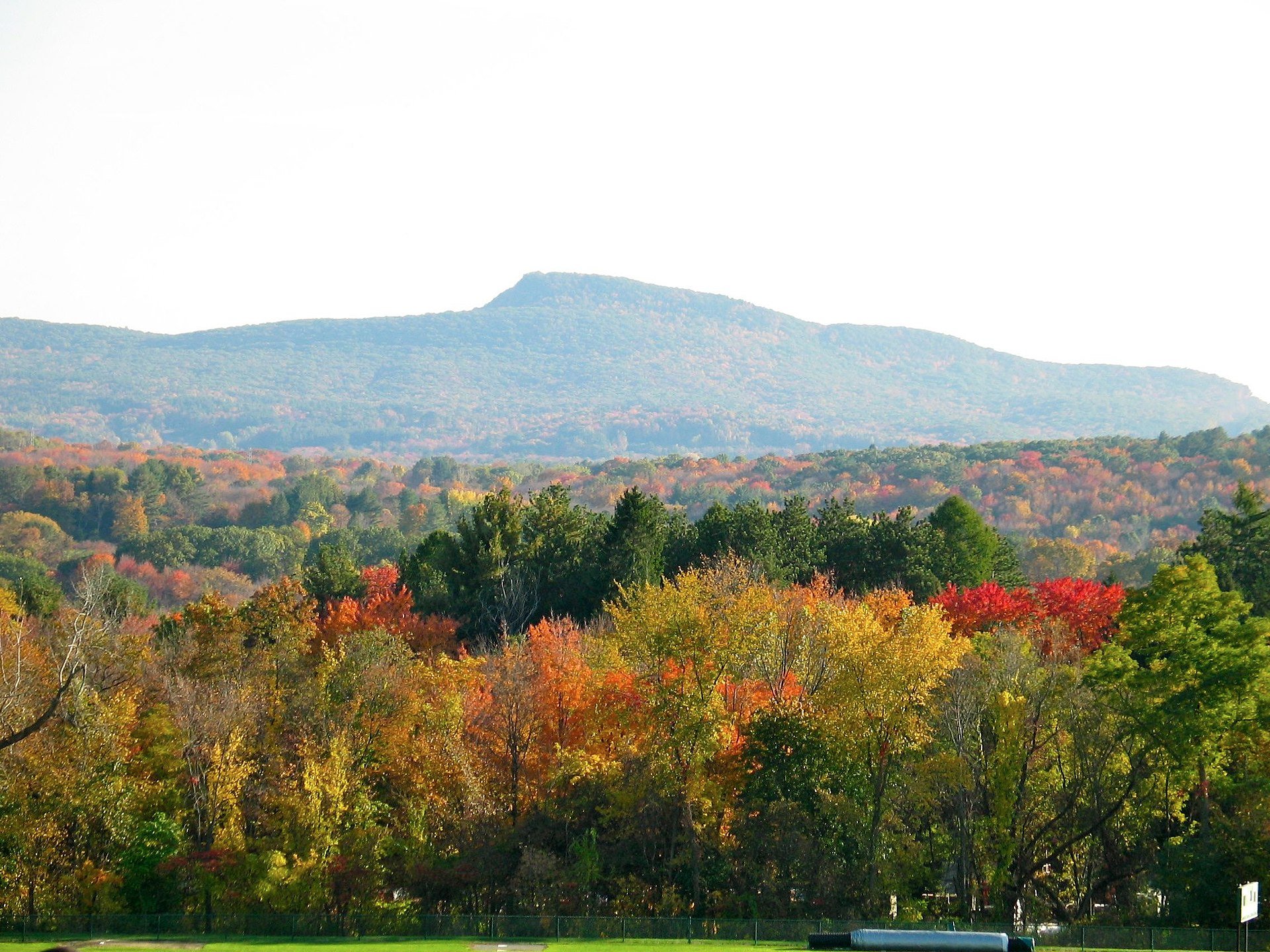
Mount Norwottuck in the Mount Holyoke range, on the border between the towns of Amherst and Granby, Mass.
— Photo by Andy Anderson
Chris Powell: Why it’s so hard to believe that crime is down in Conn.; social disintegration continues
MANC HESTER, Conn.
Few people in Connecticut have the impression that there recently has been less crime in the state. Most people seem to feel that crime here is exploding.
But last week the state Department of Emergency Services and Public Protection -- the state police -- reported that crime in Connecticut is down on an annual basis: 4 percent overall, with a 3 percent reduction in violent crime, a 13 percent reduction in murders, and an 18 percent reduction in robberies.
What explains the dichotomy?
The leader of the Republican minority in the state House of Representatives, Vincent Candelora, of North Branford, interviewed last week by WTIC-AM1080's Will Marotti, said plainly of the crime report, "Nobody believes those numbers."
There may be a good reason not to believe them. After all, four months after an outside audit concluded that state troopers may have issued thousands of fake traffic tickets, perhaps to sabotage an effort to discern racial discrimination in traffic enforcement, the state police still haven't produced an explanation. While Gov. Ned Lamont hasn't publicly criticized anyone about the scandal, he is seeking replacements for the department's top two executives.
But the public's disbelief and the loss of state police credibility don't mean that the crime numbers have been falsified like the traffic tickets. The disbelief may arise from other factors.
xxx
Social disintegration is worsening and becoming more distressing even if it doesn't always result in arrests and crime data.
More children than ever are skipping school and more parents than ever are letting them. Even before schools were closed during the COVID, epidemic student performance was crashing, diminishing young people's job qualifications and earning potential, while Connecticut's manufacturers complain that they can't find skilled workers for thousands of jobs.
Homelessness and drug abuse are rising again. Contempt for law and decency seems to be rising as well, with crimes becoming more brazen even if not more numerous. Car thefts and shoplifting are up, and reckless and discourteous driving and road rage seem to have exploded.
Severe inflation has made times harder and people seem more confrontational. Last week alone Connecticut police officers shot and killed three men in separate incidents, all appearing to involve men who threatened an officer with guns.
Last week the state's biggest teacher union complained again about disrespectful students, and the Connecticut Hospital Association complained that patients and visitors increasingly are assaulting hospital staff. But arresting students and maintaining order and learning in schools have become politically incorrect, and while the hospitals said they aren't going to take the abuse anymore, let's see if they start to call the police.
Connecticut may remain, as Governor Lamont said in response to the crime report, "one of the safest states in the country," but the comparison with other states is little consolation. Connecticut long was better than other states, and now many people feel as if the state is falling apart, even if not quite as fast as the rest of the country.
Maybe the crime report and public perceptions don't really conflict as much as they seem to. For the report covers calendar 2022 and social disintegration may have worsened greatly in the 10 months since.
And maybe journalism has made social disintegration seem worse than it is. For the substance of journalism in the state has been much reduced in recent years as its audience has been fractured by social media and civic engagement has declined. These trends have diminished the profitability of news organizations and caused them to eliminate staff, especially for matters of government, and to devote more coverage to crime, accidents, and fires, which is usually easier and less expensive while it crowds out more important news.
"If it bleeds, it leads" long has been the rule for local television news and it is being followed more diligently. This may hold on to audiences but also may give a misleading impression that encourages people to move to Florida. But that state has plenty of crime, accidents and fires, too, even if victims there don't freeze to death.
Chris Powell has written about Connecticut government and politics for many years (CPowell@cox.net).
Lawrence S. DiCara: Kill Social Security too?
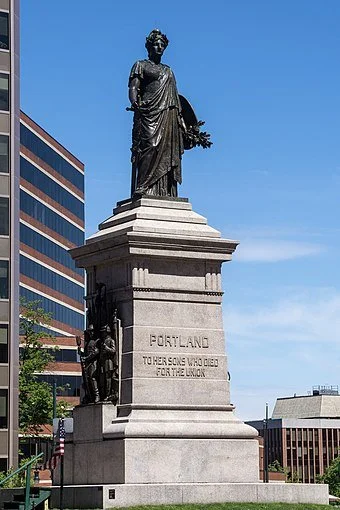
The Portland Soldiers and Sailors Monument sits in the center of Monument Square, on the former site of Portland's 1825 city hall. Dedicated on Oct. 28, 1891, it honors "those brave men of Portland, soldiers of the United States army and sailors of the navy of the United States, who died in defense of the country in the late civil war". Also known as "Our Lady of Victories".
I was in Portland, Maine, recently and found myself in Monument Square, where there is a very large statue dedicated to “Her sons who died for the Union.” Just like every other city or town, Portland sent young men south to protect Washington, D.C., and preserve the Union.
Right in front of the statue were two older gentlemen (perhaps collecting Social Security) with a large sign that read “End the Federal Reserve, Abolish the IRS, Join the John Birch Society.” If we end the Federal Reserve and abolish the IRS, there will be no federal taxes. If there are no taxes then we cannot have an army and we cannot defend the Union, which is exactly what men from Maine did, just as they fought in World War I, World War II and many other wars through the decades. We have seen efforts in Washington over the past few months to freeze the activities of the federal government. A very small group of people would be very happy if the federal government went away and stopped enforcing laws such as those against discrimination and those that protect the poor.
The extreme-right John Birch Society was a very active organization in the 1950s and early 1960s, perhaps an early omen of the then up and coming Goldwater faction of the Republican Party, which has played such an important role in the decades since. The society’s president was very rich businessman Robert Welch, who lived in Belmont, Mass. The society sponsored the “Impeach Earl Warren” campaign after the 1954 Supreme Court decision in Brown v. Board of Education, which declared racial segregation in puhlic schools unconstitutional.
The John Birch Society was riding high until it asserted that Dwight Eisenhower was a Communist sympathizer. Not surprisingly, I do not have a photograph of President Eisenhower on my wall. Admittedly, when “Big Brother Bob Emery on his WBZ kids school asked us to raise a glass to the president of United States and I had a glass of milk in my hand while watching Channel 4 at 63 Gibson Street, in Boston’s Dorchester section. I did salute the president as they played “Hail to the Chief’’! Ike was certainly not perfect in my mind, but he was a great American, a great general, a unifier, a calmer of the waters who also warned us about the power of the military-industrial complex. He was many things, but he was not a Communist sympathizer. Who knows what they may be saying about the current president or maybe even the one who left office a couple of years ago?
The New York Times’s David Brooks, among others, has suggested that the current political climate reflects a rising nihilism, people who really are against everything. So be it. Maybe those folks holding the John Birch Society sign will be able to do fine without their Social Security checks; most older Americans would not.
Perhaps these nativist descendants of those who went off to war are concerned about migrants appearing on their streets, people who do not necessarily look like them, just as their ancestors feared the arrival of the Irish on Munjoy Hill and the French who played such an important role in the development of the State of Maine. Bigotry is a constant in American life. It was there at the time of the Civil War. It was there when Congress restricted the immigration of Italians and Jews and other Eastern Europeans. It is alive and well with groups, such as NSC 131, a neo-Nazi group, which proudly proclaims: “New England is ours, the rest must go.”
The Freedom of Speech which is accepted in our country, as recently seen in was said after Israel was attacked by Hamas terrorists, permits a wide-range of ideas, even like those of the John Birch Society that do no make any sense to me.
Lawrence "Larry" S. DiCara is a Massachusetts lawyer, author and political figure.

The perils facing Boston’s ‘Inundation District’

In the Seaport District, Boston Convention and Exhibition Center entry canopy at night.
— Photo by Generaltso (talk) (Uploads)
Text excerpted from The Boston Guardian
“As construction continues in such low-lying areas like the Seaport and East Boston, planners and private-sector insurance experts are warning developers and insurers to go beyond currently required building standards and consider what climate change will mean for potential flood hazards in future years.
"‘It's critical,’ said Martin Pillsbury, director of environmental planning for the Metropolitan Area Planning Council (MAPC). ‘I know there are costs involved and builders and developers always want to avoid costs, but if you ignore hazards, you're just potentially opening yourself up to loss down the road.’
"‘It drives me crazy when new developments say they're two feet above base flood elevation, but they're 10 feet below storm surge. Surge is a major risk in Boston,’ said Joe Rossi, president and CEO of Joe Flood Insurance and the founder of the Massachusetts Coastal Coalition ‘The Seaport probably should've been designed in a totally different way, that is only going to become more evident as we go down the road with more storms and environmental changes.”’
To read the full article, please hit this link.

Inundation District is a documentary film featuring interviews with residents and experts about the threats to Boston's shoreline and what the city can do now to contain the damage.
Improvised abstrations

Terry Ekasala, “Backyard,” by Terry Ekasala, in the show “Terry Ekasala: Layers of Time,’’ at Burlington (Vt.) City Arts through Jan. 27. She lives near Burke Mountain, in Vermont’s Northeast Kingdom.
— Photo courtesy of Burlington City Arts
The gallery explains:
“Kasala's work is layered, dynamic and heavily improvised — experiences, personal journeys for artist and viewer alike.’’
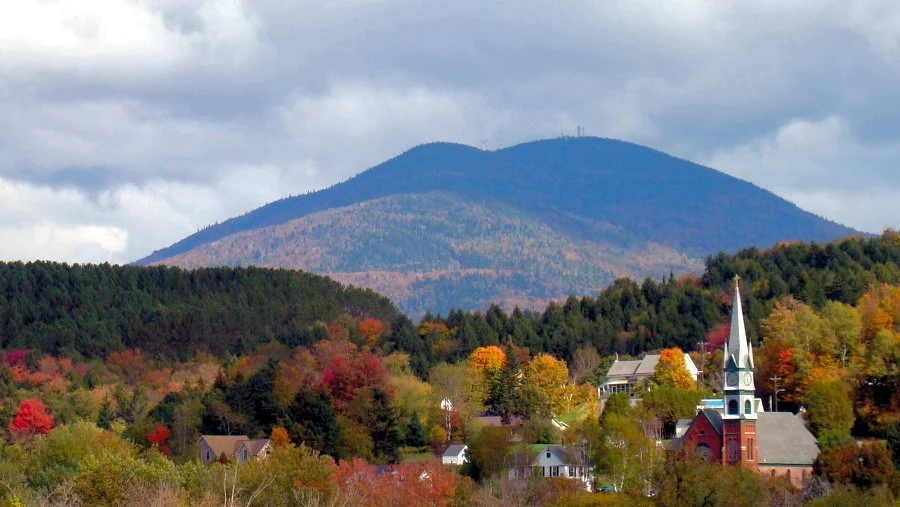
Burke Mountain from Lyndonville, Vt.
— Photo From the nek
‘Transcendent shapes’
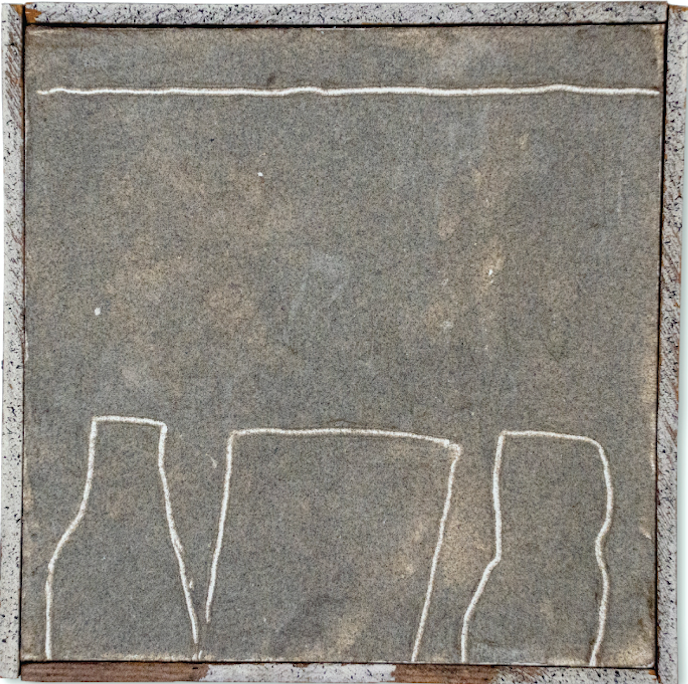
“Remains” (1970) ( sand and gel medium), by Merrimac, Mass.-based artist Rhoda Rosenberg, in her show “Shapes of Time: 1968-2022,’’ at Concord Art, Concord, Mass., through Dec. 17.
The gallery says:
“Rosenberg’s work focuses on deeply rooted ties with family members and the power of an object’s shape to convey feeling. Concerned with emotion and meaning behind her subject matter more than representational rendering, she has concentrated on transcendent shapes throughout her career, seeing beyond the form of an object and getting to the feeling it evokes instead.’’
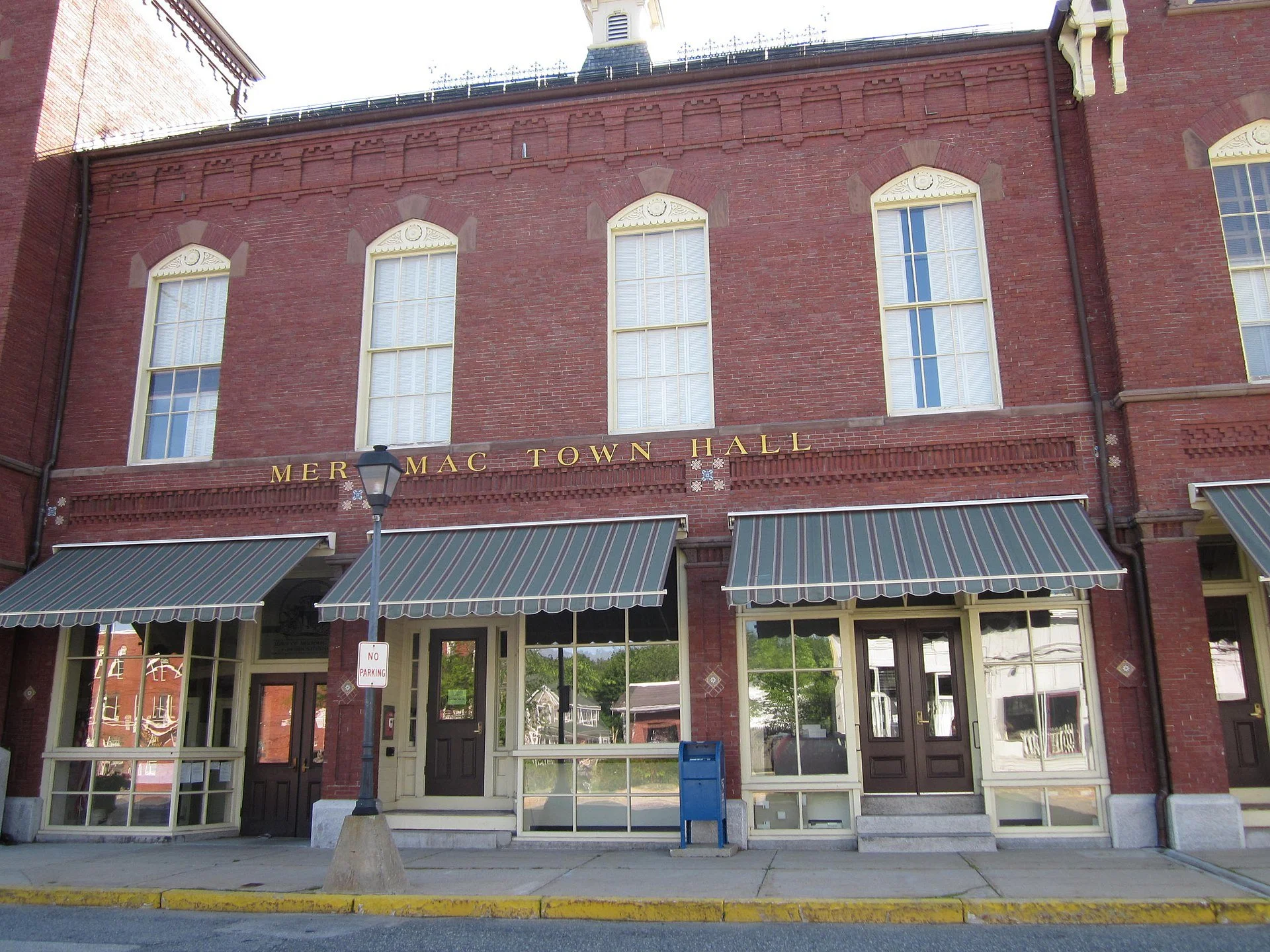
Merrimac Town Hall near Merrimac Square
— Photo by Doug Kerr
Llewellyn King: America’s fossil-fuel dilemma
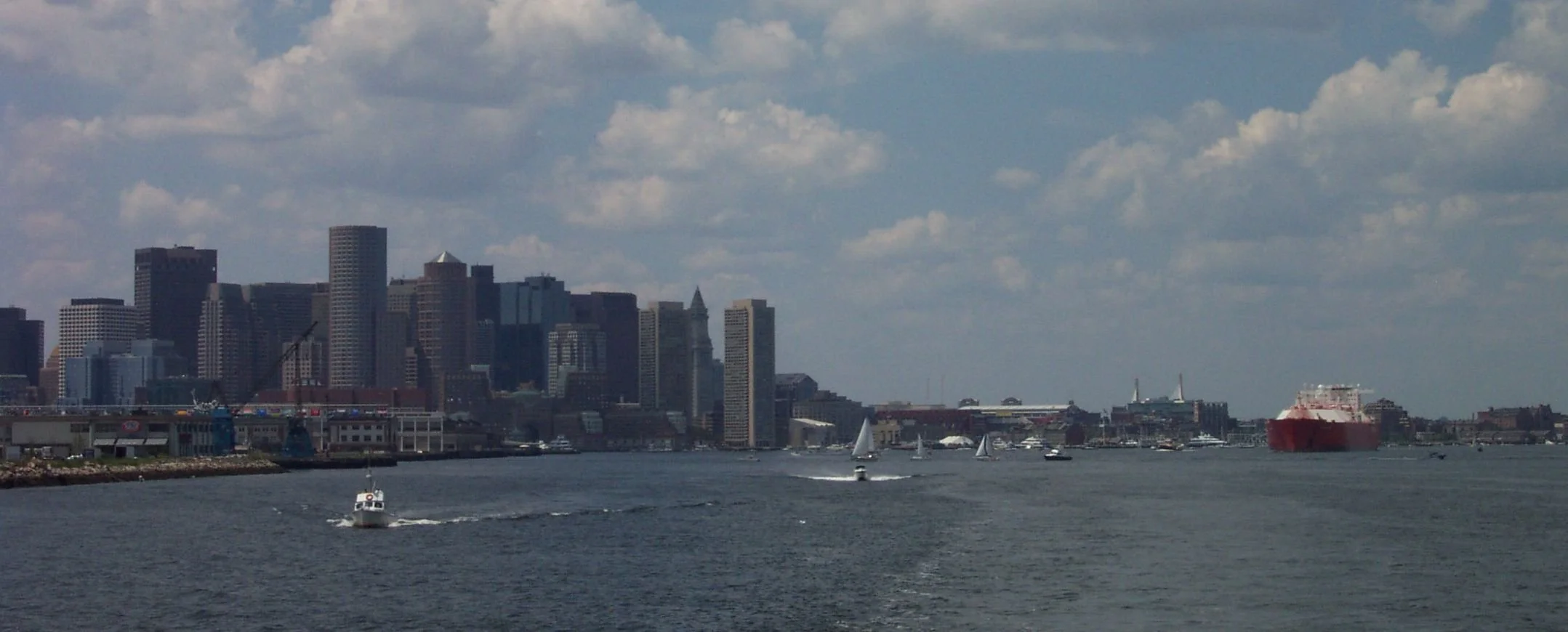
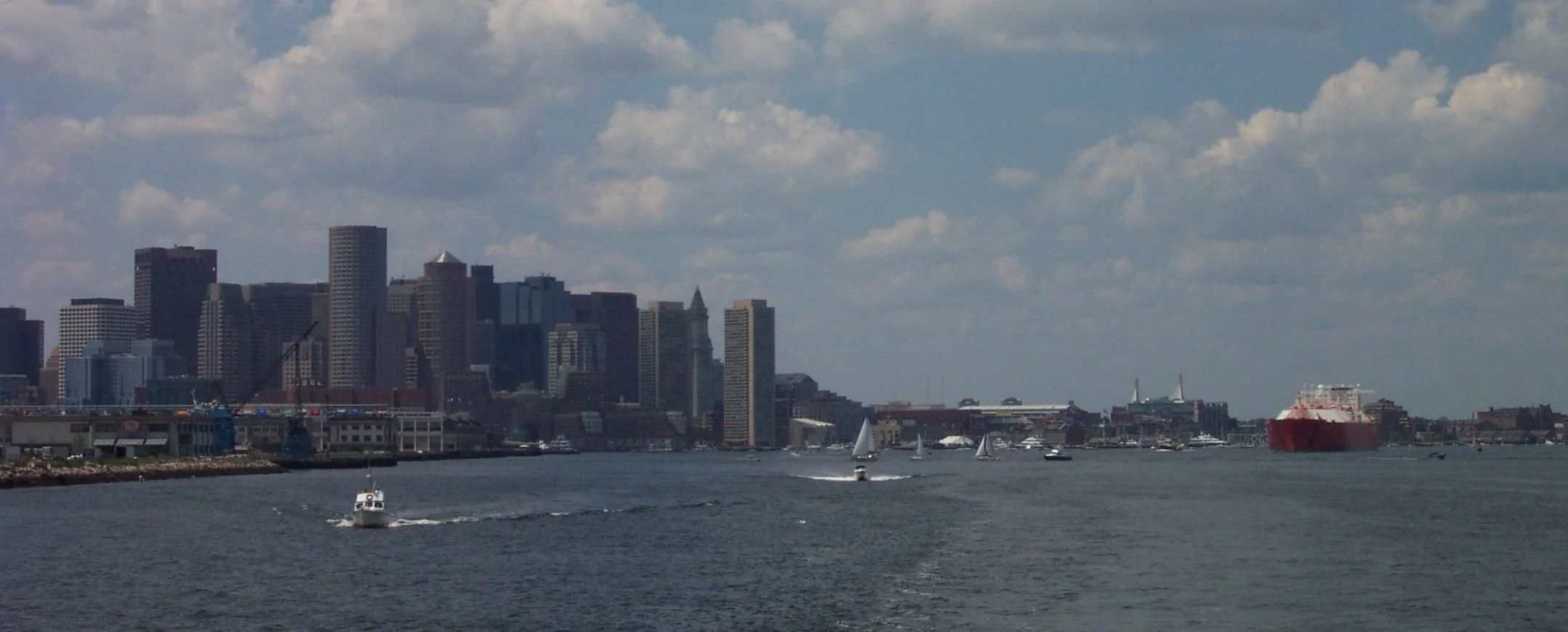
An LNG carrier, at right, passes just offshore of downtown Boston, under Coast Guard and police escort.
- Photo by Chris Wood
WEST WARWICK, R.I.
If when you see a sleek new Tesla in a parking lot or hear an announcement of a utility committing to solar, or that work is proceeding with converting steel-making from coal to electricity, you might think that oil and natural gas are on the ropes, that coal has left the utility scene and the new, green world is at hand.
Yes, yes, yes, Herculean efforts are underway in advanced countries to curb the use of fossil fuels, but those fuels are still dominant and will remain so for a long time. World oil consumption is now at 97 million barrels a day. It is set to rise before it falls back.
In the United States last year, according to the Energy Information Administration, natural gas accounted for 39.9 percent of electricity production; coal, 19.7 percent; nuclear, 18.2 percent; and renewables, the rest, although these are coming on fast.
A study released this October by the International Energy Agency in Paris predicts that world oil production will peak in 2030. Maybe. But one by the Organization of Petroleum Exporting Countries, also released recently, says this won’t occur until 2045 or later.
One way or another, oil remains the big enchilada of fossil fuels. Gradually it may yield to natural gas, which has become a vital part of the U.S. and global electricity scene. Eventually, it will become essential as a maritime fuel.
Oil has been phased out of U.S. electricity generation, except for emergencies. But natural gas has become the bridge, if you will, to the renewables, mainly wind and solar.
Though under threat, coal is still a vital part of U.S. electricity generation. In China and India, its share is 50 percent and rising.
Although oil may peak in 2030 0r 15 years later, it is going to be the critical transportation fuel for decades. Even if electric cars take over, and light trucks and some buses do likewise, it will be a long time before ships, trains, inter-city trucks and airplanes give it up.
New cruise ships will be powered with natural gas and some of the larger, older ones are slated to make the conversion. But for the rest of the global maritime fleet, this isn’t going to happen.
There are about 55,000 merchant ships traversing the world’s oceans. Hardly any of these will convert to compressed natural gas, which is much less polluting than the oil now burned at sea, mostly residual or diesel.
The reason they won’t convert is prohibitive cost; bunkering is a problem, too. Major new infrastructure is needed to support compressed natural gas as a maritime fuel.
Aircraft have an acute problem of their own. It arises from the way jets spew pollution at altitude, making them a potent source of greenhouse gas emissions.
While it isn’t certain how many aircraft there are in the world, estimates put large aircraft at around 23,000, and if absolutely everything that is flyable with an engine is added, it may be close to double that number.
The airlines, airframe makers and engine manufacturers are desperately seeking solutions, but so far nothing viable has emerged. Batteries are heavy and draw down quickly; hydrogen doesn’t have the energy density and is highly flammable.
No new technology is on the horizon but more people are flying, and that number appears to be exponential. Up, up and away is now an expectation for even people of modest income.
The surviving usefulness of fossil fuels globally presents U.S. policy-makers with a dilemma: It is the world’s largest oil and natural gas producer. It has a surplus of natural gas for export as liquified natural gas (LNG). The United States produces 12 million-plus barrels of oil a day, but well short of the 19 million barrels a day the nation consumes. Ergo, there is a security advantage in increasing domestic oil production, which alarms the Biden administration.
LNG exports are important not only because of their profitability, but also their stabilizing effect on world markets, as demonstrated by the Ukraine crisis.
It behooves the United States to up the production and export of natural gas while continuing downward pressure on domestic oil consumption. A simple enough proposition, except that environmentalists and the administration would like to reduce natural gas consumption and production.
New England, for example, tried to starve out gas by not installing delivery pipelines. Now LNG that should be flowing overseas to stabilize and reduce coal consumption is going to the Northeast, a costly and futile attempt at curbing greenhouse gases.
Damn those fossils! You can’t live with them, and you can’t live without them.
Llewellyn King is executive producer and host of White House Chronicle, on PBS. His email is llewellynking1@gmail.com, and he’s based in Rhode Island and Washington, D.C.
Tech imitating art
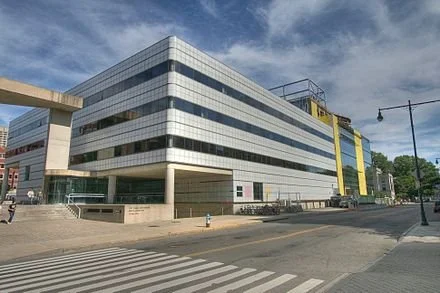
MIT Media Lab
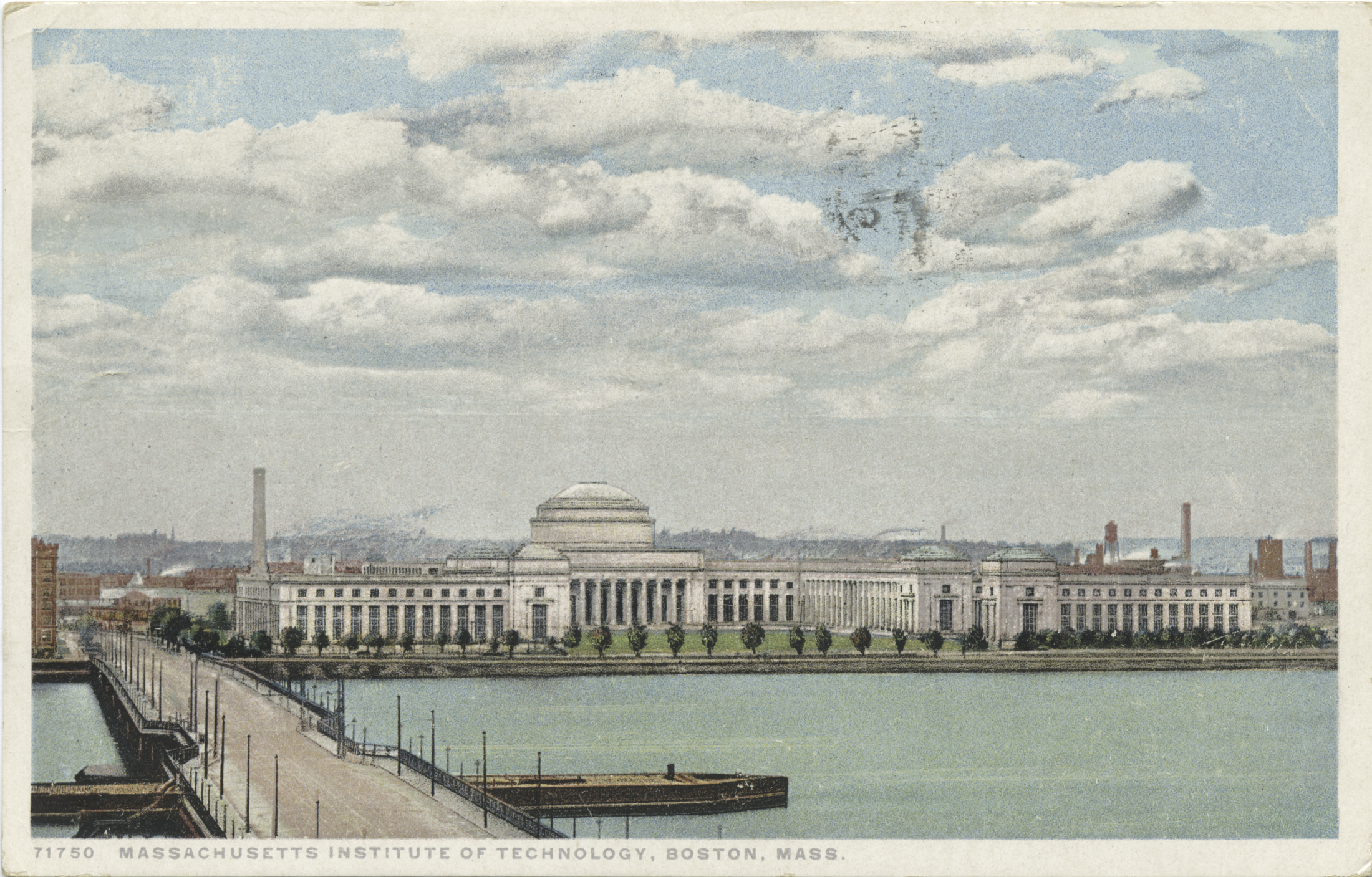
View from Boston, circa 1917, of MIT’s then new campus in Cambridge. It had moved from Boston.
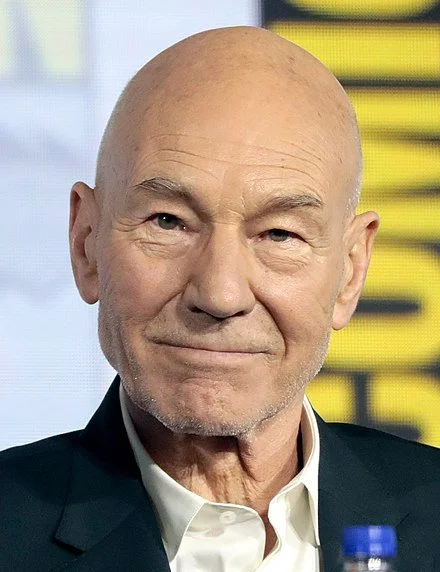
Patrick Stewart in 2019

Smart refugees at Newport aquarium

A Common Octopus, the kind that shows up in southern New England’s coastal waters. Octopuses are smart!
Maybe better to fly

“Offshore Voyage’’ (oil), by New Hampshire artist Liz Auffant, at Kennedy Gallery, Portsmouth, N.H.
Scanning the ‘undertow’
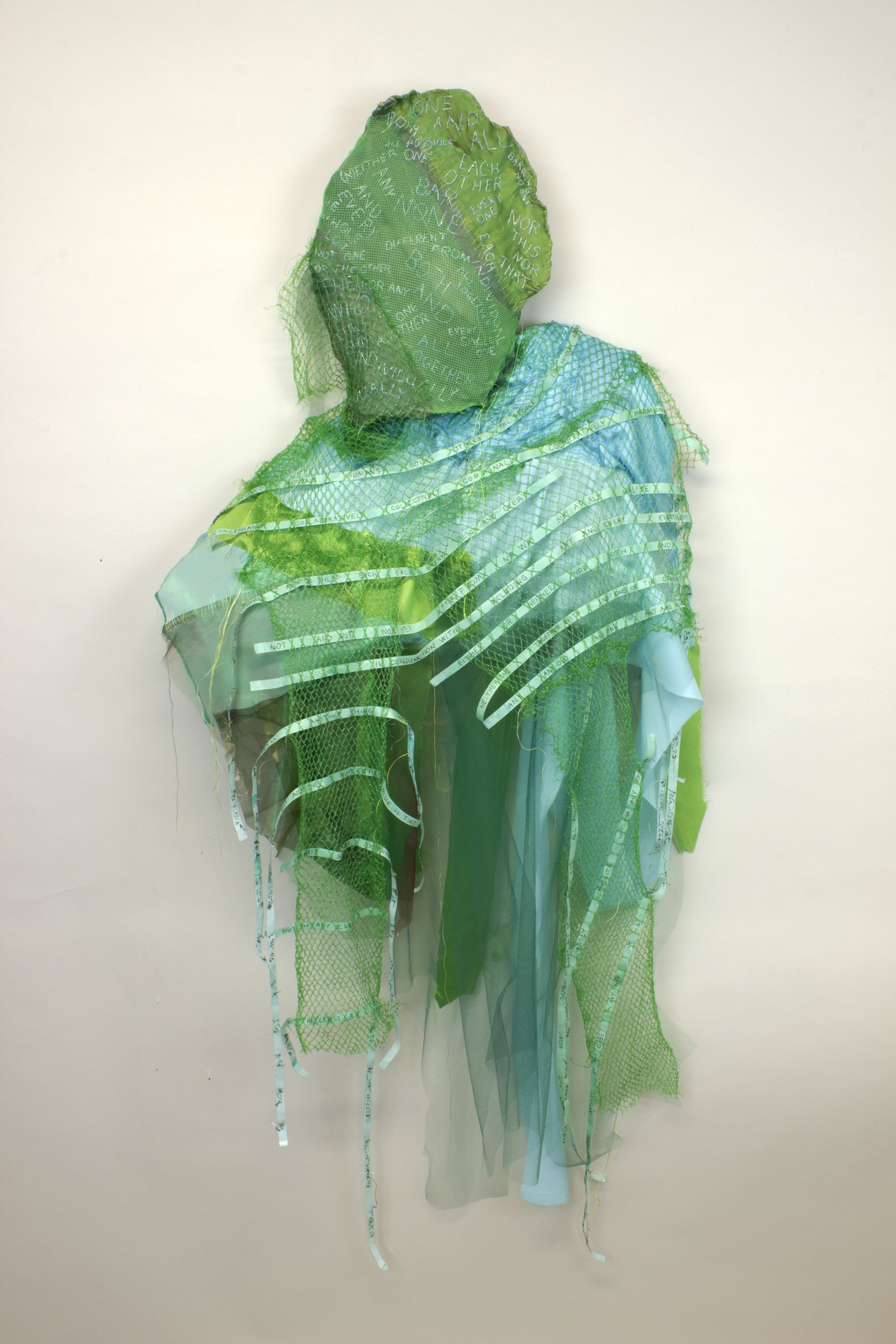
“Each, Every, All, None’’ (mixed media), by Brockton, Mass.-based artist Virginia Mahoney in her show with Natalie Miebach, “Undercurrents,’’ at Fountain Street Gallery, Boston, through Oct. 29.
The gallery says:
“Virginia Mahoney scans the undertow of human interactions, examining the disparity between surface appearances and underlying consequences. With complex, intricate forms and materials, her figures probe autobiographical stories and question accepted narratives. As she uncovers possibilities in the scraps, shards, and leftovers of a longstanding studio practice, her voice emerges in the rhythm of stiches, provocations of language, and discovery of new forms.’’
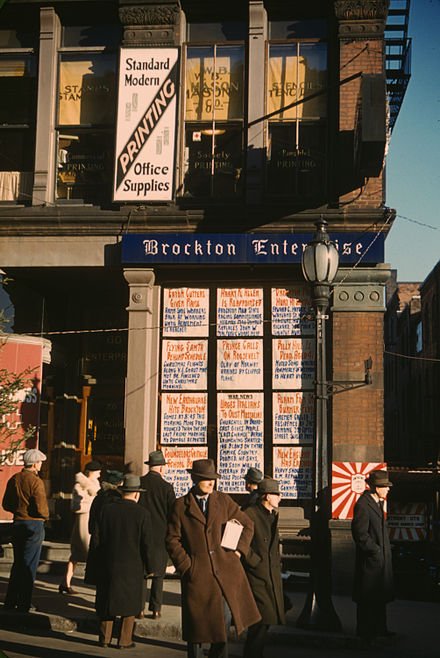
Headlines posted in street-corner window of newspaper office (Brockton Enterprise), 60 Main Street, Brockton, in December 1940. Upstairs were the first main offices of the W.B. Mason company.