
Vox clamantis in deserto







But don’t go in

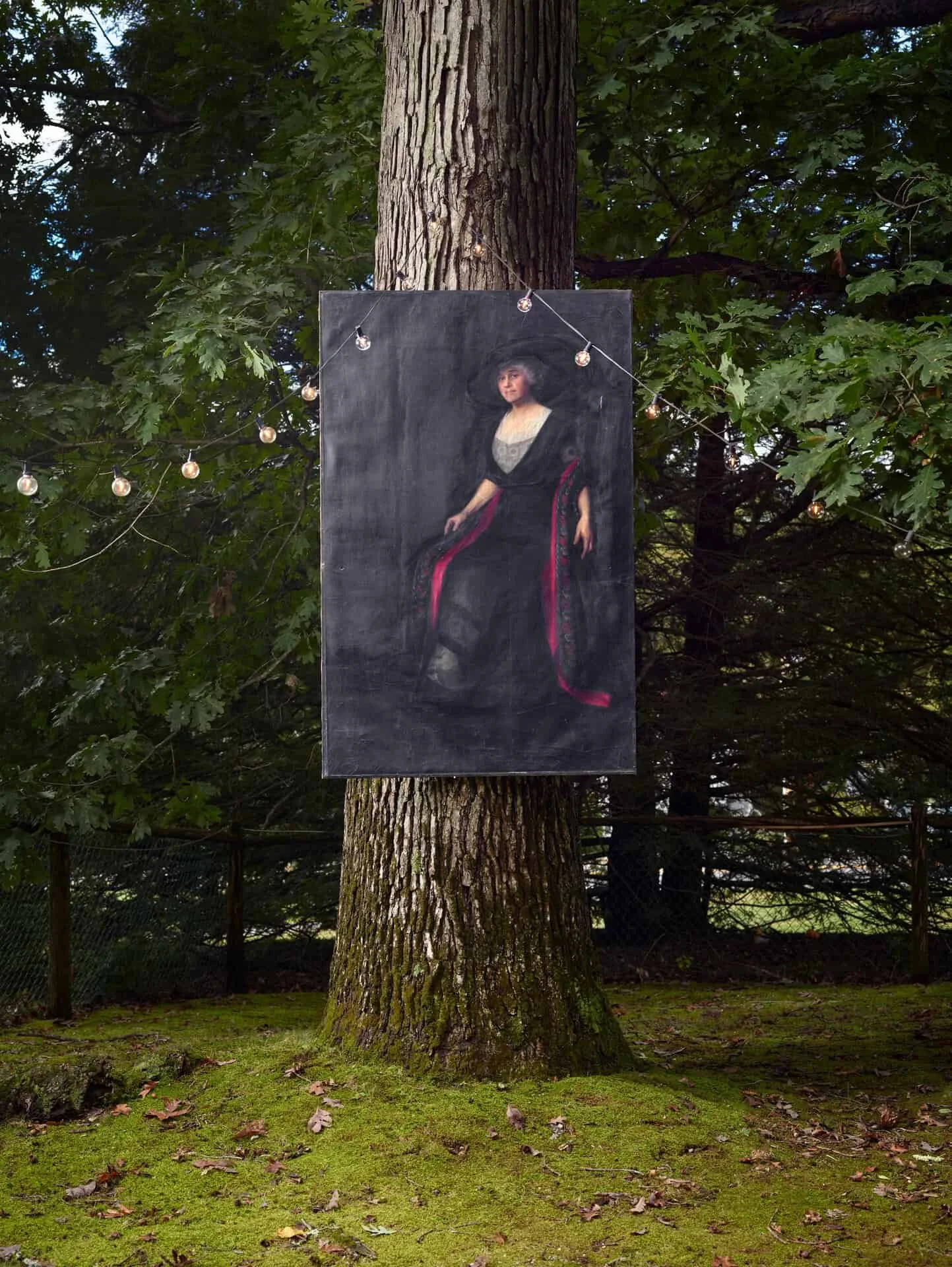
“Tower” (acrylic on canvas), by Peggy Wilson, in her show “Peggy Watson: Vermont Outdoors,’’ at the Northeast Kingdom Artisans Guild, St. Johnsbury, through Nov. 11.
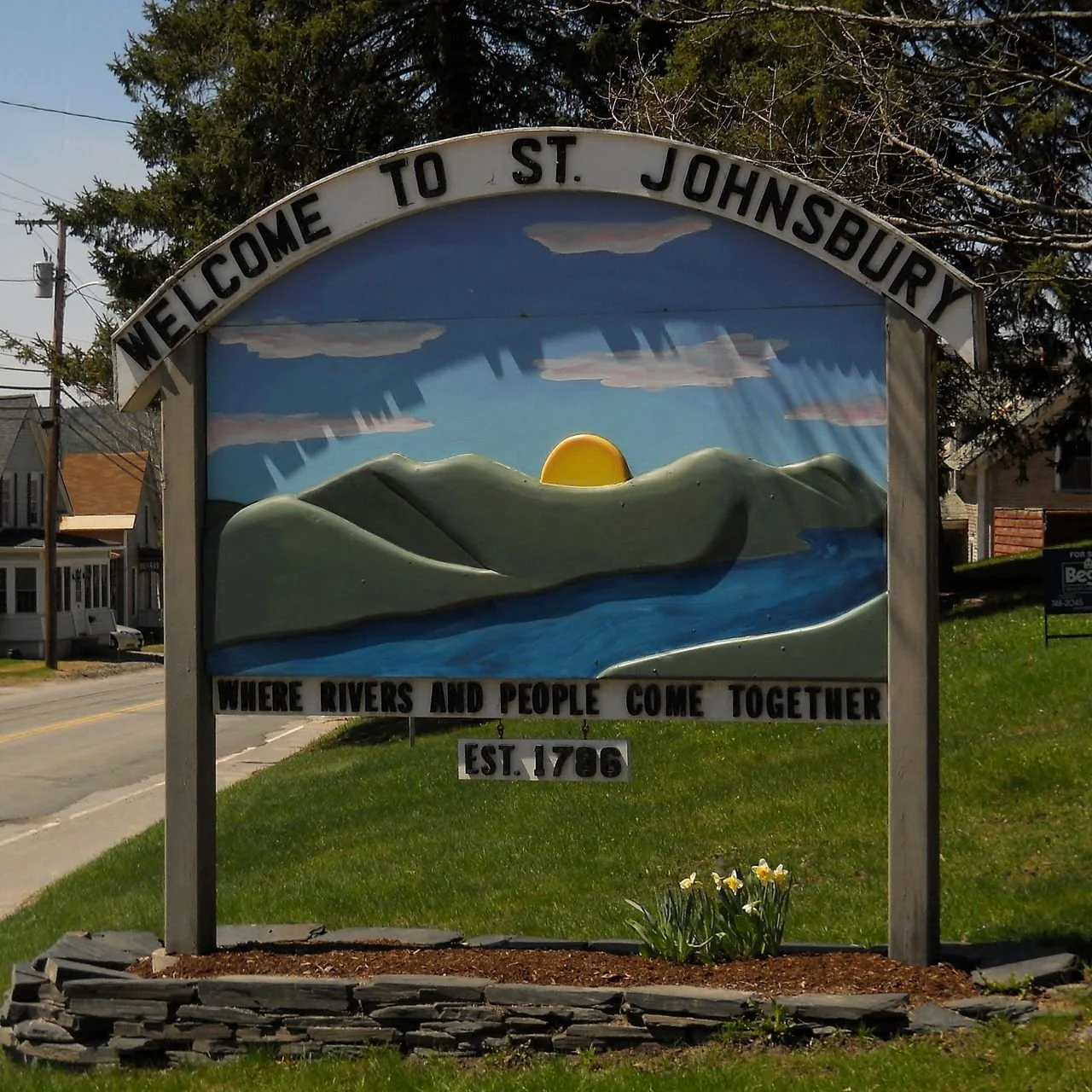
Edited from a Wikipedia summary : In the mid-19th Century, St. Johnsbury became a minor manufacturing center, with the main products scales—the platform scale was invented there by Thaddeus Fairbanks, in 1830—and maple syrup and related products. With the arrival of the railroad line from Boston to Montreal in the 1850s, St. Johnsbury grew quickly and was named the shire town (county seat) in 1856, replacing Danville.
‘Biological narratives’

Untitled work (woodcut and lithograph collage) by Maine-based artist Amanda Lilleston in her show “Deep Field,’’ at The Zillman Art Museum, Bangor, Maine, through Dec. 30.
The museum says:
“Amanda Lilleston explores biological narratives through woodcut printing and collage in her exhibition deep field. The prints highlight the concept of transformation, depicted in burgeoning colors of flora. Lilleston began this body of work about ten years ago – the idea stemming from, ‘a broader, general interconnectedness of systems: biological, physiological, and ecological.’
“The themes that permeate her artwork reflect Lilleston’s educational and life experience – as well as motherhood. The artist explains that she has become ‘acutely aware of my body being part of a larger environment.’ Lilleston thoughtfully examines these natural subjects to allow for adaptation and change within the imagery.”

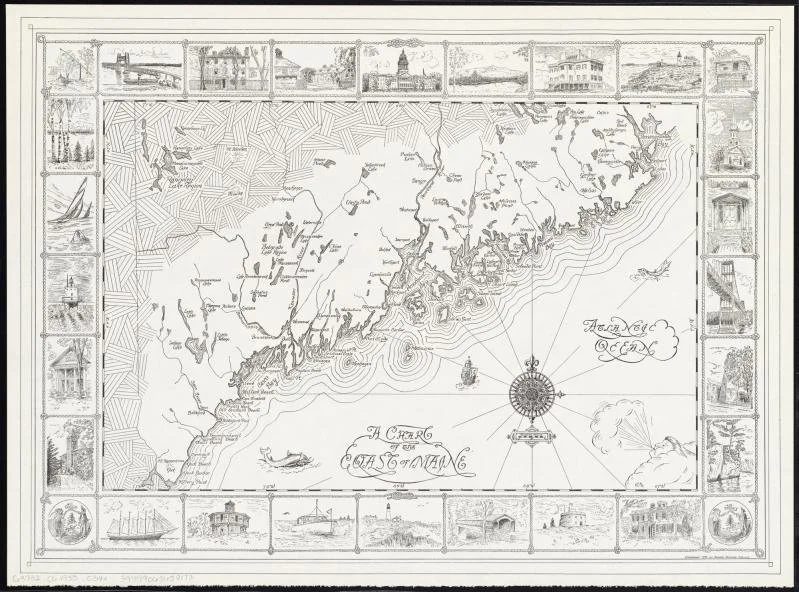
Turn of the 20th Century postcard. Bangor was for years one of the world’s lumber capitals because of its proximity to the Great North Woods and that Bangor was the last deep water port on the Penobscot River. It also had good freight and passenger rail service.

1918 logo

Chris Powell: Could Conn. suburbs get city life without its nastiness?

A shell in which to put housing?
—Photo by Justin Cozart
MANCHESTER, Conn.
Maybe a couple of the state's problems can solve each other.
Many suburban shopping malls are fading and failing as many people increasingly shop from home via the Internet and have their purchases delivered. With its COVID hysteria, government keeps scaring them against going out, and with the economy’s problems, many people can't afford to buy as much.
Meanwhile, Connecticut has a desperate shortage of housing, and soaring housing prices are a major cause of the worsening poverty in the state.
So property developers here and around the country are interested in converting fading and failed malls to housing or attaching multi-family housing to them.
Since mall property is already in commercial use and fully equipped with utilities, zoning obstacles and neighborhood objections should be much reduced, and new residents on site might substantially increase the customer base for retailers and professional services remaining in a mall. If enough housing at malls was built, housing costs would diminish for everyone.
A project successfully combining a shopping mall with a lot of new housing might create a walkable environment with much less need for cars -- making something resembling city life available in the suburbs without the poverty-induced nastiness that has overtaken most cities.
Sustaining rather than eradicating poverty would remain big business for government, but any substantial increase in housing might do more to reduce poverty than any other government social program.
xxx
New Haven sometimes seems to be striving to embody the metaphor about rearranging the deck chairs on the Titanic.
The city's Peace Commission may think that it has achieved the big objective cited on its Internet site -- averting nuclear war -- but it seems to have been surprised by Gaza's recent attack on Israel. And though crime continues to plague New Haven while more than three-quarters of the city's schoolchildren are not performing at grade level, many being chronically absent, the other day a committee of the city council found time for a different issue: whether the city should become the first municipality in Connecticut to prohibit the sale of menthol cigarettes.
The Federal Food and Drug Administration is also moving to ban menthol cigarettes. The rationale offered is that menthol flavoring in cigarettes appeals especially to children and members of racial minorities. The unstated rationale is that children and racial minorities can't be persuaded to avoid smoking.
A municipal ban would be only pious posturing. It would not stop city residents from crossing the city line to buy menthol cigarettes in adjacent towns. Indeed, a ban well might create another contraband market in the city. Even federal law and state law haven't prevented deadly drugs like heroin and fentanyl from ravaging New Haven and other cities.
Besides, a municipal ban on menthol cigarettes would be laughably hypocritical, insofar as New Haven has approved five marijuana dispensaries in the city, though marijuana presents health risks as serious as those of menthol cigarettes. But somehow marijuana has become politically correct.
Why are New Haven's elected officials bothering with this silliness? Probably for the same reason that state legislators also spend so much time on the trivial. It distracts from their irrelevance to the big dangers of everyday life and Connecticut's longstanding problems that are never solved as the state continues to decline.
xxx
Electricity rates aren't the only place where state government imposes hidden taxes.
A recent report in the Connecticut Mirror reminded about another tax-hiding mechanism, the state's tax on bulk sales of gasoline, which lately has been about 22 cents per gallon. Gas stations pay the tax to wholesalers and recover it from their customers at the pump, where the retail sales tax is added, another 25 cents per gallon.
Drivers have some idea of the retail sales tax, especially since state government reduced it temporarily after the gas price spike resulting from Russia's invasion of Ukraine and the international sanctions on Russian oil. But few people know about the wholesale tax.
The wholesale tax on gas is another way state government encourages people to blame industry for high prices when government itself is largely responsible.
Chris Powell has written about Connecticut government and politics for many years (CPowell@cox.net).

‘Reality of spaces’

“A Conversation with Sparrows” (oil paint, india ink and charcoal on unstretched canvas), by Imo Nse Imeh, in the group show “The Miracle Machine: A Black Artists Think Tank ,’’ through Dec. 8, at the Augusta Savage Gallery, at the University of Massachusetts at Amherst.
Photo courtesy of UMass Amherst Fine Arts Center
The gallery says the artists in the show:
“C}onsider themes of identity, belonging, brotherhood, and Blackness, while acknowledging the reality of spaces that allow us, or that deny us, and that ultimately change us."
Make sure the ax is well-cooked

—Photo by Rhododendrites
“Everybody remembers the recipe for cooking a coot: put an ax in the pan with the coot, and when you can stick a fork in the ax, the coot is done.’’
— John Gould (1908-2003), Maine-based (mostly humorous) writer, in “They Come High,’’ in New England: The Four Seasons (1980)
Coot are coastal birds that hunters in New England shoot at in the fall, despite their tough, oily flesh.
MassArt’s Common Good Awards

Poster for MassArt’s 2024 Auction Call for Art
Edited from a New England Council report
BOSTON
“The Massachusetts College of Art and Design (MassArt), in Boston, has announced the launch of the inaugural Common Good Awards, in celebration of its 150th anniversary as a higher-education institution.
“The awards will honor five to six exceptional individuals whose work has furthered the arts within the public sector, especially within the New England region. These efforts could come in all shapes and sizes, from an architect creating beautiful public spaces, to a civil servant whose advocacy leads to the creation of important arts programs and experiences.
“In addition to the handful of open nomination awards, there are also two specialized honors that MassArt will hand out. The first will go to a MassArt Alumnus, whose education propelled them to effectively deliver arts to the public. Additionally, the Frances Euphemia Thompson Award for Excellence in Teaching will go to a current or retired Massachusetts public school art teacher from grades K-12, whose commitment in the classroom has instilled the value of the arts into the community. The final awards ceremony is scheduled for Dec. 16.
“As the only independent, publicly funded arts and design college in the US, MassArt understands its importance as an intersection space for art and public function. ‘Arts, culture, and design are everywhere, embedded in all facets of our lives. As a public institution, we exist at the nexus of service, civic life, arts, and culture,’ said President Mary Grant.’’
Read more from MassArt.
Brief flush through the window

Autumn in New Hampshire woods
“We’re in New England, after all.
Though rippling foliage fills
the pane, the flush that tints the wall
will last a week or two, no more.’’
— From ”North-Looking Room,’’ by Brad Leithauser (born 1953), American novelist, poet and teacher.
To read the whole poem, please hit this link.

Solidarity with Israel in Boston

— Photo by Rick Friedman
The D. L. Saunders Company and The Boston Guardian unveiled a total of 10,000 American and Israeli flags — 5,000 for each country — in Statler Park, in downtown Boston, on Oct. 18. They will be on display through Oct. 22
The flags were planted by Andrew Lafuente in about six hours.
In attendance were Israeli Consul General Meron Reuben, City Council President Ed Flynn, State Representatives Aaron Michlewitz, Jay Livingstone and John Moran, Back Bay Association President Meg Mainer Cohen, Boston Guardian Publisher David Jacobs and Associate Editor Gen Tracy, and Red Sox Senior Vice President David Friedman.
Polls suggest that about 75 percent of Americans take Israel’s side in the war started by Hamas on Oct. 7.
Llewellyn King: When people come to love to hate

Hamas−Israel conflict at start of war, on Oct. 7-8.
— Photo by Ecrusized
WEST WARWICK, R.I.
Many years ago, I was mugged in Washington.
I was looking for an informal club of the kind that sprang up after hours around big newspapers. These “clubs” were usually just an apartment with beer, liquor and card games for those of us who finished work after midnight.
The club I was looking for was on 14th Street, which was considered a bad part of town. I never got there: I was jumped and punched by a group of teenagers, who threw me to the ground and took my wallet.
My colleagues at The Washington Post brushed it off as being my fault, a self-inflicted wound — no excuses for my nocturnal wanderings.
I was bruised and felt ashamed of my stupidity. But Barry Sussman, an editor, said, “Llewellyn, you didn’t mug yourself.”
It is a sentiment that comforted my shaken self then and has stuck with me. Incidentally, Sussman was the unsung hero of the Watergate story: He edited the reporting as it came in.
My initial reaction to the carnage in Israel was, “What happened to Israeli intelligence? Where was the vaunted Mossad? By extension, where was the CIA, known to work closely with Mossad?”
Once on the Golan Heights, an Israel Defense Forces officer stood with me and boasted about how, with American-supplied gear, the military could listen to telephone calls in Jordan or watch a Syrian soldier on the plain below leave his tent to pee in the night.
So where was the surveillance, and what of human intelligence?
Thousands from Gaza went into Israel every day to work. Surely someone would have seen something; someone would have blown the whistle on Hamas’s intention to wreck mayhem on innocent Israelis — 1,400 were butchered.
Anthony Wells, a retired intelligence officer and author, who uniquely served in both the British and American intelligence services, told me in an interview on our television program, White House Chronicle, that the administration of Israeli Prime Minister Benjamin Netanyahu was partly to blame. He said the prime minister had leaned toward Hamas, ignoring the Palestinian Authority, and sometimes ignoring Mossad. This, plus political unrest in Israel over Netanyahu’s plan to curtail the power of the Supreme Court, added to the intelligence failure.
But Israel didn’t mug itself.
The planners of the industrial-scale murder of Israelis at a music “festival for peace,” of all things, had to know that Israel would take terrible revenge; that the hurt to the people living in the Gaza Strip would exceed the hurt brought to Israel; that the vengeance would be swift and terrible.
I have noticed that where there is long-enduring hatred, as between the Greeks and the Turks, the Protestants and the Catholics in Northern Ireland, and the Shona and Ndebele in Zimbabwe, hating has its own life. People come to love to hate, to revel in it, even to find a kind of comfort in it.
Hatred also is taught, handed down through the generations.
In the Arab-Israeli conflict, the Arabs have come to treasure their suffering and to love their hating. But, as Wells told me, wars of vengeance have a price: Witness the U.S. response to 9/11 with the invasion of Afghanistan.
The suffering on both sides in the Israel-Gaza conflict is hard to process. The screaming of wounded children, the hopelessness of those who won’t be whole again, the agony of those who pray for death as they lie under rubble, hoping only for quick release.
The Israeli-Palestinian peace process is now put asunder. It went on too long without peace.
David Haworth, the late English journalist, said, “I’m tired of the process, where is the peace.?” Exactly. Now it may be decades away as Israel digs in and the Palestinians ramp up their devotion to victimhood.
The blame game for what happened is in full swing: anger at the intelligence failure; the national distractions in Israel, initiated by Netanyahu; the slow response by the Israel Defense Forces.
I must remind myself over and over again, as my heart goes out to the people of Gaza, and the generations which will pay the price, that Israel didn't mug itself: It was invaded by terrorists for the purpose of terror.
My parting thought: The mass killing of the kind in Israel and Ukraine diminishes all of us. It makes the individual, far from the slaughter, feel very insignificant — and lucky.
Llewellyn King is executive producer and host of White House Chronicle, on PBS. His email is llewellynking1@gmail.com and he’s based in Rhode Island and Washington, D.C.
We must fight back
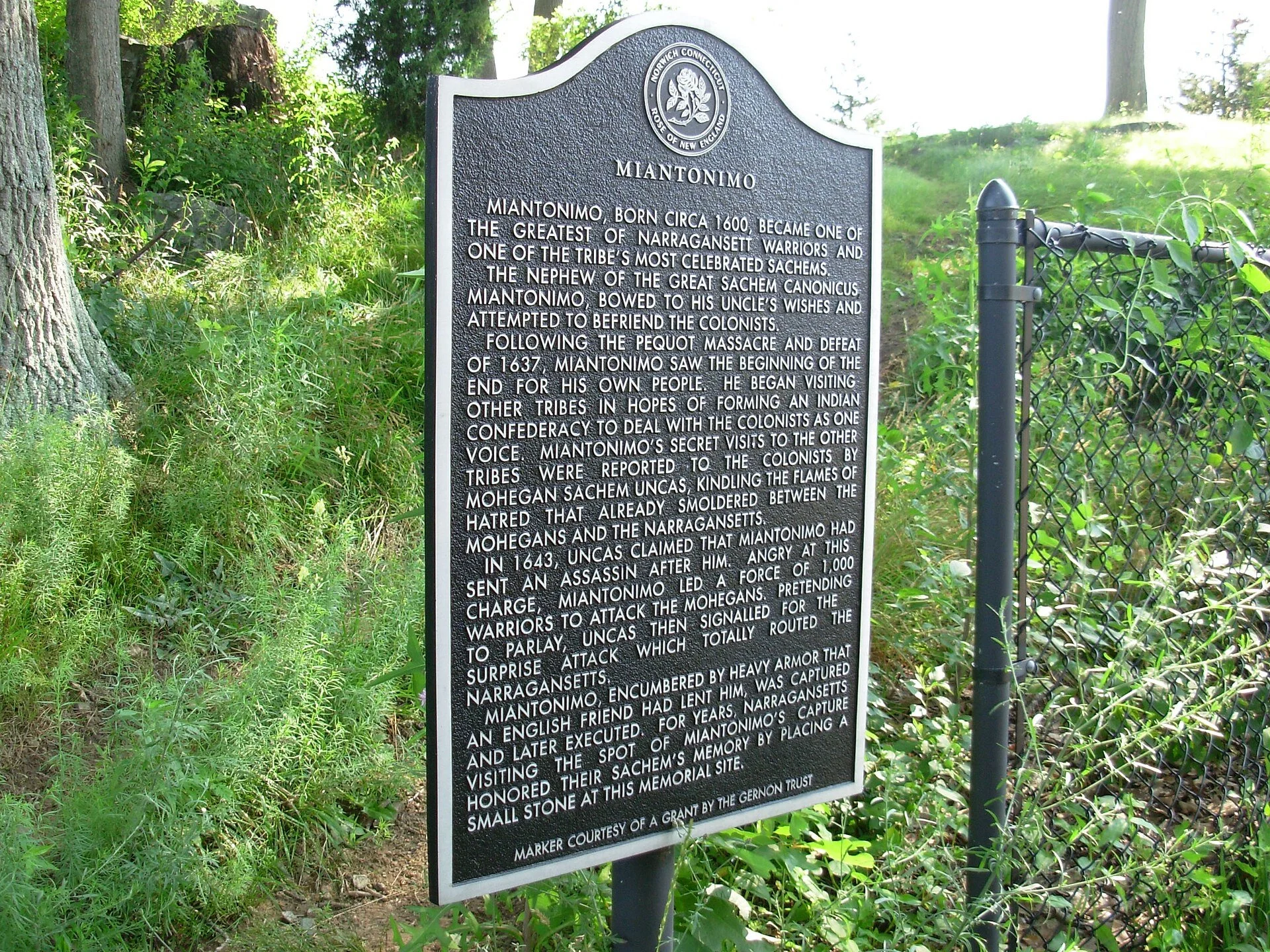
Miantonomi monument in Newport
Below is speech by the Narragansett Tribe sachem Miantonomi (1600 (circa)-1663) in 1640 in response to the relentless land grabs by English settlers. There are various spellings of the sachem’s name.
Brethren and friends, for so are we all Indians as the English are, and say brother to one another; so we must be one as they are, otherwise we shall be all gone shortly, for you know our fathers had plenty of deer and skins, our plains were full of deer, as also our woods, and of turkies, and our coves full of fish and fowl. But these English having gotten our land, they with scythes cut down the grass, and with axes fell the trees; their cows and horses eat the grass, and their hogs spoil our clam banks, and we shall all be starved; therefore it is best for you to do as we, for we are all the Sachems frome east to west, both Moquakues and Mohauks join with us, and we are all resolved to fall upon them all, at one appointed day.
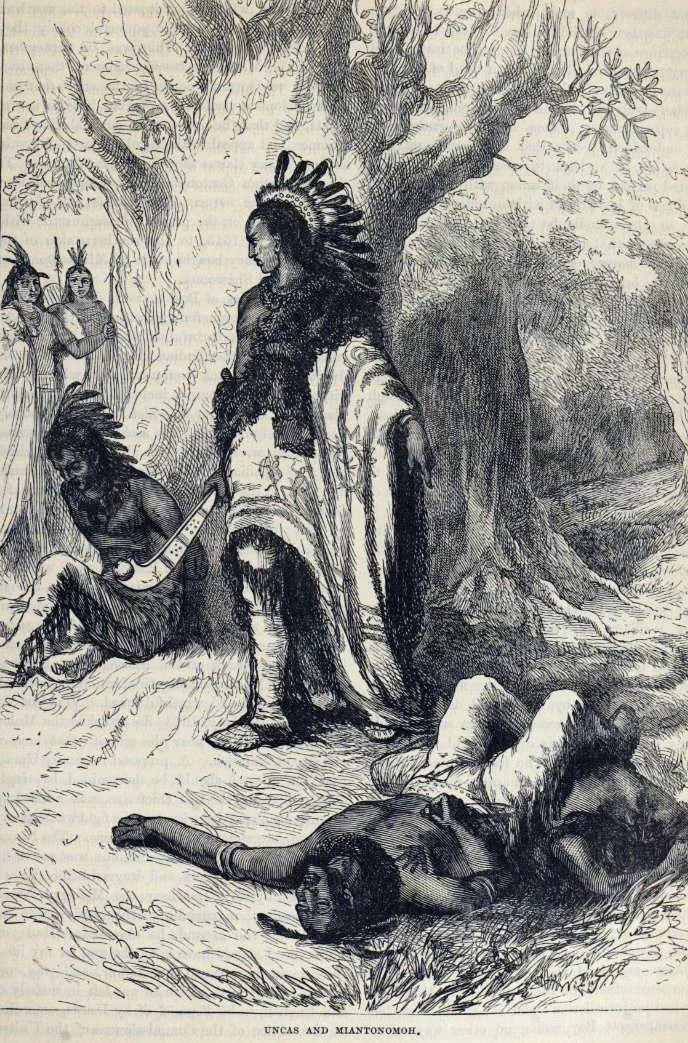
An 1874 illustration of Uncas killing Miantonomi in 1643
‘A floating world’

“Territory” (oil on canvas), by Suzanne Onodera, at Argazzi Art, Lakeville, Conn.
She says:
"I use the physicality of paint, color and gesture to create multi-layered lush landscapes that are drawn from my observations and experiences in nature. Bridging the abstract and the realistic, these places are extracted solely from my imagination, illustrating a sublime floating world that is simultaneously chaotic and unsettled, exalted and sublime. Always constant in the work is a search for beauty, mystery and ambiguity."

In the Hockomock Swamp. The swamp and its associated wetlands and water bodies comprise the largest freshwater wetland system in Massachusetts. The includes about 16,950 acres in the southeastern part of the state.
Why we need Lapham’s Quarterly
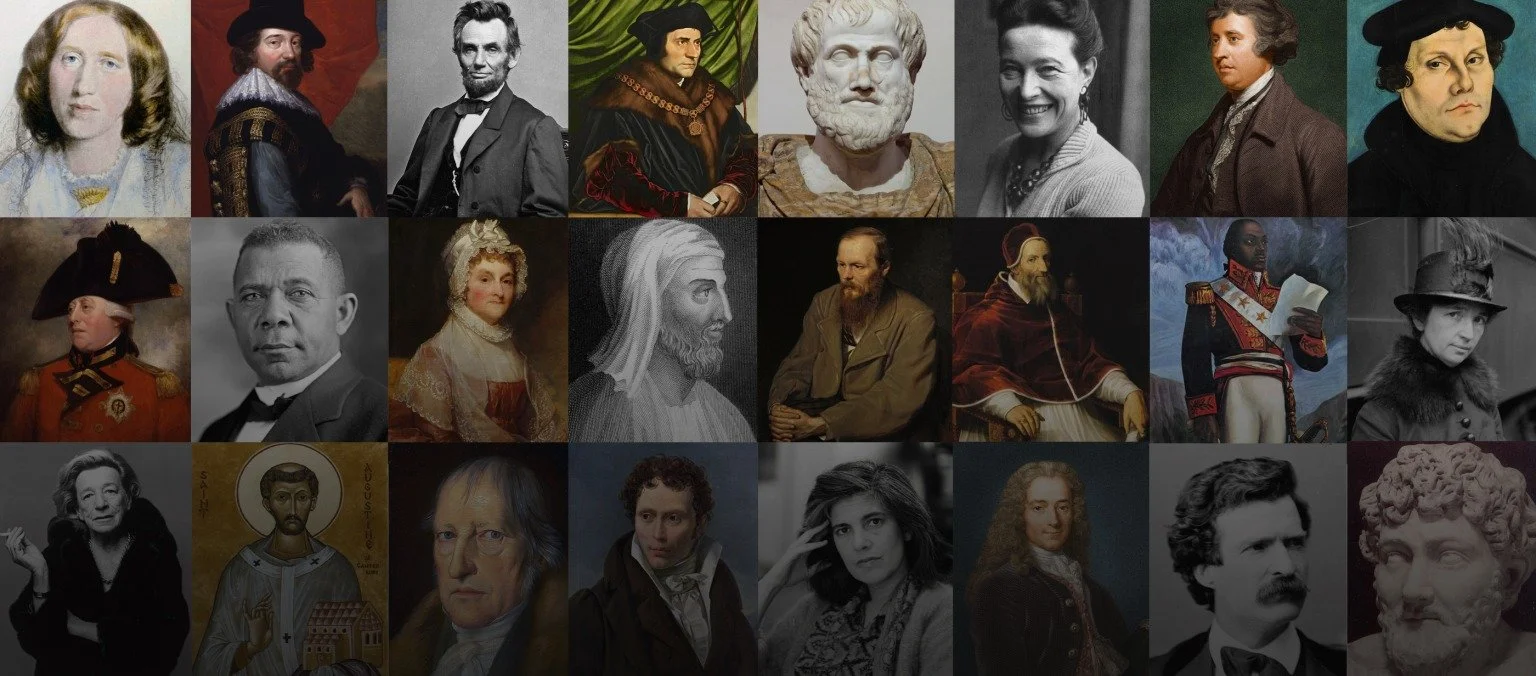
See:
Laphamsquarterly.org
Celebrated critic Ron Rosenbaum, writing in Smithsonian Magazine, argues that Lapham’s Quarterly solves “the great paradox of the digital age”
“Suddenly thanks to Google Books, JSTOR, and the like, all the great thinkers of all the civilizations past and present are one or two clicks away. The great library of Alexandria, nexus of all the learning of the ancient world that burned to the ground, has risen from the ashes online. And yet—here is the paradox—the wisdom of the ages is in some ways more distant and difficult to find than ever, buried like lost treasure beneath a fathomless ocean of online ignorance and trivia that makes what is worthy and timeless more inaccessible than ever. There has been no great librarian of Alexandria, no accessible finder’s guide, until Lewis Lapham created his quarterly…with the quixotic mission of serving as a highly selective search engine for the wisdom of the past.”
“Lapham’s Quarterly is a godsend, a genuine treasure for any and all who care about history and ideas and the love of learning. It is superbly edited, beautifully designed and illustrated, and has a good tactile presence exactly in the spirit of its purpose. I don’t know when I’ve been so pleased by something that arrived in the mail unexpectedly. Bravo!”
—David McCullough
“No matter how many magazines and journals to which you may subscribe, Lapham’s Quarterly is a necessity. From its very first issue, it has become the Thinking Person’s Guide to where we’ve come from, where we are, and where we may be going. Lewis Lapham’s name on the cover is enough to tell you, you’re in for an intellectual treat.”
—Morley Safer
“Lavishly detailed, handsomely produced, and conceptually brilliant...It recontextualizes history and makes it come alive to the sound of battle.”
—James Wolcott, Vanity Fair
“Enthralling reading... A magazine that demands focus and engages intellect in order to elicit persuasive emotions.”
—Francesca Mari, The New Republic
“It is not the next big thing; it is the real thing, a must-read.”
—Ken Alexander, The Walrus (Canada)
“Expertly edited and easy to read.”
—The Age (Australia)
“Expertly presented, with a soft matte finish and subdued colors, the magazine has a look and feel that reflect the quality of the fine writing. Essential for academic libraries; highly recommended for public libraries.”
—Steve Black, Library Journal

Projecting our drinking-water needs in a warmer and wetter climate

Adapted from Robert Whitcomb’s “Digital Diary,’’ in GoLocal24.com
Discussions come up from time to time about whether to create another Rhode Island state reservoir, in the Big River Management Area, to supplement the Scituate Reservoir. To be useful they must consider scientifically and actuarily based projections of the effects of global warming as well as of population growth.
Given that New England is expected to become wetter over the next few decades, will the Ocean State really need another big reservoir? Maybe. A Big River Reservoir would apparently be mostly for the fast-developing southern part of Rhode Island, and development pressures around here will probably increase as Americans move north from the Sun Belt, where climate change will be more onerous than in the Northeast. Further, the heavy draw on ground water in South Country threatens to increase salt-water intrusion into coastal towns’ wells.
In any event, making projections of global-warming effects is becoming a big industry, with many consulting firms making a good living on it, and new public programs, such as the American Climate Corps, are being created to deal with it. By the way, I noticed in The Boston Guardian the other day that that city will be updating its evacuation routes for storms and other emergencies.
The challenge has been heightened by the development of the city’s Seaport District, which is virtually at sea level, as is downtown Providence. Will the Seaport District become the Venice of the Northeast?
Hit these links:
https://turnto10.com/news/videos/federal-government-put-the-kibosh-on-big-river-reservoir
http://www.wrb.ri.gov/policy_guidelines_brmalanduse.html
https://read.thebostonguardian.com/the-boston-guardian#2023/10/06/?article=4159446
This from Reuters:
“Energy companies, hedge funds and commodity traders are stepping up their use of financial products that let them bet on the weather, as they seek to protect themselves against - or profit from - the increasingly extreme global climate.’’
See:
Getting a lift in Brattleboro

“Land Lift” (sculpture of steel, earth, grass and stone), by Bob Boemig, at the Brattleboro (Vt.) Museum & Art Center.
The museum says:
“On Sunday, Oct. 22, at 3 p.m., we're celebrating the 30th anniversary of ‘Land Lift.’
‘‘Bob Boemig's beloved sculpture graces the front of the museum. Some say it resembles a giant magic carpet, and who are we to argue? To mark the occasion, Boemig will give a talk on how ‘Land Lift’ came into being and how it relates to other public artworks he has created over the years for institutions such as the deCordova Museum, Williams College, and the Hood Museum at Dartmouth College. Admission is free and open to all. Visitors are invited to arrive early or stay late to spend time with—and on—"Land Lift," and to enjoy refreshments provided by Cai’s Dim Sum Catering.’’
David Warsh: Claudia Goldin's Nobel Prize was for many reasons
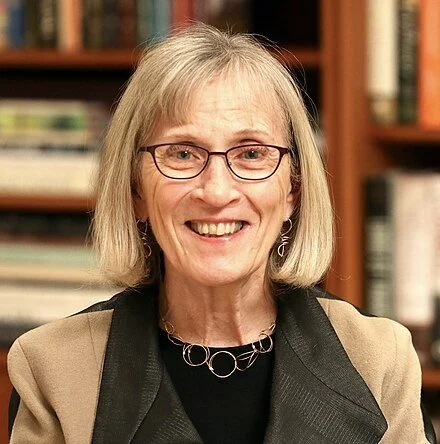
Claudia Goldin
SOMERVILLE, Mass.
The award of any Nobel Prize is an invitation to go prowling through the past. In the case of Claudia Goldin, of Harvard University, born in 1946, the history on offer is that of an entire generation – not just one crucial generation, in fact, but three. Hers is the first fifty-year career by a woman in major league economic research since that of Joan Robinson (1903-1983). Perhaps not since John Nash shared the prize, in 1994, has a single life in economics been so intricately connected to the context of its times as that of Goldin.
Calling Sylvia Nasar, author of the Nash biography, A Beautiful Mind!
For one thing, Goldin is a third-generation Nobel laureate. She wrote her dissertation under the direction of economic historian Robert Fogel, of the University of Chicago, who wrote his under Simon Kuznets, of Johns Hopkins University (in Goldin’s case, with significant influence by labor theorist Gary Becker as well.)
For another, she lived the full University of Chicago experience, before escaping to a place of her own. Some years ago, she told Douglas Clement, of the Federal Reserve Bank of Minneapolis, that her Cornell undergraduate mentor, Fred Kahn (who later became Jimmy Carter’s economic adviser), discouraged her from going.
“When I went to Cornell, the room that I entered was filled with paintings and good food. But Chicago was a castle, a completely different universe. I walked in and realized, once again, that I knew nothing. Now I knew absolutely nothing.… [She had gone to study industrial organization with George Stigler.] And then Gary [Becker] arrived, and once again I realized that the world of economics was much larger than I had thought. Gary was doing brilliant work on many different issues that I would call the economics of social forces. And then, to make things even better, I met Bob Fogel … [who] mesmerized me with economic history, and that combined my liberal arts junkie taste with my more rigorous math sensibilities.”
There followed twenty years of professional turbulence. After top-tier Chicago, she spent two years at third-tier Wisconsin, followed by six years in a top-ranked Princeton department, before settling down to tenure at the second-tier University of Pennsylvania. These were years when the Committee on the Status of Women in the Economics Profession was organizing, decades in which women began going to law and medical schools in significant numbers, but advances came much more slowly in economics.
Goldin’s major phase began in 1990, when she was appointed Harvard’s first tenured female professor of economics. She published Understanding the Gender Gap: An Economic History of American Women the same year, and was named director of the program on the Development of the American Economy of the National Bureau of Economic Research. Since then, nobody has written more thoughtfully and imaginatively about the myriad economic complexities of female gender in and out of the labor force, culminating in Career & Family: Women’s Century-Long Journey toward Equity (Princeton, 2021).
There is, as well, a love story. Goldin married her fellow Harvard economist Lawrence Katz, a labor economist. Over the course of several years, the pair produced an important and heavily documented study of the rise of the high-school movement in the United States in the late 19th Century, designed to prepare workers for an emerging industrial economy. The Race between Education and Technology Society (Harvard Belknap, 2009) is routinely cited among their most enduring contributions. In most respects, Katz is not a trailing spouse; earlier this month he was elected president of the American Economic Association.
Peter Fredriksson, of the University of Uppsala, a member of the committee that recommended the prize to Goldin, described last week several years of hard work as committee members untangling one contribution from the many others that warranted recognition. In the end, he said, they settled on the combination of economic history and labor economics that produced a U-shaped portrait of the changing trade-off between careers and family. Per Kussell, professor at Stockholm University and secretary to of the committee, emphasized “The prize is not the person, it’s for the work.”
Yet in this case, the person is equally interesting. I don’t know any of the details. But I am fairly certain Goldin’s is an unusually good story. Her prize was overdetermined, in that it was awarded for many overlapping reasons. For more than a decade it was understood that it eventually would be given. Better sooner than later. It makes a fitting climax to the story of one generation and the rising of the of the next.
David Warsh, a veteran columnist and an economic historian, is proprietor of economicprincipals.com, where this essay originated.
So maybe secession is in order?
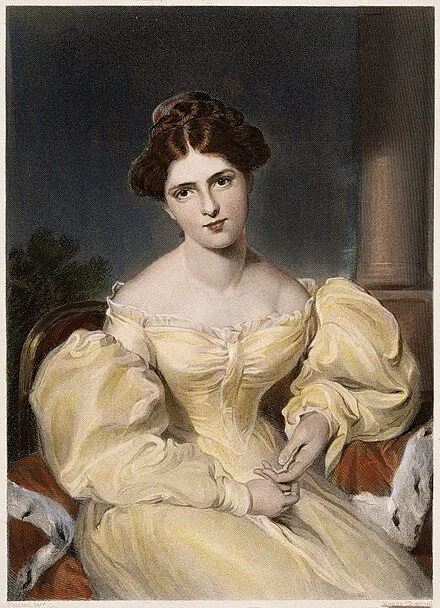
Fanny Kemble
“Those New England states, I do believe, will be the noblest country in the world in a little while. They will be the salvation of that very great body with a very little soul, the rest of the United States; they are the pith and the marrow, heart and core, head and spirit of that country.’’
— From British actress Fanny Kemble’s A Year of Consolation (1847)

Boston, from “The Eagle and the Wild Goose See It,’’ an 1860 photograph by James Wallace Black, was the first recorded aerial photograph.
Team player

“Portrait of Daniel King: Scouting for Men and Boys” (linocut, wood cut, lithograph), by Mark Sisson, in the group show “50/50: Collecting the Boston Printmakers,’’ at the Art Complex Museum, Duxbury, Mass., through Jan. 14.


Don Morrison: As Israeli-Hamas War rages, ‘X,’ as usual, marks a spot for brazen lies; then there's Facebook ….

Don Morrison is an author, lecturer, member of The Berkshire Eagle’s Advisory Board, a commentator for NPR’s Robin Hood Radio, European editor of the British magazine Port, an ex-Time Magazine editor, and a longtime part-time resident of the Berkshires.
As war rages between Israel and Hamas, I’ve been devouring reports of the conflict from newspapers, radio and TV. Also, social media, where – according to a recent Pew Research Center survey -- nearly a third of U.S. adults now get much of their news.
But I noticed something weird. Dubious reports and images kept popping up on X, formerly known as Twitter. Some of these posts appeared to depict fighting in Gaza, complete with an Israeli helicopter being shot down.
Turns out the clips were derived from a video game and footage of old fireworks celebrations. Equally fake were alleged photos of a Hamas fighter holding a kidnapped child and of soccer star Ronaldo waving a Palestinian flag.
Those images also popped up on other sites, including Facebook, but were quickly taken down. On X, not so fast.
Much has changed since Elon Musk acquired that platform last year. Besides changing the name, he fired half the staff that polices disinformation. He also started offering Twitter’s Blue Check reliability badge to just about anybody who could pay $8 a month.
The rebranded X now gives incentive payments to users who attract large audiences, thereby increasing the volume of what sells best on social media: conflict, controversy and conspiracy. As of last week, the site started stripping the original headlines from news stories shared by users. That makes it easier to put a fake spin on real events.
Long a free-speech absolutist, Musk seems determined to make X more open to controversial views. Including his.
Shortly after taking over, he began using his personal X account (160 million followers) to criticize government COVID policies, declare war on “big media companies” and call for Ukraine to give up territory to Russia. He compared liberal Jewish investor George Soros to Magneto, Marvel’s Jewish super-villain.
That last one prompted complaints of anti-Semitism. Musk denied them, even though allowing Hamas propaganda on X does not help his case. Nor does his recent claim that the Anti-Defamation League, founded in 1913 to combat anti-Semitism, is pressuring X’s advertisers to “kill this platform.”
Which is unlikely to happen. Though X’s revenues and market value have fallen since Musk took over, its monthly active users have nearly doubled to more than 500 million. That’s a lot of influence.
In a scathing report on major social media companies last month, the European Union noted that X had the worst misinformation quotient of them all. Last week, the E.U. warned Musk that X could face penalties in Europe over its Israel-Hamas lapses.
You’ve likely never met Elon Musk, but in Walter Isaacson’s masterful new biography, Elon Musk, the South African-born billionaire comes across as a mercurial man-boy whose visionary ambitions – Reinvent the car! Colonize space! Dig tunnels under cities! – are magnets for controversy.
Isaacson’s book broke the news that Musk derailed a Ukrainian drone attack on Russian naval forces early in their conflict by declining to extend coverage of his Starlink satellite broadband network to the area of conflict.
Musk, of course, is not the only techno-overlord to cause agita. Mark Zuckerberg’s Facebook came in a close second on the E.U.’s misinformation list. Jeff Bezos’ s Amazon was accused last week of directing its Alexa cloud-based device to tell users that the 2000 U.S. presidential election was “stolen by a massive amount of election fraud.” Amazon insisted that the false statement was “quickly fixed.”
Well, not exactly. Several days later, I asked Alexa about the alleged election theft. She replied: “I’m not able to answer that question.”
The power of social-media platforms remains largely unchecked. Section 230 of the federal Communications Decency Act shields them from being sued for removing – or refusing to remove – third-party content. Congressional attempts to end that protection have met with heavy industry lobbying.
I personally experienced the majesty of the social-media industry the other day. I tried to report a blatantly bogus claim – something about Hamas being financed by the Biden Administration. I was informed that X’s permissible reasons for removing a post no longer include false or misleading information.
How can we protect ourselves from this malarky? The internet is full of tips, such as: See if the story has been picked up by reputable news sites, or whether a fact-checking outfit like Snopes or Factcheck.org has weighed in on it. If the post contains a questionable photo, run a check on Google Images or Tin Eye to find its original source.
Also, get a life. I’ve been reducing my own presence on X. That means missing some personal news from family and friends, as well as Musk’s ever-entertaining comments. But I sure do have a lot of free time now.
And, in these troubling days, there’s so much else to read. Stuff that’s actually true.
Water view of history
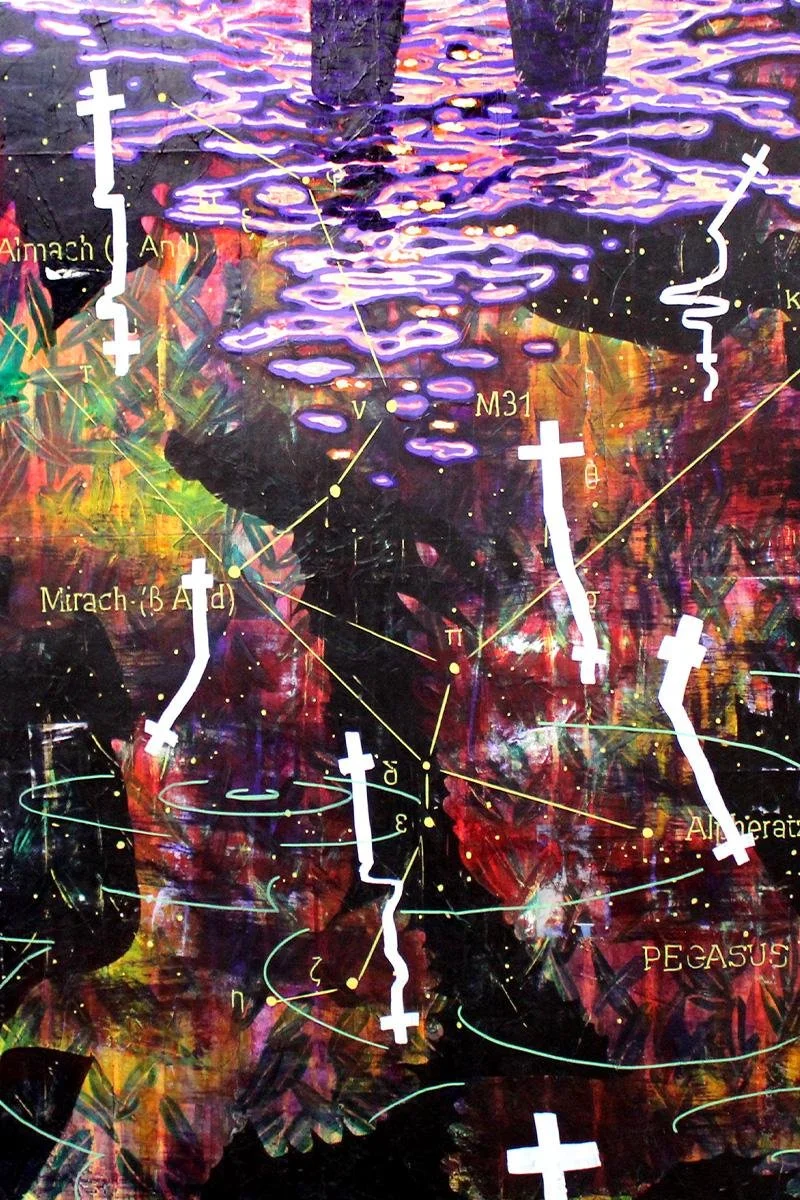
“The American Ocean” (acrylic, collage, mixed media on canvas), from Jordan Seaberry’s show “A Historical Correction Experienced With Sight,’’ at the University of New Hampshire Museum of Art, Durham, through Dec 2. He’s a Providence-based painter, lawyer and community organizer.

Llewellyn King: As the electricity sector is reinvented, there's an urgent need for engineers and technicians to support them


At the new (founded 1997) but already highly prestigious Olin College of Engineering, in Needham, Mass.
WEST WARWICK, R.I.
I have a soft spot for engineers and engineering. It started with my father. He called himself an engineer, even though he left school at 13 in a remote corner of Zimbabwe (then called Southern Rhodesia) and went to work in an auto repair shop.
By the time I remember his work clearly, in the 1950s, he was amazingly competent at everything he did, which was about everything that he could get to do. He could work a lathe, arc weld and acetylene weld, cut, rig, and screw.
My father used his imagination to solve problems, from finding a lost pump down a well to building a stand for a water tank that could supply several homes. He worked in steel: African termites wouldn’t allow wood to be used for external structures.
Electricity was a critical part of his sphere; installing and repairing electrical-power equipment was in his self-written brief.
Maybe that is why, for more than 50 years, I have found myself covering the electric-power industry. I have watched it struggle through the energy crisis and swing away from nuclear to coal, driven by popular feeling. I have watched natural gas, dismissed by the Carter administration as a “depleted resource,’’ roar back in the 1990s with new turbines, diminished regulation, and the vastly improved fracking technology.
Now, electricity is again a place of excitement. I have been to four important electricity conferences lately, and the word I hear everywhere about the challenges of the electricity future is “exciting.”
James Amato, vice president of Burns & McDonnell, a Kansas City, Mo.-based engineering, construction, and architecture firm that is heavily involved in all phases of the electric infrastructure, told me during an interview for the television program White House Chronicle that this is the most exciting time in supplying electricity since Thomas Edison set the whole thing in motion.
The industry, Amato explained, was in a state of complete reinvention. It must move off coal into renewables and prepare for a doubling or more of electricity demand by mid-century.
However, he also told me, “There is a major supply problem with engineers.” The colleges and universities aren’t producing enough of them, and not enough quality engineers — and he emphasized quality — are looking toward the ongoing electric revolution, which, to those involved in it, is so exhilarating and the place to be.
This problem is compounded by a wave of age retirements that is hitting the industry.
I believe that the electricity-supply system became a taken-for-granted undertaking and that talented engineers sought the glamor of the computer and defense industries.
Now, the big engineering companies are out to tell engineering school graduates that the big excitement is working on the world’s biggest machine: the U.S. electric supply system.
My late friend Ben Wattenberg, demographer, essayist, presidential speechwriter, television personality, and strategic thinker, hosted an important PBS documentary film and co-wrote a companion book, The First Measured Century: The Other Way of Looking at American History. He showed how our ability to measure changed public policy as we learned exactly about the distribution of people and who they were. Also, how we could measure things down to parts per billion in, say, water.
In my view, this is set to be the first engineered century, in tandem with being the first fully electric century. We are moving toward a new level of dependence on electricity and the myriad systems that support it. From the moment we wake, we are using electricity, and even as we sleep, electricity controls the temperature and time for us.
The new need to reduce carbon entering the atmosphere is to electrify almost everything else, primary transportation — from cars to commercial vehicles and eventually trains — but also heavy industrial uses, such as making steel and cement.
Amato said there is not only a shortage of college-educated engineers needed on the frontlines of the electric revolution but also a shortage of competent technicians or those trained in the crafts that support engineering. These are people who wield the tools, artisans across the board. In the electric utilities, there is also a need for line workers, a job that offers security, retirement, and esprit.
In the 1960s, the big engineering adventure was the space race. Today, it is the stuff that powers your coffeemaker in the morning, your cup of joe, or, you might say, your jolt of electrons.
On Twitter: @llewellynking2
Llewellyn King is executive producer and host of White House Chronicle, on PBS, and is based in Rhode Island and Washington, D.C.
Editor’s note: Readers should read about this Massachusetts-based company.