
Vox clamantis in deserto



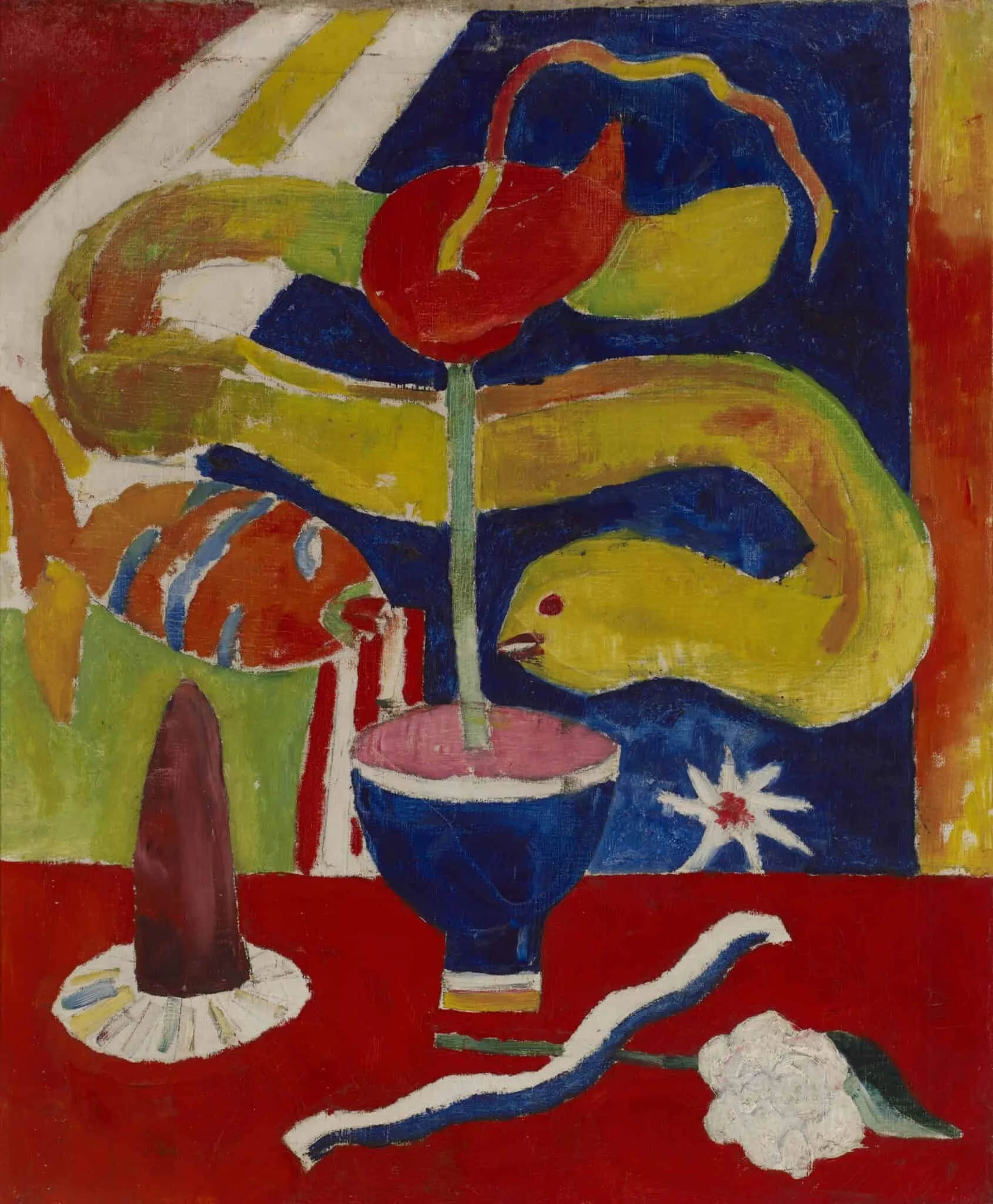


‘A floating world’

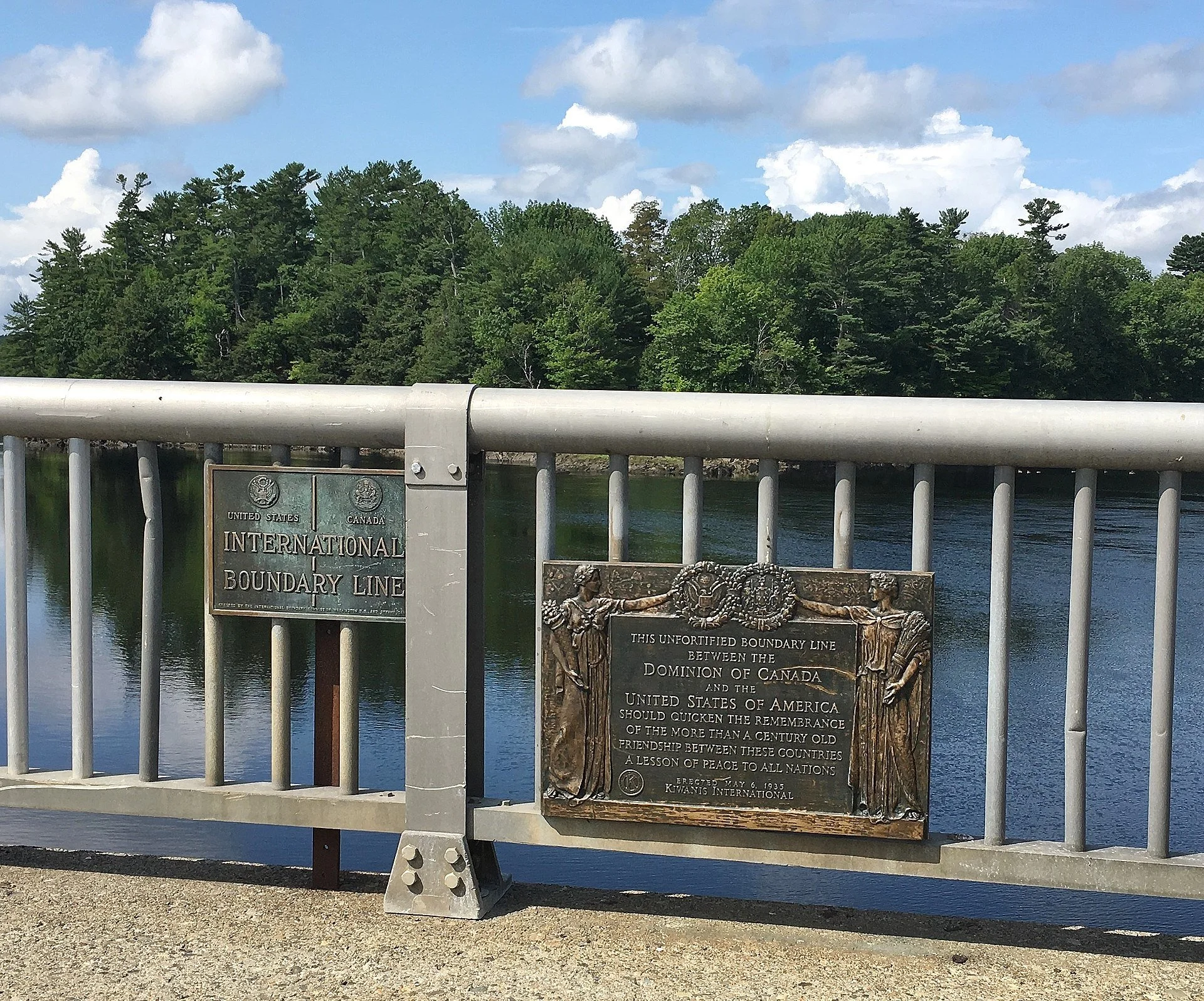
“Territory” (oil on canvas), by Suzanne Onodera, at Argazzi Art, Lakeville, Conn.
She says:
"I use the physicality of paint, color and gesture to create multi-layered lush landscapes that are drawn from my observations and experiences in nature. Bridging the abstract and the realistic, these places are extracted solely from my imagination, illustrating a sublime floating world that is simultaneously chaotic and unsettled, exalted and sublime. Always constant in the work is a search for beauty, mystery and ambiguity."

In the Hockomock Swamp. The swamp and its associated wetlands and water bodies comprise the largest freshwater wetland system in Massachusetts. The includes about 16,950 acres in the southeastern part of the state.
Why we need Lapham’s Quarterly
See:
Laphamsquarterly.org
Celebrated critic Ron Rosenbaum, writing in Smithsonian Magazine, argues that Lapham’s Quarterly solves “the great paradox of the digital age”
“Suddenly thanks to Google Books, JSTOR, and the like, all the great thinkers of all the civilizations past and present are one or two clicks away. The great library of Alexandria, nexus of all the learning of the ancient world that burned to the ground, has risen from the ashes online. And yet—here is the paradox—the wisdom of the ages is in some ways more distant and difficult to find than ever, buried like lost treasure beneath a fathomless ocean of online ignorance and trivia that makes what is worthy and timeless more inaccessible than ever. There has been no great librarian of Alexandria, no accessible finder’s guide, until Lewis Lapham created his quarterly…with the quixotic mission of serving as a highly selective search engine for the wisdom of the past.”
“Lapham’s Quarterly is a godsend, a genuine treasure for any and all who care about history and ideas and the love of learning. It is superbly edited, beautifully designed and illustrated, and has a good tactile presence exactly in the spirit of its purpose. I don’t know when I’ve been so pleased by something that arrived in the mail unexpectedly. Bravo!”
—David McCullough
“No matter how many magazines and journals to which you may subscribe, Lapham’s Quarterly is a necessity. From its very first issue, it has become the Thinking Person’s Guide to where we’ve come from, where we are, and where we may be going. Lewis Lapham’s name on the cover is enough to tell you, you’re in for an intellectual treat.”
—Morley Safer
“Lavishly detailed, handsomely produced, and conceptually brilliant...It recontextualizes history and makes it come alive to the sound of battle.”
—James Wolcott, Vanity Fair
“Enthralling reading... A magazine that demands focus and engages intellect in order to elicit persuasive emotions.”
—Francesca Mari, The New Republic
“It is not the next big thing; it is the real thing, a must-read.”
—Ken Alexander, The Walrus (Canada)
“Expertly edited and easy to read.”
—The Age (Australia)
“Expertly presented, with a soft matte finish and subdued colors, the magazine has a look and feel that reflect the quality of the fine writing. Essential for academic libraries; highly recommended for public libraries.”
—Steve Black, Library Journal

Projecting our drinking-water needs in a warmer and wetter climate

Adapted from Robert Whitcomb’s “Digital Diary,’’ in GoLocal24.com
Discussions come up from time to time about whether to create another Rhode Island state reservoir, in the Big River Management Area, to supplement the Scituate Reservoir. To be useful they must consider scientifically and actuarily based projections of the effects of global warming as well as of population growth.
Given that New England is expected to become wetter over the next few decades, will the Ocean State really need another big reservoir? Maybe. A Big River Reservoir would apparently be mostly for the fast-developing southern part of Rhode Island, and development pressures around here will probably increase as Americans move north from the Sun Belt, where climate change will be more onerous than in the Northeast. Further, the heavy draw on ground water in South Country threatens to increase salt-water intrusion into coastal towns’ wells.
In any event, making projections of global-warming effects is becoming a big industry, with many consulting firms making a good living on it, and new public programs, such as the American Climate Corps, are being created to deal with it. By the way, I noticed in The Boston Guardian the other day that that city will be updating its evacuation routes for storms and other emergencies.
The challenge has been heightened by the development of the city’s Seaport District, which is virtually at sea level, as is downtown Providence. Will the Seaport District become the Venice of the Northeast?
Hit these links:
https://turnto10.com/news/videos/federal-government-put-the-kibosh-on-big-river-reservoir
http://www.wrb.ri.gov/policy_guidelines_brmalanduse.html
https://read.thebostonguardian.com/the-boston-guardian#2023/10/06/?article=4159446
This from Reuters:
“Energy companies, hedge funds and commodity traders are stepping up their use of financial products that let them bet on the weather, as they seek to protect themselves against - or profit from - the increasingly extreme global climate.’’
See:
Getting a lift in Brattleboro

“Land Lift” (sculpture of steel, earth, grass and stone), by Bob Boemig, at the Brattleboro (Vt.) Museum & Art Center.
The museum says:
“On Sunday, Oct. 22, at 3 p.m., we're celebrating the 30th anniversary of ‘Land Lift.’
‘‘Bob Boemig's beloved sculpture graces the front of the museum. Some say it resembles a giant magic carpet, and who are we to argue? To mark the occasion, Boemig will give a talk on how ‘Land Lift’ came into being and how it relates to other public artworks he has created over the years for institutions such as the deCordova Museum, Williams College, and the Hood Museum at Dartmouth College. Admission is free and open to all. Visitors are invited to arrive early or stay late to spend time with—and on—"Land Lift," and to enjoy refreshments provided by Cai’s Dim Sum Catering.’’
David Warsh: Claudia Goldin's Nobel Prize was for many reasons
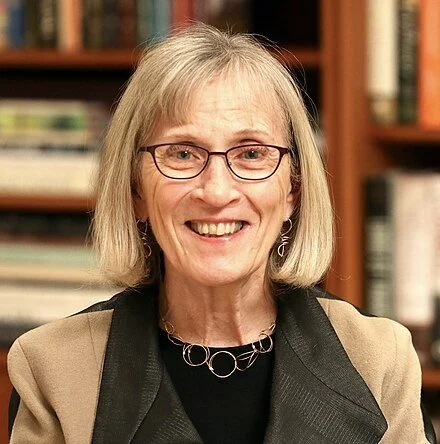
Claudia Goldin
SOMERVILLE, Mass.
The award of any Nobel Prize is an invitation to go prowling through the past. In the case of Claudia Goldin, of Harvard University, born in 1946, the history on offer is that of an entire generation – not just one crucial generation, in fact, but three. Hers is the first fifty-year career by a woman in major league economic research since that of Joan Robinson (1903-1983). Perhaps not since John Nash shared the prize, in 1994, has a single life in economics been so intricately connected to the context of its times as that of Goldin.
Calling Sylvia Nasar, author of the Nash biography, A Beautiful Mind!
For one thing, Goldin is a third-generation Nobel laureate. She wrote her dissertation under the direction of economic historian Robert Fogel, of the University of Chicago, who wrote his under Simon Kuznets, of Johns Hopkins University (in Goldin’s case, with significant influence by labor theorist Gary Becker as well.)
For another, she lived the full University of Chicago experience, before escaping to a place of her own. Some years ago, she told Douglas Clement, of the Federal Reserve Bank of Minneapolis, that her Cornell undergraduate mentor, Fred Kahn (who later became Jimmy Carter’s economic adviser), discouraged her from going.
“When I went to Cornell, the room that I entered was filled with paintings and good food. But Chicago was a castle, a completely different universe. I walked in and realized, once again, that I knew nothing. Now I knew absolutely nothing.… [She had gone to study industrial organization with George Stigler.] And then Gary [Becker] arrived, and once again I realized that the world of economics was much larger than I had thought. Gary was doing brilliant work on many different issues that I would call the economics of social forces. And then, to make things even better, I met Bob Fogel … [who] mesmerized me with economic history, and that combined my liberal arts junkie taste with my more rigorous math sensibilities.”
There followed twenty years of professional turbulence. After top-tier Chicago, she spent two years at third-tier Wisconsin, followed by six years in a top-ranked Princeton department, before settling down to tenure at the second-tier University of Pennsylvania. These were years when the Committee on the Status of Women in the Economics Profession was organizing, decades in which women began going to law and medical schools in significant numbers, but advances came much more slowly in economics.
Goldin’s major phase began in 1990, when she was appointed Harvard’s first tenured female professor of economics. She published Understanding the Gender Gap: An Economic History of American Women the same year, and was named director of the program on the Development of the American Economy of the National Bureau of Economic Research. Since then, nobody has written more thoughtfully and imaginatively about the myriad economic complexities of female gender in and out of the labor force, culminating in Career & Family: Women’s Century-Long Journey toward Equity (Princeton, 2021).
There is, as well, a love story. Goldin married her fellow Harvard economist Lawrence Katz, a labor economist. Over the course of several years, the pair produced an important and heavily documented study of the rise of the high-school movement in the United States in the late 19th Century, designed to prepare workers for an emerging industrial economy. The Race between Education and Technology Society (Harvard Belknap, 2009) is routinely cited among their most enduring contributions. In most respects, Katz is not a trailing spouse; earlier this month he was elected president of the American Economic Association.
Peter Fredriksson, of the University of Uppsala, a member of the committee that recommended the prize to Goldin, described last week several years of hard work as committee members untangling one contribution from the many others that warranted recognition. In the end, he said, they settled on the combination of economic history and labor economics that produced a U-shaped portrait of the changing trade-off between careers and family. Per Kussell, professor at Stockholm University and secretary to of the committee, emphasized “The prize is not the person, it’s for the work.”
Yet in this case, the person is equally interesting. I don’t know any of the details. But I am fairly certain Goldin’s is an unusually good story. Her prize was overdetermined, in that it was awarded for many overlapping reasons. For more than a decade it was understood that it eventually would be given. Better sooner than later. It makes a fitting climax to the story of one generation and the rising of the of the next.
David Warsh, a veteran columnist and an economic historian, is proprietor of economicprincipals.com, where this essay originated.
So maybe secession is in order?
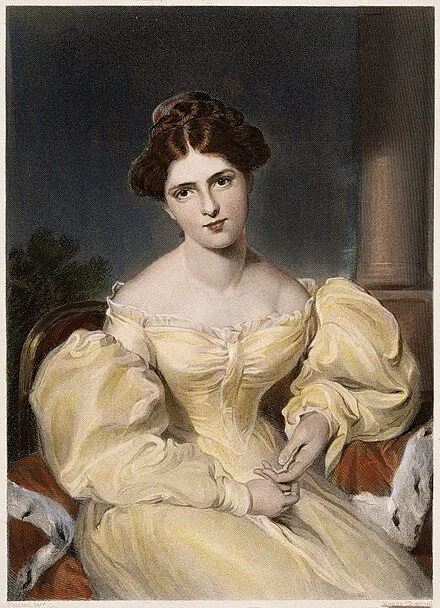
Fanny Kemble
“Those New England states, I do believe, will be the noblest country in the world in a little while. They will be the salvation of that very great body with a very little soul, the rest of the United States; they are the pith and the marrow, heart and core, head and spirit of that country.’’
— From British actress Fanny Kemble’s A Year of Consolation (1847)

Boston, from “The Eagle and the Wild Goose See It,’’ an 1860 photograph by James Wallace Black, was the first recorded aerial photograph.
Team player

“Portrait of Daniel King: Scouting for Men and Boys” (linocut, wood cut, lithograph), by Mark Sisson, in the group show “50/50: Collecting the Boston Printmakers,’’ at the Art Complex Museum, Duxbury, Mass., through Jan. 14.


Don Morrison: As Israeli-Hamas War rages, ‘X,’ as usual, marks a spot for brazen lies; then there's Facebook ….

Don Morrison is an author, lecturer, member of The Berkshire Eagle’s Advisory Board, a commentator for NPR’s Robin Hood Radio, European editor of the British magazine Port, an ex-Time Magazine editor, and a longtime part-time resident of the Berkshires.
As war rages between Israel and Hamas, I’ve been devouring reports of the conflict from newspapers, radio and TV. Also, social media, where – according to a recent Pew Research Center survey -- nearly a third of U.S. adults now get much of their news.
But I noticed something weird. Dubious reports and images kept popping up on X, formerly known as Twitter. Some of these posts appeared to depict fighting in Gaza, complete with an Israeli helicopter being shot down.
Turns out the clips were derived from a video game and footage of old fireworks celebrations. Equally fake were alleged photos of a Hamas fighter holding a kidnapped child and of soccer star Ronaldo waving a Palestinian flag.
Those images also popped up on other sites, including Facebook, but were quickly taken down. On X, not so fast.
Much has changed since Elon Musk acquired that platform last year. Besides changing the name, he fired half the staff that polices disinformation. He also started offering Twitter’s Blue Check reliability badge to just about anybody who could pay $8 a month.
The rebranded X now gives incentive payments to users who attract large audiences, thereby increasing the volume of what sells best on social media: conflict, controversy and conspiracy. As of last week, the site started stripping the original headlines from news stories shared by users. That makes it easier to put a fake spin on real events.
Long a free-speech absolutist, Musk seems determined to make X more open to controversial views. Including his.
Shortly after taking over, he began using his personal X account (160 million followers) to criticize government COVID policies, declare war on “big media companies” and call for Ukraine to give up territory to Russia. He compared liberal Jewish investor George Soros to Magneto, Marvel’s Jewish super-villain.
That last one prompted complaints of anti-Semitism. Musk denied them, even though allowing Hamas propaganda on X does not help his case. Nor does his recent claim that the Anti-Defamation League, founded in 1913 to combat anti-Semitism, is pressuring X’s advertisers to “kill this platform.”
Which is unlikely to happen. Though X’s revenues and market value have fallen since Musk took over, its monthly active users have nearly doubled to more than 500 million. That’s a lot of influence.
In a scathing report on major social media companies last month, the European Union noted that X had the worst misinformation quotient of them all. Last week, the E.U. warned Musk that X could face penalties in Europe over its Israel-Hamas lapses.
You’ve likely never met Elon Musk, but in Walter Isaacson’s masterful new biography, Elon Musk, the South African-born billionaire comes across as a mercurial man-boy whose visionary ambitions – Reinvent the car! Colonize space! Dig tunnels under cities! – are magnets for controversy.
Isaacson’s book broke the news that Musk derailed a Ukrainian drone attack on Russian naval forces early in their conflict by declining to extend coverage of his Starlink satellite broadband network to the area of conflict.
Musk, of course, is not the only techno-overlord to cause agita. Mark Zuckerberg’s Facebook came in a close second on the E.U.’s misinformation list. Jeff Bezos’ s Amazon was accused last week of directing its Alexa cloud-based device to tell users that the 2000 U.S. presidential election was “stolen by a massive amount of election fraud.” Amazon insisted that the false statement was “quickly fixed.”
Well, not exactly. Several days later, I asked Alexa about the alleged election theft. She replied: “I’m not able to answer that question.”
The power of social-media platforms remains largely unchecked. Section 230 of the federal Communications Decency Act shields them from being sued for removing – or refusing to remove – third-party content. Congressional attempts to end that protection have met with heavy industry lobbying.
I personally experienced the majesty of the social-media industry the other day. I tried to report a blatantly bogus claim – something about Hamas being financed by the Biden Administration. I was informed that X’s permissible reasons for removing a post no longer include false or misleading information.
How can we protect ourselves from this malarky? The internet is full of tips, such as: See if the story has been picked up by reputable news sites, or whether a fact-checking outfit like Snopes or Factcheck.org has weighed in on it. If the post contains a questionable photo, run a check on Google Images or Tin Eye to find its original source.
Also, get a life. I’ve been reducing my own presence on X. That means missing some personal news from family and friends, as well as Musk’s ever-entertaining comments. But I sure do have a lot of free time now.
And, in these troubling days, there’s so much else to read. Stuff that’s actually true.
Water view of history
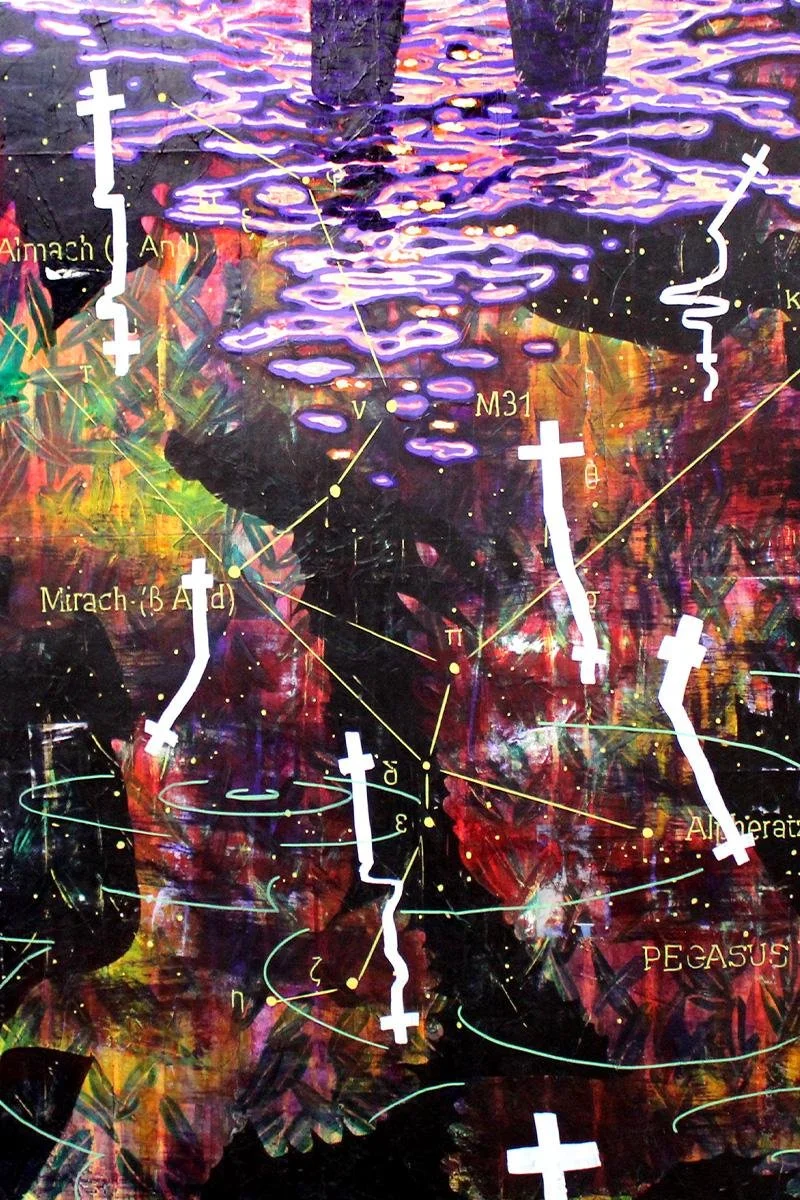
“The American Ocean” (acrylic, collage, mixed media on canvas), from Jordan Seaberry’s show “A Historical Correction Experienced With Sight,’’ at the University of New Hampshire Museum of Art, Durham, through Dec 2. He’s a Providence-based painter, lawyer and community organizer.

Llewellyn King: As the electricity sector is reinvented, there's an urgent need for engineers and technicians to support them

At the new (founded 1997) but already highly prestigious Olin College of Engineering, in Needham, Mass.
WEST WARWICK, R.I.
I have a soft spot for engineers and engineering. It started with my father. He called himself an engineer, even though he left school at 13 in a remote corner of Zimbabwe (then called Southern Rhodesia) and went to work in an auto repair shop.
By the time I remember his work clearly, in the 1950s, he was amazingly competent at everything he did, which was about everything that he could get to do. He could work a lathe, arc weld and acetylene weld, cut, rig, and screw.
My father used his imagination to solve problems, from finding a lost pump down a well to building a stand for a water tank that could supply several homes. He worked in steel: African termites wouldn’t allow wood to be used for external structures.
Electricity was a critical part of his sphere; installing and repairing electrical-power equipment was in his self-written brief.
Maybe that is why, for more than 50 years, I have found myself covering the electric-power industry. I have watched it struggle through the energy crisis and swing away from nuclear to coal, driven by popular feeling. I have watched natural gas, dismissed by the Carter administration as a “depleted resource,’’ roar back in the 1990s with new turbines, diminished regulation, and the vastly improved fracking technology.
Now, electricity is again a place of excitement. I have been to four important electricity conferences lately, and the word I hear everywhere about the challenges of the electricity future is “exciting.”
James Amato, vice president of Burns & McDonnell, a Kansas City, Mo.-based engineering, construction, and architecture firm that is heavily involved in all phases of the electric infrastructure, told me during an interview for the television program White House Chronicle that this is the most exciting time in supplying electricity since Thomas Edison set the whole thing in motion.
The industry, Amato explained, was in a state of complete reinvention. It must move off coal into renewables and prepare for a doubling or more of electricity demand by mid-century.
However, he also told me, “There is a major supply problem with engineers.” The colleges and universities aren’t producing enough of them, and not enough quality engineers — and he emphasized quality — are looking toward the ongoing electric revolution, which, to those involved in it, is so exhilarating and the place to be.
This problem is compounded by a wave of age retirements that is hitting the industry.
I believe that the electricity-supply system became a taken-for-granted undertaking and that talented engineers sought the glamor of the computer and defense industries.
Now, the big engineering companies are out to tell engineering school graduates that the big excitement is working on the world’s biggest machine: the U.S. electric supply system.
My late friend Ben Wattenberg, demographer, essayist, presidential speechwriter, television personality, and strategic thinker, hosted an important PBS documentary film and co-wrote a companion book, The First Measured Century: The Other Way of Looking at American History. He showed how our ability to measure changed public policy as we learned exactly about the distribution of people and who they were. Also, how we could measure things down to parts per billion in, say, water.
In my view, this is set to be the first engineered century, in tandem with being the first fully electric century. We are moving toward a new level of dependence on electricity and the myriad systems that support it. From the moment we wake, we are using electricity, and even as we sleep, electricity controls the temperature and time for us.
The new need to reduce carbon entering the atmosphere is to electrify almost everything else, primary transportation — from cars to commercial vehicles and eventually trains — but also heavy industrial uses, such as making steel and cement.
Amato said there is not only a shortage of college-educated engineers needed on the frontlines of the electric revolution but also a shortage of competent technicians or those trained in the crafts that support engineering. These are people who wield the tools, artisans across the board. In the electric utilities, there is also a need for line workers, a job that offers security, retirement, and esprit.
In the 1960s, the big engineering adventure was the space race. Today, it is the stuff that powers your coffeemaker in the morning, your cup of joe, or, you might say, your jolt of electrons.
On Twitter: @llewellynking2
Llewellyn King is executive producer and host of White House Chronicle, on PBS, and is based in Rhode Island and Washington, D.C.
Editor’s note: Readers should read about this Massachusetts-based company.
James Dempsey: In the heyday of Modernism, a memorably snippy writer-editor back-and-forth; photo correction
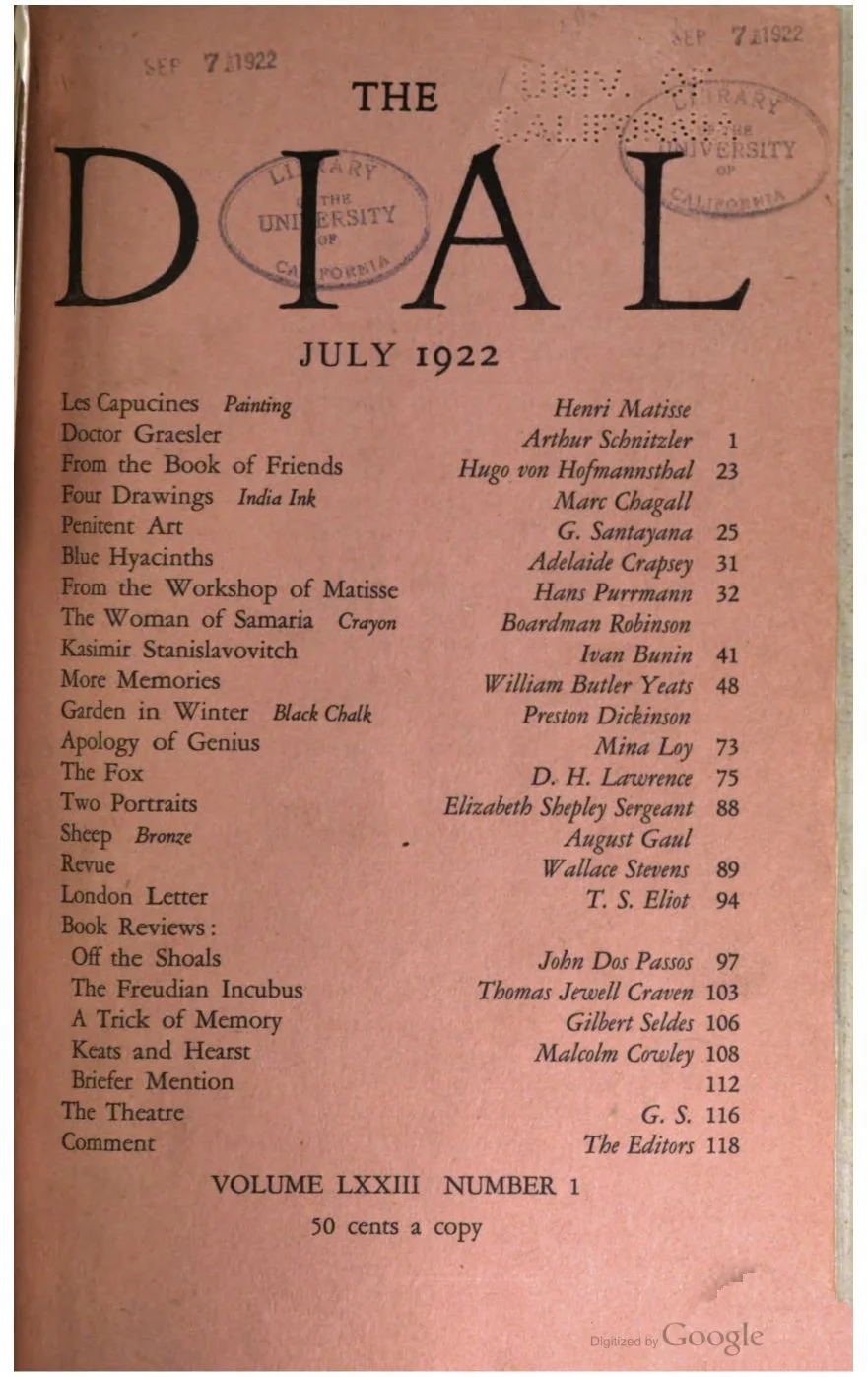

Alyse Gregory
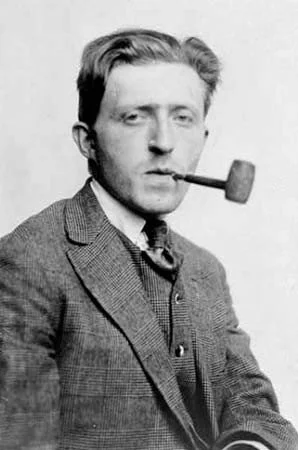
Maxwell Budenheim (1891-1954)
CORRECTION: Due to an editor’s error, we misidentified a photo that had previously run with this piece as being that of Alyse Gregory. It was of Gamel Woolsey. We regret the error.
James Dempsey is the Worcester area-based author of The Court Poetry of Chaucer, Zakary’s Zombies, Murphy’s American Dream and The Tortured Life of Scofield Thayer. Research for the last is the basis of this essay. Mr. Dempsey has also served as a newspaper columnist, editor and teacher.
Maxwell Bodenheim and Alyse Gregory are two of the lesser-known names from the Modernist period. Bodenheim is undoubtedly the more notorious, thanks to a career that in the 1920s soared with exceptional promise but which, after Bodenheim’s life descended into addiction and crashing poverty, came to an end in the horrific 1954 double murder of himself and his wife, then homeless, at the hands of an unstable dishwasher they had befriended. Bodenheim was a writer of great facility who could turn his pen to poetry, fiction, and criticism, producing some two dozen books, as well as the mountain of bread-and-butter literary journalism required of the freelance writer.
Gregory was a singer, a suffragist, and a writer. The owners of the magazine The Dial, Scofield Thayer and J. Sibley Watson, urged on her the post of Managing Editor of the journal after Gilbert Seldes left the position to write what would be his most famous book, The Seven Lively Arts. She politely rebuffed them several times, not comfortable with being entrusted with so much power in the literary world of 1920’s New York City and less than confident that she could meet the magazine’s high standards.
Thayer and Watson had bought The Dial in 1919 and made of it an arts and literary magazine that attracted both avant-garde and established writers and artists. It was successful by every measure except profitability--one year it lost today’s equivalent of $1.5 million—but this was just a minor irritant to the owners, who owners, who were heirs to great wealth, Thayer to a New England textile fortune and Watson to the Western Union empire. Pay rates were generous and assured, the magazine was beautifully designed and brilliantly curated, and consequently writers and artists were eager for their work to appear in its pages. Thayer and Watson both greatly admired Gregory, and when they made made an unannounced joint appearance in her Greenwich Village apartment to importune her to edit the magazine, she finally succumbed to the pressure. She was named Managing Editor in Februry 1924 would remain at The Dial until moving with her husband, novelist Llewellyn Powys, to England the following year. During her tenure the magazine accepted work from E.E. Cummings, T.S. Eliot, D.H Lawrence, Thomas Mann, Marianne Moore, Llewelyn and T.S. Powys, Siegfried Sassoon, Bertrand Russell, Wallace Stevens, Edmund Wilson, Virginia Woolf, a nd W. B. Yeats. Artists whose work appeared included Mac Chagall, Georgia O’Keeffe, Henri Matisse, Edvard Munch, Pablo Picasso, Auguste Rodin, and John Singer Sargent
Bodenheim was well-represented in The Dial. Seven of his poems appeared in the February 1920 issue, the second under its new owners. The magazine went on to publish Bodenheim’s verse in the August 1921, March 1922, and April 1923 issues. He also published a short story in December 1921 and wrote a review of Ezra Pound’s Poems int the January 1922 issue.
Bodenheim’s own work was given two full-length reviews in the journal. In October 1922 Malcom Cowley reviewed his book of verse, Introducing Irony. Cowley sounded a touch baffled: “He writes English as if remembering some learned book of Confucian precepts.” At one point he said that Bodenheim’s “accumulation of images resembles Shakespeare,” although the reader is not sure from the context if this is intended wholly as a compliment (Bodenheim certainly took it as such). Bodenheim, Cowley wrote, is the “American prophet of the new preciosity (and with many disciples).” The critic sums up Bodenheim’s verse as “stilted, conventional to its own conventions, and formally bandaged in red tape.” He accused its author as having “all the insufferability of genius, and a very little of the genius which alone can justify it.”
In September 1924 Marianne Moore produced a long and nuanced survey of Bodenheim’s work to date with a focus on his poetry collection Against This Age and his novel Crazy Man. Moore grants Bodenheim a wide popularity but notes that “one is forced in certain instances to conclude that he is self-deceived or willingly a charlatan.” She distrusts his “concept of woman” and Bodenheim’s pronouncement “that there is zest in bagging a woman who is one’s equal in wits” is punctured by her remarking that “the possibility of bagging a superior in wits not being allowed to confuse the issue.”
Moore goes on, however, to find more than occasional felicities in Bodenheim, such as the line, “simplicity demands one gesture and men give it endless thousands.” In his stories she finds a “genuine narrator” and “an acid penetration which recalls James Joyce’s Dubliners.”
Bodenheim’s books also showed up in the magazine’s “Briefer Mention” thumbnail reviews in June and August 1923, January 1926, and August 1927.
All in all, this is a better-than-average showing in a magazine whose Contents page was populated by writers who would go on to comprise much of the 20th Century’s Western literary and artistic canon, the high priests and priestesses of Modernism.
One notes from the publication dates of Bodenheim’s work in The Dial that his writing is absent in 1924 and 1925, a period that happens to correlate with Gregory’s tenure at the magazine. This was not a coincidence. Try as he might, Bodenheim was unable to get Gregory to accept even one of his pieces. There appears to be nothing sinister about her rejection of his work; she simply did not care for it and wondered what others saw in it. She did realize, however, that Bodenheim had his admirers, and it was she who persuaded Scofield Thayer to run the review by Marianne Moore mentioned above. “I always knew you disapproved of my asking Marianne Moore to do a review of Maxwell Bodenheim’s books,” she wrote Thayer apologetically. “He is so very much a figure among certain people … that I thought he should be exposed if nothing else.”
If Bodenheim couldn’t win Gregory over, it wasn’t for want of trying. Their correspondence shows Bodenheim continually advancing on her like a big-hearted prize fighter being peppered by punches from a more technically gifted pugilist, and continuing to limply jab until he finally realizes the match is unwinnable, slumps into his corner stool, and mumbles, “No mas.”
He made his first submission, a single poem, soon after Gregory had taken up the post. She returned it, with the note below, and so set in motion an epistolary exchange that even though a century old will be familiar to both writers and editors of all ages, the one side so desperate to get the work out before the public, the other side overworked and inundated and trying not to be hardened by a job that mostly consists of rejecting.
And of course, the reality is that, unless the writer has reached a certain level in the pyramid of success, all the power is on the side of the editor. Even the word “submission’’ betrays the essential asymmetry of the relationship.
---
January 15, 1924
My dear Mr. Bodenheim,
It is very painful indeed to return a poem of yours, especially if one has been and is so very definite an admirer of your work. This one we do not wholly like, however, and so we endure the pain.
Very sincerely yours,
Alyse Gregory,
Managing Editor
January 15
My dear Miss Gregory,
“It is very painful indeed to return a poem of yours, especially if one has been and is so very definite an admirer of your work. This one we do not wholly like, however, and so we endure the pain.”
Your note to me, quoted above, rouses me to a new and sad unfolding of thought. During the last two years The Dial has accepted only one poem out of sixty submitted for approval. In fact, every poem in my last two books of verse have experienced the honor or misfortune of being refused by The Dial .... If it was so very painful for the editors to return these poems, I must for the first time sympathize with their predicament, although it would seem their capacity for enduring pain has been unlimited in my case. Still, I do not like to know people have suffered with my unconscious assistance, and I am tempted to send letters of condolence to Mr. Thayer, Mr. Watson, and Mr. Burke [Kenneth Burke, an assistant editor]. However, since The Dial has published during the past two years numerous poems by E.E. Cummings. William Carlos Williams, Marianne Moore, and Alfred Kreymborg, the editors of The Dial must have relieved their pain with contrasting moments of happiness. The Dial has also printed derogatory reviews of my last three books, in one of which I was accused of imitating William Shakespeare (!), and they have not seemed to indicate a very definite admiration on the part of the editors who allowed them to appear.
You must understand that this hopeless and justified sarcasm is not in any way directed at yourself. I do not know you and have no reason to doubt the sincerity of your statements. It may be indeed that you are actually a very definite admirer of my work, and I shall be happy to add you to my small band of critical friends. It is obvious, of course, that I am not a member of the clique of poets whose work The Dial has been interested in advancing, nor am I one of the smaller echoes of those poets which The Dial has published now and then. I should like to believe, however, that you are not in sympathy with this situation. I should like also to have a chat with you if your own desire is responsive.
I am enclosing two sonnets.
Quite sincerely yours,
Maxwell Bodenhiem
January 21, 1924
Dear Mr Bodenhiem:
When I said that it was painful to return a poem of yours I was speaking for myself and not for the other editors. I must confess, however, that I was not wholly aware of just how very painful such a refusal really was. Since receiving your last letter I have spent a most interesting hour going through your correspondence with The Dial for the past year or so. I am sorry indeed to appear to continue this tradition of what seems to you injustice, but nevertheless at the risk of incurring your displeasure for a second time, I am returning your two sonnets.
I should be most happy to meet you at any time.
Very sincerely yours,
Alyse Gregory
Managing Editor
January 24th
Dear Alyse Gregory:
Since you recently spent an interesting hour going through my correspondence with The Dial for the past two years, you may have noticed the droll ingenuity with which the editors of The Dial offered every known variety of excuse, sidestepping, polished retreat, unmeant praise, and slightly haughty restraint, to avoid any utterance of their actual preference and motives. I do not know whether their letters to me are included in your files, but my own carefully cherished collection of them will make an interesting addition to my memoirs, if I live long enough to write them. Yet, I have never charged the editors with injustice, but rather with a combination of comparative blindness, obeisance to one squad of poets only, and an invincible hypocrisy. If I am wrong, time will arrange my burial.
The poem in blank verse that I am enclosing is, to my hopelessly mesmerized eyes, beautiful and adroitly original, but, naturally, I do not expect The Dial to accept it. A second novel of mine, Crazy Man, will be issued by Harcourt Brace and Company during the coming week, and I hope that you will care to read it.
With great sincerity,
Maxwell Bodenhiem
January 25th 1924
Dear Alyse Gregory:
My publishers, Harcourt Brace and company, are mailing you a review copy of my latest novel, Crazy Man. I am hoping that you will care to review the novel yourself, simply because I have a presentiment that you would review it more fairly and seriously than the other people to whom The Dial has assigned my previous books. I need not say that I am not stooping to clumsy flattery in telling you this. I hope also, that The Dial will depart from its traditional policy toward my volumes and give the present one an early notice. Novels, alas, are materially made or discountenanced on the basis of the exact degree of immediate attention which they receive.
With great sincerity,
Maxwell Bodenheim
February 4 1924
My dear Mr Bodenheim:
Since you seem so certain that this poem will be returned, then here it is. You allude to the “polished retreats” of The Dial. One is apt to retreat when a howling dervish with glittering eye and bared teeth advances hostilely toward one. That one can remain polished under such circumstances is proof enough of one's “sangfroid.” One only advances for combat when one really enjoys the game and one does not enjoy a game when it is one's bones which are in danger rather than one's logic.
I have considered reviewing your book myself, but I am too busy to do any writing at the present time, so I have sent it to someone who is sure to give it sensitive and sympathetic consideration.
Very sincerely yours,
Alyse Gregory
February 5th
My dear miss Gregory:
Alas, our correspondence seems to be proceeding along the same roads taken by that between myself and other editors of The Dial. First the expression of an admiration, disputed by the endless return of my work; then a gradual yielding to the irritation at my insistent requests or delicate, explicit, considerate frankness; then a reaction of general dismay at my “disagreeable hostility”; and finally an indifference, or an angry retirement (we have not reached this last stage yet and I hope that we never will).
You say: “one is apt to retreat when a howling dervish with glittering eye and bird teeth advances hostility toward one”. Am I really as loud and whirling as all that? Or do I merely ask (with little confidence) for a direct confession of reasons and opinions, and for the removal of those nice garments which humans hug so desperately? For instance, let us take your sentence: “since you seem so certain that this poem will be returned, then here it is”. In the case of a magazine that rejects everything that I send in might I not be excused for being almost certain of the return of any particular poem?
And should this unfortunate certainty on my part be the only reason mentioned by the editor in explanation of the failure to accept the poem? Yes, these questions are futile, but they have not been caused by a mere pugnacious attitude. I came into this somewhat over polished and secretive world of yours with hopeless desire for open and detailed expressions, and when they are freely and accurately given to me I am content, regardless of whether the person appreciates my heart and mind. I am enclosing a poem which I am almost certain that The Dial will not take. If it should be returned, I hope that you will care to [tell] me this time exactly why it was dismissed... Some day I shall drop in as your office, when I can summon enough courage to do this.
With all sincerity,
Maxwell Bodenheim
February 20 1924
My dear Mr Bodenheim:
One must either send you a long analytical article as to one's reasons for returning your poems, or be termed evasive and hypocritical. It is hardly necessary for me to say that unique among poets and authors you ask such a thing of an editor.
Of course one returns your poems without explanation because no explanation could satisfy you.
It may interest you to know that we are expecting to have an article about your work published sometime in the near future.
Very sincerely yours,
Alyse Gregory
February 25th 1924
My dear Mr Bodenheim:
It is different in the case of a poet who has his own audience and his own particular niche in modern literature, for any editor to assign specific reasons for a particular rejection. Such reasons must of necessity be negative rather than positive. One of these might be, for instance, the absence from this poem of that direct emotional or magical thrill which Milton alluded to when he said that poetry should be simple, sensuous, and passionate. This poem has intellectual weight and moral indignation. My quarrel is that it becomes written rather from the rational surface of a vigorous mind than from those deeper levels of the imagination which evoke an immediate and unequivocal response. The energetic march of your reserved and calculated metre carries the mind along with it as far as it goes, but the final impression made by the poem seems to evaporate without creating any new or original vistas of human feeling. I hope this is a definite enough explanation to make you feel that my attitude is neither evasive nor hypocritical.
You may be interested to know that we are expecting to publish before very long an article about your work. But I believe I have mentioned this in a former letter.
Very sincerely yours,
Alyse Gregory
March 8th
My dear miss Gregory:
Thank you. In your last letter, for the first time in three and a half years, an editor of The Dial deserted the routine of courteous, factory-made fibs and high-perched irritation, and gave me a detailed direct and human statement of motives and opinions. I had prayed with a childlike and grotesque insistence for such a miracle, and the fact that it has come almost restores my faith in God and the benevolence of statesman.
The absence of “that direct emotional or magical thrill” and that “simple, sensuous, and passionate” quality, which you mention, does not always in my opinion, mutilate the animated body of a poem. Intellect is, after all just an earthly as emotional spontaneity, and a mound of frozen earth may be just as impressive as a warmer, plant-covered hill, and you will prefer either one according to the intensity with which you value your defeated second of life. To me, life is a foul, muddled, self-lacerating, squirming, mawkishly masked, coarse, vapidly tinkling saturnalia of illusions. There is a cold fire as well as a sensuous blaze, and I am wedded to the former... I am enclosing such a fire, and will you please let me hear from you very soon?
With much sincerity,
Maxwell Bodenheim
March 18 1924
My dear Mr Bodenheim:
This one we nearly did accept. Thank you for your most appreciative letter and I hope you will pardon me if I do not analyze our exact reasons for not publishing this present poem.
Very sincerely yours,
Alyse Gregory
April 3rd
My dear miss Gregory:
In your last letter of March the 18th you wrote, in regard to the rejection of a poem: “this one we nearly did accept”. I am filled with innocent wonder as to the exact boundary line between “accepting” and “nearly accepting”. Is the poem weighed upon hairs-breadth scales and found to lack an atom of weight, or is the process a broader one. In my own case, the phrase “nearly accepted”, from a magazine that practically never takes my verse, was mournfully intriguing and not quite expected. How on earth did my poetry manage to get as near as nearly in the active liking of The Dial? The poem in question, “Lynched Negro”, is better than half of the verse in all the issues of The Dial, and, in fact, its merits will probably cause other magazines to return it. I am enclosing another poem, and please let me hear from you soon. Quite sincerely yours,
Maxwell Bodenheim
April 15 1924
My dear Mr Bodenheim:
We are sorry to return this last poem of yours.
Very sincerely yours,
Alyse Gregory
July 14th
Dear miss Gregory:
Every now and then I am possessed by an impulse to send something to The Dial. I suppose it is like dispatching an emissary to the enemy, with a platter that bears fresh fruits and shows that you are still vigorously alive. Of course, there will be no need for your answering this letter unless The Dial accepts the enclosed poem, or unless you are seized by a whim to tell me the definite actual reason for the poem’s rejection. Our correspondence at the beginning of the year petered out so gradually and naturally, down to your final, twoiline note of conventional regret, that you may be reluctant to resume it.... You told me, months ago, that The Dial has received reviews of my last two books, Crazy Man and Against This Age, and intended to print them, but I have waited in vain for their appearance. When The Dial has finished dealing with its favorites, and with easier targets, it may then decide to publish the aforeentioned reviews.
Most sincerely
Maxwell Bodenheim
July 17 1924
My dear Mr Bodenheim:
Your urbane letter might almost tempt me to suppress entirely our review of your work. Unfortunately it is by one of our “favorites” therefore we hesitate and only slip it back in its envelope for a few more months. The real reason for not having published it sooner is that it is so much longer than our usual review that we have not been able to fit it in.
Very sincerely yours,
Alex Gregory
July 20th
My dear miss Gregory:
In your last communication you refer to the “urbane letter” which I wrote to you. If my letter was half as urbane as some of those in my prized collection of messages from The Dial editors, it must have been very smooth indeed. You tell me that the real problem for your not having published a review of my work is that the review was so much longer than your customary ones that you were unable to fit it in. In this connection, I remember a review of Ezra Pound's last book of verse which I wrote for The Dial some two or three years ago. My review is very long - 5 or 6 magazine pages in fact - but somehow The Dial managed to fit it into the very next issue, so that it would coincide with the publication of the book and be of maximum assistance to Mr Pound. Of course, there can be no valid objection to a magazine playing favorites, if it wants to, but it would be refreshing if the magazine openly admitted it and told each unlucky author: “you are not among those whose work is valued most highly, therefore you need not expect us to give you a work the same attentive and considerate if treatment which we accord to other writers”. Honestly, wouldn't that be a much better attitude to take?.
I am enclosing another excellent poem, just out of habit.
Most sincerely yours,
Maxwell Bodenheim
Writer, Novelist, and Critic
July 23rd 1924
My dear Mr Bodenheim:
You shouldn't make rejections so agreeable for one to write if you don't want to receive your things back again.
Too long a reiteration of grievances becomes at last a familiar drone that one finally disregards.
Very sincerely yours
Alyse Gregory
Managing editor
July 28th
My dear miss Gregory:
In regard to my last letter to you, you write: “too long a reiteration of grievances becomes at last a familiar drone that one finally disregards”.
The long reiteration of hedgings, apologies, sorrows, sidesteppings, and at times downright falsehoods, which I have received from The Dial editors during the past three and a half years, has been an equally familiar drone to my own sense of hearing. You also write: “you shouldn't make rejections so agreeable for me to write if you don't want to receive your things back again”. In your very first letter to me you expressed the deepest of sorrows at being forced to return my work, and if I have at least turned that sorrow into pleasure, you should be grateful to me. In persistently rejecting the best of my work for the past three years, The Dial has deprived itself of some excellent verse and prose and has played its part in depriving me of the material comfort and peace so invaluable to a creator. Perhaps The Dial’s loss has been greater than mine, and, at any rate, The Dial’s motives and tactics will be alertly judged by future eyes and ears.
In conclusion I must compliment you on being the first Dial editor who has ever given me a direct, ill-tempered affront. Since you were determined not to be quietly, good naturedly, and specifically frank -- which was all that I asked for — your sarcasm was at least more invigorating than your previous masks. Possibly, if The Dial changes managing editors at some future date, I may have an impulse to try the old experiment on your successor, but you need not fear that you will ever hear from me again.
Very truly yours
Maxwell Bodenheim
'Singing to us'
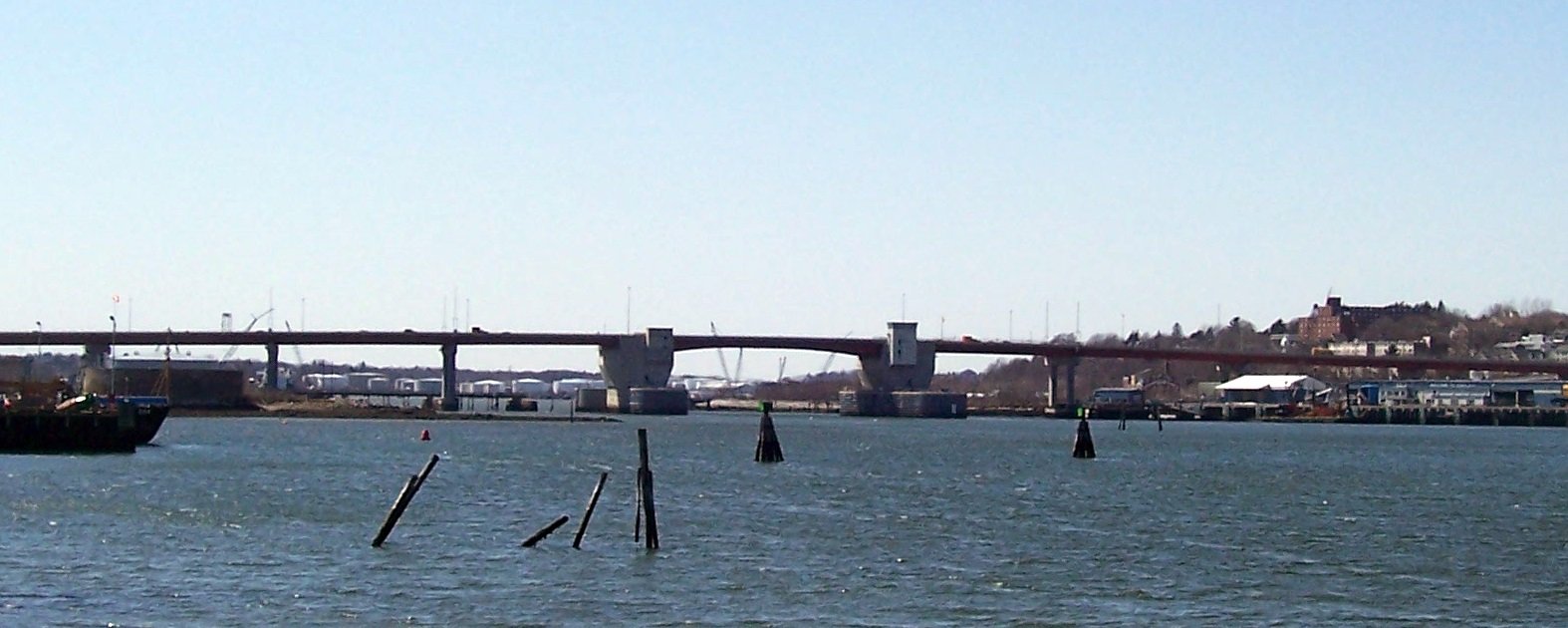
The Casco Bay Bridge, a drawbridge linking Portland and South Portland, Maine
— Photo by Rigby27

The end of Maine Route 77, which goes over the Casco Bay Bridge.
“It's all language, I am thinking
on my way over the drawbridge to South Portland,
driving into a wishbone blue, autumn sky, maple
red, aspen yellow — oaks, evergreens
stretching out in sunlight. Isn't this all
message and sign, singing to us?’’
— From “Today, the Traffic Signals All Changed for Me,’’ by Martin Steingesser (born 1937), Maine-based poet
To hear the whole poem, hit this link.
Dukes of documentation
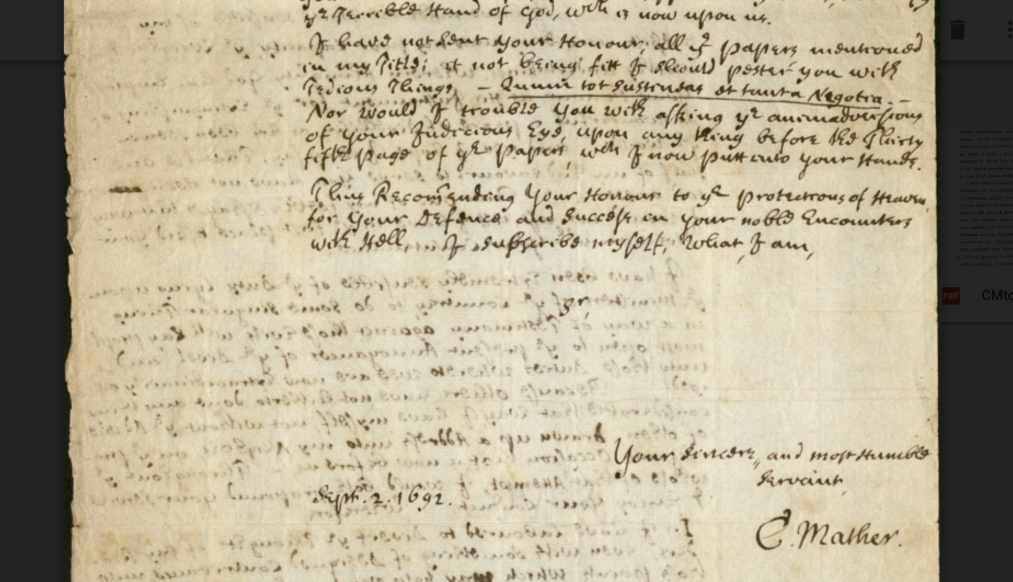
Letter from The Rev. Cotton Mather (1663-1728) to Massachusetts Judge William Stoughton (1631-1701), dated Sept. 2, 1692
— Photo by Lewismr
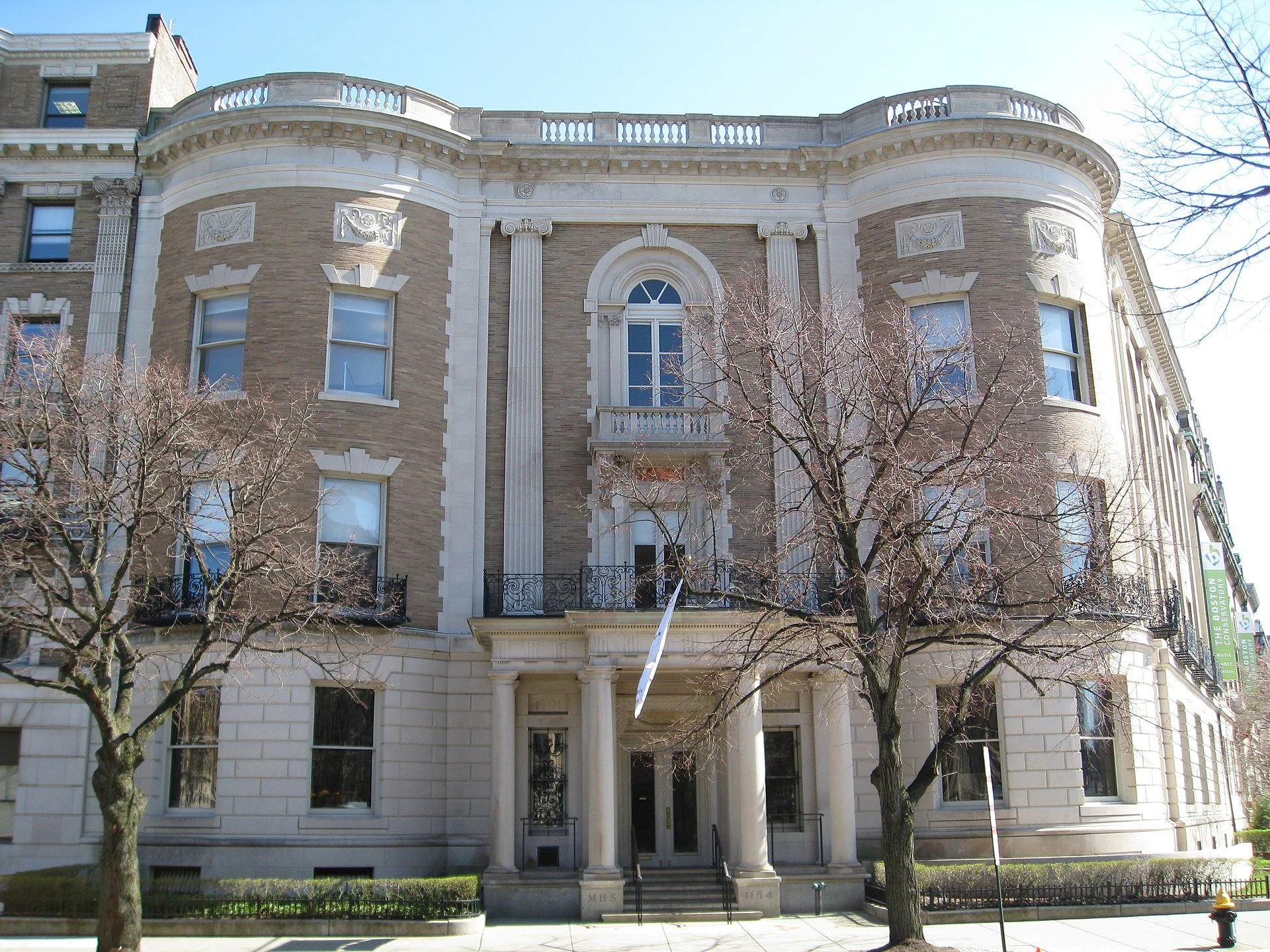
Massachusetts Historical Society headquarters, Boston. It houses a treasure trove of historical New England documents
— Photo by Biruitorul
“The men who founded and governed Massachusetts and Connecticut took themselves so seriously that they kept track of everything they did for the benefit of posterity and hoarded their papers so carefully that the whole history of the United States, recounted mainly by their descendants, has often appeared to be the history of New England writ large.”
— Edmund Morgan (1916-2013), Yale history professor

Chris Powell: State police scandal seems to broaden; ‘banned books’ scam

MANCHESTER, Conn.
Announcing the retirement of his state police commissioner, James C. Rovella, and deputy commissioner, Col. Stavros Mellekas, Connecticut Gov. Ned Lamont prompted speculation that the festering scandal over fake traffic tickets may turn out to be far more extensive than has been indicated.
The governor explained the departures as a matter of his wanting a "fresh start" with the state police for his second term. But his second term began nine months ago and the audit reporting many racial discrepancies with traffic tickets issued by state troopers wasn't released until five months later.
Four investigations are underway -- by the U.S. Justice Department, the U.S. Transportation Department, one commissioned by the governor and assigned to a former U.S. attorney, and one by the state police department itself. The tickets under review are suspected of misreporting the race of the motorists, thereby concealing racial discrimination by troopers. If innocent mistakes in data entry caused the discrepancies, one of those investigations might have concluded as much by now. But even the state police themselves have not provided any firm explanation.
If the misreporting was not innocent but dishonest or malicious, firings will be necessary to maintain public confidence, even as the state troopers union already has voted no confidence in the department's management while failing to provide any explanation of its own about what happened.
The audit found misreporting was probable with the tickets written by as many as 130 current or retired state troopers, so dozens of troopers might have to be dismissed or otherwise disciplined. The problem wouldn't end there, since the implication of any trooper in official dishonesty may prompt challenges to his testimony in criminal cases already decided and risk undoing them.
Additionally, as crime and traffic violations are becoming more brazen amid general social disintegration and increasing mental illness, the state police are understaffed, and dismissals or suspensions will worsen that understaffing.
Connecticut needs its police more than ever, but they are no good if they lack integrity. Integrity is their foremost qualification. If state troopers have been lacking integrity lately -- and lax discipline in some recent cases suggests as much -- solving the problem will have to go far beyond replacing the commissioner and his deputy.
xxx
Connecticut's librarians and some elected officials and advocates of using schools to indoctrinate students without their parents knowing about it recently celebrated a misnomer self-righteously: what they called Banned Books Week.
No books are banned in the United States. The recent controversies are about challenges to books in school and public libraries and school curriculums -- whether certain books, especially those of a sexual nature, are appropriate for certain ages or appropriate for stocking in a school or public library at all.
Appropriateness is always a matter of judgment and thus always a fair issue. While some challenges may be crazy or bigoted, the real issue is always whether in a democracy the public has the right to express its judgment on the management of public institutions and to seek to have that judgment implemented through elected officials, or whether librarians and school administrators are always right and must not be questioned.
But addressing the real issue candidly would diminish the power of the people in charge by legitimizing questions about their judgment. So instead the people in charge frame the issue as that of "banning" books, since banning books is plainly fascism and commands little support.
Of course dismissing the public's concerns about the operation of public institutions is fascism too, but now that Connecticut is run by the political left, fascism is thought to be impossible here.]
The irony is that if keeping a book out of a library or curriculum is "banning" it, librarians and school administrators themselves are the biggest book banners. For libraries and curriculums are usually very small while the supply of books is virtually infinite, so librarians and school administrators are always having to choose against millions of books, including some pretty good ones.
What vindicates their choices? That's what Banned Books Week is for.
Chris Powell has written about Connecticut government and politics for many years (CPowell@cox.net).
Drinking water under threat

EPA drinking water security poster from 2003.

From article by Frank Carini in ecoRI News
The oceans aren’t the only waters taking a beating at the hands of the most common and widespread species of primate on the planet. The elixir that sustains life is constantly abused and foolishly taken for granted by Homo sapiens.
When it comes to drinking water, climate pressures (most of which are caused by humans) and human idiocy apply an immense amount of pressure. The faucet is leaking. The dam is close to bursting.
More frequent and heavy rains are threatening drinking-water sources. Stormwater runoff and floodwaters are washing polycyclic aromatic hydrocarbons, sewer overflows, and nutrients, mainly nitrogen and phosphorous from overfertilized lands, into reservoirs. The taxpayer/ratepayer cost to treat these perverted sources continues to rise.
The creep of seawater — thanks to sea-level rise and storm surge that is reaching further inland — into private wells and freshwater aquifers is a growing problem for coastal states, including the Ocean State. Prolonged drought and relentless development are forcing the pumping of more groundwater, which further impacts already stressed aquifers and private wells. It’s a vicious cycle that begins and ends with the burning of fossil fuels.
To read the whole article, please hit this link.
‘Antique fragments’
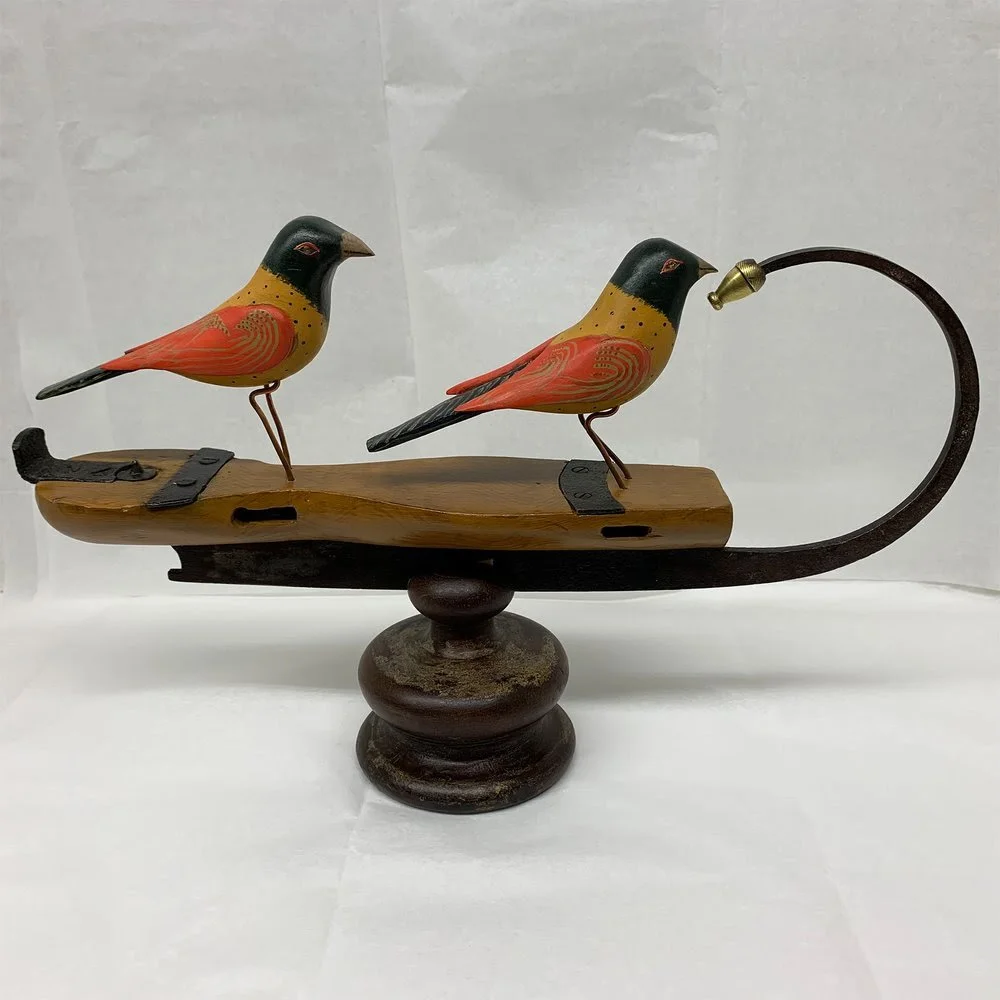
“Heading North” (wood, cooper, acrylics, antique fragments), by Mary Ellen Flinn, in the show “Folks and Fables,’’ at the Dartmouth Cultural Cener, in the village of Padanaram, through Nov 4.
— Photo Courtesy: Artist.
The center explains that the show showcases new work from a collaboration of Don Cadoret and Mary Ellen Flinn. It includes Cadoret's colorful and detailed “Story Paintings” and Flinn's carved and assembled sculptures. Both artists "are self-taught and inspired by the antique fragments and frames of our past."

The Padanaram Bridge, leading to the village of Padanaram, in Dartmouth..
— Photo by ToddC4176
But no giant pumpkins (Copy)
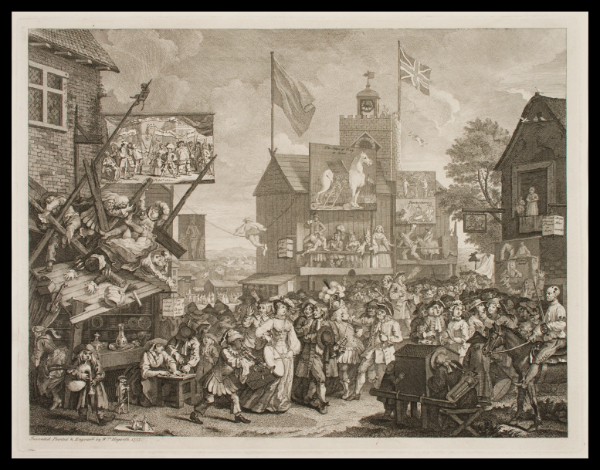
“Southwark Fair” (1737), (etching and engraving), by William Hogarth (1697-1764, British), in the show “Prints and People Before Photography, 1490-1825 ,’’ at the William Benton Museum of Art at the University of Connecticut, Storrs, through Dec. 17.
The museum says:
“The arrival of printmaking in early modern Europe led to new possibilities for mass communication and art collecting. Transportable, reproducible, and relatively inexpensive, prints contributed to the exchange of knowledge and ideas across international borders and among social classes. Prior to the invention of photography, it was prints that provided a window on the world, circulating images of other works of art, distinguished people, and noteworthy places and events. ‘‘

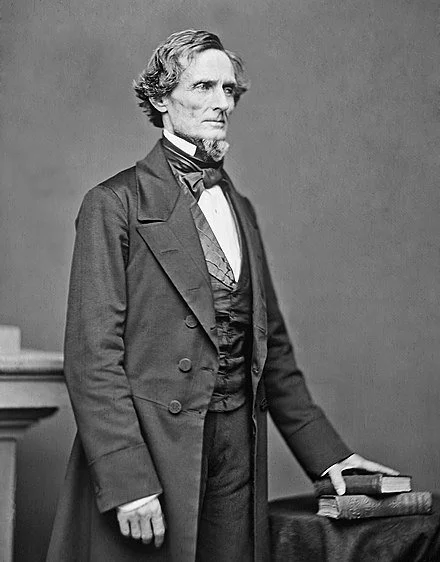
Jefferson Davis’s speech in Faneuil Hall, Boston, shortly before the Civil War

Jefferson Davis (1808-1889), president of the Confederate States of America, 1861-1865.
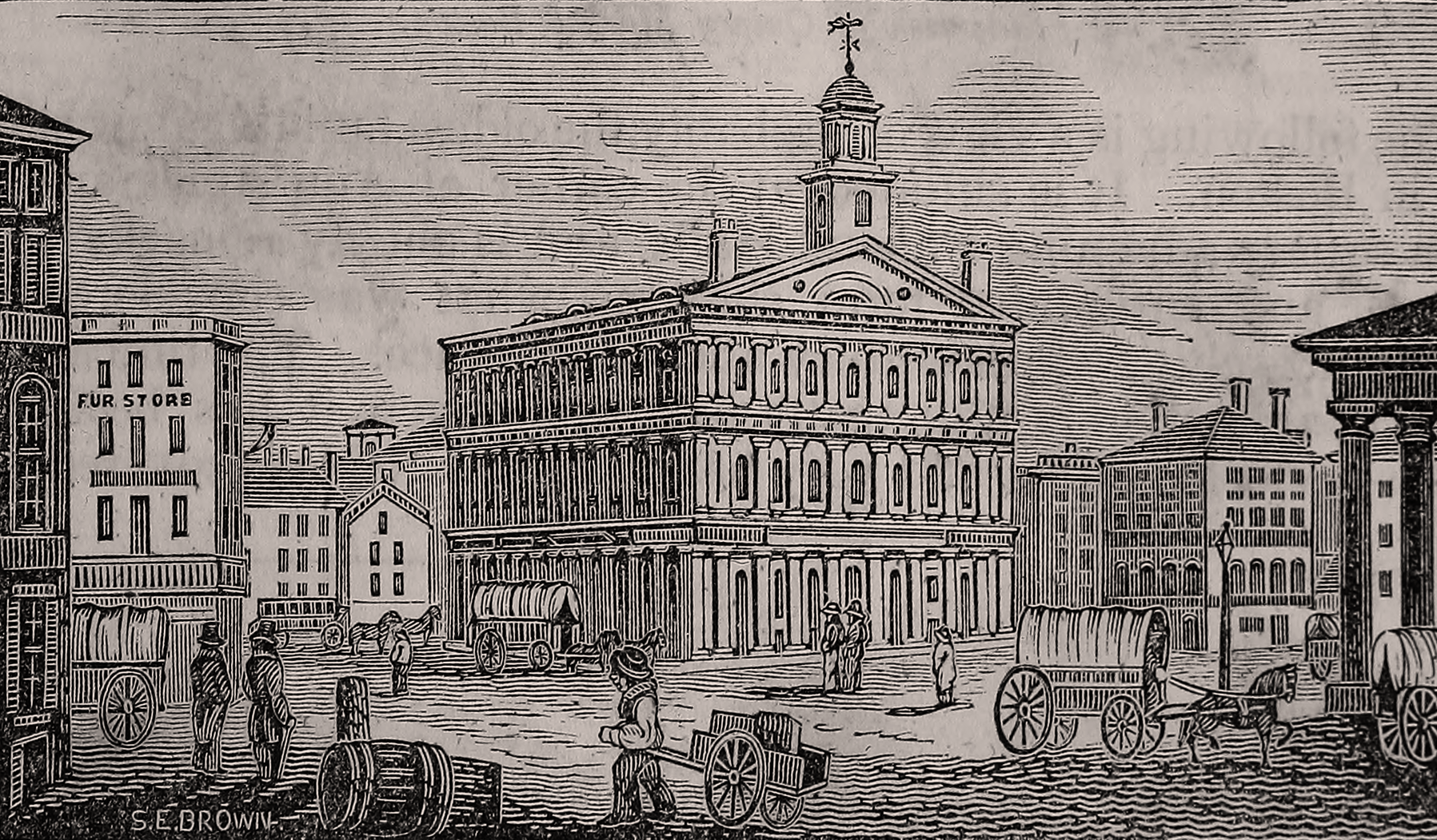
Faneuil Hall, in downtown Boston, in an 1839 engraving.
Faneuil Hall, October 11, 1858
Countrymen, Brethren, Democrats--Most happy am I to meet you, and to have received here renewed assurance--of that which I have so long believed--that the pulsation of the democratic heart is the same in every parallel of latitude, on every meridian of longtitude throughout the United States. But it required not this to confirm me in a belief so long and so happily enjoyed.-- Your own great statesman who has introduced me to this assembly has been too long associated with me, too nearly connected, we have labored too many hours, sometimes even until one day ran into another, in the cause of our country, for me to fail to understand that a Massachusetts democrat has a heart comprehending the whole of our wide Union, and that its pulsations always beat for the liberty and happiness of its country. Neither could I be unaware such was the sentiment of the democracy of New England. For it was my fortune lately to serve under a President drawn from the neighboring State of New Hampshire, [applause,] and I know that he spoke the language of his heart, for I learned it in four years of intimate connection with him, when he said he knew "no north, no south, no east, no west, but sacred maintenance of the common bond and true devotion to the common brotherhood." Never, sir, in the past history of our country, never, I add, in its future destiny, however bright it may be, did or will a man of higher and purer patriotism, a man more devoted to the common weal of his country, hold the helm of our great ship of State, than that same New Englander, Franklin Pierce. [Applause.]
I have heard the resolutions read and approved by this meeting; heard the address of your candidate for Governor; and these added to the address of my old and intimate friend, Gen. Cushing, bear to me fresh testimony, which I shall be happy to carry away with me, that the democracy, in the language of your own glorious Webster, "still lives," lives not as his great spirit, when it hung 'twixt life and death, like a star upon the horizon's verge, but lives like the germ that is shooting upward, like the sapling that is growing to a mighty tree, the branches of which will spread over the commonwealth, and may redeem and restore Massachusetts to her once glorious place in the Union.
As I look around me and see this venerable hall thus thronged, it reminds me of another meeting, when it was found too small to contain the assembly--that great meeting which assembled here, when the people were called upon to decide what should be done in relation to the tea-tax. Faneuil Hall, on that occasion, was found too small, and the people went to the Old South Church, which still stands--a monument of your early history. And I hope the day will soon come when many Democratic meetings in Boston will be too large for Faneuil Hall! [Applause.] I am welcomed to his hall, so venerable for its associations with our early history; to this hall of which you are so justly proud, and the memories of which are part of the inheritance of every American citizen; and feel, as I remember how many voices of patriotic fervor have here been heard; that in it originated the first movements from which the Revolution sprung; that here began that system of town meetings and free discussion which is the glory and safety of our country; that I had enough to warn me, that though my theme was more humble than theirs, (as befitted my poorer ability,) that it was a hazardous thing for me to attempt to speak in this sacred temple. But when I heard your statesman (Gen. Cushing) say, that a word once here spoken never dies, that it becomes a part of the circumambient air, I felt a reluctance to speak which increases upon me as I recall his expression. But if those voices which breathed the first instincts into the colony of Massachusetts, and into those colonies which formed the United States, to proclaim community independence, and asserts it against the powerful mother country,--if those voices live here still, how must they feel who come here to preach treason to the Constitution, and assail the Union it ordained and established? [Applause.] It would seem that their criminal hearts should fear that those voices, so long slumbering, would break their silence, that the forms which look down from these walls behind and around me, would walk forth, and that their sabres would once more be drawn from their scabbards, to drive from this sacred temple fanatical men, who desecrate it more than did the changers of money and those who sold doves, the temple of the living God. [Loud cheers.]
And here, too, you have, to remind you, and to remind all who enter this hall, the portraits of those men who are dear to every lover of liberty, and part and parcel of the memory of every American citizen. Highest among them all I see you have placed Samuel Adams and John Hancock. [Applause.] You have placed them the highest and properly; for they were the two, the only two, excepted from the proclamation of mercy, when Governor Gage issued his anathema against them and their fellow patriots. These men, thus excepted from the saving grace of the crown, now occupy the highest place in Faneuil Hall, and thus are consecrated highest in the reverence of the people of Boston. [Applause.] This is one of the instances in which we find tradition more reliable than history; for tradition has borne the name of Samuel Adams to the remotest corner of our territory, placed it among the household words taught to the rising generation, and there in the new States intertwined with our love of representative liberty, it is a name as sacred among us as it is amoung you of New England. [Applause.]
We remember how early he saw the necessity of community independence. How, through the dim mists of the future, and in advance of his day, he looked forward to the proclamation of that independence by Massachusetts; how he steadily strove, through good report and evil report, with the same unwavering purpose, whether in the midst of his fellow citizens, cheered by their voices, or whether isolated, a refugee, hunted as a criminal, and communing with his own heart, now under all circumstances his eye was still fixed upon his first, last hope, the community independence of Massachusetts! And when we see him, at a later period, the leader in that correspondence which waked the feelings of the other colonies and brought into fraternal association the people of Massachusetts with the people of other colonies-- when we see his letters acknowledging the receipt of the rice of South Caolina, the flour, the pork, the money of Virginia, Maryland, New York, Pennsylvania, and others, contributions of affection to relieve Boston of the sufferings inflicted upon her when her port was closed by the despotism of the British crown-- we there see the beginning of that sentiment which insured the co-operation of the colonies throughout the desperate struggle of the Revolution, and which, if the present generation be true to the compact of their sires, to the memory and to the principles of the noble men from whom they descended, will perpetuate for them that spirit of fraternity in which the Union began. [Applause.]
But it is not here alone, nor in reminiscenses connected with the objects which present themselves within this hall, that the people of Boston have much to excite their patriotism and carry them back to the great principles of the revolutionary struggle. Where in this vicinity will you go and not meet some monument to inspire such sentiments? On one side are Lexington and Concord, where sixty brave countrymen came with their fowling pieces to oppose six hundred veterans,--where peaceful citizens animated by the love of independence and covered by the triple shield of a righteous cause, finally forced those veterans back, and pursued them on the road, fighting from every barn, and bush, and stock, and stone, till they drove them to the shelters from which they had gone forth! [Applause.] And there on another side of your city stand those monuments of your early patriotism, Breed's and Bunker's Hill, whose soil drank the sacred blood of men who lived for their country and died for mankind! Can it be that any of you tread that soil and forget the great purposes for which those men bravely fought, or nobly died? [Applause.] While in yet another direction rise the Heights of Dorchester, once the encampment of the great Virginian, the man who came here in the cause of American independence, who did not ask "is this a town of Virginia?" but, "Is this a town of my brethren?" who pitched his camp and commenced his operations with the steady courage and cautious wisdom characteristic of Washington, hopefully, resolutely waiting and watching for the day when he could drive the British troops out of your city. [Cheers.]
Here, too, you find where once the Old Liberty Tree, connected with so many of your memories, grew. You ask your legend, and learn that it was cut down for firewood by the British soldiers, as some of your meeting houses were pulled down. They burned the old tree, and it warmed the soldiers enough to enable them to evacuate the city. [Laughter.] Had they been more slowly warmed into motion, had it burned a little longer, it might have lighted Washington and his followers to their enemies.
But they were gone, and never again may a hostile foe tread your shore. Woe to the enemy who shall set his footprint upon your soil; he comes to a prison or he comes to a grave! [Applause.] American fortifications are not intended to protect our country from invasion. They are constructed elsewhere as in your harbor to guard points where marine attacks can be made; and for the rest, the breasts of Americans are our parapets. [Applause.]
But, my friends, it is not merely in these military associations, so honorably connected with the pride of Massachusetts, that one who visits Boston finds much for gratification. If I were selecting a place where the advocate of strict construction of the Constitution, the extreme asserter of democratic state rights doctrine should go for his text, I would send him into the collections of your historical association. Instead of finding Boston a place where the records would teach only federalism, he would find here, in bounteous store, that sacred doctrine of state rights, which has been called the extreme and ultra opinion of the South. He would find among your early records that at the time when Massachusetts was undre a colonial government, administered by a man appointed by the British crown, guarded by British soldiers; the use of this old Faneuil Hall was refused by the town authorities to a British Governor, to hold a British festival, because he was going to bring with him the agents for collecting, and naval officers sent here to enforce, an unconstitutional tax upon your commonwealth. Such was the proud spirit of independence manifested even in your colonial history. Such the great stone your fathers hewed with sturdy hand, and left the fit foundation for a monument to state rights! [Applause.] And so throughout the early period of our country you find Massachusetts leading, most prominent of all the States, in the assertion of that doctrine which has been recently so much decried.
Having achieved your independence, having passed through the confederation, you assented to the formation of our present constitutional Union. You did not surrender your state sovereignty. Your fathers had sacrificed too much to claim as the reward of their trials that they should merely have a change of masters. And a change of masters it would have been had Massachusetts surrendered her State sovereignty to the central government, and consented that that central government should have the power to coerce a State. But if this power does not exist, if this sovereignty has not been surrendered, then, I say, who can deny the words of soberness and truth spoken by your candidate this evening, when he has plead to you the cause of State independence, and the right of every community to be the judge of its own domestic affairs? [Applause.] This is all we have ever asked--we of the South, I mean,--for I stand before you one of those who have been called the ultra men of the South, and I speak, therefore, for that class; and tell you that your candidate for Governor has asserted to-night everything which we have claimed as a right, and demanded as a duty resulting from the guarantees of the Constitution, made for our mutual protection. [Applause.] Nor is here alone in that such doctrine is asserted, the like it has been my happiness to hear in your daughter, the neighboring State of Maine. I have found that the democrats there asserted the same broad, constitutional principle for which we have been contending, by which we are willing to live, for which we are willing to die! [Loud cheers and cries of "good!"]
In this state of the case, my friends, why is the country agitated? What is there practical or rational in the present excitement? Why, since the old controversies, with all their lights and shadows, have passed away, is the political firmament covered by one dark pall, the funeral shade of which increases with every passing year?
Why is it, I say, that you are thus agitated in relation to the domestic affairs of other communities? Why is it that the peace of the country is disturbed in order that one people may assume to judge of what another people should do? Is there any political power to authorize such interference? If so, where is it? You did not surrender your sovereignty. You gave to the federal government certain functions. It was your agent, created for specified purposes. It can do nothing save that which you have given it power to perform. Where is the grant of the Constitution which confers on the federal government a right to determine what shall be property? Surely none such exists; that question it belongs to every community to settle for itself: you judge in your case; every other State must judge in its case. The federal government has no power to create or establish; more palpably still, it has no power to destroy property. Do you pay taxes to an agent that he may destroy your property? Do you support him for that purpose? It is an absurdity on the face of it. To ask the question is to answer it. The government is instituted to protect, not to destroy property. In abundance of caution, your fathers provided that the federal government should not take private property, even for its own use, unless by making due compensation therefor. One of its great purposes was to increase the security of property, and by a more perfect union of forces, to render more effective protection to the States. When that power for protection becomes a source of danger, the purpose for which the government was formed will have been defeated, and the government can no longer answer the ends for which it was established.
Why, then, in the absence of all control over the subject of African slavery, are you agitated in relation to it? With Pharisaical pretension it is sometimes said it is a moral obligation to agitate, and I suppose they are going through a sort of vicarious repentance for other men's sins. [Laughter.] Who gave them a right to decide that it is a sin? By what standard do they measure it? Not the Constitution; the Constitution recognizes the property in many forms, and imposes obligations in connection with that recognition. Not the Bible; that justifies it. Not the good of society; for if they go where it exists, they find that society recognizes it as good. What, then, is their standard? The good of mankind? Is that seen in the diminished resources of the country? Is that seen in the diminished comfort of the world? Or is not the reverse exhibited? Is it in the cause of Chrisitianity? It cannot be, for servitude is the only agency through which Christianity has reached that degraded race, the only means by which they have been civilized and elevated. Or is their charity manifested in denunciation of their brethren who are restrained from answering by the contempt which they feel for a mere brawler, whose weapons are empty words? [Applause.]
What, my friends, must be the consequences of this agitation? Good or evil? They have been evil, and evil they must be only, to the end. Not one particle of good has been done to any man, of any color, by this agitation. It has been insidiously working the purpose of sedition, for the destruction of that Union on which our hopes of future greatness depend.
On the one side, then you see agitation, tending slowly and steadily to that separation of the states, which, if you have any hope connected with the liberty of mankind, if you have any national pride in making your country the gratest of the earth, if you have any sacred regard for the obligation which the acts of your fathers entailed upon you,--by each and all of these motives you are prompted to united and earnest effort to promote the success of that great experiment which your fathers left it to you to conclude. [Applause.] On the other hand, if each community, in accordance with the principles of our government, whilst controlling its own domestic institutitons, faithfully struggles as a part of a united whole, for the common benefit of all, the future points us to fraternity, to unity, to cooperation, to the increase of our own happiness, to the extension fo our useful example over mankind, and the covering of that flag, whose stars have already more than doubled their original number, [applause,] with a galaxy to light the ample folds which then shall wave either the recognized flag of every state, or the recognized protector of every state upon the continent of America. [Applause.]
In connection with the idea, which I have presented of the early sentiment of community independence, I will add the very striking fact that one of the colonies, about the time that they had resolved to unite for the purpose of achieving their independence, addressed the colonial congress to know in what condition they would be in the interval between their separation from the government of Great Britain and the establishment of the government for the colonies. The answer of the colonial congress was exactly that which might have been expected--exactly that which state rights democracy would anser to-day, to such an inquiry--that they must take care of their domestic polity, that the congress "had nothing to do with it." [Applause.] If such sentiment continued--if it governed in every state--if representatives were chosen upon it--then your halls of legislation would not be disturbed about the question of the domestic concerns of the different states. The peace of the country would not be hazarded by the arraignment of the family relations of people over whom the government has no control. In harmony working together, in co-intelligence for the conservation of the interests of the country, in protection to the states and the development of the great ends for which the government was established, what effects might not be produced? As our government increased in expansion, it would increase in its beneficent influence upon the people; we should increase in fraternity; and it would be no longer a wonder to see a man coming from a southern state to address a Democratic audience in Boston. [Applause, cries of "good, good."]
But I have referred to the fact that, at an early period, Massachusetts stood pre-eminently forward among those who asserted community independence. And this reminds me of an incident, in illustration, which occurred when President Washington visited Boston, and John Hancock was Governor. The latter is reported to have declined to call upon the President, because he contended that every man who came within the limits of Massachusetts must yield rank and precedence to the Governor of the State; and only surrendered the point on account of his personal regard and respect for the character of George Washington. I honor him for it,-- value it as one of the early testimonies in favor of State Rights, and wish all our governors had the same high estimate of the dignity of the office of Governor of a State as had that great and glorious man. [Applause.]
Thus it appears that the founders of this government were the true democratic States Rights men. That Democracy was States rights, and States rights was Democracy, and it is to-day. Your resolutions breathe it. The Declaration of Independence embodies the sentiment which had lived in the hearts of the people for many years before its formal assertion. Our fathers asserted that great principle--the right of the people to choose the government for themselves--that government rested upon the consent of the governed. In every form of expression it uttered the same idea, community independence, and the dependence of the government upon the community over which it existed. It was an American principle, the great spirit which animated our country then, and it were well if more inspired us now. But I have said that this State sovereignty--this community independence--has never been surrendered, and that there is no power in the federal government to coerce a State. Does any one ask, then, how it is that a State is to be held to its obligations? My answer is: by its honor, and the obligation is the more sacred to observe every feature of the compact, because there is no power to force obedience. The great error of the confederation was that it attempted to act upon the States. It was found impracticable, and our present form of government was adopted, which acts upon individuals and does not attempt to act upon States.
The question was considered in the convention which framed the constitution, and after discussion the proposition to give power to the general government to enforce upon a resistant State obedience to the law was rejected. It was upon this ground of exemption from compulsion that the compact of the States became a sacred obligation; and it was upon this honorable fulfilment principally that our fathers depended for the security of the rights which the Constitution was designed to secure. [Applause.]
The fugitive slave compact in the Constitution of the United States implied that the States should fulfil it voluntarily. They expected the States to legislate so as to secure the rendition of fugitives.
And in 1788 it was a matter of complaint that the colony of Florida did not restore fugitive negroes from the United States who escaped into that colony, and a committee, composed of Hamilton, of New York, Sedgwick, of Massachusetts, and Madison, of Virginia, reported resolutions in the Congress instructing the committee for foreign affairs to address the charge d'affaires at Madrid to apply to his majesty of Spain to issue orders to his governor to compel them to secure the rendition of fugitive negroes to any one who should go there entitled to receive them. This was the sentiment of the committee, and they added, by way of example, as the States would return any slaves from Florida who might escape into their limits.
When the Constitutional requirement was imposed, who could have doubted that every State faithful to its obligations would comply without raising questions as to whether the institution should or should not exist in another community over which they had no control. Congress as at last forced by the failures of the States, to legislate on the subject, and this has been one of the causes by which you have been disturbed. You have been called upon to make war against a law which would never have been enacted, if each State had faithfully discharged the obligation imposed by the compact of the Constitution. [Cheers.]
There is another question connected with this negro agitation. It is in relation to the right to hold slaves in the Territories. What power has Congress to declare what shall be property? None, in the territory or elsewhere. Have the States by separate legislation the power to prescribe the condition upon which a citizen may enter on and enjoy the common property of the United States? Clearly not. Shall those who first go into the territory, deprive any citizen of the United States subsequently emigrating thither, of those rights which belong to him as an equal owner of the soil? Certainly not. Sovereignty jurisdiction can only pass to these inhabitants when the States, the owners of that territory, shall recognize the inhabitants as an independent community, and admit it to become an equal State of the Union. Until then the Constitution and laws of the United States must be the rules governing within the limits of a territory. The Constitution recognizes all property; gives equal privileges to every citizen of the States; and it would be a violation of its fundamental principles to attempt any discrimination. [Applause.] Viewed in any of its phases, political, moral, social, general, or local, what is there to sustain this agitation in relation to other people's negroes, unless it be a bridge over which to pass into office--a ready capital in politics available to missionaries staying at home--reformers of things which they do not go to learn--preachers without an audience--overseers without laborers and without wages-- warhorses who snuff the battle afar off, and cry: "Aha! aha! I am afar off from the battle." [Great laughter and applause.]
Thus it is that the peace of the Union is destroyed; thus it is that brother is arrayed against brother; thus it is that the people come to consider--not how they can promote each other's interests, but how they may successfully war upon them. And the politcal agitator like the vampire fans the victim to which he clings but to destroy.
Among culprits there is none more odious to my mind than a public officer who takes an oath to support the Constitution--the compact between the States binding each for the common defence and general welfare of the other--yet retains to himself a mental reservation that he will war upon the principles he has sworn to maintain, and upon the property rights the protection of which are part of the compact of the Union. [Applause.]
It is a crime too low to be named before this assembly. It is one which no man with self- respect would ever commit. To swear that he will support the Constitution--to take an office which belongs in many of its relations to all the States; and to use it as a means of injuring a portion of the States of whom he is thus the representative; is treason to every thing honorable in man. It is the base and cowardly attack of him who gains the confidence of another, in order that he may wound him. [Applause.]
But we have heard it argued--have seen it published--a petition has been circulated for signers, announcing that there was an incompatibility between the sections; that the Union had been tried long enough, and that it had proved to be necessary to separate from those sections of the Union in which the curse of slavery existed. Ah! those modern saints, so much wiser than our fathers, have discovered an incompatibility requiring separation in those relations which existed when the Union was formed. They have found the remnants only of a diversity which existed when South Carolina sent her rice to Boston, and Maryland and Pennsylvania and New York brought in their funds for her relief.
They have found the remnants only; for from that day to this the difference between the people has been constantly decreasing, and the necessity for union which then arose in no small degree from the diversity of product, and soil and climate, has gone on increasing, both by the extension of our own territory and the introduction of new tropical products; so that whilst the difference between the people has diminished, the diversity in the products has increased, and that motive for union which your fathers found exists in a higher degree than it did when they resolved to be united.
Diversity there is of occupation, of habits, of education, of character. But it is not of that extreme kind which proves incompatibility, or even incongruity; for your Massachusetts man, when he comes to Mississippi, adopts our opinions and our institutions, and frequently becomes the most extreme southern man among us. [Great applause.] As our country has extended--as new products have been introduced into it, the free trade which blesses our Union, has been of increasing value.
And it is not an unfortunate circumstance that this diversity of pursuit and character has survived the condition which produced it. Originally it sprang in no small degree from natural causes. Massachusetts became a manufacturing and a commercial State because of the connection between her fine harbor and water power, resulting from the fact that the streams make their last leap into the sea, so that the ship of commerce brought the staple to the manufacturing power. This made you a commercial and manufacturing people. In the Southern States great plains interpose between the last leaps of the streams and the sea. Those plains most proximate to navigation, were the first cultivated, and the sea bore their products to the most approachable water power, there to be manufactured. This was the first cause of the difference. Then your longer and more severe winters--your soil not as favorable for agriculture, also contributed to make you a manufacturing and commercial people.
After the controlling cause had passed away--after railroads had been built--after the steam engine had become a motive power for a large part of machinery, the characteristics orginally stamped by natural causes continued the diversity of pursuit. Is it fortunate or otherwise? I say it is fortunate. Your interest is to remain a manufacturing and ours to remain an agricultural people.
Your prosperity is to receive our staple and to manufacture it, and ours to sell it to you and buy the manufactured goods. [Applause.] This is an interweaving of interests, which makes us all the richer and all the happier.
But this accursed agitation, this offensive, injurious intermeddling with the affairs of other people, and this alone it is that will promote a desire in the mind of any one to separate these great and growing States. [Applause.]
The seeds of dissension may be sown by invidious reflections. Men may be goaded by the constant attempt to infringe upon rights and to traduce community character, and in the resentment which follows it is not possible to tell how far the case may be driven. I therefore plead to you now to arrest a fanaticism which has been evil in the beginning, and must be evil to the end. You may not have the numerical power requisite; and those at a distance may not understand how many of you there are desirous to put a stop to the course of this agitation. But let your language and your acts teach them to appreciate a faithful self-denying majority. I have learned since I have been in New England the vast mass of true State Rights Democrats are to be found within its limits--though not represented in the halls of Congress.
And if it comes to the worst; if, availing themselves of a majority in the two Houses of Congress, our opponents should attempt to trample upon the Constitution; to violate the rights of the States; to infringe upon our equality in the Union, I believe that even in Massachusetts, though it has not had a representative in Congress for many a day, the States Rights Democracy, in whose breasts beats the spirit of the revolution, can and will whip the Black Republicans. [Great applause.] I trust we shall never be thus purified, as it were, by fire; but that the peaceful progressive revolution of the ballot box will answer all the glorious purposes of the Constitutional Union. [Applause.]
I marked that the distinguished orator and statesman who preceded me in addressing you used the words national and constitutional in such relations to each other as to show that in his mind the one was a synonym of the other. And does he not do so with reason? We became a nation by the Constitution; whatever is national springs from the Constitution; and national and constitutional are convertible terms. [Applause.]
Your candidate for the high office of governor--whom I have been once or twice on the point of calling your governor, and whom I hope I may be able soon to call so, [applause]--in his remarks to you has presented the same idea in another form. And well may Massachusetts orators, without even perceiving what they are saying, utter sentiments which lie at the foundation of your colonial as well as your revolutionary history, which existed in Massachusetts before the revolution, and have existed since, whenever the true spirit which comes down from the revolutionary sires has been aroused into utterance within her limits. [Applause.]
It has been not only, my friends, in this increasing and mutual dependence of interest that we have formed new bonds. Those bonds are both material and mental. Every improvement in the navigation of a river, every construction of a railroad, has added another link to the chain which encircles us, another facility for interchange and new achievements, whether it has been in arts or in science, in war or in manufactures, in commerce or agriculture, success, unexampled success has constituted for us a common and proud memory, and has offered to us new sentiments of nationality.
Why, then, I would ask, do we see these lengthened shadows, which follow in the course of our political day? Is it because the sun is declining to the horizon? Are they the shadows of evening; or are they, as I hopefully believe, but the mists which are exhaled by the sun as it rises, but which are to be dispersed by its meridian splendor? Are they but evanescent clouds that flit across but cannot obscure the great purposes for which the Constitution was established?
I hopefully look forward to the reaction which will establish the fact that our sun is yet in the ascendant--that the cloud which has covered our political prospect is but a mist of the morning-- that we are again to be amicably divided in opinion upon measures of expediency, upon questions of relative interest, upon discussions as to the rights of the States, and the powers of the federal government,--such discussion as is commemorated in this historical picture [pointing to the painting]. There your own great Statesman, Webster, addresses his argument to our brightest luminary, the incorruptible Calhoun, who leans over to catch the accents of eloquence that fall from his lips. [Loud applause.]
They differed as Statesmen and philosophers; they railed not, warred not against each other; they stood to each other in the relation of affection and regard. And never did I see Mr. Webster so agitated, never did I hear his voice so falter, as when he delivered his eulogy on John C. Calhoun. [Applause.]
But allusion was made to my own connection with your favorite departed statesman. I will only say on this occasion, that very early in the commencement of my congressional life, Mr. Webster was arraigned for an offence which affected him most deeply. He was no accountant; all knew that there was but little of mercantile exactness in his habits. He was arraigned on a pecuniary charge--the misapplication of what is known as the secret service fund; and I was one of the committee that had to investigate the charge. I endeavored to do justice, to examine the evidence with a view to ascertain the truth. As an American I hoped he would come out without stain or smoke upon his garments. But however the fame of so distinguished an American Statesman might claim such hopes, the duty was rigidly to inquire, and rigorously to do justice. The result was that he was acquitted of every charge that was made against him, and it was equally my pride and my pleasure to vindicate him in every form which lay within my power. [Applause.] No man who knew Daniel Webster, would have expected less of him. Had our position been reversed, none such could have believed that he would with a view to a judgment ask whether a charge was made against a Massachusetts man or a Mississippian. No! it belonged to a lower, a later, and I trust a shorter lived race of statesmen ["hear," "hear"] to measure all facts by considerations of latitude and longitude. [Warm applause.]
I honor that sentiment which makes us oftentimes too confident, and to despise too much the danger of that agitation which disturbs the peace of the country. I honor that feeling which believes the Constitutional Union too strong to be shaken. But at the same time I say, in sober judgment, it will not do to treat too lightly the danger which has beset and which still impends over us. Who has not heard our Constitutional Union compared to the granite cliffs which face the sea and dash back the foam of the waves, unmoved by their fury. Recently I have stood upon New England's shore, and have seen the waves of a troubled sea dash upon the granite which frowns over the ocean, have seen the spray thrown back from the cliff, and the receding wave fret like the impotent rage of baffled malice. But when the tide had ebbed, I saw that the rock was seamed and worn by the ceaseless beating of the sea, and fragments riven from the rock were lying on the beach.
Thus the waves of sectional agitation are dashing themselves against the granite patriotism of the land. If long continued, that too must show the seams and scars of the conflict. Sectional hostility must sooner or later produce political fragments. The danger lies at your door, it is time to arrest it. It is time that men should go back to the origin of our institutions. They should drink the waters of the fountain, ascend to the source, of our colonial history.
You, men of Boston, go to the street where the massacre occurred in 1770. There learn how your fathers unfaltering stood for community right. And near the same spot mark how proudly the delegation of the democracy came to demand the removal of the troops from Boston, and how the venerable Samuel Adams stood asserting the rights of the people, dauntless as Hampden, clear and eloquent as Sidney.
All over our country these monuments, instructive to the present generation, of what our fathers felt and said and did, are to be found. In the library of your association for the collection of your early history, I found a letter descriptive of the reading of the address to his army by Gen. Washington during one of those winters when he sought shelter for the ill clad, unshod, but victorious army with which he achieved the independence we enjoy; he had built a log-cabin for a meeting house, and there reading his address, his sight failed him, he put on his glasses and with emotion which manifested the reality of his feelings, said, "I have grown gray in the service of my country, and now I am growing blind." Who can measure the value of such incidents in a people's history? It is a privilege to have access to documents, which cause us to realize the trials, the patient endurance, the hardy virtue and moral grandeur of the men from whom we inherit our political institutions, and to whose teachings it were well that the present generations should constantly refer.
If you choose still further to stretch your vision to South Carolina, you will find a parallel to that devotion to their country's cause which illustrates the early history of the Democrats of Boston. The prisoners at Charleston, when confined upon the hulks where they were exposed to the small pox, and, wasted by the progress of the infection, were brought upon the shore and assured that if they would enlist in his majesty's service they should be relieved from their present and prospective suffering, but if they refused the rations would be taken from their families, and themselves sent to the hulks and exposed to the infection. Emaciated as they were, distressed with the prospect of their families being turned into the street to starve, the spirit of independence, the devotion to liberty, was so warm within their breasts that they gave one loud hurrah for General Washington, and chose death rather than dishonor. [Loud applause.] And if from these glorious recollections, from the emotions they excite, your eye is directed to your present condition, and you mark the prosperity, the growth and honorable career of your country, I envy not the heart of that man whose pulse does not beat quicker, who does not feel within him the exultation of pride at the past glory and the future prospects of his country. These prospects are to be realized if we are only wise and true to the obligations of the compact of our fathers. For all which can sow dissension can stop the progress of the American people, can endanger the achievement of the high prospects which we have before us is that miserable spirit, which, disregarding duty and honor, makes war upon the Constitution. Madness must rule the hour when American citizens, trampling as well upon the great principles at the foundation of the Declaration of Independence and the Constitution of the United States, as upon the honorable obligations which their fathers imposed upon them, shall turn with internecine hand to sacrifice themselves as well as their brethren, upon the altar of sectional fanaticism.
With these views, it will not be surprising to those who differ from me, that I feel an ardent desire for the success of the State Rights Democracy, that convinced of the destructive consequences of the heresies of their opponents, and of the evils upon which they would precipitate the country, I do not forbear to advocate, here and elsewhere, the success of that party which alone is national, on which alone I rely for the preservation of the Constitution, to perpetuate the Union, and to fulfil the purposes which it was ordained to establish and secure. [Loud cheers.]
My friends, my brethren, my countrymen--[applause]--I thank you for the patient attention you have given me. It is the first time it has been my fortune to address an audience here. It will probably be the last. Residing in a remote section of the country, with private as well as public duties to occupy the whole of my time, it would only be under some such necessity for a restoration of health as has brought me here this season, that I could ever expect to make more than a very hurried visit to any other portion of the Union than that of which I am a citizen.
I will say, then, on this occasion, that I am glad, truly glad, that it has been my fortune to stay long enough among the New Englanders to obtain a better acquaintance than one can who passes in the ordinary way through the country, at the speed of the railroad tourist. I have stayed long enough to feel that generous hospitality which evinces itself to-night, which has showed itself in every town and village of New England where I have gone--long enough to learn that though not represented in Congress, there is within the limits of New England a large mass of as true Democrats as are to be found in any portion of the Union. Their purposes, their construction of the Constitution, their hopes for the future, their respect for the past, is the same as that which exists among my beloved brethren in Mississippi. [Applause.]
It is not a great while since one who was endeavoring to pursue me with unfriendly criticism opened an article with my name and "gone to Boston!"--He seemed to think it a damaging reflection to say of me that I had gone to Boston--I wish he could have been here to look upon these Democratic faces to-night, and to listen to your resolutions and the words of your Massachusetts speakers, he might have been taught that a man might go and stay at Boston and learn better Democracy than many have acquired in other places.
I shall gratefully carry with me the recollections of this and of other meetings witnessed since I have been among you. In the hour of apprehension I will hopefully turn back to my observations here--here in this consecrated hall, where men so early devoted themselves to liberty and community independence; and will endeavor to impress upon others who know you only as you are misrepresented in the two Houses of Congress, [applause,] how true and how many are the hearts that beat for constitutional liberty, and with high resolve to respect every clause and guaranty which the Constitution contains, are pledged to faithfully uphold the rights of any and every portion of the States, and of the people. [Tremendous cheering.]
Transcribed from Dunbar Rowland, ed., Jefferson Davis, Constitutionalist, Volume 3, pp. 315-32. Summarized in The Papers of Jefferson Davis, Volume 6, p. 587, at Rice University, Houston
Famed Boston restaurant to reopen
Jacob Wirth’s has long been New England most famous German restaurant. New England Diary’s editor well remembers lunching there in the late 1950s and early ‘60s. It had frequently swept-up sawdust on its floor to collect fallen food and spilled beer. Government health regulations later banned that. The restaurant had perhaps the greatest beer collection in the region.
Happy news from The Boston Guardian:
After years facing an uncertain future, Boston’s historic Jacob Wirth bar and restaurant will return to the Theater District in its former glory.
As first reported by the Boston Business Journal, real estate company City Realty Group acquired the Stuart Street property earlier this year and has spent months and millions of dollars on renovations for a tentative February 2024 opening.
The city landmark, first opened as a German American restaurant in 1868, closed its doors due to fire and water damage in 2018. It was one of the oldest continuously running restaurants in Boston before shutting down, second only to the Union Oyster House, founded in 1826..
Now Jacob Wirth is coming back under the same ownership that recently purchased Boston bars including the Tam on Tremont Street and Fours, rebranded to Scores, near TD Garden.
To read the whole Guardian story, please hit this link.
But no giant pumpkins
“Southwark Fair” (1737), (etching and engraving), by William Hogarth (1697-1764, British), in the show “Prints and People Before Photography, 1490-1825 ,’’ at the William Benton Museum, at the University of Connecticut, Storrs, through Dec. 17.
The museum says:
“The arrival of printmaking in early modern Europe led to new possibilities for mass communication and art collecting. Transportable, reproducible, and relatively inexpensive, prints contributed to the exchange of knowledge and ideas across international borders and among social classes. Prior to the invention of photography, it was prints that provided a window on the world, circulating images of other works of art, distinguished people, and noteworthy places and events. ‘‘

Downtown Storrs
— Photo by Le.kiff