
Vox clamantis in deserto





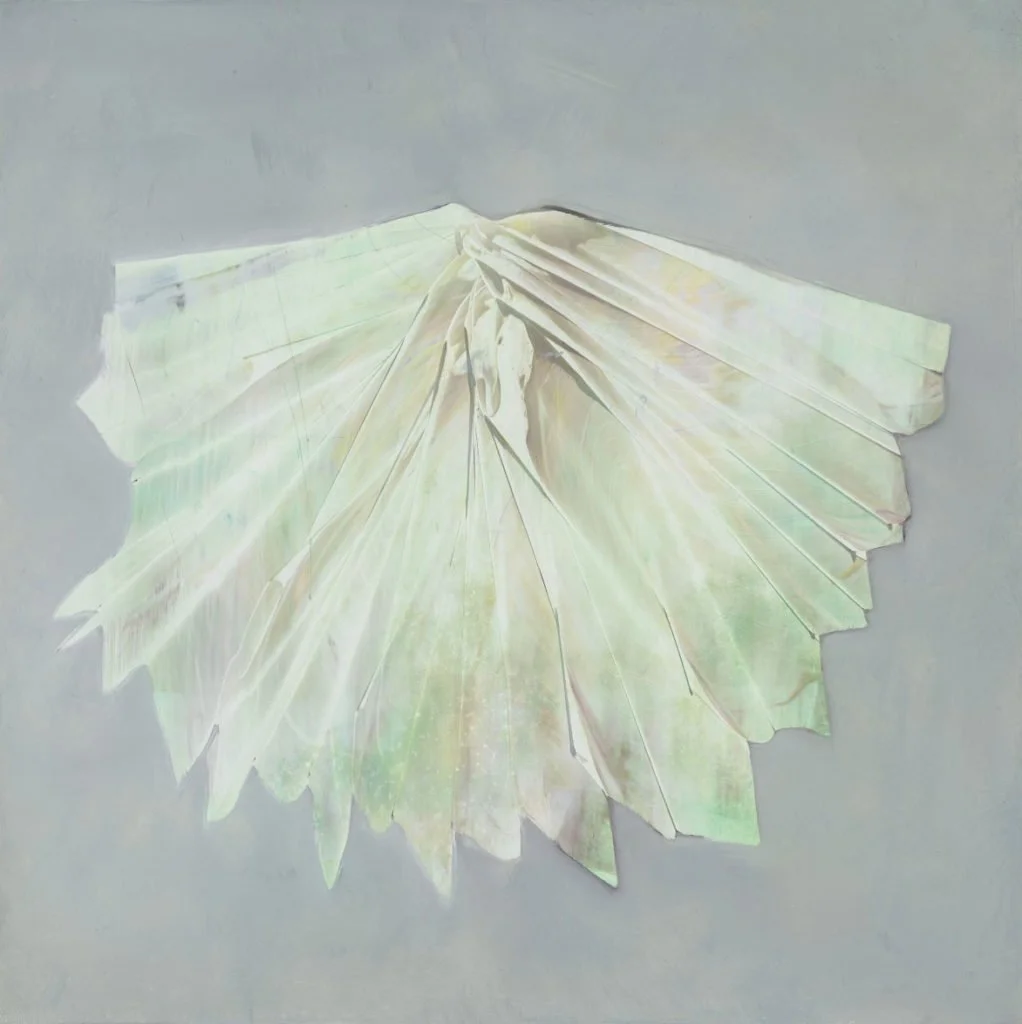
‘Somatic responses’

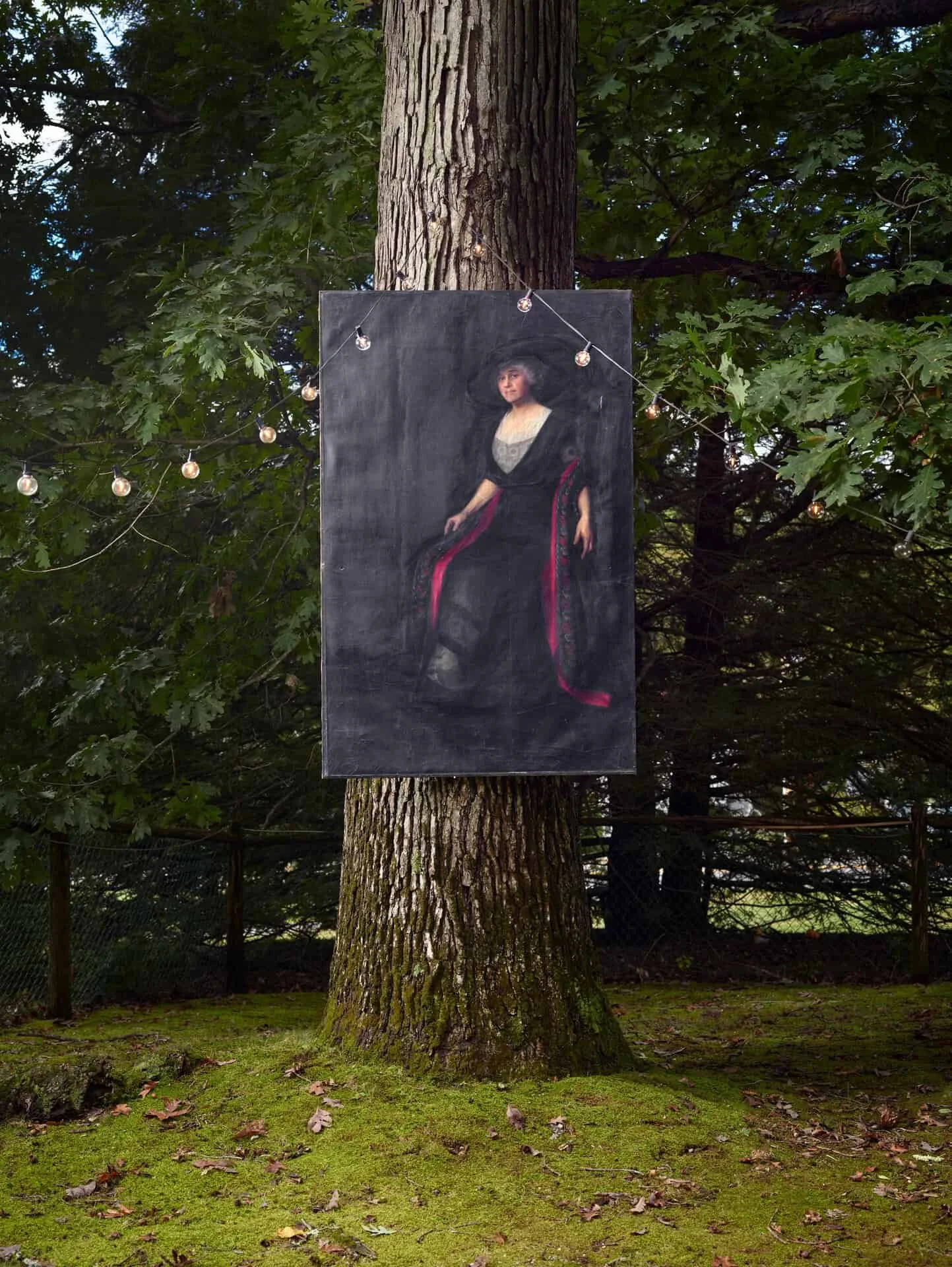
Selections from Maggie Nowinski’s show “Cicatrix/In Bloom,’’ at Tremaine Art Gallery, at the Hotchkiss School, Lakeville, Conn., through Oct. 15
Maggie Nowinski is a Massachusetts-based multi-modal artist, teaching artist and curator Maggie Nowinski.
The gallery says: “Through her work, Nowinski ‘explores somatic responses to environment, internal and external passageways, and collected disturbances through imagined specimen drawings that depict abject human-botanical entities’ with line drawings, prints, found objects and sound.’’

The Litchfield Hills and Lake Wononscopomuc, as seen from the grounds of the Hotchkiss School, Lakeville, Conn.

Sam Pizzigati: Time for a general strike at hyper-rapacious Dollar General

— Photo by Mike Kalasnik
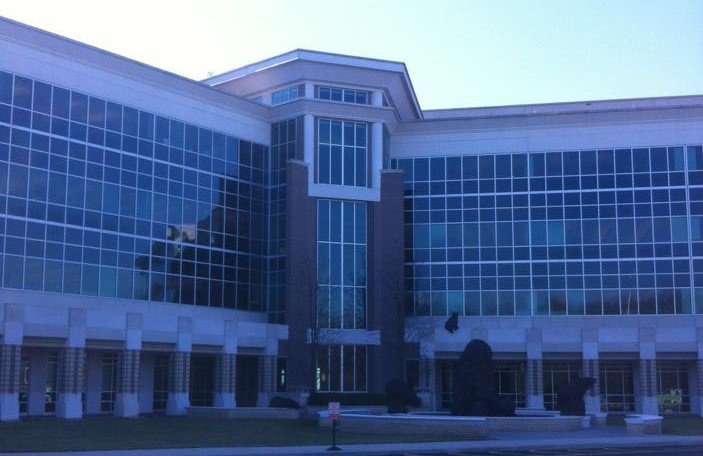
Dollar General headquarters, in Goodlettsville, Tenn.
Via OtherWords.org
BOSTON
President Biden recently walked a picket line in solidarity with striking auto workers. An amazing sight.
What could he do for an encore? He could stand before another major American corporation — Dollar General — holding a simple two-word placard saying “For Shame.”
Thanks to United Auto Workers members and the attention their strike has attracted, Americans now know a bit about the pressures that auto workers face. As a nation, unfortunately, we know next to nothing about life for Dollar General workers.
With more outlets than Walmart and Wendy’s combined, Dollar General has become “America’s most ubiquitous retailer,” Bloomberg reported recently, and may now be the “worst” retail employer in the country.
Bloomberg sums up Dollar General’s corporate ethos this way: “Build as many stores as possible, pack them with tons of stuff while using as little warehouse space as possible, and spend as little as possible on everything else.”
That means spending as little as possible on basic store upkeep.
Businessweek investigators have “found expired products on Dollar General shelves,” from chicken soup in Louisiana to doughnuts in Illinois. In one Oklahoma store, birds nested in the ceiling and pooped down on the merchandise.
And as little as possible on safety.
Government inspectors have reported “fire extinguishers blocked by boxes” and “shaky, leaning towers of product” as high as nine feet tall. The Occupational Safety and Health Administration last year tagged Dollar General a “severe violator” of federal workplace-safety law.
And, of course, Dollar General spends as little as possible on wages and workers.
One of every four Dollar General employees makes less than $10 an hour. Over half make under $12. Meanwhile entire stores go hours every day with only one employee responsible for an average of 7,500 square feet of retail space.
This brutal approach has paid off handsomely for investors and executives. Dollar General’s stock price has quintupled since 2009. And the company reports that its CEO, who hauls in $16.6 million a year, makes 935 more than a “median” Dollar General employee.
Officially, the typical Dollar General worker makes just $17,773 a year. But even that measly figure may be an overstatement.
Researcher Rosanna Weaver reports that the company recently changed its median-pay calculations by “annualizing” the wages of permanent employees who didn’t work a full year. Meanwhile, Dollar General actually understates CEO pay. The company’s executive compensation can run much higher than first reported once executives actually cash out their stock.
One example: After cashing out on a huge chunk of his stock awards, former CEO Todd Vlasos actually made nearly 4,500 times the annual pay of his 163,000 employees. He essentially made more in a single weekday — $328,000 — than his median employee could earn in 18 years.
All this “success” for Dollar General executives rests on a half-century of ever-greater American inequality. For two generations now, a shrinking share of U.S. income and wealth has gone into the pockets of America’s working families.
Thanks to this shrinking share, tens of millions of American families today couldn’t get by without the “bargain-basement” prices that dollar stores like Dollar General offer — at the expense of their customers’ health and safety and the economic security of their workers.
Moreover, that discounted food — often sold in “food-deprived areas” — comes highly processed, offers little in the way of nutritional value, and sits packaged within toxic, chemical-laden wrappings.
“Dollar General’s practices have an immense impact on communities across the country,” note advocacy attorneys Sara Imperiale and Margaret Brown, “especially communities of color and low-income communities.”
The U.S. economy isn’t delivering for American families — and that failure is delivering for corporate investors and executives. You’ll never find them doing their weekly food shopping at Dollar General.
How about a general strike against Dollar General?
Sam Pizzigati, based in Boston, co-edits Inequality.org at the Institute for Policy Studies. His books include The Case for a Maximum Wage and The Rich Don’t Always Win.
The soothing properties of water

“Pond Reflections,’’ by Susan Bailey, in the fall group show at Arts3Gallery, Manchester, N.H. She says: “Yes! I am often asked how I can paint realistic still lifes at the same time as abstracted landscapes”.

Seal of Manchester, N.H. Note the references to the city’s role as one of America’s first great industrial centers.

Lunching with The Prince

Adapted from Robert Whitcomb’s “Digital Diary,’’ in GoLocal24.com
The recent death at 75 of Gennaro Castellano, former captain of downtown Providence’s well known Capriccio restaurant, brought back cinematic memories of a few lunches I had there with Vincent “Buddy” Cianci in his heyday as mayor and “Prince of Providence’’ in the ’90’s. The lunches were very long, and he wasn’t averse to drinking stuff stronger than water during them. Considering that Cianci allegedly had a good-sized city to run, he seemed in no hurry to get back to work even as we approached 3 p.m. Indeed, it was I who became increasingly anxious to get back to my job running The Providence Journal’s commentary pages, with its not very forgiving deadlines.
Buddy would say as I kept looking at my watch: “Relax! Nice place, eh?”
The waiters were very able, if obsequious, as if they feared the mayor, with his semi-mobster persona. They probably had good reason to.
Of course, being mayor of a good-sized city has always involved various degrees of show business. Consider besides Buddy, such flamboyant examples as New York Mayors Jimmy Walker and Fiorello LaGuardia (see the musical Fiorello!) and Boston Mayor James Michael Curley (read the novel The Last Hurrah).
‘Tis only a mirage’


“But this beauty of Nature which is seen and felt as beauty, is the least part. The shows of day, the dewy morning, the rainbow, mountains, orchards in blossom, stars, moonlight, shadows in still water, and the like, if too eagerly hunted, become shows merely, and mock us with their unreality. Go out of the house to see the moon, and 'tis mere tinsel; it will not please as when its light shines upon your necessary journey. The beauty that shimmers in the yellow afternoons of October, who ever could clutch it? Go forth to find it, and it is gone; 'tis only a mirage as you look from the windows of diligence.’’
— Ralph Waldo Emerson (1802-1882), American essayist, poet, philosopher and a leader of the cultural luminaries based in Concord, Mass.

Hard work
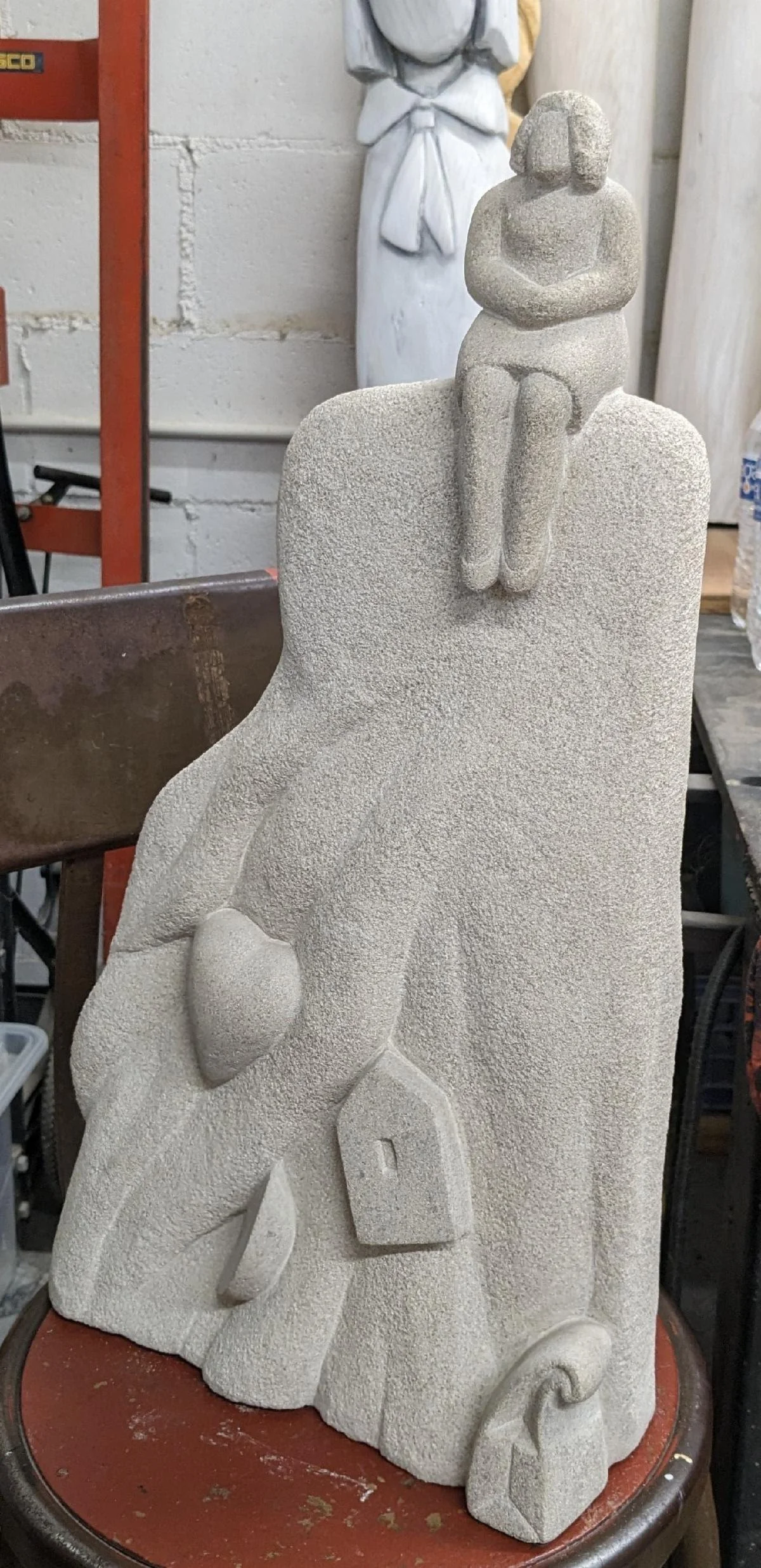
“Soledad/Solitude” (Indiana limestone), by Boston-based sculptor Nora Valdez, in the show “Rock Solid XXIII,’’ at Studio Place Arts, Barre, Vt. (“Granite Capital of the world”).
— Photo courtesy of Studio Place Arts
Studio Place’s exhibition features the work of 20 New England artists who have created a variety of stone artwork and assemblages. Each work highlights the unique qualities of stone as a medium.

The Barre World War 1 Memorial, "Youth Triumphant", by C. Paul Jennewein, one of the many local granite sculptures.
A beautiful exit

Near the mouth of the Goose River, at Rockport Harbor, Maine.

Autumn in Maine’s Hundred-Mile Wilderness
— Photo by Andythrasher
The blood of maples on the autumn sky,
And dead leaves drifting, drifting to the sea:
Now, to the year Time makes his old reply,
Nothing on earth shall live immortally.
The burst of glory on a dying face,
Of one who sees beyond, some haven far,
Lit with the spring-light of another place
And silver winds blown from another star.
Now beauty burns in gold on every hill
And changes not her warm imperial way:
There is no sadness here, whate'er men say—
Beauty departing is yet beauty still.
‘‘October on a Maine River,’’ by Kenneth Slade Alling

'Portraits' of 'witches'

Installation view of Barbara Broughel’s show ‘‘Requiem,’’ at the Krakow Witkin Gallery, Boston, through Oct. 14.
The gallery explains:
“Barbara Broughel’s ‘Requiem’ portraits consists of brooms and other modest household objects of early American design, each one a ‘portrait’ of a person accused, convicted, and/or executed as a ‘witch’ in 17th Century America. Based on court transcripts, each ‘portrait’ is reconstructed from elements detailing the victim’s life and the ‘spectral evidence’ (whereby an ill-fated event was considered to be caused indirectly through the supernatural powers of a person not present) used to convict them.’’
Salem wasn’t the only place in New England with murderous persecutions. Consider this.
Enough to start working on a canoe?

Painting by Elaine Farmer, the Amherst, N.H., based painter who owns White Birch Fine Art.


Birchbark canoe at Abbe Museum, in Bar Harbor, Maine
— Photo by Billy Hathorn
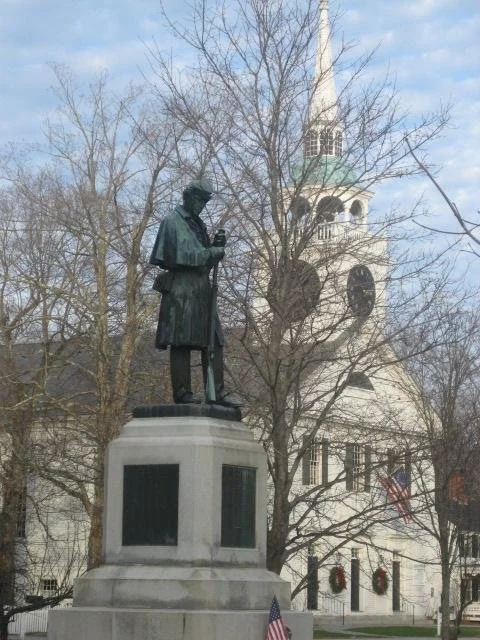
At the Amherst, N.H., common, with the sort of Civil War statute you see in so many New England towns.

Chris Powell: Misappropriating flagpoles for proselytizing

The “Christian flag’’ at issue

A “Rainbow” or “Pride’’ flag promoting LGBT interests
MANCHESTER, Conn.
Misappropriation of government flagpoles for political purposes continues in Connecticut. Torrington Mayor Elinor C. Carbone has approved a request to fly a Christian flag at City Hall for two weeks. It's part of a national campaign to urge people to go to church, particularly Christian churches.
This has commandeered the government for religious proselytizing, the sort of thing done in medievally totalitarian countries.
Of course, most recent flag controversies in Connecticut have involved commandeering the government to celebrate certain sexual orientations, as if sexual orientation isn't as much a personal matter as religion and as if Connecticut law doesn't already guarantee freedom of sexual orientation as well as religion.
Such use of government flagpoles is said to advance "inclusiveness" but it is actually divisive. Not everyone is Christian and no one needs to be told by government to go to church. Such an intrusion into personal matters is offensive.
As for the sexual-orientation flags -- “pride” flags -- their advocacy extends far beyond equal rights. They are construed to support transgenderism and the overthrow of gender privacy in bathrooms and equal opportunity for women in competitive sports. Most people oppose those things.
Additionally, as Torrington and many other municipal governments should know, courts have ruled that if government allows outside groups to use its flagpoles, it may not discriminate. If a government grants one request, it must grant all requests, as any refusal is unconstitutional censorship. This is how manger displays on town greens and public parks at Christmastime have compelled acceptance of atheist displays.
What will happen when someone wants to fly a Ku Klux Klan or a Nazi flag at City Hall, or flags advertising car dealers, supermarkets, or political candidates? The Trump 2024 flags are ready to go.
The only flags that can be "inclusive" on government flagpoles are government's own -- flags that fly for everybody.
xxx
Also being misappropriated in Connecticut are the electricity rates charged by utility companies.
At the direction of the state Public Utilities Regulatory Authority, the state's two major electricity distributors -- Eversource and United Illuminating -- are offering discounts to poor customers who are receiving financial support from state government like Medicaid insurance and food subsidies.
Norwich Public Utilities, the electric company owned by that city, is considering its own program of discounted rates for poor customers, the discounts to be determined according to household size and income.
Such discounts will be financed by customers who don't get discounts.
The intent here isn't necessarily objectionable but the method is. For these discounts will be public welfare expenses and as such they should be borne plainly through general taxation, not hidden in the bills of other electricity customers.
Already 15 to 20 percent of the charges to electricity customers in Connecticut arise not from the cost of providing electric power but from various social programs and policies state government has decided to finance through electricity bills so resentment will fall on the utility companies rather than elected officials. Connecticut faces nearly the highest electricity costs in the country in large part because state government hides so much of its own costs in electricity bills.
This doesn't mean that electric utilities shouldn't economize. It means that elected officials are grossly hypocritical when they accuse the utilities of overcharging even as state government does more overcharging for electricity than the utility companies do.
PICKLEBALL TAKES PRIORITY: Amid brazen crime and worsening poverty, mental illness, drug addiction and homelessness, Connecticut seems to be falling apart, as does the country itself. But last week Gov. Ned Lamont took a break from those problems to help open the four new pickleball courts in Glastonbury.
The courts were financed with state and federal money, as well as municipal money. Glastonbury, prosperous and well-insulated from social problems by its zoning regulations, could have covered the whole cost itself, without state and federal aid, if the courts were really essential to the town's well-being. But setting humane and sensible priorities in government can be such a drag.
Chris Powell has written about Connecticut government and politics for many years. (CPowell@cox.net)
Fall fishing outing


Close-up of smelt for sale at a seafood market
—Photio by ChildofMidnight
Adapted from Robert Whitcomb’s “Digital Diary,’’ in GoLocal24.com
September and October remind me of smelt fishing with a bamboo pole and two hooks on a spreader on a dock in the harbor down the wooded hill from our house. The sky always seemed to be clear, and the cool wind from the east included a whiff of the marsh along the channel to the harbor.
It was an exhilarating early fall ritual coming as the maples started to turn bright colors and the apples were at their peak.
Smelt are delicious fried with a little corn meal, lemon and butter.
Hit this link for a few pointers.
Bumping bikes

“Propelled” (pastel), by Plymouth, Mass.-based Jory Mason, in the group show “Signature Strokes,’’ at the South Shore Art Center, Cohasset, Mass., through Oct. 28., in collaboration with the Pastel Painters Society of Cape Cod and juror Lisa Flynn.
The arts center says the show features pastel artwork of “everything from natural scenes of plants, water and delicate flowers to subjects including men at work repairing a city street and the rough moorings of a ship.’’

Recreation of Plimoth Plantation, at Plymouth
— Photo by Marco Almbauer

Trying to keep up grand appearances at years roll by

In Boston’s Back Bay neighborhood, an old house is draped while being repaired.
Old building materials, new insulation standards and consistently wet summers can spell trouble for many of Boston's historic homes, contractors and experts said, so property owners need to be on the lookout now for warning signs.
Neighborhoods like the Back Bay, Beacon Hill and South End are known for historic brownstones and rowhouses, but buildings from a century ago weren't constructed according to current codes.
In particular, lintels which support walls above doors and windows, may have been made with steel, but what was state-ofthe-art then is woefully out of date now, according to John Holland of Holland & Co., who has decades of construction and rehab experience.
"When steel lintels were introduced in the turn of the century, they were new material, but they weren't galvanized," Holland said, noting that kind of metal is susceptible to rust and water damage, and that can lead to significant repairs as water freezes and expands over time, damaging stone, and lintels.
To read the whole article, please hit this link.
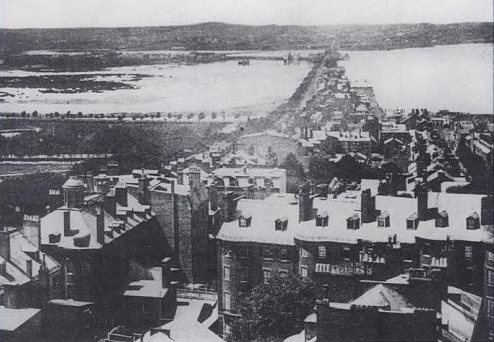
View (1858) from the Massachusetts State House westward along the Mill Dam (now Beacon Street), which separated Back Bay (left) from the Charles River. The Mill Dam and the Cross Dam (in distance is the modern Massachusetts Avenue-Kenmore Square area, with mills barely visible near juncture with the Mill Dam). They were part of an attempt to derive power from tides. Trees along north-south waterline represent western boundary (now Arlington Street) of the Boston Public Garden.
The Back Bay was built on land reclaimed from the Charles River basin. Construction began in 1859, as the demand for luxury housing exceeded the availability in the city at the time, and the area was fully built by around 1900. It remains one of Boston’s richest neighborhoods

The quiet way

“Raking leaves can be totally Zen,’’ by Adam Blue, in his show “Adam Blue: Astroexplorer — A Guide to the Heavens,’’ at Maine Street Museum, White River Junction, Vt., through Nov. 18.
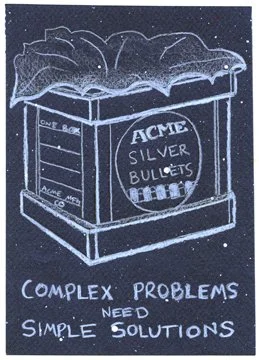
The museum says:
The exhibition provides concise and sometimes blunt discourse on current environmental, political and social issues, as well as pop culture.

Lillian Gish on the White River, at White River Junction, being filmed for the 1920 silent film Way Down East.

White River Junction in 1989. It was a major railroad center.

Llewellyn King: The folly of Biden on the picket line

The Cambridge Assembly building, which started as a Ford Motor Co. factory in Cambridge, Mass., which opened in 1913. It had the first vertically integrated assembly line in the world. It was replaced in 1926 by the Somerville Assembly. The plant was later reused by Polaroid Corp., once Greater Boston’s high-tech star, and is now owned by the Massachusetts Institute of Technology.
This is a revised version of a column posted earlier this week.
WEST WARWICK, R.I.
The United Auto Workers strike against the Big Three U.S. automakers, Ford, General Motors and Stellantis, formerly Chrysler, no matter the merits of the workers’ yearnings, shouldn’t have happened. Once it got going, it shouldn’t have lasted. The White House should have spoken.
Already there is damage. Ford has “paused” plans to build a $3.5-billion battery plant in Michigan. If the strike drags on, or if the industry bows to the most damaging demand in the union’s wish list (a 32-hour work week), then the production of EVs and battery leadership will be ceded to other countries. U.S. automakers’ dependence on China — the world ’s top battery maker for EVs — will continue.
The U.S. auto industry is starting its EV surge behind others, and it will suffer mightily if the UAW doesn’t return to work.
In this circumstance, with so much at stake, it would be reasonable to expect President Biden to have both sides closeted at Camp David and to be “knocking heads together.”
The president is the ultimate arbitrator, the one we look to for guidance and to tell us what is best. Yet, instead of bringing both sides together in the national interest, Biden has chosen sides, and chosen to walk the picket line.
Even Steven Rattner, the Democrats’ mechanic when it comes to auto issues, has said this is wrong.
Rattner — whom I caroused with when he was reporter at The New York Times, before he became fabulously rich on Wall Street — is through-and-through a Democrat and one of the party’s intellectuals. In 2009, he authored the rescue plan for the auto industry. At that time, it looked like General Motors and Chrysler were headed for permanent closure.
What was Biden thinking? Why did he abandon the high ground of the presidency?
How can Biden now sit down and bring both sides to the table to negotiate in good faith? He has already declared his allegiance to one.
I believe in the value of unions: guarantors of middle-class life for many. I am not just saying that. I have lived it.
I was once the president of the Washington-Baltimore Newspaper Guild. I am very proud of the financial settlement we got on my watch for reporters and editors at The Washington Post. It was a breakthrough: a 67 percent pay raise over three years.
The newspaper industry was very prosperous at the time, whereas reporters and editors were poorly paid. It was long before the internet would crush the industry, reducing it to its present state of poverty and collapse. We were asking for some of the goodies we had created. There was no danger of The Washington Post moving to China.
Sadly, the unions have been slow to adjust to new realities. They are stuck in a mindset of the days when we were a country of industrial robber barons and industrial unions made sense. Now we are mostly a service economy desperately seeking to reindustrialize. EVs are important in that effort.
I ran into outdated union thinking head-on at the Washington-Baltimore Newspaper Guild. Although we were largely autonomous, we were a chapter of the American Newspaper Guild, our head office.
I had a proposal for simplifying work schedules for editorial staff. My proposal was that editorial staff work three days — 10 to 12 hours a day — and have three days off. My colleagues loved it, The Washington Post management saw it as a solution to overtime and weekend staffing problems. I had seen it work well at the BBC in London, where it was standard practice.
The ANG head office went berserk: It was a betrayal of union history and the “model” contract, written by the legendary reporter, columnist and ANG founder, Heywood Broun, in 1935. In ongoing negotiations with The Post, I dropped the proposal to everyone’s regret. That kind of legacy thinking is what has been killing unions and unionism.
There is a backstory to the Hollywood writers’ strike and the auto workers’ stoppage: artificial intelligence. It will change lives and is a threat to the kind of work unions have protected.
Biden might well have chosen the strikes as a chance to bring about settlements, but also to begin a national dialogue on AI.
Instead, Biden walked a picket line, resolving nothing.
Llewellyn King is executive producer and host of White House Chronicle, on PBS. His email is llewellynking1@gmail.com and he’s based in Rhode Island and Washington, D.C.

At the University of Southern Maine, ethics training in artificial intelligence

The McGoldrick Center for Career & Student Services, left, the Bean Green, and the Portland Commons dorm at the University of Southern Maine’s Portland campus.
— Photo by Metrodogmedia

AI at work: Representing images on multiple layers of abstraction in deep learning.
— Photo by Sven Behnke
Edited from a New England Council report:
“The University of Southern Maine (USM) “has received a $400,000 grant from the National Science Foundation to develop a training program for ethical-research practices in the age of artificial intelligence.
“With the growing prevalence of AI, especially such chatbots as Chat-GPT, experts have warned of the potential risks posed to integrity in research and technology development. Because research is an inherently stressful endeavor, often with time constraints and certain desired results, it can be tempting for researchers to cut corners, leaning on artificial intelligence to imitate the work of humans.
“At USM’s Regulatory Training and Ethics Center, faculty are studying what conditions lead to potential ethical misconduct and creating training sessions to make researchers conscious of their decisions and thoughts during their work and remain aware of stressors that might lead to mistakes in judgment. Faculty at USM believe this method will allow subjects to proactively avoid turning to unethical AI assistance.
“‘We hope to create a level of self-awareness so that when people are on the brink of taking a shortcut they will have the ability to reflect on that,’ said Bruce Thompson, a professor of psychology and principal at the USM ethics center. ‘It’s a preemptive way to interrupt the tendency to cheat or plagiarize.’’’

Anxiety in New Haven

“Toward the Forest “ (colored woodcut), by Norwegian artist Edvard Munch (1863-1944), in the show “Munch and Kirchner: Anxiety and Expression,’’ at the Yale University Art Gallery, New Haven, Conn., Feb. 16-June 23, 2024.
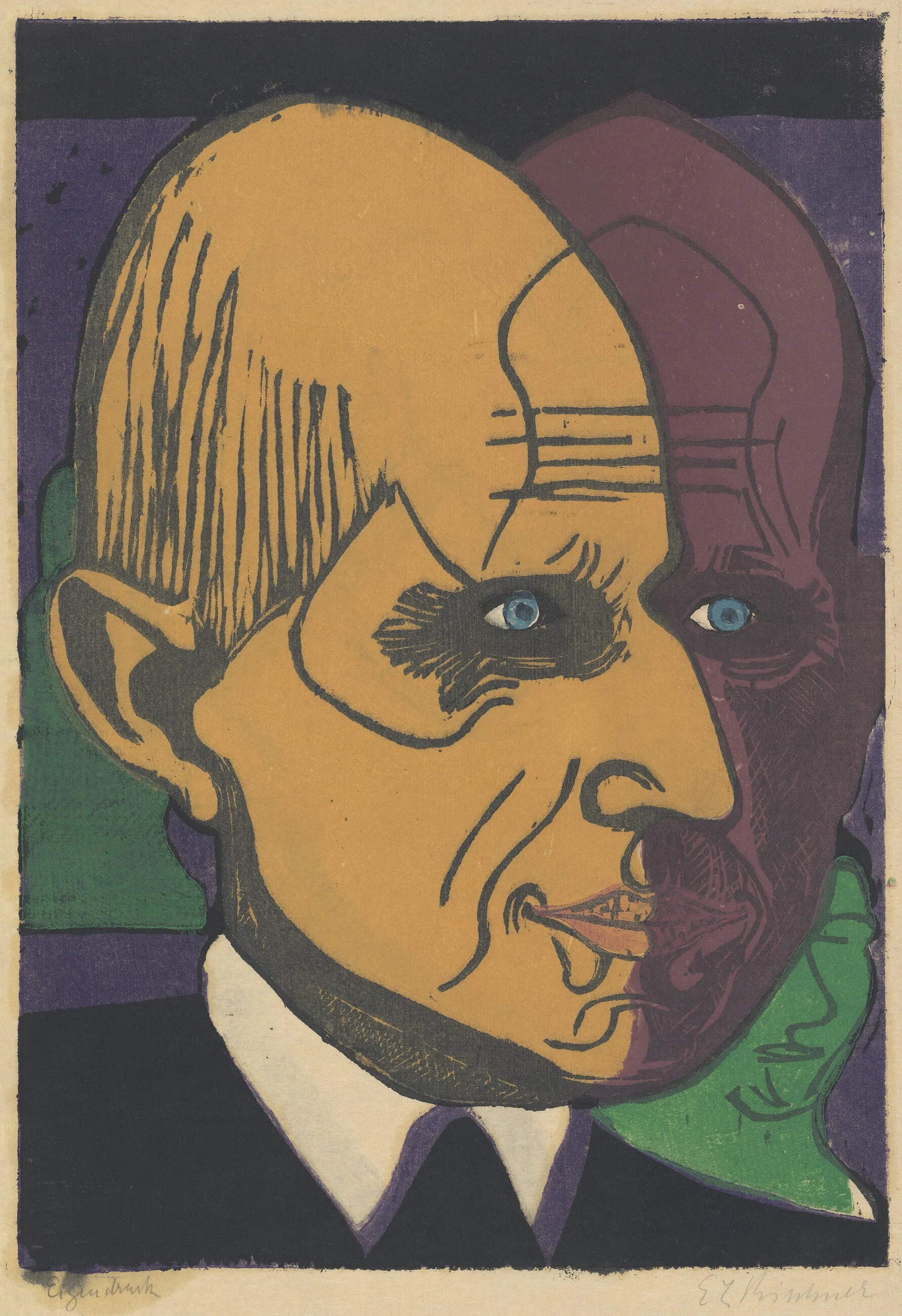
“Head of Dr. Frédéric Bauer’’ (colored woodcut), by German artist Ernst Ludwig Kirchner (1880-1938).
The gallery says:
“Featuring more than 60 works on paper, this exhibition is the first to examine the prints of Edvard Munch alongside those of Ernst Ludwig Kirchner, elucidating the fascinating overlaps in their creative output and personal biographies and demonstrating how these artists suffered from—and attempted to cope with—the anxieties of their age.’’
Aliens in the sand
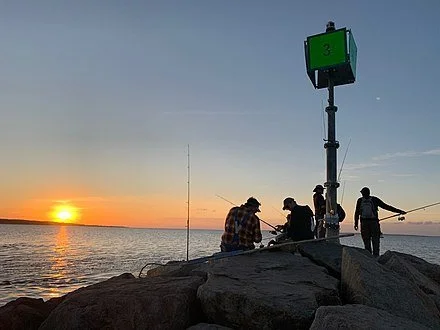
Sunset from Menemsha
“Menemsha {on Martha’s Vineyard}: An old Native American word freely translated as ‘place where demented aliens gather to applaud the setting of the sun while eating supper in the sand.’’’
— Arnie Reisman, in On the Vineyard II (1990)
Embrace contradictions

From Joan Feirabend’s show “Multitudes,’’ at AVA Gallery and Art Center, Lebanon. N.H., Oct. 6-Nov. 4.
The gallery says:
“For thirty-two years, art has been Joan Feierabend’s daily practice, ‘I have long recognized that my paintings are wiser than I am. When a painting tells me where it wants to go, I do my best to follow.’ Working with multiple layers, she tinted each surface with color and removed paint by pressing a crumpled cloth onto the surface, creating a sort of ‘blot’– an interruption akin to the way unforeseen events can imprint a life. Each painting took many days of layering in this way. Materials used include acrylic paint, ink, pencil, colored pencil, charcoal, pastel, and gold leaf. Her tools were brushes, spatulas, pens, stencils, tape, sponges, wadded cloth, paper, and baby wipes.
“Fond of the verse, ‘I contain multitudes,’ in Walt Whitman’s poem, ‘Leaves of Grass', Feierabend believes this to be true of us all. ‘We all contain contradictions…the complexity that every human being brings to the art– including the artist, speaks to our unique selves.’ She recognizes that viewers may experience multitudes of contradictions while making selections as they will no doubt waver between the diverse choices offered.’’
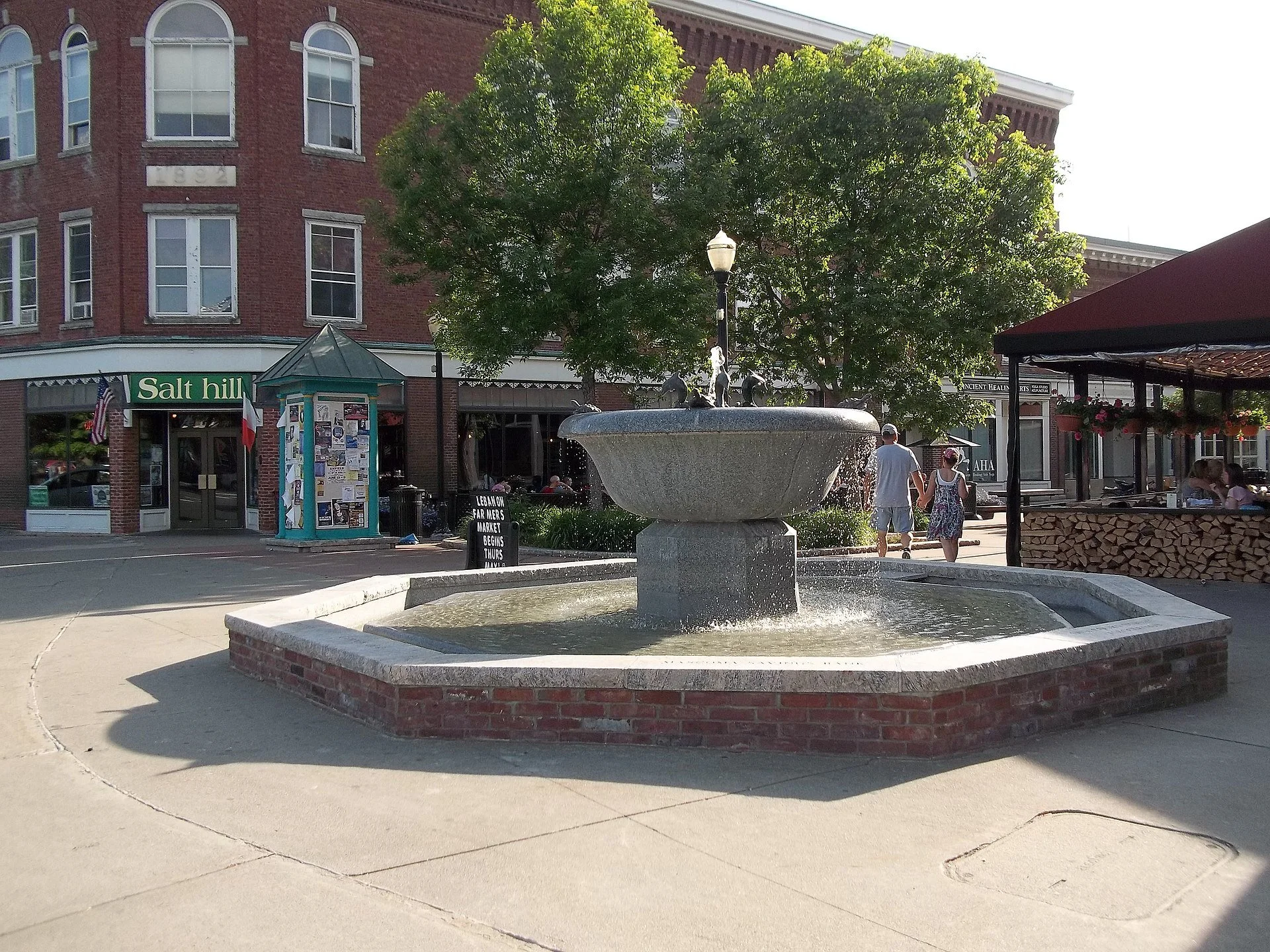
Fountain in downtown Lebanon
— Photo by Artaxerxes