
Vox clamantis in deserto






And they’re in charge

“Flags of Our Mothers,’’ by Raven Halfmoon, at the Aldrich Contemporary Art Museum, in Ridgefield, Conn.
Raven Halfmoon (Caddo Nation) is from Norman, Okla.


Old Labor Day parades and a video

The Brotherhood of Boiler Makers Lodge 245 on Labor Day, 1915, in front of the Wonalancet Club, in Concord {N.H.}, just after marching in the Concord Labor Day Parade.
— Photo at the Concord Public Library
‘Into the dark decayed’


The same leaves over and over again!
They fall from giving shade above
To make one texture of faded brown
And fit the earth like a leather glove.
Before the leaves can mount again
To fill the trees with another shade,
They must go down past things coming up.
They must go down into the dark decayed.
They must be pierced by flowers and put
Beneath the feet of dancing flowers.
However it is in some other world
I know that this is way in ours.
“In Hardwood Groves,’’ by Robert Frost (1874-1963)
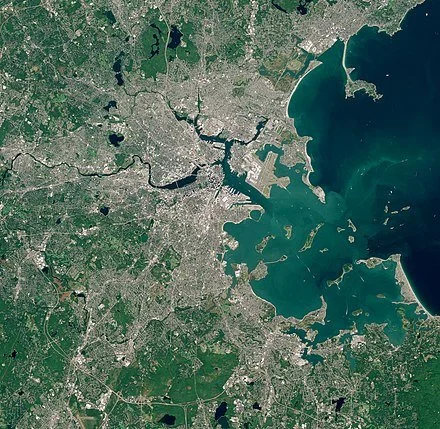
Martha Bebinger: In Mass. and beyond, health-care workers confront the rising dangers from a warming climate
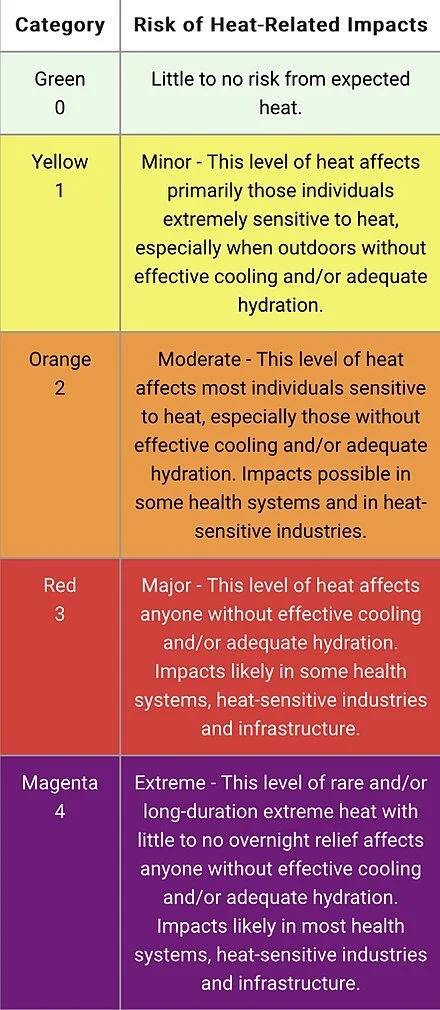
The National Weather Service risk categories for heat
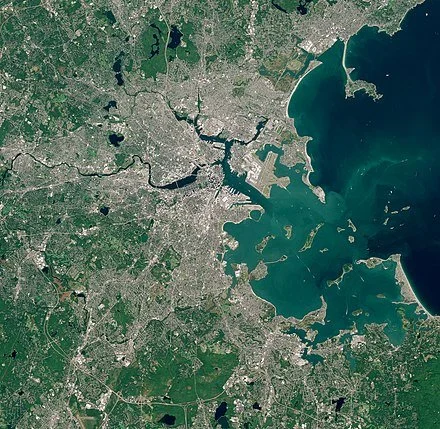
Boston and some adjoining communities
Text via KFF Health News in partnership with WBUR and NPR
BOSTON
An important email appeared in the inboxes of a small group of health-care workers north of this city as this summer started. It warned that local temperatures were rising into the 80s.
An 80-plus-degree day is not sizzling by Phoenix standards. Even in Boston, it wasn’t high enough to trigger an official heat warning for the wider public.
But research has shown that those temperatures, coming so early in June, would likely drive up the number of heat-related hospital visits and deaths across Greater Boston.
The targeted email alert the doctors and nurses at Cambridge Health Alliance, in Somerville, Mass,, got that day is part of a pilot project run by the nonprofit Climate Central and Harvard University’s Center for Climate, Health and the Global Environment, known as C-CHANGE.
Medical clinicians based at 12 community-based clinics in seven states — California, Massachusetts, North Carolina, Oregon, Pennsylvania, Texas and Wisconsin — are receiving these alerts.
At each location, the first email alert of the season was triggered when local temperatures reached the 90th percentile for that community. In a suburb of Portland, Ore., that happened on May 14 during a springtime heat wave. In Houston, that occurred in early June.
A second email alert went out when forecasts indicated the thermometer would reach the 95th percentile. For Cambridge Health Alliance primary- care physician Rebecca Rogers, that second alert arrived on July 6, when the high hit 87 degrees.
The emails remind Rogers and other clinicians to focus on patients who are particularly vulnerable to heat. That includes outdoor workers, older adults, or patients with heart disease, diabetes, or kidney disease.
Other at-risk groups include youth athletes and people who can’t afford air conditioning, and/or who don’t have stable housing. Heat has been linked to complications during a pregnancy as well.
“Heat can be dangerous to all of us,” said Caleb Dresser, director of health- care solutions at C-CHANGE. “But the impacts are incredibly uneven based on who you are, where you live, and what type of resources you have.”
The pilot program aims to remind clinicians to start talking to patients about how to protect themselves on dangerously hot days, which are happening more frequently because of climate change. Heat is already the leading cause of death in the U.S. from weather-related hazards, Dresser said. Letting clinicians know when temperatures pose a particular threat to their patients could save lives.
“What we’re trying to say is, ‘You really need to go into heat mode now,'” said Andrew Pershing, vice president for science at Climate Central, with a recognition that “it’s going to be more dangerous for folks in your community who are more stressed.”
“This is not your grandmother’s heat,” said Ashley Ward, who directs the Heat Policy Innovation Hub, at Duke University. “The heat regime that we are seeing now is not what we experienced 10 or 20 years ago. So we have to accept that our environment has changed. This might very well be the coolest summer for the rest of our lives.”
The alerts bumped heat to the forefront of Rogers’s conversations with patients. She made time to ask each person whether they can cool off at home and at work.
That’s how she learned that one of her patients, Luciano Gomes, works in construction.
“If you were getting too hot at work and maybe starting to feel sick, do you know some things to look out for?” Rogers asked Gomes.
“No,” said Gomes slowly, shaking his head.
Rogers told Gomes about early signs of heat exhaustion: dizziness, weakness, or profuse sweating. She handed Gomes tip sheets she’d printed out after receiving them along with the email alerts.
They included information about how to avoid heat exhaustion and dehydration, as well as specific guidance for patients with asthma, chronic obstructive pulmonary disease (COPD), dementia, diabetes, multiple sclerosis and mental-health concerns.
Rogers pointed out a color chart that ranges from pale yellow to dark gold. It’s a sort of hydration barometer, based on the color of one’s urine.
“So if your pee is dark like this during the day when you’re at work,” she told Gomes, “it probably means you need to drink more water.”
Gomes nodded. “This is more than you were expecting to talk about when you came to the doctor today, I think,” she said with a laugh.
During this visit, an interpreter translated the visit and information into Portuguese for Gomes, who is from Brazil and quite familiar with heat. But he now had questions for Rogers about the best ways to stay hydrated.
“Because here I’ve been addicted to soda,” Gomes told Rogers through the interpreter. “I’m trying to watch out for that and change to sparkling water. But I don’t have much knowledge on how much I can take of it.”
“As long as it doesn’t have sugar, it’s totally good,” Rogers said.
Now Rogers creates heat-mitigation plans with each of her high-risk patients. But she still has medical questions that the research doesn’t yet address. For example: If patients take medications that make them urinate more often, could that lead to dehydration when it’s hot? Should she reduce their doses during the warmest weeks or months? And, if so, by how much? Research has yielded no firm answers to those questions.
Deidre Alessio, a nurse practitioner at Cambridge Health Alliance, also has received the email alerts. She has patients who sleep on the streets or in tents and search for places to cool off during the day.
“Getting these alerts makes me realize that I need to do more homework on the cities and towns where my patients live,” she said, “and help them find transportation to a cooling center.”
Most clinics and hospitals don’t have heat alerts built into electronic medical records, don’t filter patients based on heat vulnerability, and don’t have systems in place to send heat warnings to some or all of their patients.
“I would love to see health care institutions get the resources to staff the appropriate outreach,” said Gaurab Basu, a Cambridge Health Alliance physician who co-directs the Center for Health Equity Advocacy and Education at Cambridge Health Alliance. “But hospital systems are still really strained by COVID and staffing issues.”
This pilot program is an excellent start and could benefit by including pharmacists, said Kristie Ebi, founding director of the Center for Health and the Global Environment, at the University of Washington.
Ebi has studied heat early-warning systems for 25 years. She says one problem is that too many people don’t take heat warnings seriously. In a survey of Americans who experienced heat waves in four cities, only about half of residents took precautions to avoid harm to their health.
“We need more behavioral-health research,” she said, “to really understand how to motivate people who don’t perceive themselves to be at risk, to take action.”
For Ebi and other researchers, the call to action is not just to protect individual health, but to address the root cause of rising temperatures: climate change.
“We’ll be dealing with increased exposure to heat for the rest of our lives,” said Dresser. “To address the factors that put people at risk during heat waves, we have to move away from fossil fuels so that climate change doesn’t get as bad as it could.”
Martha Bebinger is a reporter at WBUR, in Boston
marthab@wbur.org, @mbebinger
And they don't bite

“Hello, Bessie. Hello, Roland.” (mixed media), by Abby Rovaldi, in the group show “Creature Comforts,’’ at the Attleboro (Mass.) Arts Museum, through Sept. 23. Her studio is in Franklin, Mass.
— Photo courtesy of Ms. Rovaldi
The museum says that the show asks 17 artists to interpret themes from the novel Nothing to See Here, by Kevin Wilson, with 2D and 3D representations of stuffed animals. It provides artists the opportunity to "bring their favorite stuffed companions back to life," complete with "biographies" for each animal.
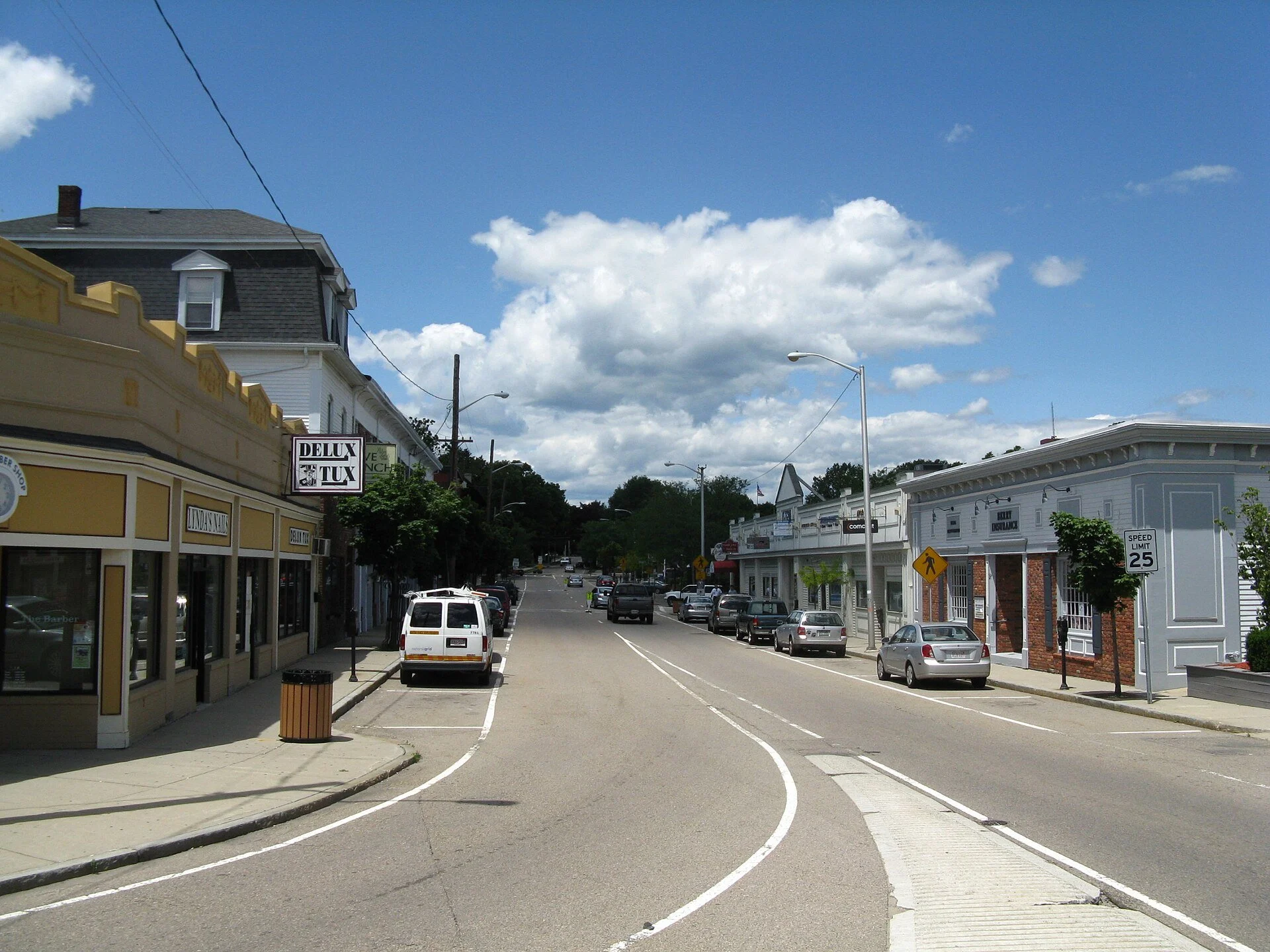
Sleepy downtown Franklin, Mass.

Llewellyn King: Wherein we go cruising for out-of-control tourism

Costa Mediterranea in Argostoli, Greece
— Photo by Kefalonia2015
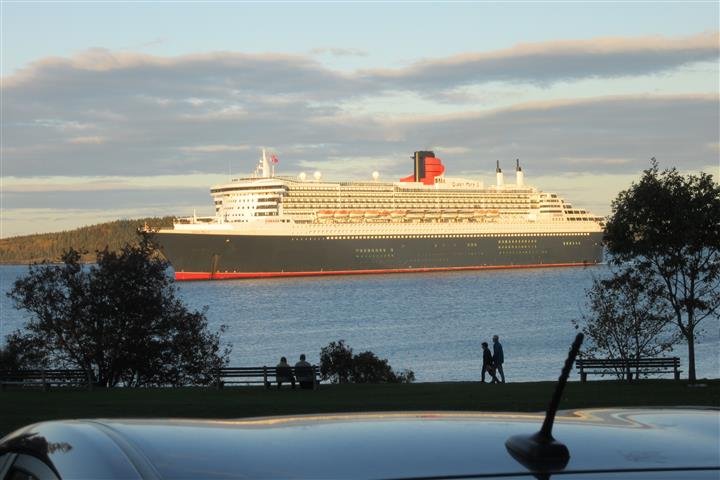
Huge cruise ship at Bar Harbor, Maine. Cruise ships are increasingly irritating many locals in famous tourist spots in New England in the cruise lines’ May-October season.
Europe reeled this summer from heat, wildfires, migrants and worries about Russia’s war in Ukraine, but also from too much tourism. I know, I was part of the problem.
Tourism is the quick economic fix for poor nations, but it is also important to rich ones — until both get too much of it.
The places everyone wants to visit, often places on bucket lists, are choking on their success. Paris, Britain’s Stonehenge and the Lake District, Ireland’s Ring of Kerry and the jewels of Italy, Florence and Venice, all suffer summer overload.
Things were so bad in Venice this summer that cruise ships had to be waived off. The Greek islands of Santorini, Corfu and Mykonos were, likewise, inundated with cruisers and other tourists.
Yet tourism is vital to many economies. The emerging tourist destinations along Croatia’s Dalmatian Coast are the latest to feel the benefits and problems of tourism. The sites, the roads and the facilities are stretched, but tourism has meant economic well-being for the region, especially as cruise ships have started calling.
Cruise ships, those big – and becoming gigantic — floating palaces overwhelm ports when they anchor, burden infrastructure and deposit lots of lovely money.
Greece and many countries along the Adriatic Sea derive about 25 percent of their GDP from tourism, not the least of it from cruise ships. Cruise ships are very important to any shore community that has ancient ruins, historical and scenic cities, natural wonders — and the Balkan countries have all in abundance.
In early August, my wife and I cruised the Dalmatian Coast and Greek islands. When we booked the cruise, at the last minute, we were fully aware of the tourist pressure on Europe every summer, but learned that it is getting worse.
Most of the Dalmatian Coast is still visitable in summer and hugely rewarding, except for Dubrovnik, which we skipped. It is, I learned, showing stress from over-tourism. The full impact of the cruise ships hasn’t yet begun to wear on the small coastal towns, as it has on the most famous Greek islands.
You can’t pick a Greek islands itinerary in the summer that will avoid seeing too many cruise ships, carrying 2,500 and up passengers, arriving at the same destination at the same time.
Fira, on Santorini, is a fabulous cliff town, except when there are too many visitors going ashore from a flotilla of cruise ships anchored in the harbor.
Five cruise ships arrived at Fira simultaneously, ours among them, and untold thousands of tourists went ashore. To reach the charming town, you must ride a donkey or a cable car. My wife and I love donkeys, so we opted for the cable car. It was chaotic, verging on dangerous. Extraordinarily, the crowds waiting for hours to board the cable cars were well-behaved: no pushing, no audible outrage, just resigned queuing.
Lest you think cruise ships are filled only with Americans, cruising has become a global passion.
Cruisers see the world from the comfort and security of a very large, well-organized hotel that moves with them. They see so much more and take their selfies in so many more places than they could otherwise.
Cruising is big business, and the size of the ship seems not to deter anyone.
Royal Caribbean is about to add its Icon class: They will carry up to 7,000 passengers and 3,000 crew. To merchants and tax collectors they are golden galleons as the visitors spend their doubloons on tours, trinkets, meals and tips.
But over-tourism degrades the picturesque ports, cherished villages, and great structures of the past.
When I see a cruise ship, towering over a town from where history was born, I think: The barbarians arrive in shorts, clutching cameras and cell phones. I may be one of them, but I shall endeavor to avoid high summer in the future.
Llewellyn King is executive producer and host of White House Chronicle, on PBS. His email is llewellynking1@gmail.com and he’s based in Rhode Island and Washington, D.C.
Intriguing indigo
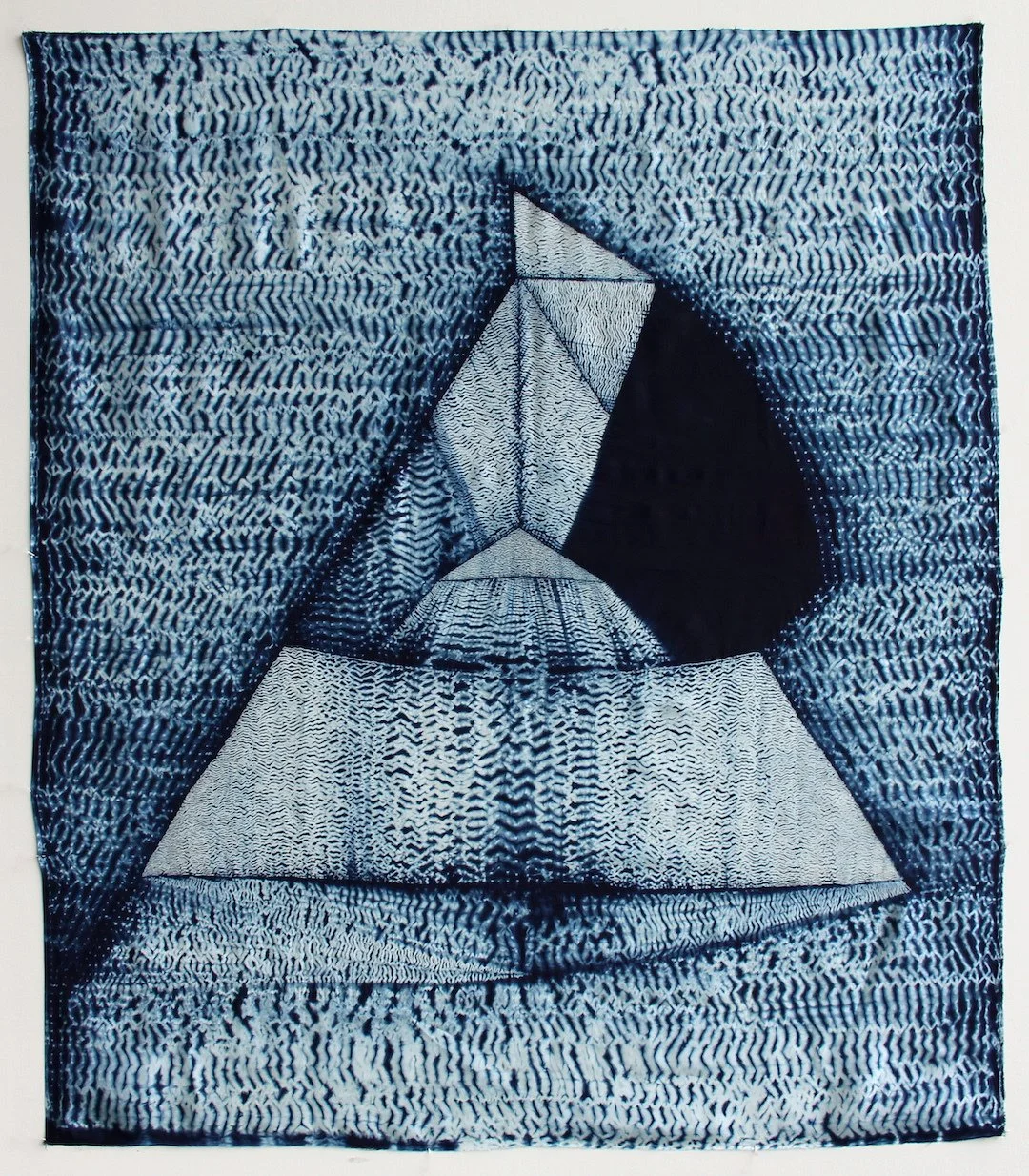
Work by Davana Robedee in her show “As Above, So Below,’’ at 3S Artspace, Portsmouth, N.H., Sept. 8-Nov. 12
She says:
“Indigo dye is an intriguing substance. It strikes a balance between precise science and magical experience. Long before its scientific understanding, indigo was used all over the world for its color, but it was also revered for its magical transformation from green to blue in the dye process. Before knowing that on the molecular level, indigo was bonding with oxygen, it was described as ‘breathing’ as if it were a living entity. Through growing and dyeing with it, I find a place to hold both the spiritual and the scientific. Its place in my practice is symbolic and functional. The same is true for hand-stitched resist shibori as a method of making marks on fabric. It slows down my experience of time and the imagery references my parasomnia hallucinations. It gives rise to two narratives- that I slow down time and a create a magical transformation, or that I bind fabric and use a chemical reaction to create a pattern. Through this I question- are these arcane symbols from a world beyond consciousness, or simply a misfiring of the brain?’’
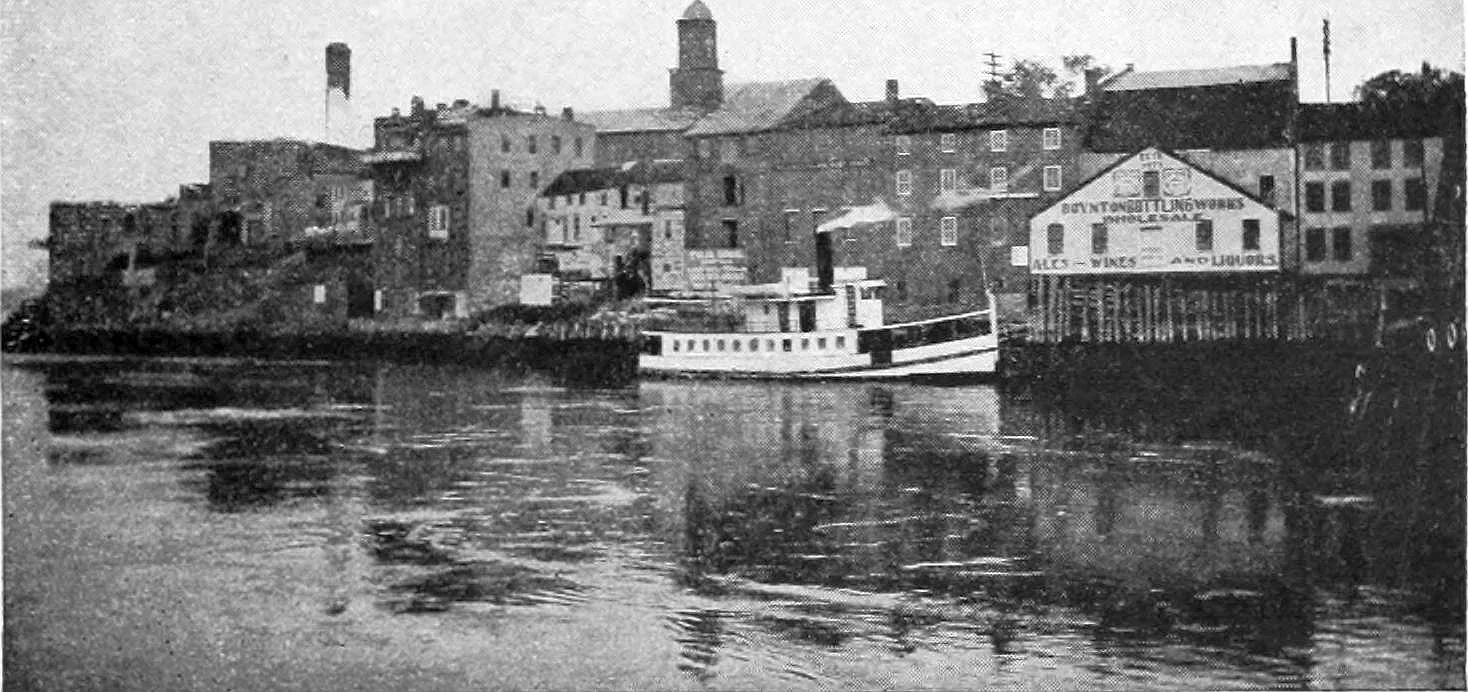
Portsmouth waterfront in 1917

Always headwinds
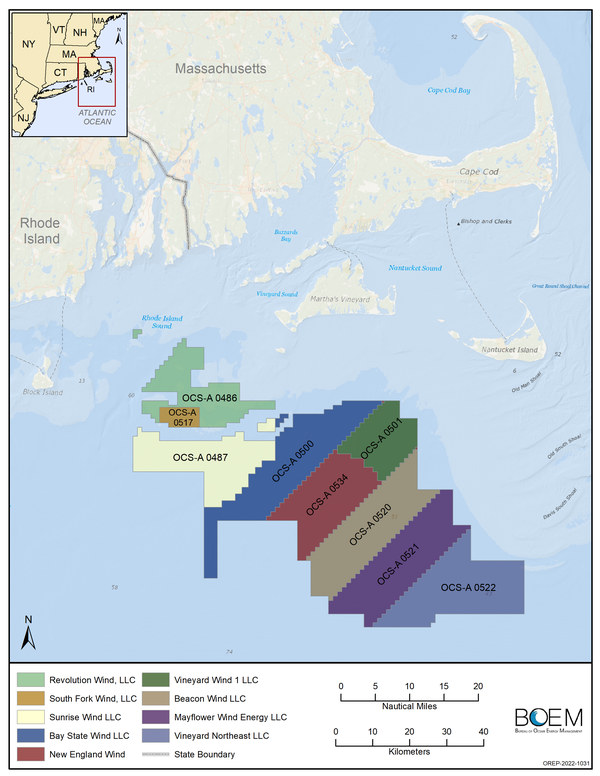
Wind-energy lease areas off Massachusetts and Rhode Island as of October, 2022

The Massachusetts Wind Technology Testing Center, in Boston’s Charlestown section.
— Photo by vArnoldReinhold
Adapted from Robert Whitcomb’s “Digital Diary,’’ in GoLocal24.com
It was good to hear that the U.S. Interior Department has approved Revolution Wind’s big (700 megawatts) project, southwest of Martha’s Vineyard. The project could provide electricity for 350,000 homes and create about 1,200 construction jobs.
The department has also approved the Vineyard Wind 1 project, off Massachusetts, the South Fork Wind project, off Rhode Island and New York, and the Ocean Wind 1 project, off New Jersey.
But the regulatory approval process moves at glacial speed, and litigation always threatens to stop such projects in their tracks. Big factors are nimbyism by coastal residents (often led by affluent summer people) who say that they don’t want to look at wind turbines, as well as opposition by some in the fishing sector because of the mostly temporary disruptions in the areas where they’d be installed. Of course, the damage caused by man-made global warming happens everywhere, in varying degrees of severity.
And the supports for offshore turbines act as artificial reefs that draw fish. Wouldn’t fishermen like that?
Installing any energy source creates problems, but let’s make rational comparisons….
The complaints by offshore-wind foes are outstandingly hypocritical. Consider that the fossil-fuel burning that wind power is meant to partly replace poses an existential risk to fishing interests by dangerously warming and acidifying the water and disrupting major ocean currents such as the Gulf Stream. Fossil-fuel burning destroys food sources of marine animals, including whales.
Then there are those pesky oil spills and the disruptions to marine animals by speeding oil tankers.
When you look closely at opposition to coastal and offshore wind projects you see money from – you guessed it! – the oil and gas industry.
Take a look at the stuff in these links:
https://electrek.co/2022/04/18/the-first-us-offshore-wind-farm-has-had-no-negative-effect-on-fish-finds-groundbreaking-study/
https://grist.org/politics/republicans-fossil-fuels-the-gop-donors-behind-a-growing-misinformation-campaign-to-stop-offshore-wind/
‘Visual equivalents’
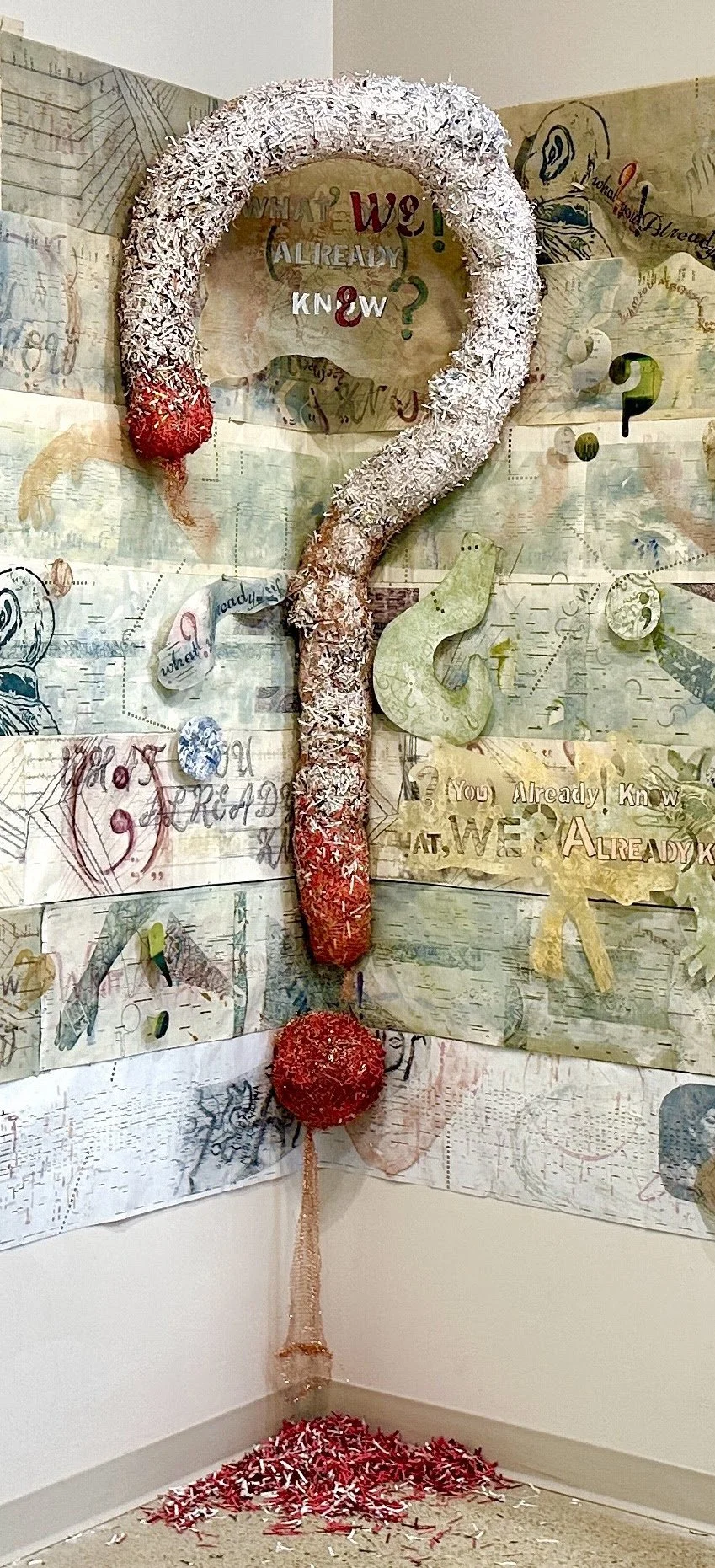
“Scrip(t) Scraps, Version 1’’ (intaglio, relief prints on player piano scrolls with 5.5’ etched copper parentheses, copper mesh stuffed with shredded paper), by Somerville, Mass.-based artist Randy Garber, in her show “Scrip(t) Scraps,’’ at Kingston Gallery, Boston, Nov. 1-20.
She says:
‘“My work investigates perception and how meaning is deciphered. I have consistently—and persistently—focused on finding ways to visually express both the beauty and vagaries of communication. Profoundly hard of hearing since infancy and acutely aware of the potential for misinterpretation, I explore the spaces between silence and sound: confusion and clarity, chaos and precision.
“Interested in gaps between our five (known) senses and how they inform, influence and intercept one another, I aim to find visual equivalents that suggest the complicated processes in how we receive and make sense of information. I create structures and images that evoke, for instance, cochlea, ear drums, instruments, neural networks and language systems.’’
Chris Powell: Conn. cities can’t save themselves
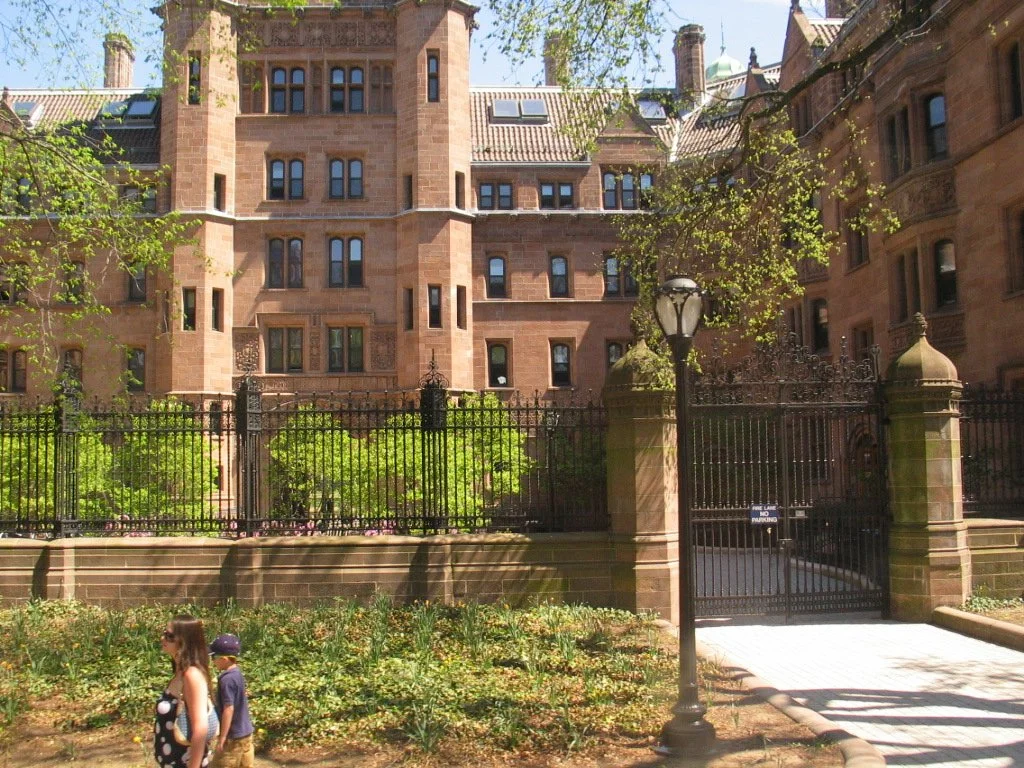
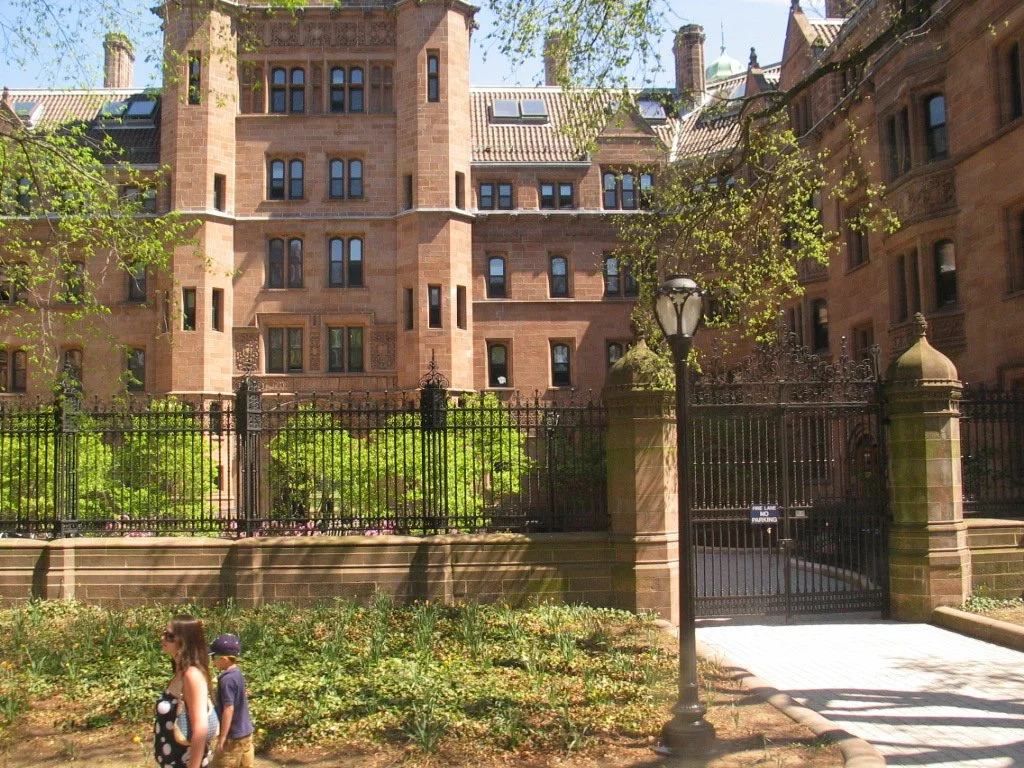
Vanderbilt Hall at Yale
— Photo by GK tramrunner229
MANCHESTER, Conn.
Yale University's police union seems to have thought last week that it could scare up a better contract by distributing to incoming freshmen a handbill suggesting that New Haven is so dangerous that just leaving their rooms in the university cocoon could get them killed. Crime and violence in New Haven are "shockingly high," the handbill said.
Mayor Justin Elicker and other city officials denounced the union's fear mongering, accused the flyer of inaccuracies, and insisted that crime in the city has been coming down. (It depends on the duration measured.)
It waa hard to see how the flyer made a case for a better contract. But most places are far safer than New Haven.
After all, New Haven has a large impoverished population, has shootings almost every day -- some fatal -- and every month the state's prisons send back to the city dozens of troubled former offenders who soon will return to crime.
If New Haven was as safe as those offended by the flyer want people to believe, the city wouldn't have a "shot spotter" system to hasten police response to the constant mayhem, and Yale would not offer security escorts to students around the clock on campus.
But Yalies recognize the university's urban environment and probably have noticed the deteriorating conditions in many cities. Yale's reputation has induced them to take a risk.
So the controversy over the flyer is worthwhile mainly for the rest of Connecticut, whose social contract long has been to accept disintegration in the cities as long as it can be confined. Since increasingly it cannot be confined, maybe it will be addressed seriously only if it keeps spreading.
For try as they might, the cities aren't equipped to save themselves, being so poor and torn between crime victims and perpetrators, most of each group being city residents. Like every victim, every perpetrator is a disaster for his family.
At a recent meeting, Hartford's City Council noted that serious crime in the city is committed disproportionately by repeat offenders the courts have failed to put away for good or even to bring to any resolution at all, leaving many free on bond for long periods and committing more crimes.
Hartford's police say 73 percent of violent criminals in the city have been arrested before and 79 percent of perpetrators in shootings have already been arrested for other gun crimes. As of a few days ago Hartford had suffered 28 murders this year, a rate higher than last year's, and -- hardly noticed -- 67 people had survived shootings in the city.
This should be an outrage beyond Hartford, but it's not, and the city council has no jurisdiction over repeat offenders or crime generally. It can only appropriate for more police.
The Hartford-area chapter of the National Association for the Advancement of Colored People also has noted rising crime in the city. But its idea is only to alert city residents to the many "resources" available to them, like food pantries. That won't tame wild young men.
Running for mayor, Hartford state Sen. John Fonfara comes closest to the underlying problem.
In an interview this month Fonfara implicitly referred to what is usually unmentionable in Connecticut: child neglect at home engendered by the welfare system and social promotion in school. He cited children who "start school unready, or they couldn't read by third grade and get discouraged. They end up in ninth grade but they're at a sixth-grade or fifth-grade level, and they're too old and they quit. … Maybe they don't have support at home in their neighborhood. Maybe some of their friends are involved in a gang, and then it goes from there."
The remedy Fonfara offered was weak: more pre-school. But at least it was relevant, and it's probably too much to expect a candidate for mayor to ask directly where all this child neglect is coming from in a city that is full of it.
Chris Powell has written about Connecticut government and politics for many years (CPowell@cox.net).
‘Contemplation and curiosity’

Work by Japanese-American and Boston-based artist Yuko Oda, in her show “Entering, Arriving, Departing, at Boston Sculptors Gallery, Aug. 30-Oct. 1.
The gallery says:
“Yuko Oda’s personal history involves lifelong pilgrimages to her homeland of Japan. On a recent trip she visited several shrines and temples, walking through numerous gates and performing rituals such as ringing bells to pay respect and purifying oneself with water. Oda also recently experienced a loss in her family. These events coalesced into the creation of ‘Arriving, Entering, Departing,’ an immersive installation where visitors are invited to remove their shoes, enter, and experience a place of contemplation, curiosity, and wonder.’’
Black Mainer anti-racism hero
“I felt that fighting discrimination was the most important thing I could do as an elected official. I said then and I believe now that any doctrine of superiority is scientifically false, morally condemnable, socially unjust and dangerous.’
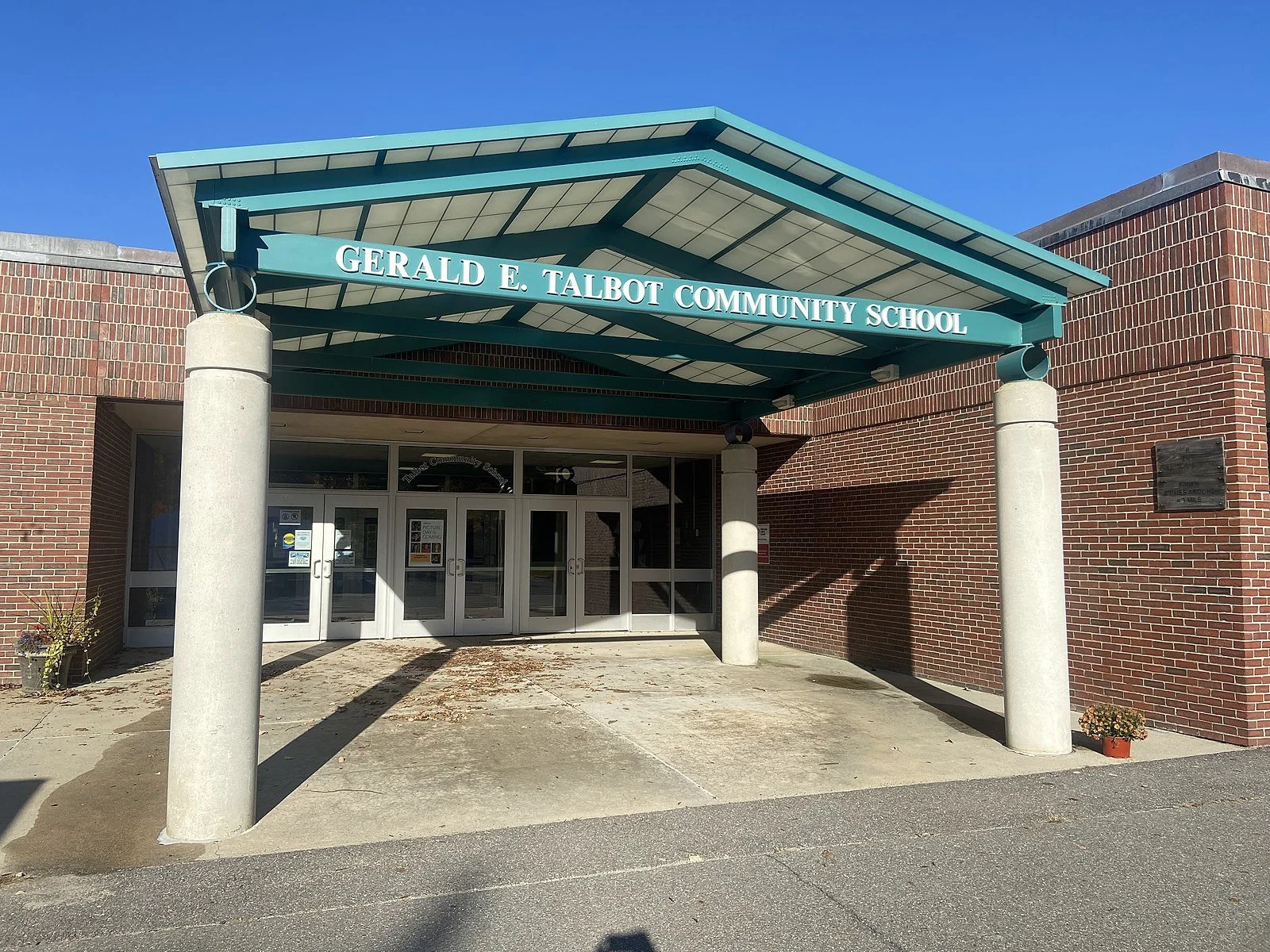
— Gerald E. Talbot (born 1931 and one of the few Mainers with an African-American background), civil-rights leader and former state representative from Portland.
An eighth-generation Mainer, Talbot traced his ancestry to black Revolutionary War veteran Abraham Talbett.
Talbot was the first Black state legislator in Maine, the founding president of the Portland chapter of the National Association for the Advancement of Colored People (NAACP), and president of the Maine State Board of Education under Gov. Joseph Brennan. In 2020, the Riverton Elementary School, in Portland, was renamed the Gerald E. Talbot Community School.
Step into versions of the past

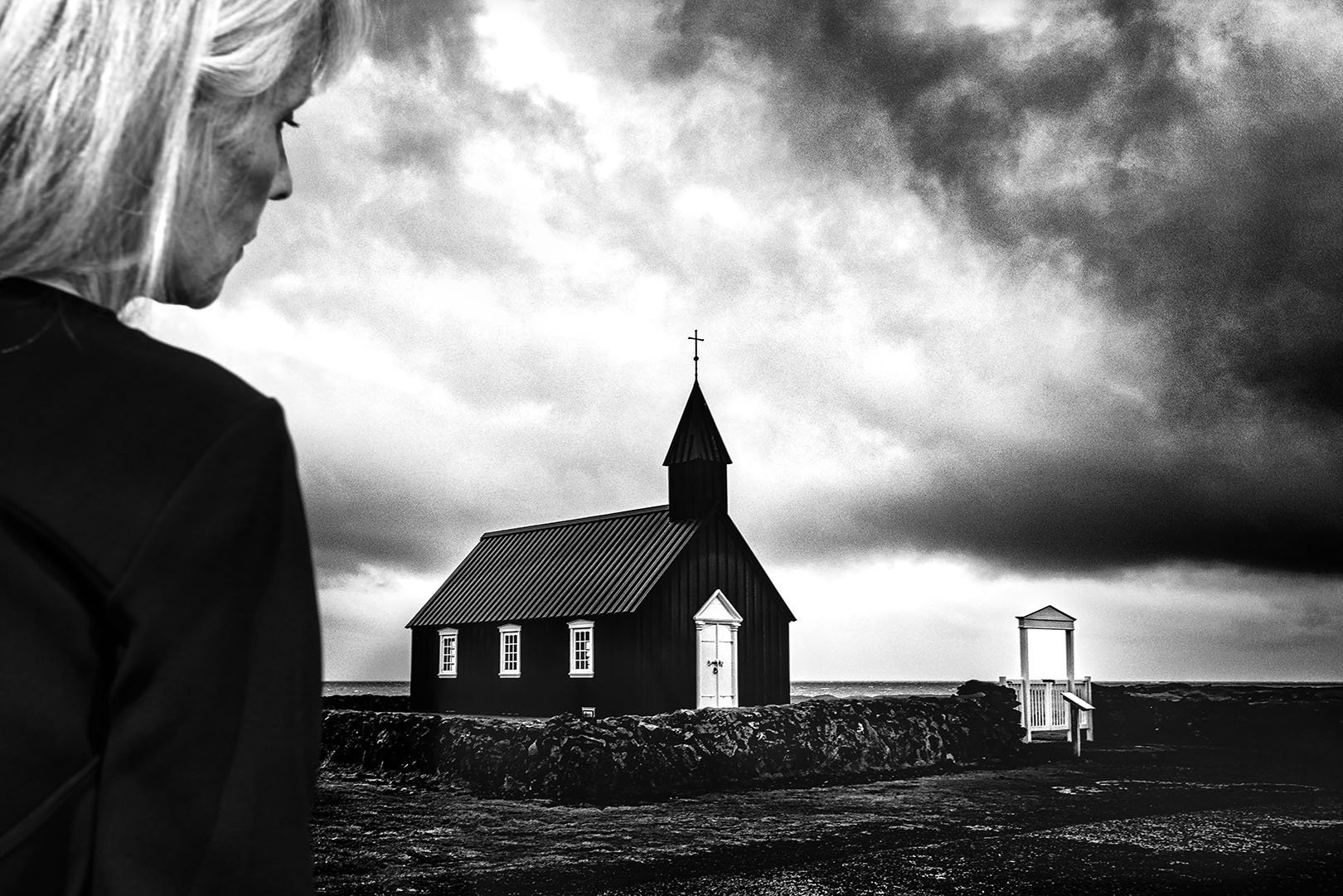
Photo by Eileen McCarney Muldoon, in her show “Memory or Imagination: The Work of Eileen McCarney Muldoon,’’ at the Jametown (R.I.) Arts Center, Nov. 9-Dec. 16
Ms. Muldoon, who lives in Jamestown, says of her work:
“I have always been fascinated with how our backstories influence our life. Our past world touches us directly and carves our future. Yet, our memories are blurred and tangled by our own perception and imagination. Even the most precise memory is translated through our own rendering. If I were to transcribe my memories through words, you would have foreclosure. You would be given a narrative, most likely fiction, but nonetheless you would be given my story. Instead, I have used my photographs of dreams, imagination and metaphor to suggest a past world that you too can step into and interpret. My hope is that you connect with these images without insistence and relate to these musings to shine a light into your past world before entering into the unknown journey ahead.’’
Swelling city
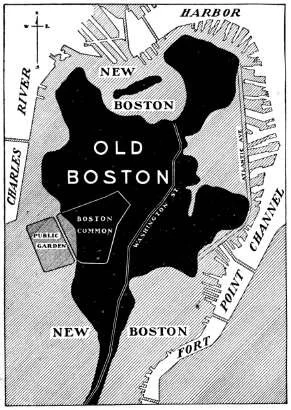
This shows the original dimension of the Shawmut Peninsula, on which Boston was first built, staring in 1630. The gray areas marked with the words "New Boston" are the product of the period of filling in mudflats that began in 1803.
Free college education for some Mass. students
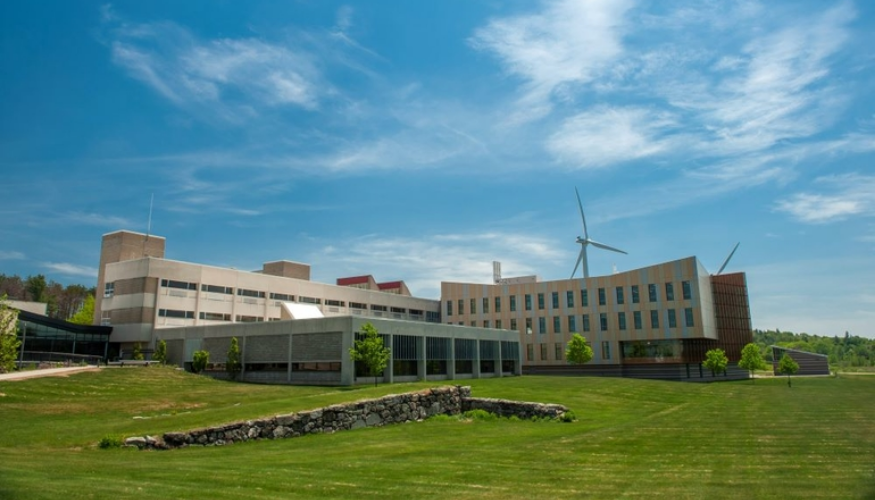
Mount Wachusett Community College
Edited from a New England Council report
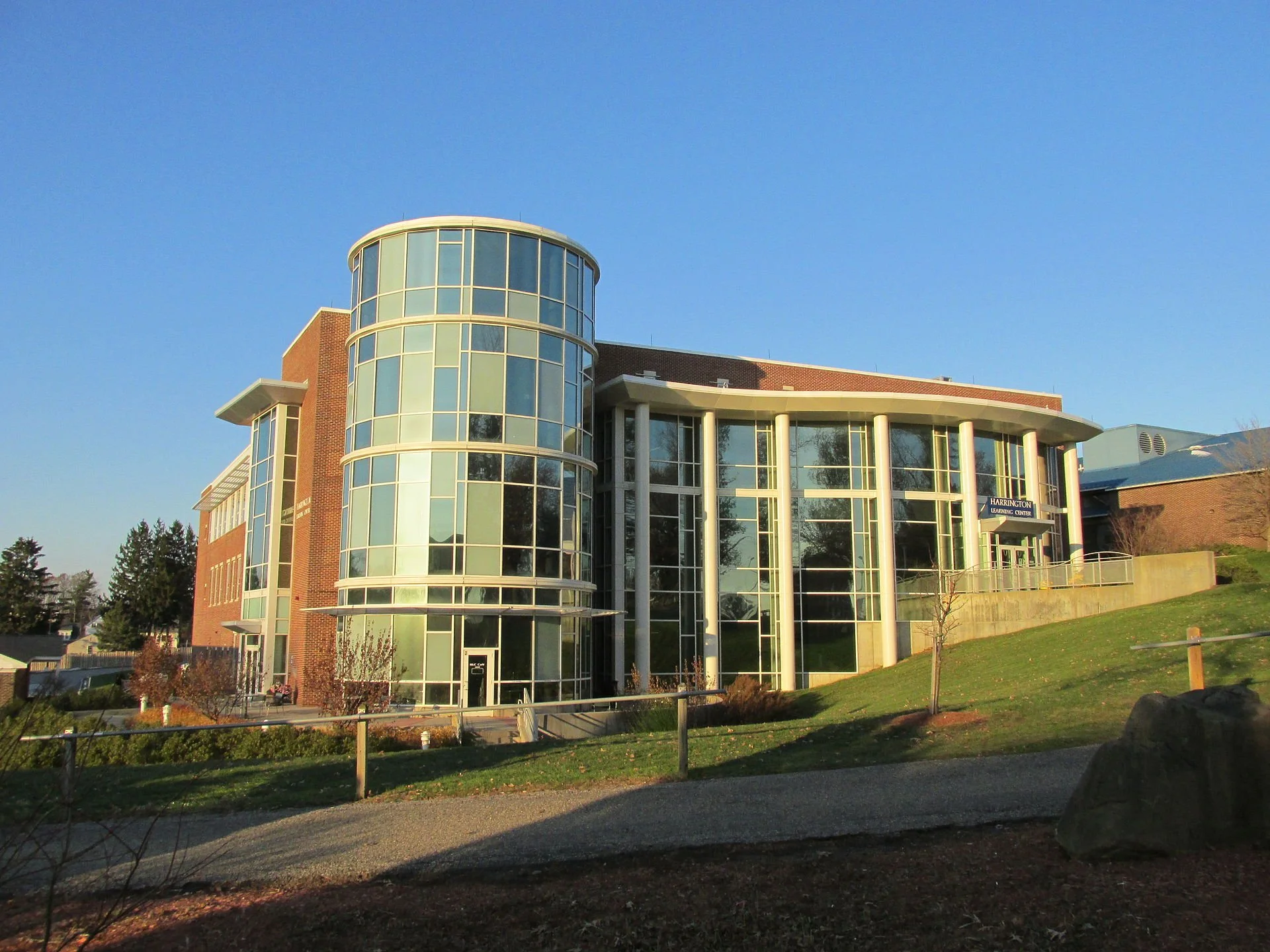
Quinsigamond Community College, in Worcester, and Mount Wachusett Community College, in Gardner, Mass., are part of the $20 million MassReconnect program that will offer free higher education for certain students.
“The program, which includes all 15 Massachusetts state community colleges, was passed in the state’s 2024 fiscal budget. It will provide students over the age of 25 the opportunity to attain an associate degree at no cost. Intended as a measure to aid working adults, who had passed the perceived age of education, the effort will make the college structure more equitable, and make higher-level degree and certification achievement increasingly realistic for all. It is expected that the plan will significantly improve the academic outlook for young parents, who may have understandably lost chances to attend college under the time constraints of various other responsibilities. In this way, these and other state community colleges give back those lost opportunities, allowing residents to advance their careers and lives, all for free.
“‘The MassReconnect program is a giant step forward in our quest for equity in higher education. By offering equitable opportunities and resources for our students, many of whom are juggling one or more jobs and caring for their families, we are bettering our entire community,’ said QCC President Luis G. Pedraja, ‘Obtaining a higher education is a way for people to advance a career, change careers, and make a better life for themselves and their families.”
“The New England Council commends Quinsigamond Community College and Mount Wachusett Community College for their commitment to equitable and accessible education.’’
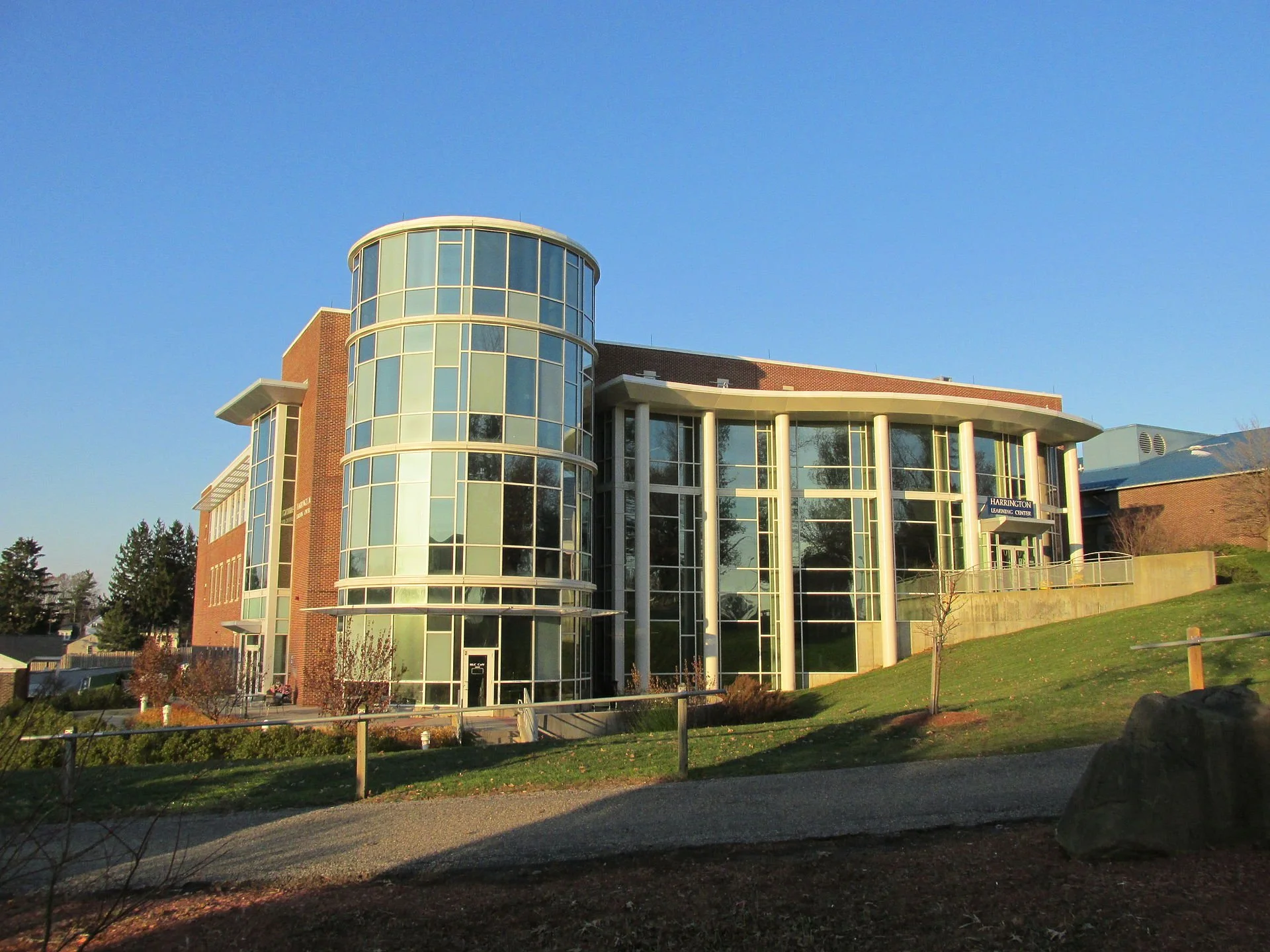
At Quinsigamond Community College
— Photo by John Phelan
Only looks like that in the spring

“Chicopee, MA,’’ by Sandra Cohen, in the group show “Bridges,’’ through Sept. 1, at Fountain Street Fine Art, Boston.
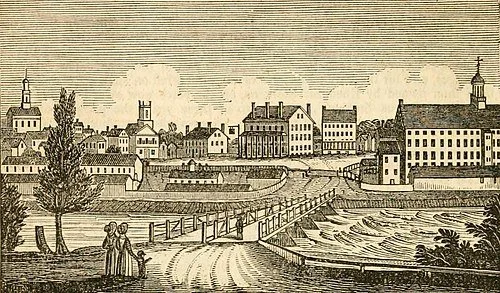
The Cabotville section of Springfield, Mass., as it appeared in 1844. Four years later, Cabotville became part of the new town of Chicopee, as industry boomed in the area.
Torch song to send you on your way
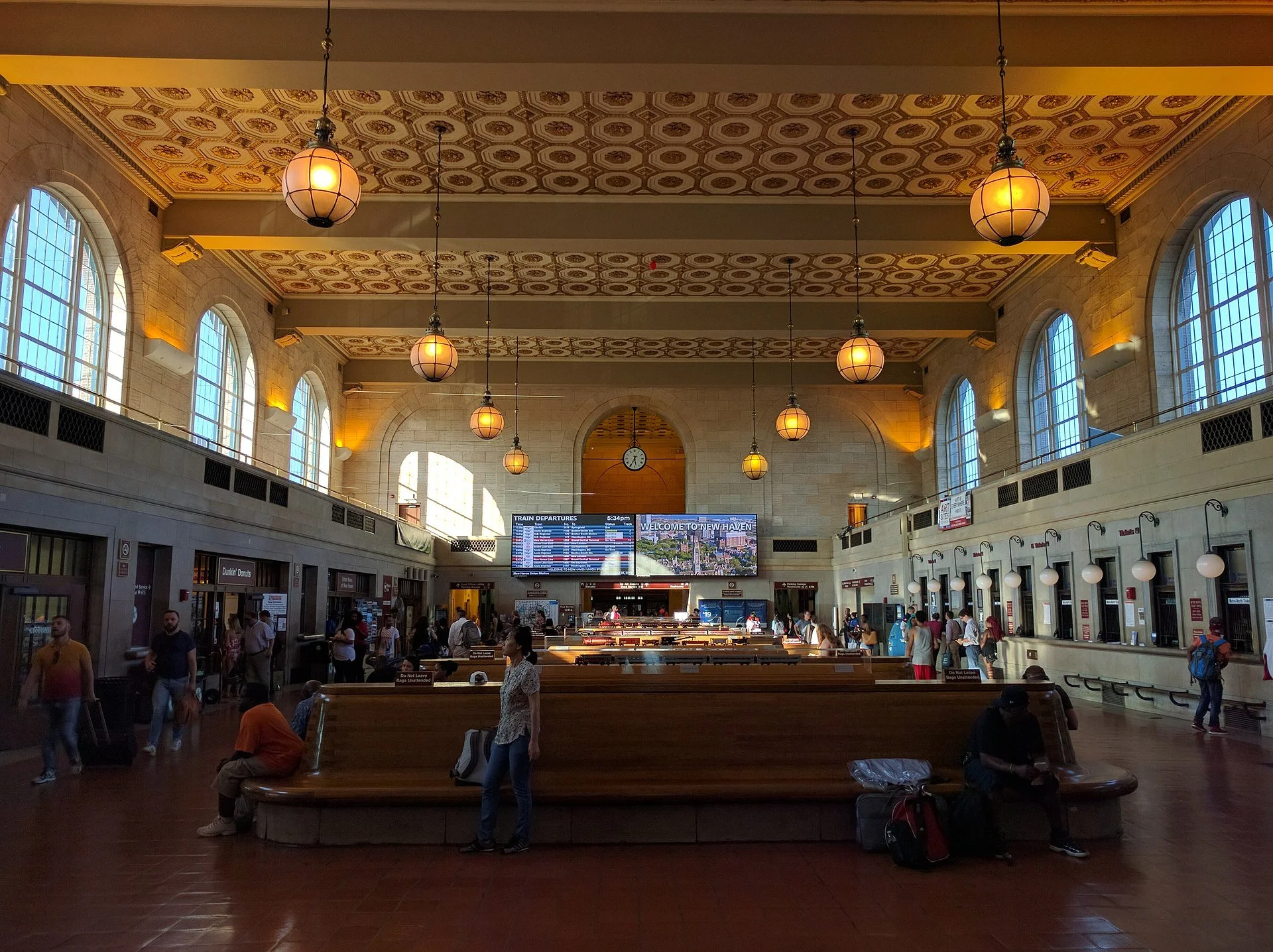
In New Haven’s Union Station
— Photo by Grendelkhan
‘The bar in the commuter station steams
like a ruin, its fourth wall open
to the crowd and the fluttering timetables.
In the farthest corner, the television
crackles a torch song and a beaded gown.’'
— From “The Northeast Corridor,’’ by Donald Revell (born 1954), American poet
Return to putting up with it
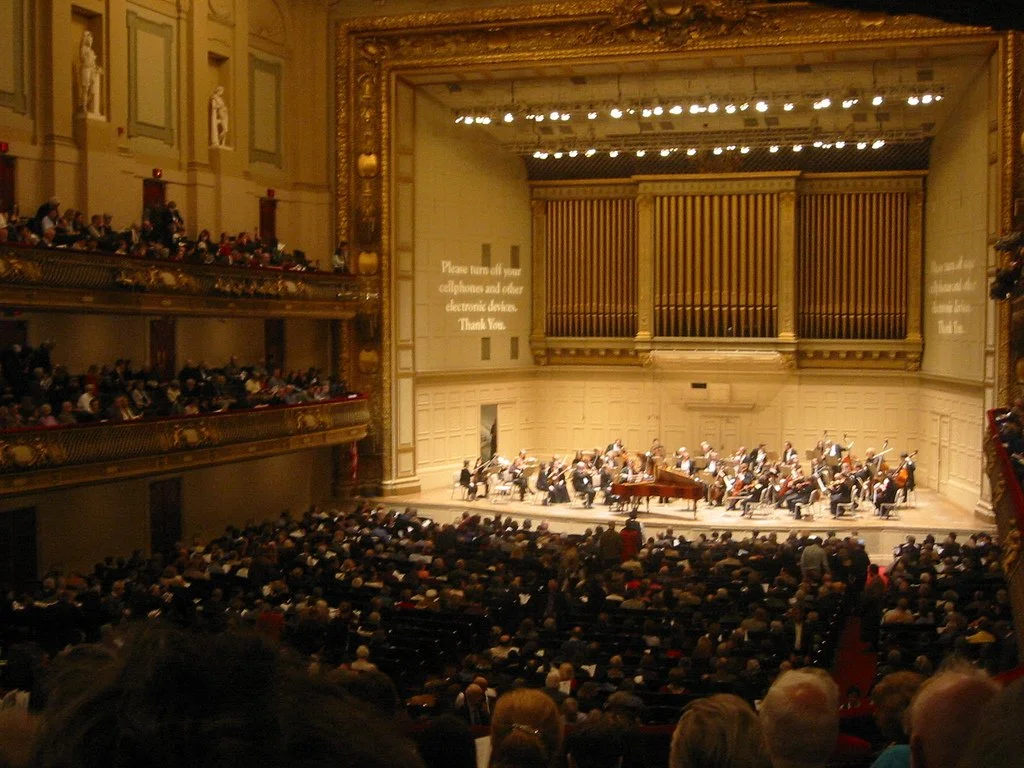
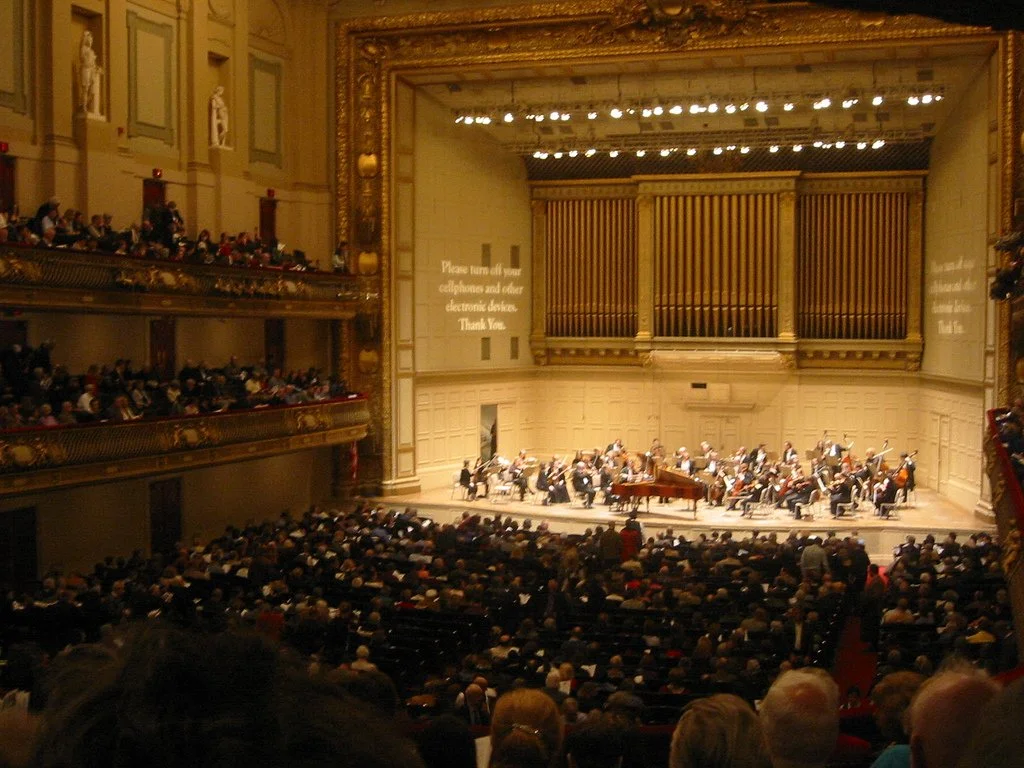
Inside Boston’s famed Symphony Hall during a concert
“Tonight I will speak up and interrupt
your letters, warning you that wars are coming,
that the Count will die, that you will accept
your America back to live like a prim thing
on the farm in Maine.
I tell you, you will come
here, to the suburbs of Boston, to see the blue-nose
world go drunk each night, to see the handsome
children jitterbug, to feel your left ear close
one Friday at Symphony.’’
— From “Some Foreign Letters,’’ by Anne Sexton (1928-1974), Pulitzer Prize-winning Massachusetts poet
Elements to seek outside

“Light & Breezy” (oil on cradled panel), by New England painter Janis Sanders, at Alpers Fine Art, Rockport, Mass.
He says:
“Salt air, salt spray, sweet smell of summer grass, verdant marsh, an old house at the water’s edge, wind in your hair, sun on your face.
“These elements draw me outdoors, to the grassy dunes of Truro, the calm marshes of the North Shore, to the rugged cliffs of Maine.”
William Morgan: The painting of Gov. Raimondo and the banality of official portraiture
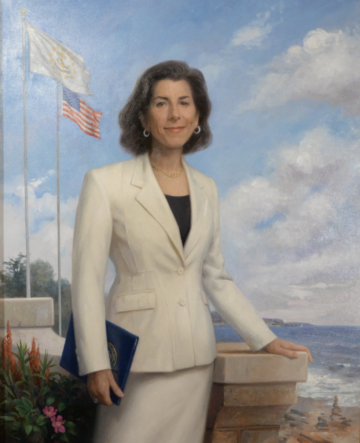
The official Rhode Island State House portrait of Gov. Gina Raimondo, by Patricia Watwood
When Gina Raimondo first ran for governor of Rhode Island, she did not trumpet her gilt-edged education at Harvard, Oxford and Yale, which I thought was admirably modest. When I first met her, I was starstruck. Searching for a topic of non-political conversation, I asked her about her Rhodes Scholarship. Like other old Oxonians, we reminisced about our respective colleges there, New and Jesus. Unlike your average politician, Raimondo was both warm and smart. I was snowed.
No governors will remain universally admired, and none will leave office with their reputations untarnished. Yet Rhode Island’s first female top executive has gone on to become the U.S. secretary of commerce. Raimondo is one of the leading lights of President Biden’s brain trust, and one of the cabinet’s most energetic members.
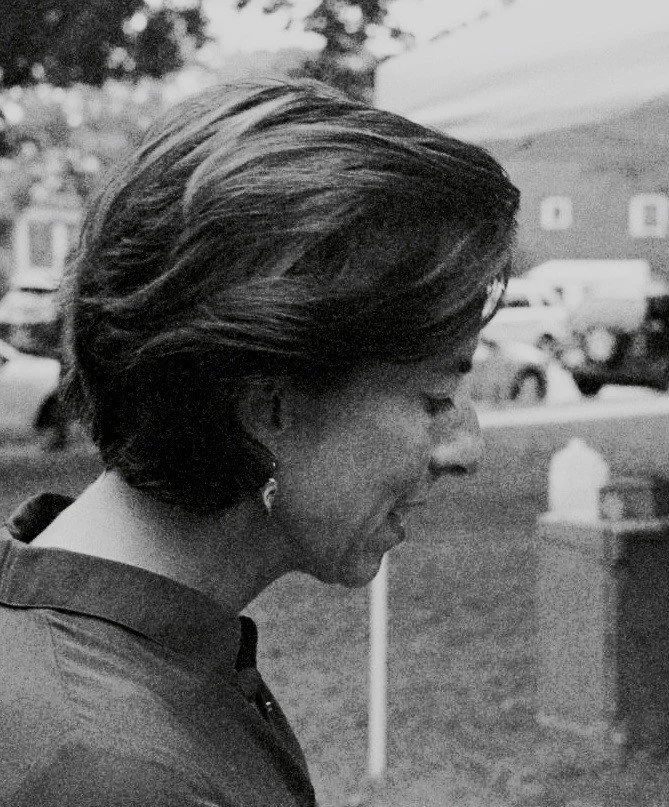
A snapshot of an unidealized and human Governor Raimondo.
Photo by Will Morgan
Regardless of popularity or accomplishment, all Rhode Island governors, as with governors in other states, are honored by being flash-frozen on the State House walls. With few exceptions, these portraits are sterile and lifeless. The pioneering and dynamic Gina Raimondo deserved a far better tribute than the recently one unveiled by New York figurative artist Patricia Watwood.
The representation here, as so often with official portraits, is wooden and insipid, capturing none of Gina’s spirit. Rather, it looks like a public-relations photo, or perhaps a page from the Talbots catalogue. The pair of flags are beyond trite, fighting for prominence against blue water and a sky with cottony clouds, with the obvious point to remind us that it’s the Ocean State.
Throughout Western art, flowers have been included in portraits for their symbolism, with certain plants alluding to such virtues as innocence, love, constancy and even patriotism. Such allusions might have given the painting a little literary punch. Instead, we have primarily decorative flora, wildflowers that “the residents of Rhode Island would recognize.”
Furthermore, we have Watwood’s unsupportable declaration that she is “celebrating Raimondo’s service and showing young women, girls, the people of Rhode Island that there is a place in leadership at the highest level for all of us.” Without knowledge that Gina was our first female chief executive, how exactly does this painting demonstrate to anyone the advance for women she represented?

“Imago/Imagination” (2013), by Patricia Watwood
—Courtesy of the artist.
Watwood was selected by the Rhode Island State Council on the Arts and the former governor, and yet the St. Louis native and author of a new book, The Path of Drawing, has far more interesting portraits in her portfolio. (Her own self-portrait, for example, in a realist, neo-Renaissance style, intriguingly features a golden bird, a peacock feather, and bright red flower in her hair.)
Watwood is good at her craft, so why weren’t we given her best? Was the painter overwhelmed by the responsibility of an “official” commission? Or maybe she felt that little Old Rhode Island, though only a few hours drive from the New York City art world, would not notice a less than stellar effort, even though the state is the home of what is probably America’s most famous art school, the Rhode Island School of Design (RISD).
Alas, this is yet another disappointing example of what happens when Rhode Island goes out of state for its image procurement (“Cooler & Warmer,” anyone?). No one would begrudge an artist actually making some money, but this bland depiction hardly seems worth $50,000.
It need not be this way. Providence artist Julie Gearan dispensed with the usual fawning hagiography when she painted Gov. Lincoln Chafee’s State House portrait. Gearan, who teaches painting at RISD, created a haunting image of the enigmatic governor without resorting to the usual political stage props. A challenging work of Romanticism, the Chafee portrait earns high marks for composition, color and impact.

Gov. Lincoln Chafee, by Julie Gearan.
Before readers accuse this writer of being unduly harsh about Ms. Watwood’s picture making, I took the liberty of sharing her Gina Raimondo portrait with Prof. Rod Miller, a conservative art historian at Hendrix College who favors traditional representation. He wrote:
“Wow, you were ripped off. It’s like that woman {Margaret Keane} who painted the Big Eyes portraits. Looks like undergraduate work.’’
William Morgan is a Providence-based architectural historian and critic. His new book, Academia: Collegiate Gothic Architecture in the United States, will be published in October.