
Vox clamantis in deserto





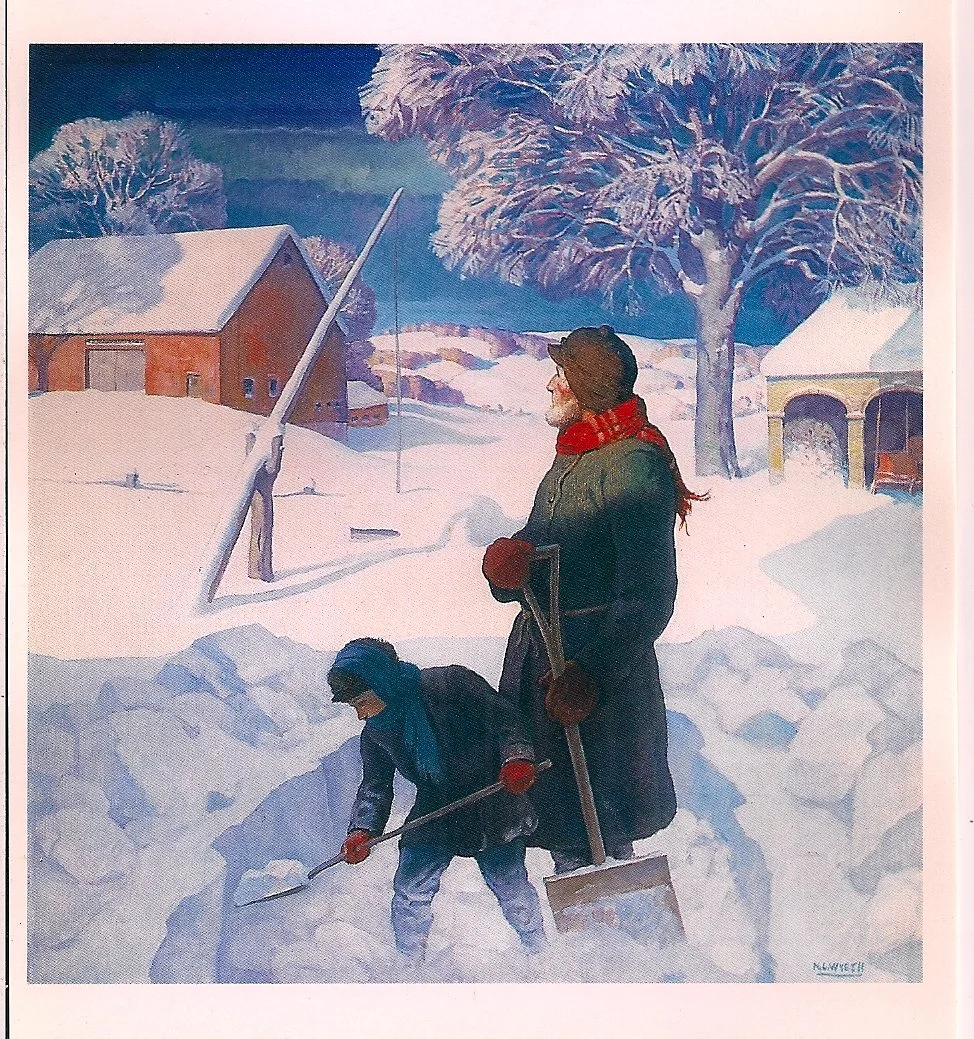
'Engrossed with contrivances'
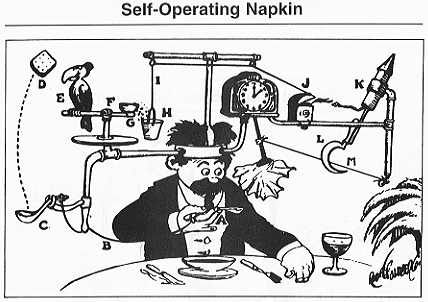
“Professor Butts and the Self-Operating Napkin” (1931), by Rube Goldberg (1883-1970). Soup spoon (A) is raised to mouth, pulling string (B) and thereby jerking ladle (C), which throws cracker (D) past toucan (E). Toucan jumps after cracker and perch (F) tilts, upsetting seeds (G) into pail (H). Extra weight in pail pulls cord (I), which opens and ignites lighter (J), setting off skyrocket (K), which causes sickle (L) to cut string (M), allowing pendulum with attached napkin to swing back and forth, thereby wiping chin.
Goldberg was an American cartoonist, sculptor, author, engineer and inventor best known for his popular cartoons depicting complicated gadgets performing simple tasks in indirect, convoluted ways.
“We are swallowed up in schemes for gain and engrossed with contrivances for bodily enjoyments, as if this particle of dust were immortal —- as if the soul needed no aliment, and the mind no raiment.’’
— Henry Wadsworth Longfellow (1807-1882), American poet, translator and literature professor at Harvard. He was a native of Portland, Maine
Pinnacle of puppetry

”Turkey Gobbler Balloon, Macy’s Thanksgiving Day Parade, 1929,’’ by German-American artist Tony Sarg (1880-1942), in the show “Tony Sarg: Genius at Play,’’ at the Norman Rockwell Museum, Stockbridge, Mass., through Nov. 5
— Photographer unknown, from the collection of the Nantucket Historical Association
The museum says:
The show “is the first comprehensive exhibition exploring the life, art and adventures of Tony Sarg, the charismatic illustrator, animator, puppeteer, designer, entrepreneur and showman who is celebrated as the father of modern puppetry in North America. His vast knowledge of puppet technology was instrumental in his design of the inaugural Thanksgiving Day parade balloon for Macy’s Department Store, in 1927, as well as subsequent parade balloons and automated displays for the company’s festive holiday windows, which were imitated nationwide. The creator of a host of popular consumer goods, from toys and clothing to home décor, Sarg also envisioned fanciful illustrated maps and created mural designs for the Oasis Cafe in New York’s Waldorf Astoria Hotel.’’

Sarg's “Nantucket Sea Serpent,’’ 1937.
— From the Nantucket Historical Association

The famed Austen Riggs Center, in Stockbridge, a mental hospital known for, among things, very quietly treating celebrities.
— Photo by Joe Mabel

Llewellyn King: Three huge bumps to buckle up for

The record-breaking temperatures that hit Europe in July contributed to an increase in the surface temperature of the Mediterranean Sea. This visualisation, based on Copernicus Marine Service models , shows the sea surface temperature anomaly for July 24, 2023. The data show an anomaly of up to +5.5° celsius along the coasts of Italy, Greece and North Africa.

WEST WARWICK, R.I.
The future has arrived. Those things we were warned about for decades are here. They are now palpable.
In the 1950 film All About Eve, aging actress Margo Channing, played by Bette Davis, warned at a party, “Fasten your seat belts. It’s going to be a bumpy night.”
For the world, it will get bumpy for the next decade and beyond as we adjust to three massive, disruptive realities: climate change, artificial intelligence and brutal competition among countries for raw materials for new, carbon-saving technologies like electric vehicles.
This summer, with its aberrant weather the world over, is a clear declaration that climate change is upon us. It is no longer hypothetical; it is here.
The process of living with it begins now.
This summer isn’t a template, it is the first manifestation, from wildfires in Hawaii to elevated temperatures in Argentina’s winter to heat in the Middle East that approaches the point after which life becomes impossible to sustain.
It isn’t all heat, either.
It is storms, deluging rain and previously unexperienced cold. David Naylor, who heads Rayburn Electric, near Dallas, told me what worries him, what keeps him awake at night, is the weather. The cold — new for Texas — is a significant challenge to keeping the lights on for his customers, he said. Weather has pushed out cybersecurity on the list of worries for many utility executives.
Climate change has also brought droughts. The mighty Zambezi River, in Africa, has run so low in recent years that there hasn’t been enough water for hydroelectric production from the Kariba Dam, which spans the river between Zimbabwe and Zambia. Power shortages and blackouts are now endemic.
Mass migration is another consequence of climate change.
Artificial intelligence will be a big disrupter, with some significant benefits. But for now, AI is a daisy chain of question marks.
What is known is that truth is endangered. Stuart Russell, professor of computer science at University of California at Berkeley and one of the leading authorities on AI, told me when I interviewed him on the PBS program White House Chronicle that the “language in, language out” professions are in danger. Lawyers and journalists had better watch out. Much of their work can be done by AI. Already in India, AI newscasters are interfacing with live reporters. In New York, a lawyer went into court with a case based on AI, down to citations. All of it was fiction.
The world is already awash in misinformation and “alternative facts,” as Kellyanne Conway famously declared in defending then-President Trump. Prepare for the era of fabrication where certifying facts will get harder and harder, and provable truths will be the new gold.
Finally, the materials essential in the recent technologies — those that will help us fight global warming — are pointed to be the cause of severe disruption and some ugly realpolitik.
Supplies of some vital materials are controlled by China. It has been relentlessly buying up the sources of rare earths and other minerals for decades in Africa and South America. Seventy percent of the lithium — essential for the batteries in mass electrification — is processed in China. Lithium deposits exist worldwide, from Zimbabwe to the United Kingdom, and from Chile to Australia, but the processing is centered in China.
Likewise, gallium, used for computer chips, and a whole array of precious metals are either sourced in China or processed there.
In dealing with this imbalance, it would be a mistake to think this new disruption is a reprise of the Cold War. It is quite otherwise. The Soviet Union sought to export ideology, which aroused fear in capitalist nations or those wanting a private sector to flourish. The Chinese are ambivalent about ideology outside of China but offer trade and investment on a global scale.
China has bought up much farming and most African mineral production. In South America — the new Aladdin’s cave of mineral wealth — China is buying up and financing.
Around the world, there is a reluctance about choosing sides; jobs and money talk.
The Economist points out that attempts to curb Chinese dominance in critical-materials processing and manufacturing aren’t working because countries from Mexico to Vietnam are transshipping.
Bette Davis’s character might have suggested a shoulder harness and a seat belt.
On Twitter: @llewellynking2
Llewellyn King is executive producer and host of White House Chronicle, on PBS. He’s based in Rhode Island and Washington, D.C.
Greetings, uninvited guests
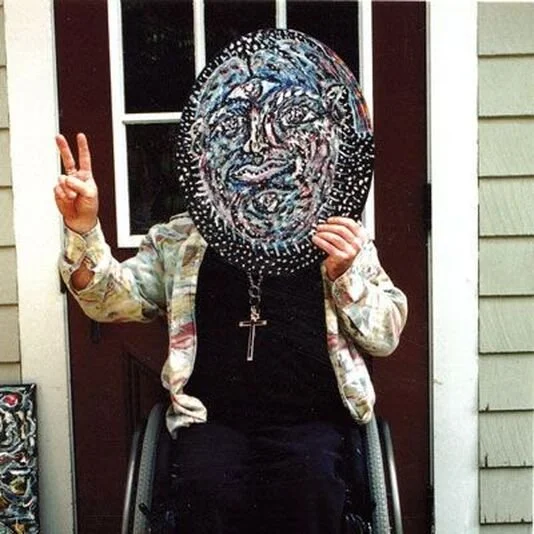
Painting by Massachusetts artist James M. Coburn (1955 - 2012), at the New England Visionary Artists Museum, Northampton, Mass.
'Lonely, happy child'

Newly emerged adult cicada
— Photo by Ollllonate
“Parents open their shutters and call
the lonely, happy child home.
The child who hates silences talks and talks
of cicadas and the manes of horses.’’
— From “All Summer Long,’’ by Carol Frost (born 1948) in Lowell, Mass. She has taught at the Vermont Studio Center, in Johnson, Vt.

Chris Powell: Saudi connection of governor’s wife; using old motels to help the homeless

The Saudi flag
MANCHESTER, Conn.,
During last year's campaign for governor, leading Connecticut Democrats from Gov. Ned Lamont on down may not have known that they were probably being hypocritical by criticizing the Republican nominee, Bob Stefanowski, for doing consulting work for a company connected to the Saudi Arabian government.
But now that it has been disclosed that the investment fund company run by the governor's wife, Ann Huntress Lamont, has a partnership with a Saudi government investment fund, try to find those Democrats.
The governor himself can assert that he didn't know about his wife's own connection to the awful Saudis and can note that the connection was listed in a public financial filing somewhere -- as if there is enough journalism left in Connecticut to review such filings promptly, and as if Mrs. Lamont's investment fund issued a press release about its Saudi connection any more than Stefanowski did about his.
Bad as the Saudi government may be, totalitarian and theocratic, it long has been a crucial financial and military ally of the United States, and Stefanowski had a plausible defense for his work in the country, which was to speed the transition from the country's oil-based economy to “green” hydrogen-based energy.
For all anyone knows -- Mrs. Lamont isn't talking -- her partnership with the Saudi government may have similar objectives. Or Mrs. Lamont's company may just be helping to invest some of the U.S. dollars that the kingdom has earned selling its oil to the United States and the rest of the world, oil purchases that long have implicated all Americans in Saudi totalitarianism.
Was Mrs. Lamont's company in partnership with the Saudi company even when her husband and his Democratic colleagues were denouncing Stefanowski for a similar connection? Maybe.
Did she not mention the irony to her husband? Who knows?
Since the hypocrisy and sleaze here involve Democrats instead of Donald Trump, will mainstream journalism let it drop?
xxx
Homelessness has risen in Connecticut for a second straight year, even as the state is full of hotels and motels that are operating at less than capacity or aren't operating at all.
City government in New Haven, where homelessness is acute, is aiming to acquire a local motel to turn it into "supportive housing," providing not only basic shelter but also connection to medical, psychological, and employment services.
Meanwhile, Danbury's zoning board is still disgracefully blocking a bid by a social-service agency to use a defunct motel for similar purposes.
Under-used and defunct motels and hotels are perfect for addressing homelessness. They require no extensive conversion to become “supportive housing” and are in commercial zones -- and lovely as summer in Connecticut is, winter will be here soon enough.
The homeless, many of whom are mentally ill or drug-addicted, have no political constituency. The economy is not half as good as elected officials claim after they manipulate economic data, and times are getting harder, so escaping from homelessness, addiction and long-term unemployment is more difficult than most people think.
Of course most state residents don't want "supportive housing" nearby any more than they want "affordable" housing nearby, since "affordable" housing can shelter not just young people starting out in life but also the demoralized, addicted, broken-down, and anti-social. But if Connecticut is to remain decent, these people have to be accommodated somewhere so they don't have to sleep under bridges and risk death in the street.
For many months now Governor Lamont has taken the lead with the motel in Danbury, issuing and renewing an executive order exempting it from city zoning. But the order has expired even as homelessness is worsening.
So the governor should use whatever emergency authority he can still muster, calling the General Assembly into special session if necessary, to authorize state government to acquire such property as necessary and to supersede municipal zoning to put a roof over the heads of the forsaken before winter arrives and help them restore themselves, and to ensure that no municipality has to use its own funds to do this.
Chris Powell has written about Connecticut government and politics for many years (CPowell@cox.net).
Point us to charging stations

Several Chevrolet Volts at a charging station partially powered with solar panels in Frankfort, Ill.
Text from Robert Whitcomb’s “Digital Diary,’’ in GoLocal24.com
Federal and state highway officials need the authority to direct drivers to electric-vehicle-charging stations with signs. This information could be added to roadside signs (before exits) that point to gas stations, food and lodging, or be on separate signs. They’d encourage more people to buy electric cars. Many potential EV buyers shy away from them because of fear that they won’t be able to recharge on longish trips. (Bathroom signs would be nice, too.)
There are already quite a few charging stations in allegedly environmentally conscious southern New England, but they can be hard to find. It sure would be handy if most highway rest stops had them.
Many highway signs include corporate logos of gasoline companies, such as Mobil and Gulf. Signage rule changes would let them include the logos of such electric-charging station operators as Electrify America and EVgo and Tesla (only for its cars). Since not every EV can be charged at every kind of EV charging station, this specificity is important as we try to get people out of their climate-warming, foreign-dictator-boosting gasoline-powered vehicles. We tend to forget that signs are an important part of transportation infrastructure.
But will NIMBY’s block so much potential solar- and wind-power infrastructure that we don’t have enough electricity in the New England grid to charge all these additional vehicles without large continuing use of fossil fuel to generate electricity?
Multi-faceted rapping

Work from the show “Nelson Stevens: Color Rapping,’’ at the D’Amour Museum of Fine Arts, Springfield, Mass., through Sept. 3.
The museum says:
“Nelson Stevens (American, 1938-2022), an artist and educator, is renowned for creating powerful, rhythmic compositions that celebrate Black life and reveal his technical mastery of the figure.’’
“Stevens lived in Springfield. In the early 1970s, {where} he initiated a groundbreaking public art project that resulted in the creation of over 30 murals throughout the city. Like Stevens’s colorful paintings, the murals promoted Black empowerment and brought the pride and activism associated with the Black Arts Movement to western Massachusetts. Fifty years later, his message, artwork, and influence continue to be celebrated locally and nationally.”
“I create from the rhythmic color-rappin-life-style of Black folk. I believe that art can breathe life, and life is what we are about.’’
— Nelson Stevens
Art history comes alive when you’re not looking
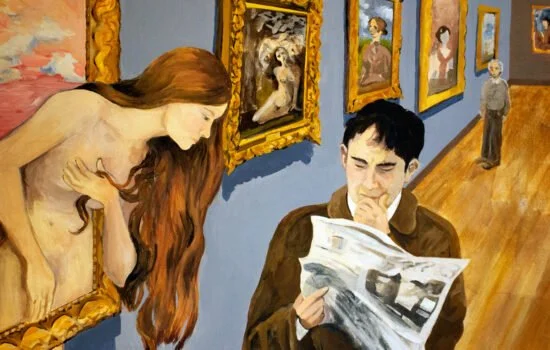
“In the Museum’’ (Gouache on illustration board), by Jennifer Gibson, a featured artist at Spectrum Gallery’s Summer Art Festival on the town green of Essex, Conn., which has a very colorful history,.
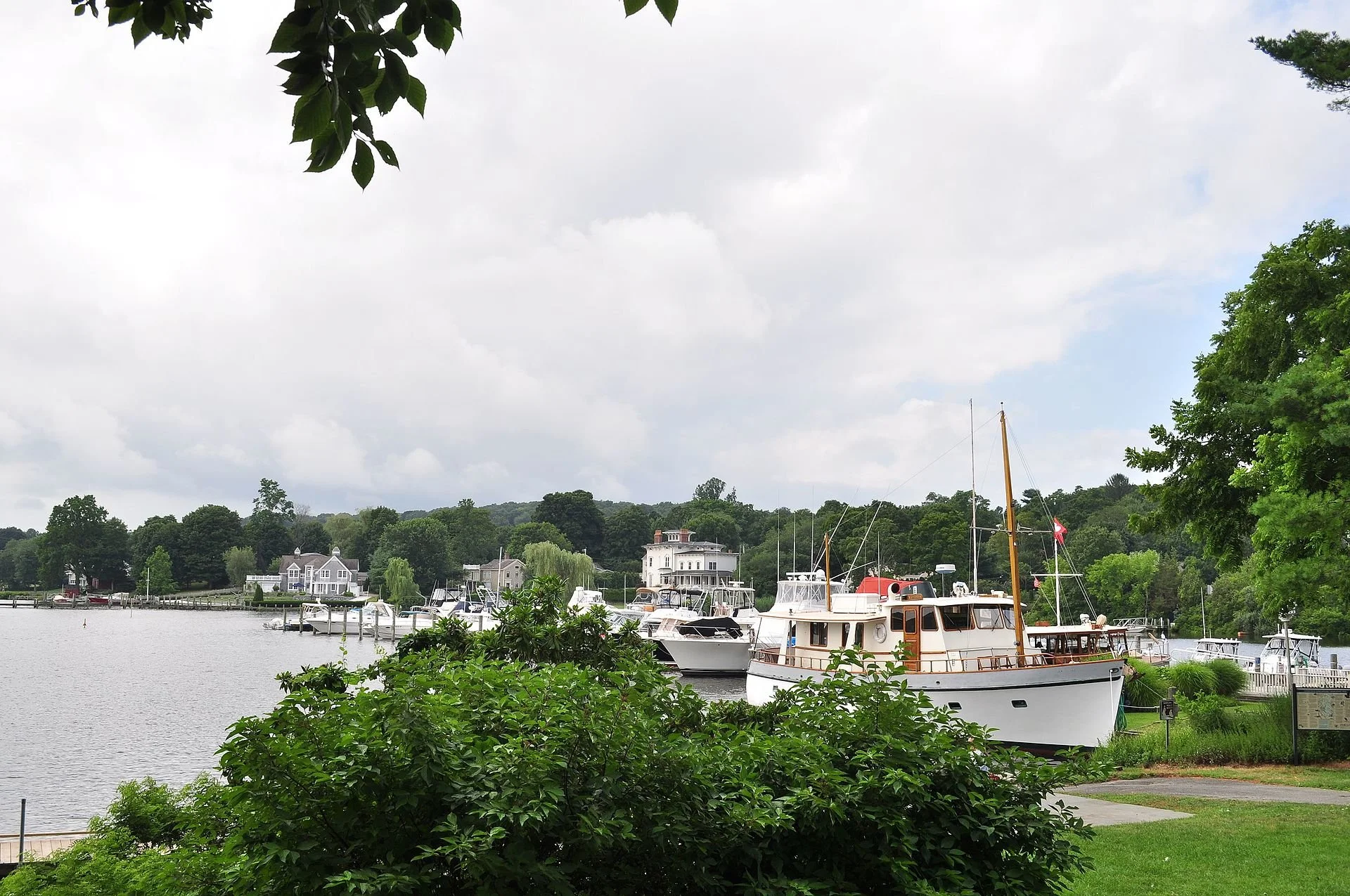
View from Essex Park, in Essex, Conn., on the Connecticut River
—Photo by Joe Mabel

Plant mint

Eastern Cottontail rabbit

New England Cottontail
Excerpted and edited from an ecoRI News article written by staff reporter Bonnie Phillips:
“…. Anecdotal evidence seems to indicate that this is a banner year for bunnies.
“There could be a few reasons for that, according to Mary Gannon, a principal biologist and wildlife outreach coordinator for the Rhode Island Department of Environmental Management.
“Rabbit populations ‘can certainly boom … due to natural absence or fewer predators and a subsidized abundance of food,’ she said. In the case of rabbits, that hop-through restaurant is probably your beloved flower or vegetable garden.
“‘They particularly love beans, peas, and lettuce, and will munch on annual flower seedlings,’ Gannon said. ‘Clover is a big favorite as well.’
“What they don’t like, Gannon said, is plants in the mint family, milkweed, onions, and garlic — although she has seen young milkweed and allium stems nibbled by curious rabbits.
“The rabbits you are seeing in your yard are either Eastern Cottontails or New England Cottontails. The Eastern Cottontail was introduced in the 1900s to revive the declining native New England Cottontail population, according to DEM. During the past 50 years the range of this once-common rabbit has shrunk and its population has dwindled. Today, biologists believe there are only around 13,000 New England Cottontails left, according to New England Cottontail.’’
Safer outside

“Debate,’’ by Czech sculptor Tomas Kus, at the Andres Institute of Art Sculpture Garden, in Brookline, N.H.

Potanipo Pond, in Brookline, N.H., a small town that’s become part of Greater Boston’s exurbia.
—Photo by John Phelan
Chris Powell: Juvenile cases highlight social disintegration in Conn.
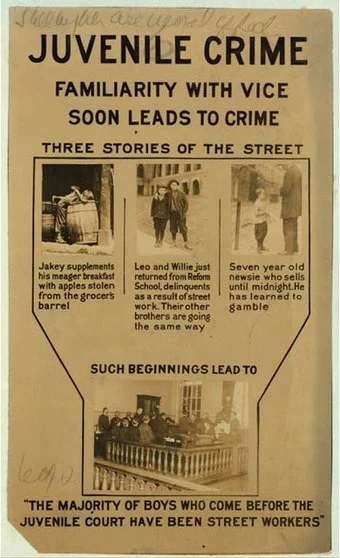
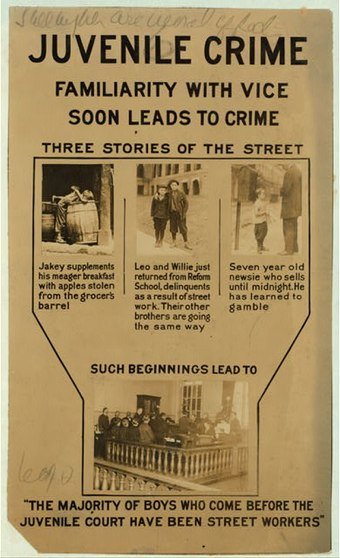
Anti-juvenile crime poster, c. 1913
MANCHESTER, Conn.
Recent days in Connecticut have provided more than the usual causes for alarm.
-- In Hartford a two-year-old boy fell out the window of a third-floor apartment and soon died of his injuries. He and his four siblings, all under 12, had been left alone by their mother as she went to work as a taxi driver. There was no sign of the children's father or fathers, but then public policy considers fathers unnecessary and journalism never notices that their absence correlates strongly with poverty's daily disasters. Police said the family's apartment was an unsanitary shambles, though the state child protection agency, the Department of Children and Families, said it checked on the family a month earlier and found their situation OK.
-- In Waterbury a 14-year-old girl riding in a stolen car with three other young teens at 2:20 a.m. was killed when they ran a red light and smashed into another car. The girl and the driver, 15, were reported to be well known to police.
-- In New Haven a 13-year-old girl riding in a stolen car involved in a chase with another stolen car was shot several times from the other car at 2:50 in the morning. Fortunately the incident took place next to Yale New Haven Hospital, which has extensive experience with gunshot wounds, and she will survive. Police believe the shots were meant for the girl's boyfriend, who was driving the stolen car in which they were riding. He is also 13.
-- The state child advocate reported that eight Connecticut children under age three died last year after ingesting the deadly narcotic fentanyl. The report said more than a quarter of the 97 young children who suffered untimely deaths in the state last year lived in homes that were being or recently had been monitored by DCF.
xxx
-- Indeed, with drug abuse and addiction exploding in Connecticut and throughout the country, controversy has erupted in New Haven over whether city government should open clinics where addicts can inject illegal drugs under the supervision of nurses equipped to treat overdoses. Would such clinics save lives or rationalize and facilitate addiction? Probably both. In any case many New Haven residents don't want such clinics near them.
-- Gov. Ned Lamont attended the opening ceremony in Hartford for one of four new state-funded crisis clinics for children, the others being in New Haven, Waterbury and New London. The clinics will treat children for depression, thoughts of suicide or self-harm, drug abuse, and "out-of-control" behavior and will try to keep them out of hospital emergency rooms, which are likely to remain busy enough with gunshot victims.
The clinics are among a dozen new state programs to help disturbed children, including a psychiatric ward at the Connecticut Children's Medical Center in Hartford and an outpatient clinic in the Waterbury area.
xxx
These initiatives are separate from the nearly $800 million state government spends annually on the Department of Children and Families, which deals with the thousands of households whose children are in danger of neglect or abuse.
The department has been hiring to reduce the case loads of its social workers so they can pay more attention to clients, but it remains difficult work, and not all child neglect may be threatening enough to come under the department's jurisdiction, as with the 25% of Connecticut students lately classified as chronically absent from school. In the cities the figure is around 50 percent.
The governor, some of his commissioners, and many state legislators may be old enough to remember a time in Connecticut when so many children were not fatherless, neglected, disturbed, taking drugs, riding around in stolen cars at 2 in the morning, and causing other trouble. This social disintegration had become rampant before the recent COVID pandemic, though government's response to the epidemic, like closing schools under the pressure of the teacher unions, made the disintegration worse.
Something has been changing for a long time -- but what exactly? Perhaps more important, who is striving to discern and address the cause of social disintegration rather than just deal with its ever-increasing symptoms?
Chris Powell has written about Connecticut government and politics for many years (CPowell@cox.net).
All wet in the Green Mountain State

Work by Clinton, Mass.-based Peter Moriarty (born 1952) in the show “No Place Like Home,’’ at the BigTown Gallery, Rochester, Vt., through Oct. 29.

Civil War memorial in Rochester, Vt.
— Photo by Kenneth C. Zirkel
David Warsh: Why I hope that Biden decides, after all, not to run again
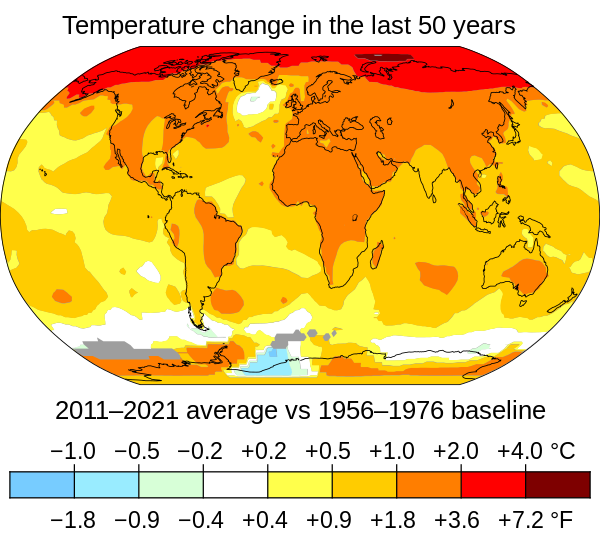
Confronting global warming is our greatest challenge.
SOMERVILLE, Mass.
What are the chances that Joe Biden will take himself out of the 2024 presidential campaign, perhaps with a Labor Day speech? Not good, based on what I read in the newspapers. Yet I have begun hoping that Biden just might drop out of the race. Here’s why.
It is not because Biden would fail to win re-election if he sticks to his plan to run. He promised to serve as a bridge and he has done that. His takeover of Donald Trump’s Big Talk platform of 2016 seems nearly complete. “Bidenomics,” which boils down to strategic rivalry with China, is the right road for American industry and trade for many years to come.
The problem is that a second term would almost certainly end in disaster, for both Biden and for the United States. The dismal war in Ukraine; the threat of another in Taiwan; the impending fiscal crises of America’s Social Security and medical-insurance programs: these are not problems for a good-hearted 82-year-old man of diminishing mental capacity, much less his fractious team of advisers.
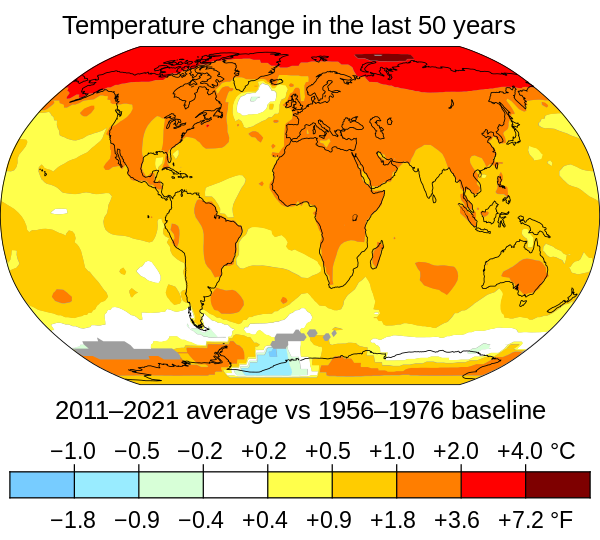
Most of all, there is the challenge of global warming. It seems safe to say that there can no longer be doubt in any quarter that the problem is real. Perhaps this year’s strong demonstration effects were required to galvanize public opinion for action. But what action to take?
With respect to climate change, I’d written many times that the best introduction available is Spencer Weart’s 200-page book, The Discovery of Global Warming (Harvard, 2008.) Weart maintains a much more extensive hypertext version of the book on site of the Center for the History of Physics, which he founded in 1974. The digital edition was most recently updated in May 2023.
A distinguished historian of science, author of several books on other topics, including governance, Weart is a man of balanced and temperate views. Here is what he wrote in his book’s sobering “Conclusions: A Personal Statement:”
Policies put in place in recent decades to reduce emissions have made a real difference, bringing estimates of future temperatures down to a point where the risk of utterly catastrophic heating is now low. If we are lucky, and the planet responds at the lower limit of what seems possible, we might be able to halt the rise with less than another 1°C of warming, putting us a bit under 2°C above 19th-century temperatures. That would be a world with widespread devastation, but survivable as a civilization….
Yet the world’s scientists have explained that we need to get the emissions into a steep decline by the year 2030. Yes, that soon. What if we fail to turn this around? The greenhouse gases lingering in the atmosphere would lock in the warming. The policies we put in place in this decade will determine the state of the climate for the next 10,000 years….
If we do not make big changes in our economy and society, in how we live and how we govern ourselves, global warming will force far more radical changes upon us. In particular, we must restrain the influence of amoral corporations and extremely wealthy people, who have played a despicable role in blocking essential policies. To allow ever worse climate disruption would give those who already hold too much power opportunities to seize even more amid the chaos….
So, what to do about global warming? Negotiate an end to the war in Ukraine. Avoid war in Taiwan. Put the military-industrial complex on pause. Send Biden home to Wilmington, to nurture his family.
Throw open the race. Let other newspapers start writing stories like this one. Trust in the election to produce a young leader. American democracy has done it before. We don’t have four years to wait.
David Warsh, a veteran columnist, is proprietor of economicprincipals.com
Coast in its essentials

“Mother’s Islands” (print) by Swampscott, Mass.-based artist Lydia N. Breed (1925-2019) in the show “Lydia N. Breed: Art of a Community Legacy,’’ at the Lynn (Mass.) Museum, through Sept. 23.

Downtown Lynn. The city once called itself the Shoe (making) Capital of the world.
— Photo by Terageorge
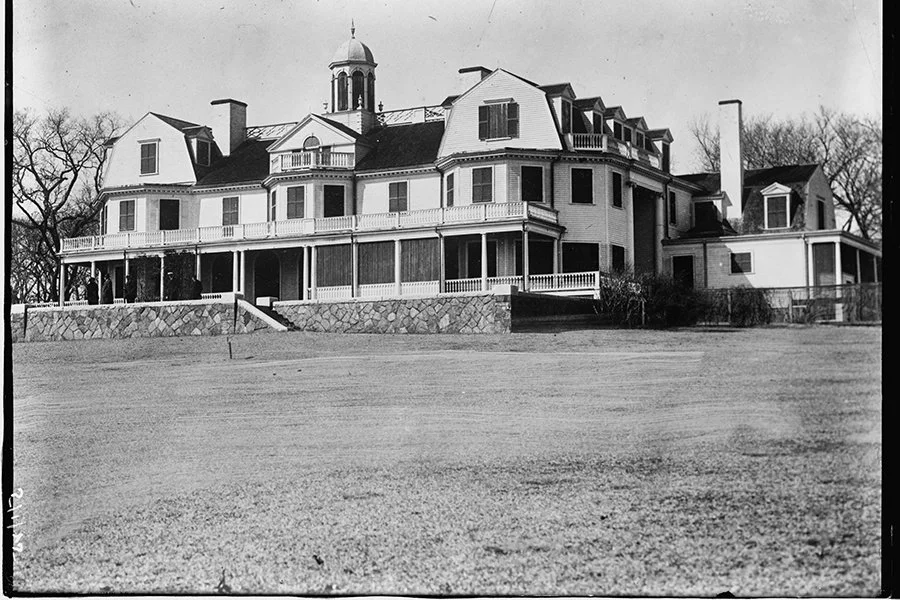
In Swampscott, White Court, now torn down, where President Calvin Coolidge and his wife spent much of the summer of 1925 as the guests of the rich Ohio family who summered there.
Random is better
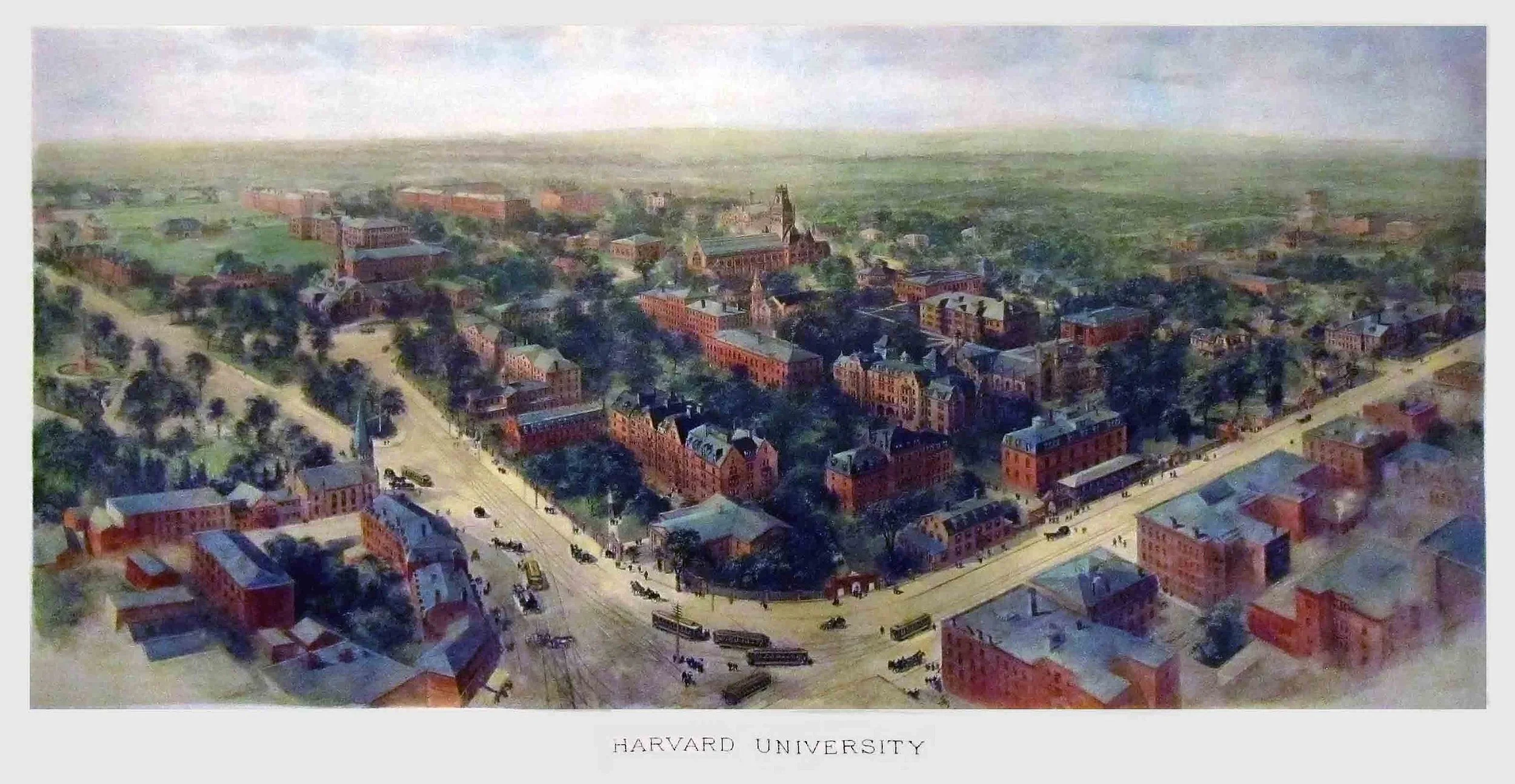
Richard Rummell's 1906 watercolor view of Harvard’s main campus, in Cambridge

The first telephone directory, printed in New Haven, Conn., in November 1878
“I’d rather entrust the government of the United States to the first 400 people listed in the Boston telephone directory than to the faculty of Harvard University.”
William F. Buckley Jr. (1925 -2008), conservative writer and editor
Llewellyn King: We're lonely in our boxes
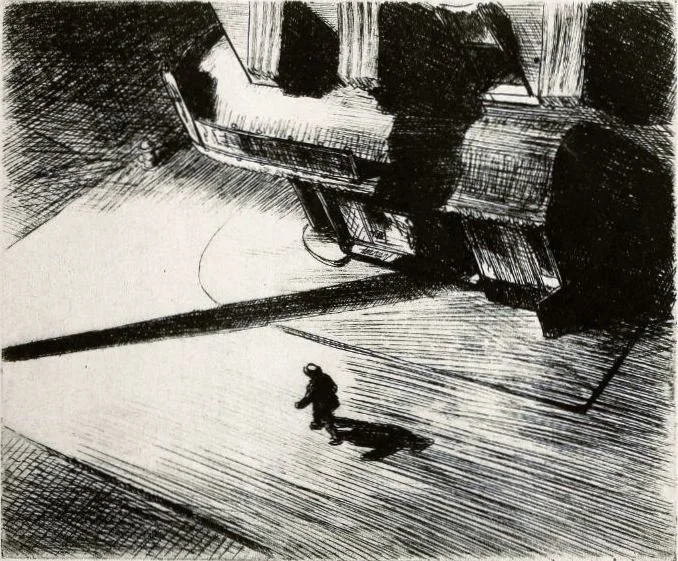
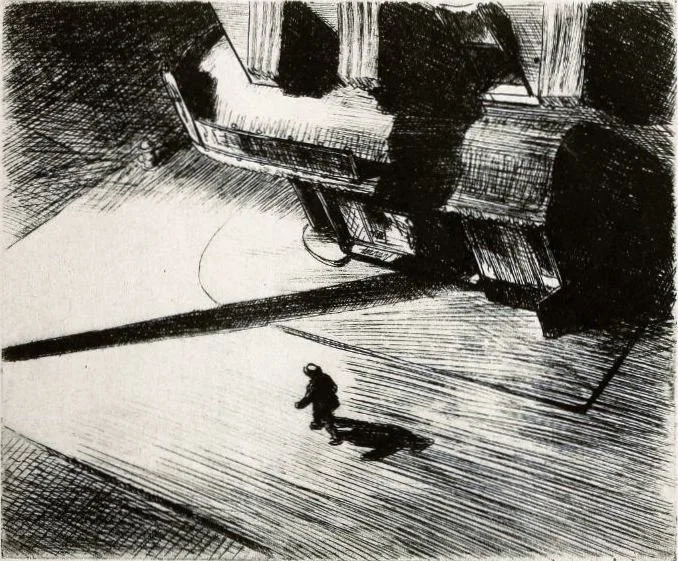
“Night Shadows’’ (1922 etching), by Edward Hopper, created for the magazine Shadowland.
WEST WARWICK, R.I.
The nation, I read, is in the grip of a loneliness epidemic.
This has all been made worse, one suspects, by the effects of the pandemic-induced lifestyle changes — consequences of the forced isolation that changed social and work practices in ways that haven’t changed back.
Other changes have been coming slowly over the decades, but all add to the lonely life. The way of life has had a trajectory for those who live alone, which has increased the possibility of loneliness.
We isolate ourselves in ways that are new or only decades old. We drive alone. We live in a house or apartment, if single, alone. We work alone in that dwelling, facing a computer or watching a movie on television alone.
I call this the box culture: We drive in a box, live in a box, and, as likely as not, stare into a box as we work.
Changing work patterns are probably a critical part of the structural loneliness that is now rampant. Even if one doesn’t work at home, we work differently. We used to make contacts, and often new friends, by doing business on the telephone. Now we shoot off an email and maybe, if it can’t be avoided, make an appointment to make a video call with several people.
We have wrung out all spontaneity. Making friends is a kind of spontaneous combustion. You might as well be doing business with AI for all the lack of warmth or humor in today’s work interactions.
Then there are work friends. For most of us, it was at work or through work that we made our friends — that is, if they weren’t carryovers from school or college.
People who work together and play together fall in love, sometimes get married, and sometimes meet a friend who undoes a marriage. There is a lot of sex at places of work, although companies might deny it. Note the number of CEOs who marry their assistants.
Another feature of the loneliness structure is that pub life is in decline. The local tavern, even for non-drinkers, was part of the way we lived, and drinking isn’t as pervasive as it once was.
Time was when after work or wishing to see a friend, you went for drinks. People gave drinks parties at noon on weekends: no food, just a convivial glass. That isn’t extinct, but it isn’t what it used to be.
Drinking oils society’s wheels but of course too much, and the wheels come off. Go sit at the bar, and someone will talk to you. There is camaraderie in a saloon.
Entertaining has become more formal. Blame all those cooking shows on television. People don’t have friends over for a hamburger anymore. No. They have to have Steak Diane and a soufflé — a meal with the stamp of Julia Child on it. Result: less dropping in on friends, more isolation.
Of course, there are those who are lonely because of bereavement, sickness, old age and family abandonment. But those things have always been with us. They really suffer loneliness, feel the terrible blanket of isolation.
For those who have decided it is too strenuous to go to the office, that the phone is for messaging, that home loneliness is inevitable because we can’t cook or are ashamed of our homes, join something: a church, a theater group, a book club or do volunteer work.
Much of loneliness, from what I can divine, is a product of how we live now. We sit in our boxes inadvertently avoiding others. Television isn’t friendship, drinking alone isn’t companionship. Go shopping in a store, go to church, go to the pub, work in the food bank, join a book club. As the old AT&T advertisement used to say, “Reach out and touch someone.”
No one can predict how or where great friends or great loves will be found, but certainly not staring at a computer.
Several of my greatest friendships are a result of people who have taken violent exception to something I have written and wanted to meet up to berate me. The facts were wrong. I was evil, I met them to take my medicine, as it were, and parted knowing a new friend.
Surgeon Gen. Vivek Murthy has raised the issue of loneliness. He would be advised to tell people to look at lifestyle. Does it have loneliness baked in?
On Twitter: @llewellynking2
Llewellyn King is executive producer and host of White House Chronicle, on PBS. He’s based in Rhode Island and Washington, D.C.
White House Chronicle
Julie Appleby: Fat America (excluding N.E.) —many Americans want those pricey anti-obesity drugs
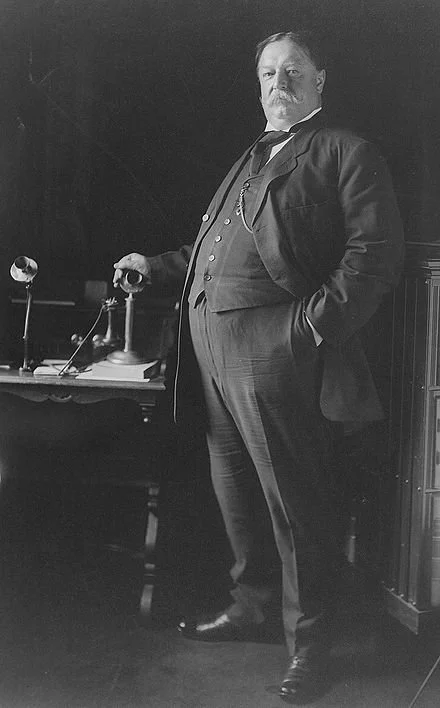
William Howard Taft (1857-1930) U.S. president in 1909-13 and chief justice in 1921-1903. He was well known for his obesity as well as for his high intelligence and integrity.
From Kaiser Family Foundation Health News
“Unfortunately, a lot of insurers have not caught up to the idea of recognizing obesity as a disease”.
— Fatima Cody Stanford, M.D., an obesity medicine specialist at Massachusetts General Hospital and Harvard Medical School, both in Boston
In data comparing obesity rates by state, four of the six lowest obesity states were Connecticut, Massachusetts, Vermont, and Rhode Island. The District of Columbia, Hawaii and Colorado, in that order, were the lowest. New Hampshire and Maine had the 15th and 18th lowest obesity rates, making New England the least overweight part of the U.S.
Many Americans really want to lose weight — and a new poll shows nearly half of adults would be interested in taking a prescription drug to help them do so.
At the same time, enthusiasm dims sharply if the treatment comes as an injection, if it is not covered by insurance, or if the weight is likely to return after discontinuing treatment, a new nationwide KFF poll found.
Those findings display the enthusiasm for a new generation of pricey weight-loss drugs hitting the market and illustrate possible stumbling blocks, as users potentially must deal with weekly self-injections, lack of insurance coverage, and the need to continue the medications indefinitely.
For example, interest dropped to 14 percent when respondents were asked if they would still consider taking prescription medications if they knew they might regain weight after stopping the drugs.
One way to interpret that finding is “people want to lose a few pounds but don’t want to be on a drug for the rest of their life,” said Ashley Kirzinger, KFF’s director of survey methodology. The monthly poll reached out to 1,327 U.S. adults.
The U.S. represents a large market for drugmakers who want to sell weight- loss prescriptions: An estimated 42 percent of the population is classified as obese, according to a controversial metric known as BMI, or body mass index. In the KFF poll, 61 percent said they were currently trying to lose weight, although only 4 percent were taking a prescription medication to do so.
That gap between the 4 percent taking any kind of prescription weight-loss treatment and the number of Americans deemed overweight or obese is the sweet spot that drugmakers are targeting for the new drugs, which include several diabetes treatments repurposed as weight-loss drugs.
The drugs have attracted much attention, both in mainstream publications and broadcasts and on social media, where they are often touted by celebrities and other influencers. Demand jumped and supplies have become limited. About 7 in 10 adults had heard at least “a little” about the new drugs, according to the survey.
The newer treatments include Wegovy, a slightly higher dose of Novo Nordisk’s diabetes drug Ozempic, and Mounjaro, an Eli Lilly diabetes treatment for which the company is currently seeking FDA approval as a weight loss drug.
Weight loss with these injectable drugs surpasses those of earlier generations of weight loss medications. But they are also costlier than previous drugs. The monthly costs of the drugs set by the drugmakers can range from $900 to more than $1,300.
At, say, a wholesale price tag of $1,350, the tab per person could top $323,000 over 20 years.
The drugs appear to work by mimicking a hormone that helps decrease appetite.
Still, like all drugs, they come with side effects, which can include nausea, diarrhea, vomiting and constipation. More serious side effects include the risk of a type of thyroid cancer, inflammation of the pancreas, or low blood sugar. Health officials in Europe are investigating reports that the drugs may result in other side effects like suicidal thoughts.
The KFF survey found that 80 percent of adults thought that insurers should cover the new weight-loss drugs for those diagnosed as overweight or obese. Just over half wanted it covered for anyone who wanted to take it. Half would still support insurance coverage even if doing so could increase everyone’s monthly premiums. Still, 16 percent of those surveyed said they would be interested in a weight loss prescription even if their insurance did not cover it.
In practice, coverage for the new treatments varies, and private insurers often peg coverage to patients’ body mass index, a ratio of height to weight. Medicare specifically bars coverage for drugs for “anorexia, weight loss, or weight gain,” although it pays for bariatric surgery.
“Unfortunately, a lot of insurers have not caught up to the idea of recognizing obesity as a disease,” said Fatima Cody Stanford, an obesity medicine specialist at Massachusetts General Hospital and Harvard Medical School.
Employers and insurers must consider the potential costs of covering the drugs for enrollees — perhaps for them to use indefinitely — against the potential savings associated with losing weight, such as a lower chance of diabetes or joint problems.
Stanford said the drugs are not a miracle cure and do not work for everyone. But for those who benefit, “it can be significantly life-altering in a positive way,” she said.
It’s not surprising, she added, that the drugs may need to be taken long term, as “the idea that there is a quick fix” doesn’t reflect the complexity of obesity as a disease.
While the drugs currently on the market are injectables, some drugmakers are developing oral weight loss drugs, although it is unclear whether the prices will be the same or less than the injectable products.
Still, many experts predict that a lot of money will be spent on weight-loss products in the coming years. In a recent report, Morgan Stanley analysts called obesity “the new hypertension” and predicted that industry revenue from U.S. sales of obesity drugs could rise from a current $1.6 billion annually to $31.5 billion by 2030.
Julie Appleby is a Kaiser Family Foundation Health News reporter
Magical materials
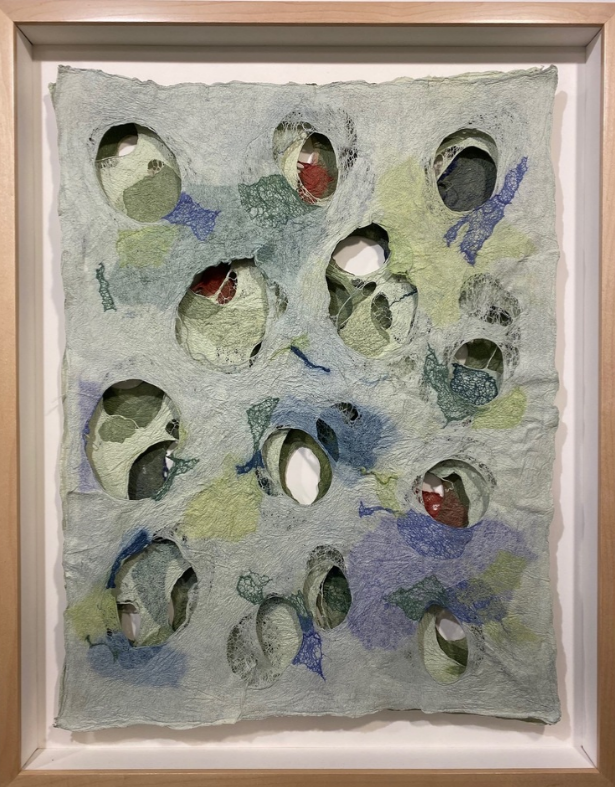
“Dreams of Spring,’’ by Pat McSweeney, in the show “Greater Than the Sum of Its Parts,’’ at Galatea Fine Art, Boston, through Aug. 27. The artist is based in the Charlestown section of Boston.
The gallery says the show features the work of fiber artists who "create new visions" by "reinventing old techniques." The artists use "fabric, thread, wool, reeds, paper, wire and even plastic to create magic.’’

Strange infrastructure
See John Harney’s multi-photo travelogue displaying strange infrastructure, much of it in New England, including the above.