
Vox clamantis in deserto








Lit-up in Maine
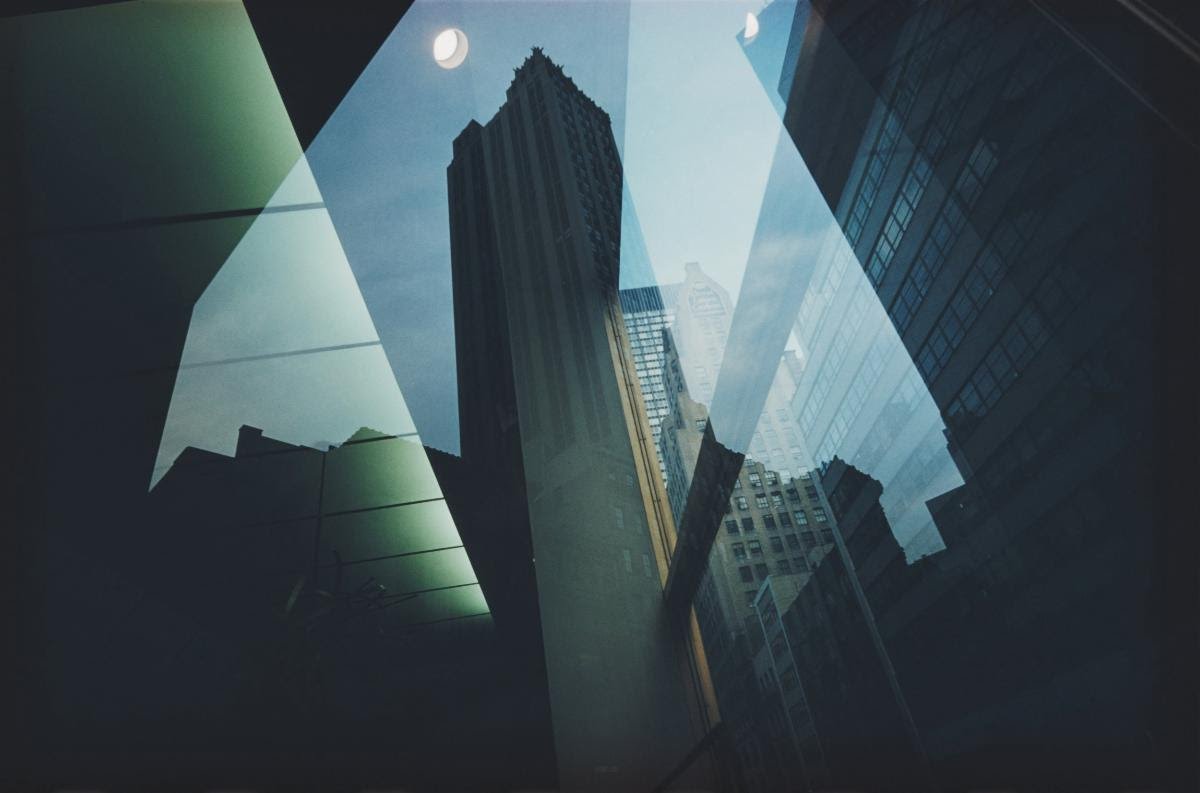
Ernst Haas (1921–1986), “Reflection, Revolving Door, New York City, 1975” ( dye transfer print,), by Ernst Haas, in the group show “Drawn to the Light,’’ at the Portland Museum of Art, Sept. 10.
The museum says the show features about 100 works of photography and "demonstrates the incredible vitality of the artists that passed through Maine and the wide influence of the workshops throughout the photographic realm."
Economics lessons for kids in waiting rooms
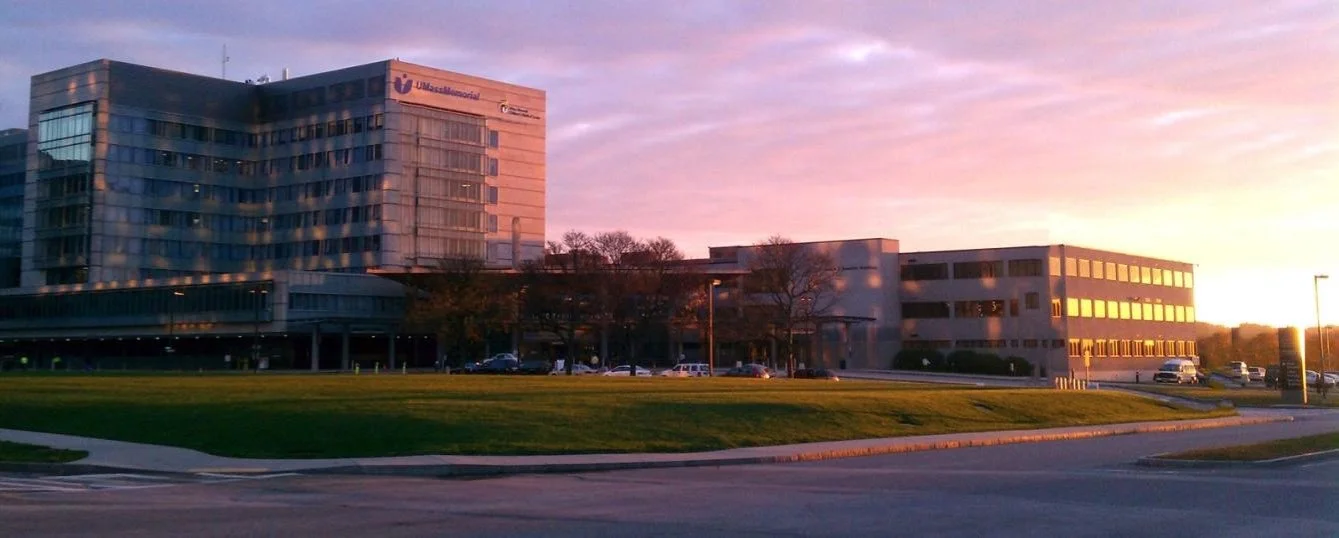
UMass Memorial Medical Center at dawn
— Photo by Cxw1044
Edited from a New England Council report
“UMass Memorial Health‘s Child Health Equity Center, in Worcester, has partnered with the financial literacy nonprofit FitMoney to teach children about economic stability while in waiting rooms.
“Using the interactive game $uperSquad, children learn financial decision-making skills related to saving, budgeting, taxes, and careers. The program aims to address health inequities by promoting economic stability in marginalized communities. The initiative, available on tablets in UMass Memorial Children’s Medical Center waiting rooms, engages families and continues financial literacy education beyond the clinic environment. FitMoney hopes to learn more about the program’s impact through the partnership.
“‘We believe that all children should have this basic financial literacy in the exact same way that we believe that all children should have literacy,’ said Alison LeBlanc, executive director of the Child Health Equity Center at UMass Memorial.’’
‘Me myself in the summer heaven’
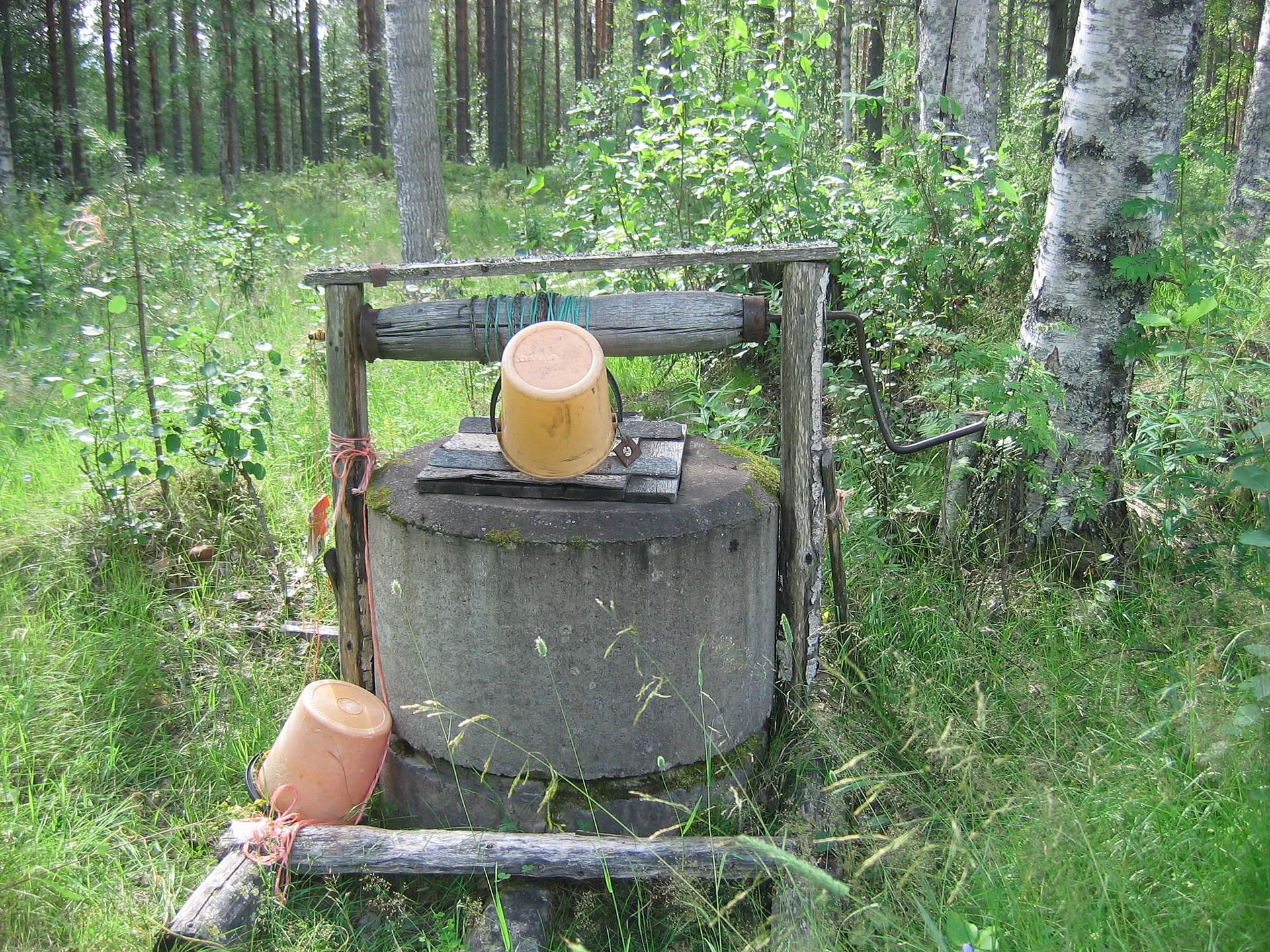
Others taunt me with having knelt at well-curbs
Always wrong to the light, so never seeing
Deeper down in the well than where the water
Gives me back in a shining surface picture
Me myself in the summer heaven godlike
Looking out of a wreath of fern and cloud puffs.
Once, when trying with chin against a well-curb,
I discerned, as I thought, beyond the picture,
Through the picture, a something white, uncertain,
Something more of the depths—and then I lost it.
Water came to rebuke the too clear water.
One drop fell from a fern, and lo, a ripple
Shook whatever it was lay there at bottom,
Blurred it, blotted it out. What was that whiteness?
Truth? A pebble of quartz? For once, then, something.
— “For Once, Then Something,’’ by Robert Frost (1874-1963)
Lapham's Quarterly can be 'transformative' in the classroom
Lapham’s Quarterly | Education Program
EDUCATOR TESTIMONIALS
“Class wide access to Lapham's Quarterly has been transformative in my classroom. I use the Quarterly to promote deep source analysis across themes and engagement with varieties of perspectives, especially in my World History classes, but also in my American History classes whenever appropriate. My more advanced students wrote a thematic essay using the sources as evidence. All my students, no matter their level of proficiency, engaged in a web quest project to flesh out the significance of authors' contributions to both themes covered in World History (e.g.: trade and interchange, political systems, social and gender ideologies).”
––Michael Fitts, Social Studies, Grades 6-8
Homestead Middle School, Miami-Dade County Public Schools, FL
Public school (K-12) with 75-100% of students living at or below the federal poverty level
Print and digital subscriptions
“I use Lapham's Quarterly as a way to introduce my students to various perspectives, across time and cultures, about timeless and universal subjects; to organize classroom discussion; and to introduce my students to some of the most enduring writers and thinkers. I teach in Jersey City, [New Jersey], which is the most ethnically diverse city in the US, with nearly half the population born in a foreign country.”
––Jane DiGesu, Gifted and Talented, all subjects, Grade 3
Print subscription
JW Wakeman PS6, Jersey City Public Schools, NJ
Public school (K-12) with 25-50% of students living at or below the federal poverty level
“I am requesting print and electronic subscriptions to give to my students at Oglala Lakota College-Pine Ridge Community College in South Dakota. I am the Director of CSTEEP
[Center for the Study of Testing, Evaluation, and Educational Policy] in Boston, and I am determined to make better educational materials available for Tribal colleges.”
––Henry Braun, Boisi Professor of Education and Public Policy and Education Research, Boston College and Director of CSTEEP
Print and digital subscriptions for students at Pine Ridge Community College in South Dakota with 100% of students living at or below the federal poverty level
“There is considerable differentiation needed to satisfy my students. Often students who are higher level need engagement and they can read Lapham's Quarterly. I already offer the magazine to some of them from my own personal subscription. It is also invaluable for LoHi [different reading levels] materials. It is in color, offers many artistic graphics, and it is written at a variety of levels. Additionally, the readings are not cumbersome in length, which is perfect for my population, of which 75-95% suffer from ADHD.”
––Eric McCoy, English, Grades 6-12
Print subscription
McLaughlin Youth Center, Anchorage, AK
Public, Controlled Juvenile Justice Facility with 25-50% of students living at or below the federal poverty level 2
“We read for 15 minutes every day in every class. I use the Quarterly to introduce my students to scholarly articles and essays related to the course content. In addition, the topics make for excellent supplementals for literature units.”
––Cornelia Moore, English II H and English IV AP (Literature)
Print and digital subscriptions
Hesperia High School in Hesperia, CA
Public school (K-12) with 50-75% of students living at or below the federal poverty level
“I use Lapham's Quarterly in alignment with the Common Core State Standards to give students access to culturally relevant, authentic, complex texts…as an ESL [English as a Second Language] teacher, it is important that students' cultures are represented in my classroom and that I expose students to different perspectives while validating all cultures.”
––Taura Simmons, ESL, Grades 9-13
Print and digital subscriptions
Wake Early College of Health and Sciences (Wake County Public School System), Raleigh NC
Public school (K-12) with 1-25% of students living at or below the federal poverty level
“We use the primary sources in Lapham’s Quarterly to better examine and judge history through past and present life experience. Our classroom focuses on a diversity of voices in order to judge the veracity of historical accounts and trends. Through amplifying these voices, students are able to see themselves in history and can begin to imagine their own impact on their local community and beyond.”
––Jerry McLaughlin, History, Grade 11
Print and digital subscriptions
Estacado High School, Lubbock Independent School District, TX
Public school (K-12) with 50-75% of students living below the federal poverty level
“I base my entire Writing 121 course on the Winter 2018 States of Mind issue. I am a big fan of Lapham's Quarterly, and I have a few students this term who've fallen in love with the publication, too. Happens for a few each term.”
—Van Wheeler, Writing and Literature instructor at Portland Community College
Print and digital subscriptions and back issues
Portland, OR
“Lapham's Quarterly is featured prominently in my classroom library where students can readily access articles and information ranging from philosophy to art and politics. It is not uncommon for students to pick up a copy and sit quietly reading once they have completed their assignments. I highly recommend the Quarterly to teachers who want to continue learning about important subjects that affect our lives. The Quarterly should be made available in school libraries across the country.”
––Kate Daher, Social Studies Teacher, Grades 9-12, Pittsburgh Public High Schools
Print issues
Pittsburgh, PA
xxx
Fruits de mer
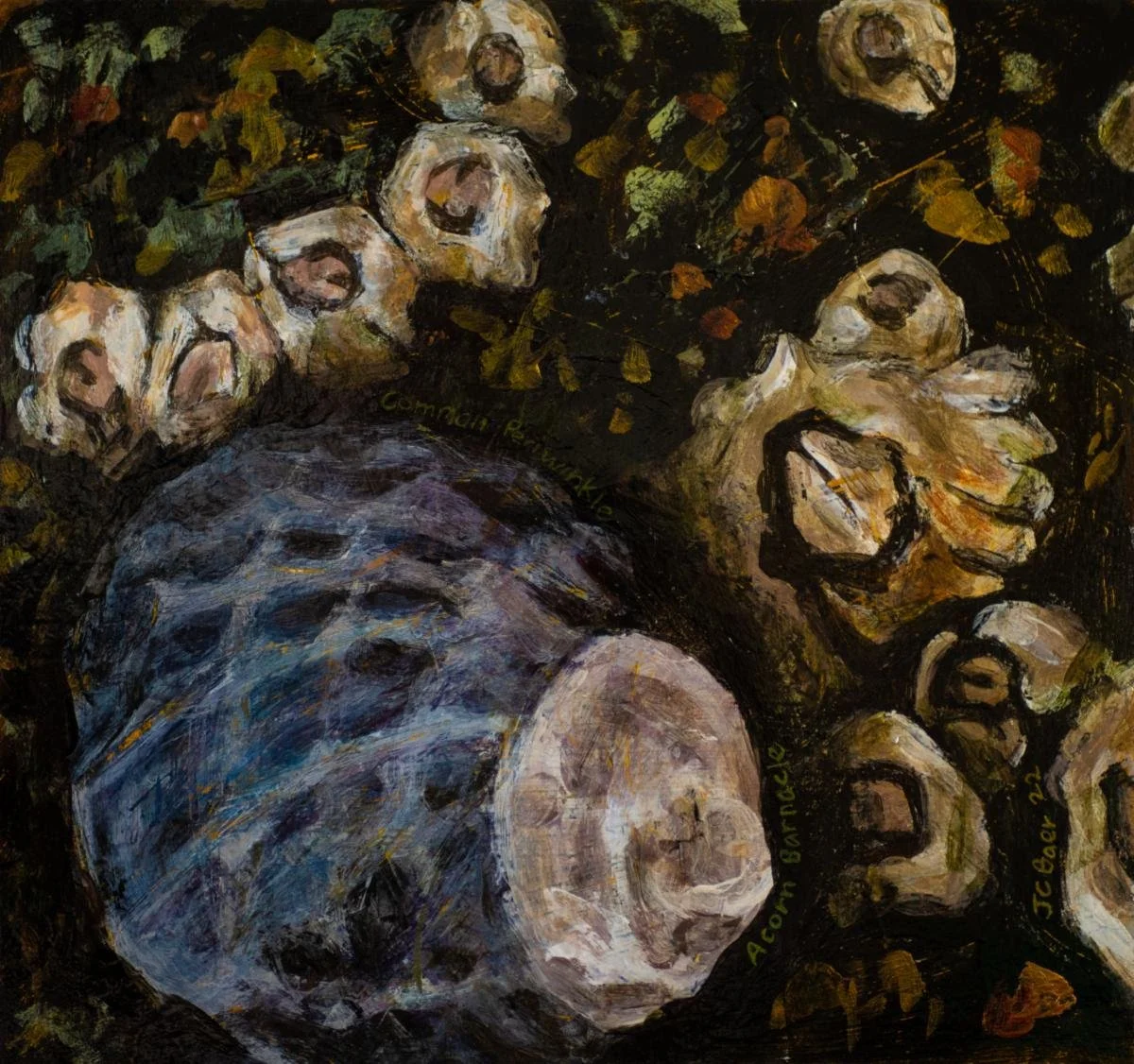
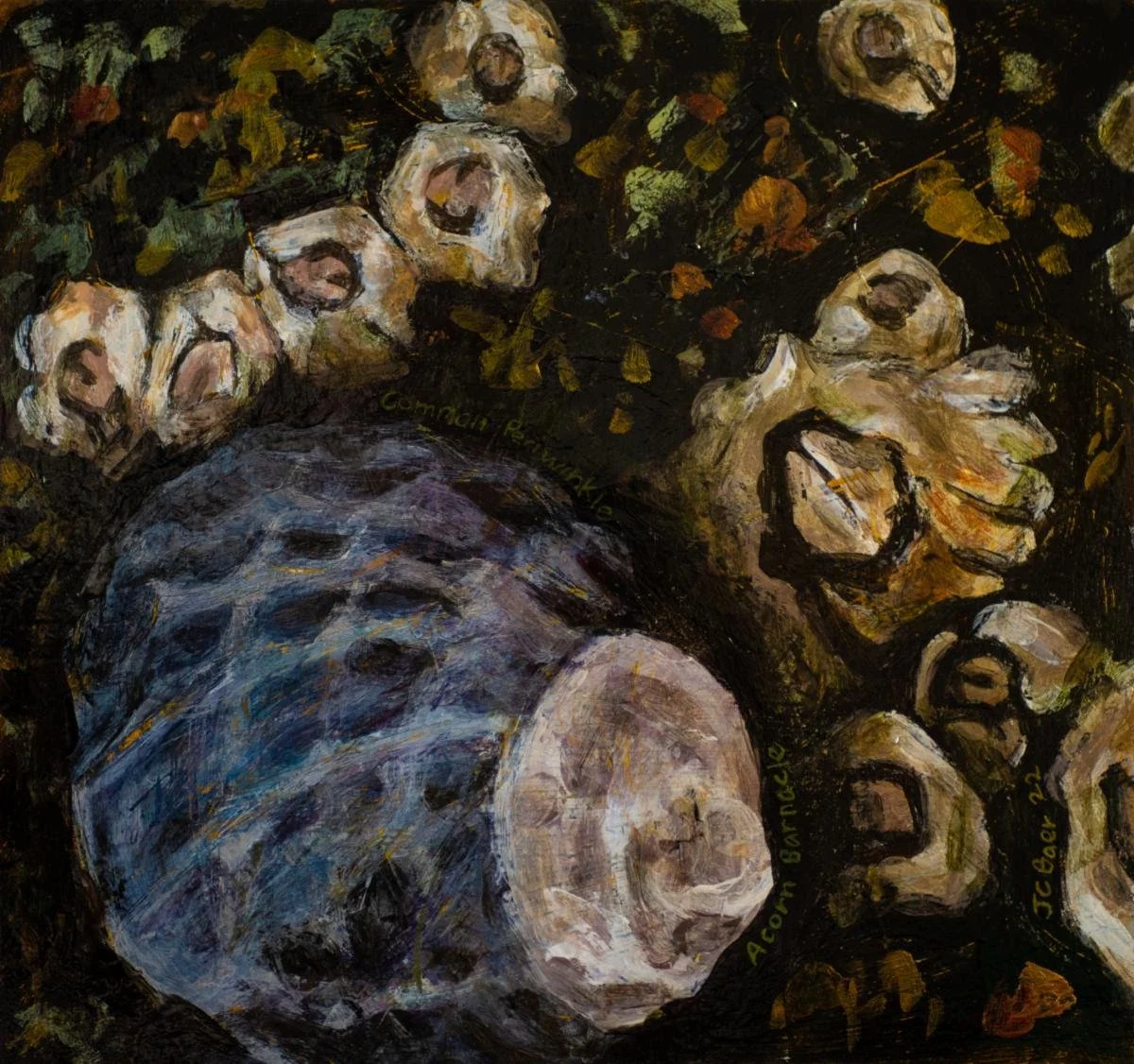
“Common periwinkle (Littorina littorea) and Acorn Barnacle (Semibalanus balanoides)” (acrylic on Arches paper), by Julie Baer, in the group show “20 Years on the Edge,’ at the Atlantic Works Gallery, Boston, through Aug. 26
—- Photo courtesy: Atlantic Works Gallery
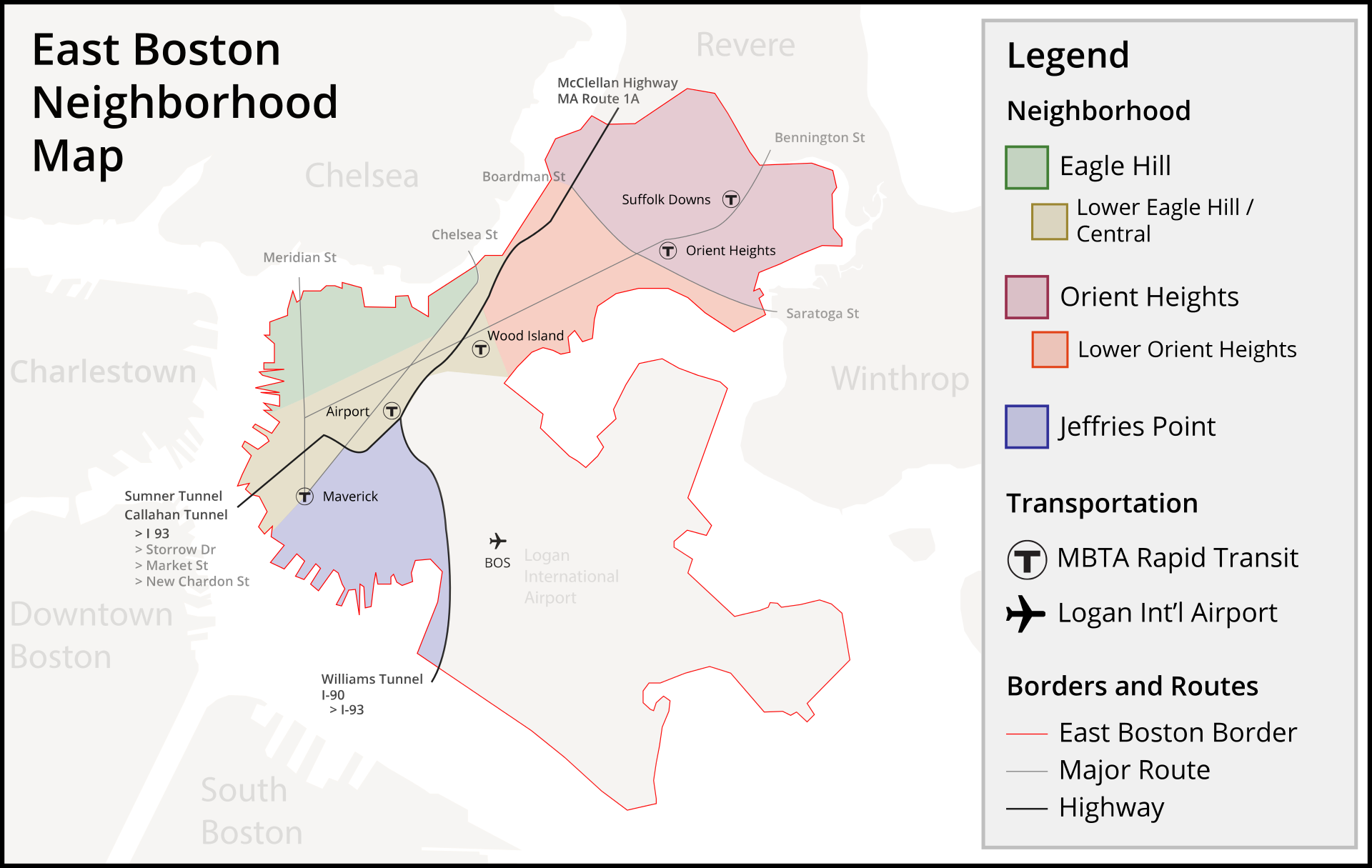
Map by MrJARichard
The gallery says the show features the work of “Atlantic Works Gallery members both new and old, from the past 20 years of the gallery's existence. The opening also celebrates the relationship between the gallery and the East Boston community.”
Llewellyn King: U.S. politicians are so bad because the campaign process has become so ghastly
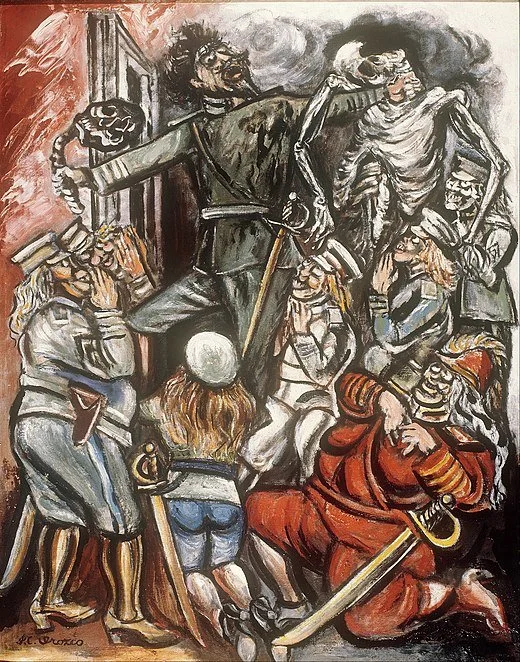
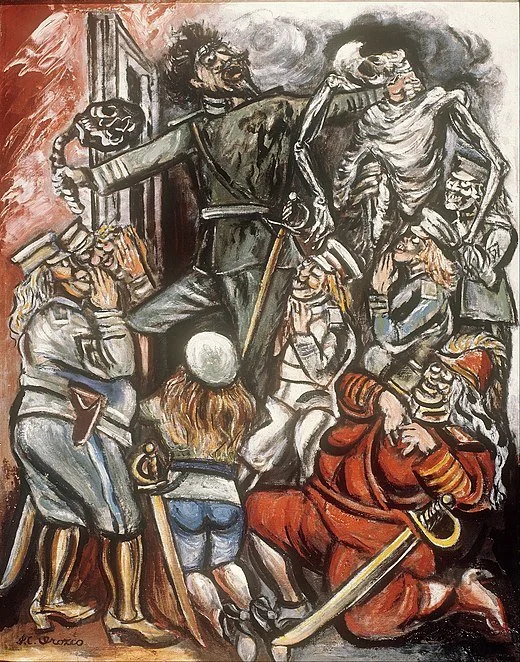
“The Demagogue,’’ by Jose Orozco
WEST WARWICK, R.I.
I am often asked why in a country of such talent and imagination the U.S. political class is so feeble. Why are our politicians so uninspiring, to say nothing of ignorant and oafish.
The short answer is because political life is awful and potential candidates have to weigh the impact on their families, plus the wear and tear of becoming a candidate, let alone winning.
I would name three barriers that keep good people out of politics: the money, the primary system and the media scrutiny.
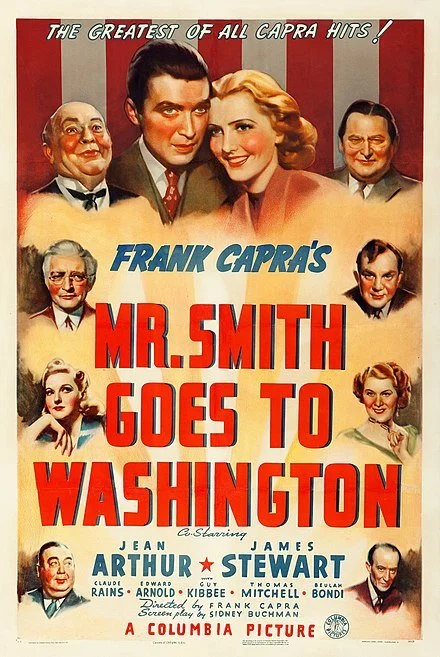
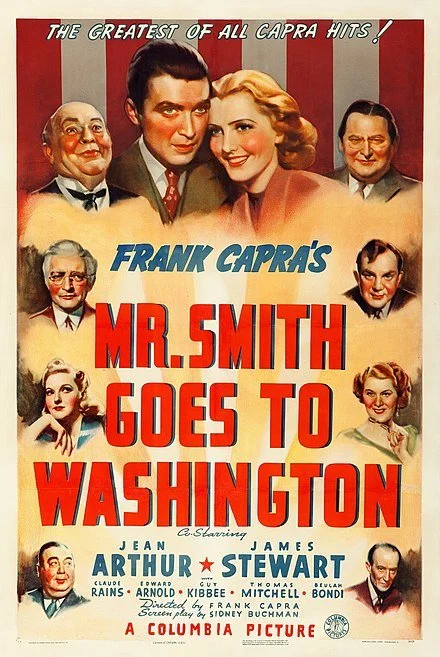
Taking these in order, you must have access to enormous funding to be a candidate. Jefferson Smith, the character in Mr. Smith Goes to Washington, the 1939 movie starring James Stewart, was appointed to a Senate seat. He didn’t have to subject his rectitude to the electoral process.
A candidate for Congress must get substantial funding from the outset and be prepared to spend much of his or her career raising money, which frequently means bending your judgment to the will of donors. Yes, Mr. Smith, to some extent the system is inherently corrupt.
I asked a major political consultant what he asks a candidate before going to work for him or her. First is money: Do you have your own or can you raise it? Second is skeletons in the closet: Have you been arrested for indecent exposure, drunk-driving or other offenses?
Finally, the consultant told me, he asks a candidate: What do you stand for. In short, the mechanisms of politics trump principle. A member of the House once told me that he spent much of his time meeting with donors and attending fundraisers. “You’ve got to do it,” he said.
In the days of the smoke-filled rooms – there really was a lot of smoke -- the party, the professionals, prevailed. In the primary-based system, the odds are on those who are extreme and appeal to the fringes of their party ideology. The party doesn’t shape today’s candidates, they shape the party.
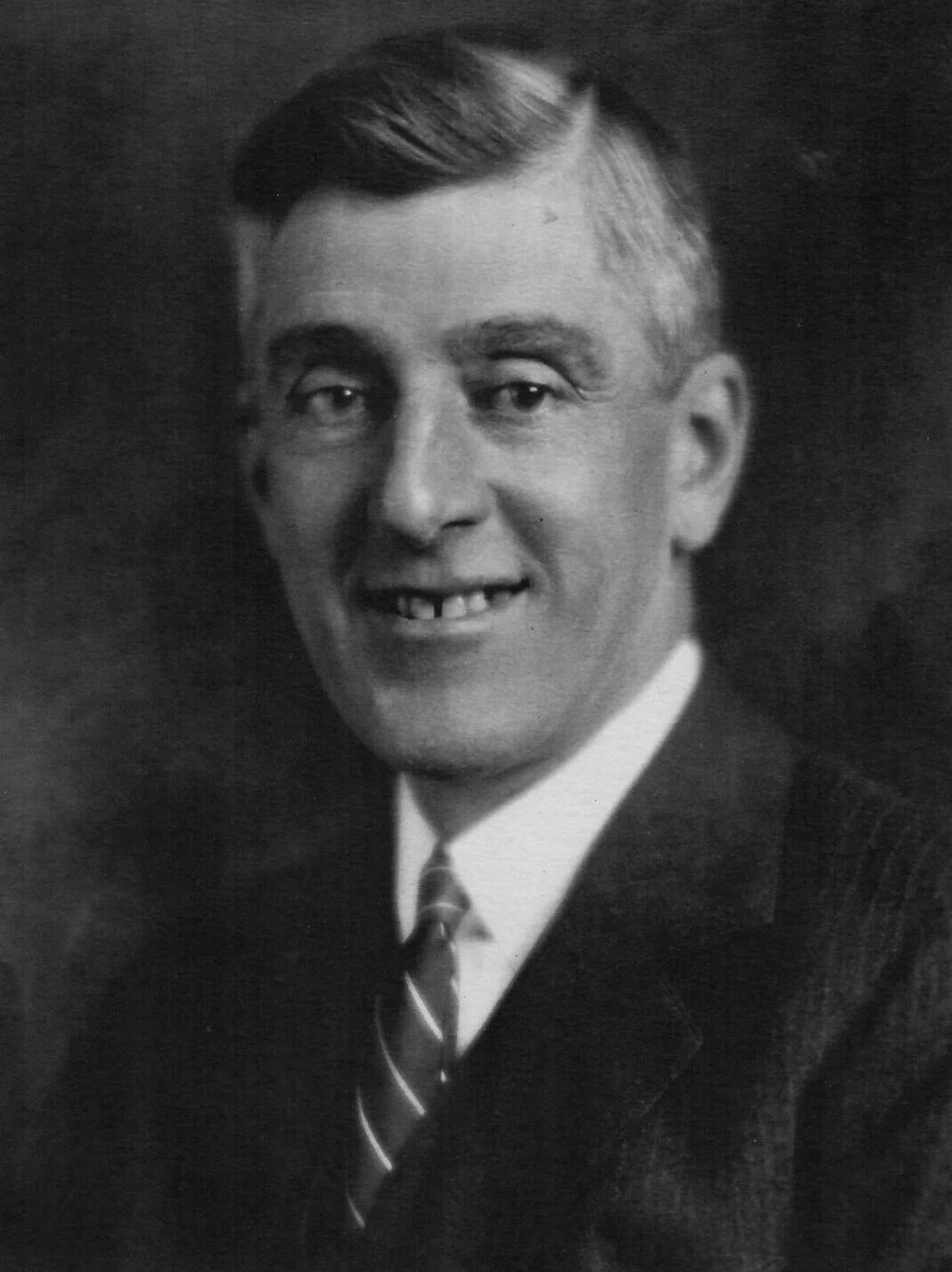
Massachusetts Gov. and then U.S. Sen. Leverett Saltonstall (1892-1979), a classic moderate New England Republican, nicknamed “Salty.’’
Look at the Republicans, little recognizable from the party of old; the party which was held in check by moderate New England stalwarts. Or look at the way the Democrats fight to avoid falling into the chasm of the far left. Once the Democrats were held in check by labor, which gave the party an institutional center.
On the face of it, the primary system favors grassroots democracy and the individual. In fact, it favors those with rich friends, who will cough up.
Finally, there is the media scrutiny. If you want to run for office, you become a public plaything. Everything you ever wrote or said can and will be dredged up. Opposition-research operatives will interview old lovers; check on what you wrote in the school yearbook; rake through your social-media posts, and look for that unfortunate slip of the tongue in a local television interview years ago will be reprised on the evening news. You have a target on your back, and it will be there every day you are in office.
This delving into every corner of a life is a huge barrier that keeps a lot of talent out of politics. Anyone who has ever had a disputed business dealing, a DUI arrest (not even a conviction) or a messy divorce is advised to forego a political career, no matter how talented and how much real expertise Mr. Smith might bring to the state house or Congress.
Run for political office and you put your family at risk, your private life on display and, having been hung out to dry, you may not even win.
These are some of the factors that might explain why the Congress is so risible and why such outrageously fringy people now occupy high office.
Having observed politics on three continents, I firmly believe that it needs strong institutions in the form of local political associations and party structure, and that candidates should be judged on the body of their work, not on a slip of the tongue or an indiscretion.
However, the selection of candidates is always a hard call. If parties have too much control over the system, party hacks are favored and new, quality candidates are shut out.
If primaries continue as they have, the fringes triumph. Just look at the Congress — a smorgasbord of wackiness.
Llewellyn King is executive producer and host of White House Chronicle, on PBS. His email is llewellynking1@gmail.com, and he’s based in Rhode Island and Washington, D.C.
‘Pure purple’

Asters
“Wild aster, bee balm, phlox, chrysanthemum
Proclaim pure purple in the pallid dawn,
Asserting there’s more blossoming to come….’’
— From “Late Summer Purple,’’ by Robert Pack (born 1929), American poet and teacher who taught at Middlebury College, in Vermont, from 1973 to 1995
Llewellyn King: We get bad politicians because running for office has become so ghastly
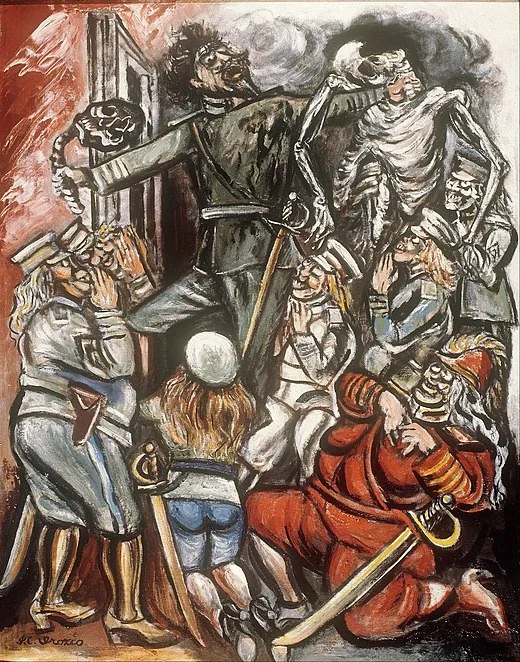
“The Demagogue,’’ by Jose Clemente Orozco
WEST WARWICK, R.I.
I am often asked why in a country of such talent and imagination the U.S. political class is so feeble. Why are our politicians so uninspiring, to say nothing of ignorant and oafish.
The short answer is because political life is awful and potential candidates have to weigh the impact on their families, plus the wear and tear of becoming a candidate, let alone winning.
I would name three barriers that keep good people out of politics: the money, the primary system and the media scrutiny.
Taking these in order, you must have access to enormous funding to be a candidate. Jefferson Smith, the character in Mr. Smith Goes to Washington, the 1939 movie starring James Stewart, was appointed to a Senate seat. He didn’t have to subject his rectitude to the electoral process.
A candidate for Congress must get substantial funding from the outset and be prepared to spend much of his or her career raising money, which frequently means bending your judgment to the will of donors. Yes, Mr. Smith, to some extent the system is inherently corrupt.
I asked a major political consultant what he asks a candidate before going to work for him or her. First is money: Do you have your own or can you raise it? Second is skeletons in the closet: Have you been arrested for indecent exposure, drunk-driving or other offenses?
Finally, the consultant told me, he asks a candidate: What do you stand for. In short, the mechanisms of politics trump principle. A member of the House once told me that he spent much of his time meeting with donors and attending fundraisers. “You’ve got to do it,” he said.
In the days of the smoke-filled rooms – there really was a lot of smoke -- the party, the professionals, prevailed. In the primary-based system, the odds are on those who are extreme and appeal to the fringes of their party ideology. The party doesn’t shape today’s candidates, they shape the party.
Look at the Republicans, little recognizable from the party of old; the party which was held in check by moderate New England stalwarts. Or look at the way the Democrats fight to avoid falling into the chasm of the far left. Once the Democrats were held in check by labor, which gave the party an institutional center.
On the face of it, the primary system favors grassroots democracy and the individual. In fact, it favors those with rich friends, who will cough up.
Finally, there is the media scrutiny. If you want to run for office, you become a public plaything. Everything you ever wrote or said can and will be dredged up. Opposition-research operatives will interview old lovers; check on what you wrote in the school yearbook; rake through your social-media posts, and look for that unfortunate slip of the tongue in a local television interview years ago will be reprised on the evening news. You have a target on your back, and it will be there every day you are in office.
This delving into every corner of a life is a huge barrier that keeps a lot of talent out of politics. Anyone who has ever had a disputed business dealing, a DUI arrest (not even a conviction) or a messy divorce is advised to forego a political career, no matter how talented and how much real expertise Mr. Smith might bring to the state house or Congress.
Run for political office and you put your family at risk, your private life on display and, having been hung out to dry, you may not even win.
These are some of the factors that might explain why the Congress is so risible and why such outrageously fringy people now occupy high office.
Having observed politics on three continents, I firmly believe that it needs strong institutions in the form of local political associations and party structure, and that candidates should be judged on the body of their work, not on a slip of the tongue or an indiscretion.
However, the selection of candidates is always a hard call. If parties have too much control over the system, party hacks are favored and new, quality candidates are shut out.
If primaries continue as they have, the fringes triumph. Just look at the Congress — a smorgasbord of wackiness.
Llewellyn King is executive producer and host of White House Chronicle, on PBS. His email is llewellynking1@gmail.com, and he’s based in Rhode Island and Washington, D.C.
‘Into yellow froth’
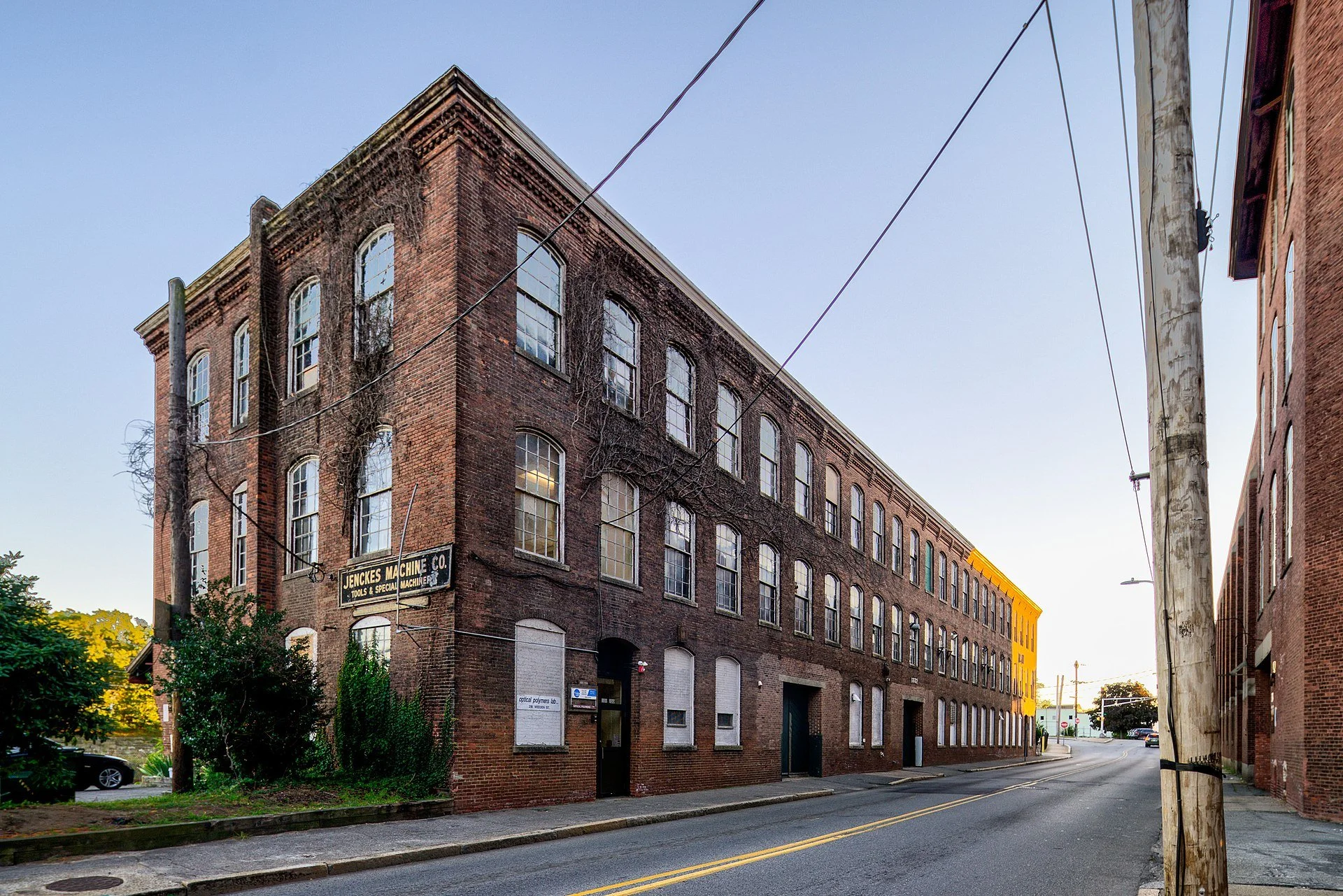
The Jenckes Spinning Company textile-factory complex in Pawtucket, R.I., one of many old factories along the Blackstone River.
— Photo by Kenneth C. Zirkel
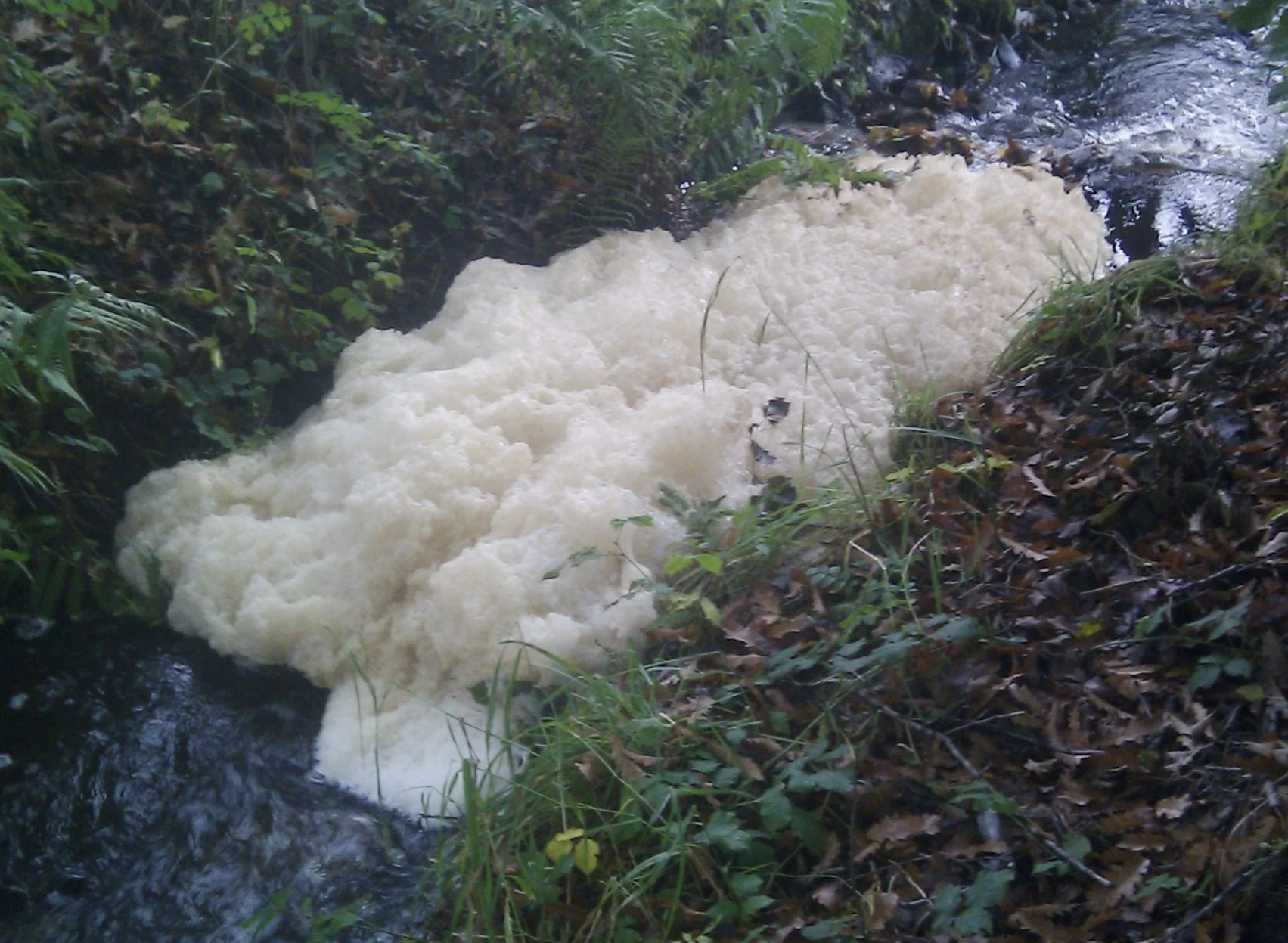
— Photo by Rosser1954
“Overhead the sea blows upside down across Rhode Island.
slub clump slub clump
Charlie drops out. Carl steps in
sllub clump
No hitch in the sequence….
They lay the bricks that build the mills
that shock the Blackstone River into yellow froth.’’
— From “The Tragedy of Bricks,’’ by Galway Kinnell (19270-2014), Pulitzer Prize-winning poet. He was a native of Rhode Island who became a Vermont resident.
Delirious duo
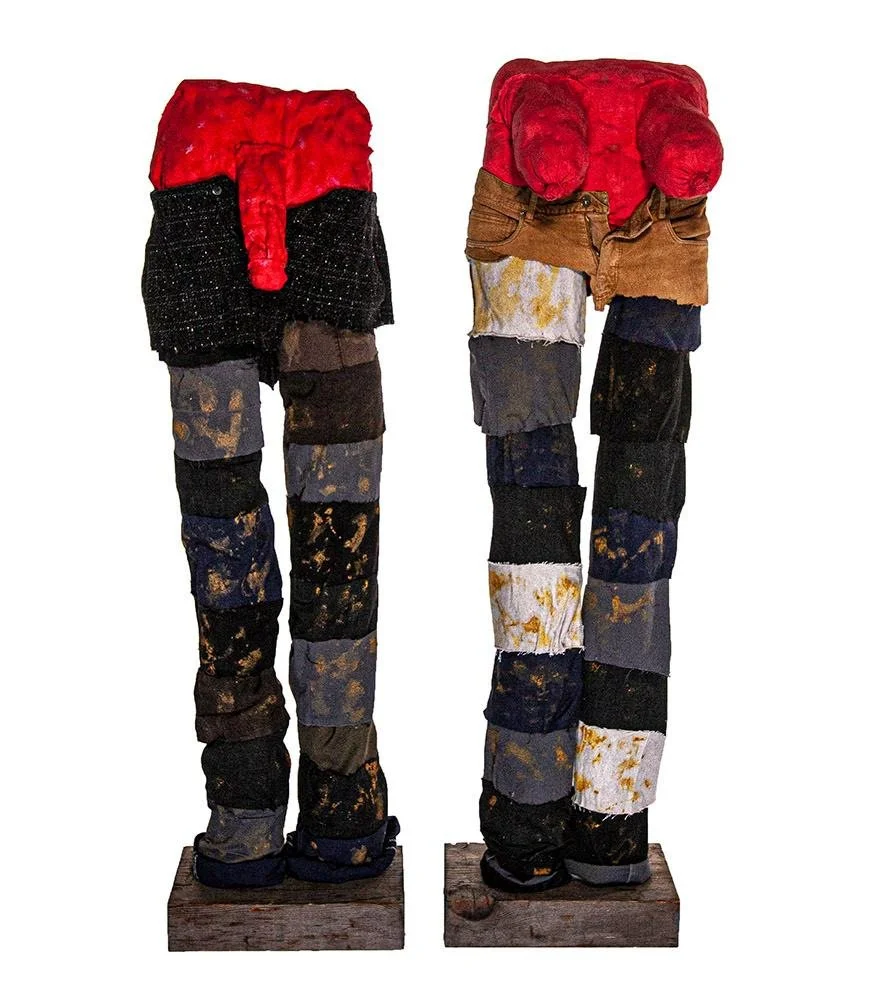
"The Two of Them" (mixed media sculpture), by Livia Linden, in the Greater Than the Sum of Parts group show at Galatea Fine Art, Boston, Aug. 4-27.
The gallery says:
“Fabric, thread, wool, reeds, paper, wire and even plastic are magical through the eyes and in the hands of a fiber artist. As they reinterpret old designs and reinvent old techniques, fiber artists create new visions.

Beauty and bathos in The Berkshires
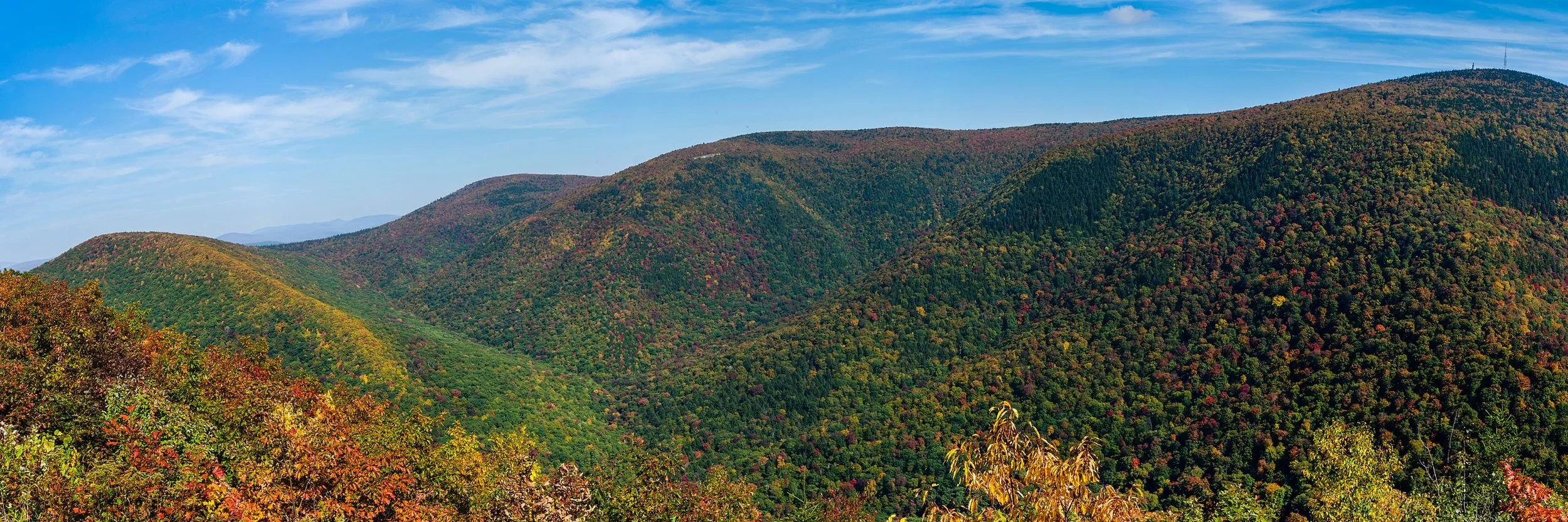
Mt. Greylock State Reservation (Greylock summit on the far right), in The Berkshires. At 3,491 feet, Mt. Greylock is the tallest point in Massachusetts. The shape of the mountain reminded Herman Melville of a whale as he was writing Moby Dick.
— Photo by Protophobic
Adapted from Robert Whitcomb’s “Digital Diary,’’ in GoLocal24.com
I drove out to The Berkshires last week for a couple of meetings. It brought back memories. In the late ‘50s’ I traveled there (by train from Boston!) to see relatives outside of Pittsfield in the little town of Richmond, and in the ‘70s I spent quite a few weekends staying with friends in a couple of towns along the Connecticut-Massachusetts line as an escape from New York City, where I was living and working.
One of my strongest recollections of the region is the election of 1970, when the Boston Herald Traveler (RIP) sent me to cover the vote in Berkshire County. I had little idea of how to go about that. So I first went to Pittsfield, the county seat and biggest town, and started walking around its then-busy downtown – lots of industry still around -- came across a radio station and went in to introduce myself. Unlike now, when most radio stations are owned by chains, many stations were locally owned and provided hefty doses of local news and other stuff from Berkshire communities.
I explained my plight to the station manager – ignorance – and he told me: “Don’t worry about it. We’ll bring you the vote tallies tonight. Would you like a donut and a cup of coffee? Take a look at The Berkshire Eagle’’ (a great local paper that still lives). He then gave me an overview of the county, including its reliance on General Electric and other big manufacturers that employed thousands of people, paid well and offered attractive fringe benefits. They also dumped large quantities of dangerous, cancer-causing chemicals into the region’s many rivers. The cleanups continue to this day.
My bosses in Boston were surprised that I was able to so quickly send them so much information that night….
Anyway, my recent trip reminded me that most of the county’s industrial base is gone.\
And so, increasingly the area has depended on tourism as well as on affluent people (most, apparently, from the New York City area) who have second homes there amidst the lovely hills and the region’s astonishingly large collection of cultural organizations. Here’s a few: Tanglewood (music), Jacob’s Pillow (dance), Shakespeare & Company (theater), the Clark, Berkshire, Williams College, and Norman Rockwell museums and the Massachusetts Museum of Contemporary Art. Route 7, in particular, is Culture Gulch.
Not surprisingly, the region has long drawn famous painters and writers. After all, much of it is beautiful, and it’s close to New York and Boston. (I love that Herman Melville saw the shape of a whale while gazing at Mt. Greylock from his house in Pittsfield, as he worked on Moby Dick.)
People are drawn from far and wide to such lovely towns -- if maybe a tad too precious/quaint to some people -- as Stockbridge, Lenox, Williamstown, and Great Barrington, with their fine 19th Century houses, fancy restaurants, art galleries, bookstores, weavers, health spas and big country estates. Private equity, hedge fund, and tech moguls have taken over some of the last, many built by “Robber Barons’’ from after the Civil War through the Roaring Twenties.
All these attractions, however, have helped raise housing costs by drawing rich people who have bid up property prices and made a living in the region unaffordable for many people who, decades ago, might have had good jobs in a local factory. But God bless a lot of the newcomers. Most aren’t showy -- they don’t want to be in the Hamptons or on Nantucket or Martha’s Vineyard --- and some give big bucks to charities in The Berkshires, a couple of civic leaders explained to me.
In any event, away from the spiffy towns are gritty and depressed ones, with closed stores and ramshackle housing. But Pittsfield, anyway, seems to be coming back from its long economic depression.
How to make the Berkshires prosperous for more people? The tourism/ hospitality businesses don’t pay well and are quite seasonal. The state is pushing for more pharmaceuticals-manufacturing plants, and state officials have said that they want to make Berkshire County a biotech hub. Really? And perhaps the region could ramp up its farming sector to take advantage of the public’s growing desire for more locally-grown food and for less reliance on huge agribusinesses far away. The Berkshires’ proximity to the huge Greater New York market is a plus. But the hilly terrain puts a limit on the size and number of farms, even as human-caused global warming extends the Berkshires’ growing season.
Global warming is also producing more flooding and other extreme weather events, as I was reminded early last week when I came upon some roads washed out by the same system that did such damage in Vermont. Torrential rain in hilly areas can be devastating, and such downpours are becoming more frequent. Local and state officials must push for new rules to discourage building in such potentially dangerous places as right along rivers. Reading about the disastrous flooding in such communities as Montpelier, Vt., last week reminded me of how strange it is that so much building has long taken place on riverbanks. Of course, people love being along water, and some of the original construction there were mills using waterpower, but at what cost now? Presumably, more and more insurers will stop writing property insurance in such vulnerable places, which will block a lot of waterfront buildings. That’s happening in many places along the coast as sea levels rise.
The Berkshires used to be a pretty important ski region, but not so much any more; the weather’s too unreliable and there are more environmental concerns about ski areas’ massive use of energy and water (for snowmaking) and erosion off the hills.
Much of Berkshire County, despite its bucolic reputation, is more exurban than rural. There are ugly malls with windswept parking lots in strips along roads without sidewalks and other depressing scenes of sprawl, some of which threaten water pollution. But local officials and the general population are more aware than they were just a few years ago of the need to control sprawl, by, among other ways, boosting public transportation and encouraging more housing density near the old downtowns, whose businesses would be helped by having more customers within walking distance.
Let’s hope that in the next few years, Berkshire County offers some edifying new examples of how to protect the scenic and cultural attractions of an area that’s so close to big cities, while also creating better jobs for year-round residents so that they aren’t compelled to leave.
Meanwhile, enjoy the glories of the Berkshires, where summer road traffic can be bad, but not nearly as bad as traffic along the coast, as I saw last Wednesday, when it took me almost an hour and a half to drive to Narragansett from Providence in bumper-to-bumper traffic there. Head for the hills, not the coast, in high summer, when millions want to visit New England all at once.

View from Main Street in Great Barrington (obviously) in the spring
—Photo by Anc516
Boston-based Verve Therapeutics partners with Lilly to target cholesterol

Edited from a New England Council report:
“Eli Lilly is collaborating with Boston-based Verve Therapeutics on a gene-editing program with a total value of $525 million. Eli Lilly will pay $60 million to use Verve’s gene-editing technology to target a cholesterol-carrying protein. The agreement also includes potential milestone payments of up to $465 million, as well as royalties for Verve. Verve plans to test Phase 1 clinical trials, with Eli Lilly handling clinical development, manufacturing, and commercialization.
“Verve Therapeutics, which focuses on eliminating cardiovascular disease associated with high cholesterol, emerged in 2019 with technology developed by Harvard scientists. The company went public in 2021 and has received investments from GV, Wellington Management Company, and Casdin Capital, as well as collaboration deals with Beam Therapeutics and Verily. Following the announcement of the collaboration, Verve’s shares rose more than 12 percent.’’

‘Sinister phoenixes’

From Chilean-born American artist Rodrigo Valenzuela’s show “Weapons,’’ at the Center for Maine Contemporary Art, Rockland, through Sept. 10.
The gallery says:
“Rodrigo Valenzuela’s exhibition incorporates works from two connected and ongoing photographic series, ‘Weapons’ and “Afterwork,’ that are integrated into floor-to-ceiling wood frame structures installed along with ceramic pieces by the artist.
“Through a patina of nostalgic fantasy, Valenzuela’s ‘Weapons’ series offers views of imaginative performances that might take place on a job site once workers depart. Knives, screws, rope, and chains—the tools of many trades—appear reconfigured as sinister phoenixes, ramshackle sculptures, and animistic creatures of dreams. ‘Afterwork’’ presents pictures of somber, silvery rooms filled with mechanical contraptions and fog, possibly from the sweat left hanging in the air after a long day’s work. Valenzuela’s works are animated by a dream-like quality and driven by an urgent human and political exploration: that of global economics and the human dimensions of labor, considered in the wake of neoliberalism.’’
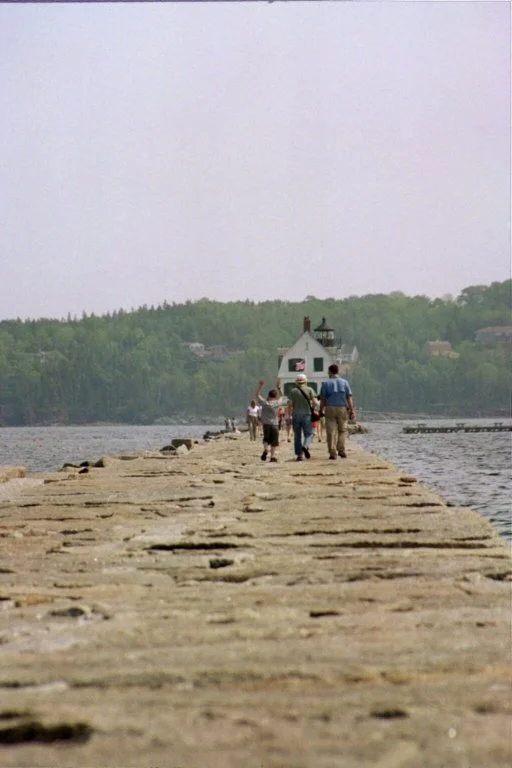
Heading toward Rockland Breakwater Lighthouse
— Photo by Needsmoreritalin
Video: The newsprint capital
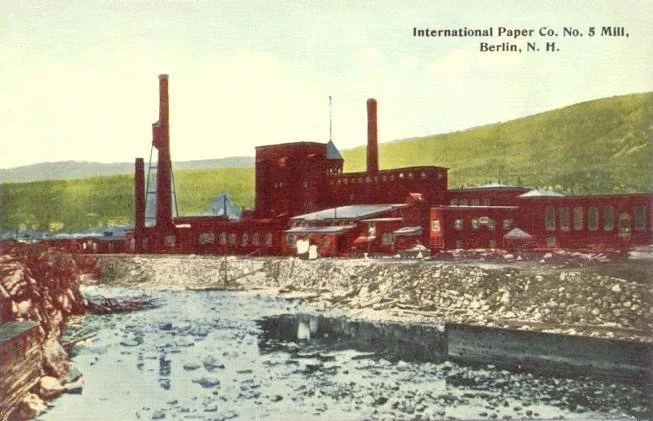
One of Berlin’s paper mills, in 1912. While the industry brought many jobs, it also polluted the Androscoggin River, as well as the air in Berlin.
“Berlin, New Hampshire, in the heart of the Northern Forest, is a small city of approximately 10,000 people, best known for its paper mills and being the largest producer of newsprint in the world during the mid-twentieth century. The city's history is as deep as the woods that surround it. Our dynamic partnership brings together Timberlane Regional High School, in Plaistow, New Hampshire, and the Berlin and Coos County Historical Society in an oral history project, resulting in a ninety-minute documentary on Berlin in the 20th Century. Part of Historic New England's ‘Everyone's History’ series.’’
Hit this link for video

Restorative Granite State

The Hopkinton (N.H.) State Fair, held every year in early September
“The restoration comes not only from the landscape and air, though they play their significant part, but from the people. I feel a strong need to be in New Hampshire for as much of the summer as I can manage it.’’
— Retired U.S. Supreme Court Associate Justice David Souter (born 1939). He served on the high court from 1990 to 2009, when he moved back to his native New Hampshire, where he lives in the small town of Hopkinton.
Llewellyn King: Yes. climate change is upon us, but panic isn’t a tool against it
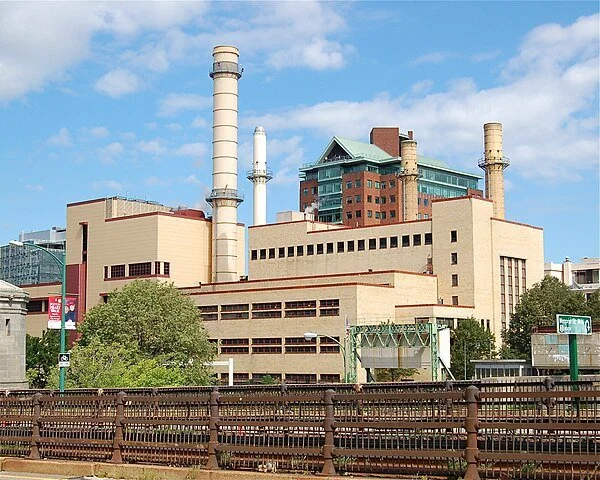
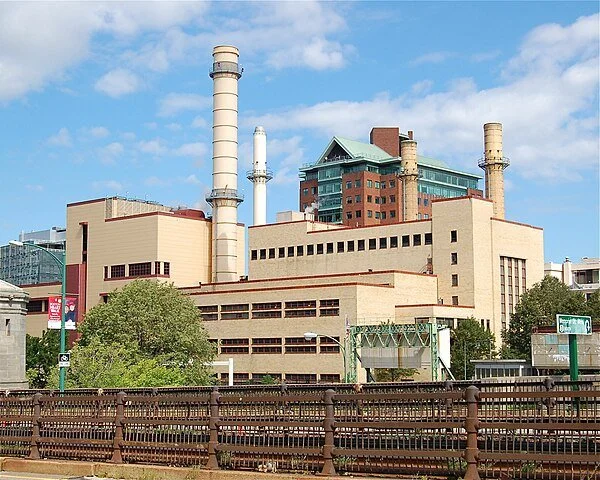
The Kendall Cogeneration Station, in Cambridge, Mass., is a natural-gas- powered station owned by Vicinity Energy that produces both steam and electricity for Boston and Cambridge. We’ll be hooked on natural gas for a long time to come.
WEST WARWICK, R.I.
One of the luxuries of democracy is that we don’t have to listen. Or we can listen and hear what we want to hear. We can find resonance in dissonance, or we can hear flat notes.
That is the story of the climate crisis, which is here.
We have been warned over and over, sometimes as gently as a summer zephyr, and sometimes gustily, as with Al Gore’s tireless campaigning and his seminal 1992 book, and later movie, Earth in the Balance.
Now high summer is upon us — with its intimations of worse to come. And this message rings in our ears: The climate is changing — polar ice caps are melting; the sea level is rising; the oceans are heating up; natural patterns are changing, whether it be for sharks or butterflies; and we are going to have to live with a world that we, in some measure, have thrown out of kilter.
Around the beginning of the 20th Century, we began an attack on the environment, the likes of which all of history hadn’t seen, including two centuries of industrial revolution. Sadly, it was when invention began improving the lives of millions of people.
Two big forces were unleashed in the early 20th Century: the harnessing of electricity and the perfection of the internal-combustion engine. These improved life immensely, but there was a downside: They brought with them air pollution and, at the time unknown, started the greenhouse effect.
In the same wave of inventions, we pushed back the ravages of infectious diseases, boosted irrigated farming and enabled huge growth in the world population — all of whom aspired to a better life with electricity and cars.
In 1900, the world population was 1.6 billion. Now it is 8 billion. The population of India alone has increased by about a billion since the British withdrawal, in 1947. Most Indians don’t have cars, jet off for their vacations or have enough, or any, electricity, and very few have air conditioning. Obviously, they are aspirational, as are the 1.4 billion people of Africa, most of whom have nothing. But the population of Africa is set to double in 25 years.
The greenhouse effect has been known and argued about for a long time. Starting in 1970, I became aware of it as I started covering energy intensively. I have sat through climate sessions at places like the Aspen Institute, Harvard and MIT, where it was a topic and where the sources of the numbers were discussed, debated, questioned and analyzed.
Oddly, the environmental movement didn’t take up the cause then. It was engaged in a battle to the death with nuclear power. To prosecute its war on nuclear, it had to advocate something else, and that something else was coal: coal in a form of advanced boilers, but nonetheless coal.
The Arab oil embargo of 1973 added to the move to coal. At that point, there was little else, and coal was held out as our almost inexhaustible energy source: coal to liquid, coal to gas, coal in direct combustion. Very quiet voices on the effects of burning so much coal had no hearing. It was a desperate time needing desperate measures.
Natural gas was assumed to be a depleted resource (fracking wasn’t perfected); wind was a scheme, as today’s turbines, relying heavily on rare earths, hadn’t been created, nor had the solar electric cell. So, the air took a shellacking.
To its credit, the Biden administration has been cognizant of the building crisis. With three acts of Congress, it is trying to tackle the problem — albeit in a somewhat incoherent way.
Some of its plans just aren’t going to work. It is pushing so hard against the least troublesome fossil fuel, natural gas, that it might destabilize the whole electric system. The administration has set a goal that by 2050 — just 27 years from now — power production should produce no greenhouse gases whatsoever, known as net-zero.
To reach this goal, the Environmental Protection Agency is proposing strict new standards. However, these call for the deployment of carbon capture technology which, as Jim Matheson, CEO of the Rural Electric Cooperative Association, told a United States Energy Association press briefing, doesn’t exist.
The crisis needs addressing, but panic isn’t a tool. A mad attack on electric utilities, the demonizing of cars or air carriers, or less environmentally aware countries won’t carry us forward.
Awareness and technology are the tools that will turn the tide of climate change and its threat to everything. It took a century to get here, and it may take that long to get back.
On Twitter: @llewellynking2
Llewellyn King is executive producer and host of White House Chronicle, on PBS, and is based in Rhode Island and Washington, D.C.
White House Chronicle
Near the Arctic Circle, year-round outdoor swimming
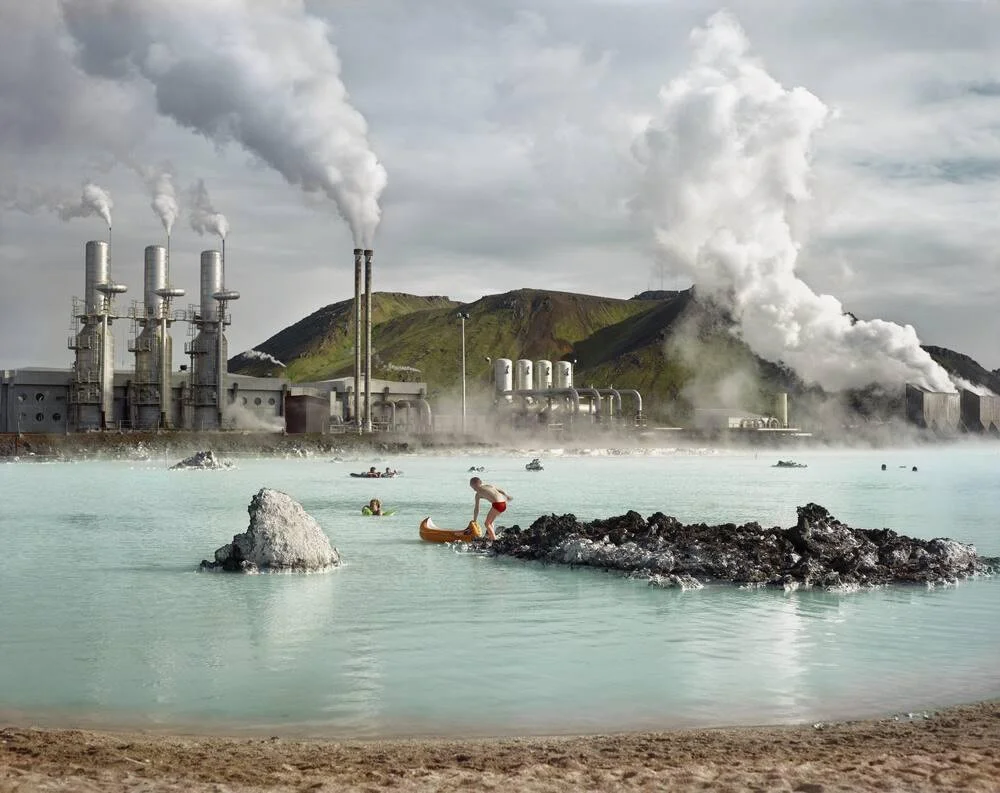
“The Blue Lagoon, Svartsengi Geothermal Pumping Station, Iceland” (1988, chromogenic print), by Laura McPhee at the Fitchburg (Mass.) Art Museum.
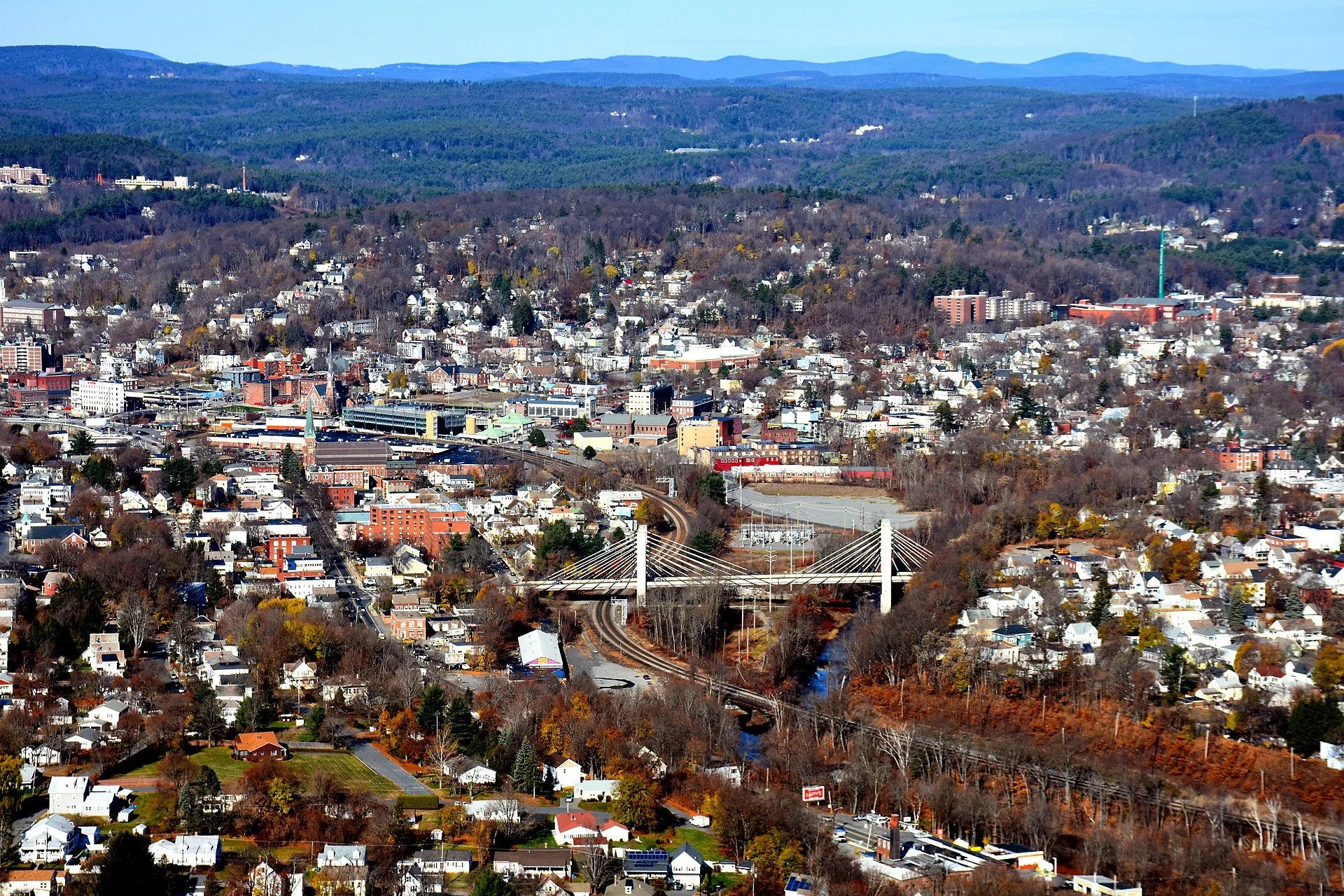
Downtown Fitchburg seen from the south, looking toward New Hampshire mountains. From the 19th to the first half of the 20th Century the city was an industrial center, especially for paper making.
— Photo by Nick Allen

Chris Powell: Only obnoxious students justify teacher raises now; justice system runs on sometimes dubious plea bargains

Young student wearing dunce hat as punishment in 1906 photo

Latch-key kid of parents who aren’t home
MANCHESTER, Conn.
Student performance continues to crash in schools in Connecticut and throughout the country. The results of the latest National Assessment of Educational Progress tests showed steep declines in the reading and math proficiency of 13-year-olds. Students are doing worse than a decade ago.
But as usual there is much clamor to increase compensation for teachers, to hire more teaching assistants, and to keep increasing spending on schools even as enrollment keeps falling.
The enduring gap between school spending and student performance should have destroyed by now Connecticut's longstanding presumption that spending equals education. But the presumption is sustained by the influence of the presumption's main beneficiaries -- members of teacher unions -- and by the public's not wanting to acknowledge education's decline. For doing so might lead to other troubling realizations.
One such troubling realization would be that teacher pay has to keep being raised not because teachers are successful but because students are making their jobs insufferable.
Teachers are leaving the profession and recruiting good candidates for teaching jobs is a struggle because many more students arrive in school ignorant of the basics they once learned at home and because many others seriously misbehave, even violently, or are chronically absent.
In these circumstances even the best teachers can't get good results, and even the worst teachers may be considered essential because there are no replacements.
For similar reasons police work in Connecticut also faces a staffing problem, especially in the cities. Who wants to "serve and protect" when the work is less appreciated and more dangerous?
xxx
Everywhere more people are behaving badly and seem full of rage -- not just on the road and in politics but in ordinary life as well. Hence, for example, Connecticut state government’s decision to allow municipalities to install "red light cameras" where motorist misconduct is worst.
Few people in authority acknowledge what is going on. Those who do sense that something is seriously wrong attribute it to the disruptions of the recent virus epidemic. While government's main responses to the epidemic were indeed mistaken and damaging -- school and commercial shutdowns and near-compulsory submission to inadequately tested vaccines -- the bad trends, including educational decline, were in place long before the epidemic. Signs of social disintegration are almost everywhere.
Everything starts with children. So where are all the messed-up kids coming from? Government isn't asking.
Throwing more money at teachers and police, as Connecticut is doing, may keep them on the job a while longer but it doesn’t answer the question and won’t make their jobs easier.

Southport, Conn.-based Sturm, Ruger & Co.’s MK II 22/45 target pistol. Despite the departures in recent decades from a state that used to be famous for firearms manufacturing, several major gun makers still retain a presence in Connecticut, including Sturm, Ruger; Colt, Charter Arms and Mossberg.
Maybe there is a hint about social disintegration in a recent study by the state Office of Legislative Research, analyzed last monthby Marc E. Fitch of the {conservative} Yankee Institute's Connecticut Inside Investigator.
The study tends to confirm complaints made in February by city mayors and police officials that since gun crime in Connecticut is committed disproportionately by repeat offenders, prosecutors and courts aren't taking gun crime seriously enough.
The OLR study found that from 2013 through 2022 two-thirds of gun-related criminal charges brought by police in Connecticut were dropped, usually as part of plea bargains gaining convictions on charges considered more serious.
The criminal-justice system runs on plea bargaining, so when most crimes get to court they are "discounted." While some arrests may involve "overcharging" by police -- adding charges that are more or less redundant -- a gun charge can be redundant only if the state thinks, for example, that it doesn't matter much if an assault or a robbery was committed with a gun as long as a conviction for assault or robbery can be achieved.
Of course, if state policy considered a gun offense to be just as serious as an assault or robbery, or even more so, and demanded that it be prosecuted just as seriously, and if conviction on a gun charge carried a mandatory long prison sentence, gun crime might diminish substantially.
Instead state legislators keep passing laws to impede gun ownership by the law-abiding and then boast about reducing the prison population even as repeat offenders, including gun criminals, remain free.
Chris Powell has written about Connecticut government and politics for many years. (CPowell@cox.net).
Podcast: 'Ideas actually matter’
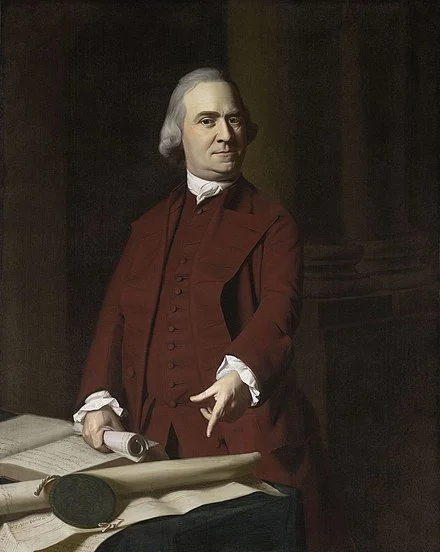
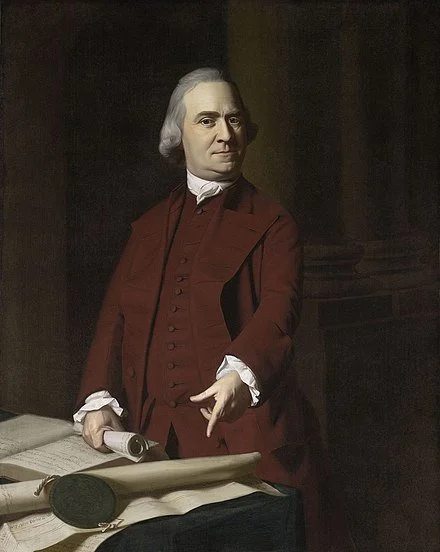
In this c. 1772 portrait by John Singleton Copley, Samuel Adams points at the Massachusetts Charter, which he viewed as a constitution that protected the people’s rights.
From Lapham’s Quarterly:
“‘I think that I started the book,’ historian Stacy Schiff says of The Revolutionary: Samuel Adams, ‘with this thirst for somebody who—I’ve just been writing about the Salem witch trials for many years. And I was looking for someone who had the courage of his convictions, to stand up and take an unpopular stand, which is something that takes a very long time for anyone to do in the Massachusetts Bay Colony in 1692, when it was very dangerous to take that stand. As it is dangerous again in the 1760s. And Adams very much fit that description. The more time I spent with him, the more time I was convinced and remain convinced that he teaches you that one person can actually make a difference and that ideas actually matter.”’
Lewis H. Lapham speaks with Stacy Schiff, author of The Revolutionary: Samuel Adams
At maximum fragrance

“Morning at the Creek” (oil on gesso board), by Massachusetts painter Sue Dragoo Lembo, at Alpers Fine Art, Rockport, Mass.