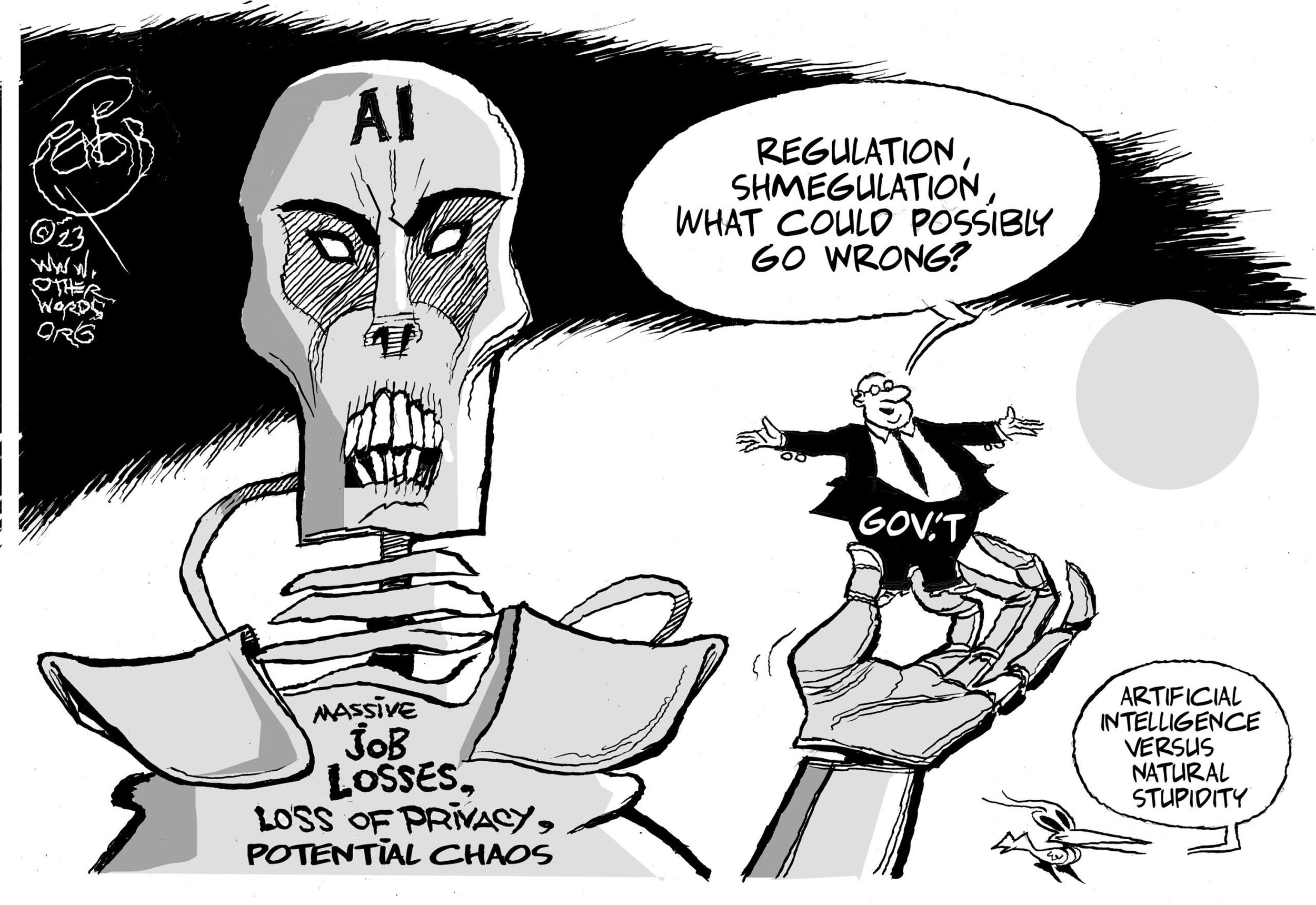
Vox clamantis in deserto

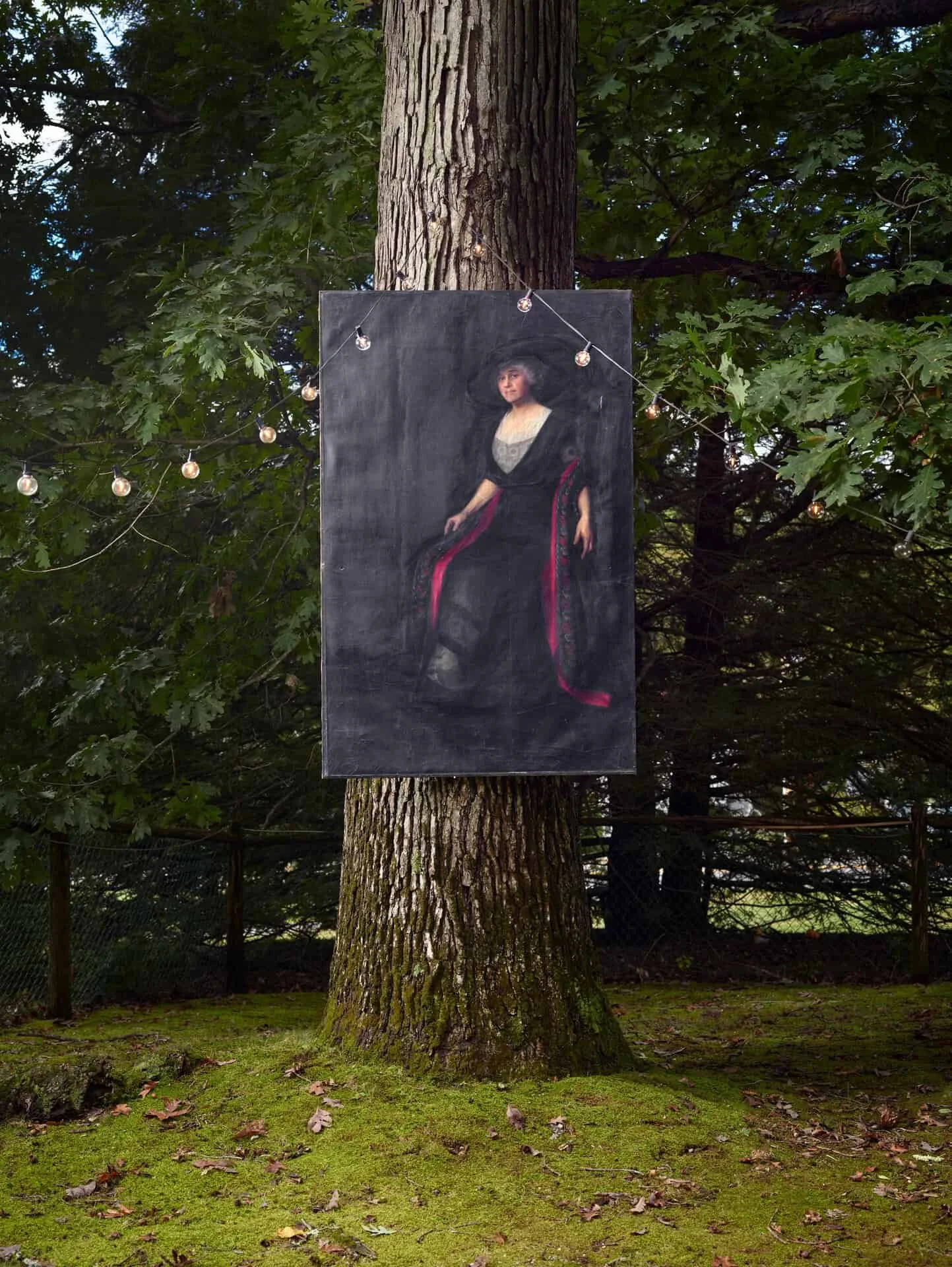

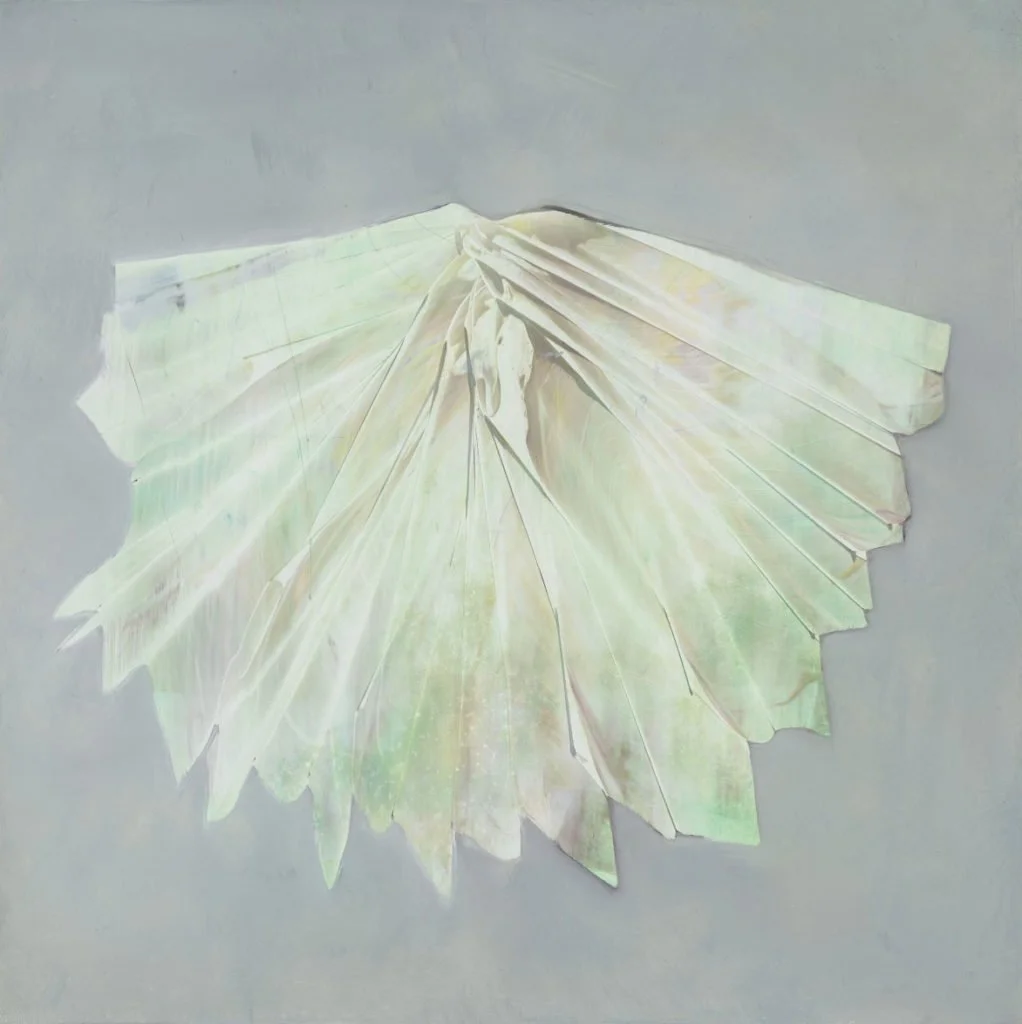





Going Dutch


Downtown Boston
— Photo by Nick Allen
Adapted from From Robert Whitcomb’s “Digital Diary,’’ in GoLocal24.com
A consulting firm’s study recommends that a huge, $877 million flood barrier be built to protect downtown Boston from the increased coastal flooding associated with global warming. Of course, there would be big cost overruns in something as complicated as this project; it would probably cost several billion.
Meanwhile, Boston can stock up on lifeboats, wetsuits and swimming lessons. But sadly the threat is too episodic for gondolas.
John Sideli and ‘the strange liberty of creation’

John Sideli with some of his creations
VERNON, Conn.
The ancient Greeks have a saying: “To meet a friend again after a long absence is a god.”
My wife, Andrée, and I have known John Sideli for more than 60 years. After a long absence, we met again in Bristol, R.I., where, close by in Warren, Andrée and I enjoyed a brief vacation. As the word “vacation” suggests, times spent in this way together are best savored without all the modern inconveniences: no computers, no phones, and, in my case, no newspapers -- seven days, a full week, of serendipity, and a welcomed respite from the drudgery of column writing.
Andrée has always said that political writing is a bit like scrawling a message with your finger on a strand of tide-hardened beach before the tide rushes in to erase it.
On day three, she smiled mischievously and said, “I’ve arranged a surprise for you. I’m sure you will be pleased. I can’t tell you what the surprise is, because then it will be no surprise.” There were no flaws in this logical construction.
The surprise was John Sideli, changed somewhat from the Sideli I knew six decades earlier and now living in Bristol. But the point of the Greek saying is that memories, sleeping in the brain for years, are always youthful. They stir and come to life when, after a long absence, we meet an old friend again.
Sideli’s first love was antiques, and he had a jeweler’s eye for beauty, always an enticing mistress. He was a purveyor of cluttered antique shops, junk yards and astonishing roadside finds. The eye that pierces through facades and strikes at the bone and muscle of things, destructs and constructs anew. And if it is an artist’s eye, the new construction carries within it the essence of things. All art is a reconstruction of buried narratives brought to life again by the work of the artist.
There is in Sideli’s works a living drama, the result of separate pieces of time cunningly brought together in a frame. Quite like characters in a play, these essences, alive and jostling each other, produce in a viewer pity, sorrow, laughter, tears, all the ragged radiations of a drama. They tell, they speak to the viewer. And what the viewer carries away from the encounters depends, ultimately, on what he or she brings to them.
In 1968, Sideli found himself caretaking for two years at the Roxbury, Conn., estate of the very much in demand and famous sculptor Alexander Calder, noted for his stabiles and mobiles. The experience was transformative. In some of his pieces, Calder had been collecting and putting together – deliberatively and artfully, not randomly – certain found objects that had appealed to his aesthetic sensibilities. Calder at play, it turned out, had a very well developed sense of humor present in many of his pieces. During a visit to the estate, I remember in particular a playful tabletop carousel, art and humor shaking hands and greeting each other as old friends.,
At the same time, Sideli had been collecting various bits and pieces that had appealed to him. “I realized,” Sideli noted in a Hirschi & Adler showing in New York in 2013, “why I had been collecting these fragments, bits and oddities. I was amazed by the way they would take on a new meaning when juxtaposed in different contexts. They would acquire a kind of narrative aspect and even evoke a sacred mood in a very short time. I became a champion of the art of everyday objects.”
We were seated in Sideli’s modest living room, surrounded and captivated by his enticing “mixed media constructions.” That verbal construction belongs to Riviére, at Robert Young Antiques of Battersea Bridge Road, London, an antique dealer that featured Sideli some years ago.
He was showing me some photos, some of which he had sold at mouthwatering prices to all and sundry -- millionaires, workmen, professionals of every stripe, including butchers, bakers and, for all I know, candlestick makers.
Two people had come into his then-shop in Wiscasset, Maine, looked around a bit, and the female almost immediately pointed to a humorous rendition and said, “That’s it. That’s the one I want.”
Such decisions are easily made because it is impossible not to have a conversation with the Sideli piece you love, and many purchases are the result of love at first sight. Recently, Sideli asked his daughter – trying his best to be uncomplicated -- which of the pieces she would like after he had gone the way of all flesh.
Answer: “All of them.”
“The color in this one,’’ I said, “is farm tractor red.”
“That is because the metal plate [featured in the piece] came from a tractor, or part of a roof, painted tractor red, that housed the tractor in an out-of-the way place in Costa Rica.”
Naturally, a narrative attached to the art work.
The farmer from whom Sideli had procured the plate was irascible, with a short temper, not unusual in intensely practical farmers everywhere. Farmers want to be about their business. Intrusions not business related tend to be costly. The man was cocking a poisonous eye at Sideli, who had, very politely, asked the farmer whether he might be willing to carve out a piece of his farm equipment for an art project. The price was right, the thing was done, and I was now staring at the final product.
Most of Sideliworks are tinted with humor, as are most of the conversations I’ve had with Sideli. That is because humor is always the result of a joyful asymmetry, an incongruous mixing of tragedy and comedy, a disproportion that strikes the fancy immediately, the way a hammer strikes the gong.
“That’s the one I want.”
Years after Sideli had returned to America from Costa Rica, where he had been living for a few joyous years, he returned to the farm, surprised to see the old farmer was still among the living.
“I doubt you remember me,” Sideli said to the farmer.
Some people, and some circumstances, are unforgettable.
“Oh, I remember you alright.”
Strolling the streets of Costa Rica, Sideli was struck by the various colors of metal street plates, all of them softened by years of sun and rough weather but, like distant stars, still shining brightly.
“I went in search of some cast off plates and found a shop that replaced them.”
He said to the owner of the shop, “I’d like to buy those used plates.”
Big smile! Here was an American with money.
“I have some new plates right over here.”
“No, no. I don’t want the new plates. I want these old plates, no others. How much?”
The two arrived at a price, and Sideli carried off the used plates as if they had been venerable religious objects.
French author and philosopher Albert Camus lived his life – much too brief, as it turned out -- with his eyes wide open. We tend to forget that all art is a transcendent product of time and space. “To create today,” Camus tells us, “is to create dangerously… The question, for all those who cannot live without art and what it signifies, is merely to find out how, among the police forces of so many ideologies… the strange liberty of creation is possible.”
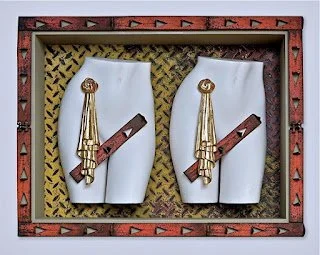
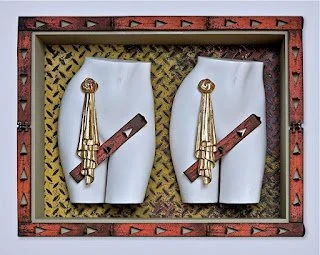
“Protect the Innocent’’
The construction of “Protect the Innocent” began with a news account of a horrific rape in South America, Shortly after the account appeared, Sideli noticed two white, truncated mannequins lying in mud, discarded on the roadside. He washed them carefully and brought them home. The viewer will notice the saw-toothed metal rim of the frame. The mannequins, draped in tassels, are immaculate but vulnerable and white as a communion wafer.
In an artist’s note Sideli writes, “I assemble and arrange objects in the same way that a poet chooses words. I try to carefully combine them in a way that allows them to transcend their original form or purpose and evoke a feeling or tell a story. And as with poetry, there is a certain rightness to a particular combination or arrangement that will express with directness and simplicity what I want to say.
“I believe that there is spirit in matter, which, if tapped, can have a powerful resonance when objects are carefully tuned, coaxed, combined and juxtaposed.”
The sensuous penetration of all art depends ultimately upon the presence of the artist in the work and the attention viewers or auditors bring to it.
Those lucky enough to own a Sideli art work will find they need never be alone. Sideliworks, like the remembered poem, stay with you, a faithful companion, when everyone else has left the room.
Don Pesci is a Vernon-based columnist.
#John Sideli #Don Pesci

Studying New England birds’ perilous migrations

Male (left) and female (right) American goldfinches at a thistle feeder. The American goldfinch can be found in Rhode Island year-round, though some individuals migrate south during the non-breeding season.
From an article by Bonnie Phillips in ecoRI News:
“Scientists and biologists know much more about bird migration now, why they do it and, for the most part, how. Almost half of all birds migrate in some form or another. Many migrate at night, when the weather is calmer and there are fewer predators. Some birds travel as far as 7,000 miles nonstop, and others return to the same locations year after year.
“Migration takes a toll on birds — it’s a dangerous time, when the exhausted birds are especially vulnerable to predators, deteriorating habitat, and climate change. Researchers are realizing that it’s vital to understand migration patterns and habitat usage to prevent further loss of already declining bird populations.
“‘The more bird migration comes into focus, the more we realize that, to conserve our declining birds, we must focus our attention on these strenuous and perilous periods in their lives,’ said Charles Clarkson, director of avian research at the Audubon Society of Rhode Island.
“The society’s recently released State of Our Birds Part II report is a start toward examining the habits of birds that use Audubon’s 9,500 acres of refuges as stopovers on their migrations. Research suggests Rhode Island — the {rural/exurban} western part of the state in particular — is more important than any other New England location for migrating birds.’’
To read the full article, please hit this link.
#birds #Rhode Island
Family history and beyond
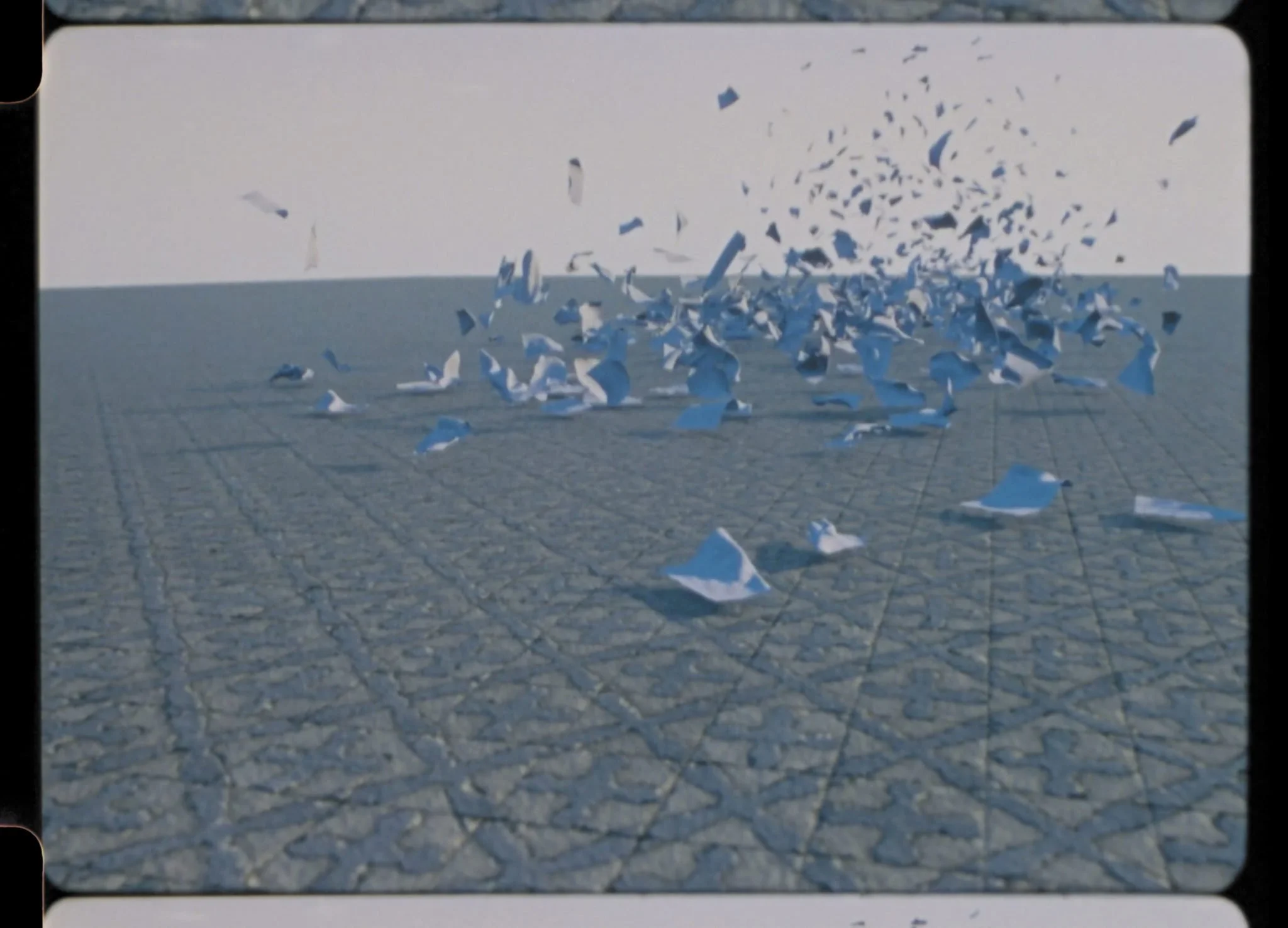
In Suneil Sanzgiri’s show “To See Oneself at a Distance,’’ at the Massachusetts Museum of Contemporary Art, North Adams, Mass., through next April.
The museum explains:
“In a trilogy of short films shown in a new installation, Suneil Sanzgiri probes the intersection between his family’s history in Goa, India, and stories of global solidarity, freedom fighters and neocolonial extractive forces.’’
# Massachusetts Museum of Contemporary Art

Boston bummer

Boston’s South Station in the Thirties
“I have just returned from Boston. It’s the only sane thing to do if you find yourself up there.’’
xxx
“There was a rumor that {Boston} Mayor {John F.} Fitzgerald {maternal grandfather of President John F. Kennedy} had sung ‘Sweet Adeline’ in office for so many years that the City Hall acoustics had diabetes.’’
— Fred Allen (whose birth name was John Florence Sullivan) (1894-1956), in a June 1953 letter to Groucho Marx (1890-1977). Allen was raised in Boston and became a star comedian of “The Golden Age of Radio’’.
#Fred Allen
#Boston
Two summers

“Flaming June’’ (1895), by Lord Leighton (1830-1896)
There is a June when Corn is cut
And Roses in the Seed—
A Summer briefer than the first
But tenderer indeed
As should a Face supposed the Grave's
Emerge a single Noon
In the Vermilion that it wore
Affect us, and return—
Two Seasons, it is said, exist—
The Summer of the Just,
And this of Ours, diversified
With Prospect, and with Frost—
May not our Second with its First
So infinite compare
That We but recollect the one
The other to prefer?
— Emily Dickinson (1830-1886), lifelong resident of Amherst, Mass.
Rise and fall

“Fallen Tree and Wetland’’ (oil on canvas), by Provincetown artist Donald Beal, in the show, “Sky Power,’’ with Paul Bowen, at Berta Walker Gallery, Provincetown, June 16-July 9
The gallery says:
"Donald Beal's work breaks new ground in a gentle but inviting manner; his use of color and light are only devices designed to accent his unique sense of observation. What sets Beal's expression apart from those of his predecessors, however, is the lens from which he gazes. His perspective of nature is, in a sobering yet enlightening style, reflective of himself."
#Berta Walker Gallery
#Donald Beal
Being adaptable

“If you've worn shorts and a parka at the same time, you live in New England.’’
“If you have switched from 'heat' to 'A/C' in the same day and back again, you live in New England .”
—Jeff Foxworthy (born 1958), American actor, author, comedian, producer and writer. He grew up in Georgia.

Heat pumps are particularly effective in places with wildly variable temperatures such as New England.
Very old-fashioned
Adapted from Robert Whitcomb’s “Digital Diary,’’ in GoLocal24.com
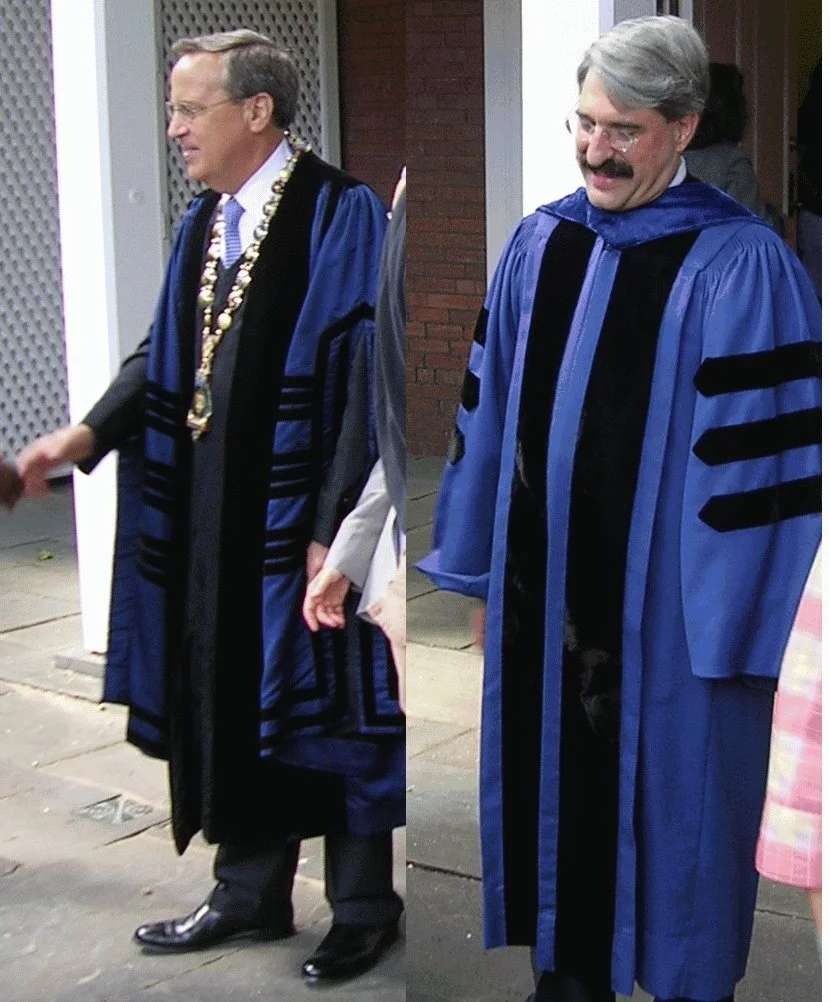
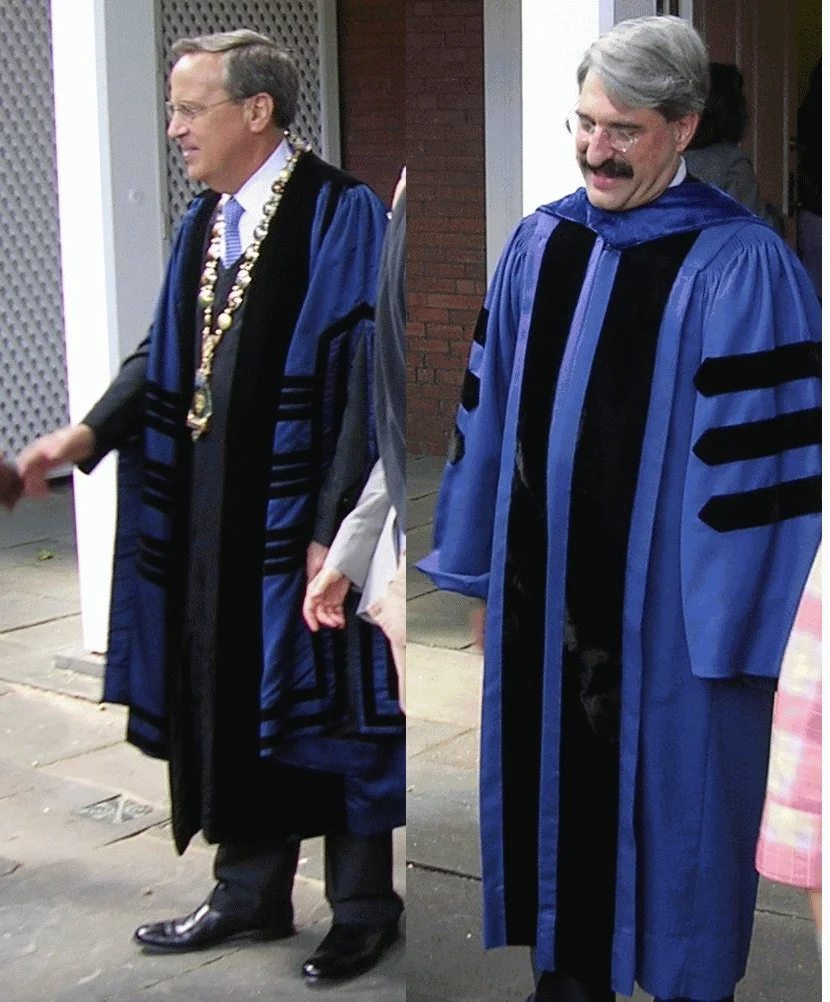
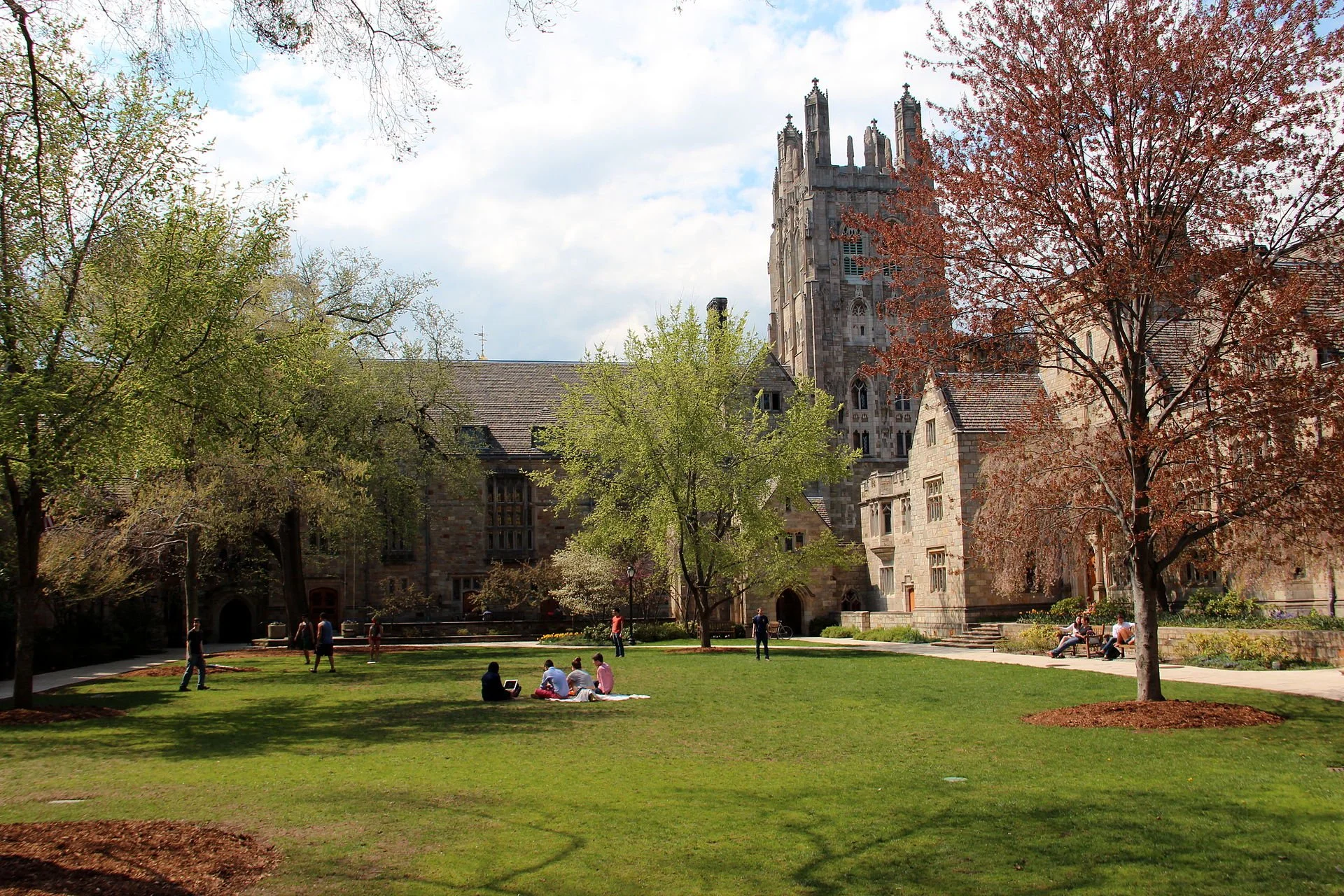
We attended part of Yale University’s commencement on May 22, at the School of Music, where a young friend of ours was getting a doctorate. We were struck again by how these ceremonies are some of the few remaining events connecting us to Medieval and Renaissance times – the robes draped with various university’s colors, the floppy velvet caps, the smattering of Latin, not to mention Yale’s famous Gothic Collegiate architecture, constructed with early 20th Century industrial/robber baron money and made to look very old – recalling Oxford and Cambridge and befitting an institution aimed at nurturing America’s Anglophilic ruling class.
But some of the degree recipients’ sandals and tattoos were reminders of where we are now.
Commencement speakers, both officials from the university or college itself as well as speakers from outside, affect an old-fashioned earnestness, if seasoned with successful or failed stabs at mild humor. Irony is heavily rationed at these things. It conveys a kind of theatrical innocence.
All students admitted to the Yale Music School go tuition-free, with the exception of those who have earned equivalent funding from other sources, thanks to a gift from an alumnus mogul called Stephen Adams. The marriage of big money and art. The Medicis, the leading bankers and art patrons of Renaissance Florence, would have approved.
Don’t try this in Florida

“At Home with the Devil (acrylic on canvas), by Marshall Moyer, in his show “Inappropriate,’’ at Galatea Fine Art, Boston, through July 2
The gallery says:
“Moyer’s representational art explores situations, both real and imagined, evoking strong emotional responses that serve as social commentary.’’
The artist says:
"Ultimately, it is my job to give you something new to see. Even a negative response, if visceral and raw, is considered a victory. I behold the world around me with a dark and cynical wit, like a battered subway car careening through the 21st century with faulty brakes. All I ask is a view through a window not clouded, smudged or streaked with fingerprints, and I hope I can still be amazed through eyes wide open.’’
#Marshall Moyer
#Galatea Fine Art
Where he wanted to be

The Connecticut River depositing silt as it enters Long Island Sound at Old Lyme
“I have seen rather more of the world’s surface than most men ever do, and I have chosen the valley of this river for my home.’’
—Roger Tory Peterson (1908-1996), in The Connecticut River, by Evan Hill (1972).
Peterson was a famed ornithologist and naturalist and author of best-selling wildlife guides. He lived in Old Lyme, Conn.
#Connecticut River
Llewellyn King: ‘Thank you for wearing a bow tie,’ they say

Llewellyn King
WEST WARWICK, R.I.
From time to time, I feel it necessary to report on the necktie wars. Sadly, the news is dismal. Neckties are in retreat, and in many instances, they have disappeared.
Father’s Day this month is already causing stress. The rule was always when in doubt, give a necktie. Certain to please.
But if you give the old boy a necktie this year, you know it will never see the light of day after the insincere raving about how lovely it is.
The next several weeks will see children hopelessly crowding men’s haberdashers, seeking that sure-to-please gift.
I predict that men who have never stuck anything so much as a ticket in the upper left pocket will be inundated with pocket squares. Before pocket squares were what they have shrunk to, they were full-size handkerchiefs, albeit of silk or something that looked like silk.
In an emergency, pocket squares could be whipped out for valuable service: drying a tear, wiping up a spill, or signaling across an airport concourse. Now they are a pathetic reminder that men still like a bit of color and have some fashion flair — despite the unkempt area around the neck, leaving the shirt-wearer looking like a half-made bed.
The great tie makers like Liberty of London, Fumagalli, of Italy, Hermes of France, and Ralph Lauren, of the United States, must be in despair. There are hundreds of fine tie makers, especially in Northern Italy — some of which have been lovingly working with the region’s silk for generations.
Men can now go tieless, where once they were forbidden. Those ties kept on hand at clubs and restaurants are no more. Just this past month in Washington, I saw tieless men at an opera at Kennedy Center, at the city’s two dominant clubs, the Cosmos and the Metropolitan, and even in church. At a funeral in London, I was the only man sporting a tie — a bow tie, to be exact.
Bow ties remain the preserve of a select number of wearers, and they are onto something.
I wear one because of Tucker Carlson. Years ago, before Fox and all that, Tucker wore bow ties. When he was between TV gigs, I invited him to be a guest on White House Chronicle, my PBS and SiriusXM program. At that time, Tucker wore bow ties, and, as a gag, I donned one for the interview. Afterward, I found that people love men in bow ties.
So, liking to be loved, I stuck with a bow tie, and it has paid untold dividends for me. I am given special attention on Amtrak and airplanes. Recently, a flight attendant threw her arms around me, saying that my blazer and bow tie reminded her of the old days when passengers were smart dressers and were nice.
I have checked with other bow tie-wearers — from a dentist to an economist — and all report they get this special magical treatment. A frequent remark is, “Thank you for wearing a bow tie. You remind me of my father” or grandfather.
I find many men who would like to experiment with a bow tie are hesitant because they don’t want to make a mess of tying it. Don’t worry, get the pre-tied version. They generally look better and don’t windmill as much as a poorly tied one. My secret is my wife, who is a whizz at tying a bow. Otherwise, when traveling, I go pre-tied.
So, here is a thought: Stop agonizing over wallets, belts and sweaters in the men’s emporium. Get dad a pre-tied bow tie. He won’t dare not to wear it for you. And when he goes out, even down to the convenience store, he will be praised. He may even get a hug, and that is a super Father’s Day gift in my book.
Llewellyn King, a long-time journalist and international energy-sector consultant, is executive producer and host of White House Chronicle, on PBS. He’s based in Rhode Island and Washington, D.C.
@llewellynking2
White House Chronicle
InsideSources
#Llewellyn King
#bow ties

Restless gardener

Phlox
“Today I’d like nothing more strenuous than to sit still and admire the huge heads of phlox that the wet season has produced in the perennial borders and watch the bees sipping nectar from the poisonous monkshood and plundering the lavender spikes of the veronicas. But a gardener’s mind is restless; it runs on ahead, and that is the penalty that one pays for the life of culture.’’
— Katherine S. White (1892-1977), famed New Yorker magazine editor, in her only book, Onward and Upward in the Garden. She was married to the writer E.B. White and lived in most of the latter years of her life in Brooklin, Maine, on the Blue Hill Peninsula, where she had her garden.

AI institute to be set up at UMass Boston

Neural net completion for "artificial intelligence", as done by DALL-E mini hosted on HuggingFace, 4 June 2022 (code under Apache 2.0 license). Upscaled with Real-ESRGAN "Anime" upscaling version (under [https://github.com/xinntao/Real-ESRGAN/blob/master/LICENSE
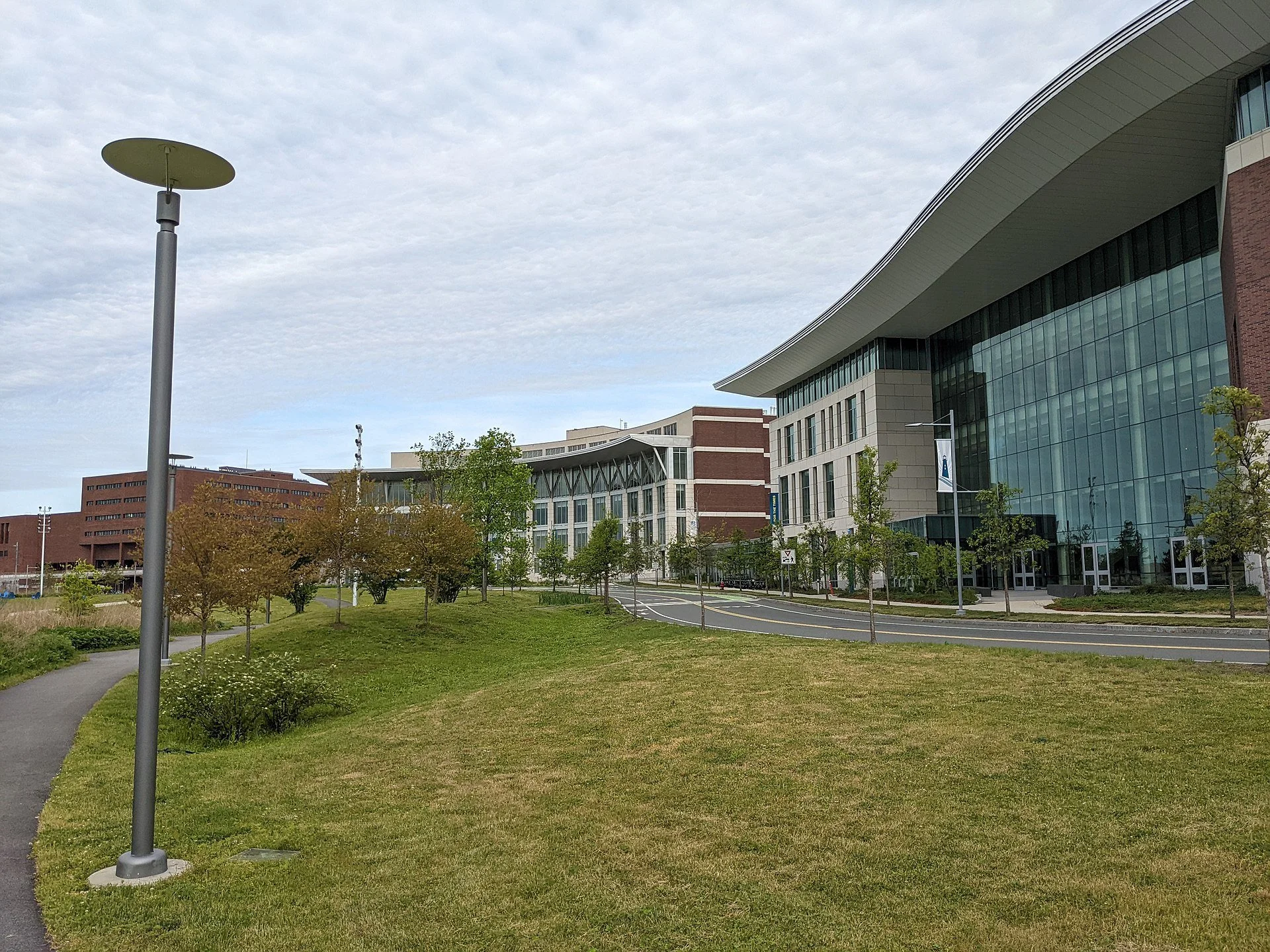
At UMass Boston, University Hall, the Campus Center and Wheatley Hall
— Photo by Sintakso
Edited from a New England Council report.
The University of Massachusetts at Boston has announced that Paul English has donated $5 million to the university, with the intention of creating an Artificial Intelligence Institute. The Paul English Applied Artificial Intelligence Institute will give students on campus from all fields of study the tools that they’ll need for working in a world where AI is expected to rapidly play a bigger role. UMass said that the institute will “include faculty from across various departments and incorporate AI into a broad range of curricula,” including social, ethical and other challenges that are a byproduct of AI technology. The institute will open in the 2023-2024 school year.
Paul English is an American tech entrepreneur, computer scientist and philanthropist. He is the founder of Boston Venture Studio.
“‘We are at the dawn of a new era,’ said UMass Boston Chancellor Marcelo Suárez-Orozco. ‘Like the agricultural revolution, the development of the steam engine, the invention of the computer and the introduction of the smartphone, the birth of artificial intelligence is fundamentally changing how we live and work.’
#Artificial Intelligence #Paul English #University of Massachusetts
‘Vibrational aesthetic’

“Spinning Echo’’ (acrylic paint, canvas, fabric, wood), by Lisa Alvarado, in her show “Spinning Echo,’’ at the Wadsworth Museum and Atheneum, Hartford, through Sept. 3
— Photo by Tom van Eynde
The museum says:
“Lisa Alvarado’s free-hanging paintings expand into the realms of installation, textile, sound and performance. Working in acrylic on unstretched canvas, Alvarado creates meditative, patterned works that evoke Mesoamerican weavings and other non-Western traditions of abstraction. In ‘Lisa Alvarado / MATRIX 192 / Spinning Echo,’ the Chicago-based, San Antonio-born artist transforms the gallery with an installation of new paintings, sound, and site-specific floor sculptures, creating an immersive multisensory experience of what the artist calls her ‘vibrational aesthetic.”’
#Wadsworth Museum

Hartford in 1877

The Travelers (Insurance) Tower in Hartford, which for many years was called “The Insurance Capital of the World.’’
'Pause and acknowledge'

From Brownsville, Vt.-based artist Lela Jaacks’s show “micro/tele SCOPE,’’ at the Brattleboro (Vt.) Museum through Oct. 31
She says:
‘“My work gives viewers a glimpse of how I observe my surroundings, both natural and handmade. I share these glimpses through tangible creations, made from both gathered natural artifacts and handmade forms. The size and shape of the resulting works of art are as important to me as the placement of their composite forms. A language becomes present within the sculpture; the forms converse with one another based on their shapes and the amount of space between them. These relationships fascinate me.’’
I work with various materials, including metal, wood, concrete, glass, acrylic, and found natural artifacts. This allows me the freedom to express the quality of form that is appropriate for each piece. The thread that weaves my work together is the language of patterning, which embraces the expansive and the miniature simultaneously. Through pattern, space, texture, light, and color, I encourage viewers to pause and acknowledge beauty that might otherwise go unnoticed.’’


‘Education ought to work outdoors’

On Mt. Mansfield, Vermont’s highest peak.
— Photo by Famartin

View from the patio at the Robert Treat Paine estate, called Stonehurst, in Waltham, Mass. The estate, now a museum, was created through the collaboration of famed building architect Henry Hobson Richardson and celebrated landscape architect Frederick Law Olmsted.
— Photo by NewtonCourt
“Whoever owns the real estate and its constituents , the explorer owns the landscape.’’
—- John R. Stilgoe (born 1949) , historian and photographer who is the Robert and Lois Orchard Professor in the History of Landscape at the Visual and Environmental Studies Department of Harvard University. This quote is from his book Outside Lies Magic
He says:
“Education ought to work outdoors, in the rain and the sleet, in the knife-like heat of a summertime Nebraska wheat field, along a half-abandoned railroad track on a dark autumn afternoon, on the North Atlantic in winter. All that I do is urge my students and my readers to look around, to realize how wonderfully rich is the built environment, even if the environment is only a lifeboat close-hauled in a chiaroscuro sea.’’
#landscape
Hannah Recht: Many losing Medicaid coverage because they don’t complete paperwork

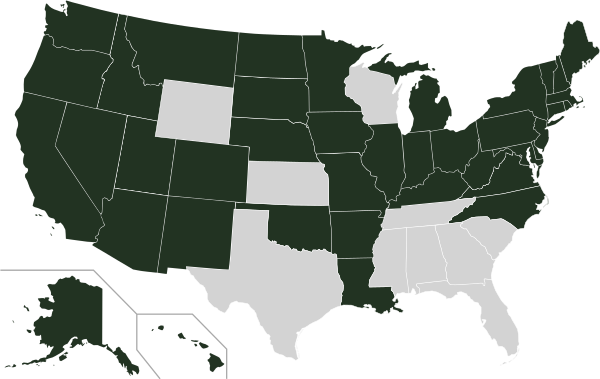
Green states have adopted Medicaid expansion under the Affordable Care Act .
From Kaiser Family Foundation Health News (KFF Health News)
“{W}e need to change up our strategy.’’
— Henry Lipman, New Hampshire’s Medicaid director
More than 600,000 Americans have lost Medicaid coverage since pandemic protections ended on April 1. And a KFF Health News analysis of state data shows the vast majority were removed from state rolls for not completing paperwork.
We have published the underlying reports that contain the data used in this article so that local reporters, researchers, and others can explore state data on Medicaid renewals in more detail.
Under normal circumstances, states review their Medicaid enrollment lists regularly to ensure every recipient qualifies for coverage. But because of a nationwide pause in those reviews during the pandemic, the health insurance program for low-income and disabled Americans kept people covered even if they no longer qualified.
Now, in what’s known as the Medicaid unwinding, states are combing through rolls and deciding who stays and who goes. People who are no longer eligible or don’t complete paperwork in time will be dropped.
The overwhelming majority of people who have lost coverage in most states were dropped because of technicalities, not because state officials determined they no longer meet Medicaid income limits. Four out of every five people dropped so far either never returned the paperwork or omitted required documents, according to a KFF Health News analysis of data from 11 states that provided details on recent cancellations. Now, lawmakers and advocates are expressing alarm over the volume of people losing coverage and, in some states, calling to pause the process.
KFF Health News sought data from the 19 states that started cancellations by May 1. Based on records from 14 states that provided detailed numbers, either in response to a public records request or by posting online, 36 percent of people whose eligibility was reviewed have been disenrolled.
In Indiana, 53,000 residents lost coverage in the first month of the unwinding, 89 percent for procedural reasons like not returning renewal forms. State Rep. Ed Clere, a Republican, expressed dismay at those “staggering numbers” in a May 24 Medicaid advisory group meeting, repeatedly questioning state officials about forms mailed to out-of-date addresses and urging them to give people more than two weeks’ notice before canceling their coverage.
Clere warned that the cancellations set in motion an avoidable revolving door. Some people dropped from Medicaid will have to forgo filling prescriptions and cancel doctor visits because they can’t afford care. Months down the line, after untreated chronic illnesses spiral out of control, they’ll end up in the emergency room where social workers will need to again help them join the program, he said.
Before the unwinding, more than 1 in 4 Americans — 93 million — were covered by Medicaid or CHIP, the Children’s Health Insurance Program, according to KFF Health News’ analysis of the latest enrollment data. Half of all kids are covered by the programs.
About 15 million people will be dropped over the next year as states review participants’ eligibility in monthly tranches.
Most people will find health coverage through new jobs or qualify for subsidized plans through the Affordable Care Act. But millions of others, including many children, will become uninsured and unable to afford basic prescriptions or preventive care. The uninsured rate among those under 65 is projected to rise from a historical low of 8.3% today to 9.3% next year, according to the Congressional Budget Office.
Because each state is handling the unwinding differently, the share of enrollees dropped in the first weeks varies widely.
Several states are first reviewing people officials believe are no longer eligible or who haven’t recently used their insurance. High cancellation rates in those states should level out as the agencies move on to people who likely still qualify.
In Utah, nearly 56 percent of people included in early reviews were dropped. In New Hampshire, 44 percent received cancellation letters within the first two months — almost all for procedural reasons, like not returning paperwork.
But New Hampshire officials found that thousands of people who didn’t fill out the forms indeed earn too much to qualify, according to Henry Lipman, the state’s Medicaid director. They would have been denied anyway. Even so, more people than he expected are not returning renewal forms. “That tells us that we need to change up our strategy,” said Lipman.
In other states, like Virginia and Nebraska, which aren't prioritizing renewals by likely eligibility, about 90 percent have been renewed.
Because of the three-year pause in renewals, many people on Medicaid have never been through the process or aren’t aware they may need to fill out long verification forms, as a recent KFF poll found. Some people moved and didn’t update their contact information.
And while agencies are required to assist enrollees who don’t speak English well, many are sending the forms in only a few common languages.
Tens of thousands of children are losing coverage, as researchers have warned, even though some may still qualify for Medicaid or CHIP. In its first month of reviews, South Dakota ended coverage for 10% of all Medicaid and CHIP enrollees in the state. More than half of them were children. In Arkansas, about 40% were kids.
Many parents don’t know that limits on household income are significantly higher for children than adults. Parents should fill out renewal forms even if they don’t qualify themselves, said Joan Alker, executive director of the Georgetown University Center for Children and Families.
New Hampshire has moved most families with children to the end of the review process. Lipman, the state’s Medicaid director, said his biggest worry is that a child will end up uninsured. Florida also planned to push kids with serious health conditions and other vulnerable groups to the end of the review line.
But according to Miriam Harmatz, advocacy director and founder of the Florida Health Justice Project, state officials sent cancellation letters to several clients with disabled children who probably still qualify. She’s helping those families appeal.
Nearly 250,000 Floridians reviewed in the first month of the unwinding lost coverage, 82 percent of them for reasons like incomplete paperwork, the state reported to federal authorities. House Democrats from the state petitioned Republican Gov. Ron DeSantis to pause the unwinding.
Advocacy coalitions in both Florida and Arkansas also have called for investigations into the review process and a pause on cancellations.
The state is contacting enrollees by phone, email, and text, and continues to process late applications, said Tori Cuddy, a spokesperson for the Florida Department of Children and Families. Cuddy did not respond to questions about issues raised in the petitions.
Federal officials are investigating those complaints and any other problems that emerge, said Dan Tsai, director of the Center for Medicaid & CHIP Services. “If we find that the rules are not being followed, we will take action.”
His agency has directed states to automatically reenroll residents using data from other government programs like unemployment and food assistance when possible. Anyone who can’t be approved through that process must act quickly.
“For the past three years, people have been told to ignore the mail around this, that the renewal was not going to lead to a termination.” Suddenly that mail matters, he said.
Federal law requires states to tell people why they’re losing Medicaid coverage and how to appeal the decision.
Harmatz said some cancellation notices in Florida are vague and could violate due process rules. Letters that she’s seen say “your Medicaid for this period is ending” rather than providing a specific reason for disenrollment, like having too high an income or incomplete paperwork.
If a person requests a hearing before their cancellation takes effect, they can stay covered during the appeals process. Even after being disenrolled, many still have a 90-day window to restore coverage.
In New Hampshire, 13% of people deemed ineligible in the first month have asked for extra time to provide the necessary records. “If you're eligible for Medicaid, we don't want you to lose it,” said Lipman.
Clere, the Indiana state representative, pushed his state’s Medicaid officials during the May meeting to immediately make changes to avoid people unnecessarily becoming uninsured. One official responded that they’ll learn and improve over time.
“I’m just concerned that we’re going to be ‘learning’ as a result of people losing coverage,” Clere replied. “So I don’t want to learn at their expense.”
Hannah Recht is a KFF Health News reporter.
#Medicaid

Chris Powell: Remediate Conn.’s present before repudiating its past

At the Salem Witch trials
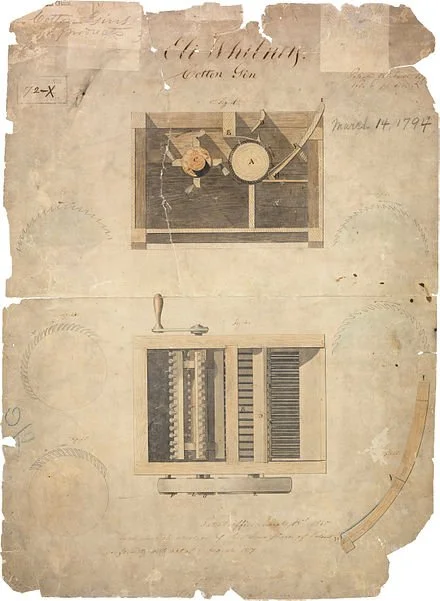
Connecticut inventor Eli Whitney's (1765-1825) original cotton gin patent, dated March 14, 1794. The invention lead to a huge expansion of slavery and thus to the Civil War.
MANCHESTER
While the new state budget wasn't yet complete, with several big issues waiting to be settled, the other day the state House of Representatives found time to pass a resolution that more or less repudiated and apologized for the conviction and execution of people alleged to have been witches in the Connecticut colony 400 years ago.
Advocates of the resolution said it was needed to assuage the feelings of the distant descendants of the wrongly prosecuted, though if there really are any people with feelings so tender, they need a legislative resolution less than round-the-clock sedation.
For does anyone in Connecticut consider witchcraft convictions from centuries ago to be a mark of shame against anyone alive today?
While the witchcraft resolution was being considered, Connecticut's news was full of reports about matters whose shame is contemporaneous -- like the miserable educational performance of children from racial minorities, the growing violence in the cities, the mental illness and drug addiction of most of the offenders being released from prison, the rise in poverty and homelessness, and worsening social disintegration that suggests the state has become the set of a zombie movie.
The General Assembly has yet to repudiate or apologize for any of those things. For doing something about them would require profound changes in government policy and probably substantial appropriations, even as posturing self-righteously with a resolution of no practical help to anyone is free.
But more discouraging than the legislature's propensity for stupid posturingis the growing presumption that inspired and advanced the witchcraft resolution and inspires other claims for apologies or reparations -- the presumption that the past is so bad that it should shame everyone in the present.
Of course, some shameful things from long ago have present consequences that may be remediable. The disproportionate failure of students from minority groups may be considered the consequence of slavery, though slavery ended 160 years ago. It may be considered the consequence of prejudicial policies that ended 50 years ago, though far more recent policies may be at fault, policies no one in authority cares to question.
In any case the natural order has been for mankind to advance over long periods -- to gain knowledge, wisdom, and decency so that, for example, prosecutions for "familiarity with the Devil" are understood as unjust and based on the superstition and irrational fear inherent in ignorance.
That society improves gradually used to be understood as what was called the ascent of man. Painful as that ascent sometimes has been, ascent it was, and no shame attaches to those who did not participate in old injustices, a point that the opponents of the House resolution on witchcraft tried to make.
Besides, once society begins apologizing for the mistakes of the distant past, there may be no end to it even as its only practical effect will be to provide distraction from the mistakes of the present, just as the witchcraft resolution has done.
xxx
In a desperate attempt to regain ratings a few weeks ago, CNN partnered with former President Donald Trump in televising a public forum in New Hampshire that was packed with Trump supporters while hostile questions were posed to Trump by reporter Kaitlan Collins.
Running for president for a third time, Trump got exactly what he wanted -- another chance to behave outlandishly, call names, and demonstrate the demeanor that has troubled even people who favored some of his administration's policies.
The audience in New Hampshire loved it, providing more evidence that nothing disgraceful, from mere lies to graft to sexual assault, can hurt Trump with his base. As he discovered with happy surprise when he began his first campaign for president in 2016, "I could stand in the middle of Fifth Avenue and shoot somebody and I wouldn't lose any voters."
Trump is the embodiment of the contempt our government increasingly deserves.
Responding to the CNN broadcast, President Biden asked the country: "Do you want four more years of that?" But seeking re-election, the doddering and gaffe-producing Biden, a tool of wokeism, is himself why many people might choose four more years of Trump.
Chris Powell is a columnist for the Journal Inquirer, in Manchester, Connecticut. (CPowell@JournalInquirer.com)