
Llewellyn King: ‘Thank you for wearing a bow tie,’ they say
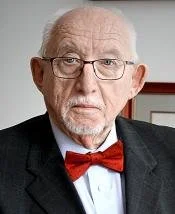
Llewellyn King
WEST WARWICK, R.I.
From time to time, I feel it necessary to report on the necktie wars. Sadly, the news is dismal. Neckties are in retreat, and in many instances, they have disappeared.
Father’s Day this month is already causing stress. The rule was always when in doubt, give a necktie. Certain to please.
But if you give the old boy a necktie this year, you know it will never see the light of day after the insincere raving about how lovely it is.
The next several weeks will see children hopelessly crowding men’s haberdashers, seeking that sure-to-please gift.
I predict that men who have never stuck anything so much as a ticket in the upper left pocket will be inundated with pocket squares. Before pocket squares were what they have shrunk to, they were full-size handkerchiefs, albeit of silk or something that looked like silk.
In an emergency, pocket squares could be whipped out for valuable service: drying a tear, wiping up a spill, or signaling across an airport concourse. Now they are a pathetic reminder that men still like a bit of color and have some fashion flair — despite the unkempt area around the neck, leaving the shirt-wearer looking like a half-made bed.
The great tie makers like Liberty of London, Fumagalli, of Italy, Hermes of France, and Ralph Lauren, of the United States, must be in despair. There are hundreds of fine tie makers, especially in Northern Italy — some of which have been lovingly working with the region’s silk for generations.
Men can now go tieless, where once they were forbidden. Those ties kept on hand at clubs and restaurants are no more. Just this past month in Washington, I saw tieless men at an opera at Kennedy Center, at the city’s two dominant clubs, the Cosmos and the Metropolitan, and even in church. At a funeral in London, I was the only man sporting a tie — a bow tie, to be exact.
Bow ties remain the preserve of a select number of wearers, and they are onto something.
I wear one because of Tucker Carlson. Years ago, before Fox and all that, Tucker wore bow ties. When he was between TV gigs, I invited him to be a guest on White House Chronicle, my PBS and SiriusXM program. At that time, Tucker wore bow ties, and, as a gag, I donned one for the interview. Afterward, I found that people love men in bow ties.
So, liking to be loved, I stuck with a bow tie, and it has paid untold dividends for me. I am given special attention on Amtrak and airplanes. Recently, a flight attendant threw her arms around me, saying that my blazer and bow tie reminded her of the old days when passengers were smart dressers and were nice.
I have checked with other bow tie-wearers — from a dentist to an economist — and all report they get this special magical treatment. A frequent remark is, “Thank you for wearing a bow tie. You remind me of my father” or grandfather.
I find many men who would like to experiment with a bow tie are hesitant because they don’t want to make a mess of tying it. Don’t worry, get the pre-tied version. They generally look better and don’t windmill as much as a poorly tied one. My secret is my wife, who is a whizz at tying a bow. Otherwise, when traveling, I go pre-tied.
So, here is a thought: Stop agonizing over wallets, belts and sweaters in the men’s emporium. Get dad a pre-tied bow tie. He won’t dare not to wear it for you. And when he goes out, even down to the convenience store, he will be praised. He may even get a hug, and that is a super Father’s Day gift in my book.
Llewellyn King, a long-time journalist and international energy-sector consultant, is executive producer and host of White House Chronicle, on PBS. He’s based in Rhode Island and Washington, D.C.
@llewellynking2
White House Chronicle
InsideSources
#Llewellyn King
#bow ties

Restless gardener

Phlox
“Today I’d like nothing more strenuous than to sit still and admire the huge heads of phlox that the wet season has produced in the perennial borders and watch the bees sipping nectar from the poisonous monkshood and plundering the lavender spikes of the veronicas. But a gardener’s mind is restless; it runs on ahead, and that is the penalty that one pays for the life of culture.’’
— Katherine S. White (1892-1977), famed New Yorker magazine editor, in her only book, Onward and Upward in the Garden. She was married to the writer E.B. White and lived in most of the latter years of her life in Brooklin, Maine, on the Blue Hill Peninsula, where she had her garden.


AI institute to be set up at UMass Boston

Neural net completion for "artificial intelligence", as done by DALL-E mini hosted on HuggingFace, 4 June 2022 (code under Apache 2.0 license). Upscaled with Real-ESRGAN "Anime" upscaling version (under [https://github.com/xinntao/Real-ESRGAN/blob/master/LICENSE

At UMass Boston, University Hall, the Campus Center and Wheatley Hall
— Photo by Sintakso
Edited from a New England Council report.
The University of Massachusetts at Boston has announced that Paul English has donated $5 million to the university, with the intention of creating an Artificial Intelligence Institute. The Paul English Applied Artificial Intelligence Institute will give students on campus from all fields of study the tools that they’ll need for working in a world where AI is expected to rapidly play a bigger role. UMass said that the institute will “include faculty from across various departments and incorporate AI into a broad range of curricula,” including social, ethical and other challenges that are a byproduct of AI technology. The institute will open in the 2023-2024 school year.
Paul English is an American tech entrepreneur, computer scientist and philanthropist. He is the founder of Boston Venture Studio.
“‘We are at the dawn of a new era,’ said UMass Boston Chancellor Marcelo Suárez-Orozco. ‘Like the agricultural revolution, the development of the steam engine, the invention of the computer and the introduction of the smartphone, the birth of artificial intelligence is fundamentally changing how we live and work.’
#Artificial Intelligence #Paul English #University of Massachusetts
‘Vibrational aesthetic’

“Spinning Echo’’ (acrylic paint, canvas, fabric, wood), by Lisa Alvarado, in her show “Spinning Echo,’’ at the Wadsworth Museum and Atheneum, Hartford, through Sept. 3
— Photo by Tom van Eynde
The museum says:
“Lisa Alvarado’s free-hanging paintings expand into the realms of installation, textile, sound and performance. Working in acrylic on unstretched canvas, Alvarado creates meditative, patterned works that evoke Mesoamerican weavings and other non-Western traditions of abstraction. In ‘Lisa Alvarado / MATRIX 192 / Spinning Echo,’ the Chicago-based, San Antonio-born artist transforms the gallery with an installation of new paintings, sound, and site-specific floor sculptures, creating an immersive multisensory experience of what the artist calls her ‘vibrational aesthetic.”’
#Wadsworth Museum

Hartford in 1877

The Travelers (Insurance) Tower in Hartford, which for many years was called “The Insurance Capital of the World.’’
'Pause and acknowledge'

From Brownsville, Vt.-based artist Lela Jaacks’s show “micro/tele SCOPE,’’ at the Brattleboro (Vt.) Museum through Oct. 31
She says:
‘“My work gives viewers a glimpse of how I observe my surroundings, both natural and handmade. I share these glimpses through tangible creations, made from both gathered natural artifacts and handmade forms. The size and shape of the resulting works of art are as important to me as the placement of their composite forms. A language becomes present within the sculpture; the forms converse with one another based on their shapes and the amount of space between them. These relationships fascinate me.’’
I work with various materials, including metal, wood, concrete, glass, acrylic, and found natural artifacts. This allows me the freedom to express the quality of form that is appropriate for each piece. The thread that weaves my work together is the language of patterning, which embraces the expansive and the miniature simultaneously. Through pattern, space, texture, light, and color, I encourage viewers to pause and acknowledge beauty that might otherwise go unnoticed.’’


‘Education ought to work outdoors’

On Mt. Mansfield, Vermont’s highest peak.
— Photo by Famartin

View from the patio at the Robert Treat Paine estate, called Stonehurst, in Waltham, Mass. The estate, now a museum, was created through the collaboration of famed building architect Henry Hobson Richardson and celebrated landscape architect Frederick Law Olmsted.
— Photo by NewtonCourt
“Whoever owns the real estate and its constituents , the explorer owns the landscape.’’
—- John R. Stilgoe (born 1949) , historian and photographer who is the Robert and Lois Orchard Professor in the History of Landscape at the Visual and Environmental Studies Department of Harvard University. This quote is from his book Outside Lies Magic
He says:
“Education ought to work outdoors, in the rain and the sleet, in the knife-like heat of a summertime Nebraska wheat field, along a half-abandoned railroad track on a dark autumn afternoon, on the North Atlantic in winter. All that I do is urge my students and my readers to look around, to realize how wonderfully rich is the built environment, even if the environment is only a lifeboat close-hauled in a chiaroscuro sea.’’
#landscape
Hannah Recht: Many losing Medicaid coverage because they don’t complete paperwork

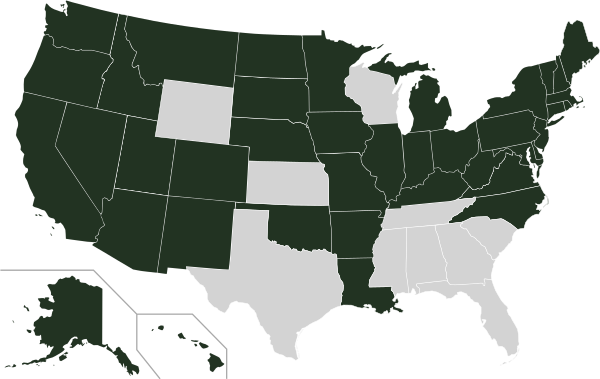
Green states have adopted Medicaid expansion under the Affordable Care Act .
From Kaiser Family Foundation Health News (KFF Health News)
“{W}e need to change up our strategy.’’
— Henry Lipman, New Hampshire’s Medicaid director
More than 600,000 Americans have lost Medicaid coverage since pandemic protections ended on April 1. And a KFF Health News analysis of state data shows the vast majority were removed from state rolls for not completing paperwork.
We have published the underlying reports that contain the data used in this article so that local reporters, researchers, and others can explore state data on Medicaid renewals in more detail.
Under normal circumstances, states review their Medicaid enrollment lists regularly to ensure every recipient qualifies for coverage. But because of a nationwide pause in those reviews during the pandemic, the health insurance program for low-income and disabled Americans kept people covered even if they no longer qualified.
Now, in what’s known as the Medicaid unwinding, states are combing through rolls and deciding who stays and who goes. People who are no longer eligible or don’t complete paperwork in time will be dropped.
The overwhelming majority of people who have lost coverage in most states were dropped because of technicalities, not because state officials determined they no longer meet Medicaid income limits. Four out of every five people dropped so far either never returned the paperwork or omitted required documents, according to a KFF Health News analysis of data from 11 states that provided details on recent cancellations. Now, lawmakers and advocates are expressing alarm over the volume of people losing coverage and, in some states, calling to pause the process.
KFF Health News sought data from the 19 states that started cancellations by May 1. Based on records from 14 states that provided detailed numbers, either in response to a public records request or by posting online, 36 percent of people whose eligibility was reviewed have been disenrolled.
In Indiana, 53,000 residents lost coverage in the first month of the unwinding, 89 percent for procedural reasons like not returning renewal forms. State Rep. Ed Clere, a Republican, expressed dismay at those “staggering numbers” in a May 24 Medicaid advisory group meeting, repeatedly questioning state officials about forms mailed to out-of-date addresses and urging them to give people more than two weeks’ notice before canceling their coverage.
Clere warned that the cancellations set in motion an avoidable revolving door. Some people dropped from Medicaid will have to forgo filling prescriptions and cancel doctor visits because they can’t afford care. Months down the line, after untreated chronic illnesses spiral out of control, they’ll end up in the emergency room where social workers will need to again help them join the program, he said.
Before the unwinding, more than 1 in 4 Americans — 93 million — were covered by Medicaid or CHIP, the Children’s Health Insurance Program, according to KFF Health News’ analysis of the latest enrollment data. Half of all kids are covered by the programs.
About 15 million people will be dropped over the next year as states review participants’ eligibility in monthly tranches.
Most people will find health coverage through new jobs or qualify for subsidized plans through the Affordable Care Act. But millions of others, including many children, will become uninsured and unable to afford basic prescriptions or preventive care. The uninsured rate among those under 65 is projected to rise from a historical low of 8.3% today to 9.3% next year, according to the Congressional Budget Office.
Because each state is handling the unwinding differently, the share of enrollees dropped in the first weeks varies widely.
Several states are first reviewing people officials believe are no longer eligible or who haven’t recently used their insurance. High cancellation rates in those states should level out as the agencies move on to people who likely still qualify.
In Utah, nearly 56 percent of people included in early reviews were dropped. In New Hampshire, 44 percent received cancellation letters within the first two months — almost all for procedural reasons, like not returning paperwork.
But New Hampshire officials found that thousands of people who didn’t fill out the forms indeed earn too much to qualify, according to Henry Lipman, the state’s Medicaid director. They would have been denied anyway. Even so, more people than he expected are not returning renewal forms. “That tells us that we need to change up our strategy,” said Lipman.
In other states, like Virginia and Nebraska, which aren't prioritizing renewals by likely eligibility, about 90 percent have been renewed.
Because of the three-year pause in renewals, many people on Medicaid have never been through the process or aren’t aware they may need to fill out long verification forms, as a recent KFF poll found. Some people moved and didn’t update their contact information.
And while agencies are required to assist enrollees who don’t speak English well, many are sending the forms in only a few common languages.
Tens of thousands of children are losing coverage, as researchers have warned, even though some may still qualify for Medicaid or CHIP. In its first month of reviews, South Dakota ended coverage for 10% of all Medicaid and CHIP enrollees in the state. More than half of them were children. In Arkansas, about 40% were kids.
Many parents don’t know that limits on household income are significantly higher for children than adults. Parents should fill out renewal forms even if they don’t qualify themselves, said Joan Alker, executive director of the Georgetown University Center for Children and Families.
New Hampshire has moved most families with children to the end of the review process. Lipman, the state’s Medicaid director, said his biggest worry is that a child will end up uninsured. Florida also planned to push kids with serious health conditions and other vulnerable groups to the end of the review line.
But according to Miriam Harmatz, advocacy director and founder of the Florida Health Justice Project, state officials sent cancellation letters to several clients with disabled children who probably still qualify. She’s helping those families appeal.
Nearly 250,000 Floridians reviewed in the first month of the unwinding lost coverage, 82 percent of them for reasons like incomplete paperwork, the state reported to federal authorities. House Democrats from the state petitioned Republican Gov. Ron DeSantis to pause the unwinding.
Advocacy coalitions in both Florida and Arkansas also have called for investigations into the review process and a pause on cancellations.
The state is contacting enrollees by phone, email, and text, and continues to process late applications, said Tori Cuddy, a spokesperson for the Florida Department of Children and Families. Cuddy did not respond to questions about issues raised in the petitions.
Federal officials are investigating those complaints and any other problems that emerge, said Dan Tsai, director of the Center for Medicaid & CHIP Services. “If we find that the rules are not being followed, we will take action.”
His agency has directed states to automatically reenroll residents using data from other government programs like unemployment and food assistance when possible. Anyone who can’t be approved through that process must act quickly.
“For the past three years, people have been told to ignore the mail around this, that the renewal was not going to lead to a termination.” Suddenly that mail matters, he said.
Federal law requires states to tell people why they’re losing Medicaid coverage and how to appeal the decision.
Harmatz said some cancellation notices in Florida are vague and could violate due process rules. Letters that she’s seen say “your Medicaid for this period is ending” rather than providing a specific reason for disenrollment, like having too high an income or incomplete paperwork.
If a person requests a hearing before their cancellation takes effect, they can stay covered during the appeals process. Even after being disenrolled, many still have a 90-day window to restore coverage.
In New Hampshire, 13% of people deemed ineligible in the first month have asked for extra time to provide the necessary records. “If you're eligible for Medicaid, we don't want you to lose it,” said Lipman.
Clere, the Indiana state representative, pushed his state’s Medicaid officials during the May meeting to immediately make changes to avoid people unnecessarily becoming uninsured. One official responded that they’ll learn and improve over time.
“I’m just concerned that we’re going to be ‘learning’ as a result of people losing coverage,” Clere replied. “So I don’t want to learn at their expense.”
Hannah Recht is a KFF Health News reporter.
#Medicaid

Chris Powell: Remediate Conn.’s present before repudiating its past

At the Salem Witch trials

Connecticut inventor Eli Whitney's (1765-1825) original cotton gin patent, dated March 14, 1794. The invention lead to a huge expansion of slavery and thus to the Civil War.
MANCHESTER
While the new state budget wasn't yet complete, with several big issues waiting to be settled, the other day the state House of Representatives found time to pass a resolution that more or less repudiated and apologized for the conviction and execution of people alleged to have been witches in the Connecticut colony 400 years ago.
Advocates of the resolution said it was needed to assuage the feelings of the distant descendants of the wrongly prosecuted, though if there really are any people with feelings so tender, they need a legislative resolution less than round-the-clock sedation.
For does anyone in Connecticut consider witchcraft convictions from centuries ago to be a mark of shame against anyone alive today?
While the witchcraft resolution was being considered, Connecticut's news was full of reports about matters whose shame is contemporaneous -- like the miserable educational performance of children from racial minorities, the growing violence in the cities, the mental illness and drug addiction of most of the offenders being released from prison, the rise in poverty and homelessness, and worsening social disintegration that suggests the state has become the set of a zombie movie.
The General Assembly has yet to repudiate or apologize for any of those things. For doing something about them would require profound changes in government policy and probably substantial appropriations, even as posturing self-righteously with a resolution of no practical help to anyone is free.
But more discouraging than the legislature's propensity for stupid posturingis the growing presumption that inspired and advanced the witchcraft resolution and inspires other claims for apologies or reparations -- the presumption that the past is so bad that it should shame everyone in the present.
Of course, some shameful things from long ago have present consequences that may be remediable. The disproportionate failure of students from minority groups may be considered the consequence of slavery, though slavery ended 160 years ago. It may be considered the consequence of prejudicial policies that ended 50 years ago, though far more recent policies may be at fault, policies no one in authority cares to question.
In any case the natural order has been for mankind to advance over long periods -- to gain knowledge, wisdom, and decency so that, for example, prosecutions for "familiarity with the Devil" are understood as unjust and based on the superstition and irrational fear inherent in ignorance.
That society improves gradually used to be understood as what was called the ascent of man. Painful as that ascent sometimes has been, ascent it was, and no shame attaches to those who did not participate in old injustices, a point that the opponents of the House resolution on witchcraft tried to make.
Besides, once society begins apologizing for the mistakes of the distant past, there may be no end to it even as its only practical effect will be to provide distraction from the mistakes of the present, just as the witchcraft resolution has done.
xxx
In a desperate attempt to regain ratings a few weeks ago, CNN partnered with former President Donald Trump in televising a public forum in New Hampshire that was packed with Trump supporters while hostile questions were posed to Trump by reporter Kaitlan Collins.
Running for president for a third time, Trump got exactly what he wanted -- another chance to behave outlandishly, call names, and demonstrate the demeanor that has troubled even people who favored some of his administration's policies.
The audience in New Hampshire loved it, providing more evidence that nothing disgraceful, from mere lies to graft to sexual assault, can hurt Trump with his base. As he discovered with happy surprise when he began his first campaign for president in 2016, "I could stand in the middle of Fifth Avenue and shoot somebody and I wouldn't lose any voters."
Trump is the embodiment of the contempt our government increasingly deserves.
Responding to the CNN broadcast, President Biden asked the country: "Do you want four more years of that?" But seeking re-election, the doddering and gaffe-producing Biden, a tool of wokeism, is himself why many people might choose four more years of Trump.
Chris Powell is a columnist for the Journal Inquirer, in Manchester, Connecticut. (CPowell@JournalInquirer.com)

Utilitarian interior

Acrylic on canvas painting from Susan Graseck’s series “Celebrating Barns,’’ in the group show, with Michael Manni and Kate Chute, titled “Exploring Edges,’’ at the Providence Art Club through June 16.

Rescue the Cape by rail

The Bourne Bridge, over the Cape Cod Canal, with the Cape Cod Canal Railroad Bridge in the distance. The Bourne Bridge mostly serves drivers coming from the west.

The Sagamore Bridge, which mostly serves drivers coming from the north, especially from Greater Boston
— Photo by Matt H. Wade.
Adapted from Robert Whitcomb’s “Digital Diary,’’ in GoLocal24.com
The narrow Bourne and Sagamore bridges, the only ways to drive to and from Cape Cod, were built back in the ‘30s and need to be replaced; they’re approaching being dangerous to drive on. Massachusetts Department of Transportation experts like the idea of replacing them with two sets of twin bridges. From an engineering standpoint, that sounds like a good idea. Let’s hope that adequate federal funds will be made available to do this.
But it’s unlikely that the new bridges would reduce traffic congestion on the Cape itself. Indeed, they could increase it by “smoothing” traffic over the canal, thus sending more drivers onto the skinny peninsula’s Route 6 (one long parking lot on summer weekends) and Route 28, some of whose traffic goes to ferry service to Martha’s Vineyard and Nantucket. (We generally stay away from the Cape from Memorial Day to after Labor Day, though we have a few relatives there.)
What would help save what’s left of the fragile, overbuilt, now mostly suburban Cape Cod is much more passenger rail service as an alternative to driving, including train stations close to the most popular summer places.
Let’s hope that whatever replacement spans go up are beautiful, befitting the spectacular setting of the world’s widest sea-level canal, with its dramatic bluffs.
Beech tree disease imperils forest ecosystem

American beech tree
— Photo by Jean-Pol GRANDMONT
From ecoRI News (ecori.org) article by Mike Freeman
Beech leaf disease, which has devastated northern hardwood forests since its discovery in Ohio in 2012, has spread throughout Rhode Island’s beech trees.
“It would change the whole forest ecosystem if they go,” said Heather Faubert, director of the University of Rhode Island’s Plant Protection Clinic. “We know what’s infected them but don’t know yet how it spreads, only that it spreads very quickly. It was first identified in Ashaway in 2020 and is now statewide.”
The disease is infecting beech trees in all New England states except Vermont, and was first detected in Connecticut in 2019.
Faubert’s general description tracks the terrible template that has wiped out or is en route to wiping out several native North American tree species. Details differ, but the plot never changes: People notice dying trees, a cause is identified, swaths of forest succumb as more becomes known, then to various effects preventative, palliative, or restorative measures are taken, often in combination. American chestnut exists on life support, American elm is greatly diminished, and currently eastern hemlock, the entire ash genus, and now American beech are all in dire peril.
As Faubert noted, what exactly causes beech leaf disease (BLD) and how it spreads are currently unknown, though the critical vector is Litylenchus crenatae mccannii, a nearly microscopic nematode, or worm, that feeds on beech leaves.
To read the whole article, please hit this link.
Maine lushness

"Boothbay Harbor Botanical Gardens" (oil on panel), by Louis Guarnaccia, at Bayview Gallery, Brunswick, Maine.
David Warsh: Hamilton, the Fed and the debt-ceiling crisis
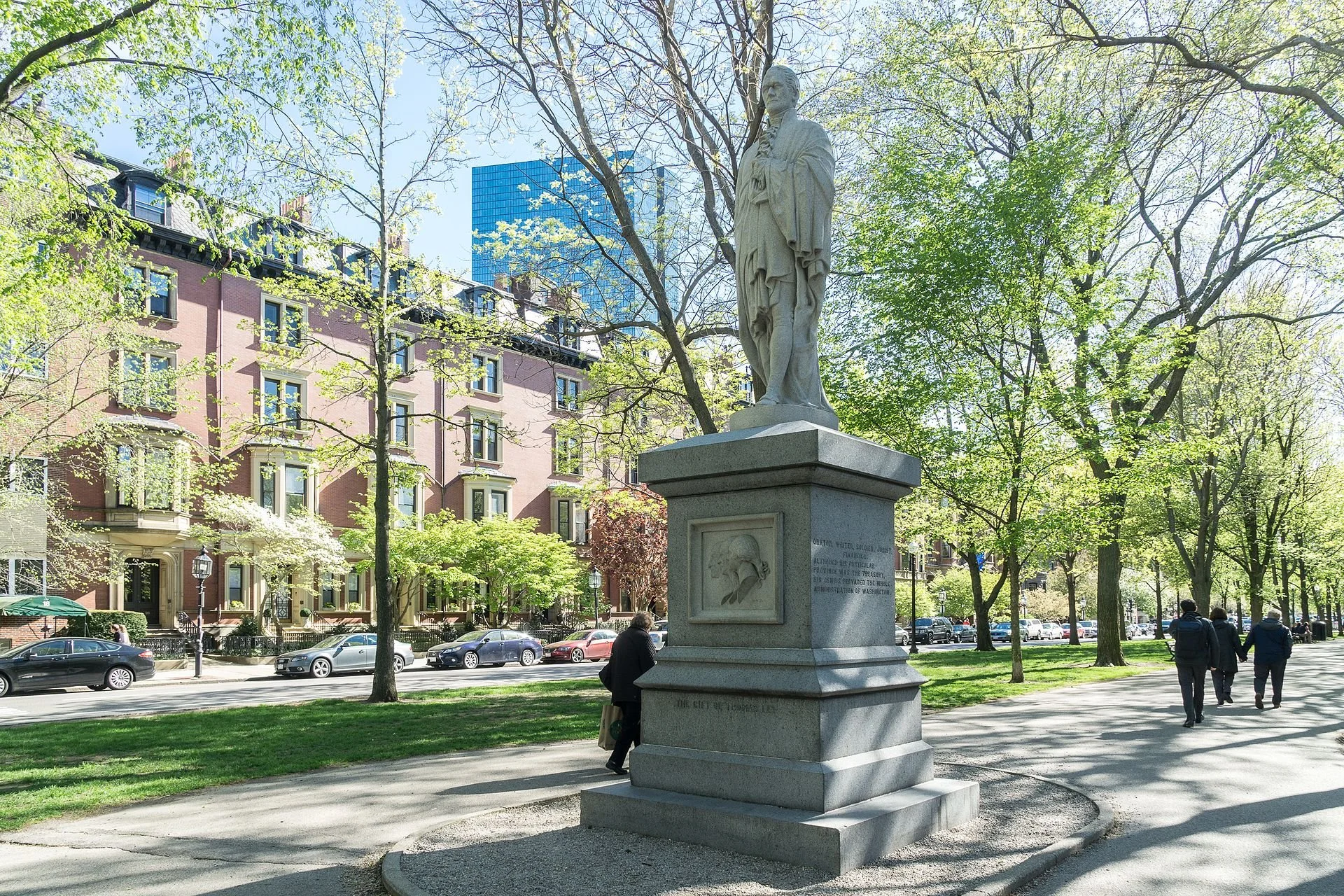
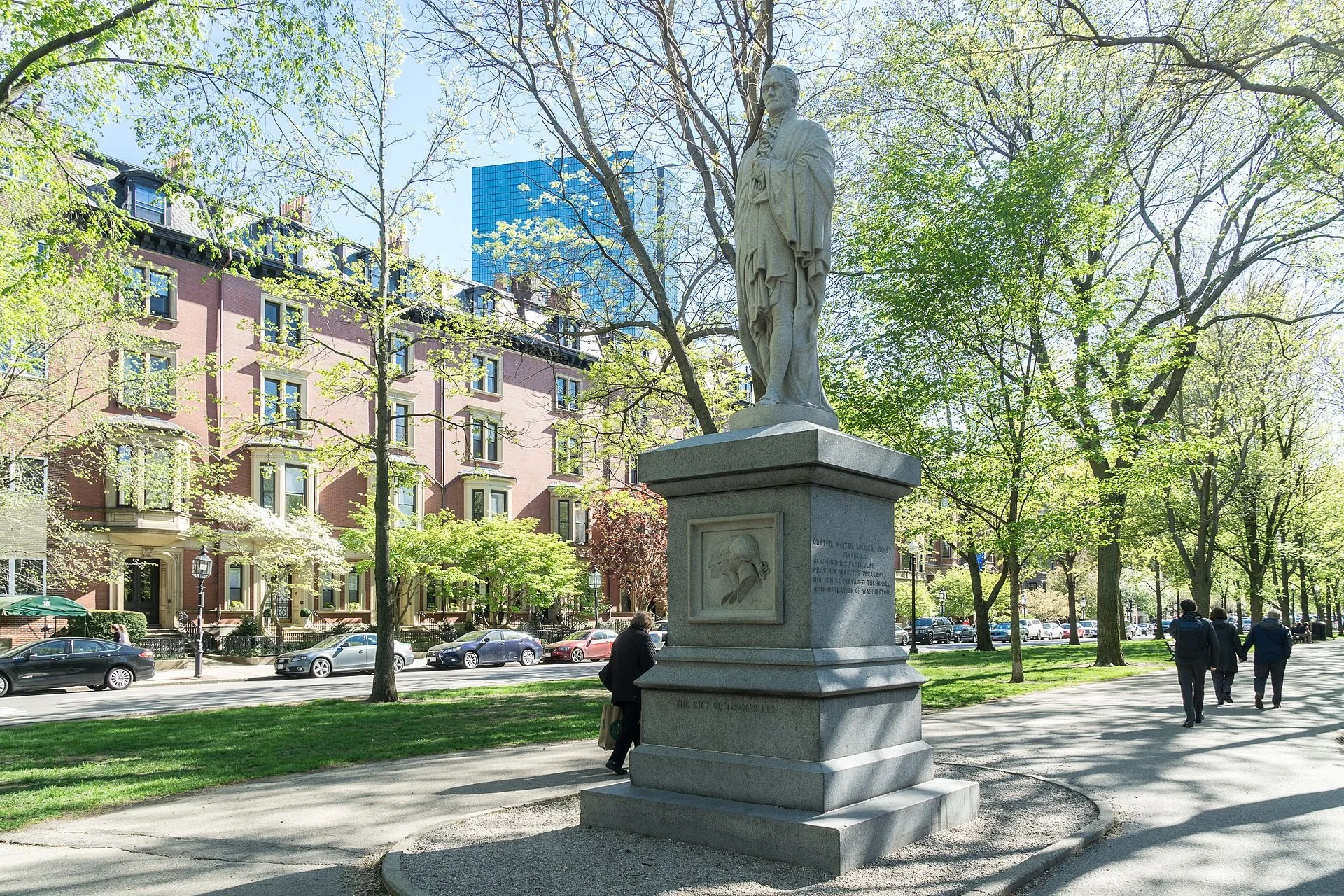
Statue of Alexander Hamilton, by William Rimmer, on Commonwealth Avenue, Boston
— Photo by Kenneth C. Zirkel
SOMERVILLE, Mass.
This column, “Economic Principals,’’ was founded as a Boston Globe newspaper column, in 1983, on the premise that most of the important action in economic policy took place in universities – not just departments of economics and history, but in other social- sciences departments as well, and in schools of law, business, and government.
Quacks thrived in the days immediately after Ronald Reagan’s 1980 presidential victory, though his administration before long began to exhibit great good sense, as if to illustrate my contention. And while nothing I have learned since has changed my mind, the column’s predicate has occasionally caused him to overlook some exceptional journalists along the way.,
One such is John Steele Gordon, author of Hamilton’s Blessing: The Extraordinary Life and Times of Our National Debt (Walker, 1997) A revised edition appeared in 2010. The book is of special interest in current circumstances – the crisis over an attempt to impose a limit on the government’s borrowing capacity in exchange for promises of future cuts in spending on social-welfare programs.
Alexander Hamilton has become a celebrity since then, thanks to Lin-Manuel Miranda and another exceptional journalist, Ron Chernow, on whose biography of Miranda’s smash-hit musical , Hamilton, was based, and for good reason. The Caribbean-born Hamilton was the only Founding Father except Benjamin Franklin not endowed by birth with privilege (“the bastard brat of a Scotch peddler,” John Adams called him). Moreover, having grown up abroad, he possessed no fundamental loyalty to any one of the 13 colonies; he was, instead, a nationalist. Above all, Hamilton was a prodigy.
After serving as George Washington’s aide-de-camp during the War of Independence, he helped lead the battle to dismantle the Articles of Confederation. Once the new Constitution was adopted, Washington named him treasury secretary, and, in short order, Hamilton assembled much of the fiscal and monetary machinery of the new republic. His program had three main struts.
He nationalized the obligations of the states, incurred during the seven years of war. “A national debt” he wrote to a friend, “if it is not excessive, will be to us a national blessing.” He established taxes to reliably pay those debts: at first, tariffs on imported goods; when those revenues were insufficient, sales taxes on consumption goods, including whiskey. Finally, he successfully lobbied to create a Bank of the United States, modeled on the Bank of England, owned by private banks in partnership with the federal government, to issue currency and to assure its reliability; and to oversee the banking industry in general.
In 1804, Hamilton was killed by Aaron Burr in a duel. A dozen years later, the charter First Bank of the United States was allowed to expire. The Second Bank of the United States replaced it, but its charter, too, was allowed to lapse, in 1836, after a battle with President Andrew Jackson.
The National Banking Act of 1863 established the Office of the Comptroller of the Currency and preserved the North’s ability to borrow against “the full faith and credit of the United Sates, during the Civil War (as described in Ways and Means: Lincoln and his Cabinet and the Financing of the Civil War (Penguin, 2022), by Roger Lowenstein, another exceptional journalist.)
Only after the Panic of 1907, in which the American banking system required rescue by a syndicate organized by J.P. Morgan, was Hamilton’s original proposal smuggled back into law, in the form of the Federal Reserve System. Had the 20th Century version been properly named, as Hamilton intended, the Fed’s partnership with the Treasury Department might be better understood today.
The Treasury borrows money from willing lenders all over the world – that is, it accepts deposits and issues bonds and bills in return, on behalf of the federal government. The Fed is among its customers, buying or selling those government securities as a means of conducting monetary policy by raising and lowering interest rates as need be. Exchanges rates fluctuate based on that monetary policy, making the U.S. dollar the preferred currency of global markets.
By threatening the Treasury Department’s ability to borrow, Congress is tampering with the trustworthiness of the system itself. The root of the domestic argument has to do with the purposes for which the government borrows and spends the money – to defend the nation and make war, to finance its system of social welfare, or simply to keep the bank of the Fed running smoothly. The journalist Gordon writes:
In the 1860s we used the national debt to save the Union. In the 1930s we used it to save the American economy. In the 1940s we used it to save the world. So surely Hamilton was right, and the American national debt has been an immense national, indeed global, blessing. But is it still? Or is it now a crippling curse?
In short, it is the second strut of Hamilton’s program that is contested – the Treasury Department and its system of taxation. Income and expenditures are out of line and the imbalances have been growing for decades. Republicans generally favor cutting benefits – the Social Security and health-care systems. Democrats generally favor raising taxes.
While you are waiting for these issues to be addressed in next year’s elections, Hamilton’s Blessing is a beguiling introduction to the fundamental problem.
xxx
Speaking of which, a recent biography of Treasury Secretary Janet Yellen, Yellen: The Trailblazing Economist Who Navigated an Era of Upheaval (Harper, 2022), by Jon Hilsenrath, yet another exceptional journalist, has received less attention than it deserves.
Hilsenrath notes that Fed chair Ben Bernanke relied on an inner circle of advisers during the financial crisis of 2007-08, all in Washington or New York. As president of the Federal Reserve Bank of San Francisco, Yellen was not among them.
As treasury secretary, Yellen is at the center of the drama of the debt- ceiling negotiation, perhaps more central to the matter, as his principal adviser, than President Biden himself. The story of the formation of the character of this remarkable woman will make interesting reading long after she has left office.
David Warsh, a veteran columnist and an economic historian, is proprietor of Somerville-based economicprincipals.com, where this essay originated.
‘When the wind stops’

At the Rhode Island Veterans Memorial Cemetery, in Exeter

“The March of Time” (Decoration Day, later renamed Memorial Day) in Boston, by Henry Sandham (1842-1910), Canadian painter who lived in Boston for 20 years.
Life contracts and death is expected,
As in a season of autumn.
The soldier falls.
He does not become a three-days personage,
Imposing his separation,
Calling for pomp.
Death is absolute and without memorial,
As in a season of autumn,
When the wind stops,
When the wind stops and, over the heavens,
The clouds go, nevertheless,
In their direction.
— Wallace Stevens (1879-1955), famed American Modernist poet. He was also an insurance executive and lawyer. He lived and worked in Hartford.
The way they look in memory
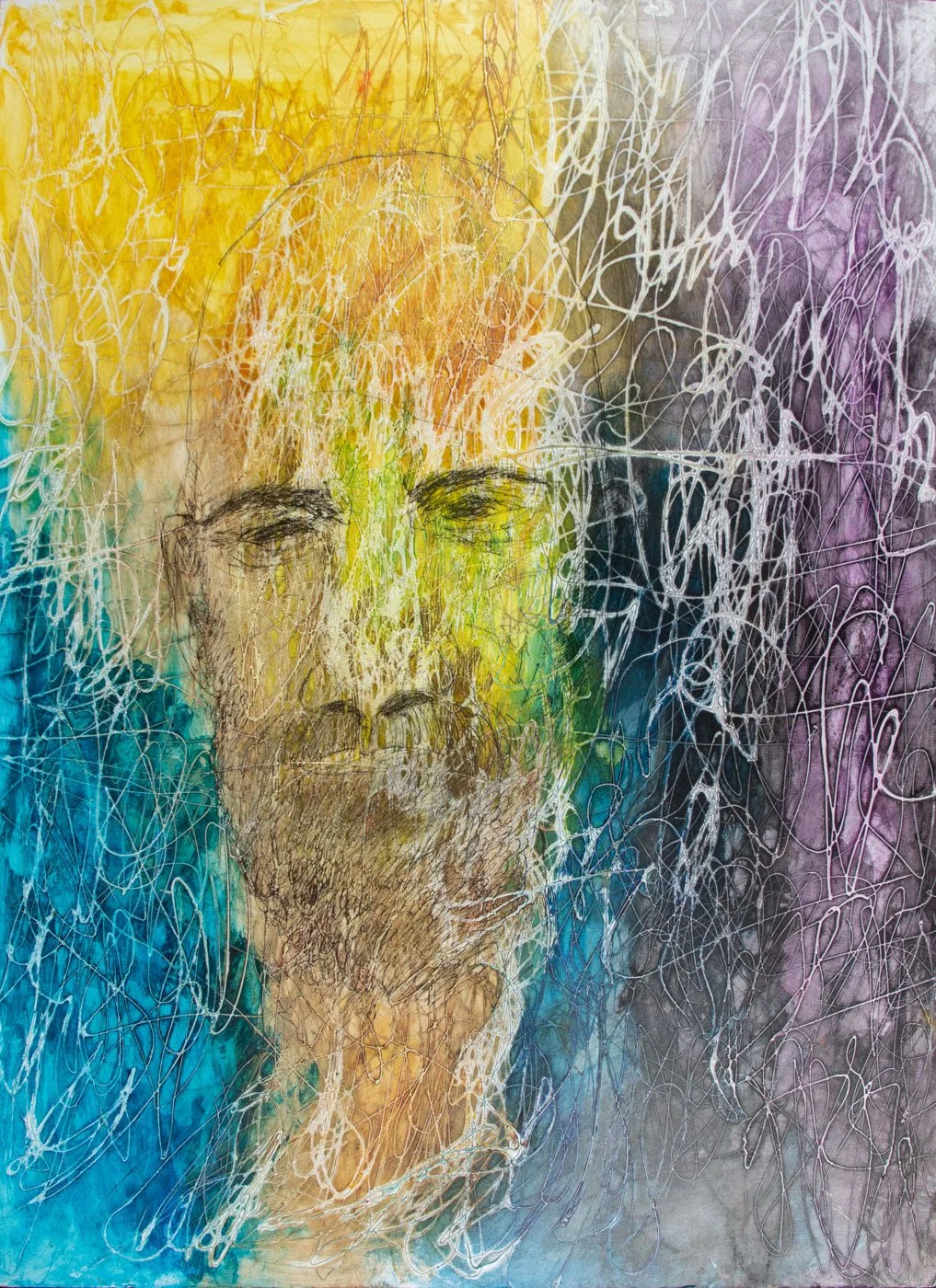
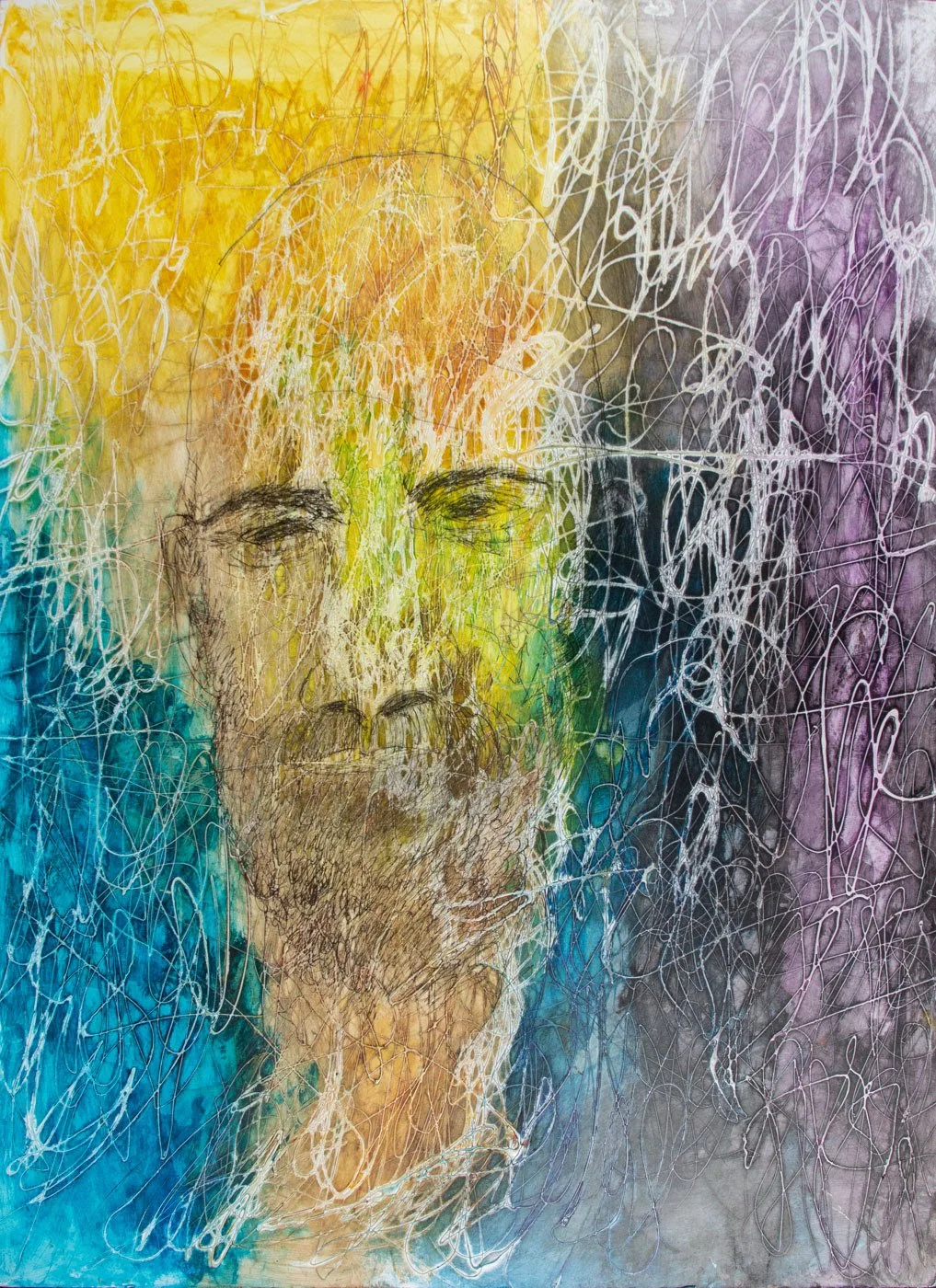
“Considering the Course of Events’’ (acrylic, ink and graphite), by Chestnut Hill-based artist Norman Finn, in his show “Faces Along the Way: Real and Imaginary,’’ at Galatea Fine Art, Boston, June 20-July 2.
He explains:
“I have tried to convey through the canvas some of the individuals that made lasting impressions as well as triggering my imagination. The paintings represent images from my childhood and my extensive travels throughout the world.
“A group within the collection are done with a technique I call ‘Modular Art,’ which are pieces applied to the canvas that creat.e dimension to the composition. These painting are more in the realm of the imagination with an interesting color palette. Painting this collection enabled me to relive some of the forgotten relationships and fond memories.”
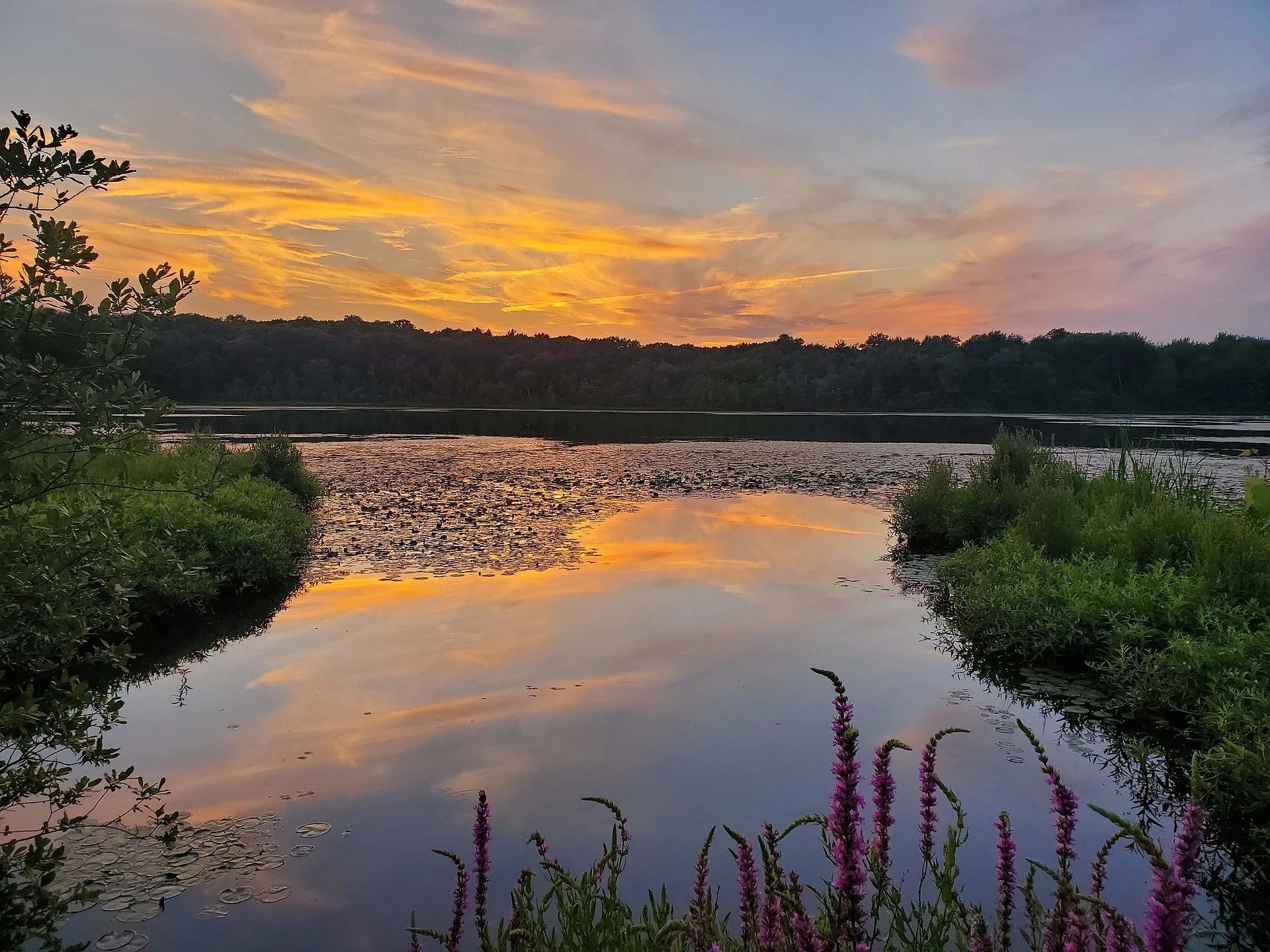
Sunset at Hammond Pond in Chestnut Hill
— Photo by NewtonCourt
Not so much now
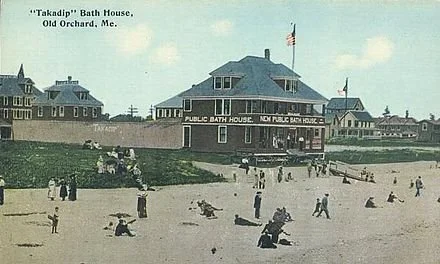
Southern Maine beach house in 1914
“The first ‘hot’ day of the season has happened. I put ‘hot’ in quotation marks because in Maine the term is strictly relative. Most people can live in Maine for years without learning what hot really means; some of them may never learn unless they leave the state.’’
— John Cole (1923-2003), Maine journalist, author and environmentalist, in his book In Maine (1974)
‘Much harder work’

Mindy Kaling
“Write your own part. It is the only way I've gotten anywhere. It is much harder work, but sometimes you have to take destiny into your own hands. It forces you to think about what your strengths really are, and once you find them, you can showcase them, and no one can stop you.”
— Mindy Kaling (born 1979), American actress, comedian, screenwriter and producer. She grew up in Cambridge, Mass., and graduated from Dartmouth College.