
Vox clamantis in deserto








'I grieve for that night'

“Gay Head” (on Martha’s Vineyard, 1860) (engraving), by David Hunter Strother

“Misty Morning, Coast of Maine” by Arthur Parton (1842–1914)
All these years I have remembered a night
When islands ran black into a sea of silk,
A bay and an open roadstead set to a shimmer like cool, white silk
Under an August moon.
Trees lifted themselves softly into the moonlight,
A vine on the balcony glittered with a scattered brilliance,
The roofs of distant houses shone solidly like ice.
Wind passed,
It touched me.
The touch of the wind was cool, impersonal;
The fingers of the wind brushed my face and left me.
I remember that I shivered,
And that the long, continuous sound of the sea beneath the cliff
Seemed the endless breathing of the days I must live through alone.
I grieve for that night as for something wasted.
You are with me now, but that was twenty years ago,
And the future is shortened by many days.
I no longer fear the length of them,
I dread the swiftness of their departure.
But they go — go —
With the thunderous rapidity of a waterfall,
And scarcely can we find a slow, cool night
To consider ourselves,
And the peaceful shining of the moon
Along a silken sea.
— “Grievance,’’ by Brookline, Mass.-based poet Amy Lowell (1874-1925)
‘Most pretentious people’

Waveny Mansion, in New Canaan.
“I lived in a town called New Canaan, in Connecticut, where they are far too snobby to even mention celebrities. Many American towns are famous for things like, "See the World's Largest Ball of String!" I think my town's would probably have to be ‘Most Pretentious People.’’’
— Katherine Heigl (born 1978), actress

Focusing on transience

“The Longest Night” (encaustic painting), by Melissa Rubin, a Saxtons River, Vt..-based artist.
She says:
“My art, in its all its varied forms, reflects the ephemeral, transient nature of emotion and experience. Spanning the worlds of urban and rural living, the architecture and environment of both locations, i.e. rectilinear and organic forms, works its way into my art. References to textiles, grids, doors, gates, portals, growth, branches and decay, all weave together to form a hybrid depiction of my outer and inner landscape. The media I choose functions as my personal vocabulary of expression, as well as standing in as proxy to emotional states of mind. I consciously work with materials that help to facilitate a sense of light, darkness and mystery.’’
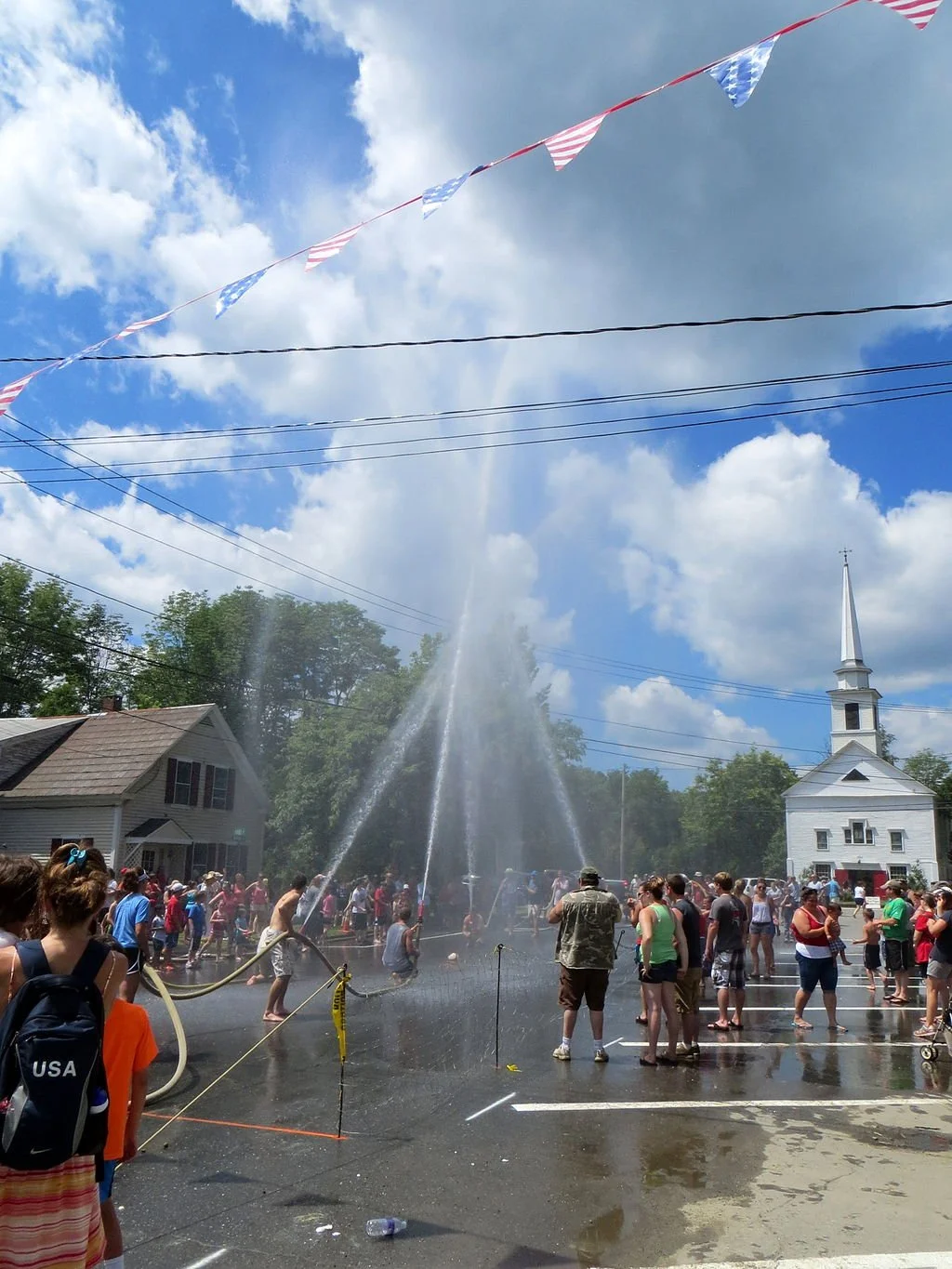
Start of a game of water polo on Main Street in Saxtons River, after the Fourth of July parade in 2013. Volunteer firefighters try to spray the ball down the street to a goal. Looking west at the Saxtons River Historical Society (a former Congregational church).
— Photo by Pbergstrom

Llewellyn King: The Irish: ‘Little people,’ great writers and more; why they came to Boston

In Dublin
The Irish punch above their weight. That is why worldwide, on March 17, people who don’t have a platelet of Irish blood and who have never thought of visiting the island of Ireland joyously celebrate St. Patrick’s Day.
That day may or may not have been when St. Patrick, Ireland’s patron saint, died in the 5th Century.
The fact is, very little is known about St. Patrick. The broad outline is that he was born in Roman Britain, kidnapped by pirates as a child and taken to Ireland as a slave. He escaped, returned to Ireland as a Christian missionary and became a bishop.
To be sure, in the Emerald Isle truth can be augmented with folklore, mysticism, and the great love of a good story.
Hence devout Ireland can also believe in fairies and leprechauns, or little people, to this day. Both are quite real to some in Ireland, although, unlike the festival of St. Patrick, they don’t seem to have crossed the Atlantic, or even the Irish Sea, except in movies.
When horseback riding with my wife on an annual visit to the northwest of Ireland, we were curious about a stand of trees that seemed not to belong in the middle of a working farm field.
“A fairy ring is in there. You can ride through, if you keep on the path,” a stableman told us.
But he warned that if we got off the path, we would upset the fairies. “And you wouldn’t want to do that, would you?”
Indeed, we didn’t want to upset any fairies, so we stayed on the path, and all was well.
From what I have gathered, the little people co-exist with the fairies but also are separate.
A friend built a house for his mother near Galway. It was an A-frame house with a low, decorative wall around it. The wall had — surprise — a gap; not a gate, just a space of about 18 inches. That, she insisted, with the concurrence of locals, was for the little people to pass through. You don’t mess with the little people any more than you would trample a fairy circle.
The little people were originally an Irish tribe dating back to antiquity, who disappeared but were encased in legend. When Hollywood met Irish legends, the movies embraced the legends and expanded them.
Over the centuries, Ireland has been hard-used by England. It began with the English Reformation and Henry VIII and went on through the English Revolution, with Oliver Cromwell being especially brutal, then on to the potato famine in the 19th Century and the excesses of the Black and Tans, poorly trained and equipped, thuggish British troops with mismatched tunics and trousers.
Given that around 40 million Americans can claim some Irish ancestry, it might be argued that they were welcomed here. Hardly. Irish immigrants were often persecuted as they flooded in, escaping the privations at home.
I thank my friend Sheila Slocum Hollis, a very proud Irish-American, for pointing out that in the 1920s, the Irish were victims of the Ku Klux Klan violence in Denver. They fit the profile of KKK enemies, along with Blacks and Jews. Except they were Irish and Catholic.
In no field of endeavor have the Irish punched above their weight more than in literature. They took the language of the conqueror, the English, and have added to it immeasurably and profusely.
Irish writers have enhanced, expanded and luxuriated in the English language. Just a few towering names: Swift, Shaw, Wilde, Joyce, Yeats, Beckett, Goldsmith, Synge, Bowen, O’Brien, Hoult, Lavin, Murdoch, Binchy and, contemporarily, John Banville and Sally Rooney.
The Irish word for good fun is craic (pronounced “crack”). “Good craic” is a party where you indulge.
I wish you great craic this St. Patrick’s Day. May you consort with the little people, after some Guinness, and may the fairies guide you safely home. Sláinte!
Llewellyn
On Twitter: @llewellynking2
Llewellyn King is executive producer and host of White House Chronicle, on PBS.

Huge Irish flag hanging outside the Boston Harbor Hotel
— Photo by John Hoey

From The New England Historical Society:
“Boston has had an Irish population since the first four shiploads from Ulster arrived, in 1718. But not until the potato crop began to fail in 1845 did the huge influx of Irish immigrants sail into Boston Harbor.
The potato famine wasn’t the only thing that brought the Irish to Massachusetts rather than, say, Virginia or Maine. Hunger and poverty pushed the Irish out of Ireland, but the promise of work pulled them to Boston.
In the Atlas of Boston History, Robert J. Allison explains that Irish immigrants came for jobs. Jobs in the Merrimack River Valley, the most industrial region in the Western Hemisphere. Jobs in Lowell, the biggest industrial city in the United States. And jobs in Boston, a manufacturing powerhouse that led the nation in distilling and refining.’’

Irish immigrants arriving in Boston in 1857.

Picture of modern life

“The Kitchen” ( marquetry hybrid: wood veneer, oil, acrylic and shellac), by Allison Elizabeth Taylor, in her show “The Sum of It,’’ though July 30, at the Addison Gallery of American Art, Andover, Mass.
— Image courtesy of the Addison Gallery of American Art
The gallery lauds her “stunning works of wood inlay that are used to vividly represent modern-day subject matter. In 40 large-scale works and a room installation, Taylor captures a picture of modern life from the mundane to the exciting to the risqué using a centuries-old art form.’’
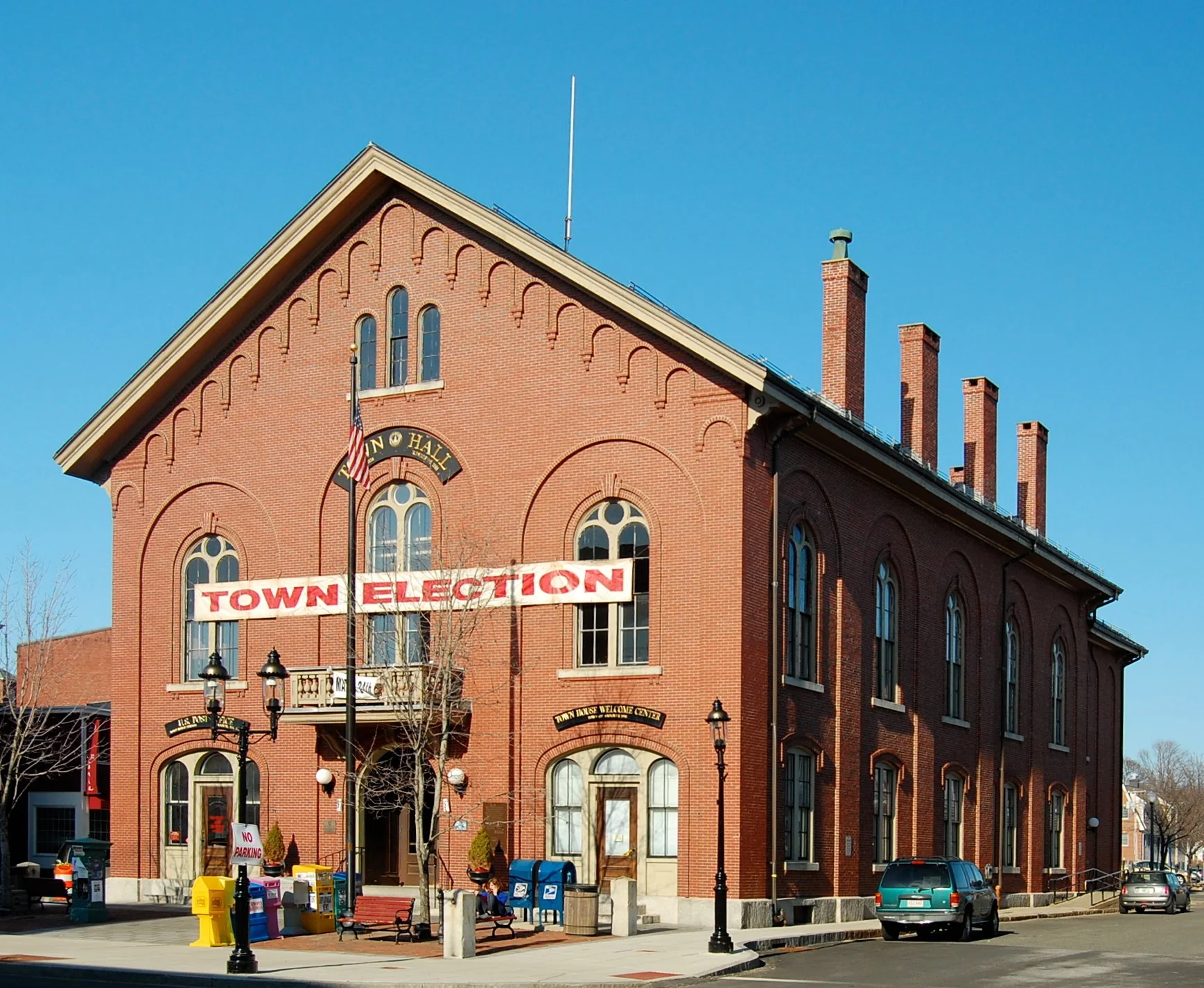
Andover Town Hall. Many elections in New England are held in March.


What the market will bear

Video: History of Ivy League sports.
Adapted from Robert Whitcomb’s “Digital Diary,’’ in GoLocal24.com
A suit by two basketball players, one a former Brown University player and one still playing there, alleges unfair, oligopolistic collaboration in sports programs by the Ivy League. The plaintiffs assert that the eight-college association’s policy of not offering athletic scholarships amounts to a price-fixing agreement that denies athletes proper financial aid and other payment for their services. The duo seems to have wanted to be treated as employees.
This case is absurd. These athletes have not been compelled to attend an Ivy League school. If they didn’t like these institutions’ long-established policies, they could have gone to many other places, some also called “elite,’’ in search of big bucks.
When the Ivy League as a formal organization was founded, in 1954, the ban on athletic scholarships was meant to be seen as fending off the corrupting commercialization of the sacred groves of academia and promoting the ideal, however naïve, of the “scholar-athlete
Complaints about price-fixing in the league go way back, spawned in part by the curious similarity of Ivy institutions’ tuitions. Consider this.
These schools charge what the market will bear, which is a lot when it comes to “The Ancient Eight.’’ Such is the American obsession with social status, they’ll continue to draw many more applicants than can be admitted, including top-notch athletes in search, above all of an education.
Landscape painter who broke barriers

“Landscape” (oil painting, 1870), by Robert S. Duncanson, at the New Britain (Conn.) Museum of American Art.
The museum says:
“Robert S. Duncanson is considered a member of the second generation of Hudson River School painters and is celebrated for his idyllic pastoral scenes of peaceful rivers and verdant mountains. Successful during his lifetime, he was known in the 1800s by American press as the ‘best landscape painter in the West,’ and London newspapers hailed him as an equal to his British contemporaries. Born a freedman in Seneca County, N.Y., in 1821 to mixed-race parents, Duncanson moved to the prosperous city of Cincinnati in 1840 to pursue a career in the arts, and he taught himself by painting from nature and by copying reproductions of works by Hudson River School masters. In the late 1840s, he befriended local landscape painters Worthington Whittredge (1820-1910) and William Louis Sonntag (1822-1900), with whom he took numerous sketching trips, including a European Grand Tour with Sonntag in 1853. In the ensuing years, Duncanson traveled throughout North America and Europe, exhibiting and selling work with great success, despite being excluded from many of the expositions in America that his white peers could participate in. His paintings commanded up to $500 per work—a very high sum at the time. Duncanson died at 51, and while his work fell into obscurity for many decades, he is now recognized as a premier 19th-Century landscape artist, who broke barriers and paved the way for landscape painters and Black artists for generations to follow.’’
We’ll settle for spring

“The Garden of Eden” (painting), by Massachusetts artist Eileen Ryan, at 3S Artspace, Portsmouth, N.H., March 22-April 16.
She tells the gallery:
“I have many ideas pulsing through me at once and I have found that they are visually represented in two distinct ways in my art. The first is an organized approach to exploring concepts and questions. In a methodical manner using a naturalistic aesthetic I hypothesize and create around my findings. The second is through painting, where color and form begin without a plan and the questions and concepts are revealed at the end of the painting. This process takes trust and often leads to discovering things about myself and my subconscious.
“Painting for me feels like diving into the unknown, with ideas and facets of my self glinting throughout and the full spectrum only being revealed in the end of the painting. It’s like I am searching for the questions in my paintings, and answering them in my installations.
“This series of paintings documents recurring dreams I have had since I was a child. The settings range from magical dreamscapes to nuclear nightmares often including idols from my Catholic upbringing and mythical characters from stories I grew up listening to. These narratives are about the balance of power, warnings from the deep, and mystics representing creative energy and greed.’’
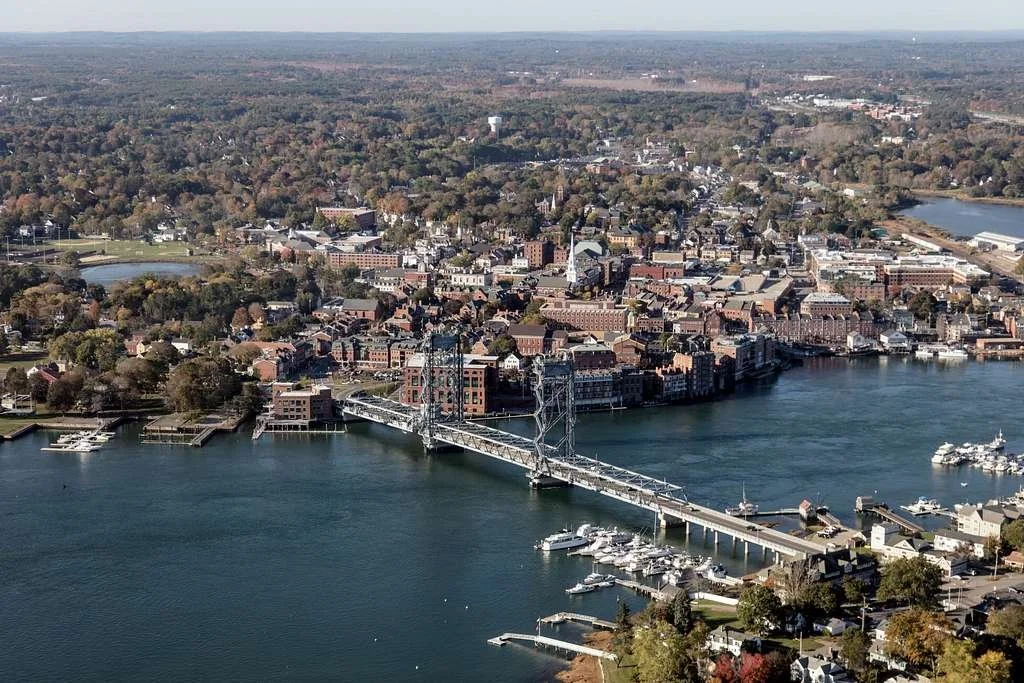
Portsmouth, N.H.
David Warsh: Say goodbye to the Monroe Doctrine
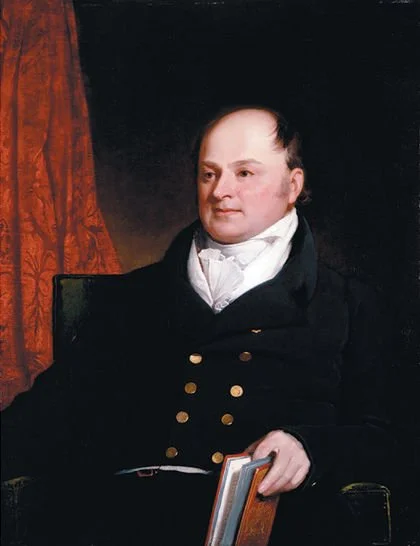
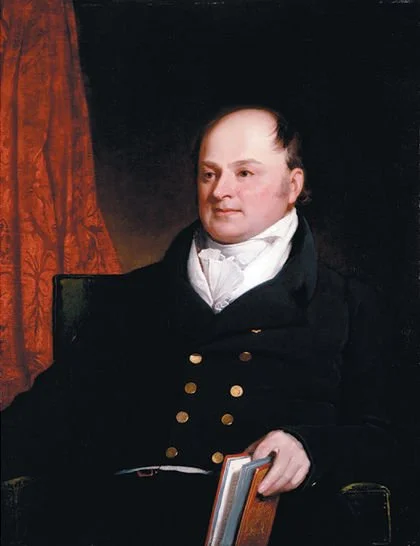
John Quincy Adams, who as President James Monroe’s secretary of state, was one of the fathers of the Monroe Doctrine, which was announced on Dec. 2, 1823.
SOMERVILLE, Mass.
Everybody agreed that the language was blunt. China’s president, Xi Jinping, last week told a national audience, “Western countries led by the United States have implemented all-round containment, encirclement and suppression of China, which has brought unprecedented grave challenges to our nation’s development,” Xi was quoted as saying by the official Xinhua News Agency.
The next day Gen. Laura J. Richardson, commander of the U.S. Southern Command, which is responsible for South America and the Caribbean, testified before the House Armed Services Committee that China and Russia were “malign actors” that are “aggressively exerting influence over our democratic neighbors…” She continued:
Among other activities, China has built a massive embassy in the Bahamas, just 80 kilometers (50 miles) off the coast of Florida. “Presence and proximity absolutely matter, and a stable and secure Western Hemisphere is critical to homeland defense.
The day after that, Saudi Arabia and Iran agreed to re-establish diplomatic ties, The Middle East powers have a long history of conflicts. China hosted the talks that led to the breakthrough. Peter Baker, of The New York Times, wrote,
This is among the topsiest and turviest of developments anyone could have imagined, a shift that left heads spinning in capitals around the globe. Alliances and rivalries that have governed diplomacy for generations have, for the moment at least, been upended.
With good books piling up on my side table – Accidental Conflict: America, China, and the Clash of False Narratives (Yale, 2022), by Stephen Roach; Danger Zone: The Coming Conflict with China (Norton, 2022), by Hal Brands and Michael Beckley; Cold Peace: Avoiding the New Cold War (Liveright, 2023), by Michael Doyle – I decided instead to look back at a 12-year old book, Time to Start Thinking: America in the Age of Descent (Atlantic Monthly Press), by Edward Luce.
Roach, an economist, is a former chairman of Morgan Stanley Asia. Brands, a historian, is a professor at Johns Hopkins University. Beckley, a political scientist, is an associate professor at Tufts University. Michael Doyle, a political scientist, is a professor at Columbia University.
But Luce is the U.S. national editor and columnist of the Financial Times, and his column last week appeared under the headline, “China is Right about U.S. Containment,”
[L]oose talk of U.S.-China conflict is no longer far-fetched. Countries do not easily change their spots. China is the middle kingdom wanting redress for the age of western humiliation; America is the dangerous nation seeking monsters to destroy. Both are playing to type.
The question is whether global stability can survive either of them insisting that they must succeed. The likeliest alternative to today’s U.S.-China stand-off is not is not a kumbaya meeting of minds but war.
When I picked up Luce’s The Time to Start Thinking, what struck me was how pessimistic his tone was. He had taken nine months off from his newspaper, traveling for six months and writing for three. He recorded encounters with all kinds of Americans, mostly powerful, some without power. His title came from the Sir Ernest Rutherford, winner of the 1908 Nobel Prize in Chemistry: “Gentleman, we have run out of money. It is time to start thinking.” I was reminded immediately of Aaron Friedberg’s The Weary Titan: Britain and the Experience of Relative Decline, 1895-1905.
Luce was writing in the aftermath of a lengthy recession, the Tea Party election, the 2008 financial crisis, and the debacle of the U.S. war in Iraq. The last chapter begins, “Why the coming struggle to reverse America’s decline faces long odds.” It concludes, “The truth is America’s stock has been falling around the world for quite a while…. Simply proclaiming the superiority of the American model is not helping anyone’s credibility.” Ahead lay the presidencies of Donald Trump and Joe Biden, and an ill-understood war in Ukraine.
Yet last week Luce was warning against the folly of trying to “contain” China’s expansion on the basis of the Cold War blueprint that worked well against the Soviet Union, encouraging the U.S. to compete on its merits instead. “Unlike the USSR, which was an empire in disguise, China inhabits historic boundaries and is never likely to dissolve. The U.S. needs a strategy to cope with a China that will always be there… Betting on China’s submission is not a strategy.
Instead, Luce counseled, the U.S. should muster its revolve and rely on its advantages. It has “plenty of allies, a global system that it designed, better technology, and younger demographics.” China is aging, its growth is slowing, though its leaders nurse ambitions not to change, but to set the rules of the game. The big difference that Luce stressed in 2012, while China is still flush, the US has overspent.
So what will it be? War over Taiwan? A symbolic moon-race to AI? Or a sometimes-smoldering era of systemic competition in all four corners of the earth? We are not out of money, but it is well past the time to start thinking.
David Warsh, a veteran columnist and an economic historian, is proprietor of Somerville-based economicprincipals.com, where this column originated.
‘Balanced on a human scale’
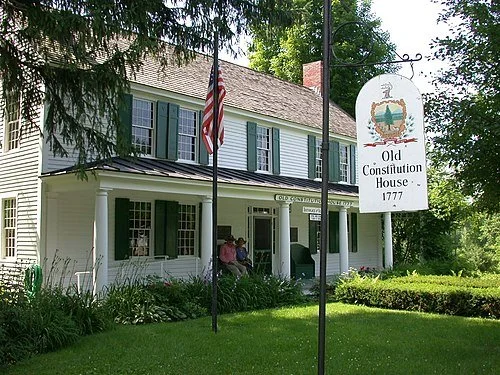
Old Constitution House, in Windsor, Vt., where the Constitution of the Vermont Republic was signed, in 1777.
“When people who have never lived in New Hampshire or Vermont visit here,
they often say they feel like they've come home. Our urban center, commercial
districts, small villages and industrial enterprises are set amid farmlands and
forests. This is a landscape in which the natural and built environments are
balanced on a human scale. This delicate balance is the nature of our
’community character.’ It's important to strengthen our distinctive, traditional
settlement patterns to counteract the commercial and residential sprawl that
upsets this balance and destroys our economic and social stability."
~ Richard J. Ewald, in his book Proud to Live Here.
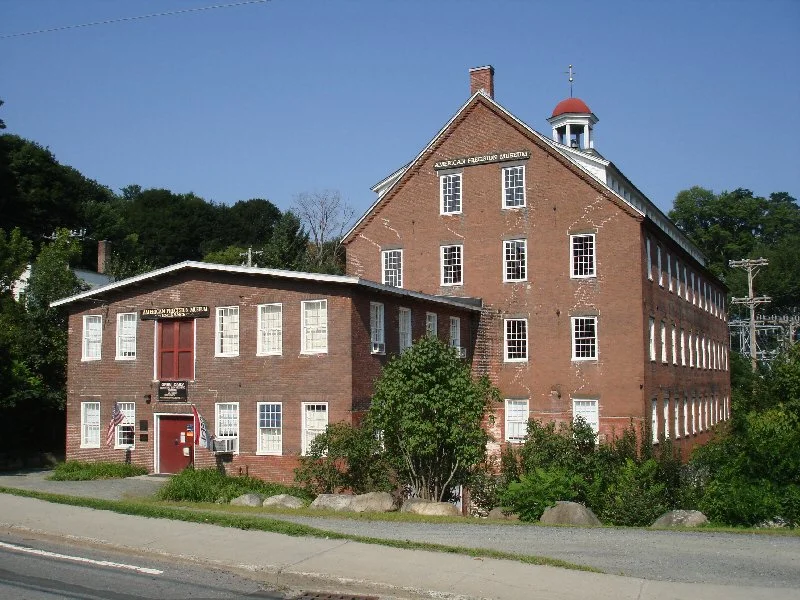
American Precision Museum at the old Robbins and Lawrence factory, in Windsor. The building is said to be the first U.S. factory at which precision interchangeable parts were made, giving birth to the precision machine-tool industry

‘The dead ripen’

— Photo by Gerthorst78

“….The creek swells in its ditch;
the field puts on a green glove.
Deep in the woods, the dead ripen,
and the lesser creatures turn to their commission….’’
— From “Jug Brook,’’ by the Cabot, Vt.-based poet Ellen Bryant Voigt. Cabot is where Cabot Creamery, a producer and national distributor of dairy products, is based.
‘Exaltation of the domestic’

“Anatolia’’ (watercolor), by Randolph, Mass.-based Annee Spileos Scott, in her show “Mapping My DNA,’’ at Galatea Fine Art, Boston, April 7-30.
She told the gallery:
"I have always been drawn to the ancient civilizations of Eurasia,
reveling in the brilliant colors and obsessive patterning. I was not
yet cognizant of the fact that many of them are in my DNA.
During the lockdown, I was encircled by family heirlooms and
souvenirs of my global travels from many of these cultural
destinations. Still lifes, inspired by these precious objects and the
results of my DNA testing, converged into metaphors for my
ancestral roots. The process of creating these paintings provided
beauty and salvation from the dark outer world of the pandemic.
The work celebrates women, keepers of cultures and tradition.
The exaltation of the domestic, displayed in arrangements of both
opulent objects and those of the everyday, reveal history, memory,
and a sense of belonging to a long line of women in my ancestry.
National fruits and flowers were added as organic elements,
symbolizing the source of all life which inhabits each region.’’
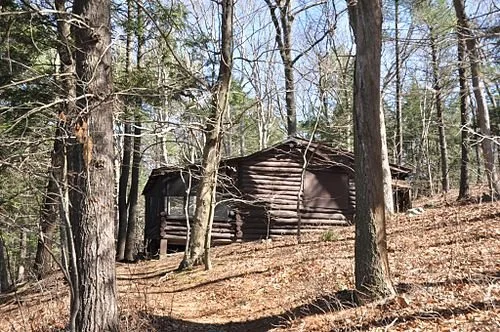
A cabin of the Ponkapoag Camp (established in 1921), of the Appalachian Mountain Club, on the eastern shore of Ponkapoag Pond in Randolph. The camp has 20 cabins, dispersed across a wooded area, that typically each sleep 4-6 people. No electricity or potable water is available at the camp; untreated water may be taken from the pond. In the summer the camp also makes available a few tent sites for camping. It’s near Great Blue Hill, at 635 feet, the highest point in Greater Boston.
Who makes this stuff?

The June 1, 2011 tornado that killed three people in and around Springfield, Mass.
— Photo by Runningonbrains
“I reverently believe that the Maker who made us all makes everything in New England but the weather. I don’t know who makes that, but I think it must be raw apprentices in the weather clerk’s factory who experiment and learn how, in New England, for board and clothes, and then are promoted to make weather for countries that require a good article, and will take their custom elsewhere if they don’t get it….’’
–Mark Twain (1835-1910)
Too much to take in
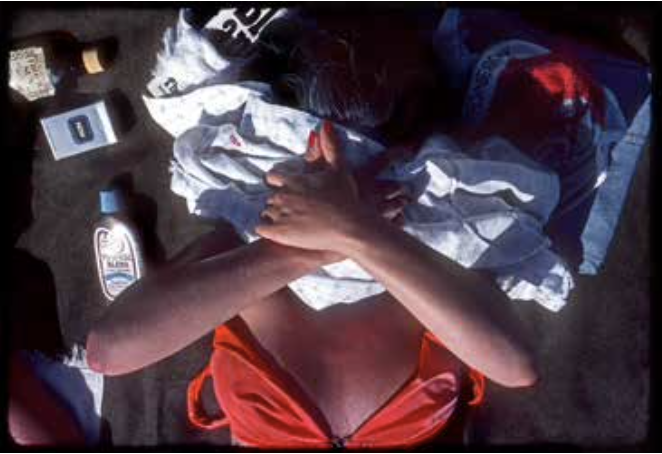
Untitled, (Crossed Arms) (archival inkjet print from original Kodachrome transparency), by Boston area photographer Karl Baden, at the Anderson Yezerski Gallery, Boston.

Chris Powell: Why would anyone want to build inexpensive rental housing?
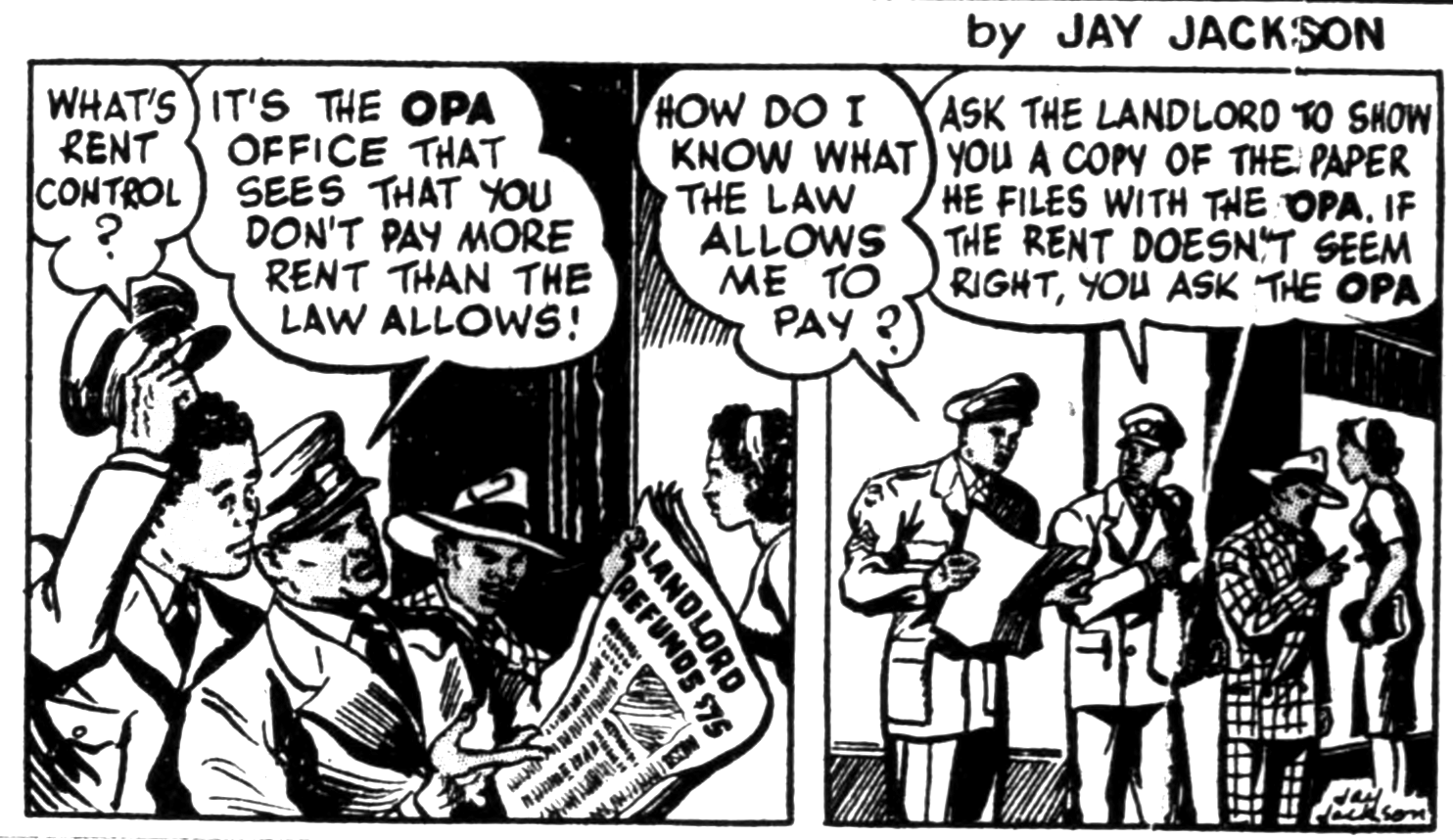
A 1945 comic explaining World War-era rent control under the U.S. Office of Price Administration.
MANCHESTER, Conn.
Exclusive zoning may not be the only reason that little inexpensive rental housing is being built or renovated in Connecticut. Anyone interested in the housing issue would do well to read the fascinating report about a day in housing court published March 5 in The Day of New London. It was written by journalism students from the University of Connecticut.
The court was full of people whose landlords were trying to evict them for chronic failure to pay rent. Some of the delinquent tenants were hard-luck cases. Others were victims of their own irresponsibility in life. An indulgent judge, court mediators and lawyers provided to the tenants by state government tried to arrange payment solutions and forestall evictions.
But most of these efforts were probably impractical from the start. In the end even patient and understanding landlords ended up seriously cheated. Evictions were dragged out for months but not prevented since the tenants simply couldn't or wouldn't pay.
“If you need something," one landlord said, "you can't just take it, like a coat if you're cold. Yet if you take my product -- time, space -- and don't pay, it's not illegal. ... If someone steals from you, you can be made whole. But my product is gone, used, consumed.”
The Day's report indicated just how mistaken the clamor at the state Capitol for rent control is, for the troubled people in housing court often can't pay any rent. They hold on by using the court to expropriate their landlord, sometimes for most of a year.
Rent control would be expropriation. But in housing court expropriation is already policy.
With rent control possibly coming on top of the expropriation any delinquent tenant can arrange in housing court, why should anyone want to get into the less-expensive rental business in Connecticut, even if exclusive zoning is overthrown as it should be?
And yet the only solution to the housing problem is to increase supply.
Submarine maker Electric Boat, in Groton, just across the river from New London, plans to hire thousands more workers over the next few years. But no one has announced plans to build thousands of housing units for the new workers to occupy nearby. EB's growth will push housing costs way up.
The problem bigger than the housing shortage is Connecticut's growing population of people not equipped to support themselves and their families -- people who are uneducated, unskilled, and often demoralized. Meanwhile industry in the state is unable to find qualified applicants for tens of thousands of jobs with good salaries and benefits. (Contrary to the premise of public education in Connecticut, giving high school diplomas to people who never mastered their schoolwork doesn't make them educated.)
Many people whose evictions are prolonged in housing court are in effect long-term welfare cases. To reduce evictions during the virus epidemic, state government has reimbursed landlords for some unpaid rents. The program continues but many tenants have exhausted the benefit. Maybe it should be enlarged to become like the Section 8 housing voucher program.
But housing the incapable is government's responsibility, not the responsibility of any landlord. That's why delinquent tenants aren't really the ones expropriating the people who provide rental housing. The expropriating is being done by government.
Is Accountability Illegal?
The dumbest non-sequitur of government in Connecticut is thriving at the top of the state's system of what styles itself higher education.
The Board of Regents for the Connecticut State Colleges and Universities, which runs the community colleges, still refuses to explain what happened with the firing and reinstatement of Manchester Community College CEO Nicole Esposito two years ago. Esposito sued, charging sex discrimination and retaliation for her questioning financial improprieties, and quickly got her job back and $775,000 in damages.
A spokesman for the board says that it won't comment on personnel matters that have been resolved or allegations that have been withdrawn.
But why not? Is accountability illegal in Connecticut now?
No, the law doesn't forbid explaining when so much money has been squandered. Governor Lamont and state legislators should press the point.
Chris Powell is a columnist for the Journal Inquirer, in Manchester (CPowell@JournalInquirer.com).
Your eyes will get used to it

“August” (oil), in “Ocean Views II,’’ by Nick Paciorek, at the Feinstein Gallery at the University of Rhode Island’s Providence campus. He’s based at the Pitcher-Goff House art center, in Pawtucket, R.I.
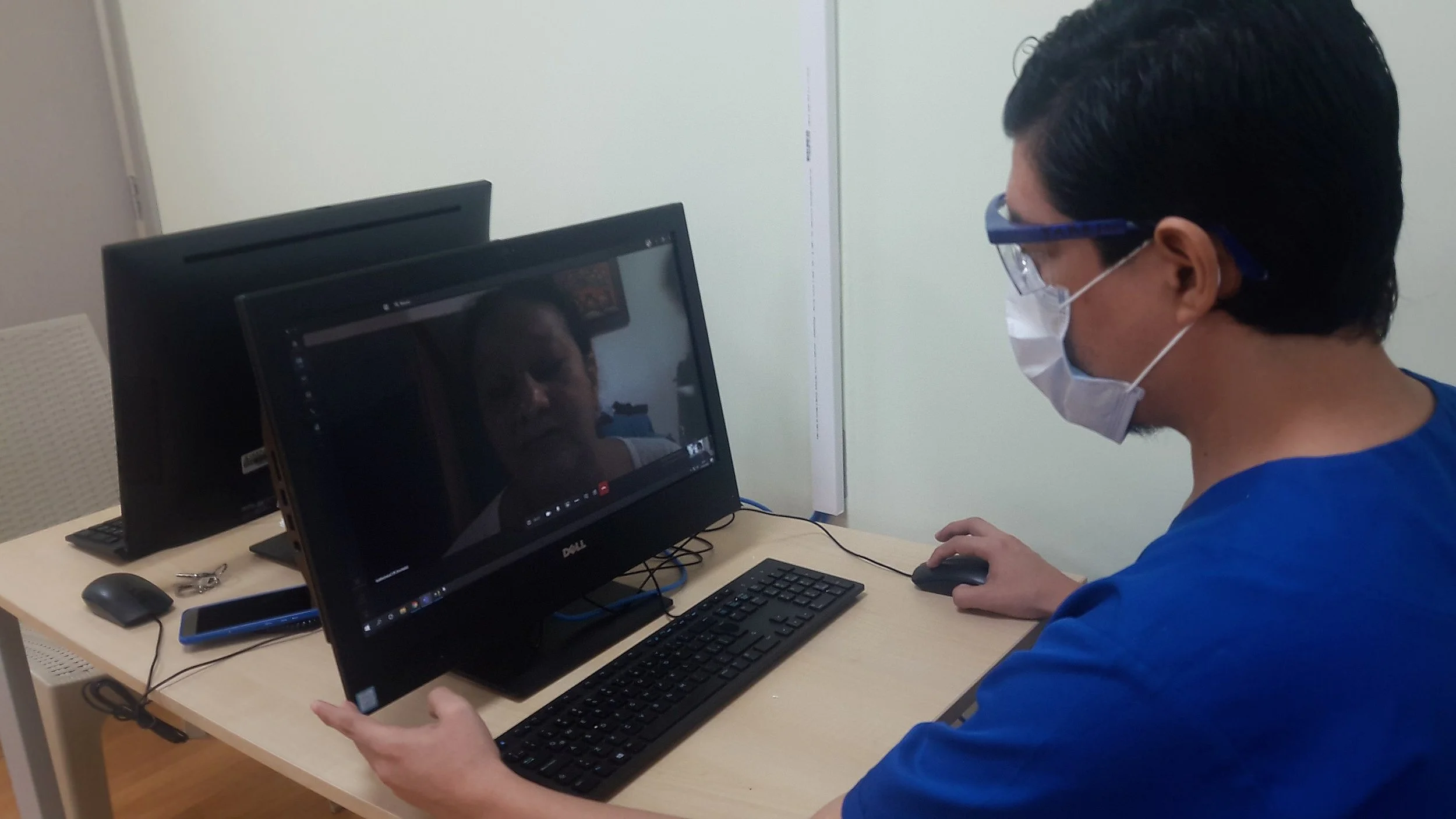
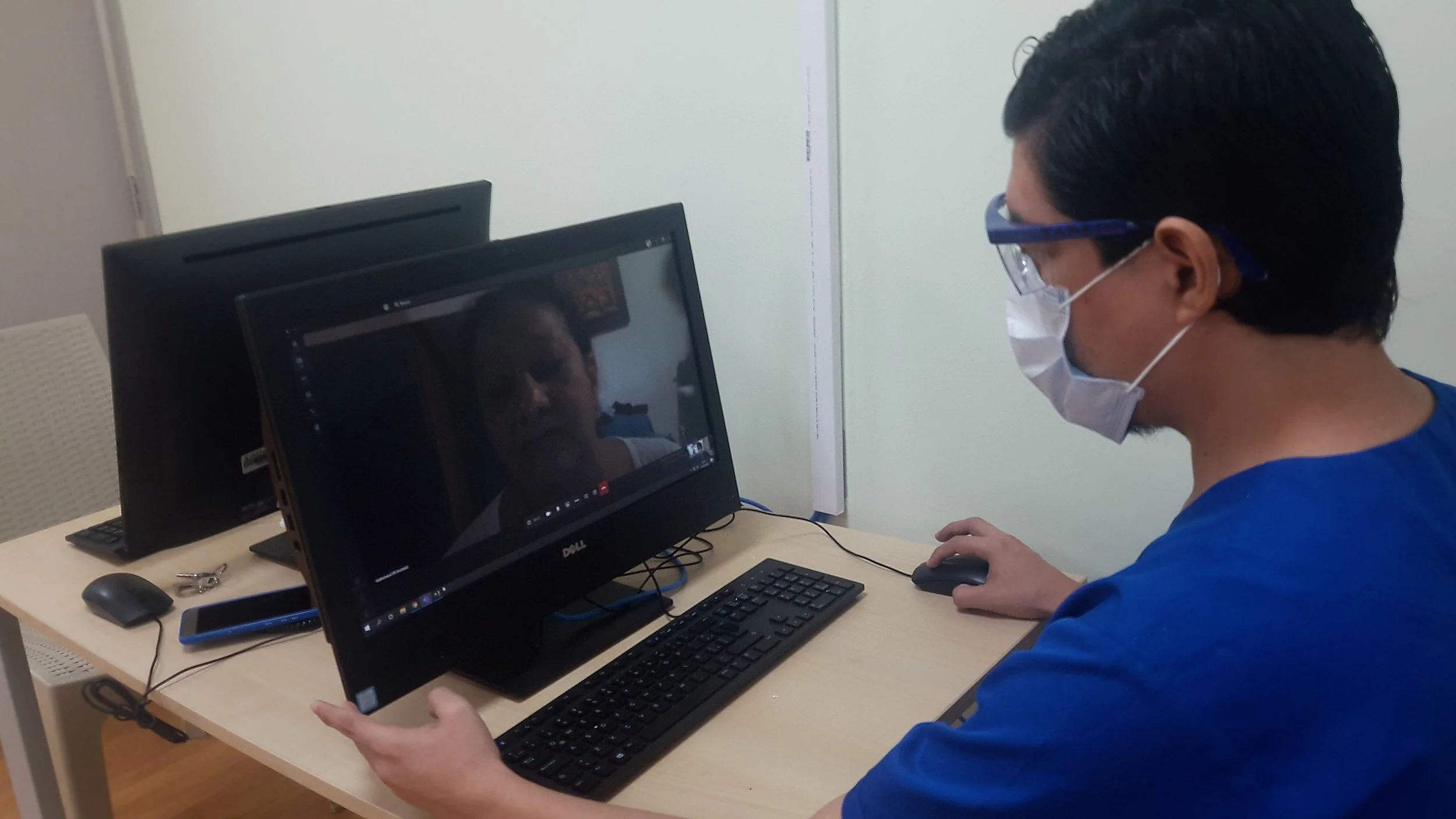
Michelle Andrews: When to ask for an in-person medical visit instead of a virtual one
“As a consumer, you should do what you feel comfortable doing. And if you really want to be seen in the office, you should make that case.”
— Dr. Joe Kvedar, Harvard Medical School professor and former chairman of the American Telemedicine Association
When the COVID-19 pandemic swept the country in early 2020 and emptied doctors’ offices nationwide, telemedicine was suddenly thrust into the spotlight. Patients and their physicians turned to virtual visits by video or phone rather than risk meeting face-to-face.
During the early months of the pandemic, telehealth visits for care exploded.
“It was a dramatic shift in one or two weeks that we would expect to happen in a decade,” said Dr. Ateev Mehrotra, a professor at Harvard Medical School whose research focuses on telemedicine and other health-care delivery innovations. “It’s great that we served patients, but we did not accumulate the norms and [research] papers that we would normally accumulate so that we can know what works and what doesn’t work.”
Now, three years after the start of the pandemic, we’re still figuring that out. Although telehealth use has moderated, it has found a role in many physician practices, and it is popular with patients.
More than any other field, behavioral health has embraced telehealth. Mental-health conditions accounted for just under two-thirds of telehealth claims in November 2022, according to FairHealth, a nonprofit that manages a large database of private and Medicare insurance claims.
Telehealth appeals to a variety of patients because it allows them to simply log on to their computer and avoid the time and expense of driving, parking, and arranging child care that an in-person visit often requires.
But how do you gauge when to opt for a telehealth visit versus seeing your doctor in person? There are no hard-and-fast rules, but here’s some guidance about when it may make more sense to choose one or the other.
“As a patient, you’re trying to evaluate the physician, to see if you can talk to them and trust them,” said Dr. Russell Kohl, a family physician and board member of the American Academy of Family Physicians. “It’s hard to do that on a telemedicine visit.”
Maybe your insurance has changed and you need a new primary-care doctor or OB-GYN. Or perhaps you have a chronic condition and your doctor has suggested adding a specialist to the team. A face-to-face visit can help you feel comfortable and confident with their participation.
Sometimes an in-person first visit can help doctors evaluate their patients in nontangible ways, too. After a cancer diagnosis, for example, an oncologist might want to examine the site of a biopsy. But just as important, he might want to assess a patient’s emotional state.
“A diagnosis of cancer is an emotional event; it’s a life-changing moment, and a doctor wants to respond to that,” said Dr. Arif Kamal, an oncologist and the chief patient officer at the American Cancer Society. “There are things you can miss unless you’re sitting a foot or two away from the person.”
Once it’s clearer how the patient is coping and responding to treatment, that’s a good time to discuss incorporating telemedicine visits.
If a Physical Exam Seems Necessary
This may seem like a no-brainer, but there are nuances. Increasingly, monitoring equipment that people can keep at home — a blood-pressure cuff, a digital glucometer or stethoscope, a pulse oximeter to measure blood oxygen, or a Doppler monitor that checks a fetus’s heartbeat — may give doctors the information they need, reducing the number of in-person visits required.
Someone’s overall physical health may help tip the scales on whether an in-person exam is needed. A 25-year-old in generally good health is usually a better candidate for telehealth than a 75-year-old with multiple chronic conditions.
But some health complaints typically require an in-person examination, doctors said, such as abdominal pain, severe musculoskeletal pain, or problems related to the eyes and ears.
Abdominal pain could signal trouble with the gallbladder, liver, or appendix, among many other things.
“We wouldn’t know how to evaluate it without an exam,” said Dr. Ryan Mire, an internist who is president of the American College of Physicians.
Unless a doctor does a physical exam, too often children with ear infections receive prescriptions for antibiotics, said Mehrotra, pointing to a study he co-authored comparing prescribing differences between telemedicine visits, urgent care, and primary care visits.
In obstetrics, the pandemic accelerated a gradual shift to fewer in-person prenatal visits. Typically, pregnancy involves 14 in-person visits. Some models now recommend eight or fewer, said Dr. Nathaniel DeNicola, chair of telehealth for the American College of Obstetricians and Gynecologists. A study found no significant differences in rates of cesarean deliveries, preterm birth, birth weight, or admissions to the neonatal intensive care unit between women who received up to a dozen prenatal visits in person and those who received a mix of in-person and virtual visits.
Contraception is another area where less may be more, DeNicola said. Patients can discuss the pros and cons of different options virtually and may need to schedule a visit only if they want an IUD inserted.
If Something Is New, or Changes
When a new symptom crops up, patients should generally schedule an in-person visit. Even if the patient has a chronic condition such as diabetes or heart disease that is under control and care is managed by a familiar physician, sometimes things change. That usually calls for a face-to-face meeting too.
“I tell my patients, ‘If it’s new symptoms or a worsening of existing symptoms, that probably warrants an in-person visit,’” said Dr. David Cho, a cardiologist who chairs the American College of Cardiology’s Health Care Innovation Council. Changes could include chest pain, losing consciousness, shortness of breath, or swollen legs.
When patients are sitting in front of him in the exam room, Cho can listen to their hearts and lungs and do an EKG if someone has chest pain or palpitations. He’ll check their blood pressure, examine their feet to see if they’re retaining fluid, and look at their neck veins to see if they are bulging.
But all that may not be necessary for a patient with heart failure, for example, whose condition is stable, he said. They can check their own weight and blood pressure at home, and a periodic video visit to check in may suffice.
Video check-ins are effective for many people whose chronic conditions are under control, experts said.
When someone is undergoing treatment for cancer, certain pivotal moments will require a face-to-face meeting, said Kamal, of the American Cancer Society.
“The cancer has changed or the treatment has changed,” he said. “If they’re going to stop chemotherapy, they need to be there in person.”
And one clear recommendation holds for almost all situations: Even if a physician or office scheduler suggests a virtual visit, you don’t have to agree to it.
“As a consumer, you should do what you feel comfortable doing,” said Dr. Joe Kvedar, a professor at Harvard Medical School and immediate past board chairman of the American Telemedicine Association. “And if you really want to be seen in the office, you should make that case.”
Michelle Andrews is a Kaiser Health News reporter.
Michelle Andrews: andrews.khn@gmail.com, @mandrews110
‘Inflexibly territorial’

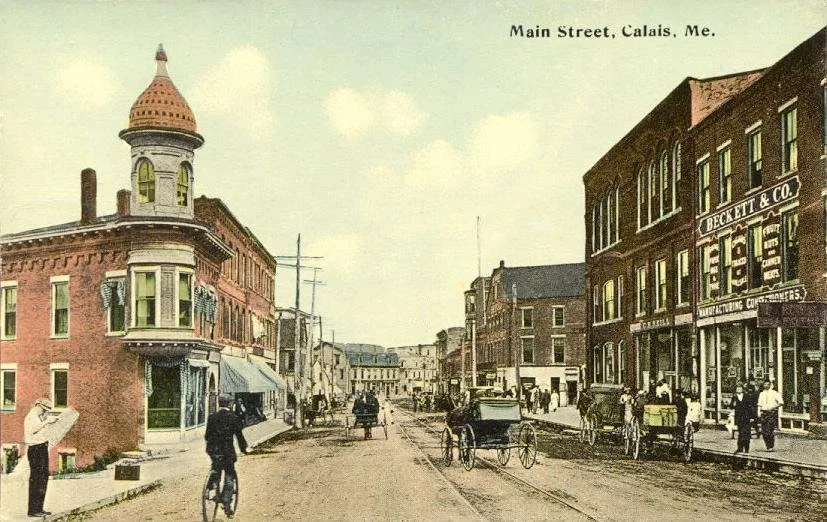
1913 postcard of the way Downeast community.

Cutler, Maine, harbor.
“Many small towns I know in Maine are as tight-knit and interdependent as those I associate with rural communities in India or China; with deep roots and old loyalties, skeptical of authority, they are proud and inflexibly territorial.”
– Paul Theroux (born 1941), famed travel writer and novelist
Certain kinds of intensity
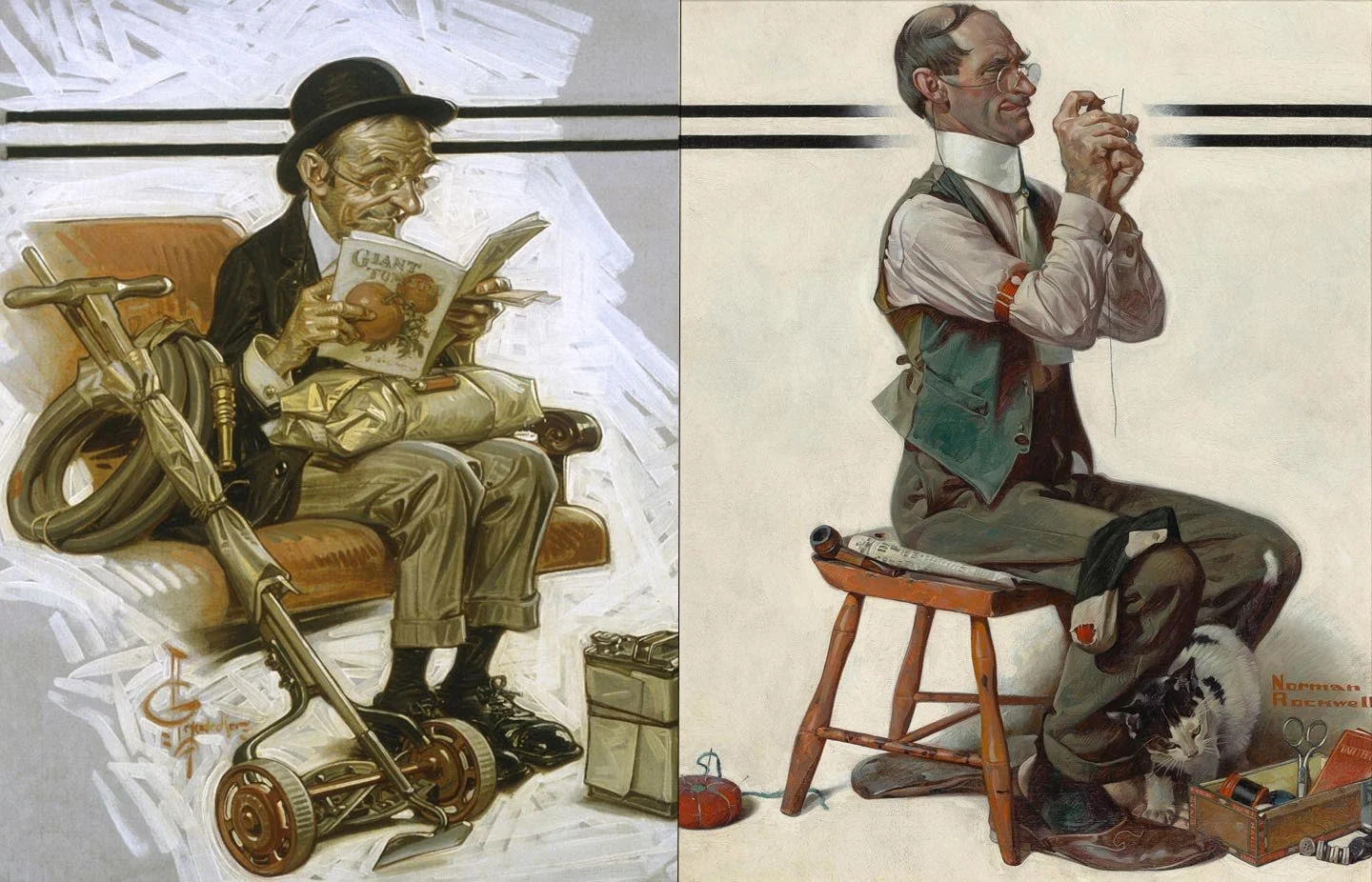
Left, “Spring Commuter’’ (oil on canvas), by J.C. Leyendecker (1870-1951), for the May 6, 1916 cover of The Saturday Evening Post. Right, “Threading the Needle” (oil on canvas), by Norman Rockwell, for the April 8, 1922 cover of the same magazine. Both at the National Museum of American Illustration, Newport, R.I.

The western facade of the mansion Vernon Court, at 492 Bellevue Ave., Newport R.I., home of the National Museum of American Illustration. It was built in 1900.