
Vox clamantis in deserto





No watering needed

“Round and Round” (glass smalti mosaic), by Boston-based artist Lisa Houck, in her show “Botanical Explorations: Mosaics and Paintings,’’ at the Art Complex Museum, Duxbury, Mass.
— Photo courtesy artist.
The museum says she creates "vibrant, imaginative images filled with color and pattern," capturing the shapes of the natural world using found and created ceramic tiles.
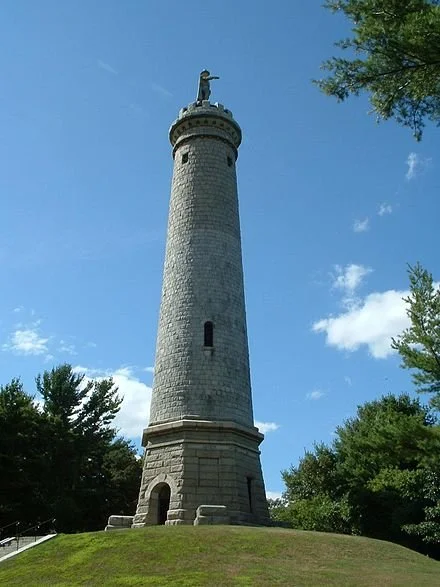
The Myles Standish Monument, in Duxbury

Chris Powell: School violence starts at home

Candles outside of Marjory Stoneman Douglas High School, in Parkland, Fla., after Nikolas Cruz shot to death 17 students there on Feb. 14, 2018.
MANCHESTER, Conn.
Legislation has been proposed in the General Assembly to diminish the use of police in Connecticut's schools, and some of its supporters suggested the other day at the state Capitol that the presence of police in schools actually causes crime -- that if the police weren't there, students wouldn't be arrested. Of course that's not quite to say that bad stuff wouldn't happen anyway.
"The story is simple," said Robert Goodrich, executive director of Waterbury-based Radical Advocates for Cross-Cultural Education. "The moment police started being implemented in our schools, arrests rose dramatically, and they continue to rise. The more police we have in schools, the more likely it is that any student is going to be arrested," especially Black and Hispanic students.
The far-left child-welfare organization Connecticut Voices for Children made a similar claim a year ago.
So did boards of education request the permanent stationing of "school resource officers" to get more minority kids in trouble with the law?
Or were police requested -- especially for schools in impoverished and crime-ridden cities -- because schools increasingly were having trouble maintaining order with teachers and administrators alone?
Of course, it was the latter. Indeed, in the days just preceding the recent clamor at the Connecticut Capitol for expelling cops from schools, students were arrested for bringing guns or knives to school or brawling at school in Waterbury, Hamden, Meriden and Manchester.
The racial disproportions in arrests in school are no more remarkable than the racial disproportions in crime and arrests everywhere, nor more remarkable than the racial disproportions in poverty, child neglect and mental illness, which all correlate with crime.
The people complaining about police in schools don't seem to have noticed the long rise in misbehavior by students, nor the special schools that have been established in recent years to try to educate the kids who can't behave, nor the recent calls to put mental-health clinics in schools because so many more students these days are disturbed.
The kids aren't disturbed because of "school resource officers." No, they come to school disturbed -- that is, when they come to school at all, the chronic absenteeism rate in Connecticut's schools now being up to 25 percent. Most of these kids get little parenting and especially little from fathers.
Nor is it remarkable that students who behave, and their parents, favor having police in schools for protection against the kids who don't behave.
Connecticut and the country are awash in social disintegration -- from the schools to the streets and highways, where reckless driving now abounds; to crude behavior in markets and at public meetings; to shootings, including shootings at schools. Government claims misleadingly that crime is declining even as murders and shootings increase and much of the worst crime involves repeat offenders who should have been jailed for life a dozen convictions ago.
The people who blame this disintegration on cops in schools think that social workers and therapists can handle it. But it already is straining the capacity of the police, as indicated by the high unsolved murder rates in the cities.
The people who blame cops in school scorn what they call the "school-to-prison pipeline." But that pipeline is a lot longer than they acknowledge. Crucially, it starts at home.
xxx
PRETEND PROTECTION: Another of Connecticut's "protective orders" proved its worthlessness Jan. 31 as Traci-Marie Jones was shot to death at home in Bethel by her estranged husband, Lester Jones, who then killed himself. Traci-Marie had gotten the order from a court a week earlier.
It prohibited her killer from any contact with her and required him to stay at least 100 yards away and to give up any guns and ammunition. He didn't, and of course nothing was done to enforce the order. Nothing is ever done to enforce such orders.
The only solutions in such circumstances are to provide the endangered person with round-the-clock police protection, move her permanently to a secret location, or arm her.
Every time a woman with a protective order is murdered, state legislators say they'll do something about the problem. But they will do nothing. For two of the solutions are expensive and the third is too politically incorrect.
Chris Powell is a columnist for the Journal Inquirer in Manchester. =(CPowell@JournalInquirer.com)

Quiet transport

“Harbour Scene” (oil), by New England painter C. Arnold Slade (1882-1961), in the Attleboro (Mass.) Arts Museum’s permanent collection, in the current show “Influencer.’’
The museum says “Influencer” highlights artwork from the museum's permanent collection and art produced by the museum's W. Charles Thompson Museum School students. The students were influenced by the work of masters held in the museum's collection. Ranging in age from 5 -17 years the students created art in a wide range of media.
Settle for tents
— Photo by Verne Equinox
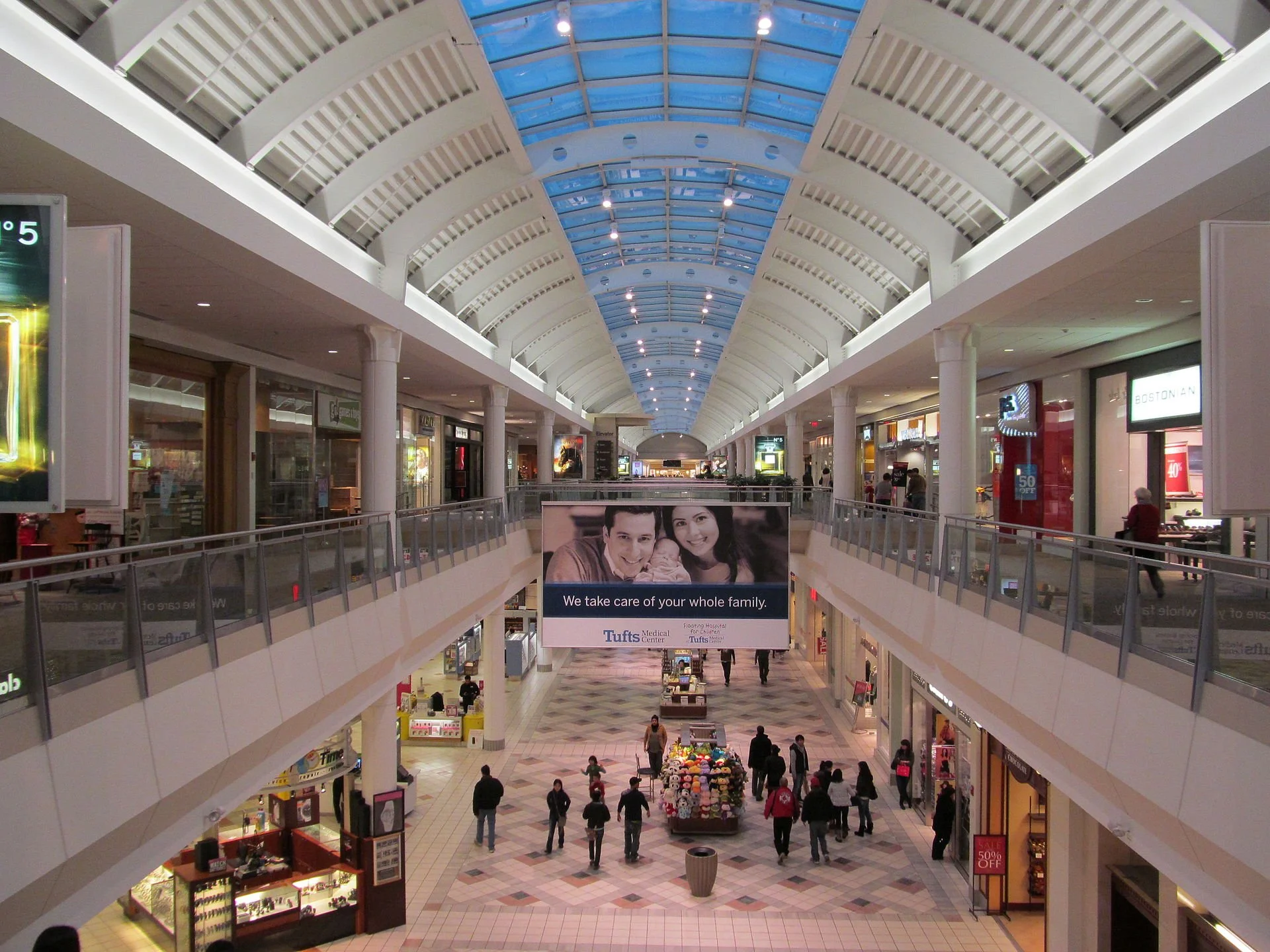
Inside South Shore Plaza in 2012
— Photo by John Phelan
Adapted from Robert Whitcomb’s “Digital Diary,’’ in GoLocal24.com
Everybody knows that we need more housing, but far too many groups fight building it even in places where it makes the most sense.
Consider how neighborhood groups in Braintree, Mass., are fighting a proposal by ZOM Living to put up 495 apartments on part of the aged South Shore Plaza’s parking lots, which are now often much less than half filled even in prime shopping hours amidst the brick-and-mortar store implosion. The mall opened in 1961.
The idea is to turn the location into a vibrant mixed-use community on what is now wasted space. It’s in a densely populated area very close to Boston and is served by the MBTA. Further, the project would bring the town much needed property-tax revenue, some of it as a result of new business at the surviving stores from people living in the new complex.
Braintree’s population grew by about 3,000, to about 39,000, between 2010 and 2020, during which time the town only added 775 housing units, according to a town planning document.
But the housing plan has fervent foes, who say that they don’t want more traffic, though many of the apartments’ residents would take public transportation and do much of their shopping and other activities right there in the ZOM development. The foes also fear that it would crowd Braintree’s now-underfunded public schools, though the project could produce more money for the schools. There also seems to be concern that riff raff will occupy some of the apartments, rather than the allegedly respectable suburban folks who live in houses.
In any event, whether it’s solar arrays, wind turbines or much needed housing, we need to use the ever increasing wasted space on mall parking lots.
Hit this link for the aforementioned Braintree master plan.
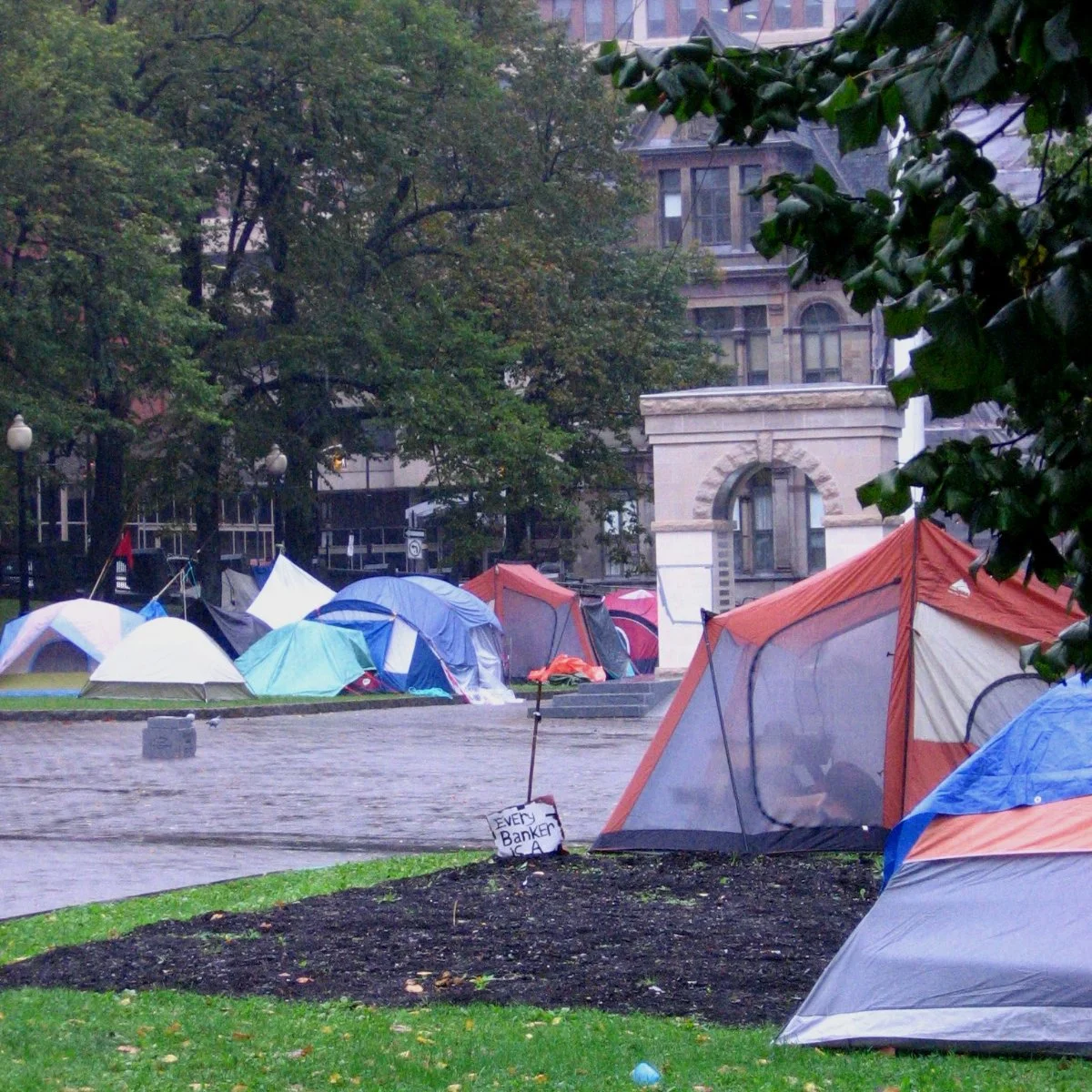
What’s next? Huge tent cities to house those who can’t afford to live under roofs?
If Blue States are to compete with Red ones in luring and keeping workers, they must put up much more housing to bring rental and purchase costs under control. The pull-up-the-bridge approach looks like a slow-motion economic disaster.
Unless artificial intelligence makes many of those workers redundant.
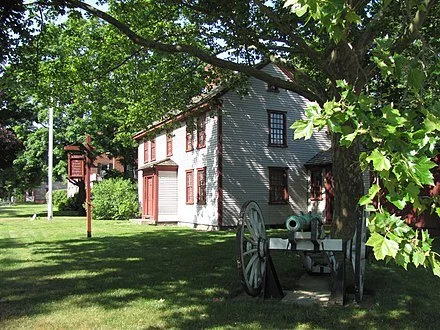
The Gen. Sylvanus Thayer birthplace in Braintree.

‘Pick up your clothes, Jack’
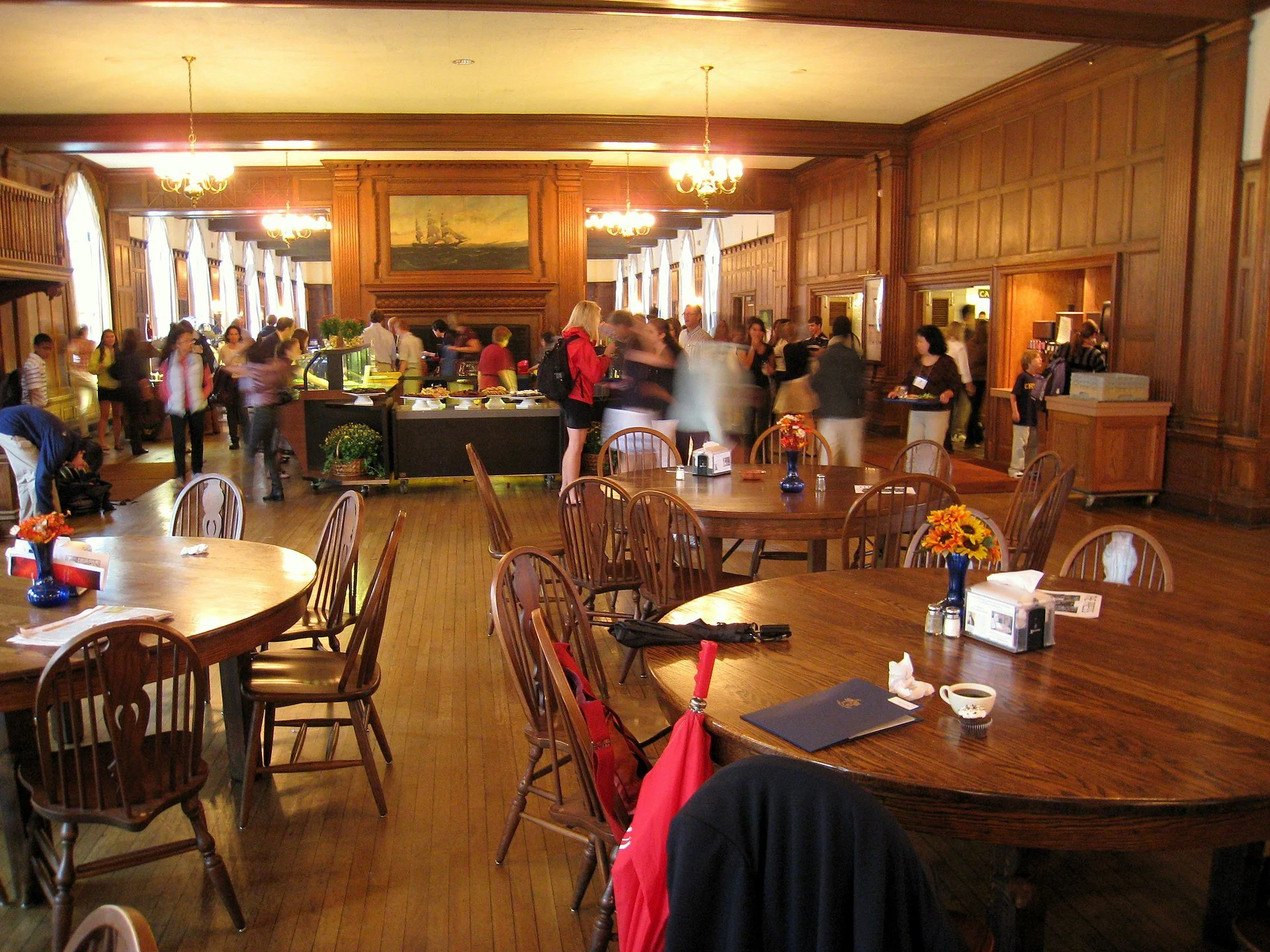
Dining hall at Choate Rosemary Hall
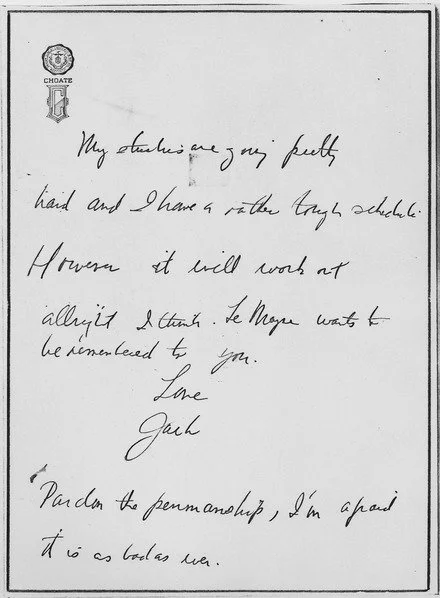
John F. Kennedy, Choate Class of 1935, writes home on school stationery to say his "studies are going pretty hard" and mentions LeMoyne (“Lem’’) Billings '35, his roommate and lifelong closest friend. Billings was gay.
“Dear Jack: In looking over the monthly statement from Choate, I notice there is a charge of $10.80 for suit pressing for the month of March. It strikes me that this is very high and while I want you to keep looking well, I think that if you spent a little more time picking up your clothes instead of leaving them on the floor, it wouldn’t be necessary to have them pressed so often.’’
Letter in 1932 from business mogul Joseph P. Kennedy to his 14-year old son, John F. Kennedy, then at the Choate School, the exclusive boarding school in Wallingford, Conn. The institution is now called Choate Rosemary Hall, after the two schools merged, in 1971. Rosemary Hall was a girls’ school, and so the merger created a co-ed institution.
The future president could be very careless about a number of things, including in his future hyper-active sex life.
‘Humble observer of the world’

“The Air We Breathe” (oil on canvas), by Bernardson, Mass.-based artist Cameron Schmitz, in her show, “The Space Between,’’ at Kingston Gallery, Boston, May 3-28.
The gallery says:
“Painting is a metaphor for Cameron Schmitz’s perception of life, where she explores the inspiration of tender relationships, and the wonder and despair of being a woman, mother, working artist, and humble observer of the world. Working primarily in the mode of intuitive abstraction, Schmitz has discovered how a painting can create space for both an understanding of life and the valuable admission of not knowing. Her approach to abstract painting is informed by a background in both landscape and figurative painting.”
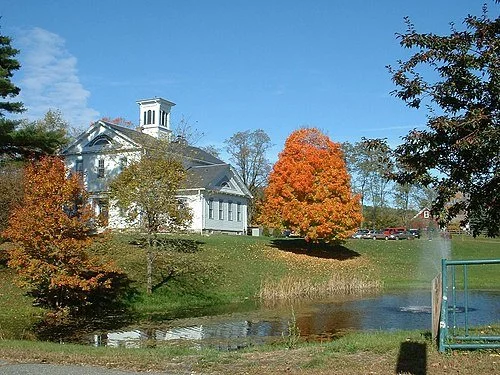
This building, now housing the Bernardson Historical Society, was formerly the home of the historically important educational institution called The Powers Institute.
Trying to understand offshore wind turbines' ecological effects

Wind energy lease areas off the southern coasts of Massachusetts and Rhode Island as of October, 2022


From Mary Lhowe’s very valuable article in ecoRI News:
“{C}an wind turbines off the coast of Rhode Island live up to their renewable energy promise? And what effects will they have on life in the sea?
“Hundreds of experts from the U.S. Department of the Interior down to local fishermen and town planners are puzzling over these questions, especially now, during the permitting and approval process of the Revolution Wind project, in which developers Ørsted and Eversource hope to install up to 100 wind turbines on the Outer Continental Shelf (OCS) about 18 miles southeast of Point Judith. Cables to transmit power to the grid would make landfall in North Kingstown, and the project is expected to be online by 2025. The Draft Environmental Impact Statement for the project was published last fall.’’

Jim Hightower: Would they kill your granny to make a buck?
From OtherWords.org
There are industries that occasionally do something rotten. And there are industries, such as Big Oil, Big Pharma and Big Tobacco, that persistently do rotten things.
Then there is the nursing-home industry — where rottenness has become a core business principle.
The end-of-life experience can be rotten enough on its own, with an assortment of natural indignities bedeviling us. Good nursing homes help patients gently through this time. In the past couple of decades, though, an entirely unnatural force has come to dominate the delivery of aged care: profiteering corporate chains and Wall Street speculators.
The very fact that this essential and sensitive social function, which ought to be the domain of health professionals and charitable enterprises, is now called an “industry” reflects a total perversion of its purpose.
Some 70 percent of nursing homes are now corporate operations, often run by absentee executives who have no experience in nursing homes and who are guided by the market imperative of maximizing investor profits. They constantly demand “efficiencies” from their facilities — which invariably means reducing the number of nurses, which invariably reduces care, which means more injuries, illness and deaths.
As one nursing expert quoted by The New Yorker rightly says, “It’s criminal.”
But it’s not against the law, since the industry’s lobbying front — a major donor to congressional campaigns — effectively writes the laws, which lets corporate hustlers provide only one nurse on duty, no matter how many patients are in the facility.
When a humane nurse-staffing requirement was proposed last year, the lobby group furiously opposed it, and Congress dutifully bowed to industry profits over grandma’s decent end-time. After all, granny probably doesn’t make campaign donations.
So, as a health-policy analyst bluntly puts it, “The only kind of groups that seem to be interested in investing in nursing homes are bad actors.” To help push for better, contact TheConsumerVoice.org.
OtherWords columnist Jim Hightower is a radio commentator, writer and public speaker.
Artists from the top of the world

By Tibet native Tashi Norbu, in the group show “Across Shared Waters,’’ at the Williams College Museum of Art, Williamstown, Mass., through July 16.
— Photo courtesy artist.
The museum says:
“Across Shared Waters’’ is exhibition of work by contemporary artists of Himalayan heritage alongside traditional Tibetan Buddhist artwork from the Jack Shear Collection. The work explore "themes of identity, consumerism, place, and cultural expectations." Some use traditional Tibetan cultural markers while others work outside of that framework.
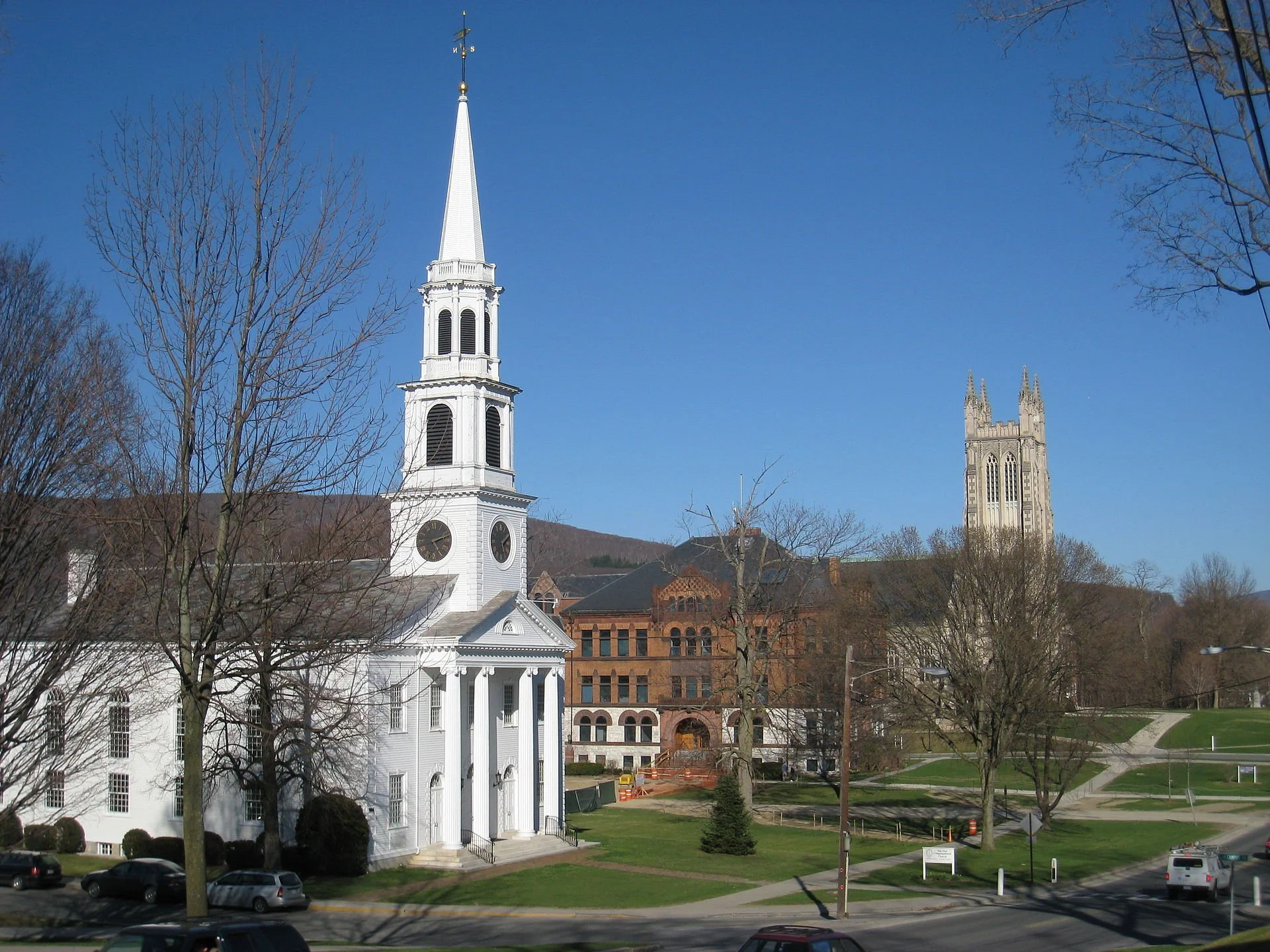
Main Street in Williamstown
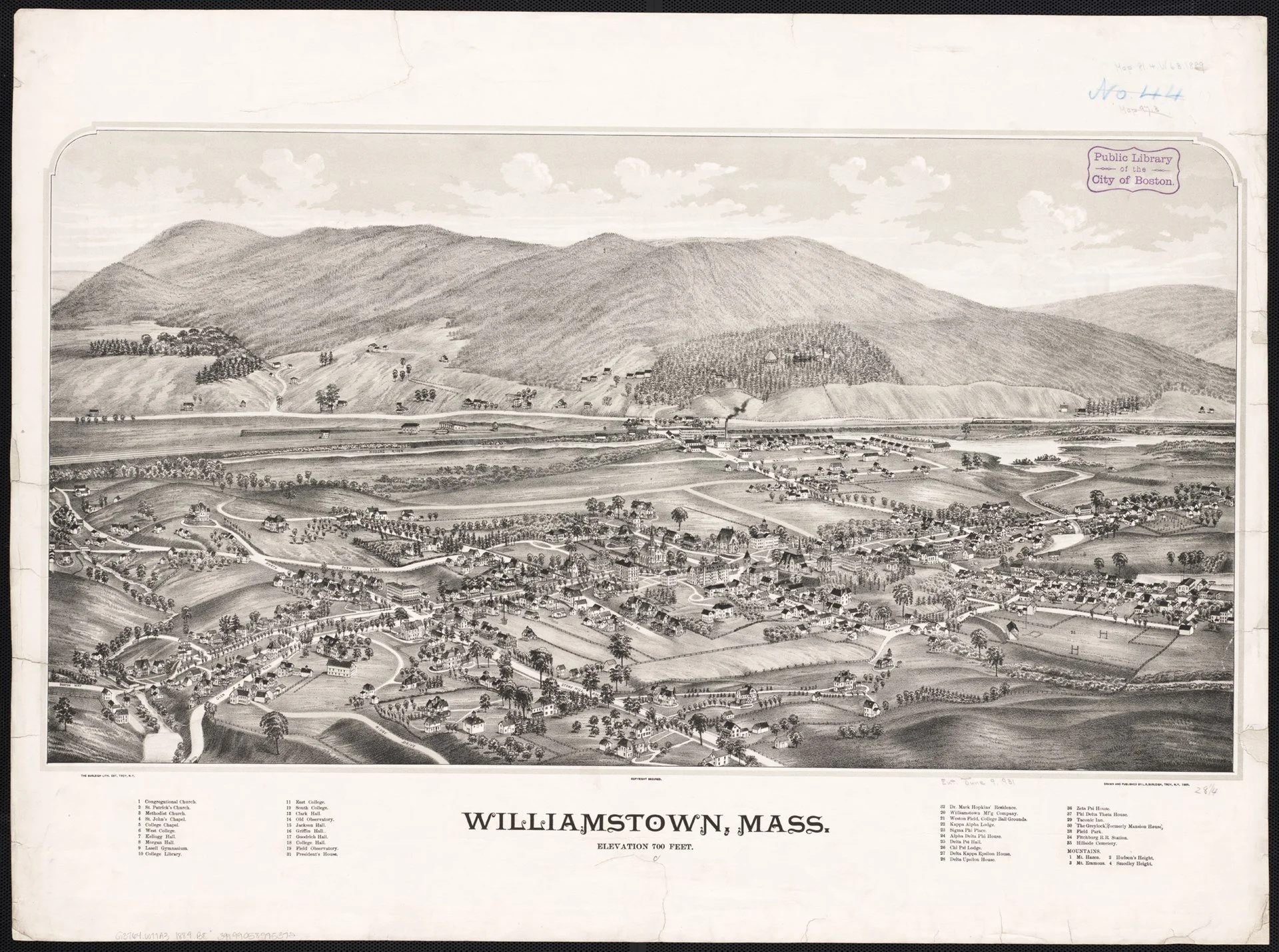
1880’s map, with Mt. Greylock looming.
Just a quick kiss

“Petite Confidence” (steel), by Franco-American artist Pascal Pierme, in his show at Lanoue Gallery, Boston, through March 18.
He says:
“{The late French President| Francois Mitterrand said, ‘I love the person who is searching, yet I am afraid of the one who thinks he has found the answer.’ In my life I have much more pleasure with the questions than with finding the answers, except when the answer is a new question. And that is where the obsession to create begins.
‘‘...For decades, balance, movement, inquiry, architecture and nature have been reoccurring themes in my work. I am interested in assimilating what is not supposed to fit – the combining of contrasting elements. My main ingredient is chemistry. I feel the movement and then freeze that moment in the interaction and take a ‘snapshot’ – capturing a split second in the evolution. Thereby creating something that is abstract and at the same time, quite figurative. As such, my work can be experienced as organic. It moves. It is alive, it comes from somewhere, it is going somewhere, and you feel that by what you see.
‘‘I try to sculpt in a way where I can change my mind until the last minute. My creativity is at its best when I push the medium of my work to its limit.’’
Death village
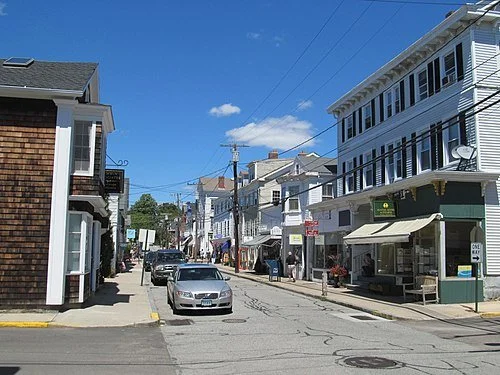
Water Street in Stonington, Conn.
“Shortly before I died,
Or possibly after,
I moved to a small village by the sea….
The rocky sliver of land, the little houses where the fishermen once lived.…”
— From “In the Village,’’ by James Longenbach (1959-2022), America poet. The poem is inspired by his time in Stonington, Conn.

The origins of the U.S. Valentine’s Day card business

Esther Howland Valentine card, "Affection" ca. 1870s
Edited from a New England Historical Society report:
“Worcester once reigned as the Valentine Capital of the United States. Esther Howland, born in Worcester in 1828, went into the Valentine business in her home town after graduating from Mount Holyoke College. It grew into the world’s largest greeting-card enterprise, until World War II caused paper shortages that put an end to the business. Her company was called the New England Valentine Co.’’
New program to use blood tests to identify Alzheimer’s risk
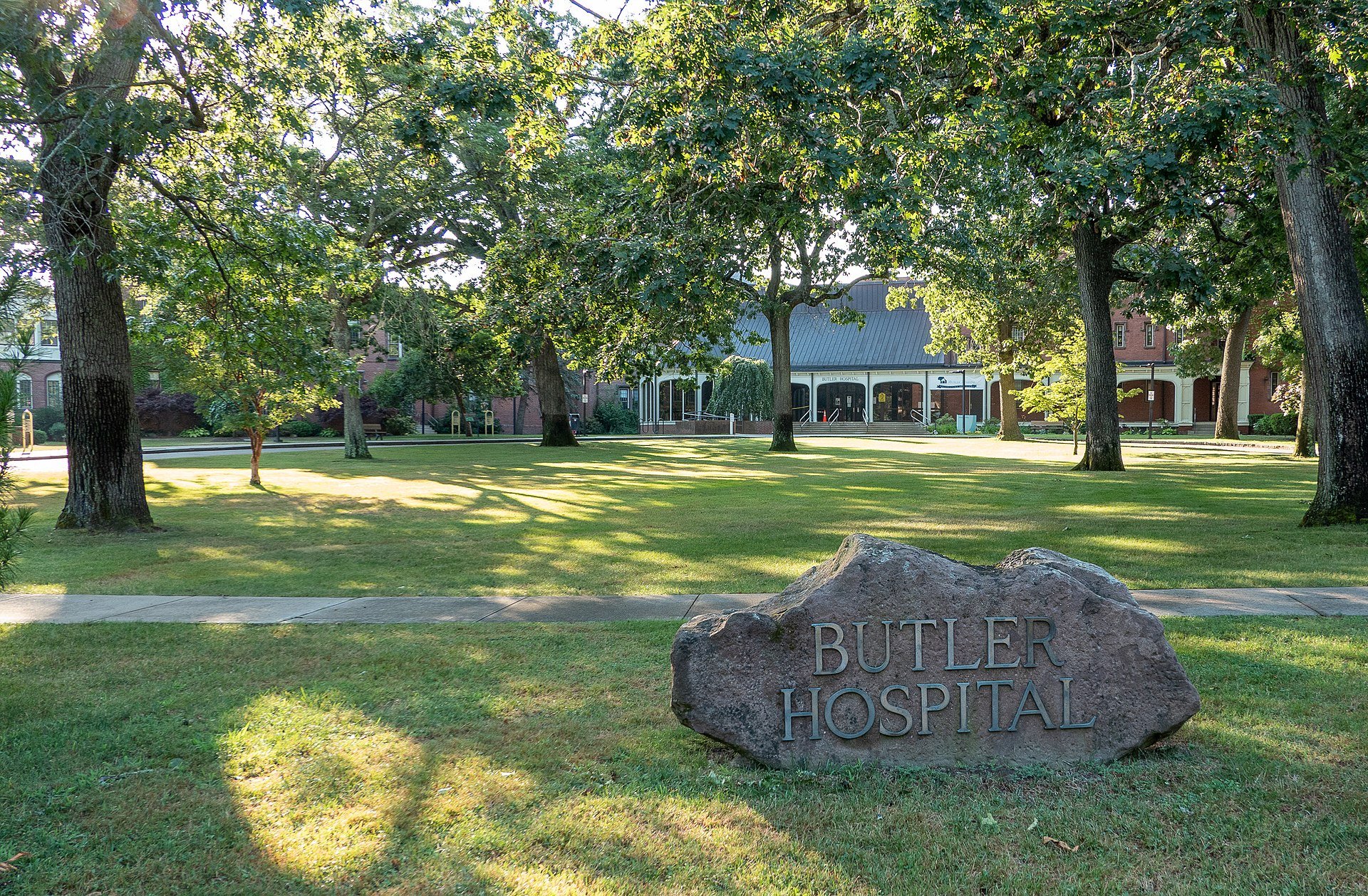
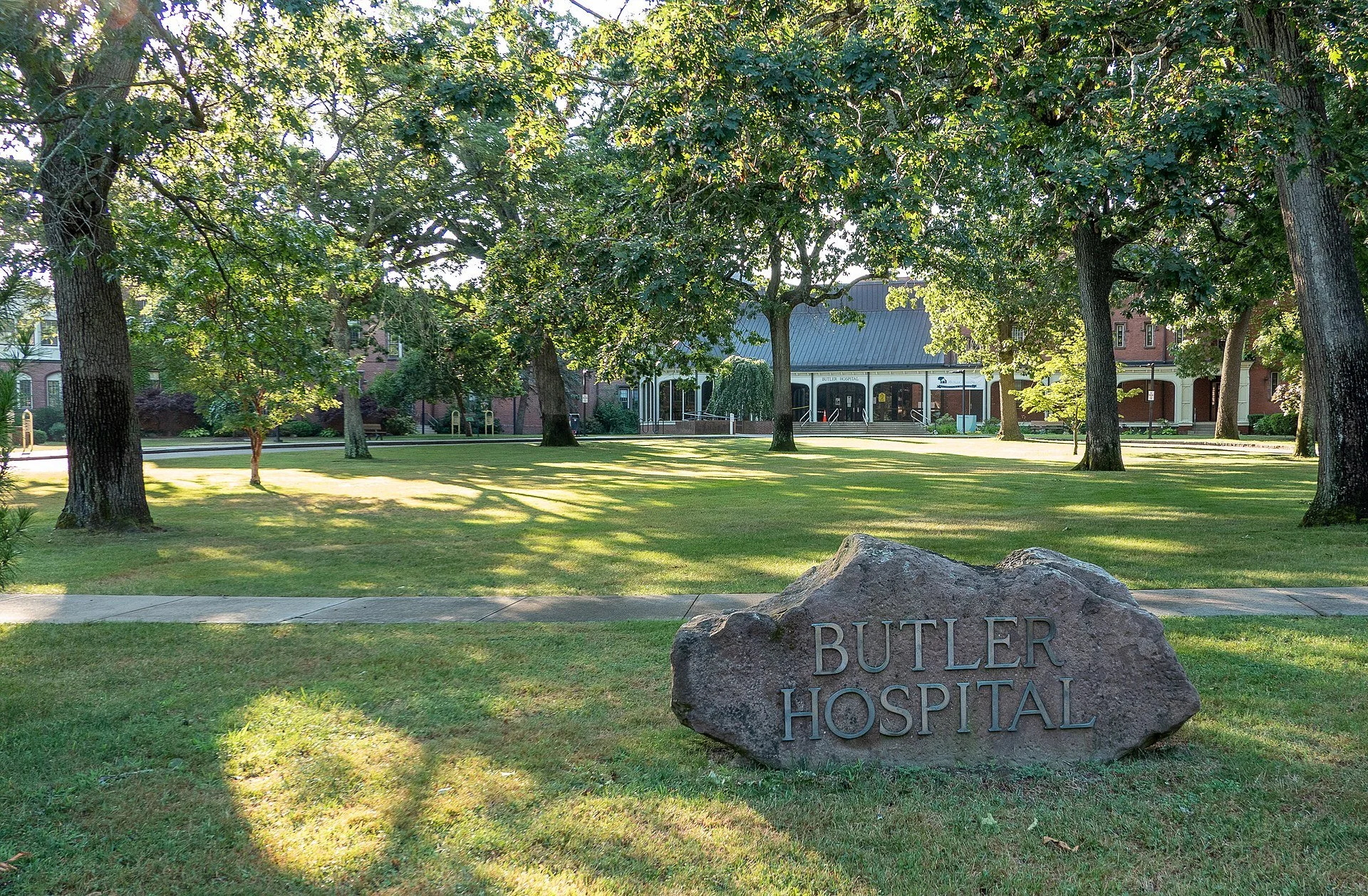
On Butler Hospital’s verdant campus, on the mostly affluent East Side of Providence. Founded in 1844, it’s one of the oldest hospitals in America for the treatment of psychiatric and neurological illnesses. It has treated more than a few well-known people.
— Photo by Kenneth C. Zirkel
Edited from a New England Council (newenglandcouncil.com) report
Brown University, in Providence, is partnering with the Memory and Aging Program of Butler Hospital, in Providence, to start a new BioFinder aimed at developing new methods to access risk for developing Alzheimer’s disease.
The study will look at blood tests of individuals between 50 and 80 who are currently healthy but face higher risk for developing Alzheimer’s than the general population. It will include 200 participants overseen by Brown and 400 by Lund University, in Lund, Sweden.
“Developing easy-to-use blood tests will lead to early diagnosis and treatment and be a game-changer in the fight against Alzheimer’s disease,” said Dr. Stephen Salloway, the principal investigator of the BioFinder-Brown site.
Can’t run the Nutmeg state at the same time

The governor’s mansion in Hartford.
“I’m having trouble managing the mansion {official governor’s residence in Hartford}. What I need is a wife.’’
—Ella T. Grasso (1919-1981), a moderate Democrat who was Connecticut’s governor from 1975 to 1980, when she resigned because of illness.

‘Bringing The Holy Land Home’

Photographic composite showing roundels surrounded by partial Latin text in the show “Bringing the Holy Land Home: The Crusades, Chertsey Abbey, and the Reconstruction of a Medieval Masterpiece” in the Iris and B. Cantor Art Gallery, at The College of the Holy Cross, Worcester, through April 6.
— Photo © Janis Desmarais and Amanda Luyster.
The gallery says that the exhibition is focused on “the famed Chertsy Combat Tiles, a series of tiles that was created around 1250 forChertsey Abbey, in England. This exhibit includes artwork on loan from the British Museum, the Metropolitan Museum of Art, and the (Boston) Museum of Fine Arts, Boston. The tiles are put into context alongside Islamic and Byzantine artwork that lends a wider view to the historical works.’’
A business transaction
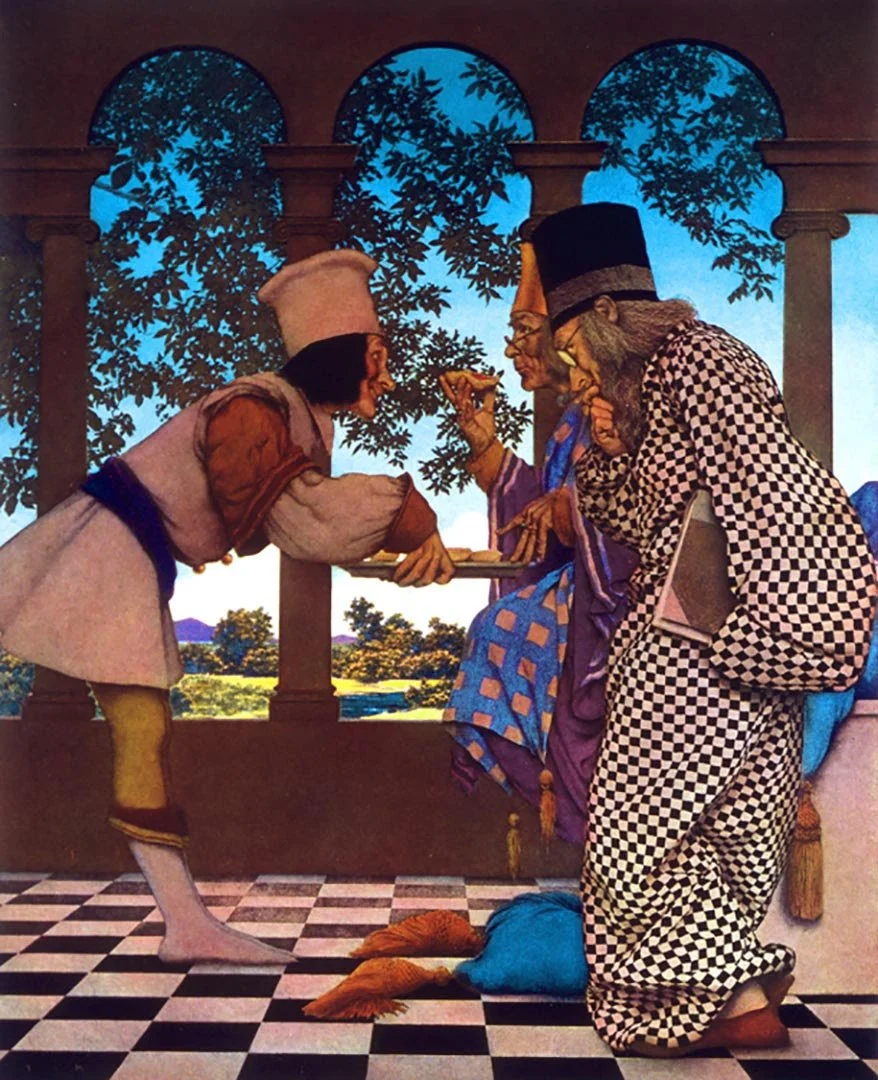
“The Knave of Hearts - The King Samples the Tarts” (oil on paper on board), by Maxfield Parrish (1870-1966), at the National Museum of American Illustration, Newport, R.I.
— Copyright the National Museum of American Illustration
Parrish was an important member of the famous art colony in Cornish, N.H., where he had an estate called The Oaks, which is still standing. See the Saint-Gaudens National Historical Park, also in Cornish. The famously reclusive writer J.D. Salinger lived in Cornish.
Video: Explaining the colorful career of a too little known Founding Father
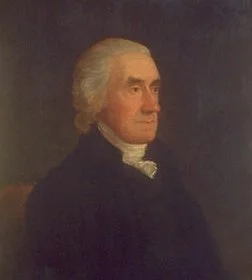
Portrait of Robert Treat Paine, by Edward Savage and John Coles, Jr.
— Collection of the Massachusetts Historical Society, Boston.
A descendent, Thomas M. Paine, tells us the riveting story of American Founding Father/signer of The Declaration of Independence, lawyer, prosecutor, judge, politician and science-and-technology enthusiast {hit this link for video} Robert Treat Paine (1731-1814). (He had a special interest in gunpowder and fireworks and in clocks. )
In legal and government settings, the courageous and eloquent Paine was known for the frequency of his objections.
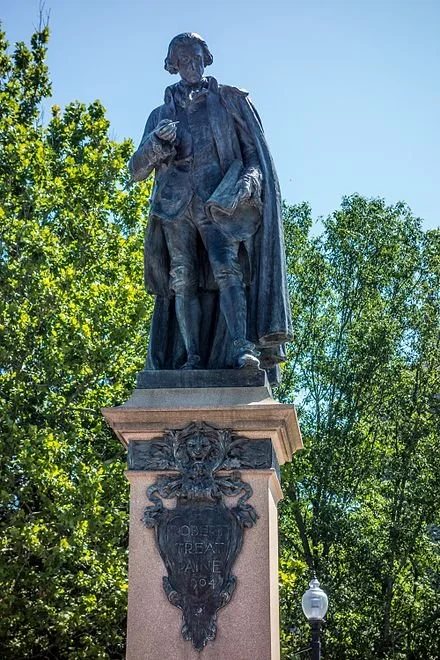
Statue of Robert Treat Paine, by Richard E. Brooks (1904), in Taunton, Mass., where Paine was mostly based in 1761-1780.

Llewellyn King: What made me an AI enthusiast.

WEST WARWICK, R.I.
I have gone over. All the way. I have fallen in love with artificial intelligence. We need it, and I’m on board.
My conversion was sudden. It happened on one memorable day, Feb. 8, 2023. It was a sudden strike in a well-worn heart by Cupid’s arrow.
My love life with technology has been either unrequited or messy. I was always the one who blew the relationship, I admit that.
It started with computer typesetting. I was a committed hot-lead-type man. I didn’t want to see that painted lady, computer technology, destroying my divine relationship with hot type. But she did and when I tried to make amends, she was, er, cold, froze me out.
Likewise, as an old-time newspaperman, I was very proficient and happy with Telex. Computer technology separated us.
The worst of all was my first encounter with the internet.
I was pursuing the story of nuclear fusion at the Lawrence Livermore National Laboratory, in California. A lab technician tried to interest me in the new device he was using to send messages: the Internet. I blew it off. “That is just Telex on steroids,” I said.
Ms. Internet doesn’t care to be scorned and she nearly cost me my manhood — well, my publishing company — when she took her terrible revenge. She killed print papers as well as hot type. She was a vengeful siren that way.
My conversion to AI began innocently enough. I was listening to a reporter on National Public Radio explaining how Microsoft’s new AI search engine would not only change the world of online searching but would also give Google a serious run for its money — billions of dollars, I might say parenthetically.
The writing's on the wall for Google unless it can get its AI to market fast. I was intrigued.
The illustration used by NPR reporter Bobby Allyn was that of buying a couch and carrying it home in your car. The new search engine, Allyn explained, will tell you if the couch you want to buy will fit in your car. It will know the dimensions of the car and, maybe, of the couch too. Wow!
Then I went on to watch a wild, unruly hearing before the U.S. House Oversight Committee. A long-suffering panel of former Twitter executives faced some pointed abuse from the Republican members. Some of those members never got to pose a question: Their time was entirely taken up castigating the witnesses over alleged collusion with the Biden administration and over Hunter Biden’s laptop — the holy grail for conspiracy theorists. It was a performance worthy of a Soviet show trial.
The worst aspects of the new House were on display. Alexandria Ocasio-Cortez (D.-N.Y.) was visibly flustered because she wasn’t in her seat when her time to question the witnesses arrived. She rushed back to it and was so excitable that she was nearly incoherent.
Then there was Marjorie Taylor Greene (R.-Ga.), who was adamant that Twitter was advancing a political agenda by accepting the science that vaccines helped control the COVID-19 outbreak. She asserted that Twitter had a political objective when it denied her free-speech rights by suspending her account, after frequent warnings about her dangerous public health positions opposing vaccinations.
The lady's not for turning. Not by facts, anyway. That was clear. Any Southern charm she may possess was shelved in favor of invective. She told the former Twitter executives that she was glad they had been fired.
The clincher in my conversion to AI had nothing to do with the brutal thrashing of the experts, but with the explanation by Yoel Roth, former head of Trust and Safety at Twitter, who with forbearance explained that there were then and are now hundreds of Russian false accounts on Twitter aimed at influencing our elections and reaching deeply into our politics. Likewise, Iranian and Chinese accounts.
That is when it occurred to me: AI is the answer. Not the answer to the mannerless ways of the House hearing, but to the whole vulnerability of social media.
We have to fight cyber excess with cyber: Only AI can deal with the volumes of malicious domestic and foreign material on the net. Too bad it won’t resolve the free-speech issues, or the one that emerged at the House hearing: the right to lie without restraint.
This AI doubter is now an enthusiast. Bring it on.
Llewellyn King is executive producer and host of White House Chronicle, on PBS. His email is llewellynking1@gmail.com and he’s based in Rhode Island and Washington. D.C.

The flippers make Mass. housing crisis worse
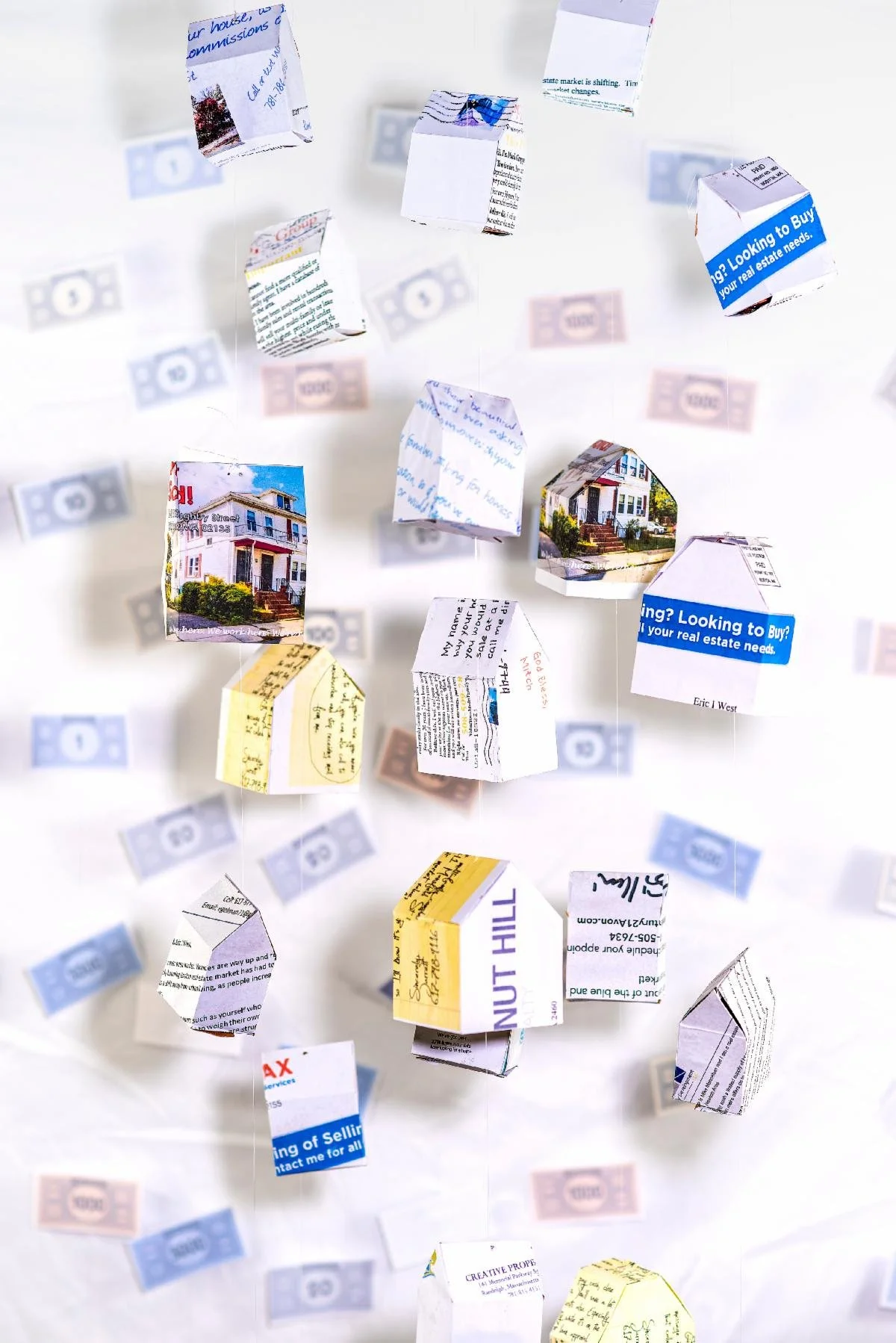
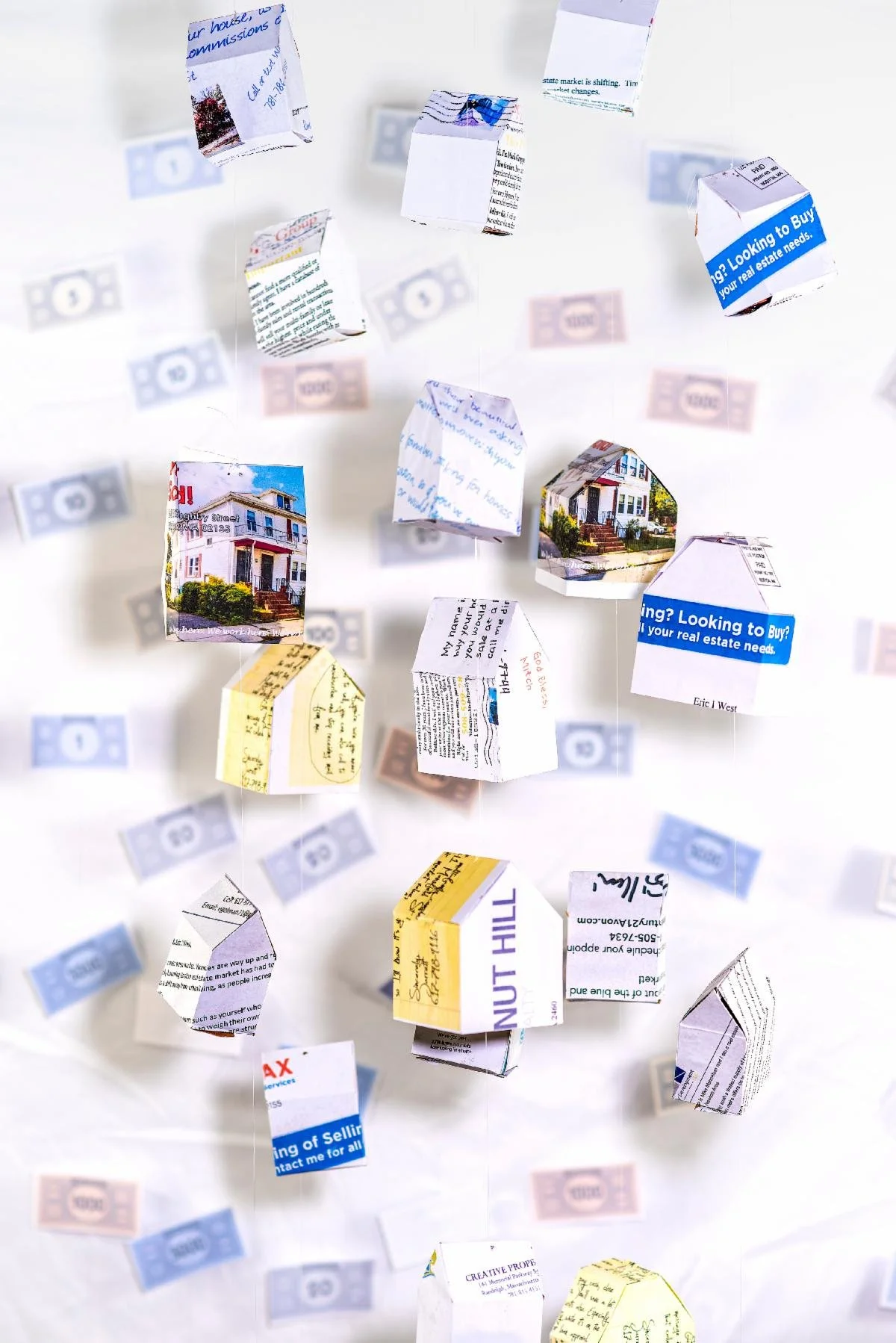
“There Goes the Neighborhood (mixed-media installation), by Brookline-based Ronni Komarow, at Galatea Fine Art, Boston, March 2-April 2.
She explains:
"In 2021, business entities purchased nearly 6,600 single-family homes in Massachusetts, more than 9 percent of all single-family homes sold and nearly double the rate of such purchases a decade before. Investors and other businesses...spent more than $5.6 billion in Massachusetts purchasing these properties, the majority in cash, to rent or flip as the state’s housing market rises.
“Investors are spurred by high demand for housing, rising rents and soaring home values, making it a lucrative business. But housing advocates say the trend is making it harder for individual homeowners to buy and driving up rents, so renters get priced out….
“As an advocate for historic preservation in Boston, I'm mindful that many of these would-be buyers would demolish a purchased home quickly and replace it with the largest, cheapest structure possible, to be sold at the greatest profit. None of these would-be buyers live in the city or have any interest in neighborhoods, community preservation, or quality of life for local residents.’’


Those not entirely wasted hours at journo-favored bars

— Photo by Ragesoss
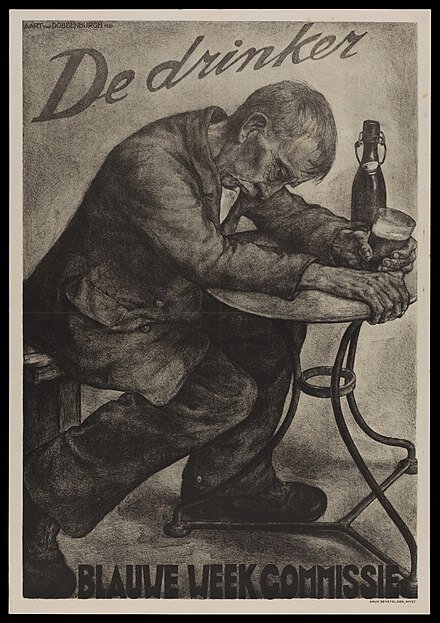
A 1936 anti-drinking poster by Aart van Dobbenburgh
Adapted from Robert Whitcomb’s “Digital Diary,’’ in GoLocal24.com
For various reasons, going to New York City, as I did recently, reminds me of the bars that we newspaper and magazine reporters and editors used to patronize. This wasn’t a particularly healthy practice, but these places planted some evergreen memories.
Some of the joints I most remember:
Foley’s, in Boston, beloved of Boston Herald Traveler, Record American and Globe editors and reporters, especially scruffy police reporters, with their tales of gruesome or comic crimes and police and political corruption, and news and copy editors having their “lunch” at around 8:30 p.m. between edition deadlines.
Some actually consumed the bar’s pickled eggs as they knocked back their boilermakers --- a shot of whiskey followed by a beer, or pouring a shot of whiskey into their beers and then chugging that – or downing other, not very elegant beverages. I was often amazed that some of these journos could function at all under deadline pressure upon returning to the newsroom after “lunch” at Foley’s. Certainly many of them looked ill and aged fast. Some had noses that were tributes to the distillers’ art.
The older guys (and virtually all these colleagues were men) told vivid stories going back to the ’40s of life in what was then a gritty city. Others were taciturn, as if battered into silence by bad hours and what they had seen and heard on the job in a business in which grim news usually sells better than good.
Then there was the bar off Broad Street in Lower Manhattan where a couple of Wall Street Journal editing colleagues and I would occasionally retreat in mid-evening after work. (We’d stop working soon after listening to WQXR, then The New York Times’s radio station, to learn if we had missed a story that our biggest rival had so we could make necessary adjustments. The station helpfully broadcast a review of its next day’s Page One at 9 p.m.)
One night we came across what appeared to be a corpse on the sidewalk outside the bar that appeared to have been there for a while. A cop came along to deal with the body. (The neighborhood was virtually deserted at night in those days because few people lived there then and there were few food stores, etc., to serve them. Now there are many apartment buildings, put up during the off-and-on boom years from the mid-‘90s to COVID, and so it has much more of a 24/7 feel, though less than before the pandemic.)
In the bar we almost got into a fist fight with a drunk who insulted our colleague Ruth; in the event, he was evicted from the establishment.
I well recall the bar/restaurant in Wilmington, Del., called The Bar Door. That’s where some of us working for the News Journal, The First State’s statewide rag, then owned by the remarkably kindly DuPont family, would lunch at least once or twice a week. My colleagues there were the most abstemious of the newspaper types I hung out with in my career, usually just confining themselves to a Rolling Rock beer. And the food, especially softshell crab from nearby Chesapeake Bay, was good, so there was less drinking on empty stomachs.
The local pols, such as, I think, Joe Biden, then a recently elected U.S. senator, would show up to gossip. My favorite was Melvin Slawik, the charming New Castle County (which includes Wilmington) executive, who was a font of stories, including very funny, self-deprecating ones about himself. He later served time for perjury, obstruction of justice and bribery. He was one of the most likeable people I’ve ever met.
There was Le Village, a bar and restaurant dangerously close to the offices of the International Herald Tribune, in the affluent Paris inner suburb of Neuilly. Because French labor law mandates frequent work breaks, too many of the staff spent too much time there drinking, and, as at all journalist hangouts in those days, smoking. Several were what you might call merely recreational alcoholics. (Growing up, I learned enough about alcoholics, recreational and full time, to last me several lifetimes.)
As the finance editor, in charge of overseeing a third of the paper, I was sometimes put in the awkward position of trying to stop the working-hours drinking of people reporting to me. In one case, I had to remove an engaging and smart, but too often drunk, colleague from consideration for a promotion. In any case, labor law sharply restricted disciplining staffers. It was tough to hire people and even tougher to fire them.
There were other journo bars too, where I heard wild stories that could be the bases of a few novels and/or film-noirish movies, some of which stories were actually true. But my time in such places mostly ended about 30 years ago. One reason I’m still alive.
Oh, yes! There was a bar called Hope’s that was heavily patronized by Providence Journal people, and owned by two of them, but I only made a few clinical research visits.
Malcolm Muggeridge (1903-1990), the great English journalist, satirist, spy, womanizer and late-in-life religious fanatic, once said something to the effect that he regretted the smoking he did, but not the drinking, because of the stories and camaraderie he got out of the latter. But drinking and smoking are two devils embracing.