
Vox clamantis in deserto


James T. Brett: Omnibus federal bill advances some key New England programs

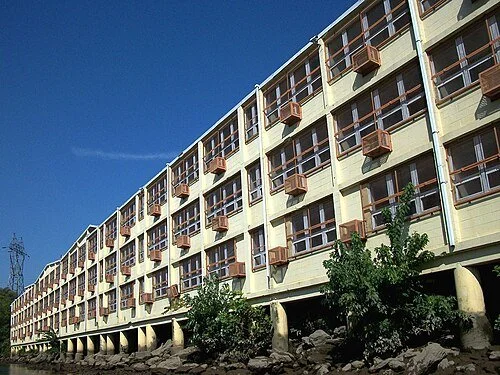
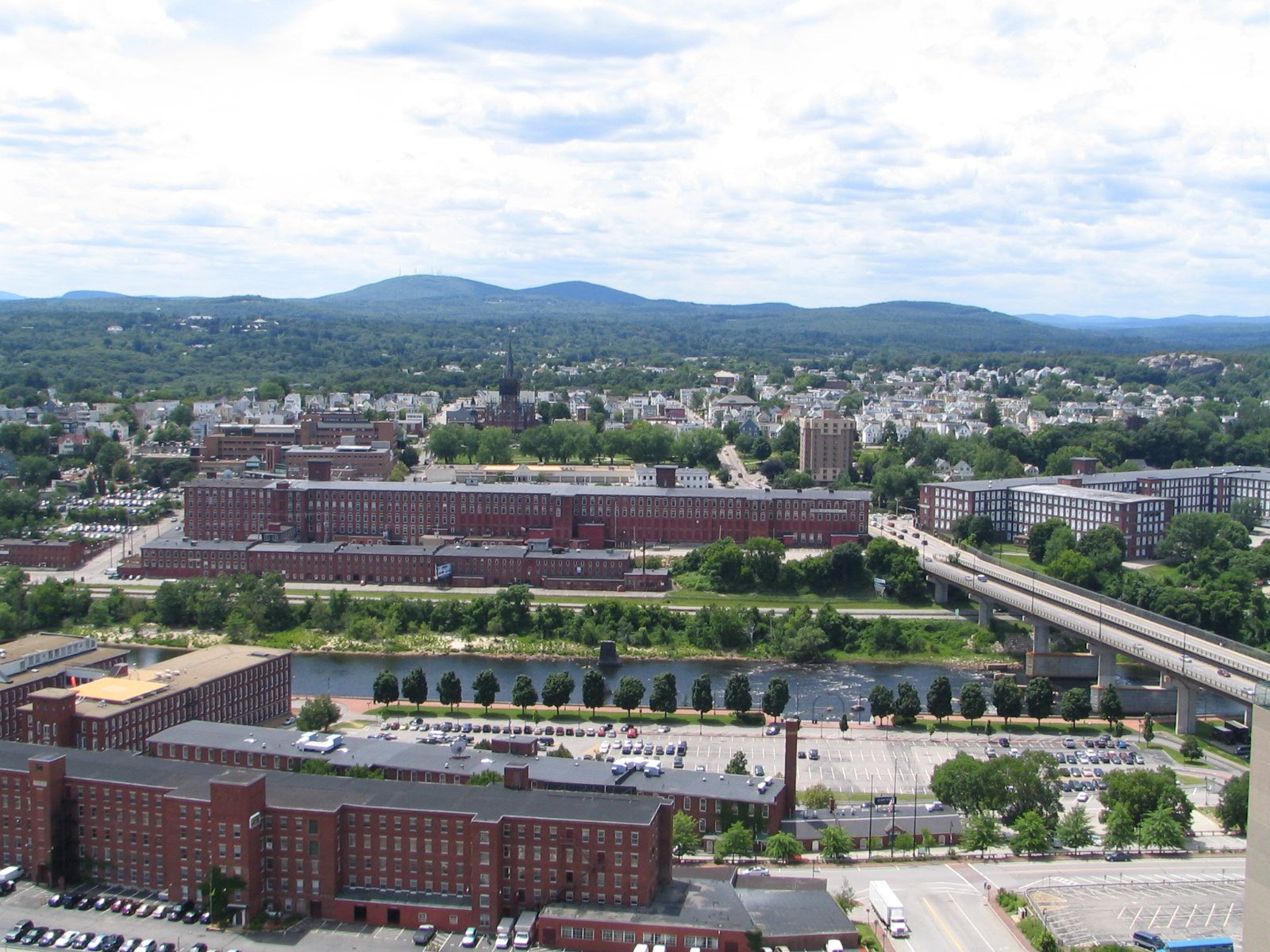
Manchester, N.H., with its old textile mills along the Merrimack River converted to other uses, such as technology and health care.
BOSTON
In the final days of the 117th Congress, just a few weeks ago, Congress passed a $1.7 trillion Omnibus Appropriations Bill for fiscal 2023, and President Biden signed it into law on Dec. 29. Included in this sweeping legislation are landmark investments in education, health care protecting our environment, supporting working families and investing in research and innovation. The New England Council – the nation’s oldest regional business association – was pleased to see many of our longtime priorities included, and we believe that this legislation will help drive our region’s continued economic growth.
Here are a few of the biggest wins for New England in the bill:
Increased Pell Grant – The Pell Grant is a key tool to expanding access to higher education, providing support for low-income students to attend college. The council has long supported increasing the maximum Pell Grant amount – in fact, we have advocated doubling the maximum grant. While the omnibus did not go so far as to double Pell, it did increase the maximum award by $500, to $7,395, for the 2023-2024 school year, marking the largest increase since the 2009-2010 school year. This boost is a step in the right direction toward making college more affordable for millions of students and preparing the workforce of the future.
Federal Research Funding – New England is home to some of the top research institutions, including world-class universities and hospitals. These facilities conduct research on some of the most pressing medical and scientific challenges facing our nation. As such, the council has long supported federal investments in research, and so we were pleased that the bill included $47.5 billion for the National Institutes of Health (NIH)—a 5.6 percent increase—as well as an historic 12 percent increase for the National Science Foundation (NSF), to $9.9 billion. These investments will undoubtedly spur medical and scientific breakthroughs in our region, while supporting thousands of jobs at our research facilities.
Mental Health & Substance Abuse – The need for increased mental-health and substance-abuse services is one of the biggest health challenges facing our region, and the nation at large. The demand for services has only surged in recent years as the pandemic has presented new challenges for those who struggle with mental health and addiction. Fortunately, the spending bill included billions of dollars for new and increased services, including $1.01 billion for Mental Health Block Grants, $385 million for Certified Community Behavioral Health Clinics, and $1.6 billion to states to address the opioid-misuse epidemic through the State Opioid Response Grant. These funds will help expand much-needed services in our communities and set millions of people on the path toward recovery.
Energy Efficiency & Renewable Energy – The New England region is a leader in efforts to decrease carbon emissions and develop renewable-energy resources. The spending bill included a number of measures that will support this effort and help create new jobs in the clean-energy sector. The $3.46 billion appropriated in the bill for Energy Efficiency and Renewable Energy—a $260 million increase over the previous fiscal year—will allow for investments in vehicle technologies, hydrogen research and development, weatherization-assistance programs and renewable-grid integration, as well as marine, wind, and solar energy.
Retirement Savings – Finally, the spending bill also includes a number of provisions aimed at bolstering retirement savings and ensuring a secure financial future for millions of American workers. The bill included a legislative package championed by the dean of the New England House delegation, U.S. Rep. Richard Neal (D.-Mass.), known as SECURE 2.0. Specifically, the bill will expand access to retirement- savings-plan enrollment, allow emergency withdrawal from plans, increase the opportunity to make catch-up contributions, and support workers paying off student-loan debt, just to name a few. Inclusion of these provisions will undoubtedly help U.S. workers better prepare for their futures.
Beyond these provisions, the spending bill also includes investments to bolster working families, expand access to affordable housing, and support our law enforcement, military and veterans. The New England Council is grateful to our region’s congressional delegation for its members’ efforts to advocate for our region’s priorities in this important piece of legislation. We have no doubt that our region’s economy will benefit from the important investments this bill makes in the year ahead.
James T. Brett is the president & CEO of The New England Council, a Boston-based regional alliance of businesses, non-profit organizations,including and health and educational institution,s dedicated to supporting economic growth and the quality of life in New England.

Flag of the New England Governors Conference.
Art from memories
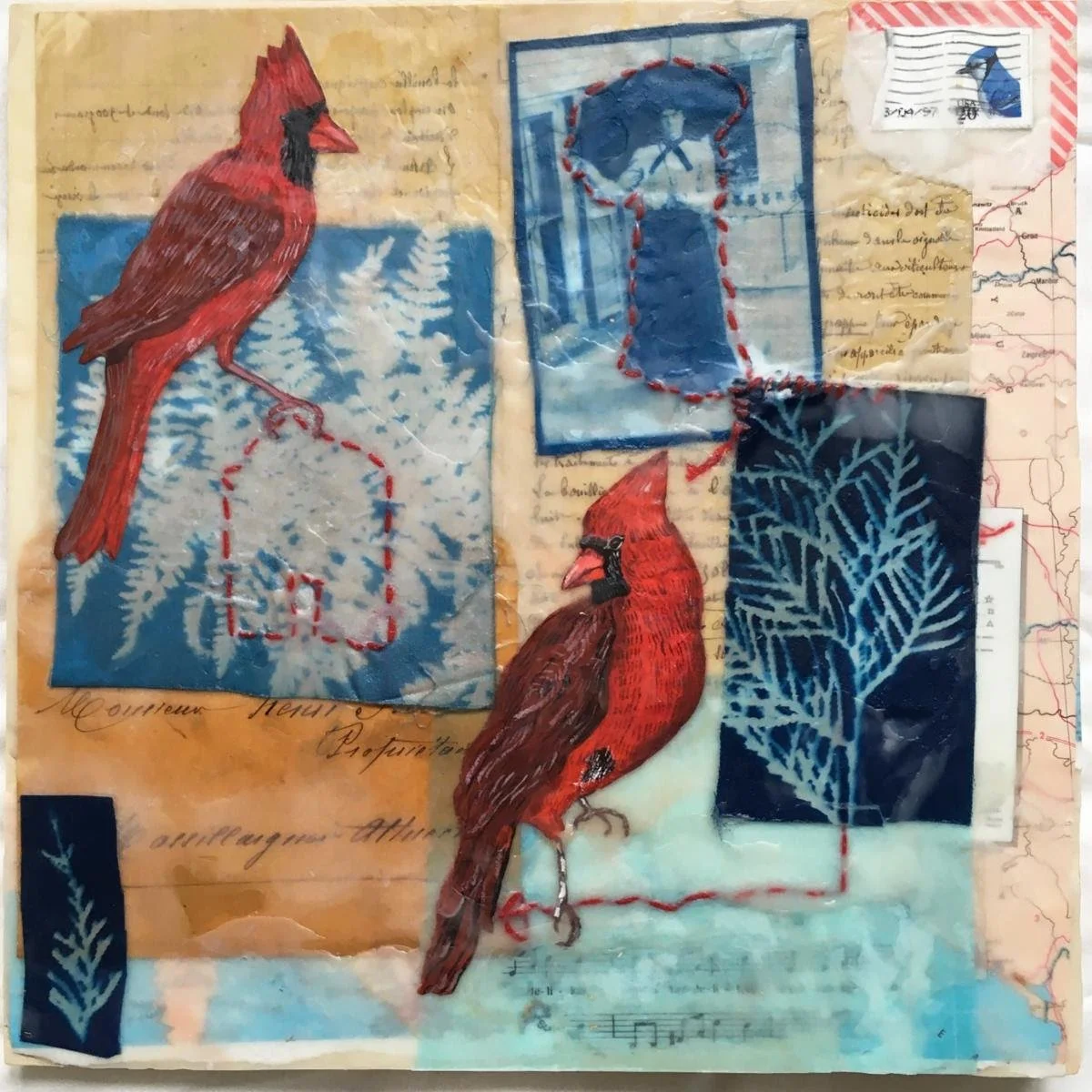
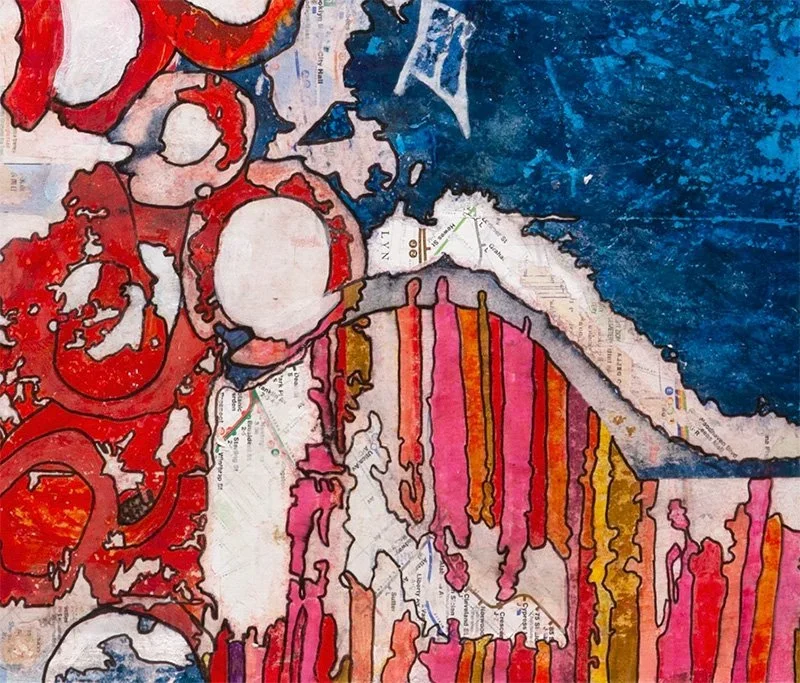
Mixed media, encaustic work by Boston area artist Veronique Latimer in the group show “New Year, New Work,’’ at 6 Bridges Gallery, Maynard, Mass, through Feb. 11. Ms.. Latimer enjoys creating art out of memories of childhood and mementos from the more distant past. Maynard is an old factory town that’s now a Boston suburb.
— Photo courtesy 6 Bridges Gallery

Making tracks to depravity
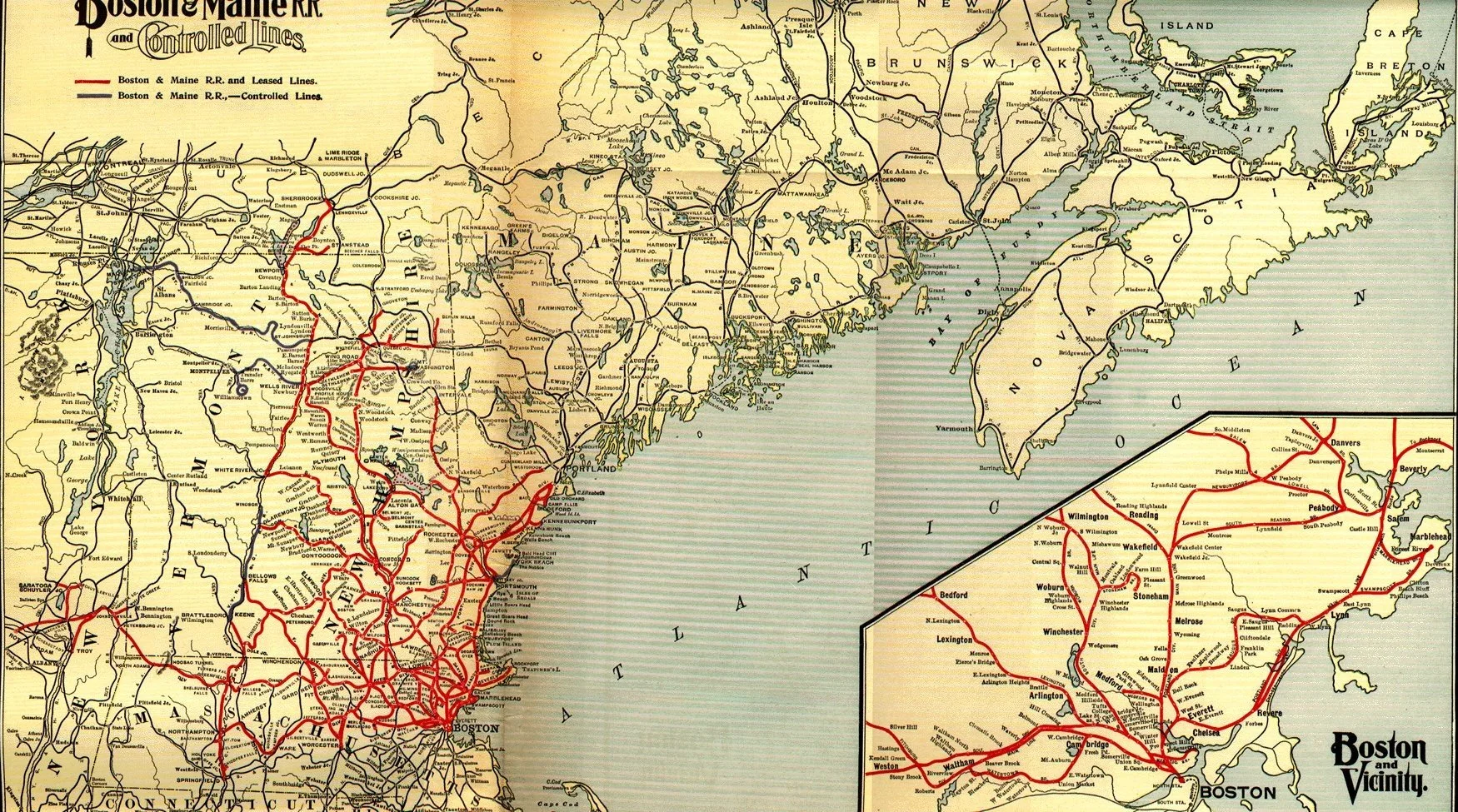
1916 map
“In my Aunt Martha’s day, to grow up in Gravesend {N.H.} was to understand that Boston was a city of sin. And even though my mother had stayed in a highly approved and chaperoned women’s residential hotel, she had managed to have ‘fling,’’ as Aunt Martha called it, with {a) man she’d met on the Boston & Maine {Railroad}.’’
— From the novel A Prayer for Owen Meany (1989), by John Irving (born in 1942 in Exeter, N.H.)
Unfriendly kingdom

Snowy owl
“How far did she fly to find
this pristine town on the edge of winter?
Crows have set up their kingdom—
a yacking flock louder than traffic
maims the morning air….
“Call the owl
sadness, the one who watches
from the other side.’’
— From “The Owl,’’ by Cleopatra Mathis (born 1947), American poet and a professor of English at Dartmouth College. She lives in Thetford, Vt.

United Church of Thetford
— Photo by Doug Kerr
‘Visionary Boston’
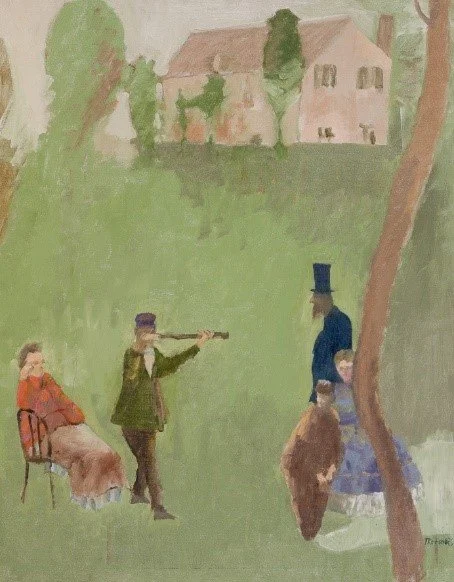
“Through a Glass Slightly” (1979), by the late Stephen Trefonides, in the show “Visionary Boston”, at the Danforth Art Museum, Framingham, Mass., Feb. 18-June 4.
The museum says:
“In the mid-twentieth century, one would not have described Boston as the center of the art world. However, despite a decades long struggle with modernism and with Abstract Expressionism gaining ground in New York, a parallel but distinct movement was stirring in New England. The relationships that flourished between painters, sculptors and photographers mid-century resulted in creative output that has shaped contemporary art in Boston into the twenty-first century.”
Useful and dangerous
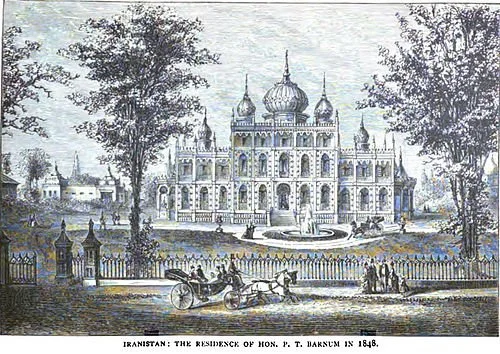
Iranistan was a Moorish Revival mansion in Bridgeport commissioned by P. T. Barnum in 1848. The grandiose structure survived only a decade before being destroyed by fire in 1857.
“Money is in some respects life's fire: It is a very excellent servant, but a terrible master.’’
— Phineas Taylor (P.T.) Barnum (1810-1891) an American showman, businessman and politician (most notably as mayor of his hometown, Bridgeport, Conn., and as a state legislator) remembered for promoting celebrated hoaxes and co-founding the Barnum & Bailey Circus (1871–2017) with James Anthony Bailey. He was also an author, publisher and philanthropist, though he said of himself: "I am a showman by profession ... and all the gilding shall make nothing else of me.’’ He is widely credited with the adage "There's a sucker born every minute,’’ although no evidence has been found confirming that he said this.
But not for exterior use

“Gloucester Linens” (acrylic on marine canvas), by Barbara Aparo, at the Cape Ann Museum, Gloucester, Mass.

The noted Shingle Style Essex Town Hall and Public Library, in Essex, Mass. (1894), designed by Frank W. Weston.
Don Pesci: Of manners, moral duties and the death penalty in Conn.
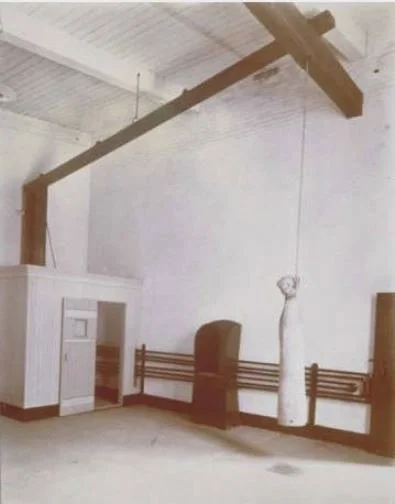
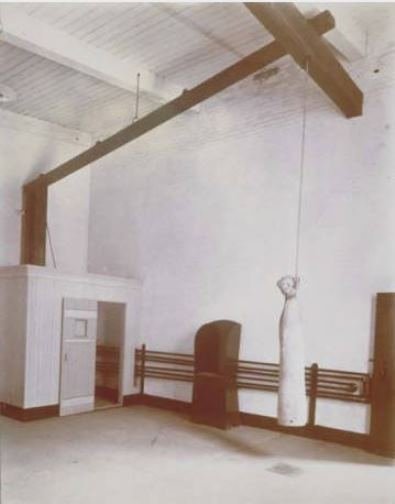
Execution room, Connecticut State Prison, Wethersfield
– Connecticut Historical Society and Connecticut History Online
VERNON, Conn.
“The problem with bad manners,” the late conservative Republican writer (and Connecticut resident) William F. Buckley Jr. told us “is that they sometimes lead to murder.”
No scholar in Connecticut has yet produced a study showing a correlation between bad manners and murderers once on Connecticut’s death row, abolished several years back by a well-mannered state Supreme Court. Scholars and prison records and even the personal testaments of prisoners have led us to believe that prisons, as a general rule, are schools of bad behavior.
One of the prisoners set free from death row by Connecticut’s overly compassionate state Supreme Court in 2015 was Frankie “The Razor” Resto, a candidate for a death penalty and an ill-mannered character.
The abolition of the death penalty in Connecticut was a three-step process. In 2012, Connecticut’s House of Representatives voted to repeal capital punishment for future cases, choosing to leave past death sentences in place. The Connecticut Senate had already voted for the bill, later found unconstitutional by the same state Supreme Court that had found the death penalty unconstitutional, and on April 25 it was signed into law by then Gov. Dannel Malloy. In the same year, the state Supreme Court, unsurprisingly, ruled that applying the death penalty only for past cases was unconstitutional, and capital punishment in Connecticut was promptly shown the door.
Resto, who burned his mattress while in prison and dealt in drugs, was called “The Razor” because he was known for shaking down drug dealers on the street with a straight edge razor. He was paroled early owing to a newly created program, separate from the usual parole process, devised by a former co-chair of the state House Judiciary Committee, Mike Lawlor, then a prison czar appointed to the newly created position by former Gov. Dannel Malloy, that awarded “get out of prison early credits” to deserving prisoners.
Immediately following his early release from prison, Resto easily acquired a gun, despite Connecticut’s stringent gun laws, and held up an Easymart store in Meriden, Conn.
When the co-owner of the store handed over the cash, Resto shot and killed him, without so much as a “thank you very much.” This is not the kind of well-mannered behavior one expects of Errol Flynn’s Robin Hood.
When I attended high school way back in the early ‘60’s, honorifics were very much in vogue. We addressed teachers as Mr., Mrs. and Miss. The fear that, caught out in some deplorable indiscretion, intelligence might be shared with our parents made us toe a straight line, at least in school. In the close-knit world of the neighborhood, eyes were everywhere and police far less necessary than they are in this post-modern period. Boys loved, respected and feared their fathers.
When my father asked me at the supper table, “How did your day go?” he knew beforehand exactly how my day had gone, particularly if it was spotted with delinquencies I had overlooked. No one in the family ever thought of lying to him, whether the lies were black or white lies.
“You know,” he told me once – and only once – “if you lie, your word will never be trustworthy.”
All manners are related to moral obligations, and all moral obligations, Immanuel Kant tells us, are related to duties – not convenient private moral codes. This whole system of Kantian morality – enforced by fathers and mothers in intact family structures and aunts and uncles and sometimes nosey and mischievous neighbors -- has collapsed in the post-modern period. Morality is now related to power and force.
My wife, Andrée, legally blind since birth, was among the first visually impaired persons to teach in public schools in Connecticut. Getting there was a fierce battle. Today, more than four decades after she had left teaching, she still receives notes from some of her grateful students, all bearing the same moral stamp – “You were the toughest teacher I ever had, but thanks to you...” and here followed a series of personal accomplishments.
Andrée’s most memorable teacher was an accomplished Jesuit priest who taught a course in aesthetics at Fairfield University, where she had gone to acquire her master’s degree in American Studies, in order to convince then Gov. John Dempsey that, having graduated at the top of her college class, and having taught with distinction for three years in two separate Catholic schools, and having appeared with special notice in Who’s Who in American Colleges and Universities, and having now acquired her master’s, with honors, in a new discipline, she was perfectly capable of teaching sighted students in public schools. Letters had gone back and forth for about two years, the governor claiming he could not overrule college administrators. But finally after much clarifying correspondence a letter appeared from Dempsey that said, “OK, Andrée, you win,” and she was certified to teach in public schools.
The priest was big man in a flowing robe, in appearance somewhat like the British writer G.K. Chesterton. We became friendly and one evening over our meager supper he said that Socrates was a moral man.
“How do you know?” I asked him.
“Socrates’s last word, after he drank the hemlock,” the priest explained, “was an instruction to one of his disciples to pay for a rooster he wished to sacrifice to Asklepios. Socrates’s last words to Crito were, “Don’t forget to sacrifice a rooster to Asklepios,” whose father was the god Apollo. Asklepios had special powers of healing; indeed, he had the power to bring the dead back to life.
The instruction, credible scholars believe, was a code to his followers. One scholar commented on “what Socrates means as he speaks his last words. When the sun goes down and you check in for sacred incubation at the precinct of Asklepios, you sacrifice a rooster to this hero who, even in death, has the power to bring you back to life. As you drift off to sleep at the place of incubation, the voice of that rooster is no longer heard. He is dead, and you are asleep. But then, as the sun comes up, you wake up to the voice of a new rooster signaling that morning is here, and this voice will be for you a sign that says: The word that died has come back to life again. Asklepios has once again shown his sacred power. The word is resurrected.”
The conversation – the splendid dialogue -- may now continue. New roosters crow eternal truths from the housetops. Though the messenger of truth had died, the truth and the means of conveying the messages were, for all practical purposes, eternal.
The post-modern world has left very little of all this intact. Manners are bad and getting worse. Courts rule, in many cases, in favor of social anarchy. Fathers, especially in major cities in Connecticut, have fled their familial obligations. Honorifics have become as numerous as they are meaningless. Teaching, once considered a calling – like the priesthood – has become a grinding chore. And college graduates, armed with degrees in Yeti Hunting or Tree Climbing or Lady Gaga or Zeitgeist Science, almost certainly do not know who Asklepios or Socrates was.
Don Pesci is a Vernon-based columnist.

But we’ve moved on
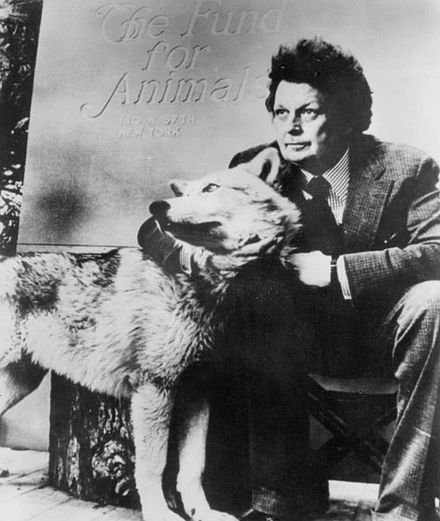
Cleveland Amory and friend.
“The New England conscience doesn't keep you from doing what you shouldn't — it just keeps you from enjoying it”.
— Cleveland Amory (1917-1998), an American author, reporter, television critic and animal-rights activist. He originally was known for writing a series of popular books poking fun at the pretensions and customs of society, starting with The Proper Bostonians, in 1947. He was a Boston Brahmin himself.
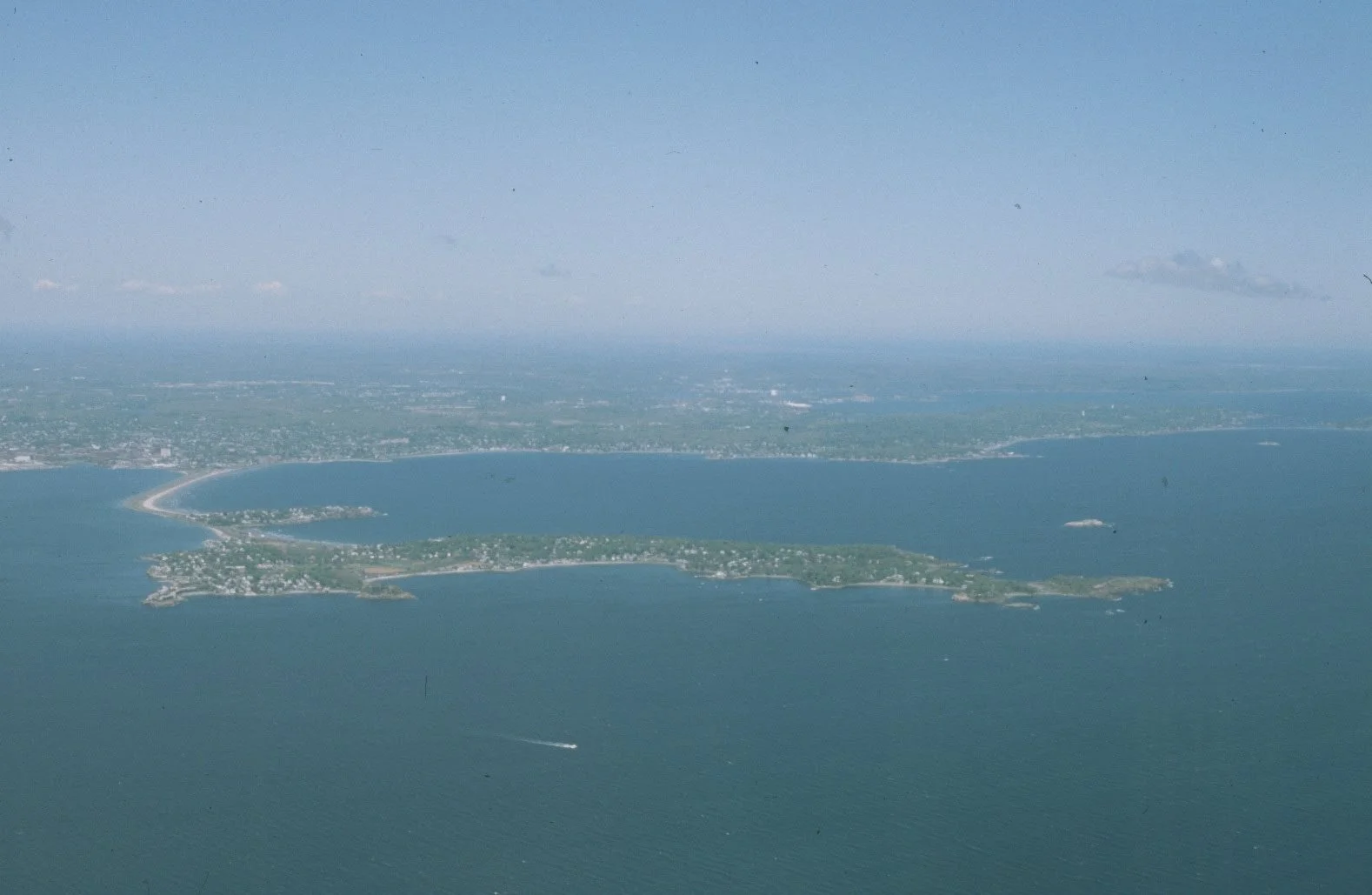
The Town of Nahant peninsula, very close to Boston and was long a favorite summer place for Boston Brahmins. Mr. Amory was born there.
— Photo by Svabo
Finally!
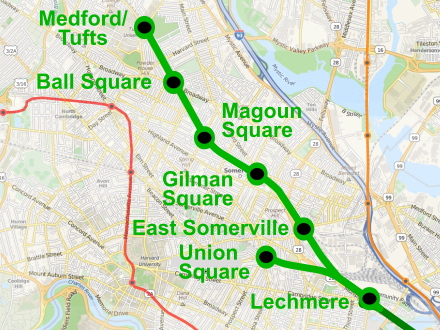
The MBTA’s Green Line extension, which opened last month.
From Robert Whitcomb’s “Digital Diary,’’ in GoLocal24.com
Consider that the MBTA’s Green Line Extension was first proposed in 1991 but only opened last week, or that extending commuter rail to Dulles International Airport from downtown Washington, D.C., was proposed in the ‘60’s but that extension only opened last week!
(Those who oppose spending tax money on creating or improving commuter rail and subway lines should look at the huge taxpaying development that occurs along them. Yes, millions of people want to get out of their cars and use mass transit if it’s close to them and provides frequent and reliable service.)
We could take many lessons from the likes of Western Europe and Japan on how to apply and maintain systems created in part or wholly because of American inventions. In the past few decades, America’s reputation as a place for completing big projects using these inventions has slipped, to no small degree because of too many layers of regulation, too many selfish and politically powerful special interests and runaway litigiousness. Let’s hope that the vast promise of fusion energy helps turn that around.
The invention of the likes of Facebook and Twitter doesn’t seem to have advanced America. But you can join the Metaverse and Cryptoworld, where nothing is real!
‘Landscapes’ in different media
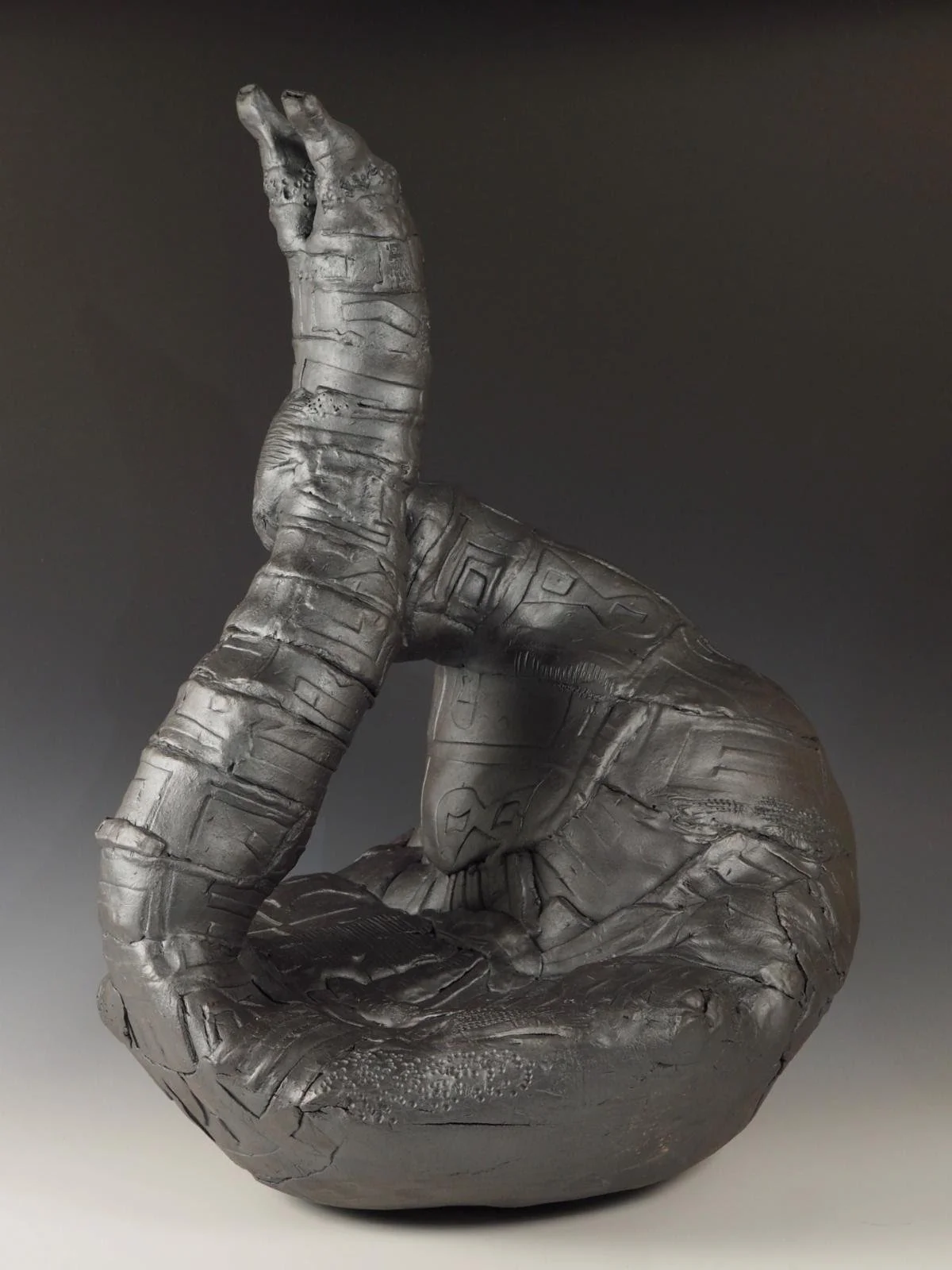
Snakesound” (clay), by Liz Newell, in the group show “Earth, Sea & Sky,’’ at the Umbrella Arts Center, Concord, Mass., Jan. 8-Feb. 11.
— Photo courtesy artist.
The gallery says:
“‘Earth, Sea & Sky’ is a collection of artworks by Suzanne Hill, Liz Newell and Barbara Willis. Each artist approaches the theme of ‘landscapes’ through their own medium. Their unique interpretations of the world around us are woven in fabric or built from, clay, the very Earth itself. ‘‘
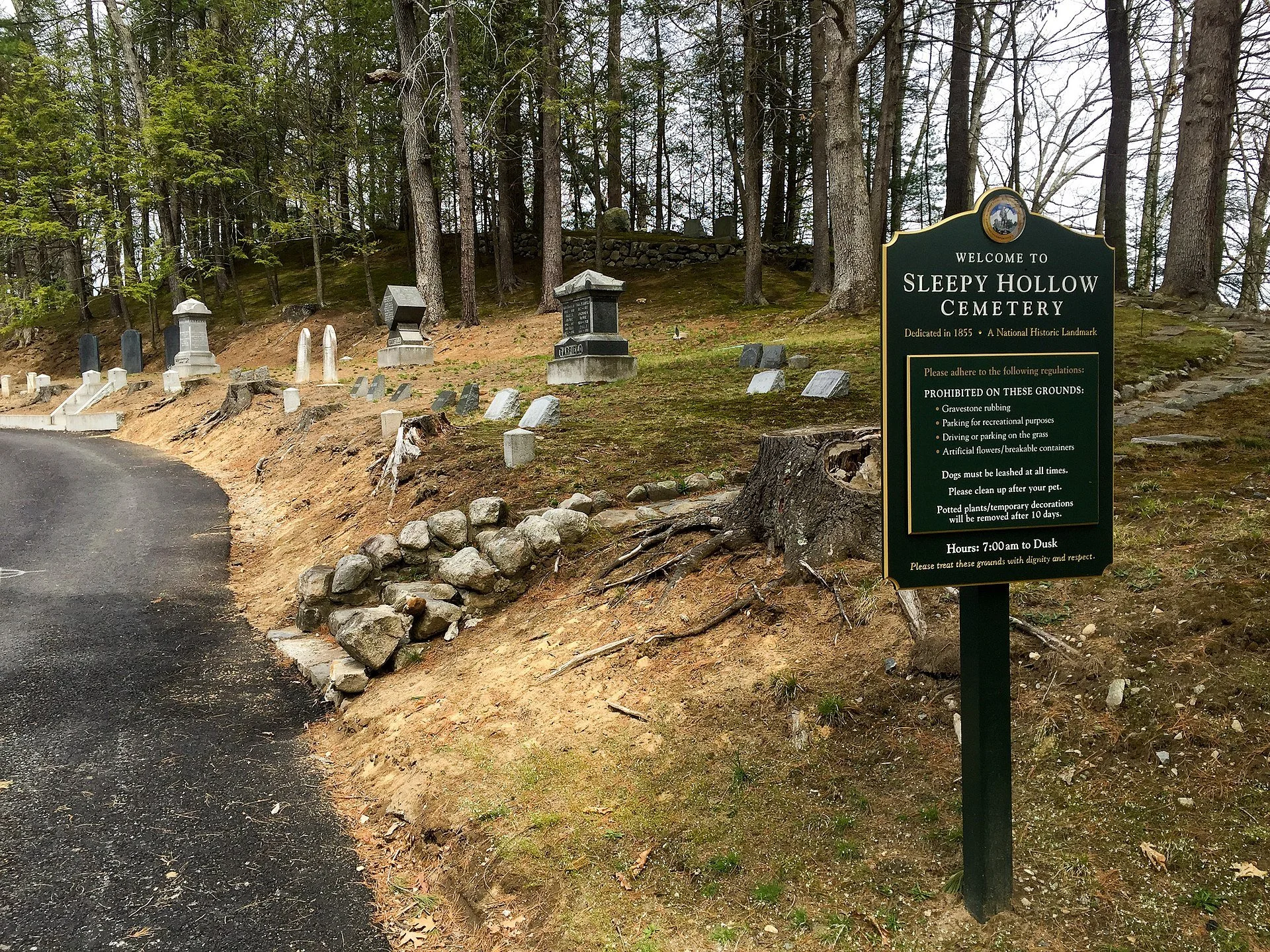
Sleepy Hollow Cemetery, in Concord, a Boston area town that was one of America’s most important cultural centers in the 19th Century. Many famous people are buried there, including Ralph Waldo Emerson, Nathaniel Hawthorne and Henry David Thoreau
— Photo by Kenneth C. Zirkel
Not for the love of war

Statue of Rufus Choate, by famed American sculptor Daniel Chester French, at the John Adams Courthouse, Boston.

John Whipple House, built in 1677, in Ipswich, Mass. It looks transplanted from England.
— Photo by Elizabeth B. Thomsen
“The courage of New England was the courage of conscience. It did not rise to that insane and awful passion, the love of war for itself.“
— Rufus Choate (1799-1859), American lawyer, orator and U.S. senator, in a 1834 address at Ipswich, Mass., of which he was a native. The town calls itself “The Birthplace of American Independence.’’ You can look up why.

A view from Castle Hill of Ipswich’s famously beautiful marshes, beloved of painters.
— Photo by John Phelan
‘Large and small visions of nature’
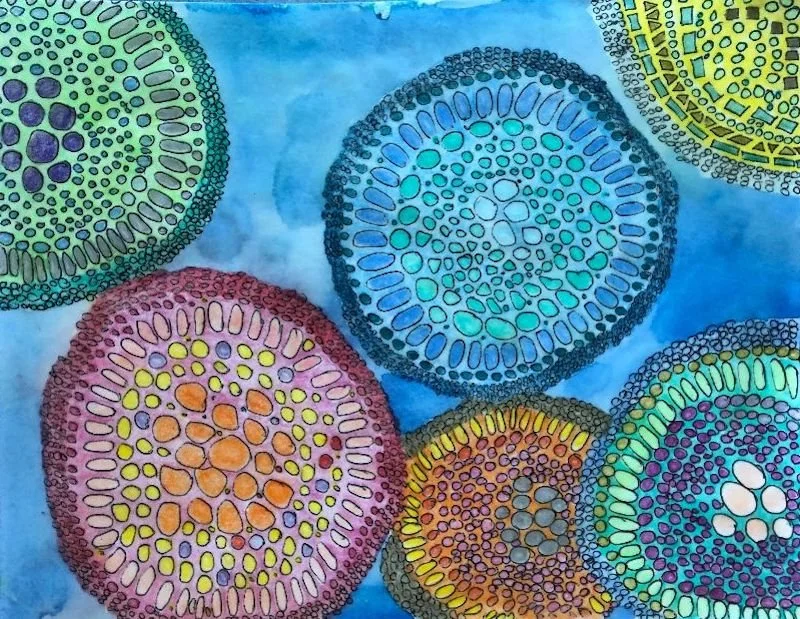
“Multi-cellular” (watercolor, colored pencil, ink and encaustic medium on Strathmore mixed media paper), by Cambridge, Mass.-based artist Katrina Abbott.
She says:
“Nature, color and climate change inspire my art. By representing the beauty and diversity of the natural world, I hope to inspire viewers to take a closer look at the world around us, and ultimately be more thoughtful and careful stewards of our planet. I bring my background in marine biology and environmental studies and the experience of years spent both on the ocean and in the backcountry to my art. I paint, print and work in wax to represent large and small visions of nature from the earth from space to frogs, cells and diatoms.’’
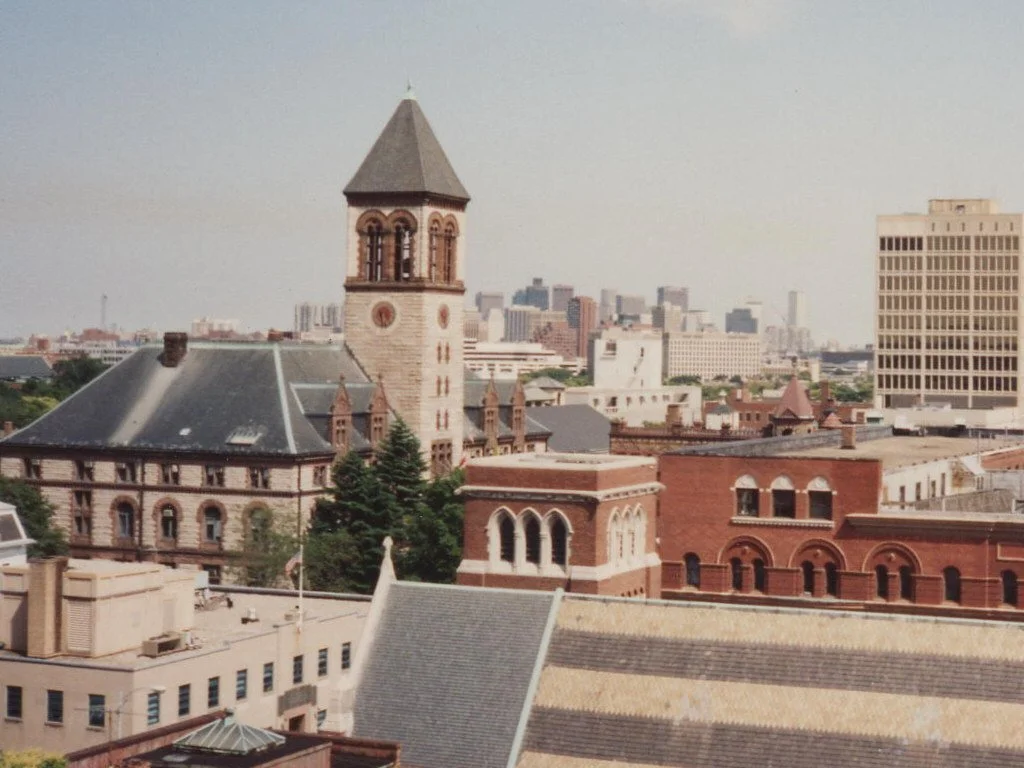
Cambridge City Hall.
Rachel Bluth: Noise pollution jangles nerves and hurts sleep
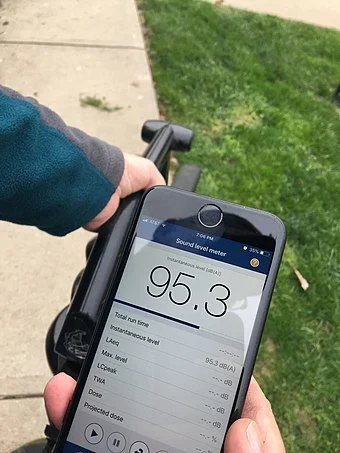
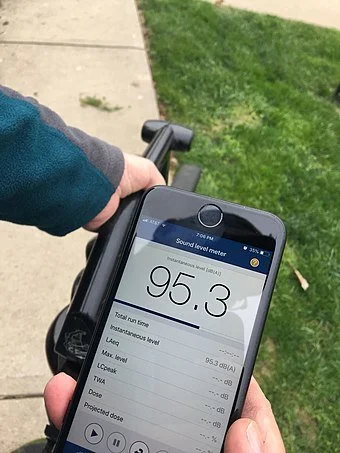
Measuring the noise from a leaf blower.

— Photo by fir0002
When there’s a loud noise, the auditory system signals that something is wrong, triggering a fight-or-flight response in the body and flooding it with stress hormones that cause inflammation and can ultimately lead to disease.
— Peter James, an assistant professor of environmental health at Harvard University’s T.H. Chan School of Public Health.
SACRAMENTO
Mike Thomson’s friends refuse to stay over at his house anymore.
Thomson lives about 50 yards from a busy freeway that bisects California’s capital city, one that has been increasingly used as a speedway for high-speed races, diesel-spewing big rigs, revving motorcycles — and cars that have been illegally modified to make even more noise.
About the only time it quiets down is Saturday night between 3 and 4 a.m., Thomson said.
Otherwise, the din is nearly constant, and most nights, he’s jolted out of sleep five or six times.
“Cars come by and they don’t have mufflers,” said Thomson, 54, who remodels homes for a living. “It’s terrible. I don’t recommend it for anyone.”
Thomson is a victim of noise pollution, which health experts warn is a growing problem that is not confined to our ears, but causes stress-related conditions like anxiety, high blood pressure, and insomnia.
California legislators passed two laws in 2022 aimed at quieting the environment. One directs the California Highway Patrol to test noise-detecting cameras, which may eventually issue automatic tickets for cars that make noise above a certain level. The other forces drivers of illegally modified cars to fix them before they can be re-registered.
“There’s an aspect of our society that likes to be loud and proud,” said state Sen. Anthony Portantino (D-Glendale), author of the noise camera law. “But that shouldn’t infringe on someone else’s health in a public space.”
Most states haven’t addressed the assault on our eardrums. Traffic is a major driver of noise pollution — which disproportionately affects disadvantaged communities — and it’s getting harder to escape the sounds of leaf blowers, construction, and other irritants.
California’s laws will take time and have limited effect, but noise control experts called them a good start. Still, they do nothing to address overhead noise pollution from circling police helicopters, buzzing drones, and other sources, which is the purview of the federal government, said Les Blomberg, executive director of the Noise Pollution Clearinghouse.
In October 2021, the American Public Health Association declared noise a public health hazard. Decades of research links noise pollution with not only sleep disruption, but also a host of chronic conditions such as heart disease, cognitive impairment, depression, and anxiety.
“Despite the breadth and seriousness of its health impacts, noise has not been prioritized as a public health problem for decades,” the declaration says. “The magnitude and seriousness of noise as a public health hazard warrant action.”
When there’s a loud noise, the auditory system signals that something is wrong, triggering a fight-or-flight response in the body and flooding it with stress hormones that cause inflammation and can ultimately lead to disease, said Peter James, an assistant professor of environmental health at Harvard University’s T.H. Chan School of Public Health.
Constant exposure to noise increases the risk of heart disease by 8% and diabetes by 6%, research shows. The European Environment Agency estimated in 2020 that noise exposure causes about 12,000 premature deaths and 48,000 cases of heart disease each year in Western Europe.
While California Highway Patrol officials will spend the next few years researching noise cameras, they acknowledge that noise from street racing and so-called sideshows — where people block off intersections or parking lots to burn out tires or do “doughnuts” — has surged over the past several years and disturbs people right now.
Cars in California are supposed to operate at 95 decibels — a little louder than a leaf blower or lawn mower — or less. But drivers often modify their cars and motorcycles to be louder, such as by installing “whistle tips” on the exhaust system to make noise or removing mufflers.
In 2021, the last full year for which data is available, the highway patrol issued 2,641 tickets to drivers for excessive vehicle noise, nearly double 2018’s 1,400 citations.
“There’s always been an issue with noise coming from exhausts, and it’s gained more attention lately,” said Andrew Poyner, a highway patrol captain. “It’s been steadily increasing over the past several years.”
The American Public Health Association says the federal government should regulate noise in the air, on roads, and in workplaces as an environmental hazard, but that task has mostly been abandoned since the federal Office of Noise Abatement and Control was defunded in 1981 under President Ronald Reagan.
Now the task of quieting communities is mostly up to states and cities. In California, reducing noise is often a byproduct of other environmental policy changes. For instance, the state will ban the sale of noisy gas-powered leaf blowers starting in 2024, a policy aimed primarily at reducing smog-causing emissions.
One of the noise laws approved in California in 2022, AB 2496, will require owners of vehicles that have been ticketed for noise to fix the issue before they can re-register them through the Department of Motor Vehicles. Currently, drivers can pay a fine and keep their illegally modified cars as they are. The law takes effect in 2027.
The other law, SB 1097, directs the highway patrol to recommend a brand of noise-detecting cameras to the legislature by 2025. These cameras, already in use in Paris, New York City, and Knoxville, Tenn., would issue automatic tickets if they detected a car rumbling down the street too loudly.
Originally, the law would have created pilot programs to start testing the cameras in six cities, but lawmakers said they wanted to go slower and approved only the study.
Portantino said he’s frustrated by the delay, especially because the streets of Los Angeles have become almost unbearably loud.
“It’s getting worse,” Portantino said. “People tinker with their cars, and street racing continues to be a problem.”
The state is smart to target the loudest noises initially, the cars and motorcycles that bother people the most, Blomberg said.
“You can make every car coming off the line half as loud as it is right now and it would have very little impact if you don’t deal with all the people taking their mufflers off,” he said. “That outweighs everything.”
Traffic noise doesn’t affect everyone equally. In a 2017 paper, James and colleagues found that nighttime noise levels were higher in low-income communities and those with a large proportion of nonwhite residents.
“We’ve made these conscious or subconscious decisions as a society to put minority-race communities and lower-income communities who have the least amount of political power in areas near highways and airports,” James said.
Elaine Jackson, 62, feels that disparity acutely in her neighborhood, a low-income community in northern Sacramento sandwiched between freeways.
On weekends, sideshows and traffic noise keep her awake. Her nerves are jangled, she loses sleep, her dogs panic, and she generally feels unsafe and forgotten, worried that new development in her neighborhood would just bring more traffic, noise, and air pollution.
Police and lawmakers don’t seem to care, she said, even though she and her neighbors constantly raise their concerns with local officials.
“It’s hard for people to get to sleep at night,” Jackson said. “And that’s a quality-of-life issue.”
Rachel Bluth is a Kaiser Health News reporter.
Don’t rush them
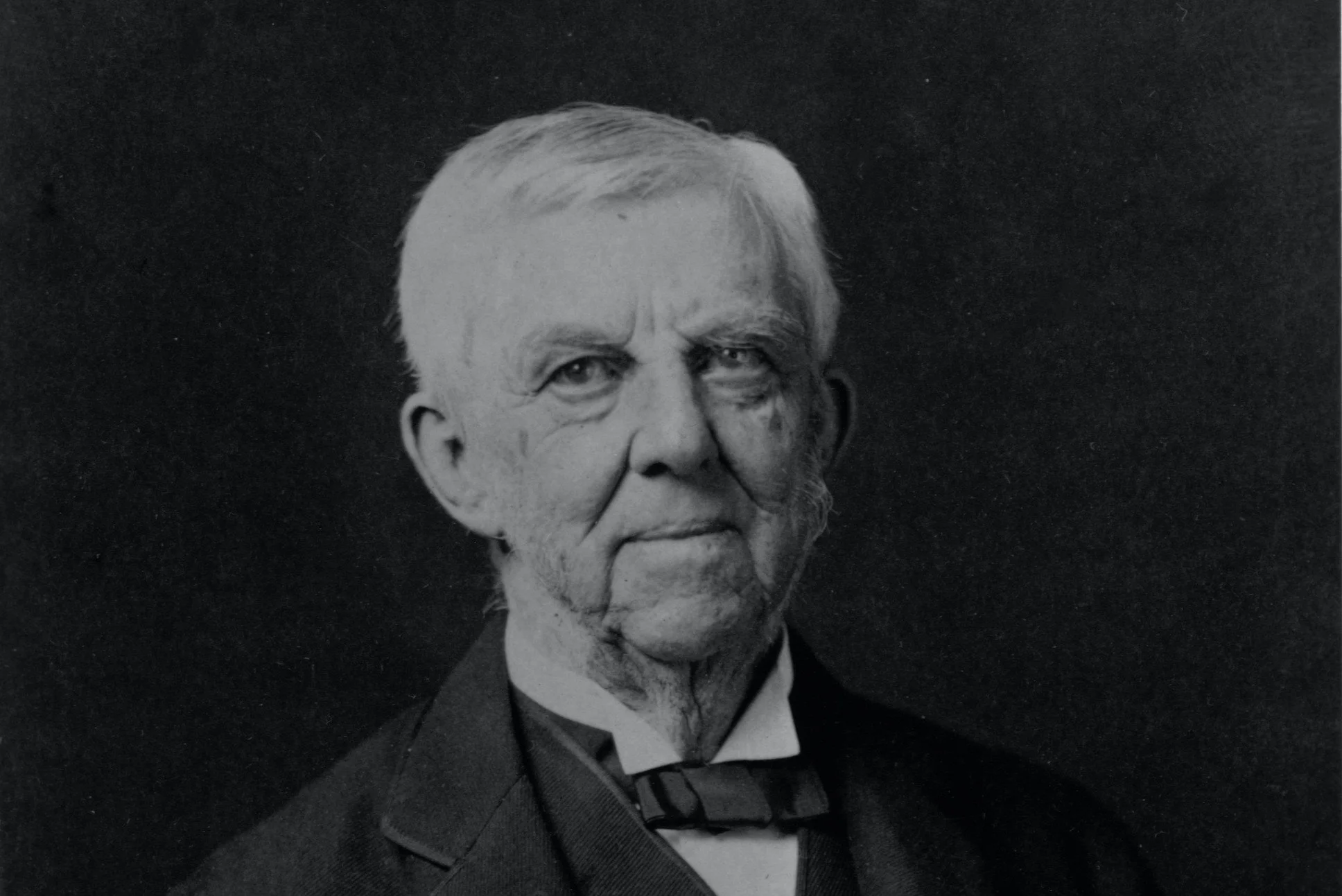
Oliver Wendell Holmes Sr. (1809-1894)
"Knowledge and timber shouldn't be used until they are seasoned.’’
— Oliver Wendell Holmes Sr. in The Autocrat of the Breakfast Table. A polymath, he was a pioneering Boston-based physician as well as a poet. His son, OIiver Wendell Holmes Jr. (1841-1935) became a famed member of the U.S. Supreme Court and legal scholar. Like his father, he was famed for his witty and pithy remarks.
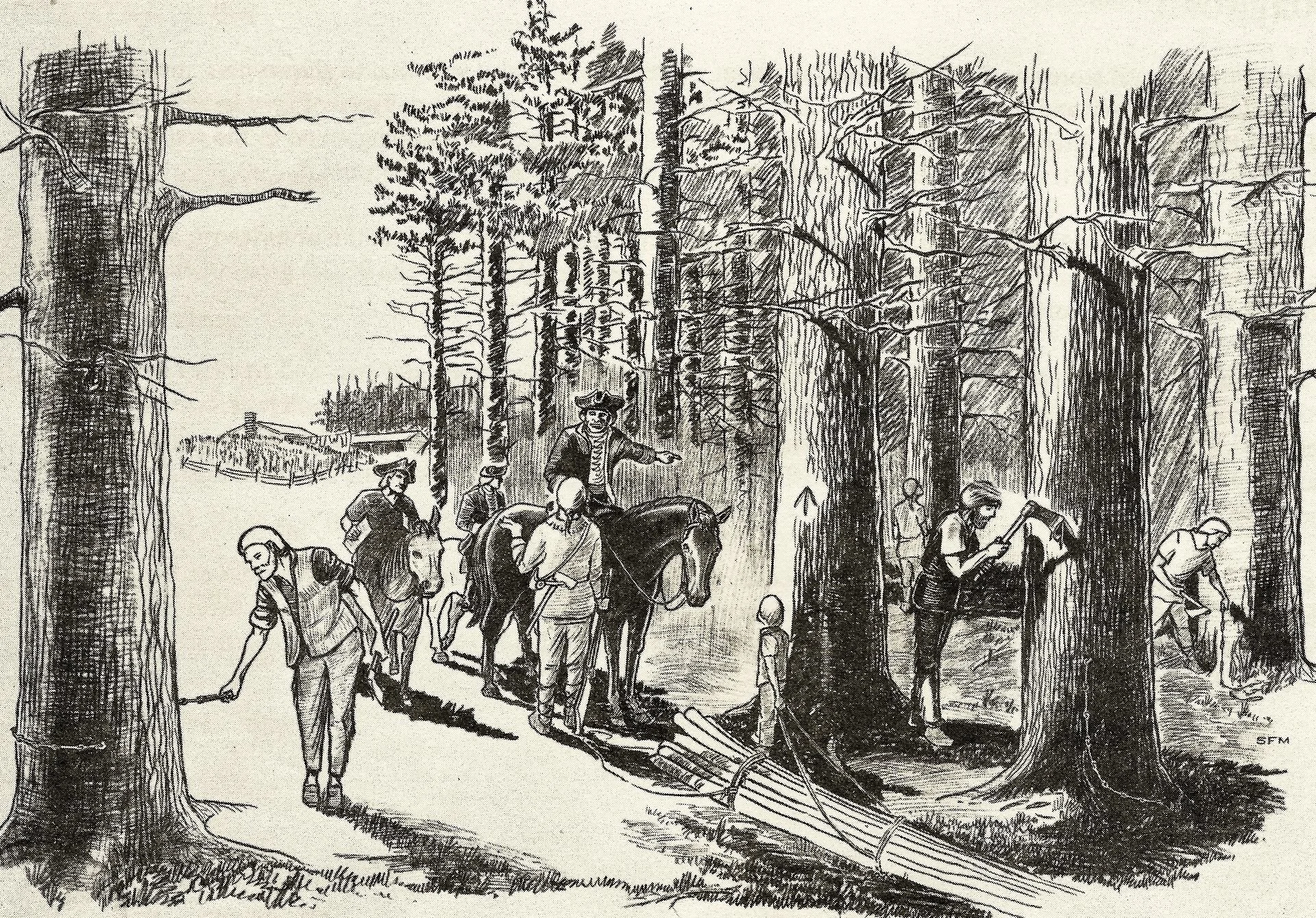
Agents of the king marking New England white pines to be used by the Royal Navy as masts in the 18th Century.
David Warsh: Support Ukraine but study the path to war
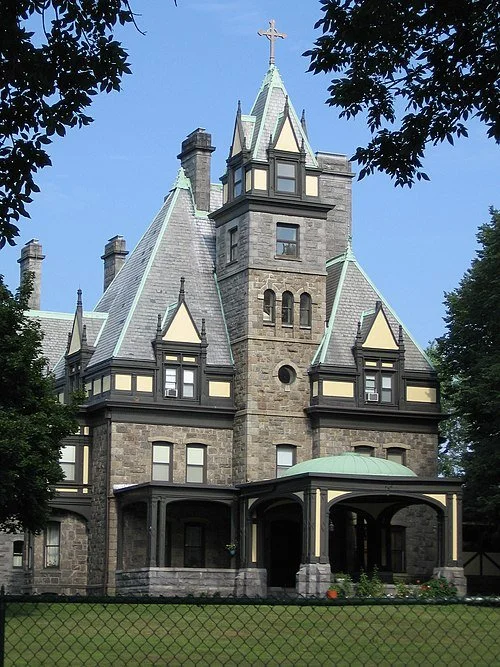
"The Chateau" at St. Basil College, in Stamford, Conn., was originally a college dormitory and now houses the Ukrainian Museum and Library of Stamford.
SOMERVILLE, Mass.
I have lived with the possibility of war in Ukraine for a long time, first as a newspaper columnist, then as a newsletter writer (and a long-ago war correspondent). I wrote against further NATO enlargement soon after Poland, Czechoslovakia and Hungary were admitted – gingerly at first, more firmly once I began covering the Harvard-Russia scandal in the mid-’90s.
Boris Yeltsin’s selection of Vladimir Putin to be his successor didn’t seem surprising. Unlike Hillary Clinton, I was not shocked when, in 2012, Putin took back the helm from Dimitri Medvedev. Putin wasn’t a czar, but by then he was steering Russia’s course.
The events of 2014 did alarm me – Putin’s plans for a gradual takeover of Ukraine, foiled by US-supported demonstrations in Kyiv’s Maiden Square, followed by Russia’ stealth repossession of the Crimean peninsula. In 2016, expecting that Clinton would be elected, I began writing Because They Could: The Harvard-Russia Scandal (And NATO Expansion) after Twenty-five Years (Create Space, 2018)
Instead Donald Trump was elected. His longstanding relationship with Russian government and various Russians put the matter on hold. Joe Biden defeated Trump four years later and the momentum of NATO expansion was seamlessly reasserted, notably with signing on Nov. 10, 2021 of a U.S.-Ukraine Charter of Strategic Partnership. Barely three months later, Putin attempted his ill-fated blitzkrieg. The subsequent invasion was mostly turned back, except in the eastern Donbass region.
What’s done is done. The issue seems to me to have been decided, mostly by the citizens and soldiers of Ukraine. The U.S. may or may not bear responsibility for having fomented the war by pressing the boundaries – and the culture – of NATO ever closer to Russia, but having reached this point in Putin’s war on Ukraine, America has no honorable alternative but to stay the course until Putin stands down. He will do so only after more defeats on the battlefield; after taking account of the devastation he has caused, no less to his own country than to Ukraine; and to Russia’s reputation forever. His pursuit of restoration of Russian status as a superpower was a pipedream.
What is next? Partition is apparently what the Pentagon expects, once Russia’s spring offensive grinds to a halt. That makes sense to me. Russia gets to keep portions of Eastern Ukraine that it already possesses. Ukraine retains what it has already recaptured; remains independent; and gradually becomes a member of NATO and the European Union.
In the meantime, continued support for Ukraine is about to become a matter of partisan politics in the 2024 presidential election campaign. So much the better: it will be one more litmus test with which to separate the real Republican Party from Trumplican rear-guard. The war in Ukraine offers an opportunity to begin to put US politics together again.
It is time to begin to gather assessments of America’s behavior in world affairs during the last thirty years. Historian M. E. Sarotte has made an especially good start with her most recent book, Not One Inch: America, Russia, and the Making of Post- Cold War Stalemate (Yale, 2021), but, as she notes, her account covers only the beginning; it ends in 1999. Her next volume presumably will cover the years to 2016. By that time, today’s war will be over, and the saga of the post- Cold War world ripe for a third volume.
Frank Costigliola’s biography Kennan: A Life between Two Worlds (Princeton, 2023) adds some details to the story of diplomat George Kennan’s famous op-ed piece opposing NATO expansion, “A Fateful Error,” in The New York Times, in 1996, but we will have to wait some time for a dispassionate biography of Strobe Talbott, President Clinton’s old Oxford friend, the architect of NATO expansion. Newspaper journalists, Peter Baker of The Times foremost among them, can be expected to begin to illuminate some shadows.
The change of heart about the war that I’m describing – putting aside for now the idea of joint responsibility in favor of rendering sufficient support to Ukraine, whatever it costs, until independence and peace are won – has been a long and painful time in coming. America has not done well in its three major wars in my adulthood – Vietnam, Afghanistan, and Iraq. In Ukraine, it finally seems vital to stay the course.
xxx
I caught a windjammer of a cold over the holidays and failed to post to EcononomicPrincipals.com in timely fashion what he had written before the storm. He put it up when calm returned. Apologies to those accustomed to reading it there.
More to the point, all good wishes to readers for the coming year.
David Warsh, a veteran columnist and an economic historian, is proprietor of Somerville-based economicprincipals.com, where this column originated.
‘A certain impermanence’
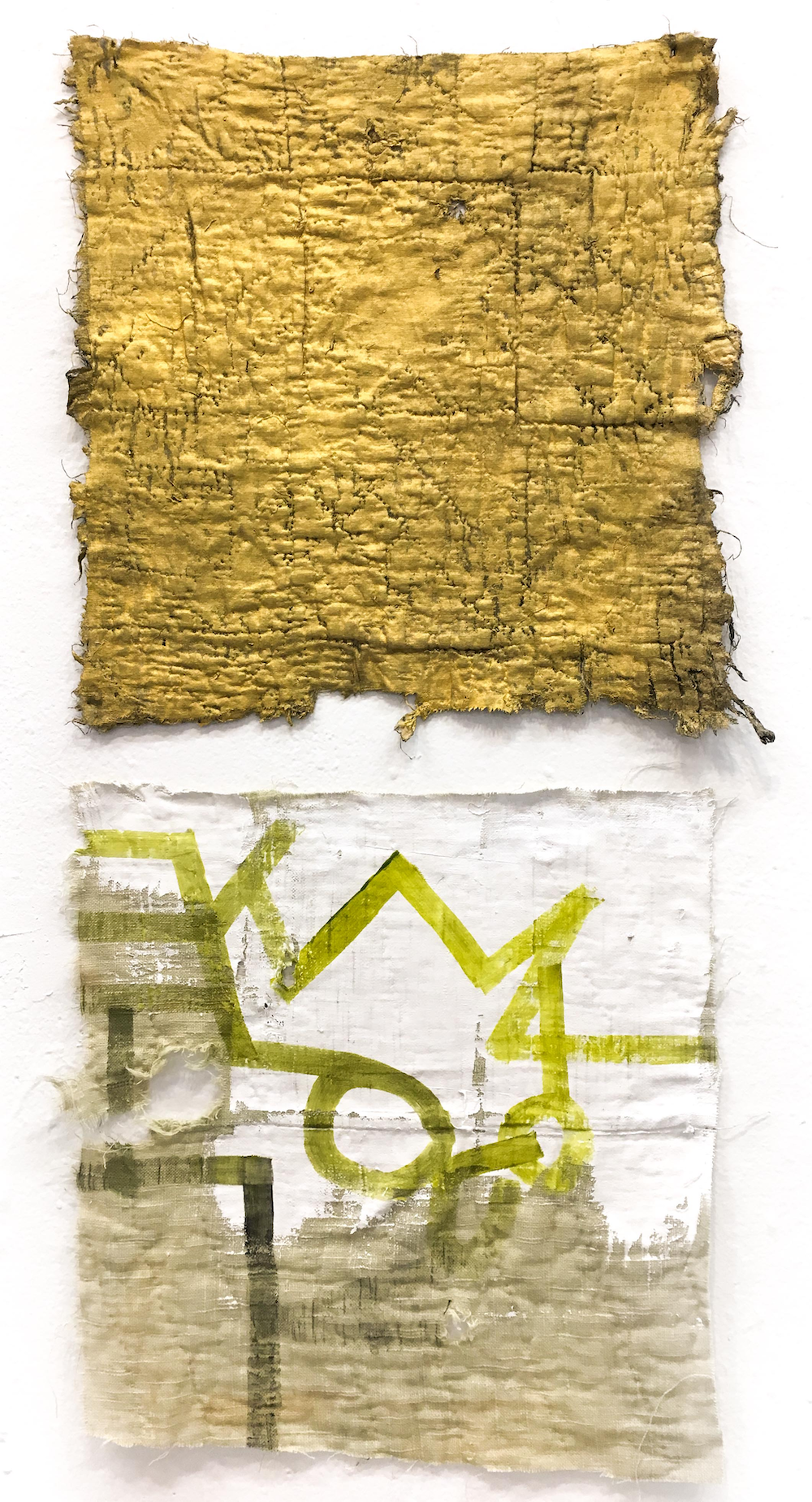
“The Needle’s Mark and Maquoketa” (quilt fragments, gesso, acrylic), by Susan Denniston, in her show “Voices Carry,’’ at Kingston Gallery, Boston, Jan. 5-29. She lives near the ocean south of Boston.
The gallery says:
“When artists work with materials created and shaped by previous generations, it evokes memories and pulls a thread from the past through the present and into the future. Working with inherited, delicate cloth, Denniston listens and acknowledges our fragility, our vulnerability, and our certain impermanence.’’
Read more.
‘Deeper in’


“Sumac thickets by the roadbed, either side,
spangled by snow and the big moon’s light.
Deeper in, evergreens, taller, darker,
but still undark in that light, this weather.’’
— From “Inviting the Moose: A Vision,’’ by Sydney Lea (born 1942), a former poet laureate of Vermont who has taught at various New England colleges.

Adjust your attitude
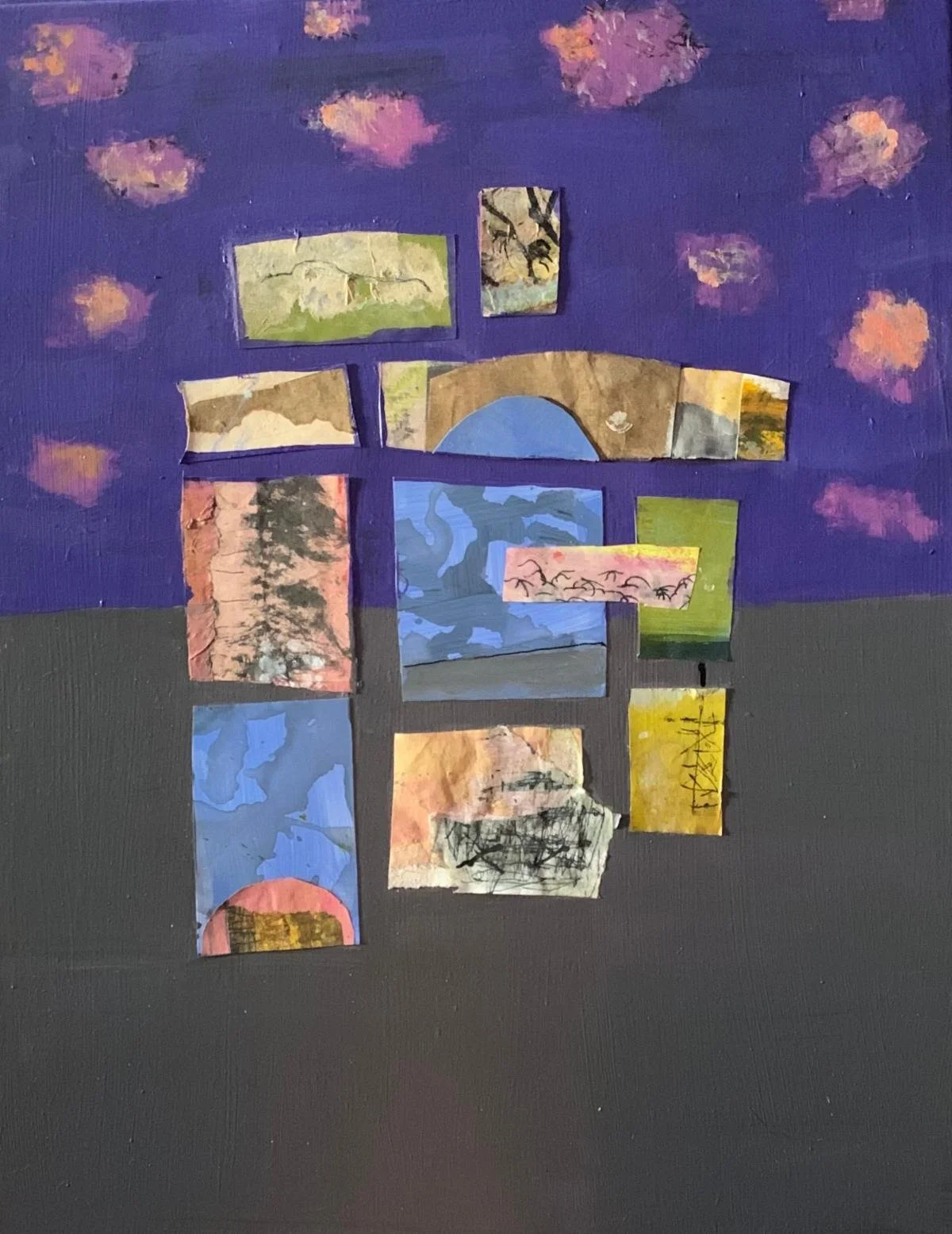
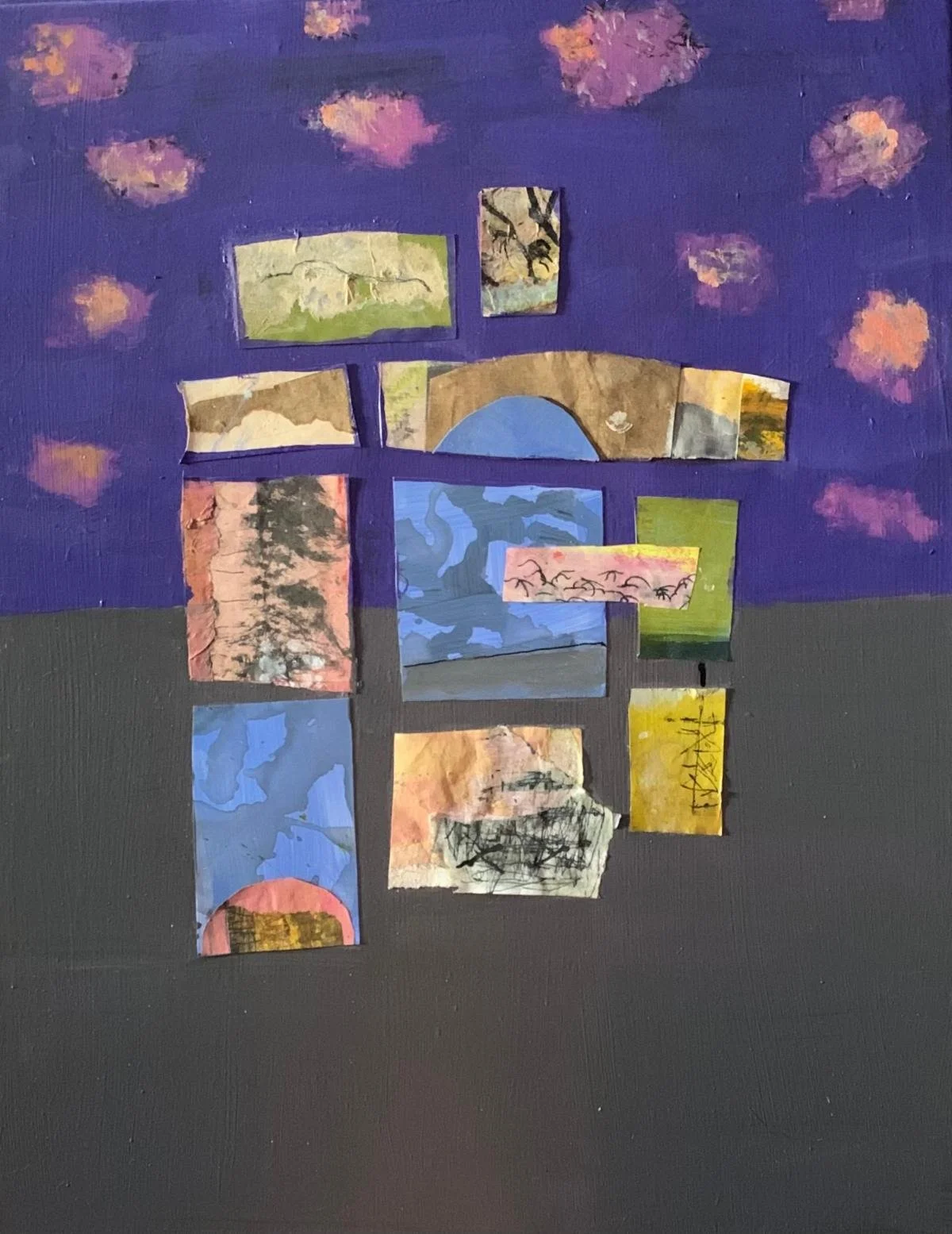
“Better Times” (mixed media), by Susan Leskin, in the group members show at Galatea Fine Art, Boston, Jan. 13-29.
"It feels important right now to find and express visions of hope and lightness to counter the despair that many of us feel about the current state of the world. These collages reflect those visions for me."
Her artist statement says:
“My work frequently explores connectivity and disjunction. I enjoy creating images that are ambiguous and may be just on the edge of recognition. There is often a focus - explicit or implied - on the relationship between humans and nature.
”I use fluid acrylic paint and mediums, ink, pencil, and painted papers in my collages.’’