
Chris Powell: The Red Guards raid city hall; hypocrisy makes the world go round

Propaganda poster for China’s Red Guards in the late 1960s.

MANCHESTER, Conn.
Connecticut now may have its equivalent of Chairman Mao's Red Guards, consisting of Central Connecticut State University students and members of the Connecticut Citizen Action Group who, according to news reports, pretended to purge racism from the office of the Republican registrar of voters at City Hall in New Britain.
Having gone to the registrar's office to obtain voter registration cards, the president of Central's Social Work Club, Taina Manick, sighted a tiny Confederate flag in a stand of four other tiny flags among some knickknacks. She was immediately triggered. She returned the next day with her colleagues and cameras to record them scolding the registrar, Peter Gostin, and asking him if he is a racist.
Gostin denied racism and confessed he had not given much thought to the flags and knickknacks, which had been sitting on a shelf in his office, unremarked, for 14 years. The Red Guards asked Gostin if he would surrender the offending flag and he quickly agreed, whereupon they lifted it in triumph, photographed it, dropped it in a trash can, laughed, and departed.
Afterward Gostin said he was glad to be rid of the source of offense but did not understand why his visitors needed to "make a big show" about it and question his character.
But of course making a big show -- displaying self-righteousness -- is the point of today's indignation industry, of which the new Red Guards may be the shock troops, and the smaller the offense, the bigger the show must be to gain attention.
Ironically, as the Red Guards were bullying the hapless registrar, the National Assessment of Educational Progress was announcing that the huge and infamous racial-performance gap in Connecticut's schools has persisted for another three years. The gap is worse in cities like New Britain. So is violent crime, which also affects racial minorities disproportionately.
Indeed, Connecticut suffers many other distressing racial disparities. None has been caused or sustained by the tiny and long-overlooked flag in the New Britain registrar's office.
But maybe the Red Guards can keep scouring Connecticut for other things from which they can claim to have taken offense. Maybe someday they will find one more relevant to social justice than their comic self-righteousness is.
xxx
A few weeks ago as the campaign of the anti-abortion Republican candidate for U.S. senator in Georgia, former football star Herschel Walker, was rocked by allegations he had paid for the abortions of former girlfriends, Democrats scorned Republicans for sticking with their candidate despite his likely hypocrisy. Republicans, Democrats sneered, cared about nothing beyond gaining a majority in the Senate.
Last week, after weeks of insisting that he had recovered from a stroke and should remain the Democratic nominee for U.S. senator from Pennsylvania, Lt. Gov. John Fetterman participated in a televised debate with the Republican candidate, Mehmet Oz, the television talk-show doctor. Because Fetterman now has trouble understanding spoken words, he was granted use of video equipment to caption the questions.
Nevertheless, even Democrats acknowledged that their candidate's performance was painful to watch. As the debate began, Fetterman's first words were, "Hi. Good night, everybody." At times he was incoherent and contradicted himself.
But, of course, Democrats are sticking with Fetterman. though elected officials need at least normal communication skills, which their candidate now lacks. Like the Republicans, the Democrats figure that nothing matters except taking control of the Senate.
And both sides have good reasons.
Republicans figure that Walker, while an ignoramus, at least will be able to take instructions from the party's Senate leadership to prevent President Biden's appointment to the Supreme Court of another judge who, to placate the Democratic Party's crazy left wing, professes not to know what a woman is.
Democrats figure that, impaired as Fetterman is, he at least will be able to take instructions from the party's Senate leadership to prevent a Republican attempt to placate the party's crazy right wing by impeaching the president for what some see as his own worsening dementia.
Politics, thy name is hypocrisy. Get used to it.
Chris Powell is a columnist for the Journal Inquirer in Manchester.

David Warsh: About ‘The Untold Story of Russiagate’

Trump campaign manager and pro-Russia operator at the 2016 Republican National Convention.
SOMERVILLE, Mass.
In the summer of 2016, somebody, perhaps Vladimir Putin himself, sketched a peace plan for Ukraine. The provenance of the proposal remains deliberately vague. Had the suggestion been accepted, it would have avoided Russia’s war on its neighbor five years later. The so-called “Mariupol plan,” named for eastern Ukraine’s largest industrial city, would have split off four prosperous Donbass counties to form an autonomous republic, to be led by Viktor Yanukovych, the deposed president of Ukraine who had fled Kyiv for Russia two years before. In effect: East and West Ukraine
The trouble is, the proposal was conveyed, via intermediaries, amid elaborate secrecy, to just one man, U.S. presidential candidate Donald Trump. Rival candidate Hillary Rodham Clinton, the former secretary of state, would certainly reject the plan were she to be elected. So the loosely worded proffer was said to be enhanced by a sweetener: Russia would take a hand in the American election, denigrating Clinton through a massive hacking campaign.
That’s the burden of a Sunday magazine article in Nov. 6 The New York Times Magazine: “The Untold Story of ‘Russiagate’ and the Road to War in Ukraine,” by reporter Jim Rutenberg. It is a long and complicated tale, and sticks closely the NYT’s editorial position: that Russia’s war was unprovoked by NATO expansion.
In fact, the story of the “Grand Havana Room meeting,” atop 666 Fifth Ave. in Manhattan, between Trump’s campaign manager, Paul Manafort , and Konstantin Kilimnik, manager of Manafort’s international consulting office in Kyiv, has been told before, though never as concisely as has Rutenberg: by the Mueller Report on Russian interference in the 2016 presidential election, the thousand-page Senate Intelligence Committee report, and by The Atlantic’s George Packer in his review of Andrew Weissmann’s book about his service as a top aide to former FBI director Robert Mueller, Where the Law Ends: Inside the Mueller Investigation.
Ruteberg drew on these accounts, and on his own reporting, in a mostly successful attempt to connect two narratives. “Thrumming below the whole (U.S.) election saga was another story – about Ukraine’s efforts to establish a modern democracy….”
From the platform battles of the Republican National Convention to the turmoil of the transition to the first impeachment, the main business of the Trump presidency all had to do with Ukraine. “Even now” he writes, “some influential voices in American politics, mostly but not entirely on the right, are suggesting that Ukraine make concessions of sovereignty similar to those contained in Kilimnik’s plan, which the nation’s leaders categorically reject.”
I was especially struck when I came across this passage:
As [Paul] Manafort rose to become Trump’s campaign chairman – and as Russian operatives were hacking Democratic Party servers – the candidate took stances on the region that were advantageous to Putin’s ambitions for Ukraine. Ahead of the Republican National Convention in Cleveland in July, Trump shocked the American foreign-policy establishment by voicing only tepid support for NATO. He also told aides that he didn’t believe it was worth risking “World War III” to defend Ukraine against Russia, according to the Senate intelligence report released in the summer of 2020.
That was, I thought, Trump in a nutshell. Candid, shrewd, perhaps even wise… and profoundly dishonest. After all, Manafort was a veteran political operative, who had served in the Reagan administration until leaving to form a foreign-relations consulting firm with his friend Roger Stone. He had been deeply involved in Ukrainian politics, mostly with pro-Russian factions, for more than a decade. What in the world was he doing suddenly showing up as Trump’s campaign manager barely two months before the election?
Three weeks after the convention, Manafort was forced to resign, after his name turned up on a suspicious Ukrainian payroll ledger. Starting in 2017, he was charged with multiple felonies, and convicted of many of them, Trump pardoned him in December 2020.
Rutenberg’s story reinforced my conviction that the endless harping of the editorial pages of The Wall Street Journal on “the Steele dossier” and Special Counsel John Durham’s lengthy investigation of FBI methods in dealing with it were red herrings of the first order. The investigations that began even before Trump took office had almost nothing to do with the discredited campaign documents. The various probes were motivated by suspicions of extensive conflicts of interest, and the fact that his campaign and presidency were chock-full of persons who had done business with Russia.
It matters because, not for the only time, Trump’s political instincts were canny, reflecting the unarticulated preferences of many American voters, perhaps a majority, to live in a peaceful, if imperfect world. Had Trump been able to do a deal with Putin along the lines of the Mariupol plan, many Ukrainian and Russian lives would have been saved. Trump almost certainly would have been re-elected, American democracy would have been further damaged, perhaps irreparably. Things turned out as they should have, at least until Russia invaded Ukraine. .
That is emphatically not to say that peace negotiations shouldn’t be pursued in this dreadful war. Republican opposition to continuing high levels of aid to Ukraine is growing, according to recent polls. Fifty-seven Republican congressmen and eleven senators voted against Biden’s $40 billion aid package earlier this year. New positions in both parties will take shape after the mid-term elections.
Meanwhile, Axios reports that Trump is eager to announce a third run for the presidency. Bring it on! American democracy learned a great deal about its weaknesses and strengths during the five years it was enrolled in Trump University. The experience produced a close call, but dangerous times make for lasting lessons. Two or three years of post-graduate education will produce still more insight into the inner workings of a strong democracy.
David Warsh, a veteran columnist and an economic historian, is proprietor of Somerville-based economicprincipals.com, where this essay originated.
University of New England med school will move to Portland

Maine Medical Center, in Portland, close to where the University of New England’s medical school will move.
Edited from a New England Council (newenglandcouncil.com) report
“The University of New England, will move its osteopathic medical school from Biddeford, Maine, to Portland. This new location will allow the university to expand the size of its facilities to accommodate more students, which will provide relief to the ongoing workforce problem in the health-care industry.
“This move will fast-track Portland (home of the Maine Medical Center) to be a regional hub for biotechnology and medicine. The university could break ground on this new construction in a month thanks to the Portland Planning Board’s unanimous approval of the plans. The construction will feature a 112,000 square-foot four-story central building to hold all the university’s health-care programs, including dentistry, nursing and the medical school itself.
UNE’s new facility will advance the college’s efforts in inter-professional education, an approach to training in which students are taught in a team-based, multidisciplinary setting. The new location will increase the number of students that the medical program can accommodate by 20 percent, raising the classes from 165 to 200 students. Additionally, the new facility will allow Maine Medical Center doctors to easily engage with UNE students because of the proximity to their facilities. This opens the doors to mentorship, teaching and continuing education in a lab setting for students.
UNE President James Herbert said, ‘We are the workforce engine for the health-care workforce in the state. I want UNE to be the national model for how you do IPE in rural settings’’’.
Frank Carini: Navy worried about rising seas at Naval Station Newport

View of Naval Station Newport (aka Newport Navy Base), which includes parts of Newport and Middletown.
From ecoRI News (ecori.org)
The U.S. Department of Defense has concerns about sea-level rise and other climate-change impacts on Naval Station Newport, along the shores of Aquidneck Island.
“Since 2010, the Department of Defense has acknowledged that the planet’s changing climate has a dramatic effect on our missions, plans and installations,” Secretary of Defense Lloyd J. Austin III said last year. “The department will immediately take appropriate policy actions to prioritize climate change considerations in our activities and risk assessments to mitigate this driver of insecurity.”
The Aquidneck Island Climate Caucus, led by Rep. Terri Cortvriend, D-Portsmouth, recently hosted a discussion about resiliency plans for the Naval station.
The Oct. 23 online event, titled “Newport Naval Station Resilience: What’s the Plan?” featured Cornelia Mueller, community planning liaison officer at Naval Station Newport, and Pam Rubinoff, a coastal resilience expert at the University of Rhode Island’s Graduate School of Oceanography.
Mueller said the climate crisis is a serious problem for the military training installation and the three municipalities — Portsmouth, Middletown, and Newport — that share space on Aquidneck Island. She noted it’s both an economic and safety issue for the largest island in Narragansett Bay.
To address the local challenges presented by the climate crisis, the Navy worked with the University of Rhode Island, municipal officials, and local stakeholders, such as the Aquidneck Land Trust and the Eastern Rhode Island Conservation District, to create a Military Installation Resilience Review for short-term preparedness and long-term planning. Much of the recently completed review is not available for public consumption, but a 12-page outline can be found here.
The review’s researchers ran 12 scenarios with 1 foot, 3 feet, and 5 feet of sea-level rise against modeled weather events. The modeling also included “significant” expansion planned for Naval Station Newport during the next 10 years, which will include more National Oceanic and Atmospheric Administration ships and a larger Coast Guard presence, according to Mueller.
The work noted the Navy and other Aquidneck Island entities share concerns. For example, the Navy relies on the Newport Water Division for drinking water and on the Long Wharf Pump Station, owned by the city of Newport, for its wastewater treatment.
The kind of climate work Austin spoke about during his 2021 visit to Virginia’s Naval Station Norfolk is taking place at Navy Region Mid-Atlantic installations, including Naval Station Newport.
The Navy’s response to the climate crisis has included natural solutions, such as dune restoration and better protecting coastal marshes and shoreline vegetation. Man-made solutions have included berms and flood walls.
Mueller said Naval Station Newport is hoping to restore Elizabeth Brook. The waterway, which begins in Middletown and empties near Gate 2 in Newport, is causing flooding problems for both municipalities and the Navy. She also noted there are plans to build buffers, create green space, and use man-made structures to address the increased flooding being experienced on Aquidneck Island.
The review found 152 “assets of concern,” such as generators, wastewater treatment facilities, and communications, energy, and transportation infrastructure. The review also found it would take 14 hours to evacuate Aquidneck Island during clear skies.
Rubinoff said there are significant concerns that need to be addressed and the solutions will require island-wide collaboration.
The Department of Defense (DOD) has identified climate change as a critical national security issue. The crisis will continue to amplify operational demands on the force, degrade installations and infrastructure, increase health risks to service members, and require modifications to existing and planned equipment needs.
The agency has noted that the past decade, 2011-2020, was the warmest on record. It has said the increase in thermal energy trapped in the atmosphere is having enormous consequences around the globe.
The DOD’s 2022 Climate Adaptation Report assesses climate exposure related to eight hazards: coastal flooding, riverine flooding, heat, drought, energy demand, land degradation, wildfire, and historical extreme weather events. It also notes that the agency is working to incorporate environmental justice into the implementation of its evolving Climate Adaptation Plan.
“Rising temperatures, changing precipitation patterns, and more frequent, extreme, and unpredictable weather conditions caused by climate change are worsening existing security risks and creating new challenges,” according to the latest version of the report. “Climate change is increasing the demand and scope for military operations at home and around the world. At the same time, it is undermining military readiness and imposing increasingly unsustainable costs on the Department of Defense.”
The Aquidneck Island Climate Caucus is planning additional discussions to be held over the winter, on topics including updates on federal legislation, 2023 state legislative goals, ocean health, offshore wind turbines are coming, “Act on Climate: What are the immediate steps?” and “Where are we going with fossil fuels?”
Frank Carini is co-founder and senior reporter of ecoRI News.

Time to reflect

“Lemon Fair River (Vermont) November” (oil on panel), by New England painter Ellen Granter at Edgewater Gallery, Middlebury, Vt., through Nov. 15.
Temporary housing

“Tent Mama” (oil on canvas), by Karen Seapker, on view through Feb. 12 at the Currier Museum of Art, Manchester, N.H.

News media should be willing to be offensive in pursuit of truth
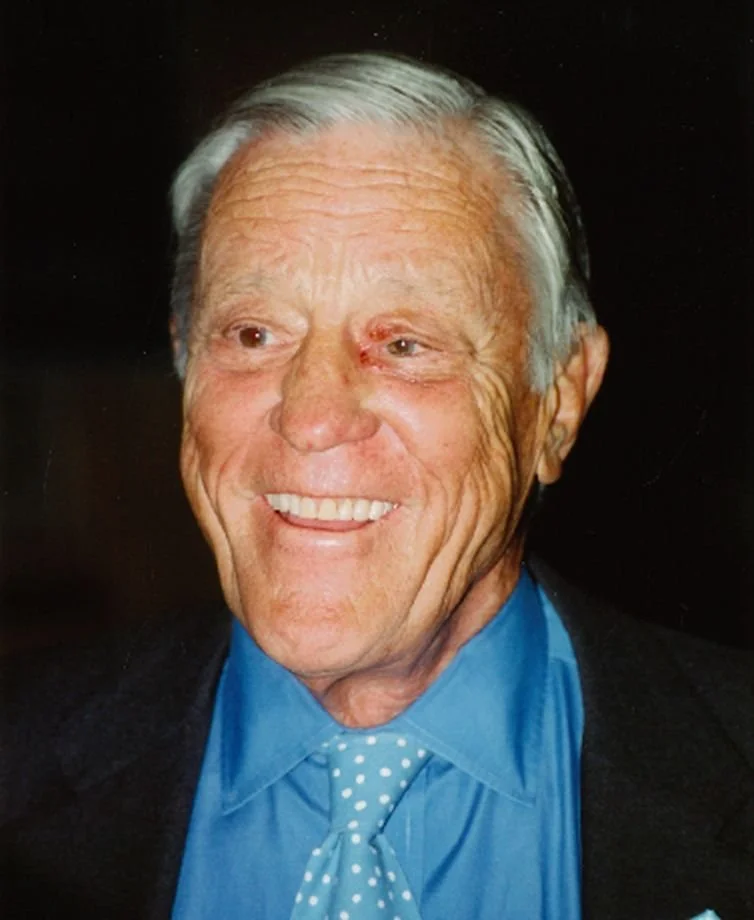
Benjamin Bradlee at a Larry King party in Washington in 1999.

“Diogenes Searching for an Honest Man,’’ attributed to J. H. W. Tischbein (c. 1780)
“As long as a journalist tells the truth, in conscience and fairness, it is not his job to worry about consequences. The truth is never as dangerous as a lie in the long run. I truly believe the truth sets men free.”
"Where lies the truth? That's the question that pulled us into this business, as it propelled Diogenes through the streets of Athens looking for an honest man.’’
"The more aggressive our search for truth, the more people are offended by the press. The more complicated are the issues and the more sophisticated are the ways to disguise the truth, the more aggressive our search for truth must be, and the more offensive we are sure to become to some."
— Benjamin Crowninshield Bradlee (1921-2014), longtime executive editor of The Washington Post, most famously during the Watergate scandal. He came from a Boston Brahmin nuclear family that lost most of its wealth as a result of the 1929 crash but other relatives chipped in to help send him to the elite St. Mark’s School, in Southboro, Mass., and then to Harvard. He worked for a few years as a reporter for The New Hampshire Sunday News, in Manchester.
Falling into a brown study

— Photo by Maciej Boryna

Chrysanthemums can survive well into mild Novembers.

A prince of November
Adapted from Robert Whitcomb’s “Digital Diary,’’ in GoLocal24.com
November is a gray and brown time, making it the winner in the saddest-month-of-the year contest for many. Still, it can sometimes have a placid, mellow, misty, soothing quality, or it can energize us with a stirring nor’easter.
You might be tempted these days to pick up a rotting apple on the ground in an orchard and taste it, and you have to admire a Norway maple that hasn’t yet dropped its leaves as mild weather seems to last later and later in the fall. You notice the beautiful patterns on bark, painted with lichen, more than you had a couple of months ago, when you were distracted by the vivid colors of many growing plants.
November is also prime time for gatherings of crows, those highly intelligent and social birds that seem to take over as we head closer to winter. You often see them on streets feasting on dead squirrels killed by cars as they try to collect acorns. But they’re also adept at splatting your car with revolting off-white poop. Do they do it on purpose?
'Unraveling and rebuilding a life'

The gallery says:
“‘THEN + NOW’ is Jane Maxwell’s exploration of a major life transition. Her new solo show was created over the past year and a half as a way to process, grieve, accept and ultimately grow, from the end of a thirty-year marriage. The work reflects her fragility and strength during this difficult time, while embracing a reverence and tenderness for the past.
“For more than twenty years, Jane Maxwell’s artistic practice was driven by an examination of personal issues related to the pressures of society’s feminine ideals. In her early years, Maxwell used vintage crate labels and movie posters to deconstruct silhouettes, to comment on the deluge of body image messaging. In recent years, Maxwell has layered peeling billboard papers from Paris and Los Angeles to create silhouettes of women in moments of confidence, power and, just as importantly, in repose.
“With this new exhibition, Maxwell takes a deeper dive into her own psyche by mining a personal and vast trove of ephemera she has accumulated and stored for decades; from vintage dolls, ledger books, old boxes, three-dimensional letters and numbers to unique antique objects that have caught her eye over the years. Sorting and integrating these collectibles allowed Maxwell to create a body of work that represents both the unraveling and rebuilding of a life.’’
Boston needs 4 ‘Big Lifts’ to meet its climate goals
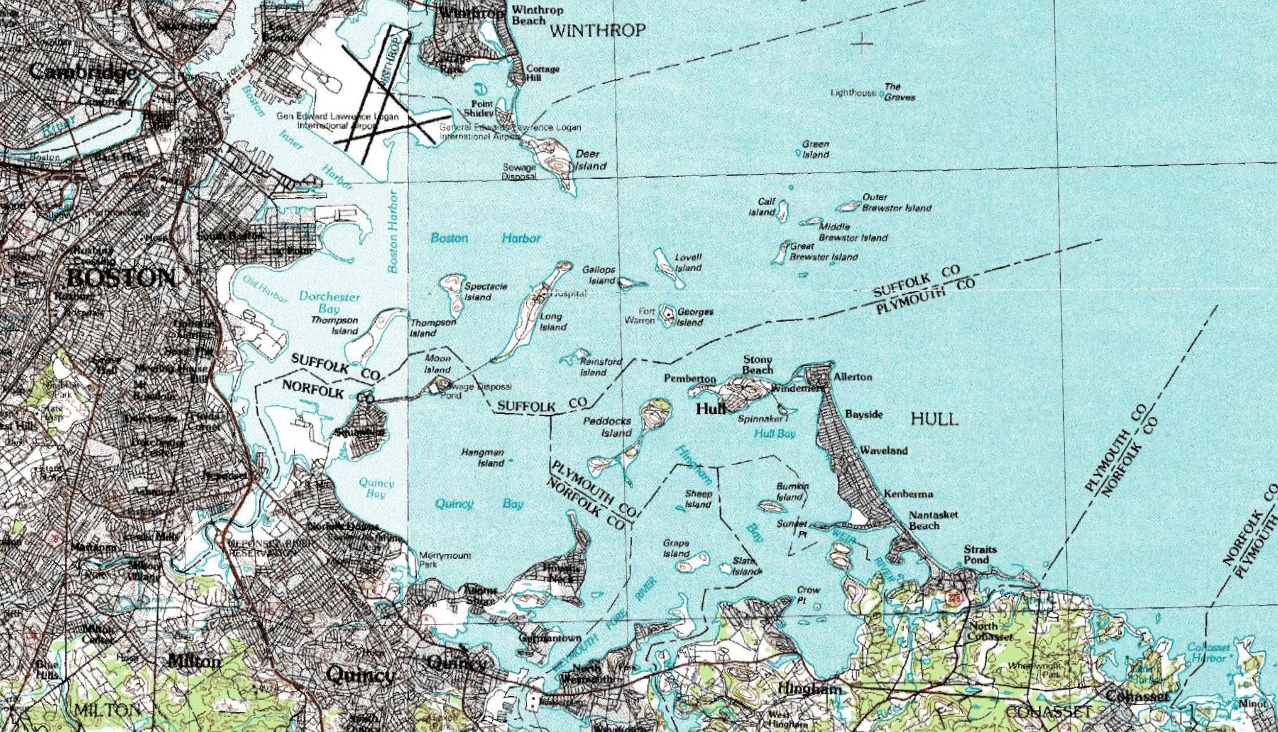
The shoreline of Boston Harbor is increasingly threatened by flooding associated witg global warming.
The Boston Foundation says that the “First Boston Climate Progress Report’’ “highlights progress {and} systemic obstacles to the city’s ambitious climate goals.’’ Northeastern University researchers have found that the city is off the pace it needs to maintain to cut carbon emissions by 50 percent before 2030. Four ‘‘Big Lifts’’ are listed to get it back on track.
Michelle Andrews: Don't get dropped by your doctor

Harvard Medical School quadrangle in Longwood Medical Area, Boston.
“Most primary care practices are incredibly busy, in part due to pent-up demand due to COVID. Even though continuity of care is important, if the patient hasn’t been in and we don’t know if they’re going to come in, it’s hard to leave space for them.’’
— Russell Phillips, M.D., director of Harvard Medical School’s Center for Primary Care and a general internist at Beth Israel Deaconess Medical Center, in Boston
When Claudia Siegel got a stomach bug earlier this year, she reached out to her primary care doctor to prescribe something to relieve her diarrhea. The Philadelphia resident was surprised when she received an online message informing her that because she hadn’t visited her doctor in more than three years, she was no longer a patient..
And since he wasn’t accepting new patients, she would have to find a new primary care physician.
“I think it’s unconscionable,” Siegel said, noting that many patients may have stayed away from the doctor’s office the past few years because of the covid pandemic. “There was no notification to patients that they’re on the verge of losing their doctor.”
Though it is dismaying to learn you’ve been dropped from a physician’s practice because a few years have passed since your last visit, the approach isn’t uncommon. Exactly how widespread the experience is, no one can say. But specialists also do this.
The argument for dropping the occasional patient makes some sense. Since many primary care doctors have a waiting list of prospective patients, removing those they rarely see opens up patient slots and improves access for others.
“Most primary care practices are incredibly busy, in part due to pent-up demand due to covid,” said Dr. Russell Phillips, director of Harvard Medical School’s Center for Primary Care and a general internist at Beth Israel Deaconess Medical Center.
“Even though continuity of care is important, if the patient hasn’t been in and we don’t know if they’re going to come in, it’s hard to leave space for them,” he said.
Patients often move away or find a different doctor when their insurance changes without notifying the practice, experts say. In addition, physicians may seek to classify people they haven’t seen in a long time as new patients since their medical, family, and social history may require a time-consuming update after a lengthy break. Patient status is one element that determines how much doctors get paid.
Still, the transition can be trying for patients.
“I can completely understand the patient’s perspective,” said Courtney Jones, a senior director of case management at the Patient Advocate Foundation. “You believe you have a medical team that you’ve trusted previously to help you make decisions, and now you have to find another trusted team.”
Siegel said she rarely went to the doctor, adhering to her physician father’s counsel that people shouldn’t go unless they’re sick. Although she hadn’t been to her doctor’s office in person recently, Siegel said she had corresponded with the practice staff, including keeping them up to date on her covid vaccination status.
After receiving the online dismissal through the patient portal for the Jefferson Health system, Siegel called the family medicine practice’s patient line directly. They told her three years was the protocol and they had to follow it.
“I asked, ‘What about the patient?’” Siegel said. “They didn’t have an answer for that.”
It was a month before Siegel, who has coverage under Medicare’s traditional fee-for-service program, could see a doctor who was accepting new patients. By that time, her stomach virus symptoms had resolved.
Jefferson Health doesn’t have a policy that patients lose their doctor if they’re not seen regularly, according to a statement from spokesperson Damien Woods.
However, he said, “Patients not seen by their provider for three years or more are classified in the electronic medical records as new patients (rather than established patients), per Center for Medicare and Medicaid Services (CMS) guidance. Whenever possible, Jefferson works with these patients to keep them with their primary care provider and offers options for new providers in certain circumstances.”
American Medical Association ethics guidelines recommend that physicians notify patients in advance when they’re withdrawing from a case so they have time to find another physician.
But the organization, which represents physicians, has no guidance about maintaining a panel of patients, said AMA spokesperson Robert Mills.
The American Academy of Family Physicians, which represents and advocates for family physicians, declined to comment for this story.
A primary care physician’s panel of patients typically includes those who have been seen in the past two years, said Phillips, of Harvard. Doctors may have 2,000 or more patients, studies show. Maintaining a workable number of patients is crucial, both for effective patient care and for the doctors.
“Practices realize that a major contributor to physician burnout is having more patients than you can deal with,” Phillips said.
Demand for physician services is expected to continue to outstrip supply in the coming decades, as people age and need more care at the same time the number of retiring physicians is on the upswing. According to projections from the Association of American Medical Colleges, by 2034 there will be a shortage of up to 48,000 primary care physicians.
Maintaining a regular relationship with a primary care provider can help people manage chronic conditions and promptly identify new issues. Regularly checking in also helps ensure people receive important routine services such as immunizations and blood pressure checks, said Dr. David Blumenthal, a former primary care physician who is president of the Commonwealth Fund, a research and policy organization.
Health care organizations increasingly focus on requiring doctors to meet certain quality metrics, such as managing patients’ high blood pressure or providing comprehensive diabetes care. In this environment, “it could be problematic for physicians to be accountable for the health of patients who do not see them,” Blumenthal said.
Money also figures into it. Steady visits are good for a practice’s bottom line. Practices may also decide to avoid new Medicare patients or those with certain types of insurance because the payments are too low, said Owen Dahl, a consultant with Medical Group Management Association, an organization for health care managers.
In general, doctors aren’t obligated to continue seeing a patient. A doctor might dismiss patients because they aren’t following clinical recommendations or routinely cancel or miss appointments. Belligerent or abusive behavior is also grounds for dropping a patient.
In certain instances, physicians may be legally liable for “patient abandonment,” a form of medical malpractice. State rules vary, but there are common elements. Those rules generally apply when a doctor harms a patient by dropping them abruptly at a critical stage of treatment. It would generally not apply if a patient has not seen the physician for several years.
Even though quietly dropping a seldom-seen patient might not have an immediate medical consequence, patients ought to be informed, experts said.
“It’s really good customer service to explain the situation,” said Rick Gundling, senior vice president at the Healthcare Financial Management Association, an organization for finance professionals. As for Siegel, he said, “This woman should not be left hanging. If you’re the patient, the physician should be proactive.”
Michelle Andrews is a Kaiser Health News journalist.
‘Alive and already ghosts’


Video stills from Jeremy Newman’s “The Dreaming Biome” show, at the sidewalk video gallery of Fountain Street galleries, Boston, through Nov. 12.
Mr. Newman explains:
“This experimental film immerses viewers in an imagined ecosystem where plants and animals from various locations co-exist through juxtaposition and video effects. The natural elements are familiar yet made to appear strange. There is beauty and wonder, but within a Surrealist nightmare. The pacing echoes the rhythms of life from the spider’s climb to the rabbit’s breath. Throughout the film, the ephemeral nature of things is palpable. These creatures are alive and they are already ghosts.”
John O. Harney: All you can eat — interesting data From New England and beyond
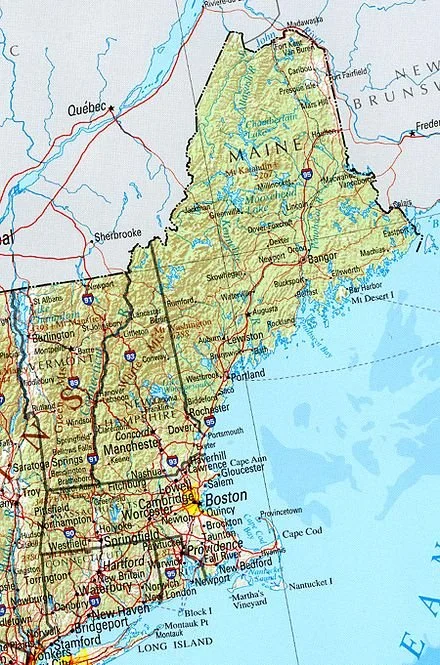
From The New England Journal of Higher Education, a service of The New England Board of Higher Education (nebhe.org)
BOSTON
The ranks of New Hampshire, Vermont and Maine as the least diverse states in America, based on measures of socioeconomic, cultural, economic, household, religious and political diversity: 47th, 48th, 49th WalletHub
Ranks of Connecticut, Massachusetts, Vermont, Rhode Island, Maine and New Hampshire among the most expensive U.S. states to retire in: 3rd, 4th, 6th, 7th, 10th, 14th Bankrate
Increase in lifetime earning associated with lifetime labor union membership: $1,300,000 Parolin, Z., & VanHeuvelen, T., The Cumulative Advantage of a Unionized Career for Lifetime Earnings, ILR Review
Support for labor unions among Gen Zers (defined as being 23 years old or younger in 2020): 64% Center for American Progress
World rank of California’s economy if it were a country: 5th (soon to be 4th) Bloomberg News
Percentage of Americans who rely on autocorrect to correct misspellings: 79% Unscrambled Words
Percentage who say they judge someone who often misspells: 61% Unscrambled Words
Share of New Bedford (Mass.) High School students who were “chronically absent” in 2022, meaning they missed at least 18 days, or 10% of school: 70% The New Bedford Light on NAEP Data
Number of reports of book bans received by the nonprofit PEN America during a nine-month period from July 2021 through March 2022: 1,586 PEN America (PEN American reports 671 additional book bans during that period have come to light. A further 275 more bans followed from April through June, bringing the total for the 2021-22 school year to 2,532 bans.)
Percentage of those banned books that had a protagonist or main character of color: 41% PEN America
Percentage of those banned books that had LGBTQ themes: 33% PEN America
Number of America’s approximately 90,000 school board members who are known to be LGBTQ: 90 Victory Institute
Number of additional LGBTQ school board members who would have to be elected to match the 7% of the adult U.S. population that identifies as LGBTQ: 6,300 Victory Institute

At Harvard Square, in Cambridge, Mass.
From 2010 to 2015, Harvard University’s admission rate for “legacy” applicants with at least one Harvard-educated parent: 34% Jennifer Lee, sociology professor at Columbia University, op-ed in Los Angeles Times
Admission rate for “non-legacy” applicants who do not have a Harvard-educated parent: 6% Jennifer Lee, sociology professor at Columbia University, op-ed in Los Angeles Times
John O. Harney is executive editor of The New England Journal of Higher Education.

Painting of “Still Life with Kitaj’s Death mask,” by Montserrat College of Art (Beverly, Mass.) professor Timothy Harney.

Llewellyn King: Sites of mass murder past and present; ‘what would I do?’

Memorial of the Distomo Massacre
— Photo by Dawetie
ERETRIA, Greece
The sites of horror -- the places where mass murder happened -- are seared into my memory. Holocaust sites such as the Warsaw Ghetto and Auschwitz or Kigali, where the Hutus butchered the Tutus, or the Falls Road in Belfast, where many died over the decades of strife.
A new one has just been fixed firmly in my memory: Distomo.
These sites of slaughter trigger the sense of how fragile human society is – and such slaughter is taking place this day, this hour, this minute in Ukraine.
I am not enthralled by history per se. My lens is mostly confined to what happened in my lifetime, whether as a small child during World War II or in the years since.
But the horrors of the past aren’t confined in the past. They leak into the present as new bleak chapters on human conduct are written.
I say this because I have just visited Distomo, where barbarity reached a crescendo on June 10, 1944. There, for two hours, the Waffen-SS killed villagers with machine guns, bayonets and any other handy weapons. They killed the unborn, infants and older children, women and men. They beheaded the village priest.
If they paused, it was to rape.
The Association of European Journalists, the 60-year-old organization with sections spread across Europe, had invited me to its annual congress in central Greece. After two busloads of delegates had visited the Oracle at Delphi, we stopped at Distomo: a trip from the celestial to the bestial.
My mind is set afire with questions at these World War II sites. If I had been a young Jew, swept up by the Nazis, would I have been killed in a camp? If I had been a young German guard, would I have participated in the killing, and how much enthusiasm would I have brought to the work?
I wonder how the young men who did the butchery at Distomo lived with themselves afterward. Did they dream of bayonetting pregnant women, of old people begging to be killed instead of their spouses, children and grandchildren?
In the end, few were spared -- only those who were left for dead. Conservative estimates are that 238 people died in the massacre.
My journalistic colleagues and I went from the foibles of the Greek gods of antiquity to the horrors of humans in the 20th Century.
I was just a child during World War II, but I feel especially connected because this and other Nazi atrocities happened in my lifetime.
When I visited Auschwitz and saw the hair, the shoes, the toys and other jetsam of children, my thought wasn’t that it could have been me, but that those could have been my friends, my playmates and every Jew I have been close to, and there have been many.
At the Distomo museum, they show a graphic film with eyewitness accounts of those who survived, those who bore witness, such as the woman who describes scooping the brains back into her dead toddler’s head and carrying his corpse home -- but her house, and nearly all those in the village, was burned by the SS. That is what she did and lived to tell -- to tell of that butchered child. She said in the film that she couldn’t forgive. Who with that memory could?
The young men who carried out the Distomo killings, under their 26-year-old leader, SS-Hauptsturmfurer Fritz Lautenbach, did so in reprisal for partisan attacks on German troops.
After visiting many killing fields – and I don’t seek them out -- I wonder what I would have done? Would I have followed orders? Would I, in seconds, persuade myself that what I was doing was right?
What would I do if I were on the Russian frontlines in Ukraine today? There is savagery equal to Distomo going on right now in wars in many places, carried out by people just like us.
Llewellyn King is executive producer and host of White House Chronicle, on PBS. His email is llewellynking1@gmail.com and he’s based in Rhode Island and Washington, D.C.
Linda Gasparello
Co-host and Producer
"White House Chronicle" on PBS
Mobile: (202) 441-2703
Website: whchronicle.com
ReplyReply allForward

David Warsh: Will the GOP abandonUkraine soon after the mid-term election?

— Map by Viewsridge
SOMERVILLE, Mass.
Only a few days before an election is no time to be a columnist. This column is written some distance from Washington, D.C., but Edward Luce, of the Financial Times, is there in the thick of things. On Oct. 29, in “America’s Brittle Consensus on Ukraine,’’ he wrote “In the Republican quest to make a scorched earth of Biden’s presidency nothing will be sacred, including Ukraine’s military pipeline.” The “pro-Putin wing” of the GOP is still a minority, Luce added, but “almost every Republican will back {likely next House Speaker Kevin} McCarthy’s likely effort to impeach Biden and hold the U.S. debt ceiling hostage to their demands.”
That much, at least, remains to be seen. The presumptive speaker will settle on his plans only after the election results are known and thoroughly construed. Until then there remains a possibility that McCarthy’s Trump-based agenda will dissipate in a mood of grudging forgiveness following what may turn out to be a nobody-knows-anything election.
“The fact remains, however, that fifty-seven House Republicans and eleven senators voted against Biden’s $40 billion Ukraine aid package earlier this year. And though it hasn’t yet sunk in, Russian president Vladimir Putin took an active hand in the US election Thursday when, in an important speech, he asserted there were
“[T]wo Wests – at least two and maybe more but two at least – the West of traditional, primarily Christian values, freedom, patriotism, great culture and now Islamic values as well – a substantial part of the population in many Western countries follows Islam. This West is close to us in some things. We share with it common, even ancient roots. But there is also a different West – aggressive, cosmopolitan, and neocolonial… a tool of neoliberal elites [embracing what I believe are strange and trendy ideas like dozens of genders or gay pride parades].’’
He might as well have identified them as being, in his view, Republicans and Democrats.
Putin believes this is the basis for his war on Ukraine. It may be MAGA’s view as well. I don’t believe it is McCarthy’s. It certainly is not mine. But it will take time to work out the distinction. Less than a week before a very important election is no time to try.
Meanwhile, I’ve been been reading Not One Inch: America, Russia, and the Making of Post-Cold War Stalemate (Yale, 2021), by M.E. Sarotte; Macroeconomic Policies for Wartime Ukraine (Centre for Economic Policy Research, 2022), by Kenneth Rogoff, Maurice Obstfeld, and seven others; “Warfare without the State,’’ Adam Tooze’s recent criticism of the CEPR plan; and “Russia’s Crimea Disconnect’’, by Yale historian Timothy Snyder; and Johnson’s Russia List, more or less daily.
Halloween was scarier than usual this year.
David Warsh, a veteran columnist and an economic historian, is proprietor of Somerville-based economicprincipals.com, where this column originated.
The balm of blue

“I Have Loved Many Colors” (encaustic monoprint), by Brookline, Mass.-based Lola Baltzell, in her show ‘Dabbling in Blue Magic,’’ at Galatea Fine Art, Boston, Nov. 4-27.
She tells the gallery:
"One of my favorite authors is {the late novelist}Vladimir Nabokov, and the title of this show is a nod to his imagery. One remarkable thing about his writing is that English is his second language. He refers to color frequently, my true love language.
Blue. Why Blue Magic?
All the work in this show is encaustic, also known as hot wax, and includes collage, painting and monoprints. I don't typically work in blue, yet all the pieces in this show are blue. I've spent a lot of the pandemic in the water - metaphorically and literally. Feeling adrift, lost at sea, looking for terra firma, yet I sought solace on the water, spending as much time paddleboarding as possible. Working in blue has felt like a balm, soothing, healing. My own blue period."
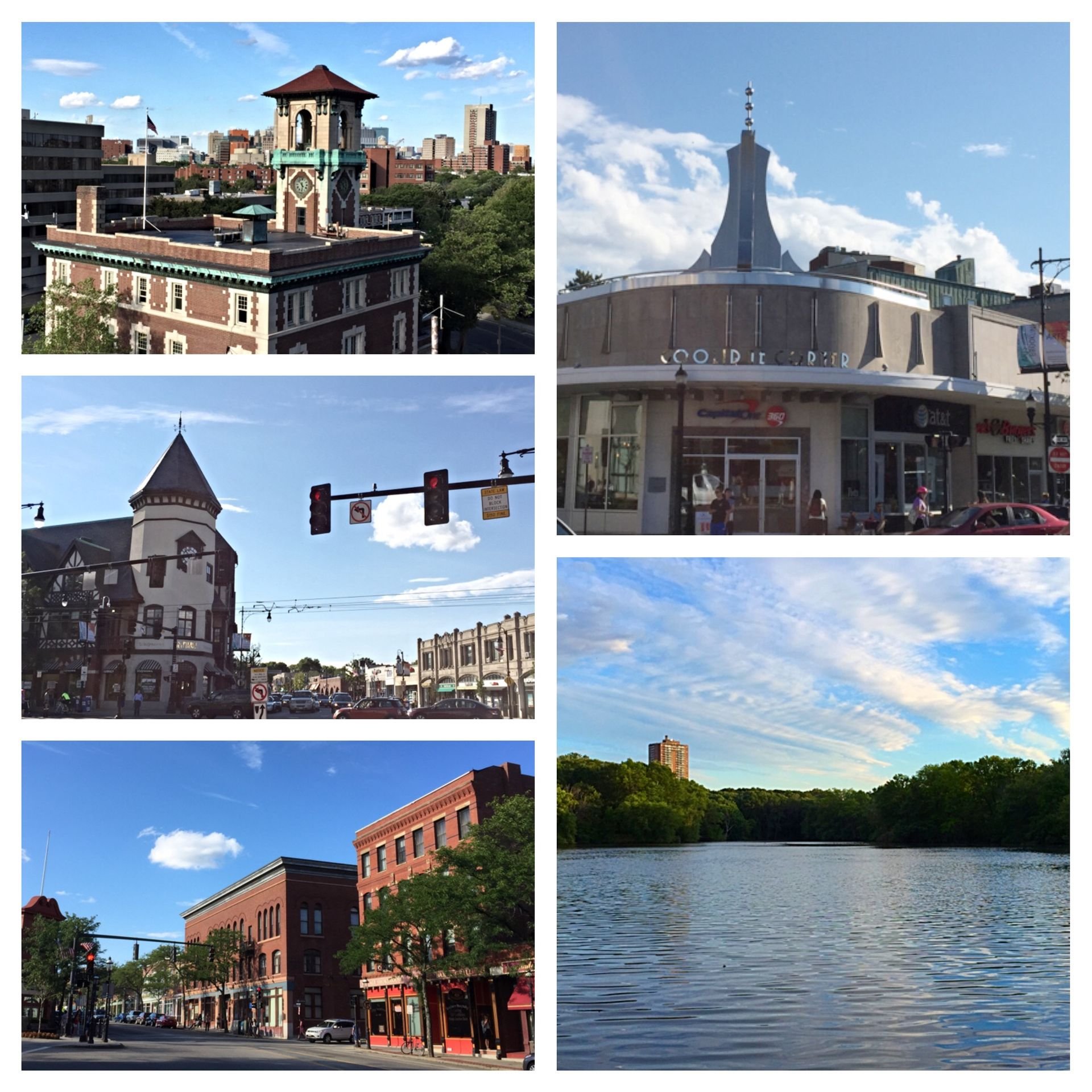
Views of Brookline
Photo collage by Ddogas
The advantages of blurred vision

“Your inability to see yourself clearly is what’s keeping you alive.’’
— Sarah Silverman (born 1970), American comedian, writer and actress. She was born in Bedford, N.H., and raised in nearby Manchester.

Manchester on a dreary October day.

Weston Observatory in Derryfield Park, Manchester. It was built in 1897, at the height of Manchester’s glory as a manufacturing center, especially for textiles.
— Photo by Magicpiano

The gigantic Amoskeag mill complex, along the Merrimack River, in 1911.

NHL wants to speed efforts to expand diversity

The Boston Bruins at work against the New Jersey Devils.
Edited from a New England Council (newenglandcouncil.com) report
“The National Hockey League has released its Diversity and Inclusion Report, which presents the NHL’s efforts to accelerate diversity and inclusion in the sport of hockey. This is an ongoing effort by the league to prioritize inclusion and to grow a stronger hockey community.
“By focusing on seven dimensions, including goals such as leadership, community engagement, partnerships and more, the NHL organized the report to present quantitative and qualitative progress the league has made over the last two years. The report found that 22 teams launched or are in the process of launching mentorship programs to develop BIPOC and female talent to create a pipeline of opportunities for candidates in front office and operation positions. BIPOC”: stands for Black, Indigenous, People of Color.
“The NHL emphasized its need to increase the exposure of the sport to women and BIPOC communities–in partnership with the NHL Player’s Association Industry Growth Fund, the NHL has distributed more than $135 million in funds in the US and Canada to fund programs to reach these audiences. Stepping outside the rink, the report noted a committed effort by the League to support community engagement both in the sport and local communities. To reach this goal the NHL has advocated for various legislation promoting social equality, including the Willie O’Ree Congressional Gold Medal Act to honor O’Ree’s contributions to the sport as the first NHL Black player. The report highlighted the accomplishments of the League but also acknowledged that there is still room for improvement. The NHL expressed its need to address issues of prejudice and discrimination by using the tools of education and accountability. To continue the conversation about social justice all 32 teams will participate in a program to which will address issues such as discrimination, harassment, and abuse. The NHL hotline was released to give both players and employees a way to report unethical conduct.
“Commissioner Gary Bettman said, ‘Our belief is stronger than ever that hockey has a powerful platform to build character, teach life skills, and support our society and our communities. We’re focused on ensuring the game and its related environments are safe, respectful, and inclusive. Diverse representation within inclusive environments is proven to advance innovation, creativity, and decision-making – all of which are critically important to the growth of the sport and our business.”’
‘We are still here’

The cairn in question.
Adapted from Robert Whitcomb’s “Digital Diary,’’ in GoLocal24.com
I wrote too whimsically in an Oct. 23 column that I had come across this cairn while walking on the lawn at the Roger Williams National Memorial, in downtown Providence, and asked what it is. Here’s the answer from the National Park Service, via my friend Ken Williamson, who lives in Hawaii.
“This cairn, or stone pile, depicts pieces of Narragansett {Tribal Nation}
history from pre-contact {with Europeans} through today. Built by Narragansett artists associated with the Tomaquag Museum {in Exeter, R.I.} it expresses the fact that WE ARE STILL HERE. The cairn is at the center with 4 raised stones around it representing the Four Directions. It is a meditative circle, representing Narragansett lives, history, and future which brings us full circle. Sit down and reflect on your own past, present and future and its intersection with the Narragansett people.
“The Narragansett Tribal Nation has lived on these lands since time immemorial. Their ancestors respected all living things and gave thanks to the Creator for the gifts bestowed on them, as do Narragansett people of today. Lynsea Montanari & Robin Spears III, both Narragansett, served as summer arts interns at the memorial for this project. They incorporated their own cultural knowledge with teachings by tribal elders regarding first contact with European settlers, genocide, displacement, assimilative practices, enslavement, continuation of language, ceremony, and other cultural practices. The artists chose to create a cairn as it is a part of the history of all indigenous peoples. There are many historic cairns in the Narragansett landscape.’’
xxx
My strongest memory of Native American cairns comes from driving with my wife in the forests along the northern side of gorgeous Georgian Bay in Ontario. You can’t go far there without seeing a cairn or other stone sculpture on a slope above the road.

Tomaquag Museum, in the Arcadia section of Exeter, R.I.
—Photo by John Phelan