
Vox clamantis in deserto






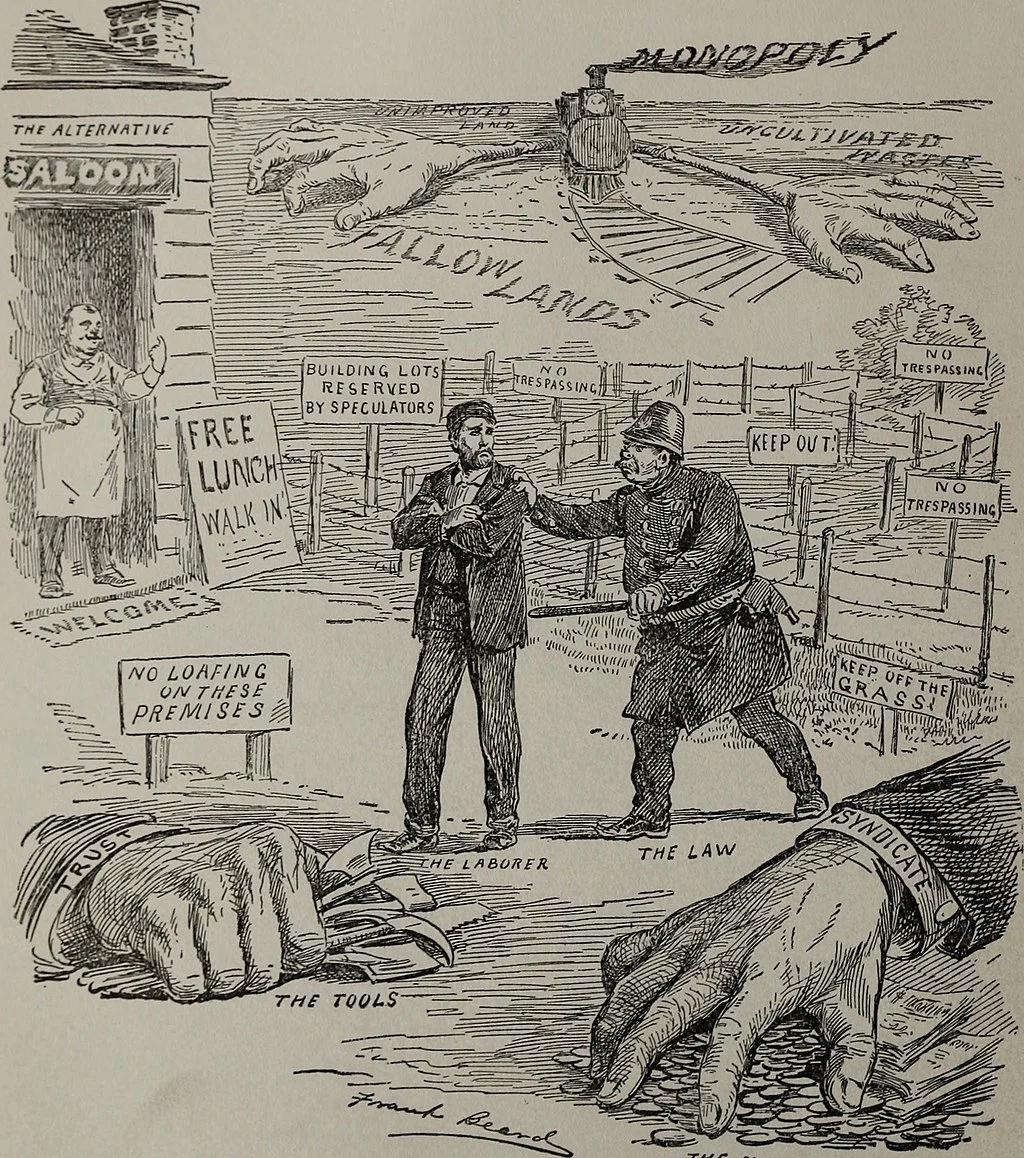
Jim Hightower: Inflation -CEO's brag about their price gouging
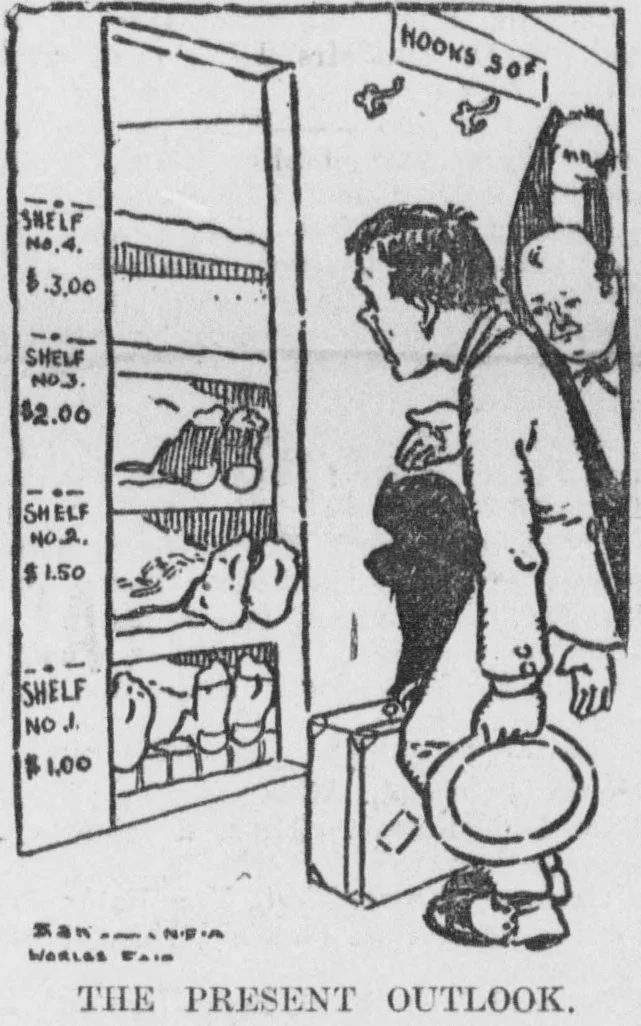
1904 cartoon warning attendees of the St. Louis World's Fair of hotel room price gouging.
Via OtherWords.org
Publicly, they moan that the pandemic is slamming their poor corporations with factory shutdowns, supply-chain delays, wage hikes and other increased costs. But inside their boardrooms, executives are high fiving each other and pocketing bonuses.
What’s going on? The trick is that these giants are in non-competitive markets operating as monopolies, so they can set prices, mug you and me, and scamper away with record profits.
In 2019 for example, before the pandemic, corporate behemoths hauled in roughly a trillion dollars in profit. In 2021, during the pandemic, they grabbed more than $1.7 trillion. This huge profit jump accounts for 60 percent of the inflation now slapping U.S. families!
Take supermarket goliath Kroger. Its CEO gloated last summer that “a little bit of inflation is always good in our business,” adding that “we’ve been very comfortable with our ability to pass on [price] increases” to consumers.
“Comfortable” indeed. Last year, Kroger used its monopoly pricing power to reap record profits. Then it spent $1.5 billion of those gains not to benefit consumers or workers, but to buy back its own stock — a scam that siphons profits to top executives and big shareholders.
Or take McDonald’s. It bragged to its shareholders that despite the supply disruptions of the pandemic and higher costs for meat and labor, its top executives had used the chain’s monopoly power in 2021 to hike prices, thus increasing corporate profits by a stunning 59 percent over the previous year.
And the game goes on: “We’re going to have the best growth we’ve ever had this year,” Wall Street banking titan Jamie Dimon exulted at the start of 2022.
Hocus Pocus. This is how the rich get richer and inequality “happens.”
OtherWords columnist Jim Hightower is a radio commentator, writer and public speaker.
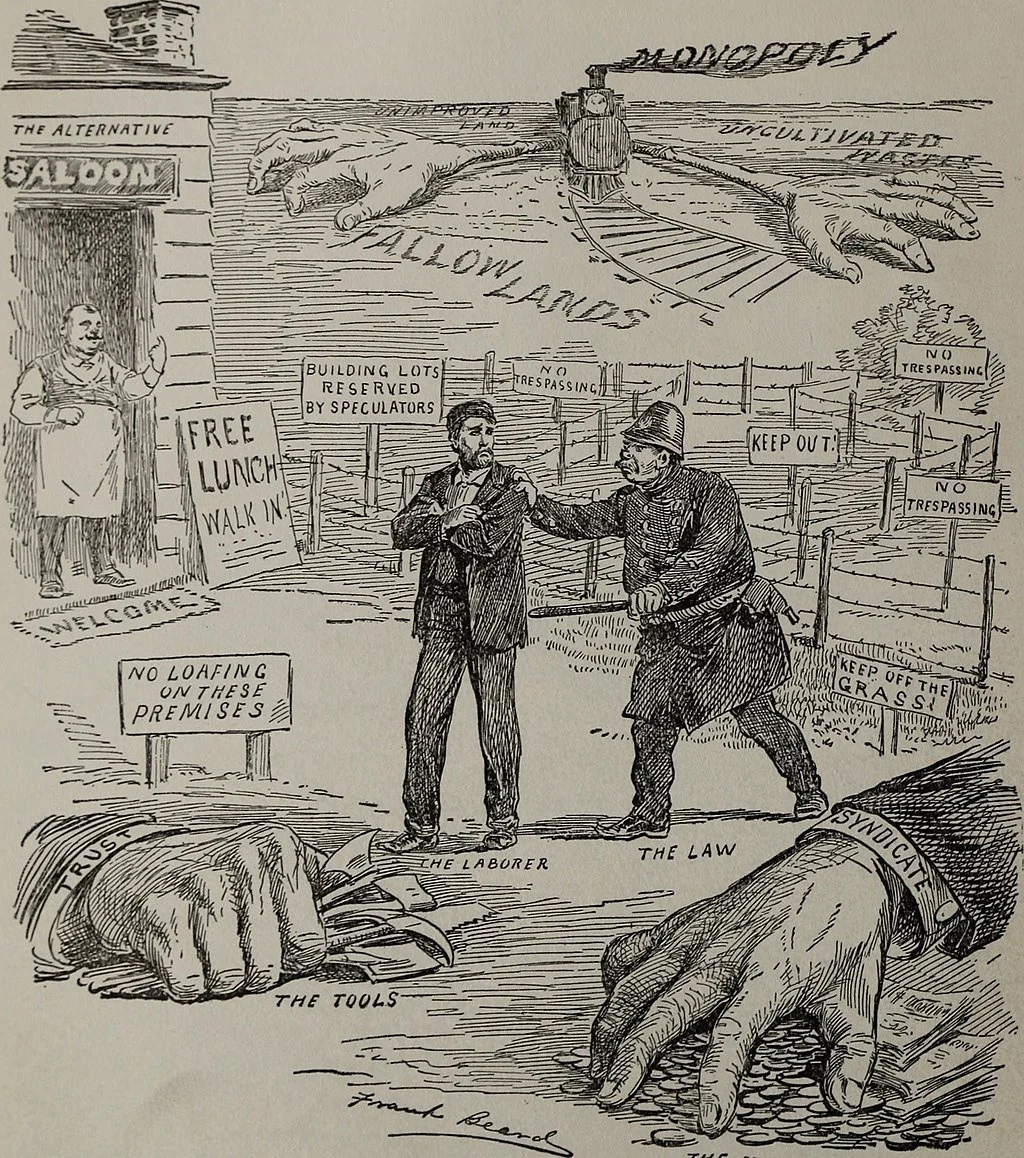
1902 cartoon
'Sameness and difference'

”Reconfiguration #2’’ (acrylic on canvas), by Rupert, Vt.-based artist Jane Davies, at Edgewater Gallery, Middlebury, Vt.
She says on her Web site:
“No matter what format or style my work takes, the pivot point of my visual explorations is sameness and difference. I like assembling a collection of visual elements that are markedly different from each other, like putting together a dinner party of people that have wildly different backgrounds and interests, to see what happens. I want to be surprised by the conversations or juxtapositions of my visual cast of characters, and then see how I can relate them to one another formally.’’
Anthropomorphic architecture
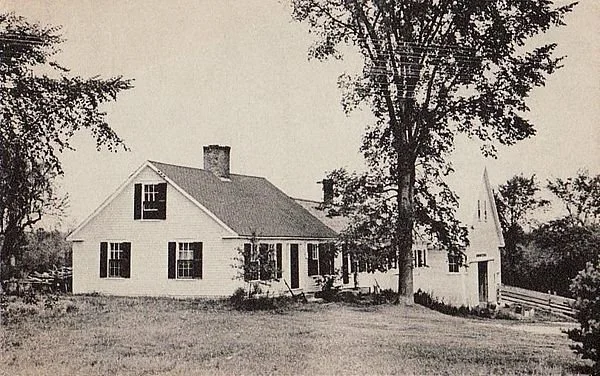
“This old house which was hers
made her crooked back a shingle,
her covered eye this fireplace oven,
her arms the young pine beams
now our clapboard siding….”
— From “The Families Album,” by Michael S. Harper (1938-2016), American poet and Brown University professor
‘Lambent incandescence’

— Photo by David Ohmer
”The water was palpably soft, and floating with the current we were invisible in the wispy layer of fog. Then, in what seemed like a flash, the sun hit the river and the fog disappeared. The surface was completely still, and looking toward shore I saw, as if below me in the dark water, a buried valley of lambent incandescence. Looking above the bank I saw what at first seemed to be, in that ethereal atmosphere, a reflection of what the water held.’’
— Jerrold Hickey (1922-2007), on his “earliest memory of fall foliage,’’ along the Charles River in Newton, Mass. This is from an essay he wrote for Arthur Griffin’s New England: The Four Seasons (1980)
Llewellyn King: For fairness and privacy, bring back cash
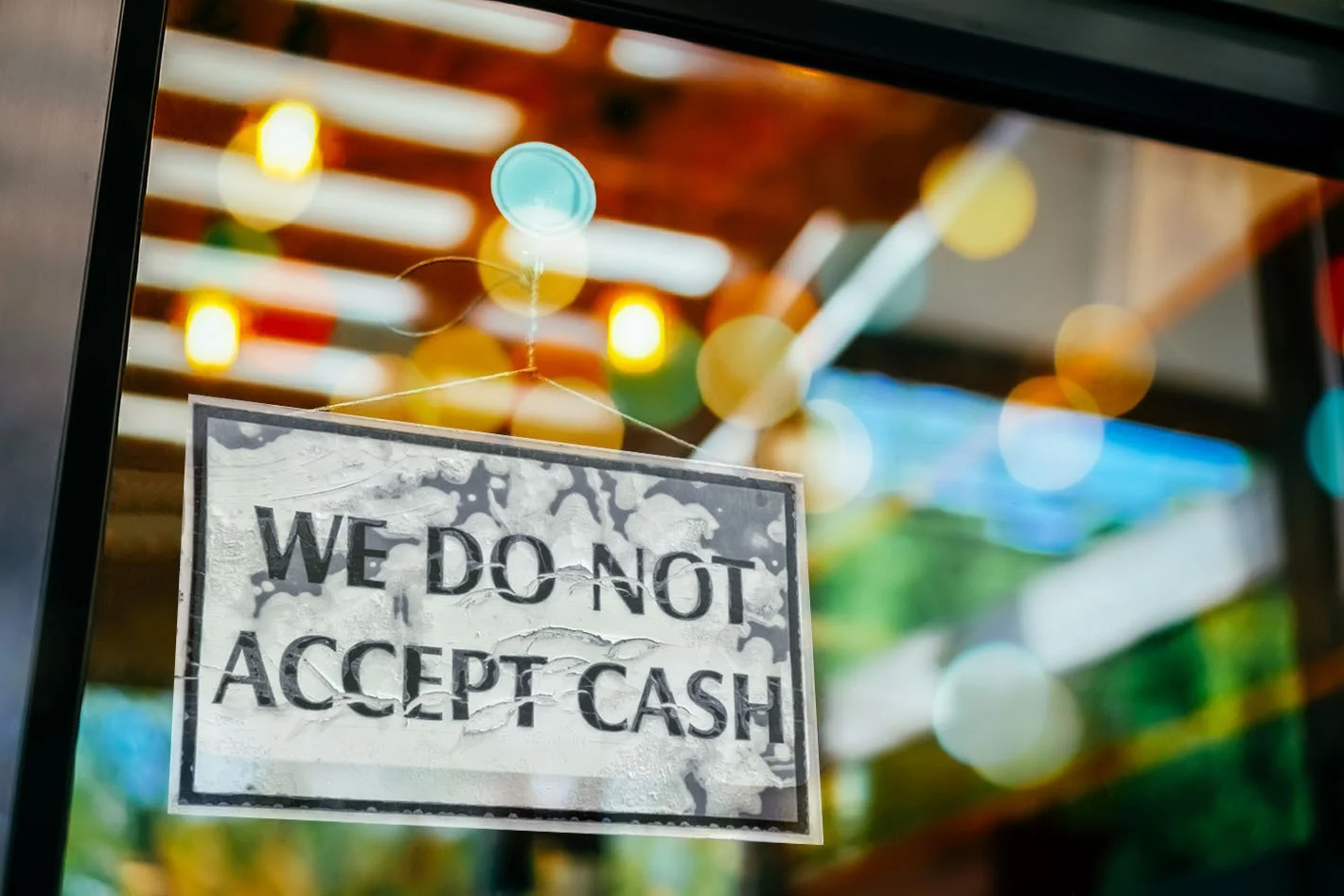
Once at the St. Francis Hotel in San Francisco, I went to check in, and when I reached for my wallet it wasn’t there. The clerk said that I wouldn’t be able to check in without a credit card.
I explained that I had, mercifully, in another pocket, enough cash to pay for the stay. Reluctantly, they took more than enough of it for the two days and made a big point of telling me not to sign for even a cup of coffee.
Nowadays, I doubt they would accept my cash deposit.
Real people carry credit cards. Non-people — a subspecies of the American customer — are without. Woe to those.
Today there are more of these non-people because one of the lasting effects of the COVID pandemic is that cash is out, and plastic is all. No plastic, no go.
Hotels, airlines and even coffee shops have gone cashless. Ostensibly, this is because it is healthier. Truthfully, they don’t want to be bothered. Cash is a problem; credit is easier. In fact, from the vendor’s point of view, cash sucks, credit is cool.
At a large hotel in Orange County, Calif., where I have been attending a conference, I tried to buy a coffee at Starbucks. “I don’t take cash,” said the barista, primly. “Just credit cards and room service.”
This caused me to wonder again about the legions of Americans who don’t have credit cards, some of whom don’t want them, but most don’t have credit or have been turned down.
If we have a recession, which now seems inevitable, there will be more people without credit and immobilized by the post-COVID realities of the plastic-favored world.
Cash on hand won’t save them. They are the unbanked, a lesser order of our citizenry.
For starters, millions of the working poor are mostly without credit. It is hard to worry about the niceties of credit when you struggle to get food to the table for the family.
In this new world, the cardless also are immobilized.
Consider what being without plastic means: You can’t make a reservation on Amtrak or an airline. You must go to an airport, as airlines no longer have free-standing ticket offices. Then you will learn that you must use a reverse ATM to buy a card with cash to buy a ticket. Amtrak still takes cash, but you must go to a railroad station.
The first consequence is, in most cases, you will pay a lot more if you try to buy the ticket on the day of travel. Those tempting “book now and save” ads are only for credit card holders.
You can’t get to the railroad station or the airport on a ride-sharing service because they work only with credit cards.
So the luckless, who probably don’t have plastic because of financial problems, will pay more because they will be paying mostly at the last minute, and they will be charged to convert their cash to plastic at the airport. These travelers won’t be able to buy a drink or internet service because that requires you to file a credit card before you board.
It is an old story: the poor pay more. Now they may not be allowed to pay with the currency of the land.
An odd byproduct of the move to plastic is a further blow to privacy. Cellphones and security cameras have already stripped away much of our privacy. Will the fact that this very morning I bought a latte and a croissant with a credit card cause me to be inundated with Internet advertisements for designer coffee and pastry?
What would the deduction be by a suspicious partner if the credit card bill showed two lattes and two croissants?
Bring back cash. It was universal, left no record, and was preferred by merchants. Now they don’t want it, even for a coffee.
On Twitter: @llewellynking2
Llewellyn King is executive producer and host of White House Chronicle, on PBS. He’s based in Rhode Island and Washington, D.C.
White House Chronicle
Inside Sources

Chris Powell: Absentee-voting expansion is invitation to fraud; will Title IX be erased by trans-athlete movement?

Early voting in U.S. states, 2020
— Graphic by J.Winton
MANCHESTER, Conn.
Election officials throughout Connecticut are properly worried by the sharp increase in absentee-ballot applications being requested by political campaigns and distributed to voters who have not requested them. The practice will cause confusion and facilitate fraud.
Anyone can request an absentee-ballot application for himself or others, and applications can be downloaded from the secretary of the state's Internet site or obtained from a municipal clerk's office. Applications are to be signed by the voter and delivered to the municipal clerk's office, which will hand the voter an absentee ballot or mail one to him. The voter is to complete it, put it in a secure envelope, sign the envelope, place the ballot envelope inside a mailing envelope, and mail or deliver the ballot package to the municipal clerk.
It's a good system for protecting ballot confidentiality. But an absentee voter never has to appear in person before any election official. Nor, as a practical matter, does an absentee voter even have to live in the municipality in which he would vote, nor even still be alive. Of course, the law requires that much but seldom does anyone check. As long as a voter's name remains on the voter rolls, an absentee ballot can be cast in his or her name.
That's why the mass collection and distribution of absentee-ballot applications by political campaigns is so risky. Campaign workers familiar with their towns are able to discern which people on the rolls pay attention and vote regularly and which don't, and the latter become the target for voting fraud.
Indeed, most election-fraud controversy involve absentee ballots, since the absentee-ballot process inevitably separates a voter from the casting of his vote. The ongoing litigation over the Democratic primary for state representative in the 127th House District has revealed one absentee-ballot fraud and screw-up after another. But in-person voting at polling places, where voters must produce identification and complete and cast their ballots in the presence of election officials, is almost impossible to corrupt.
Increasing the security of absentee ballots would be difficult. Being posted on the Internet, the absentee ballot form is available to anyone at any time and can be printed and distributed in infinite numbers.
To confirm that absentee-ballot requests are genuine, election officials could be required to make personal contact with applicants, by telephone or face-to-face interview, but the expense would be great. As a practical matter, probably the most that can be done is to minimize causes for use of absentee ballots and minimize the handling of ballots and applications.
State law authorizes the use of absentee ballots in six circumstances, all of them sensible. But it might be good for the law to restrict any person from distributing more than two absentee-ballot applications, thus taking candidates and campaign workers out of the absentee ballot business.
Of course it would be difficult to police such a restriction, but candidates and campaign workers still could encourage voters to obtain absentee-ballot applications on their own, since it could hardly be easier.
In any case, the less in-person voting, the more election fraud.
xxx
For many years society and the federal government, as codified in Title IX of federal civil rights law, presumed that there were two sexes, male and female; that in general males were physically stronger; and, as a result, that fairness required publicly financed institutions operating competitive sports programs to maintain programs exclusively for women, programs that were equal to those provided for men, for otherwise athletic opportunity for women would tend to be diminished.
Not any more. Lately government, under the pressure of a bizarre new ideology, sustained by political correctness, is presuming that there is no physical difference between the sexes, that men can become women and women can become men just by thinking it , and that men and boys who think themselves women must be permitted to compete against women and girls in athletic events.
In a case arising from Connecticut, the issue of men participating in women's sports -- the nullification of Title IX and the progress achieved thereunder -- has reached a federal appellate court. The law may change but biology won't.
Chris Powell is a columnist for the Journal Inquirer, in Manchester (CPowell@JournalInquirer.com).
Cross-species and cross-cultural communication

“Inside the Belly of a Rabbit’’ (watercolor on paper), by New York-based artist Dana Sherwood, in the show “Dana Sherwood: Some Kind of Tea Party or Thereabouts in the Realm of Madness,” at the University of Massachusetts at Dartmouth’s University Art Gallery, in downtown New Bedford, through Dec. 28.
© Dana Sherwood
The gallery says:
“This exhibition, which includes films, ceramics, oil and watercolor paintings, explores the relationship between humans and the natural world, drawing on the artist’s exploration of cross-species communication, domestic culture, and the mythical connections between the feminine and natural world in a changing environment.’’

“Gosnold at the Smoking Rocks” (oil on canvas, 1842), by William Allen Wall, at the New Bedford Whaling Museum. It’s a romanticized depiction of English explorer Bartholomew Gosnold meeting a few of the local Wampanoag people in 1602. Gosnold (1571-1607) was said to be the first European to set foot in what’s now called New Bedford.

‘The Yankee-est gal’

Better Davis (at age 79) in The Whales of August (1987), which brought her acclaim during a period in which she was beset with failing health and other personal crises. The movie is set in Maine.
“To fulfill a dream, to be allowed to sweat over lonely labor, to be given the chance to create, is the meat and potatoes of life. The money is the gravy. As everyone else, I love to dunk my crust in it. But alone, it is not a diet designed to keep body and soul together.’’
— Bette Davis (1908-1989), movie star and writer, in her 1962 memoir The Lonely Life
She called herself the “Yankee-est gal who ever came down the pike.”
She was born and educated in Massachusetts, married three New Englanders and had homes in Massachusetts, New Hampshire and Maine.
No conditioner needed

“Hirsute Queen Eumelanin” (human and synthetic hair, Black-Faced Sheep horns, tanned and dyed fish skin), in Cambridge, Mass.-based Jenn Levatino’s show, “The Keratin Series,” at Bromfield Gallery, Boston, through Oct. 30. These drawings and sculptures are inspired by animal remains and hairstyles in ancient Roman portraiture.
David Warsh: Exploring ‘quantum weirdness’
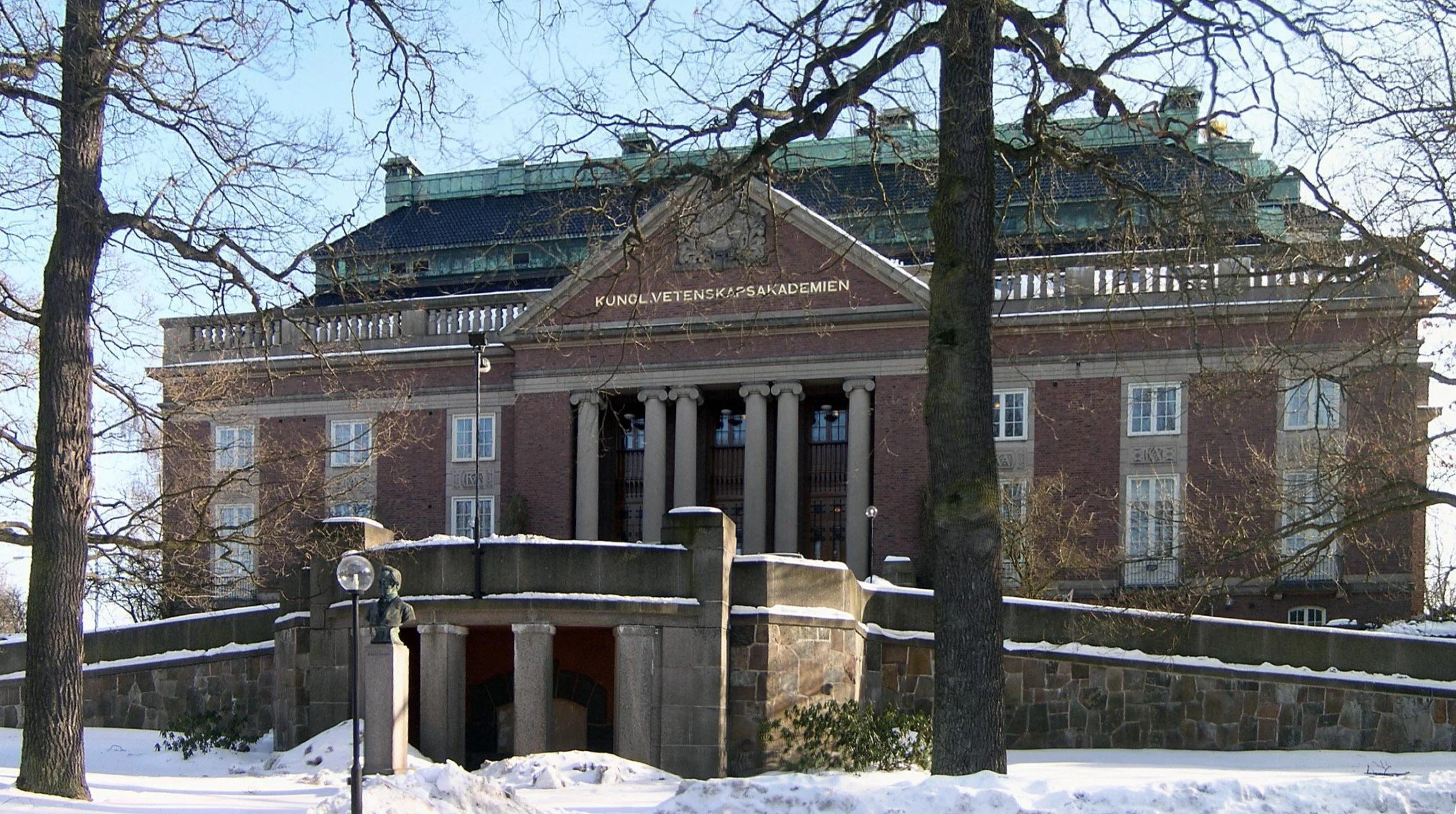
Main building of the Swedish Royal Academy of Sciences, in Stockholm.
SOMERVILLE, Mass.
I spent its time last week reading up quantum entanglement. Instantaneous connections between far-apart locations – the possibility of “spooky action at a distance” that was dismissed by Einstein – turns out to have become the basis of quantum computing and fail-safe cryptography.
First I read The New York Times story: Nobel Prize in Physics Is Awarded to 3 Scientists for Work Exploring Quantum Weirdness. by Isabella Kwai, Cora Engelbrecht and Dennis Overbye. I especially liked the part about John Clauser’s duct-tape and spare-parts experiment in a basement at the University of California at Berkeley that opened the laureates’ path to the prize. (Stories in The Washington Post, The Wall Street Journal and the Financial Times each had distinctive strong points as well.)
The Times story led me back to MIT physicist/historian David Kaiser and his 2011 book, How the Hippies Saved Physics: Science, Counterculture, and the Quantum Revival. I didn’t read it when it appeared, having a mild prejudice against hot tubs, psychedelic drugs and saffron robes. I was wrong. I ordered a copy last week.
Next was a Science magazine piece from 2018 by Gabriel Popkin that showed the discoveries well on their way to acceptance: Einstein’s ‘spooky action at a distance’ spotted in objects almost big enough to see.
Then came a Scientific American article, The Universe Is Not Locally Real, and the Physics Nobel Prize Winners Proved It, by David Garisto, that seemed to me to offer the most lucid explanations of the profound uncertainties involved. These are more daunting than ever in the face of irresistible technological evidence that they exist.
At that point I returned to the Nobel announcement, and skimmed the citations in the scientific background to see if the story was as I had been taught (by my mother, Annis Meade Warsh, who was herself entangled with science and religion!). Sure enough there among the citations was the history of the argument, from Erwin Schrödinger, in 1935; to Albert Einstein, Boris Podolsky and Nathan Rosen, in 1935; to David Bohm, in 1951; to John Stewart Bell, in 1964; and to Stuart Freedman and Clauser (the former having been Clauser’s graduate student), in 1972. Imagine my surprise last year when I discovered the distinguished historian of physics John Heilbron was reading Bohm’s last book, Wholeness and the Implicate Order, the very title recommended to me by my mother not long after its publication, in 1980. I checked Wholeness out from the library. I could not fathom the implicated order.
In fact, the most beguiling explication of the prize I found was the 15-minute talk that Nobel Committee member Thors Hans Hansson gave to journalists after the prize announcement in Stockholm last week. The 72-year old theoretical physicist personified the combination of collective energy, sobriety and delight that enables the Royal Swedish Academy of Sciences to keep the world abreast of developments, year after year.
David Warsh, a veteran columnist and an economic historian, is proprietor of Somerville-based economicprincipals.com, where this column originated.

Chris Powell: Students' vacuous righteousness; abortion phonies; stupidly erasing criminal records

Central Connecticut State University
MANCHESTER, Conn.
With a protest march on campus the other day, students at Central Connecticut State University, in New Britain, showed the world that they haven't learned what even kids in elementary school might be expected to know.
The students demanded that the university administration investigate a fellow student's complaint of sexual assault that had not yet been made formally to any police agency or to the university itself.
Instead, the accusation had been made by the complainant only on a social- media internet site, TikTok, which may be best known for posting videos encouraging young people to do stupid, dangerous, damaging, and even criminal things to get attention, the infamous "TikTok challenges."
As it turned out, the university had heard of the accusation on TikTok prior to the student protest march and already had hired some outsiders to investigate, the campus police and New Britain police apparently being considered incompetent.
Having handled the matter in such a strange way, the university was in no position to remind the student protesters that if you want the authorities to act against crime, the first thing to do is to report it to them. Central's campus is dotted with emergency telephone stations, and most young people these days would leave home in the morning without their shoes before they left without their mobile phones. But of course holding a protest march before there is anything to protest provides a rush of self-righteousness.
xxx
U.S. Sen. Richard Blumenthal, the Connecticut Democrat seeking election to a third term, isn't the only candidate for senator who is dissembling on the abortion issue.
Blumenthal says his abortion legislation in Congress, the Women's Health Protection Act, would simply put into federal law the policy articulated by the U.S. Supreme Court's decision in Roe v. Wade. But the Roe decision held that states properly could prohibit or regulate abortion after the viability of the unborn child, while Blumenthal's legislation would prohibit states from restriction abortion at any stage of pregnancy.
Blumenthal's Republican challenger, Leora Levy, recently deflected a request from Connecticut's Hearst newspapers to say what she thinks about South Carolina Republican Sen. Lindsey Graham's legislation to outlaw abortions nationally after 15 weeks of gestation.
Levy used to support abortion rights. But during the primary campaign for the Republican Senate nomination, Levy declared herself to be completely anti-abortion and explained in detail why she had changed her mind. Now she seems to be changing her mind again.
“I am personally pro-life and I support exceptions for rape, incest and the life of the mother," she said in response to the inquiry from the Hearst papers about Graham's legislation. "When I am elected to the Senate, I will be accountable to the people of Connecticut for my votes and positions.”
That is, fervent opposition to abortion is helpful in winning a Republican primary but not in winning an election. Levy is so principled on abortion that she now wishes the issue would just go away. Yes, Levy will be accountable for her positions after the election -- when it's too late for voters to do anything about being misled.
xxx
Erasing criminal records, thereby diminishing accountability from criminals, and increasing accountability from police officers have become great causes on the political left in Connecticut. The resolution of a recent case in Hartford Superior Court showed that the first cause can defeat the latter.
Over the objections of a prosecutor, Superior Court Judge Stephanie A. Damiani admitted a former Glastonbury police lieutenant, Kevin Troy, to two diversionary programs as he faced charges of drunken driving and interfering with police. Troy had gotten drunk, caused a rollover crash in Enfield, and then lied to police about it, telling them that someone else had been driving. Troy's completion of the programs will erase the records of his offenses.
Troy retired from the Glastonbury department after his arrest but is only 49 and might seek to return to police work elsewhere. With his criminal record erased, a big impediment to that will be out of the way.
Chris Powell is a columnist for the Journal Inquirer, in Manchester.
Gold goes

October turned my maple’s leaves to gold;
The most are gone now; here and there one lingers.
Soon these will slip from out the twig’s weak hold,
Like coins between a dying miser’s fingers.
“Maple Leaves,’’ by Thomas Bailey Aldrich (1836-1907), American editor (including of the Boston-based Atlantic Monthly) poet, critic and native of Portsmouth, N.H., about which he wrote with affection.
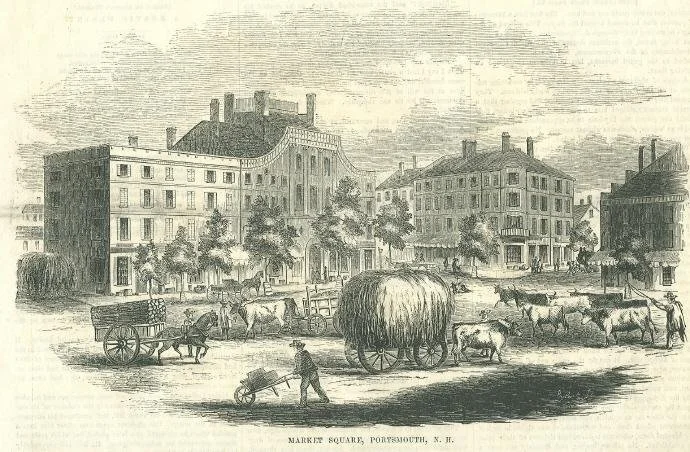
I 853 print
Mysteries of Monhegan
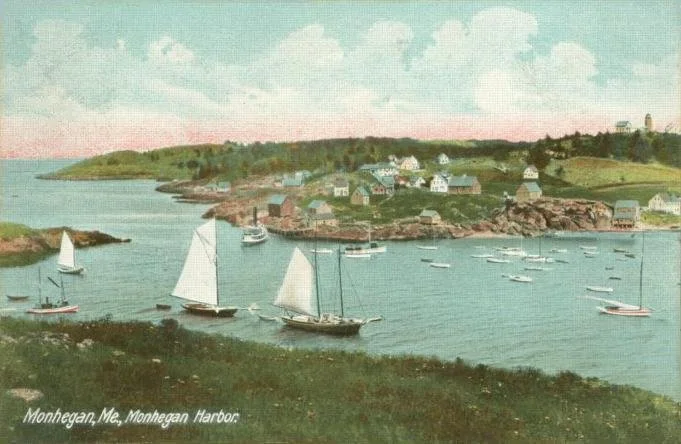
1909 postcard
“Monhegan {Island} is known to be the resort or asylum of pirates, smugglers, or mutineers, centuries ago. If what we do not know about could be unearthed, what an interesting chapter it would make.’’
Samuel Adams Drake (1833-1905), in The Pine-Tree Coast
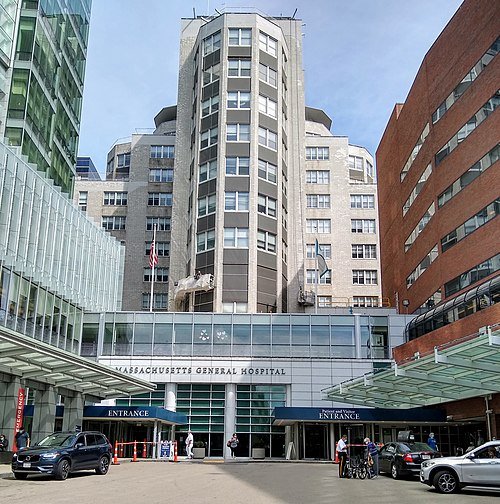
Daniel Chang/Lauren Sausser: Coastal hospitals under growing threat from hurricanes
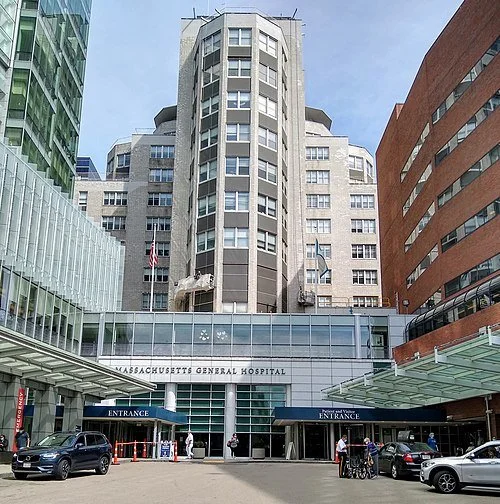
Massachusetts General Hospital, in flood-prone Boston. A study published in GeoHealth of hospitals in 78 urban areas along the Atlantic and Gulf coasts assessed by researchers ranked Boston third most vulnerable — behind Miami and New York — to damage from flooding and other threats from hurricanes.
As rapidly intensifying storms and rising sea levels threaten coastal cities from Texas to the tip of Maine, Hurricane Ian has just demonstrated what researchers have warned: Hundreds of hospitals in the U.S. are not ready for climate change.
Hurricane Ian forced at least 16 hospitals from central to southwestern Florida to evacuate patients after it made landfall near the city of Fort Myers on Sept. 28 as a deadly Category 4 storm.
Some moved their patients before the storm while others ordered full or partial evacuations after the hurricane damaged their buildings or knocked out power and running water, said Mary Mayhew, president of the Florida Hospital Association, which coordinates needs and resources among hospitals statewide during a hurricane.
About 1,000 patients across five Florida counties were evacuated from hospitals for different reasons, Mayhew said, with one hospital moving patients after the storm tore part of its roof and deluged the ground floor. Other hospitals emerged with no structural damage but lost power and running water. Broken bridges, flooded roads, and lack of clean water all added to the challenge for some hospitals, Mayhew said.
And that’s before considering the need to help those injured in the hurricane and its aftermath.
“Climate shocks like hurricanes show us in the most painful way what we need to fix,” said Aaron Bernstein, interim director of the Center for Climate, Health, and the Global Environment, known as C-CHANGE, at the Harvard T.H. Chan School of Public Health.
As climate change increases the intensity of hurricanes, coastal cities threatened by rising sea levels from Miami to Charleston, S.C., have considered billion-dollar storm surge protection plans — from elevating homes to creating a network of seawalls, floodgates, and pumps to protect residents and infrastructure against powerful flooding from storms.
Some hospitals are fortifying buildings and elevating campuses. Others are moving inland, as they prepare for a future when even weak storms unleash flooding that can overrun facilities.
“They’re the front lines of climate change, bearing the costs of these increased weather events as well as the increase in injuries and disease that come with them,” said Emily Mediate, U.S. climate and health director for Health Care Without Harm, a nonprofit that works with hospitals to prepare for climate change.
Yet even as hospitals prepare for extreme weather, Bernstein and a team of researchers at Harvard predicted in a recent study that many facilities along the Atlantic and Gulf coasts will face a suite of problems, even from milder weather events.
The study analyzed the flood risk to hospitals within 10 miles of the Atlantic and Gulf coastlines. In more than half of the 78 metropolitan areas analyzed, some hospitals are at risk of storm surge flooding from the weakest hurricane, a Category 1. In 25 coastal metro areas, half or more of the hospitals risk flooding from a Category 2 storm, which would have winds of up to 110 mph. Florida is home to six of the 10 most at-risk metropolitan areas identified in the study, with the Miami-Fort Lauderdale-West Palm Beach region ranked as having the greatest risk of hurricane impact.
Researchers also considered the risk of flooding for roads within 1 mile of coastal hospitals during a Category 2 hurricane. That’s what happened on Florida’s western coast, where Hurricane Ian’s maximum sustained winds of 150 mph contributed to flooded roads and washed-out bridges.
All three hospitals in Charlotte County were closed during the storm. One reopened its emergency room the following day, and two were operational by Oct. 1.
In neighboring Lee County, the public hospital system was forced to partially evacuate three of its four hospitals, potentially affecting about 1,000 patients, after the facilities lost running water. As of Oct. 6, the county remained in a state of emergency and many roads and bridges were closed due to flooding and damage, according to the Florida Department of Transportation’s traffic information.
Several Florida hospitals on waterfront property have moved their essential electrical systems and other critical operations above ground level, elevated their parking lots and buildings, and erected water barriers around their campuses, including Tampa General Hospital, which has the only trauma center in west-central Florida.
Miami Beach is a barrier island where roads flood on sunny days during extremely high tides. Building to withstand hurricanes and flooding is a priority for institutions, said Gino Santorio, CEO of Mount Sinai Medical Center, which sits at the edge of Biscayne Bay.
Over the past decade, Mount Sinai has completed nearly $62 million in projects to protect against hurricanes and flooding. The projects were part of a countywide strategy funded by the Federal Emergency Management Agency and state and local governments to fortify schools, hospitals, and other institutions.
“It’s really about being the facility of last resort. We’re the only medical center and emergency room on this barrier island,” Santorio said.
But Bernstein said the “Fort Knox model” of spending hundreds of millions of dollars on state-of-the-art hurricane-proof hospital buildings isn’t enough. This strategy doesn’t address flooded roads, transportation for patients ahead of a storm, medically vulnerable people in areas most at risk of flooding, emergency hospital evacuations, or the failure of backup power sources, he said.
Urging hospitals to fortify for more severe hurricanes and rising sea levels can feel overwhelming, especially when many are struggling to recover from pandemic-related financial stress, labor shortages, and fatigue, said Mediate, of the group Health Care Without Harm.
“Lots of things make it hard for them to see this is a problem, of course. But on top of how many other issues?” she said.
As Hurricane Ian approached the South Carolina coastline north of Charleston on Sept. 30, the city’s low-lying hospital district reported about 6 to 12 inches of water. “That’s much less than was expected,” Republican Gov. Henry McMaster said during a news briefing.
Though Hurricane Ian was a relatively minor weather event in South Carolina, it’s not unusual for Charleston’s downtown medical district to flood, making it dangerous and, sometimes, impossible for patients, hospital employees, and city residents to navigate surrounding streets.
In 2017, the Medical University of South Carolina ferried doctors across its large campus on johnboats during severe flooding from Hurricane Irma. One year later, the Charleston-based hospital system bought a military truck to navigate any future floodwaters.
Flooding, even after heavy rain and high tide, is one reason Roper St. Francis Healthcare — one of three systems in Charleston’s downtown medical district — announced plans to eventually move Roper Hospital off the Charleston peninsula after operating there for more than 150 years.
“It can make it very challenging for people to get in and out of here,” said Dr. Jeffrey DiLisi, CEO of Roper St. Francis.
The hospital system sustained light flooding in one of its downtown medical office buildings from Ian, but it could have been much worse, said DiLisi. He also said that the downtown district is no longer the geographic center of Charleston and that many patients say it’s inconvenient to get there.
“The further inland, the less likely you’re going to have some of those problems,” he said.
Unlike Roper St. Francis, most coastal nonprofit and public hospitals have chosen to remain in their locations and reinforce their buildings, said Justin Senior, the president of the Safety Net Hospital Alliance of Florida and a former secretary of the state’s Agency for Health Care Administration, which regulates hospitals.
“They’re not going to move,” Senior said. “They’re in a catchment area where they’re trying to catch everyone, not just the affluent but everyone.”
Daniel Change and Lauren Sausser are Kaiser Health News reporters.
Daniel Chang: dchang@kff.org, @dchangmiami
Lauren Sausser: lsausser@kff.org, @laurenmsausser
Bad and good news-media news

“Reading the Newspaper,’’ sculpture in Brookgreen Gardens, on Pawleys Island, S.C.
— Photo by Pollinator
Adapted from Robert Whitcomb’s “Digital Diary,’’ in GoLocal24.com
Timothy Buckley, Massachusetts Gov. Charlie Baker’s chief of staff, is right when he complains that the shrinkage of the corps of news-media people is worsening the herd-mentality problem in journalism. Reporters who have survived the slashing of journalistic resources in the past two decades are too few and too busy to do what they should be doing: looking at a wide and ever-changing range of topics and being leery of the conventional wisdom (which in my experience is usually wrong).
And Mr. Buckley noted to Commonwealth Magazine that the news-resource crisis leads to less analysis and nuance in coverage overall.
Consider the recent 30-day closure of the MBTA Orange Line for repairs was presented as though it could be as catastrophic as a hurricane. Smaller outlets followed the big ones, most notably The Boston Globe and public radio, in seeing the shutdown as perhaps, in The Globe’s phrase, “a new circle of hell.’’ In fact, the shutdown, during which the T offered commuters alternative options – mostly buses – caused much less disruption than the apocalyptic warnings had suggested.
Another result of the shrinkage of what used to be usually called “the press corps’’ (not so many presses anymore!) is that far fewer things are watched. It’s easier to just report on what everyone else is covering, taking the lead from the big boys. And yet, as Bill Kreger, a long-departed editor of mine at The Wall Street Journal, once told me: “What may turn out to be the biggest story of the year may start out as three paragraphs at the bottom of page 11.’’
We need far more local news outlets, be they print or online. But the old ad-based business model continues to falter.
xxx
In a happier report on the news business, my GoLocal colleague Rob Horowitz reports that the use of social media as a source for news has stalled, and for good reason. He writes:
“It is the case that some of the plateauing of social media as a source for news is a result of a general slowing in the growth of the use of social media generally. But that is only part of the story. The increased awareness of the amount of disinformation and misinformation available on and spread through social media has resulted in social media becoming a less trusted source of news than other media platforms. This distrust is a major reason for the curbing of social media’s growth as a source for news. {Russia and other malign dictatorships have long used social media as a tool for undermining their foes and propping up the likes of people like Trump who are likely to collaborate with them.}
A Reuters Institute study found that the “levels of trust in news on social media, search engines, and messaging apps is consistently lower than audience trust in information in the news media more generally.’’
Good.
Hit these links:
https://reutersinstitute.politics.ox.ac.uk/digital-news-report/2021
Deeper than a silver surface

“Surface Calligraphy” (acrylic on abraded aluminum), by David Kessler, in the show “American Realism Today,’’ at the New Britain (Conn.) Museum of Art, through Jan. 1.
The museum says:
“Capturing scenes of the landscape and everyday life, the show celebrates the rich tradition of Realist art in America while reflecting the innovative spirit of our contemporary times.’’
The show has more than 50 paintings, sculptures and works on paper by a network of 21 artists.
Where they drank and she started to go crazy

Sign on building in Antibes, France, on the Riviera. They lived in a lot of places, including in Westport, Conn., in the summer of 2020. They partied a lot there, too.
— Photo by Chip Benson
New MIT device can help Parkinson’s patients
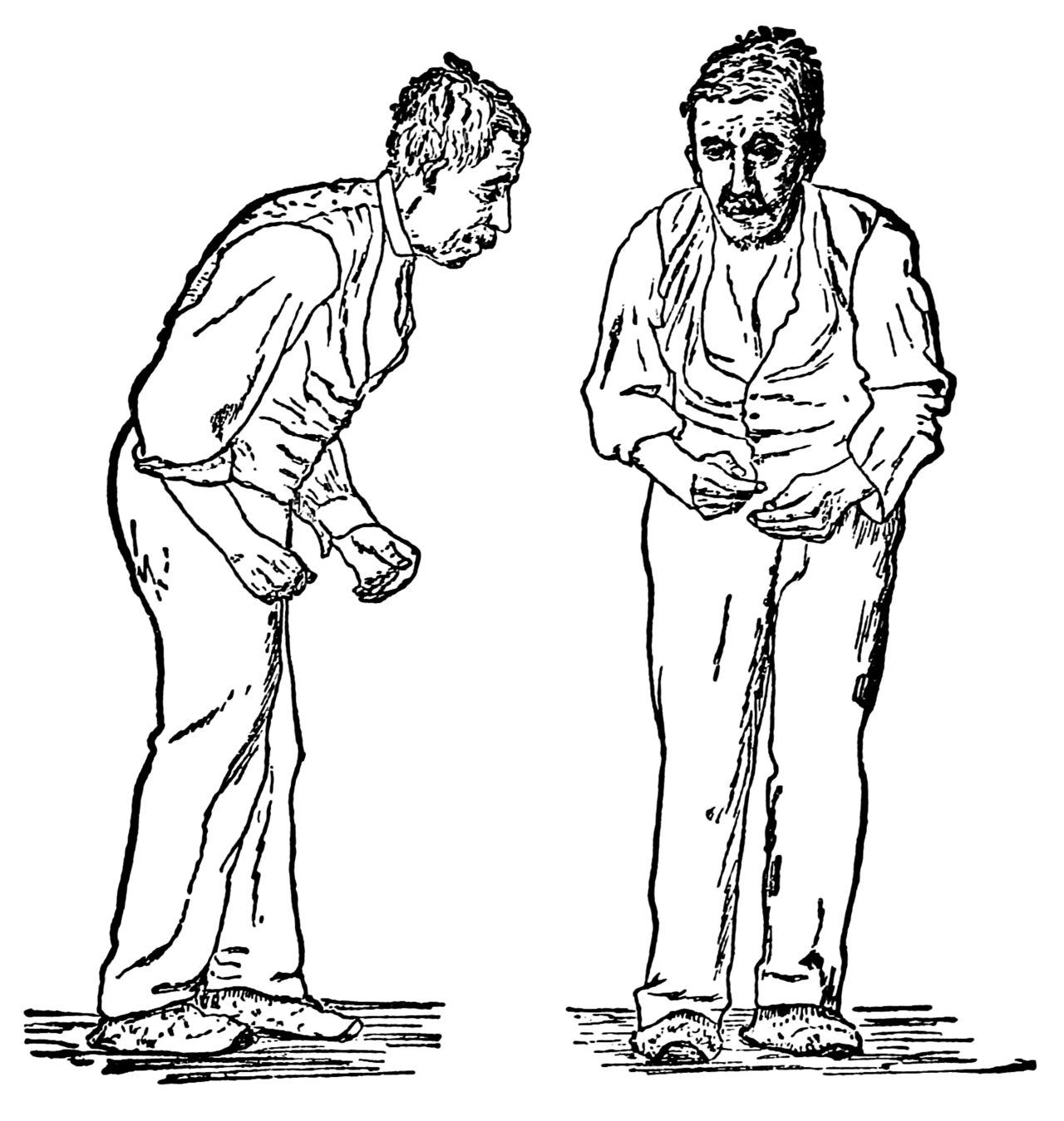
Views of a man portrayed to be suffering from Parkinson's disease. These are woodcut reproductions of two collotypes from Paul de Saint-Leger's 1879 doctoral thesis, “Paralysie agitante..etc.”
From The New England Council (newenglandcouncil.com)
“New England Council member the Massachusetts Institute of Technology has created a device that can assist patients with Parkinson’s disease. The system can work as a proactive way to gauge if someone has Parkinson’s disease as well as monitor patients by tracking how they walk.
“The device uses a radar-like technology with a radio transmitter-receiver installed in a person’s home as a non-invasive treatment option. To test the effectiveness of the device, MIT researchers observed a group of 50 people, 34 of which were diagnosed with Parkinson’s disease. They found that the receiver collected a grand total of 200,000 observations. From these data, researchers found that they were able to measure the effectiveness of Levodopa, a medication given to patients to manage their symptoms.
This system would minimize Parkinson’s patients’ need to schedule extra appointments as physicians could monitor their patients remotely and review the observation points in order to prescribe the best dosage for medications.
“Dina Katabi, lead professor on the project said, ‘We know very little about the brain and its diseases. My goal is to develop non-invasive tools that provide new insights about the functioning of the brain and its diseases.”’
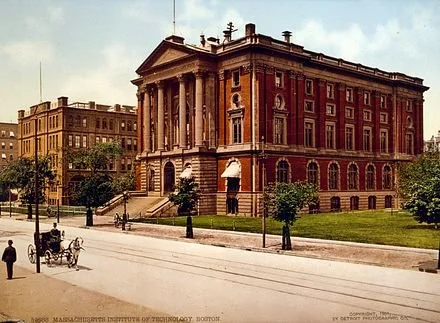
MIT’s Rogers Building in Boston’s Back Bay in 1901. The school moved to its Cambridge campus in 1916.

Llewellyn King: Woe Britannia!

View of Edinburgh from Blackford Hill
— Photo by Kim Traynor
EDINBURGH
These are trying times for the British, as I am finding on a visit to Scotland with a brief foray south into England. All isn’t right with their world, and there are expectations that the winter will be the hardest to bear since the long-ago days of the end of World War II.
The price of everything is up, with inflation at 10 percent and predicted to top that by as much as double.
Compounding there is a sense that nobody is in charge. The new prime minister, Liz Truss, has had a disastrous beginning with a revolt of the rank and file of her own Conservative Party. She has had to eat her words and, according to the New Statesman, has had the worst imaginable beginning for a new prime minister.
Truss seems to have abandoned traditional conservative principles and that, together with her own wobbly trajectory, has the party worried.
The centerpiece of doubt about the prime minister is a mini-budget that her chancellor of the exchequer, Kwasi Kwarteng, introduced just after she was elected to the leadership. It called for more spending and a cut in the top income tax rate from 45 percent to 40 percent.
This was supposed to encourage business, but even diehard conservatives couldn’t justify a lot of new spending -- needed to ease the burden of energy costs -- while slashing revenue. Rather than making business happy, the proposal sent the pound into freefall and the markets into turmoil.
Truss did a U-turn, a maneuver, according to her many critics, that she has done often in her career.
Another misstep happened as the Conservatives were assembling in the central English city of Birmingham for their annual party congress: The prime minister refused to guarantee that social spending would be linked to the cost of living.
Complex social obligations in Britain are lumped together under the rubric benefit. “No, no, no,” cried the party, including members of the cabinet. Benefit had to be indexed to the cost of living.
But not all of the mess is of Truss’s making. Things were in sorry shape when the previous prime minister, the notoriously articulate but incompetent Boris Johnson, was sacked by the party.
The economy was faltering, labor unrest was building and such issues as education, health care, immigration and the Northern Irish border were demanding strong, deft leadership.
The result has been that the Tories, as the Conservatives are called, are between 14 and 30 points behind the opposition Labor Party in the polls, and they are expecting a drubbing in the next election in two years, unless Truss can pull things together. The somber mood in Birmingham suggests that gloom will turn to doom.
The Truss government is set to massively subsidize heating costs this winter, which promises real hardship across the board, from pubs which are closing at a record rate to middle-class households now digging out the woolies.
The primary fuel for making electricity and for home heating is natural gas, and the price of that has soared over historical levels because of Russia’s war in Ukraine. The subsidy isn’t disputed, but it will take British borrowing to new levels even as interest costs are soaring -- an ugly combination.
Another open issue is how to fix Britain’s beloved National Health Service, which has fallen into an institutional disrepair. Waiting lists are longer than they have ever been even for minor procedures and successive management shakeups haven’t solved the problems. Yet the health service remains the most popular government program in Britain, and Truss will have to produce something more than Band-aids for the NHS if its failures aren’t to be, albeit unfairly, laid to Truss.
Another headache for the embattled prime minister is that organized labor is on the march again. Strikes, euphemistically called industrial action, in Britain are back. The railroads are being hit, and there is some sense that the bad old days when Britain was the Sick Man of Europe, before Margaret Thatcher, may be returning.
There is a backstory that isn’t being aired much in the largely Conservative British newspapers: the huge, self-inflicted wound of Britain’s withdrawal from the European Union, known as Brexit. Its effects are everywhere and there is a complicity in not pointing this out: We voted for it, and we own it. It wasn’t a party vote, so Brexit remains a common guilt.
Long after Truss has gone, Brexit will remain the guiding fact of Britain’s place in the world. A place less certain than at any time in its long history.
Llewellyn King is executive producer and host of White House Chronicle, on PBS. His email is llewellynking1@gmail.com and he’s based in Rhode Island and Washington, D.C.
And October alchemy

“Earthly Alchemy’’ (encaustic monotype, ink, pencil, oil pastel on Kitakata), by Worcester-based painter Donna Hamil Talman.
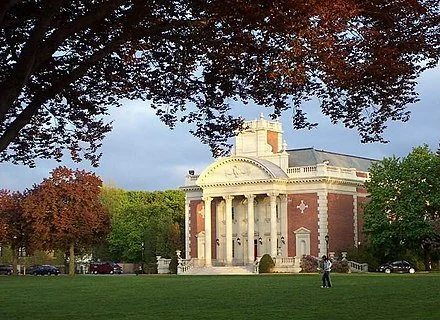
Warner Memorial Theater, at Worcester Academy. Opened in 1932, it was designed by Drew Eberson. The prep school’s famous alumni include computer/lyricist Cole Porter.