
Vox clamantis in deserto





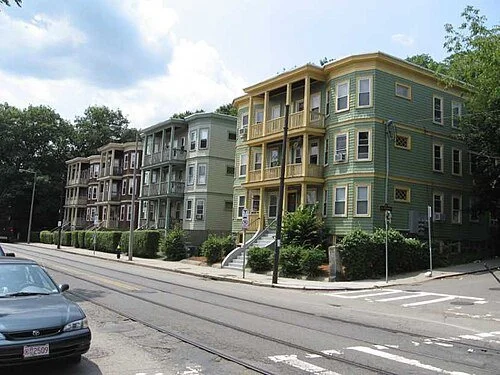

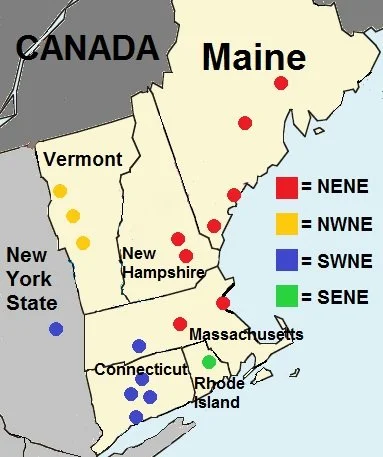


Same places, different scenes

Harry Adler travels every morning as dark yields to dawn. He’s always on foot, running through Pawtuxet Village (straddling Cranston and Warwick, R.I.), where he lives. Along the way, he photographs that day’s magnificence.
Deep blue cove water melding into powder-blue sky. Snow frosting feathered reeds. Geese with orange feet waddling up a boat ramp. Trees mirror-imaged in the silvery Pawtuxet River. Historic houses in silhouette.
Adler began posting his village photos on Facebook and Instagram three years ago, and more so since the COVID pandemic erupted. Legions of admirers recognize his talent.
“The eye of the morning is winking at you,” writes one Facebook friend of a sunrise photo. “Your eye sees things that most don’t,” writes another. Many thank Adler for brightening their mornings and sparing them from waking up when he does – at 4:13 a.m. (in time to feed the five cats and run three to five miles).
Adler’s photographs will be displayed at “Traveling in Place,” an exhibit at the Aspray Boat House, 2 East View St., Warwick, R.I., in partnership with The Edgewood Village. Friends, including artist Bert Crenca, suggested that Adler exhibit his work: Adler agreed so long as part of the proceeds go to The Village Common of Rhode Island.
The exhibit’s title stems from Adler’s observation: “When I started running in the Pawtuxet Village area, I was noticing that every day was dramatically different. And that became the thought behind ‘Traveling in Place.’ I’m still in the same place, but feel like I’m traveling because I’m not seeing the same things all the time. Each day is brand new.’’
Adler, co-owner of Adler’s Design Center & Hardware, on Wickenden Street in Providence, is familiar to many Rhode Islanders. Customers know him as the pleasant font-of-knowledge guy behind the paint counter.
Adler sets out just after 6 a.m. from the 1857 Greek Revival house he owns with his partner, Suzy Box. He runs while searching the skies and scoping out the light. If the light is right, he clicks the shutter on his IPhone 12 Pro.
He shoots his images from the same spots at the Pawtuxet Cove Marina, Stillhouse Cove and the Rhode Island Yacht Club -- same locales but ever-changing beauty.
Opening reception and “Meet the Artist” on Saturday, Sept. 17, at 5 to 8 p.m. Show continues Sunday, Sept. 18, at 12-3 p.m. Refreshments, live music and free parking. For more information, please contact Sorrel Devine at eirehead1@gmail.com
‘Doctor of the dead’
“Sidney Farber was a pathologist. He was called a doctor of the dead. He was a pathologist who sort of lived in the basement of the children's hospital in Boston, and he became very interested in childhood leukemia. And Farber began to inject this drug, aminopterin, into young kids, in order to see if he could get a remission.’’
Siddhartha Mukherjee, M.D., Indian-American physician, biologist and writer
‘The life of objects’
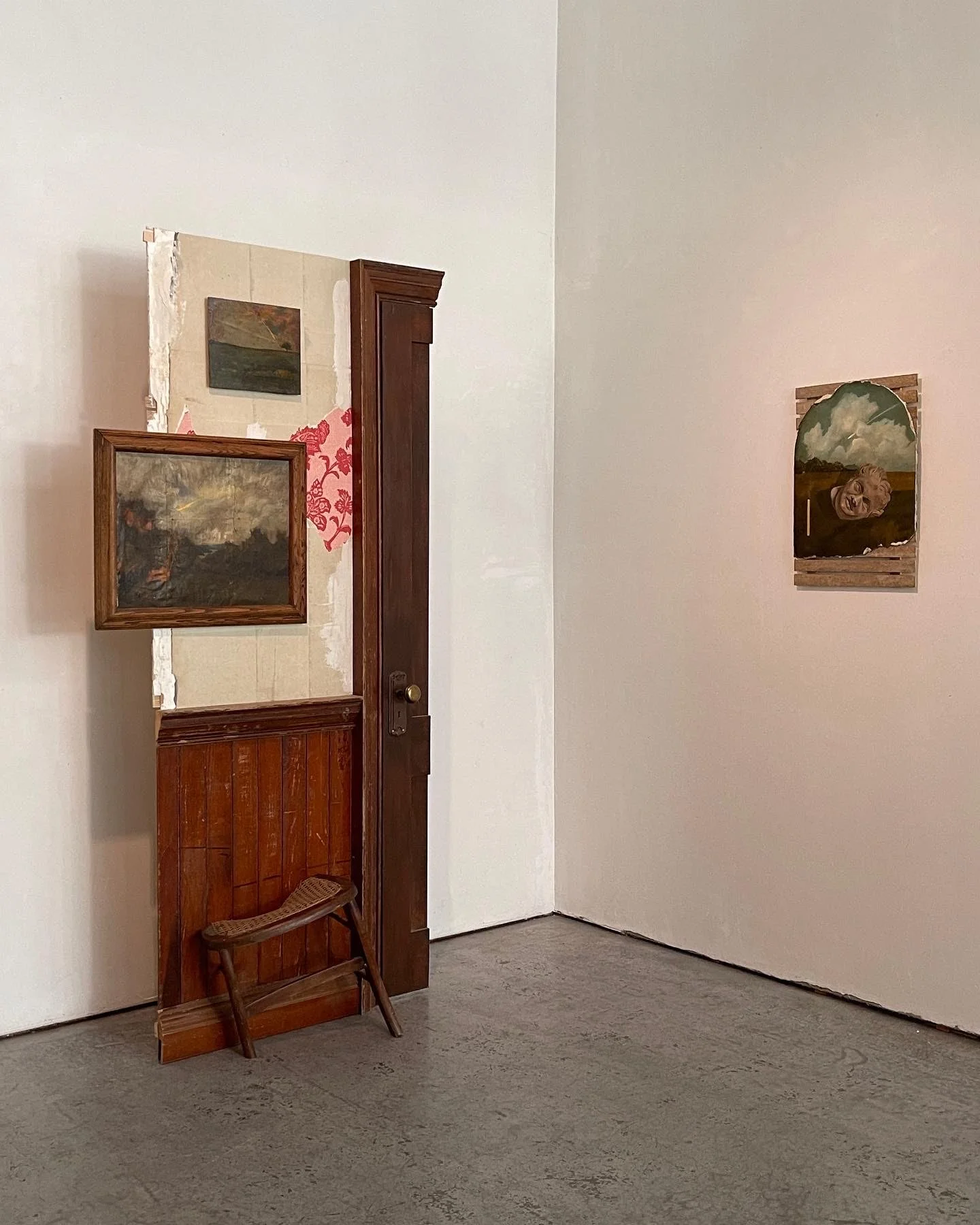
“Picking the Bones” (assemblage and painting), by Boston-based Eben Haines, in his show “In the House of Empire Everything’s Fine,’’ at Corey Daniels Gallery, Wells, Maine, through Sept. 11.
“His work investigates the life of objects through works that emphasize the constructed nature of history. Haines’s paintings, drawings, sculptures, and installations employ various techniques and materials to suggest the passage of time and volatility. Many works explore the conventions of portraiture, through figures and objects pictured against cinematic backdrops or in otherworldly scenes.’’
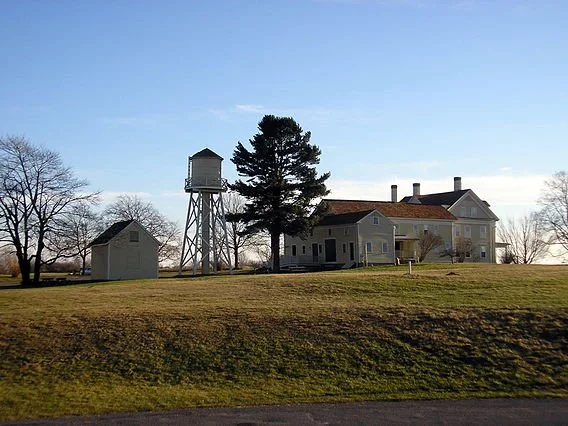
At the Wells National Estuarine Research Reserve, in Wells, 2,250 acres of protected land based at a restored saltwater farm called Laudholm. As a National Estuarine Research Reserve, the staff at the reserve works to expand knowledge of coasts and estuaries, engage people in environmental learning, and involve communities in conservation, all with a goal of protecting and restoring coastal ecosystems around the Gulf of Maine.

Chris Powell: Racism? Get specific; pass Larson’s Social Security bill
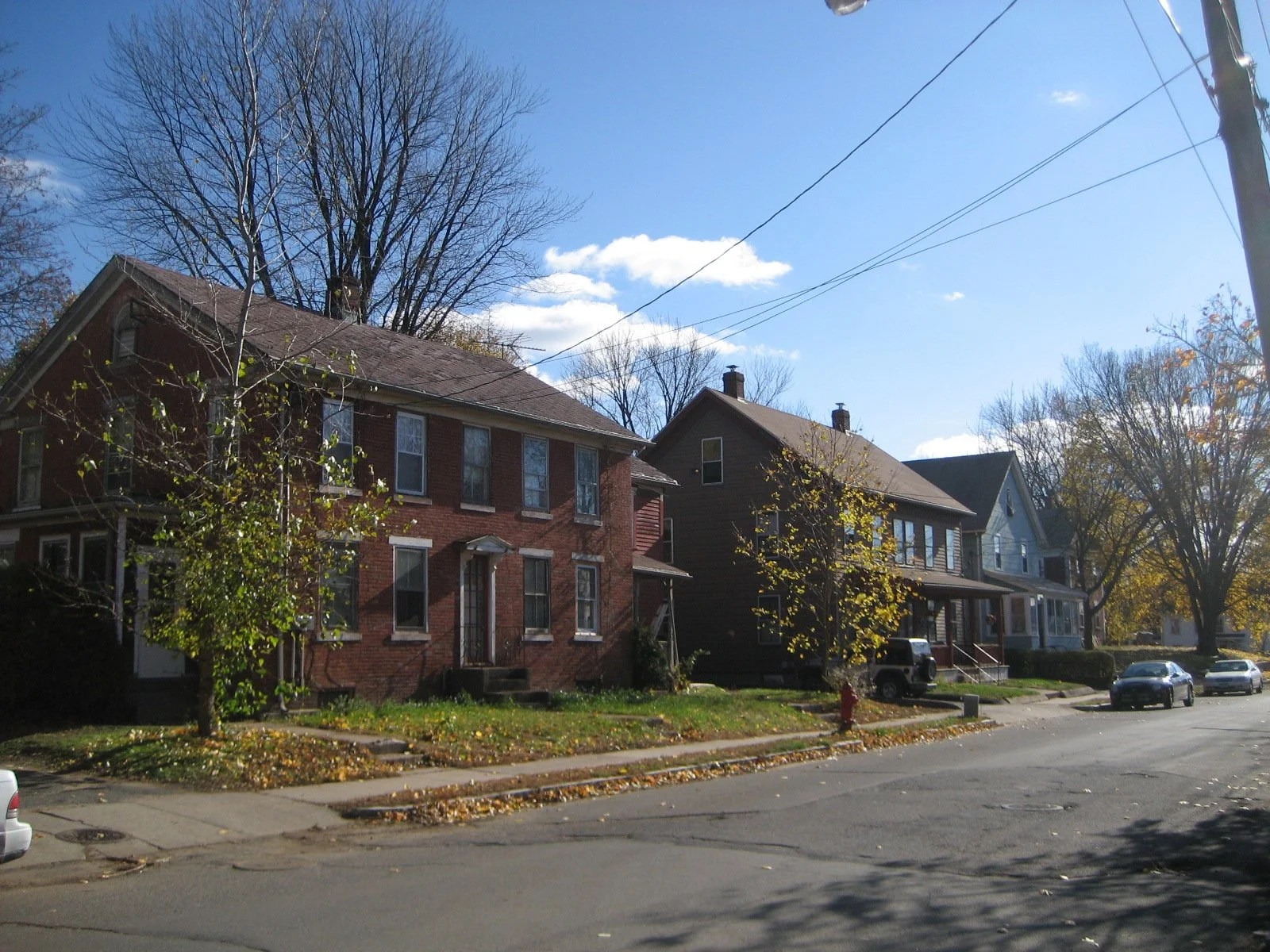
The village of Thompsonville, in Enfield, Conn. Thompsonville was established in the 19th Century as a carpet-manufacturing center. Orrin Thompson, for whom the community is named, built a dam across Freshwater Brook in 1828 and opened the first carpet mill in 1829. Thompson's first mill employed skilled weavers brought from Scotland.
Carpeting continued to be manufactured in Thompsonville until 1971, by which time most production had shifted to the southern United States.
— Photo by Mirandalovely (talk)
MANCHESTER, Conn.
How racist is Enfield, Conn.? Town government's overreaction to a recent disgraceful but trivial incident is giving the impression that the town has become the northern headquarters of the Ku Klux Klan, even though the incident could have happened anywhere.
It occurred as members of the Enfield High School football team were knocking on doors throughout town soliciting financial donations. At one door a Black player was scorned and sent away with a racial epithet from the resident. Police investigated but determined that, abhorrent as the resident's conduct was, there was no cause for arrest.
Whereupon town government convened another of those "community conversations on race," as if the whole town needed to be lectured on decent behavior.
Maybe Enfield really is that hateful. But if so, specific evidence of anything seriously wrong in town regarding race has not been reported and was not produced at the first "community conversation," which drew about 200 people to Enfield High School. Instead the moderator urged people to examine their own consciences about race, as if some might be obliged to make confession.
In the absence of evidence apart from a single small incident, summoning a "community conversation" was presumptuous, if also politically correct.
Enfield and other towns should have a "community conversation" on race, but of a different sort — that is, regular hearings to air specific complaints about racism in town and to investigate them.
The perpetrator of the insult to the high-school football player is known to police, the player and others and should be invited to the first such hearing along with the insulted player for questioning and discussion. Other witnesses to what they consider racism in town should come forward too and their complaints should be followed up at future hearings, with the accused people and institutions invited. Town officials and residents then could discuss what if anything should be done.
Such procedure would generate real and relevant conversations, not the pious and irrelevant handwringing of the first "community conversation." Far more than such handwringing, a hearing on specifics might deter racists, warning them that they might be held accountable in public for their hatefulness.
More likely, of course, such a procedure would generate few if any complaints of racism in Enfield. Maybe then the town could begin to get its good name back and, along with Connecticut generally, might pay less attention to the occasional, and trivial misconduct of jerks on their own doorsteps and more attention to the state's longstanding racial disparities.
Those disparities include the racial-performance gap in education, zoning's obstruction of racial and economic integration, and welfare policy's destruction of the family and creation of a racial underclass.
Obsessing about occasional racist epithets uttered by nobodies is a pathetic copout.
xxx
As they campaign for re-election, Democrats on the national and state level are touting lots of new programs created in the name of alleviating poverty, even as soaring inflation, caused in part by the explosion of those programs and other government spending, erases the programs' benefits.
Meanwhile, the nation's most comprehensive anti-poverty program, Social Security, is eroding under that inflation even as Connecticut's own U.S. Rep. John B. Larson bravely keeps pressing legislation to improve the system's benefits and finances.
But according to a recent report in Politico, Larson's Social Security bill is being blocked not by the usual retrograde Republicans in Congress but by the Democratic leader in the House, Speaker Nancy Pelosi.
Larson's bill isn't another giveaway to be financed by debt and inflation. It would be financed largely by eliminating the limit on Social Security taxes paid by high earners, whose Social Security taxes now are capped at the first $400,000 of annual income.
Pelosi and her husband have gotten rich trading stocks whose values are heavily affected by the federal legislation she steers and votes on. Her party should push her out of the way and pass Larson's Social Security bill while the Democrats still have a majority in Congress and a president who would sign it.
Chris Powell is a columnist for the Journal Inquirer, in Manchester. He can be reached at CPowell@JournalInquirer.com.
‘Partners in this land’

An Eastern Garter Snake, New England’s most common snake.
“I put out my hand and stroke
the fine, dry grit of their skins.
After all,
we are partners in this land,
co-signers of a covenant.
At my touch the wild
braid of creation
trembles.’’
— From “The Snakes of September,’’ by Stanley Kunitz (1905-2006). A U.S. poet laureate, Mr Kunitz, who grew up in Worcester, divided much of his time between New York City and Provincetown, where he had a famous garden.
‘Arise and dissolve’

From Boston-based artist Ilona Anderson’s show ‘‘The Union of the Sun and the Moon,’’ at Kingston Gallery, Boston, through Oct. 2.
The gallery says:
“Ilona Anderson’s animations for her show are full of the familiar, the distant, unknown, imagined, and everyday. Bright lyrical vignettes of animals and people dance before us in a metaphysical picture plane, spilling across the space into ever-building expanses. Every layer of each animation must be composed perfectly. As the creator she must see it second by second. Building the animations by changing one mark at a time to create a sense of movement is like adding one brick to a wall, one layer at a time. She weaves the images into both linear and non-linear spaces, forming spatial contradictions that emphasize the vastness of space and the immediacy of our experience. The impermanence of these expressions for Anderson shows how things arise and dissolve every day in the natural world around us. The artist loves the act of creativity, the discovery of what manifests from her imagination. Anderson states that ‘you must listen to the work and it will tell you where to go.”’

Rae Ellen Bichell: The failure to track culturally competent care

— Image by Edward Boatman
“This was pretty universal across races. So Black beneficiaries; Asian American, Native Hawaiian, and Pacific Islander beneficiaries; and Hispanic or Latino or Latinx/Latine beneficiaries reported worse experiences across the four measures.’’
—- Kevin Nguyen, a health-services researcher at the Brown University School of Public Health, in Providence
Each day, thousands of patients get a call or letter after being discharged from U.S. hospitals. How did their stay go? How clean and quiet was the room? How often did nurses and doctors treat them with courtesy and respect? The questions focus on what might be termed the standard customer-satisfaction aspects of a medical stay, as hospitals increasingly view patients as consumers who can take their business elsewhere.
But other crucial questions are absent from these ubiquitous surveys, whose results influence how much hospitals get paid by insurers: They do not poll patients on whether they’ve experienced discrimination during their treatment, a common complaint of diverse patient populations. Likewise, they fail to ask diverse groups of patients whether they’ve received culturally competent care.
And some researchers say that’s a major oversight.
Kevin Nguyen, a health-services researcher at Brown University School of Public Health, who parsed data collected from the government-mandated national surveys in new ways, found that — underneath the surface — they spoke to racial and ethnic inequities in care.
Digging deep, Nguyen studied whether patients in one Medicaid managed-care plan from ethnic minority groups received the same care as their white peers. He examined four areas: access to needed care, access to a personal doctor, timely access to a checkup or routine care, and timely access to specialty care.
“This was pretty universal across races. So Black beneficiaries; Asian American, Native Hawaiian, and Pacific Islander beneficiaries; and Hispanic or Latino or Latinx/Latine beneficiaries reported worse experiences across the four measures,” he said.
Nguyen said that the Consumer Assessment of Healthcare Providers and Systems surveys commonly used by hospitals could be far more useful if they were able to go one layer deeper — for example, asking why it was more difficult to get timely care, or why they don’t have a personal doctor — and if the Centers for Medicare & Medicaid Services publicly posted not just the aggregate patient experience scores, but also showed how those scores varied by respondents’ race, ethnicity, and preferred language. Such data can help discover whether a hospital or health insurance plan is meeting the needs of all versus only some patients.
Nguyen did not study responses of LGBTQ+ individuals or, for example, whether people received worse care because they were obese.
The CAHPS survey is required by the federal government for many health-care facilities, and the hospital version of it is required for most acute care hospitals. Low scores can induce financial penalties, and hospitals reap financial rewards for improving scores or exceeding those of their peers.
The CAHPS Hospital Survey, known as HCAHPS, has been around for more than 15 years. The results are publicly reported by CMS to give patients a way to compare hospitals, and to give hospitals incentive to improve care and services. Patient experience is just one thing the federal government publicly measures; readmissions and deaths from conditions including heart attacks and treatable surgery complications are among the others.
Dr. Meena Seshamani, director of the Center for Medicare, said that patients in the U.S. seem to be growing more satisfied with their care: “We have seen significant improvements in the HCAHPS scores over time,” she said in a written statement, noting, for example, that the percentage of patients nationally who said their nurses “always” communicated well rose from 74% in 2009 to 81% in 2020.
But for as long as these surveys have been around, doubts about what they really capture have persisted. Patient experience surveys have become big business, with companies marketing methods to boost scores. Researchers have questioned whether the emphasis on patient satisfaction — and the financial carrots and sticks tied to them — have led to better care. And they have long suspected institutions can “teach to the test” by training staff to cue patients to respond in a certain way.
National studies have found the link between patient satisfaction and health outcomes is tenuous at best. Some of the more critical research has concluded that “good ratings depend more on manipulable patient perceptions than on good medicine,” citing evidence that health professionals were motivated to respond to patients’ requests rather than prioritize what was best from a care standpoint, when they were in conflict. Hospitals have also scripted how nurses should speak to patients to boost their satisfaction scores. For example, some were instructed to cue patients to say their room was quiet by making sure to say out loud, “I am closing the door and turning out the lights to keep the hospital quiet at night.”
About a decade ago, Robert Weech-Maldonado, a health-services researcher at the University of Alabama-Birmingham, helped develop a new module to add to the HCAHPS survey “dealing with things like experiences with discrimination, issues of trust.” Specifically, it asked patients how often they’d been treated unfairly due to characteristics like race or ethnicity, the type of health plan they had (or if they lacked insurance), or how well they spoke English. It also asked patients if they felt they could trust the provider with their medical care. The goal, he said, was for that data to be publicly reported, so patients could use it.
Some of the questions made it into an optional bit of the HCAHPS survey — including questions on how often staffers were condescending or rude and how often patients felt the staff cared about them as a person — but CMS doesn’t track how many hospitals use them or how they use the results. And though HCAHPS asks respondents about their race, ethnicity and language spoken at home, CMS does not post that data on its public patient Web site, nor does it show how patients of various identities responded compared with others.
Without wider use of explicit questions about discrimination, Dr. Jose Figueroa, an assistant professor of health policy and management at the Harvard School of Public Health, doubts HCAHPS data alone would “tell you whether or not you have a racist system” — especially given the surveys’ slumping response rates.
One exciting development, he said, lies with the emerging ability to analyze open-ended (rather than multiple-choice) responses through what’s called natural language processing, which uses artificial intelligence to analyze the sentiments people express in written or spoken statements as an addendum to the multiple-choice surveys.
One study analyzing hospital reviews on Yelp identified characteristics patients think are important but aren’t captured by HCAHPS questions — like how caring and comforting staff members were, and the billing experience. And a study out this year in the journal Health Affairs used the method to discover that providers at one medical center were much more likely to use negative words when describing Black patients compared with their white counterparts.
“It’s simple, but if used in the right way can really help health systems and hospitals figure out whether they need to work on issues of racism within them,” said Figueroa.
Press Ganey Associates, a company that a large number of U.S. hospitals pay to administer these surveys, is also exploring this idea. Dr. Tejal Gandhi leads a project there that, among other things, aims to use artificial intelligence to probe patients’ comments for signs of inequities.
“It’s still pretty early days,” Gandhi said. “With what’s gone on with the pandemic, and with social justice issues, and all those things over the last couple of years, there’s just been a much greater interest in this topic area.”
Some hospitals, though, have taken the tried-and-true route to understanding how to better meet patients’ needs: talking to them.
Dr. Monica Federico, a pediatric pulmonologist at the University of Colorado School of Medicine and Children’s Hospital Colorado in Denver, started an asthma program at the hospital several years ago. About a fifth of its appointments proved no-shows. The team needed something more granular than patient satisfaction data to understand why.
“We identified patients who had been in the hospital for asthma, and we called them, and we asked them, you know, ‘Hey, you have an appointment in the asthma clinic coming up. Are there any barriers to you being able to come?’ And we tried to understand what those were,” said Federico. At the time, she was one of the only Spanish-speaking providers in an area where pediatric asthma disproportionately affects Latino residents. (Patients also cited problems with transportation and inconvenient clinic hours.)
After making several changes, including extending the clinic’s hours into the evening, the no-show appointment rate nearly halved.
CAHPS surveys are embedded in American health-care culture and are likely here to stay. But CMS is now making tentative efforts in surveys to address the issues that were previously overlooked: As of this summer, it is testing a question for a subset of patients 65 and older that would explicitly ask if anyone from a clinic, emergency room, or doctor’s office treated them “in an unfair or insensitive way” because of characteristics including race, ethnicity, culture, or sexual orientation.
Rae Ellen Bichell is a Kaiser Health News journalist.

The essential monarch

Queen Elizabeth II at work in 2012 as part of her Diamond Jubilee tour.

Princess Elizabeth in 1928.
WEST WARWICK, R.I.
“The Queen is dead. Long live the King.”
Some would add to that traditional and ringing appeal, “God save the monarchy.” It may not need saving, but the British monarchy won’t be the same. Queen Elizabeth II was a one off, as they say.
I clearly remember the death of King George VI, and the ascent of the 25-year-old Elizabeth. I was living in a far corner of the British Empire, in Southern Rhodesia (now Zimbabwe).
In the colonies, we were a study in patriotism, and we believed in Britain and the empire itself as nearly a divine intention. We almost believed in the divinity of the monarch.
More, we believed that the new queen, so beautiful and young and hopeful, would usher in a new era of Elizabethan greatness. A new Queen Bess set to restore the fortunes of Britain after the savagery of two world wars.
I wasn’t to be, of course. The winds of change were rustling, if not yet howling, and Britain’s great global manufacturing eminence wasn’t to return. Gradually, we were to learn that our vision of Britain as the great civilizing force, the happy world policeman, was fantasy.
But Elizabeth kept her promise. The promise she made on her 21st birthday, “I declare before you all, that my whole life, whether it be long or short, shall be devoted to your service and the service of that great imperial family to which we all belong.”
She kept to the letter and the spirit of that promise. Through all these decades of convulsive change, Elizabeth has been as constant as the Rock of Gibraltar, one of the remnants of the time when the sun really didn’t set on the British Empire.
Elizabeth wasn’t a great mind, a visionary, or even a woman who understood a great deal of what she saw and was told. Arguably, she wasn’t even a very good mother. But she was, every day of her long, long reign, the embodiment of that word from the days of empire “duty.”
Elizabeth did her duty every day of her life and did it completely. How many thousands of native dances did she endure? How many school choirs did she hear? How many awful heads of state did she break bread with and chat about the weather? A famous cover of the satirical magazine Private Eye had a picture of her greeting Nicolae Ceausescu, the Romanian dictator, and a balloon quote from her said, “Do you have any interesting hobbies?” One from her husband, the late Prince Philip, said, “Yes, he is a mass murderer.”
Her greatest avocation was horses. She was a devoted equestrian who rode, against physicians’ advice, shortly before she died.
Queen Elizabeth II will be remembered for much, and it must include rising above her dysfunctional family.
In England, I covered the marriage of her sister, Margaret ,who, hiding behind the dubious cover of one forbidden love affair, lived the life of a princess about town -- no hint of duty or hard work there. At the time of her marriage to the photographer Anthony Armstrong-Jones, royal mania gripped the country. It was an emotional outpouring not to be equaled in intensity until the death of Princess Diana.
The Queen’s sense of humor shone through when she termed one awful personal year as an “annus horribilis.” Always her sense of being human was entwined with her regal demeanor.
Save for the funeral of the beloved Elizabeth, one can expect a huge loss of stature by the monarchy. Charles, the new king, is an odd duck. He has good intentions, but he does not inspire. His son the future King William has yet to prove that he is more than an average young man with a strong-willed wife, the future Queen Catherine.
The monarchy will survive because Brits like it, not the way they came to love Elizabeth, but because it is a useful institution. And, in a time of wobbly political leadership, institutions are an important shock absorber for democracy’s vagaries.
With a monarch, people can believe there is order beyond the disorder of the political process. When I moved to the United States, in 1963, I was struck by how we, the people, had no place to hang our emotions on, besides on the president – and, at any time, about half the people dislike the president.
Elizabeth wasn’t born to be queen but came into the succession because of the abdication of her uncle Edward VIII.
Never forget the royals provide the greatest show on earth with all that pomp and ceremony, loved by the Brits and the foreign tourists.
Watch the greatest funeral you have ever seen unfold on the television. This great queen will be buried as none other has -- on television.
Llewellyn King is executive producer and host of White House Chronicle, on PBS. His email is llewellynking1@gmail.com. As noted, he’s a native of Southern Rhodesia (now called Zimbabwe) and a former British subject. Mr. King was a journalist in London, among many other postings in the media. He’s now based in Rhode Island and Washington, D.C. and besides his journalism, is an internationally know energy expert and consultant.
--
Another chance for Quebec hydro-power line into New England
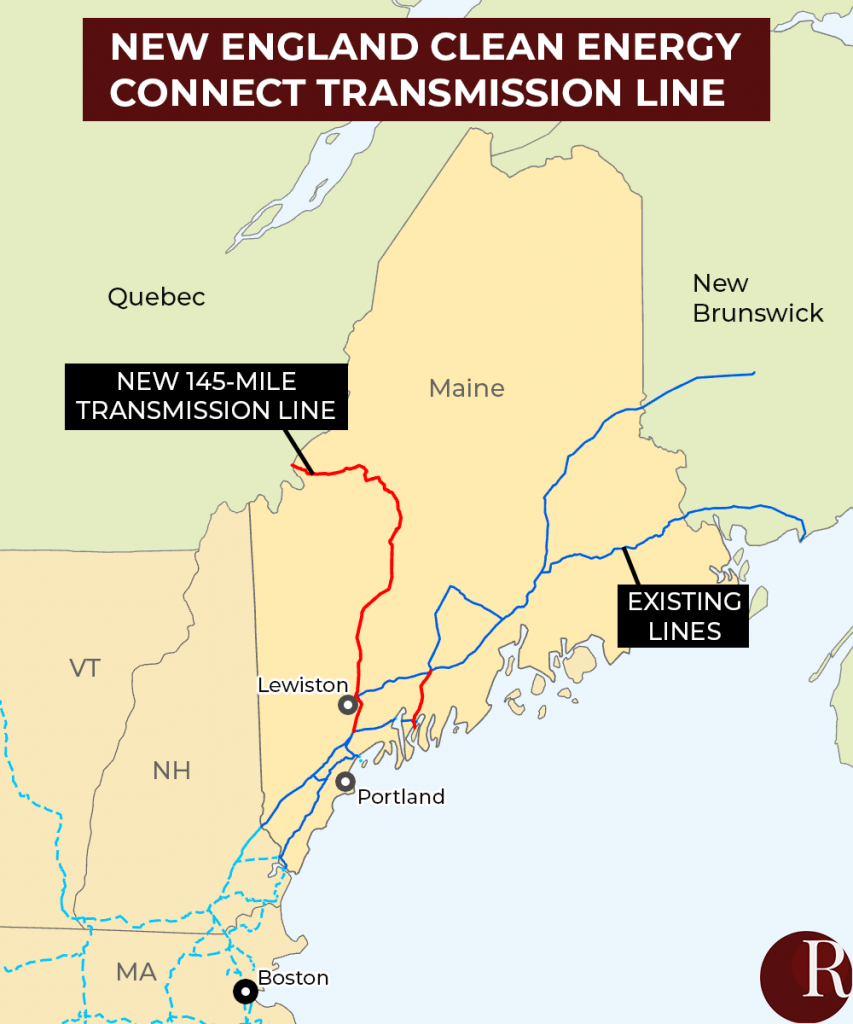
Adapted from Robert Whitcomb’s Digital Diary, in GoLocal24.com
It looked like the long-delayed power line to run from hydro-electric generation in Quebec (comfortably close to us) into the New England grid was kaput after a legally dubious referendum in Maine blocked the line. The project is called New England Clean Energy Connect.
But the Maine Supreme Judicial Court held last month that important sections of the law enacted by the referendum were unconstitutional because they deprived the company building the line -- Avangrid -- of rights that had already been legally vested before the vote. In short, the justices opposed the retroactive nature of the referendum.
Now the case goes back to a lower court for review.
Note that well-funded opposition to New England Clean Energy Connect includes such still fossil-fuel-heavy companies as NextEra Energy, which naturally see the power line as threatening their businesses.
The story is far from over, but in a world of accelerating global warming and countries held hostage by corrupt dictatorships financed by natural gas and oil, the Maine decision is a glimmer of good news.

Loving 'the vigor of decay'

— Photo by Andrija12345678
“Right now — September — is the crossover season, the delicious intersection of our geographic section: the final remnants of New England’s sweet corn in happy collision with the first press of apple cider.’’
— Journalist David Shribman in The Boston Globe
xxx
"Some of us spend our lives preferring fall to all the seasons, accepting winter’s blank as the completion or fulfillment that our season presages, taking spring only as a prologue, and summer as the gently inclined platform leading all too slowly to the annual dazzle. We are in love—not half in love, and not with easeful death—with the vigor of decay….’
— Donald Hall (1928-2018), New Hampshire-based poet and essayist
Summery elite

Painting by South Dartmouth, Mass., artist Sarah Benham in the group show “Coming Full Circle,’’ at Dedee Shattuck Gallery, Westport, Mass., through Sept. 16.
‘Where is everybody?’

“North Truro Red” (oil), by Mitchell Johnson, in his show “Nothing and Change, 1990-2022,” at Truro (Mass) Center for the Arts.
From Jesse Nathan’s commentary on the show:
"Fewer human figures populate Johnson’s spare but vibrant art than do {Edward} Hopper’s — and in this exhibition, you can almost count them on one hand — and Johnson’s often have their backs to us, or their faces blurred.
“Where is everybody? Where are the cars and their drivers? The beach houses and benches and lifeguard chairs are empty, as if the occupants are swimming or walking or long gone. Where did the lifeguards go? Where did any of us go? Because they seem almost peaceful, the weight of the sadness in these paintings didn’t hit me until later: humans are a mess.”
‘Cool cloak’

Lemon Stream, in Maine, on a September day.
—Photo by Cinclemflt
“This was one of those perfect New England days in late summer where the spirit of autumn takes a first stealing flight, like a spy, through the ripening country-side, and, with feigned sympathy for those who droop with August heat, puts her cool cloak of bracing air about leaf and flower and human shoulders.”
— Sarah Orne Jewett (1849-1909), American novelist, short-story writer and poet, best known for her works set along or near the southern coast of Maine.
‘Because our daddy owned it’
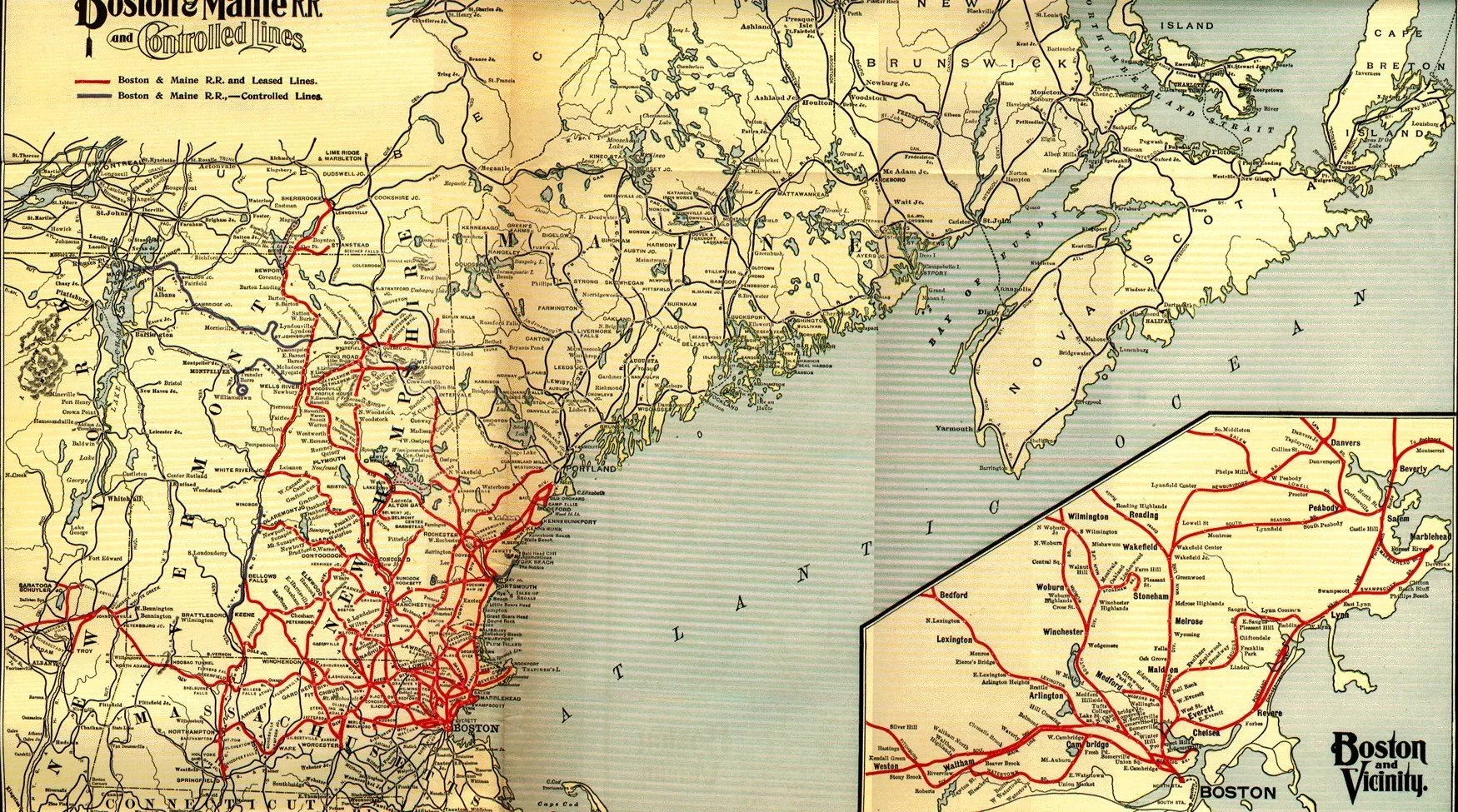
Boston & Maine Railroad map as of 1916.
”We would walk to the railroad station
then hop along the platform while mother
straightened her hat and checked to be sure
The Pass was in her purse, because
that meant we rode the B&M for free,
because our daddy owned it.’’
—From “The Magic Show,’’ by Mary Spofford French (born 1932), a New Hampshire-based writer

Littleton, Mass., B&M depot in 1910.
Things can get violent
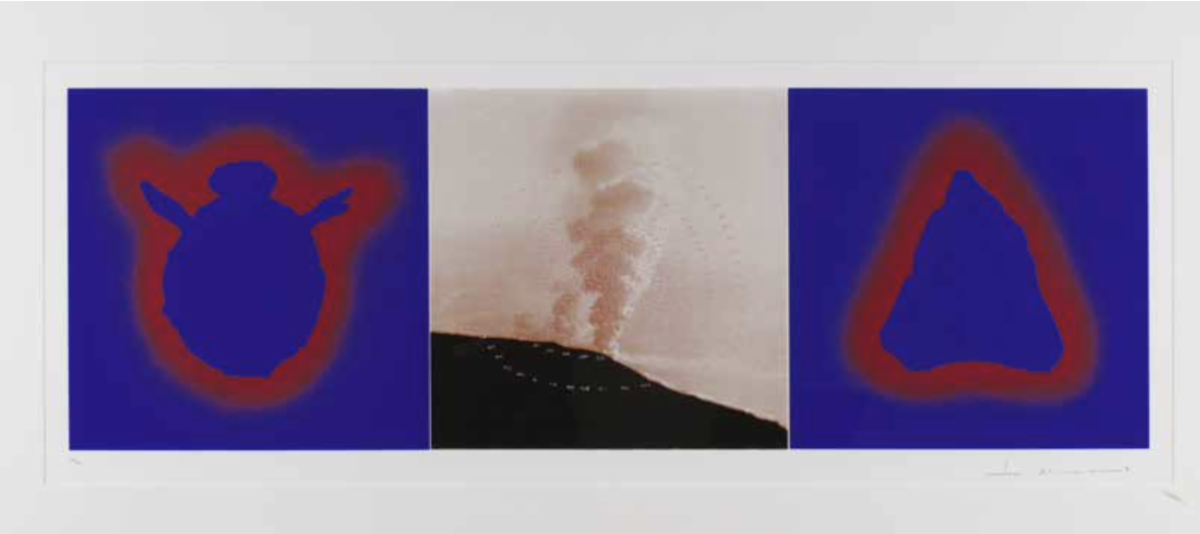
“Volcanic Equinox 20/100” (silkscreen print), by Lita Albuquerque, from “Joan Quinn’s Post-War L.A.’’, at the Armenian Museum of America, Watertown, Mass., through November.
— Photograph by Alan Shaffer
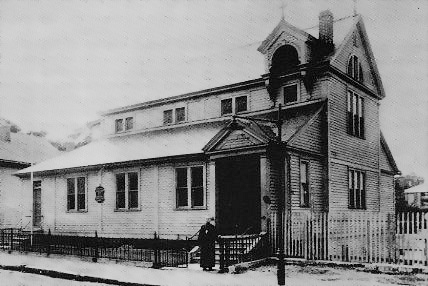
Built in 1891, the Church of Our Savior in Worcester was the first Armenian church in the U.S. It now hosts a Russian Orthodox congregation.
About time they’re getting this museum in New London

Rendering of the National Coast Guard Museum, on the New London, Conn., waterfront.
Adapted from Robert Whitcomb’s “Digital Diary,’’ in GoLocal24.com
New London will be the site of the long-awaited 80,000-square-foot National Coast Guard Museum, on which construction is finally set to begin soon. The facility, which will include immersive and interactive exhibits, is expected to open sometime in 2024.
It’s very appropriate that New London be the site since the Coast Guard Academy in there.
Given the Coast Guard’s age – it was founded in 1790 – and sometimes exciting activities, it’s surprising that such a museum hasn’t yet gone up.
Think of its maritime security work (watching for enemy submarines, etc.), search-and-rescue and anti-crime activities (against smugglers, bootleggers, etc.).
Then there’s chasing drunk weekend boaters.

Chris Powell: Time to stock up on antivenin; paying for utility deadbeats; coping cops

Don’t pet: Timber rattlesnake.
MANCHESTER, Conn.
Another protected species made news in Connecticut other week when a venomous timber rattlesnake attacked two dogs in their yard in Glastonbury. Their owner rushed the dogs to the Pieper Veterinary clinic, in Middletown, just in time for them to be saved with snakebite antidote, what is called antivenin. The dog owner is lucky he wasn't bitten, too.
Connecticut once treated rattlesnakes as the dangerous nuisances they are. They were widespread and it was open season on them. But now that their habitat is limited to the northwest corner of the state and Glastonbury, East Hampton, Marlborough and Portland, state government has made killing them illegal, as if Connecticut couldn't live without them.
State law feels the same way about bears and bobcats, other predators that attack domestic animals.
As a result the habitat of the predators is expanding. While zoning often is used by suburban and rural towns to exclude housing that might be inhabited by unrich people, it is considered environmentally sound and high-minded to expand the habitat of the predatory animals.
The predators even have their own lobby at the state Capitol, environmental extremists who frighten the state's timid legislators more than the predators themselves do.
So Connecticut residents should ask their legislators how many more rattlesnakes, bears, and bobcats state government plans to accommodate, and hospitals and veterinary clinics should stock up on antivenin.
xxx
Hospital and medical insurance bills are not the only places where state government has been hiding social-welfare costs from taxpayers. Such costs long have been hidden in electric and gas utility bills as well.
The Connecticut Examiner's Brendan Crowley reports that 25,000 utility users haven't been paying their bills for many months, some since as far back as October 2019, on account of state government's seasonal restrictions on disconnection and the disconnection moratorium imposed on electric and gas utilities when the virus epidemic started.
Eversource says it is carrying $171 million in bills overdue for 60 days or more. The company and United Illuminating have asked the Public Utilities Regulatory Authority to let them start disconnecting delinquents in September.
Eventually the expense of the unpaid bills is transferred to paying customers through higher rates.
Why should paying customers particularly have to pay the electricity and gas bills of customers who don't pay? For the same reason paying customers of hospitals and medical insurers are forced to pay for people who don't pay for their own treatment in Connecticut's hospitals. This is done because transferring social welfare costs out of state government through intermediaries lets state government escape political responsibility for them. So hospitals, medical insurers, and utility companies are wrongly blamed for price increases caused by government.
This doesn't mean that state government shouldn't assist with medical and utility costs for the indigent. It means that state government should cover those costs directly and honestly, through regular and general taxes.
But honesty would show that the cost of state government is far higher than people think, increasing the public's desire for efficiency in government and jeopardizing government's many less compelling expenses.
xxx
Police in New Haven in June were disgraced by their callous treatment of a man who had seemed drunk when arrested on a complaint that he was brandishing a gun at a block party. He was handcuffed and put in a van without seatbelts. Video showed his head smashing into the wall of the van when it stopped abruptly. More video showed him being dragged out of the van at headquarters when officers didn't believe his claim to be injured. At last report he was paralyzed.
But this month police video showed three New Haven officers hastening to rescue a young woman about to jump from the roof of a parking garage. The officers functioned not only as saviors but also as social workers.
The country is going nuts all around the police, so as tired of it and flawed as they may be, it's a wonder that they cope with it as well as they do.
Chris Powell is a columnist for the Journal Inquirer, in Manchester, Conn. (CPowell@JournalInquirer.com.)
Water view

Betsyann Duval: “Whales’ View” (oil/wax on plaster and canvas), by Betsyann Duval, in her show “Stream of Unconsciousness,’’ at Bromfield Gallery, Boston, through Oct. 2.
The gallery says her “artworks explore the current madness of our political, cultural and sexual” context.
‘The whole act’
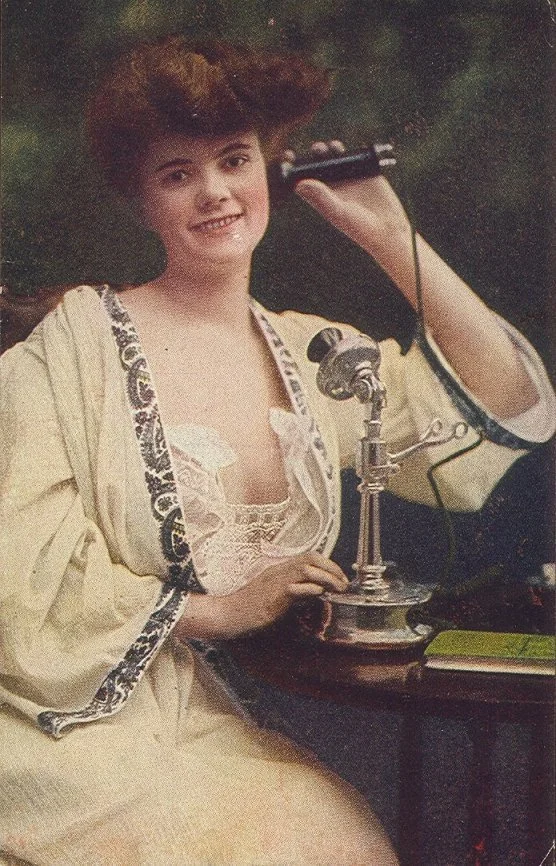
“The jokes over the phone. The memories packed
in the rapid-access file. The whole act.
Who will do it again? That's it: no one;
imitators and descendants aren't the same.’’
— From “Perfection Wasted,’’ by John Updike (1932-2009) novelist, short-story writer, essayist, critic and poet. He spent most of his adult life in various Massachusetts North Shore towns.
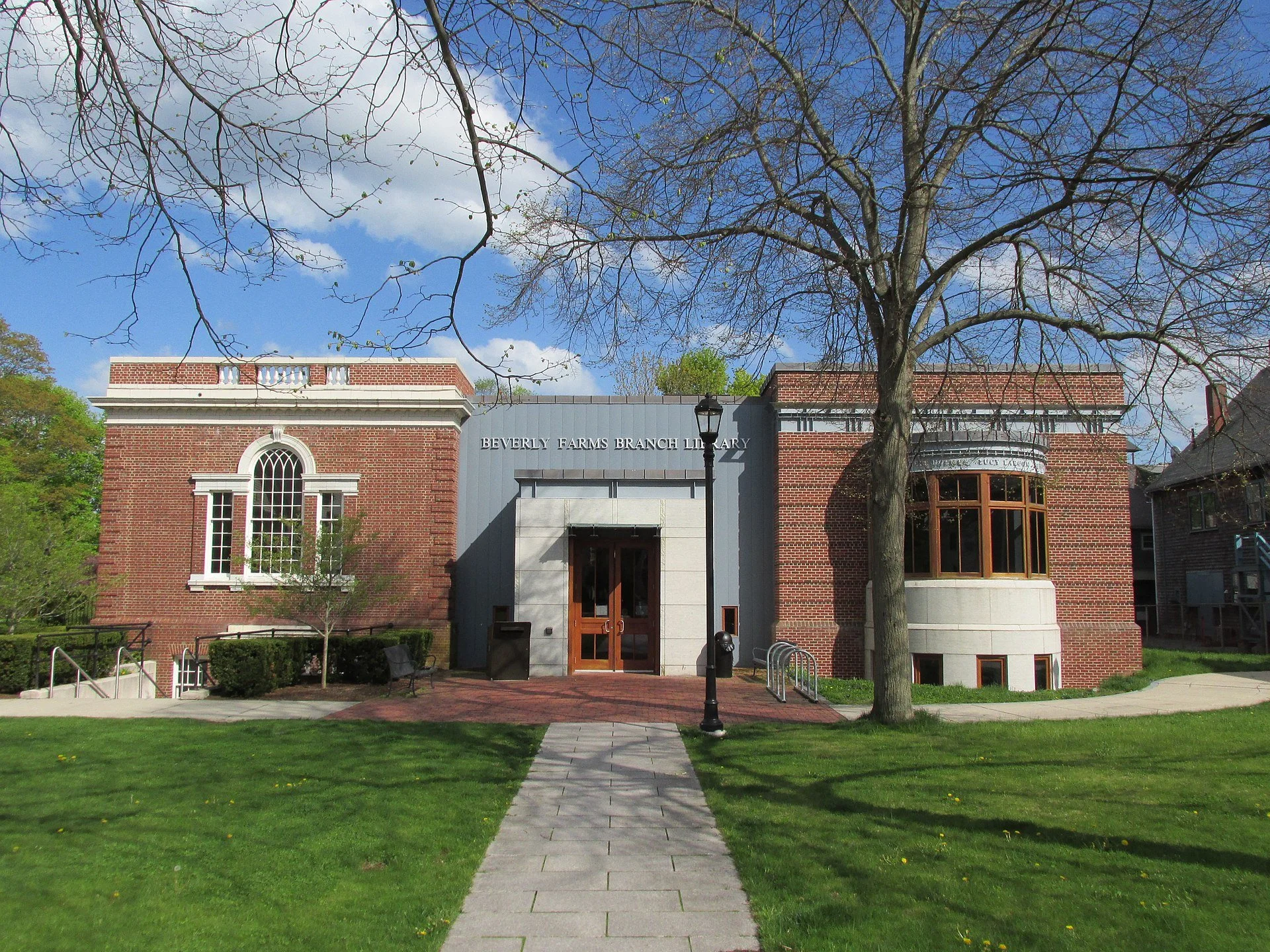
A view of the Beverly Farms, Mass., public library. Updike lived in Beverly Farms the latter years of his life.
— Photo by John Phelan
And you don’t have to tip them

Front view of a Kiwibot.
— Photo by Ganbaruby
Edited from a New England Council (newenglandcouncil.com) report:
Framingham State University will deploy food-delivery robots on campus. In partnership with Kiwibot, the new service will roll out 15 robots so that students can access affordable and eco-friendly on-campus food delivery.
This new service will work with Sodexo, the current food-service provider of Framingham State. Students will be able to order food from their devices and the robot will deliver the food directly to their door. To ensure the safety of students, the app will allow them to track the robot’s location on the delivery route and open the lid to grab their food. Kiwibots use semi-autonomous driving systems with human supervisors ready to assist with immediate support. The new technology will help Framingham students reduce their carbon footprint as the robots produce zero carbon emissions.
Nancy Niemi, president of Framingham State, said, “Sodexo has been a great food service partner for the University, as they continually evolve to meet the desires of our community. The addition of Kiwibot technology is the latest advance and I know many of our students will be excited to have these mini delivery systems coming right to them, on our campus.”