
Vox clamantis in deserto







Take it easier with the fertilizing and watering

“Lost in the Garden” (encaustic painting), by Providence-based artist Nancy Whitcomb.
‘Utterly without pretense’

Dan & Whit’s, the famous general store in Norwich, Vt., where Peter Welch lives when not in Washington.
“I represent a rural state and live in a small town. Small merchants make up the majority of Vermont’s small businesses and thread our state together. It is the mom-and-pop grocers, farm-supply stores, coffee shops, bookstores and barber shops where Vermonters connect, conduct business and check in on one another.”
— Peter Welch (born 1947), Vermont’s sole member of the U.S. House.
xxx
“Vermonters are not only charmless of manner, on the whole; they are also, as far as I can judge, utterly without pretense, and give the salutary impression that they don't care ten cents whether you are amused, affronted, intrigued, or bored stiff by them. Hardly anybody asked me how I liked Vermont. Not a soul said 'Have a nice day!'‘'
“Vermonters, it seems to me, are like ethnics in their own land. They are exceedingly conscious of their difference from other Americans, and they talk a great deal about outsiders, newcomers, and people from the south.”
— Jan Morris (1926-2020), British historian, author and famed travel writer
Prepare for flowery language

“Flower Portrait (Markia)”, by Jee Hwang, in the “SALLY Project,’’ at Brickbottom Artists Association, Somerville, Mass., Sept. 8-Oct. 15.
The “Sally Project’’ is is an interdisciplinary, community–centered project, created by Sasha Chavchavadze and JoAnne McFarland, that focuses on using art to activate the public memory of women, like Sally Hemings (Thomas Jefferson’s slave and mistress), whose lives have been forgotten.

David Warsh: Bitter times —John Kerry, the Vietnam War, me and The Boston Globe

Logo of the controversial anti-Kerry Vietnam veterans group in the 2004 presidential candidate
SOMERVILLE, Mass.
What does a top newspaper editor owe his publisher? The press critic A. J. Liebling famously wrote: “Freedom of the press is guaranteed only to those who own one.” Tired of arguing with a friend about the implication of that dictum, I threw up my hands a year ago and walked away. Since then, interest in the question has been rekindled. I decided to re-engage
The particular case that interests me has to do with the role of The New York Times in the 2004 presidential election. It was then that the first collision occurred between mainstream news media and crowdsourcing on the internet: The derisive Swift Boat Veterans for Truth vs. the John Kerry campaign. Did the presidency hang in the balance? There is no way of knowing. George W. Bush received 50.7 percent of the popular vote, against 48.3 percent for Kerry; in the Electoral College, the margin was slightly wider, 286 to 251.
In at least in one respect, crowdsourcing seemed to have won its contest that year. More news about dissension within the Swift Boat ranks appeared first on the Web during the second half of the year, rather than in newspapers. As Jill Abramson notes in Merchants of Truth: The Business of News and the Fight for Facts (Simon & Schuster, 2019), the newspaper business changed after that.
I followed what happened in 2004 because eight years earlier, I had become involved in what turned out to have been its quarter-final match. In 1996, Kerry, the junior U.S. senator from Massachusetts, was running for re-election to a third term against a popular two-term governor, William Weld. Kerry decisively defeated Weld, sought the Democratic vice-presidential nomination in 2000, then secured the Democratic Party’s nomination in 2004 to run against Bush.
Until 1996, Kerry was known to the national public mainly as a critic of the Vietnam War. The ‘80s, which began with the Soviet Union’s invasion of Afghanistan and Ronald Reagan’s election to his first term, had changed attitudes toward America’s experience in Vietnam. Though first elected in 1984 – on, among other things, a promise to stop U.S .atrocities in Nicaragua, – Kerry’s 1996 senatorial campaign was the first one in which he sought to tell the story of his war in Vietnam. He gave highly personal accounts of his service to Charles Sennott, of The Boston Globe, and to James Carroll, of The New Yorker, which appeared a month before the election. In reading them, I was struck by certain inconsistencies in the senator’s accounts – in particular, by the relatively short time he had spent in Vietnam.
I was then a columnist on the business pages of The Globe, writing mostly about economics and its connection to politics, but for a year (1968-69), as a second-class petty officer in the U.S. Navy, I had been a Pacific Stars and Stripes correspondent, based in Saigon, and, for a year after that, a stringer for Newsweek magazine.
After Kerry boasted of his service and disparaged Weld for not having gone to that fight, I wrote a column on Monday for Tuesday, Oct. 22, that was headlined “The war hero.” In the course of my reporting, a member of Kerry’s Swift Boat crew, who had been put in touch with me by the campaign, confided in the course of a long conversation a detail that hadn’t appeared before. A second veteran, a former Swift Boat officer-in-charge, phoned the paper to offer additional details. I requested permission to draft a follow-up column, and received it.
A year ago, I told my story about how that second column came to be written. Below, I put into the record a parallax account of the key events of that week, in the form of a November 1996 letter from former Boston Globe editor Matthew Storin to a strident critic of The Globe’s coverage of Kerry in this instance. I include the letter to which he was responding as well below. They are long and painful to read, and unless you, too, are interested in 2004, you can skip them.
I am writing all of this now for two reasons. I learned last year that having retired from the newspaper business, Marty Baron is writing a book. Collision of Power: Trump, Bezos, and The Washington Post (Flatiron) is said to be about his eight years as executive editor of The Post, beginning just after Amazon founder Jeff Bezos purchased the paper from the Graham family. That makes Baron an expert on the central topic here; all the more so since in 2011, he was considered one of the three likeliest candidates to replace executive editor Bill Keller in the top news job at The Times, according to Jill Abramson, who ultimately got the job. I am eager to see what Baron says about The Globe’s 2004 book about Kerry, so I decided to put on the table the first of the cards that I possessed.
I also want to express the conviction that the resounding success of the tactics Kerry employed in 1996 probably cost him the presidency in 2004. During the week in the fall of ‘96 that we waited for the campaign’s reply to questions raised by “The war hero” column, we accumulated several new bits and pieces of information. Had his staff kept its promises, we would have asked questions about them, but I doubt that I would have written a second column, and certainly not the second column that appeared. Probably we would have waited until after the election, perhaps long after the election, to begin to resolve the questions. Meanwhile, Kerry might have learned how to talk about the issues that would be so starkly raised in 2004.
Instead, a hastily arranged Sunday rally, as Storin’s letter makes clear, was the equivalent of an ambush. Kerry and others, including Adm. Elmo Zumwalt, Commander of Naval Forces in Vietnam when Kerry had been there, assembled from around the country and appeared in the Boston Navy Yard to fiercely denounce the second column, barely 12 hours after it appeared in print. The effects were blistering. With the election 10 days away, The Globe covered the rally and otherwise put the story aside.
I received a copy of Storin’s letter to the critic soon after the election, via interoffice mail. In the five years I remained at The Globe, I was never asked by senior editors about what I had learned. The news business was different in those days. Newspapers were still regnant, but their owners embraced differing principles and possessed different points of view. The Globe had been purchased by New York Times Co., in 1993. Under a standstill agreement, the paper was still managed by the Taylor family in 1996, as it had been for 125 years. Even then, the implications of the sale were beginning to come clear. NYT Co. president Arthur O. Sulzberger, Jr. fired Benjamin Taylor as. Globe publisher in 1999, and replaced Storin with Baron in mid-2001.
Kerry considered questions about his experiences in Vietnam, asked in the rough and tumble of the news cycle, to be illegitimate; I and my editors considered them appropriate in the circumstances. None of us, I think, would have felt any compulsion to publish that second column had the campaign kept its promises. We’ll never know. But in refusing to respond, and attacking instead, Kerry had effectively ruled the questions out of bounds.
Kerry’s success in 1996 may have bred over-confidence going forward. The next eight years produced little news on these matters. The historian Douglas Brinkley wrote his campaign biography, Tour of Duty: John Kerry and the Vietnam War (William Morrow, 2004). By the time it appeared, a whole new wing of the news industry had gained an audience – Rush Limbaugh, the Drudge Report, the Fox News Network, Bill O’Reilly and Andrew Breitbart.
When the same ambush tactics the Kerry campaign employed against The Globe were used against him in May 2004 by the organization calling itself Swift Boat Veterans for Truth, it was too late to disarm. Kerry toughed it out. Bluster and evasion had become a habit.
. ••
“November 6, 1996
“John M. Hurley, Jr., 78 Longfellow Road, Wellesley. MA 02181
““William 0. Taylor, Chairman; Benjamin B. Taylor, President; Matthew V. Storin, Editor: The Boston Globe
Gentlemen: ‘
“What has happened to The Boston Globe? What has happened to the proud, 124-year tradition of impeccable journalistic standards?
“David Warsh has disgraced himself. He has shamed The Boston Globe, he has stained the profession you cherish.
“I am a Vietnam veteran, a 26-year friend of John Kerry, and a 4-decade long fan of the Boston print media. (My father was a Boston news photographer for 43 years – 29 with The Boston Post, 2 freelancing, 12 with the Globe – and he instilled in his children an unyielding admiration for the Boston print media.)
“But in 40-plus years of close observation of Boston newspapers, I have never seen a more despicable, more vicious, more baseless attack than David Warsh’s columns on John Kerry.
“Without any foundation whatsoever, without a single witness contradicting events that took place 27 years ago, without a shred of physical or documentary evidence, Warsh levels the single, most vile hatchet job that I have ever seen.
“Where is Warsh’s evidence to contradict these witnesses, where is the substantiation for his vicious speculation? There is none. Not one word. He speculates about the most heinous war clime imaginable – the commission of murder in order to secure a medal – and offers nothing in support of his speculation. Not a single witness. Not a statement. Not a document. Nothing. It is simply Warsh’s own personal, vicious speculation.
“Even a ‘decorations sergeant,’ if he has an ounce of objectivity, if he has an ounce of integrity, is capable of putting this incident into the context of a firefight: incoming B-40s. enemy fire, from both shorelines, third engagement of the day. stifling heat. deafening noise. screaming, shouting, adrenaline-driven chaos. Sheer mind-numbing chaos. Kerry and his crew were trained to do one thing in order to save their lives: react, react, REACT. Lay down a base of fire, or die. It was that simple. Even a ‘decorations sergeant’ understands that. But if you have no objectivity, if you have no integrity, you don’t put the incident into context. you write of war crimes instead.
“And what of that dead VC? According to Warsh, he was Just a tourist on holiday. ‘The one thing that seemed hard to abide was a grandstander. A Silver Star for finishing off an unlucky young man?’ SAY … THAT .., AGAIN. ‘A Silver Star for finishing off an unlucky young man?’
“A VC soldier … in the midst of a firefight … armed with a B-40 rocket … aimed at the crew of a U.S. Navy swift boat – and Warsh sides with the dead VC. An unlucky young man, finished off for the sake of a Silver Star by a grandstander.
“Who does David Warsh think he is? What right does he have to casually, callously, with utter disregard for the facts presented to him destroy a person’s reputation. Their character. their integrity, their honor?
“And you let him do it. Twice.
“Where are your journalistic standards. Where is your outrage. Where is your moral indignation. Where is your decency. Where ls your fairness? Do you really believe that Warsh’s vicious conjecture rises to the level of fair, objective comment? Are Warsh’s columns the stuff of which you want your newspaper judged?
“John Kerry’s honor, his crew’s honor, is intact. What of the Globe’s?
“It is important to point out that Warsh’s reporting is replete with errors. Warsh engages in the vilest character assassination imaginable, and he doesn’t even get basic facts right. In any newsroom I have ever visited ‘getting the story right’ is worn like a badge of honor. Warsh didn’t even try.
“Relying solely on personal conjecture (‘What’s the ugliest possibility? ….’) and vicious innuendo (‘Tom Bellodeau (sic) says he was awarded a Bronze Star … but I have been unable to find a copy of the citation.
“Warsh proceeds to trash the honor of Kerry, his crew, and indeed every veteran who has ever been awarded a medal for bravery.
“There is not one word of substantiation in Warsh’s diatribe. There is no foundation, no witness, no evidence, no document that contradicts what has been said or written about Kerry’s war record. Yet Warsh dangles before the reader the most heinous speculation imaginable: that Kerry murdered a wounded, helpless enemy soldier in order to win a Silver Star for himself. An unspeakable crime, yet Warsh offers nothing to substantiate it. The allegation is solely Warsh’s own vicious, character-assassinating conjecture.
“And you let him publish it. Twice.
“Warsh advances his vicious speculation even though there are rock-solid statements and documents to the contrary, statements and documents that completely contradict his spurious, hate-filled conjecture:
“Belodeau told Warsh: ‘When I hit him, he went down and got up again. When Kerry hit him, he stayed down.’
“Medeiros told the Globe’s Barnicle: ‘I saw a man pop-up in front of us. He had a B-40 rocket launcher, ready to go. He got up and ran for the tree line. I saw Mr. Kerry grab an M-16 and chase the man. Mr. Kerry caught the man in a clearing in front of the tree line and he dispatched the man just as he turned to fire the rocket back at the boat…I haven’t seen or talked with Mr. Kerry since 1969, but I admired him them and I admire him now. He saved our lives.’
“Kerry’s Silver Star citation, awarded for ‘conspicuous gallantry and intrepidity in action,’ signed by Admiral Elmo Zumwalt, states that the enemy soldier had a B-40 rocket launcher ‘with a round in the chamber.’
“Warsh quoted Kerry (from the Carroll piece): ‘It was either going to be him or it was going to be us. It was that simple. I don’t know why it wasn’t us – I mean to this day. He had a rocket pointed right at our boat.’
“Warsh misspelled Tom Belodeau’s name 13 times.
“Warsh referred to Belodeau as the ‘rear gunner’: Belodeau was the forward gunner.
“Warsh reports that Keny was assigned to a boat ‘whose skipper had been killed’; the skipper was not killed, he was wounded, and is alive today.
“Warsh refers to ‘heavy 50 mm machine guns’: they are .50-caliber machine guns. ‘50 mm machine guns’ are laughable; a reporter with even a cursory attempt at accuracy would have caught the error instantaneously.
“Warsh asks: ‘But were there no eyewitnesses?’ There were at least three: Tom Belodeau, Mike Medeiros. John Kerry. All were quoted in the Globe. But Warsh decided that from a distance of 27 years he knew better than they what happened that day. He ignored what they said, he opted instead to write his own personal, vicious, unsubstantiated conjecture.
“When you engage in character assassination. you have an absolute obligation to ‘get it right.’ Warsh didn’t even try. Why was he in such a hurry to get his hate-filled column into the paper?
“You have always been an aggressive, but responsible newspaper. You have never, until now, stooped this low. So, how did these columns happen? How did they get into your newspaper?
“Your journalistic integrity has been trashed by David Warsh, and the editors that OK’d these columns for publication. These columns were not a close call. These columns were flagrantly out of line. 124 years of journalist integrity has been trashed. It will take you years, if not decades. to recover from the stain of these columns.
“Hang your head in shame, Boston Globe. Hang your head in deep, deep shame.
/s/ John Hurley
“P.S. to Mr. Storin:
“And what of you, Mr. Storin?
“Did Warsh act entirely on his own? Does the Globe’s policy of complete freedom to its columnists mean that no editor even questioned Warsh about the foundation of his columns? Even when Warsh’s columns are totally outside his field of expertise? Did no editor request even minimal substantiation of his vicious speculation: a witness, a document, a statement? Anything at all?
“Does the Globe’s policy of complete freedom to its columnists extend to baseless, personal character assassination? Did you and the editors that work for you fail to see a pattern of vicious, personal attacks by Warsh?
“‘… there is,” Warsh wrote, ‘a good, strong, dispassionate reason to prefer Bill Weld to John Kerry.’ Fair enough. He’s entitled to endorse whomever he wants to. But then the pattern of attacks began:
“Warsh, Oct. 15, 1996: ‘he was acquired by John Heinz’s widow in a tax-exempt position-for dollars swap.’
“Warsh, Oct. 22, 1996: ‘The one thing that seemed hard to abide was a grandstander. A Silver Star for finishing off an unlucky young man?’
“Warsh, Oct. 27, 1996: ‘What’s the ugliest possibility? That behind the hootch, Kerry administered a coup de grace to the Vietnamese soldier – a practice not uncommon in those days but a war crime nevertheless, and hardly the basis for a Silver Star.’
“A recurring pattern of vicious, unsubstantiated personal attacks. Is this what constitutes fair and objective comment under the Globe’s current journalistic standards?
“The very day Mike Medeiros was quoted in the Globe saying Kerry ‘saved our lives,’ you gave Warsh additional space, and let him – without a single witness, without a single document, without a single supporting statement – viciously speculate about a war crime, for the very act that Medeiros said saved their lives. A war crime? Admiral Zumwalt, the highest ranking Naval officer in Vietnam, stated that John Kerry’s heroism that day was worthy of the Navy Cross, the second highest medal for bravery that our country awards. (But Zumwalt recommended a Silver Star instead, because he wanted to expedite the awards ceremony and boost the morale of his troops who were taking heavy casualties at the time).
“Every witness that has spoken, every document that exists. every shred of evidence that has been found states that Kerry acted selflessly, with extraordinary heroism. Yet Warsh, without foundation, without any substantiation whatsoever, conjectures about a war crime. And you print it. Is that the journalistic standard by which you want your reading public, your fellow journalists across the country, your publishers, to judge you and The Boston Globe?
“To top off this lame, pathetic performance by you and your editors, you go on television and dismiss Warsh’s columns, saying, ‘I thought in the long run it might be favorable for Kerry.’
“Vicious, unfounded character assassination ‘might be favorable’? Ludicrous, laughable, stupid, sick.
“The basic test of character, Mr. Storin – for a man or a newspaper – is to be able to say, in the face of adversity, ‘We were wrong, extremely wrong.’ “You, The Boston Globe, and David Warsh have failed that test, egregiously.’’
“November 13, 1996
“Mr. John M. Hurley, Jr., 78 Longfellow Road, Wellesley, MA 02181
“Dear Mr. Hurley:
“Your thoughtful letter was very painful to read. You made some very harsh charges, most of which I feel were not in the same context with the decision that I was faced with in allowing publication of the David Warsh column. Nearly three decades after a signal event in the career of our junior US Senator, I had a column with a seemingly new version of events and no one willing to come forward to explain it, despite our holding the column for three days. In the midst of an election campaign, to kill such a column under those circumstances was something I could not defend.
“Here is the chronology of events that led to my decision:
1. “Warsh says he has turned up this odd statement by Belodeau that does not appear to square with the previous He writes a first version of the column that lands on our desks on Wednesday. Because we are getting closer to the election, we consider publishing it on the following day, rather than waiting until the next of his regular column dates.
2. “I telephoned John Marttila, one of Kerry’s senior advisers, and urge him to have the senator talk to Warsh. I assume the discrepancy can be straightened out. John indicates that it is next to impossible to reach the senator, who is on his way to the debate in Springfield.
3. “I tell my editing colleagues Wednesday night that we must hold the column until we are able to (a.) reach Belodeau for additional clarification and (b.) reach Senator Kerry.
4. “Tom Vallely calls me Thursday morning and discusses the Warsh I tell him what Belodeau has said (or perhaps he already knew), and he says, in pretty much these exact words, “We have no problem with that. We have no problem with that/ and explains that the guy Belodeau hit got back up and appeared still able to fire his weapon. Frankly, I am relieved to hear this because it’s a plausible explanation and we can avoid even addressing the issue anew. Vallely says he will produce “his (Kerry’s) commanding officer. I got the impression that Tom would also help get Belodeau back to Warsh and possibly the senator himself, though on the latter point I may have been mistaken. I think Tom might have said earlier that the senator would not talk to Warsh. I had to leave for a journalism conference on Long Island, but at this point I am confident that the column will not be a problem.
5. “Late Friday, I ask to have the column faxed to me. I am very surprised to learn that neither Belodeau nor Kerry has offered anything to Warsh and that the officer has said he was not an eye witness. The New Yorker quote is also puzzling to me. Yet I feel that Warsh deals with the incident with some caution, offering two possibilities. It’s an effort to examine an important incident in the military career of a major public figure who has chosen for some reason — and that is fully his right — to not answer the columnist’s questions.
“From the remove of hindsight, it is now obvious that Senator Kerry chose prior to publication to use the column (of which through Vallely and others he probably had accurate knowledge) to his own advantage. Not only is that his privilege, but it appears to have been good politics. In any event, it probably would not have been possible to get Admiral. Zumwalt here between early Sunday morning and the late afternoon press conference, so that is my assumption.
“Frankly, the column probably would have disappeared without a trace otherwise. After reading it on Friday, I told our executive editor, Helen Donovan, ‘I think this is worth 1,000 votes for Kerry.’ Given your letter, you are probably incredulous at that, but I felt it humanized the senator in a way that has often not been the case in his career. Of course, I saw the negativity in it, but I thought readers would make their own judgments about the issues – as they do with all our opinion columns.
“As to an apology, I would first like to outline what the paper has done in print. We published the story of the press conference on page one Monday, including Belodeau’s explanation for his remark and his account of the battle as well as the testimony of Medeiros, whom our reporter spoke to by telephone. Obviously this piece was presented more prominently than the original column. We then published an op-ed piece by James Carroll, criticizing us in very harsh terms. It is part of our culture to publish a column such as Carroll’s just as it is to publish a column such as Warsh’s. William Safire writes a half dozen speculative columns a year that are as harsh to Bill Clinton as Warsh’s was to Senator Kerry. When was the last time you saw an op-ed piece in the Times that criticized the Times? Finally, we published a piece by our Ombudsman that, like Carroll, said the column should not have been published.
“I personally may regret that the column ran, but, given the same set of circumstances again, I would not kill the column. I have to make those decisions in the context of columns we have run in the past and might run again in the future. We were in the middle of a tough campaign, Belodeau had made a statement that seemed at odds with anything previously published, and despite waiting three days, no one had come forth on behalf of Senator Kerry to explain it. I agree that it’s a sign of character to admit when you are wrong and, in some ways, that would be easier to explain than what I am trying to say here. I believe David Warsh may address his own personal feelings in a future column and, possibly, in a conversation with Senator Kerry if that is possible.
“It pains me to read that Senator Kerry feels this was a low point in his life. I am certain of one thing: It would have been avoided if he had given a statement to Warsh as we had asked. His failure to respond — even if he wanted to call a press conference in advance — took out of my hand a major argument for changing or killing the column (though I believe Warsh would have treated the subject much differently). Your citation of the Medeiros quote is interesting. The campaign obviously chose to make Medeiros available to another columnist, rather than reply directly to Warsh. That’s another legitimate political decision by the Kerry campaign, but it didn’t help with the decision I had to make on Friday evening (deadlines are earlier for Warsh’s column than for Barnicle’s). I understand that the senator and some of his advisers felt wary of dealing with Warsh, but Tom Vallely and John Marttila knew that I had personally involved myself in the issue and could have phoned me back at any time between Thursday morning and Friday night. Though I was out of town, I was easily reachable.
“I do regret — and they are inexcusable — the relatively minor but not insignificant “inaccuracies in Warsh’s column that you cited.
“In closing, I would like to note that you are a longtime friend of Senator Kerry. I understand you may have even played a role in the campaign’s effort to deal with the Warsh column. I am neither a friend nor supporter of John Kerry nor Bill Weld. I do everything in my power, in terms of social relationships, to put myself in a position to make dispassionate decisions as a journalist. I accept that you are upset with us, but I hope you will sometime reread your letter and recognize that you made some emotional charges that were not justified.
“Sincerely
/s/ Matthew V. Storin’’
David Warsh, a veteran columnist and an economic historian, is proprietor of Somerville-based economicprincipals.com, where this column originated.

More, more, more!

A CVS kiosk set up in Quincy Market, in downtown Boston.
— Photo by Whoisjohngalt
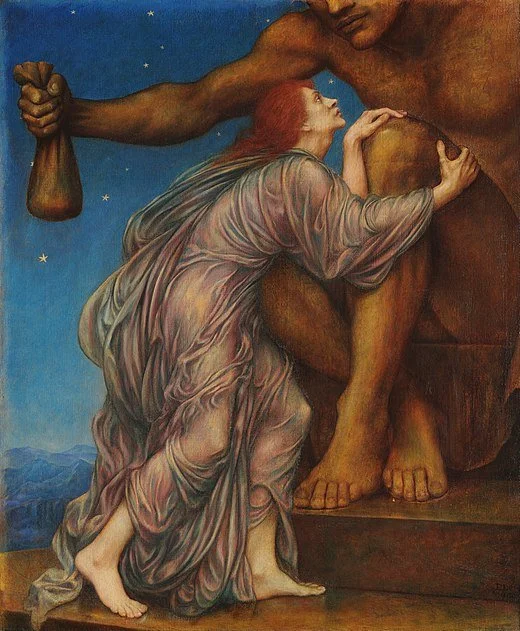
“The Worship of Mammon (1909)’’, by Evelyn De Morgan
Adapted from Robert Whitcomb’s “Digital Diary,’’ in GoLocal24.com
CVS’s chief executive officer, Karen Lynch, made 458 times the Woonsocket, R.I.-based company’s average employee’s wages in 2021, when her compensation exceeded $20 million while the average CVS worker made $45,010. Cut Ms. Lynch’s taxes some more!
An Economic Policy Institute report in 2021 showed that from 1978 to 2020, the pay of CEO’s of big public companies grew by 1,322 percent, far outstripping stock-market growth as measured by Standard & Poor’s (817 percent). It also exceeded corporate-earnings growth of 341 percent between 1978 and 2019, the latest data available. Meanwhile, compensation of the typical worker grew by just 18 percent from 1978 to 2020.
Where’s the evidence that corporate execs are better these days than they were 40 years ago and thus deserve these gargantuan pay days?
Behind a lot of this extreme compensation is the simple fact that the boards of big companies consist mostly of other very rich corporate execs who serve on multiple boards and give each other huge pay packages with the expectation that they’ll be taken care of in return.
Another is the media creation of the CEO of a big company as a genius superstar worthy of extracting vast sums from the economy.
Of course as they get richer and richer, they get more and more control of the political system, which they use to expand their wealth and power (especially via the GOP/QAnon Party) even further.
Hit these links:
https://www.epi.org/publication/ceo-pay-in-2020/
https://www.golocalprov.com/business/cvss-ceo-lynch-makes-458-times-the-average-cvs-employee
https://www.epi.org/publication/ceo-pay-in-2020/
And:
https://www.salon.com/2022/07/19/just-27-billionaires-spent-90-million-to-buy-congress-report_partner/
https://americansfortaxfairness.org/wp-content/uploads/BBER-FINAL-WITH-LINKS.pdf
Silence or arousing cries

Rangeley Lake, Maine, from its southern edge.
— Photo by Dudesleeper
“Maine lakes may still be observed during moments of soundlessness. — in the pure luxury of quiet. Yet for those who long to hear those rare sounds once more, there is always the hope that there will be loons calling — breaking the silence with their wild arousing cries.’’
— Lee Kingman, in “Meditation in Maine,’’ in New England: The Four Seasons (1980)

Varieties of loons (called divers in Britain).
Memories of just people
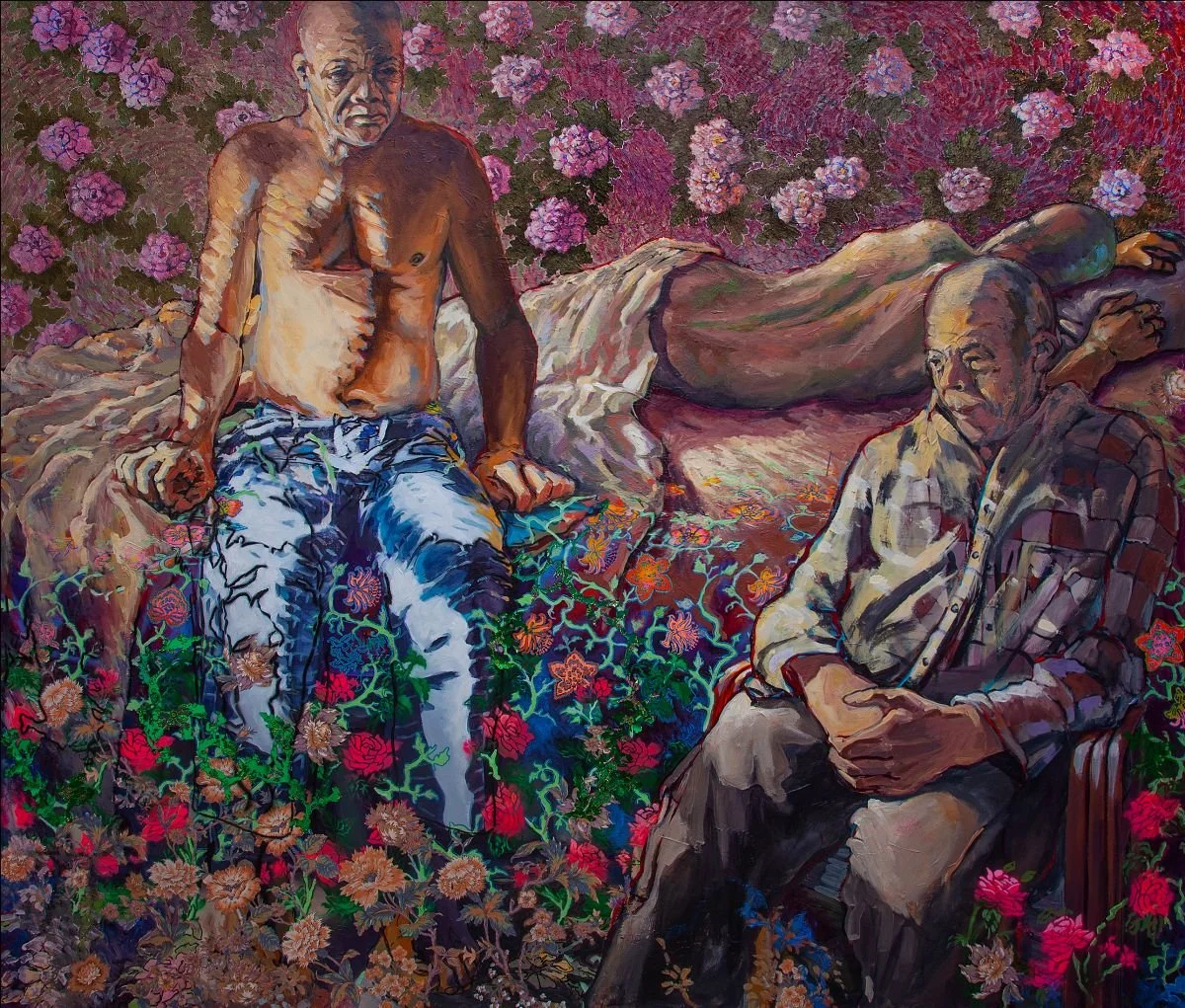
“Self-Portrait 2021-22” (acrylic paint, fabric, paper, markers on canvas), by Bob Dilworth, in his current show, “Another Place,’’ at Cade Tompkins Projects, in Providence.
Chris Powell: Feel guilty about the present, not the past
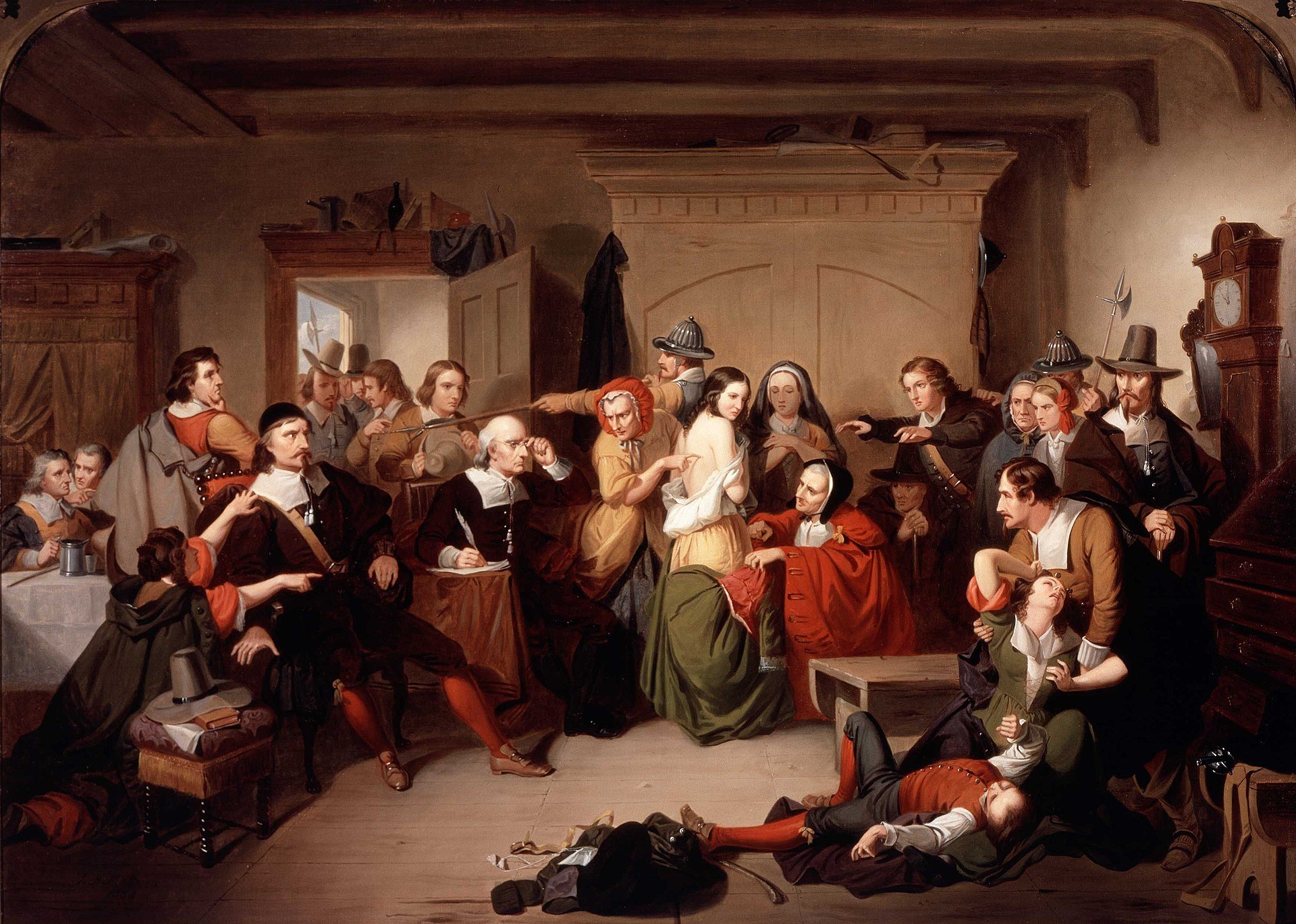
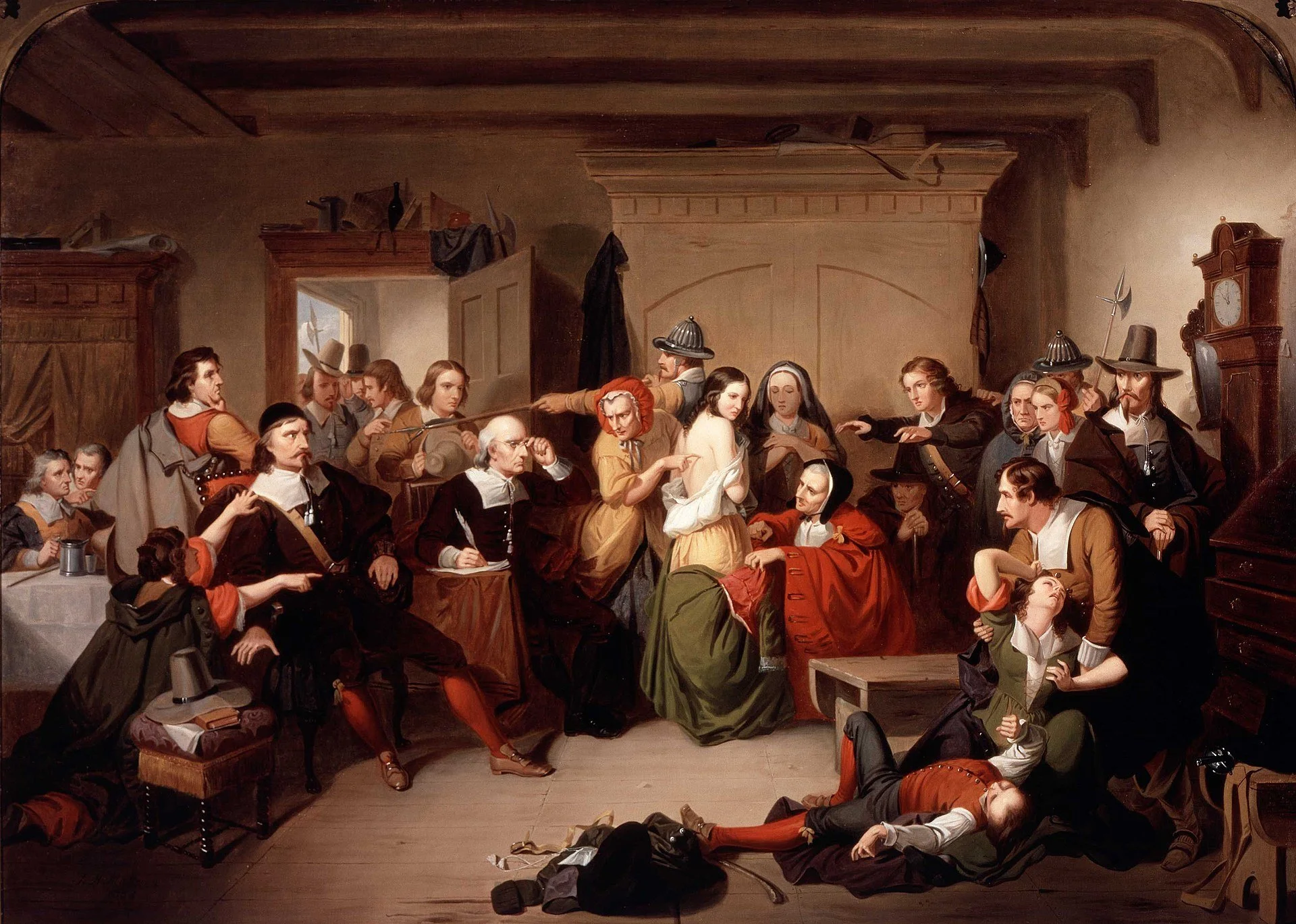
“Examination of a {New England} Witch,” by Tompkins Harrison Matteson (1813-1884), at the Peabody Essex Museum, in Salem, Mass.

The First Meeting House, in Hartford, built in 1635, in the neighborhood where executions for witchcraft took place.
MANCHESTER, Conn.
Guilt tripping through American history has become almost as popular for vacationers as Florida. It's a vacation from current political reality.
In Connecticut the latest guilt trip involves the executions carried out here in the 1600s by the earliest European colonists against 11 of their number accused of witchcraft. The first known witchcraft execution in North America was that of a Windsor woman who was hanged in Hartford in 1647. This was just eight years after the Connecticut colony had distinguished itself more favorably by adopting the Fundamental Orders, a constitution establishing a government and taking more small steps toward democracy.
Until recently Connecticut preferred to remember the heroic virtues of its founders -- their setting out on their own, crossing the ocean, and starting up all over again from nothing. But their failings, even their witchcraft hysteria, are not really cause for the everlasting shame pursued by today's guilt tripping, which takes people and events out of the context of their time and ignores what used to be called the ascent of man, the long and bumpy journey from primitiveness to civilization.
For of course hundreds of years ago people saw the world in a more primitive way, without the understanding provided by modern science and communications. The fear arising from their lack of understanding, combined with the severity of their Puritan religion, made witchcraft seem a plausible explanation for the frequent calamities they suffered, and an accusation of witchcraft quickly became a convenient mechanism for intimidating or expropriating others -- much as accusations of racism are exploited today.
A group called the Connecticut Witch Trial Exoneration Project has been clamoring for a formal acquittal of the victims of the witchcraft hysteria. The state's pardon law can't help because it can be applied only to the living, so maybe it could be amended. Or maybe the General Assembly could pass a resolution of apology.
But why bother? Is there anyone in the state or even the country who has heard of the old witchcraft hysteria and who doesn't know that it was all a horrible misapprehension and injustice and who doesn't either shudder or laugh at it? Could anyone unaware of it come upon it without instantly recognizing it as such?
Meanwhile there are many criminal convictions throughout the country about which serious doubts have arisen, and a far more relevant project, the Innocence Project, has used DNA evidence and other investigation to exonerate hundreds of wrongly convicted people, including some in Connecticut -- people who are still alive and thus in infinitely more need of exoneration than the supposed witches of old. The Innocence Project estimates that as many as 10 percent of prisoners held in the United States are innocent. (Also unjustly, many repeat criminal offenders stalk society because the criminal-justice system fails to put them away for good no matter how much harm they keep doing.)
Many wrongly accused people have been convicted on the basis of false confessions, extracted from them by intimidation and threats by police and prosecutors, just as false confessions were sweated or even beaten out of people accused of witchcraft.
That's why any formal exoneration of the victims of the witchcraft hysteria won't do much more than make people feel guilty about a wrong done long ago for which they bear no responsibility even as it distracts them from current wrongs for which everyone remains responsible.
OUTRAGEOUS INEPTNESS: Connecticut has all sorts of outrages that should be addressed before bothering with the flaws of ancient ancestors. Another such outrage arose three weeks ago in Stonington, where, according to The Day of New London, two municipal public-works employees were caught on surveillance video planting drug syringes in a gazebo in a town park, and doing it on the job, no less.
Police said the employees aimed to create the false impression that the park is overrun by drug addicts and crime.
But Stonington First Selectwoman Danielle Chesebrough says the employees will not be disciplined because their dangerous and deceitful stunt violated no town government policy.
Indeed, all Connecticut often seems to lack a policy ensuring that government serves the public rather than its own employees.
Chris Powell is a columnist for the Journal Inquirer, in Manchester.
'Dream of tranquility'

Drake mallard performing the grunt-whistle
— Photo by Dariusz Kowalczyk
“So much like an old couple on their nightly walk
that they must, in fact, be one, they come now,’
webbing their way shoreward in the late light….
as in the dream of tranquility we all dream….’’
— From “Dusk: Mallards on the Charles River,’’ by Michael Blumenthal (born 1949), American poet and lawyer
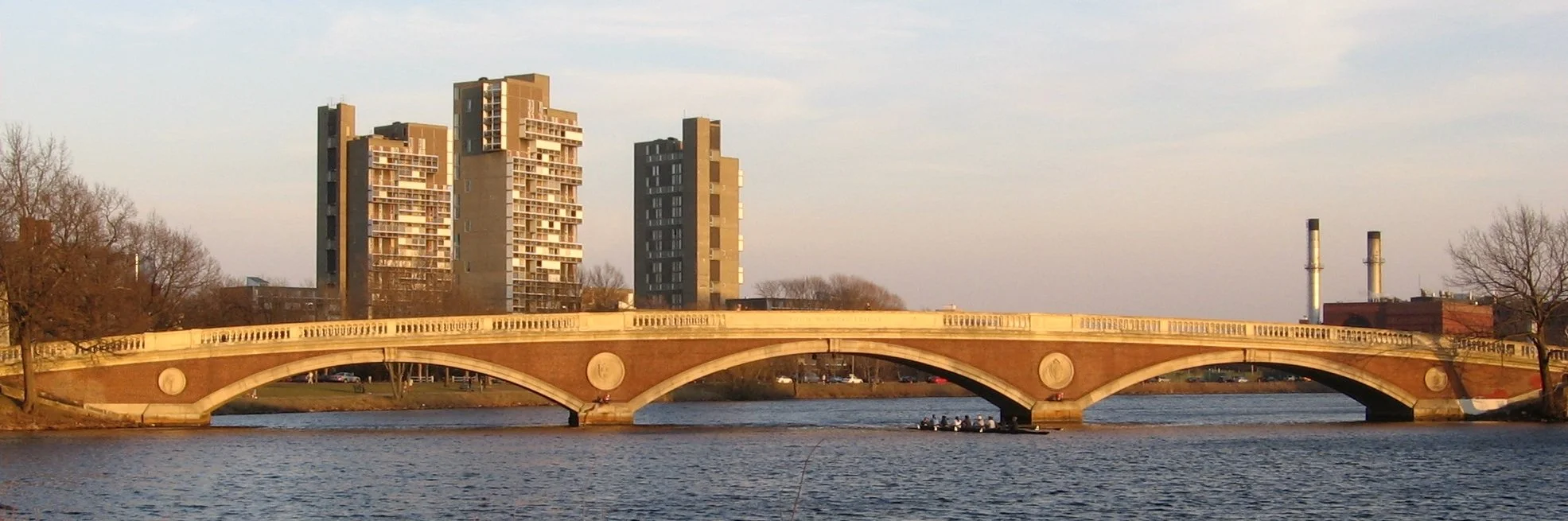
The Weeks Footbridge over the Charles River. It connects Cambridge and the Allston section of Boston.

"CHIPS Act'' seen as boon for New England

Virtual detail of an integrated circuit through four layers of planarized copper interconnect, down to the polysilicon (pink), wells (grayish), and substrate (green).
The Semiconductor Industry Association says that Massachusetts annually exports $2.7 billion worth of semiconductors and machinery used to make semiconductors — making it the third most valuable export from the commonwealth.
James T. Brett, CEO and president of the New England Council, (newenglandcouncil.com) recently wrote in a Providence Business News op-ed:
“The New England Council was proud to support the ‘CHIPS and Science Act’ {recently passed by Congress) and we believe that its passage is a huge win for the New England innovation economy….
“Semiconductors enable the key technologies driving the future economy and our national security, including artificial intelligence, 5G/6G, quantum computing, cloud services, and more. The New England region is home to a number of semiconductor manufacturers – including industry leaders like Analog Devices and Texas Instruments – as well as wide array of technology businesses who rely on semiconductors to support their businesses….
“Beyond this vital support for the semiconductor industry, this legislation also makes several other important investments in that will support continued growth in the New England innovation economy. The bill authorizes $81 billion in funding over five years for the National Science Foundation (NSF) to support STEM education, establish regional technology hubs, and support a new technology directorate that aims to turn basic research breakthroughs into real-world applications. New England is of course home to some to some of the world’s leading research institutions, and received nearly $800 million in NSF funds in 2021…. Our region will undoubtedly benefit from this additional infusion of NSF funding….’’

Riverine review

A visitor walks through work in the group show "One River, Many Views," at Saint-Gaudens National Historical Park, in Cornish, N.H., through Oct. 30.
— Photo Courtesy Saint-Gaudens National Historical Park
The park says:
“One River, Many Views’’ features the work of Nancy Diessner (Mass.), Brenda Garand (N.H.), and Janet Pritchard (Conn.), whose work responds to the Connecticut River’s beauty, its power and its history. These artists work in a variety of media, including photography, drawing, printmaking and sculptural forms, at times using the river water, its soil and its flora as part of their art-making process. In addition to the artwork, the show features commissioned wall labels written by 10 members of the Upper Valley community who live in, work in and otherwise engage with the Connecticut River. These include creative writers, scholars and simply residents, as well as those from the indigenous, agricultural, recreational and other communities for whom the river is an important part of their daily lives. Their responses – reflective, celebratory, or interrogatory — will highlight the diverse natural and cultural histories and relationships with this imposing body of water. The exhibition seeks to encourage discussion as well as awareness of the ways that one topic can hold multiple approaches, opinions, expertise, and experiences.’’


Drift boat fishing guide preparing to work the river near Colebrook, N.H.
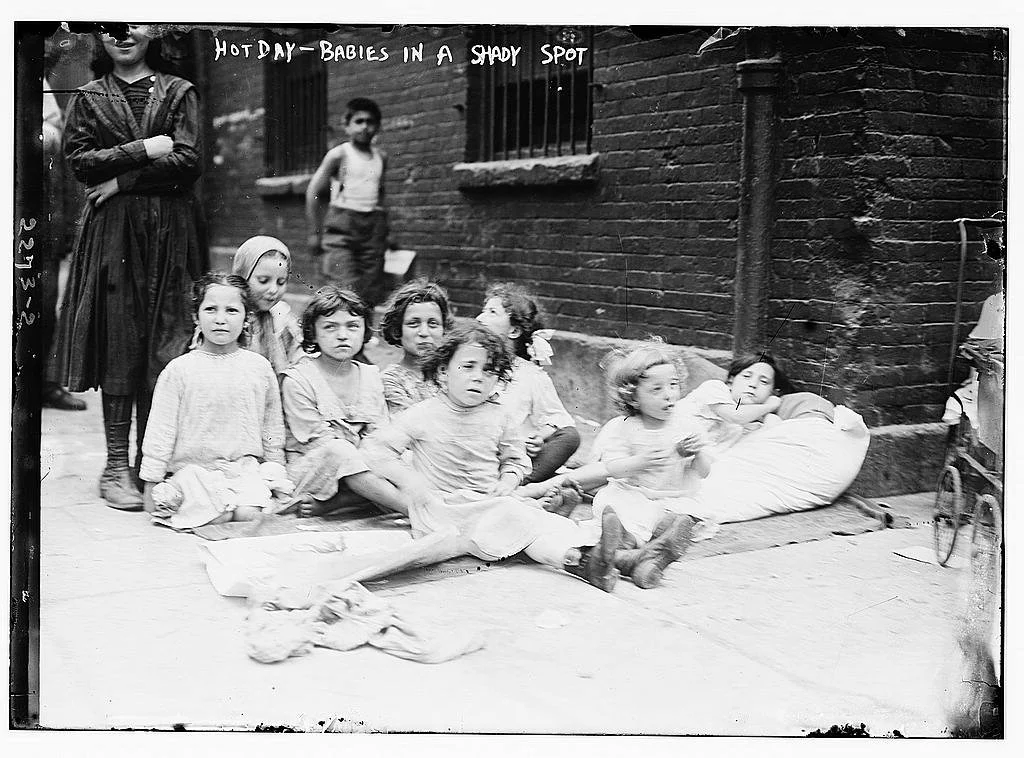
Emmarie Hutteman: Heat waves pose particular dangers to young people

Children seeking relief in New York City in a July 1911 heat wave.
“Children are more vulnerable to climate change through how these climate shocks reshape the world in which they grow up.’’
Aaron Bernstein, M.D., pediatric hospitalist at Boston Children’s Hospital
After more than a week of record-breaking temperatures across much of the country, public health experts are cautioning that children are more susceptible to heat illness than adults are — even more so when they’re on the athletic field, living without air conditioning, or waiting in a parked car.
Cases of heat-related illness are rising with average air temperatures, and experts say almost half of those getting sick are children. The reason is twofold: Children’s bodies have more trouble regulating temperature than those of adults, and they rely on adults to help protect them from overheating.
Parents, coaches, and other caretakers, who can experience the same heat very differently than kids do, may struggle to identify a dangerous situation or catch the early symptoms of heat-related illness in children.
“Children are not little adults,” said Dr. Aaron Bernstein, a pediatric hospitalist at Boston Children’s Hospital.
Jan Null, a meteorologist in California, recalled being surprised at the effect of heat in a car. It was 86 degrees on a July afternoon more than two decades ago when an infant in San Jose was forgotten in a parked car and died of heatstroke.
Null said a reporter asked him after the death, “How hot could it have gotten in that car?”
Null’s research with two emergency doctors at Stanford University eventually produced a startling answer. Within an hour, the temperature in that car could have exceeded 120 degrees Fahrenheit. Their work revealed that a quick errand can be dangerous for a kid left behind in the car — even for less than 15 minutes, even with the windows cracked, and even on a mild day.
As record heat becomes more frequent, posing serious risks even to healthy adults, the number of cases of heat-related illnesses has gone up, including among children. Those most at risk are young children in parked vehicles and adolescents returning to school and participating in sports during the hottest days of the year.
More than 9,000 high school athletes are treated for heat-related illnesses every year.
Heat-related illnesses occur when exposure to high temperatures and humidity, which can be intensified by physical exertion, overwhelms the body’s ability to cool itself. Cases range from mild, like benign heat rashes in infants, to more serious, when the body’s core temperature increases. That can lead to life-threatening instances of heatstroke, diagnosed once the body temperature rises above 104 degrees, potentially causing organ failure.
Prevention is key. Experts emphasize that drinking plenty of water, avoiding the outdoors during the hot midday and afternoon hours, and taking it slow when adjusting to exercise are the most effective ways to avoid getting sick.
Children’s bodies take longer to increase sweat production and otherwise acclimatize in a warm environment than adults’ do, research shows. Young kids are also more susceptible to dehydration because a larger percentage of their body weight is water.
Infants and younger children also have more trouble regulating their body temperature, in part because they often don’t recognize when they should drink more water or remove clothing to cool down. A 1995 study showed that young children who spent 30 minutes in a 95-degree room saw their core temperatures rise significantly higher and faster than their mothers’ — even though they sweat more than adults do relative to their size.
Pediatricians advise caretakers to monitor how much water children consume and encourage them to drink before they ask for it. Thirst indicates the body is already dehydrated.
They should also dress kids in light-colored, lightweight clothes; limit outdoor time during the hottest hours; and look for ways to cool down, such as by visiting an air-conditioned place like a library, taking a cool bath, or going for a swim.
To address the risks to student athletes, the National Athletic Trainers’ Association recommends that high school athletes acclimatize by gradually building their activity over the course of two weeks when returning to their sport for a new season — including by slowly stepping up the amount of any protective equipment they wear.
“You’re gradually increasing that intensity over a week to two weeks so your body can get used to the heat,” said Kathy Dieringer, president of NATA.
Warning Signs and Solutions
Experts note a flushed face, fatigue, muscle cramps, headache, dizziness, vomiting, and a lot of sweating are among the symptoms of heat exhaustion, which can develop into heatstroke if untreated. Call a doctor if symptoms worsen, such as if the child seems disoriented or cannot drink.
Taking immediate steps to cool a child experiencing heat exhaustion or heatstroke is critical. The child should be taken to a shaded or cool area; be given cool fluids with salt, like sports drinks; and have any sweaty or heavy garments removed.
For adolescents, being submerged in an ice bath is the most effective way to cool the body, while younger children can be wrapped in cold, wet towels or misted with lukewarm water and placed in front of a fan.
Although children’s deaths in parked cars have been well documented, the tragic incidents continue to occur. According to federal statistics, 23 children died of vehicular heatstroke in 2021. Null, who collects his own data, said 13 children have died so far this year.
Caretakers should never leave children alone in a parked car, Null said. Take steps to prevent young children from entering the car themselves and becoming trapped, including locking the car while it’s parked at home.
More than half of cases of vehicular pediatric heatstroke occur because a caretaker accidentally left a child behind, he said. While in-car technology reminding adults to check their back seats has become more common, only a fraction of vehicles have it, requiring parents to come up with their own methods, like leaving a stuffed animal in the front seat.
The good news, Null said, is that simple behavioral changes can protect kids. “This is preventable in 100% of the cases,” he said.
A Lopsided Risk
People living in low-income areas fare worse when temperatures climb. Access to air conditioning, which includes the ability to afford the electricity bill, is a serious health concern.
A study of heat in urban areas released last year showed that low-income neighborhoods and communities of color experience much higher temperatures than those of wealthier, white residents. In more impoverished areas during the summer, temperatures can be as much as 7 degrees Fahrenheit warmer.
The study’s authors said their findings in the United States reflect that “the legacy of redlining looms large,” referring to a federal housing policy that refused to insure mortgages in or near predominantly Black neighborhoods.
“These areas have less tree canopy, more streets, and higher building densities, meaning that in addition to their other racist outcomes, redlining policies directly codified into law existing disparity in urban land use and reinforced urban design choices that magnify urban heating into the present,” they concluded.
This month, Bernstein, who leads Harvard’s Center for Climate, Health and the Global Environment, co-authored a commentary in JAMA arguing that advancing health equity is critical to action on climate change.
The center works with front-line health clinics to help their predominantly low-income patients respond to the health impacts of climate change. Federally backed clinics alone provide care to about 30 million Americans, including many children, he said.
Bernstein also recently led a nationwide study that found that from May through September, days with higher temperatures are associated with more visits to children’s hospital emergency rooms. Many visits were more directly linked to heat, although the study also pointed to how high temperatures can exacerbate existing health conditions like neurological disorders.
“Children are more vulnerable to climate change through how these climate shocks reshape the world in which they grow up,” Bernstein said.
Helping people better understand the health risks of extreme heat and how to protect themselves and their families are among the public health system’s major challenges, experts said.
The National Weather Service’s heat alert system is mainly based on the heat index, a measure of how hot it feels when relative humidity is factored in with air temperature.
But the alerts are not related to effects on health, said Kathy Baughman McLeod, director of the Adrienne Arsht-Rockefeller Foundation Resilience Center. By the time temperatures rise to the level that a weather alert is issued, many vulnerable people — like children, pregnant women, and the elderly — may already be experiencing heat exhaustion or heatstroke.
The center developed a new heat alert system, which is being tested in Seville, Spain, historically one of the hottest cities in Europe.
The system marries metrics like air temperature and humidity with public health data to categorize heat waves and, when they are serious enough, give them names — making it easier for people to understand heat as an environmental threat that requires prevention measures.
The categories are determined through a metric known as excess deaths, which compares how many people died on a day with the forecasted temperature versus an average day. That may help health officials understand how severe a heat wave is expected to be and make informed recommendations to the public based on risk factors like age or medical history.
The health-based alert system would also allow officials to target caretakers of children and seniors through school systems, preschools, and senior centers, Baughman McLeod said.
Giving people better ways to conceptualize heat is critical, she said.
“It’s not dramatic. It doesn’t rip the roof off of your house,” Baughman McLeod said. “It’s silent and invisible.”
Emmarie Huetteman is a Kaiser Health News reporter.
Emmarie Huetteman: ehuetteman@kff.org, @emmarieDC
Float it with you
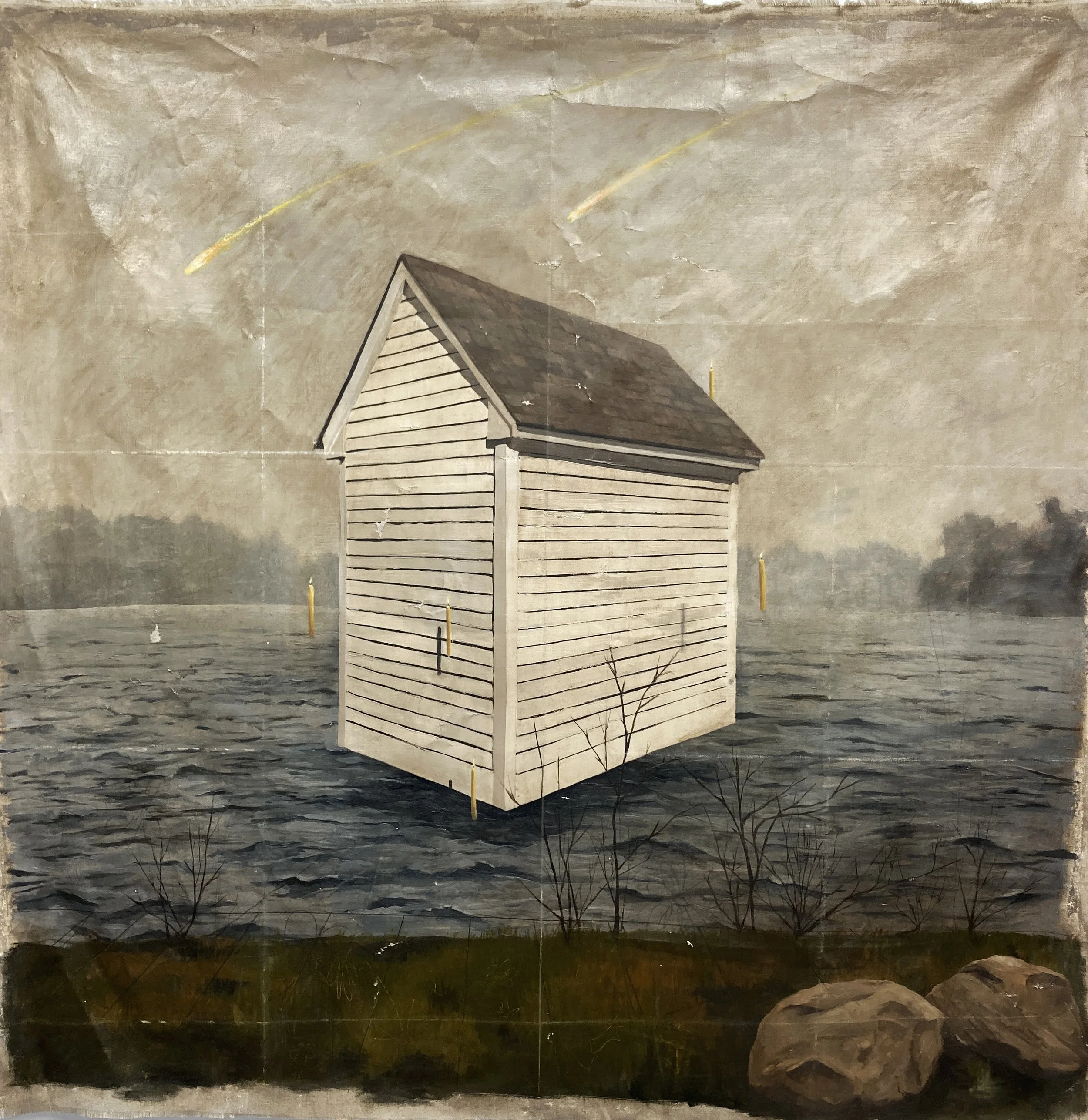
“Moat” (oil on stretched canvas), by Boston-based artist Eben Haines, in his show “In The Houses of Empire: Everything’s Fine,’’ at the Cory Daniels Gallery, Wells, Maine, Aug. 13-Sept. 17.
The gallery says:
“Haines’s works investigate the life of objects, emphasizing the constructed nature of history. Many works explore altered conventions of portraiture, through figures and objects pictured against cinematic backdrops or in otherworldly scenes. His paintings and installations employ various techniques and materials to suggest the passage of time and volatility, set within displaced domestic structures, critiquing the unbalanced systems we take for granted and overlook. Comets race across the skies of bucolic landscapes, Roman portrait busts stand in for the corrupting force of unchecked power. Candles appear to signal that time is running out, floating before cloaked figures whose identities remain circumspect. Recent works consider themes such as climate change and systemic housing insecurity before and during the pandemic, exploring the illusionistic systems meriting human rights like shelter, food, and healthcare to the privileged few.’’
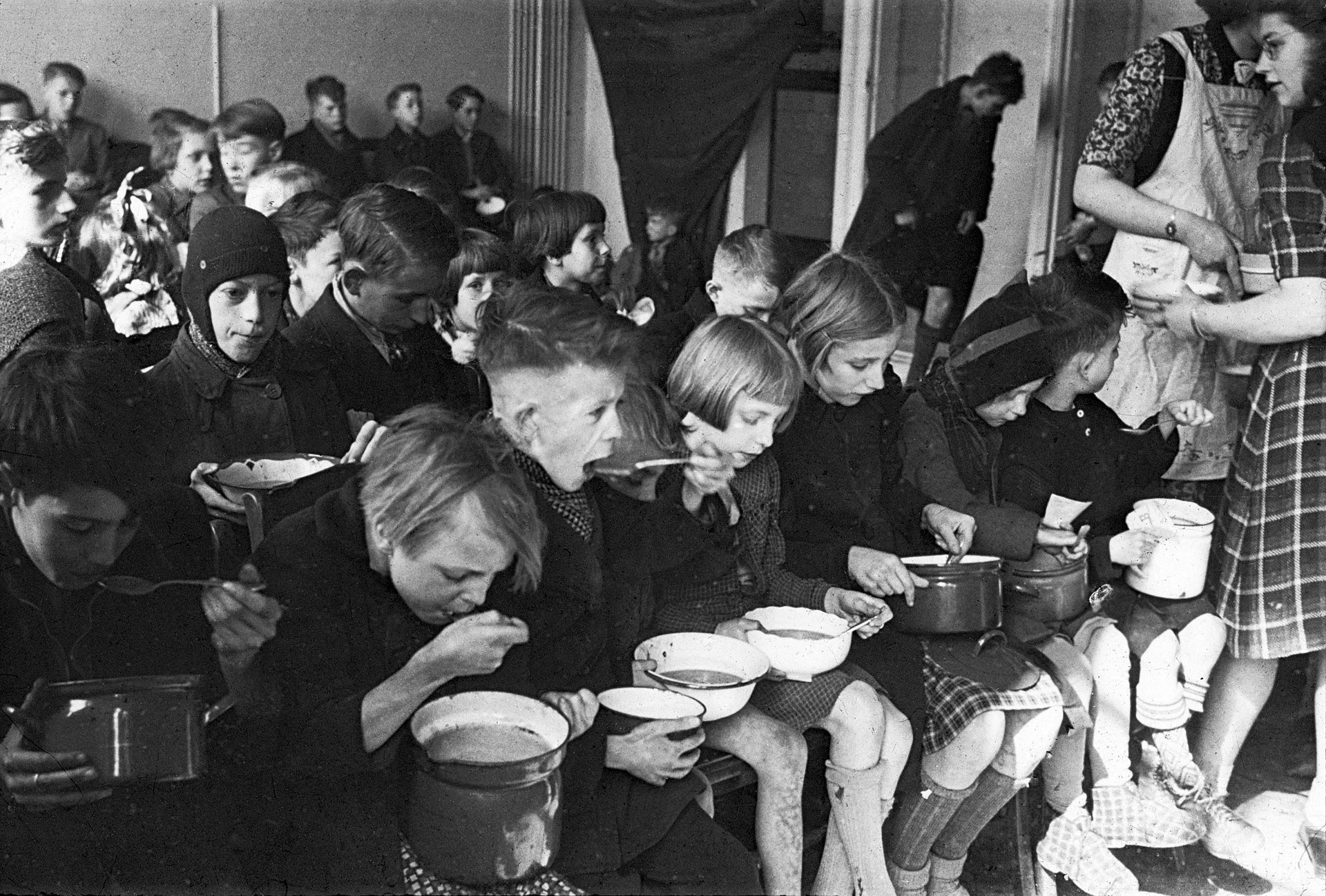
Llewellyn King: 'Hunger Winter' may loom amidst energy crisis caused by Putin
Dutch children eating soup during the famine of 1944–1945.
— Photo by Menno Huizinga
WEST WARWICK, R.I.
Even as Europe has been dealing with its hottest summer on record, it has been fearfully aware that it may face its worst winter since the one at the end of World War II, from 1944 to 1945.
Electricity shortages and prices for fuel that are unpayable for many households are in store for Europe.
Industrial production in Germany, Europe’s economic driver, is threatened and governments from London to Athens are struggling with how they will help with energy bills right now, let alone in the dead of winter.
Electricity production on the European grid was already strained due to the change from coal and gas generation to renewables.
Germany worsened a tight supply by shutting down its nuclear plants, and the new reliance on wind was severely questioned by a wind drought last fall, especially in the North Sea.
After Vladimir’s Putin’s Russia attacked Ukraine with an all-out invasion on Feb. 24, things went from tightness of supply to impending disaster. Russia, through a complex network of pipelines, is the principal supplier of natural gas to Europe and all petroleum products to Germany. Now it has curtailed normal flows.
Europe is heavily dependent on gas for heating and for making electricity. As things stand, all of Europe is hurting, especially Germany. The country may suffer as dreadful a winter as it did at the end of World War II when there was no coal, the essential fuel at the time.
The unknowns revolve around Russia’s war in Ukraine. These are possible scenarios:
-- Russia wins outright; Europe continues sanctions and is punished with gas interruptions. Result: Europe freezes this winter.
-- There is a political settlement, the rebuilding of Ukraine begins and the gas flows again.
-- Ukraine repulses Russia on the ground; Russia changes regime and abandons the fight.
-- The conflict worsens, and NATO is drawn in. Europe rations fuel, including kerosene. It is a wartime footing for all of Europe.
-- Germany decides it has had enough and makes a deal with Russia. Ukraine figuratively is thrown under the bus.
While the United States and other gas-producing nations will export all they can to Europe in the form of liquified natural gas, those sources are already heavily committed. The United States, for example, has just seven LNG export terminals. These take years to license and build, and the same goes for the receiving terminals and LNG tankers. Additionally, most of the European receiving terminals are in the West and the severest shortages are in the East.
It is too late to change one certainty about the coming winter: high food prices everywhere, including in the United States, and starvation in developing countries. Ukraine is exporting grain haltingly, but those shipments are too small and too late. Afghanistan and Somalia are already in a food crisis, starting what is set to be a world run on grain provided in humanitarian relief.
The terrible European winter of 1944 to 1945 is known as the “Hunger Winter’’. Prepare to hear that term resurrected.
The world must brace for the coming winter in the Northern Hemisphere with political uncertainty and weak, inward-looking leaders in many countries. In the United States, the midterm elections are set to produce division. In France, President Emmanuel Macron has lost control of the National Assembly. Britain is seeking a new Tory prime minister to replace Boris Johnson. Italy is facing an election that some forecasts say will go to the isolationist fascists.
The democracies are riven with culture wars and other indulgences as a global crisis is in the making in Europe. For much of the rest of the world a new Hunger Winter looms. Many will be cold this winter, others will be hungry. Untold numbers will die.
Llewellyn King is executive producer and host of White House Chronicle, on PBS. His email is llewellynking1@gmail.com and he’s based in Rhode Island and Washington, D.C.
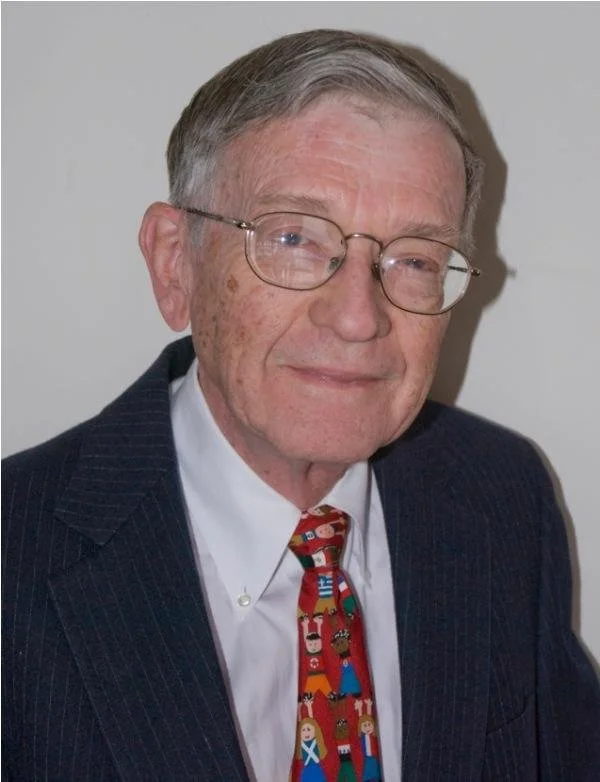
Peter Certo: A small city mayor who did big stuff
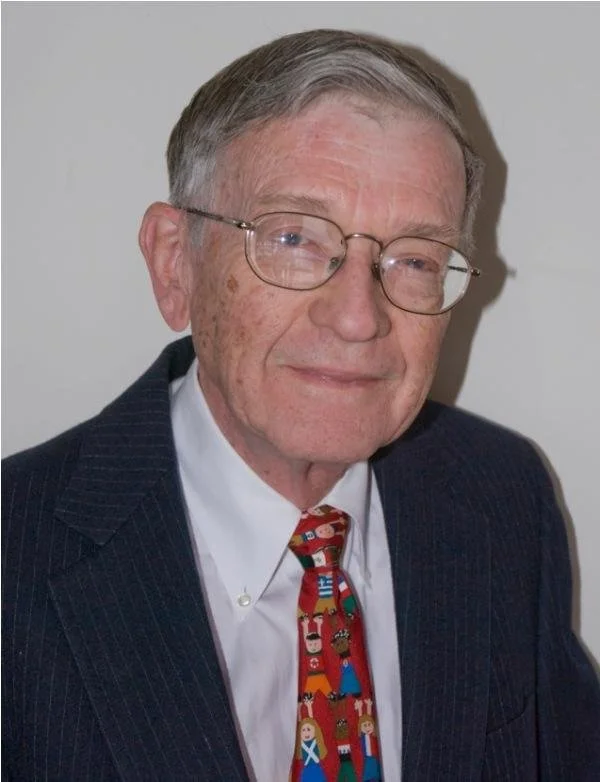
William A. Collins
Via OtherWords.org
I learned this week about the passing of a remarkable man. Bill Collins died recently in a car accident at the age of 87.
Bill was a popular former mayor of Norwalk, Conn. In his hometown, tributes have poured in celebrating Bill’s legacy of revitalizing the city’s downtown, professionalizing its civil service, and championing affordable housing over his four terms in office.
But I got to know Bill because of the remarkable work he did after retiring from public service.
An aspiring journalist, Bill had lots of ideas — far too many for the odd assignment or op-ed. Instead, Bill enlisted foundations, public interest groups, well-known populist columnists like Jim Hightower and the late Donald Kaul, and small newspapers across the country to build a nonprofit opinion syndicate entirely from scratch.
Calling his project “Minuteman Media” after the pro-democracy partisans who launched the American Revolution, Bill anticipated some of the most dire threats to democracy in the U.S. today.
Even two decades ago, Bill saw how cost-cutting and contraction were making it harder for America’s hometown papers to cover all the issues that mattered to their readers. He saw how mediocre partisan sludge was poisoning political commentary. And he saw the horrid polarization that would follow if this bile filled the void left by community newspapers.
Over the years, BIll worked to head off that crisis by distributing thousands of free, high-quality opinion pieces — and his own weekly column — covering progressive perspectives and a wide variety of public interest causes. The network Bill launched reached deep into red and purple parts of the country, ensuring a lively exchange of ideas in a polarizing climate — and offering a valuable free resource to the cash-strapped local papers that are so vital for democracy.
Eventually, Bill handed the project over to the Institute for Policy Studies, which rebranded it “OtherWords” in 2009. He wanted to free up his time to travel, which he did with abandon. After spending his youth hitchhiking across the African continent, he spent his retirement criss-crossing dozens of countries — and taking long drives across North America, including a road trip to Alaska.
All the while, he kept churning out his weekly column, which I eventually got to edit.
It was remarkable — he’d file six or eight at a time. In any given batch, he’d write passionately about the need for a living wage, more affordable housing, and stronger labor protections. He’d expound on the need to protect the vote, expand civil rights, and end the war on drugs.
And again and again, as an Army veteran and a board member of Veterans for Peace, Bill would call to end our wars, take care of our veterans, and expose the ruthless profiteering of the military-industrial complex.
Then he’d head off for heaven knows where.
As the years went by, Bill traveled more and wrote less. But he’d still surface now again with a column — or some gruff advice. When I took over as the chief editor of OtherWords in 2016, he sent me his first note in probably two years: “JUST SAW YOUR HEADSHOT. COMB YOUR HAIR AND PUT ON A TIE.”
In his last column, published in 2019, Bill — then 84 or so — wrote about joining a peace delegation to Iran. He marveled at the warmth of ordinary Iranians and condemned what he called “our stupid sanctions” that “are hurting average people rather than their leaders” and making the United States look “like a jerk.”
Bill was a worldlier man than I’ll ever be, but it was that blunt, small-town decency that made him great.
It’s been the honor of my professional life to shepherd the syndication project he founded, which today makes thousands of op-ed placements each year. Our work appears in publications that regularly reach over 10 million print readers and upwards of 100 million digital readers — a great many of them in the small and medium-sized papers that still dot America’s heartland, just like Bill imagined.
Bill was a small-city mayor who traveled the world. An Army veteran who hated war. A fierce progressive who wrote tirelessly for conservatives. But whatever other title he held, Bill Collins filled the highest office in any democracy: the citizen. Rest in peace, Bill.
Peter Certo is the editorial manager of the Institute for Policy Studies and the editor of OtherWords.org, a nonprofit editorial syndicate launched as “Minuteman Media” by Bill Collins.
A state made for bad puns
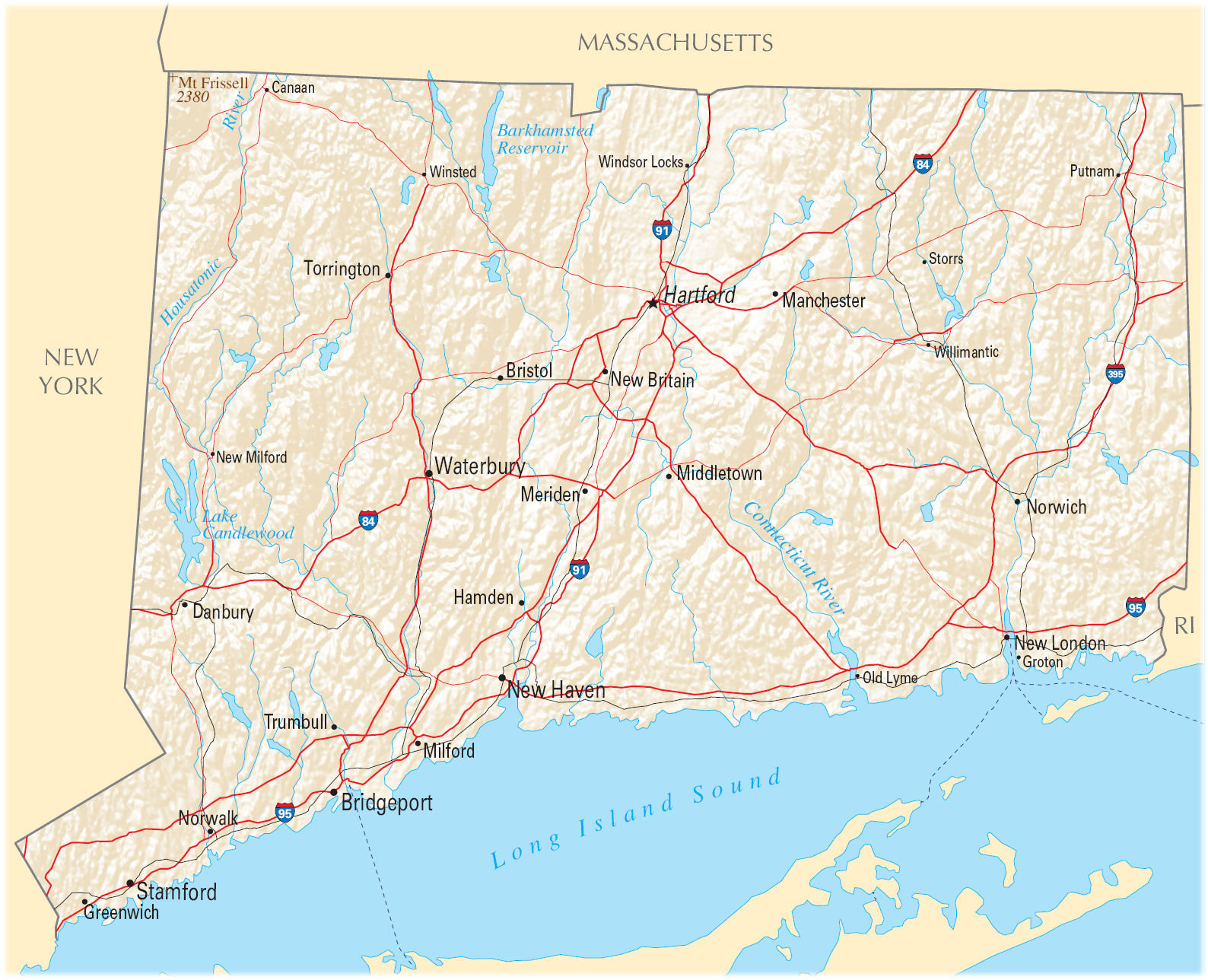
“When they can hear each other over the wind and the music, they speak Connecticut: I will not Stamford this type of behavior. What's Groton into you? What did Danbury his Hartford? New Haven can wait. Darien't no place I'd rather I'd rather be.’’
— David Levithan (born 1972) (American fiction writer and editor)
Regulation upon regulation upon….

Adapted from Robert Whitcomb’s “Digital Diary,’’ in GoLocalProv.com
Department of Excess Regulations, Rule #17rwqdewew19:
Massachusetts has enacted a law banning discrimination based on a person's hair texture or style.
The sponsor of the bill that led to the law, Boston Democrat Lydia Edwards, the Senate's only Black member, said:
"You must understand what systemic racism does is not just prohibit economic opportunity and jobs. It diminishes the soul. It diminishes yourself of who you are because of something you cannot control. And it took me so long, so long, as a part of my life to ever say that my hair is long, that it is beautiful and that is natural."
The Age of Me continues….
One problem with this sort of micro-anti-discrimination law is that it can be used to protect people who might be about to be fired for other things than their hair, such as incompetence. And do we need to cite yet another personal characteristic as a basis for another law promoting hyper-sensitivity? And can we please edge away from a society of endless individual aggrievement?

Engagement with Vt. landscape

"The Sky is Falling" (mixed media and acrylic), by Boston area-based Anne Sargent Walker, in the group show “Drawn Togther,’’ at Kingston Gallery, Boston, through Aug. 28.
Her Web site says:
“Anne’s semi-abstract paintings in oil and acrylic often combine fragments of vintage wall paper, painted birds, jumping men, and other images which explore our relationship to the natural world. Most recently Anne has been compelled to express her concerns over environmental issues. She attributes her interests in nature to childhood summers in Vermont with a naturalist father, and her continuing engagement with the rural Vermont landscape.’’
August wealth

Joe-Pye Weed
“August is ripening grain in the fields, vivid dahlias fling, huge tousled blossoms through gardens, and Joe- Pye weed dusts the meadow purple.”
– Jean Hersey (1919-2007) author of The Shape of a Year, focused on gardening at the home in exurban Weston, Conn., she shared with her husband, the famed novelist and journalist John Hersey (1914-1993)
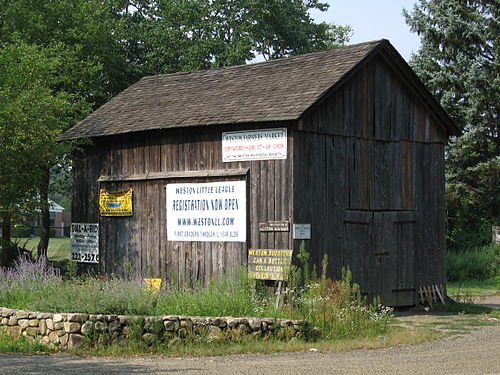
The Onion Barn, in Weston, where community bulletins are posted.
Warming up nostalgia

Summer afternoon shadow and sun in Acushnet, on the Massachusetts South Coast.
— Photo by William Morgan