

‘Alvin’ goes the deepest yet

Alvin at work
An edited version of a New England Council (newenglandcouncil.com) report:
“The Woods Hole Oceanographic Institution’s (a New England Council member) human-guided submersible ‘Alvin’ research vessel has made history by reaching a depth of 6,453 meters (about 21,117 feet). The three-person crew guided the submersible in the Puerto Rico Trench, off that island .… Alvin’s success has led to 99 percent of the seafloor being available for the submersible to explore.
“The submersible is well-known around the world for being an icon of excellent scientific data collecting and engineering. ‘Alvin’ is one of the only U.S. submersibles that have the equipment to carry humans and gather scientific data from extreme depths. Since its initial launch, ‘Alvin’ has carried out 5,086 successful dives. Its long history goes back to when Woods Hole scientist Robert Ballard used ‘Alvin’ to explore the wreckage of the HM Titanic. This summer ‘Alvin’ went through an intense series of sea trials overseen by the NAVSEA, an organization responsible for building U.S. Navy ships. The trials permitted ‘Alvin’ to dive to its maximum depth. The next step for ‘Alvin’ will be a two-week National Science Foundation-funded verification expedition to determine if ‘Alvin’ can maintain its ability to support deep-sea scientific research.
“Woods Hole President Peter de Menocal said, “[i]nvestments in unique tools like ‘Alvin’ accelerate scientific discovery at the frontier of knowledge. Alvin’s new ability to dive deeper than ever before will help us learn even more about the planet and bring us a greater appreciation for what the ocean does for all of us every day.”’
Read more from the Woods Hole Oceanographic Institution.
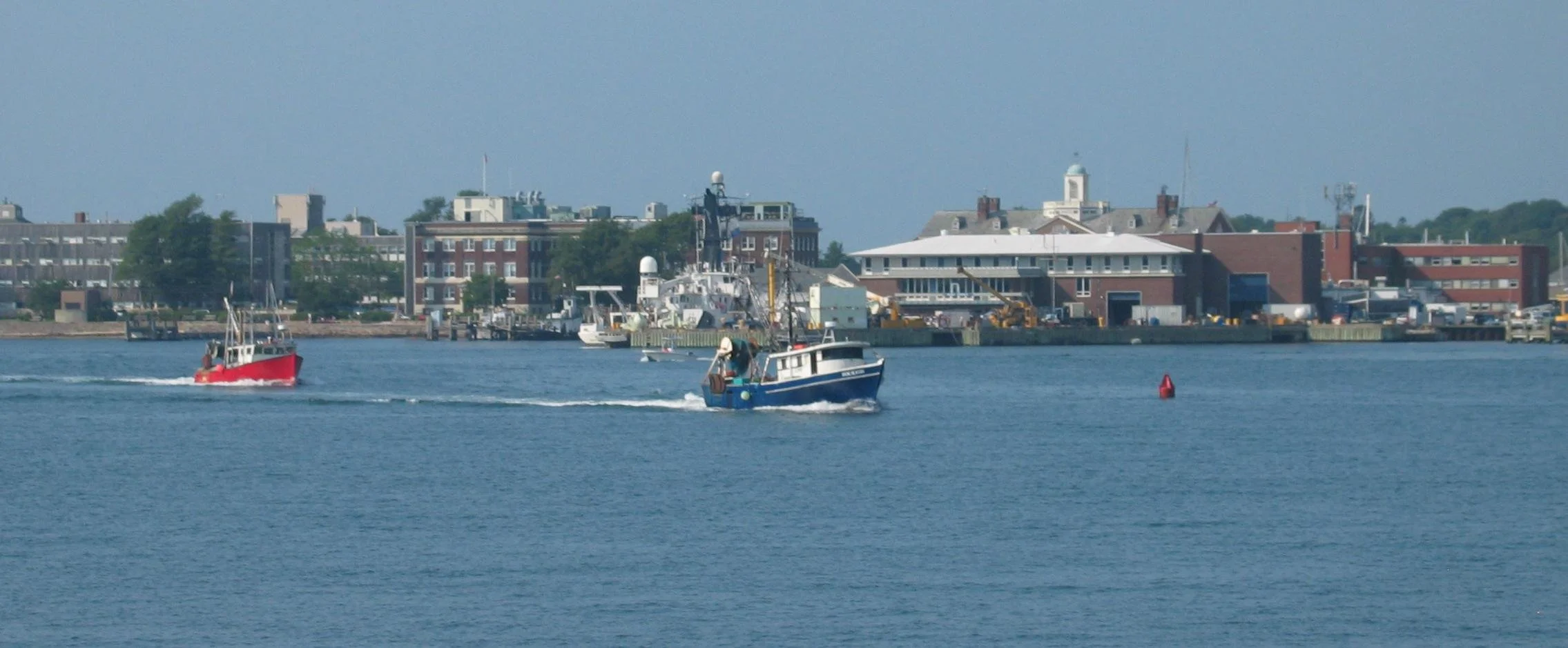
Woods Hole (part of Falmouth), with Woods Hole Oceanographic Institution and Marine Biological Laboratory buildings
Coral crisis; failed colony

“Bleached” {by ocean acidification?} (oil on canvas), by Weymouth, Mass.-based Elysia Johnson, in the New England Collective XII show at Galatea Fine Art, Boston, Aug. 5-28.
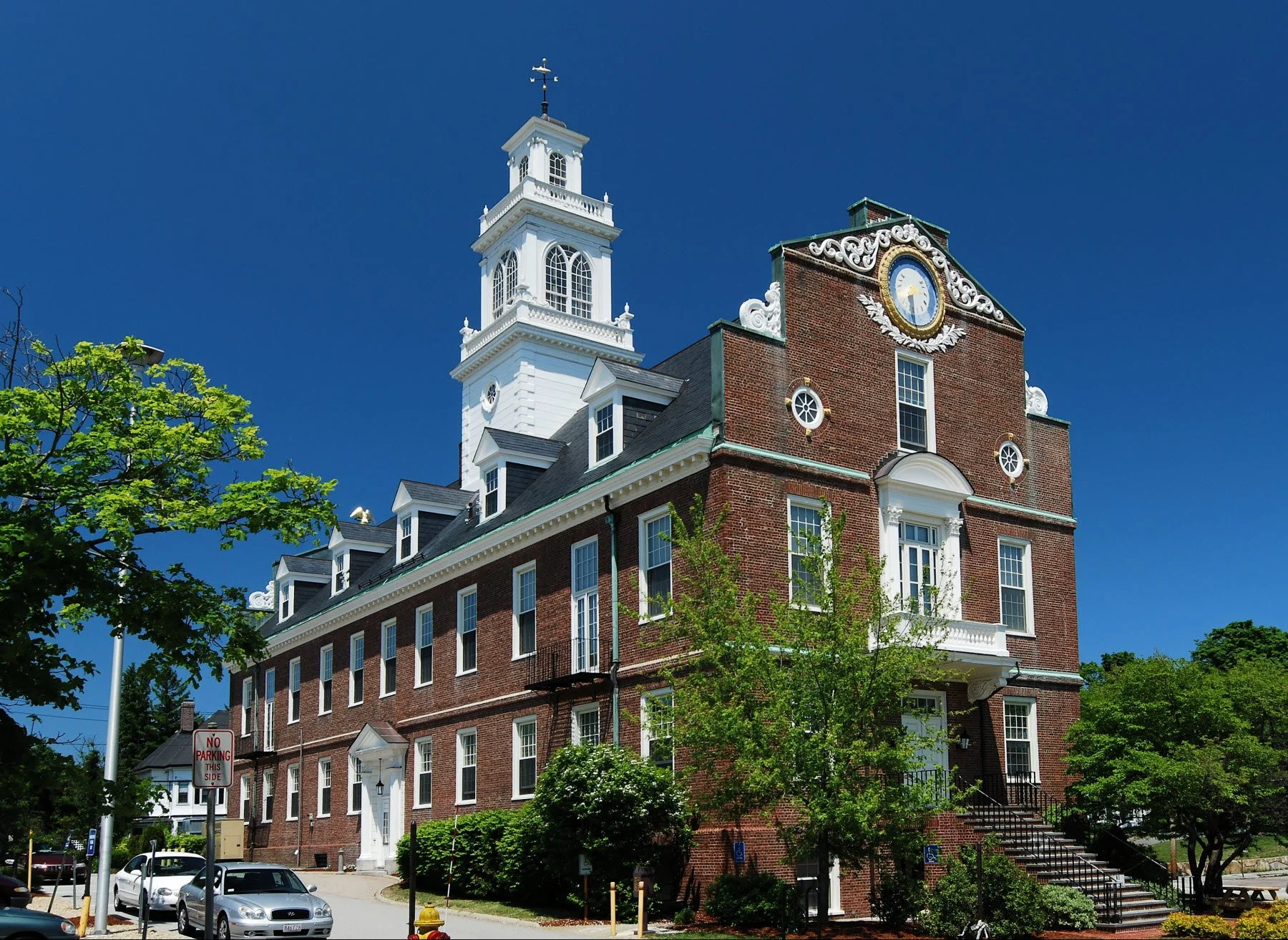
Weymouth City Hall, built in 1928 and modeled after the Old State House in Boston, built in 1713.
Weymouth was settled by the English in 1622 as the Wessagusset Colony. That was before Boston (founded in1630) was established by the Puritans and after Plymouth (founded in 1620) was founded by the Pilgrims. The Wessagusset Colony was led by Thomas Weston, who had been a major financial backer of the Plymouth Colony. But the settlement was a failure because the 60 men from London who settled it were ill-prepared for the climate and other hardships there. Further, they lacked the religious drive of the Pilgrims. Wessagusset was founded on purely economic grounds and the 50-60 men there didn’t bring their families.

Bichman House, c. 1650, is likely the oldest surviving house in Weymouth though it looks rather like a modest suburban ranch house.
— Photo by Swampyank
Llewellyn King: The thrill of getting a human on the line; the ‘service economy’ is a giant con
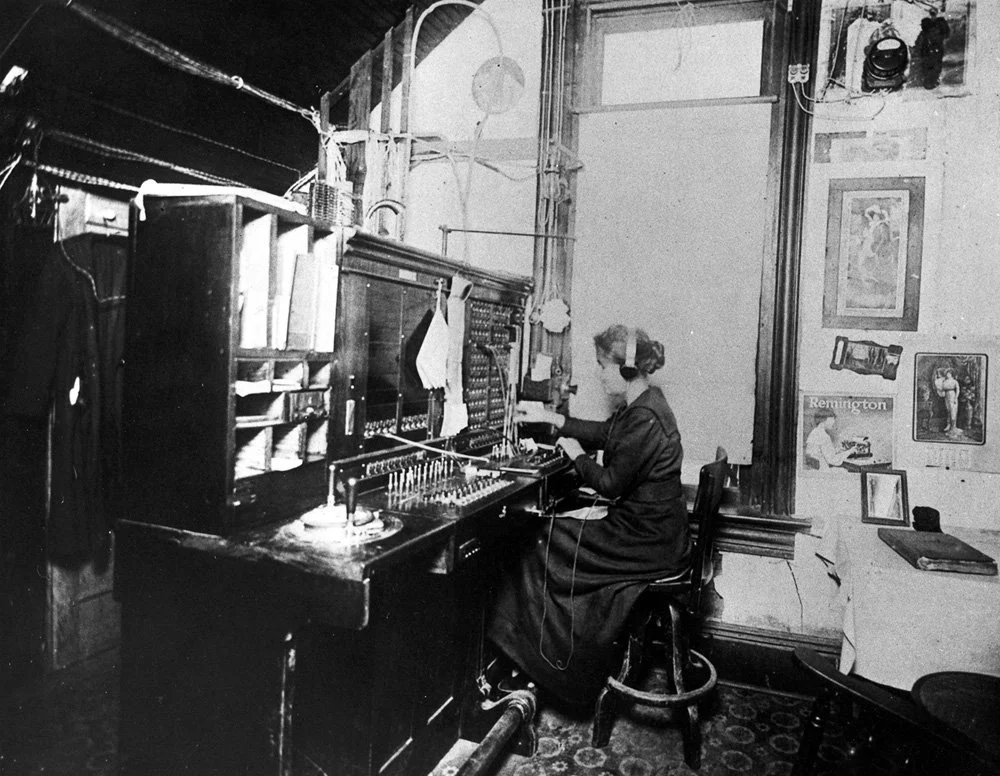
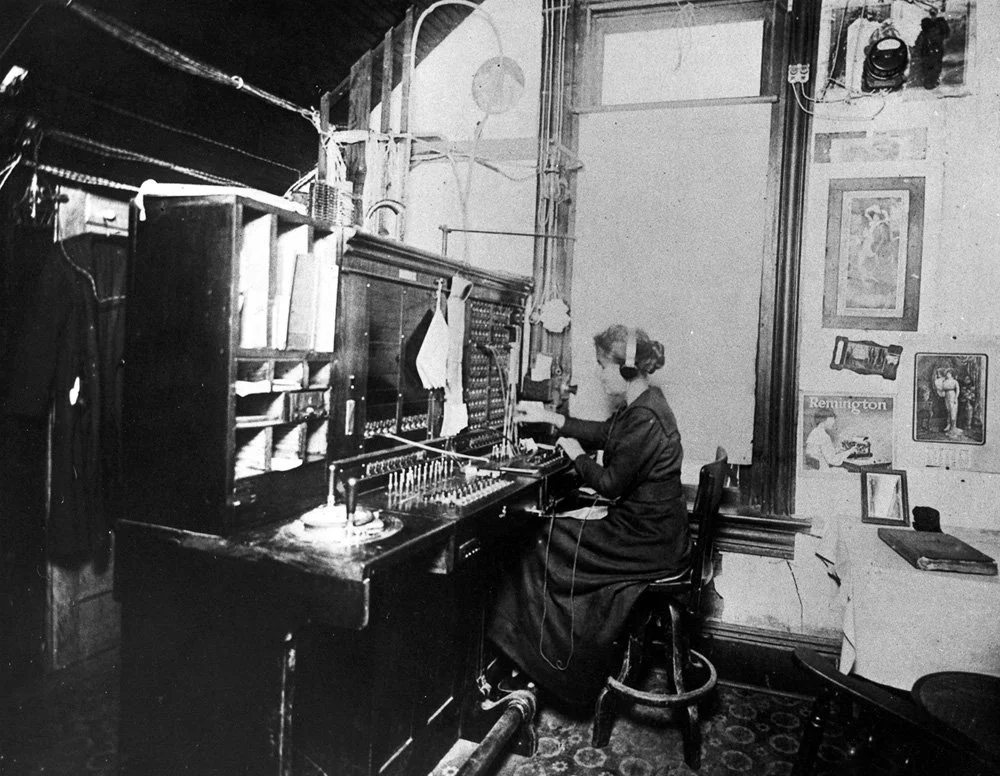
Telephone operator circa 1900.
WEST WARWICK, R.I.
Something wonderful happened to me this week. I spoke on the telephone to a human being at a credit-card company. Well, not immediately. That would be too much to expect.
I had to go through some of the hoops of the company’s automated phone system, beginning with (as it always seems to) “Listen carefully because our menu has changed.”
And, of course, I had to enter the card number, the PIN, the last four digits of my Social Security number and my maternal grandmother’s name, and learn that for quality purposes my rising frustration was being recorded.
I explained repeatedly to the recording what I needed. It wasn’t having any of it. If it was a sample of artificial intelligence, it was acting more like artificial stupidity.
Finally, the AI device decided that stupid people – me -- weren’t worthy of its recorded messages and transferred me to a “representative.” Banks, credit- card companies, and insurance offices don’t have people; they have “representatives.”
This representative was smiley-voiced and delightful. She also was human. After 20 awful minutes of hearing a recorded voice (“How can I help you? I did not get that. Push 7.”), here was someone who really wanted to help. Hallelujah!
Try talking to a live person, you will like it. It is wonderful. She told me about the weather where she was, San Antonio, and we had a whale of a time doing something that I forgot people can do with a telephone: small talk. In a trice, she took care of my need.
I am a regular panelist on a weekly Texas State University webinar. A super-smart man, a polymath, suggested there that my problem for not reveling in the new isolation -- working from home, talking to machines, sending texts, rather than speaking on the telephone and emailing -- may be generational. This I take to be a nice way of saying that if people had sell-by dates, I am past mine.
The implication is that there is a superior place where the digital people do digital things, and pity those of us who do not do digital things, like eat, drink, fall in love. No less a person than the actor Meryl Streep said, “Everything that truly makes us happy is quite simple: love, sex and food.” If she likes talking, too, I will award her my personal Oscar. Another endearing Meryl quote is, “Instant gratification is not fast enough,”
There is one place where computers have not infringed on the old way of doing things: The U.S. Department of State. I believe that they are still looking up things in giant ledgers and writing by hand on parchment.
I say this because if you, dear citizen, wish to get a passport renewed, the expedited route at your local passport office takes five to seven weeks. I am waiting in apprehension for my renewal, having paid $200 for the super-slow “expedited service.”
You can get a replacement Social Security card in moments, a driver’s license immediately, but the State Department will have none of that.
Oddly, passports are issued to all except those with unpaid child support or outstanding criminal warrants. There are more reasons to deny a driver’s license than a passport. But the wheels at the State Department grind extremely slowly, and time isn't an issue.
The service economy has been a giant con, dreamed up by MBAs to keep customers at a distance or to dehumanize them so that they forget that they pay for the abuse they receive, whether it is from the passport office or some financial institution.
I frequent one gas station, in Scituate, R.I., where they still pump your gas. Night and day, there are lines of motorists waiting for fill-ups, and to have a few cheery words with the pump jockeys. Human contact, real service, seems to be worth a few cents more a gallon.
Llewellyn King is executive producer and host of White House Chronicle, on PBS. His email is llewellynking1@gmail.com, and he’s based in Rhode Island and Washington, D.C.
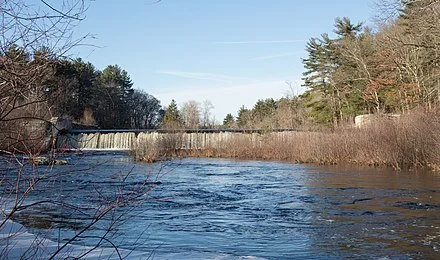
Hope Dam on the Pawtuxet River in Scituate
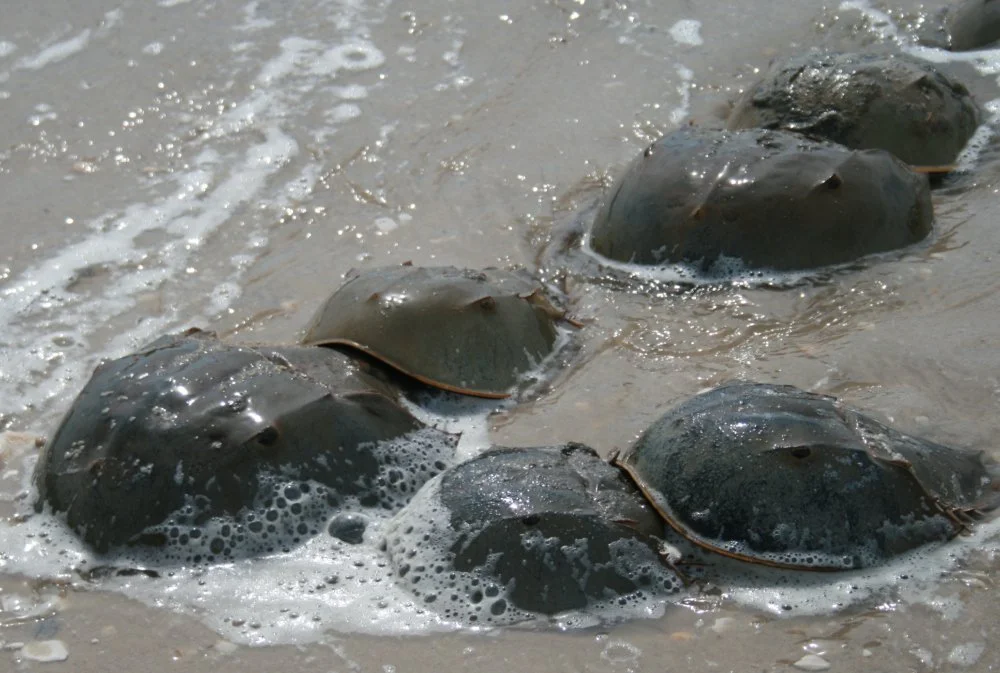
Blue gold
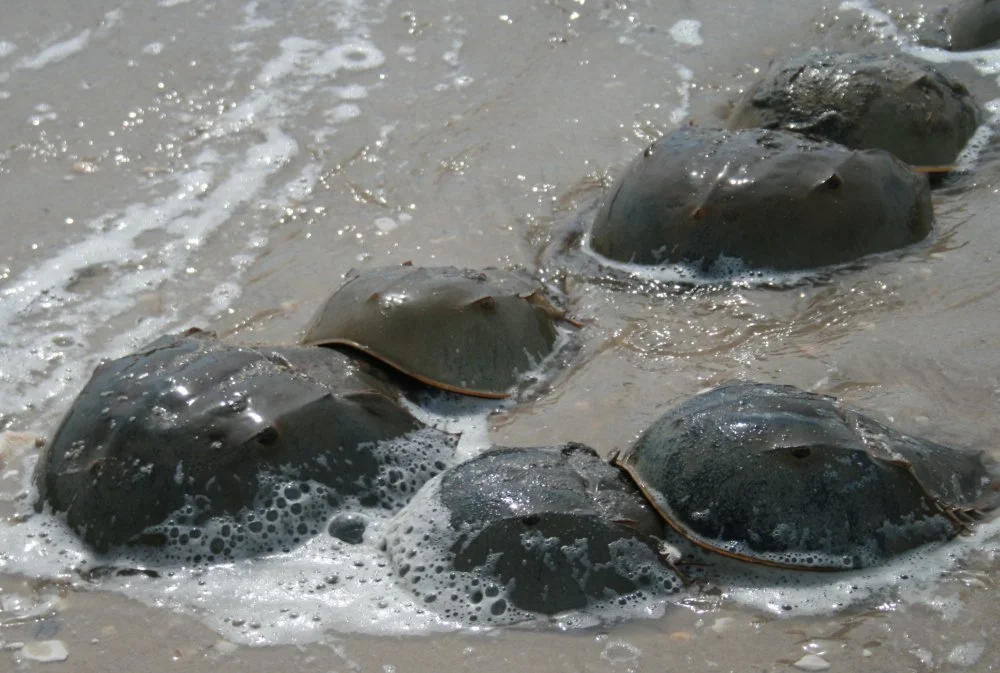
Horseshoe crabs mating. Horseshoe crabs live primarily in and around shallow coastal waters on sandy or muddy bottoms. They tend to spawn in the intertidal zone at spring high tides.
Adapted from Robert Whitcomb’s “Digital Diary,’’ in GoLocal24.com
When I was a small boy living along Massachusetts Bay, we used to pick up and fling those brown, helmet-shaped and scary-looking, but harmless, arthropods on the lower beach called horseshoe crabs into the water and sometimes even at each other. Little did we know that this species, which goes back almost half a billion years, would become an important bio-medical resource, so much so that, along with habitat destruction, including ocean acidification caused by man-made global warming from burning fossil fuel, the species is endangered in many places.
Horseshoe crabs, by the way, are not crabs. Rather, they’re related to spiders and other arachnids.
For some years, drug companies have been harvesting the bluish blood of the creatures in New England and other places on the East Coast for a protein that’s used to identify dangerous bacteria during new-drug testing, including vaccines.
So important is horseshoe-crab blood that its value is estimated to be $15,000 a quart.
While pharm companies assert that most horseshoe crabs survive after they’re milked and then returned to the water, many die as a result, and over-harvesting is a distinct threat to the future of the species. Of course, everything in nature is connected and wiping out horseshoe crabs will imperil other species.
Consider that they play an important role in the food web for migrating shorebirds, finfish and Atlantic loggerhead turtles.
So let’s hope that environmental regulators pay close attention to the horseshoe-crab population.
They remind us that, with ever-developing scientific knowledge, some previously mostly ignored species turn out to be very important to people and to the wider web of life that humans depend on – a web that people are destroying at an accelerating rate. The more species we can save, the better for us.
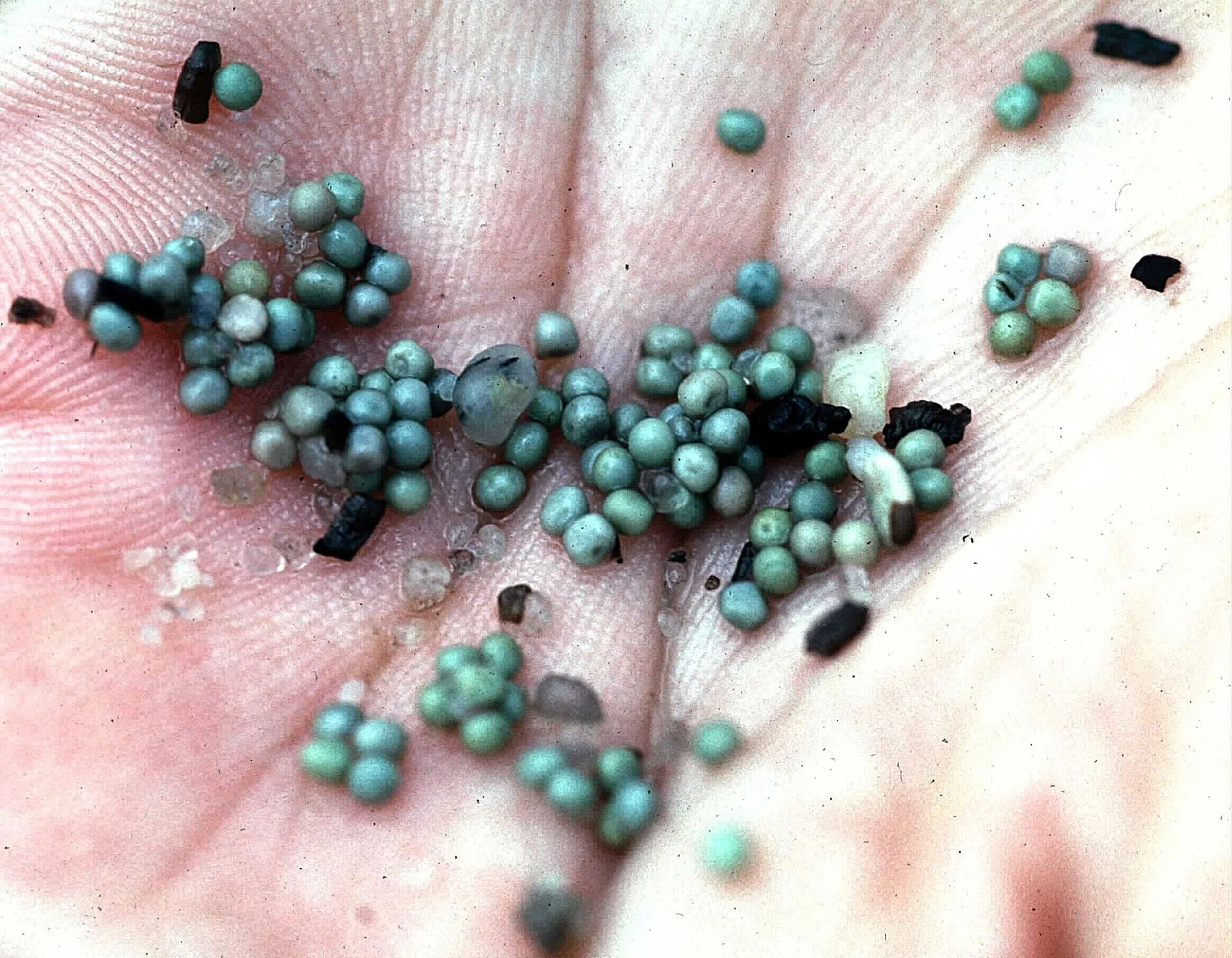
Even horseshoe crabs’ eggs are bluish.
Should have stopped at town?
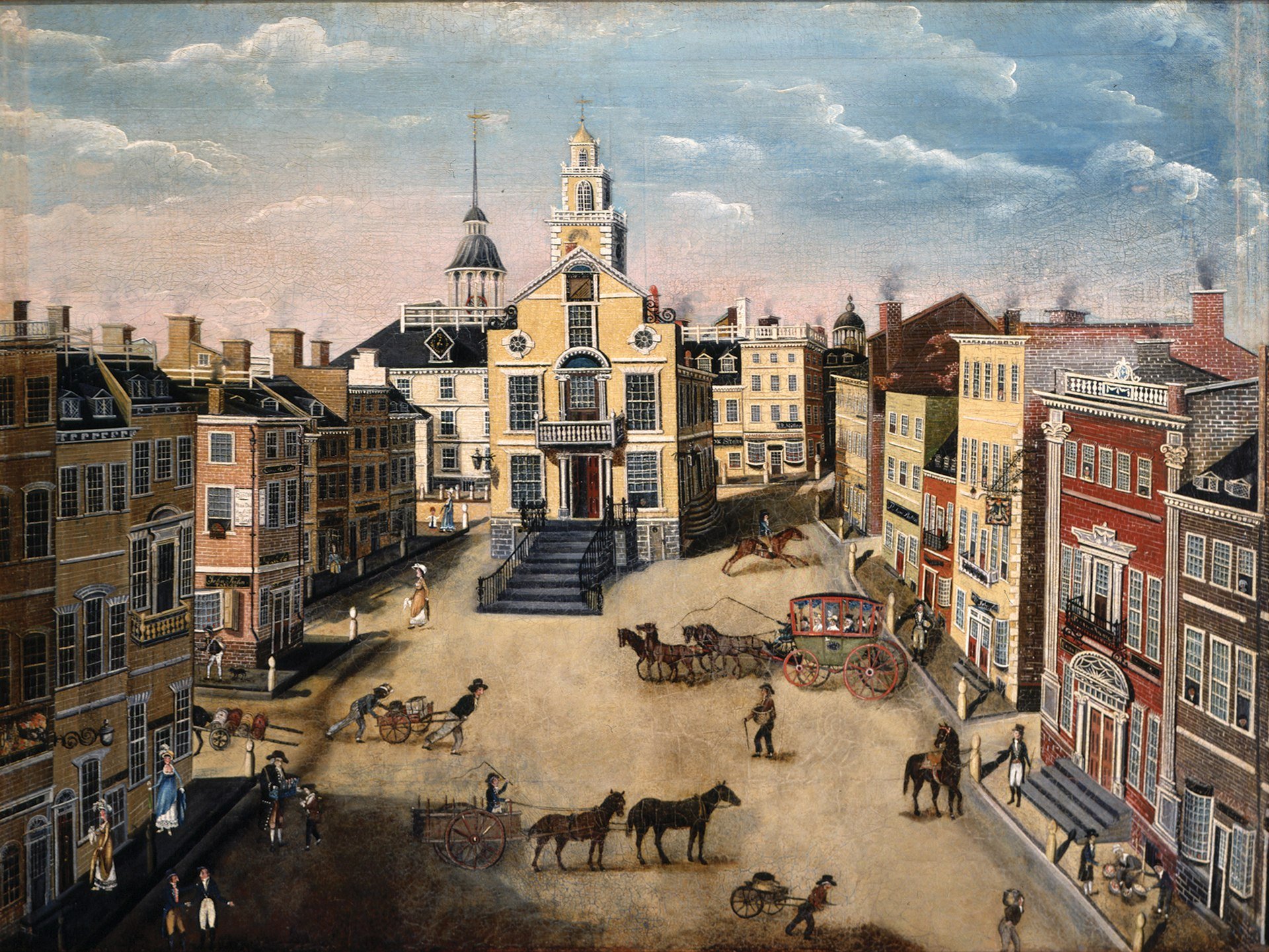
State Street, Boston, in 1801.
“It was a very charming, comfortable old town — this Boston of uncrowded shops and untroubled self-respect, which, in 1822, reluctantly allowed itself to be made into a city.’’
—Mary Caroline Crawford (1874-1932), in Romantic Days in Old Boston
Embracing the nerd persona
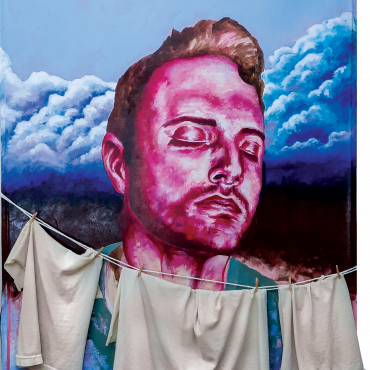
“Cloudy Sheets,’’ by Tewksbury, Mass.-based artist Fernando Fula, in the group show “The Bold & Beautiful,’’ at the Hopkinton (Mass.) Center for the Arts through Aug. 26. The show was put together by Randolph, Mass.-based artist Jamaal Eversley
The arts center says the show “is about addressing who we are, what we stand for and how we allow other people's perception of us to affect how we see ourselves….”
“Eversley was teased and called a nerd when he was younger and was compared to Urkel (a nerdy fictional TV character). He now embraces his nerd persona and created abstract art about a character he calls ‘the nerd.’ He took a negative situation and turned it into a positive one and now shares that story with teens and adults through his “The Bold & Beautiful’’ art and writing workshops. It is about self-love, anti-bullying and perception.’’

Canoes on the Concord River (famous in literature — Thoreau, etc.), which borders Tewksbury on the southwest.
Dare to stare back

“Lemonhead in The Garden (In Spring)’’ (oil on paper), byEric Helvie, in the 16-person show “At Face Value,’’ at Cove Street Arts, Portland, Maine, through Aug. 27
The juror Vincent Maxime Daudin selected works that "reflected the multiple layers of 'worth' behind every single personality, from their current monetary appraisal to their timelessly emotional quality." The gallery says: “The portraits in this show look right back at viewers and dare them to engage as though they are looking another human in the eyes.’’
Judith Graham: In Maine and elsewhere, many elderly struggle to pay for basic necessities

Farmer's market in Monument Square, downtown Portland
— Photo by vBd2media
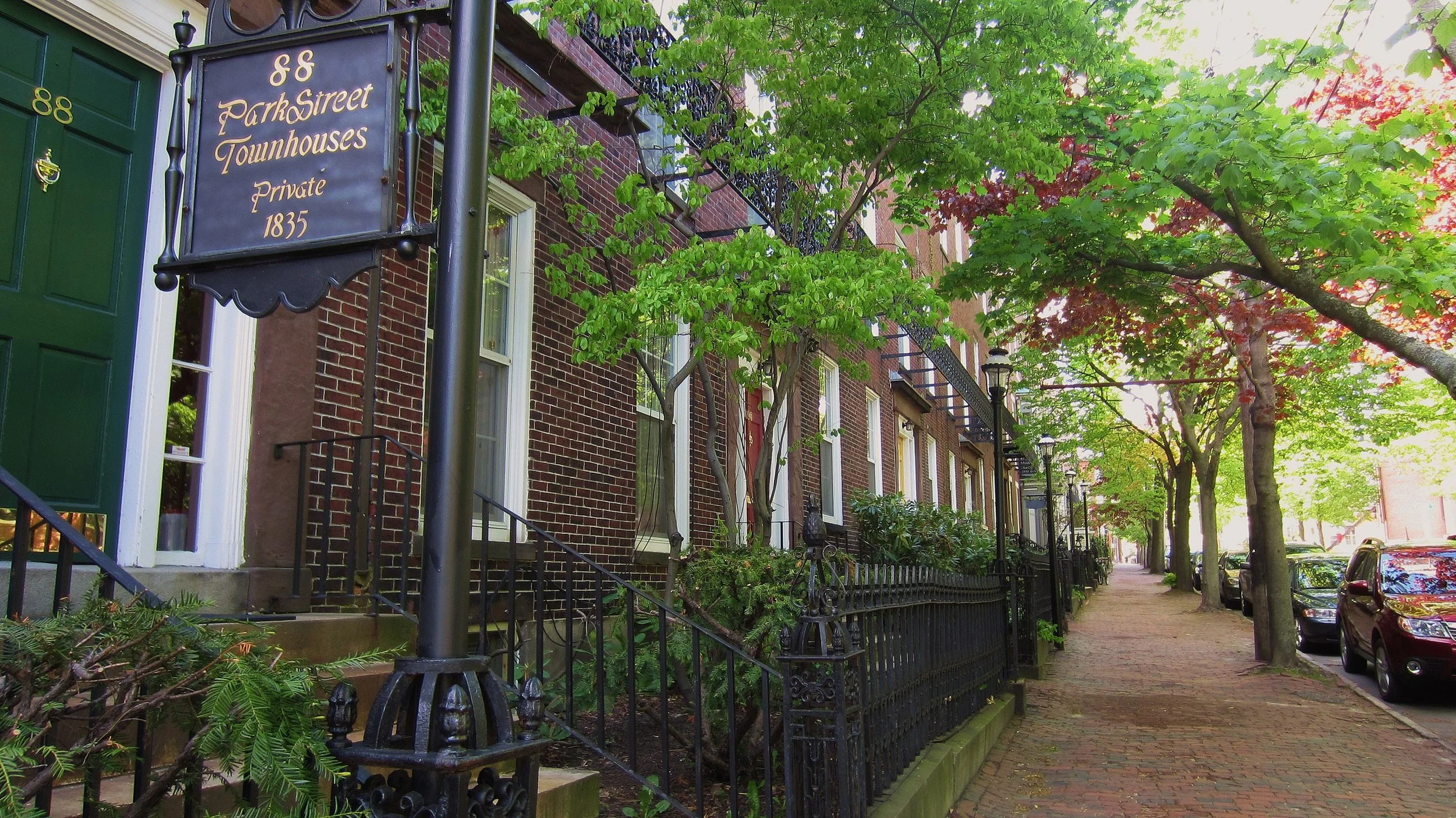
Townhouses in Portland’s West End, completed in 1835
— Photo by Motionhero
PORTLAND, Maine
Fran Seeley, 81, doesn’t see herself as living on the edge of a financial crisis. But she’s uncomfortably close.
Each month, Seeley, a retired teacher, gets $925 from Social Security and a $287 disbursement from an individual retirement account. To make ends meet, she’s taken out a reverse mortgage on her home here that yields $400 monthly.
So far, Seeley has been able to live on this income — about $19,300 a year — by carefully monitoring her spending and drawing on limited savings. But should her excellent health worsen or she need assistance at home, Seeley doesn’t know how she’d pay for those expenses.
More than half of older women living alone — 54% — are in a similarly precarious financial situation: either poor according to federal poverty standards or with incomes too low to pay for essential expenses. For single men, the share is lower but still surprising — 45%.
That’s according to a valuable but little-known measure of the cost of living for older adults: the Elder Index, developed by researchers at the Gerontology Institute at the University of Massachusetts at Boston.
A new coalition, the Equity in Aging Collaborative, is planning to use the index to influence policies that affect older adults, such as property tax relief and expanded eligibility for programs that assist with medical expenses. Twenty-five prominent aging organizations are members of the collaborative.
The goal is to fuel a robust dialogue about “the true cost of aging in America,” which remains unappreciated, said Ramsey Alwin, president and chief executive of the National Council on Aging, an organizer of the coalition.
Nationally, and for every state and county in the U.S., the Elder Index uses various public databases to calculate the cost of health care, housing, food, transportation and miscellaneous expenses for seniors. It represents a bare-bones budget, adjusted for whether older adults live alone or as part of a couple; whether they’re in poor, good or excellent health; and whether they rent or own homes, with or without a mortgage.
Results from the analyses are eye-opening. In 2020, according to data supplied by Jan Mutchler, director of the Gerontology Institute, the index shows that nearly 5 million older women living alone, 2 million older men living alone, and more than 2 million older couples had incomes that made them economically insecure.
And those estimates were before inflation soared to more than 9% — a 40-year high — and older adults continued to lose jobs during the second and third years of the pandemic. “With those stressors layered on, even more people are struggling,” Mutchler said.
Nationally and in every state, the minimum cost of living for older adults calculated by the Elder Index far exceeds federal poverty thresholds, which are used to calculate official poverty statistics. (Federal poverty thresholds used by the Elder Index differ slightly from federal poverty guidelines. Data for each state can be found here.)
One national example: The Elder Index estimates that a single older adult in good health paying rent needed $27,096, on average, for basic expenses in 2021 — $14,100 more than the federal poverty threshold of $12,996. For couples, the gap between the index’s calculation of necessities and the poverty threshold was even greater.
Yet eligibility for Medicaid, food stamps, housing assistance and other safety-net programs that help older adults is based on federal poverty standards, which don’t account for geographic variations in the cost of living or medical expenses incurred by older adults, among other factors. (This isn’t an issue for older adults alone; the poverty measures have been widely critiqued across age groups.)
“The poverty rate just doesn’t cut it as a realistic look at the struggles older adults are having,” said William Arnone, chief executive officer of the National Academy of Social Insurance, one of the new coalition’s members. “The Elder Index is a reality check.”
In April, University of Massachusetts researchers showed that Social Security benefits cover only a fraction of what older adults need for basic living expenses: 68% for a senior in good health who lives alone and pays rent and 81% for an older couple in the same situation.
“There’s a myth that Social Security and Medicare miraculously take care of all of people’s needs in older age,” said Alwin, of the National Council on Aging. “The reality is they don’t, and far too many people are one crisis away from economic insecurity.”
Organizations across the country have been using the Elder Index to convince policymakers that older adults need more assistance. In New Jersey, where 54% of seniors are economically insecure according to the index, advocates used the data to protect property-tax relief programs for older adults during the pandemic. In New York, where nearly 60% of seniors are economically insecure, advocates persuaded the legislature to raise the Medicaid income eligibility threshold.
In San Diego, where as many as 40% of seniors are economically insecure, Serving Seniors, a nonprofit agency, persuaded county officials to use pandemic-related stimulus payments to expand senior nutrition programs. As a result, the agency has been able to double production of home-delivered meals, to more than 1.5 million annually.
Officials are often wary of the financial impact of expanding programs, said Paul Downey, president and CEO of Serving Seniors. But, he said, “we should be using a reliable measure of economic security and at least know how well the programs we’re offering are doing.” By law, California’s Area Agencies on Aging use the Elder Index in their planning process.
Maine is No. 5 on the list of states ranked by the share of seniors living below the Elder Index, 56%. For someone in Fran Seeley’s situation (an older adult who is in excellent health, lives alone, owns a house, and doesn’t pay a monthly mortgage), the index suggests $22,560 a year is necessary — $3,200 more than Seeley’s annual income and $9,500 above the federal poverty threshold.
Fran Seeley’s income — from Social Security, a retirement account, and a reverse mortgage — comes to about $19,300 a year. With inflation increasing, “it means I have to cut back in any way I can,” Seeley says.
A look at Seeley’s budget reveals how quickly necessary expenses accumulate: $2,041 annually for Medicare Part B (this is deducted from her Social Security check), $4,156 for property and stormwater taxes, $390 for home insurance, $320 for furnace cleaning, $1,440 for heat, $125 for water, $500 for gas and electricity, $300 for property maintenance, $1,260 for phone and Internet, $150 for car registration, $640 for car insurance, $840 for gasoline at current prices, $300 for car maintenance, and $4,800 for food.
The total: $17,262. And that doesn’t include the cost of medications, clothing, toiletries, any kind of entertainment, or other incidentals.
Seeley’s great luxury is caring for four cats, which she describes as “the light of my life.” Their annual wellness checks cost about $400 a year, while their food costs about $1,080.
With inflation now making her budget even tighter, “it means I have to cut back in any way I can. I find myself going into stores and saying, ‘No, I don’t need that,’” Seeley said. “The biggest worry I have is not being able to afford living in my home or becoming ill. I know that medical expenses could wipe me out in no time financially.”
Judith Graham is a Kaiser Health News Reporter.
David Warsh: 'Depreciation,' 'development' and 'inflation'
SOMERVILLE, Mass.
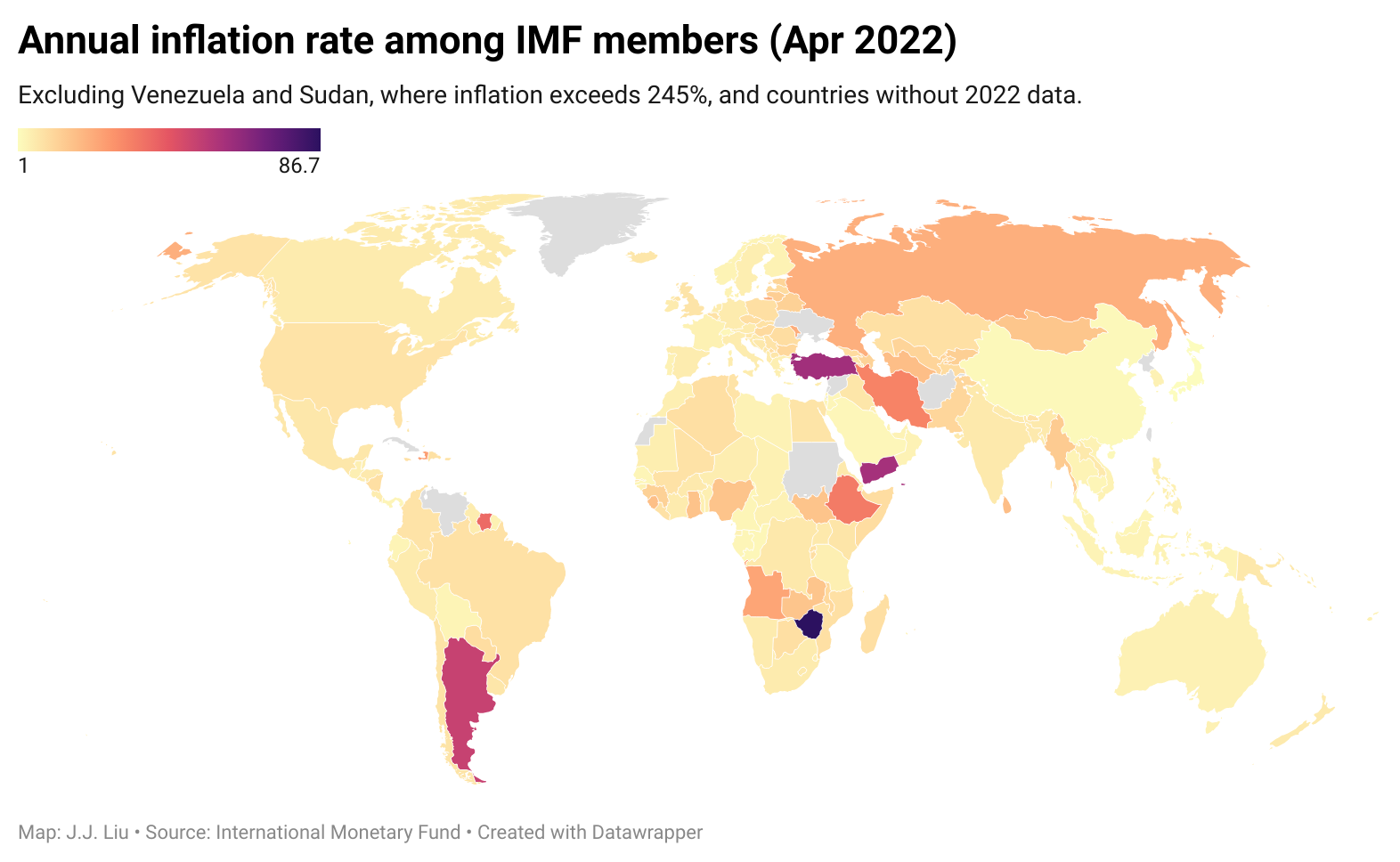
Everyone knows that the cost of living has risen significantly in the past 75 years — recently, at rates not seen since the early ‘80s. To understand a little better why this has is happening, try this simple trick: Think of rising prices as a matter of the depreciation of the dollar against the prices of goods and services, instead of “inflation.” That won’t make the experience any less disorienting than calling it by the headline term, but it will give you a better sense of how and why the problem has arisen.
What’s the difference? With “inflation,” the answer is implied by the question. The explanation is always the same: the governors of the Federal Reserve Board have been cavalier with interest rates. Too much money is chasing too few goods. “Depreciation,” on the other hand, permits you to think about events taking place in the real world that forced the Fed’s hand – events that monetarists commonly describe as “ad hoc.”
Certainly a great deal of “ad hoc” change has occurred in the real world since 1950, when a candy bar cost a nickel and a haircut could be had for $1.25. Very little of the momentum behind that history would seem to have originated with the Fed, the stringent tightening of monetary policy in 1979-’82 being the major exception.
The current episode of rapidly rising prices is associated with the governmental response to COVID; accelerated with outbreak of all-out war in Ukraine; deglobalization of supply chains; food shortages and the threat of famine; policies designed to slow climate change, and energy disruptions now said to rival the crisis of the early and mid ‘70s.
True, in the course of regulating the nation’s system of money and banking, the Fed had to react to these various afflictions. Sometimes its governors may have overreacted. Sheer monetary incompetence can have a place in the story, too: Look no farther than the central bank of Sri Lanka for an example of that.
In the main, though, dollar depreciation occurs in response to real-world problems. Severe interest-rate policy can arrest expectations of runaway prices, as in the ‘80s. But dollar depreciation occurs in response to real forces. Never in millennia has it been reversed in a currency that endured. Repeating the mantra that “‘inflation’ is everywhere and always a monetary phenomenon” is just blowing hot air.
In The Cost of Living in America: A Political History of Economic Statistics 1880-2000 (Cambridge, 2009), Thomas Stapleford, of the University of Notre Dame, describe how we came to employ sophisticated price indices to measure rising prices. The construction of economic statistics makes a fascinating story, but Stapleford spends only two paragraphs on why the cost of living changes, accepted at face-value explanations of particular episodes advanced by economists: W. Stanley Jevons, in the 19th Century, and Irving Fisher, in the 20th. In each case, the economists asserted, when “the supply of money increased, its value would fall, leading to higher prices.” Hence the “inflation” of prices by an excess of money.
But what if it works the other way around? What if the “cost-push” argument is more often correct? What if the quantity of money increases because prices are rising? Every central banker knows it is not simply one or the other; it is both. But with “inflation,” you only see one side of the story – in most instances, the less important side.
We don’t know more because there exists no conceptual scheme of sufficient generality to organize all those various “ad hoc” explanations of rising prices under one heading. Whatever intuitive appeal has existed in the term “complexity,’’ “complexity” was already well on its way to becoming a magic word, an incantation, quite devoid of meaning.
The second mistake I made was failing to notice that economists already possessed a serviceable term of their own to describe this dimension of modern life. They called it “economic development,” words as familiar and easy to use as they were lacking in precision. To give it meaning to development, as opposed to “growth,” which is a matter of inputs and output, requires only linking back to one of the most fundamental categories in all of economic theory: the division of labor.
Easier said than done! Although the role of specialization in producing material well-being is clearly spelled out in the first three chapters of An in Inquiry into the Nature and Causes of the Wealth of Nations, Adam Smith quickly moves on to the analysis of a competitive system, and this is the tradition, taken up by David Ricardo and T.R. Malthus, that has dominated economics down to the present day. I was slow to figure this out.
There! After fifty years of writing about these topics, often clumsily, my two key mistakes are acknowledged, and I have set out here all I have learned: “depreciation” and “development” (understood as the extent of the division of labor) are better language than “inflation,” not to mention (here I blush) “complexity” and “conflation” in 1984.
For a glimpse of how things might yet be different, and probably will be before long, see “One Analogy Can Hide Another: Physics and Biology in Alchian’s ‘Economic Natural Selection’”, by Clément Levallois, which ultimately appeared in 2009 in History of Political Economy. (JSTOR access required). Or tune in to Nathan Nunn, now back at the University of British Columbia. But the biological analogy at the heart of the re-launch of evolutionary economics in the years after World Wat II is too wonky for this column.
David Warsh, a veteran columnist and an economic historian, is proprietor of Somerville-based economicprincipals.com, where this column first appeared.
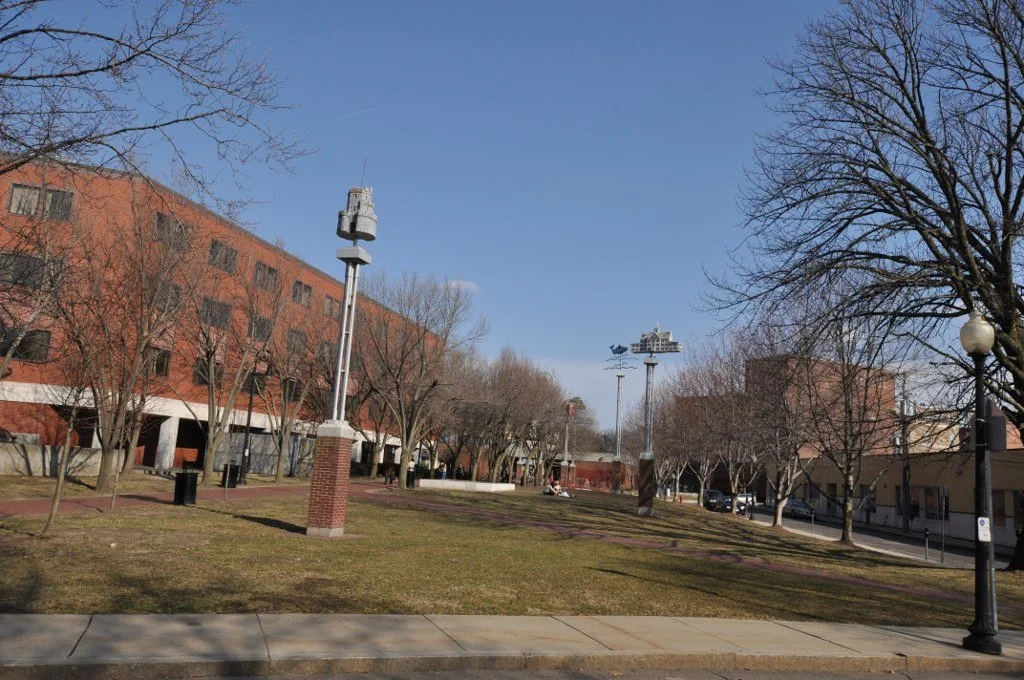
Seven Hills Park at Davis Square, Somerville. The towers in the park each represent one of the city's original hills.
Islanders using everything they can from the sea

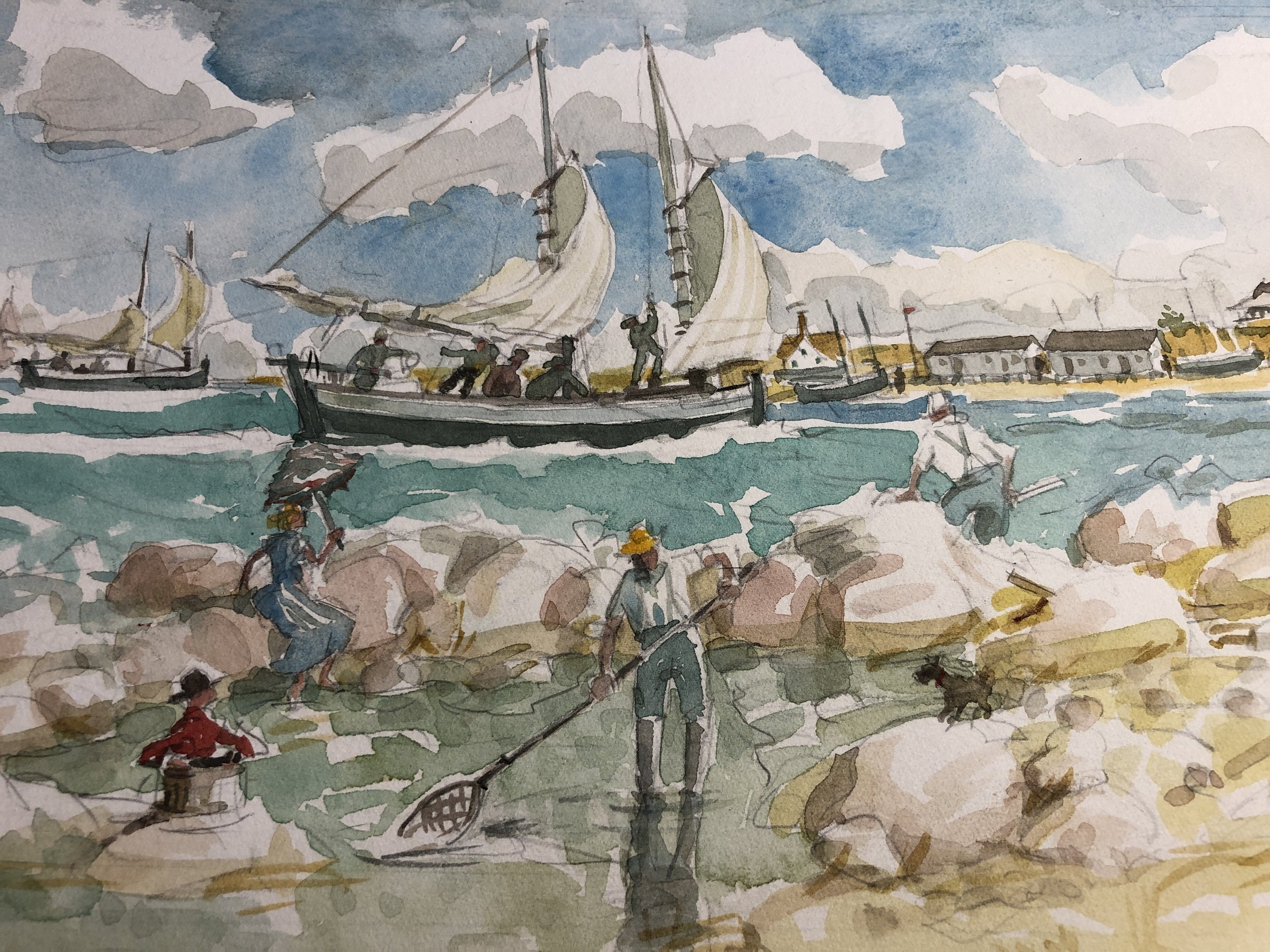
In this watercolor by William Hall, Block Islanders in the 19th Century are collecting fin fish, crabs and lobsters trapped in tidal pools. They also harvested large amounts of seaweed to be used for food and fertilizer. See photos below. This painting is part of an extensive series of watercolors Mr. Hall has done over the past decade of people at work.
He is represented by, among other venues, David Chatowsky Art Gallery, 47 Dodge St., Block Island, R.I. (401) 835-4623
One recipe for “seaweed pudding”:
Put a cup of dried seaweed in a pan and add a liter of whole milk.
Gently bring to boil and simmer for 10 to 15 minutes.
Strain through a fine sieve or a muslin cloth into a bowl and cool.
Put in a refrigerator to set for a couple of hours.
The harvesting of seaweed — mostly kelp — (including increasingly from aquaculture) for food and many other uses has greatly increased in the past few years. And seaweed aquaculture is more and more promoted for environmental reasons. For one thing, it absorbs some of the excess carbon dioxide put into the atmosphere by fossil-fuel burning. For another, seaweed — especially “kelp forests” — is a home for many species.
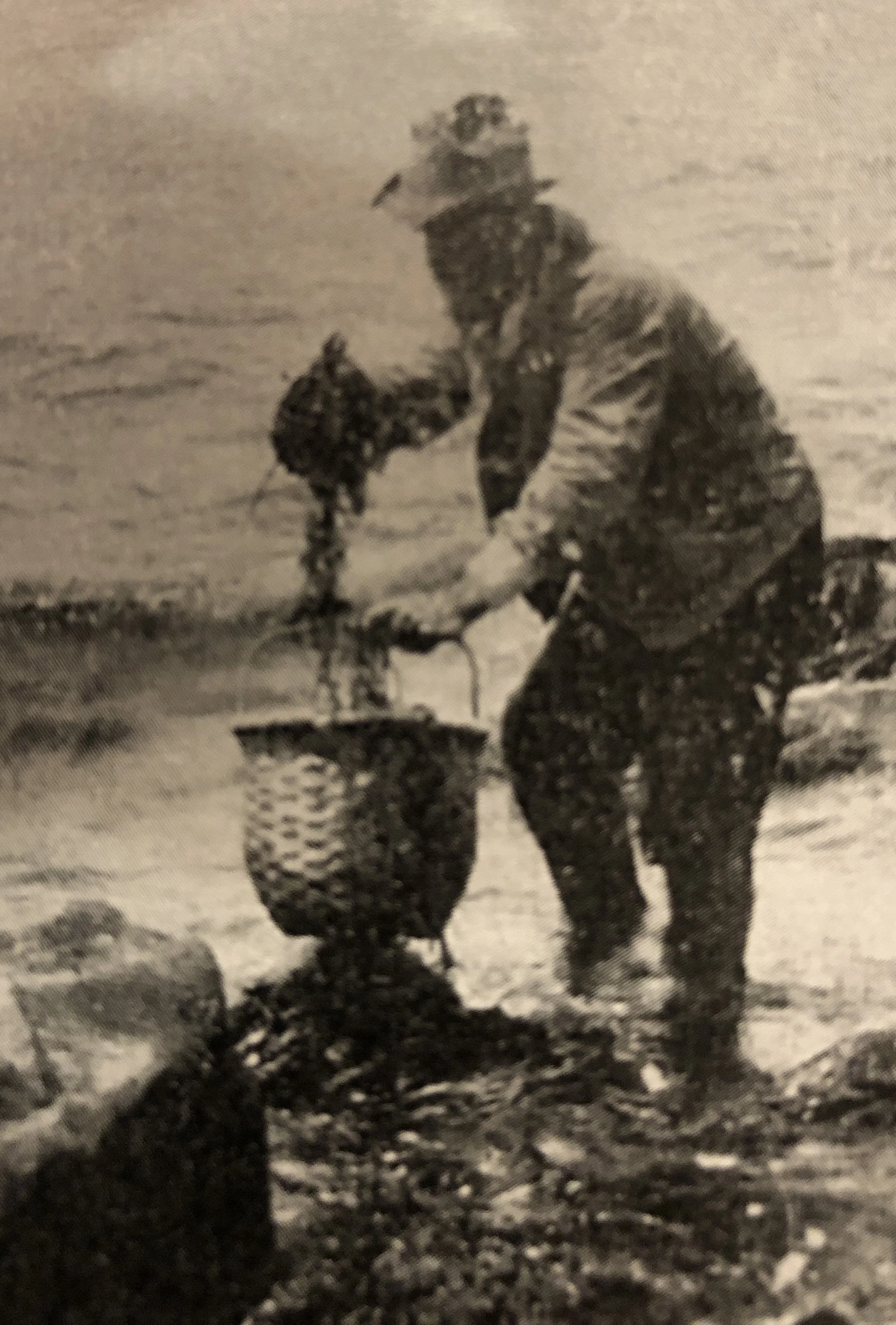
Collecting seaweed in locally made baskets.

Spreading seaweed as fertilizer on a Block Island farm.
‘Insecurity and surprise’

“Resonance” (encaustic painting), by Deborah Peeples, who has a studio in Somerville, Mass., and lives in neighboring Cambridge.
She writes in the New England Wax Web site:
“Painting is my sensual response to the world, a time-release recording of the sounds, smells, and intensity of a moment. Abstraction is a language that traces my inner turbulence and exuberance. The natural translucent materials of beeswax and damar contain a lush baroque beauty. Mixing pigments, playing with opacity, heating the panel, always touching, breathing the smell of the hot beeswax, brings a slowness and intimacy to the process. The work is layered, incised, inlaid, and scraped; lines cut into the surface, either sharp or blurred, feel alternately vulnerable and impenetrable. Humor and playfulness are found in the saturated, syncopated color and jostling shapes that play off an underlying grid. These juxtapositions create imbalance, insecurity, and surprise, a metaphor for the search to find my place in the world’’.
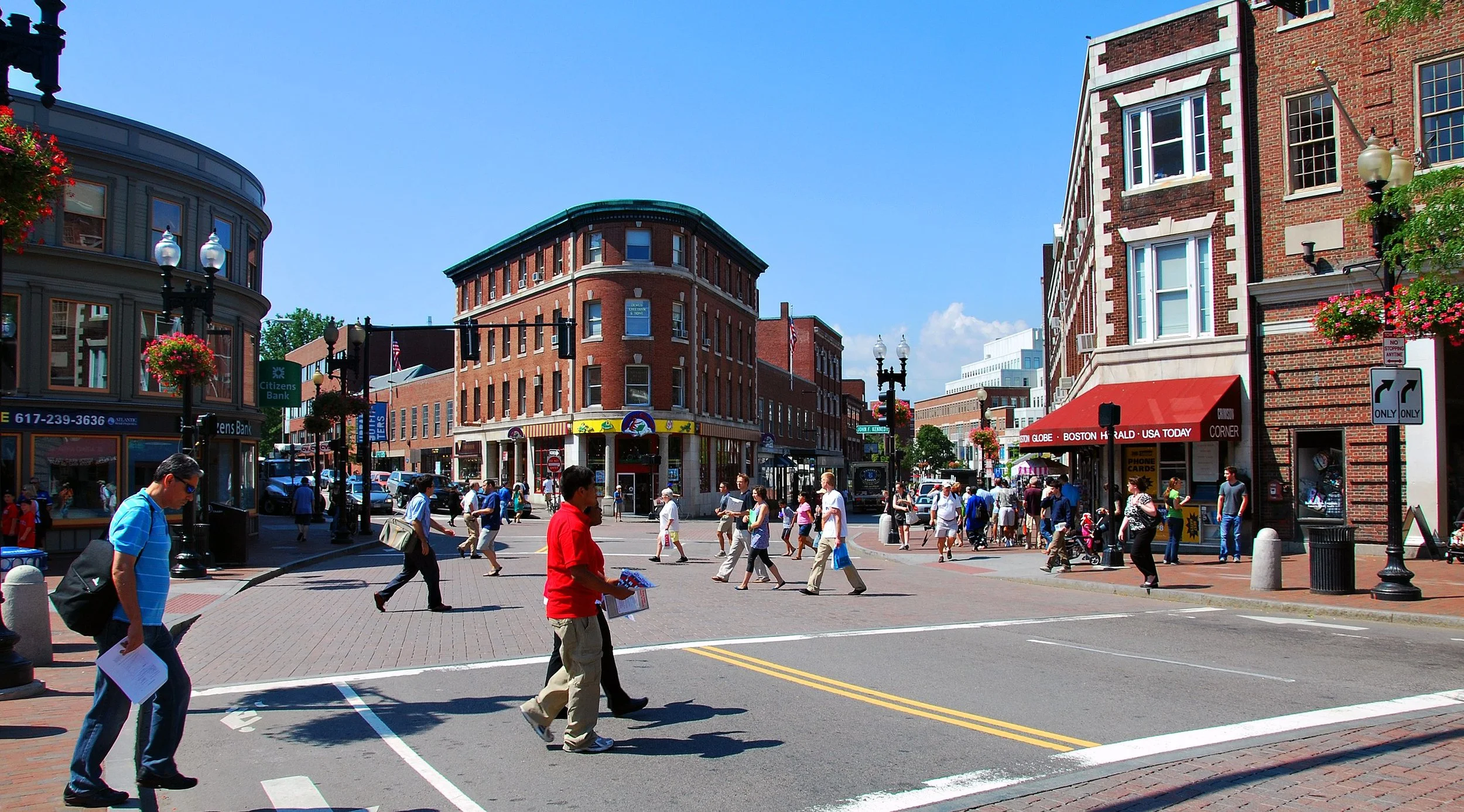
Harvard Square, in Cambridge
— Photo by chensiyuan
The stalactite coast
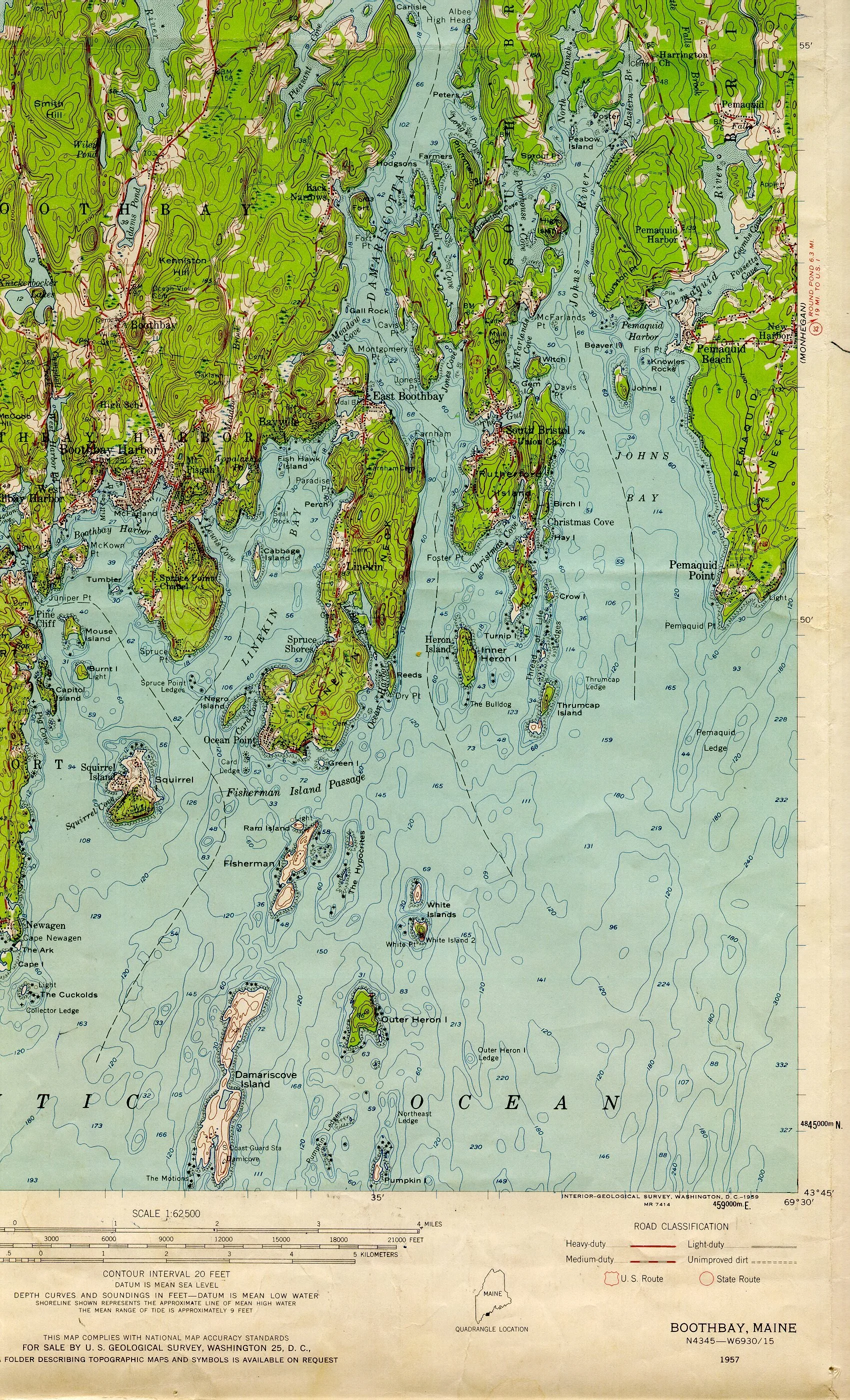
“The middle part of Maine, all the way from Bar Harbor to Portland, hangs down like stalactites that drip little islands into the Atlantic. It's divided by rivers and harbors with cozy names that sound like brands of bubble bath or places boats sink in folk songs.”
― Linda Holmes (born 1970), an American author, cultural critic and podcaster
xxx
“Portland could have been any city. Port Clyde was too uncluttered to be anything else. There is a reason Stephen King sets his stories in little Maine towns. They are too quiet to be believed wholly savory.”
―From Holidays With Bigfoot, by Thomm Quackenbush (born 1980), American author of horror, epic fantasy and contemporary fantasy.

Chris Powell: ‘These kids are so desensitized’

A 1936 poster promoting planned housing as a way to deter juvenile delinquency, showing silhouettes of a child stealing a piece of fruit and the older child involved in armed robbery.

Some muskets
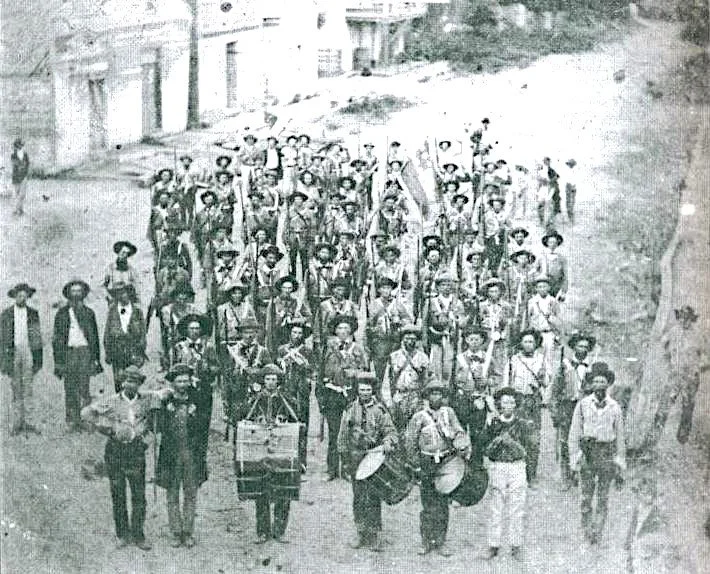
The Hempstead Rifles, a volunteer militia company from Arkadelphia, Ark. in 1861, ready to fight for the Confederacy.

AR-15-style rifles
MANCHESTER, Conn.
Ancient Rome's foremost historian, Tacitus, who often sat at the center of the empire's government, observed, "The more corrupt the state, the more numerous the laws." Today he might add that the nation with ever-more laws is probably becoming not just more corrupt but more dishonest and stupid as well.
The recent mass shooting in Highland Park, Ill., may be a case in point. That state has tough and comprehensive gun-control laws and a "red flag" law -- just like Connecticut. Yet these laws didn't stop the disturbed young man charged with the crime, whose craziness was well known to his parents and the police but prompted no intervention.
In recent days in Connecticut a 15-year-old boy was shot to death and a woman wounded in Fairfield at a birthday party for a 13-year-old that was attended by dozens of people. Then two people were shot in New Haven, for which a 17-year-old was charged, and two more were shot in downtown Norwich, for which an 18-year-old was charged.
Meanwhile a Norwalk City Hall forum on gun violence, attended by Mayor Harry Rilling and U.S. Rep. Jim Himes, produced only a glimmer of understanding. The forum heard that many young men are idle, uneducated, and unskilled and that despite Connecticut's strict laws, legal and illegal guns alike are prevalent here.
Ebony Epps, of Street Safe Bridgeport, added, "These kids are so desensitized." But like everyone else Epps advocated only more "programs," which multiply almost as fast as the laws with a similar lack of effect.
There were no calls at the forum to inquire why the young men are so "desensitized," no calls to inquire into the causes of the social disintegration that is slowly destroying the country.
There was no acknowledgment that the strictest gun laws have accomplished little more in Connecticut's cities than they have in Chicago or New York.
For the country now has a huge underclass -- disengaged, demoralized, alienated and unproductive but heavily armed, and the underclass won't be giving up its guns any faster than the rest of the country will be.
Where has this underclass come from? Is it the fault of Donald Trump and George W. Bush? Why wasn't it civilized under Barack Obama and Bill Clinton? Why are fewer people today prepared to become good citizens?
Anything short of questions like those is a waste of time, except for people aspiring to careers in "programs."
xxx
Some wise guys in Connecticut, angry at the Supreme Court's recent reiteration in the Second Amendment case from New York that individuals have the right to keep and bear arms, are arguing again that the right should be restricted to members of the militia mentioned in the amendment.
Yes, "a well-regulated militia" is the rationale offered by the Second Amendment for the right to keep and bear arms. But this rationale for the right does not establish a requirement. Back when the Bill of Rights was adopted, people didn't have to be formal members of a militia to be eligible to join it or be summoned into it. The Bill of Rights gave the people the right to keep and bear arms just in case.
That is how the Second Amendment was construed back then. People today may consider the amendment's rationale outdated, but it's still in the Constitution and it's not for the courts or state legislatures to change or invalidate it. That can be done only by repealing the amendment through the prescribed constitutional procedures.
The wise guys complain that today's semi-automatic rifles are "weapons of war," far more deadly than the muskets in use when the Bill of Rights was adopted. The wise guys argue that the country's Founders didn't imagine that the right to keep and bear arms included "weapons of war." But of course the Founders imagined it, since back then muskets were "weapons of war" too.
Connecticut's own Constitution suggests that the Supreme Court has construed the Second Amendment exactly as it was understood when it was ratified in 1791. For since 1818, 27 years after ratification of the Second Amendment, Connecticut's Constitution has declared: "Every citizen has a right to bear arms in defense of himself and the state."
It always was and remains an individual right.
Chris Powell is a columnist for the Journal Inquirer in Manchester.

Against the world

“Madonna and Child” (mixed media collage on paper, oil, ink, beeswax), by Lexington, Mass.-based artist Sirarpi Walzer, in the joint show “Efflorescence,’’ with Patricia Ganek, at Three Stones Gallery, Concord, Mass., through Aug. 27.
For more information, hit here.
The artist, who is also an engineer, writes on her site:
“My poetic abstractions spring both from meditations on nature and from memories that are distilled into single dramatic moments. The energetic surfaces imply an ongoing tension between freedom and containment, edging the viewer closer to that place where chaos can erupt into clarity. The color white suggests notions of purity and simplicity, and unifies the disparate objects. The deliberate juxtapositions of forms and exaggerations of color choices, provide clues to content and interpretation.’’
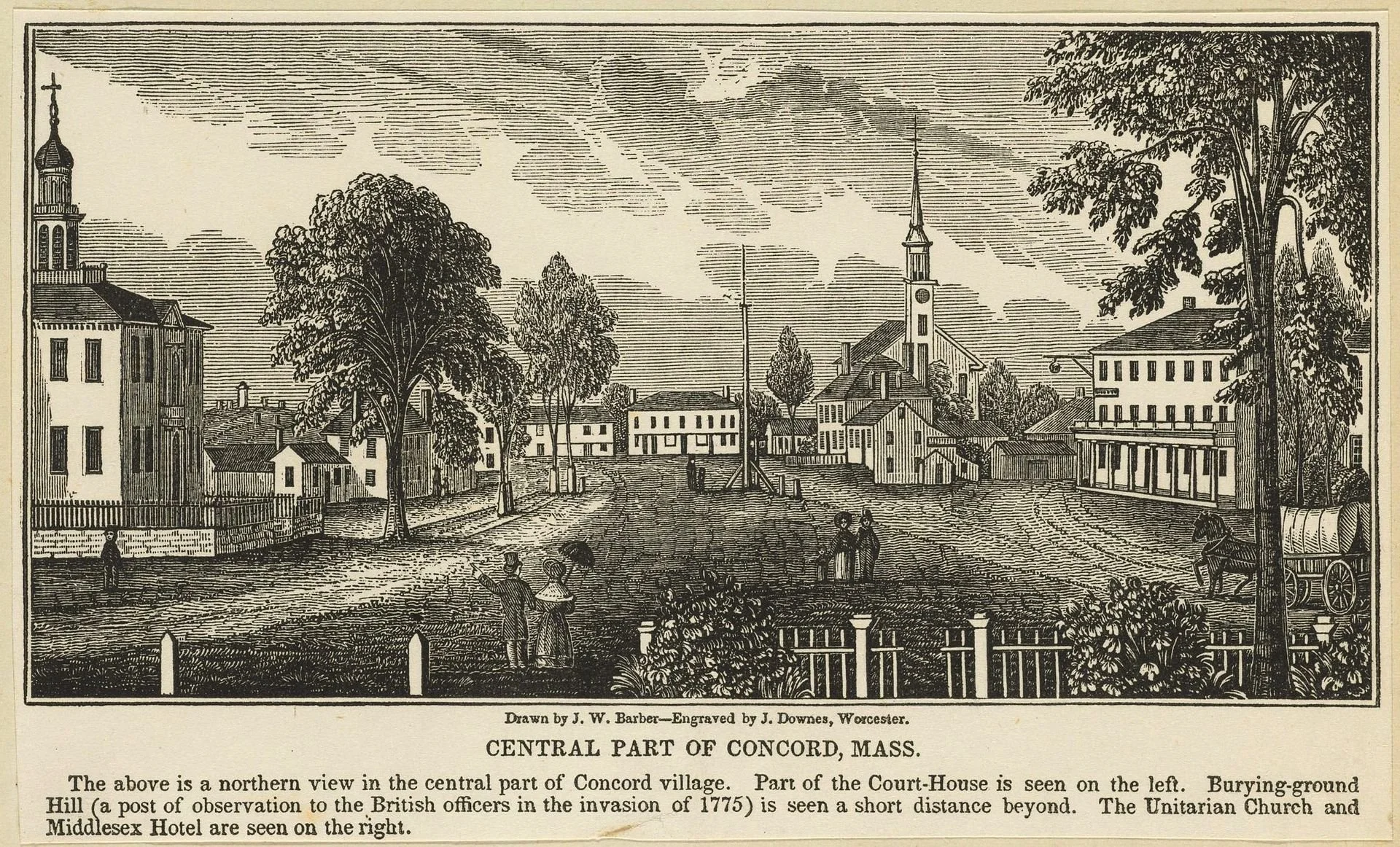
1840’s lithograph
Question time

Answer July—
Where is the Bee—
Where is the Blush—
Where is the Hay?
Ah, said July—
Where is the Seed—
Where is the Bud—
Where is the May—
Answer Thee—Me—
Nay—said the May—
Show me the Snow—
Show me the Bells—
Show me the Jay!
Quibbled the Jay—
Where be the Maize—
Where be the Haze—
Where be the Bur?
Here—said the Year—
— “Answer July,’’ by Emily Dickinson (1830-1886), a lifelong resident of Amherst, Mass., where she spent many hours gardening on her family’s capacious property.
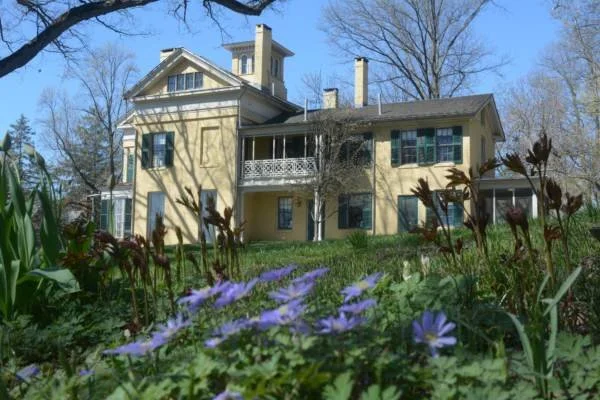
Looking from the garden at the Dickinson House, in Amherst.
A delicate relationship; Worcester housing

“A Woman and Her Dog” (gouache on paper), by Worcester area artist Julia Mongeon, in the show “The Tenth Annual One: A Members’ Exhibition,’’’ at ArtsWorcester, through Aug. 21.
The gallery says that these works span a very wide range of artistic expression, from photography to sculpture to painting. The painting above is a nostalgic picture that reflects on our relationship to our pets, evoking delicate pastels and folk-art motifs.

Classic urban New England three-decker houses on Houghton Street, Worcester. Dating mostly from the late 19th and early 20th centuries, three-deckers been entry-level housing for many immigrants and remain an option for people of modest means.
— Photo by John Phelan
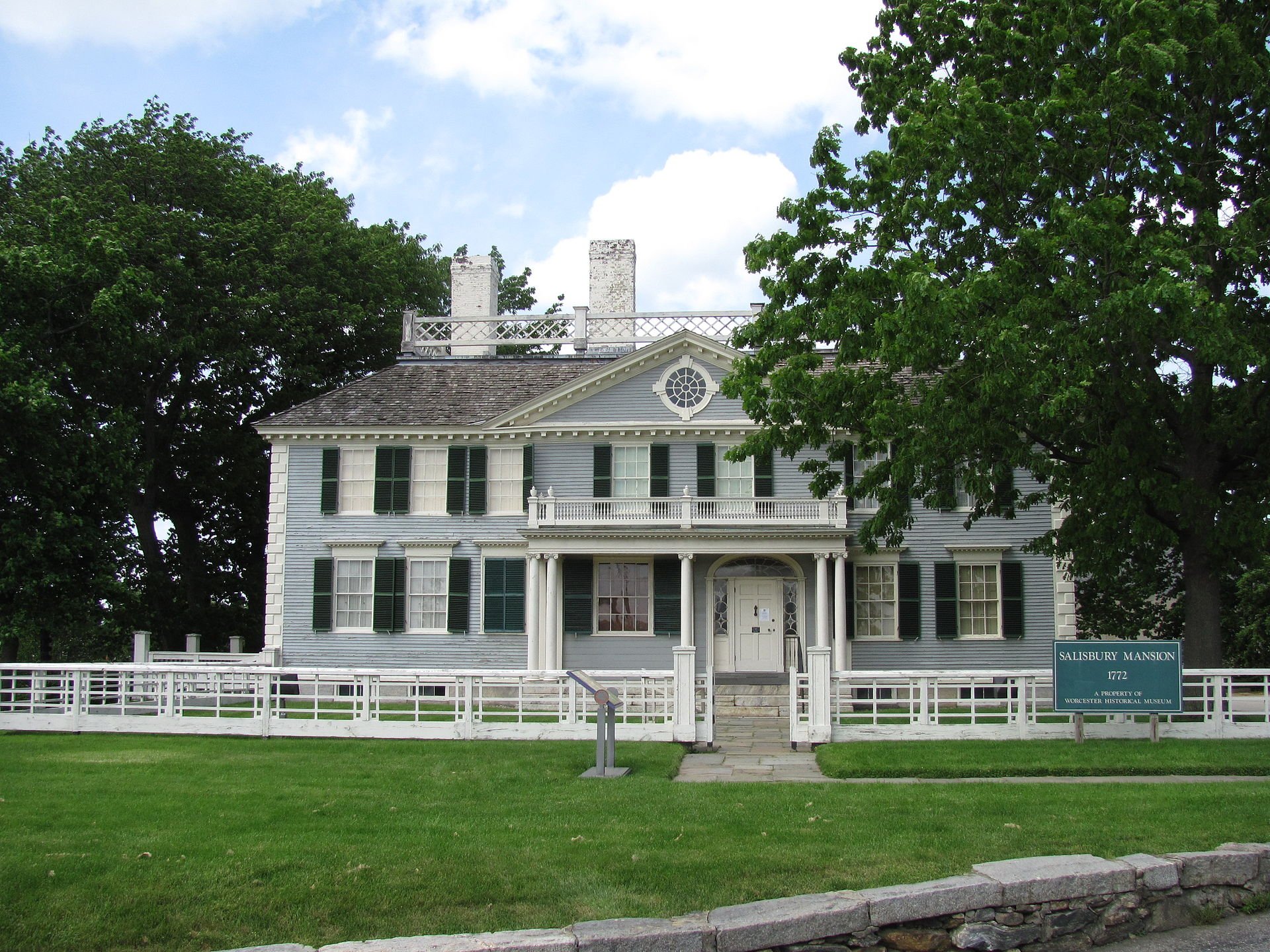
Somewhat grander: The Salisbury Mansion, in Worcester, built in 1772.
From the Worcester Historical Museum, at the Salisbury Mansion:
“Salisbury Mansion, at 40 Highland Street, is Worcester’s only historic house museum. Built in 1772 as a combination house and store, it served as the home of ‘gentleman-merchant’ Stephen Salisbury. The store closed after the Embargo of 1812, and by 1820 all of the space once used for the store had become living quarters. Salisbury Mansion has gone through many changes over the years, from a rooming-house to a gentleman’s club. Salisbury Mansion was originally at Lincoln Square. Through tireless research and documentation, Salisbury Mansion has been restored to the 1830s to reflect the time when it was home to the widow Elizabeth Tuckerman Salisbury. It is considered one of the best documented ‘historic house museums’ in New England.
App helps people with autism
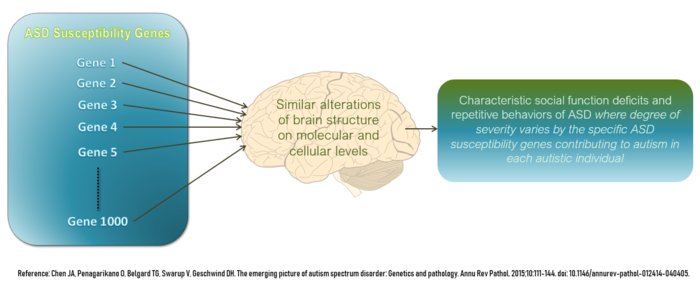
Hundreds of different genes are implicated in susceptibility to developing autism, most of which alter the brain structure in a similar way.
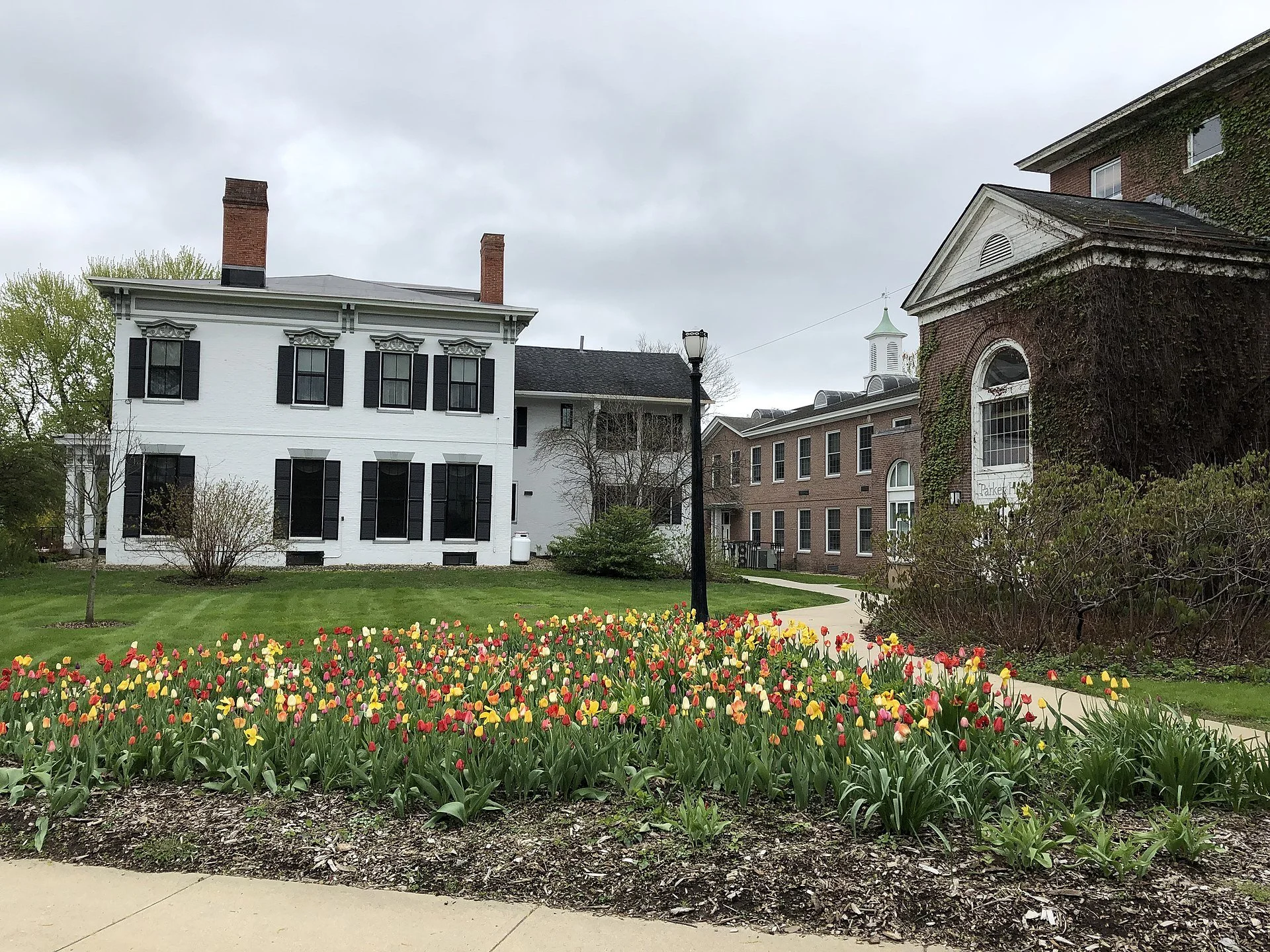
On the Keene State College campus, left to right: President's House, Morrison Hall and Parker Hall. The President's House, formerly the Catherine Fiske Seminary For Young Ladies, was built in 1805 and restyled in the late 19th Century, it is one of Keene's oldest brick residences. The house was listed on the National Register of Historic Places in 1976.
— Photo by Ken Gallager
From The New England Council (newenglandcouncil.com)
“Prof. Larry Welkowitz, of Keene State College (a New England Council member), along with world-renowned concert pianist Robert Taub received a U.S. patent for an app to help those on the autism spectrum. The new app, called SpeedMatch, allows users to load customized phrases and a library of phrases for reference for people to receive immediate visual feedback to improve social interactions and conversational skills.
“Professor Welkowitz and Mr. Taub began working together on this project 10 years ago with the intention of creating an app to teach people on the autism spectrum to match patterns of sounds in conversations. Since the app’s initial release two years ago, research has been conducted to understand the effects of the app.
“Research on SpeechMatch was administered by Dartmouth Hitchcock Medical Center and the National Institutes of Health and with funding from the Innovative Biomedical Research Excellence. It was revealed that the app improves the conversational speech of people diagnosed with autism. Welkowitz claims that what makes this effort different from other research in this field is that the study on improving functions of conversation—understanding pitch, rhythm and volume—are often neglected. Both Welkowitz and Taub stated that SpeechMatch can help people understand rhythm and sounds which could have the potential to be helpful for language learners.
'“We can really help people on the spectrum engage people, have more friends and more of a special network if we teach them these skills,’ Welkowitz said.
“SpeechMatch is available for download on the Apple App store.’’
The ripple effect
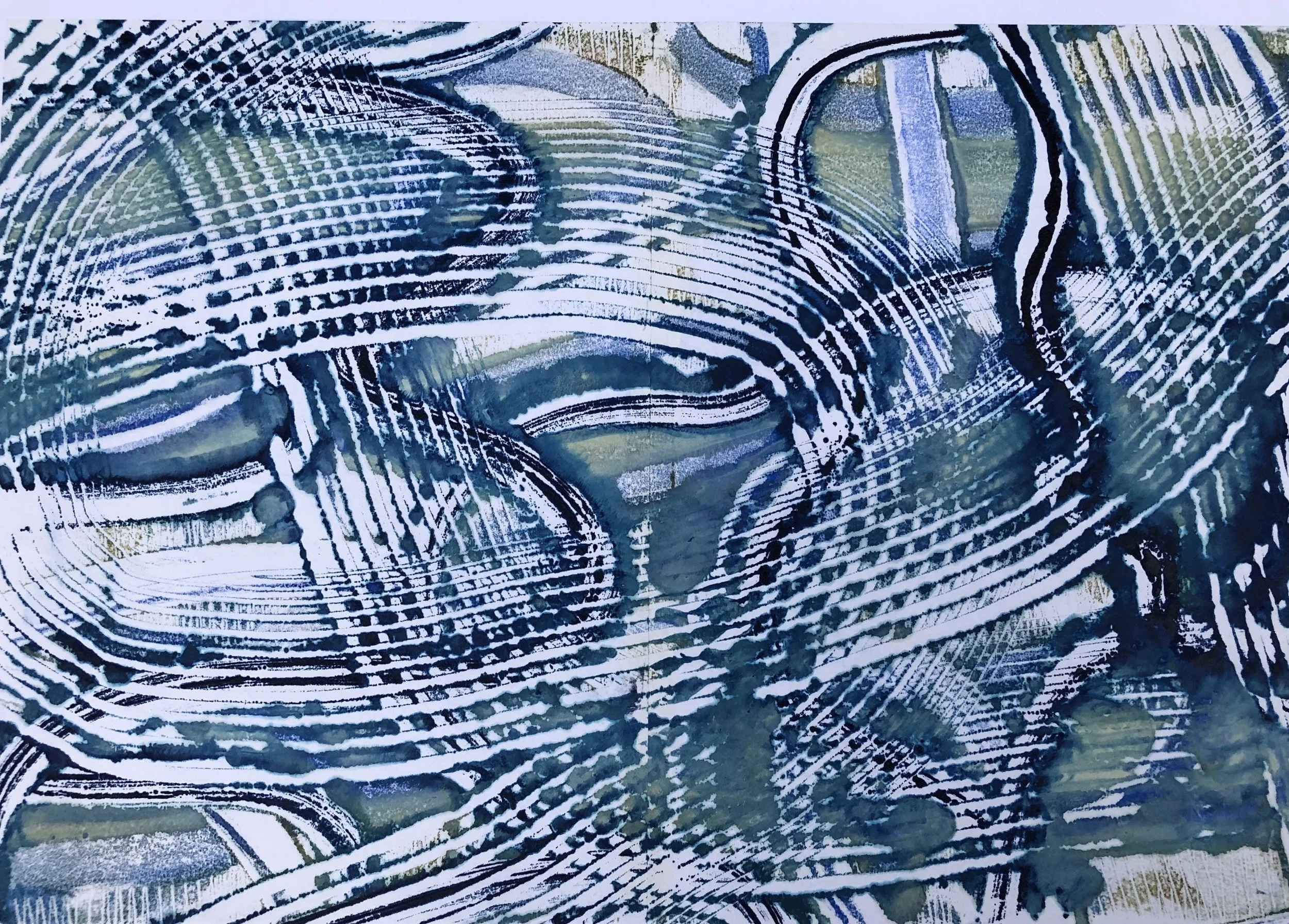
“Dreamtime-Ripples” (encaustic monotype), by Ken Eason.
Mr. Eason explains in his Web site:
“Several years ago, vacationing in Australia with family, I was introduced to Aboriginal Art and was fascinated by the technique, symbolism and variety. Aboriginal Art is centered on telling the ancient stories of the Aboriginal peoples using symbolism and metaphor. The imagery is described as symbols of the ‘Dreamtime’ that is the Aboriginal understanding of nature and the world.’’
He explores his own “personal ‘Dreamtime’ where I can be physically at home but mentally, spiritually and emotionally away. I use line as symbol of path, thought, or journey. These lines tend to overlap in many layers, each curve signifying a decision point, change in direction or choice.’’
His site says he works “primarily with oil and encaustic media and has been creating such paintings since 1992. Since his first solo show, at the York Street Gallery, Kennebunk, Maine, he has been in numerous group and solo shows from Boston to Bar Harbor, Maine. In 2005, Ken won first prize in painting in the Sculptural Pursuit, ‘Start the New Year with Peace’ Art/Literary Competition and received a several-page color photo spread of his work. Ken participated in the annual International Encaustic Conference from 2009-2012 and has taken several encaustic and professional workshops, but is mostly self taught. In 2017, he started teaching encaustic painting techniques.
“Active in the local arts, Ken is a juried member of the Art Guild of the Kennebunks and New England Wax. He was president of the Sanford Art Association in 2002 -2006. Ken’s work has been collected by the Rochester Museum of Fine Arts, Rochester, N.H.; Rand Direct, Edison, N.J.; and is held in many private collections worldwide. Ken works and lives in Acton, Maine.’’

On the Mousam River near Acton in the early 20th Century. Like many Maine streams, this one had a saw mill.
Llewellyn King: When the turmoil subsides, Americans will be living much differently
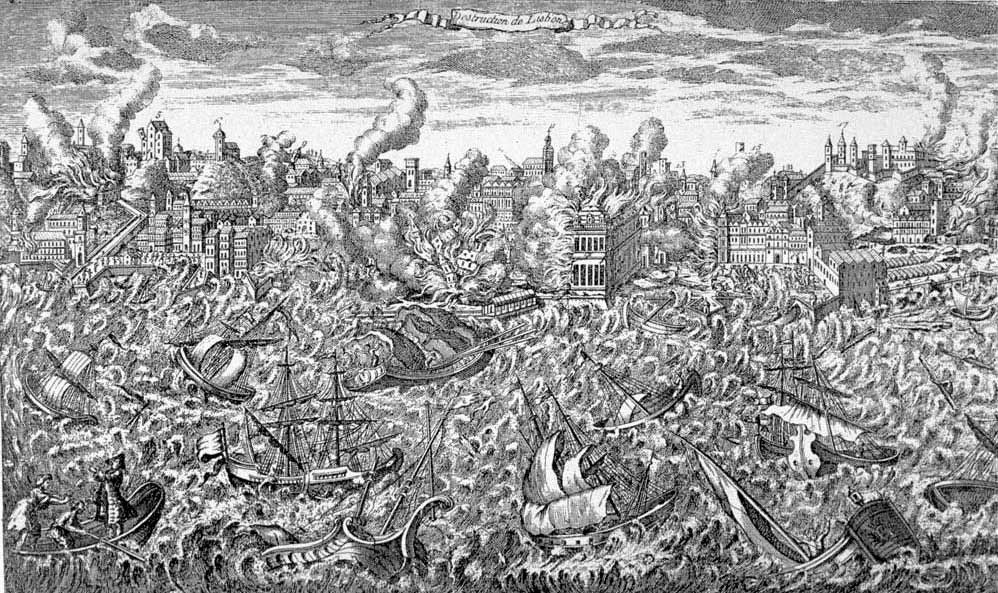
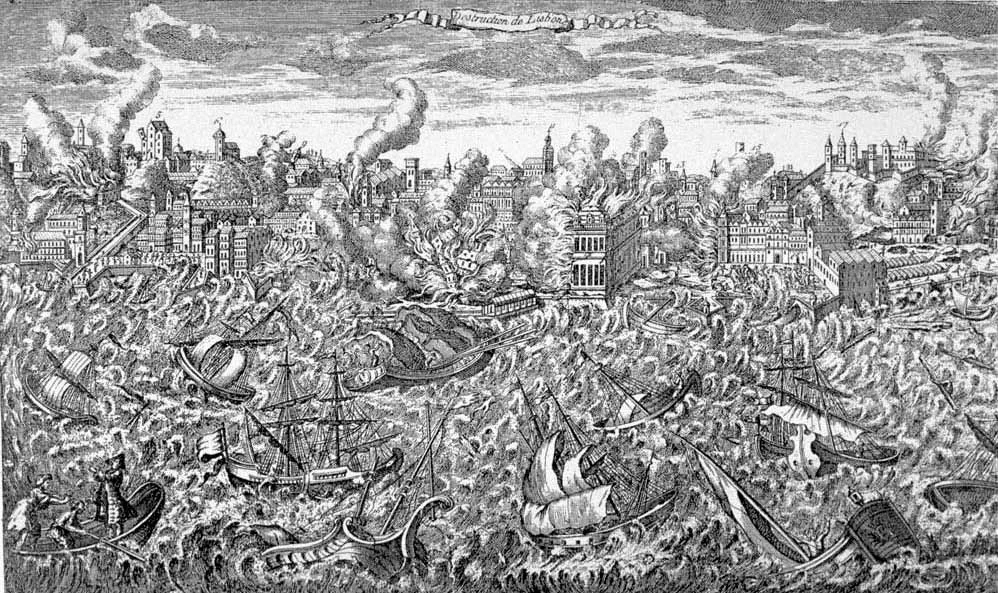
1755 copper engraving depicting Lisbon in ruins and in flames after the 1755 earthquake, which killed an estimated 60,000 people. A tsunami overwhelms the ships in the harbor.
WEST WARWICK, R.I.
I have only been in one big earthquake. It was years ago in Izmir, Turkey. As I was standing in the garden of my hotel, the ground underfoot was sloshing around like water in a waterbed.
Now I feel as though the world is experiencing a prolonged earthquake. Life, metaphorically, is shifting around us and has been since COVID-19 appeared on a pandemic scale in early 2020.
The pandemic, a major war in Europe, and the resulting shortages and inflation, are the most measurable disturbances, but others are also contributing to the shaking. They may be dismissed as aftershocks of the pandemic and Russia’s war in Ukraine, but they amount to quakes in their own right.
The very way we live is changing or being changed.
Consider these things that won’t go away, even after inflation has settled down after there is a resolution to the Ukraine war, and after supply chains are reinvigorated:
· The way we work has changed forever. There will be more remote work, virtual offices and empty office buildings.
· The same pressure to virtualize will extend to the factory floor wherever possible.
· How we shop has changed and will continue to do so. There will be more online shopping, fewer brick-and-mortar stores and many malls converted to other uses. The days are numbered for the great emporiums of yesterday.
· The way we receive medical care has changed: More than half of our physician visits will be virtual.
· Where we live is up for grabs. Virtual workers don’t need to live close to where they work. Summer homes are becoming year-round dwellings.
· What we drive will be different. If your next car isn’t electric, then the one after that will be. The same goes for practically everything that moves, from lawnmowers to buses and trucks.
· A sartorial meltdown has already begun. Fitted women’s suits and dresses are out, flowing is in. Men have abandoned neckties, and suits are on the endangered list. New reality: If it can’t go in the washing machine, it won’t go in the closet. No more dress to impress.
· Our diets are under pressure from inflation and supply-chain problems. Expect to see more “bowls.” They are both convenient and enable the use of inexpensive ingredients. Plant-based food is the new beef. Also cheaper, farm-raised fish – tilapia and catfish – will be the new halibut and grouper.
The knock-on effects of some of these changes will affect education. Already, it is partially remote and bound to the Internet, but will become more so as people move from company-location work to work from-a-nice place. If Dad and Mom are practicing law in Washington, D.C., from Maryland’s Eastern Shore, the Eastern Shore schools will have to expand and be upgraded. This will be repeated across the country.
Even our love lives will be transformed. The new realities are already closing off an old source of love mates: the office. Those voluntarily stranded at home must find new ways of meeting people if they are mate-hunting – presumably a boon to singles bars and computer dating.
We will have new special classifications. There will be the destination workers, like those who man the post office and repair things, and those who work virtually. What will they be called? Perhaps the “destinationals” and the “virtuals.”
Finally, there is the changing force of the weather. It is worth considering whether as many people want to move from the Snowbelt to the Sunbelt as they have for decades. Many of the sunny destinations, such as Florida, Arizona and Texas, have had day-after-day temperatures over 100 degrees F this month. Is that what the North-to-South migrants desired?
The 2020s are turning out to be a transformational decade, profoundly so. When the shaking stops, things will be different, life will be changed.
Llewellyn King is executive producer and host of White House Chronicle, on PBS. His email is llewellynking1@gmail.com and he’s based in Rhode Island and Washington, D.C.
