
Vox clamantis in deserto







Ready for anything

“Wilamaya Series: Harvest” (digital collage), by Alyn Carlson, in her joint show with Kevin Kusiolek and Colleen Pearce titled “Portraits: urban + natural + imagined,’’ at Three Stones Gallery, Concord, Mass., through July 10.
The gallery says: “The collage portraits of featured artist Alyn Carlson imagine strong female personas empowered in their environments."
She works in a converted rope-making factory in New Bedford.
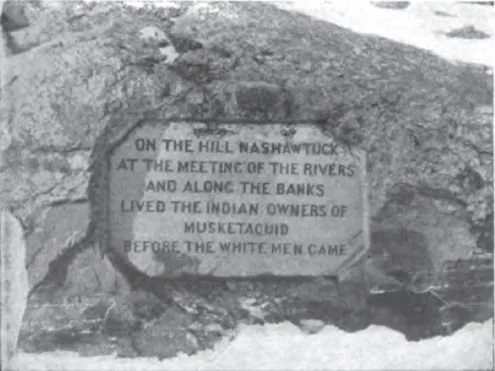
Photo of Egg Rock inscription, in Concord, circa 1900

The port of New Bedford.
— Photo by gerrydincher
Oceanic character
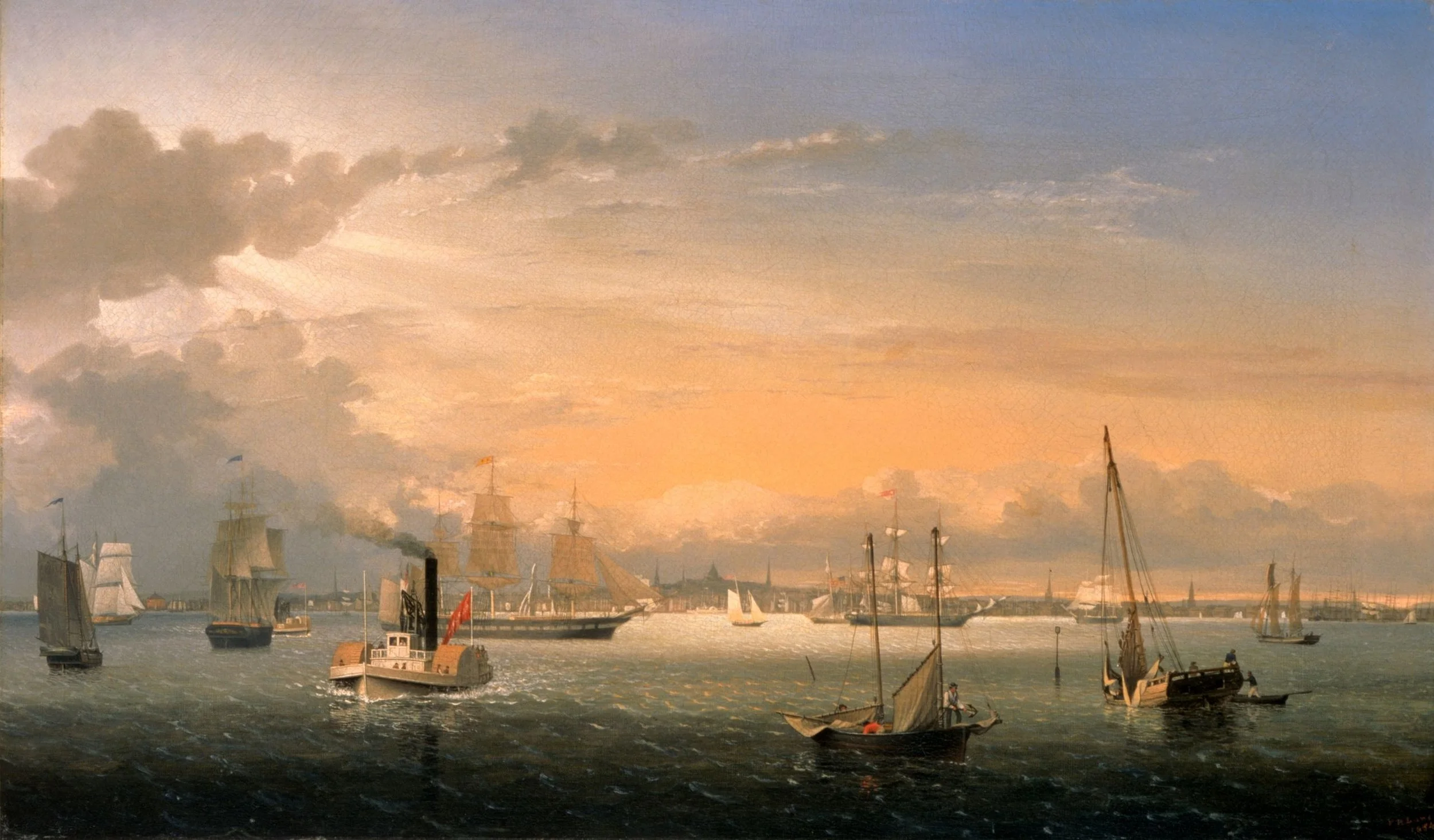
“Boston Harbor,’’ by Fitz Hugh Lane, 1854.

Postcard depiction of the seasonal passenger train “The East Wind’’ (1940-1955). The train originated on the Pennsylvania Railroad, but traveled on both Boston & Maine Railroad and New Haven Railroad tracks for part of its journey between Portland, Maine, and Washington, D.C., via Worcester, New York and Philadelphia.
"A Boston man is the east wind made flesh."
— Thomas Appleton (1812-1884), Boston-based writer
We're all losers in the end; 'right to farm' in Westport

Painting by Irish artist Molly Judd in her show “Losing Stories,’’ at Dedee Shattuck Gallery, Westport, Mass., June 11-23.
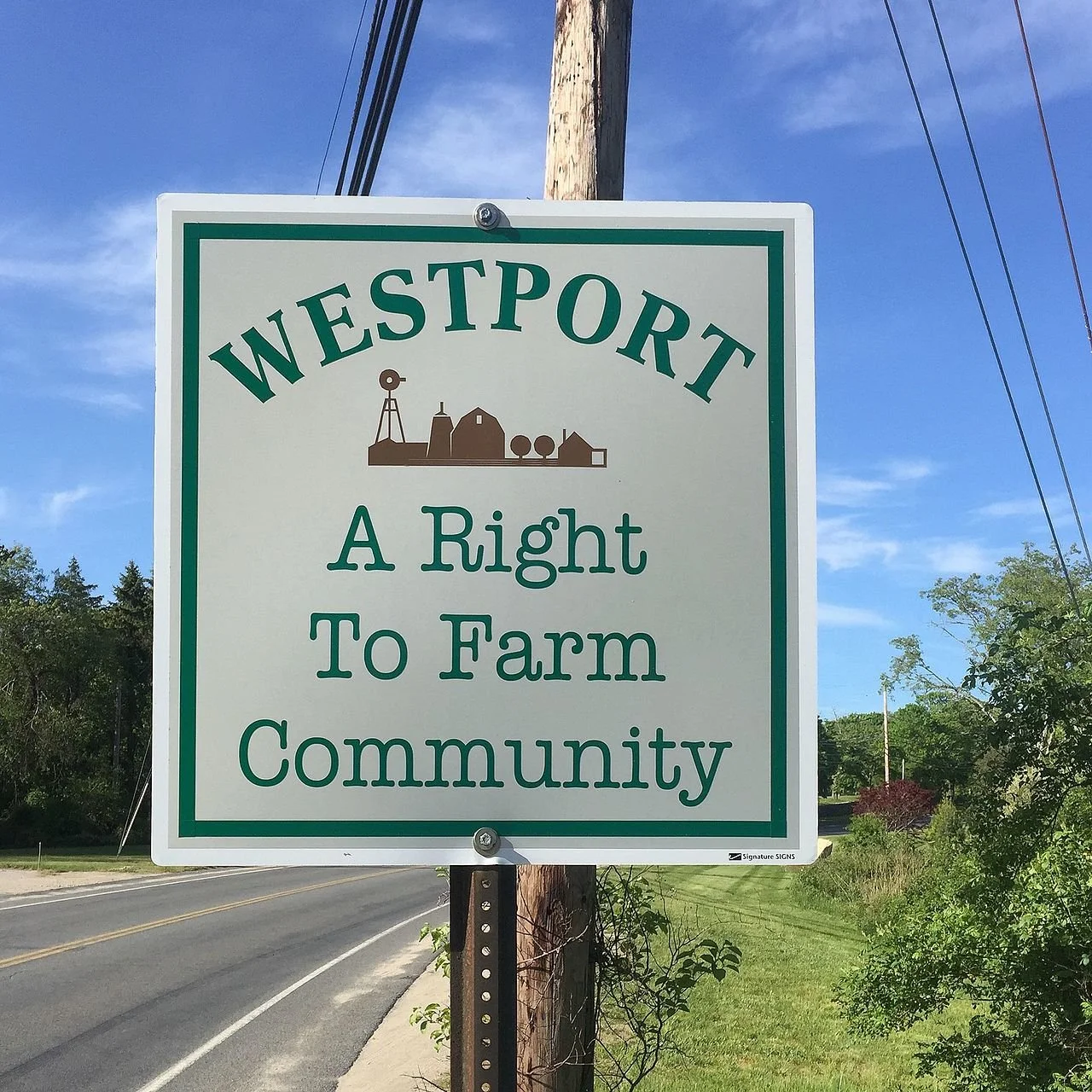
All 50 states have “right-to-farm’’ laws to try to protect qualifying farmers and ranchers from nuisance lawsuits by individuals who move into rural and exurban areas where normal farming operations exist, and who later use nuisance actions to try to stop those ongoing operations.
— Photo by Kenneth C. Zirkel

Fred Schulte: AARP’s dubious ties with Oak Street Health

In September, AARP, the giant organization for older Americans, agreed to promote a burgeoning Chicago-based chain of medical clinics called Oak Street Health, which has opened more than 100 primary-care outlets in nearly two dozen states, including in New England.
The deal gave Oak Street exclusive rights to use the trusted AARP brand in its marketing — for which the company pays AARP an undisclosed fee.
AARP doesn’t detail how this business relationship works or how companies are vetted to determine they are worthy of the group’s coveted seal of approval. But its financial reports to the IRS show that AARP collects a total of about $1 billion annually in these fees — mostly from health care-related businesses, which are eager to sell their wares to the group’s nearly 38 million dues-paying members. And a paid AARP partnership comes with a lot: AARP promotes its partners in mailings and on its Web site, and the partners can use the familiar AARP logo for advertisements in magazines, online, or on television. AARP calls the payments “royalties.”
AARP’s 2020 financial statement, the latest available, reports just over $1 billion in royalties. That’s more than three times what it collected in member dues, just over $300 million, according to the report. Of the royalties, $752 million were from unnamed “health products and services.”
But controversy has long dogged these sorts of alliances, which have multiplied over the years, and the latest is no exception. Are the chosen partners actually a good choice for AARP’s members, or are they buying the endorsement of one of the country’s most respected organizations with lavish payments?
“I don’t have a problem with AARP endorsing travel packages,” said Marilyn Moon, a health-policy analyst who worked for the group in the 1980s. But when AARP lobbies on Medicare issues while profiting off partnerships with those who are marketing to Medicare patients, “that certainly is a problem,” Moon said.
There are reasons for concern about the latest partnership. Less than two months after announcing the AARP deal, Oak Street revealed it was the subject of a Justice Department civil investigation into its marketing tactics, including whether it violated a federal law that imposes penalties for filing false claims for payment to the government. Oak Street has denied wrongdoing and says it is cooperating with the investigation.
Companies like Oak Street, whose funders have included private equity investors, have alarmed progressive Democrats and some health-policy analysts, who worry the companies may try to squeeze excessive profits from Medicare with the services they market mainly to people 65 or older. Oak Street hopes it can cut costs by keeping patients healthy and in the process turn a profit, though it has yet to show it can do so.
AARP has stood for decades as the dominant voice for older Americans, though people of any age can join. Members pay $16 a year or less and enjoy discounts on hundreds of items, from cellphones to groceries to hotels. AARP also staffs a busy lobbying shop that influences government policy on a plethora of issues that affect older people, including the future and solvency of Medicare.
Perhaps not as well known: that AARP depends on royalty income to help “serve the needs of those 50-plus through education, programs and advocacy,” said Jason Young, a former AARP senior vice president.
“Since our founding, AARP has engaged with the private sector to help advance our nonprofit social mission, including by licensing our brand to vetted companies that are meeting the needs of people as they age,” Young told KHN in an email before leaving his AARP position last month.
For years, AARP has drawn intermittent scrutiny for its longtime partnership with UnitedHealthcare, which uses the AARP seal of approval to market products that fill gaps in the traditional Medicare program — gaps filled by private insurers.
The arrangement has brought in hundreds of millions of dollars in annual royalties, according to court records.
Young said AARP “advocates for policies that are in the best interests of seniors without regard to how it may impact revenue or any licensing agreements.” He said AARP “has taken many strong stands against the insurance industry,” citing opposition in 2017 to proposed legislation that AARP said could have hiked seniors’ premiums by as much as $3,000 a year.
John Rother, who left AARP in 2011 after more than two decades as its policy chief, said business interests were “never a consideration” in these decisions. “I can absolutely say that was never the case,” Rother said. “We separated those operations.”
But that alliance raises alarms among critics who see a conflict of interest that undermines the group’s credibility to speak for all seniors on critical Medicare policy issues.
AARP “is in the insurance business,” said Bruce Vladeck, who ran the Medicare program for several years during the Clinton administration. “There ought to be accountability and visibility about it,” he said.
In 2020, a conservative group called American Commitment went further, concluding that AARP “has grown into a marketing and sales firm with a public policy advocacy group on the side.”
Keeping People Healthy
In a November 2021 conference call with analysts, Oak Street Health CEO Mike Pykosz said he was “thrilled” to be the first primary-care medical provider endorsed by AARP, a decision he said would “enhance our ability to attract and engage patients.”
The company offers “value-based” care to more than 150,000 Medicare patients. AARP officials would not discuss why the group had picked Oak Street Health, except to say that it favors experiments that could improve the quality of medical care and hold down costs.
Oak Street receives a flat monthly rate from insurers for each patient. That “allows us to focus on those services that have the greatest impact on keeping people healthy, such as behavioral health and screening 100% of our patients for the social determinants of health — including food and housing insecurity,” Erica Frank, the company’s vice president of public relations, said in an email.
Frank said Oak Street sees patients in many places where primary care is “either hard to come by or not available.” The company’s patients are seen almost eight times a year on average, versus just three visits for the average person on Medicare, Frank said.
Many of Oak Street’s treatment centers are in communities where poverty levels exceed national norms. The centers typically feature distinctive green and white colors throughout and contain a “community room” with a big-screen television that is also used for activities such as exercise, cooking, and computer classes.
Oak Street participates in a pilot project called “direct contracting,” which Medicare advanced in the final days of the Trump administration. In direct contracting, medical providers accept a set fee to cover all of a person’s medical needs.
In a Senate Finance Committee hearing on Feb. 2, Sen. Elizabeth Warren (D.-Mass.) argued that direct contracting rewards “corporate vultures.” Warren said companies could pocket as much as 40% of their payments as profit.
Supporters argued these concerns were overblown, but the federal Centers for Medicare & Medicaid Services, or CMS, announced a redesign of the pilot program in late February.
The scope of the Justice Department review of Oak Street is unclear. According to the company, DOJ is investigating whether it violated the False Claims Act and is seeking documents related to “third-party marketing agents” and “provision of free transportation” to patients.
Amanda Davis, an AARP senior adviser for advocacy and external relations, said the group learned of the DOJ matter when Oak Street disclosed it publicly on Nov. 8, 2021 — less than seven weeks after their joint venture was announced. “We are closely monitoring this issue’s development and expect all providers to fully comply with all laws and regulations,” she wrote in an email.
Likewise, AARP will not say how much Oak Street paid to become a partner, only that the fee is “for the use of its intellectual property” and that “these fees are used for the general purposes of AARP.” Some feel that’s not enough.
“I think the vast majority of people signing up for these products are not aware that AARP is paid a very large amount for use of their name,” said Dr. David Himmelstein, a physician and professor in the City University of New York’s School of Urban Public Health at Hunter College. He added: “If you are making hundreds of millions selling [health] insurance, it gives you a strong interest in assuring that product remains attractive for people to buy.”
Promoting Independence
Since its founding, in 1958 by a retired high school principal, Ethel Percy Andrus, AARP says it has acted “to promote independence, dignity and purpose for older persons.”
The AARP Foundation provides services such as passing out more than 3 million meals in low-income neighborhoods during the pandemic and assisting older people with tax preparation and legal matters. AARP also awards millions of dollars in annual grants to a wide range of organizations. (KFF, which operates KHN, received a $100,000 grant from the AARP Public Policy Institute for “general support” of KFF’s work on Medicare in 2020 and a similar amount the two previous years related to Medicare policy issues.)
Last year, AARP spent more than $13.6 million on lobbying, according to Open Secrets. More than 60 AARP lobbyists opined on dozens of legislative proposals, from bills intended to protect seniors from scammers to holding nursing homes accountable, according to the campaign finance watchdog group.
Although many supporters argue that AARP pursues worthy goals, criticism of its business dealings goes back years. A 2008 media exposé reported that some AARP members had overpaid for insurance policies because they assumed AARP had the cheapest deal. In 2011, a congressional investigation led by House Republicans found it “unlikely that AARP could survive financially, with its current expenses, if the hundreds of millions of dollars in annual insurance industry revenue disappeared.” The report also questioned whether AARP deserved its tax-exempt status as a nonprofit.
AARP’s health insurance pacts, which UnitedHealthcare refers to as a “strategic alliance,” have been challenged in nearly a dozen federal lawsuits as well — though AARP has prevailed so far.
One group of lawsuits has targeted a type of co-branded AARP-UnitedHealthcare policies called Medigap, which Medicare enrollees buy to pay for items such as copayments for hospital stays and doctor visits. These policies cover about 4.4 million people, according to the company.
AARP receives 4.95% of the premium, which it takes as its royalty, according to court filings. Several lawsuits have argued that amounts to an illegal commission because AARP is not licensed to sell insurance, court records show. The lawsuits cite AARP records showing annual income of hundreds of millions of dollars from the sales.
Federal judges have consistently dismissed such cases, however, ruling that state regulators had approved the rates or that buyers didn’t suffer any real damage.
Helen Krukas, a retiree who lives in Boca Raton, Fla., is appealing in the U.S. Court of Appeals for the District of Columbia Circuit. She claims AARP failed to disclose that it was “syphoning” 4.95% of what she paid for her policy.
In a deposition, Krukas testified that she “always thought of AARP as a club that negotiates on the behalf of retired people” and “it didn’t even occur to me to look anyplace else” for a policy. “Had I known that they were receiving money for it, I would have gone and shopped around with other brokers,” she said.
Calling for Transparency
AARP has also faced challenges for another type of UnitedHealthcare Medicare policy it has promoted in recent years, called Medicare Advantage.
Critics cite a range of fault-finding government reports, audits, and whistleblower lawsuits targeting such products.
Dr. Donald Berwick, a former administrator of CMS, said Medicare Advantage plans have devised “legal ways” to game the billing system so they get paid “a lot more for writing down things that don’t have much to do with the actual needs of the patients.”
AARP, which strongly supported the 2003 law that created Medicare Advantage, has received a fixed monthly fee from UnitedHealthcare for use of its name in marketing the health plans, according to the 2011 congressional investigation. How much AARP wouldn’t say, then or now.
Medicare pays the insurer a fixed monthly payment for each patient, which rises proportionally to each patient’s burden of illness. More than two dozen whistleblower lawsuits have accused health plans, including UnitedHealthcare, of ripping off Medicare by exaggerating how sick patients are.
Medicare Advantage plans offer tempting extra benefits, such as eyeglasses and hearing aids, and proponents say they cost seniors less than traditional Medicare. But many policy experts argue the plans soak taxpayers for billions of dollars in overpayments every year.
UnitedHealthcare spokesperson Heather Soule told KHN via email that the company “sees incredible value in Medicare Advantage.” When compared with original Medicare, Medicare Advantage “costs less, has better quality, access, and outcomes with greater coverage and benefits and nearly 100% consumer satisfaction,” according to the company.
But the Justice Department’s civil fraud case alleges that UnitedHealthcare reaped $1 billion or more in illegal overcharges. The company has denied the allegations, and the case is set for trial late next year.
As the debate over how to contain Medicare costs intensifies, reformers say AARP should be an ally, not a beneficiary of industry largess.
“It’s hard to know whether they’re advocating for their business interests or for the seniors that they are supposed to represent,” said Joshua Gordon, director of health policy for the Committee for a Responsible Federal Budget, a nonpartisan group.
Fred Schulte is a Kaiser Health News reporter.
Housing on old parking lots?
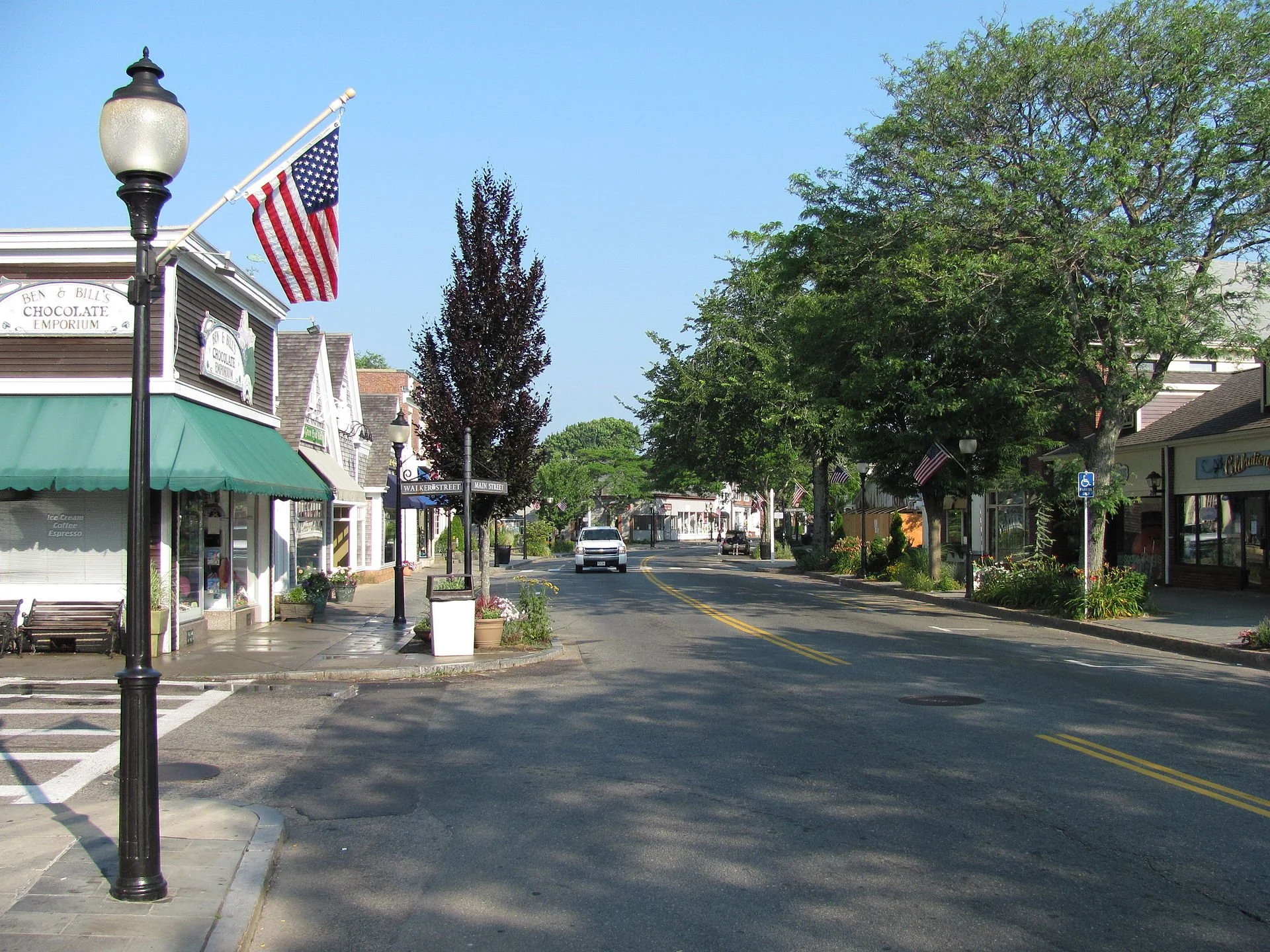
Main Street in Falmouth, Mass.
Adapted from Robert Whitcomb’s “Digital Diary,’’ in GoLocal24.com
The Cape Cod town of Falmouth, like many towns these days, has a surplus of closed big-box stores and other detritus, bordered by windy, gritty parking lots, left by Amazon’s assault on the brick-and-mortar world. The town, like most communities in New England, also has a very serious lack of affordable housing to buy or rent, made even more challenging by the fact that it’s also a summer-resort community.
So the town is now letting owners of business-zoned land in and near the downtown add up to 20 rental-housing units per acre, as long as it’s “affordable,’’ which generally means tenants paying no more than 30 percent of their gross income for housing.
Eric Turkington, a former state representative from Falmouth, reports in Commonwealth Magazine that the zoning change “has generated its first project: The owner of an auto repair shop on Main Street has submitted plans to replace it with a restaurant and 10 residential units. Further down the street, the owners of one of the big box stores with acres of asphalt is talking with the town about building a major rental housing development on their property.’’
A ‘typical American’?
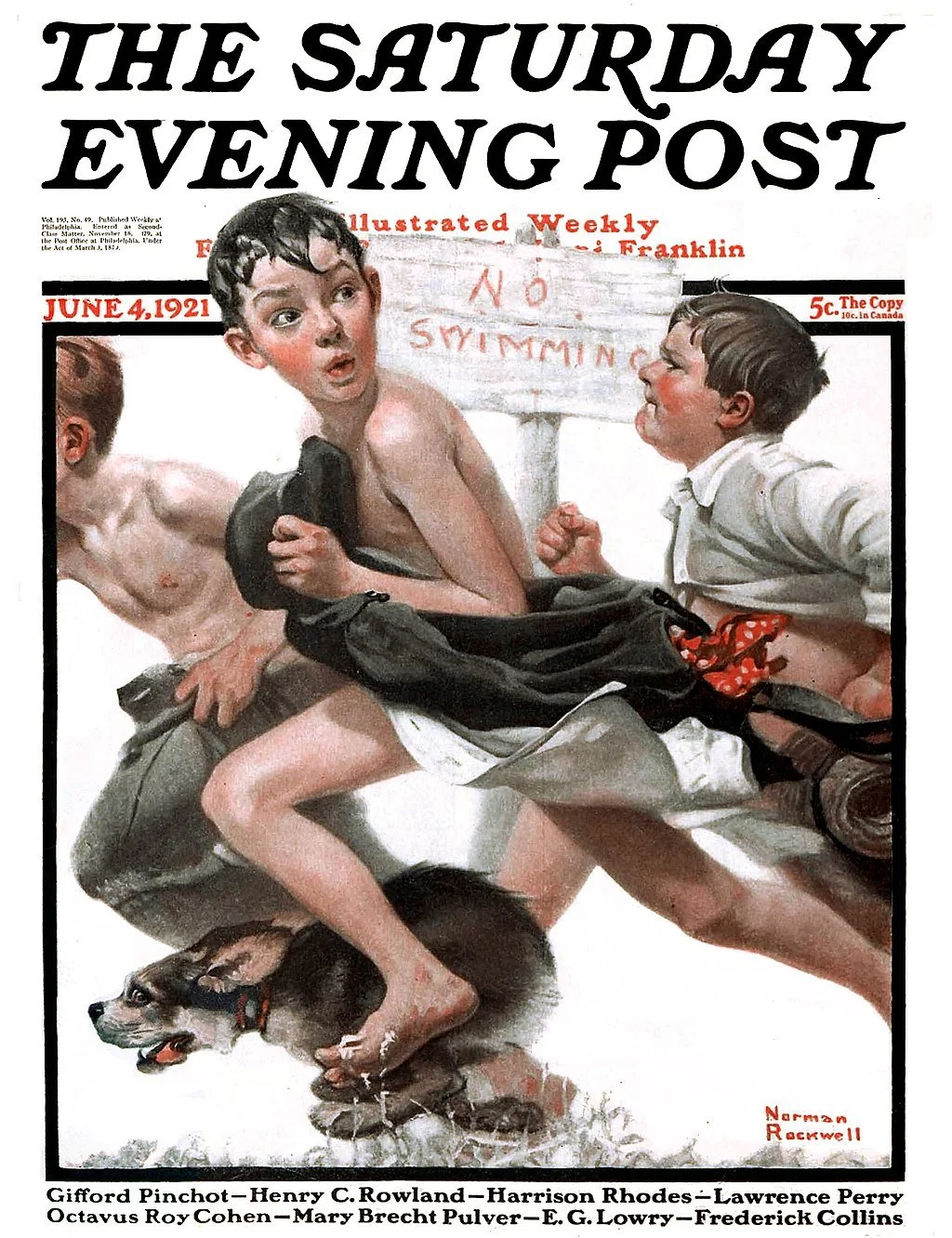
Norman Rockwell (1894-1978), the iconic painter and illustrator, was from the New York City area. He lived with his family in Arlington, Vt., in 1939-1953, when they moved to Stockbridge, Mass.
Rockwell said: "Without thinking too much about it, I was showing the America I knew to others who might not have noticed. My fundamental purpose is to interpret the typical American. I am a storyteller.’’
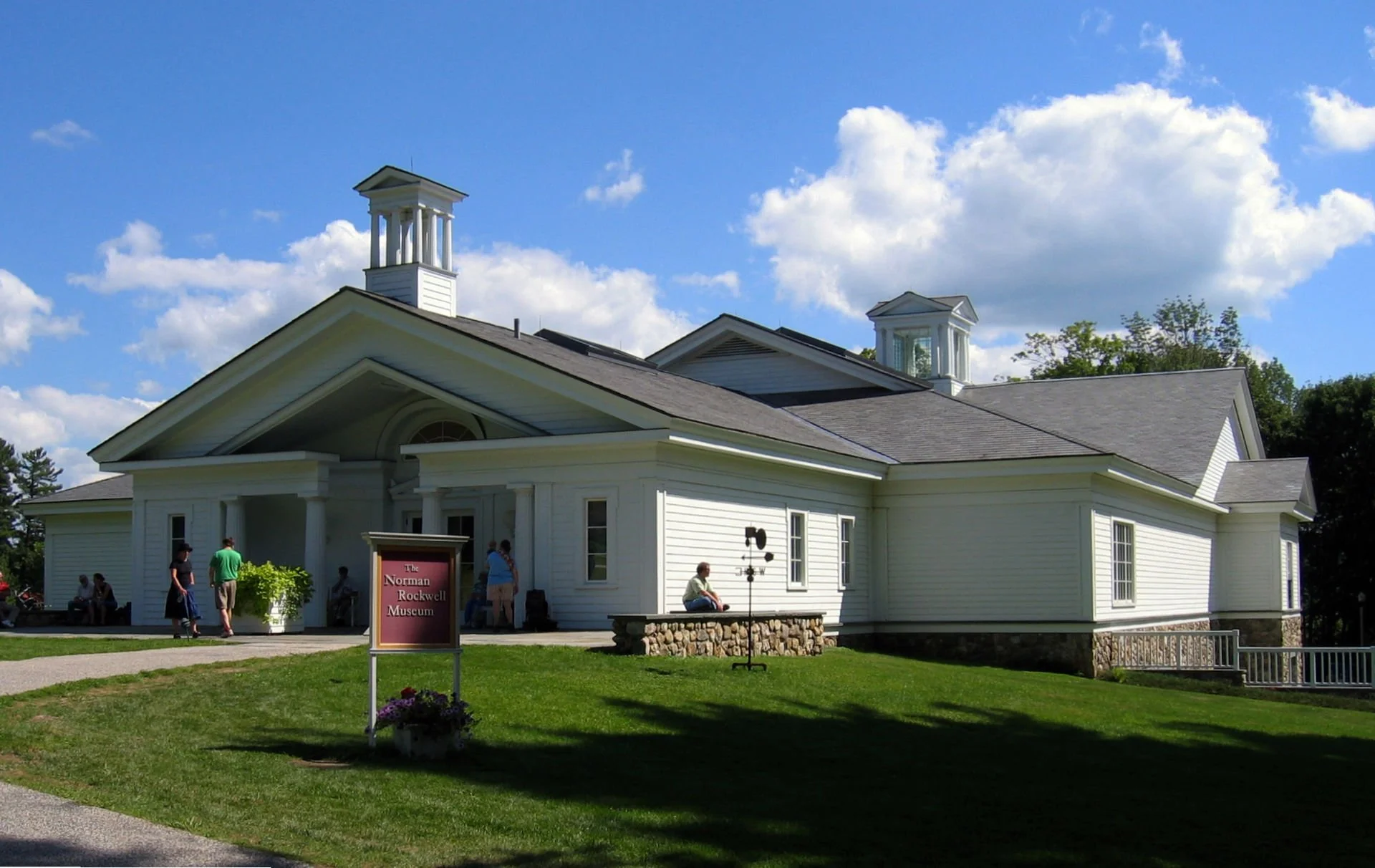
The Norman Rockwell Museum, in Stockbridge, Mass.
— Photo by Rmrfstar
And you can't change your mind

“Linked” (oil on panel), by Renee Levin, in the joint show, “Knotty Girls, with Jennifer Day, at Atelier Newport June 17-July 22.
The gallery says:
Ms. Levin’s “large-scale paintings allow her to emphasize the nuances, patterns and textures of these objects while celebrating their unique beauty. Each painting bears witness to her calm and meticulous process. There is a playful juxtaposition of light and shadow, which creates depth and movement in her work. Levin fuses a world of polish with grit, painting elements of her objects with perfect smoothness, yet adding harsh textures overtop creating a surprising harmony of modern, contemporary paintings. Her work was featured in Vogue, in 2021.’’
Chris Powell: Try a well-regulated militia to reduce massacres

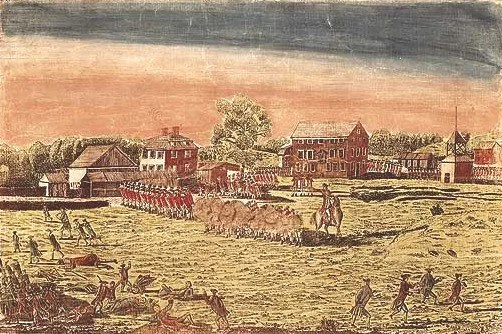
The Battle of Lexington, on April 19, 1775. Blue-coated militiamen in the foreground flee from the volley of gunshots from the red-coated British Army line in the background with dead and wounded militiamen on the ground.
— Amos Doolittle (engraver)
MANCHESTER, Conn.
As with the school massacre in Newtown, Conn., and the supermarket massacre in Buffalo, the school massacre in Uvalde has brought forth the usual legislative prescriptions to prevent a recurrence, prescriptions often delivered by bloviating politicians pretending to virtue. But the prescriptions seldom have much application to the atrocities that prompt them.
The private-sale exemption in the federal law requiring background checks for gun purchases should have been closed long ago. Even most supporters of Second Amendment rights favor ending it, and no sense can be made of the opposition of Republicans in Congress. But the purchases of the guns used in the Newtown, Buffalo and Uvalde massacres cleared background checks. The gun used in the Newtown massacre was stolen by the young perpetrator from his mother, who became his first victim.
That perpetrator was known to be disturbed but no "red flag" law would have had any effect on him, since the gun wasn't his.
The perpetrators of the Buffalo and Uvalde massacres seem to have been mentally ill but not ill enough to have been reported to authorities, so a "red flag" law would not have impeded their purchases.
While "red flag" laws sound good, and Connecticut has one, they raise civil rights and due process complications even as not all mass murderers give actionable warnings.
"Safe-storage" requirements make sense too but would have meant nothing with the Buffalo and Uvalde cases. "Safe storage" might have been preventive in Newtown but the perpetrator lived with his mother and was her companion on the shooting range and likely knew where the keys were kept.
Yes, "ghost guns" should be banned too but were not used in the massacres.
Then there is outlawing "assault rifles" -- that is, scary-looking rifles. The real objection to them is their semi-automatic properties -- that they automatically reload the firing chamber. But then most guns manufactured in the last century automatically reload and most rifles and handguns in the United States are semi-automatic.
Should civilian possession of semi-automatic rifles be banned? If so, it will be hard to ban one model without banning them all. Americans own tens of millions of them and few are registered, so confiscating them might not be terribly successful or effective.
Banning the sale and possession of semi-automatic rifles also might run afoul of the Second Amendment, since such rifles are so common and basic. But at least advocates of outlawing semi-automatics -- essentially national gun confiscation -- get far more relevant than other advocates of more gun restrictions.
Of course, there are also many mass shootings with mere handguns, like the one in Manchester, Conn., in 2010 in which eight people were murdered. So should handguns be banned too?
Who in politics wants to get relevant enough to propose repealing the Second Amendment?
But like immigration and abortion, guns are an issue the political parties seem to prefer sustaining rather than resolving.
Democrats blame the National Rifle Association and gun manufacturers for blocking more gun regulations just as they blame misogynistic men for limits on abortion. But there are heavily pro-gun and anti-abortion states and heavily anti-gun and pro-abortion states not because of the NRA, gun manufacturers, or Planned Parenthood but simply because many people feel strongly about the issues one way or the other.
Members of Congress are reflecting the views of their constituents.
So what might be politically possible to prevent mass shootings in a country with hundreds of millions of guns among a population with tens of millions of mentally ill or unstable people, including millions of boys growing up in broken homes without much parenting, like the killer in Uvalde?
The Second Amendment itself makes a suggestion: "a well-regulated militia." That is, what about a carefully trained, uniformed and armed volunteer national police auxiliary to help guard soft targets like schools and hospitals and to be visible everywhere in ordinary life?
After all, if guns aren't going to be confiscated, why not put some where they might provide a little protection?
Chris Powell is a columnist for the Journal Inquirer, in Manchester.
Before the deluge
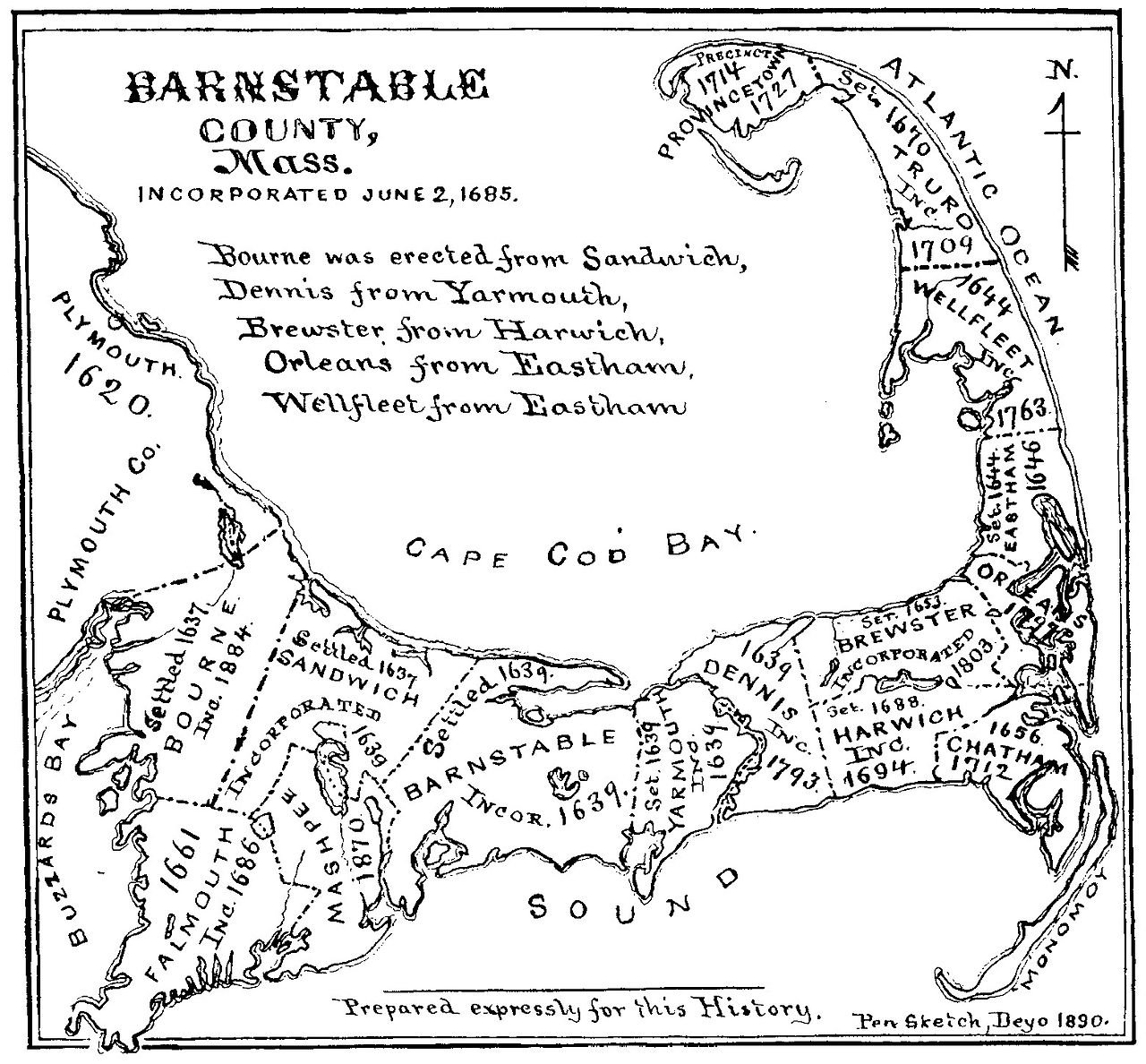
“The time must come when this coast (Cape Cod) will be a place of resort for those New-Englanders who really wish to visit the sea-side. At present it is wholly unknown to the fashionable world, and probably it will never be agreeable to them. If it is merely a ten-pin alley, or a circular railway, or an ocean of mint-julep, that the visitor is in search of, — if he thinks more of the wine than the brine, as I suspect some do at Newport — I trust that for a long time he will be disappointed here. But this shore will never be more attractive than it is now.”
— Henry David Thoreau (1817-1862), in Cape Cod (published in 1865)

The dunes on Sandy Neck, in the town of Barnstable.
— Photo by Mr Senseless

‘The complexity of light’

“Shadow Inside 1’’ (gouache on panel), by Cambridge, Mass.-based Vicki Kocher Paret, in show “Shadow,” at Galatea Fine Art, Boston, though June 26.
She says:
"I love the drama of a good shadow: the severe contrast of light and dark, the layers of darkness that fall on various surfaces, the fanciful patterns created from flattened three-dimensional form. Painting shadows is a study in the complexity of light, and often through the process, exposes things unnoticed or unseen. The mesmerizing power and beauty of shadow serves to reveal the extraordinary in the ordinary - a useful thing for the spirit."
My priorities are in order!
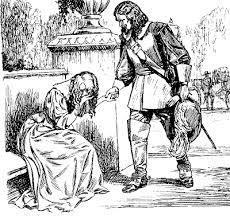
“To Lucasta, not Going to the Wars” (with apologies to Richard Lovelace)
(First appeared in English Studies Forum)
Outside are danger, war, and death,
And I could go to fight.
I could go out upon the hill
Or stay with you tonight.
I could go out to save the world
As evil does its worst.
I could go out to save my soul,
Or I could put you first.
The world well lost, my honor, too.
Indeed, I must confess
I could not love thee, dear, so much,
Loved I not honor less.
— Felicia Nimue Ackerman, Providence-based poet and Brown University philosophy professor
Richard Lovelace (1618 -1657) was an English Cavalier poet who fought for King Charles I during the English Civil War. His best known works are "To Althea, from Prison" and "To Lucasta, Going to the Warres".
A great artist paints craftsmen on the Maine Coast

“Shipyard,’’ painted in 1916 by George Bellows (American, 1882-1925). It can be seen at the Art Complex Museum, Duxbury, Mass.
The museum says:
'‘The museum's permanent collection contains multiple works by American artist George Bellows. Bellows spent a few summers on the coast of Maine and its offshore islands in the early 1910s. The shipyard in Camden particularly drew his attention, and he created a series of paintings based on his time there, including ‘Shipyard’’’.

Camden Harbor. Camden and the Maine Coast in general have a long and famous tradition of boat/shipbuilding, though Camden has long been best known as a summer place for rich Northeast Corridor people (especially old-money WASPS) and others, many of them with fancy boats that they cruise and race in.
‘Two seasons’
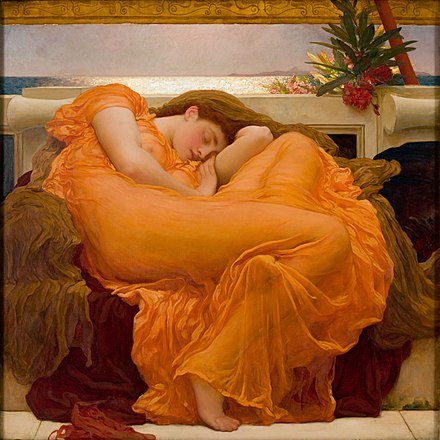
“Flaming June” (1895), by Lord Leighton
There is a June when Corn is cut
And Roses in the Seed—
A Summer briefer than the first
But tenderer indeed
As should a Face supposed the Grave's
Emerge a single Noon
In the Vermilion that it wore
Affect us, and return—
Two Seasons, it is said, exist—
The Summer of the Just,
And this of Ours, diversified
With Prospect, and with Frost—
May not our Second with its First
So infinite compare
That We but recollect the one
The other to prefer?
By Emily Dickinson (1830-1886), who watched the seasons with great acuity from her home, in Amherst, Mass.
‘Between permanent and ephemeral’

“Cautionary Configuration” (paint, painted paper, print material and linen, collaged/adhered to panel), by Aaron Wexler, in his show “Everywhere You Go Is a Shape,’’ at Heather Gaudio Fine Art Projects, New Canaan, Conn., June 4-July 23.
The gallery says:
“Wexler uses sourced materials ranging from photographs, printed imagery, illustrations, and his own drawings to create intricately collaged panels and works on paper. Each element is carefully layered and woven into a graphic framework of color, form, and varying textures. Shapes and lines reveal and conceal themselves as they navigate and compete for space on the surface.
In addition to the optical network of color and forms, Wexler plays with texture and weight through the use of different materials. Pieces of coarse and raw canvas are juxtaposed with thinly painted, more transparent Japanese paper, suggesting a push and pull between the permanent and the ephemeral.’’
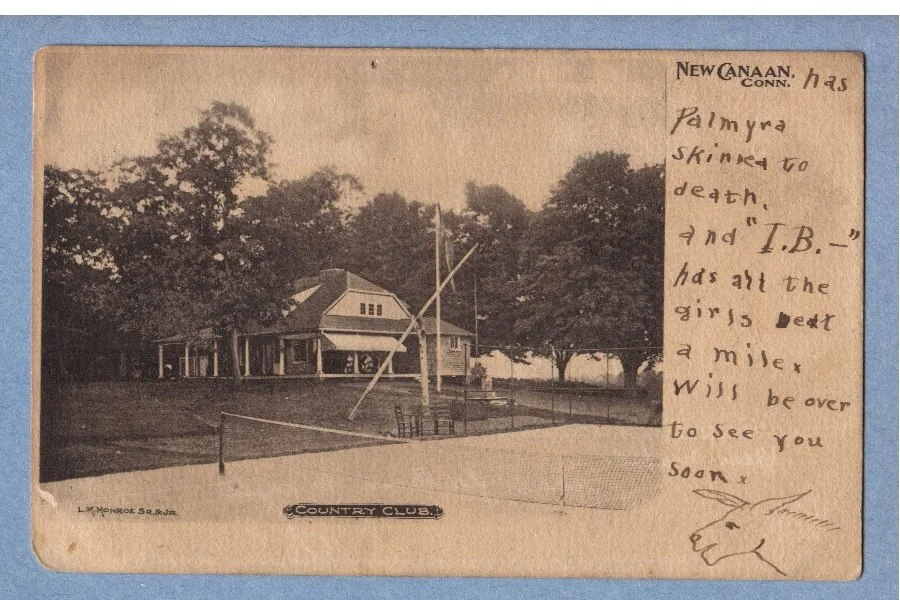
New Canaan Country Club circa 1906. Since the early 20th Century New Canaan has been an affluent New York City suburb.
The famed editor Maxwell Perkins (1884-1947) praised New Canaan, where he lived from 1924 to his death:
“{T}he charm of New Canaan, a New England village at the end of a single track railroad with almost wild country in three directions, i.e. wild to the Easterner. An ideal way for bringing up children in the way they should go, girls anyhow.”
Moffly Media noted in 2009:
“Max Perkins, who died sixty-two years ago this June, was the most important American literary figure that you may never have heard of. He wrote no books of his own; his daughters insisted he couldn’t spell or punctuate; and his rivals thought him unsophisticated. Yet as a book editor for Charles Scribner’s Sons, where he worked from 1914 until his death in 1947, he possessed a matchless internal compass about writers and writing, shepherding into print the great works of F. Scott Fitzgerald, Ernest Hemingway, Thomas Wolfe, Edmund Wilson, Ring Lardner and Marjorie Kinnan Rawlings.’’

The Maxwell E. Perkins House, in New Canaan.
— Photo by Staib

‘The true victims’


An AR-15-style rifle
— Photo by Picanox
An AR-15-style rifle is any lightweight semi-automatic rifle based on the AR-15 design of Hartford, Conn.-based Colt’s Manufacturing Co., founded in 1855. It’s a favorite weapon of mass murderers.

Colt's Armory from an 1857 engraving, as viewed from the east side of the Connecticut River.
‘Oh what a town to get lost in’

Central Artery is in red.

1920 plan for the Central Artery.

Adapted from Robert Whitcomb’s May 22 “Digital Diary,’’ in GoLocal24.com
I drove up through Boston to Medford, Mass., on May 22 to have dinner with a niece, her husband and their son (8) and daughter (11). I did so with some trepidation because Boston and its inner suburbs have such tangles of streets and bad/confusing/nonexistent signage that GPS often can’t handle it in any coherent way and maps on paper tend to be outdated. And indeed, it was tough to find the restaurant on the Fellsway.
“Boston, Boston, Boston/Oh what a town to get lost in” as an old song goes. I lived in the city in 1970-71, and had jobs there in the ‘60s, and it doesn’t seem to be less confusing than it was back then, whatever the grandeur and promises of the Big Dig projects.
Greater Bostonians, like Rhode Islanders, are infamous for bad driving – not signaling, accelerating without warning on the right, swerving and so on. But the former are worse because they commit these sins at higher speeds.
Having dinner with children, especially bright, engaging ones like the ones mentioned above is fun, but it’s always good to bring games and reading materials for them. Few things are as boring to children as being trapped at a table for a long meal with adults while impatiently awaiting dessert.

At Fenway: Robert Whitcomb (left), the Sox’ Wally mascot and Boston publisher David Jacobs before the May 20 Mariners game.
However confusing Boston is, I tip my hat to the efficiency of the Boston Red Sox. Boston’s biggest weekly paper, The Boston Guardian, on whose little board I sit, was being honored, with other community organizations, in a pre-game event on the field at Fenway Park, on May 20, just before a game with the Seattle Mariners. (Boston won.) I’ve rarely seen such smooth coordination in moving people (including me) onto and off the field for the photo ops, etc.
It was comforting – sort of -- to see the police snipers on the roof of the stadium, ready for a terrorist attack or just another deranged young man with an assault rifle he just bought at Walmart. “Aren’t you happy they’re up there?’’ one of the photographers said.
I had to head back to Providence before the game ended and so had to leave the fancy lounge in the nose-bleed section above Fenway’s stands before Sox and Boston Globe principal owner John Henry showed up and played the guitar for our little group. He’s become my hero for supporting bookstores.
Boston can be beautiful, if exasperating! I fondly remember from the ‘60s running around the still somewhat Dickensian “Hub’’ on job errands, many of which I’d volunteer for to get out of stuffy offices, first in a shipping company on the waterfront and then at the gritty tabloid newspaper the Record American. I’d go to the tiny local stock exchange to pick up the day’s trading records or to the glorious State House to get something from a politician or a bureaucrat and nip into an ice-cream shop (or, as they were often spelled then, shoppe) for myself and into tobacco stores to buy cigarettes and cigars for my older co-workers. Occasionally I’d pick up a bag of peanuts to feed the rapacious pigeons on the Boston Common.
I did most of this walking, which is far and away the best way to get around the city.
Dry clean only?

“Daily Embroidery (24 Days)” (pearl cotton on linen dyed with oak galls), by Amherst-based Bonnie Sennott, in the show “Bonnie Sennott: Abstract Embroidery and Watercolors,’’ at the Hosmer Gallery in the Forbes Library, Northampton, Mass.
The gallery says her work includes the "Daily Thread,’’ a yearlong project in which she embroidered daily using colors observed in nature as well as several of her “negative-space embroideries exploring absence, loss and the passing of time’’.
She’ll also show abstract watercolors on the theme of "stones and water," which she’s creating in the "100 days of creative acts" project organized by author Suleika Jaouad and the Isolation Journals."

The beautiful Romanesque Hampshire County Courthouse, in Northampton, built in 1884-1886.
Llewellyn King: Prepare for a summer of discontent but enjoy the sun anyway
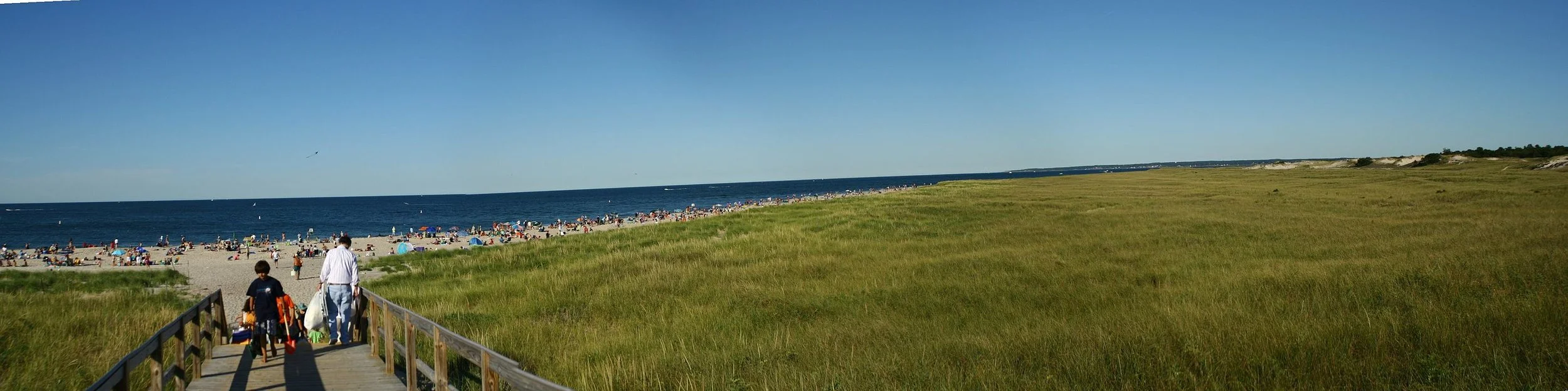
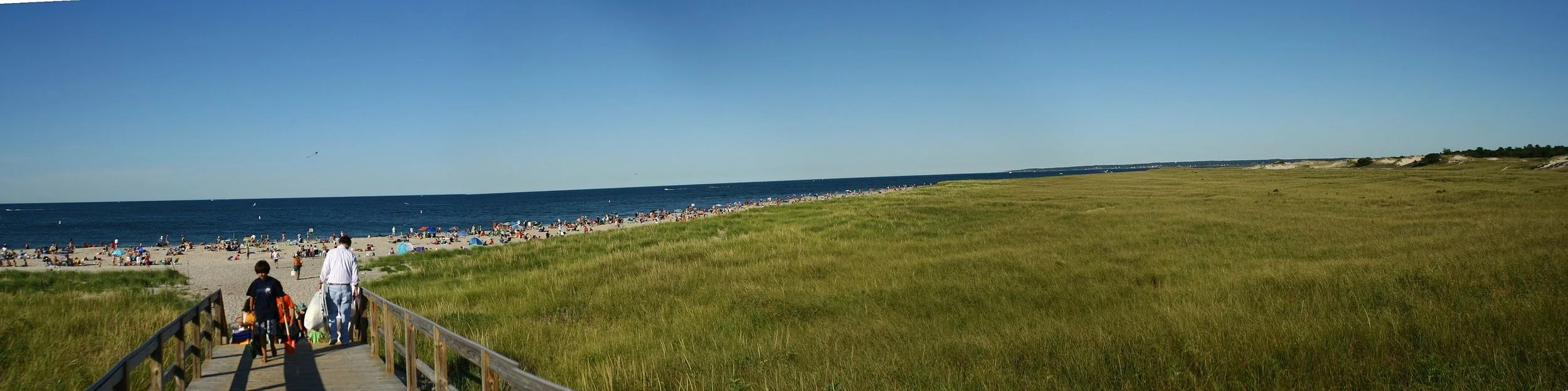
Heading down to Crane Beach, in Ipswich, Mass.
— Photo by Thomas Steiner

Roller coaster at the Six Flags amusement park in Agawam, Mass. More political/geopolitical roller coaster rides coming.
WEST WARWICK, R.I.
All the portents are that 2022 will be a summer to remember --and not in a good way.
It will be a summer of shortages, high prices, possible electric blackouts and severe and unpredictable storms. It also promises to be a summer of political ugliness, where civility and facts are missing.
National unity and cohesion, which usually can be expected in times of crisis, isn’t in sight. We are gracelessly at each other’s throats.
Also missing will be any sense that there is strong leadership anywhere; not in the White House, Congress, or among our allies.
Set these tribulations, caused by a dangerous war in Ukraine following on the COVID 19 pandemic, and you are entitled to be despondent. All this wasn’t in the playbook -- the events that shape the world never are.
But don’t reach for the arsenic. For most of us, glorious summer, so important to the North American lifestyle, will be as it always is with crowded beaches, jammed highways, chaotic airports and painful sunburn. We will have summer; and summer will have its joys, its rituals, and its happiness.
For Americans, these aren’t the worst of times. They are just very trying times. We will feel them directly in the wallet, painfully so. Gasoline and other fuels will be very expensive, and heating oil will be a big-ticket item next winter. House prices are still stratospheric, and rents are going up. The markets are shaky.
Americans are feeling that all isn’t well and that things are coming unstuck -- reliable, everyday things.
In democracies, we seek relief by changing the government. All the indications are that we will do that in the midterm elections just months away.
The Democrats are likely to take a drubbing. The Republicans will joyfully seize victory – and they won’t know any better what to do about the great stresses that are shaking the nation and the world.
Instead, they will be tempted to double down on social issues and a raft of things that will exacerbate the divisions in the country, further curb the rights of women, mess with education curricula, seek to influence social media platforms, and keep the government firmly in gridlock.
President Biden and his unlucky administration will get the blame if the Democrats are routed in the midterms. Indeed, it should, fairly or not, even though the alternative may not be better.
Certainly, a Democratic White House and Republican Congress suggests just one thing: crippling inaction.
Biden hasn’t been a proactive president but a reactive one. He has waited for the water to rise before he has acknowledged that it is happening, and it is time to start bailing.
Take, for example, the U.S. withdrawal from Afghanistan. When Biden tried to get ahead of the news, to identify an issue and resolve it before it mugged him, he got it terribly wrong. It was a foreign-policy calamity of Biden’s making, and it seems to have curbed his enthusiasm for preempting issues.
Mostly, Biden has sought to balance things. His reaction to outrageousness is a sedate, genteel sense of horror. You expect him to say to the Supreme Court, or the gun lobby, or Russian Vladimir Putin, “Look what you have done!”
One gets the feeling that Biden doesn’t have a grip on much except his decency. Everyone who knows him will tell you what a decent man he is. Decency supports, but it doesn’t lead. Decency isn’t a policy. It isn’t a way forward. It isn’t a solution.
After the midterms, Congress likely will be in the hands of two ruinous vacillators, Sen. Mitch McConnell, of Kentucky, and the even more wobbly Rep. Kevin McCarthy, of California. They aren’t exemplars of the Republican ideal. They aren’t in the previously worshipped Ronald Reagan tradition.
Both have shown themselves captive to former President Trump’s vengeful malevolence and have twisted the truth in their servitude to him.
Politics are sour, prices high, the future bumpy, but summer is glorious. Revel in it, celebrate it, and bask in its untroubled rays. I plan to do just that. Thoughts of politics are worse than sunburn.
Llewellyn King is executive producer and host of White House Chronicle, on PBS. His email is llewellynking1@gmail.com and he’s based in Rhode Island and Washington, D.C.

Brian Wakamo: A legal victory for America’s most dominant pro-sports team


A ticker tape parade in Manhattan celebrating the U.S. Women’s National Soccer Team’s 2015 World Cup victory.
Via OtherWords.org
Three years ago, the U.S. Women’s National Soccer Team filed a $24 million gender-discrimination lawsuit against the U.S. Soccer Federation. This May, after a prolonged and public battle, the players association for the U.S. women’s and men’s national teams negotiated a groundbreaking collective bargaining agreement.
The agreement enshrines a number of new protections for both teams. But most importantly, the agreement creates equal pay structures and requires the U.S. Soccer Federation to share World Cup prize money equally between both the men and women’s national teams.
It’s a first for any soccer federation in the world — and an inspiring victory for fairness in any industry.
Consider the women’s team’s impressive record — which includes four World Cup wins, four Olympic gold medals, and FIFA’s world No. 1 ranking for five straight years. The men’s team, by comparison, failed to qualify for the World Cup in 2018 and hasn’t made the quarterfinals or better in the World Cup since 2002.
Under the previous rules, had the men’s team qualified in 2018, they would have likely received first-round exit prize money worth $8 million — double what the women’s team took home for winning the 2019 Women’s World Cup.
Now the two teams will get equal pay for equal success.
This agreement would not have been possible without decades of tireless activism from players who have decried the double standards present in U.S. and global soccer.
Whether it was turning their warm-up jerseys inside out to obscure the U.S. Soccer Federation crests or kneeling in support of racial justice, the U.S. women’s team embodies a culture of protest that reflects the ongoing struggles of women and marginalized groups across the world.
It’s not hard to see the parallels in the broader economy.
Men, for example, make up an overwhelming majority of top earners across the U.S. economy, even though women now represent almost about the country’s workforce. At the top 0.1 percent level, women make up only 11 percent.
But there’s another important parallel in how the teams corrected this imbalance: unions.
This equal pay for equal success victory could not have been achieved without the collective strength and solidarity that a union provides. By coming together in their contract negotiations, the men’s and women’s teams both inspire and benefit each other.
In the latest collective-bargaining agreement, for example, athletes on the men’s national team will now have access to paid child care, a benefit the women’s team has enjoyed for over 25 years. This agreement is a testament to how everyone can win when you fight for those at the bottom.
Even beyond soccer and beyond the United States, the contract is groundbreaking.
It provides a roadmap to equity for other national sports teams, like basketball and hockey, which face similar challenges. It could also be replicated in places like France or Germany, where teams have an even higher level of success and larger budgets than the U.S. Soccer Federation.
But it’s also a roadmap for those of us who aren’t professional athletes.
As unionization efforts take flight at Starbucks, Amazon, and other big, profitable employers, America’s most dominant national sports team is showing how the workers who make companies successful can claim their fair share of the rewards.
Goal!
Brian Wakamo is an Inequality Research Analyst at the Institute for Policy Studies and a co-editor of Inequality.org.
Michelle Andrews: In N.H., a painful and confusing colonoscopy medical bill

Lake Sunapee, part of which is in the town of Sunapee, where Elizabeth Melville lives.
‘Elizabeth Melville and her husband are gradually hiking all 48 mountain peaks that top 4,000 feet in New Hampshire.
“I want to do everything I can to stay healthy so that I can be skiing and hiking into my 80s — hopefully even 90s!” said the 59-year-old part-time ski instructor who lives in the vacation town of Sunapee.
So when her primary-care doctor suggested she be screened for colorectal cancer in September, Melville dutifully prepped for her colonoscopy and went to New London Hospital’s outpatient department for the zero-cost procedure.
Typically, screening colonoscopies are scheduled every 10 years starting at age 45. But more frequent screenings are often recommended for people with a history of polyps, since polyps can be a precursor to malignancy. Melville had had a benign polyp removed during a colonoscopy nearly six years earlier.
Melville’s second test was similar to her first one: normal, except for one small polyp that the gastroenterologist snipped out while she was sedated. It too was benign. So she thought she was done with many patients’ least favorite medical obligation for several years.
Then the bill came.
The Patient: Elizabeth Melville, 59, who is covered under a Cigna health plan that her husband gets through his employer. It has a $2,500 individual deductible and 30% coinsurance.
Medical Service: A screening colonoscopy, including removal of a benign polyp.
Service Provider: New London Hospital, a 25-bed facility in New London, N.H. It is part of the Dartmouth Health system, a nonprofit academic medical center and regional network of five hospitals and more than 24 clinics with nearly $3 billion in annual revenue.
Total Bill: $10,329 for the procedure, anesthesiologist and gastroenterologist. Cigna’s negotiated rate was $4,144, and Melville’s share under her insurance was $2,185.
What Gives: The Affordable Care Act made preventive health care such as mammograms and colonoscopies free of charge to patients without cost sharing. But there is wiggle room about when a procedure was done for screening purposes, versus for a diagnosis. And often the doctors and hospitals are the ones who decide when those categories shift and a patient can be charged — but those decisions often are debatable.
Getting screened regularly for colorectal cancer is one of the most effective tools that people have for preventing it. Screening colonoscopies reduce the relative risk of getting colorectal cancer by 52% and the risk of dying from it by 62%, according to a recent analysis of published studies.
The U.S. Preventive Services Task Force, a nonpartisan group of medical experts, recommends regular colorectal cancer screening for average-risk people from ages 45 to 75.
Colonoscopies can be classified as for screening or for diagnosis. How they are classified makes all the difference for patients’ out-of-pocket costs. The former generally incurs no cost to patients under the ACA; the latter can generate bills.
The Centers for Medicare & Medicaid Services has clarified repeatedly over the years that under the preventive services provisions of the ACA, removal of a polyp during a screening colonoscopy is considered an integral part of the procedure and should not change patients’ cost-sharing obligations.
After all, that’s the whole point of screening — to figure out whether polyps contain cancer, they must be removed and examined by a pathologist.
Many people may face this situation. More than 40% of people over 50 have precancerous polyps in the colon, according to the American Society for Gastrointestinal Endoscopy.
Someone whose cancer risk is above average may face higher bills and not be protected by the law, said Anna Howard, a policy principal at the American Cancer Society’s Cancer Action Network.
Having a family history of colon cancer or a personal history of polyps raises someone’s risk profile, and insurers and providers could impose charges based on that. “Right from the start, [the colonoscopy] could be considered diagnostic,” Howard said.
In addition, getting a screening colonoscopy sooner than the recommended 10-year interval, as Melville did, could open someone up to cost-sharing charges, Howard said.
Coincidentally, Melville’s 61-year-old husband had a screening colonoscopy at the same facility with the same doctor a week after she had her procedure. Despite his family history of colon cancer and a previous colonoscopy just five years earlier because of his elevated risk, her husband wasn’t charged anything for the test. The key difference between the two experiences: Melville’s husband didn’t have a polyp removed.
Resolution: When Melville received notices about owing $2,185, she initially thought that it must be a mistake. She hadn’t owed anything after her first colonoscopy. But when she called, a Cigna representative told her the hospital had changed the billing code for her procedure from screening to diagnostic. A call to the Dartmouth Health billing department confirmed that explanation: She was told she was billed because she’d had a polyp removed — making the procedure no longer preventive.
During a subsequent three-way call that Melville had with representatives from both the health system and Cigna, the Dartmouth Health staffer reiterated that position, Melville said. “[She] was very firm with the decision that once a polyp is found, the whole procedure changes from screening to diagnostic,” she said.
Dartmouth Health declined to discuss Melville’s case with KHN even though she gave her permission for it to do so.
After KHN’s inquiry, Melville was contacted by Joshua Compton, of Conifer Health Solutions, on behalf of Dartmouth Health. Compton said the diagnosis codes had inadvertently been dropped from the system and that Melville’s claim was being reprocessed, Melville said.
Cigna also researched the claim after being contacted by KHN. Justine Sessions, a Cigna spokesperson, provided this statement: “This issue was swiftly resolved as soon as we learned that the provider submitted the claim incorrectly. We have reprocessed the claim and Ms. Melville will not be responsible for any out of pocket costs.”
The Takeaway: Melville didn’t expect to be billed for this procedure. It seemed exactly like her first colonoscopy, nearly six years earlier, when she had not been charged for a polyp removal.
But before getting an elective procedure like a cancer screening, it’s always a good idea to try to suss out any coverage minefields, Howard said. Remind your provider that the government’s interpretation of the ACA requires that colonoscopies be regarded as a screening even if a polyp is removed.
“Contact the insurer prior to the colonoscopy and say, ‘Hey, I just want to understand what the coverage limitations are and what my out-of-pocket costs might be,’” Howard said. Billing from an anesthesiologist — who merely delivers a dose of sedative — can also become an issue in screening colonoscopies. Ask whether the anesthesiologist is in-network.
Be aware that doctors and hospitals are required to give good faith estimates of patients’ expected costs before planned procedures under the No Surprises Act, which took effect this year.
Take the time to read through any paperwork you must sign, and have your antennae up for problems. And, importantly, ask to see documents ahead of time.
Melville said that a health system billing representative told her that among the papers she signed at the hospital on the day of her procedure was one saying that if a polyp was discovered, the procedure would become diagnostic.
Melville no longer has the paperwork, but if Dartmouth Health did have her sign such a document, it would likely be in violation of the Affordable Care Act. However, “there’s very little, if any, direct federal oversight or enforcement” of the law’s preventive services requirements, said Karen Pollitz, a senior fellow at KFF.
In a statement describing New London Hospital’s general practices, spokesperson Timothy Lund said: “Our physicians discuss the possibility of the procedure progressing from a screening colonoscopy to a diagnostic colonoscopy as part of the informed consent process. Patients sign the consent document after listening to these details, understanding the risks, and having all of their questions answered by the physician providing the care.”
To patients like Melville, that doesn’t seem quite fair, though. She said, “I still feel asking anyone who has just prepped for a colonoscopy to process those choices, ask questions, and potentially say ‘no thank you’ to the whole thing is not reasonable.”
Michelle Andrews is a Kaiser Health News reporter. @mandrews110